



Swipe left or right, or use the buttons. Tap image to zoom.
例句翻译
单词
Lesson 110Lesson 110 - 遮罩切换
|
表情符号
|
单词 | Images | 翻译 | 过去时 | 过去分词 | 第三人称单数 | 动名词 | 含义 | 例句 | 例句翻译 | 示例表达 | 示例表达含义 | 示例表达翻译 | 同义词 | 反义词 | 搭配词 | 助记符 |
|---|---|---|---|---|---|---|---|---|---|---|---|---|---|---|---|---|---|
|
#3271
✂️
|
/ˈekspərˌɡeɪt/
verb
(海皮尼斯)
••••••
|
- •••••• |
删改
shangai
••••••
|
expurgated
海皮尼斯特
••••••
|
expurgated
海皮尼斯特
••••••
|
expurgates
海皮尼斯茨
••••••
|
expurgating
海皮尼斯廷
••••••
|
To remove offensive or objectionable parts from a text or speech.
••••••
|
The publisher decided to expurgate the novel before reprinting it.
出版商决定在再版前删改这部小说。
••••••
|
出版社决定在再版前删改这部小说。
chubanshe jueding zai zaiban qian shangai zhe bu xiaoshuo
••••••
|
- •••••• | - •••••• | - •••••• |
censor, edit, cleanse, purify, bowdlerize
••••••
|
include, allow, permit
••••••
|
expurgate text, expurgate edition, expurgate passage
••••••
|
Expurgate like 'edit out' in Chinese, 删除不当内容
••••••
|
|
#3272
🌐
|
/ɪkˈstɜrnəl/
adjective
(èksuērnào)
••••••
|
- •••••• |
外部的
wàibù de
••••••
|
- •••••• | - •••••• | - •••••• | - •••••• |
situated on or relating to the outside of something; coming from outside
••••••
|
The external factors affected the company's growth. |
外部因素影响了公司的增长。
Wàibù yīnsù yǐngxiǎngle gōngsī de zēngzhǎng.
••••••
|
external affairs |
matters concerning foreign relations
••••••
|
外交事务
wàijiāo shìwù
••••••
|
outer, outside, foreign, exterior
••••••
|
internal, inner
••••••
|
external factors, external affairs, external pressure
••••••
|
External 意味着外部,就像外部硬盘。
••••••
|
|
#3273
🏠
|
/ɪkˈstɪəriər/
noun/adjective
(èksˈtɪrɪər)
••••••
|
- •••••• |
外部部分
wàibù bùfen
••••••
|
- •••••• | - •••••• | - •••••• | - •••••• |
the outer surface or part of something; relating to the outside
••••••
|
The exterior of the house was painted white. |
房子的外部部分被刷成了白色。
fángzi de wàibù bùfen bèi shuā chéng le báisè.
••••••
|
a tough exterior |
a strong or unyielding outward appearance that hides inner feelings
••••••
|
坚硬的外表
jiānyìng de wàibiǎo
••••••
|
outside, surface, façade, outer
••••••
|
interior, inside
••••••
|
exterior wall, exterior paint, exterior design, tough exterior
••••••
|
外部部分是我们从外面看到的部分,像房子的外观。
••••••
|
|
#3274
🙏
|
/ɪkˈstɛnjueɪtɪŋ/
adjective
(ikstenuéiting)
••••••
|
- •••••• |
减轻的
jiǎnqīng de
••••••
|
- •••••• | - •••••• | - •••••• | - •••••• |
serving to make a fault or an offense seem less serious
••••••
|
She asked for leniency due to extenuating circumstances. |
她因减轻的情况请求宽恕。
Tā yīn jiǎnqīng de qíngkuàng qǐngqiú kuānshù.
••••••
|
- •••••• | - •••••• | - •••••• |
mitigating, justifying, explanatory, excusing
••••••
|
aggravating, worsening
••••••
|
extenuating circumstances, extenuating factors
••••••
|
减轻的: 减轻罪行的情境
••••••
|
|
#3275
⚖️
|
/ɪkˈstɛnjueɪt/
verb
(延缓)
••••••
|
- •••••• |
减轻
jianqing
••••••
|
extenuated
延缓了
••••••
|
extenuated
延缓了
••••••
|
extenuates
延缓
••••••
|
extenuating
延缓着
••••••
|
to make an offense, fault, or situation seem less serious by providing an excuse or explanation
••••••
|
The lawyer tried to extenuate his client's actions by highlighting his difficult childhood.
律师通过强调客户的艰难童年,试图减轻他的行为。
••••••
|
律师通过强调客户的艰难童年,试图减轻他的行为。
Lüshi tongguo qiangdiao kehu de jiannan tongnian, shitu jianqing tā de xíngwéi.
••••••
|
- •••••• | - •••••• | - •••••• |
mitigate, lessen, excuse, diminish, soften
••••••
|
aggravate, worsen, intensify
••••••
|
extenuate circumstances, extenuate guilt, extenuate the crime
••••••
|
extra new (extenu) 来减轻罪行
••••••
|
|
#3276
💪
|
/ɪkˈstɛnsər/
noun
(ēkìsténsòr)
••••••
|
- •••••• |
伸肌
shēn jī
••••••
|
- •••••• | - •••••• | - •••••• | - •••••• |
a muscle that serves to extend or straighten a limb or part of the body.
••••••
|
The extensor muscles in the arm help straighten the elbow. |
手臂的伸肌帮助伸直肘部。
Shǒubì de shēn jī bāngzhù shēnzhí zhǒubù.
••••••
|
- •••••• | - •••••• | - •••••• |
straightener muscle, extender muscle
••••••
|
flexor muscle
••••••
|
extensor muscle, extensor tendon, extensor mechanism
••••••
|
Extensor 意为伸展的肌肉,像伸直手臂一样。
••••••
|
|
#3277
🌍
|
/ɪkˈstɛnsɪv/
adjective
(ɪkˈstɛnsɪv)
••••••
|
- •••••• |
广泛的
guǎngfàn de
••••••
|
- •••••• | - •••••• | - •••••• | - •••••• |
covering a large area or involving a lot; wide in range.
••••••
|
The museum has an extensive collection of ancient artifacts. |
博物馆拥有大量的古代文物收藏。
Bówùguǎn yǒngyǒu dàliàng de gǔdài wénwù shōucáng.
••••••
|
- •••••• | - •••••• | - •••••• |
broad, wide, vast, comprehensive, thorough
••••••
|
limited, narrow, restricted
••••••
|
extensive knowledge, extensive research, extensive damage, extensive collection
••••••
|
Extensive意味着广泛,就像广泛的知识。
••••••
|
|
#3278
📏
|
/ɪkˈstɛnʃən/
noun
(延伸)
••••••
|
- •••••• |
延伸
yanshen
••••••
|
- •••••• | - •••••• | - •••••• | - •••••• |
a part that is added to something to make it longer or bigger; an increase in time.
••••••
|
She asked for an extension on her assignment deadline. |
她要求延长她的作业截止日期。
Ta yaoqiu yanchang ta de zuoye jiezhi riqi.
••••••
|
hair extension |
artificial hair used to make natural hair longer or fuller
••••••
|
假发延伸
jiafa yanshen
••••••
|
expansion, prolongation, addition, continuation
••••••
|
reduction, contraction
••••••
|
extension cord, deadline extension, extension request, hair extension
••••••
|
延伸就像加时间或加长度
••••••
|
|
#3279
🛠️
|
/ɪkˈstɛnsəbl/
adjective
(ikstensible)
••••••
|
- •••••• |
可扩展的
kě kuò zhǎn de
••••••
|
- •••••• | - •••••• | - •••••• | - •••••• |
able to be extended; capable of expansion.
••••••
|
The software is designed to be extensible with new features. |
该软件设计为可以通过新功能扩展。
Gāi ruǎnjiàn shèjì wèi kě yǐ tōngguò xīn gōngnéng kuò zhǎn.
••••••
|
- •••••• | - •••••• | - •••••• |
expandable, flexible, adaptable, scalable
••••••
|
fixed, rigid
••••••
|
extensible system, extensible architecture, extensible framework
••••••
|
Extensible 意味着可以扩展,就像是具有新功能的软件。
••••••
|
|
#3280
➡️
|
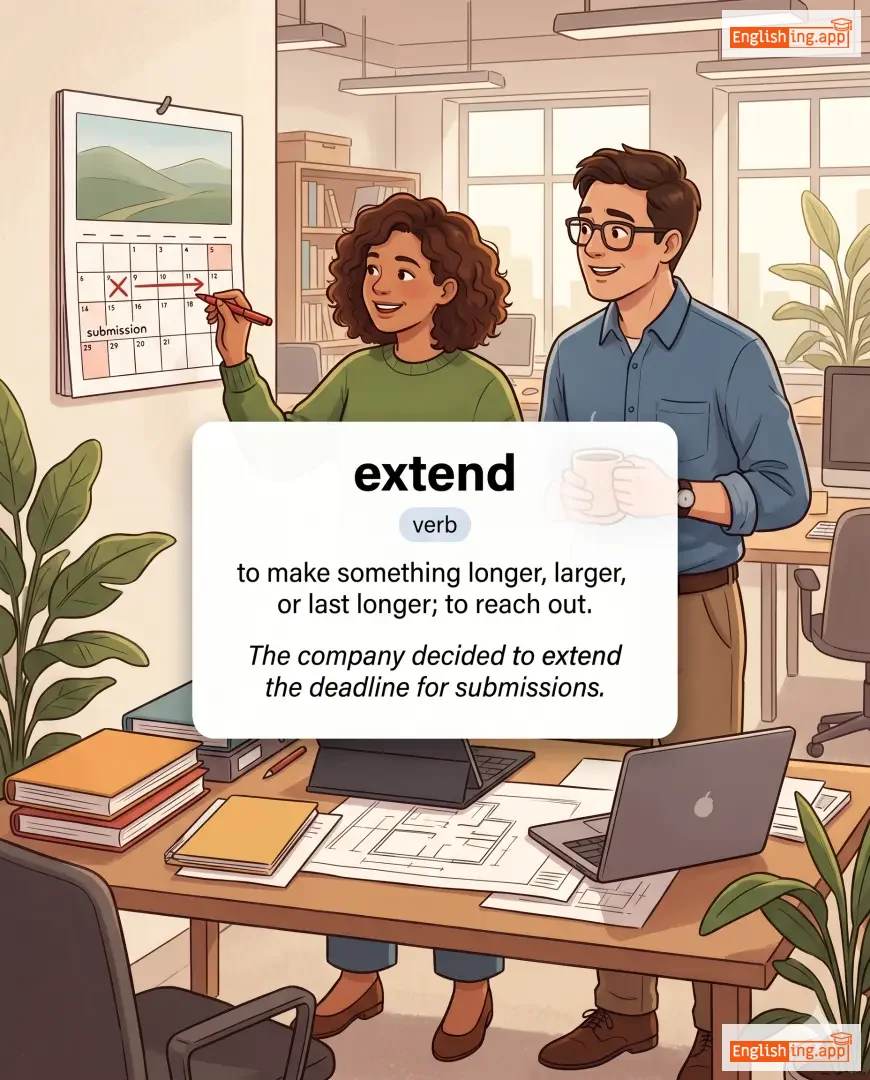
/ɪkˈstɛnd/
verb
(eks-tend)
••••••
|
|
延伸
yanshen
••••••
|
extended
eks-tend-ed
••••••
|
extended
eks-tend-ed
••••••
|
extends
eks-tends
••••••
|
extending
eks-tending
••••••
|
to make something longer, larger, or last longer; to reach out.
••••••
|
The company decided to extend the deadline for submissions.
公司决定延长提交的截止日期。
••••••
|
公司决定延长提交的截止日期。
Gōngsī juédìng yáncháng tíjiāo de jiézhǐ rìqī.
••••••
|
extend an olive branch
伸出橄榄枝
••••••
|
to offer peace or reconciliation
••••••
|
伸出橄榄枝
shēnchū gǎnlǎnzhī
••••••
|
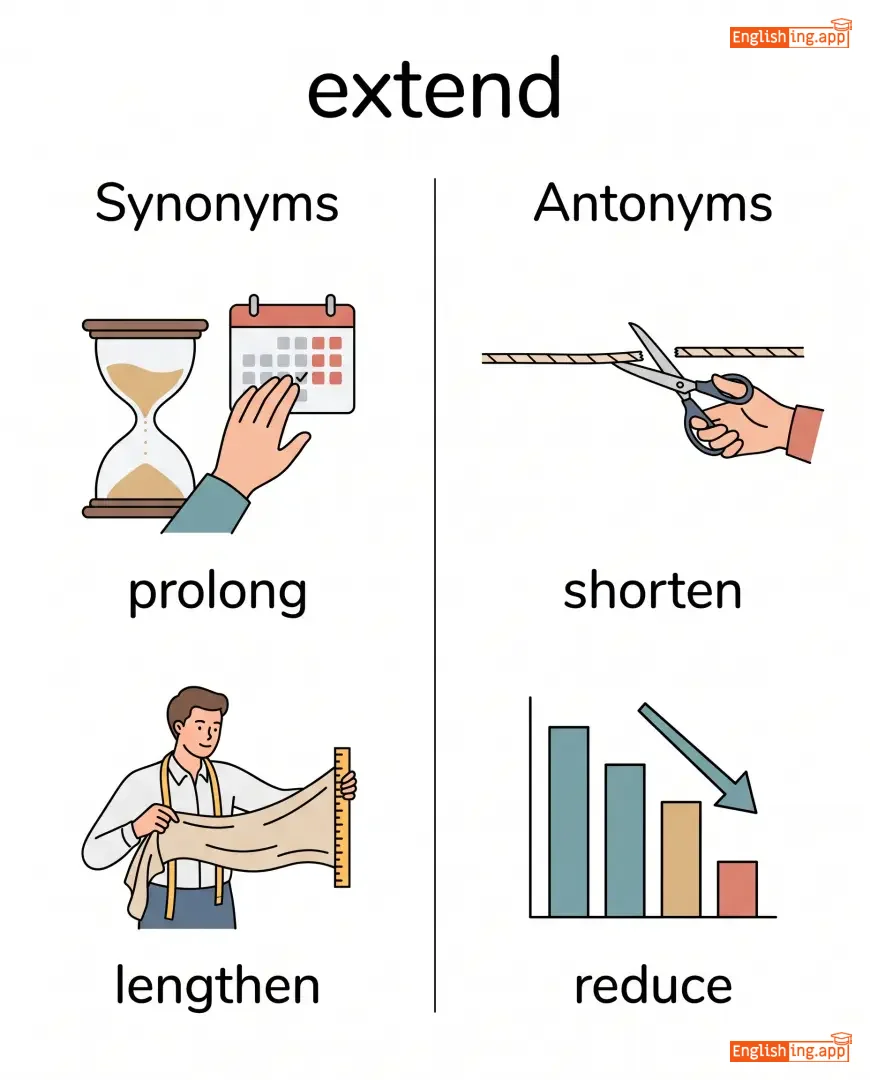
prolong, lengthen, expand, stretch, continue
••••••
|
shorten, reduce, limit
••••••
|
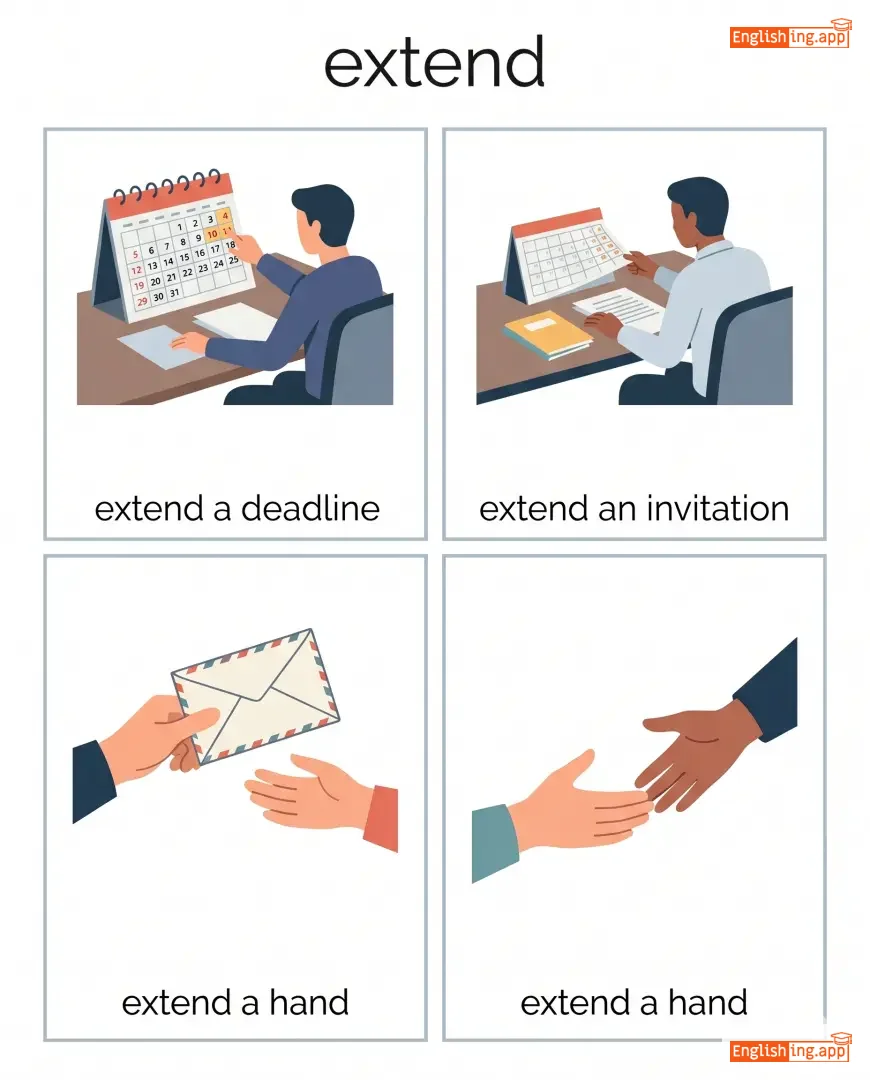
extend a deadline, extend an invitation, extend a hand, extend support
••••••
|
延伸意味着使事物更长,就像伸出手去够到远的东西。
••••••
|
|
#3281
🎭
|
/ɪkˈstɛmpəraɪz/
verb
(ɪksˈtɛmpəraɪz)
••••••
|
- •••••• |
即兴表演
jíxìng biǎoyǎn
••••••
|
extemporized
ɪksˈtɛmpəraɪzd
••••••
|
extemporized
ɪksˈtɛmpəraɪzd
••••••
|
extemporizes
ɪksˈtɛmpəraɪzəz
••••••
|
extemporizing
ɪksˈtɛmpəraɪzɪŋ
••••••
|
To speak or perform without preparation; improvise.
••••••
|
The actor had to extemporize when he forgot his lines.
当演员忘记台词时,他不得不即兴表演。
••••••
|
当演员忘记台词时,他不得不即兴表演。
Dāng yǎnyuán wàngjì táicí shí, tā bùdé bù jíxìng biǎoyǎn.
••••••
|
- •••••• | - •••••• | - •••••• |
improvise, ad-lib, invent, make up
••••••
|
rehearse, plan, prepare
••••••
|
extemporize a speech, extemporize on stage, extemporize remarks
••••••
|
忘记台词时,就在舞台上即兴表演。
••••••
|
|
#3282
🗣️
|
/ɪkˈstɛmpəri/
adverb
(ikstempore)
••••••
|
- •••••• |
即兴
jixing
••••••
|
- •••••• | - •••••• | - •••••• | - •••••• |
Spoken or done without preparation; impromptu.
••••••
|
She recited the poem extempore in class. |
她在课堂上即兴朗诵了诗歌。
Ta zai kètáng shàng jìxìng lǎngsòngle shīgē.
••••••
|
- •••••• | - •••••• | - •••••• |
impromptu, spontaneously, offhand, unprepared
••••••
|
prepared, rehearsed
••••••
|
speak extempore, recite extempore, act extempore
••••••
|
像考试时需要即兴演讲一样,improvised的表现就像extempore。
••••••
|
|
#3283
🎤
|
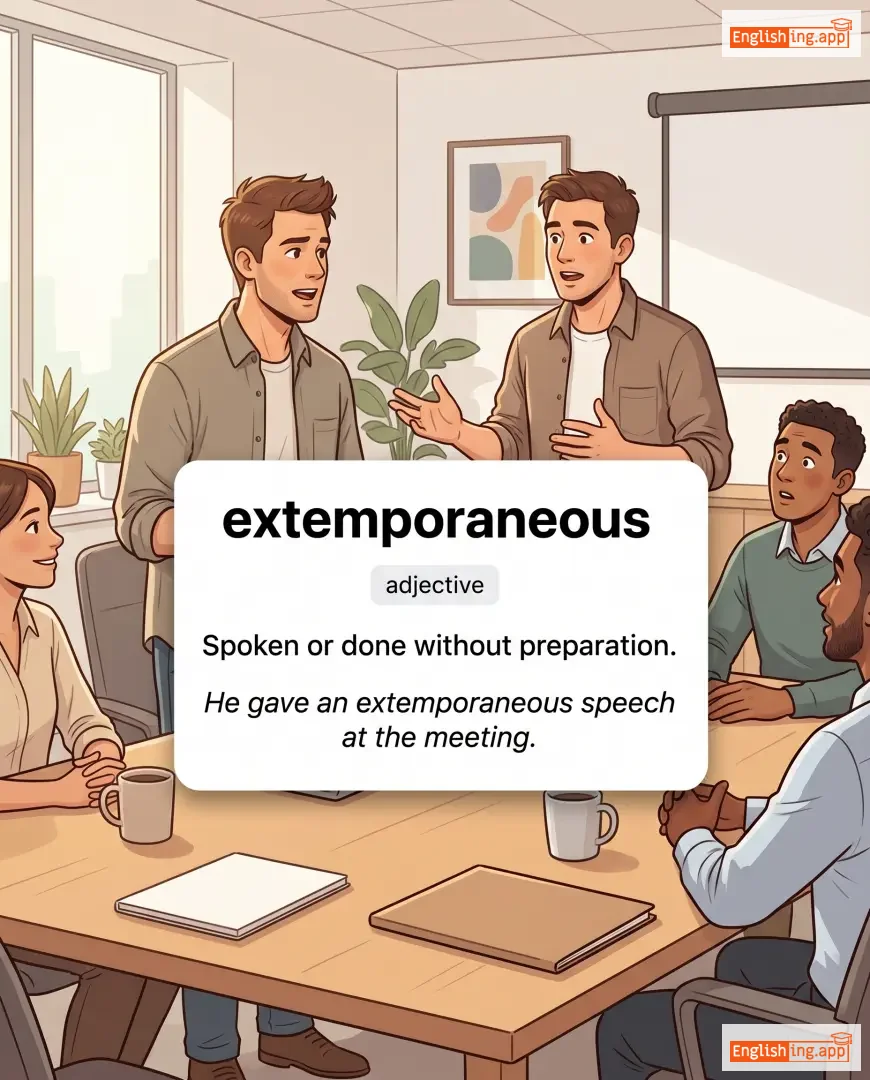
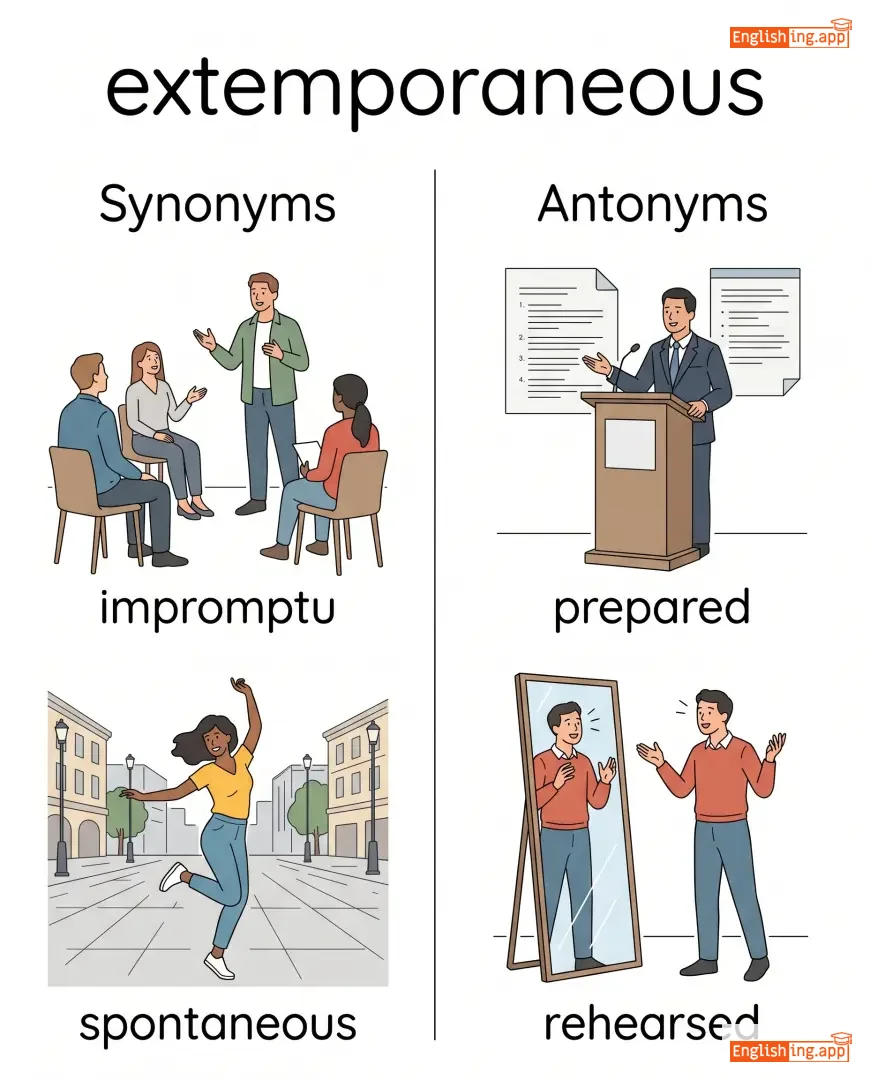
/ɪkˌstɛmpəˈreɪniəs/
adjective
(即兴的)
••••••
|
|
没有准备的讲话或行为
mei you zhun bei de jiang hua huo xing wei
••••••
|
- •••••• | - •••••• | - •••••• | - •••••• |
Spoken or done without preparation.
••••••
|
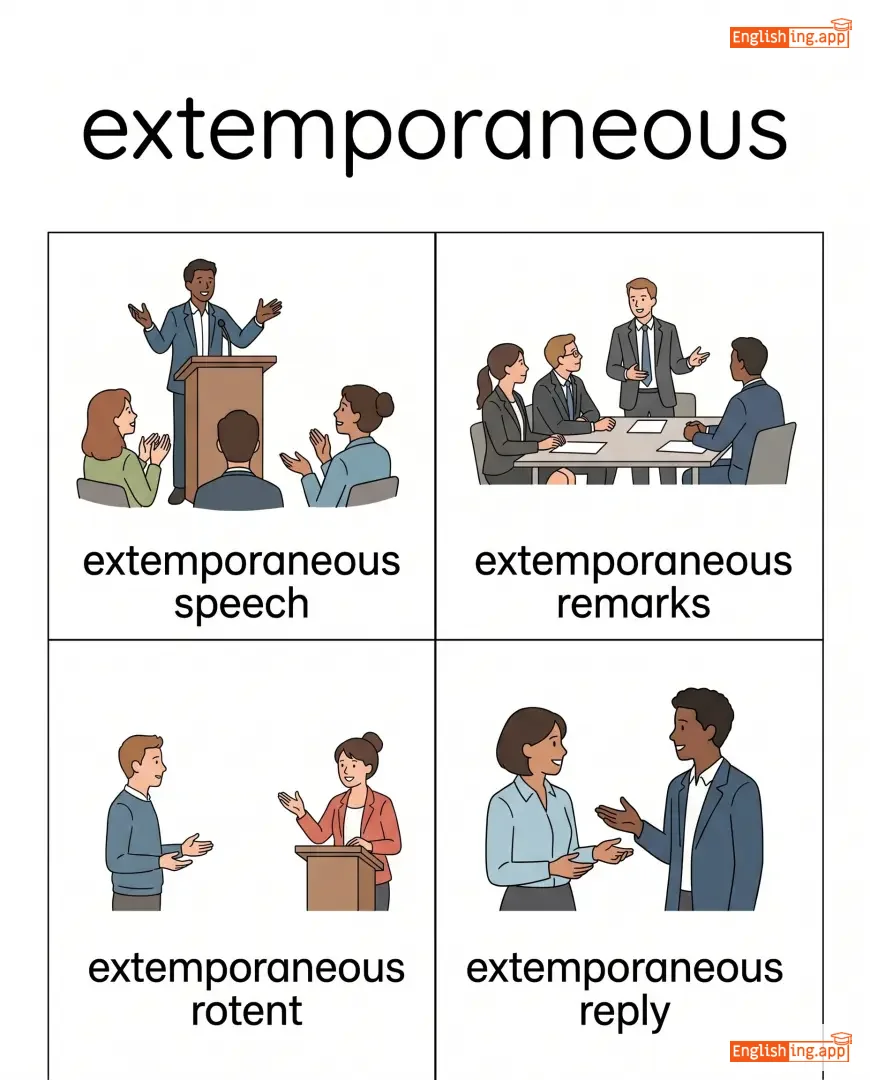
He gave an extemporaneous speech at the meeting. |
他在会议上发表了即兴演讲。
Ta zai hui yi shang fa biao le ji xing yan jiang.
••••••
|
- •••••• | - •••••• | - •••••• |
impromptu, spontaneous, improvised, unprepared
••••••
|
prepared, rehearsed, planned
••••••
|
extemporaneous speech, extemporaneous remarks, extemporaneous reply
••••••
|
即兴 = 没有准备的演讲
••••••
|
|
#3284
📜
|
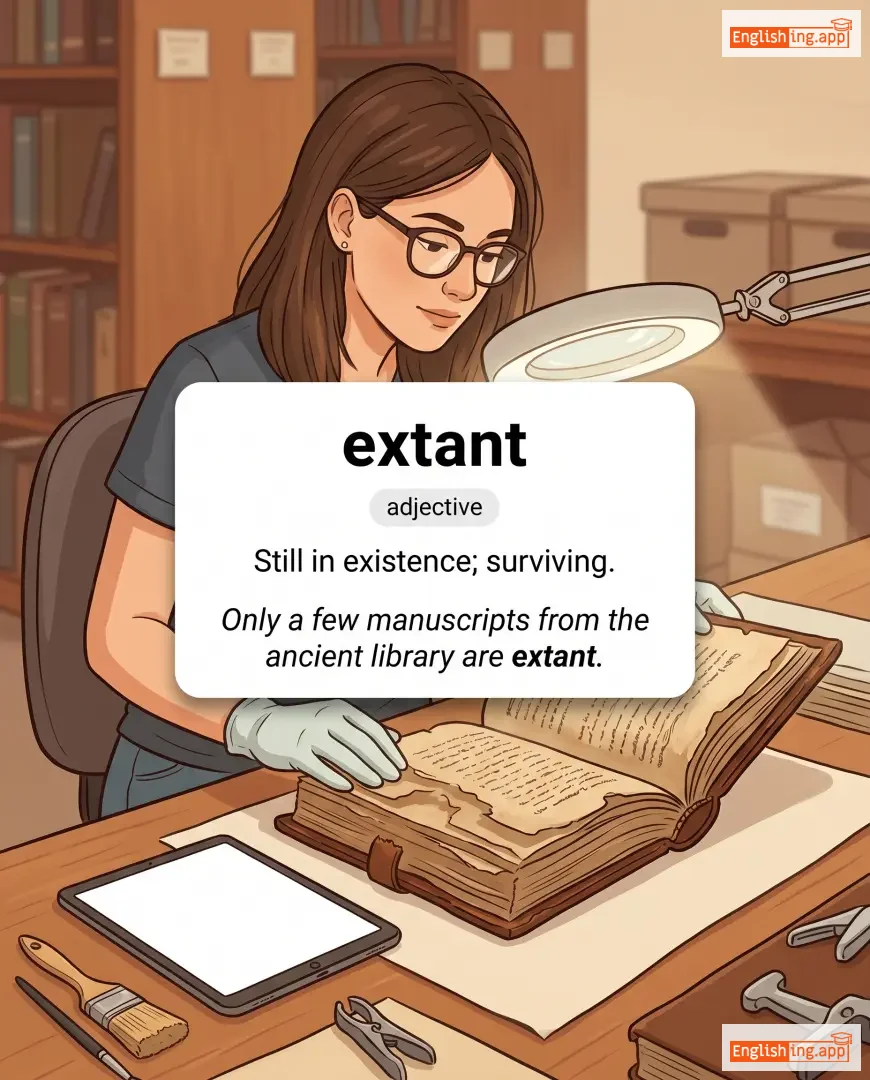
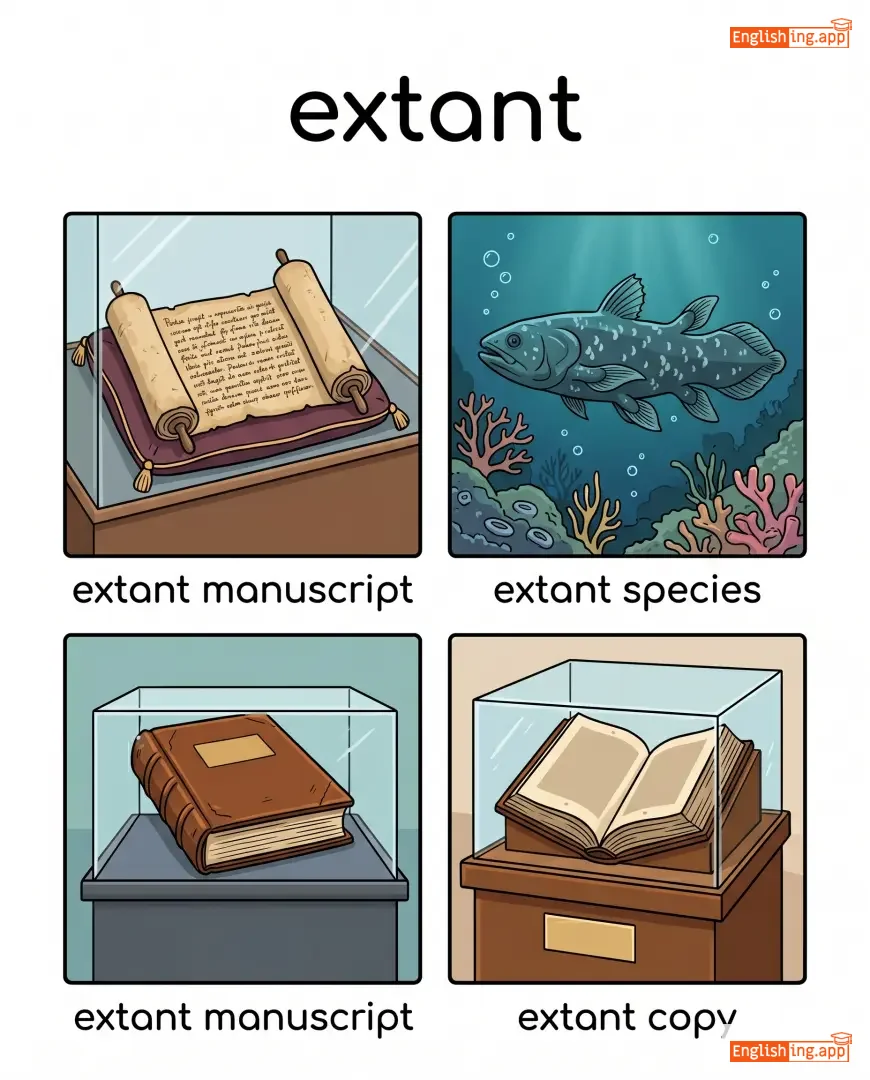
/ˈɛkstənt/
adjective
(èksītènt)
••••••
|
|
现存
xiàncún
••••••
|
- •••••• | - •••••• | - •••••• | - •••••• |
Still in existence; surviving.
••••••
|
Only a few manuscripts from the ancient library are extant.
只有几份古老图书馆的手稿仍然存在。
••••••
|
只有几份古老图书馆的手稿仍然存在。
Zhǐyǒu jǐ fèn gǔlǎo túshūguǎn de shǒugǎo réngrán cúnzài.
••••••
|
- •••••• | - •••••• | - •••••• |
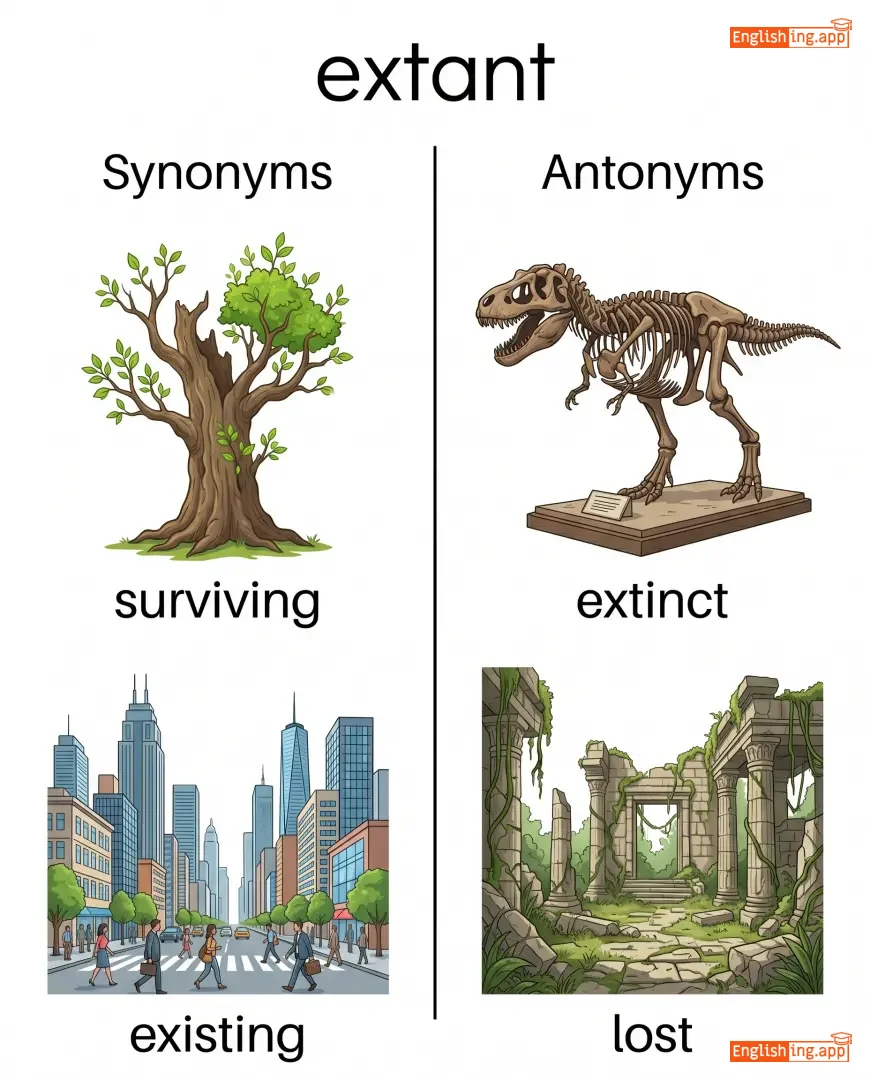
surviving, existing, remaining, present
••••••
|
extinct, lost, destroyed
••••••
|
extant manuscript, extant species, extant copy
••••••
|
Extant = 现存 = 仍然活着
••••••
|
|
#3285
💎
|
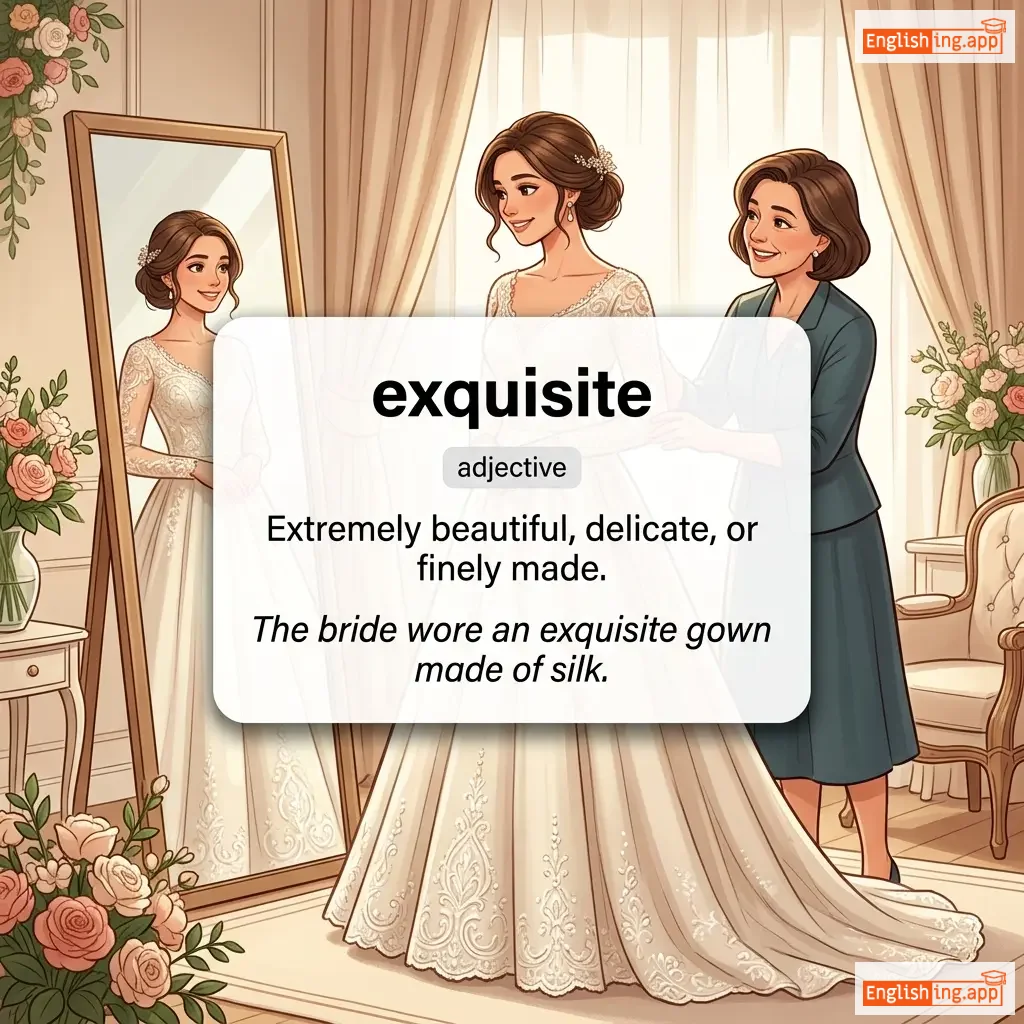
/ɪkˈskwɪzɪt/
adjective
(ɛkskwɪzɪt)
••••••
|
|
精致
jingzhi
••••••
|
- •••••• | - •••••• | - •••••• | - •••••• |
Extremely beautiful, delicate, or finely made.
••••••
|
The bride wore an exquisite gown made of silk. |
新娘穿着一件精致的丝绸礼服。
Xinniang chuanzhuo yijian jingzhi de sichou lifu.
••••••
|
- •••••• | - •••••• | - •••••• |
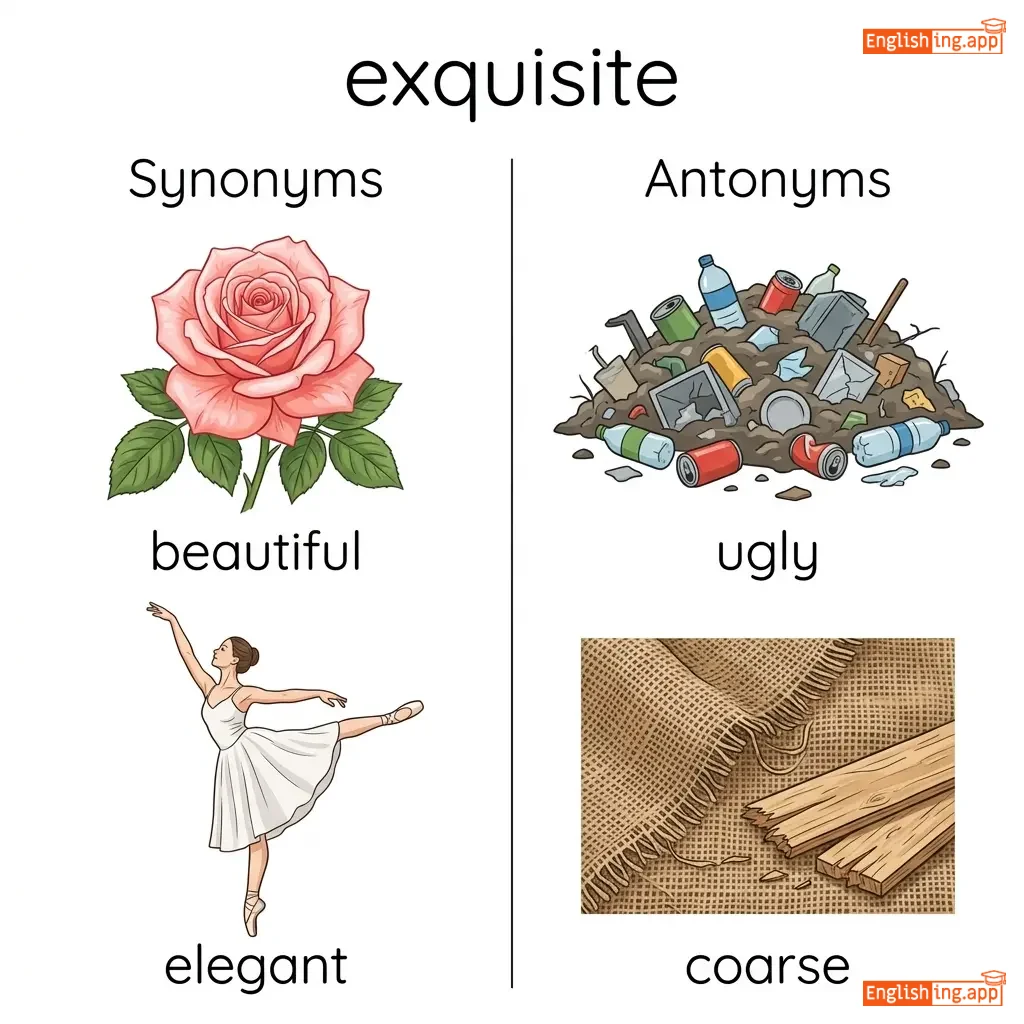
beautiful, elegant, delicate, refined, superb
••••••
|
ugly, coarse, crude
••••••
|
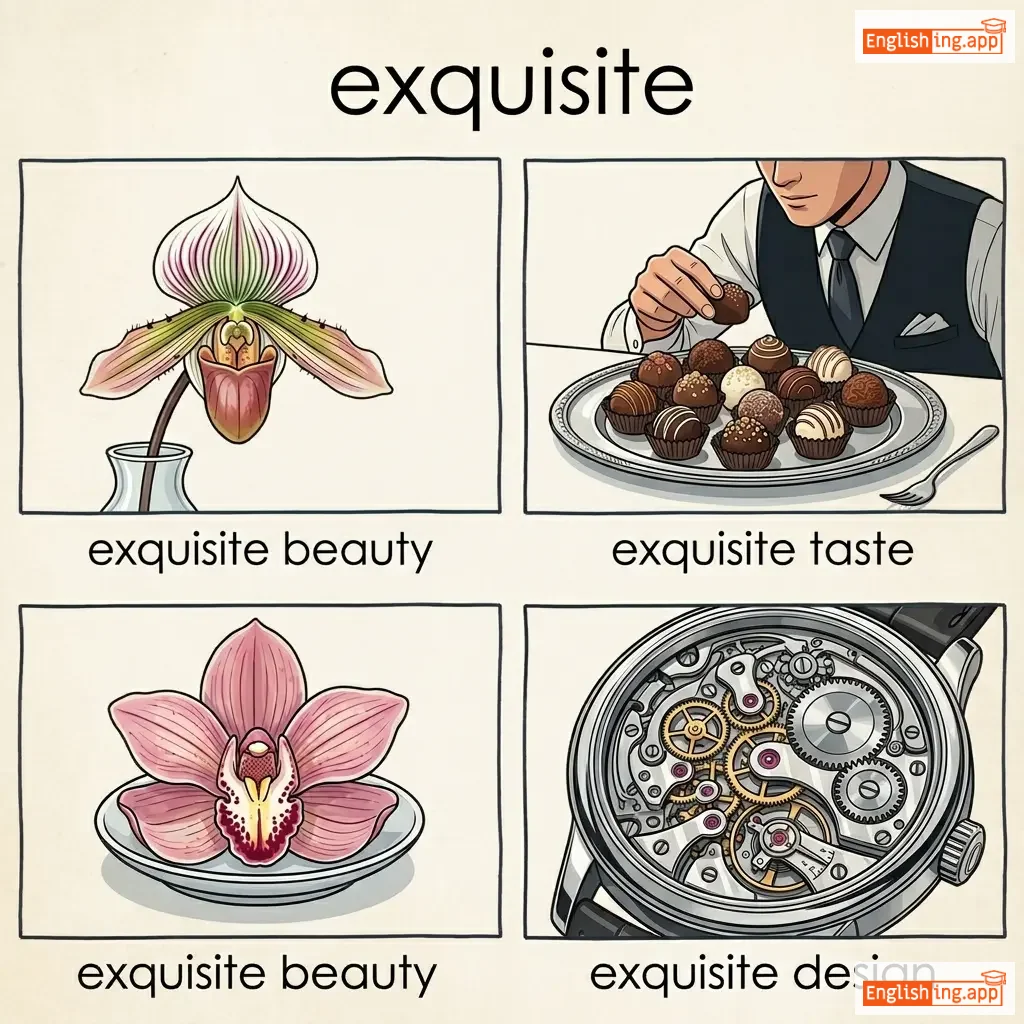
exquisite beauty, exquisite taste, exquisite design, exquisite detail
••••••
|
Exquisite = 精致,extra 美丽
••••••
|
|
#3286
🪤
|
/ɪkˈsplɔɪtətɪv/
adjective
(ɪksplɔɪtətɪv)
••••••
|
- •••••• |
剥削性的
bōxuè xìng de
••••••
|
- •••••• | - •••••• | - •••••• | - •••••• |
making use of a situation or people unfairly and unethically for one's own advantage
••••••
|
The workers protested against the exploitative practices of the factory.
工人们抗议工厂的剥削行为。
••••••
|
工人们抗议工厂的剥削行为。
Gōngrénmen kàngyì gōngchǎng de bōxuè xíngwéi.
••••••
|
- •••••• | - •••••• | - •••••• |
abusive, manipulative, oppressive, unfair, unethical
••••••
|
fair, supportive, ethical
••••••
|
exploitative practices, exploitative relationship, exploitative system, exploitative behavior
••••••
|
剥削性的就像剥削一样 — 如果剥削,都是剥削性的
••••••
|
|
#3287
🧽
|
/ɪkˈspʌndʒ/
verb
(ɪkˈspʌndʒ)
••••••
|
- •••••• |
擦除
cāchú
••••••
|
expunged
ɪkˈspʌndʒd
••••••
|
expunged
ɪkˈspʌndʒd
••••••
|
expunges
ɪkˈspʌndʒəz
••••••
|
expunging
ɪkˈspʌndʒɪŋ
••••••
|
To erase or remove completely, often something unwanted.
••••••
|
He managed to expunge the embarrassing memory from his mind.
他设法把尴尬的记忆从脑海中抹去。
••••••
|
他设法把尴尬的记忆从脑海中抹去。
Tā shèfǎ bǎ gāngà de jìyì cóng nǎohǎi zhōng mǒqù.
••••••
|
- •••••• | - •••••• | - •••••• |
erase, obliterate, delete, remove, eliminate
••••••
|
preserve, retain, keep
••••••
|
expunge record, expunge memory, expunge data
••••••
|
Ex + 海绵 = Expunge,意味着擦除所有内容。
••••••
|
|
#3288
🚪
|
/ɪkˈspʌlʃən/
noun
(ɪkˈspʌlʃən)
••••••
|
- •••••• |
开除
kaichu
••••••
|
- •••••• | - •••••• | - •••••• | - •••••• |
The act of forcing someone to leave a place, especially a school or country.
••••••
|
His constant misbehavior led to his expulsion from school. |
他不断的坏行为导致他被学校开除。
Tā bùduàn de huài xíngwéi dǎozhì tā bèi xuéxiào kāichú.
••••••
|
- •••••• | - •••••• | - •••••• |
banishment, dismissal, removal, deportation, ejection
••••••
|
admission, inclusion, acceptance
••••••
|
school expulsion, expulsion order, expulsion from
••••••
|
Expel + sion = 开除
••••••
|
|
#3289
🏗️
|
/ɛksˈproʊprieɪt/
verb
(èksī pǔ lǐ ēi tè)
••••••
|
- •••••• |
征用
zhēng yòng
••••••
|
expropriated
èksī pǔ lǐ ēi tèd
••••••
|
expropriated
èksī pǔ lǐ ēi tèd
••••••
|
expropriates
èksī pǔ lǐ ēi tè s
••••••
|
expropriating
èksī pǔ lǐ ēi tè ing
••••••
|
To take property from its owner, especially by authority or for public use.
••••••
|
The government decided to expropriate the land for a new highway.
政府决定征用这块土地来修建一条新高速公路。
••••••
|
政府决定征用这块土地来修建一条新高速公路。
Zhèngfǔ juédìng zhēngyòng zhè kuài tǔdì lái xiūjiàn yītiáo xīn gāosù gōnglù.
••••••
|
- •••••• | - •••••• | - •••••• |
seize, confiscate, appropriate, requisition, take
••••••
|
return, restore, give
••••••
|
expropriate land, expropriate property, government expropriation
••••••
|
Ex (外) + property = 征用, 意味着获取财产
••••••
|
|
#3290
🎭
|
/ɪkˈsprɛsɪv/
adjective
(表达性)
••••••
|
- •••••• |
表达性
biaodaxiang
••••••
|
- •••••• | - •••••• | - •••••• | - •••••• |
Effectively conveying thought or feeling.
••••••
|
Her eyes were so expressive that no words were needed. |
她的眼睛如此表达性,以至于不需要任何话语。
Ta de yanjing ruci biaodaxiang, yi zhi yu bu xuyao renhe huayu.
••••••
|
- •••••• | - •••••• | - •••••• |
eloquent, revealing, meaningful, communicative, articulate
••••••
|
expressionless, blank, inexpressive
••••••
|
expressive eyes, expressive face, highly expressive, deeply expressive
••••••
|
Express + 眼睛 = 表达性
••••••
|
|
#3291
🗣️
|
/ɪkˈspaʊnd/
verb
(ɛks-paʊnd)
••••••
|
- •••••• |
详细阐述
xiángxì chǎnshù
••••••
|
expounded
ɛks-paʊndəd
••••••
|
expounded
ɛks-paʊndəd
••••••
|
expounds
ɛks-paʊndz
••••••
|
expounding
ɛks-paʊndɪŋ
••••••
|
to present and explain in detail
••••••
|
The professor expounded the theory in simple terms.
教授用简单的术语详细阐述了这个理论。
••••••
|
教授用简单的术语详细阐述了这个理论。
Jiàoshòu yòng jiǎndān de shùyǔ xiángxì chǎnshùle zhège lǐlùn.
••••••
|
- •••••• | - •••••• | - •••••• |
explain, elaborate, clarify, interpret
••••••
|
confuse, obscure
••••••
|
expound a theory, expound an idea, expound philosophy
••••••
|
Expound 就是详细阐述
••••••
|
|
#3292
☀️
|
/ɪkˈspəʊʒər/
noun
(eks-pozur)
••••••
|
- •••••• |
暴露
baolu
••••••
|
- •••••• | - •••••• | - •••••• | - •••••• |
the state of being exposed to contact with something, especially harmful
••••••
|
Prolonged exposure to the sun can damage your skin. |
长时间暴露在阳光下会损害皮肤。
Chang shijian baolu zai yangguang xia hui sunhai pifu.
••••••
|
exposure therapy |
a treatment that helps people face and reduce fear
••••••
|
暴露疗法
baolu liaofa
••••••
|
contact, vulnerability, openness, disclosure
••••••
|
protection, concealment
••••••
|
exposure to risk, exposure therapy, media exposure, sun exposure
••••••
|
暴露在阳光下 = 皮肤损伤, 中文: 暴露
••••••
|
|
#3293
⚠️
|
/ɪkˌspɒstjʊˈleɪʃən/
noun
(èks-pòu-sī-tú-léi-shēn)
••••••
|
- •••••• |
抗议
kàngyì
••••••
|
- •••••• | - •••••• | - •••••• | - •••••• |
the act of expressing protest or disagreement
••••••
|
His expostulation against the unfair rules was ignored.
他对不公平规则的抗议被忽视了。
••••••
|
他对不公平规则的抗议被忽视了。
Tā duì bù gōngpíng guīzé de kàngyì bèi hūshìle.
••••••
|
- •••••• | - •••••• | - •••••• |
objection, protest, complaint, remonstrance
••••••
|
agreement, approval
••••••
|
loud expostulation, expostulation against, expostulation with
••••••
|
Expostulation 是表达抗议—不同意规则
••••••
|
|
#3294
🙅
|
/ɪkˈspɒstjʊleɪt/
verb
(ɛkspɔstjʊleɪt)
••••••
|
- •••••• |
表示不同意见
biǎoshì bùtóng yìjiàn
••••••
|
expostulated
ɛkspɔstjʊleɪtɪd
••••••
|
expostulated
ɛkspɔstjʊleɪtɪd
••••••
|
expostulates
ɛkspɔstjʊleɪts
••••••
|
expostulating
ɛkspɔstjʊleɪtɪŋ
••••••
|
to express strong disapproval or disagreement
••••••
|
She expostulated with her friend about the risky decision.
她对她朋友关于冒险决定的看法表达了不同意见
••••••
|
她对她朋友关于冒险决定的看法表达了不同意见。
Tā duì tā péngyǒu guānyú màoxiǎn juédìng de kànfǎ biǎodále bùtóng yìjiàn.
••••••
|
- •••••• | - •••••• | - •••••• |
protest, object, oppose, argue, remonstrate
••••••
|
agree, approve
••••••
|
expostulate with, expostulate against
••••••
|
Expostulate 意味着表示不同意见 — 就像对某事说'不'
••••••
|
|
#3295
📖
|
/ɪkˈspɒzɪtəri/
adjective
(ɪkˈspɒzɪtəri)
••••••
|
|
说明的
shuōmíng de
••••••
|
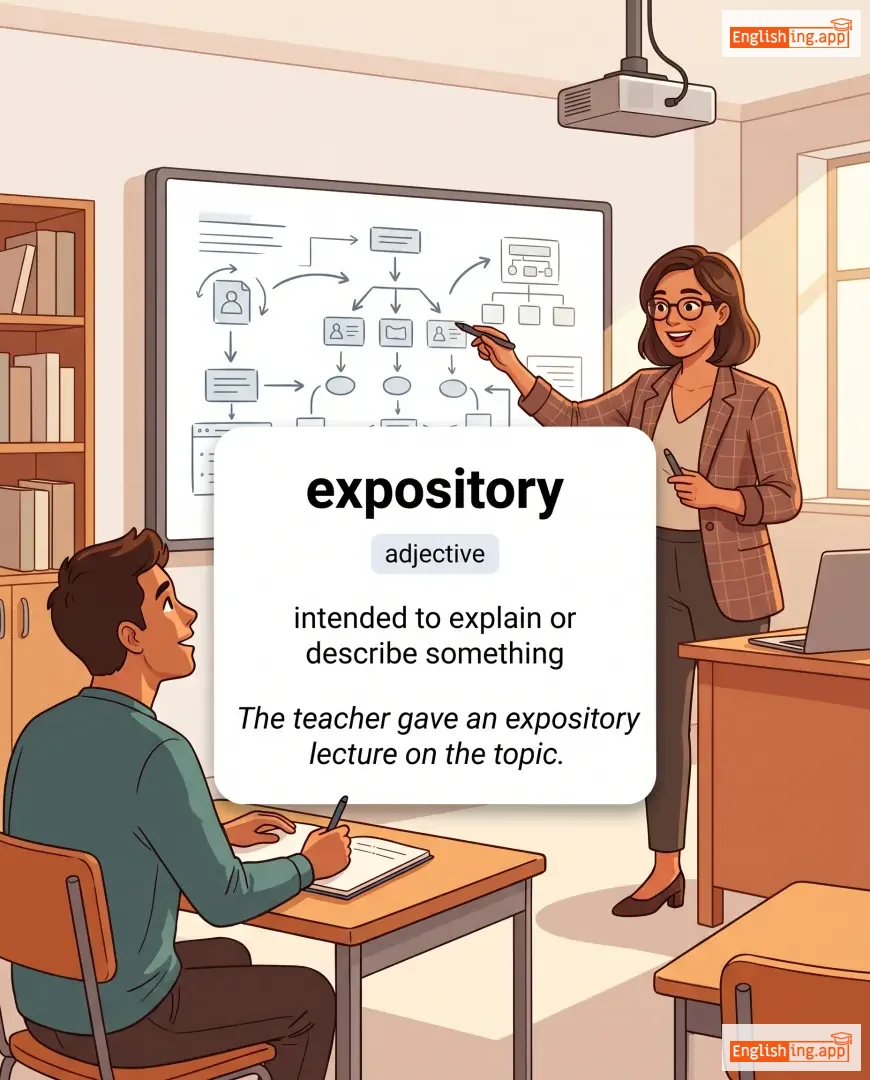
- •••••• | - •••••• | - •••••• | - •••••• |
intended to explain or describe something
••••••
|
The teacher gave an expository lecture on the topic. |
老师就这个话题进行了说明性的讲座。
Lǎoshī jiù zhège huàtí jìnxíngle shuōmíng xìng de jiǎngzuò.
••••••
|
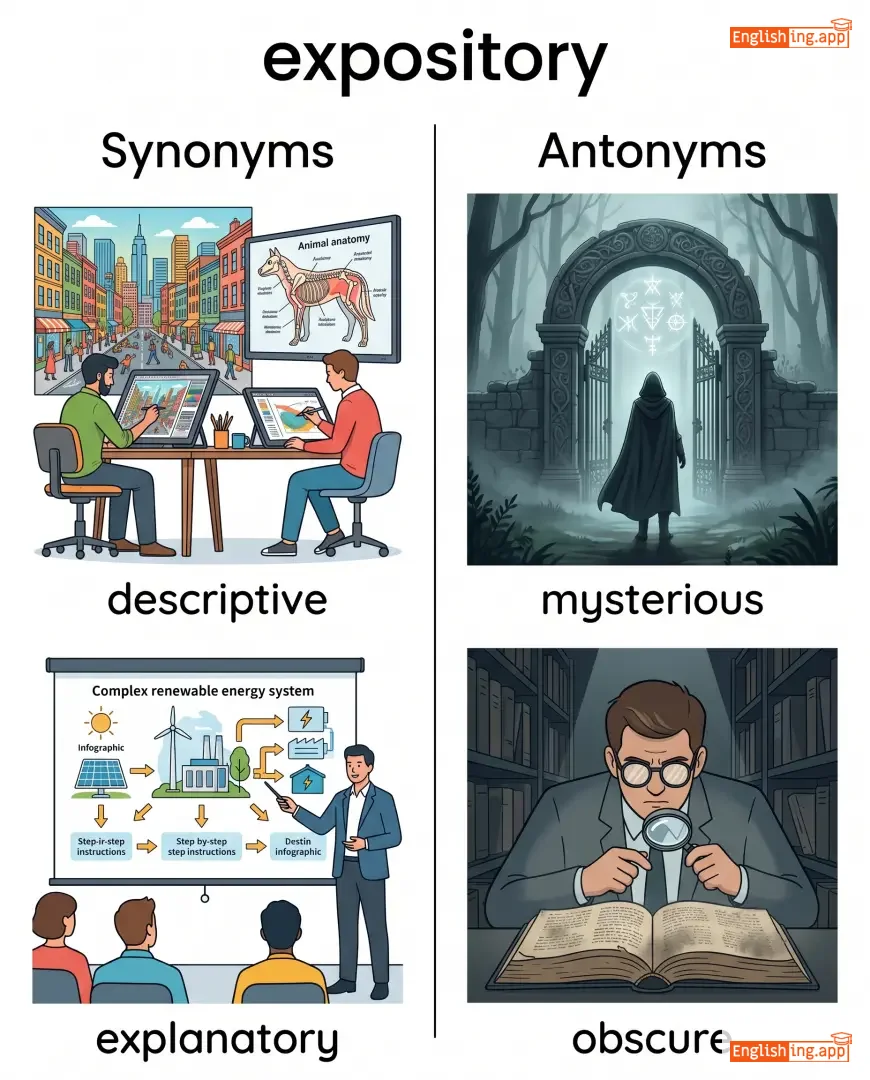
- •••••• | - •••••• | - •••••• |
descriptive, explanatory, illustrative, interpretative
••••••
|
mysterious, obscure
••••••
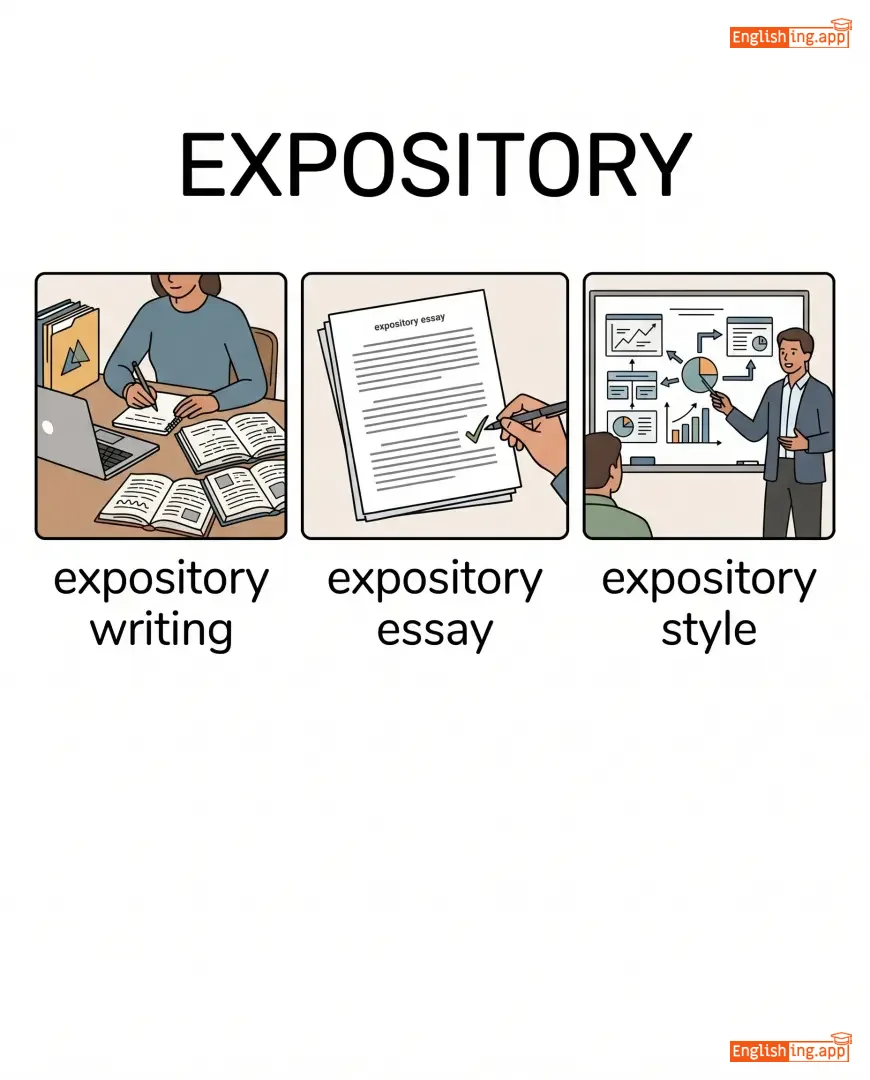
|
expository writing, expository essay, expository style, expository text
••••••
|
Expository听起来像'解释'—中文意思是'说明的'。
••••••
|
|
#3296
🎤
|
/ˌekspəˈzɪʃən/
noun
(èks-póu-zhí-shùn)
••••••
|
- •••••• |
阐述 / 展览
chǎnshù / zhǎnlǎn
••••••
|
- •••••• | - •••••• | - •••••• | - •••••• |
a detailed explanation or a large public exhibition
••••••
|
The scientist gave a clear exposition of the theory. |
科学家清楚地阐述了这个理论。
Kēxuéjiā qīngchǔ de chǎnshùle zhège lǐlùn.
••••••
|
- •••••• | - •••••• | - •••••• |
explanation, description, exhibition, presentation, display
••••••
|
confusion, obscurity
••••••
|
international exposition, exposition of theory, world exposition
••••••
|
Exposition 是详细解释或展览 – 记住 Expo 就是大型展览。
••••••
|
|
#3297
🔎
|
/ɪkˈspoʊz/
verb
(èks-pòu-zī)
••••••
|
|
揭露
jiēlù
••••••
|
exposed
èks-pòu-zhī-dè
••••••
|
exposed
èks-pòu-zhī-dè
••••••
|
exposes
èks-pòu-zhī
••••••
|
exposing
èks-pòu-zhīng
••••••
|
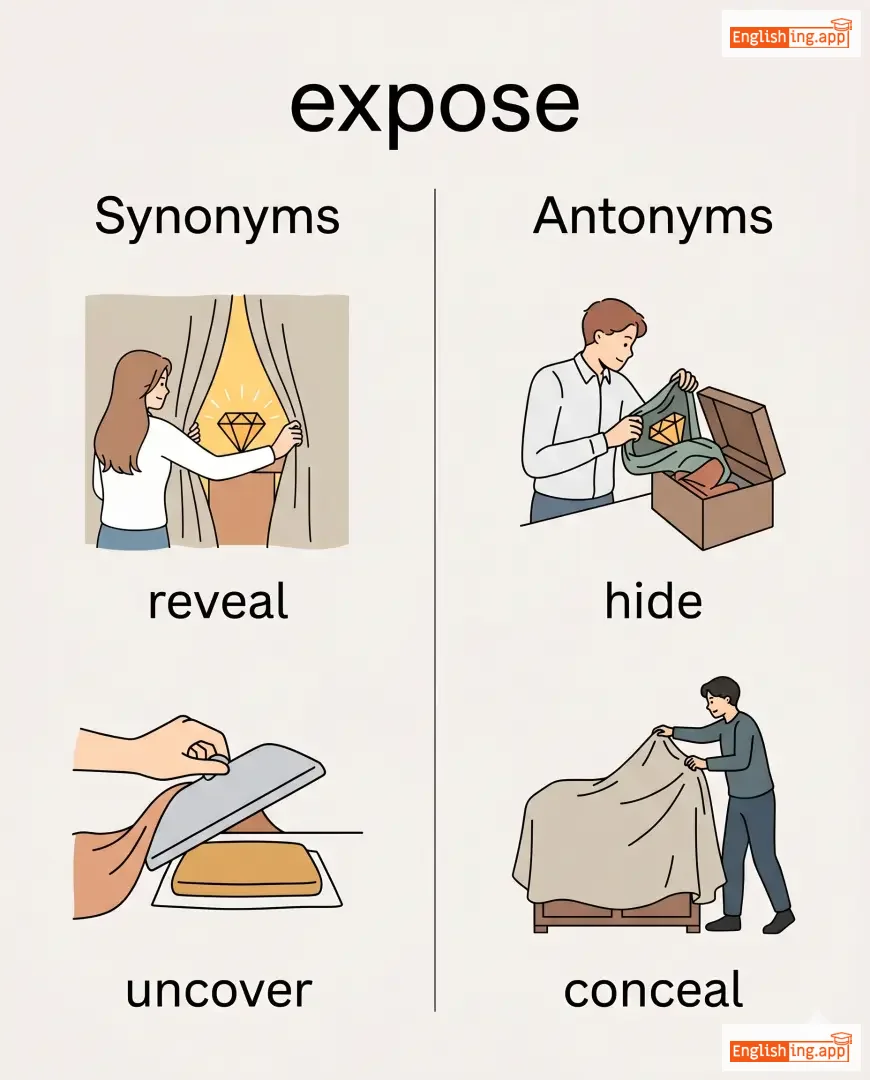
to reveal or uncover something hidden
••••••
|
The journalist tried to expose the corruption scandal.
记者试图揭露腐败丑闻。
••••••
|
记者试图揭露腐败丑闻。
Jìzhě shìtú jiēlù fǔbài chǒuwén.
••••••
|
expose the truth
揭露真相
••••••
|
to reveal the real facts
••••••
|
揭露真相
jiēlù zhēnxiàng
••••••
|
reveal, uncover, disclose, unveil
••••••
|
hide, conceal, cover
••••••
|
expose corruption, expose truth, expose secrets, expose fraud
••••••
|
揭露就像打开'盒子',里面隐藏着东西。
••••••
|
|
#3298
📢
|
/ɪkˈspoʊnənt/
noun
(ɛkˈspəʊnənt)
••••••
|
- •••••• |
指数
zhǐshù
••••••
|
- •••••• | - •••••• | - •••••• | - •••••• |
a person who supports, promotes, or explains an idea; in math, a symbol denoting power
••••••
|
She is a leading exponent of modern dance. |
她是现代舞蹈的领先指数。
Tā shì xiàndài wǔdǎo de lǐngxiān zhǐshù.
••••••
|
- •••••• | - •••••• | - •••••• |
advocate, proponent, supporter, promoter, exponent
••••••
|
opponent, critic
••••••
|
leading exponent, exponent of theory, exponent in mathematics
••••••
|
Exponent 代表着数学中的幂,如同支持者推广一个想法。
••••••
|
|
#3299
🧨
|
/ɪkˈsploʊsɪv/
adjective
(èksplósiv)
••••••
|
- •••••• |
爆炸性
bàozhàxìng
••••••
|
- •••••• | - •••••• | - •••••• | - •••••• |
able to cause an explosion; likely to burst out suddenly
••••••
|
The situation became explosive after the argument. |
争论后局势变得爆炸性。
zhēnglùn hòu júshì biàn dé bàozhàxìng.
••••••
|
explosive growth |
very rapid and intense growth
••••••
|
爆炸性增长
bàozhàxìng zēngzhǎng
••••••
|
volatile, dangerous, combustible, eruptive
••••••
|
stable, calm, safe
••••••
|
explosive device, explosive growth, explosive force, explosive situation
••••••
|
爆炸性意味着可能爆炸 – 热烈的情况可能会突然爆发。
••••••
|
|
#3300
💥
|
/ɪkˈsploʊʒən/
noun
(爆炸)
••••••
|
- •••••• |
爆炸
baozha
••••••
|
- •••••• | - •••••• | - •••••• | - •••••• |
a violent burst or release of energy, often causing damage and noise
••••••
|
The explosion shook the entire neighborhood. |
爆炸震动了整个社区。
Baozha zhendong le zheng ge shequ.
••••••
|
go off like an explosion |
to suddenly happen with great force or intensity
••••••
|
像爆炸一样爆发
Xiang baozha yi yang baofa
••••••
|
blast, detonation, eruption, burst, outbreak
••••••
|
implosion, silence, calm
••••••
|
massive explosion, gas explosion, explosion of anger, sudden explosion
••••••
|
Explosion = 巨大的爆炸! 想象爆炸的力量来记住它!
••••••
|
Vocabulary Quiz
Test your vocabulary by matching words with their translations or meanings.
Login to take the quiz
Comments (0)
Share your thoughts and join the discussion.
Join the discussion by logging in
Login to CommentNo comments yet
Be the first to share your thoughts!