

翻訳
過去
過去分詞
三人称単数
動名詞
意味
例文
例文の翻訳
同義語
対義語
コロケーション
ニーモニック



Swipe left or right, or use the buttons. Tap image to zoom.
例文の翻訳
単語
Lesson 139Lesson 139 - マスクトグル
|
絵文字
|
単語 | Images | 翻訳 | 過去 | 過去分詞 | 三人称単数 | 動名詞 | 意味 | 例文 | 例文の翻訳 | 表現例 | 表現例の意味 | 表現例の翻訳 | 同義語 | 対義語 | コロケーション | ニーモニック |
|---|---|---|---|---|---|---|---|---|---|---|---|---|---|---|---|---|---|
|
#4141
🙏
|
/ˈhɒm.ɪdʒ/ or /ˈɑː.mɑːʒ/
noun
(オマージュ)
••••••
|
- •••••• |
オマージュ
omāju
••••••
|
- •••••• | - •••••• | - •••••• | - •••••• |
Special honor, respect, or tribute shown publicly.
••••••
|
The statue was built as an homage to the national hero.
その像は国民的英雄へのオマージュとして建てられました。
••••••
|
その像は国民的英雄へのオマージュとして建てられました。
Sono zō wa kokumin-teki eiyū e no omāju toshite tateraremashita.
••••••
|
pay homage
オマージュを捧げる
••••••
|
to show respect or tribute
••••••
|
オマージュを捧げる
omāju wo sasageru
••••••
|
respect, tribute, honor, reverence, admiration
••••••
|
disrespect, dishonor, insult
••••••
|
pay homage, homage to tradition, homage to hero
••••••
|
Homageは長老に敬意を表すこと
••••••
|
|
#4142
🎭
|
/ˈhʊdwɪŋk/
verb
(フッドウィンク)
••••••
|
- •••••• |
だます
damasu
••••••
|
hoodwinked
フッドウィンクド
••••••
|
hoodwinked
フッドウィンクド
••••••
|
hoodwinks
フッドウィンクス
••••••
|
hoodwinking
フッドウィンキング
••••••
|
To deceive or trick someone.
••••••
|
The scammer hoodwinked many people with false promises.
詐欺師は嘘の約束で多くの人々をだました。
••••••
|
詐欺師は嘘の約束で多くの人々をだました。
Sagishi wa uso no yakusoku de ōku no hitobito o damashita.
••••••
|
- •••••• | - •••••• | - •••••• |
deceive, trick, dupe, mislead, cheat
••••••
|
inform, enlighten, guide
••••••
|
hoodwink customers, hoodwink investors, completely hoodwink
••••••
|
Hood + wink → 目をひとまかせにしてだます
••••••
|
|
#4143
💰
|
/ˌɒnəˈreəriəm/
noun
(オノラリアム)
••••••
|
- •••••• |
謝礼
sharei
••••••
|
- •••••• | - •••••• | - •••••• | - •••••• |
A payment given for professional services that are rendered without a fee.
••••••
|
The guest lecturer received an honorarium for her talk.
ゲスト講師は彼女の講演に対して honorarium を受け取った。
••••••
|
ゲスト講師は彼女の講演に対して謝礼を受け取った。
Gesuto kōshi wa kanojo no kōen ni taishite sharei o uketotta.
••••••
|
- •••••• | - •••••• | - •••••• |
payment, fee, compensation, stipend
••••••
|
penalty, fine
••••••
|
receive honorarium, pay honorarium, modest honorarium
••••••
|
Honor + 礼 → 謝礼, 謝意を込めた支払い
••••••
|
|
#4144
🪒
|
/hoʊn/
verb
(ホン)
••••••
|
- •••••• |
研ぐ、スキルを磨く
togu, sukiru wo migaku
••••••
|
honed
ホンド
••••••
|
honed
ホンド
••••••
|
hones
ホネス
••••••
|
honing
ホーニング
••••••
|
To sharpen a blade or to improve a skill through practice.
••••••
|
She honed her presentation skills before the big meeting.
彼女は大きな会議の前にプレゼンテーションスキルを磨きました。
••••••
|
彼女は大きな会議の前にプレゼンテーションスキルを磨きました。
kanojo wa ōkina kaigi no mae ni purezentēshon sukiru wo migakimashita.
••••••
|
hone in on
焦点を合わせる
••••••
|
to focus attention on something specific
••••••
|
特定のことに集中する
tokutei no koto ni shūchū suru
••••••
|
sharpen, refine, polish, perfect, improve
••••••
|
dull, worsen
••••••
|
hone skills, hone abilities, hone strategy, hone talent
••••••
|
Honeは「研ぐ」→研ぐことでスキルが向上します
••••••
|
|
#4145
🔊
|
/ˈhɒməˌfoʊn/
noun
(ホモフォン)
••••••
|
- •••••• |
同音異義語
dōon igigo
••••••
|
- •••••• | - •••••• | - •••••• | - •••••• |
A word that is pronounced the same as another word but differs in meaning, and often spelling.
••••••
|
The words 'pair' and 'pear' are homophones.
「pair」と「pear」の単語は同音異義語です。
••••••
|
「pair」と「pear」の単語は同音異義語です。
'pair' to 'pear' no tango wa dōon igigo desu.
••••••
|
- •••••• | - •••••• | - •••••• |
sound-alike, homonym, same-sounding word, phonetic twin
••••••
|
heteronym, antonym
••••••
|
common homophone, confusing homophone, list of homophones
••••••
|
Homo は同じ、phone は音 → 同じ音、違う意味
••••••
|
|
#4146
🔤
|
/ˈhɑː.mə.nɪm/
noun
(ホモニム)
••••••
|
- •••••• |
同義語
dōgigo
••••••
|
- •••••• | - •••••• | - •••••• | - •••••• |
A word that is spelled and pronounced like another word but has a different meaning.
••••••
|
The word 'bat' is a homonym because it can mean an animal or a sports tool. |
'コウモリ'という言葉は、動物またはスポーツ用品を意味することができるため、同義語です。
'Kōmori' to iu kotoba wa, dōbutsu matawa supōtsu yōhin o imi suru koto ga dekiru tame, dōgigo desu.
••••••
|
- •••••• | - •••••• | - •••••• |
same-sounding word, equivalent word, duplicate term
••••••
|
distinct word, unique word
••••••
|
common homonym, confusing homonym, classic homonym
••••••
|
HOMO は一つ、NIM は名前を意味します — 同義語は同じ名前でも意味が異なります。
••••••
|
|
#4147
🧬
|
/həˈmɑː.lə.ɡəs/
adjective
(ホモローガス)
••••••
|
- •••••• |
同源 (構造)
dōgen (kōzō)
••••••
|
- •••••• | - •••••• | - •••••• | - •••••• |
Having the same relation, relative position, or structure, especially due to evolutionary origin.
••••••
|
The wings of bats and the arms of humans are homologous structures.
コウモリの翼と人間の腕は同源の構造です。
••••••
|
コウモリの翼と人間の腕は同源の構造です。
Kōmori no tsubasa to ningen no ude wa dōgen no kōzō desu.
••••••
|
- •••••• | - •••••• | - •••••• |
equivalent, corresponding, analogous, parallel
••••••
|
different, unrelated, dissimilar
••••••
|
homologous structures, homologous chromosomes, homologous pairs
••••••
|
HOMOは一つを意味し、LOGOSは関係を意味します — homologousは同じ関係または構造を意味します。
••••••
|
|
#4148
🔄
|
/həˈmɑː.dʒə.nəs/
adjective
(ホモジナス)
••••••
|
- •••••• |
同質の
doushitsu no
••••••
|
- •••••• | - •••••• | - •••••• | - •••••• |
Similar or uniform in nature; often used interchangeably with 'homogeneous'.
••••••
|
The class was made up of a homogenous group of students.
クラスは同質の学生グループで構成されていました。
••••••
|
クラスは同質の学生グループで構成されていました。
Kurasu wa doushitsu no gakusei gurūpu de kōsei sareteimashita.
••••••
|
- •••••• | - •••••• | - •••••• |
uniform, consistent, alike, similar
••••••
|
heterogeneous, diverse
••••••
|
homogenous mixture, homogenous society, homogenous culture
••••••
|
同質の = 同質的に使われ、意味は均一または似た性質です。
••••••
|
|
#4149
🥛
|
/həˈmɑː.dʒə.naɪz/
verb
(ホモジェナイズ)
••••••
|
- •••••• |
均質化
kinshitsuka
••••••
|
homogenized
ホモジェナイズド
••••••
|
homogenized
ホモジェナイズド
••••••
|
homogenizes
ホモジェナイズズ
••••••
|
homogenizing
ホモジェナイジング
••••••
|
To make uniform or similar by blending or mixing different elements.
••••••
|
The company tried to homogenize its products across global markets.
その会社は世界市場で製品を均質化しようとしました。
••••••
|
その会社は世界市場で製品を均質化しようとしました。
Sono kaisha wa sekai shijō de seihin o kinshitsuka shiyō to shimashita.
••••••
|
- •••••• | - •••••• | - •••••• |
standardize, blend, unify, integrate, equalize
••••••
|
differentiate, diversify, vary
••••••
|
homogenize milk, homogenize culture, homogenize products, homogenize society
••••••
|
均質化は要素を混ぜて同じになること。
••••••
|
|
#4150
⚖️
|
/ˌhoʊ.məˈdʒiː.ni.əs/
adjective
(ホモジーニアス)
••••••
|
|
均質な
kinshitsuna
••••••
|
- •••••• | - •••••• | - •••••• | - •••••• |
Consisting of parts or elements that are all the same kind; uniform in composition.
••••••
|
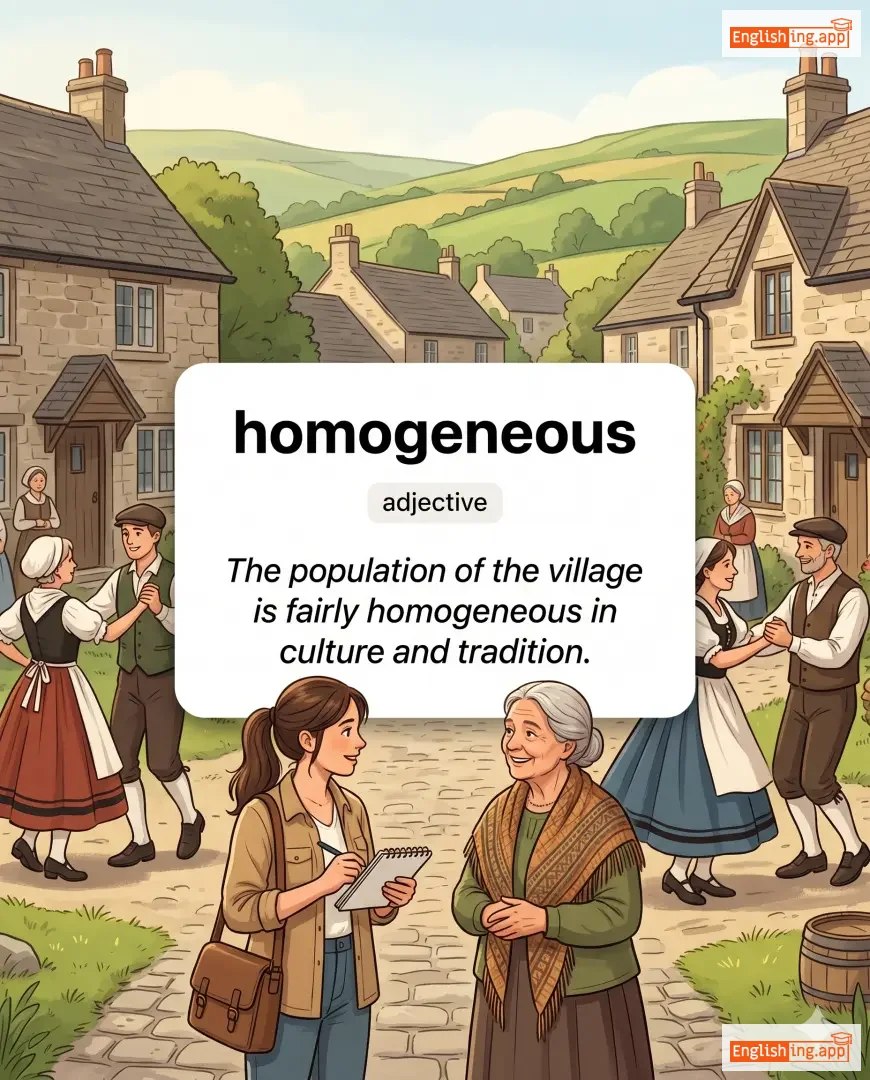
The population of the village is fairly homogeneous in culture and tradition.
その村の人口は文化や伝統においてかなり均質です。
••••••
|
その村の人口は文化や伝統においてかなり均質です。
Sono mura no jinkō wa bunka ya dentō ni oite kanari kinshitsudesu.
••••••
|
- •••••• | - •••••• | - •••••• |
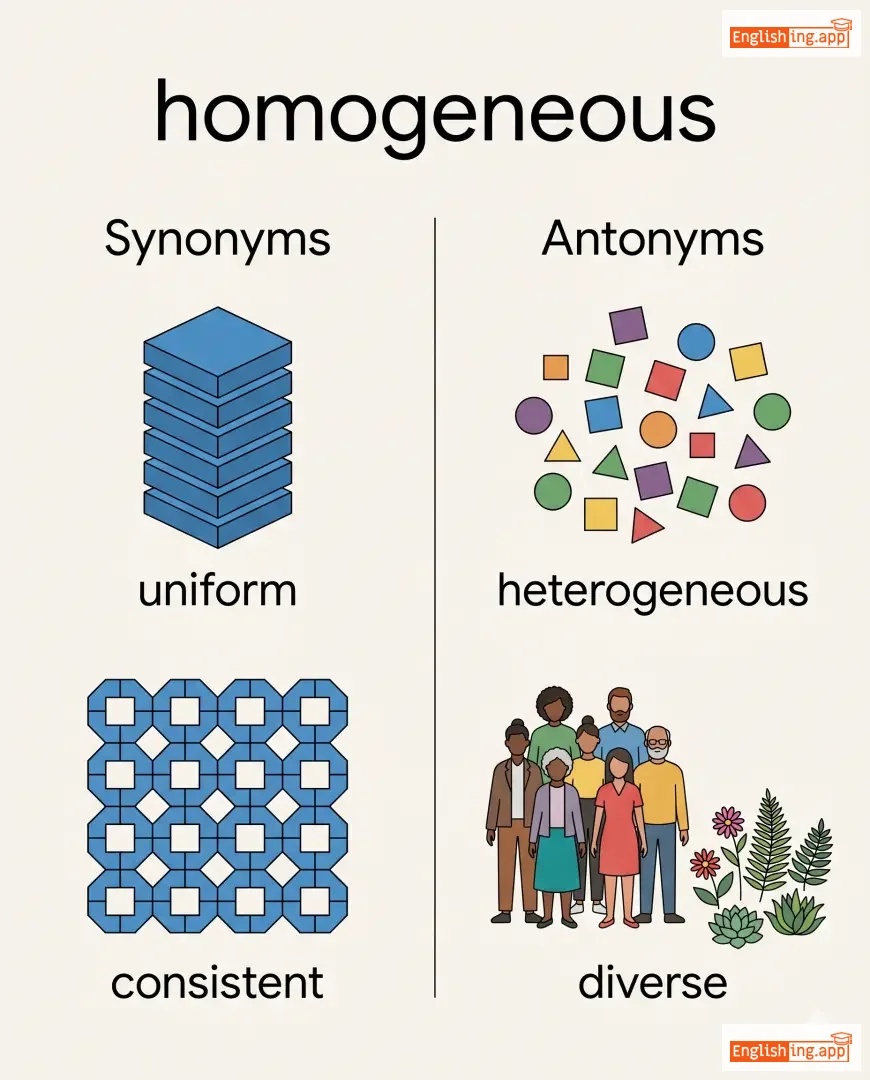
uniform, consistent, alike, identical, standardized
••••••
|
heterogeneous, diverse, varied
••••••
|
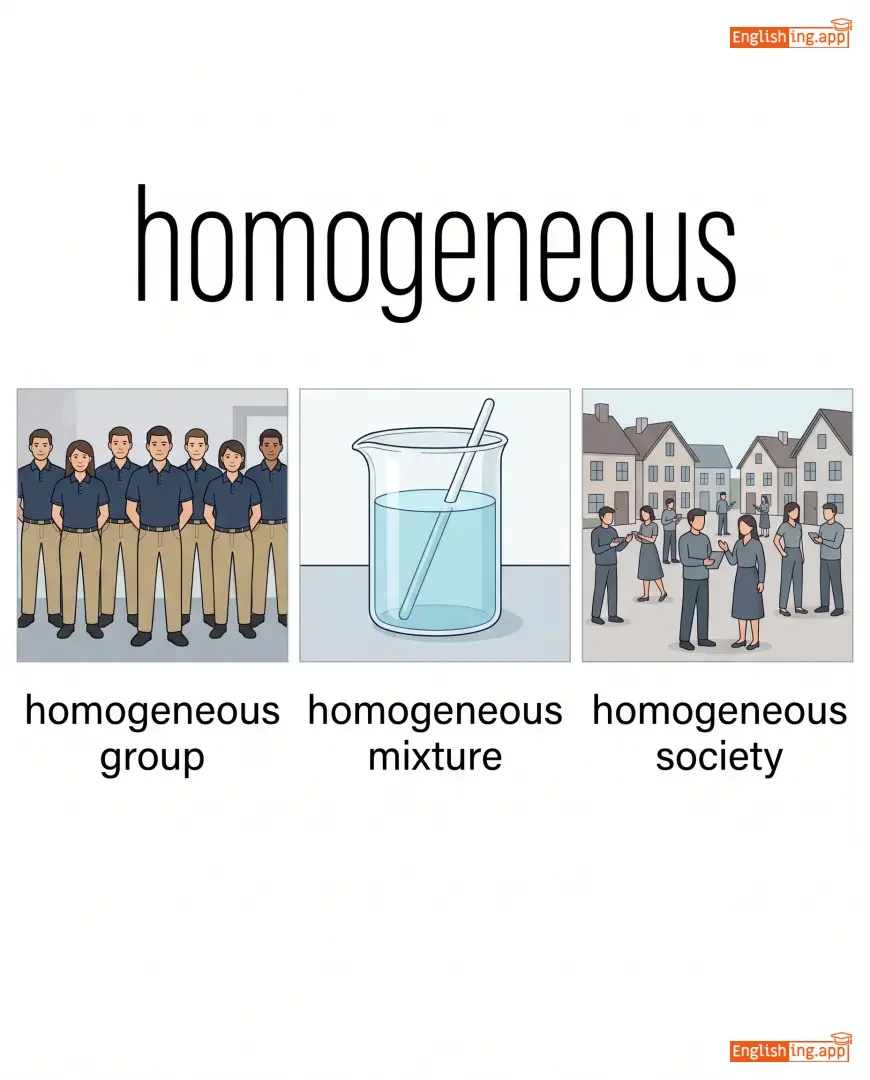
homogeneous group, homogeneous mixture, homogeneous society, homogeneous culture
••••••
|
HOMOは同じ意味だから、均質なはすべて同じという意味です(kinshitsuna)。
••••••
|
|
#4151
🔁
|
/ˌhoʊmə.dʒəˈniːəti/
noun
••••••
|
- •••••• | - •••••• | - •••••• | - •••••• | - •••••• | - •••••• |
The quality or state of being all the same or all of the same kind.
••••••
|
The cultural homogeneity of the village made it feel unified. |
- •••••• | - •••••• | - •••••• | - •••••• |
uniformity, sameness, similarity, consistency
••••••
|
diversity, variety, heterogeneity
••••••
|
cultural homogeneity, racial homogeneity, social homogeneity
••••••
|
No •••••• |
|
#4152
⛪
|
/ˈhɑː.mə.li/
noun
(ホミリー)
••••••
|
|
説教
sekkyou
••••••
|
- •••••• | - •••••• | - •••••• | - •••••• |
A religious or moral lecture; a sermon.
••••••
|
The priest delivered a touching homily on kindness.
司祭は親切について感動的な説教をしました。
••••••
|
司祭は親切について感動的な説教をしました。
Shisai wa shinsetsu ni tsuite kandō-teki na sekkyō o shimashita.
••••••
|
- •••••• | - •••••• | - •••••• |
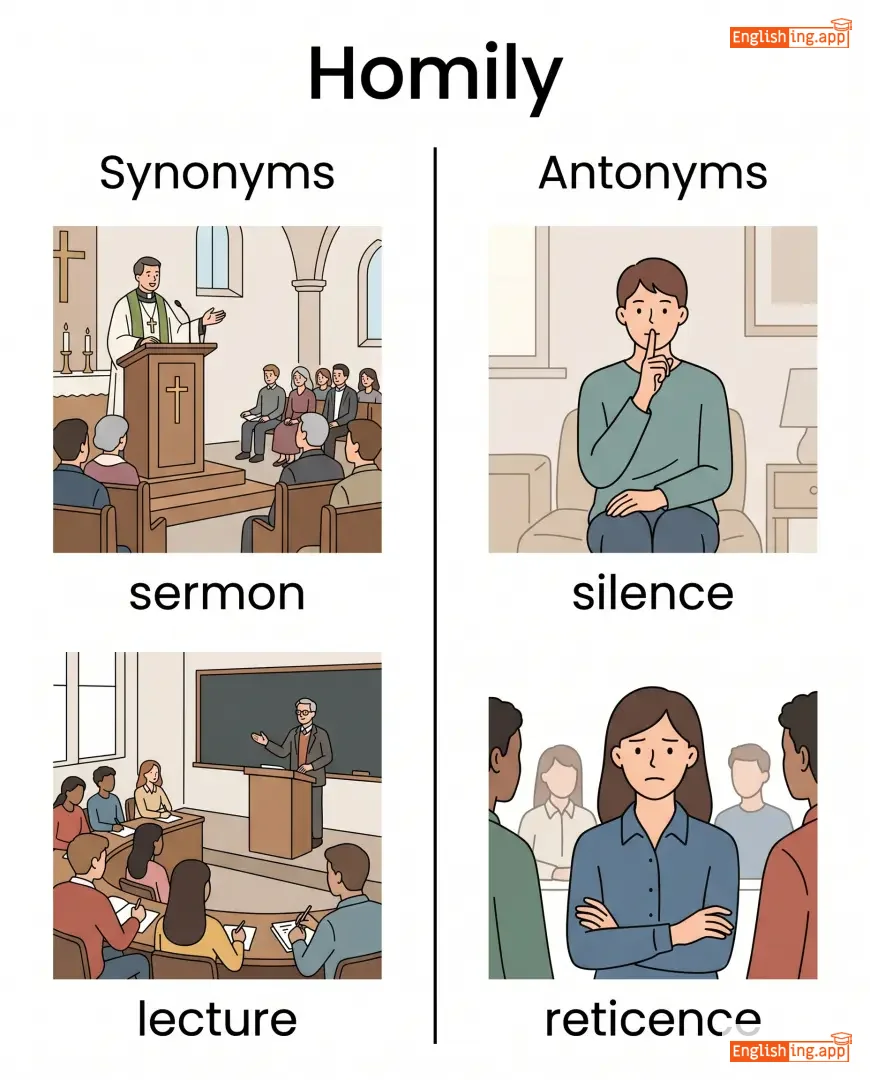
sermon, lecture, discourse, exhortation
••••••
|
silence, reticence
••••••
|
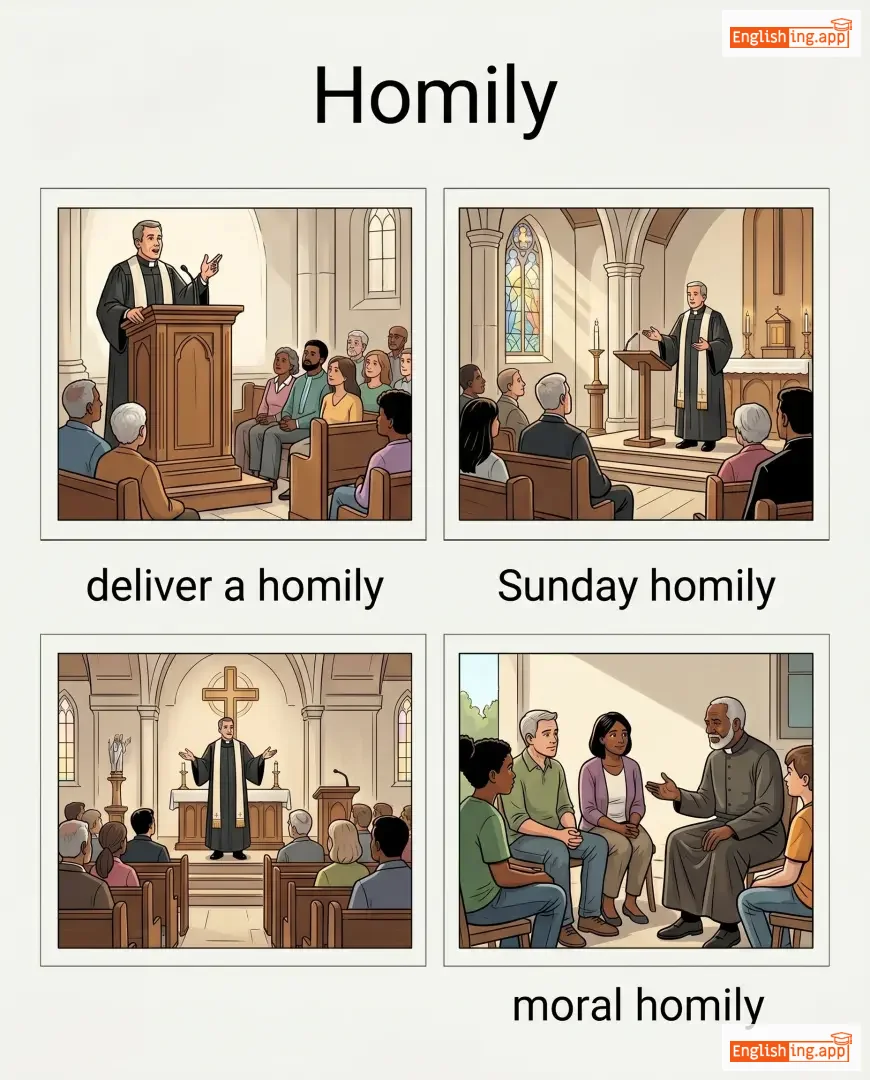
deliver a homily, Sunday homily, moral homily
••••••
|
説教は善行を促す宗教的な話です。
••••••
|
|
#4153
🧵
|
/ˈhoʊm.spʌn/
adjective
(ホームスパン)
••••••
|
- •••••• |
手作り
tezukuri
••••••
|
- •••••• | - •••••• | - •••••• | - •••••• |
Simple and unsophisticated; made at home rather than in a factory.
••••••
|
She wore a homespun dress to the village festival. |
彼女は村の祭りに手作りのドレスを着て行った。
Kanojo wa mura no matsuri ni tezukuri no doresu o kite itta.
••••••
|
homespun wisdom |
Simple, practical knowledge from everyday life.
••••••
|
手作りの知恵
tezukuri no chie
••••••
|
rustic, simple, plain, handmade, unrefined
••••••
|
elegant, sophisticated, refined
••••••
|
homespun cloth, homespun wisdom, homespun philosophy
••••••
|
手 + 作り = 手作り
••••••
|
|
#4154
⚖️
|
/ˌhoʊmi.oʊˈsteɪsɪs/
noun
(ホメオスタシス)
••••••
|
|
恒常性
kōjōsei
••••••
|
- •••••• | - •••••• | - •••••• | - •••••• |
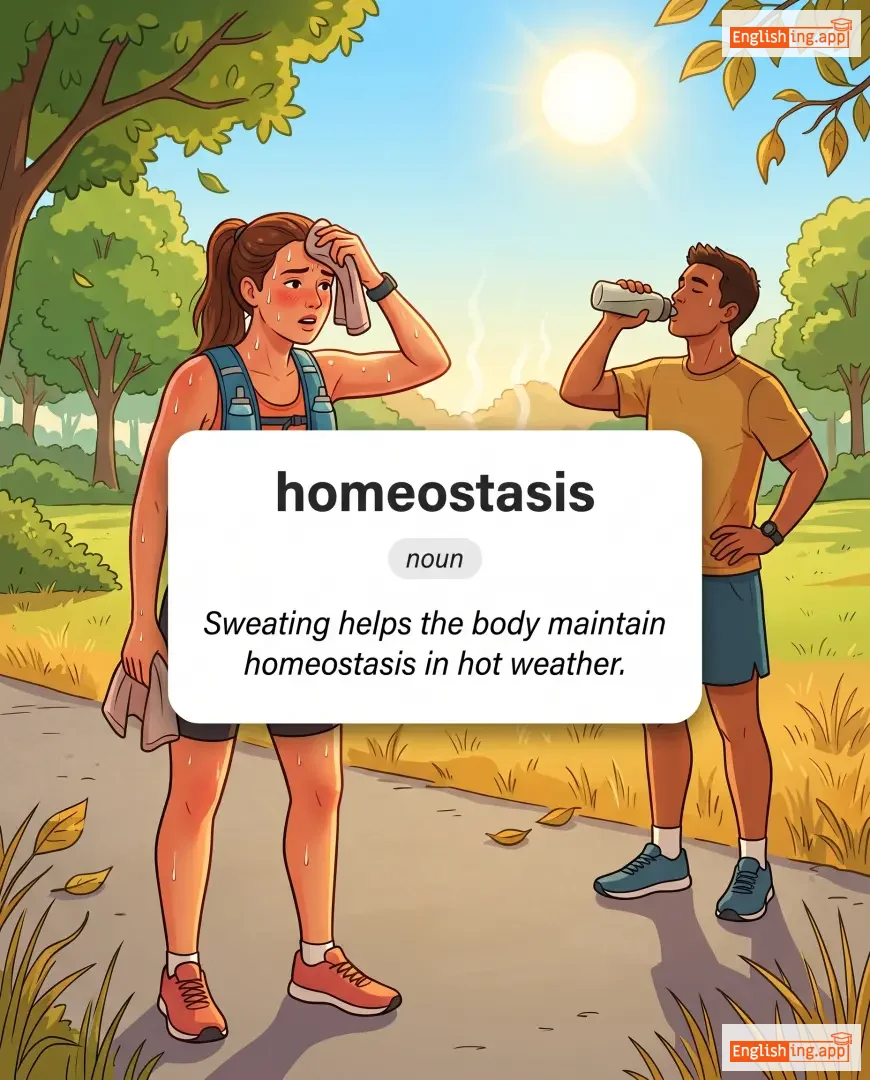
The ability of a living system or organism to maintain internal stability despite changes in external conditions.
••••••
|
Sweating helps the body maintain homeostasis in hot weather. |
汗をかくことで、暑い天気の中で体が恒常性を維持するのを助けます。
Ase o kaku koto de, atsui tenki no naka de karada ga kōjōsei o iji suru no o tasukemasu.
••••••
|
- •••••• | - •••••• | - •••••• |
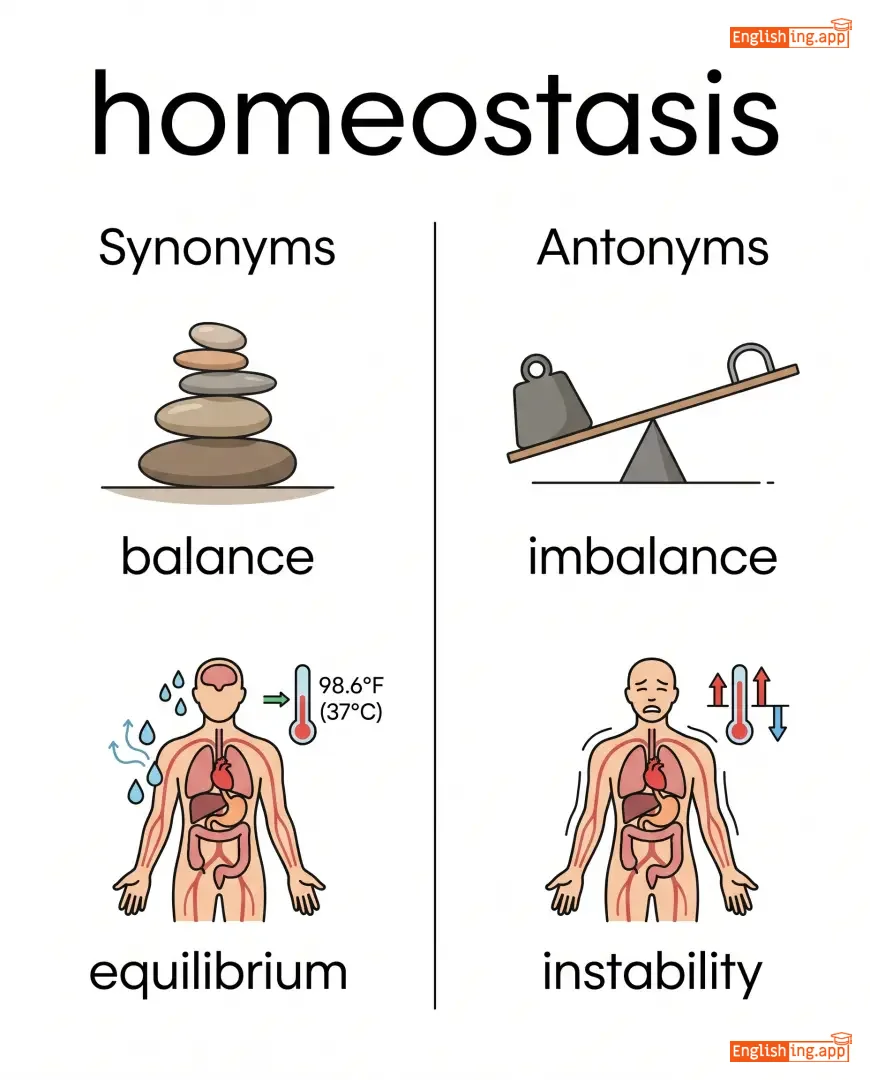
balance, equilibrium, stability, regulation
••••••
|
imbalance, instability
••••••
|
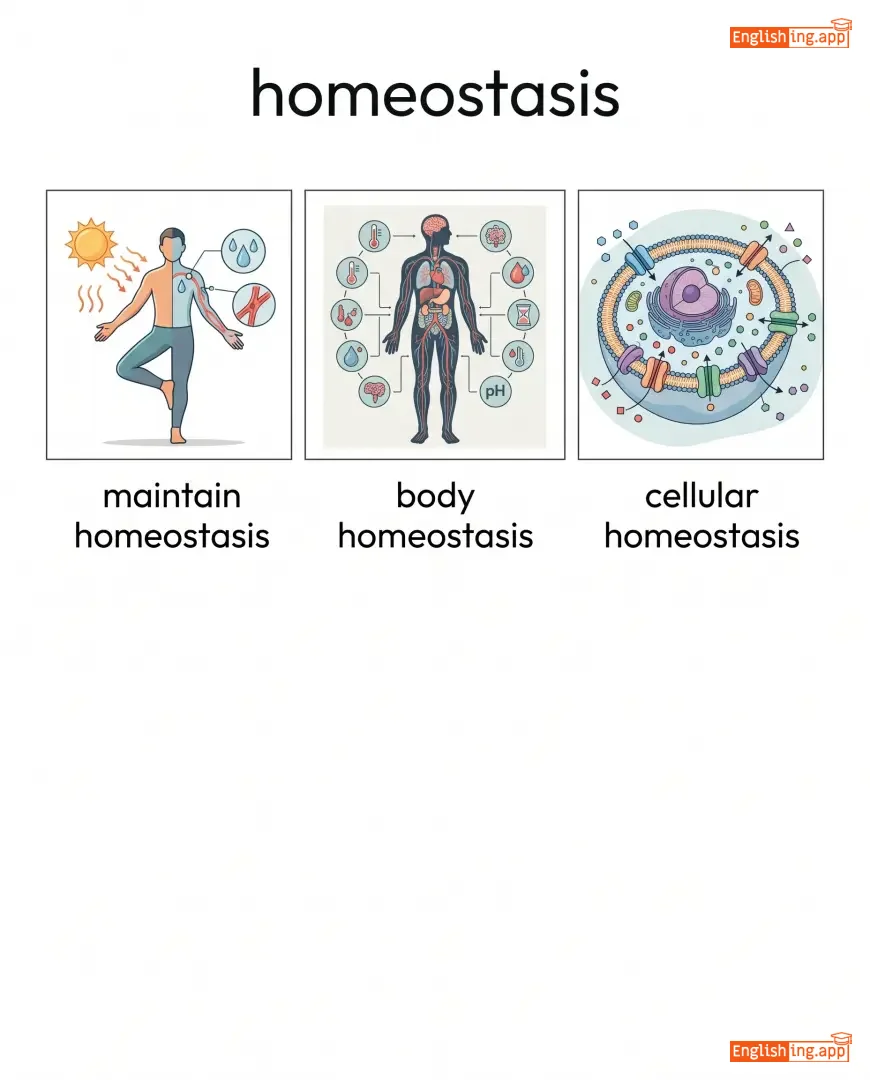
maintain homeostasis, body homeostasis, cellular homeostasis
••••••
|
恒常性は家(home)でのバランスを保つようなものです。
••••••
|
|
#4155
🏡
|
/ˈhoʊmli/
adjective
(ホームリー)
••••••
|
- •••••• |
素朴
soboku
••••••
|
- •••••• | - •••••• | - •••••• | - •••••• |
Plain or unattractive in appearance; simple and comfortable in style or character.
••••••
|
Despite being homely, the cottage felt warm and welcoming. |
素朴な見た目にもかかわらず、小屋は温かく居心地が良いと感じました。
Soboku na mitame ni mo kakawarazu, koya wa atatakai ku igokochi ga yoi to kanjimashita.
••••••
|
homely comforts |
Simple, everyday comforts of home life.
••••••
|
素朴な快適さ
soboku na kaitekisa
••••••
|
plain, unattractive, simple, modest, ordinary
••••••
|
beautiful, elegant, attractive
••••••
|
homely girl, homely charm, homely cottage, homely comforts
••••••
|
Home + ly、家のように素朴 (homely = soboku).
••••••
|
|
#4156
💼
|
/ˈhaɪərlɪŋ/
noun
(ハイヤーリング)
••••••
|
- •••••• |
傭兵
yōhei
••••••
|
- •••••• | - •••••• | - •••••• | - •••••• |
A person who works for payment only, often with little loyalty or principle.
••••••
|
The mercenary was dismissed as just a hireling with no real loyalty.
傭兵は、忠誠心のないただのハイヤーリングとして解雇された。
••••••
|
傭兵は、忠誠心のないただのハイヤーリングとして解雇された。
Yōhei wa, chūseishin no nai tada no hayāringu toshite kaiko sareta.
••••••
|
- •••••• | - •••••• | - •••••• |
mercenary, servant, employee, laborer
••••••
|
master, employer, leader
••••••
|
mere hireling, political hireling, paid hireling, loyal hireling
••••••
|
HIREは雇うこと、LINGは人 — hireling = 傭兵。
••••••
|
|
#4157
🔫
|
/ˈhoʊl.stər/
noun
(ホルスター)
••••••
|
- •••••• |
ホルスター
horusutā
••••••
|
- •••••• | - •••••• | - •••••• | - •••••• |
A holder or case for carrying a gun, typically worn on a belt or shoulder.
••••••
|
The sheriff kept his revolver in a leather holster. |
保安官は自分のリボルバーを革製のホルスターに入れておいた。
Hoankan wa jibun no riborubā o kawa-sei no horusutā ni irete oita.
••••••
|
- •••••• | - •••••• | - •••••• |
gun case, sheath, pouch, carrier
••••••
|
exposure, display
••••••
|
leather holster, gun holster, draw from holster
••••••
|
Holster = Hold + Store = 銃を持つためのケース
••••••
|
|
#4158
🔥
|
/ˈhɒl.ə.kɔːst/
noun
(ホロコースト)
••••••
|
- •••••• |
ホロコースト
horokōsuto
••••••
|
- •••••• | - •••••• | - •••••• | - •••••• |
A large-scale destruction, especially by fire; historically, the genocide of Jews during World War II.
••••••
|
Millions of people perished during the Holocaust. |
ホロコースト中に何百万もの人々が命を落としました。
Horokōsuto-chū ni nanbyakuman mo no hitobito ga inochi o otoshimashita.
••••••
|
- •••••• | - •••••• | - •••••• |
massacre, genocide, slaughter, devastation
••••••
|
peace, preservation, survival
••••••
|
Holocaust survivors, Holocaust memorial, Holocaust museum
••••••
|
Holo (完全) + cast (刑罰) = 完全な破壊 = ホロコースト
••••••
|
|
#4159
🛢️
|
/ˈhɒɡz.hɛd/
noun
(ホッグスヘッド)
••••••
|
- •••••• |
大樽
dai-taru
••••••
|
- •••••• | - •••••• | - •••••• | - •••••• |
A large cask or barrel, traditionally used for storing liquids like wine or beer.
••••••
|
The cellar was filled with hogsheads of ale. |
地下室はビールの大樽でいっぱいだった。
Chikashitsu wa biiru no dai-taru de ippai datta.
••••••
|
- •••••• | - •••••• | - •••••• |
barrel, cask, drum, vat
••••••
|
bottle, flask
••••••
|
hogshead of wine, hogshead of beer, large hogshead
••••••
|
豚 (hog) の頭のような大樽 = hogshead
••••••
|
|
#4160
🌀
|
/ˈhɒdʒ.pɒdʒ/
noun
(ホッジポッジ)
••••••
|
- •••••• |
寄せ集め
yoseatsume
••••••
|
- •••••• | - •••••• | - •••••• | - •••••• |
A confusing mixture of different things; a jumble.
••••••
|
The essay was a hodgepodge of unrelated ideas.
そのエッセイは関係のないアイデアのホッジポッジだった。
••••••
|
そのエッセイは関係のないアイデアの寄せ集めだった。
Sono essei wa kankei no nai aidea no yoseatsume datta.
••••••
|
- •••••• | - •••••• | - •••••• |
jumble, mishmash, medley, assortment, mixture
••••••
|
order, system, organization
••••••
|
hodgepodge of ideas, hodgepodge of colors, hodgepodge of styles
••••••
|
ホッジポッジは異なるものを混ぜた寄せ集め。
••••••
|
|
#4161
🦵
|
/ˈhɑːbəl/
verb
(ホブル)
••••••
|
- •••••• |
よろけて歩く
yorokete aruku
••••••
|
hobbled
ホブド
••••••
|
hobbled
ホブド
••••••
|
hobbles
ホブス
••••••
|
hobbling
ホブリング
••••••
|
to walk awkwardly with difficulty, usually due to injury
••••••
|
He hobbled across the room after twisting his ankle.
彼は足首をひねった後、部屋をよろよろと歩いた。
••••••
|
彼は足首をひねった後、部屋をよろよろと歩いた。
Kare wa ashi kubi o hinetta ato, heya o yorokete aruita.
••••••
|
- •••••• | - •••••• | - •••••• |
limp, stagger, falter, totter
••••••
|
stride, march, walk confidently
••••••
|
hobble around, hobble along, hobble across
••••••
|
Hobbleは、よろよろ歩くことを意味する。
••••••
|
|
#4162
🤥
|
/hoʊks/
noun
(ホークス)
••••••
|
- •••••• |
騙し、虚偽
damashi, kyogi
••••••
|
- •••••• | - •••••• | - •••••• | - •••••• |
a trick or false story meant to deceive people
••••••
|
The news about aliens landing turned out to be a hoax.
エイリアンが着陸するというニュースは、実際には詐欺でした。
••••••
|
エイリアンが着陸するというニュースは、実際には詐欺でした。
Eirian ga chakuriku suru to iu nyuusu wa, jissai ni wa sagi deshita.
••••••
|
play a hoax
詐欺をする
••••••
|
to trick someone by telling them something false
••••••
|
詐欺をする
sagi o suru
••••••
|
trick, fraud, scam, deception, prank
••••••
|
truth, fact
••••••
|
elaborate hoax, internet hoax, cruel hoax
••••••
|
Hoax は 'ホ'(誤解)から来ている
••••••
|
|
#4163
🌳
|
/ˈhɔːri/
adjective
(ホアリー)
••••••
|
- •••••• |
灰色の, 古い
haiiro no, furui
••••••
|
- •••••• | - •••••• | - •••••• | - •••••• |
gray or white with age; very old and respected
••••••
|
The hoary oak tree stood as a witness to centuries of history. |
古いオークの木は何世代にもわたる歴史の証人として立っていた。
Furui ōku no ki wa nan sedai ni mo wataru rekishi no shōnin to shite tatte ita.
••••••
|
- •••••• | - •••••• | - •••••• |
gray, aged, ancient, venerable
••••••
|
youthful, fresh
••••••
|
hoary head, hoary myth, hoary tradition
••••••
|
Hoaryは、灰色で古く、歴史を見守る木のようです。
••••••
|
|
#4164
🔊
|
/hɔːrs/
adjective
(ホース)
••••••
|
- •••••• |
しゃがれた
shagareta
••••••
|
- •••••• | - •••••• | - •••••• | - •••••• |
having a rough, harsh, or weak voice, often due to illness or shouting
••••••
|
After shouting all day at the rally, his voice was hoarse.
集会で一日中叫んだ後、彼の声はかすれていた。
••••••
|
集会で一日中叫んだ後、彼の声はかすれていた。
Shūkai de ichinichijū sakenda ato, kare no koe wa kasureteita.
••••••
|
- •••••• | - •••••• | - •••••• |
rough, husky, harsh, raspy
••••••
|
clear, smooth
••••••
|
hoarse voice, sound hoarse, became hoarse
••••••
|
Hoarse は、叫び過ぎて声がしゃがれることです。
••••••
|
|
#4165
📦
|
/hɔːrd/
verb
(ホード)
••••••
|
- •••••• |
蓄える
takuwaeru
••••••
|
hoarded
ホーデッド
••••••
|
hoarded
ホーデッド
••••••
|
hoards
ホーズ
••••••
|
hoarding
ホーディング
••••••
|
to accumulate and hide away a large supply of something, often secretly
••••••
|
During the crisis, many people began to hoard food and water.
危機の間、多くの人々が食べ物と水を蓄え始めました。
••••••
|
危機の間、多くの人々が食べ物と水を蓄え始めました。
Kiki no aida, ooku no hitobito ga tabemono to mizu o takuwae hajimemashita.
••••••
|
hoard up
蓄える
••••••
|
to collect and store a large quantity of something for future use
••••••
|
蓄える
takuwaeru
••••••
|
store, stockpile, accumulate, amass, collect
••••••
|
spend, scatter, distribute
••••••
|
hoard money, hoard food, secret hoard, treasure hoard
••••••
|
Hoardは蓄えるという意味 - 何かを積み上げて後で使う
••••••
|
|
#4166
🐝
|
/haɪv/
noun
(haivu)
••••••
|
- •••••• |
ハイブ
haibu
••••••
|
- •••••• | - •••••• | - •••••• | - •••••• |
A structure where bees live and produce honey; also a place full of busy activity.
••••••
|
The office was a hive of activity before the deadline. |
締め切り前のオフィスは活動のハイブのようだった。
Shimekiri mae no ofisu wa katsudō no haibu no yō datta.
••••••
|
hive of activity |
A place where many people are busy working
••••••
|
活動のハイブ
Katsudō no haibu
••••••
|
colony, swarm, nest, beehive
••••••
|
emptiness, stillness, vacancy
••••••
|
bee hive, hive of activity, hive mind, hive structure
••••••
|
Hive = ハイブ 🐝, オフィスのようにみんな忙しく働いている場所。
••••••
|
|
#4167
🎭
|
/ˌhɪstriˈɒnɪk/
adjective
••••••
|
|
- •••••• | - •••••• | - •••••• | - •••••• | - •••••• |
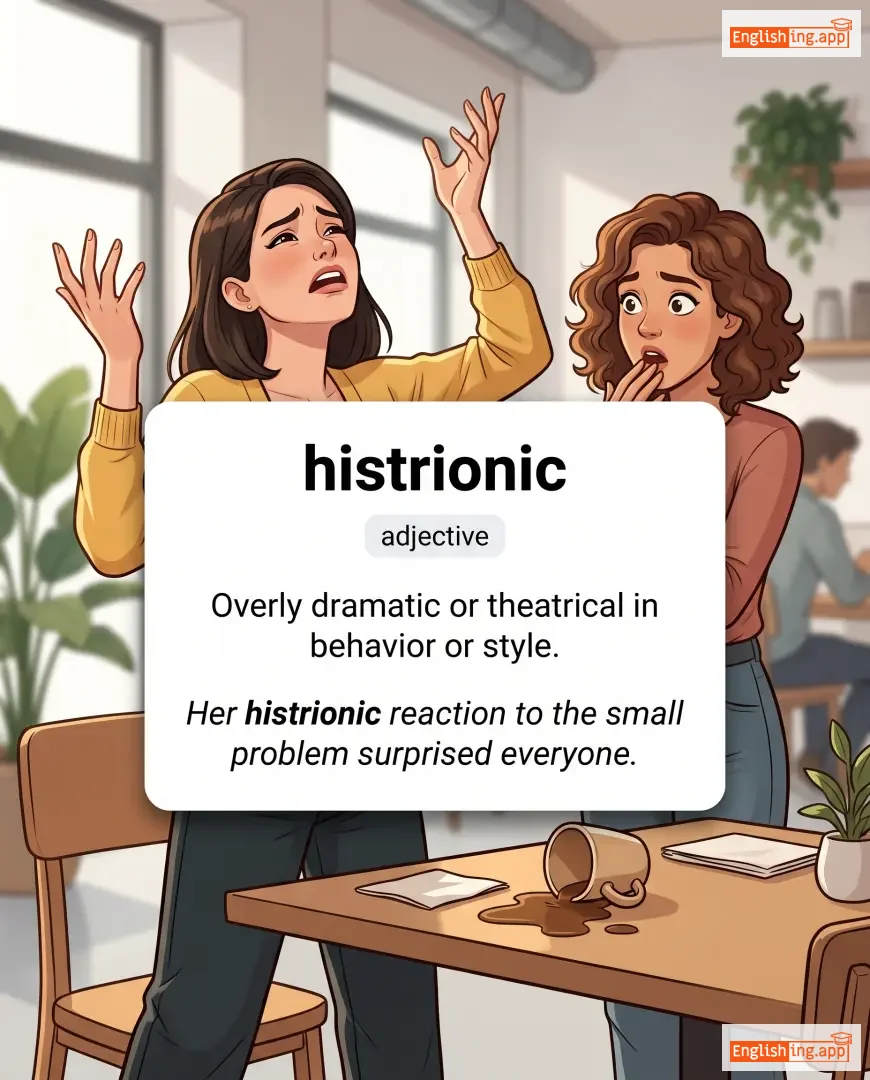
Overly dramatic or theatrical in behavior or style.
••••••
|
Her histrionic reaction to the small problem surprised everyone. |
- •••••• |
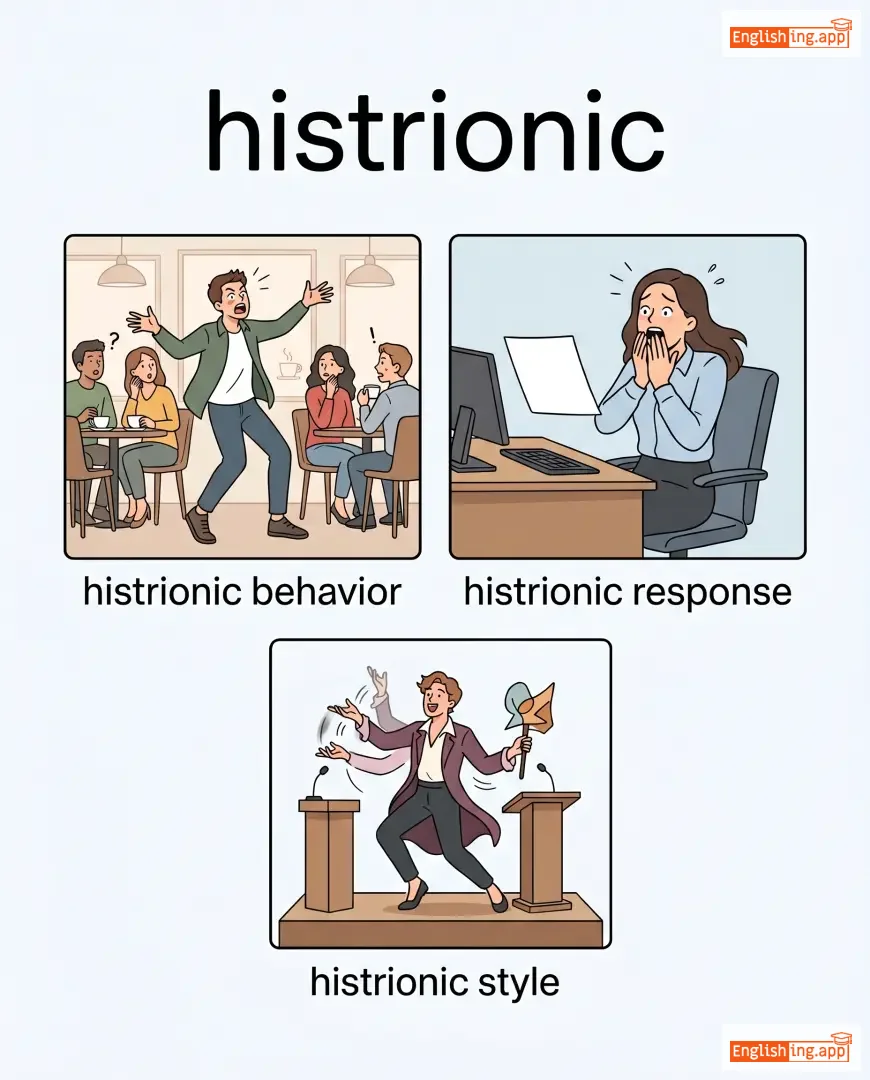
histrionic behavior |
Excessively dramatic behavior
••••••
|
- •••••• |
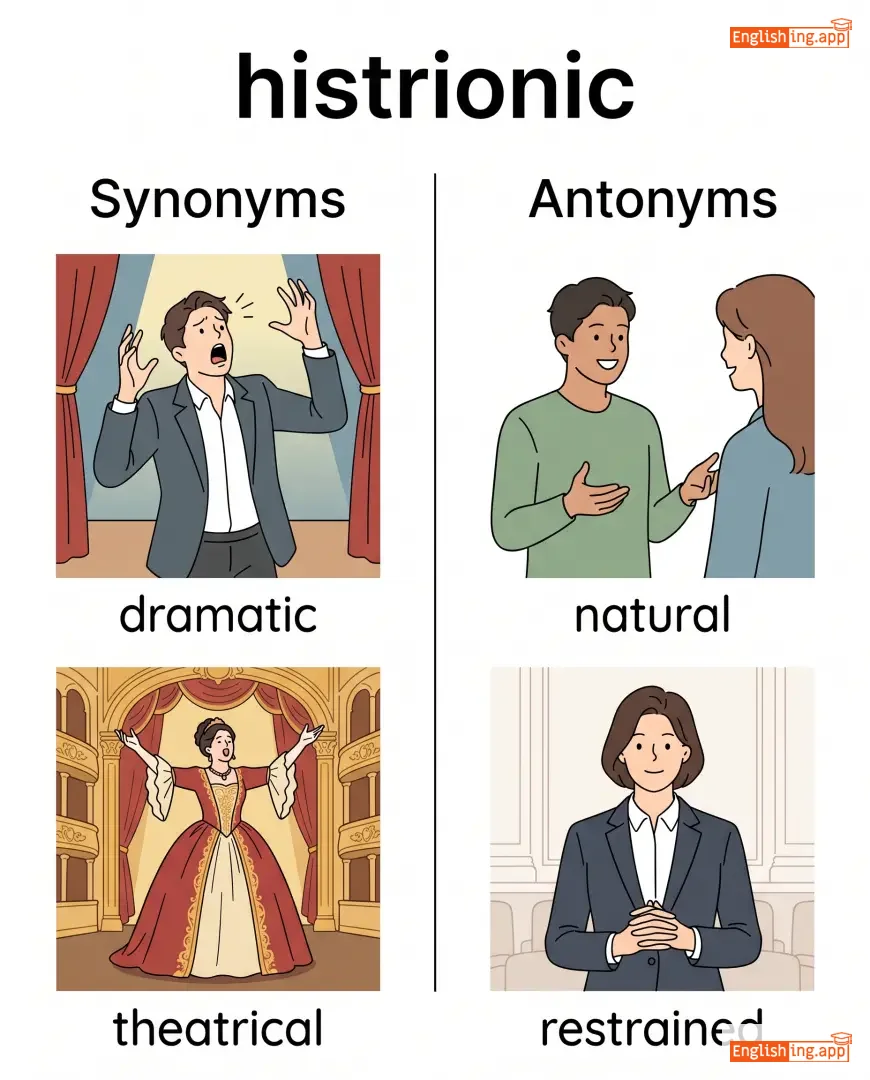
dramatic, theatrical, exaggerated, overacting, showy
••••••
|
natural, restrained, calm
••••••
|
histrionic behavior, histrionic response, histrionic style, histrionic personality
••••••
|
No •••••• |
|
#4168
📜
|
/hɪˈstɔːrɪkəl/
adjective
(ヒストリカル)
••••••
|
- •••••• |
歴史的
rekishiteki
••••••
|
- •••••• | - •••••• | - •••••• | - •••••• |
Related to history or past events.
••••••
|
The museum has a large collection of historical documents. |
博物館には多くの歴史的な文書が収蔵されています。
Hakubutsukan ni wa ooku no rekishiteki na bunsho ga shūzō sareteimasu.
••••••
|
historical record |
An account of past events
••••••
|
歴史的記録
rekishiteki kiroku
••••••
|
past, archival, recorded, ancient, traditional
••••••
|
modern, contemporary, current
••••••
|
historical documents, historical records, historical evidence, historical site
••••••
|
Historical = History + related, つまり歴史に関係がある。
••••••
|
|
#4169
🏛️
|
/hɪˈstɔːrɪk/
adjective
(ヒストリック)
••••••
|
|
歴史的
rekishiteki
••••••
|
- •••••• | - •••••• | - •••••• | - •••••• |
Famous or important in history; likely to be remembered in history.
••••••
|
The historic agreement changed the course of the nation. |
その歴史的な合意は国の進路を変えました。
Sono rekishiteki na gōi wa kuni no shinro o kaemashita.
••••••
|
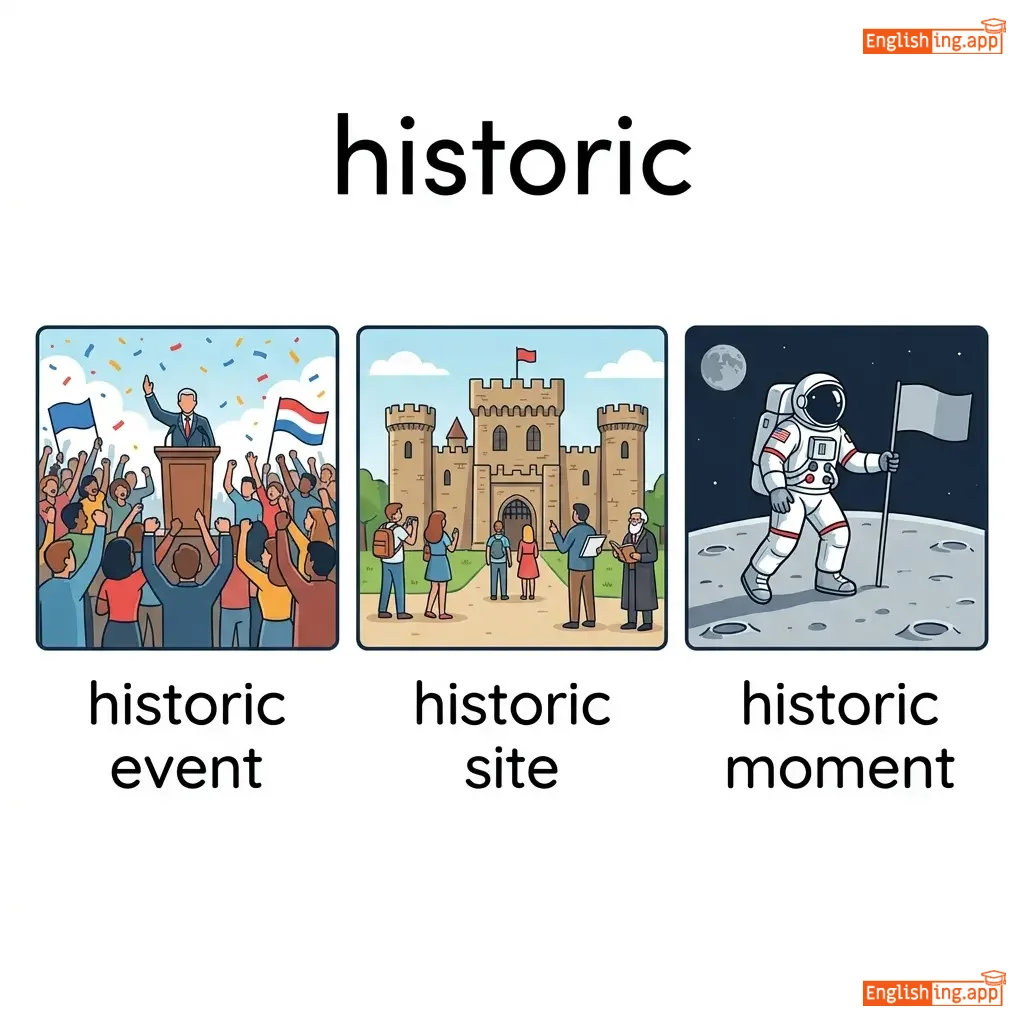
historic moment |
An event of great importance in history
••••••
|
歴史的瞬間
Rekishiteki shunkan
••••••
|
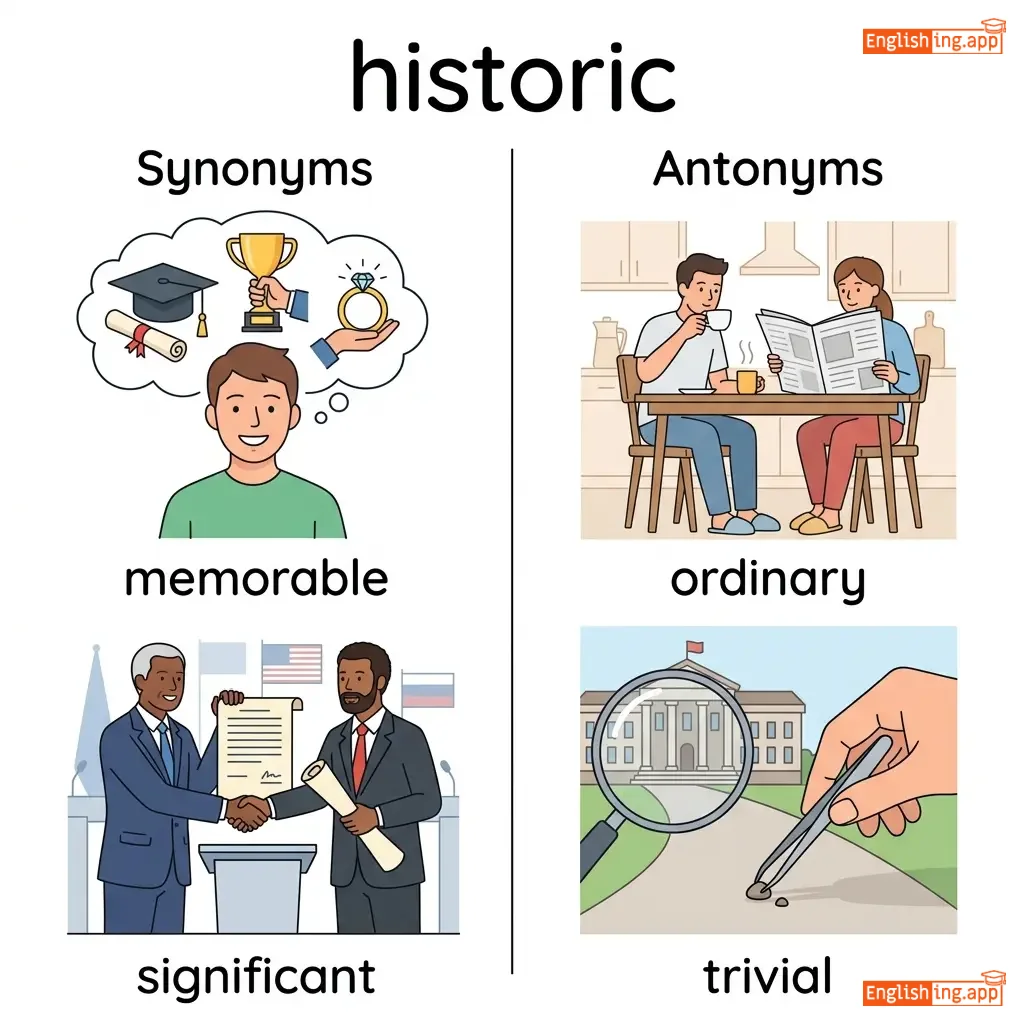
memorable, significant, important, monumental, notable
••••••
|
ordinary, trivial, forgettable
••••••
|
historic event, historic site, historic moment, historic decision
••••••
|
Historic = 歴史と関係があるので、歴史の中で重要な出来事。
••••••
|
|
#4170
🧔
|
/ˈhɜːrsuːt/
adjective
••••••
|
|
- •••••• | - •••••• | - •••••• | - •••••• | - •••••• |
Having a lot of hair, especially in an unusual place.
••••••
|
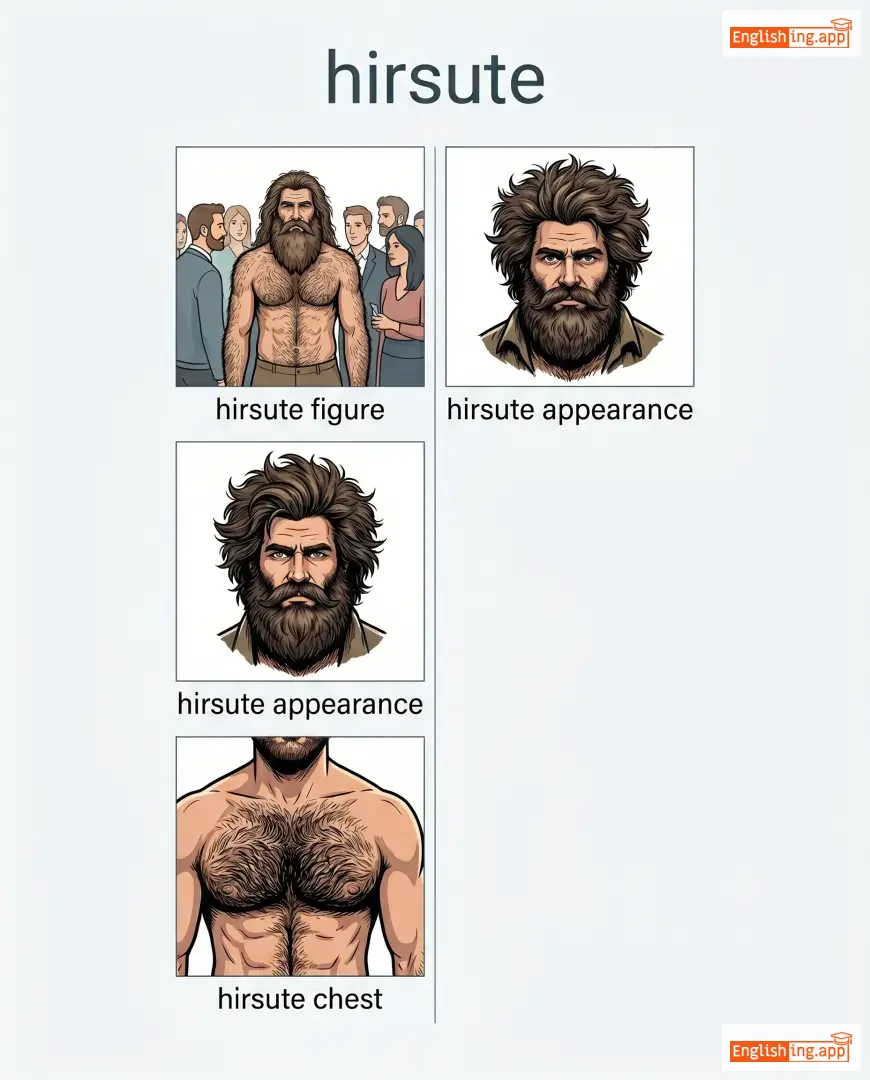
The hirsute man stood out in the crowd with his long beard. |
- •••••• | - •••••• | - •••••• | - •••••• |
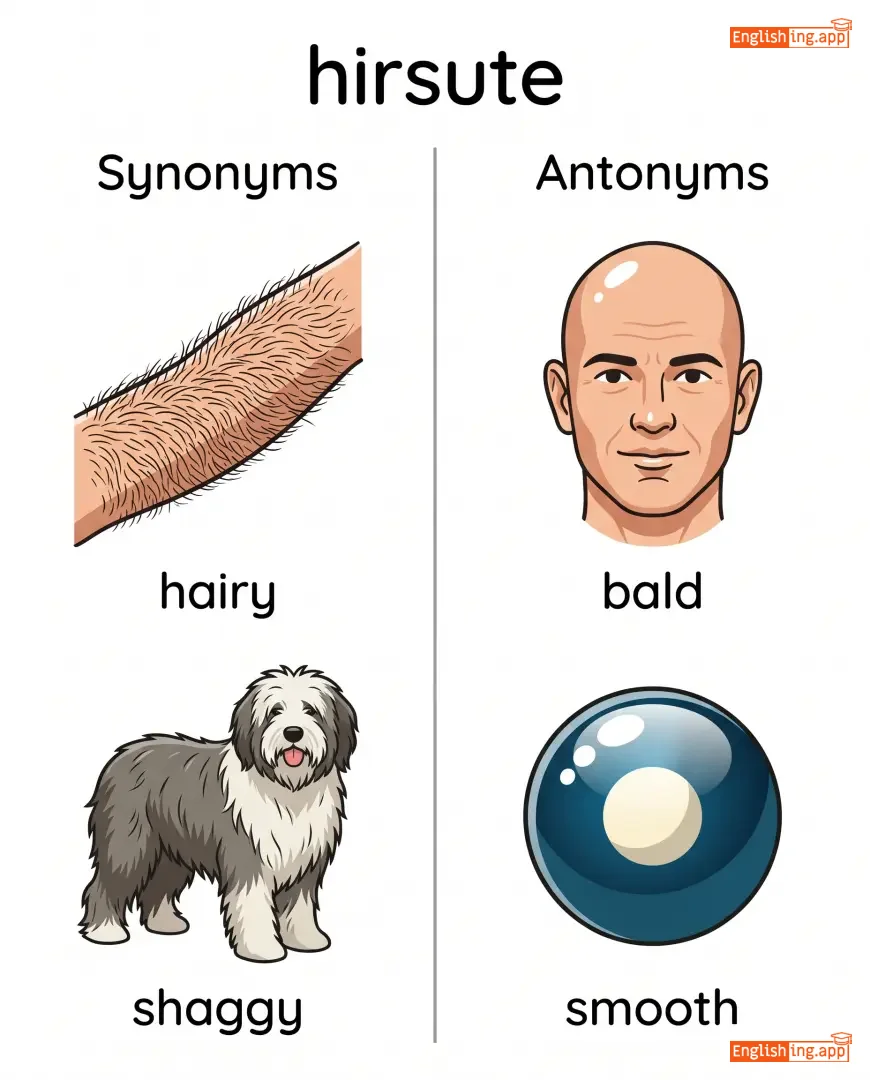
hairy, shaggy, bushy, woolly, bearded
••••••
|
bald, smooth, hairless
••••••
|
hirsute figure, hirsute appearance, hirsute chest, hirsute man
••••••
|
No •••••• |
Vocabulary Quiz
Test your vocabulary by matching words with their translations or meanings.
Login to take the quiz
Comments (0)
Share your thoughts and join the discussion.
Join the discussion by logging in
Login to CommentNo comments yet
Be the first to share your thoughts!