

翻訳
過去
過去分詞
三人称単数
動名詞
意味
例文
例文の翻訳
同義語
対義語
コロケーション
ニーモニック
Swipe left or right, or use the buttons. Tap image to zoom.
例文の翻訳
単語
Lesson 444Lesson 444 - マスクトグル
|
絵文字
|
単語 | Images | 翻訳 | 過去 | 過去分詞 | 三人称単数 | 動名詞 | 意味 | 例文 | 例文の翻訳 | 表現例 | 表現例の意味 | 表現例の翻訳 | 同義語 | 対義語 | コロケーション | ニーモニック |
|---|---|---|---|---|---|---|---|---|---|---|---|---|---|---|---|---|---|
|
#1
🙋♂️
|
/huːˈɛvər/
pronoun
(フーエヴァ)
••••••
|
- •••••• |
誰でも
dare demo
••••••
|
- •••••• | - •••••• | - •••••• | - •••••• |
any person who; no matter who
••••••
|
Whoever wants to join the trip must register today. |
誰でもこの旅行に参加したい場合は、今日中に登録する必要があります。
Dare demo kono ryokō ni sanka shitai baai wa, kyōjū ni tōroku suru hitsuyō ga arimasu.
••••••
|
- •••••• | - •••••• | - •••••• |
anyone, anybody, whosoever
••••••
|
none, nobody
••••••
|
whoever comes, whoever wants, whoever said, whoever did
••••••
|
Who + ever = 誰でも — whoever means 誰でも
••••••
|
|
#1
🧒
|
/ˈjʌŋstər/
noun
(ヤングスター)
••••••
|
- •••••• |
若者
wakamono
••••••
|
- •••••• | - •••••• | - •••••• | - •••••• |
a young person or child, especially a teenager or adolescent
••••••
|
The park was full of youngsters playing football. |
公園はサッカーをしている若者たちでいっぱいでした。
Kōen wa sakkā o shite iru wakamono-tachi de ippai deshita.
••••••
|
full of youth |
energetic and lively, typical of young people
••••••
|
青春で満ちている
seishun de michite iru
••••••
|
youth, adolescent, teen, juvenile, minor
••••••
|
adult, elder, senior
••••••
|
youngster group, ambitious youngster, talented youngster, local youngster
••••••
|
Youngsterは若者を意味し、若者はエネルギーに満ちている 🧑
••••••
|
|
#1
✍️
|
/ˈrɪtən/
adjective
(リテン)
••••••
|
- •••••• |
書かれた
kakareta
••••••
|
- •••••• | - •••••• | - •••••• | - •••••• |
expressed in writing rather than spoken; composed or recorded in written form
••••••
|
The agreement must be in written form to be valid.
その契約は有効であるために書面でなければならない。
••••••
|
その契約は有効であるために書面でなければならない。
Sono keiyaku wa yūkō de aru tame ni shomen de nakereba naranai.
••••••
|
in black and white
白黒はっきり
••••••
|
clearly written or printed, leaving no doubt
••••••
|
白黒はっきり
shirokuro hakkiri
••••••
|
documented, recorded, drafted, inscribed, composed
••••••
|
spoken, oral, verbal
••••••
|
written form, written statement, written communication, written agreement
••••••
|
Written は日本語で書かれた、記録されたものを意味します ✍️
••••••
|
|
#1
✋
|
/rɪst/
noun
••••••
|
- •••••• | - •••••• | - •••••• | - •••••• | - •••••• | - •••••• |
the joint connecting the hand with the forearm
••••••
|
He wore a smartwatch on his left wrist. |
- •••••• |
wrist watch |
a watch worn around the wrist
••••••
|
- •••••• |
joint, carpus, arm joint, wrist joint
••••••
|
ankle, elbow
••••••
|
sprained wrist, wrist pain, wrist movement, wrist injury
••••••
|
No •••••• |
|
#1
🤩
|
/waʊ/
interjection
(ワウ)
••••••
|
- •••••• |
驚きの表現
odoroki no hyougen
••••••
|
- •••••• | - •••••• | - •••••• | - •••••• |
used to express great surprise, admiration, or pleasure
••••••
|
Wow, that performance was amazing! |
ワウ、そのパフォーマンスは素晴らしかった!
Wau, sono pafomansu wa subarashikatta!
••••••
|
- •••••• | - •••••• | - •••••• |
amazing, impressive, astonishing, wonderful, unbelievable
••••••
|
boring, dull, unimpressive
••••••
|
say wow, wow moment, wow factor, wow effect
••••••
|
何かに驚くと、「ワウ!」と自然に言いたくなる
••••••
|
|
#1
🌍
|
/ˈwɜːrldwaɪd/
adjective
(ワールドワイド)
••••••
|
- •••••• |
世界的
sekaiteki
••••••
|
- •••••• | - •••••• | - •••••• | - •••••• |
extending or reaching throughout the whole world
••••••
|
The company has achieved worldwide recognition for its products.
その会社は製品のために世界的な認知を得ました。
••••••
|
その会社は製品のために世界的な認知を得ました。
Sono kaisha wa seihin no tame ni sekaiteki na ninchi o emashita.
••••••
|
worldwide fame
世界的な名声
••••••
|
fame known across the world
••••••
|
世界的な名声
sekaiteki na meisei
••••••
|
global, international, universal, planetary, cosmopolitan
••••••
|
local, regional, domestic
••••••
|
worldwide audience, worldwide sales, worldwide distribution, worldwide network
••••••
|
World wide は、全世界に広がる名声や認知を意味します。
••••••
|
|
#1
🏢
|
/ˈwɜːrkpleɪs/
noun
(ワークプレイス)
••••••
|
- •••••• |
職場
shokuba
••••••
|
- •••••• | - •••••• | - •••••• | - •••••• |
a place where people work, such as an office, factory, or shop
••••••
|
Maintaining good communication is vital in the workplace.
職場で良好なコミュニケーションを保つことは非常に重要です。
••••••
|
職場で良好なコミュニケーションを保つことは非常に重要です。
Shokuba de ryokou na komyunikeeshon o tamotsu koto wa hijou ni juuyou desu.
••••••
|
workplace culture
職場文化
••••••
|
the shared values, beliefs, and behaviors in a work environment
••••••
|
職場文化
shokuba bunka
••••••
|
office, job site, work environment, establishment, premises
••••••
|
home, residence
••••••
|
safe workplace, workplace environment, workplace policy, workplace training
••••••
|
仕事をする場所だから、workplaceは職場!
••••••
|
|
#1
🏋️♀️
|
/ˈwɜːrkaʊt/
noun
(ワークアウト)
••••••
|
- •••••• |
運動
undou
••••••
|
- •••••• | - •••••• | - •••••• | - •••••• |
a session of physical exercise or training to improve fitness or health
••••••
|
She does a full-body workout every morning before work. |
彼女は毎朝仕事の前に全身の運動をします。
Kanojo wa mai asa shigoto no mae ni zenshin no undou o shimasu.
••••••
|
intense workout |
a very demanding or vigorous exercise session
••••••
|
激しい運動
hageshii undou
••••••
|
exercise, training, session, fitness routine, practice
••••••
|
rest, inactivity, relaxation
••••••
|
daily workout, intense workout, gym workout, home workout
••••••
|
ジムでの ‘workout’ は体をフィットにするための運動 — 仕事前に運動する!
••••••
|
|
#1
🗣️
|
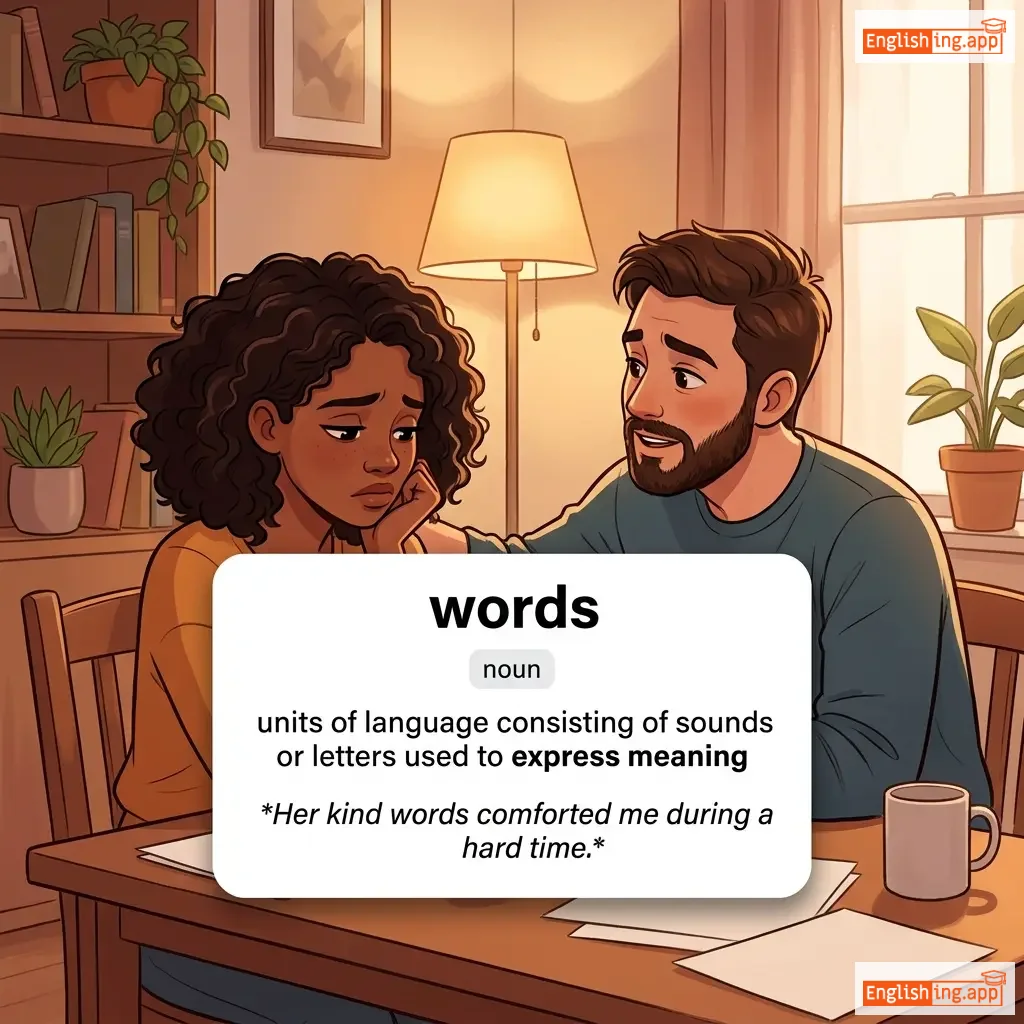
/wɜːdz/
noun
(wɜːrdz)
••••••
|
|
言葉
kotoba
••••••
|
- •••••• | - •••••• | - •••••• | - •••••• |
units of language consisting of sounds or letters used to express meaning
••••••
|
Her kind words comforted me during a hard time. |
彼女の優しい言葉は私を困難な時に慰めてくれました。
Kanojo no yasashii kotoba wa watashi o konnan na toki ni nagusamete kuremashita.
••••••
|
in other words |
used to express something in a different or clearer way
••••••
|
別の言い方をすれば
betsu no iikata o sureba
••••••
|
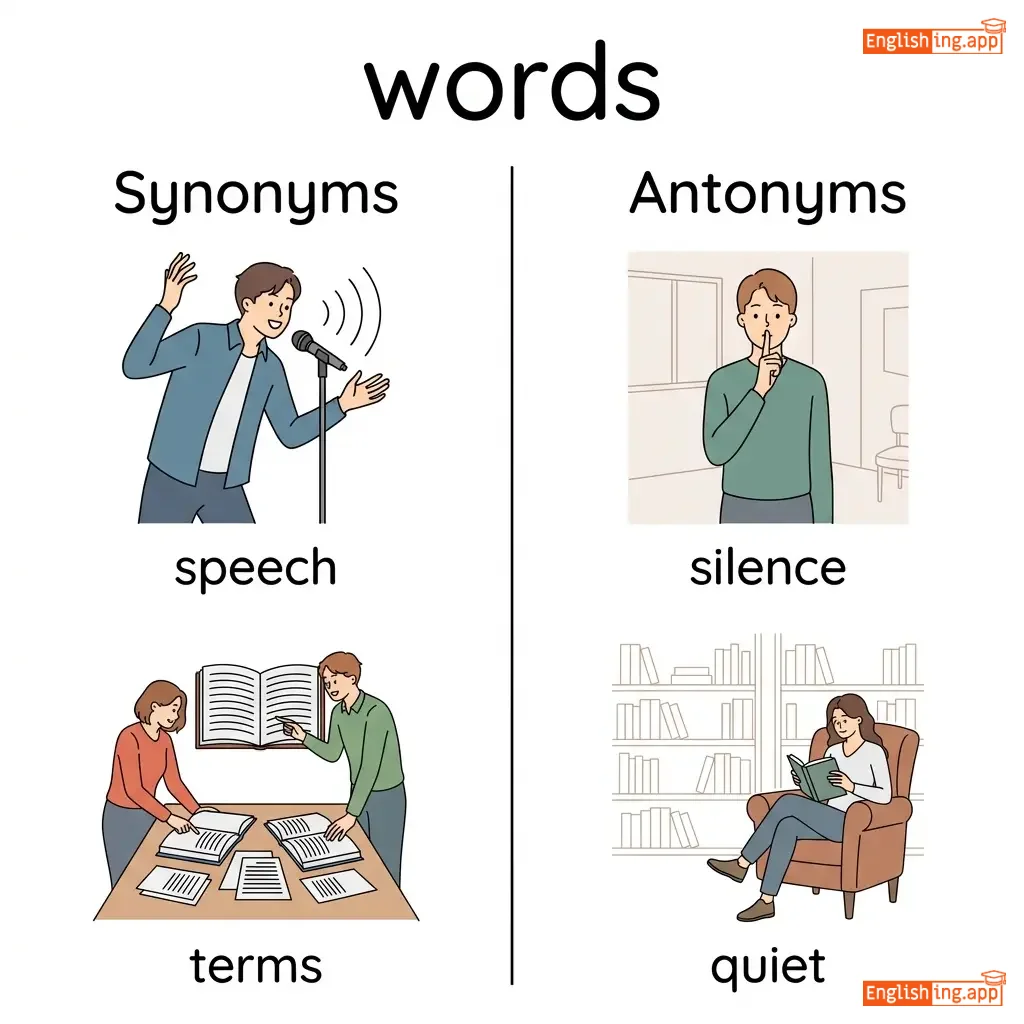
speech, terms, expressions, phrases, language
••••••
|
silence, quiet
••••••
|
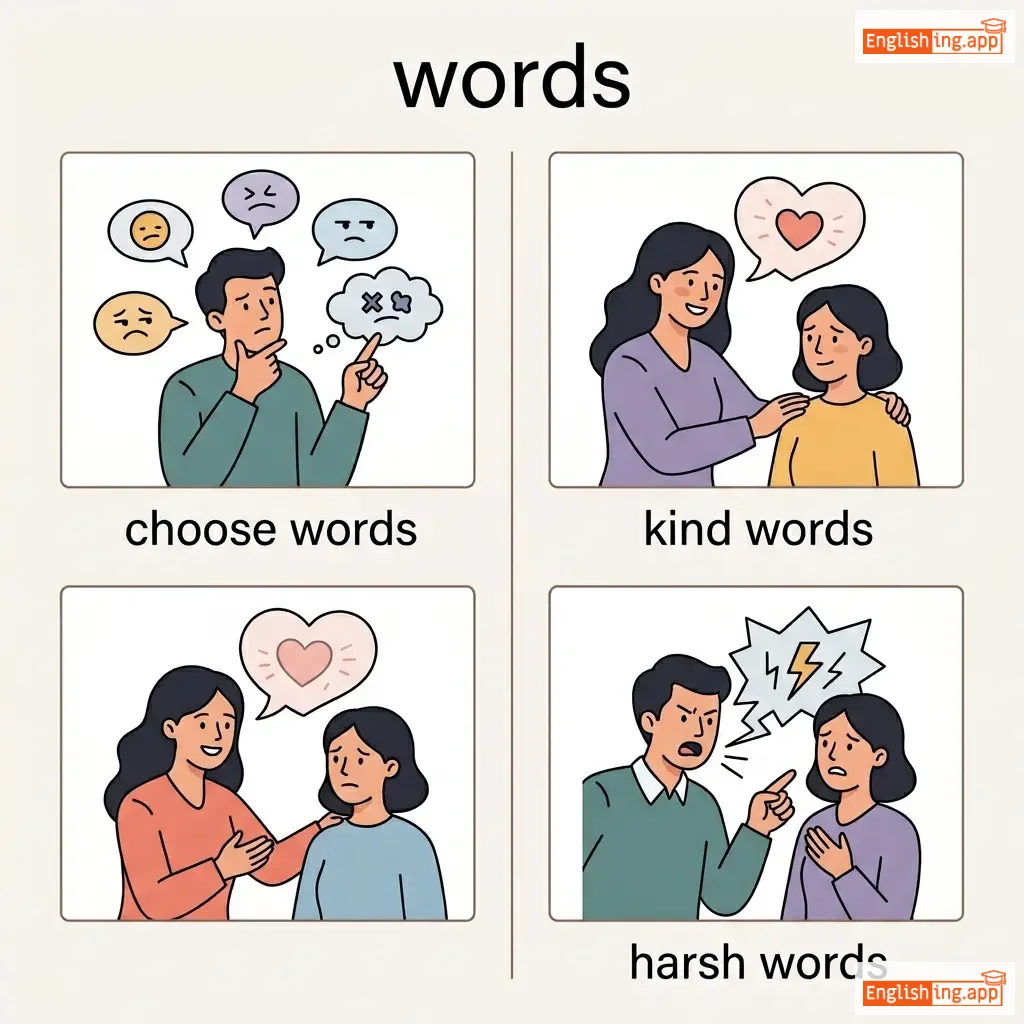
choose words, kind words, harsh words, in other words
••••••
|
Words = 言葉 — 言葉で世界をつなぐ
••••••
|
|
#1
🐺
|
/wʊlf/
noun
(ウルフ)
••••••
|
- •••••• |
オオカミ
ōkami
••••••
|
- •••••• | - •••••• | - •••••• | - •••••• |
a wild carnivorous animal related to the dog, living and hunting in packs
••••••
|
The wolf howled loudly under the full moon. |
オオカミは満月の下で大声で遠吠えした。
Ōkami wa mangetsu no shita de ōgoe de tōboe shita.
••••••
|
cry wolf |
to raise a false alarm or exaggerate danger
••••••
|
狼が来たと叫ぶ
Ōkami ga kita to sakebu
••••••
|
canine, predator, beast, dog, gray wolf
••••••
|
sheep, prey
••••••
|
gray wolf, lone wolf, wolf pack, cry wolf
••••••
|
オオカミは日本語で 'オオカミ'。覚えておいて、オオカミは満月の下で遠吠えする 🐺
••••••
|
|
#1
🏦
|
/wɪðˈdrɔːəl/
noun
(ウィズドロール)
••••••
|
- •••••• |
引き出し
hikidashi
••••••
|
- •••••• | - •••••• | - •••••• | - •••••• |
the act of taking something back or removing oneself from a situation
••••••
|
He made a withdrawal of $500 from his bank account. |
彼は銀行口座から500ドルを引き出しました。
Kare wa ginkō kōza kara 500 doru o hikidashimashita.
••••••
|
withdrawal symptoms |
physical or mental effects after stopping a habit, like smoking or drugs
••••••
|
禁断症状
kindan shōjō
••••••
|
removal, retreat, retraction, extraction, pullback
••••••
|
deposit, participation
••••••
|
bank withdrawal, cash withdrawal, troop withdrawal, withdrawal symptoms
••••••
|
ATMでお金を引き出す、'引き出し' — 'withdrawal' みたい!
••••••
|
|
#1
💪
|
/ˈwɪlɪŋnəs/
noun
(ウィリングネス)
••••••
|
- •••••• |
意欲
iyoku
••••••
|
- •••••• | - •••••• | - •••••• | - •••••• |
the quality of being prepared or ready to do something
••••••
|
Her willingness to help others made her very popular. |
他の人を助ける意欲が彼女を非常に人気者にした。
Hoka no hito o tasukeru iyoku ga kanojo o hijou ni ninki mono ni shita.
••••••
|
- •••••• | - •••••• | - •••••• |
readiness, eagerness, enthusiasm, consent, agreement
••••••
|
reluctance, unwillingness
••••••
|
show willingness, express willingness, willingness to cooperate, willingness to learn
••••••
|
Willingnessは意欲を意味し、意欲は何かをしたい気持ちを示す!
••••••
|
|
#1
🦌
|
/ˈwaɪldˌlaɪf/
noun
(wairudoraifu)
••••••
|
- •••••• |
野生動物
yasei doubutsu
••••••
|
- •••••• | - •••••• | - •••••• | - •••••• |
animals, birds, and plants living in their natural environment
••••••
|
The park is home to a wide variety of wildlife. |
その公園は多種多様な野生動物の家です。
Sono kōen wa tashu tayō na yasei dōbutsu no ie desu.
••••••
|
wildlife conservation |
the protection of wild animals and their habitats
••••••
|
野生動物保護
yasei dōbutsu hogo
••••••
|
fauna, animals, creatures, nature, biosphere
••••••
|
domestic animals, pets
••••••
|
wildlife sanctuary, wildlife photographer, protect wildlife, wildlife reserve
••••••
|
Wild life は野生動物の世界 — 自然の中で生きる 🐻
••••••
|
|
#1
🌲
|
/ˈwɪldənəs/
noun
(ウィルダネス)
••••••
|
- •••••• |
荒野
kouya
••••••
|
- •••••• | - •••••• | - •••••• | - •••••• |
an area of land that has not been changed by people and is still in its natural state
••••••
|
They camped in the wilderness far from the city.
彼らは都市から遠く離れた荒野でキャンプをしました。
••••••
|
彼らは都市から遠く離れた荒野でキャンプをしました。
Karera wa toshi kara tōku hanareta kōya de kyampu o shimashita.
••••••
|
voice in the wilderness
荒野の声
••••••
|
a person or idea ignored by others
••••••
|
荒野の声
Kōya no koe
••••••
|
wilds, jungle, forest, backcountry, wasteland
••••••
|
city, civilization
••••••
|
in the wilderness, vast wilderness, explore the wilderness, wilderness area
••••••
|
Wilderness とは荒野 — ‘wild’な場所で自然の中に存在する未開の地!
••••••
|
|
#1
🖤
|
/ˈwɪdəʊ/
noun
(ウィドウ)
••••••
|
- •••••• |
未亡人
miboujin
••••••
|
- •••••• | - •••••• | - •••••• | - •••••• |
a woman whose husband has died and who has not married again
••••••
|
She became a widow at a very young age.
彼女はとても若い年齢で未亡人になりました。
••••••
|
彼女はとても若い年齢で未亡人になりました。
Kanojo wa totemo wakai nenrei de miboujin ni narimashita.
••••••
|
grass widow
草の未亡人
••••••
|
a woman whose husband is temporarily away
••••••
|
草の未亡人
kusa no miboujin
••••••
|
bereaved woman, lone woman, wife left behind
••••••
|
wife, bride
••••••
|
young widow, war widow, become a widow, widow pension
••••••
|
未亡人は未亡人を意味します — 'We do'と言いましたが、今は '彼は行ってしまった' 😢
••••••
|
|
#1
🪣
|
/ˈbʌkɪt/
noun
(バケツ)
••••••
|
- •••••• |
バケツ
baketsu
••••••
|
- •••••• | - •••••• | - •••••• | - •••••• |
a round open container with a handle, used for carrying liquids or other things
••••••
|
He filled the bucket with water and carried it to the garden. |
彼はバケツに水を入れて、庭に持って行きました。
kare wa baketsu ni mizu o irete, niwa ni motte ikimashita.
••••••
|
kick the bucket |
to die (informal idiom)
••••••
|
バケツを蹴る
baketsu o keru
••••••
|
pail, container, tub, vessel, receptacle
••••••
|
emptiness, void, drought
••••••
|
bucket of water, plastic bucket, mop bucket, carry a bucket, empty the bucket
••••••
|
Bucket = バケツ、バケツで水を運んでいる様子を想像してみてください。
••••••
|
|
#1
🥄
|
/wɪp/
verb
(ウィップ)
••••••
|
- •••••• |
ムチで打つ
muchi de utsu
••••••
|
whipped
ウィップト
••••••
|
whipped
ウィップト
••••••
|
whips
ウィップス
••••••
|
whipping
ウィッピング
••••••
|
to strike or beat with a flexible instrument such as a rope or cord
••••••
|
The trainer whipped the horse to make it run faster.
トレーナーは馬を速く走らせるために鞭で打った。
••••••
|
トレーナーは馬を速く走らせるために鞭で打った。
Toreenaa wa uma wo hayaku hashiraseru tame ni muchi de utta.
••••••
|
whip up
whip up
••••••
|
to quickly prepare or create something
••••••
|
素早く準備する
subayaku junbi suru
••••••
|
lash, beat, strike, thrash, flog
••••••
|
caress, soothe
••••••
|
whip cream, whip the horse, whip up enthusiasm, political whip
••••••
|
Whipはムチで打つ意味 — Whipで馬を速く走らせる!
••••••
|
|
#1
♿
|
/ˈwiːltʃeər/
noun
(ウィールチェア)
••••••
|
- •••••• |
車椅子
kurumaisu
••••••
|
- •••••• | - •••••• | - •••••• | - •••••• |
a chair with wheels, used by people who cannot walk easily or at all
••••••
|
The hospital provided a wheelchair for the injured patient. |
病院は怪我をした患者のために車椅子を提供した。
byōin wa kega o shita kanja no tame ni kurumaisu o teikyō shita.
••••••
|
confined to a wheelchair |
unable to walk and dependent on a wheelchair for mobility
••••••
|
車椅子に頼る
kurumaisu ni tayoru
••••••
|
mobility chair, rolling chair, chair on wheels, medical chair
••••••
|
walker, crutches
••••••
|
wheelchair user, electric wheelchair, wheelchair access, wheelchair ramp
••••••
|
Wheel + Chair = 車椅子
••••••
|
|
#1
🌾
|
/wiːt/
noun
(wheat)
••••••
|
- •••••• |
小麦
komugi
••••••
|
- •••••• | - •••••• | - •••••• | - •••••• |
a cereal plant whose grain is used to make flour for bread and other foods
••••••
|
Farmers harvested the wheat in early summer. |
農家は初夏に小麦を収穫しました。
Nouka wa shoka ni komugi o shuukaku shimashita.
••••••
|
separate the wheat from the chaff |
to separate valuable things or people from those that are not
••••••
|
小麦と糠を分ける
Komugi to nuka o wakeru
••••••
|
grain, cereal, barley, oat, corn
••••••
|
chaff, waste
••••••
|
wheat flour, wheat bread, wheat field, wheat grain, wheat harvest
••••••
|
Wheatは小麦🌾を意味します。小麦はパンに使われるので、食べ物を思い出しましょう。
••••••
|
|
#1
🐋
|
/weɪl/
noun
(ウェール)
••••••
|
- •••••• |
クジラ
kujira
••••••
|
- •••••• | - •••••• | - •••••• | - •••••• |
a very large marine mammal that lives in the ocean
••••••
|
We saw a huge whale swimming near the boat. |
私たちはボートの近くで巨大なクジラが泳いでいるのを見ました。
Watashitachi wa bōto no chikaku de kyodaina kujira ga oyoide iru no o mimashita.
••••••
|
a whale of a time |
to have a great or enjoyable time
••••••
|
素晴らしい時間を過ごす
Subarashī jikan o sugosu
••••••
|
cetacean, mammal, giant, marine animal, leviathan
••••••
|
fish, small creature
••••••
|
blue whale, humpback whale, killer whale, whale watching
••••••
|
Whale 🐋 はクジラ — 巨大で素晴らしい!
••••••
|
|
#1
🌟
|
/ˌwelˈnoʊn/
adjective
(ウェルノウン)
••••••
|
- •••••• |
有名
yūmei
••••••
|
- •••••• | - •••••• | - •••••• | - •••••• |
known by many people; famous or recognized
••••••
|
He is a well-known actor in his country. |
彼は自国で有名な俳優です。
Kare wa jikoku de yūmei na haiyū desu.
••••••
|
- •••••• | - •••••• | - •••••• |
famous, renowned, popular, prominent, recognized
••••••
|
unknown, obscure, unfamiliar
••••••
|
well-known fact, well-known person, well-known brand, well-known story
••••••
|
Well-known は '有名' という意味です — みんな彼を知っています!
••••••
|
|
#1
🚧
|
/ˈɒbstəkəl/
noun
(obusutakuru)
••••••
|
- •••••• |
障害
shōgai
••••••
|
- •••••• | - •••••• | - •••••• | - •••••• |
something that blocks your way or prevents progress
••••••
|
Lack of money was the main obstacle to his success. |
お金の不足は彼の成功への主要な障害でした。
okane no fusoku wa kare no seikō e no shuyō na shōgai deshita.
••••••
|
overcome an obstacle |
to deal with and successfully get past a problem or barrier
••••••
|
障害を克服する
shōgai o kokufuku suru
••••••
|
barrier, hurdle, hindrance, block, difficulty
••••••
|
aid, help, support
••••••
|
major obstacle, face an obstacle, overcome obstacle, obstacle course, create obstacle
••••••
|
障害 = 進行を妨げるもの 🚧
••••••
|
|
#1
✋
|
/əbˈdʒɛkʃən/
noun
(オブジェクション)
••••••
|
- •••••• |
異議
igi
••••••
|
- •••••• | - •••••• | - •••••• | - •••••• |
an expression or feeling of disapproval or opposition
••••••
|
The lawyer raised an objection during the trial.
弁護士は裁判中に異議を申し立てました。
••••••
|
弁護士は裁判中に異議を申し立てました。
Bengoshi wa saiban-chuu ni igi wo moushitatemashita.
••••••
|
raise an objection
異議を申し立てる
••••••
|
to express disapproval or disagreement formally
••••••
|
異議を申し立てる
igi wo moushateru
••••••
|
protest, complaint, opposition, dissent, disagreement
••••••
|
approval, consent, agreement
••••••
|
strong objection, raise an objection, legal objection, no objection, objection letter
••••••
|
Objection は異議の意味です — 裁判所で ‘異議あり!’ ✋ それは反対を意味します!
••••••
|
|
#1
🌳
|
/oʊk/
noun
(オーク)
••••••
|
- •••••• |
オークの木
ōku no ki
••••••
|
- •••••• | - •••••• | - •••••• | - •••••• |
a large tree that produces acorns and has strong, hard wood
••••••
|
The old oak tree provided shade for the entire yard.
The old oak tree provided shade for the entire yard.
••••••
|
古いオークの木は庭全体に日陰を提供しました。
furui ōku no ki wa niwa zentai ni hikage o teikyō shimashita.
••••••
|
strong as an oak
strong as an oak
••••••
|
very strong and resilient
••••••
|
オークのように強い
ōku no yō ni tsuyoi
••••••
|
tree, hardwood, timber, forest tree
••••••
|
sapling, weak plant
••••••
|
oak tree, oak wood, oak leaves, oak furniture, old oak
••••••
|
オーク = 強い木🌳 —‘オーケー’な人はオークのように強い!
••••••
|
|
#1
📒
|
/ˈnoʊtbʊk/
noun
••••••
|
- •••••• | - •••••• | - •••••• | - •••••• | - •••••• | - •••••• |
a small book with blank or ruled pages for writing notes; also a portable computer
••••••
|
She opened her notebook to jot down some ideas. |
- •••••• |
open your notebook |
to prepare to take notes or start writing
••••••
|
- •••••• |
journal, pad, diary, laptop, logbook
••••••
|
none, emptiness, blankness
••••••
|
open notebook, write in notebook, spiral notebook, leather notebook, notebook computer
••••••
|
No •••••• |
|
#1
🧭
|
/ˌnɔːrθˈwest/
noun, adjective, adverb
(ノースウェスト)
••••••
|
- •••••• |
北西
hokusei
••••••
|
- •••••• | - •••••• | - •••••• | - •••••• |
the direction that is between north and west; situated in or moving toward this direction
••••••
|
Seattle is located in the northwest of the United States. |
シアトルはアメリカ合衆国の北西部にあります。
Shiatoru wa Amerika Gasshūkoku no hokuseibu ni arimasu.
••••••
|
go northwest |
to move or travel toward the northwest direction
••••••
|
北西に進む
hokusei ni susumu
••••••
|
northwestern region, upper west, northwestward, NW
••••••
|
southeast, south, east
••••••
|
northwest wind, northwest corner, northwest region, go northwest, northwest direction
••••••
|
Northは北、Westは西 — それを合わせて北西 👉 北西!
••••••
|
|
#1
💡
|
/bʌlb/
noun
••••••
|
- •••••• | - •••••• | - •••••• | - •••••• | - •••••• | - •••••• |
a rounded glass part of an electric lamp that produces light when lit; also an underground storage organ in some plants
••••••
|
The light bulb burned out, so she replaced it with a new one. |
- •••••• |
light-bulb moment |
a sudden realization or new idea
••••••
|
- •••••• |
lamp, globe, filament, tube, light
••••••
|
darkness, shadow, blackout
••••••
|
light bulb, LED bulb, replace the bulb, bulb socket, bulb holder
••••••
|
No •••••• |
|
#1
👷
|
/ˈbɪldər/
noun
(ビルダー)
••••••
|
- •••••• |
建設業者
kensetsugyousha
••••••
|
- •••••• | - •••••• | - •••••• | - •••••• |
a person or company that constructs buildings or other structures
••••••
|
The builder checked the site before starting the construction.
ビルダーは建設を始める前に現場をチェックしました。
••••••
|
建設業者は建設を始める前に現場をチェックしました。
Kensetsugyousha wa kensetsu o hajimeru mae ni genba o chekku shimashita.
••••••
|
builder’s tea
ビルダーのティー
••••••
|
a very strong, sweet tea (British informal)
••••••
|
ビルダーのティー
Birudā no tī
••••••
|
constructor, contractor, developer, mason, architect
••••••
|
destroyer, demolisher, breaker
••••••
|
home builder, professional builder, builder contract, builder company, builder warranty
••••••
|
建設業者は仕事の前に紅茶が必要です。
••••••
|
|
#1
🐞
|
/bʌɡ/
noun
(バグ)
••••••
|
- •••••• |
バグ
bagu
••••••
|
- •••••• | - •••••• | - •••••• | - •••••• |
a small insect; informally, a flaw or error in a system or program
••••••
|
There’s a bug in the code that causes the app to crash. |
コードにバグがあり、アプリがクラッシュします。
kōdo ni bagu ga ari, apuri ga kurasshu shimasu.
••••••
|
catch the bug |
to suddenly become very interested in something
••••••
|
突然何かに夢中になる
totsuzen nanika ni muchū ni naru
••••••
|
insect, glitch, defect, flaw, error
••••••
|
fix, correction, perfection
••••••
|
software bug, nasty bug, fix a bug, bug report, bug tracker
••••••
|
Bugはバグ🐞— ソフトウェアのバグはコードにバグが入り込むようなものです。
••••••
|
|
#1
🤝
|
/ˈbʌdi/
noun
(バディ)
••••••
|
- •••••• |
友達
tomodachi
••••••
|
- •••••• | - •••••• | - •••••• | - •••••• |
a close friend or companion, used informally
••••••
|
He went to the movies with his best buddy. |
彼は一番の友達と映画を見に行った。
Kare wa ichiban no tomodachi to eiga o mini itta.
••••••
|
buddy up |
to become friends or form a pair for a task
••••••
|
友達になる
tomodachi ni naru
••••••
|
friend, pal, mate, chum, companion
••••••
|
enemy, foe, rival
••••••
|
best buddy, travel buddy, gym buddy, buddy system, study buddy
••••••
|
Buddyは友達を意味する — あなたとあなたのBuddyが一緒にコーヒーを飲んでいるところを想像してみて ☕
••••••
|
Vocabulary Quiz
Test your vocabulary by matching words with their translations or meanings.
Login to take the quiz
Comments (0)
Share your thoughts and join the discussion.
Join the discussion by logging in
Login to CommentNo comments yet
Be the first to share your thoughts!