

翻訳
過去
過去分詞
三人称単数
動名詞
意味
例文
例文の翻訳
同義語
対義語
コロケーション
ニーモニック
Swipe left or right, or use the buttons. Tap image to zoom.
例文の翻訳
単語
Lesson 334Lesson 334 - マスクトグル
|
絵文字
|
単語 | Images | 翻訳 | 過去 | 過去分詞 | 三人称単数 | 動名詞 | 意味 | 例文 | 例文の翻訳 | 表現例 | 表現例の意味 | 表現例の翻訳 | 同義語 | 対義語 | コロケーション | ニーモニック |
|---|---|---|---|---|---|---|---|---|---|---|---|---|---|---|---|---|---|
|
#9985
📌
|
/ˈmætərz/
noun/verb
(マターズ)
••••••
|
- •••••• |
問題 / 重要である
mondai / juuyou de aru
••••••
|
mattered
マタード
••••••
|
mattered
マタード
••••••
|
matters
マターズ
••••••
|
mattering
マタリング
••••••
|
important topics, concerns, or issues; as a verb, to be of importance or significance
••••••
|
What she thinks really matters to me.
彼女が思うことは私にとって本当に重要です。
••••••
|
彼女が思うことは私にとって本当に重要です。
kanojo ga omou koto wa watashi ni totte hontou ni juuyou desu.
••••••
|
a matter of time
時間の問題
••••••
|
something that will certainly happen sooner or later
••••••
|
時間の問題
jikan no mondai
••••••
|
issues, concerns, topics, affairs, significance
••••••
|
trivialities, unimportance, insignificance
••••••
|
serious matters, personal matters, important matters, legal matters
••••••
|
Mattersとは「問題」または「重要である」こと → 生活の中で常に考えるべき事
••••••
|
|
#9986
🔹
|
/ˈmaɪ.nər/
adjective/noun
(マイナー)
••••••
|
- •••••• |
小さい / 未成年
chiisai / misenen
••••••
|
- •••••• | - •••••• | - •••••• | - •••••• |
less important, serious, or significant; a person under the legal age
••••••
|
Luckily, the accident caused only minor injuries. |
幸運にも、事故は軽いけがだけを引き起こしました。
kouun ni mo, jiko wa karui kega dake o hikiokoshimashita.
••••••
|
minor detail |
an unimportant or insignificant detail
••••••
|
小さな詳細
chiisana shousai
••••••
|
small, slight, insignificant, subordinate
••••••
|
major, important, significant
••••••
|
minor issue, minor injury, minor role, minor detail
••••••
|
Minor は小さいという意味 - Major はその反対。Minor は小さいか重要でないという意味。
••••••
|
|
#9987
😑
|
/ˈmaɪndləs/
adjective
(マインドレス)
••••••
|
- •••••• |
無意味な
muimi na
••••••
|
- •••••• | - •••••• | - •••••• | - •••••• |
without thought or intelligence; done without consideration
••••••
|
He was bored by the mindless tasks at work. |
彼は仕事の中で無意味な作業に退屈していた。
Kare wa shigoto no naka de muimi na sagyō ni taikutsu shite ita.
••••••
|
- •••••• | - •••••• | - •••••• |
senseless, thoughtless, foolish, meaningless
••••••
|
thoughtful, mindful, intelligent
••••••
|
mindless violence, mindless tasks, mindless chatter, mindless behavior
••••••
|
Mindless = 思考なし、無意味な作業をする
••••••
|
|
#9988
🧠
|
/maɪnd/
noun/verb
(maindo)
••••••
|
- •••••• |
心 / 世話する
kokoro / sewa suru
••••••
|
minded
maindid
••••••
|
minded
maindid
••••••
|
minds
maindzu
••••••
|
minding
maindingu
••••••
|
the part of a person that enables them to think, feel, and reason; to pay attention or take care
••••••
|
Please mind the gap between the train and the platform.
列車とプラットフォームの間の隙間に注意してください。
••••••
|
列車とプラットフォームの間の隙間に注意してください。
Ressha to purattofōmu no aida no suki ma ni chūi shite kudasai.
••••••
|
make up one's mind
決定を下す
••••••
|
to decide something
••••••
|
決定を下す
kettei o kudasu
••••••
|
brain, intellect, thought, heed, notice
••••••
|
ignore, neglect
••••••
|
mind the gap, change your mind, peace of mind, keep in mind
••••••
|
Mind(心)は心、心がないと世話もできません。
••••••
|
|
#9989
🌤️
|
/maɪld/
adjective
(maɪld)
••••••
|
- •••••• |
穏やか
odayaka
••••••
|
- •••••• | - •••••• | - •••••• | - •••••• |
not severe or strong; gentle in nature
••••••
|
The patient had only mild symptoms.
患者には軽い症状だけがありました。
••••••
|
患者には軽い症状だけがありました。
Kanja ni wa karui shōjō dake ga arimashita.
••••••
|
mild mannered
mild mannered
••••••
|
gentle and not aggressive
••••••
|
穏やかな性格
odayakana seikaku
••••••
|
gentle, soft, calm, slight, moderate
••••••
|
harsh, severe, strong
••••••
|
mild symptoms, mild climate, mild taste, mild mannered
••••••
|
Mild は穏やかで、軽い味の飲み物のようです。
••••••
|
|
#9990
↔️
|
/ˈmɪd.weɪ/
adverb
(ミッドウェイ)
••••••
|
- •••••• |
途中
tochū
••••••
|
- •••••• | - •••••• | - •••••• | - •••••• |
in the middle of an event, process, or distance
••••••
|
He stopped midway through his speech. |
彼はスピーチの途中で止まりました。
Kare wa supīchi no tochū de tomarimashita.
••••••
|
midway point |
a halfway stage in a journey or process
••••••
|
中間点
chūkan-ten
••••••
|
halfway, in-between, middle, intermediate
••••••
|
beginning, end
••••••
|
midway through, midway point, midway stage, midway stop
••••••
|
Midway = 途中、プロセスの中で一時停止
••••••
|
|
#9991
🧑💼
|
/ˈmɪdəlˌmæn/
noun
(ミドルマン)
••••••
|
- •••••• |
仲介者
chūkaisha
••••••
|
- •••••• | - •••••• | - •••••• | - •••••• |
A person who acts as a link between buyers and sellers, often in business deals.
••••••
|
The farmer sold his crops directly, without a middleman.
農夫は直接作物を売りました、仲介者なしで。
••••••
|
農夫は直接作物を売りました、仲介者なしで。
Nōfu wa chokusetsu sakumotsu o urimashita, chūkai-sha nashi de.
••••••
|
cut out the middleman
仲介者を省く
••••••
|
To deal directly with the source and avoid intermediaries.
••••••
|
仲介者を省く
Chūkaisha o habuku
••••••
|
broker, agent, dealer, intermediary
••••••
|
producer, consumer
••••••
|
act as a middleman, middleman role, cut out the middleman
••••••
|
Middlemanは中間に立つ人—日本語で仲介者
••••••
|
|
#9992
📊
|
/ˌmɛθəˈdɑlədʒi/
noun
(メソドロジー)
••••••
|
- •••••• |
方法論
hōhōron
••••••
|
- •••••• | - •••••• | - •••••• | - •••••• |
A system of methods used in a particular area of study or activity.
••••••
|
The research was conducted using a new methodology.
その研究は新しいメソドロジーを使って行われました。
••••••
|
その研究は新しいメソドロジーを使って行われました。
Sono kenkyū wa atarashī mesodorojī o tsukatte okonaware mashita.
••••••
|
- •••••• | - •••••• | - •••••• |
approach, technique, process, strategy, system
••••••
|
disorganization, randomness
••••••
|
research methodology, scientific methodology, teaching methodology, standard methodology
••••••
|
メソドロジーは方法のシステム—方法の方法です。
••••••
|
|
#9993
🪡
|
/mɛnd/
verb
(メンド)
••••••
|
- •••••• |
修理する
shūri suru
••••••
|
mended
メンデッド
••••••
|
mended
メンデッド
••••••
|
mends
メンズ
••••••
|
mending
メンディング
••••••
|
To repair something that is broken or damaged.
••••••
|
She learned to mend her torn dress.
彼女は裂けたドレスを修理することを学びました。
••••••
|
彼女は裂けたドレスを修理することを学びました。
Kanojo wa saketa doresu o shūri suru koto o manabimashita.
••••••
|
on the mend
回復中
••••••
|
Recovering after illness or trouble.
••••••
|
回復中
kaifuku-chū
••••••
|
repair, fix, patch, restore, heal
••••••
|
break, damage, ruin
••••••
|
mend clothes, mend shoes, mend a relationship, on the mend
••••••
|
Mendは修理することを意味します—Mend = 修理
••••••
|
|
#9994
👥
|
/ˈmiːtɪŋ/
noun
(ミーティング)
••••••
|
- •••••• |
会議
kaigi
••••••
|
- •••••• | - •••••• | - •••••• | - •••••• |
A gathering of people for discussion or decision-making.
••••••
|
The board had a meeting to finalize the budget. |
取締役会は予算を最終決定するために会議を開きました。
Torishimariyakukai wa yosan o saishuu kettei suru tame ni kaigi o hirakimashita.
••••••
|
call a meeting |
To arrange a gathering for discussion.
••••••
|
会議を開く
Kaigi o hiraku
••••••
|
gathering, conference, assembly, session, discussion
••••••
|
separation, dispersal
••••••
|
board meeting, business meeting, annual meeting, meeting agenda
••••••
|
会議 = 会って話すための集まり
••••••
|
|
#9995
⚙️
|
/ˈmɛkəˌnɪzəm/
noun
(メカニズム)
••••••
|
- •••••• |
機構
kikou
••••••
|
- •••••• | - •••••• | - •••••• | - •••••• |
A system of parts working together in a machine; a process or technique for achieving something.
••••••
|
The mechanism of the clock stopped working after years of use. |
時計の機構は長年の使用後に動作を停止した。
Tokei no kikou wa naganen no shiyou go ni dousa o teishi shita.
••••••
|
defense mechanism |
An unconscious process used to protect oneself from anxiety or stress.
••••••
|
防御機構
bougyo kikou
••••••
|
system, apparatus, device, structure, process
••••••
|
disorder, chaos, randomness
••••••
|
defense mechanism, coping mechanism, mechanical mechanism, complex mechanism
••••••
|
メカニズム = 機械の部品が一緒に働く仕組み。歯車のように動く!
••••••
|
|
#9996
📏
|
/ˈmɛʒər/
noun/verb
(メジャー)
••••••
|
|
測定 / 測定基準
sokutei / sokutei kijun
••••••
|
measured
メジャード
••••••
|
measured
メジャード
••••••
|
measures
メジャーズ
••••••
|
measuring
メジャリング
••••••
|
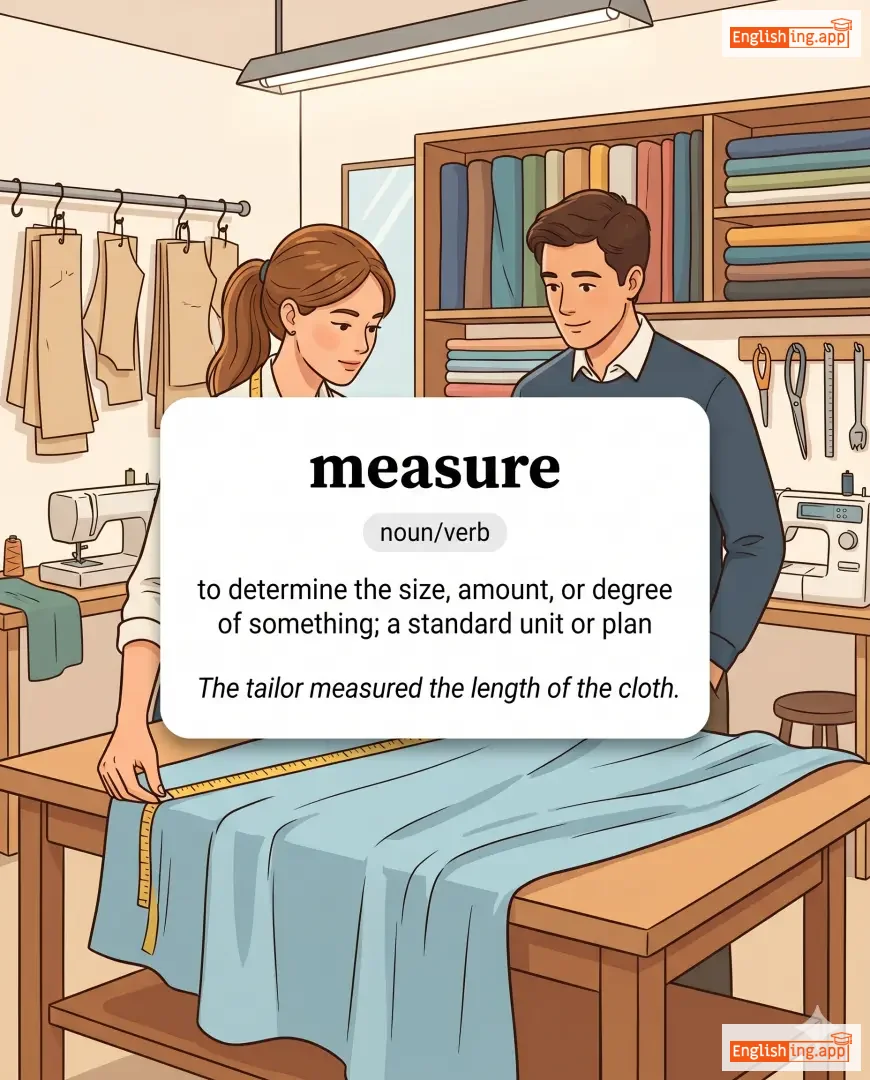
to determine the size, amount, or degree of something; a standard unit or plan
••••••
|
The tailor measured the length of the cloth.
仕立て屋は布の長さを測りました。
••••••
|
仕立て屋は布の長さを測りました。
Shitateya wa nuno no nagasa wo hakarimashita.
••••••
|
beyond measure
限度を超えて
••••••
|
to an extreme degree
••••••
|
限度を超えて
gendou wo koete
••••••
|
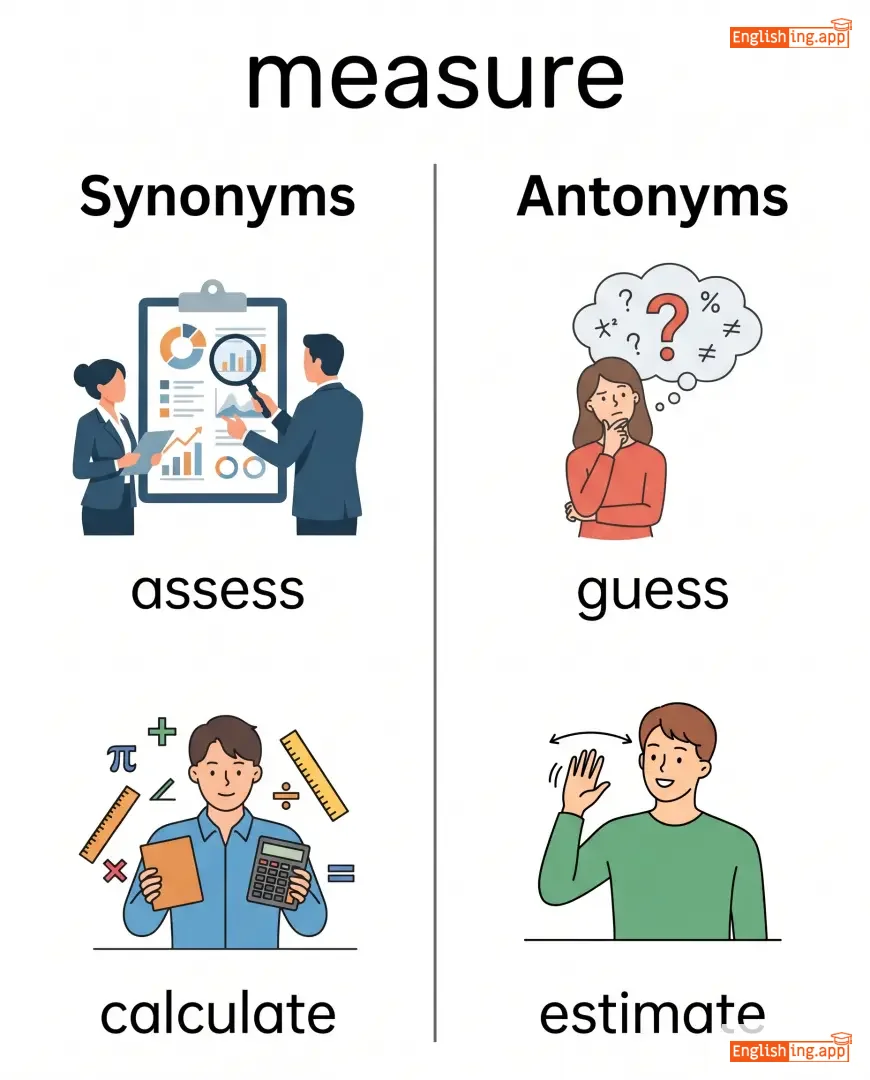
assess, calculate, evaluate, gauge, standard
••••••
|
guess, estimate, ignore
••••••
|
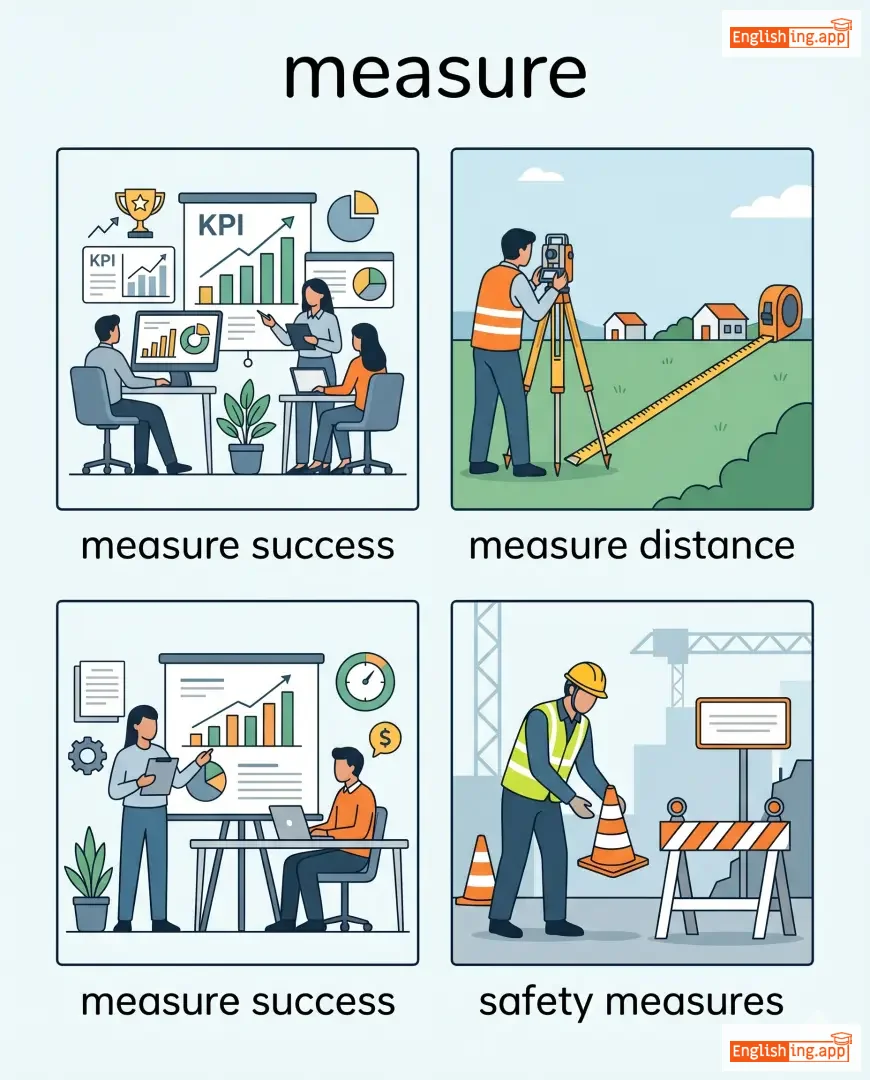
measure success, measure distance, safety measures, take measures
••••••
|
Measureは測定を意味します → '測定で測る' と覚えやすい。
••••••
|
|
#9997
⏳
|
/ˈmiːnˌtaɪm/
noun/adverb
(ミーンタイム)
••••••
|
- •••••• |
その間
sono aida
••••••
|
- •••••• | - •••••• | - •••••• | - •••••• |
the period of time between two events; meanwhile
••••••
|
The train will be late, so in the meantime let's have some tea. |
電車は遅れますので、その間お茶でも飲みましょう。
Densha wa okuremasu node, sono aida ocha demo nomimashou.
••••••
|
in the meantime |
during the time between events
••••••
|
その間
sono aida
••••••
|
meanwhile, interim, interval, intermission
••••••
|
afterward, later
••••••
|
in the meantime, meantime period, meantime activities
••••••
|
Meantime は '間の時間' → その間。
••••••
|
|
#9998
🤔
|
/ˈmeɪbi/
adverb
(メイビー)
••••••
|
- •••••• |
たぶん
tabun
••••••
|
- •••••• | - •••••• | - •••••• | - •••••• |
used to express possibility or uncertainty
••••••
|
Maybe we will go to the park tomorrow. |
たぶん明日公園に行くでしょう。
Tabun ashita kōen ni iku deshō.
••••••
|
just maybe |
indicating a slight possibility
••••••
|
ただたぶん
tada tabun
••••••
|
perhaps, possibly, might, could be
••••••
|
certainly, surely, definitely
••••••
|
maybe later, maybe someday, maybe not, maybe tomorrow
••••••
|
Maybeは「maybe はい、maybe いいえ」→たぶんはい、たぶんいいえ。
••••••
|
|
#9999
⬆️
|
/ˈmæksɪməm/
noun/adjective
(マキシマム)
••••••
|
- •••••• |
最大
saidai
••••••
|
- •••••• | - •••••• | - •••••• | - •••••• |
the greatest or highest amount, value, or degree possible
••••••
|
She scored the maximum marks in the exam. |
彼女は試験で最大の点数を取った。
Kanojo wa shiken de saidai no tensuu o totta.
••••••
|
to the maximum |
to the greatest possible extent
••••••
|
最大限に
saidaigen ni
••••••
|
utmost, highest, peak, greatest, limit
••••••
|
minimum, least, lowest
••••••
|
maximum effort, maximum speed, maximum limit, maximum capacity
••••••
|
Maximumは最大レベルを意味します→最大の度合い。
••••••
|
|
#10000
👀
|
/lʊk/
(ルック)
••••••
|
- •••••• |
見る
miru
••••••
|
looked
ルックド
••••••
|
looked
ルックド
••••••
|
looks
ルックス
••••••
|
looking
ルキング
••••••
|
to direct one's gaze in a particular direction
••••••
|
She looked out the window at the rain.
彼女は窓から雨を見ていた。
••••••
|
彼女は窓から雨を見ていた。
Kanojo wa mado kara ame o miteita.
••••••
|
look up to
尊敬する
••••••
|
to admire or respect someone
••••••
|
尊敬する
sonkei suru
••••••
|
glance, gaze, stare, observe, watch
••••••
|
ignore, overlook
••••••
|
look at, look for, look into, look after, look forward to
••••••
|
見る (look) ことで世界が広がる。
••••••
|
|
#10001
👨
|
/ˈmæskjəlɪn/
adjective
(マスキュリン)
••••••
|
- •••••• |
男性的
danseiteki
••••••
|
- •••••• | - •••••• | - •••••• | - •••••• |
having qualities traditionally associated with men
••••••
|
He has a deep, masculine voice. |
彼は深い男性的な声を持っています。
Kare wa fukai danseiteki na koe o motteimasu.
••••••
|
toxic masculinity |
harmful cultural norms about male behavior
••••••
|
有害な男性性
yūgaina danseisei
••••••
|
male, manly, virile, macho
••••••
|
feminine, womanly
••••••
|
masculine voice, masculine role, masculine energy, masculine identity
••••••
|
Masculine = Muscles + In – Musclesは男性的を意味する
••••••
|
|
#10002
🧍♀️
|
/ˈmænɪkɪn/
noun
(マネキン)
••••••
|
- •••••• |
マネキン
manekin
••••••
|
- •••••• | - •••••• | - •••••• | - •••••• |
a life-sized model of a human figure used by shops to display clothes
••••••
|
The mannequin in the shop window was dressed in a red gown.
ショップのウィンドウのマネキンは赤いドレスを着ていた。
••••••
|
ショップのウィンドウのマネキンは赤いドレスを着ていた。
Shoppu no u~indō no manekin wa akai doresu o kite ita.
••••••
|
- •••••• | - •••••• | - •••••• |
dummy, model, figure, display figure
••••••
|
human, person
••••••
|
shop mannequin, dress mannequin, plastic mannequin, mannequin display
••••••
|
Mannequin = マネキン + – ショップのディスプレイのように立っているモデル
••••••
|
|
#10003
🏗️
|
/ˌmænˈmeɪd/
adjective
(mænˈmeɪd)
••••••
|
- •••••• |
人工の
jinkō no
••••••
|
- •••••• | - •••••• | - •••••• | - •••••• |
something created or built by humans rather than occurring naturally
••••••
|
This lake is manmade, not natural. |
この湖は人工のもので、自然のものではありません。
Kono mizuumi wa jinkō no mono de, shizen no mono de wa arimasen.
••••••
|
- •••••• | - •••••• | - •••••• |
artificial, synthetic, manufactured, constructed
••••••
|
natural, organic, genuine
••••••
|
manmade lake, manmade disaster, manmade fiber, manmade structure
••••••
|
Manmadeは人間によって作られたことを意味します
••••••
|
|
#10004
🛠️
|
/meɪk/
verb
(meik)
••••••
|
- •••••• |
作る
tsukuru
••••••
|
made
meid
••••••
|
made
meid
••••••
|
makes
meiks
••••••
|
making
meiking
••••••
|
to create, build, or cause something to happen
••••••
|
She can make delicious cakes.
彼女は美味しいケーキを作れます。
••••••
|
彼女は美味しいケーキを作れます。
Kanojo wa oishii keeki o tsukuremasu.
••••••
|
make a difference
違いを作る
••••••
|
to have a significant effect
••••••
|
違いを作る
chigai o tsukuru
••••••
|
create, build, produce, prepare, construct
••••••
|
destroy, ruin, break
••••••
|
make money, make a decision, make friends, make progress
••••••
|
Makeは作ること、Maker(作り手)と同じです。
••••••
|
|
#10005
🔍
|
/ˈmæɡnɪfaɪ/
verb
(マグニファイ)
••••••
|
- •••••• |
拡大する
kakudai suru
••••••
|
magnified
マグニファイド
••••••
|
magnified
マグニファイド
••••••
|
magnifies
マグニファイズ
••••••
|
magnifying
マグニファイイング
••••••
|
to make something appear larger or more important than it really is
••••••
|
The microscope can magnify tiny cells.
顕微鏡は小さな細胞を拡大できます。
••••••
|
顕微鏡は小さな細胞を拡大できます。
Kenbikyō wa chiisana saibo o kakudai dekimasu.
••••••
|
magnify the problem
問題を拡大する
••••••
|
to make a problem seem bigger than it is
••••••
|
問題を拡大する
Mondai o kakudai suru
••••••
|
enlarge, amplify, expand, exaggerate, intensify
••••••
|
reduce, diminish, shrink
••••••
|
magnify glass, magnify image, magnify problem, magnify details
••••••
|
Magnifyは魔法で物を大きくするような感じ。
••••••
|
|
#10006
🤯
|
/ˈmædnəs/
noun
(マッドネス)
••••••
|
- •••••• |
狂気
kyōki
••••••
|
- •••••• | - •••••• | - •••••• | - •••••• |
the state of being mentally ill or acting in a very foolish way
••••••
|
It would be madness to drive in such dangerous weather. |
こんな危険な天候で運転するのは狂気だ。
Konna kiken na tenkō de unten suru no wa kyōki da.
••••••
|
drive someone mad |
to greatly annoy or irritate someone
••••••
|
誰かを狂わせる
dareka o kuruwaseru
••••••
|
insanity, lunacy, foolishness, mania, frenzy
••••••
|
sanity, wisdom, reason
••••••
|
sheer madness, act of madness, madness of war, madness ensues
••••••
|
Mad + ness → こんなに狂ってるから ‘madness’ は狂気を意味する 🤯
••••••
|
|
#10007
🧥
|
/ˈmækɪntɒʃ/
noun
(マッキントッシュ)
••••••
|
- •••••• |
レインコート
rein koto
••••••
|
- •••••• | - •••••• | - •••••• | - •••••• |
a waterproof raincoat, originally made from rubberized fabric
••••••
|
He wore a mackintosh to stay dry in the rain.
彼は雨の中で乾いたままでいるためにマッキントッシュを着ていました。
••••••
|
彼は雨の中で乾いたままでいるためにマッキントッシュを着ていました。
Kare wa ame no naka de kawaita mamade iru tame ni makkintoshu o kite imashita.
••••••
|
- •••••• | - •••••• | - •••••• |
raincoat, waterproof, overcoat
••••••
|
none, bare, uncovered
••••••
|
wear a mackintosh, rubber mackintosh, heavy mackintosh
••••••
|
Mac-intosh = レインコート → Macは水を防ぐことを意味します🧥
••••••
|
|
#10008
✨
|
/lʌɡˈʒʊəriəs/
adjective
(ラグジュアリオス)
••••••
|
- •••••• |
豪華な
gouka na
••••••
|
- •••••• | - •••••• | - •••••• | - •••••• |
extremely comfortable, elegant, or enjoyable, often involving great expense
••••••
|
They stayed in a luxurious hotel during their vacation. |
彼らは休暇中に豪華なホテルに泊まりました。
Karera wa kyuuka-chuu ni gouka na hoteru ni tomarimashita.
••••••
|
live in luxury |
to have a very comfortable and wealthy lifestyle
••••••
|
豪華な生活をする
gouka na seikatsu wo suru
••••••
|
opulent, lavish, rich, elegant, deluxe
••••••
|
simple, poor, modest
••••••
|
luxurious hotel, luxurious lifestyle, luxurious car, luxurious surroundings
••••••
|
Luxurious = Luxury + Us → 私たちにとって、luxuryは豪華な生活を意味します ✨
••••••
|
|
#10009
🎣
|
/lʊər/
verb
(lyur)
••••••
|
- •••••• |
誘惑する
yūwaku suru
••••••
|
lured
lured
••••••
|
lured
lured
••••••
|
lures
lures
••••••
|
luring
luring
••••••
|
to attract or tempt someone, often by offering something appealing
••••••
|
The advertisement lured customers with promises of discounts.
広告は割引の約束で顧客を引き寄せました。
••••••
|
広告は割引の約束で顧客を引き寄せました。
Kōkoku wa waribiki no yakusoku de kokyaku o hikiyosemashita.
••••••
|
lure someone into
誰かを誘い込む
••••••
|
to tempt someone into doing something
••••••
|
誰かを誘い込む
Dareka o sasoi komu
••••••
|
attract, tempt, entice, seduce, draw
••••••
|
repel, discourage, deter
••••••
|
lure away, lure into, lure customers, lure prey
••••••
|
釣りで Lure は魚を引き寄せることを意味します 🎣
••••••
|
|
#10010
🐶
|
/ˈlʌvəbl̩/
adjective
(ハピネス)
••••••
|
- •••••• |
幸福
kōfuku
••••••
|
- •••••• | - •••••• | - •••••• | - •••••• |
easy to love; endearing or charming
••••••
|
The puppy was so loveable that everyone wanted to hold it. |
彼女は賞を受け取ったとき、幸せを隠すことができませんでした。
Kanojo wa shō o uketotta toki, kōfuku o kakusu koto ga dekimasen deshita.
••••••
|
- •••••• | - •••••• |
幸せの追求
shiawase no tsuikyū
••••••
|
adorable, charming, delightful, sweet, endearing
••••••
|
unpleasant, unlikeable, hateful
••••••
|
loveable character, loveable person, loveable nature, loveable quality
••••••
|
幸福は笑顔の中にあります。
••••••
|
|
#10011
❤️
|
/lʌv/
verb
(ラヴ)
••••••
|
|
愛
ai
••••••
|
loved
ラヴド
••••••
|
loved
ラヴド
••••••
|
loves
ラヴス
••••••
|
loving
ラヴィング
••••••
|
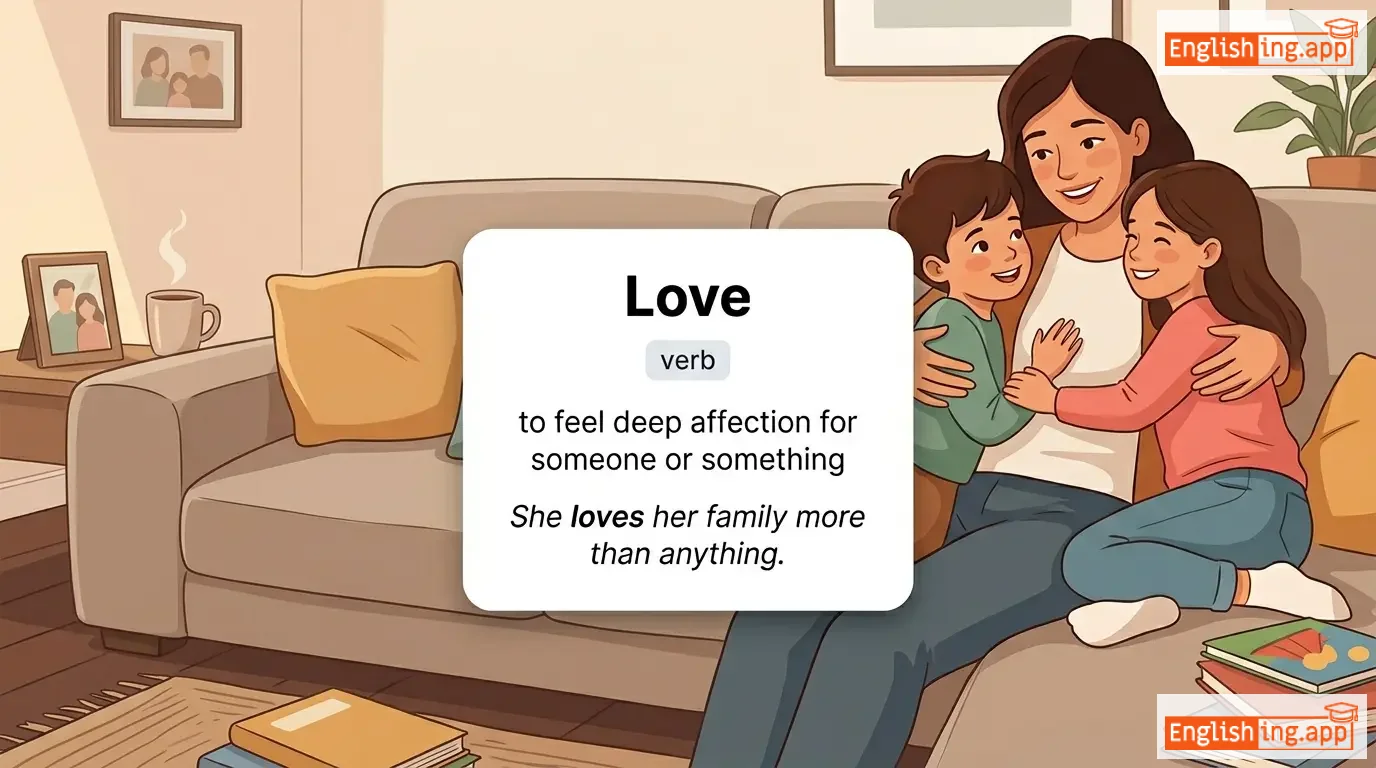
to feel deep affection for someone or something
••••••
|
She loves her family more than anything.
彼女は家族を何よりも愛している。
••••••
|
彼女は家族を何よりも愛している。
Kanojo wa kazoku wo nani yori mo aishiteiru.
••••••
|
fall in love
恋に落ちる
••••••
|
to begin to feel romantic affection
••••••
|
恋に落ちる
koi ni ochiru
••••••
|
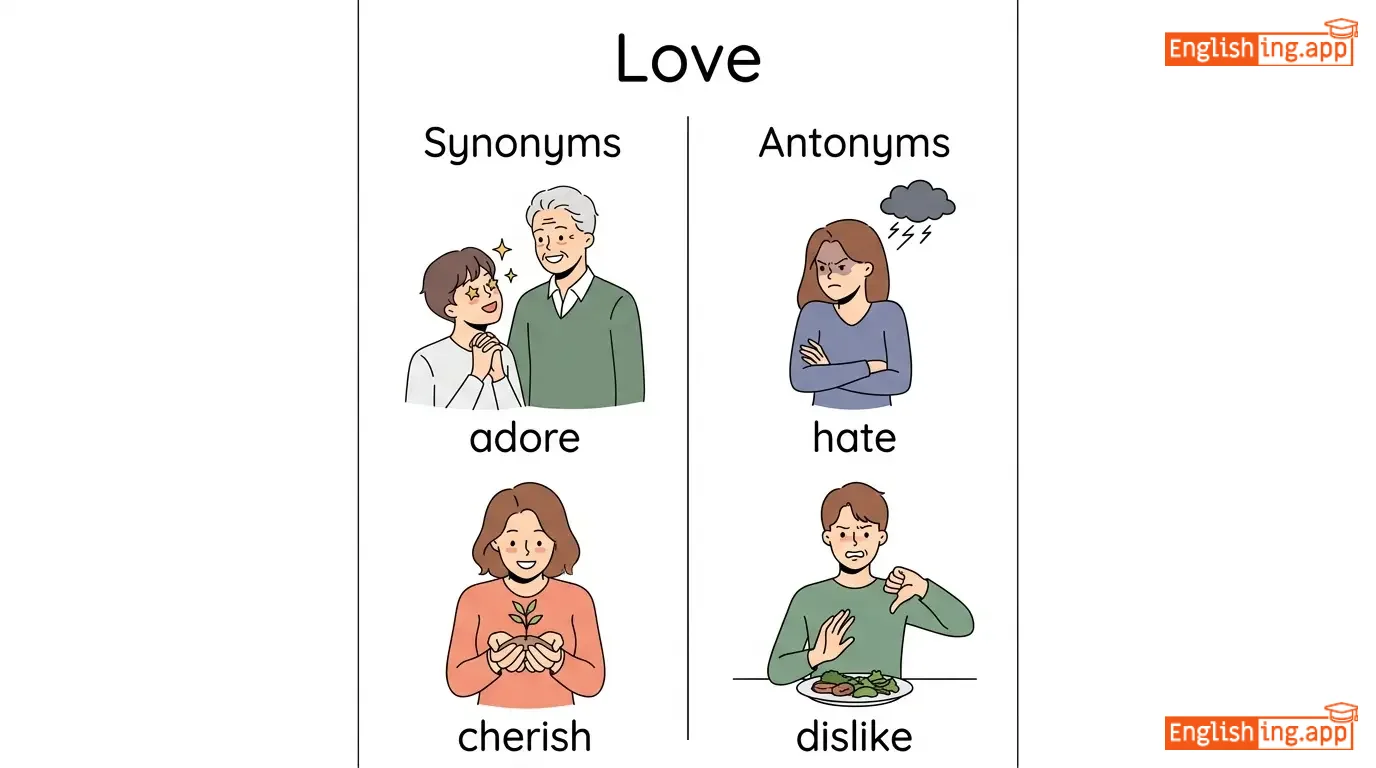
adore, cherish, like, care for, value
••••••
|
hate, dislike
••••••
|
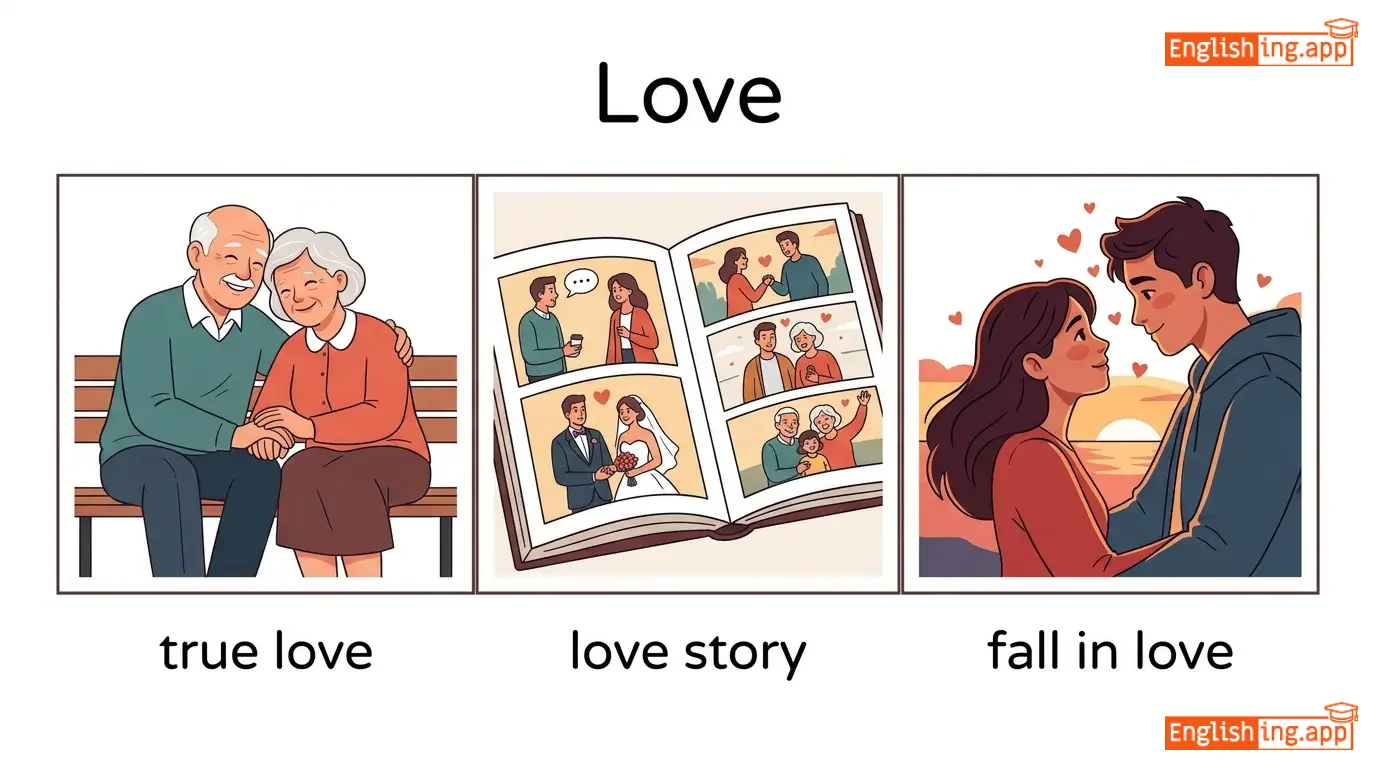
true love, love story, fall in love, love deeply
••••••
|
LOVE = 愛 (ai) in Japanese.
••••••
|
|
#10012
🤢
|
/ˈlaʊzi/
adjective
(ラウジー)
••••••
|
- •••••• |
ひどい
hidoi
••••••
|
- •••••• | - •••••• | - •••••• | - •••••• |
of very poor quality; bad or unpleasant
••••••
|
He felt lousy after catching the flu. |
インフルエンザにかかった後、彼はひどく感じた。
Infuruenza ni kakatta ato, kare wa hidoku kanjita.
••••••
|
- •••••• | - •••••• | - •••••• |
awful, terrible, poor, bad
••••••
|
great, excellent
••••••
|
lousy job, lousy weather, feel lousy
••••••
|
Lousyとは、悪い、ひどいという意味です。
••••••
|
|
#10013
🪛
|
/luːs/
adjective
(ルーズ)
••••••
|
- •••••• |
緩い
yurui
••••••
|
- •••••• | - •••••• | - •••••• | - •••••• |
not firmly or tightly fixed in place
••••••
|
The screw is loose and needs tightening.
ネジが緩んでいて、締め直す必要があります。
••••••
|
ネジが緩んでいて、締め直す必要があります。
Neji ga yurunde ite, shime naosu hitsuyou ga arimasu.
••••••
|
cut loose
切り離す
••••••
|
to behave freely and without control
••••••
|
自由に振る舞う
jiyuu ni furumau
••••••
|
slack, free, unfastened, detached
••••••
|
tight, secure
••••••
|
loose clothing, loose ends, loose screw
••••••
|
緩いは、ゆるんでいるときに使う言葉、ネジがゆるんでいるときのように
••••••
|
|
#10014
🤪
|
/ˈluːpi/
adjective
(ルーピー)
••••••
|
- •••••• |
おかしい
okashii
••••••
|
- •••••• | - •••••• | - •••••• | - •••••• |
crazy, silly, or eccentric
••••••
|
After working all night, he felt a little loopy. |
一晩中働いた後、彼は少しおかしく感じました。
Hitobanjū hataraita ato, kare wa sukoshi okashiku kanjimashita.
••••••
|
- •••••• | - •••••• | - •••••• |
crazy, silly, goofy, eccentric, odd
••••••
|
sane, rational
••••••
|
loopy idea, loopy behavior, act loopy
••••••
|
Loopyは、疲れすぎてちょっとおかしく感じる時のことです。
••••••
|
Vocabulary Quiz
Test your vocabulary by matching words with their translations or meanings.
Login to take the quiz
Comments (0)
Share your thoughts and join the discussion.
Join the discussion by logging in
Login to CommentNo comments yet
Be the first to share your thoughts!