

翻訳
過去
過去分詞
三人称単数
動名詞
意味
例文
例文の翻訳
同義語
対義語
コロケーション
ニーモニック
Swipe left or right, or use the buttons. Tap image to zoom.
例文の翻訳
単語
Lesson 125Lesson 125 - マスクトグル
|
絵文字
|
単語 | Images | 翻訳 | 過去 | 過去分詞 | 三人称単数 | 動名詞 | 意味 | 例文 | 例文の翻訳 | 表現例 | 表現例の意味 | 表現例の翻訳 | 同義語 | 対義語 | コロケーション | ニーモニック |
|---|---|---|---|---|---|---|---|---|---|---|---|---|---|---|---|---|---|
|
#3721
😬
|
/ɡæf/
noun
(ガフ)
••••••
|
- •••••• |
間違い
machigai
••••••
|
- •••••• | - •••••• | - •••••• | - •••••• |
A social blunder or mistake; also a hook or device used in fishing or theater.
••••••
|
He made a major gaff during the meeting by forgetting the client's name. |
会議中に彼は顧客の名前を忘れて大きな間違いを犯した。
Kaigi chuu ni kare wa kokyaku no namae wo wasurete ookina machigai wo okashita.
••••••
|
pull down the gaff |
To cause trouble or expose something.
••••••
|
問題を引き起こす
mondai wo hikiokosu
••••••
|
blunder, mistake, slip, error
••••••
|
accuracy, correctness
••••••
|
social gaff, political gaff, make a gaff
••••••
|
ガフは間違いを意味し、何かを忘れたり誤ったりするときに言います。
••••••
|
|
#3722
⚡
|
/ɡælˈvænɪk/
adjective
(ギャルバニック)
••••••
|
- •••••• |
ギャルバニック / 強烈
gyarubanikku / kyōretsu
••••••
|
- •••••• | - •••••• | - •••••• | - •••••• |
Relating to electricity produced by chemical action; sudden and dramatic.
••••••
|
The news had a galvanic effect on the audience.
ニュースは観客にギャルバニックな影響を与えた。
••••••
|
ニュースは観客にギャルバニックな影響を与えた。
Nyūsu wa kankyaku ni gyarubanikku na eikyō o ataeta.
••••••
|
- •••••• | - •••••• | - •••••• |
electric, shocking, startling, energizing
••••••
|
dull, weak
••••••
|
galvanic response, galvanic effect, galvanic cell, galvanic shock
••••••
|
ギャルバニックは突然の電気ショック - ギャルバニック = 電気ショック
••••••
|
|
#3723
🎁
|
/ɡəˈlɔːr/
adjective/adverb
(ガロア)
••••••
|
- •••••• |
豊富な
hōfu na
••••••
|
- •••••• | - •••••• | - •••••• | - •••••• |
In large amounts; abundant or plentiful.
••••••
|
There were books galore in the old library.
ゼア ワー ブックス ガロア イン ザ オールド ライブラリー。
••••••
|
古い図書館には豊富な本がありました。
Furui toshokan ni wa hōfu na hon ga arimashita.
••••••
|
- •••••• | - •••••• | - •••••• |
plentiful, abundant, copious, overflowing
••••••
|
scarce, rare
••••••
|
prizes galore, food galore, choices galore, discounts galore
••••••
|
Galoreは豊富さを意味します!
••••••
|
|
#3724
🪓
|
/ˈɡæloʊz/
noun
(gárózu)
••••••
|
- •••••• |
絞首台
kōshudai
••••••
|
- •••••• | - •••••• | - •••••• | - •••••• |
A structure used for hanging criminals who have been sentenced to death.
••••••
|
The criminal was led to the gallows at dawn. |
犯人は夜明けに絞首台に連れて行かれた。
Hannin wa yoake ni kōshudai ni tsurete ikareta.
••••••
|
to laugh on the gallows |
To show bravery or humor in the face of certain death or defeat.
••••••
|
絞首台で笑う
kōshudai de warau
••••••
|
scaffold, execution platform, hanging place, gibbet
••••••
|
freedom, release
••••••
|
gallows humor, led to the gallows, gallows tree, gallows speech
••••••
|
Gallows は絞首台を意味します。gallows = gallo (ガロ) = 終わり。
••••••
|
|
#3725
🚢
|
/ˈɡæli/
noun
(gari)
••••••
|
- •••••• |
船の厨房
fune no chūbō
••••••
|
- •••••• | - •••••• | - •••••• | - •••••• |
A low, flat ship used in ancient times, often with sails and oars; also, a kitchen on a ship or aircraft.
••••••
|
The galley was filled with the smell of freshly cooked food. |
船の厨房は新鮮に調理された食べ物の匂いで満ちていた。
Fune no chūbō wa shinsen ni chōri sareta tabemono no nioi de michite ita.
••••••
|
- •••••• | - •••••• | - •••••• |
kitchen, cookhouse, ship's kitchen, vessel
••••••
|
cabin, deck
••••••
|
ship's galley, galley kitchen, galley slaves, galley crew
••••••
|
船の厨房でガスを使って料理している様子を想像してみてください。
••••••
|
|
#3726
⛵
|
/ˈɡæliən/
noun
(ガレオン)
••••••
|
- •••••• |
ガレオン船
gareon sen
••••••
|
- •••••• | - •••••• | - •••••• | - •••••• |
A large sailing ship used mainly by Europeans from the 16th to 18th centuries.
••••••
|
The Spanish galleon carried treasures across the Atlantic. |
スペインのガレオン船は大西洋を越えて財宝を運んだ。
Supein no gareon-sen wa Taiseiyō o koete zaihō o hakonda.
••••••
|
- •••••• | - •••••• | - •••••• |
ship, vessel, boat, frigate, man-of-war
••••••
|
raft, canoe
••••••
|
Spanish galleon, treasure galleon, galleon fleet
••••••
|
ガレオン船は大きな船、財宝を運んで大西洋を越えた!
••••••
|
|
#3727
🦸
|
/ˈɡæl.ənt/
adjective
(ギャラント)
••••••
|
- •••••• |
勇敢な, 英雄的な
yūkan na, eiyū-teki na
••••••
|
- •••••• | - •••••• | - •••••• | - •••••• |
Brave, heroic, or chivalrous.
••••••
|
The gallant firefighter saved the child from the burning building.
その勇敢な消防士は燃えている建物から子供を助けました。
••••••
|
その勇敢な消防士は燃えている建物から子供を助けました。
Sono yūkan na shōbōshi wa moeteiru tatemono kara kodomo o tasukemashita.
••••••
|
- •••••• | - •••••• | - •••••• |
brave, heroic, noble, chivalrous, courageous
••••••
|
cowardly, timid, weak
••••••
|
gallant effort, gallant soldier, gallant gesture
••••••
|
Gallant = gall + ant 🐜 — 小さいけど勇敢で英雄的。
••••••
|
|
#3728
😠
|
/ɡɔːl/
noun, verb
(ギャル)
••••••
|
- •••••• |
厚かましさ、迷惑をかける
atsukamashisa, meiwaku wo kakeru
••••••
|
galled
ギャルド
••••••
|
galled
ギャルド
••••••
|
galls
ギャルズ
••••••
|
galling
ギャリング
••••••
|
Annoyance, boldness, or to irritate.
••••••
|
She had the gall to question his decision.
彼女は彼の決定に疑問を呈するギャルを持っていました。
••••••
|
彼女は彼の決定に疑問を呈するギャルを持っていました。
Kanojo wa kare no kettei ni gimon wo tei suru gyaru wo motteimashita.
••••••
|
- •••••• | - •••••• | - •••••• |
audacity, nerve, impudence, irritate, vex
••••••
|
humility, respect, soothe
••••••
|
have the gall, gall someone, galling experience
••••••
|
Gallとは、誰かを迷惑させたり、厚かましくする勇気です。
••••••
|
|
#3729
💨
|
/ɡeɪl/
noun
••••••
|
- •••••• | - •••••• | - •••••• | - •••••• | - •••••• | - •••••• |
A very strong wind.
••••••
|
The ship struggled to stay afloat during the gale. |
- •••••• |
gales of laughter |
a sudden burst of loud laughter
••••••
|
- •••••• |
storm, tempest, squall, blast, gust
••••••
|
calm, breeze
••••••
|
strong gale, gale force winds, gales of laughter
••••••
|
No •••••• |
|
#3730
🌌
|
/ˈɡæləksi/
noun
(ギャラクシー)
••••••
|
- •••••• |
銀河
ginga
••••••
|
- •••••• | - •••••• | - •••••• | - •••••• |
A massive system of stars, gas, dust, and dark matter bound together by gravity.
••••••
|
The Milky Way is the galaxy that contains our solar system. |
天の川は私たちの太陽系を含む銀河です。
Amanogawa wa watashitachi no taiyōkei o fukumu ginga desu.
••••••
|
- •••••• | - •••••• | - •••••• |
universe, cosmos, star system, cluster, constellation
••••••
|
atom, particle
••••••
|
spiral galaxy, elliptical galaxy, distant galaxy, galaxy cluster
••••••
|
銀河は無数の星が重力で集まった巨大な空間です。
••••••
|
|
#3731
🚶
|
/ɡeɪt/
noun
(ゲイト)
••••••
|
- •••••• |
歩き方
arukikata
••••••
|
- •••••• | - •••••• | - •••••• | - •••••• |
A person's manner of walking.
••••••
|
His slow gait showed that he was tired. |
彼の遅い歩き方は、彼が疲れていることを示していた。
Kare no osoi arukikata wa, kare ga tsukarete iru koto o shimeshite ita.
••••••
|
pace and gait |
The way and speed of walking.
••••••
|
ペースと歩き方
pēsu to arukikata
••••••
|
walk, stride, pace, step
••••••
|
stillness, immobility
••••••
|
slow gait, steady gait, awkward gait, walking gait
••••••
|
Gait = Gate → ゲートに近づくとき、自分の歩き方に注意を払いましょう。
••••••
|
|
#3732
🙅
|
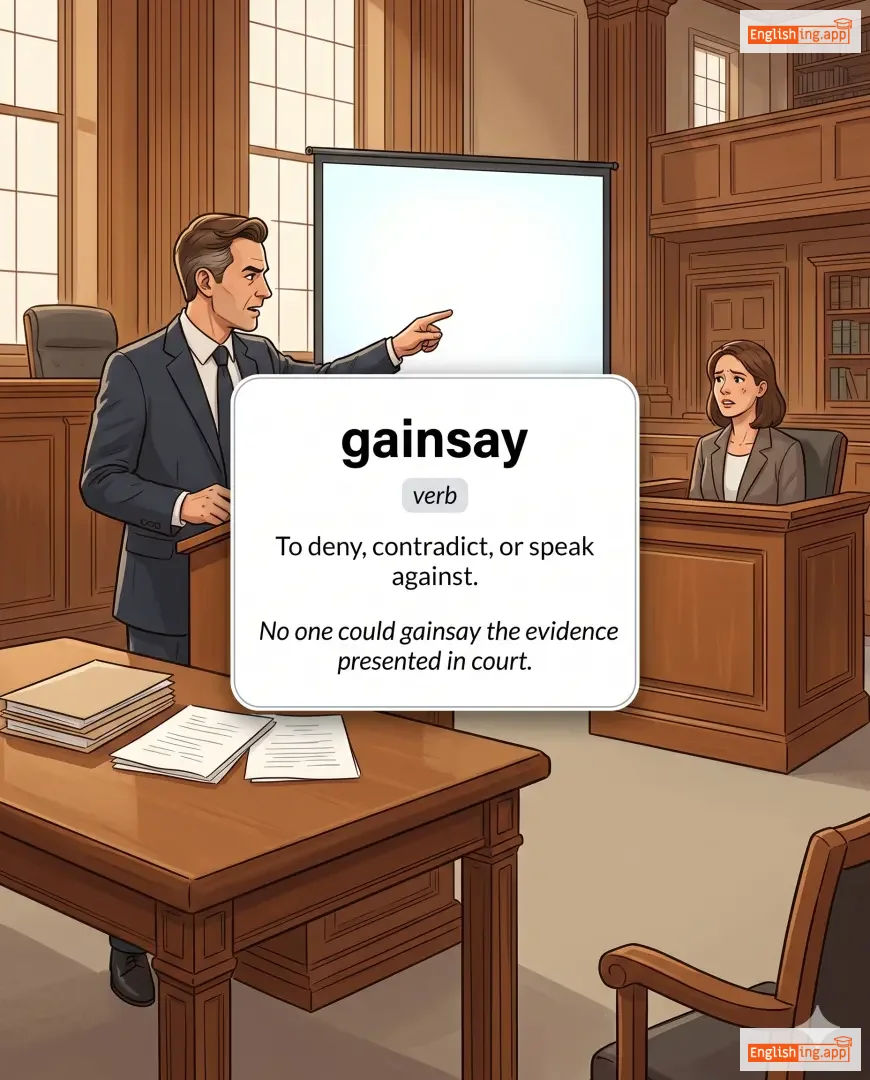
/ˌɡeɪnˈseɪ/
verb
(ゲインセイ)
••••••
|
|
反論する
hanron suru
••••••
|
gainsaid
ゲインセイド
••••••
|
gainsaid
ゲインセイド
••••••
|
gainsays
ゲインセイズ
••••••
|
gainsaying
ゲインセイング
••••••
|
To deny, contradict, or speak against.
••••••
|
No one could gainsay the evidence presented in court.
裁判所で提出された証拠を誰も反論できなかった。
••••••
|
裁判所で提出された証拠を誰も反論できなかった。
Saibansho de teishutsu sareta shōko o dare mo hanron dekinakatta.
••••••
|
- •••••• | - •••••• | - •••••• |
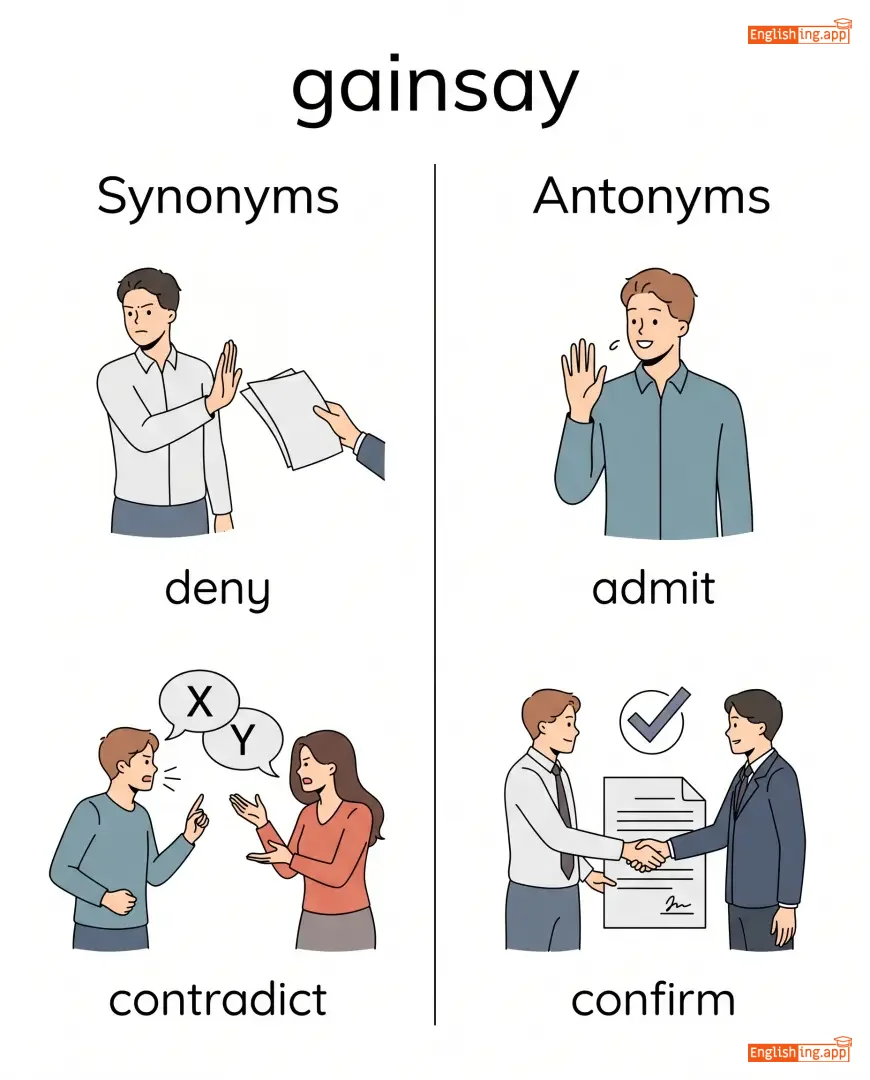
deny, contradict, oppose, refute
••••••
|
admit, confirm, accept
••••••
|
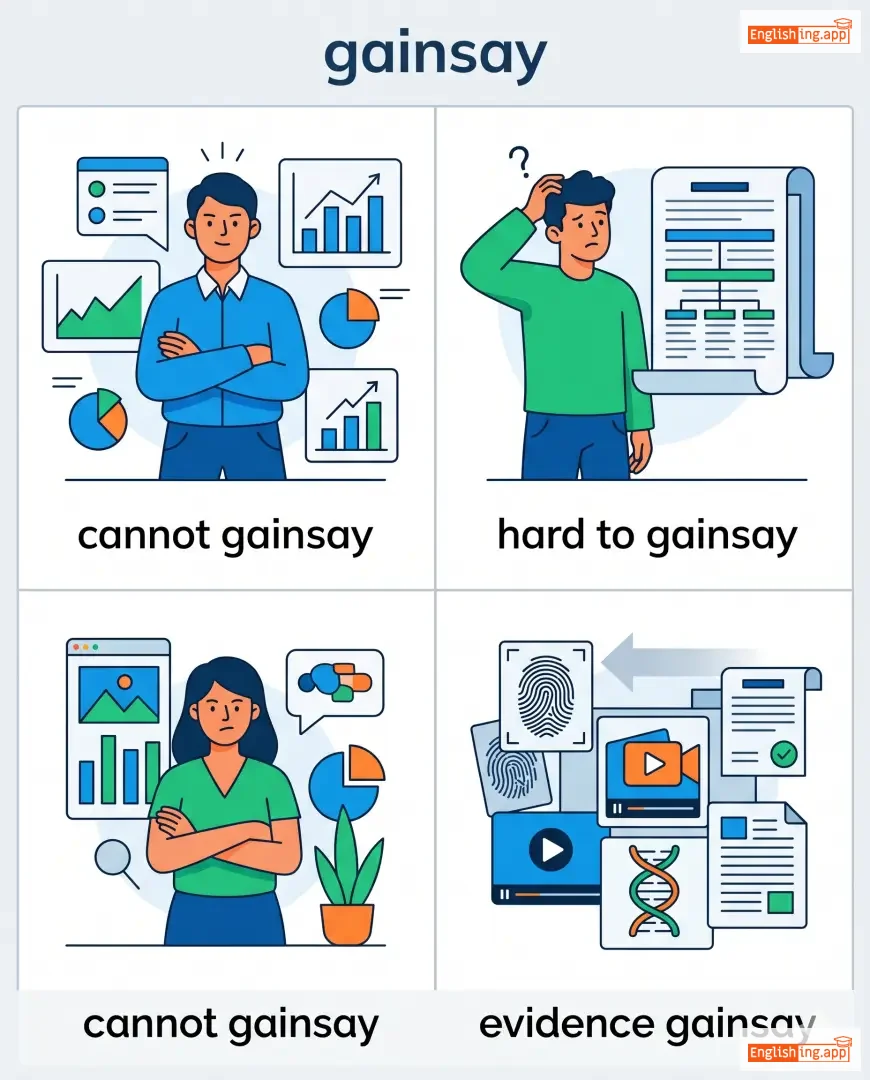
cannot gainsay, hard to gainsay, evidence gainsay
••••••
|
Gainsay = Gain (得る) と Say (言う) – 言ったことを否定する意味。
••••••
|
|
#3733
😊
|
/ˈɡeɪli/
adverb
(ゲイリー)
••••••
|
- •••••• |
陽気に
yōki ni
••••••
|
- •••••• | - •••••• | - •••••• | - •••••• |
In a cheerful or lively way.
••••••
|
Children ran gaily through the garden. |
子供たちは陽気に庭を駆け回った。
Kodomotachi wa yōki ni niwa o kakemawatta.
••••••
|
- •••••• | - •••••• | - •••••• |
cheerfully, joyfully, merrily, happily
••••••
|
sadly, gloomily, miserably
••••••
|
gaily dressed, gaily decorated, ran gaily
••••••
|
Gaily = Gay + ly → Gay は陽気、だから Gaily は陽気に意味する。
••••••
|
|
#3734
🎉
|
/ˈɡeɪəti/
noun
(ゲイエティ)
••••••
|
- •••••• |
楽しさ
tanoshisa
••••••
|
- •••••• | - •••••• | - •••••• | - •••••• |
The state of being cheerful, lively, or full of fun.
••••••
|
The festival was full of music, laughter, and gaiety.
祭りは音楽、笑い、そしてゲイエティでいっぱいでした。
••••••
|
祭りは音楽、笑い、そして楽しさでいっぱいでした。
Matsuri wa ongaku, warai, soshite tanoshisa de ippai deshita.
••••••
|
- •••••• | - •••••• | - •••••• |
cheerfulness, joy, merriment, happiness
••••••
|
sadness, gloom, sorrow
••••••
|
atmosphere of gaiety, full of gaiety, laughter and gaiety
••••••
|
Gaietyはgay、楽しいことを意味します。したがって、gaietyは楽しさです。
••••••
|
|
#3735
🤦
|
/ɡæf/
noun
(ガフ)
••••••
|
- •••••• |
失敗
shippai
••••••
|
- •••••• | - •••••• | - •••••• | - •••••• |
An unintentional act or remark causing embarrassment; a blunder.
••••••
|
The politician's gaffe quickly spread on social media. |
政治家の失敗はすぐにソーシャルメディアで広まりました。
Seijika no shippai wa sugu ni soosharu media de hiromarimashita.
••••••
|
political gaffe |
An embarrassing mistake made by a politician in public.
••••••
|
政治的失敗
seijiteki shippai
••••••
|
blunder, mistake, slip, error, faux pas
••••••
|
accuracy, correctness, success
••••••
|
commit a gaffe, embarrassing gaffe, major gaffe, political gaffe
••••••
|
ガフ – 失敗 – 政治家がミスをすると大きな問題になる。
••••••
|
|
#3736
📈
|
/ˈfɜːrðərəns/
noun
(ファーダランス)
••••••
|
- •••••• |
促進
sokushin
••••••
|
- •••••• | - •••••• | - •••••• | - •••••• |
The advancement or promotion of something.
••••••
|
The new policy was introduced in furtherance of social justice.
新しい政策は社会的正義の促進のために導入されました。
••••••
|
新しい政策は社会的正義の促進のために導入されました。
Atarashii seisaku wa shakaiteki seigi no sokushin no tame ni dōnyū saremashita.
••••••
|
- •••••• | - •••••• | - •••••• |
advancement, promotion, progress, support
••••••
|
obstruction, hindrance
••••••
|
in furtherance of, furtherance of goals, furtherance of justice
••••••
|
Furtheranceは物事を進めたり、推進することです。
••••••
|
|
#3737
📱
|
/ˈɡædʒ.ɪt/
noun
(ガジェット)
••••••
|
- •••••• |
装置
souchi
••••••
|
- •••••• | - •••••• | - •••••• | - •••••• |
A small mechanical or electronic device with a particular function, often novel or useful.
••••••
|
He loves buying the latest kitchen gadgets. |
彼は最新のキッチンガジェットを買うのが好きです。
Kare wa saishin no kitchin gadget o kau no ga suki desu.
••••••
|
- •••••• | - •••••• | - •••••• |
device, contraption, appliance, tool, implement
••••••
|
equipment, machine
••••••
|
latest gadget, electronic gadget, handy gadget, new gadget
••••••
|
Gadgetはそのままカタカナで、携帯電話やテレビのリモコンなどの小さな便利な機器です。
••••••
|
|
#3738
🐝
|
/ˈɡæd.flaɪ/
noun
(ギャッドフライ)
••••••
|
- •••••• |
厄介な人
akkaina hito
••••••
|
- •••••• | - •••••• | - •••••• | - •••••• |
A person who annoys or criticizes others to stimulate change or provoke action.
••••••
|
The journalist was a gadfly, constantly questioning the government's policies. |
そのジャーナリストは厄介な人で、政府の政策を常に疑問視していた。
Sono jānarisuto wa akkaina hito de, seifu no seisaku o tsuneni gimon-shi shite ita.
••••••
|
- •••••• | - •••••• | - •••••• |
provocateur, critic, agitator, instigator
••••••
|
supporter, follower
••••••
|
political gadfly, social gadfly, act as a gadfly
••••••
|
ギャッドフライ - 騒音を立てて人々に影響を与える、批判的な人物のような存在。
••••••
|
|
#3739
🔮
|
/ˈfjuː.tʃə.rɪst/
noun
(フューチャリスト)
••••••
|
- •••••• |
未来学者
miraigakusha
••••••
|
- •••••• | - •••••• | - •••••• | - •••••• |
A person who studies or predicts the future, especially trends in science, technology, or society.
••••••
|
The futurist predicted major changes in transportation within the next decade. |
未来学者は次の10年間で交通に大きな変化があると予測しました。
Mirai gakusha wa tsugi no jū nenkan de kōtsū ni ōkina henka ga aru to yosoku shimashita.
••••••
|
- •••••• | - •••••• | - •••••• |
visionary, predictor, forecaster, innovator
••••••
|
traditionalist, conservative
••••••
|
futurist thinker, futurist vision, futurist prediction
••••••
|
未来 (mirai) + 学者 (gakusha) = 未来学者, 未来を予測する人。
••••••
|
|
#3740
🚫
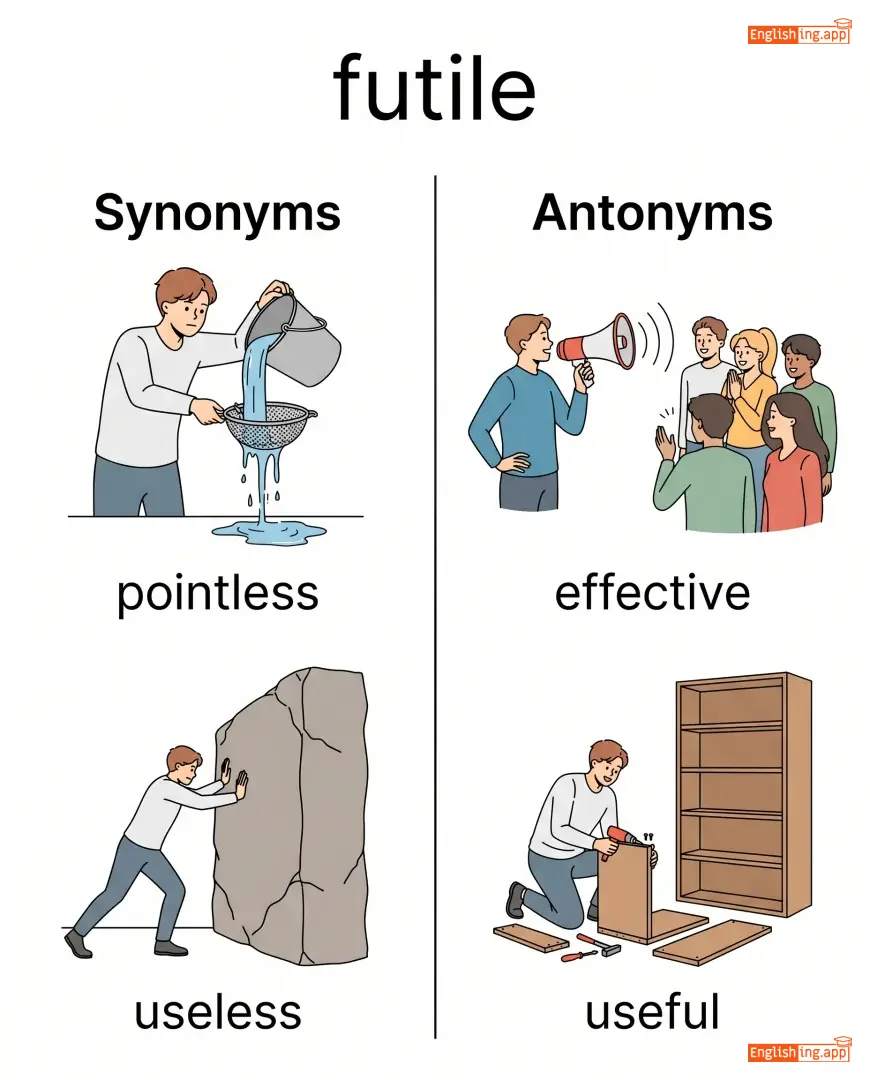
|
/ˈfjuː.taɪl/
adjective
(fyūtairu)
••••••
|
|
無駄
mudā
••••••
|
- •••••• | - •••••• | - •••••• | - •••••• |
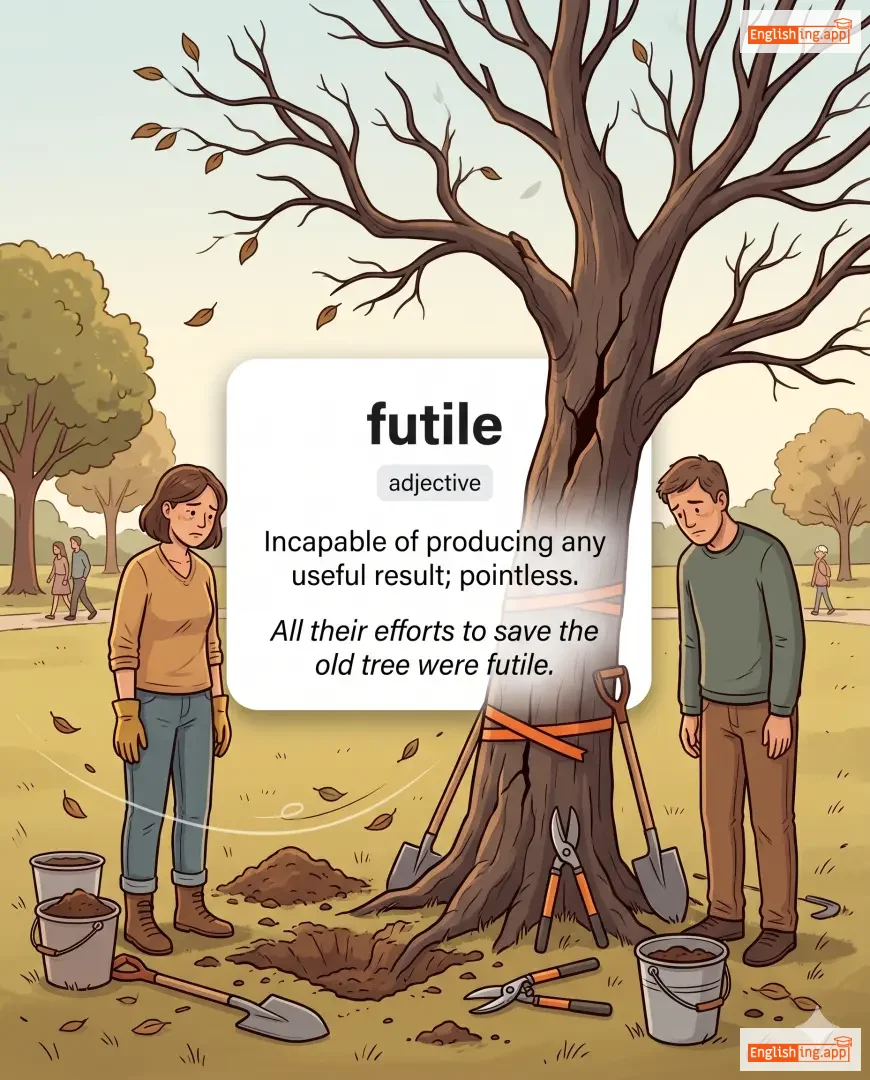
Incapable of producing any useful result; pointless.
••••••
|
All their efforts to save the old tree were futile.
古い木を救うための彼らのすべての努力は無駄でした。
••••••
|
古い木を救うための彼らのすべての努力は無駄でした。
Furui ki o sukuu tame no karera no subete no doryoku wa muda deshita.
••••••
|
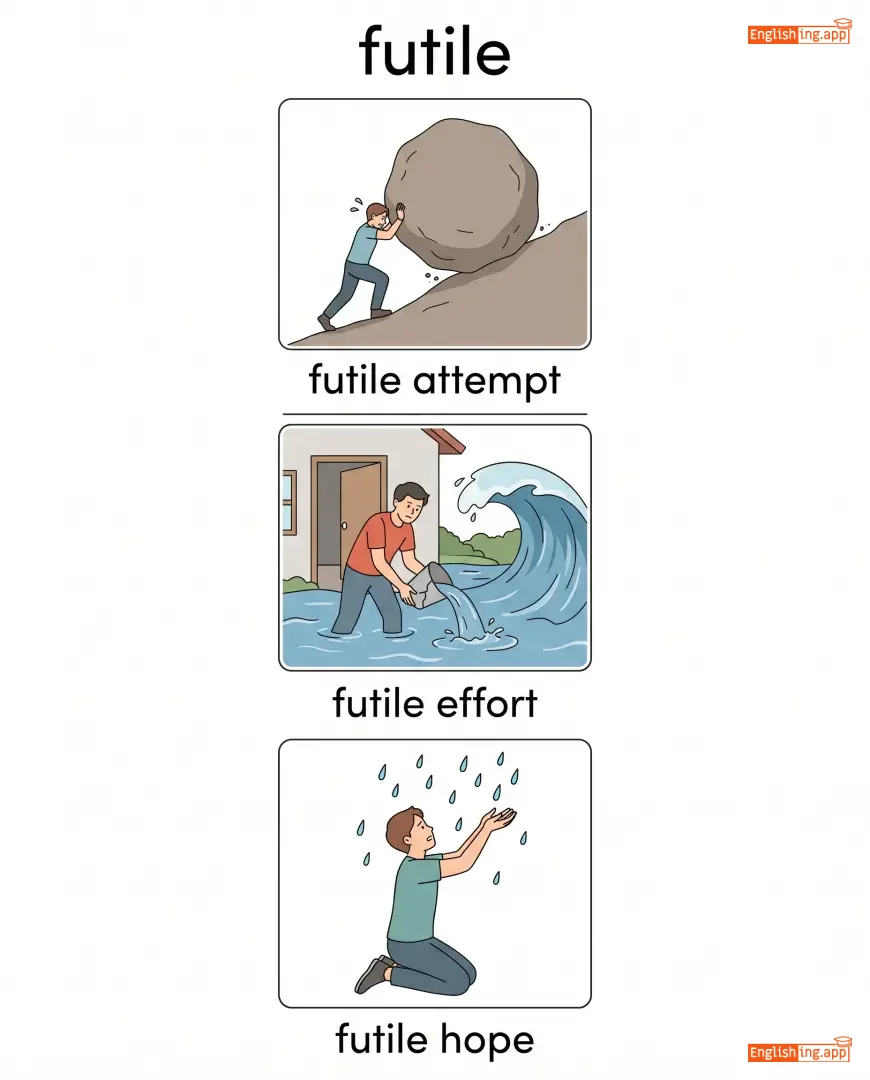
futile attempt
無駄な試み
••••••
|
An attempt that has no chance of success.
••••••
|
無駄な試み
mudā na kokoromi
••••••
|
pointless, useless, ineffective, vain, fruitless
••••••
|
effective, useful, successful
••••••
|
futile attempt, futile effort, futile hope, seem futile
••••••
|
Futileは日本語で無駄: 無駄な試みは意味がない。
••••••
|
|
#3741
🤢
|
/ˈfʌsti/
adjective
(ファスティ)
••••••
|
- •••••• |
かび臭い、古臭い
kabikusai, furukusai
••••••
|
- •••••• | - •••••• | - •••••• | - •••••• |
smelling stale, damp, or stuffy; old-fashioned
••••••
|
The room smelled fusty after being closed for months. |
部屋は数ヶ月間閉め切られていた後、かび臭くなった。
Heya wa suukagetsu kan shimekirarete ita ato, kabikusaku natta.
••••••
|
- •••••• | - •••••• | - •••••• |
musty, stale, moldy, stuffy, outdated
••••••
|
fresh, clean, modern
••••••
|
fusty smell, fusty room, fusty tradition, fusty ideas
••••••
|
Fusty – まるで古い本のかび臭い匂いのように。
••••••
|
|
#3742
🗣️
|
/ˈfʌstɪən/
noun
(フスティアン)
••••••
|
- •••••• |
浮かれたスピーチ
ukareta supīchi
••••••
|
- •••••• | - •••••• | - •••••• | - •••••• |
pompous or pretentious speech or writing; originally a type of thick cloth
••••••
|
The politician's speech was filled with fustian and empty promises.
政治家のスピーチはフスティアンと空っぽの約束でいっぱいだった。
••••••
|
政治家のスピーチは浮かれた言葉と空っぽの約束でいっぱいだった。
Seijika no supīchi wa ukareta kotoba to karappo no yakusoku de ippai datta.
••••••
|
- •••••• | - •••••• | - •••••• |
bombast, rant, grandiloquence, pretension, pomposity
••••••
|
simplicity, plainness, clarity
••••••
|
fustian speech, fustian language, fustian rhetoric
••••••
|
Fustian speech は言葉だけの中身なしのスピーチ。
••••••
|
|
#3743
🙄
|
/ˈfʌsi/
adjective
(ファッシー)
••••••
|
- •••••• |
わがまま
wagamama
••••••
|
- •••••• | - •••••• | - •••••• | - •••••• |
hard to please; very concerned with details
••••••
|
The child is very fussy about what she eats. |
その子供は食べるものにとてもわがままです。
Sono kodomo wa taberu mono ni totemo wagamama desu.
••••••
|
- •••••• | - •••••• | - •••••• |
particular, picky, meticulous, finicky, choosy
••••••
|
easygoing, careless, indifferent
••••••
|
fussy eater, fussy about, fussy details, fussy dress
••••••
|
Fussy = わがまま、細かいことにこだわる人
••••••
|
|
#3744
😤
|
/fʌs/
noun
(ファス)
••••••
|
- •••••• |
大騒ぎ
ōsawagi
••••••
|
- •••••• | - •••••• | - •••••• | - •••••• |
a display of unnecessary or excessive concern about something
••••••
|
She made a fuss about the delay in service. |
彼女はサービスの遅れについて大騒ぎをした。
Kanojo wa sābisu no okure ni tsuite ōsawagi wo shita.
••••••
|
make a fuss |
to complain or become angry about something trivial
••••••
|
大騒ぎをする
ōsawagi wo suru
••••••
|
commotion, uproar, disturbance, ado, stir
••••••
|
calm, peace, quiet
••••••
|
make a fuss, fuss over, unnecessary fuss, big fuss
••••••
|
Fuss は大騒ぎを意味します - 小さなことで騒ぐこと。
••••••
|
|
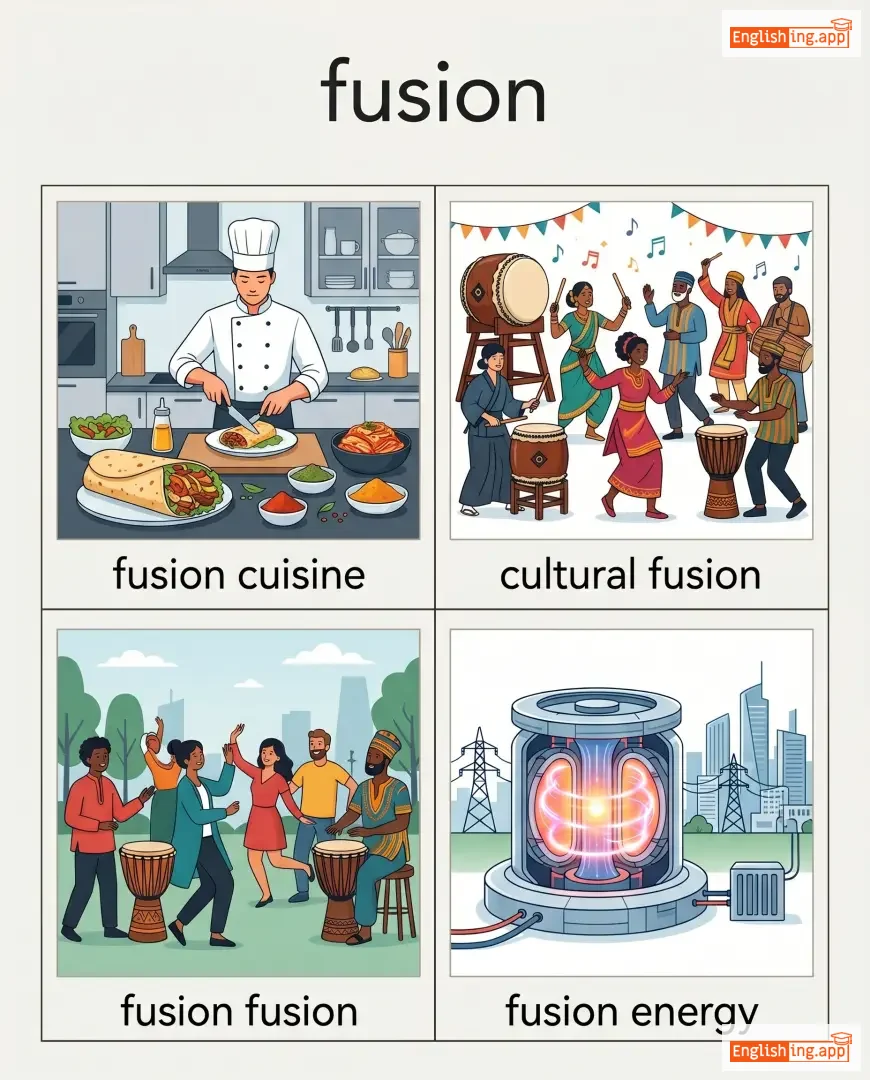
#3745
⚛️
|
/ˈfjuːʒən/
noun
(fyūjon)
••••••
|
|
融合
yūgō
••••••
|
- •••••• | - •••••• | - •••••• | - •••••• |
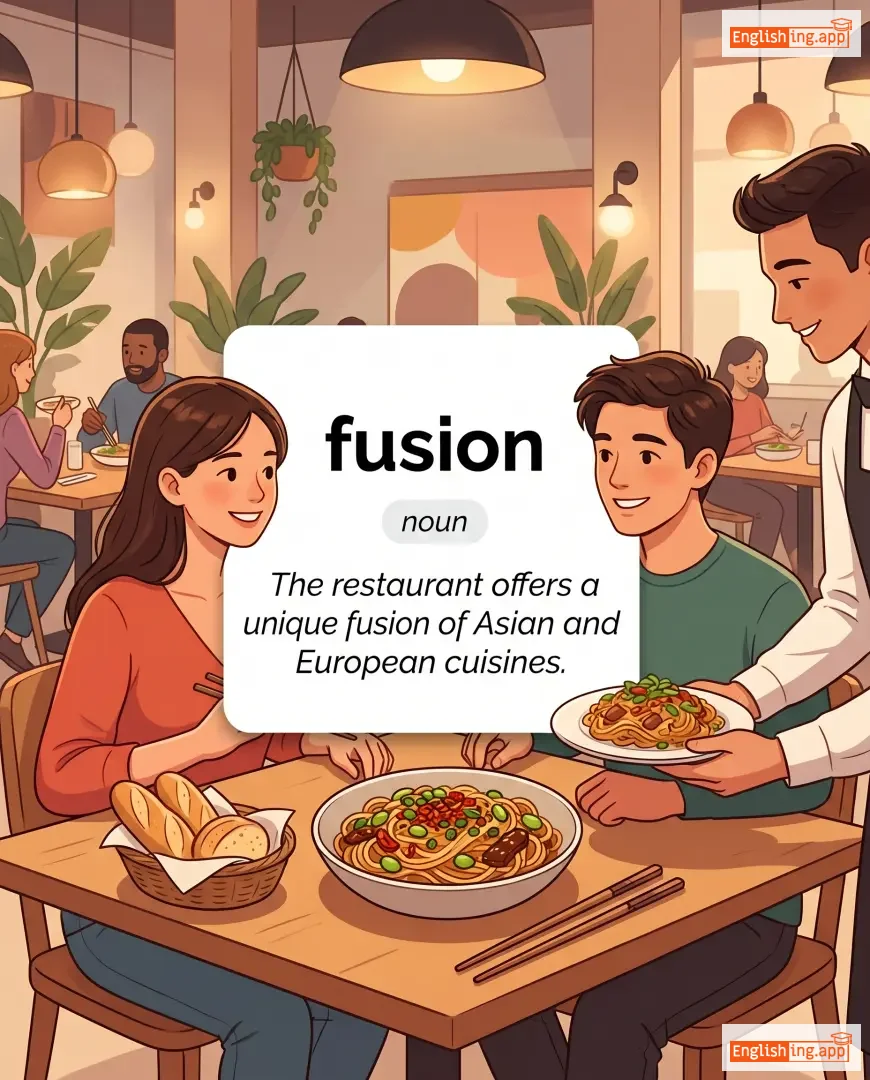
the process or result of joining two or more things together to form a single entity
••••••
|
The restaurant offers a unique fusion of Asian and European cuisines. |
レストランはアジアとヨーロッパの料理を融合させたユニークな料理を提供します。
Resutoran wa Ajia to Yōroppa no ryōri o yūgō saseta yunīku na ryōri o teikyō shimasu.
••••••
|
nuclear fusion |
a reaction in which two light atomic nuclei combine to form a heavier nucleus, releasing energy
••••••
|
核融合
kaku yūgō
••••••
|
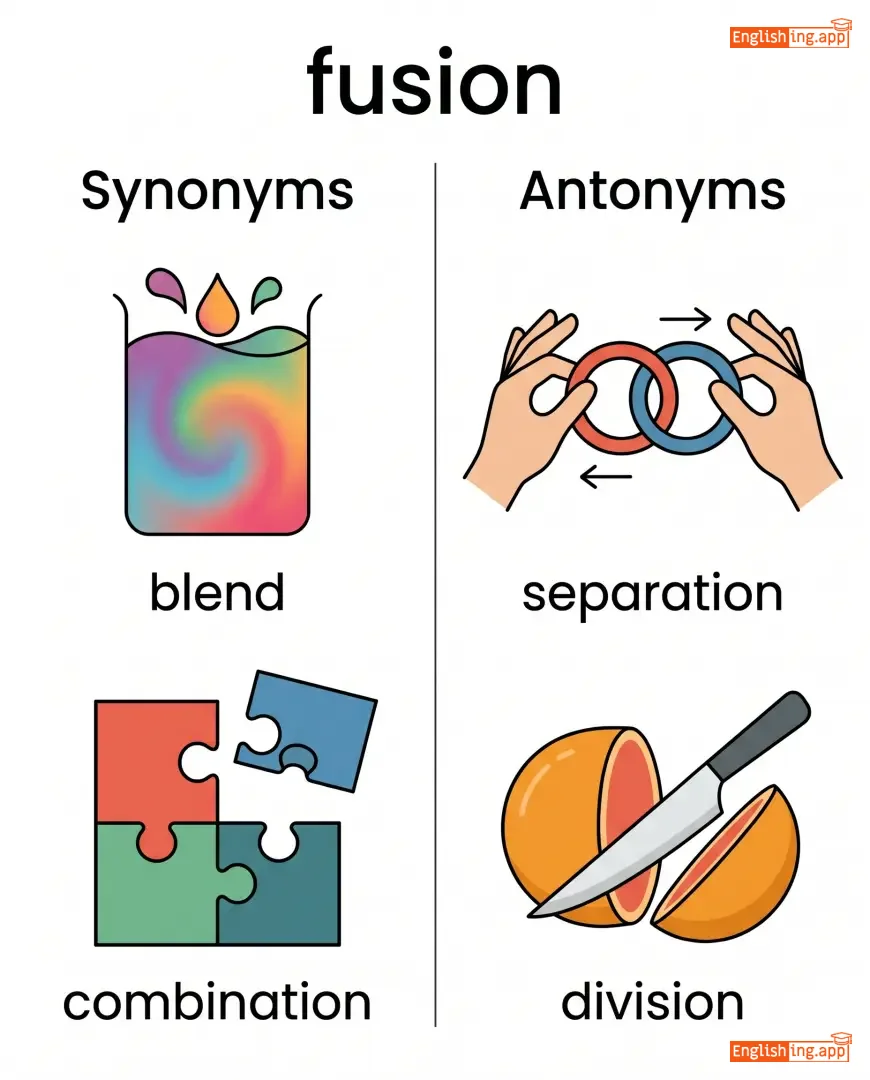
blend, combination, union, amalgamation, integration
••••••
|
separation, division, split
••••••
|
fusion cuisine, cultural fusion, fusion energy, fusion reaction
••••••
|
Fusionは二つの異なる文化を組み合わせて、新しいものを作ること。例えば、ラーメンとピザの融合。
••••••
|
|
#3746
💥
|
/ˌfjuːzɪˈleɪd/
noun
(フュージレイド)
••••••
|
- •••••• |
集中射撃
shūchū shageki
••••••
|
- •••••• | - •••••• | - •••••• | - •••••• |
A series of shots fired or missiles thrown all at the same time or in quick succession.
••••••
|
The soldiers advanced under a fusillade of bullets. |
兵士たちは集中射撃の中で前進した。
Heishitachi wa shūchū shageki no naka de zenshin shita.
••••••
|
- •••••• | - •••••• | - •••••• |
barrage, volley, bombardment, hail, salvo
••••••
|
trickle, single shot
••••••
|
fusillade of bullets, fusillade of questions, fusillade of shots, sudden fusillade
••••••
|
Fusilladeは、弾丸が一斉に発射される集中射撃のようなものです。
••••••
|
|
#3747
🔥
|
/ˈfjuːzəbl/
adjective
(fyuuzhiburu)
••••••
|
- •••••• |
融解可能な
yōkai kanō na
••••••
|
- •••••• | - •••••• | - •••••• | - •••••• |
Capable of being melted or fused.
••••••
|
The engineer used a fusible alloy in the experiment. |
エンジニアは実験で融解可能な合金を使用しました。
Enjinia wa jikken de yōkai kanō na gōkin o shiyō shimashita.
••••••
|
- •••••• | - •••••• | - •••••• |
meltable, liquefiable, blendable, smeltable
••••••
|
non-meltable, solid
••••••
|
fusible link, fusible material, fusible alloy, fusible substance
••••••
|
Fusible - 融解できる
••••••
|
|
#3748
🔌
|
/fjuːz/
verb
(fyūzu)
••••••
|
- •••••• |
融合する
yūgō suru
••••••
|
fused
fyūzudo
••••••
|
fused
fyūzudo
••••••
|
fuses
fyūzusu
••••••
|
fusing
fyūzuingu
••••••
|
To join or blend two or more things together into one.
••••••
|
The two metals fused under high heat.
ふたつの金属は高温で融合した。
••••••
|
二つの金属は高温で融合した。
Futatsu no kinzoku wa kōon de yūgō shita.
••••••
|
blow a fuse
fuse wo fuku
••••••
|
To suddenly lose one's temper.
••••••
|
かっとなる
katto naru
••••••
|
merge, blend, unite, combine
••••••
|
separate, divide, disconnect
••••••
|
fuse together, fuse elements, fuse into, blow a fuse
••••••
|
融合=爆発するフューズみたいなもの。
••••••
|
|
#3749
😡
|
/ˈfjʊri/
noun
(フューリー)
••••••
|
- •••••• |
怒り
ikari
••••••
|
- •••••• | - •••••• | - •••••• | - •••••• |
Wild or violent anger; extreme rage.
••••••
|
She was trembling with fury after the insult.
彼女は侮辱後、怒りで震えていました。
••••••
|
彼女は侮辱後、怒りで震えていました。
Kanojo wa bujoku go, ikari de furuete imashita.
••••••
|
hell hath no fury like a woman scorned
地獄には裏切られた女のような怒りはない。
••••••
|
No one is angrier than a woman who has been rejected or betrayed.
••••••
|
地獄には裏切られた女のような怒りはない。
Jigoku ni wa uragirarareta onna no yōna ikari wa nai.
••••••
|
rage, anger, wrath, outrage
••••••
|
calm, peace, serenity
••••••
|
burst of fury, full of fury, fury of the storm, in a fury
••••••
|
怒りは火のように燃え上がり、すべてを焼き尽くします。
••••••
|
|
#3750
👀
|
/ˈfɜːrtɪv/
adjective
(ファーティヴ)
••••••
|
- •••••• |
ひそかな
hisokana
••••••
|
- •••••• | - •••••• | - •••••• | - •••••• |
Attempting to avoid notice or attention, typically because of guilt or a belief that discovery would lead to trouble.
••••••
|
He cast a furtive glance at the door before leaving. |
彼は出発前にひそかにドアを見た。
Kare wa shuppatsu mae ni hisokani doa o mita.
••••••
|
- •••••• | - •••••• | - •••••• |
secretive, stealthy, sly, clandestine, surreptitious
••••••
|
open, frank, overt
••••••
|
furtive glance, furtive look, furtive movement, furtive behavior
••••••
|
HISOかな - ひそかなは目立たず行動すること
••••••
|
Vocabulary Quiz
Test your vocabulary by matching words with their translations or meanings.
Login to take the quiz
Comments (0)
Share your thoughts and join the discussion.
Join the discussion by logging in
Login to CommentNo comments yet
Be the first to share your thoughts!