

翻訳
過去
過去分詞
三人称単数
動名詞
意味
例文
例文の翻訳
同義語
対義語
コロケーション
ニーモニック

Swipe left or right, or use the buttons. Tap image to zoom.
例文の翻訳
単語
Lesson 171Lesson 171 - マスクトグル
|
絵文字
|
単語 | Images | 翻訳 | 過去 | 過去分詞 | 三人称単数 | 動名詞 | 意味 | 例文 | 例文の翻訳 | 表現例 | 表現例の意味 | 表現例の翻訳 | 同義語 | 対義語 | コロケーション | ニーモニック |
|---|---|---|---|---|---|---|---|---|---|---|---|---|---|---|---|---|---|
|
#5101
🙋
|
/ˈleɪmən/
noun
(レイマン)
••••••
|
- •••••• |
素人
shirouto
••••••
|
- •••••• | - •••••• | - •••••• | - •••••• |
A person without professional or specialized knowledge in a particular subject.
••••••
|
To a layman, the medical explanation was confusing.
トゥ ア レイマン、ザ メディカル エクスプレネイション ワズ コンフュージング。
••••••
|
素人にとって、医学の説明は混乱していた。
shirouto ni totte, igaku no setsumei wa konran shite ita.
••••••
|
in layman's terms
イン レイマンズ タームズ
••••••
|
Explained in simple, easy-to-understand language.
••••••
|
素人の言葉で
shirouto no kotoba de
••••••
|
non-expert, amateur, novice, outsider, civilian
••••••
|
expert, professional, specialist
••••••
|
ordinary layman, layman’s view, layman’s terms
••••••
|
Layman = 素人 (shirouto), 専門的な知識を持たない人。
••••••
|
|
#5102
🕊️
|
/ˈliːweɪ/
noun
(リウェイ)
••••••
|
- •••••• |
余裕
yoyū
••••••
|
- •••••• | - •••••• | - •••••• | - •••••• |
Freedom to act within certain limits; extra space or time.
••••••
|
The manager gave the team some leeway to finish the project. |
マネージャーはチームにプロジェクトを終了するための余裕を与えました。
Manējā wa chīmu ni purojekuto o shūryō suru tame no yoyū o ataemashita.
••••••
|
give leeway |
To allow flexibility or freedom in actions or decisions.
••••••
|
余裕を与える
yoyū o ataeru
••••••
|
freedom, latitude, margin, flexibility, allowance
••••••
|
restriction, limitation, constraint
••••••
|
give leeway, have leeway, leeway in decision
••••••
|
Leewayは余裕をもたらすこと。余裕を持って行動しよう!
••••••
|
|
#5103
🌬️
|
/ˈliːwərd/
adjective
(リーワード)
••••••
|
- •••••• |
風下の側
kazeshita no kawa
••••••
|
- •••••• | - •••••• | - •••••• | - •••••• |
On or toward the sheltered side away from the wind.
••••••
|
They built their camp on the leeward side of the hill. |
彼らは丘の風下の側にキャンプを建てました。
Karera wa oka no kazeshita no kawa ni kyanpu o tatemashita.
••••••
|
- •••••• | - •••••• | - •••••• |
downwind, sheltered, protected
••••••
|
windward, exposed
••••••
|
leeward side, leeward coast, leeward slope
••••••
|
Leeward とは風下、守られた側を指します。
••••••
|
|
#5104
🤨
|
/ˈlɪəri/
adjective
(リリー)
••••••
|
- •••••• |
疑わしい
utagawashii
••••••
|
- •••••• | - •••••• | - •••••• | - •••••• |
Cautious or wary due to suspicion or distrust.
••••••
|
She was leery of investing in the new business. |
彼女は新しいビジネスへの投資に疑念を抱いていた。
Kanojo wa atarashī bijinesu e no tōshi ni ginen o daite ita.
••••••
|
- •••••• | - •••••• | - •••••• |
wary, cautious, suspicious, doubtful, distrustful
••••••
|
trusting, confident, gullible
••••••
|
leery of strangers, feel leery, leery attitude
••••••
|
Leeryは日本語で疑わしい、まるで怪しいと感じるときのよう。
••••••
|
|
#5105
😏
|
/lɪr/
verb
(rīr)
••••••
|
- •••••• |
いやらしい目つき
iyarashii metsuki
••••••
|
leered
rīādo
••••••
|
leered
rīādo
••••••
|
leers
rīāzu
••••••
|
leering
rīringu
••••••
|
To look at someone in an unpleasant, sly, or sexually suggestive way.
••••••
|
He leered at her in a way that made her uncomfortable.
彼は彼女を不快にさせるような見方をした。
••••••
|
彼は彼女を不快にさせるような見方をした。
Kare wa kanojo o fukai ni saseru yōna mikata o shita.
••••••
|
leer at
いやらしく見る
••••••
|
To stare at someone with a sly or offensive look.
••••••
|
いやらしく見る
iyarashiku miru
••••••
|
ogle, stare, gaze, gawk, smirk
••••••
|
ignore, glance, overlook
••••••
|
leering face, leer at someone, sly leer
••••••
|
Leerは歌ではなく、いやらしい目つきです。
••••••
|
|
#5106
📖
|
/ˈlɛktən/
noun
(レクタウン)
••••••
|
- •••••• |
lectern
rekutā
••••••
|
- •••••• | - •••••• | - •••••• | - •••••• |
A tall stand with a sloping top used to support a book, notes, or script during a speech or lecture.
••••••
|
The professor placed her notes on the lectern before starting her lecture.
教授は講義を始める前にレクタウンにノートを置きました。
••••••
|
教授は講義を始める前にレクタウンにノートを置きました。
Kyōju wa kōgi o hajimeru mae ni rekutā ni nōto o okimashita.
••••••
|
- •••••• | - •••••• | - •••••• |
podium, pulpit, stand, desk, rostrum
••••••
|
floor, ground, seat
••••••
|
wooden lectern, stand at the lectern, lectern microphone
••••••
|
レクタウンは講義で使うノートを置く場所です。
••••••
|
|
#5107
🔥
|
/ˈlɛtʃ.əri/
noun
(レチェリー)
••••••
|
- •••••• |
淫欲
inyoku
••••••
|
- •••••• | - •••••• | - •••••• | - •••••• |
excessive or offensive sexual desire; lustfulness
••••••
|
The novel depicted the lechery of corrupt nobles. |
その小説は堕落した貴族の淫欲を描いていました。
Sono shōsetsu wa daraku shita kizoku no in'yoku o egaite imashita.
••••••
|
- •••••• | - •••••• | - •••••• |
lust, lasciviousness, licentiousness, debauchery
••••••
|
chastity, purity, virtue
••••••
|
act of lechery, lechery and lust, condemned for lechery
••••••
|
Lechery は淫欲、過剰な性的欲求という意味です。
••••••
|
|
#5108
😏
|
/ˈlɛtʃ.ər.əs/
adjective
(レチェラス)
••••••
|
- •••••• |
好色
kōshoku
••••••
|
- •••••• | - •••••• | - •••••• | - •••••• |
having or showing excessive or offensive sexual desire
••••••
|
The character was portrayed as a lecherous old man.
そのキャラクターは好色な老人として描かれました。
••••••
|
そのキャラクターは好色な老人として描かれました。
Sono kyarakutā wa kōshoku na rōjin toshite egakaremashita.
••••••
|
- •••••• | - •••••• | - •••••• |
lustful, licentious, salacious, lascivious
••••••
|
chaste, pure, modest
••••••
|
lecherous behavior, lecherous gaze, lecherous old man
••••••
|
Lecherousと好色は性的欲望を指し、過度のものを表します。
••••••
|
|
#5109
🍞
|
/ˈlɛv.ən/
noun/verb
(レヴン)
••••••
|
- •••••• |
発酵剤
hakkōzai
••••••
|
leavened
レヴンド
••••••
|
leavened
レヴンド
••••••
|
leavens
レヴンズ
••••••
|
leavening
レヴニング
••••••
|
a substance, typically yeast, that causes dough to rise; to permeate and modify
••••••
|
A little yeast will leaven the bread dough.
少しのイーストがパン生地を膨らませる。
••••••
|
少しのイーストがパン生地を膨らませる。
Sukoshi no īsuto ga pan kiji o fukuramaseru.
••••••
|
- •••••• | - •••••• | - •••••• |
yeast, ferment, agent, raise
••••••
|
flatten, compress
••••••
|
leaven bread, spiritual leaven, leaven the mind
••••••
|
Leaven とは、パン生地を膨らませるための発酵剤のことです。
••••••
|
|
#5110
👋
|
/ˈliːvˌteɪ.kɪŋ/
noun
(リーブテイキング)
••••••
|
- •••••• |
お別れ
owakare
••••••
|
- •••••• | - •••••• | - •••••• | - •••••• |
an act of saying goodbye; farewell
••••••
|
His leave-taking from his friends was emotional.
Hisリーブテイキングフロムヒズフレンズワズエモーショナル。
••••••
|
彼の友達へのお別れは感動的でした。
Kare no tomodachi e no owakare wa kandō-teki deshita.
••••••
|
- •••••• | - •••••• | - •••••• |
farewell, parting, goodbye, departure
••••••
|
arrival, greeting
••••••
|
formal leave-taking, emotional leave-taking, take leave
••••••
|
Leave-takingは日本語でお別れです。
••••••
|
|
#5111
🐕
|
/liːʃ/
noun/verb
(リッシュ)
••••••
|
- •••••• |
リード
rīdo
••••••
|
leashed
リッシュド
••••••
|
leashed
リッシュド
••••••
|
leashes
リッシュズ
••••••
|
leashing
リッシング
••••••
|
a strap or cord used to control or guide an animal; to restrain or control
••••••
|
The dog was on a leash during the walk.
ザ ドッグ ワズ オン ア リッシュ デュアリング ザ ウォーク。
••••••
|
散歩中に犬はリードにつながれていました。
Sanpo-chū ni inu wa rīdo ni tsunagarete imashita.
••••••
|
keep on a tight leash
キープ オン ア タイト リッシュ
••••••
|
to control someone or something strictly
••••••
|
厳しく管理する
Kibishiku kanri suru
••••••
|
cord, strap, tether, chain, restraint
••••••
|
freedom, release, unchain
••••••
|
dog leash, keep on leash, leash training, leash law
••••••
|
Leashは日本語でリード(rīdo)です。犬をリードで制御!
••••••
|
|
#5112
🏆
|
/liːɡ/
noun
(リーグ)
••••••
|
- •••••• |
リーグ
rīgu
••••••
|
- •••••• | - •••••• | - •••••• | - •••••• |
An association of people or groups united for a common purpose; also a unit of distance (old use).
••••••
|
Several clubs formed a league to promote sportsmanship. |
いくつかのクラブがスポーツマンシップを促進するためにリーグを結成した。
Ikutsuka no kurabu ga supōtsumanshippu o sokushin suru tame ni rīgu o kessei shita.
••••••
|
out of someone's league |
Beyond someone's ability, status, or suitability.
••••••
|
誰かの手に負えない
dareka no te ni oenai
••••••
|
association, alliance, union, federation, coalition
••••••
|
rivalry, opposition, division
••••••
|
football league, professional league, in the same league
••••••
|
リーグ:みんなが一緒にプレイするトーナメント。
••••••
|
|
#5113
📄
|
/ˈliːflət/
noun
(リーフレット)
••••••
|
- •••••• |
パンフレット
panfuretto
••••••
|
- •••••• | - •••••• | - •••••• | - •••••• |
A printed sheet of paper, often folded, used to advertise or provide information.
••••••
|
The volunteers distributed leaflets about the campaign. |
ボランティアはキャンペーンについてのパンフレットを配布しました。
Borantia wa kyanpēn ni tsuite no panfuretto o haifu shimashita.
••••••
|
- •••••• | - •••••• | - •••••• |
pamphlet, flyer, brochure, handout
••••••
|
book, volume
••••••
|
distribute leaflets, advertising leaflet, campaign leaflet
••••••
|
Leaflet は小さなパンフレット、情報を提供するための紙です。
••••••
|
|
#5114
🌾
|
/liː/
noun
(li)
••••••
|
- •••••• |
草地
koushi
••••••
|
- •••••• | - •••••• | - •••••• | - •••••• |
An open area of grassy or arable land; a meadow.
••••••
|
The cottage was surrounded by a quiet lea.
ザ コテージ ワズ サラウンド イット バイ ア クワイエット リ。
••••••
|
小屋は静かな草地に囲まれていました。
Koya wa shizuka na koushi ni kakomarete imashita.
••••••
|
- •••••• | - •••••• | - •••••• |
meadow, field, pasture, grassland, plain
••••••
|
forest, desert, wasteland
••••••
|
green lea, peaceful lea, lea and meadow
••••••
|
Lea は ‘草地’ を意味し、百合の花が咲く緑の草地のようです。
••••••
|
|
#5115
👤
|
/ˈleɪˌpɜːrsən/
noun
(レイパーソン)
••••••
|
- •••••• |
素人
shirouto
••••••
|
- •••••• | - •••••• | - •••••• | - •••••• |
A person who is not a member of the clergy or does not have specialized knowledge in a subject.
••••••
|
The judge explained the law so that the layperson could understand. |
裁判官は法を説明し、素人でも理解できるようにしました。
Saibankan wa hō o setsumei shi, shirouto demo rikai dekiru yō ni shimashita.
••••••
|
- •••••• | - •••••• | - •••••• |
non-expert, amateur, civilian, outsider, novice
••••••
|
professional, specialist, expert
••••••
|
ordinary layperson, layperson’s understanding, for the layperson
••••••
|
Layperson は素人を意味します。'Lay'(素人)と 'person'(人)の組み合わせです。
••••••
|
|
#5116
⏰
|
/ˈleɪ.tɪʃ/
adjective
(レイティッシュ)
••••••
|
- •••••• |
少し遅れて
sukoshi okurete
••••••
|
- •••••• | - •••••• | - •••••• | - •••••• |
Somewhat late; occurring or arriving later than usual but not very late.
••••••
|
We arrived latish to the party but still caught most of the fun. |
パーティーには少し遅れて到着しましたが、それでもほとんどの楽しみを楽しむことができました。
Pātī ni wa sukoshi okurete tōchaku shimashita ga, soredemo hotondo no tanoshimi o tanoshimu koto ga dekimashita.
••••••
|
- •••••• | - •••••• | - •••••• |
slightly late, delayed, tardy, behindhand
••••••
|
early, punctual
••••••
|
latish evening, arrived latish, came latish
••••••
|
Latish は 'late-ish' という意味 → 少し遅れているが、あまり遅くはない。
••••••
|
|
#5117
💊
|
/ˈlæksətɪv/
noun, adjective
(rɛiketsitēfu)
••••••
|
- •••••• |
下剤
gezai
••••••
|
- •••••• | - •••••• | - •••••• | - •••••• |
A medicine or substance that stimulates bowel movements; tending to loosen or relieve constipation.
••••••
|
The doctor prescribed a mild laxative for her condition. |
医者は彼女の状態のために軽い下剤を処方しました。
Isha wa kanojo no joudai no tame ni karui gezai wo shohou shimashita.
••••••
|
- •••••• | - •••••• | - •••••• |
aperient, purgative, cathartic, stool softener
••••••
|
constipating, binding
••••••
|
mild laxative, natural laxative, strong laxative
••••••
|
下剤 = 下 + 剤 – 腹を動かすための薬。
••••••
|
|
#5118
😴
|
/læks/
adjective
(レックス)
••••••
|
- •••••• |
緩い, だらしない
lax
••••••
|
- •••••• | - •••••• | - •••••• | - •••••• |
Not strict, severe, or careful; negligent or careless.
••••••
|
The security at the airport was surprisingly lax.
空港のセキュリティは驚くほど緩かった。
••••••
|
空港のセキュリティは驚くほど緩かった。
Kūkō no sekyuriti wa odoroku hodo yurukatta.
••••••
|
lax attitude
緩い態度
••••••
|
a careless or negligent approach
••••••
|
緩い態度
yurui taido
••••••
|
lenient, careless, negligent, loose, slack
••••••
|
strict, rigorous, severe
••••••
|
lax security, lax discipline, lax control, lax standards
••••••
|
LaxはRelaxのように - 緩いまたは厳しくないという意味
••••••
|
|
#5119
📜
|
/ˈlɔːˌmeɪkər/
noun
(ローメーカー)
••••••
|
- •••••• |
立法者
rippousha
••••••
|
- •••••• | - •••••• | - •••••• | - •••••• |
A member of a legislative body who makes laws.
••••••
|
The lawmaker introduced a new bill on education reform. |
立法者は教育改革に関する新しい法案を提出しました。
Rippousha wa kyōiku kaizen ni kansuru atarashī hōan o teishutsu shimashita.
••••••
|
- •••••• | - •••••• | - •••••• |
legislator, congressman, senator, lawgiver
••••••
|
citizen, subject
••••••
|
state lawmaker, federal lawmaker, powerful lawmaker
••••••
|
Lawmaker は 'Law' + 'Maker' - 法律を作る人
••••••
|
|
#5120
⚖️
|
/ˈlɔːˌɡɪvər/
noun
(ロギバー)
••••••
|
- •••••• |
立法者
rippōsha
••••••
|
- •••••• | - •••••• | - •••••• | - •••••• |
A person who creates or enforces laws; a legislator.
••••••
|
Moses is often regarded as a great lawgiver in history.
モーセは歴史の中で偉大な立法者と見なされています。
••••••
|
モーセは歴史の中で偉大な立法者と見なされています。
Mōse wa rekishi no naka de idaina rippōsha to minasareteimasu.
••••••
|
- •••••• | - •••••• | - •••••• |
legislator, lawmaker, jurist, magistrate
••••••
|
subject, follower, citizen
••••••
|
great lawgiver, wise lawgiver, ancient lawgiver
••••••
|
Lawgiver は Law + Giver - 法律を与える人物、つまり立法者
••••••
|
|
#5121
💎
|
/ˈlævɪʃ/
adjective, verb
(ラヴィッシュ)
••••••
|
- •••••• |
贅沢な、豪華な
lavish
••••••
|
lavished
ラヴィッシュド
••••••
|
lavished
ラヴィッシュド
••••••
|
lavishes
ラヴィッシュズ
••••••
|
lavishing
ラヴィッシュイング
••••••
|
Rich, elaborate, or luxurious; to bestow something in generous or extravagant quantities.
••••••
|
They gave her a lavish wedding reception with hundreds of guests.
彼らは何百人ものゲストを招待して豪華な結婚式のレセプションを開いた。
••••••
|
彼らは何百人ものゲストを招待して豪華な結婚式のレセプションを開いた。
Karera wa nanbyakunin mo no gesuto o shoutai shite gōkana kekkonshiki no resepushon o hiraita.
••••••
|
lavish praise
惜しみない賞賛
••••••
|
to give a lot of praise generously
••••••
|
惜しみない賞賛
Oshimunai shōsan
••••••
|
extravagant, luxurious, opulent, splendid, generous
••••••
|
stingy, frugal, meager
••••••
|
lavish lifestyle, lavish party, lavish praise, lavish spending
••••••
|
Lavish は贅沢と豪華さを象徴する
••••••
|
|
#5122
🚿
|
/leɪv/
verb
(レイヴ)
••••••
|
- •••••• |
洗う
arau
••••••
|
laved
レイヴド
••••••
|
laved
レイヴド
••••••
|
laves
レイヴス
••••••
|
laving
レイヴィング
••••••
|
To wash or bathe.
••••••
|
She laved her face with cool water.
彼女は冷たい水で顔を洗った。
••••••
|
彼女は冷たい水で顔を洗った。
Kanojo wa tsumetai mizu de kao o aratta.
••••••
|
- •••••• | - •••••• | - •••••• |
wash, bathe, cleanse, rinse, soak
••••••
|
dirty, soil, stain
••••••
|
lave the face, lave the hands, lave the body
••••••
|
Laveは冷たい水で顔を洗うことのようにさっぱりすること
••••••
|
|
#5123
🏅
|
/ˈlɔːriət/
noun
(ローリエート)
••••••
|
- •••••• |
受賞者
jushousha
••••••
|
- •••••• | - •••••• | - •••••• | - •••••• |
A person honored with an award for outstanding achievement in a field, especially the arts or sciences.
••••••
|
The Nobel laureate gave an inspiring lecture on peace. |
ノーベル賞受賞者は平和について感動的な講演を行いました。
Nōberu shō jushōsha wa heiwa ni tsuite kandō-teki na kōen o okonai mashita.
••••••
|
- •••••• | - •••••• | - •••••• |
awardee, winner, honoree, prizewinner
••••••
|
loser, unknown
••••••
|
Nobel laureate, poet laureate, laureate award
••••••
|
Laurel → 受賞者 → 賞を受けた人
••••••
|
|
#5124
🧺
|
/ˈlɔːndrəs/
noun
(laundress)
••••••
|
- •••••• |
ランドレス
randoresu
••••••
|
- •••••• | - •••••• | - •••••• | - •••••• |
A woman whose job is washing clothes and linens.
••••••
|
The laundress delivered the freshly cleaned clothes to the household. |
ランドレスは新しく洗った衣類を家に届けました。
Randoresu wa atarashiku aratta irui o ie ni todokemashita
••••••
|
- •••••• | - •••••• | - •••••• |
washerwoman, washer, maid, housekeeper
••••••
|
employer, master
••••••
|
village laundress, laundress service, laundress work
••••••
|
ランドレス = laundry + dress (衣服を洗う仕事)
••••••
|
|
#5125
🌟
|
/ˈlɔːdəˌtɔːri/
adjective
(ラウダトリ)
••••••
|
- •••••• |
賞賛の
shōsan no
••••••
|
- •••••• | - •••••• | - •••••• | - •••••• |
Expressing praise or admiration.
••••••
|
She wrote a laudatory review of the new book.
彼女は新しい本の賛辞のレビューを書いた。
••••••
|
彼女は新しい本の賛辞のレビューを書いた。
Kanojo wa atarashī hon no sanji no rebyū o kaita.
••••••
|
- •••••• | - •••••• | - •••••• |
praiseful, approving, admiring, complimentary
••••••
|
critical, disparaging, derogatory
••••••
|
laudatory remarks, laudatory review, laudatory speech
••••••
|
ラウダトリ(ラウド=大きい)+ストーリー=賞賛する
••••••
|
|
#5126
👏
|
/lɔːˈdeɪʃən/
noun
(ローデイション)
••••••
|
- •••••• |
賞賛
shōsan
••••••
|
- •••••• | - •••••• | - •••••• | - •••••• |
The act of praising or expressing approval.
••••••
|
The poet received much laudation for his moving verses. |
その詩人は感動的な詩で多くの賞賛を受けました。
Sono shijin wa kandō-teki na shi de ōku no shōsan o ukemashita.
••••••
|
- •••••• | - •••••• | - •••••• |
praise, acclaim, commendation, tribute, admiration
••••••
|
criticism, condemnation, disapproval
••••••
|
earn laudation, receive laudation, public laudation
••••••
|
Laudation = loud + nation = すべての国からの賞賛
••••••
|
|
#5127
🌟
|
/ˈlɔː.də.bəl/
adjective
(ローダブル)
••••••
|
- •••••• |
称賛に値する
shōsan ni atai suru
••••••
|
- •••••• | - •••••• | - •••••• | - •••••• |
Deserving praise and admiration.
••••••
|
Her efforts to help the poor are truly laudable. |
貧しい人々を助けるための彼女の努力は本当に称賛に値します。
Mazushī hitobito o tasukeru tame no kanojo no doryoku wa hontō ni shōsan ni atai shimasu.
••••••
|
- •••••• | - •••••• | - •••••• |
praiseworthy, commendable, admirable, worthy, meritorious
••••••
|
blameworthy, shameful
••••••
|
laudable goal, laudable effort, laudable initiative
••••••
|
Laudable → Lord-able → 神と人々から称賛される行動。
••••••
|
|
#5128
👏
|
/lɔːd/
verb
••••••
|
|
- •••••• |
lauded
••••••
|
lauded
••••••
|
lauds
••••••
|
lauding
••••••
|
To praise someone or something highly, especially in public.
••••••
|
The critic lauded the actor's performance as a masterpiece. |
- •••••• |
sing someone's praises |
to praise someone very enthusiastically
••••••
|
- •••••• |
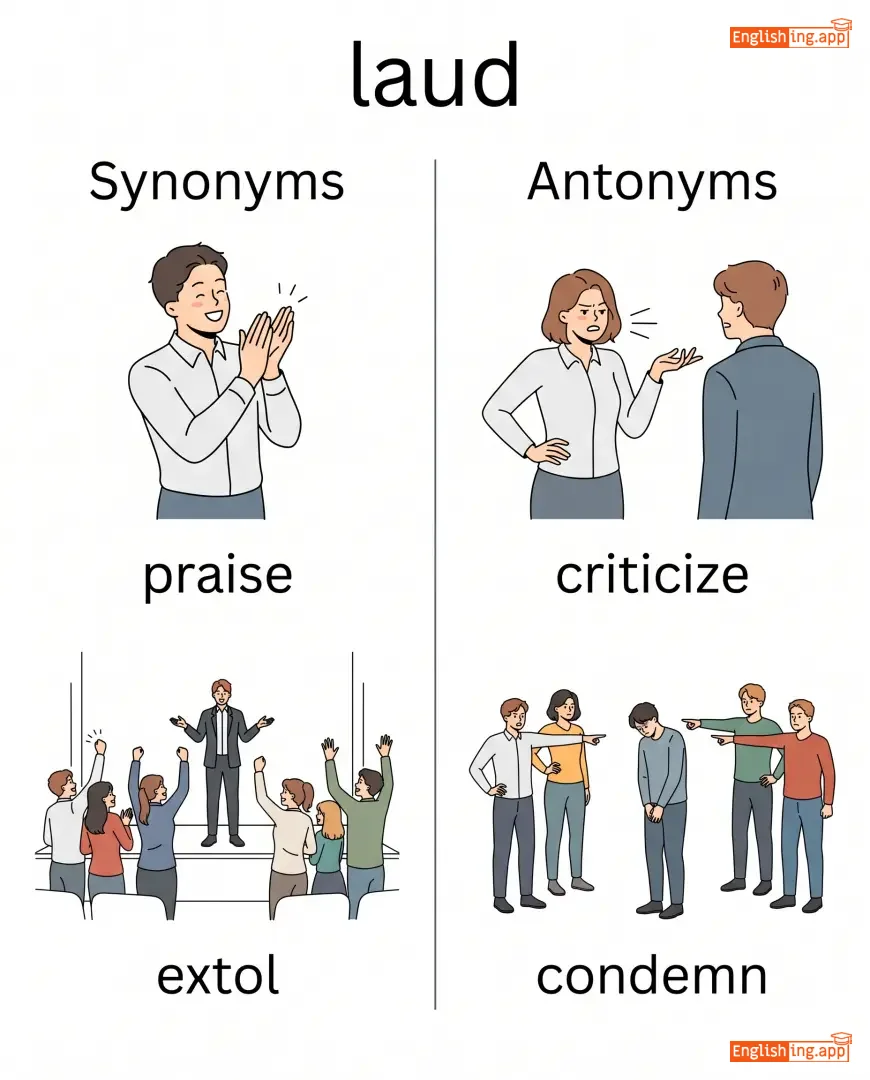
praise, extol, applaud, commend, admire
••••••
|
criticize, condemn
••••••
|
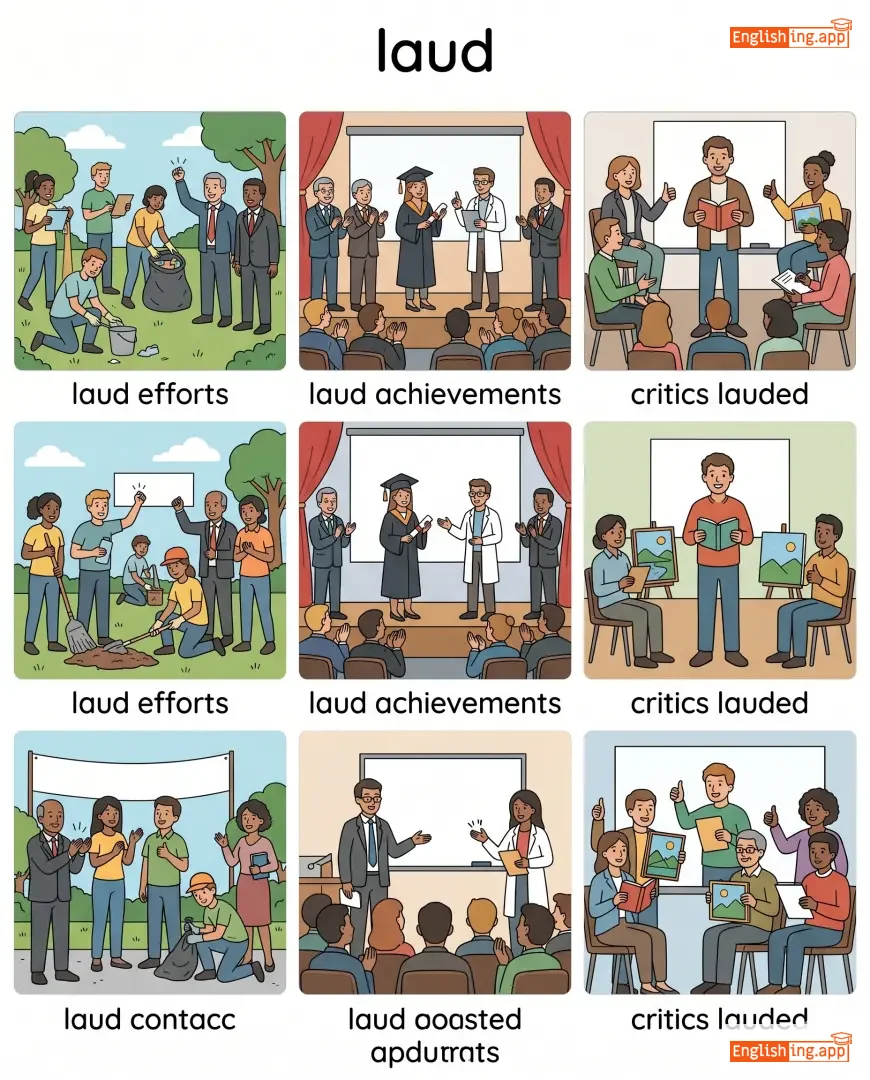
laud efforts, laud achievements, critics lauded
••••••
|
No •••••• |
|
#5129
🪵
|
/ˈlætɪs/
noun
(ラティス)
••••••
|
- •••••• |
格子構造
kōshi kōzō
••••••
|
- •••••• | - •••••• | - •••••• | - •••••• |
A structure of crossed strips arranged in a grid or crisscross pattern.
••••••
|
The garden was decorated with a wooden lattice covered in vines. |
庭は、蔦で覆われた木製の格子構造で飾られていました。
Niwa wa, tsuta de ōwareta mokusei no kōshi kōzō de kazararete imashita.
••••••
|
- •••••• | - •••••• | - •••••• |
grid, framework, mesh, trellis, network
••••••
|
solid wall, barrier
••••••
|
wooden lattice, lattice structure, lattice window
••••••
|
Latticeは '交差した帯の構造' を意味します。
••••••
|
|
#5130
🌍
|
/ˈlætɪˌtjuːd/
noun
(ラティチュード)
••••••
|
- •••••• |
緯度
ido
••••••
|
- •••••• | - •••••• | - •••••• | - •••••• |
The angular distance north or south of the equator; also freedom or scope to act.
••••••
|
The city lies at a high latitude close to the Arctic Circle.
この都市は北極圏に近い高い緯度に位置しています。
••••••
|
この都市は北極圏に近い高い緯度に位置しています。
Kono toshi wa hokkyokuken ni chikai takai ido ni ichi shiteimasu.
••••••
|
broad latitude
広い自由
••••••
|
great freedom of action or choice
••••••
|
広い自由
Hiroi jiyuu
••••••
|
parallel, position, freedom, scope, leeway
••••••
|
restriction, limitation
••••••
|
latitude and longitude, high latitude, broad latitude, northern latitude
••••••
|
Latitude = ラティチュード → 地球の緯度を表すライン。
••••••
|
Vocabulary Quiz
Test your vocabulary by matching words with their translations or meanings.
Login to take the quiz
Comments (0)
Share your thoughts and join the discussion.
Join the discussion by logging in
Login to CommentNo comments yet
Be the first to share your thoughts!