

翻訳
過去
過去分詞
三人称単数
動名詞
意味
例文
例文の翻訳
同義語
対義語
コロケーション
ニーモニック

Swipe left or right, or use the buttons. Tap image to zoom.
例文の翻訳
単語
Lesson 119Lesson 119 - マスクトグル
|
絵文字
|
単語 | Images | 翻訳 | 過去 | 過去分詞 | 三人称単数 | 動名詞 | 意味 | 例文 | 例文の翻訳 | 表現例 | 表現例の意味 | 表現例の翻訳 | 同義語 | 対義語 | コロケーション | ニーモニック |
|---|---|---|---|---|---|---|---|---|---|---|---|---|---|---|---|---|---|
|
#3541
🍃
|
/ˈfoʊliɪdʒ/
noun
(fōriju)
••••••
|
- •••••• |
葉
ha
••••••
|
- •••••• | - •••••• | - •••••• | - •••••• |
The leaves of a plant, collectively.
••••••
|
The autumn foliage looked stunning in the park. |
秋の葉は公園で素晴らしく見えました。
Aki no ha wa kōen de subarashiku miemashita.
••••••
|
- •••••• | - •••••• | - •••••• |
leaves, greenery, vegetation, flora, fronds
••••••
|
branches, trunk, stem
••••••
|
autumn foliage, dense foliage, green foliage, tropical foliage
••••••
|
FOLIageは葉です – すべての葉が集まって。
••••••
|
|
#3542
🚀
|
/ˈfɔːreɪ/
noun
(フォーレ)
••••••
|
- •••••• |
突撃 / 初めての試み
totsugeki / hajimete no kokoromi
••••••
|
- •••••• | - •••••• | - •••••• | - •••••• |
A sudden short attack or attempt, especially into new activity or territory.
••••••
|
The company made its first foray into the international market.
その会社は国際市場への初めての進出を果たした。
••••••
|
その会社は国際市場への初めての進出を果たした。
sono kaisha wa kokusai shijou e no hajimete no shinshutsu o hatashita.
••••••
|
make a foray
初めての試みをする
••••••
|
to take the first attempt or venture into something new
••••••
|
初めて挑戦する
hajimete chousen suru
••••••
|
raid, incursion, venture, attempt, expedition
••••••
|
retreat, withdrawal
••••••
|
first foray, make a foray, foray into
••••••
|
Foray はまるで新しい領域に突入する最初の一歩のよう!
••••••
|
|
#3543
🍂
|
/ˈfɒrɪdʒ/
verb
(フォレージ)
••••••
|
|
食べ物を探す
tabemono wo sagasu
••••••
|
foraged
フォレージド
••••••
|
foraged
フォレージド
••••••
|
forages
フォレージズ
••••••
|
foraging
フォレージング
••••••
|
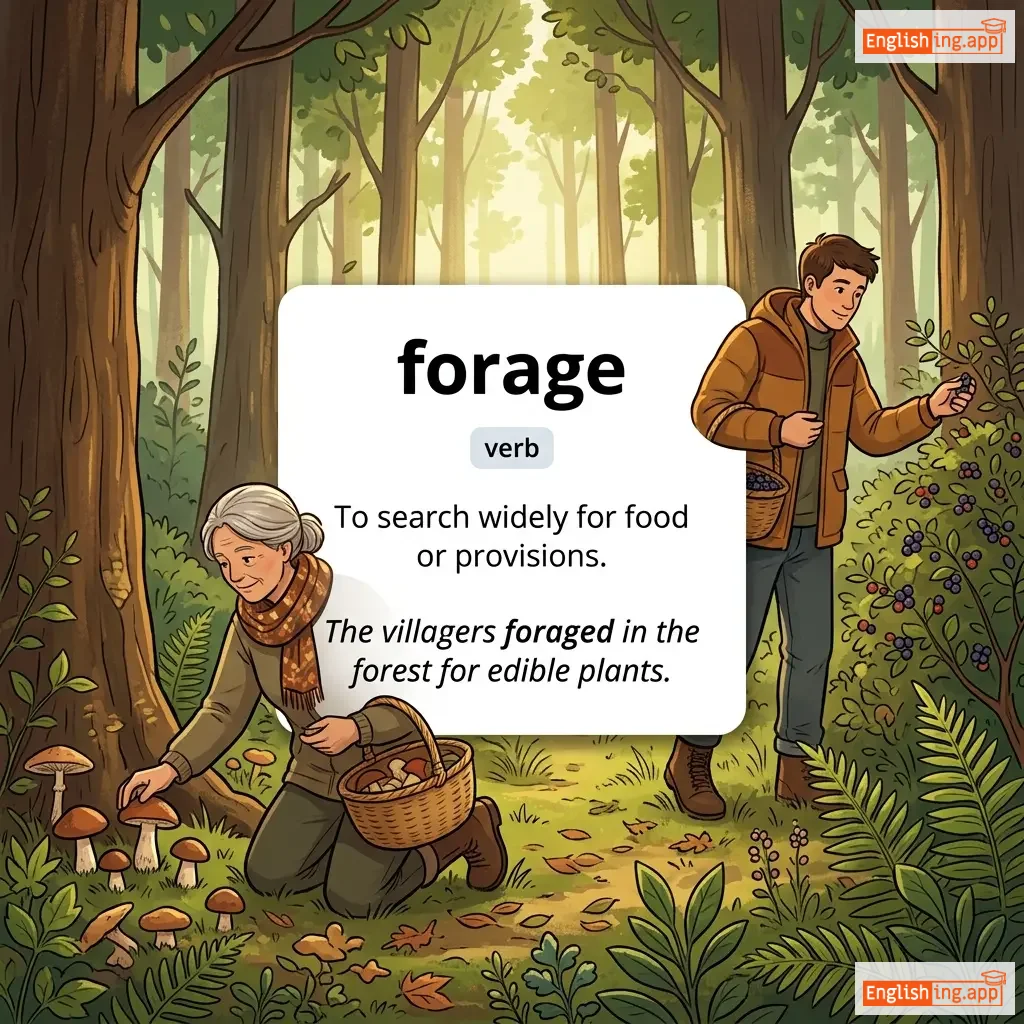
To search widely for food or provisions.
••••••
|
The villagers foraged in the forest for edible plants.
村人たちは食べられる植物を探して森の中でフォレージングした。
••••••
|
村人たちは食べられる植物を探して森の中でフォレージングした。
Murabito-tachi wa taberareru shokubutsu wo sagashite mori no naka de forējingu shita.
••••••
|
forage for food
食べ物を探す
••••••
|
to search for food, usually in the wild
••••••
|
食べ物を探す
tabemono wo sagasu
••••••
|
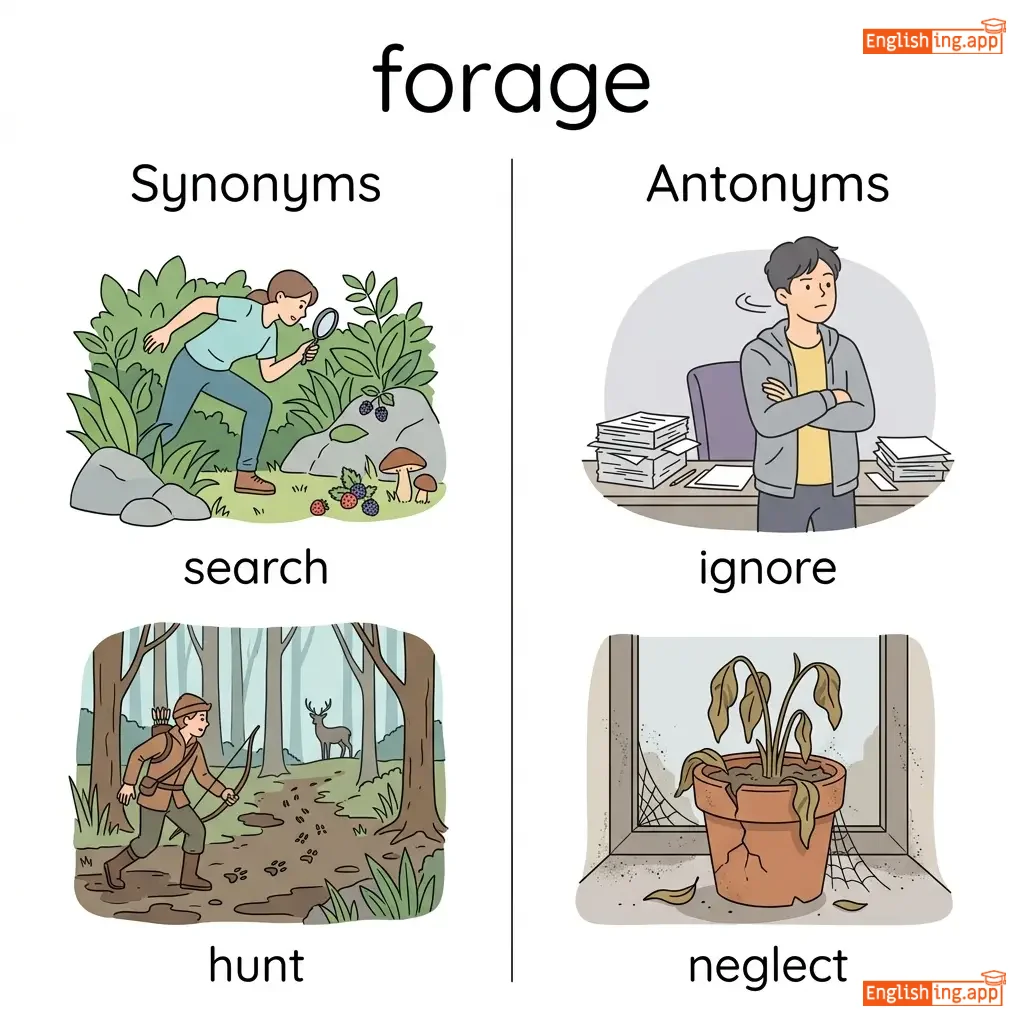
search, hunt, scavenge, gather, seek
••••••
|
ignore, neglect
••••••
|
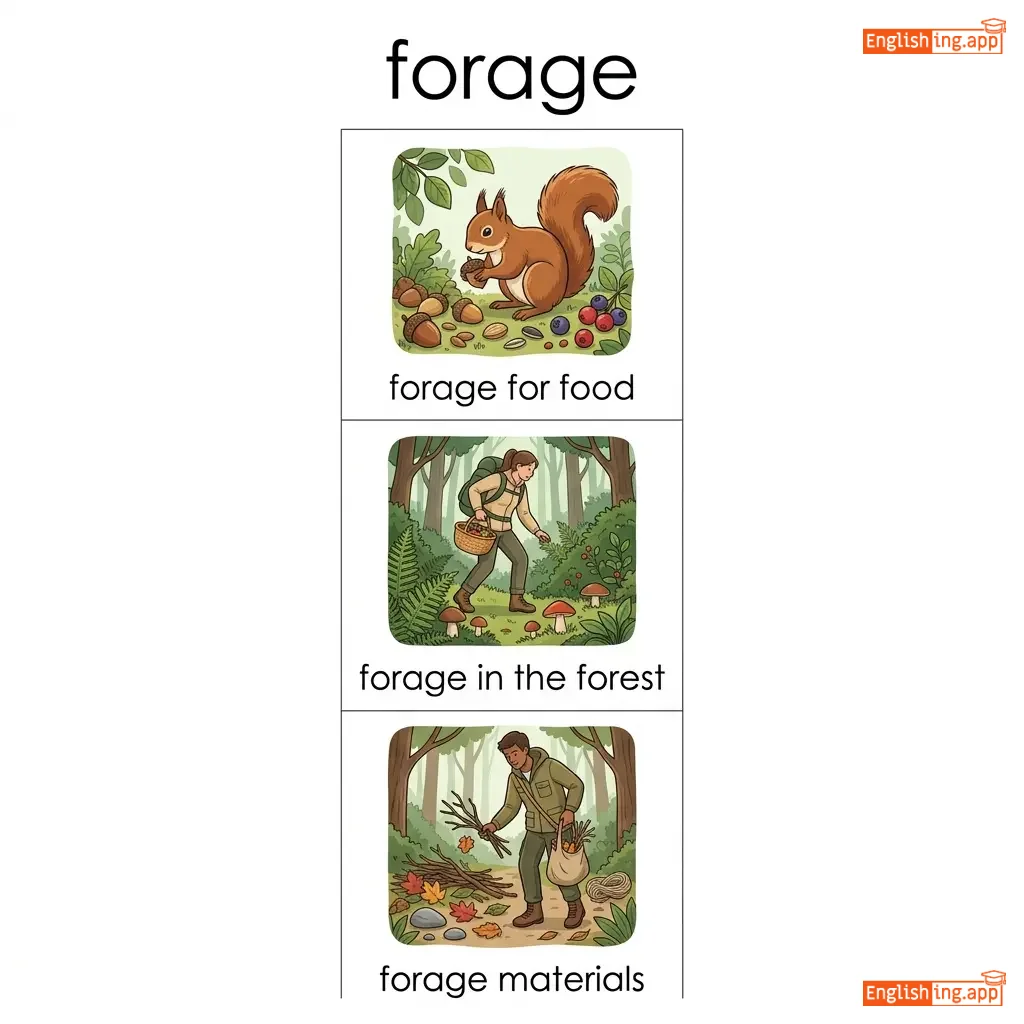
forage for food, forage in the forest, forage materials
••••••
|
Forageは森の中で食べ物を探すこと
••••••
|
|
#3544
👔
|
/ˈfɒpɪʃ/
adjective
(フォピッシュ)
••••••
|
- •••••• |
服装と外見に過剰にこだわり、愚かまたは虚栄心から行動する
fukusou to gaiken ni kajou ni kodawari, oroka mata wa kyoeishin kara koudou suru
••••••
|
- •••••• | - •••••• | - •••••• | - •••••• |
Excessively concerned with clothes and appearance in a vain or foolish way.
••••••
|
He looked rather foppish in his brightly colored suit. |
彼は明るい色のスーツで少しふざけたように見えた。
Kare wa akarui iro no suutsu de sukoshi fuzaketa you ni mieteta.
••••••
|
- •••••• | - •••••• | - •••••• |
vain, affected, dandyish, showy, pretentious
••••••
|
plain, modest, simple
••••••
|
foppish manners, foppish style, foppish elegance
••••••
|
Foppish はファッションにうるさく、見た目で目立とうとする
••••••
|
|
#3545
🎩
|
/ˈfɒpəri/
noun
(フォパリー)
••••••
|
- •••••• |
虚飾
kishoku
••••••
|
- •••••• | - •••••• | - •••••• | - •••••• |
Foolish or excessive concern with one's appearance or manners; pretentious behavior.
••••••
|
His obsession with fashion was dismissed as mere foppery. |
彼のファッションへの執着は単なる虚飾と見なされた。
Kare no fasshon e no shuchaku wa tannaru kishoku to minasareta.
••••••
|
- •••••• | - •••••• | - •••••• |
vanity, pretension, affectation, ostentation, showiness
••••••
|
modesty, simplicity, humility
••••••
|
mere foppery, empty foppery, vain foppery
••••••
|
Foppery は虚飾、外見に対する過剰な関心を意味します。
••••••
|
|
#3546
🕊️
|
/ˈfʊtˌluːs/
adjective
(fut-lus)
••••••
|
- •••••• |
自由な
jiyūna
••••••
|
- •••••• | - •••••• | - •••••• | - •••••• |
Free to go anywhere or do anything; not tied down by responsibilities.
••••••
|
After graduating, he felt footloose and ready to explore the world. |
卒業後、彼は自由を感じ、世界を探索する準備ができていました。
Sotsugyōgo, kare wa jiyū o kanji, sekai o tansaku suru junbi ga dekite imashita.
••••••
|
- •••••• | - •••••• | - •••••• |
independent, free, unrestrained, carefree, liberated
••••••
|
tied, restricted, committed
••••••
|
footloose traveler, footloose lifestyle, feel footloose, footloose and fancy-free
••••••
|
Footloose とは束縛がなく、完全に自由なことを意味します
••••••
|
|
#3547
📖
|
/ˈfʊtˌnoʊt/
noun
(フットノート)
••••••
|
- •••••• |
脚注
kyakuchu
••••••
|
- •••••• | - •••••• | - •••••• | - •••••• |
A note of reference, explanation, or comment placed at the bottom of a page.
••••••
|
The author included a foot-note to explain the historical context. |
著者は歴史的な文脈を説明するために脚注を追加しました。
chosha wa rekishiteki na bunmyaku o setsumei suru tame ni kyakuchu o tsuika shimashita.
••••••
|
- •••••• | - •••••• | - •••••• |
annotation, reference, remark, comment, citation
••••••
|
main text, headline, body
••••••
|
add a foot-note, explanatory foot-note, scholarly foot-note, historical foot-note
••••••
|
Foot-note はページ下部の注釈
••••••
|
|
#3548
🔒
|
/ˈfuːlpruːf/
adjective
(fūrūpuroofu)
••••••
|
- •••••• |
失敗しない
shippai shinai
••••••
|
- •••••• | - •••••• | - •••••• | - •••••• |
Designed to be very easy to use or understand, leaving no possibility of failure or error.
••••••
|
The new software has a foolproof installation process. |
新しいソフトウェアには失敗しないインストールプロセスがあります。
Atarashii sofutowea ni wa shippai shinai insutooru purosesu ga arimasu.
••••••
|
- •••••• | - •••••• | - •••••• |
reliable, certain, guaranteed, infallible, simple
••••••
|
complicated, fallible, unreliable
••••••
|
foolproof system, foolproof method, foolproof plan, foolproof solution
••••••
|
失敗しない、まるでfoolproofのように、完璧なプロセスです。
••••••
|
|
#3549
😬
|
/ˈfuːlˌhɑːrdi/
adjective
(fūruhādi)
••••••
|
- •••••• |
無謀な
mubō na
••••••
|
- •••••• | - •••••• | - •••••• | - •••••• |
Recklessly bold or rash; taking foolish risks.
••••••
|
It was foolhardy of him to climb the mountain without proper gear.
It was foolhardy of him to climb the mountain without proper gear.
••••••
|
適切な装備なしで山に登るのは無謀だった。
Tekisetsu na sōbi nashi de yama ni noboru no wa mubō datta.
••••••
|
- •••••• | - •••••• | - •••••• |
reckless, rash, imprudent, careless, daring
••••••
|
cautious, careful, prudent
••••••
|
foolhardy decision, foolhardy act, foolhardy adventure, foolhardy risk
••••••
|
Fool + Hardy = 無謀に大胆
••••••
|
|
#3550
🤡
|
/ˈfuːləri/
noun
(フーラリー)
••••••
|
- •••••• |
愚かさ
orokasa
••••••
|
- •••••• | - •••••• | - •••••• | - •••••• |
Silly or foolish behavior or actions.
••••••
|
His constant foolery made the meeting hard to take seriously.
彼の絶え間ない愚かさは、会議を真剣に受け止めるのを難しくしました。
••••••
|
彼の絶え間ない愚かさは、会議を真剣に受け止めるのを難しくしました。
Kare no tae-manai orokasa wa, kaigi o shinken ni uketomeru no o muzukashiku shimashita.
••••••
|
- •••••• | - •••••• | - •••••• |
nonsense, silliness, absurdity, folly, tomfoolery
••••••
|
seriousness, wisdom, sense
••••••
|
engage in foolery, childish foolery, acts of foolery, comic foolery
••••••
|
Fooleryは愚かさ (orokasa) を意味します。
••••••
|
|
#3551
🐱
|
/ˈfɒn.dəl/
verb
(fóndoru)
••••••
|
- •••••• |
撫でる
naderu
••••••
|
fondled
fóndorudo
••••••
|
fondled
fóndorudo
••••••
|
fondles
fóndorusu
••••••
|
fondling
fóndoringu
••••••
|
To stroke or caress lovingly or gently.
••••••
|
She fondled the kitten gently in her lap.
彼女は膝の上で子猫を優しく撫でていました。
••••••
|
彼女は膝の上で子猫を優しく撫でていました。
Kanojo wa hizano ue de koneko o yasashiku nadete imashita.
••••••
|
- •••••• | - •••••• | - •••••• |
caress, stroke, cuddle, pet, touch
••••••
|
hit, strike, ignore
••••••
|
fondle a cat, fondle gently, fondle lovingly, fondle affectionately
••••••
|
Fondle は優しく撫でることを意味します。
••••••
|
|
#3552
⚡
|
/ˌfoʊ.mənˈteɪ.ʃən/
noun
(フォメンテーション)
••••••
|
- •••••• |
扇動、刺激
sendō, shigeki
••••••
|
- •••••• | - •••••• | - •••••• | - •••••• |
The action of instigating or stirring up; also the application of warm substances to the body to ease pain.
••••••
|
His speech led to the fomentation of violence in the region.
彼のスピーチは地域での暴力の激化を引き起こした。
••••••
|
彼のスピーチは地域での暴力の激化を引き起こした。
Kare no supīchi wa chiiki de no bōryoku no gekika o hikiokoshita.
••••••
|
- •••••• | - •••••• | - •••••• |
instigation, provocation, incitement, stimulation
••••••
|
calming, suppression, peace
••••••
|
fomentation of violence, fomentation of rebellion, fomentation of unrest
••••••
|
Fomentation = 行動を刺激して扇動する ⚡
••••••
|
|
#3553
🔥
|
/foʊˈmɛnt/
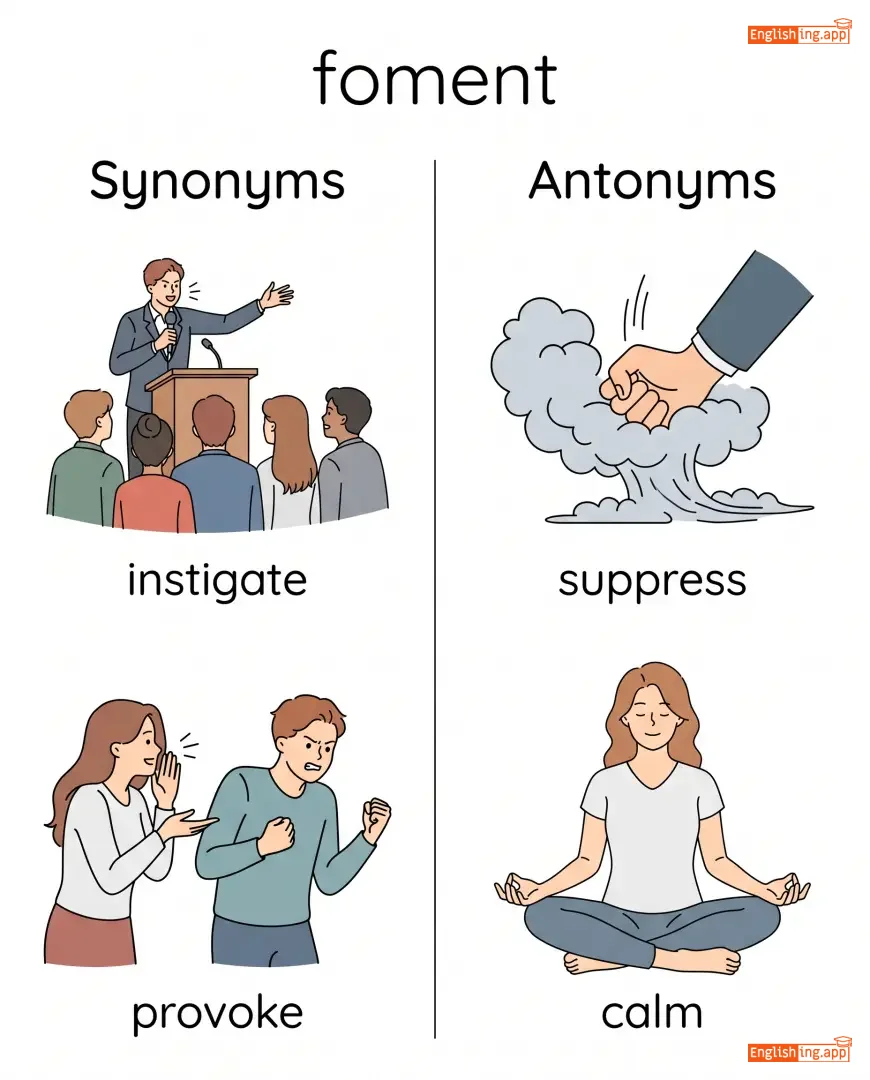
verb
(フォーメント)
••••••
|
|
扇動する
sendou suru
••••••
|
fomented
フォーメンテッド
••••••
|
fomented
フォーメンテッド
••••••
|
foments
フォーメンツ
••••••
|
fomenting
フォーメンティング
••••••
|
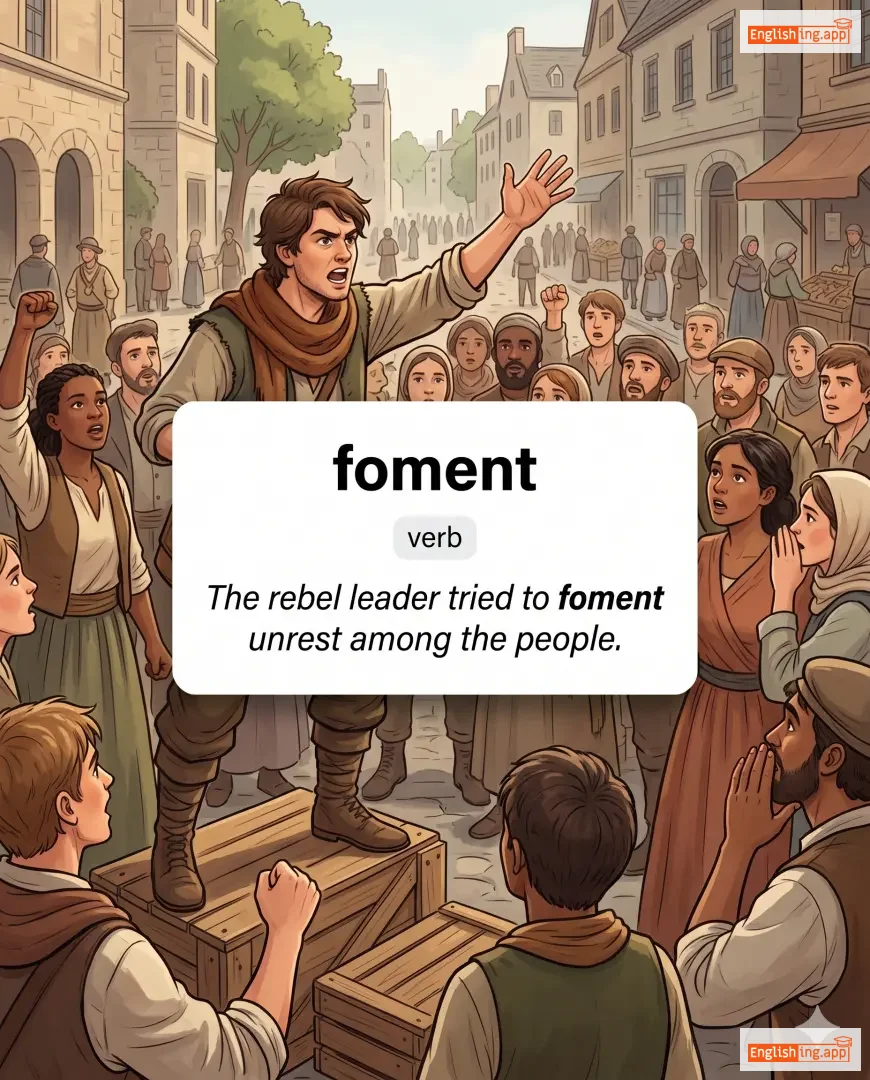
To instigate or stir up (an undesirable or violent sentiment or course of action).
••••••
|
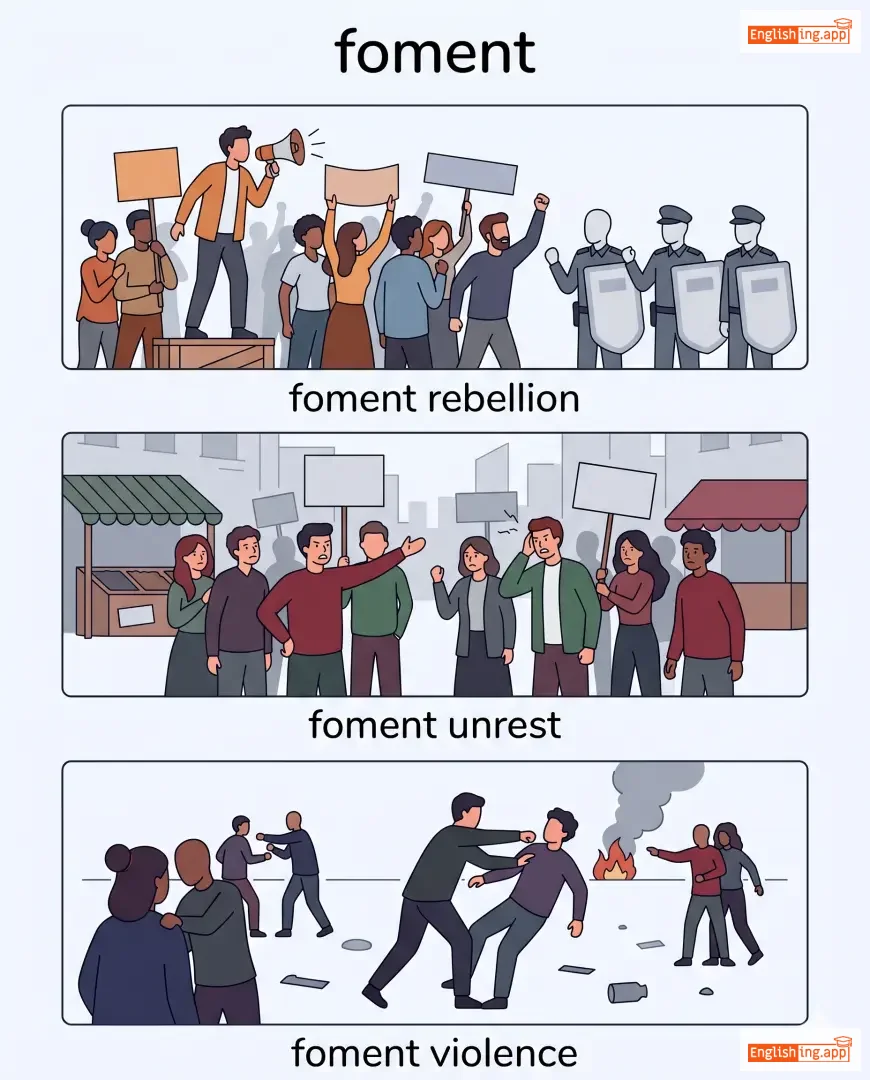
The rebel leader tried to foment unrest among the people.
反乱の指導者は、人々の間で騒動を煽ろうとした。
••••••
|
反乱の指導者は、人々の間で騒動を煽ろうとした。
Hanran no shidōsha wa, hitobito no aida de sōdō o aorō to shita.
••••••
|
- •••••• | - •••••• | - •••••• |
instigate, provoke, incite, agitate, encourage
••••••
|
suppress, calm, pacify
••••••
|
foment rebellion, foment unrest, foment violence, foment discontent
••••••
|
扇動する - 火をつけるように - 騒動を引き起こす 🔥
••••••
|
|
#3554
🎶
|
/ˈfoʊk.lɔːr/
noun
(フォークロア)
••••••
|
- •••••• |
民間伝承
minkan denshō
••••••
|
- •••••• | - •••••• | - •••••• | - •••••• |
The traditional beliefs, customs, stories, songs, and practices of a community, passed down through generations.
••••••
|
Bangladeshi folk-lore is rich with myths and legends. |
日本の民間伝承は神話や伝説で豊かです。
Nihon no minkan denshō wa shinwa ya densetsu de yutaka desu.
••••••
|
- •••••• | - •••••• | - •••••• |
tradition, myth, legend, tale, oral history
••••••
|
fact, reality
••••••
|
folk-lore tradition, folk-lore study, ancient folk-lore, rich folk-lore
••••••
|
Folk は人々を意味し、Lore は物語を意味するので、民間伝承は人々の物語です。
••••••
|
|
#3555
📖
|
/ˈfoʊ.li.oʊ/
noun
(フォリオ)
••••••
|
- •••••• |
大きな本や写本
ookina hon ya shahon
••••••
|
- •••••• | - •••••• | - •••••• | - •••••• |
A sheet of paper folded once to form two leaves (four pages) of a book; also a term for a large book or manuscript.
••••••
|
The library houses an ancient Shakespeare folio. |
図書館には古いシェイクスピアのフォリオがあります。
Toshokan ni wa furui Sheikusupia no forio ga arimasu.
••••••
|
- •••••• | - •••••• | - •••••• |
manuscript, volume, book, tome, codex
••••••
|
pamphlet, leaflet
••••••
|
folio edition, Shakespeare folio, large folio, rare folio
••••••
|
Folioは大きな本📖を意味します - 折りたたまれた紙から大きな本ができることを想像してください。
••••••
|
|
#3556
😕
|
/ˈflʌməksd/
adjective
(フラモクスト)
••••••
|
- •••••• |
困惑した
konwaku shita
••••••
|
- •••••• | - •••••• | - •••••• | - •••••• |
Completely confused or bewildered.
••••••
|
He looked flummoxed after hearing the strange question. |
彼はその奇妙な質問を聞いた後、困惑しているように見えた。
Kare wa sono kimyō na shitsumon o kiita ato, konwaku shite iru yō ni mieta.
••••••
|
- •••••• | - •••••• | - •••••• |
confused, perplexed, baffled, bewildered
••••••
|
clear, certain, confident
••••••
|
utterly flummoxed, completely flummoxed, looked flummoxed
••••••
|
Flummoxed = フラモクスト – 完全に困惑している状態。
••••••
|
|
#3557
📦
|
/fɔɪst/
verb
(foist)
••••••
|
- •••••• |
押し付ける
oshitsukeru
••••••
|
foisted
foisted
••••••
|
foisted
foisted
••••••
|
foists
foists
••••••
|
foisting
foisting
••••••
|
To impose something unwelcome or unnecessary on someone.
••••••
|
He tried to foist his old books onto his friends.
彼は友達に自分の古い本を押し付けようとしました。
••••••
|
彼は友達に自分の古い本を押し付けようとしました。
Kare wa tomodachi ni jibun no furui hon o oshitsukeyou to shimashita.
••••••
|
foist upon
foist upon
••••••
|
To force something on someone without their consent.
••••••
|
押し付ける
oshitsukeru
••••••
|
impose, force, thrust, inflict, burden
••••••
|
accept, receive, embrace
••••••
|
foist upon, foist onto, foist an idea, foist responsibility
••••••
|
FOIST = Forced List – 押し付ける
••••••
|
|
#3558
🛡️
|
/fɔɪl/
verb
(foyl)
••••••
|
- •••••• |
阻止する
soshi suru
••••••
|
foiled
foyld
••••••
|
foiled
foyld
••••••
|
foils
foyls
••••••
|
foiling
foiling
••••••
|
To prevent something (especially a plan) from succeeding.
••••••
|
The police foiled the robbery attempt.
警察は強盗未遂を阻止した。
••••••
|
警察は強盗未遂を阻止した。
Keisatsu wa gōtō misui wo soshi shita.
••••••
|
foil someone's plan
誰かの計画を阻止する
••••••
|
To stop or prevent someone’s plan from succeeding.
••••••
|
誰かの計画を阻止する
dareka no keikaku wo soshi suru
••••••
|
thwart, prevent, frustrate, hinder, obstruct
••••••
|
assist, support, encourage
••••••
|
foil a plan, foil an attempt, foil a plot, foil a robbery
••••••
|
FOILのように、計画を阻止する。
••••••
|
|
#3559
😅
|
/ˈfɔɪbəl/
noun
(フォイブル)
••••••
|
- •••••• |
小さな弱点
chiisana jakuten
••••••
|
- •••••• | - •••••• | - •••••• | - •••••• |
A minor weakness or eccentricity in someone's character.
••••••
|
She loved him despite his little foibles. |
彼女は彼の小さな弱点を気にせずに彼を愛していた。
Kanojo wa kare no chiisana jakuten o ki ni sezu ni kare o aishite ita.
••••••
|
- •••••• | - •••••• | - •••••• |
weakness, flaw, shortcoming, imperfection, quirk
••••••
|
strength, advantage, virtue
••••••
|
minor foible, personal foible, human foible, character foible
••••••
|
FOILプレートの小さなひび = foibleは小さな弱点を意味する。
••••••
|
|
#3560
🌫️
|
/ˈfɒɡi/
adjective
(fogī)
••••••
|
- •••••• |
霧の
kiri no
••••••
|
- •••••• | - •••••• | - •••••• | - •••••• |
Full of or covered with fog; unclear or hazy.
••••••
|
The mountain road was dangerous on the foggy morning.
山道は霧の朝に危険でした。
••••••
|
山道は霧の朝に危険でした。
Yamami chi wa kiri no asa ni kiken deshita.
••••••
|
foggy memory
霧の記憶
••••••
|
An unclear or vague recollection of something.
••••••
|
ぼやけた記憶
boyaketa kioku
••••••
|
misty, hazy, cloudy, obscure, blurred
••••••
|
clear, bright, distinct
••••••
|
foggy morning, foggy night, foggy weather, foggy memory
••••••
|
Fogは霧のようなもの、ぼやけた記憶と同じように、鮮明ではありません。
••••••
|
|
#3561
🤢
|
/ˈfiːtɪd/
adjective
(フィティッド)
••••••
|
- •••••• |
腐った
kusatta
••••••
|
- •••••• | - •••••• | - •••••• | - •••••• |
having an offensive, unpleasant smell
••••••
|
The foetid smell from the garbage made it hard to breathe. |
ゴミからの腐った臭いで呼吸が困難になった。
Gomi kara no kusatta nioi de kokyū ga konnan ni natta.
••••••
|
- •••••• | - •••••• | - •••••• |
stinking, foul, rancid, putrid, smelly
••••••
|
fragrant, aromatic, pleasant
••••••
|
foetid air, foetid odor, foetid swamp, foetid breath
••••••
|
Foetid means fetid smell – フィティッド腐った臭い
••••••
|
|
#3562
🌾
|
/ˈfɒdər/
noun
(フォダー)
••••••
|
- •••••• |
飼料
shiryō
••••••
|
- •••••• | - •••••• | - •••••• | - •••••• |
food for livestock such as cattle, horses, or sheep; also something considered of little value but used to supply a demand
••••••
|
The farmer stored enough fodder for the cattle to last through winter. |
農家は家畜が冬を越せるように十分な飼料を貯めておいた。
Nōka wa kachiku ga fuyu o koseru yō ni jūbun'na shiryō o tamete oita.
••••••
|
grist for the mill |
something that can be used for a particular purpose, often trivial
••••••
|
製粉所の穀物
seifunjo no kokumotsu
••••••
|
feed, forage, hay, silage, provisions
••••••
|
delicacy, treat
••••••
|
animal fodder, cannon fodder, fodder crops, news fodder
••••••
|
Fodderはfood+dar = 動物のための食べ物
••••••
|
|
#3563
🔄
|
/flʌks/
noun
(フラックス)
••••••
|
|
フロー
furō
••••••
|
- •••••• | - •••••• | - •••••• | - •••••• |
continuous change or movement; the rate of flow of something
••••••
|
The company was in a state of constant flux during the reorganization. |
会社は再編成の間、絶え間ない変化の中にありました。
Kaisha wa sai hensei no aida, tae manai henka no naka ni arimashita.
••••••
|
in flux |
in a state of change or uncertainty
••••••
|
流動的な状態で
ryūdōteki na jōtai de
••••••
|
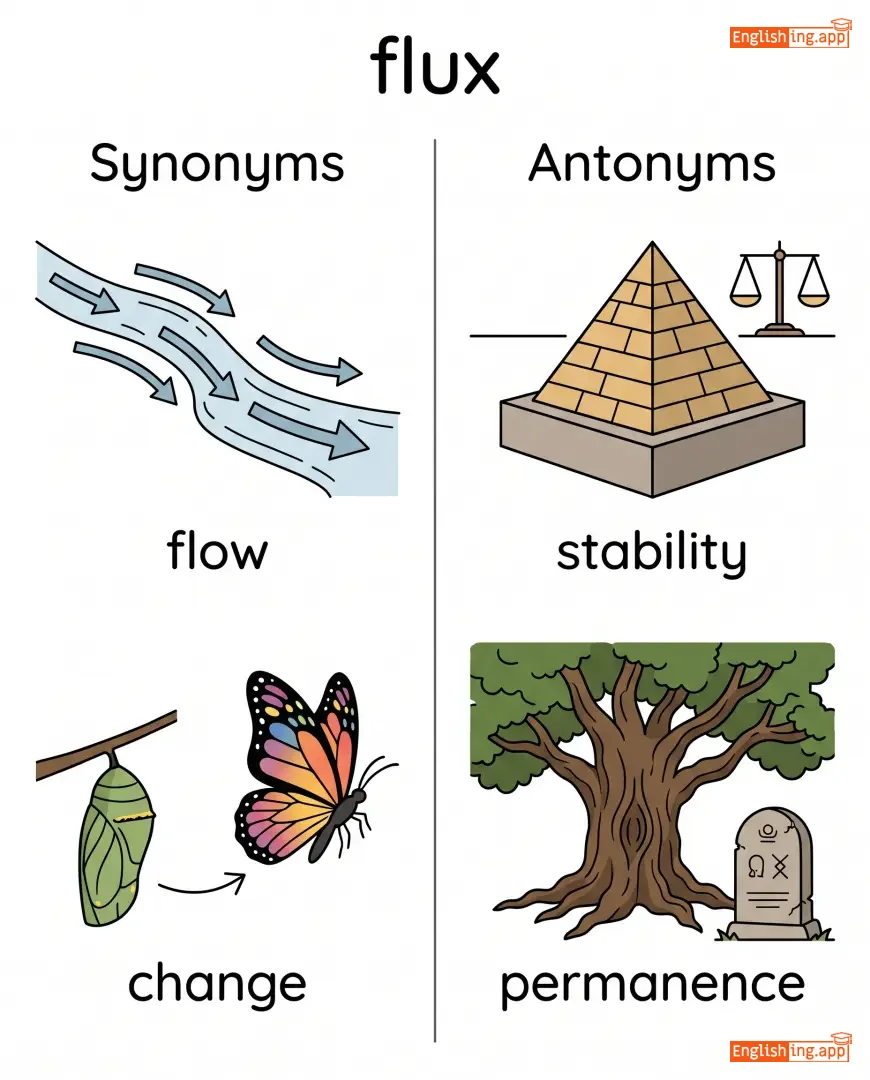
flow, change, fluctuation, instability, motion
••••••
|
stability, permanence, constancy
••••••
|
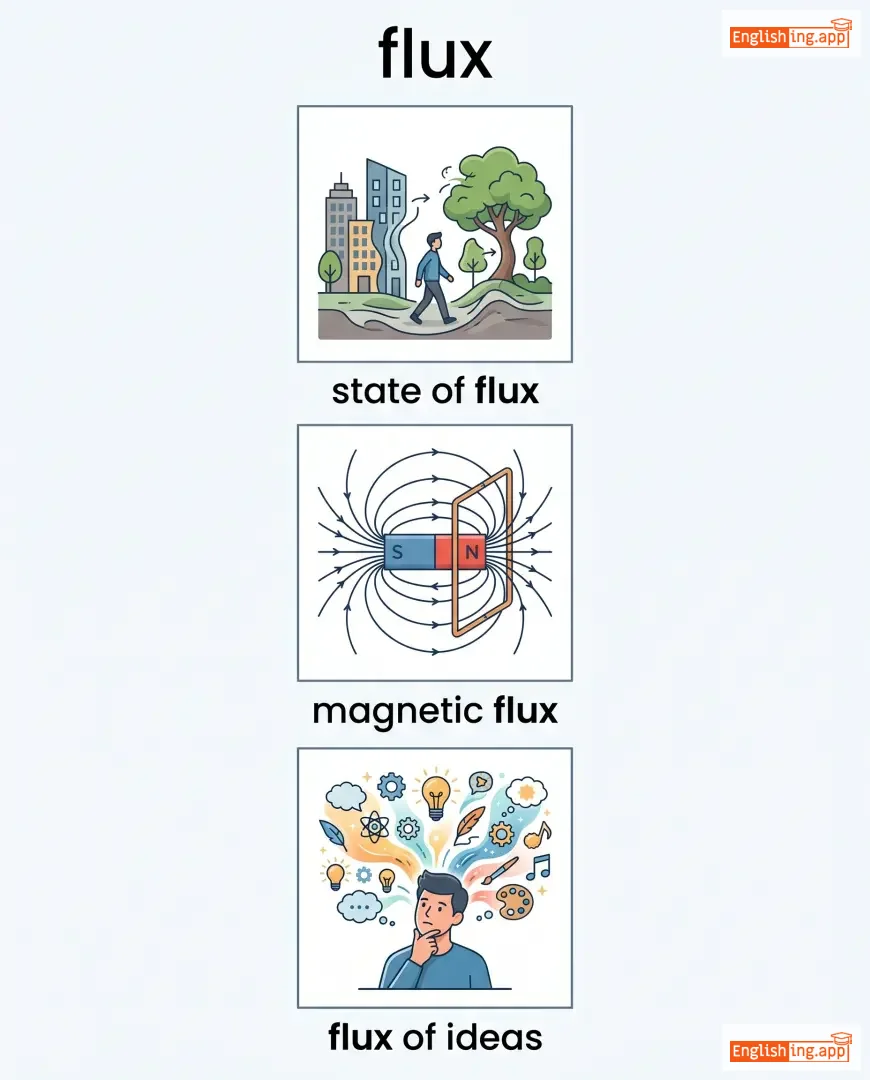
state of flux, magnetic flux, flux of ideas, flux of people
••••••
|
Flux は流れ + 変化を意味する — すべてが流れの中で動いている
••••••
|
|
#3564
🏞️
|
/ˈfluːviəl/
adjective
(フルヴィアル)
••••••
|
- •••••• |
河川に関連する
kasen ni kanren suru
••••••
|
- •••••• | - •••••• | - •••••• | - •••••• |
relating to or found in a river
••••••
|
The fluvial deposits indicated the presence of an ancient river system. |
河川堆積物は古代の川のシステムの存在を示していた。
Kasen taisekimono wa kodai no kawa no shisutemu no sonzai o shimeshite ita.
••••••
|
- •••••• | - •••••• | - •••••• |
riverine, riparian, aquatic, stream-related
••••••
|
terrestrial, arid, desert
••••••
|
fluvial system, fluvial deposits, fluvial erosion, fluvial landscape
••••••
|
Fluvial(フルヴィアル)は川に関係する、‘フロー’から覚える
••••••
|
|
#3565
🦋
|
/ˈflʌtər/
verb
(フラッター)
••••••
|
- •••••• |
羽ばたく / 震える
habataku / furueru
••••••
|
fluttered
フラッタード
••••••
|
fluttered
フラッタード
••••••
|
flutters
フラッターズ
••••••
|
fluttering
フラッターリング
••••••
|
to move or flap quickly and lightly; to beat or wave with small rapid motions
••••••
|
The butterfly began to flutter its wings in the sunlight.
蝶が日光の中で羽ばたき始めた。
••••••
|
蝶が日光の中で羽ばたき始めた。
Chou ga nikkou no naka de habataki hajimeta.
••••••
|
heart flutter
心臓の鼓動
••••••
|
a brief feeling of rapid or irregular heartbeat
••••••
|
心臓の鼓動
shinzou no kodou
••••••
|
flap, quiver, tremble, flicker, wave
••••••
|
still, steady, calm
••••••
|
fluttering wings, flutter of excitement, flutter nervously, heart flutter
••••••
|
蝶が羽ばたく様子は、心臓の鼓動のようだ。
••••••
|
|
#3566
🏺
|
/ˈfluːtɪd/
adjective
(フルーテッド)
••••••
|
- •••••• |
溝が入った
mizu ga haitta
••••••
|
- •••••• | - •••••• | - •••••• | - •••••• |
having grooves or ridges, often for decoration
••••••
|
The vase had a beautiful fluted design around the rim. |
その花瓶は縁に美しい溝が入ったデザインがありました。
Sono kabin wa fuchi ni utsukushī mizu ga haitta dezain ga arimashita.
••••••
|
- •••••• | - •••••• | - •••••• |
grooved, ridged, corrugated, channeled
••••••
|
smooth, plain
••••••
|
fluted glass, fluted column, fluted design
••••••
|
Fluted designは、笛のような溝の入ったデザインです。
••••••
|
|
#3567
🎶
|
/fluːt/
noun
(フルート)
••••••
|
- •••••• |
フルート
furuto
••••••
|
- •••••• | - •••••• | - •••••• | - •••••• |
a musical instrument played by blowing across a hole at one end
••••••
|
He played a beautiful tune on the flute. |
彼はフルートで美しいメロディーを演奏した。
Kare wa furuto de utsukushii merodii o ensou shita.
••••••
|
- •••••• | - •••••• | - •••••• |
recorder, piccolo, fife, pipe
••••••
|
drum, trumpet
••••••
|
play the flute, flute music, wooden flute
••••••
|
Fluteはフルート、吹くことで音が出ます。
••••••
|
|
#3568
😵
|
/ˈflʌstərd/
adjective
(furasutādo)
••••••
|
- •••••• |
動揺した
dōyō shita
••••••
|
- •••••• | - •••••• | - •••••• | - •••••• |
in a state of confusion or agitation
••••••
|
She appeared flustered after being asked so many questions.
彼女はたくさんの質問をされた後、動揺しているように見えました。
••••••
|
彼女はたくさんの質問をされた後、動揺しているように見えました。
Kanojo wa takusan no shitsumon o sareta ato, dōyō shite iru yō ni miemashita.
••••••
|
- •••••• | - •••••• | - •••••• |
confused, agitated, upset, nervous, bewildered
••••••
|
calm, composed, relaxed
••••••
|
look flustered, feel flustered, seem flustered
••••••
|
Flustered は動揺したという意味です。動揺した → flustered.
••••••
|
|
#3569
😳
|
/ˈflʌstər/
verb, noun
(フラスター)
••••••
|
- •••••• |
困惑させる
konwaku saseru
••••••
|
flustered
フラスタード
••••••
|
flustered
フラスタード
••••••
|
flusters
フラスターズ
••••••
|
flustering
フラスターリング
••••••
|
to make someone agitated or confused
••••••
|
The unexpected question flustered him.
予期しない質問が彼をフラスターさせた。
••••••
|
予期しない質問が彼を困惑させた。
Yoki shinai shitsumon ga kare o konwaku saseta.
••••••
|
- •••••• | - •••••• | - •••••• |
confuse, unsettle, agitate, disturb, rattle
••••••
|
calm, soothe, relax
••••••
|
flustered look, fluster with, in a fluster
••••••
|
フラスター、頭が混乱した感じがする時に使う言葉。
••••••
|
|
#3570
🚽
|
/flʌʃ/
verb, noun, adjective
(furasu)
••••••
|
- •••••• |
顔を赤くする / 水で洗浄する
kao o akaku suru / mizu de senjō suru
••••••
|
flushed
furashudo
••••••
|
flushed
furashudo
••••••
|
flushes
furashesu
••••••
|
flushing
furashing
••••••
|
to become red in the face, usually from embarrassment, heat, or excitement; to clean something with a flow of water
••••••
|
She flushed with embarrassment when she realized her mistake.
彼女は自分のミスに気づいたとき、恥ずかしさで顔が赤くなった。
••••••
|
彼女は自分のミスに気づいたとき、恥ずかしさで顔が赤くなった。
Kanojo wa jibun no misu ni kidzuita toki, hazukashisa de kao ga akakunatta.
••••••
|
flush out
flush out
••••••
|
to force something out into the open
••••••
|
明らかにする
akiraka ni suru
••••••
|
blush, redden, rinse, cleanse, wash
••••••
|
pale, drain, dry
••••••
|
flush with, flush toilet, flush out, flush face
••••••
|
Flush で顔が赤くなる。
••••••
|
Vocabulary Quiz
Test your vocabulary by matching words with their translations or meanings.
Login to take the quiz
Comments (0)
Share your thoughts and join the discussion.
Join the discussion by logging in
Login to CommentNo comments yet
Be the first to share your thoughts!