

翻訳
過去
過去分詞
三人称単数
動名詞
意味
例文
例文の翻訳
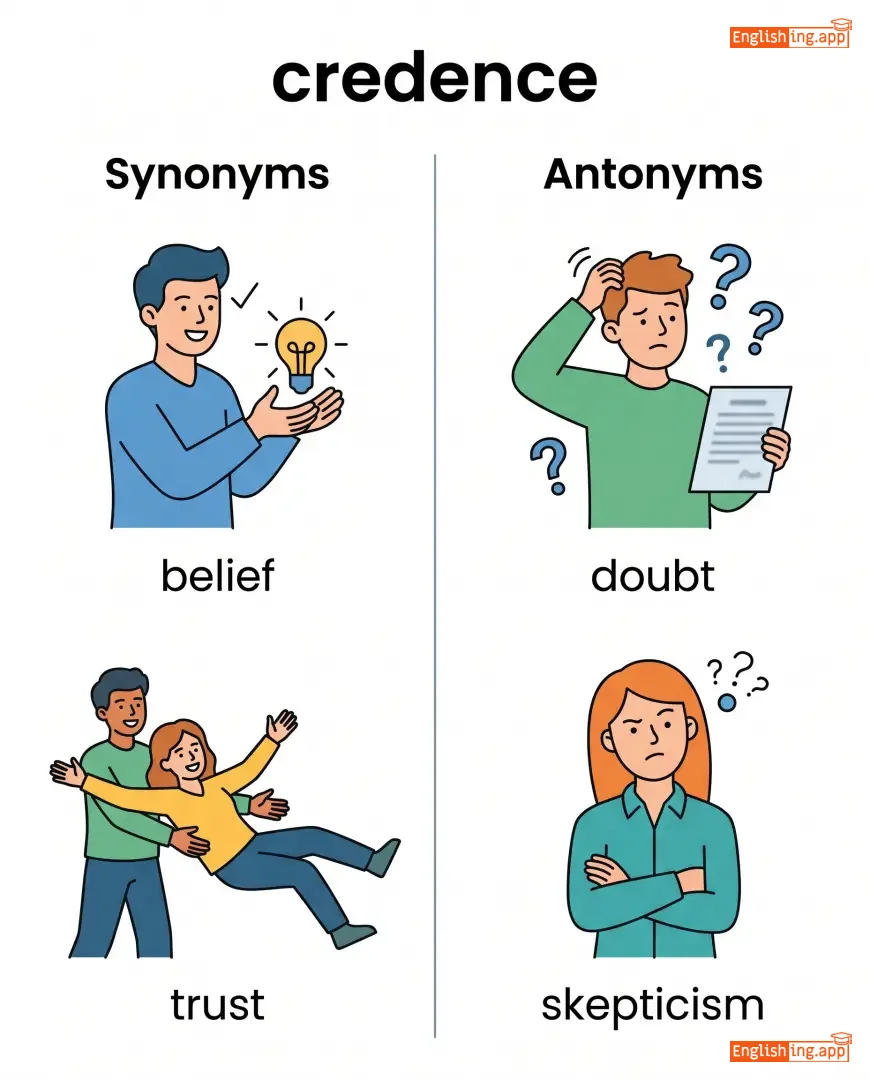
同義語
対義語
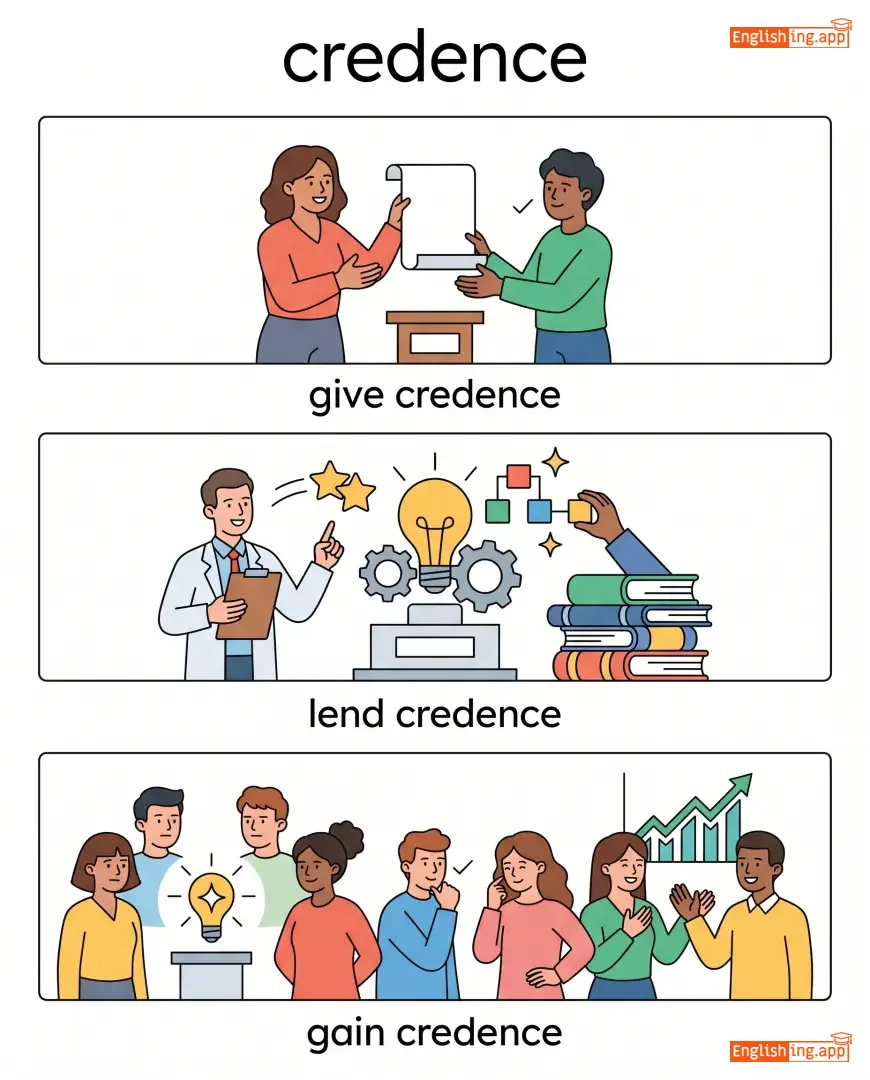
コロケーション
ニーモニック

Swipe left or right, or use the buttons. Tap image to zoom.
例文の翻訳
単語
Lesson 67Lesson 67 - マスクトグル
|
絵文字
|
単語 | Images | 翻訳 | 過去 | 過去分詞 | 三人称単数 | 動名詞 | 意味 | 例文 | 例文の翻訳 | 表現例 | 表現例の意味 | 表現例の翻訳 | 同義語 | 対義語 | コロケーション | ニーモニック |
|---|---|---|---|---|---|---|---|---|---|---|---|---|---|---|---|---|---|
|
#1981
📄
|
/kriːs/
noun, verb
(kurīsu)
••••••
|
- •••••• |
しわ, 折り目
shiwa, orime
••••••
|
creased
kurīsuto
••••••
|
creased
kurīsuto
••••••
|
creases
kurīsuizu
••••••
|
creasing
kurīsuingu
••••••
|
a line or fold produced on paper, cloth, or other material; to make a fold or wrinkle
••••••
|
She ironed the shirt carefully to remove every crease.
彼女はシャツを慎重にアイロンがけして、すべてのしわを取り除きました。
••••••
|
彼女はシャツを慎重にアイロンがけして、すべてのしわを取り除きました。
Kanojo wa shatsu o shinchō ni airon gake shite, subete no shiwa o torinozokimashita.
••••••
|
- •••••• | - •••••• | - •••••• |
fold, wrinkle, line, pleat
••••••
|
smooth, flatten
••••••
|
crease in fabric, crease paper, crease pants, iron out crease
••••••
|
CREASEは布にしわを作る、アイロンがけでしわを取る
••••••
|
|
#1982
🌆
|
/krɪˈpʌskjʊlər/
adjective
(クレプスキュラー)
••••••
|
- •••••• |
黄昏に関係する
koushun ni kankei suru
••••••
|
- •••••• | - •••••• | - •••••• | - •••••• |
relating to twilight or active during twilight
••••••
|
Bats are crepuscular animals, most active at dawn and dusk. |
コウモリは黄昏時に活動的な動物で、夜明けと夕暮れ時が最も活発です。
Koumori wa koushun-ji ni katsudouteki na doubutsu de, yoake to yuugure-ji ga mottomo kappatsu desu.
••••••
|
- •••••• | - •••••• | - •••••• |
twilight, dim, dusk, dawn
••••••
|
bright, daylight
••••••
|
crepuscular light, crepuscular animals, crepuscular activity
••••••
|
クレプスキュラーは黄昏に関係することを意味し、'crepuscule'は黄昏を意味します。
••••••
|
|
#1983
🏛️
|
/ˈkrɛməˌtɔːri/
noun
(クリメートリー)
••••••
|
- •••••• |
火葬場
kasouba
••••••
|
- •••••• | - •••••• | - •••••• | - •••••• |
a place where dead bodies are cremated
••••••
|
The crematory was located near the cemetery.
火葬場は墓地の近くにありました。
••••••
|
火葬場は墓地の近くにありました。
Kasouba wa bochi no chikaku ni arimashita.
••••••
|
- •••••• | - •••••• | - •••••• |
crematorium, furnace, incinerator
••••••
|
cemetery, graveyard
••••••
|
crematory services, crematory building, crematory facility
••••••
|
Crematoryは火葬場です。死体がここで火葬されます。
••••••
|
|
#1984
🔥
|
/ˈkriː.meɪt/
verb
(クリメイト)
••••••
|
|
火葬する
kasou suru
••••••
|
cremated
クリメイテッド
••••••
|
cremated
クリメイテッド
••••••
|
cremates
クリメイツ
••••••
|
cremating
クリメイティング
••••••
|
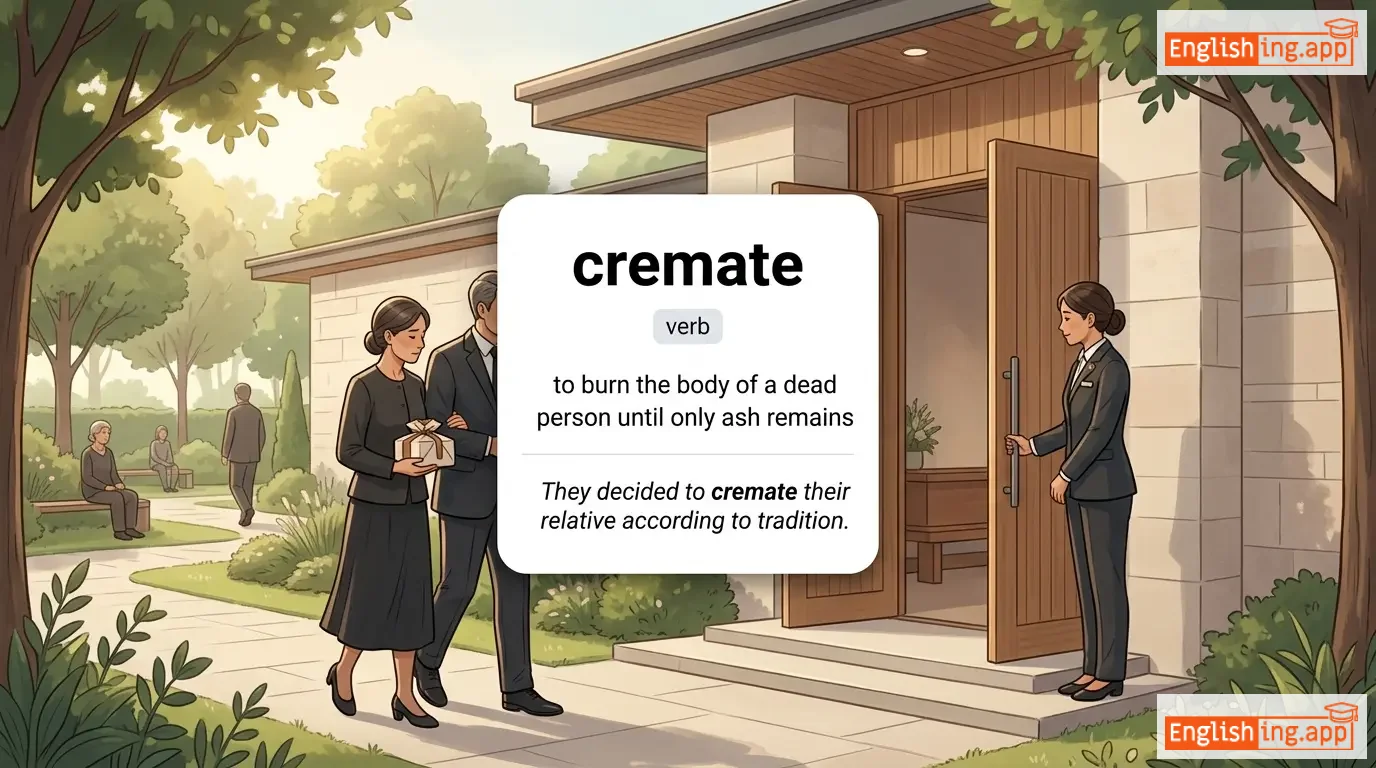
to burn the body of a dead person until only ash remains
••••••
|
They decided to cremate their relative according to tradition.
彼らは伝統に従って親戚を火葬することに決めました。
••••••
|
彼らは伝統に従って親戚を火葬することに決めました。
Karera wa dentou ni shitagatte shinseki o kasou suru koto ni kimemashita.
••••••
|
- •••••• | - •••••• | - •••••• |
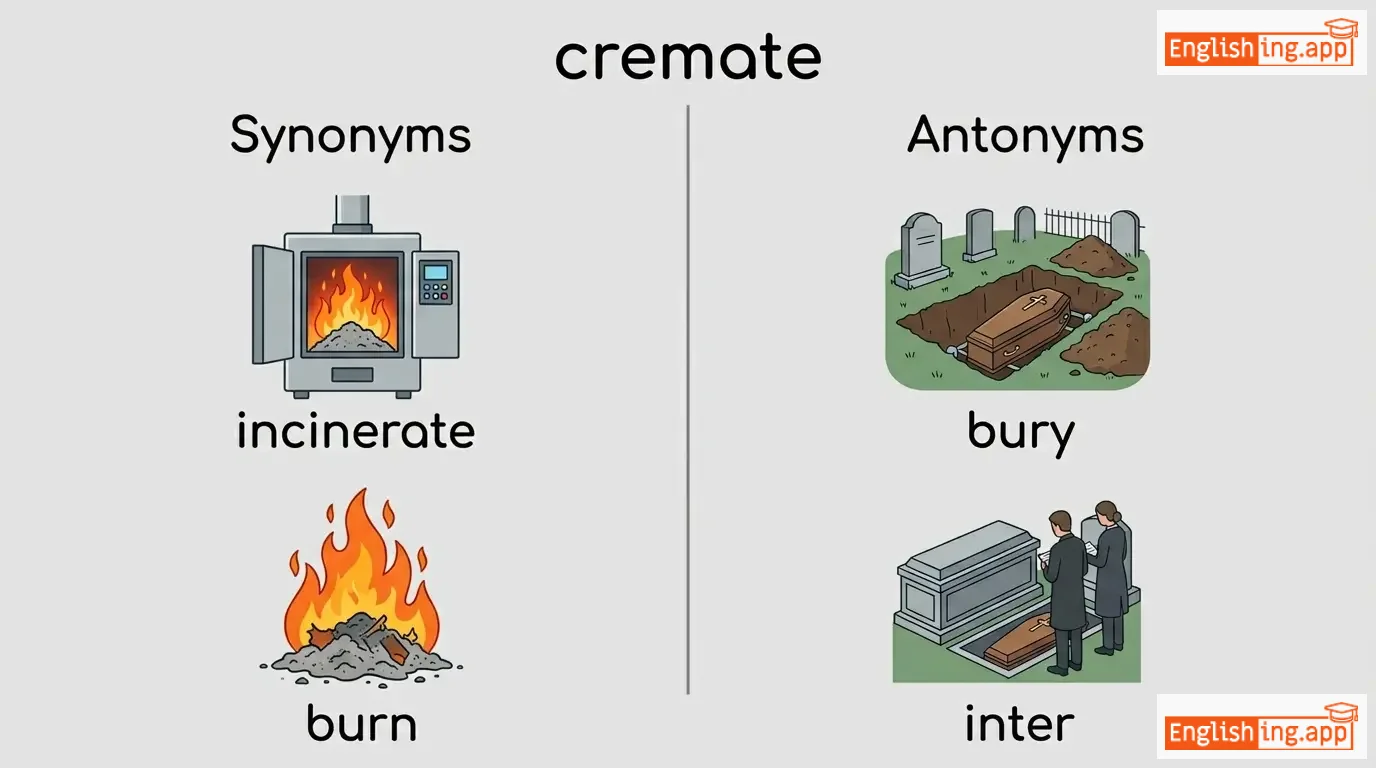
incinerate, burn, reduce to ashes
••••••
|
bury, inter
••••••
|
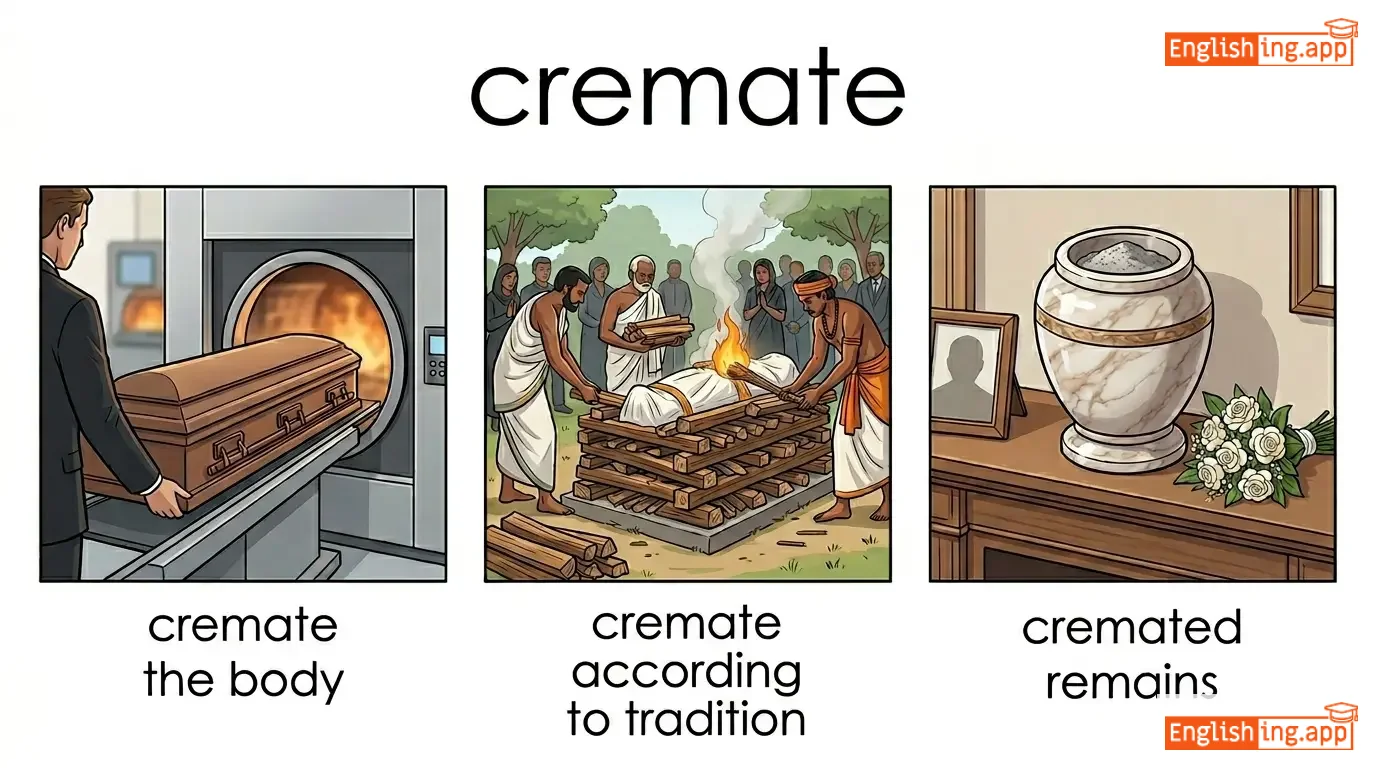
cremate the body, cremate according to tradition, cremated remains
••••••
|
Cremate is like 火葬, which happens during a cremation.
••••••
|
|
#1985
🕷️
|
/kriːp/
verb
(kuriipu)
••••••
|
|
忍び寄る
shinobiyoru
••••••
|
crept
kureputo
••••••
|
crept
kureputo
••••••
|
creeps
kuripsu
••••••
|
creeping
kuriipingu
••••••
|
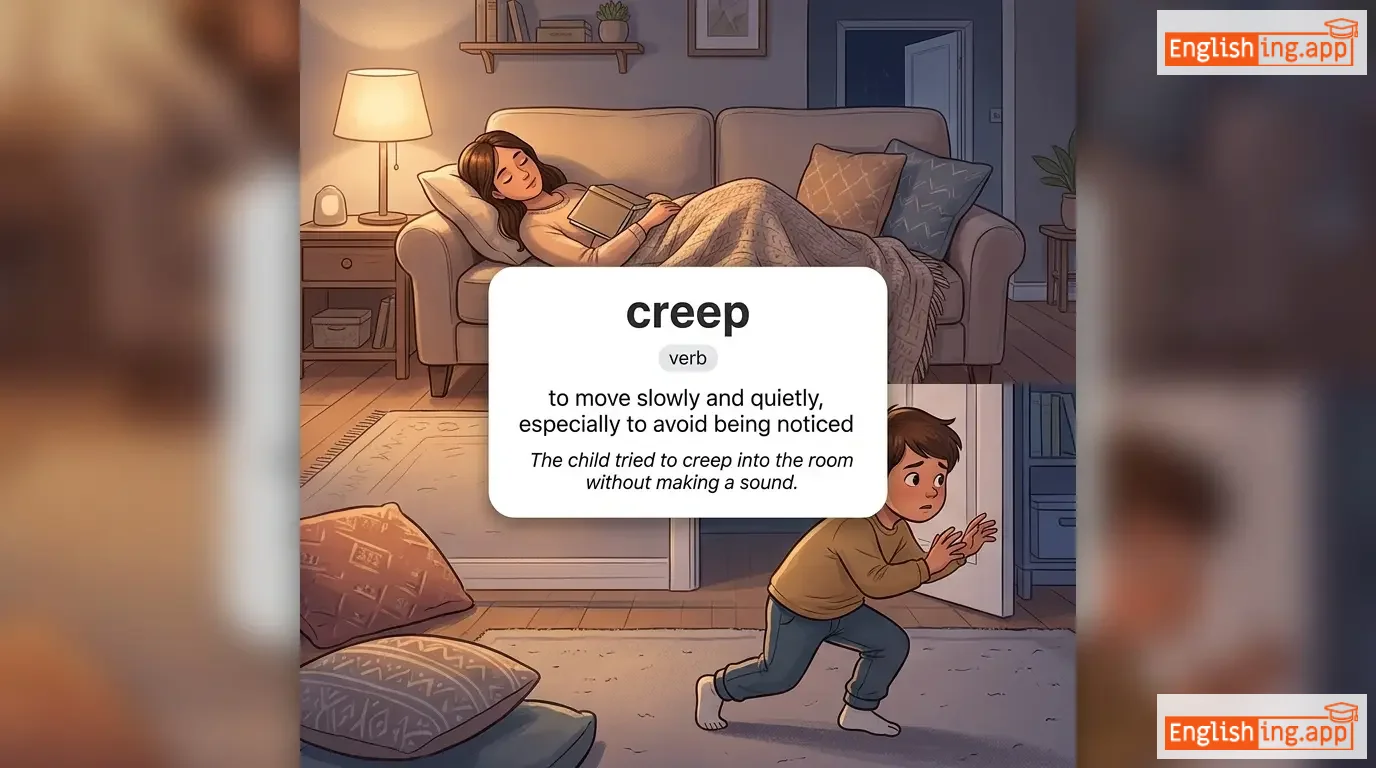
to move slowly and quietly, especially to avoid being noticed
••••••
|
The child tried to creep into the room without making a sound.
子供は音を立てずに部屋に忍び込もうとしました。
••••••
|
子供は音を立てずに部屋に忍び込もうとしました。
Kodomo wa oto o tatezu ni heya ni shinobikomo to shimashita.
••••••
|
creep up on
こっそり近づく
••••••
|
to approach someone quietly without being noticed
••••••
|
こっそり近づく
kossori chikaduku
••••••
|
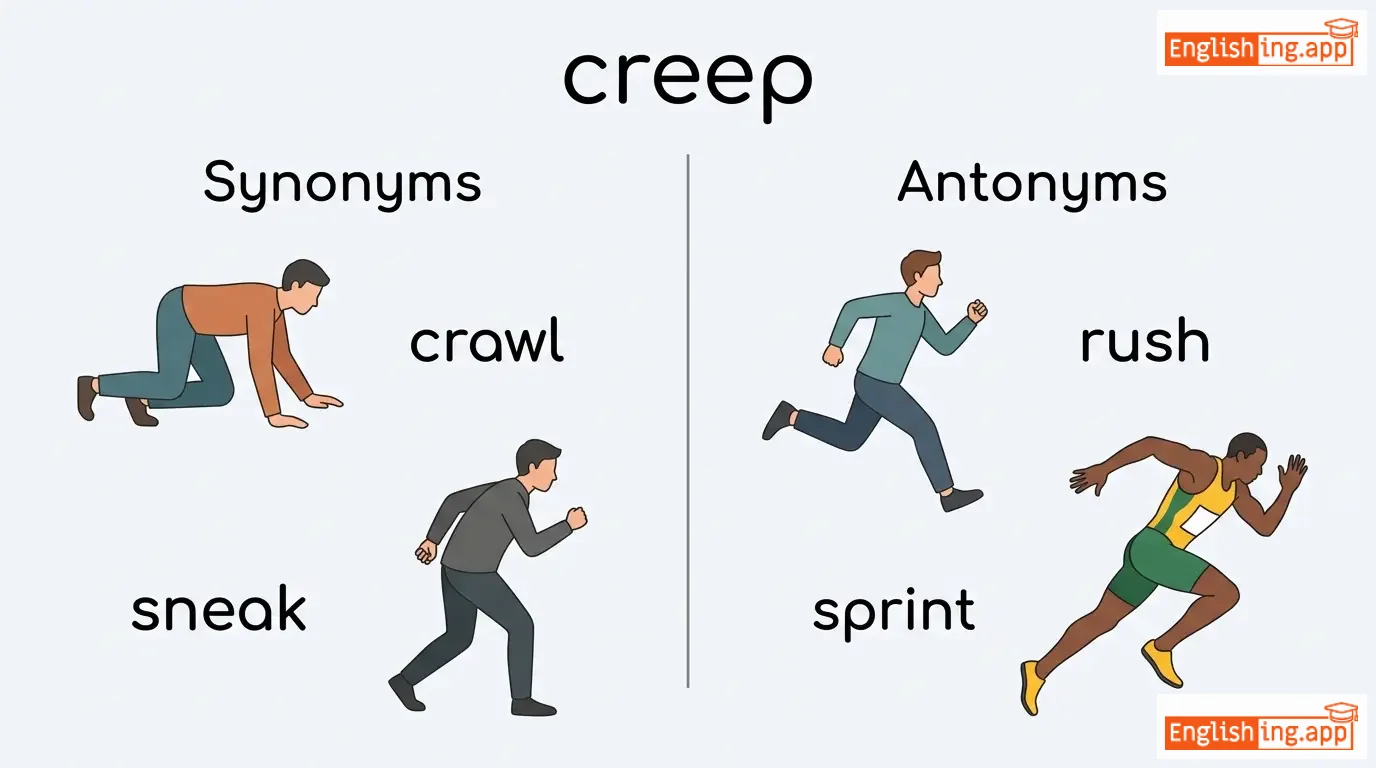
crawl, sneak, tiptoe, slink, edge
••••••
|
rush, sprint, charge
••••••
|
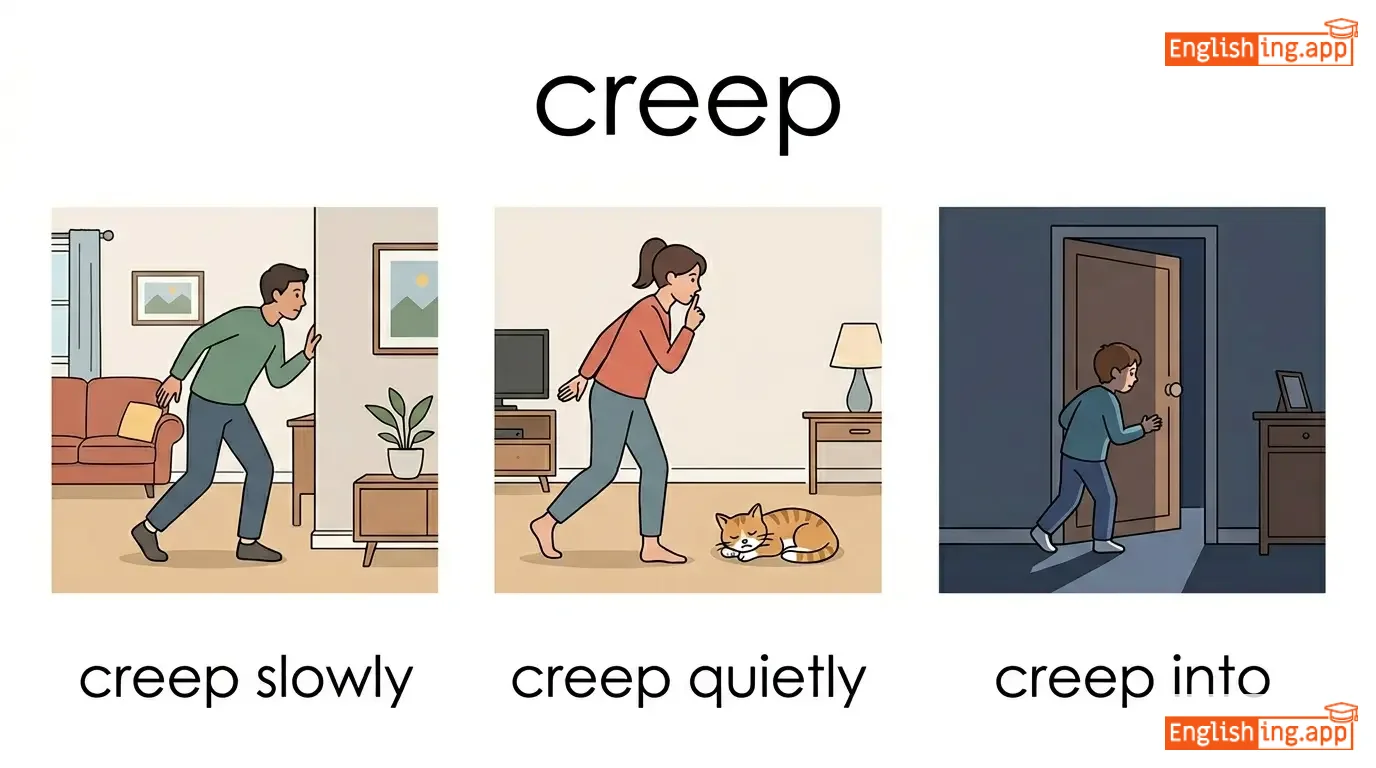
creep slowly, creep quietly, creep into, creep out
••••••
|
Creepは忍び寄ること、例えば忍者のように静かに近づくことです。
••••••
|
|
#1986
🌊
|
/kriːk/
noun
(krik)
••••••
|
- •••••• |
小川
ogawa
••••••
|
- •••••• | - •••••• | - •••••• | - •••••• |
a small stream or narrow river
••••••
|
We went fishing by the creek near our house.
私たちは家の近くの小川で釣りをしました。
••••••
|
私たちは家の近くの小川で釣りをしました。
Watashitachi wa ie no chikaku no ogawa de tsuri o shimashita.
••••••
|
up the creek
小川の上流
••••••
|
in a difficult or troublesome situation
••••••
|
困難に直面する
konnan ni chokumen suru
••••••
|
stream, brook, rivulet, watercourse, channel
••••••
|
river, ocean, sea
••••••
|
small creek, by the creek, creek water, creek bed
••••••
|
小川は小さな川です。大きな川の横にあります。
••••••
|
|
#1987
🙏
|
/kriːd/
noun
(クレード)
••••••
|
- •••••• |
信条, 原則
shinchou, gensoku
••••••
|
- •••••• | - •••••• | - •••••• | - •••••• |
A system of religious or spiritual beliefs or a guiding principle.
••••••
|
Freedom of speech is part of his personal creed. |
言論の自由は彼の個人的な信条の一部です。
Genron no jiyū wa kare no kojinteki na shinchou no ichibu desu.
••••••
|
articles of creed |
formal statements of beliefs or principles
••••••
|
信条の条文
shinchou no jōbun
••••••
|
doctrine, belief, faith, ideology, conviction
••••••
|
disbelief, atheism
••••••
|
religious creed, personal creed, political creed
••••••
|
Creed は '信条' 似—宗教や個人の信念の原則。
••••••
|
|
#1988
🤔
|
/ˈkrɛdʒʊləs/
adjective
(krɛdʒʊləs)
••••••
|
- •••••• |
信用しやすい
shinyou shiyasui
••••••
|
- •••••• | - •••••• | - •••••• | - •••••• |
Having or showing too great a readiness to believe things.
••••••
|
The credulous child believed every story she heard. |
その信用しやすい子供は、聞いた話をすべて信じました。
Sono shinyou shiyasui kodomowa, kiita hanashi wo subete shinji mashita.
••••••
|
- •••••• | - •••••• | - •••••• |
gullible, naive, trusting, unsuspecting
••••••
|
skeptical, suspicious
••••••
|
credulous belief, credulous mind, credulous child
••••••
|
信用しやすい人は、すぐに信じるので、信用という単語に似ています。
••••••
|
|
#1989
🙈
|
/krəˈdjuːlɪti/
noun
(クレデュリティ)
••••••
|
- •••••• |
信じやすさ
shinjiyasusa
••••••
|
- •••••• | - •••••• | - •••••• | - •••••• |
A tendency to be too ready to believe that something is real or true.
••••••
|
The scam succeeded because of the victim's credulity. |
詐欺は被害者の信じやすさのおかげで成功した。
Sagi wa higaisha no shinjiyasusa no okage de seikou shita.
••••••
|
- •••••• | - •••••• | - •••••• |
gullibility, naivety, innocence, trustfulness
••••••
|
skepticism, doubt, suspicion
••••••
|
blind credulity, exploit credulity, victim's credulity
••••••
|
信じやすさ: 言われたことをそのまま信じる性格。
••••••
|
|
#1990
📜
|
/ˈkriːdoʊ/
noun
(クレード)
••••••
|
|
信条
shinjou
••••••
|
- •••••• | - •••••• | - •••••• | - •••••• |
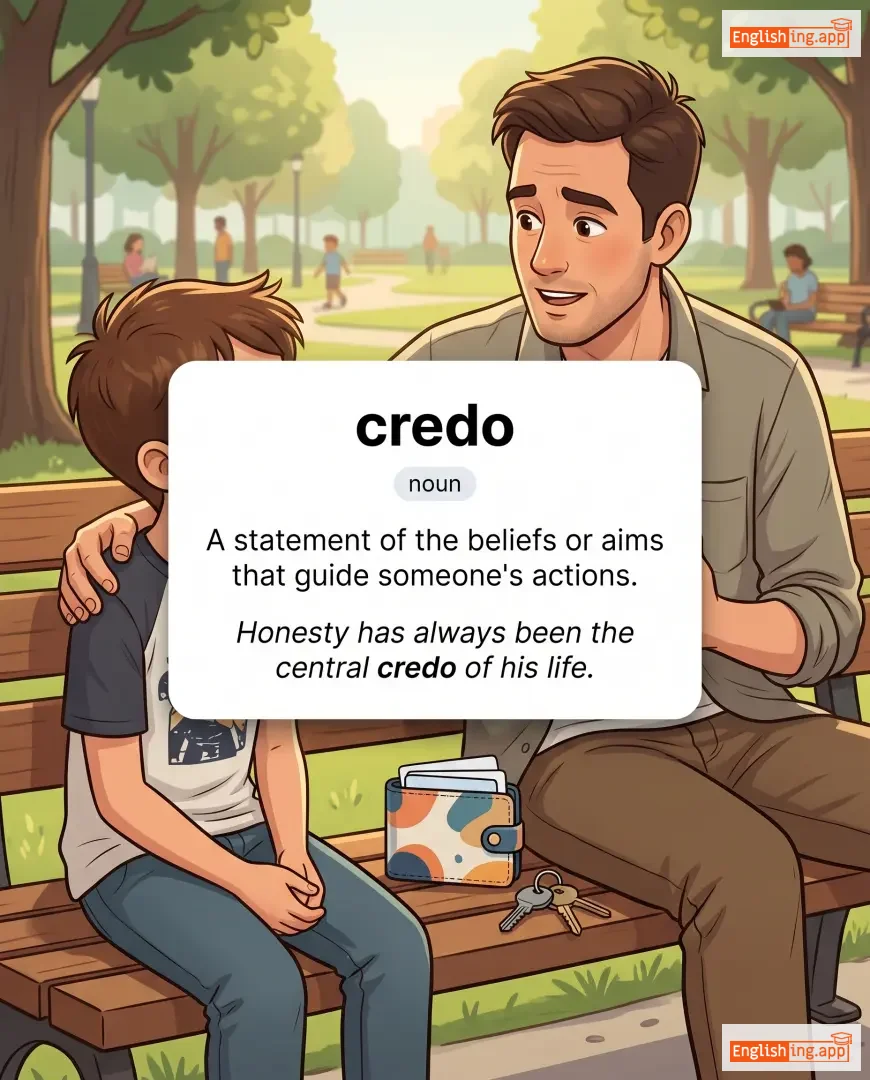
A statement of the beliefs or aims that guide someone's actions.
••••••
|
Honesty has always been the central credo of his life. |
誠実は彼の人生の中で常に中心的な信条であった。
Seijitsu wa kare no jinsei no naka de itsudemo chuushinteki na shinjou de atta.
••••••
|
- •••••• | - •••••• | - •••••• |
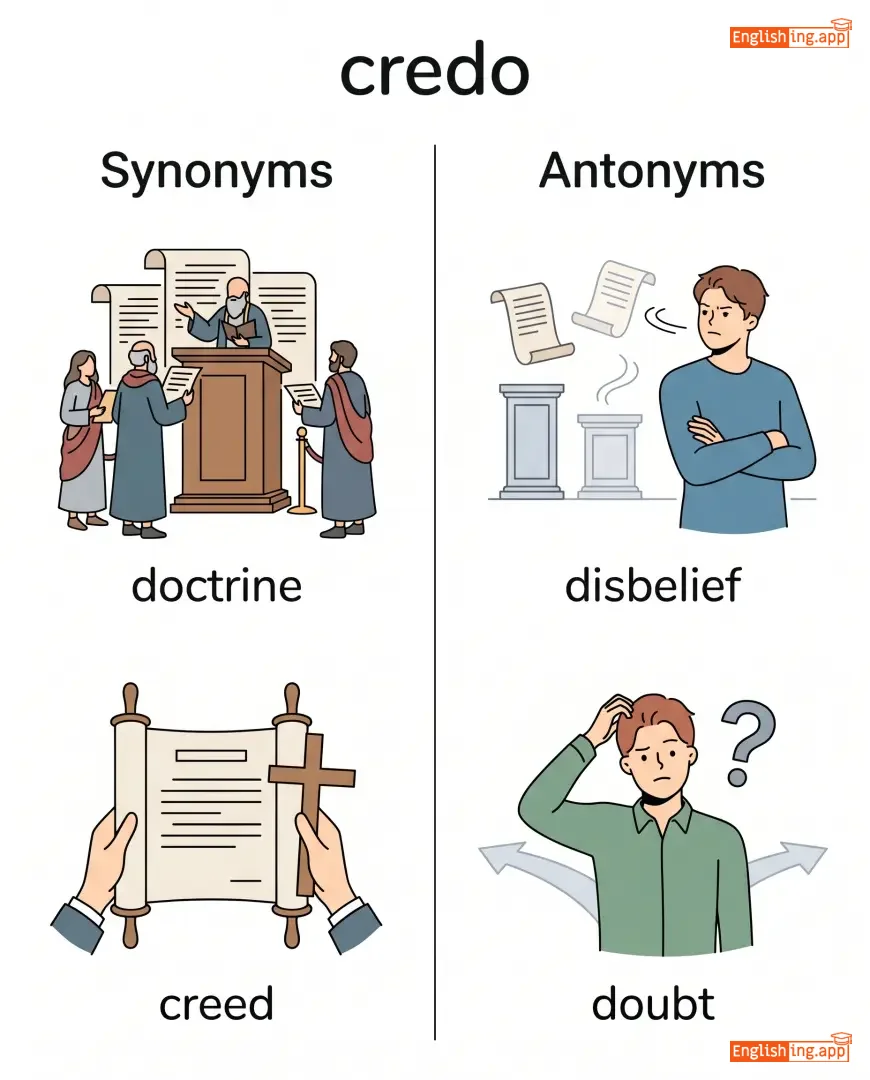
doctrine, creed, belief, philosophy, principle
••••••
|
disbelief, doubt
••••••
|
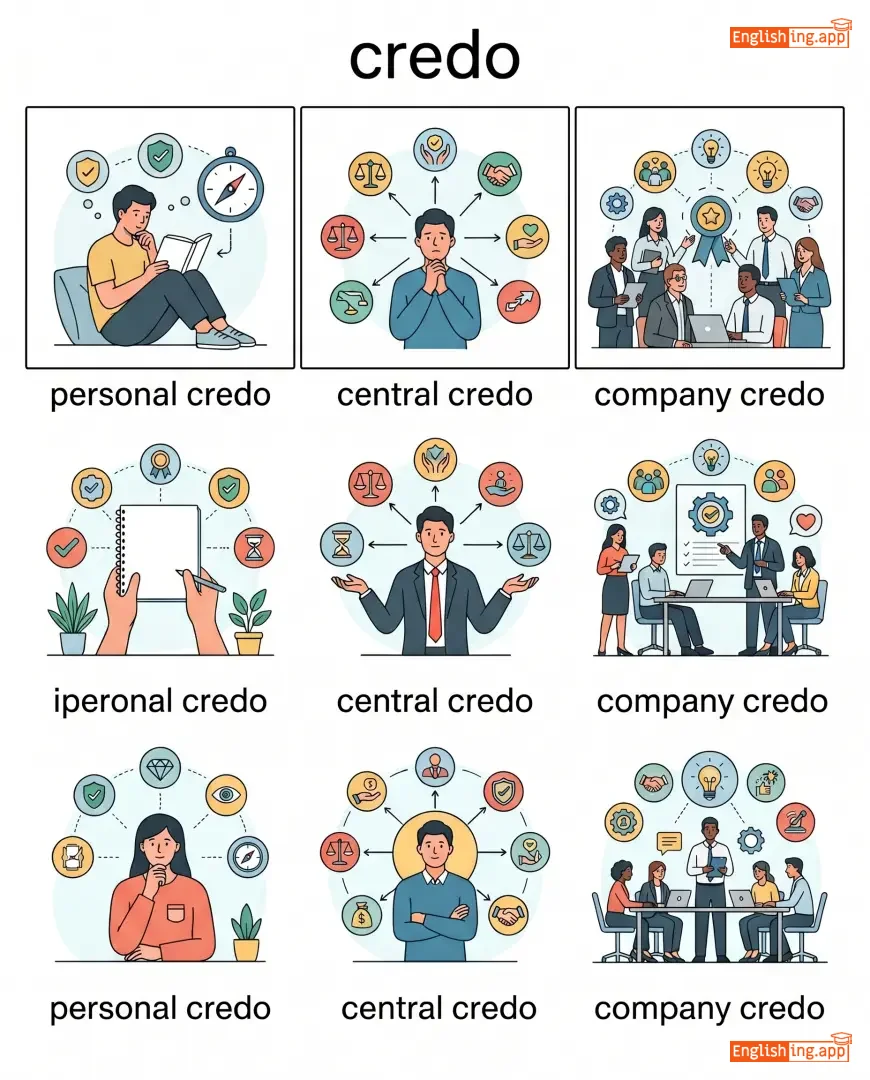
personal credo, central credo, company credo
••••••
|
Credoは信条のようなもの—あなたの行動を導く信念。
••••••
|
|
#1991
🏅
|
/ˈkrɛdɪtəbl/
adjective
(クレディタブル)
••••••
|
- •••••• |
称賛に値する
shōsan ni atai suru
••••••
|
- •••••• | - •••••• | - •••••• | - •••••• |
Deserving praise or acknowledgment, though not necessarily outstanding.
••••••
|
She made a creditable effort in completing the project on time.
彼女は時間通りにプロジェクトを完了するために立派な努力をしました。
••••••
|
彼女は時間通りにプロジェクトを完了するために称賛に値する努力をしました。
Kanojo wa jikan dōri ni purojekuto o kanryō suru tame ni shōsan ni atai suru doryoku o shimashita.
••••••
|
- •••••• | - •••••• | - •••••• |
commendable, praiseworthy, respectable, meritorious
••••••
|
disgraceful, shameful
••••••
|
creditable performance, creditable effort, creditable attempt
••••••
|
信用を与えるならば、称賛に値する努力が伴う。
••••••
|
|
#1992
👍
|
/ˈkrɛd.ɪ.bəl/
adjective
(krɛdɪbəl)
••••••
|
- •••••• |
信頼できる
shinrai dekiru
••••••
|
- •••••• | - •••••• | - •••••• | - •••••• |
able to be believed; convincing
••••••
|
Her explanation was credible enough to convince the committee. |
彼女の説明は委員会を納得させるのに十分信頼できるものでした。
Kanojo no setsumei wa iinkai o nattoku saseru no ni jūbun shinrai dekiru mono deshita.
••••••
|
- •••••• | - •••••• | - •••••• |
believable, plausible, trustworthy, convincing
••••••
|
unbelievable, implausible
••••••
|
credible source, credible evidence, credible story, credible explanation
••••••
|
CREDIBLE は信頼できるという意味です、委員会を納得させる説明のように
••••••
|
|
#1993
📰
|
/ˌkrɛd.ɪˈbɪl.ɪ.ti/
noun
(krɛdɪˈbɪlɪti)
••••••
|
|
信頼性
shinraisei
••••••
|
- •••••• | - •••••• | - •••••• | - •••••• |
the quality of being trusted and believed in
••••••
|
The journalist's credibility was questioned after the report.
ジャーナリストの信頼性はレポートの後に疑問視されました。
••••••
|
ジャーナリストの信頼性はレポートの後に疑問視されました。
Jānarisuto no shinraisei wa repōto no ato ni gimon-shi saremashita.
••••••
|
- •••••• | - •••••• | - •••••• |
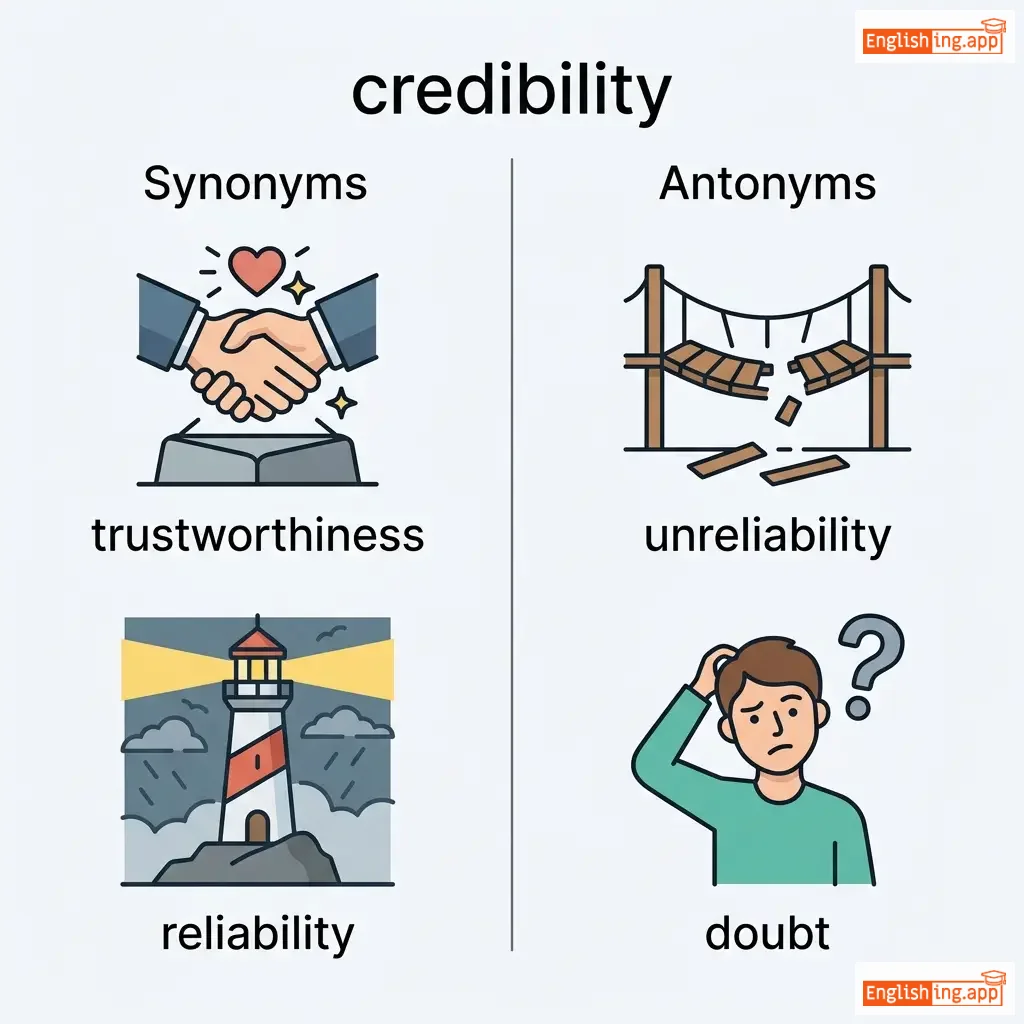
trustworthiness, reliability, believability, integrity
••••••
|
unreliability, doubt
••••••
|
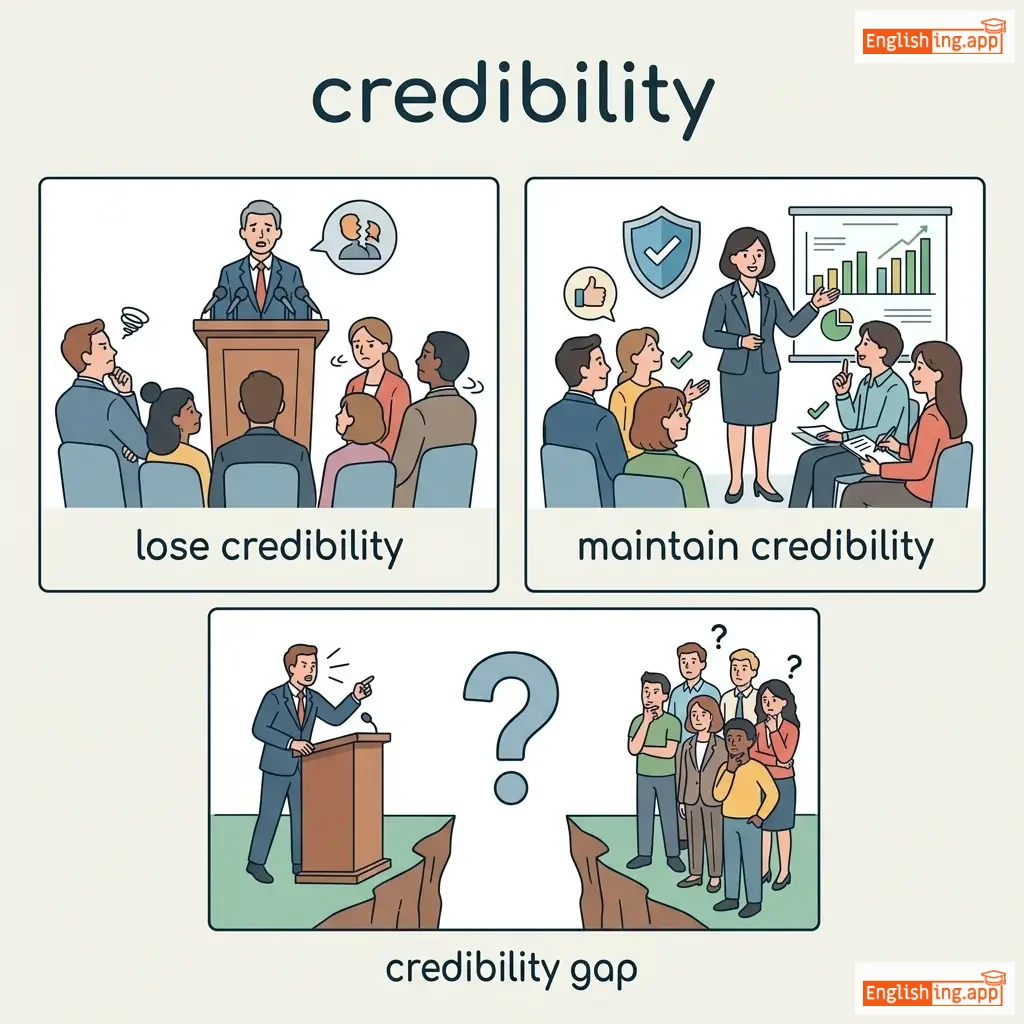
lose credibility, maintain credibility, credibility gap, credibility and trust
••••••
|
信頼性は信じる価値のある仕事から生まれます。
••••••
|
|
#1994
📜
|
/krɪˈden.ʃəl/
noun
(クレデンシャル)
••••••
|
- •••••• |
資格証明書
shikaku shōmeisho
••••••
|
- •••••• | - •••••• | - •••••• | - •••••• |
a qualification, achievement, or aspect of a person's background used to indicate suitability for something
••••••
|
She presented her credentials before starting the new job. |
彼女は新しい仕事を始める前に資格証明書を提示しました。
Kanojo wa atarashī shigoto o hajimeru mae ni shikaku shōmeisho o teiji shimashita.
••••••
|
- •••••• | - •••••• | - •••••• |
qualification, certificate, document, reference
••••••
|
disqualification, ineligibility
••••••
|
professional credentials, academic credentials, verify credentials, present credentials
••••••
|
CREDENTIAL は資格証明書、あなたの適性を証明するための書類
••••••
|
|
#1995
✅
|
/ˈkriː.dəns/
noun
(クレデンス)
••••••
|
|
信頼, 認めること
shinrai, mitomeru koto
••••••
|
- •••••• | - •••••• | - •••••• | - •••••• |
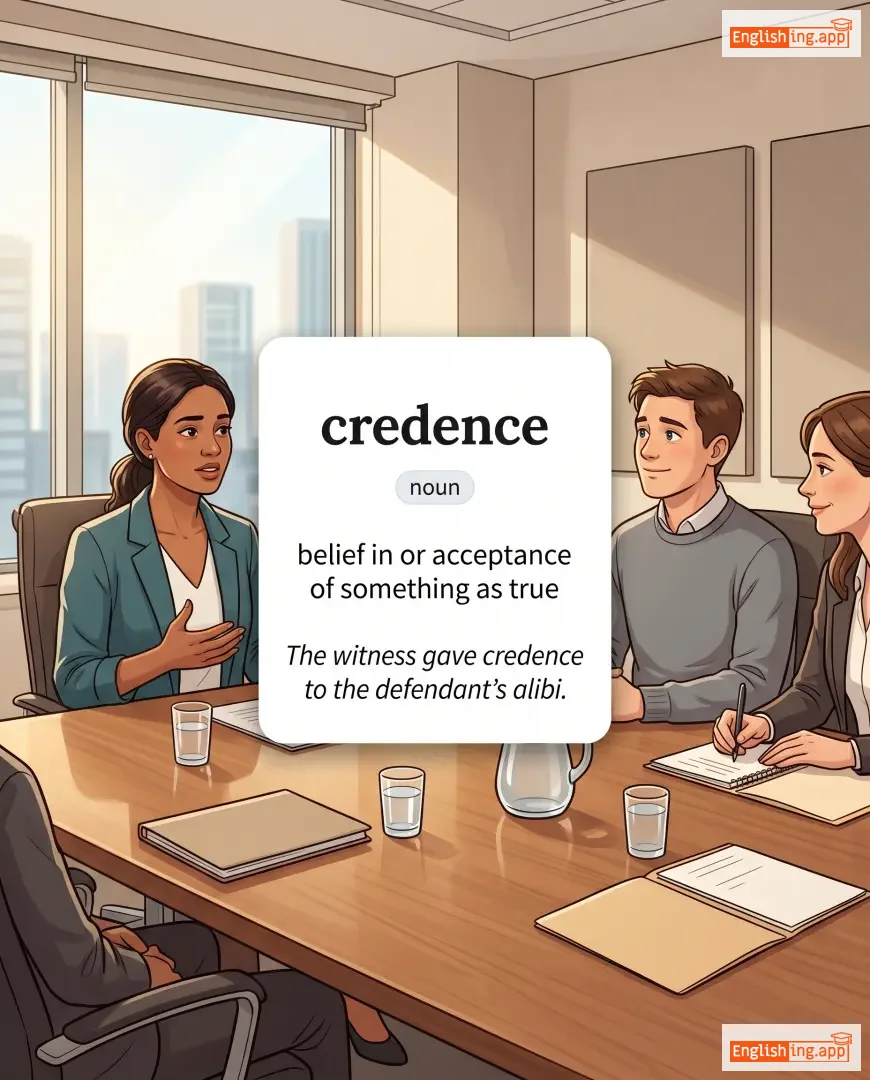
belief in or acceptance of something as true
••••••
|
The witness gave credence to the defendant's alibi. |
証人は被告のアリバイに信頼をおいた。
shōnin wa hikoku no aribai ni shinrai o oita.
••••••
|
- •••••• | - •••••• | - •••••• |
belief, trust, faith, confidence
••••••
|
doubt, skepticism
••••••
|
give credence, lend credence, gain credence, credibility and credence
••••••
|
CREDENCEは信頼 (shinrai). Credible news gives credence
••••••
|
|
#1996
😊
|
/kɔɪ/
adjective
(コイ)
••••••
|
- •••••• |
控えめな, 内気な
hikaeme na, uchiki na
••••••
|
- •••••• | - •••••• | - •••••• | - •••••• |
reluctant to give details or reveal feelings; shy or reserved
••••••
|
She gave a coy smile when asked about her plans. |
彼女は自分の計画について聞かれたとき、控えめな笑顔を見せた。
Kanojo wa jibun no keikaku ni tsuite kikareta toki, hikaeme na egao wo miseta.
••••••
|
- •••••• | - •••••• | - •••••• |
shy, bashful, demure, reserved
••••••
|
bold, forward, assertive
••••••
|
coy smile, coy glance, coy manner
••••••
|
COYは内気な子供のように隠れている
••••••
|
|
#1997
🍮
|
/ˈkriːmi/
adjective
(kureemī)
••••••
|
- •••••• |
クリームのような滑らかでリッチな質感
kurīmu no yōna nameraka de ricchi na shitsukan
••••••
|
- •••••• | - •••••• | - •••••• | - •••••• |
having a smooth, rich texture like cream
••••••
|
She poured a creamy sauce over the pasta. |
彼女はパスタにクリーミーなソースをかけた。
Kanojo wa pasuta ni kurīmī na sōsu o kaketa.
••••••
|
- •••••• | - •••••• | - •••••• |
smooth, rich, velvety, milky
••••••
|
watery, thin
••••••
|
creamy texture, creamy sauce, creamy dessert
••••••
|
CREAMYはクリームのように滑らかでリッチ
••••••
|
|
#1998
🧈
|
/ˈkriːməri/
noun
(クリーマリー)
••••••
|
- •••••• |
クリーム製造所
kurīmu seizōjo
••••••
|
- •••••• | - •••••• | - •••••• | - •••••• |
a place where milk and cream are processed and dairy products are made
••••••
|
The local creamery produces fresh butter and cheese daily. |
地元のクリーム製造所は毎日新鮮なバターとチーズを作っています。
Jimoto no kurīmu seizōjo wa mainichi shinsen na batā to chīzu o tsukutteimasu.
••••••
|
- •••••• | - •••••• | - •••••• |
dairy, dairy farm, milk factory, butter factory
••••••
|
- •••••• |
local creamery, small creamery, creamery products
••••••
|
クリーム製造所 - クリームが生まれる場所
••••••
|
|
#1999
🚪
|
/kriːk/
verb
(kureeku)
••••••
|
- •••••• |
高い音できしむ音を立てる
takai on de kishimu oto o tateru
••••••
|
creaked
kureekudo
••••••
|
creaked
kureekudo
••••••
|
creaks
kureekusu
••••••
|
creaking
kureekingu
••••••
|
to make a high-pitched, squeaking noise when moved
••••••
|
The old door creaked as she opened it.
古いドアは彼女が開けるときにきしんだ。
••••••
|
古いドアは彼女が開けるときにきしんだ。
Furui doa wa kanojo ga akeru toki ni kishinda.
••••••
|
- •••••• | - •••••• | - •••••• |
squeak, groan, screech, rustle
••••••
|
silence, stillness
••••••
|
creak under, floor creaks, door creaks
••••••
|
CREAK音、ドアが開く時の音
••••••
|
|
#2000
🍫
|
/ˈkreɪvɪŋ/
noun
(クレイヴィング)
••••••
|
- •••••• |
強い欲求
tsuyoi yokkyuu
••••••
|
- •••••• | - •••••• | - •••••• | - •••••• |
a strong desire for something
••••••
|
She has a craving for chocolate every evening.
彼女は毎晩チョコレートが欲しくなる。
••••••
|
彼女は毎晩チョコレートが欲しくなる。
Kanojo wa maiban chokorēto ga hoshiku naru.
••••••
|
- •••••• | - •••••• | - •••••• |
desire, longing, urge, hankering
••••••
|
aversion, dislike
••••••
|
craving for, intense craving, sudden craving
••••••
|
CRAVINGはチョコレートを欲しがること - Craving is a strong desire
••••••
|
|
#2001
😨
|
/ˈkreɪvən/
adjective
(kréiven)
••••••
|
|
臆病
okubyō
••••••
|
- •••••• | - •••••• | - •••••• | - •••••• |
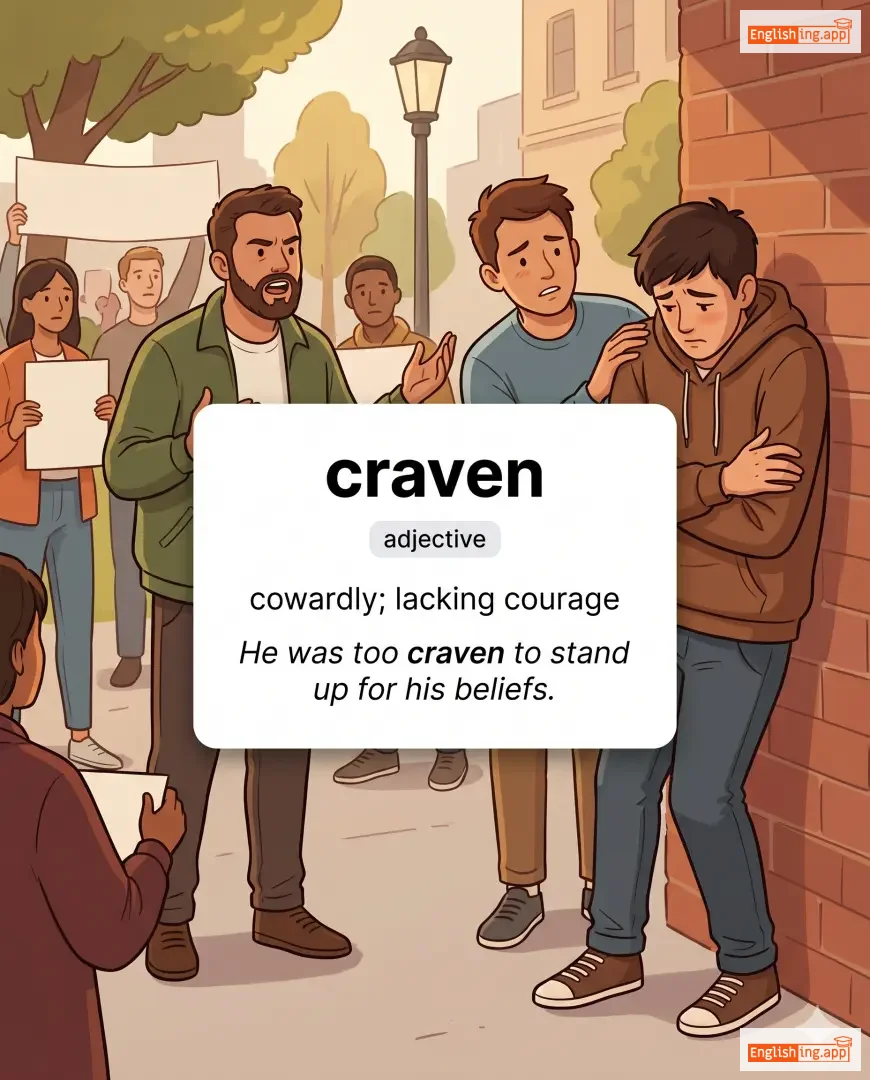
cowardly; lacking courage
••••••
|
He was too craven to stand up for his beliefs.
彼は自分の信念のために立ち上がるにはあまりにも臆病でした。
••••••
|
彼は自分の信念のために立ち上がるにはあまりにも臆病でした。
Kare wa jibun no shinnen no tame ni tachiagaru ni wa amari ni mo okubyō deshita.
••••••
|
- •••••• | - •••••• | - •••••• |
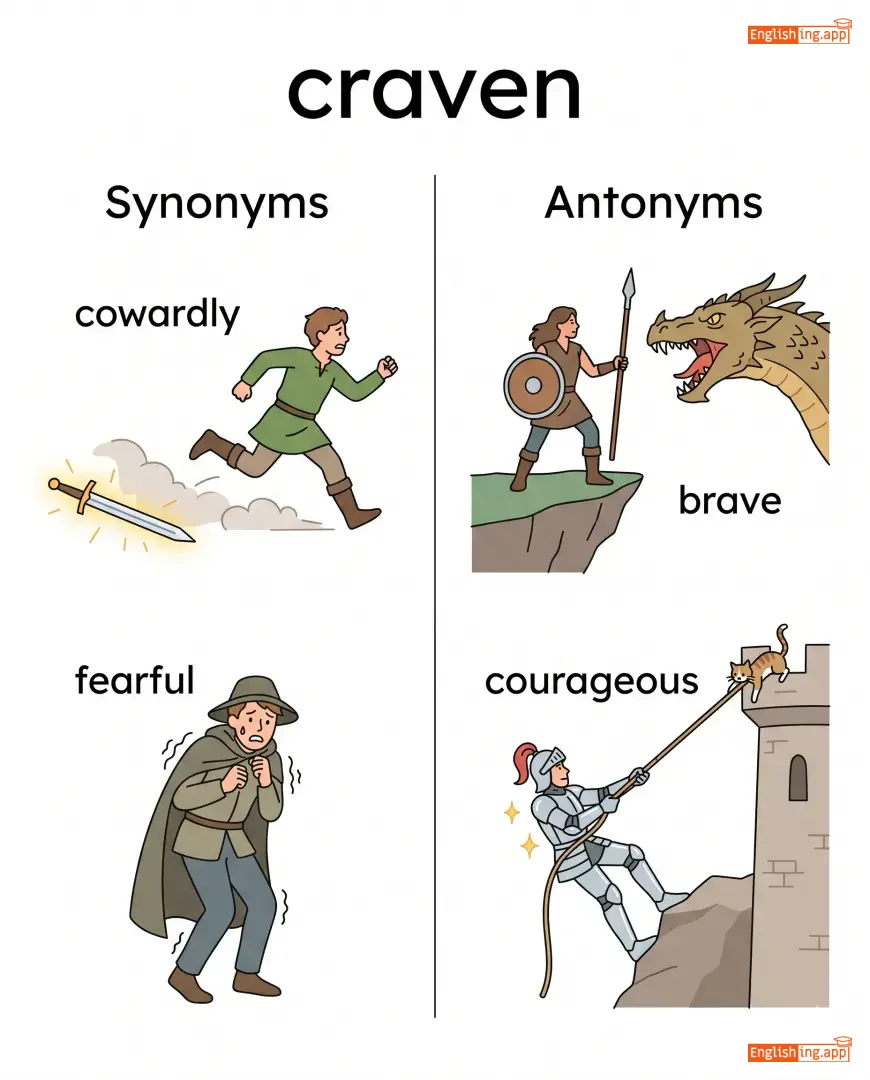
cowardly, fearful, timid, pusillanimous
••••••
|
brave, courageous, bold
••••••
|
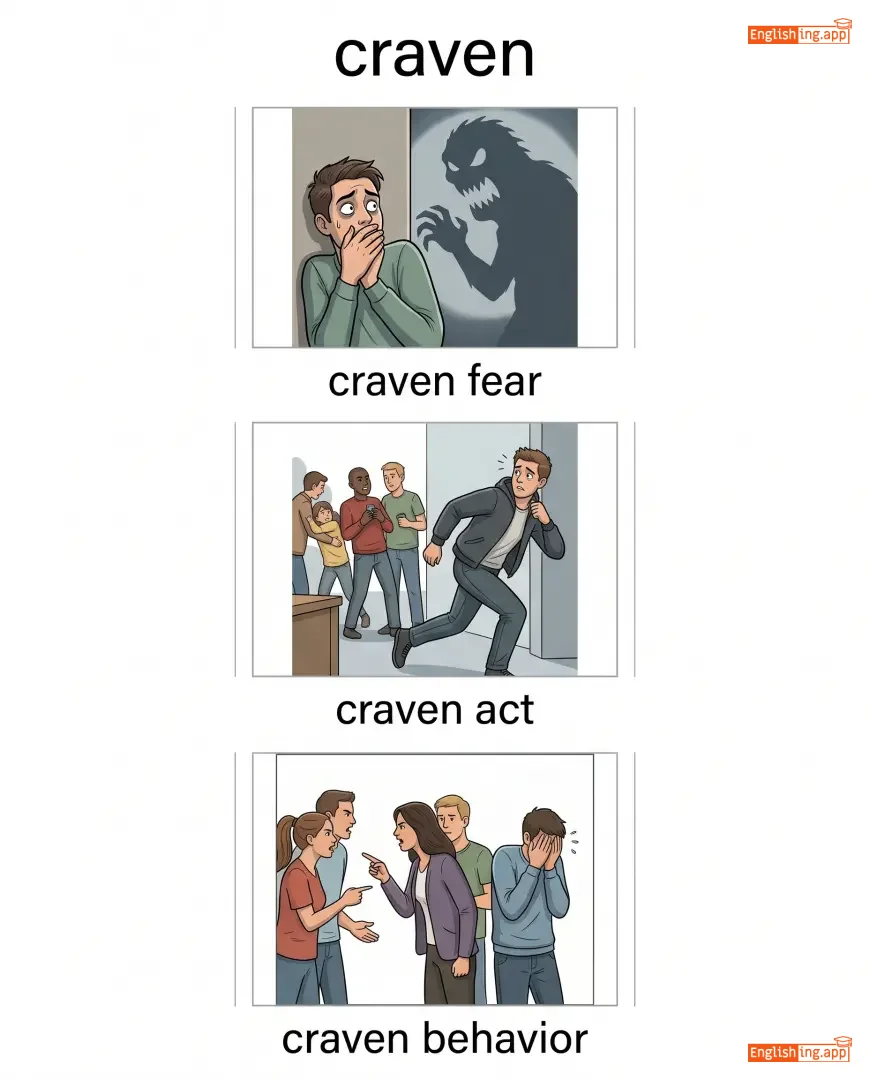
craven fear, craven act, craven behavior
••••••
|
CRAVE しない、臆病な人
••••••
|
|
#2002
🤤
|
/kreɪv/
verb
(クレイブ)
••••••
|
- •••••• |
強く欲する, 渇望する
tsuyoku hossuru, katsubou suru
••••••
|
craved
クレイヴド
••••••
|
craved
クレイヴド
••••••
|
craves
クレイヴス
••••••
|
craving
クレイヴィング
••••••
|
to have a strong desire for something
••••••
|
She craves adventure and often travels to remote places.
彼女は冒険を渇望し、しばしば遠くの場所へ旅行します。
••••••
|
彼女は冒険を渇望し、しばしば遠くの場所へ旅行します。
Kanojo wa bouken wo katsubou shi, shibashiba tooku no basho e ryokou shimasu.
••••••
|
- •••••• | - •••••• | - •••••• |
desire, long for, yearn, want
••••••
|
reject, refuse
••••••
|
crave attention, crave affection, crave chocolate, crave freedom
••••••
|
彼女はCRAVEチョコレート - Strong desire for chocolate
••••••
|
|
#2003
🙄
|
/kræs/
adjective
(kurasu)
••••••
|
- •••••• |
無神経な、感受性や洗練さが欠けている
mushinken na, kanjusei ya senrensā ga kakete iru
••••••
|
- •••••• | - •••••• | - •••••• | - •••••• |
lacking sensitivity, refinement, or intelligence
••••••
|
His crass remarks offended everyone at the meeting.
彼の無神経な発言は会議で全員を怒らせました。
••••••
|
彼の無神経な発言は会議で全員を怒らせました。
Kare no mushinken na hatsugen wa kaigi de zen'in o okorase mashita.
••••••
|
- •••••• | - •••••• | - •••••• |
insensitive, coarse, stupid, rude
••••••
|
refined, sensitive, intelligent
••••••
|
crass behavior, crass mistake, crass comment, crass insensitivity
••••••
|
CRASS は日本語で無神経を意味する
••••••
|
|
#2004
🧠
|
/ˈkreɪniəm/
noun
(頭蓋骨)
••••••
|
- •••••• |
頭蓋骨
zugaikotsu
••••••
|
- •••••• | - •••••• | - •••••• | - •••••• |
the skull, especially the part enclosing the brain
••••••
|
The archaeologists carefully examined the ancient cranium.
考古学者たちは古代の頭蓋骨を慎重に調べました。
••••••
|
考古学者たちは古代の頭蓋骨を慎重に調べました。
Kōkogakusha-tachi wa kodai no zugaikotsu o shinchō ni shirabemashita.
••••••
|
- •••••• | - •••••• | - •••••• |
skull, head, braincase
••••••
|
- •••••• |
human cranium, examine cranium, cranium fracture, cranium size
••••••
|
頭蓋骨は脳を守る - 頭蓋骨が脳を守っていると考えてみてください
••••••
|
|
#2005
📦
|
/kræmpt/
adjective
(クランプト)
••••••
|
- •••••• |
窮屈, 不快適な小ささ
kyoukutsu, fukaiteki na chiisasa
••••••
|
- •••••• | - •••••• | - •••••• | - •••••• |
uncomfortably small or restricted
••••••
|
The room was so cramped that we could barely move. |
部屋はとても窮屈で、ほとんど動けませんでした。
Heya wa totemo kyoukutsu de, hotondo ugokemasen deshita.
••••••
|
- •••••• | - •••••• | - •••••• |
confined, tight, restricted, crowded
••••••
|
spacious, roomy
••••••
|
cramped space, feel cramped, cramped quarters, cramped seating
••••••
|
CRAMPED 小さな部屋で - Feel cramped in small space
••••••
|
|
#2006
🪨
|
/kræɡ/
noun
(クレッグ)
••••••
|
- •••••• |
急な崖や岩の面
kyuu na gake ya iwa no men
••••••
|
- •••••• | - •••••• | - •••••• | - •••••• |
a steep or rugged cliff or rock face
••••••
|
The hikers climbed the jagged crag to reach the summit. |
ハイカーたちは頂上に到達するために険しい崖を登った。
Haikaa-tachi wa choujou ni toutatsu suru tame ni kewashii gake o nobotta.
••••••
|
- •••••• | - •••••• | - •••••• |
cliff, rock, bluff, precipice
••••••
|
plain, valley
••••••
|
rocky crag, jagged crag, climb a crag, overlook a crag
••••••
|
CRAGを登るとCRASHしない - Hikers climb crag carefully
••••••
|
|
#2007
🦊
|
/ˈkræfti/
adjective
(クラフティ)
••••••
|
- •••••• |
ずるい, 狡猾, 騙し
zurui, kōkatsu, damashi
••••••
|
- •••••• | - •••••• | - •••••• | - •••••• |
skilled at achieving goals through cunning or deceit; sly
••••••
|
The crafty fox evaded the hunters again. |
ずる賢いキツネは再び狩人たちをかわしました。
Zurukashikoi kitsune wa futatabi kariutachi o kawashimashita.
••••••
|
- •••••• | - •••••• | - •••••• |
cunning, sly, clever, wily
••••••
|
honest, naive, straightforward
••••••
|
crafty plan, crafty move, crafty trick
••••••
|
CRAFTY fox ずる賢い - Crafty like a clever fox
••••••
|
|
#2008
🛠️
|
/kræft/
noun
(クラフト)
••••••
|
- •••••• |
技術、工芸、手工芸
gijutsu, kougei, shukougei
••••••
|
- •••••• | - •••••• | - •••••• | - •••••• |
an activity involving skill in making things by hand; a trade or occupation
••••••
|
She has mastered the craft of pottery. |
彼女は陶芸の技術を習得しています。
Kanojo wa tougei no gijutsu o shuutoku shiteimasu.
••••••
|
- •••••• | - •••••• | - •••••• |
skill, art, trade, handiwork
••••••
|
ignorance, ineptitude
••••••
|
craft beer, craft skills, craft market, traditional craft
••••••
|
CRAFT は工芸のように - craft を技術として覚えておく
••••••
|
|
#2009
📝
|
/ˈkræbɪd/
adjective
(kræbɪd)
••••••
|
- •••••• |
読みにくい、機嫌が悪い
yominikui, kigen ga warui
••••••
|
- •••••• | - •••••• | - •••••• | - •••••• |
difficult to read or understand; ill-tempered
••••••
|
His handwriting was crabbed and almost illegible. |
彼の手書きは読みにくく、ほとんど判読不能だった。
Kare no tegaki wa yominikukute, hotondo handoku funō datta.
••••••
|
- •••••• | - •••••• | - •••••• |
illegible, cramped, surly, cross
••••••
|
clear, legible, cheerful
••••••
|
crabbed handwriting, crabbed style, crabbed expression
••••••
|
‘Crabbed’ はカニのように、理解しにくく、気難しい。
••••••
|
|
#2010
🤑
|
/ˈkʌzən/
verb
(コゼン)
••••••
|
|
だます, 騙す
damasu, damasu
••••••
|
cozened
コゼンド
••••••
|
cozened
コゼンド
••••••
|
cozens
コゼンズ
••••••
|
cozening
コゼニング
••••••
|
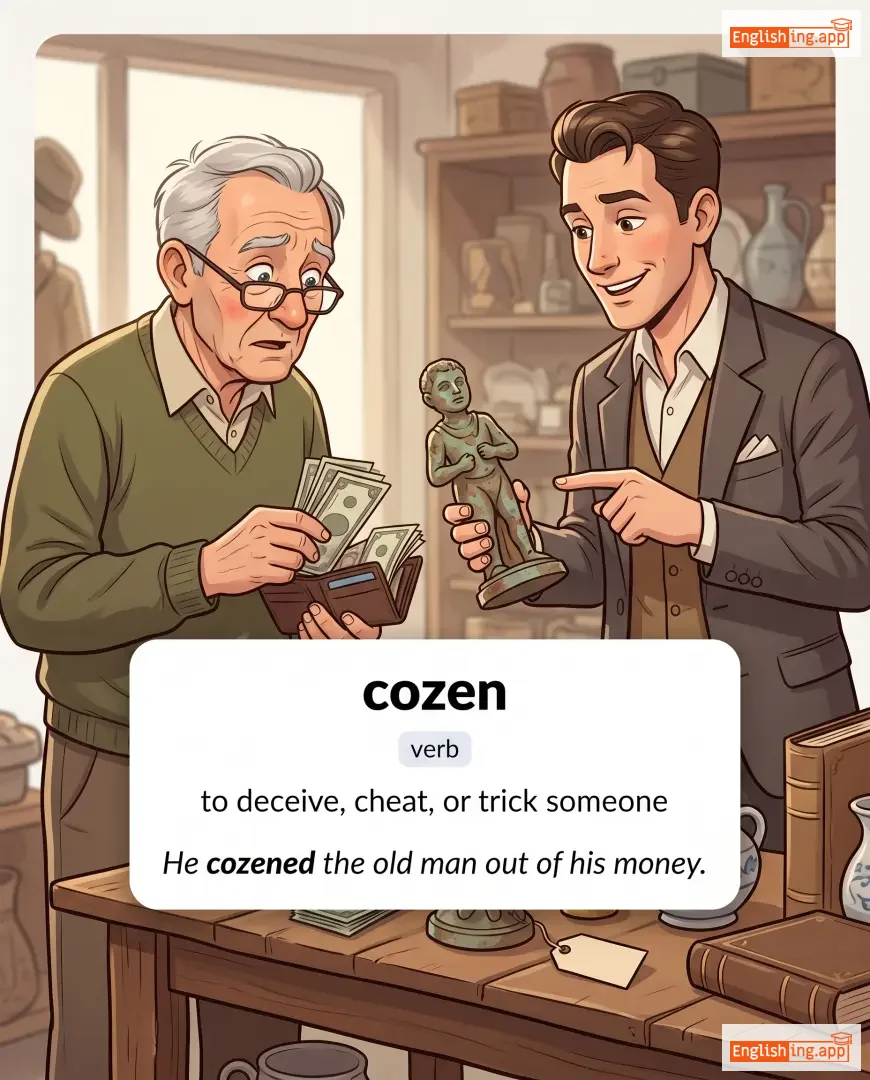
to deceive, cheat, or trick someone
••••••
|
He cozened the old man out of his money.
彼は老人をだましてお金を取った。
••••••
|
彼は老人をだましてお金を取った。
Kare wa rōjin wo damashite okane wo totta.
••••••
|
- •••••• | - •••••• | - •••••• |
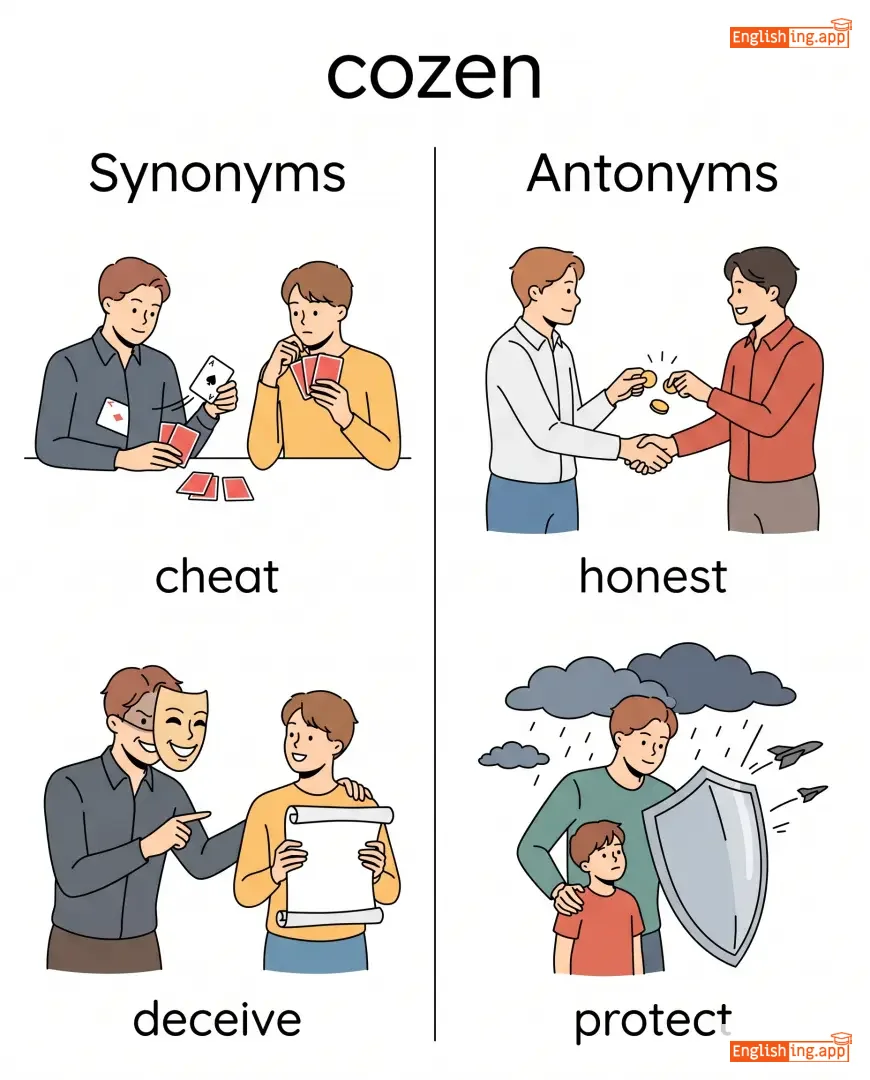
cheat, deceive, trick, defraud
••••••
|
honest, protect, safeguard
••••••
|
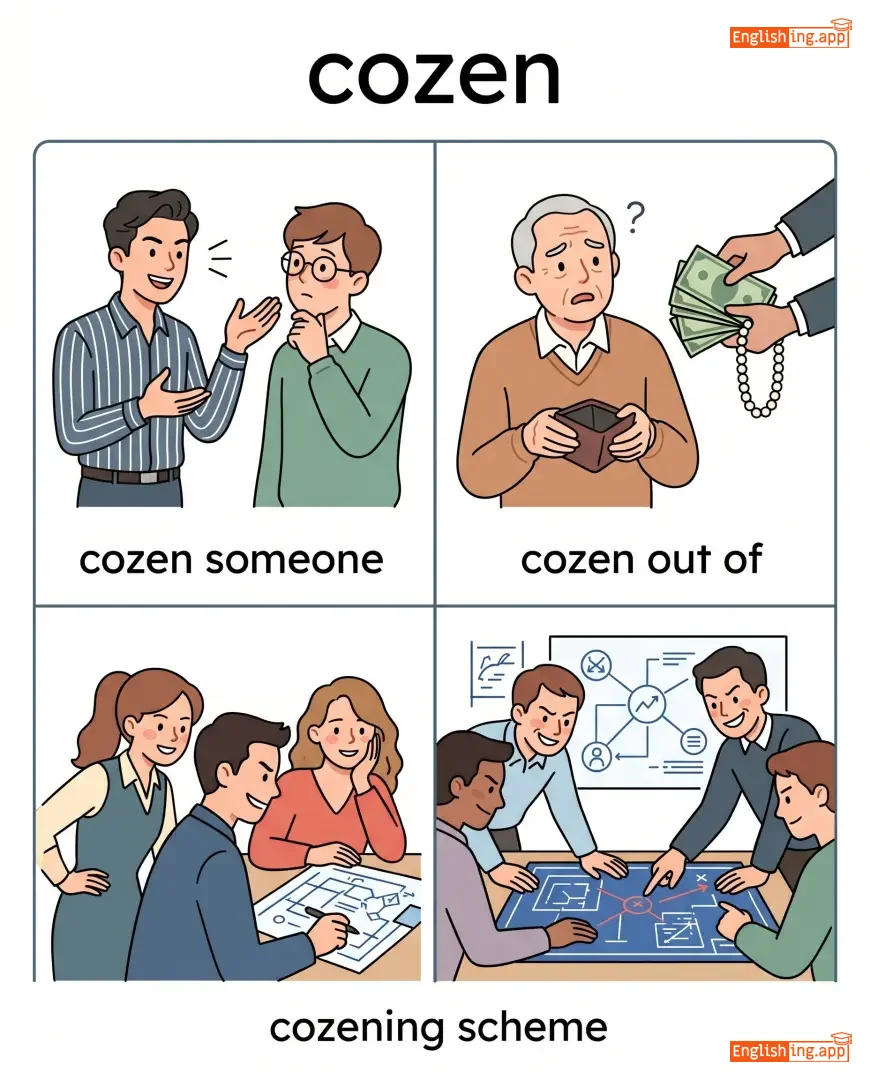
cozen someone, cozen out of, cozening scheme
••••••
|
COZEN - 騙すように 'cousin' があなたをだます
••••••
|
Vocabulary Quiz
Test your vocabulary by matching words with their translations or meanings.
Login to take the quiz
Comments (0)
Share your thoughts and join the discussion.
Join the discussion by logging in
Login to CommentNo comments yet
Be the first to share your thoughts!