🚫laissez-faire (莱塞-费尔)

noun
/ˌlɛ.seɪ ˈfɛər/
不干预政策 (bù gānyù zhèngcè)

含义

An economic policy where government does not intervene in business affairs.
A free-market policy of minimal government intervention in economic affairs, characterized by non-interventionism and capitalism.
含义翻译
一种经济政策,政府不干预商业事务。
Yi zhong jingji zhengce, zhengfu bu ganyù shāngyè shìwù.

例句

Laissez-faire policies encourage private enterprise.

不干预政策鼓励私人企业。
Bù gānyù zhèngcè gǔlì sīrén qǐyè.

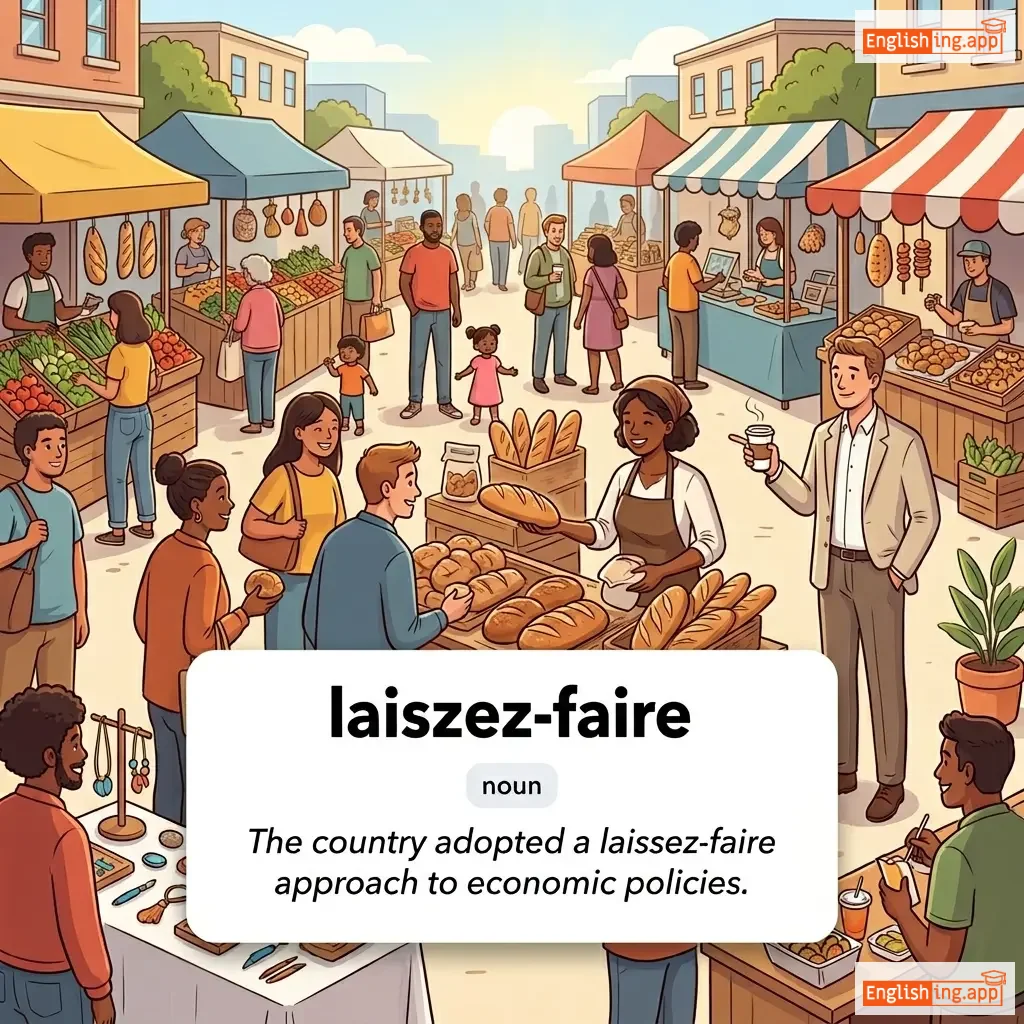
The country adopted a laissez-faire approach to economic policies.
该国在经济政策中采取了自由放任的方式。
Gāi guó zài jīngjì zhèngcè zhōng cǎiqǔle zìyóu fàngrèn de fāngshì.

同义词

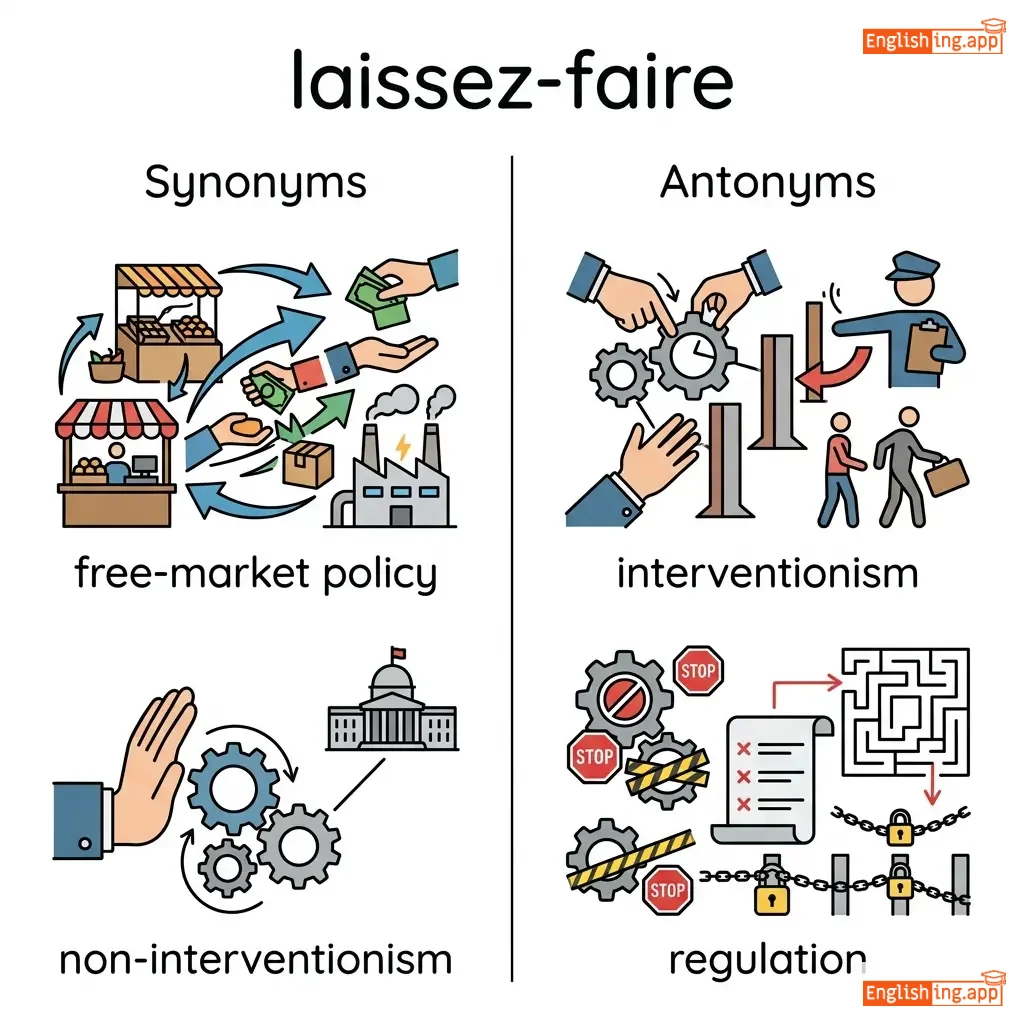
Free Market, Non-Interventionism, Hands-off Approach, free-market policy, non-interventionism, capitalism
条目 1
Free Market, Non-Interventionism, Hands-off Approach
条目 2
free-market policy, non-interventionism, capitalism

反义词

Regulation, Government Control, Socialism, interventionism, regulation, protectionism
条目 1
Regulation, Government Control, Socialism
条目 2
interventionism, regulation, protectionism

相关词汇

The action of clearing a wide area of trees.
Courage in pain or adversity; mental and emotional strength in facing difficulty.
The action of setting someone free from imprisonment, slavery, or oppression; release.
a person's will; or strong evidence of something
a vague foreshadowing or symbolic representation of something
An oppressive or nightmarish burden; in folklore, an evil spirit that lies upon sleeping people.

探索更多