

不同类型的经济体
The Different Types of Economies
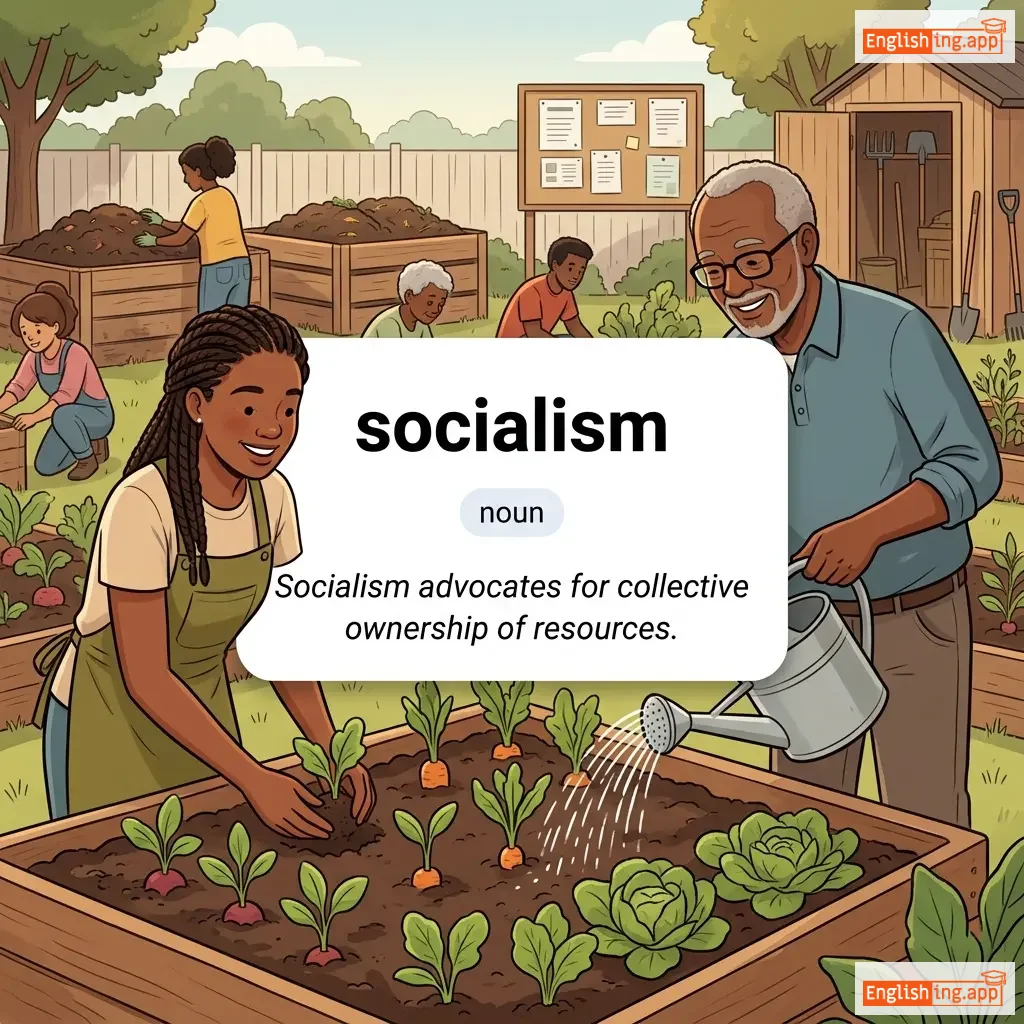
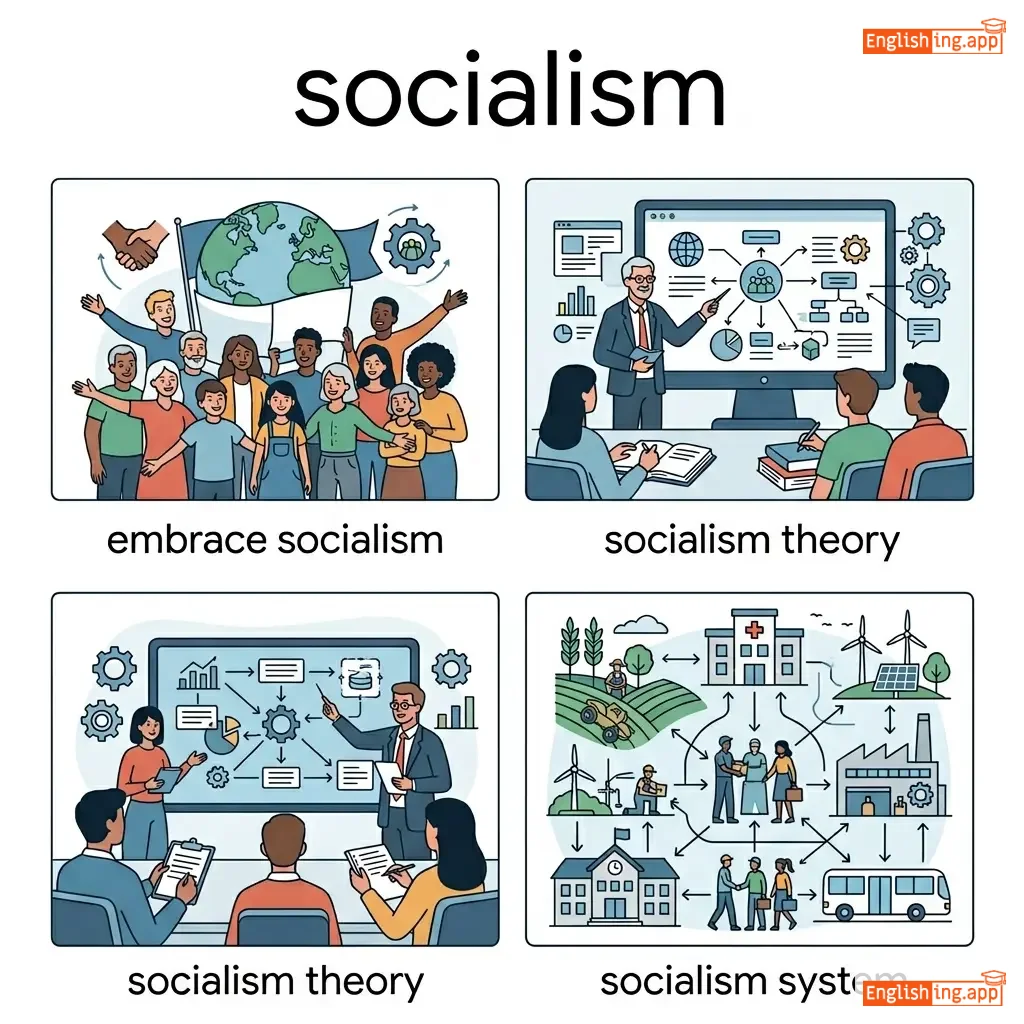
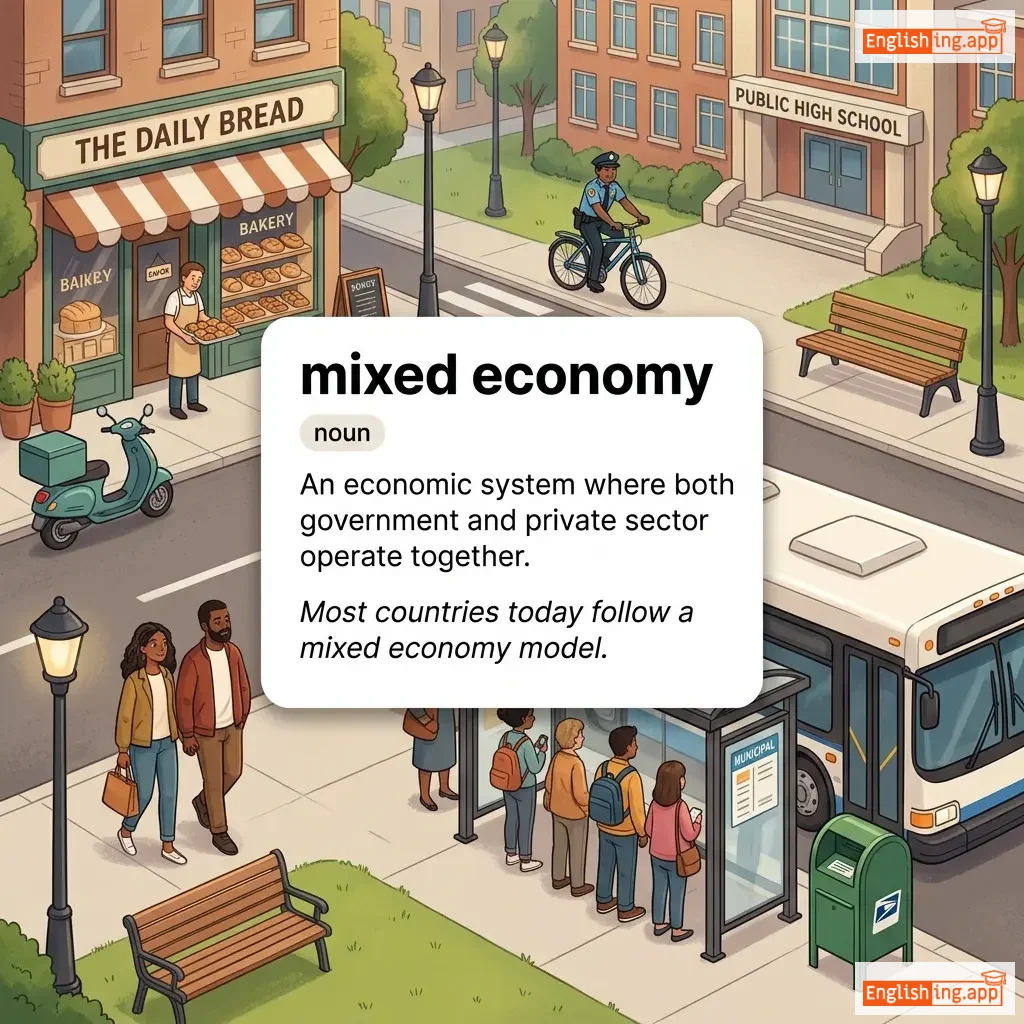
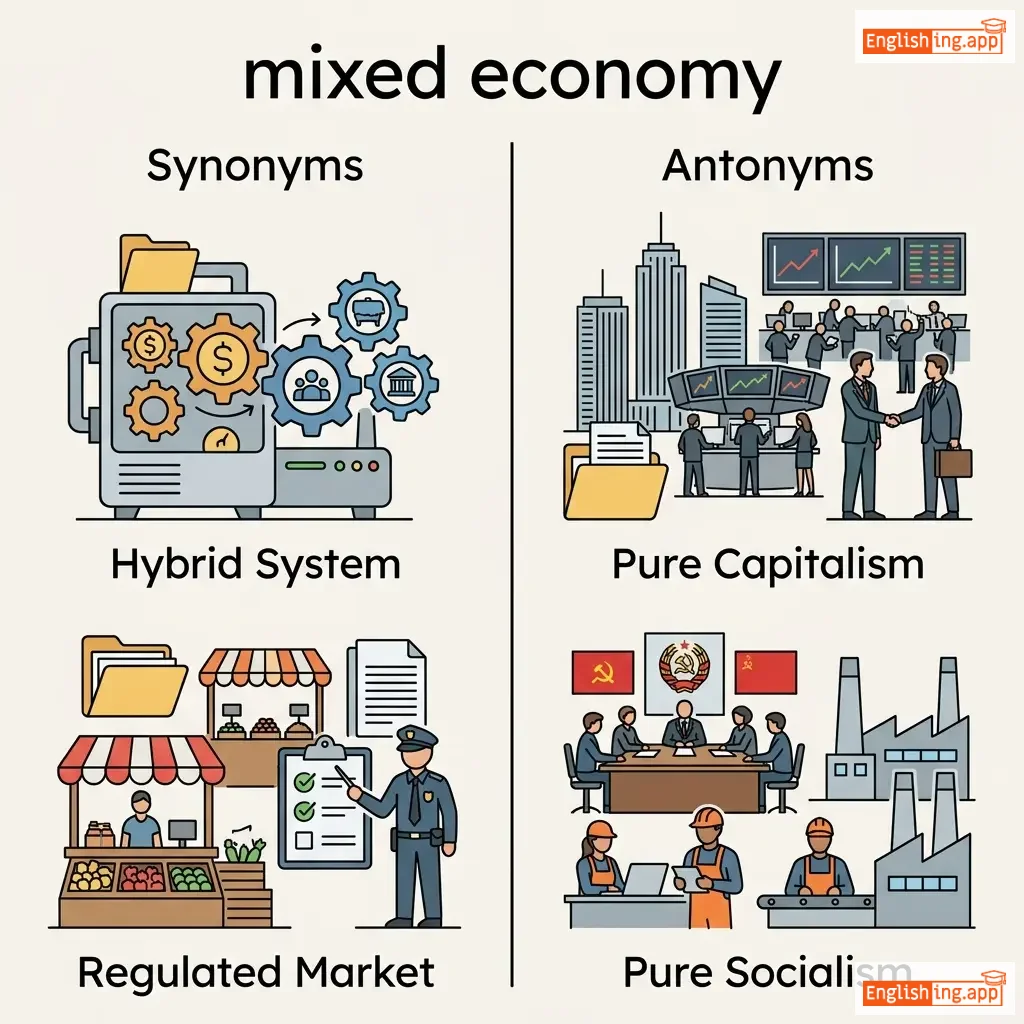
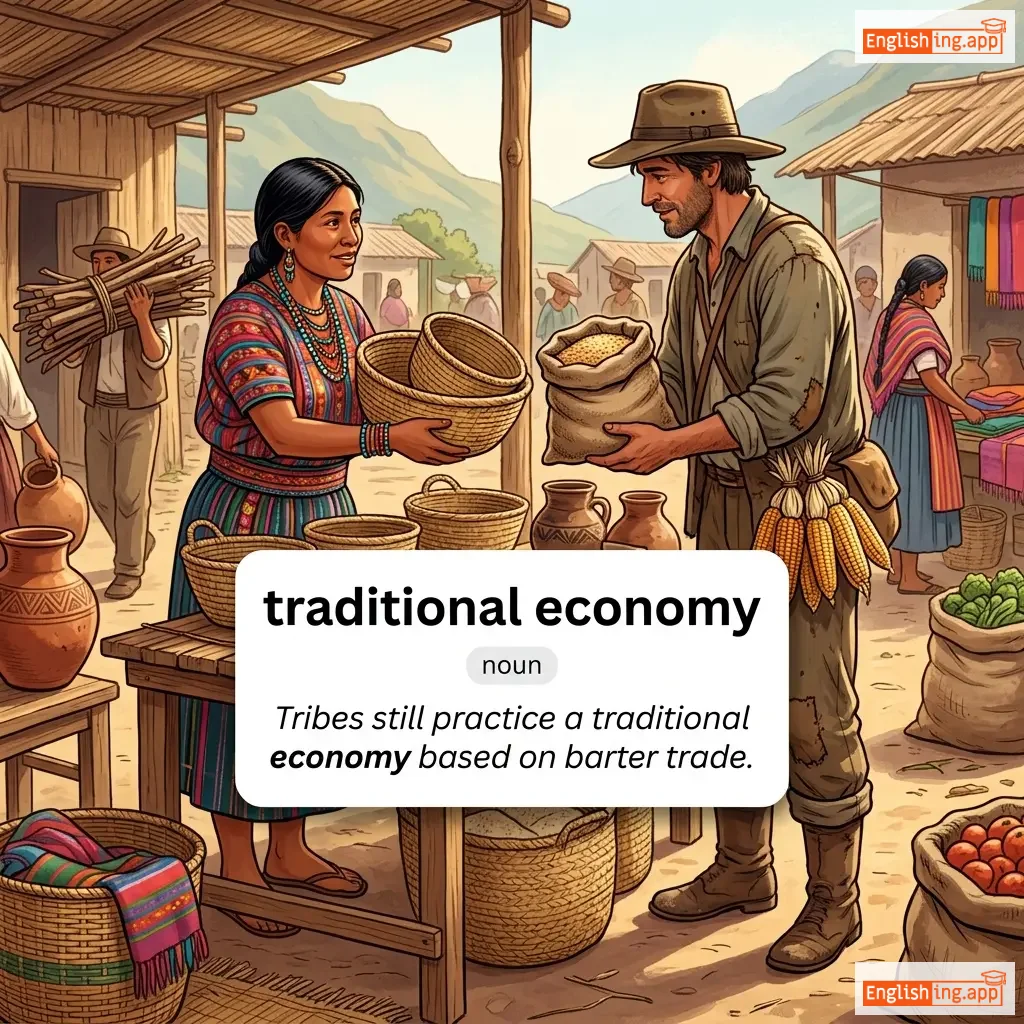
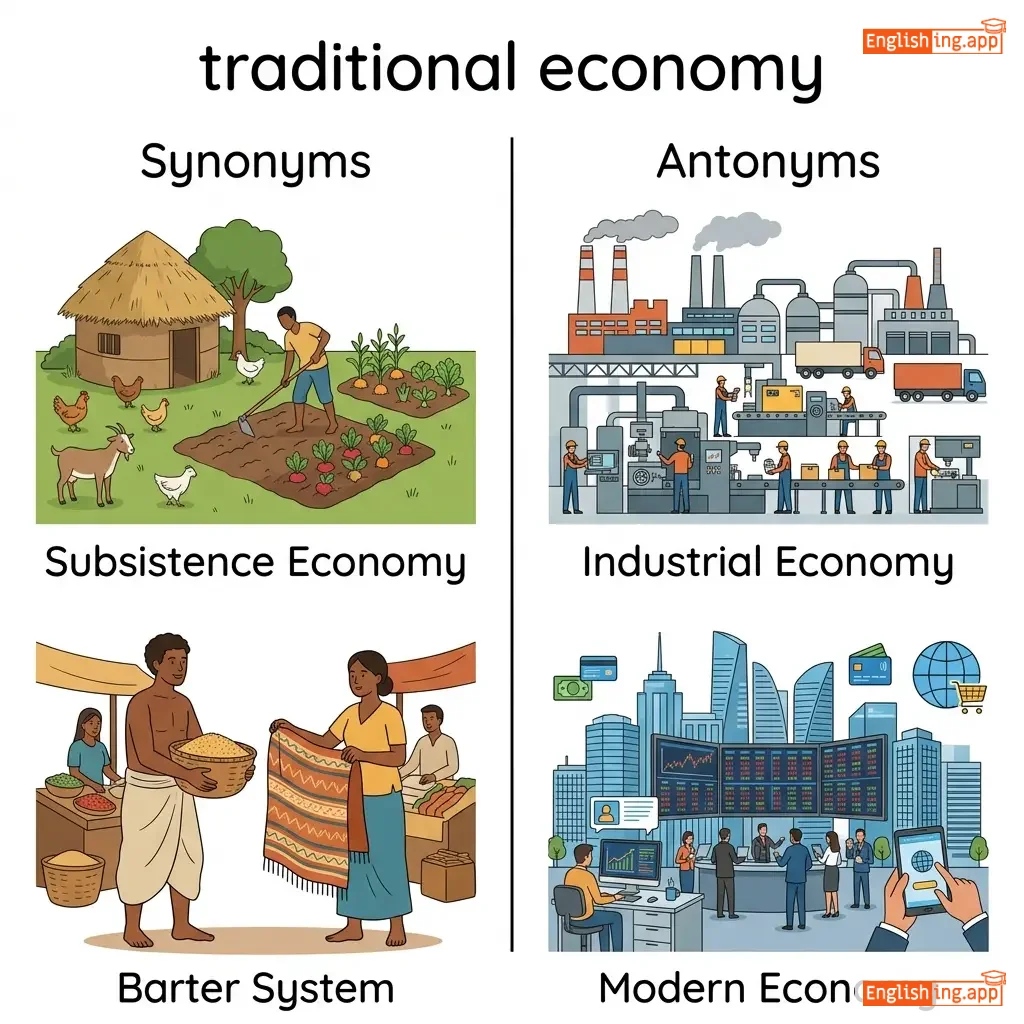
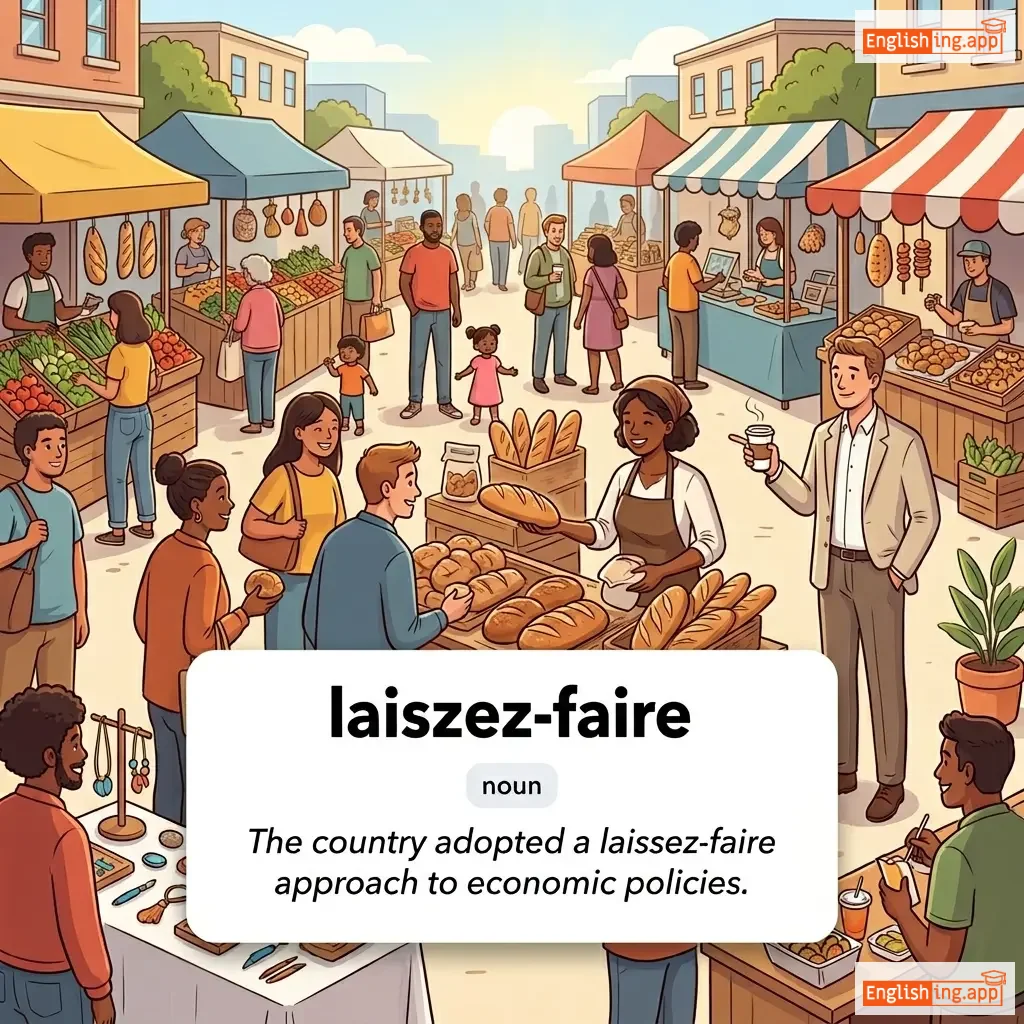
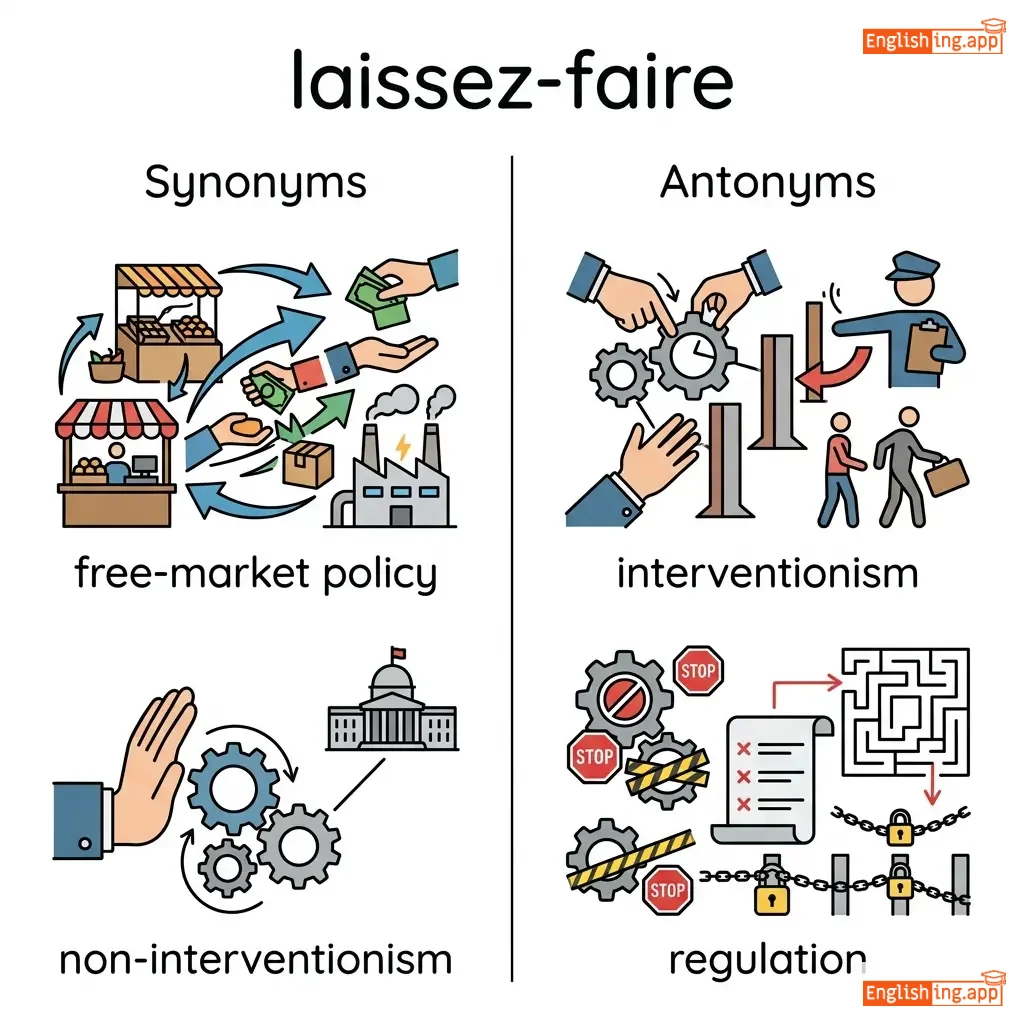
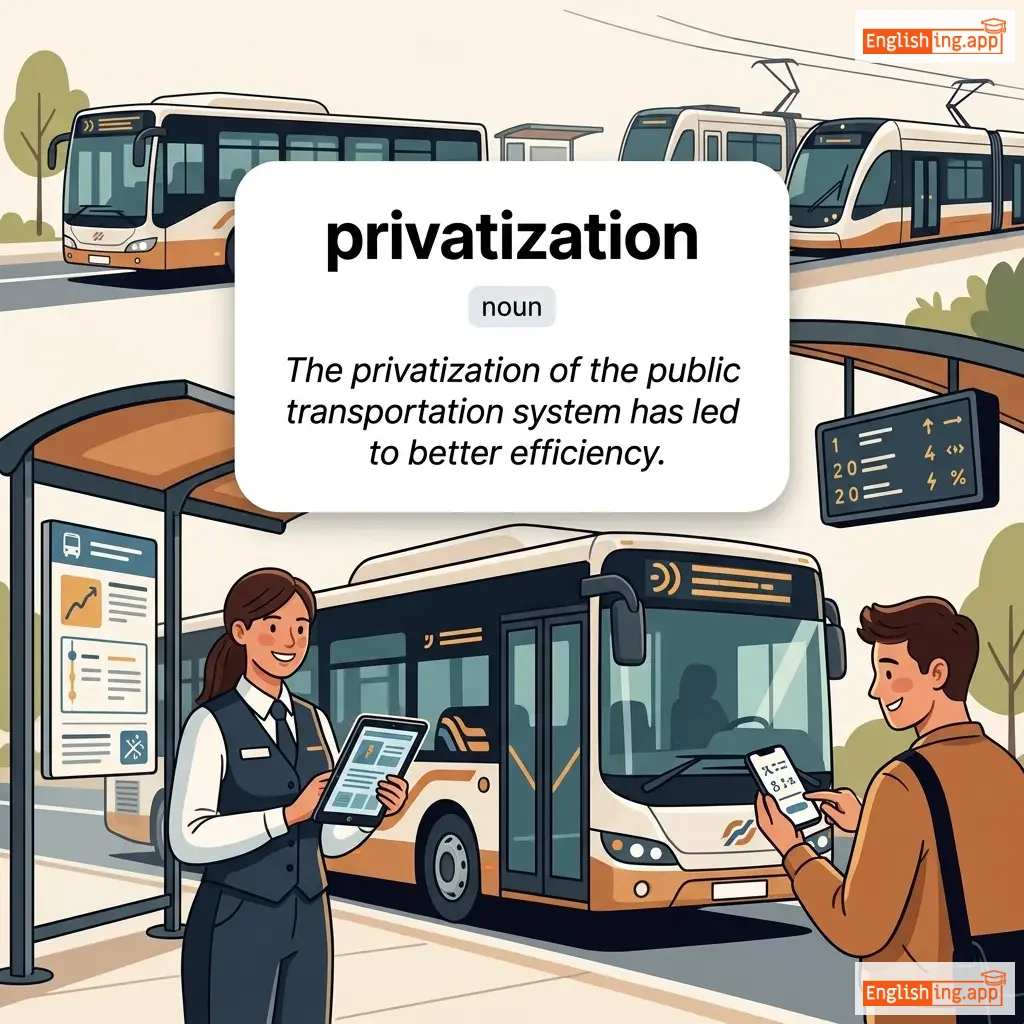
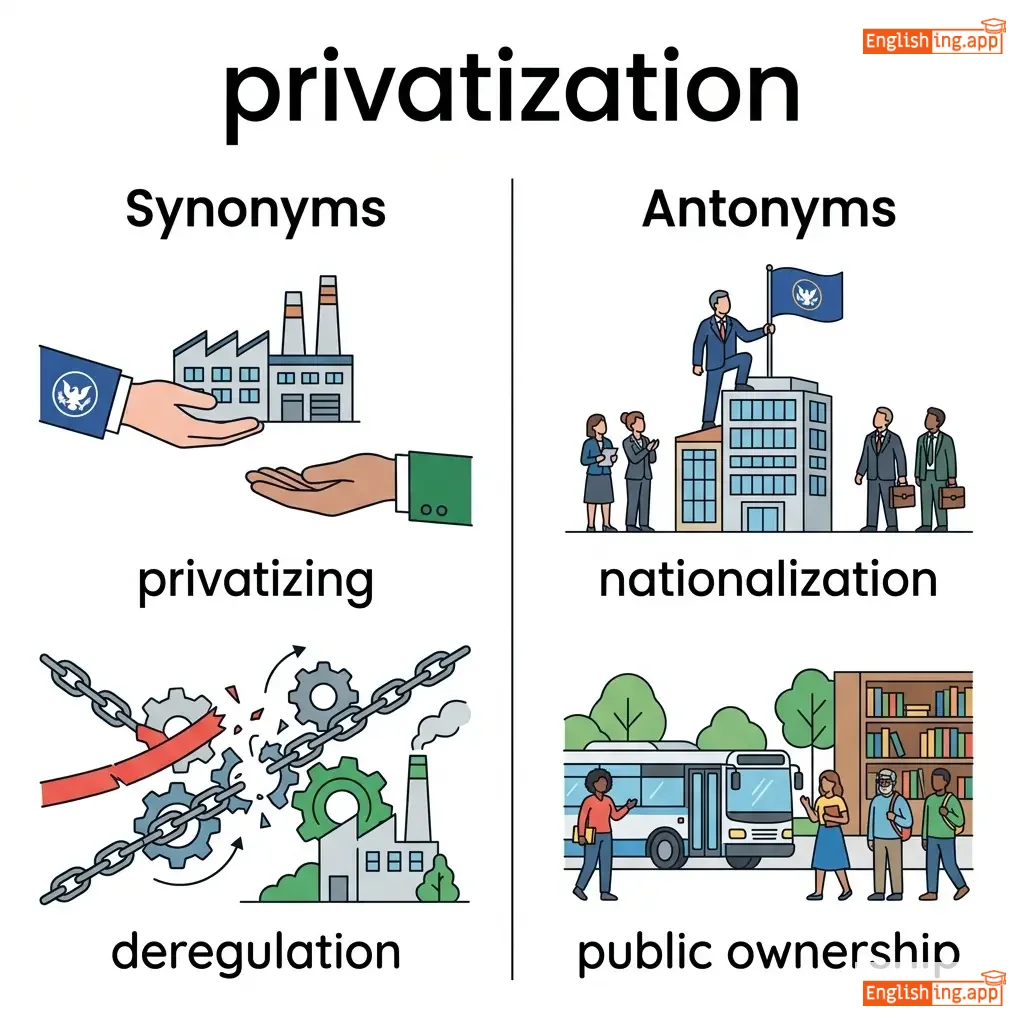
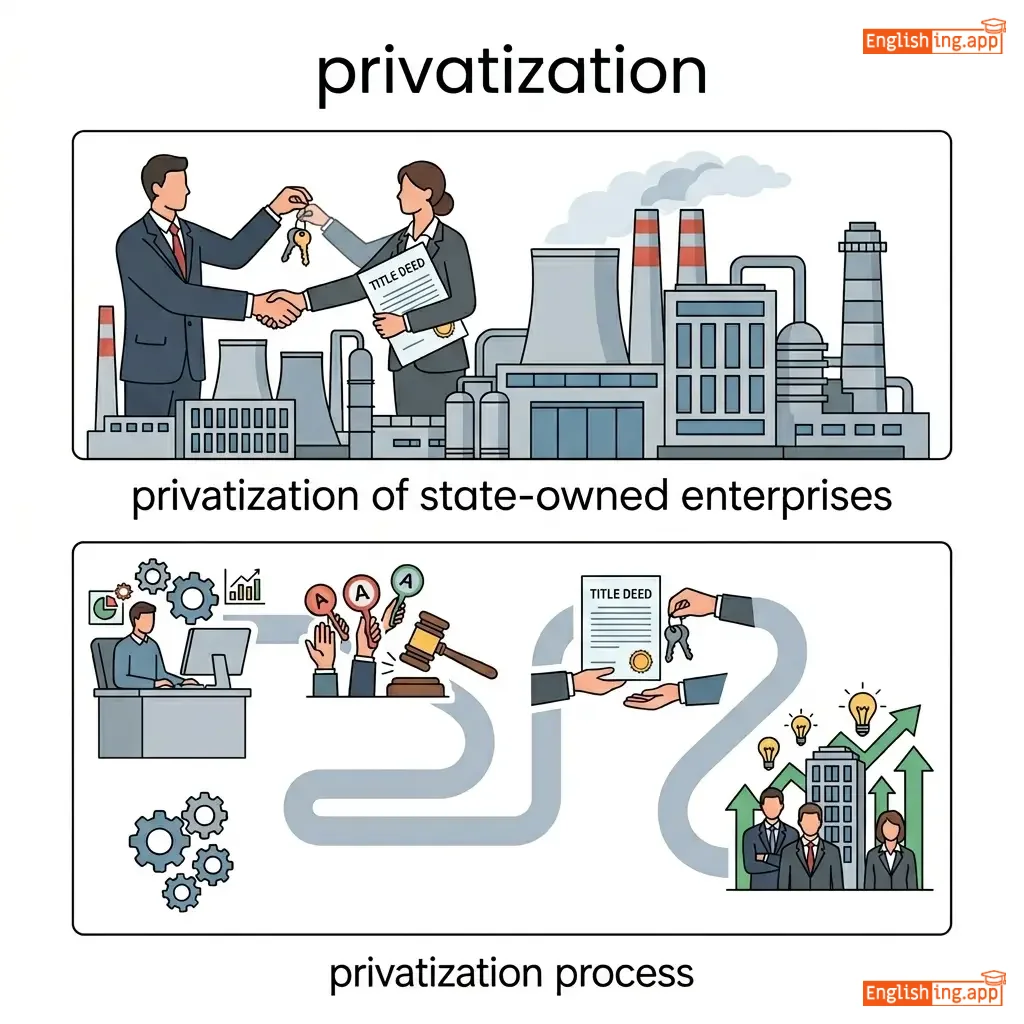
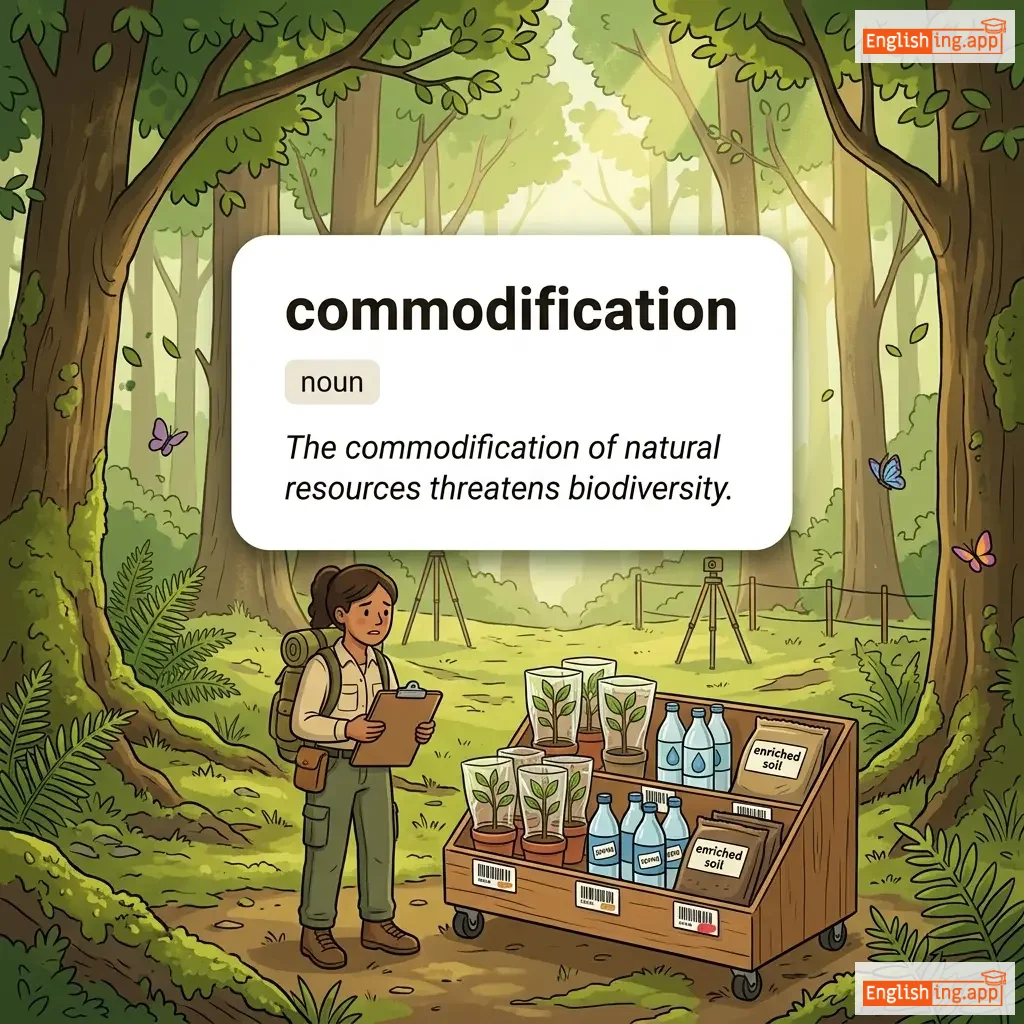
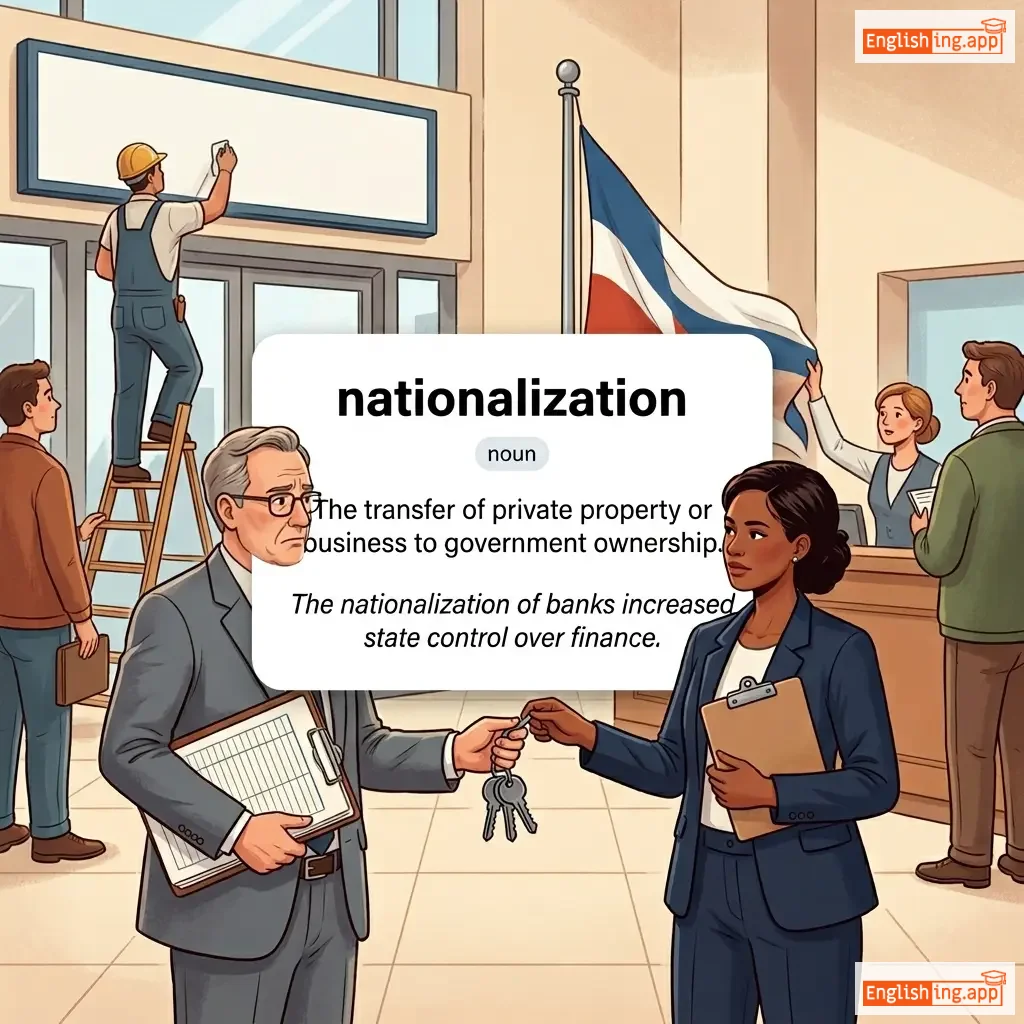
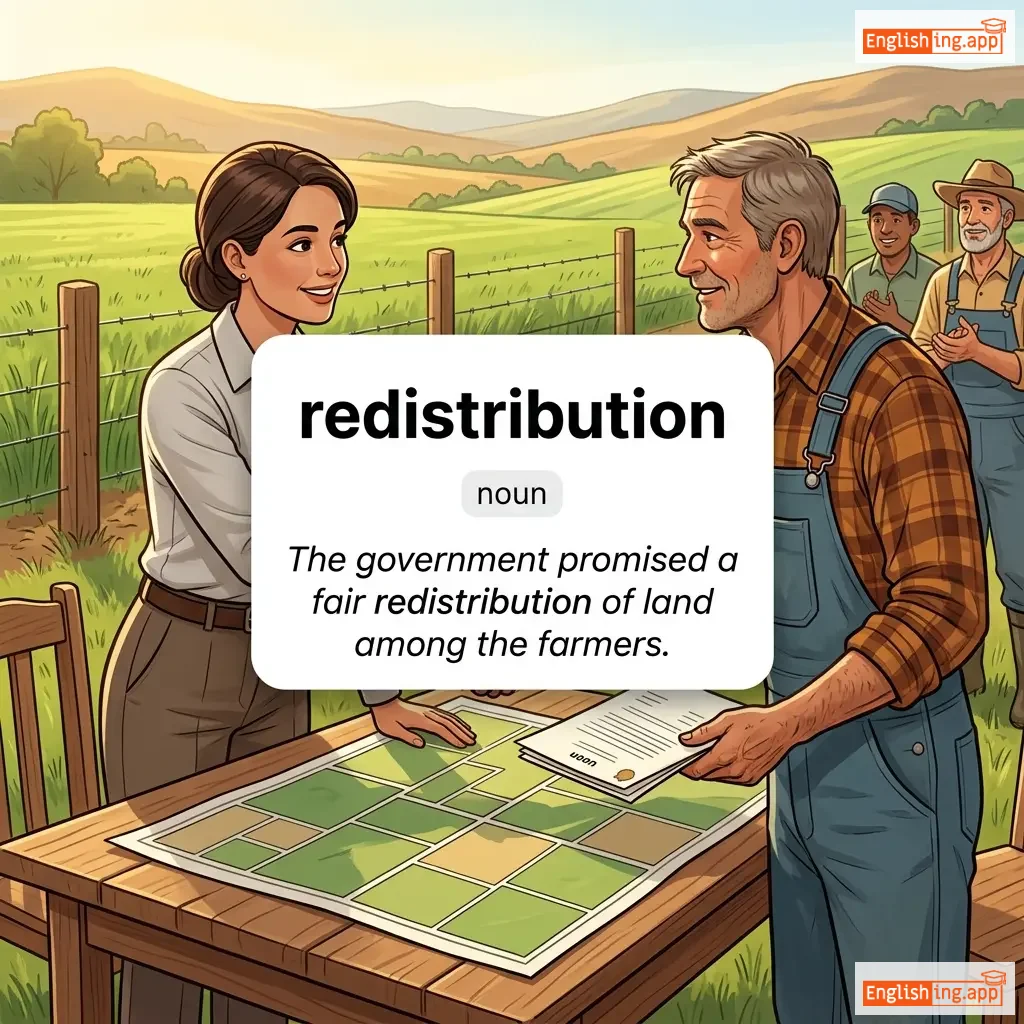
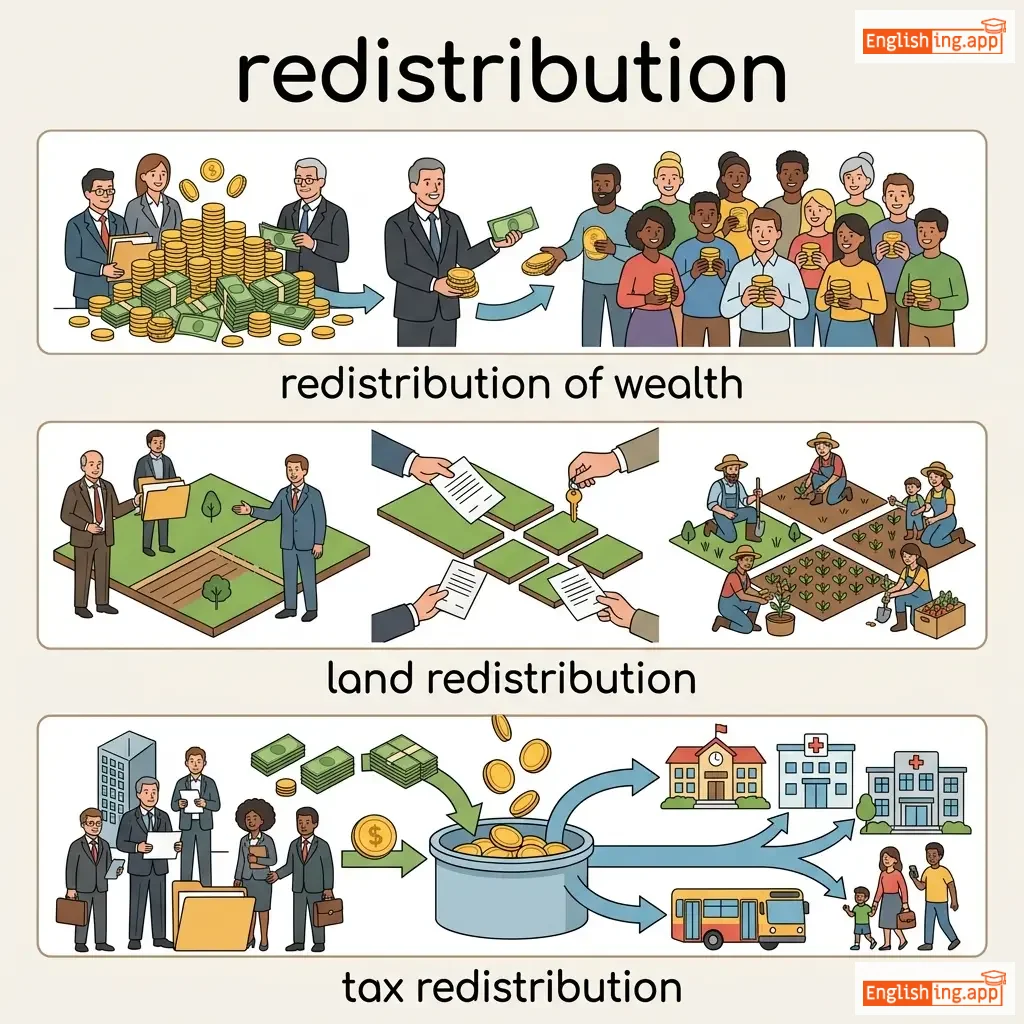
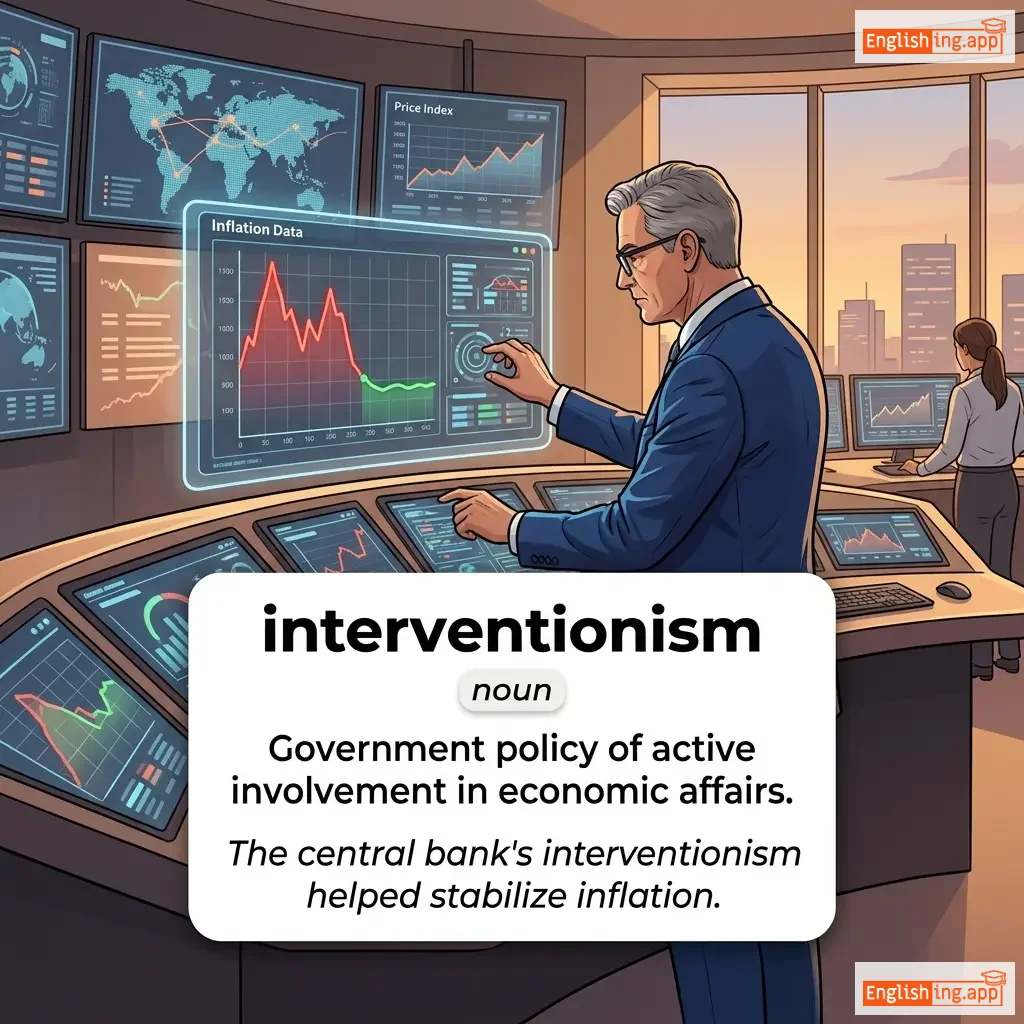
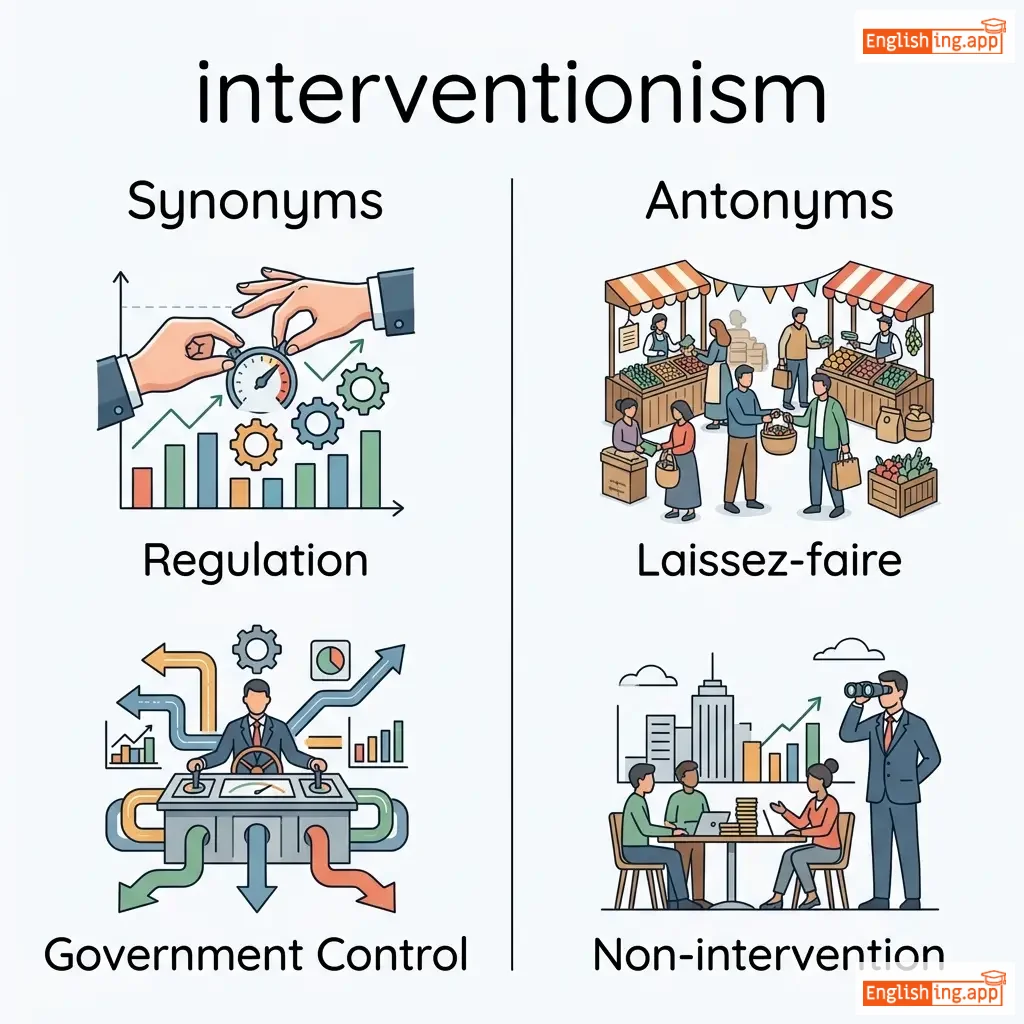
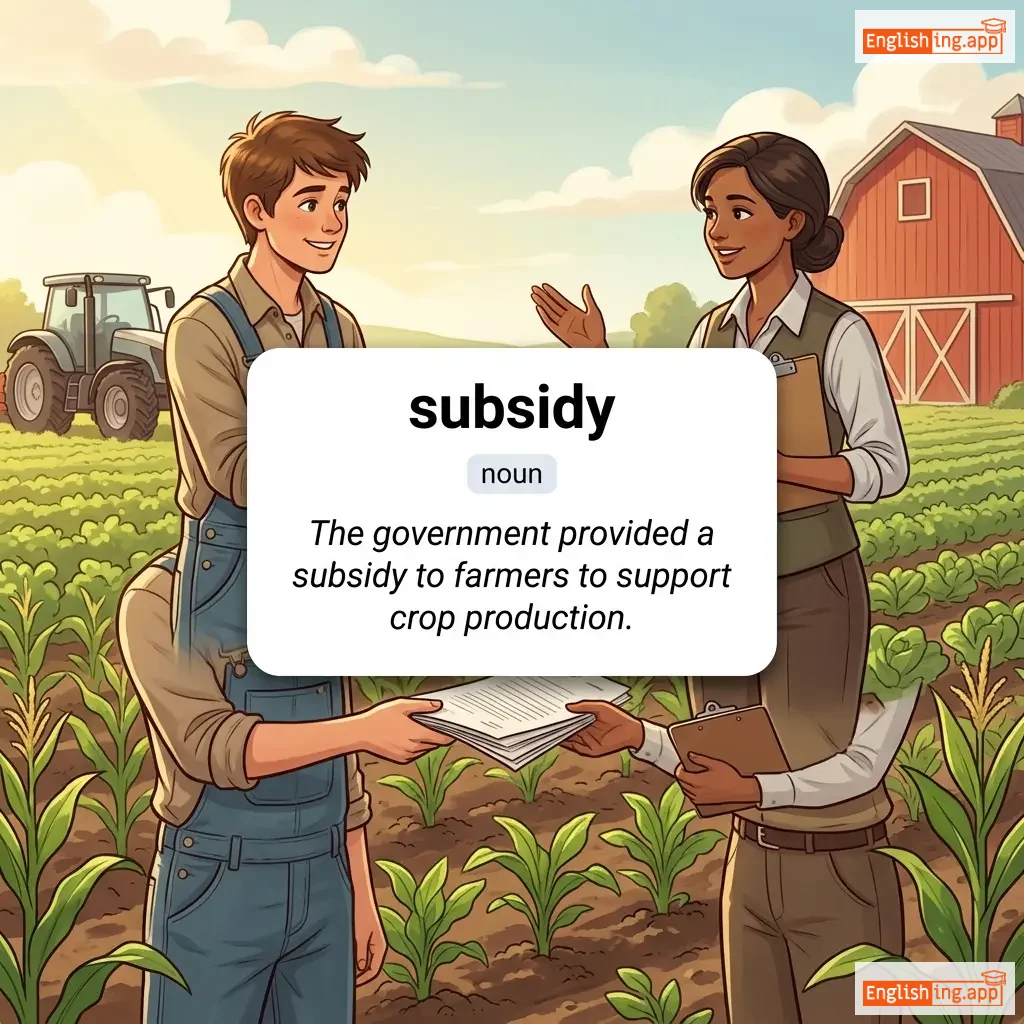
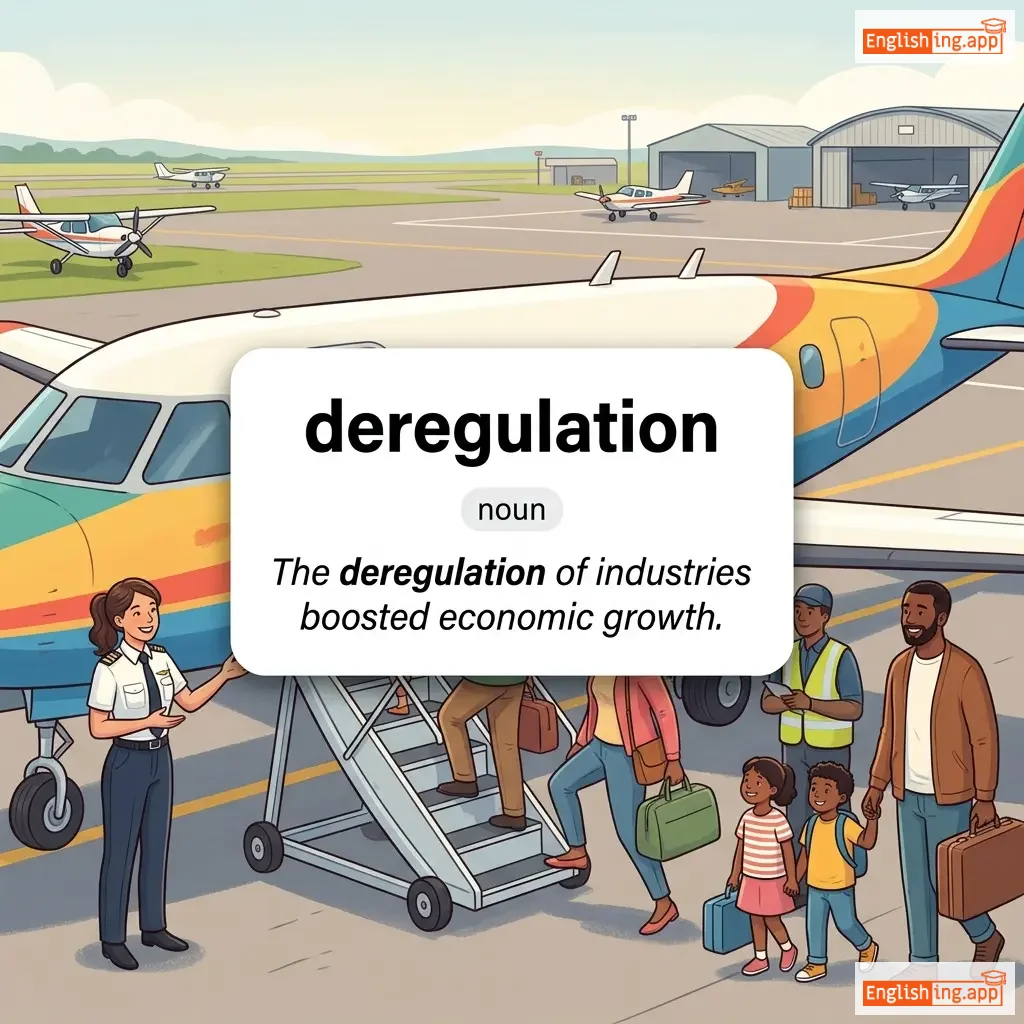
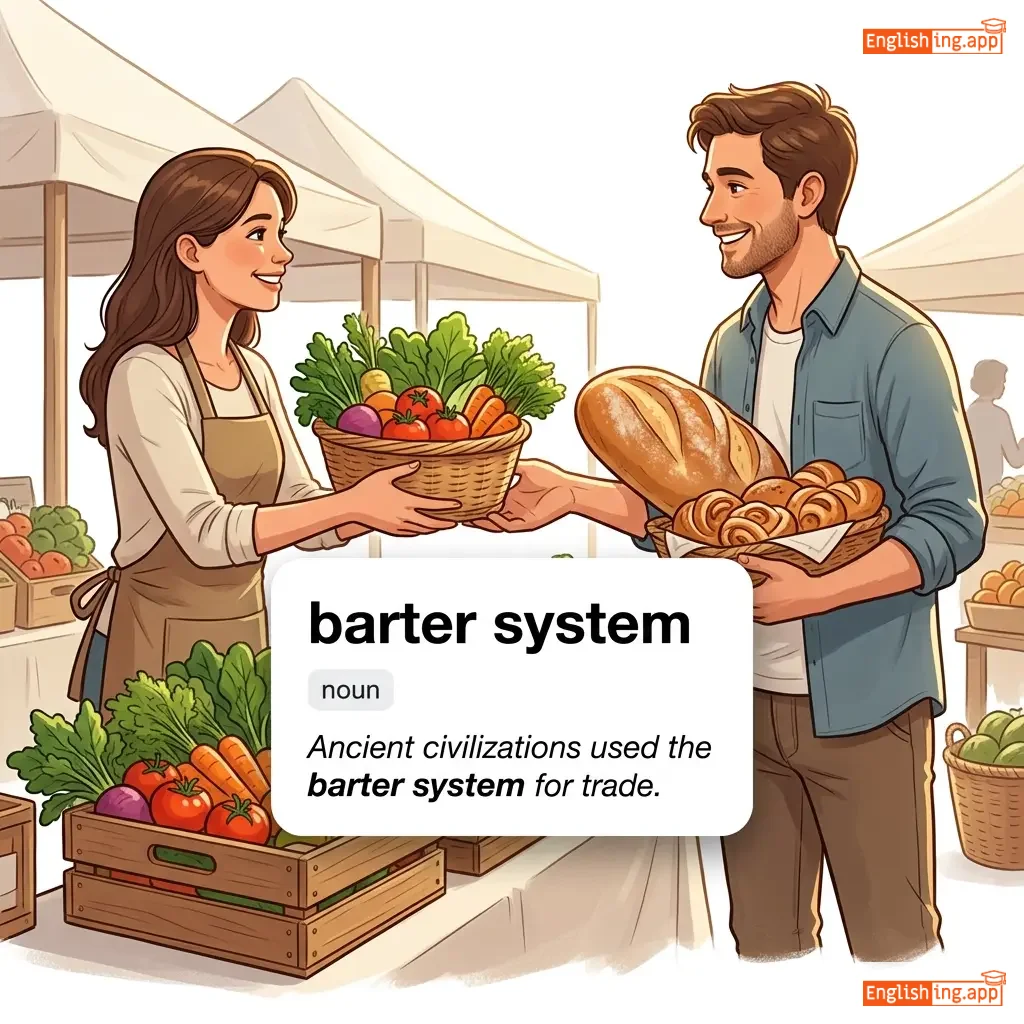
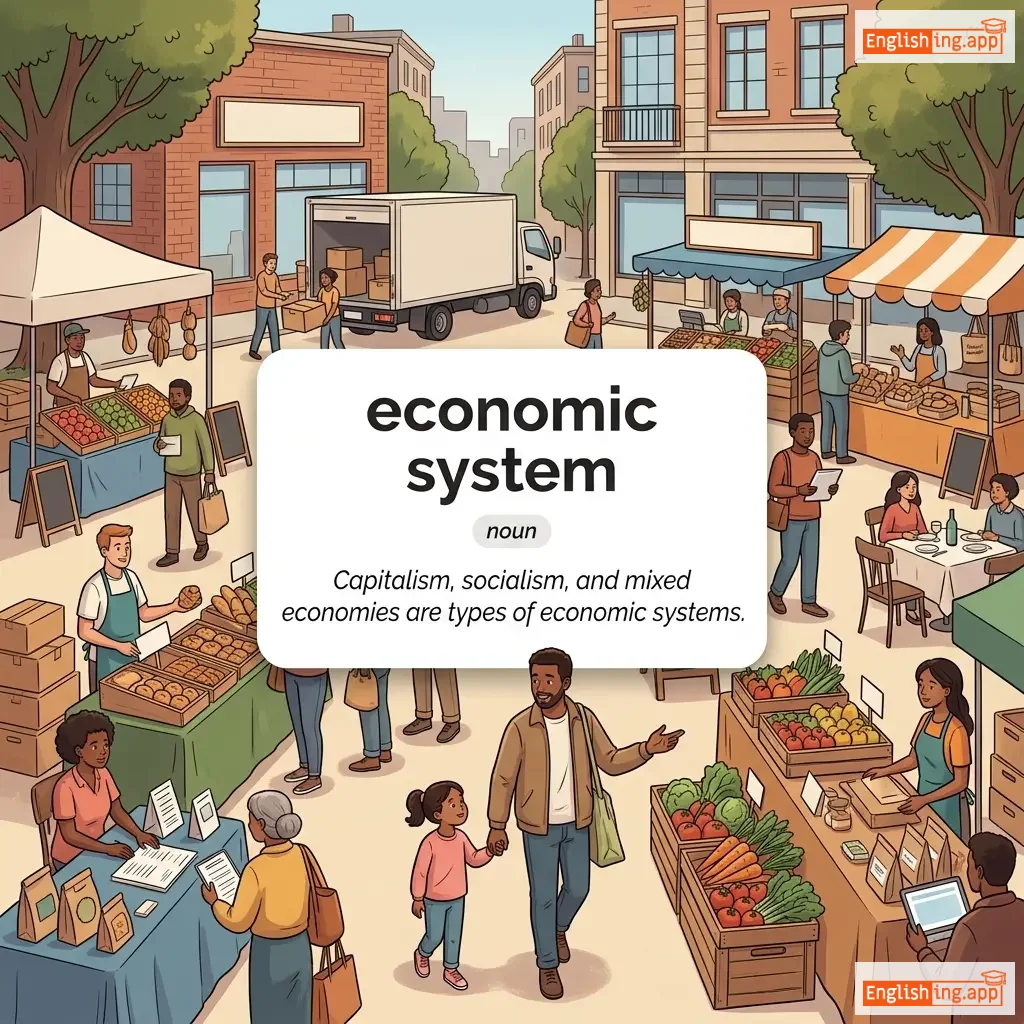
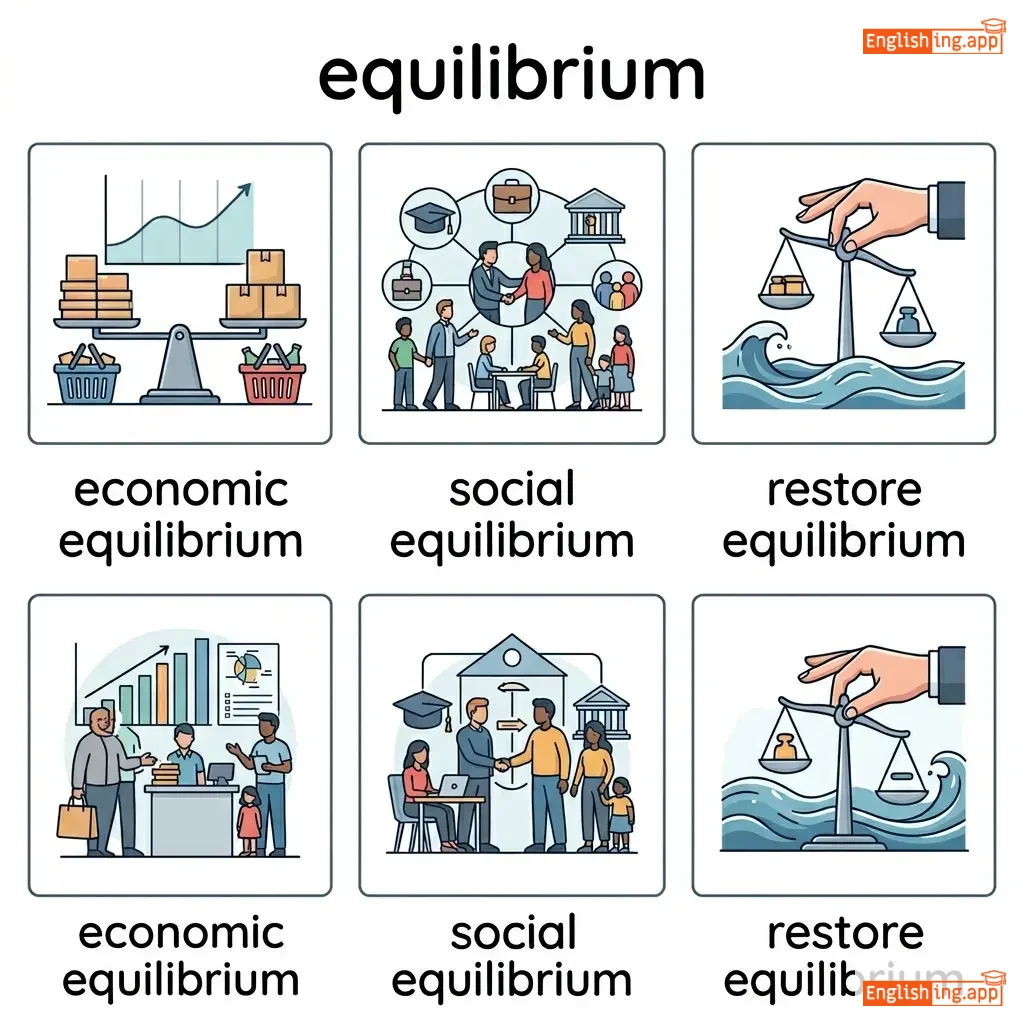
一个国家的 economy 取决于其 fiscal 和 monetary 政策。通常有四种类型的 economy——capitalism、socialism、mixed economy 和 traditional economy。Capitalism 是一种实行 laissez-faire 政策的制度,意味着政府干预很少。它有更多的 privatization 和 commodification,强调个人所有权。另一方面,在 socialism 中,政府使用 nationalization 和 redistribution 过程,使财富能够平等分配。在这里市场上有更多的 interventionism,并且许多行业提供 subsidy。在 mixed economy 中,deregulation 和政府的 interventionism 一起运作,政府经营一些部门,而 private sector 控制其他部门。在 traditional economy 中,通常盛行 barter system,即以商品和服务作为交换媒介。因此,每种 economic system 都有其优点和缺点,需要适当的政策来维持国家的 equilibrium。
Swipe left or right, or use the buttons. Tap image to zoom.
例句翻译
单词
The Different Types of EconomiesThe Different Types of Economies - 遮罩切换
|
表情符号
|
单词 | Images | 翻译 | 含义 | 例句 | 例句翻译 | 同义词 | 反义词 | 助记符 |
|---|---|---|---|---|---|---|---|---|---|
|
#3070
💰
|
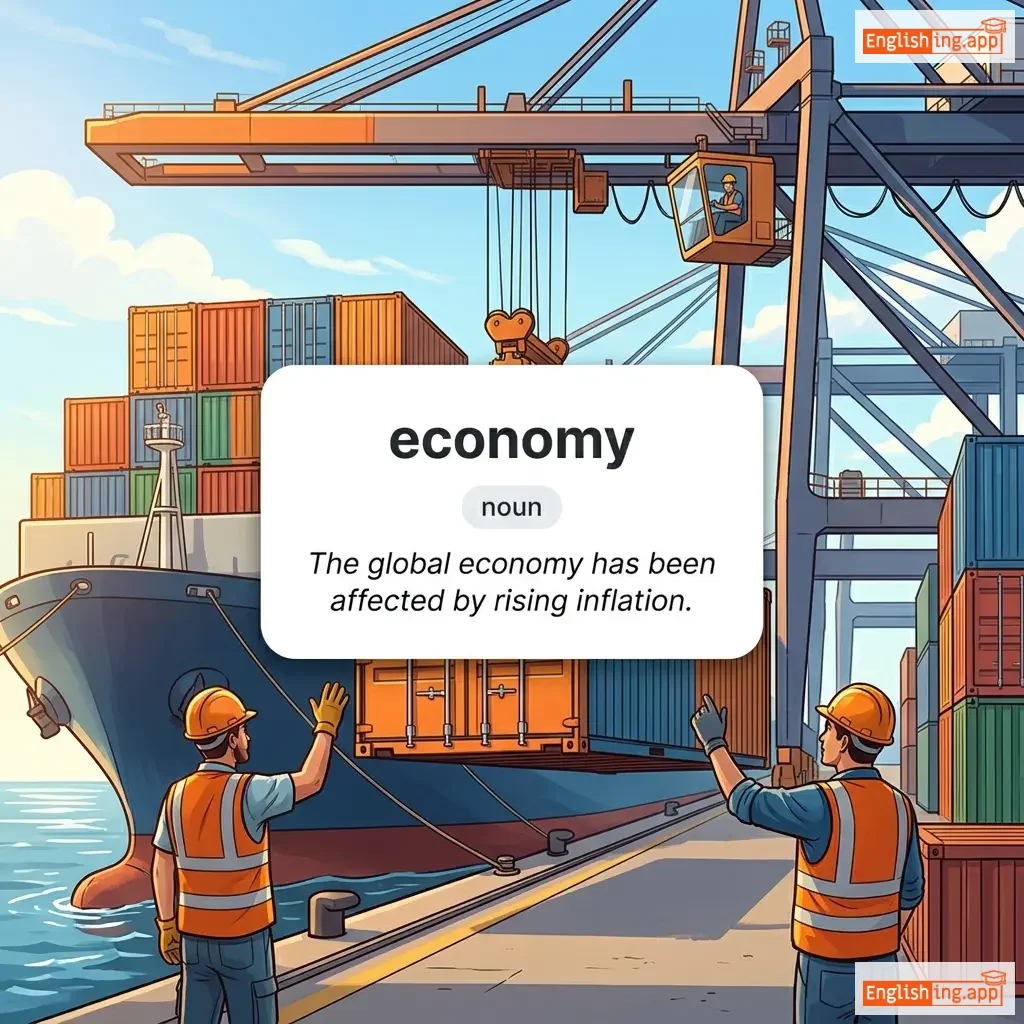
/ɪˈkɒn.ə.mi/
noun
(ɪkɒnəmi)
••••••
|
|
经济
jingji
••••••
|
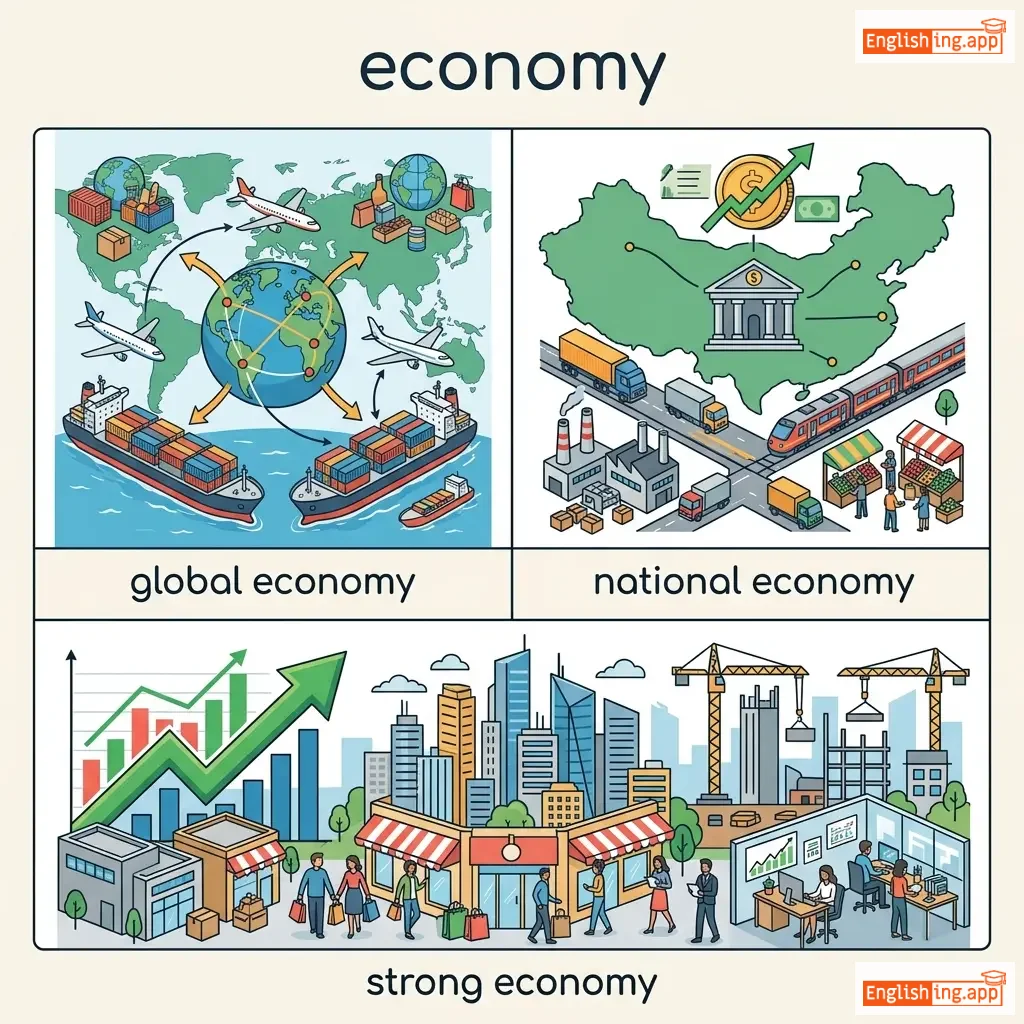
The system of production, distribution, and consumption of goods and services in a country or region.
••••••
|
The country's economy is growing rapidly.
国家的经济正在快速增长。
••••••
|
国家的经济正在快速增长。
Guo jia de jing ji zheng zai kuai su zeng zhang.
••••••
|
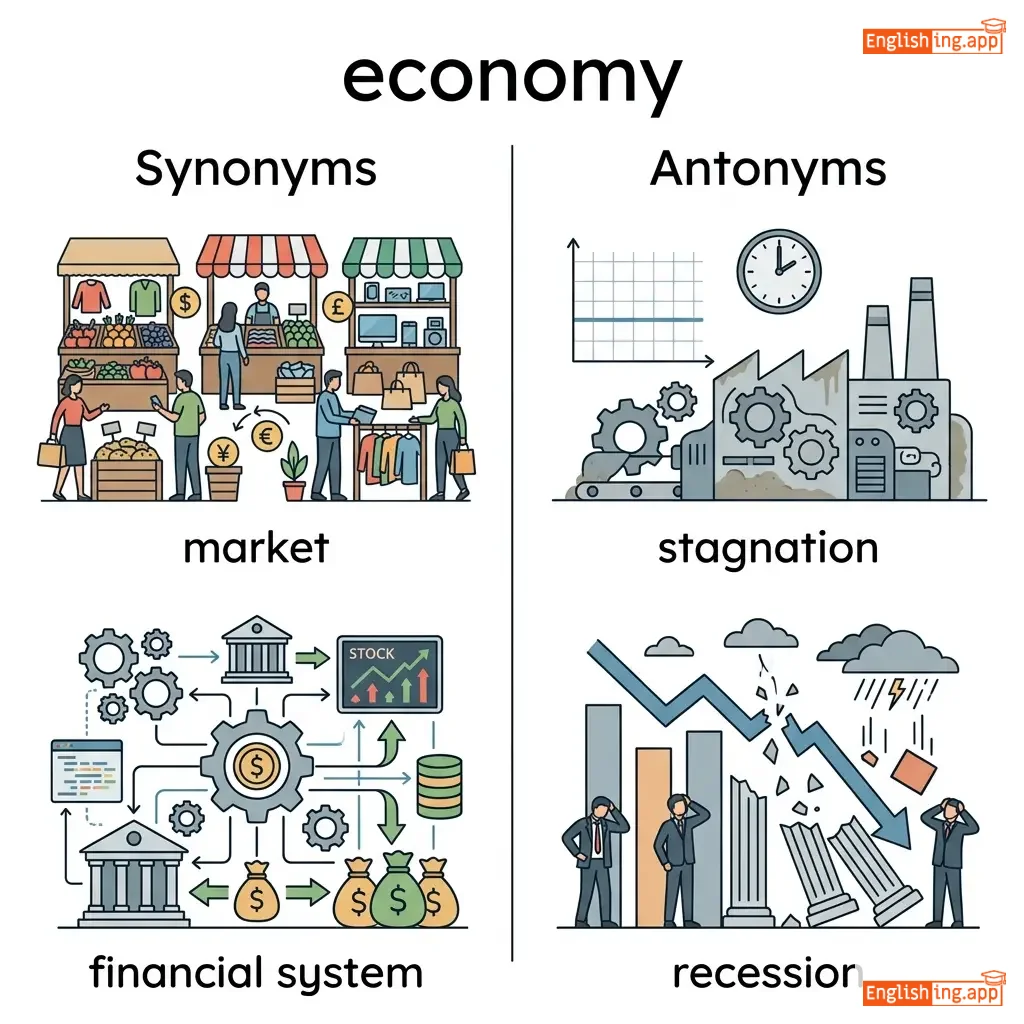
Financial System, Market, Trade
••••••
|
Stagnation, Recession, Instability
••••••
|
经济 in Chinese refers to the system of managing resources and services.
••••••
|
|
#3071
📊
|
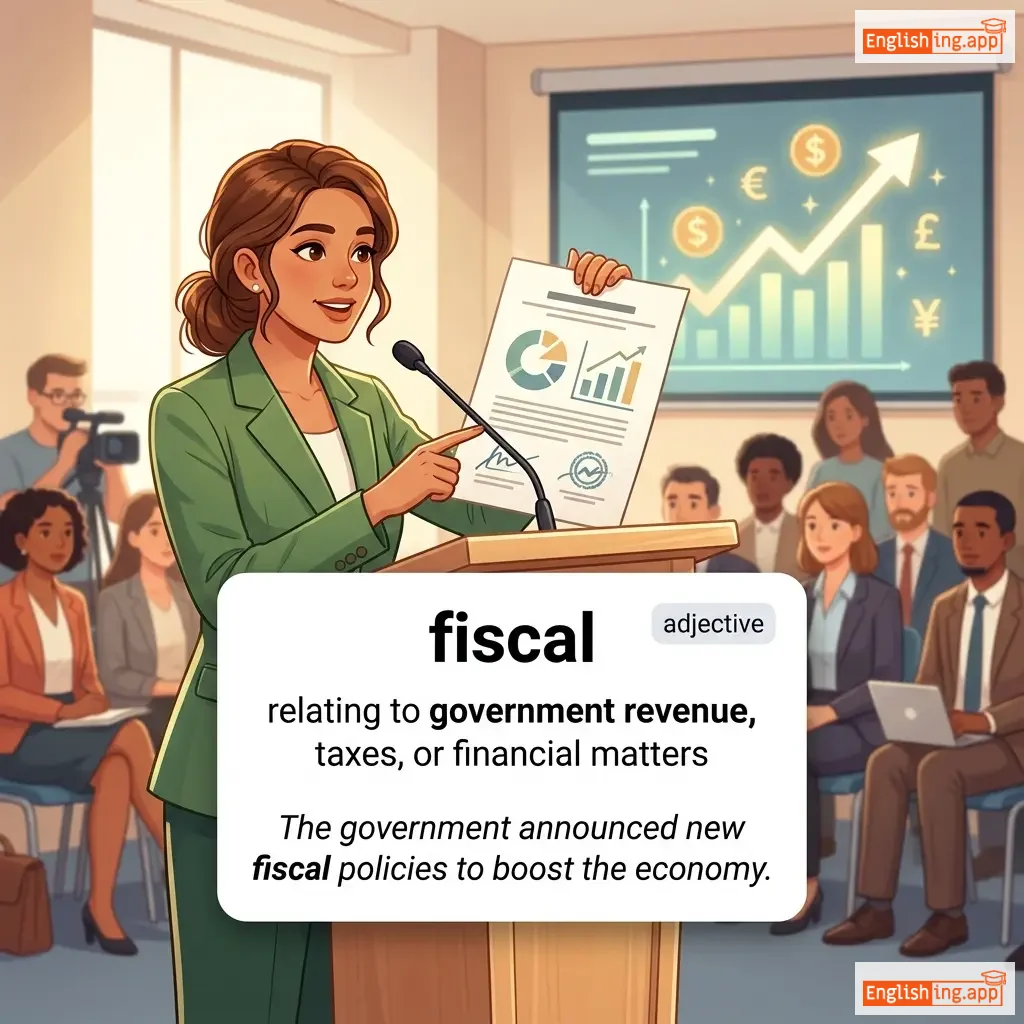
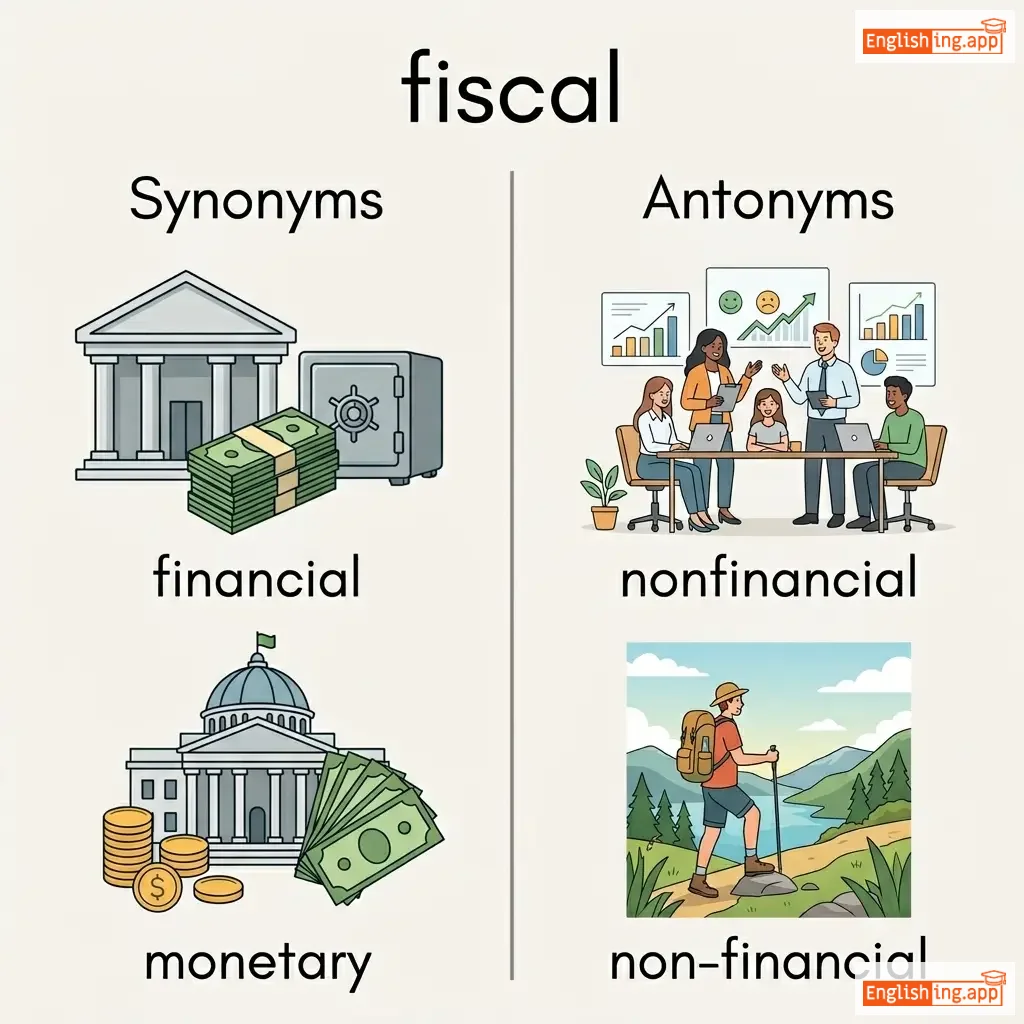
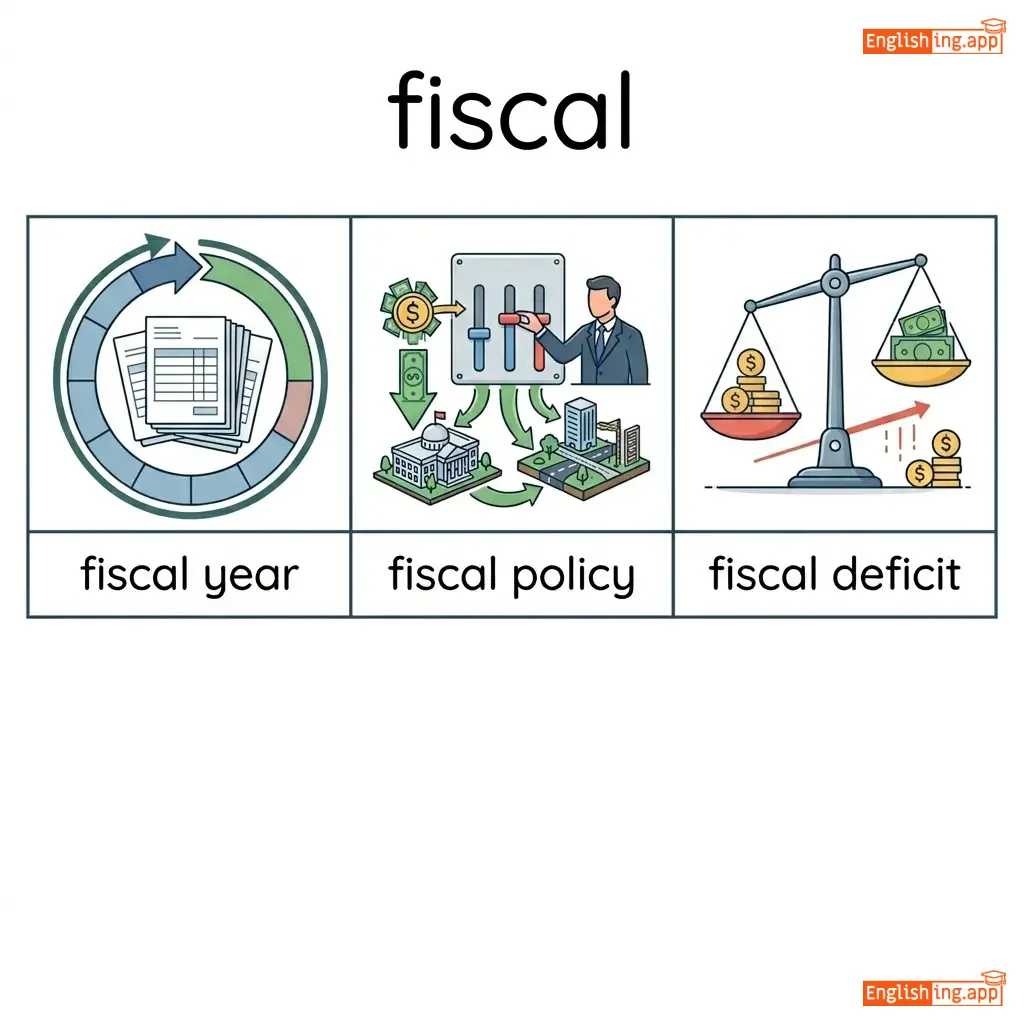
/ˈfɪs.kəl/
adjective
(财务)
••••••
|
|
与政府收入和支出相关的
yǔ zhèngfǔ shōurù hé zhīchū xiāngguān de
••••••
|
Related to government revenue, especially taxes and government spending.
••••••
|
The government introduced new fiscal policies.
政府提出了新的财政政策。
••••••
|
政府提出了新的财政政策。
Zhèngfǔ tíchūle xīn de cáizhèng zhèngcè.
••••••
|
Budgetary, Financial, Economic
••••••
|
Non-financial, Unrelated, Irrelevant
••••••
|
Fiscal in Chinese relates to government finances, like taxes and government spending.
••••••
|
|
#3072
💱
|
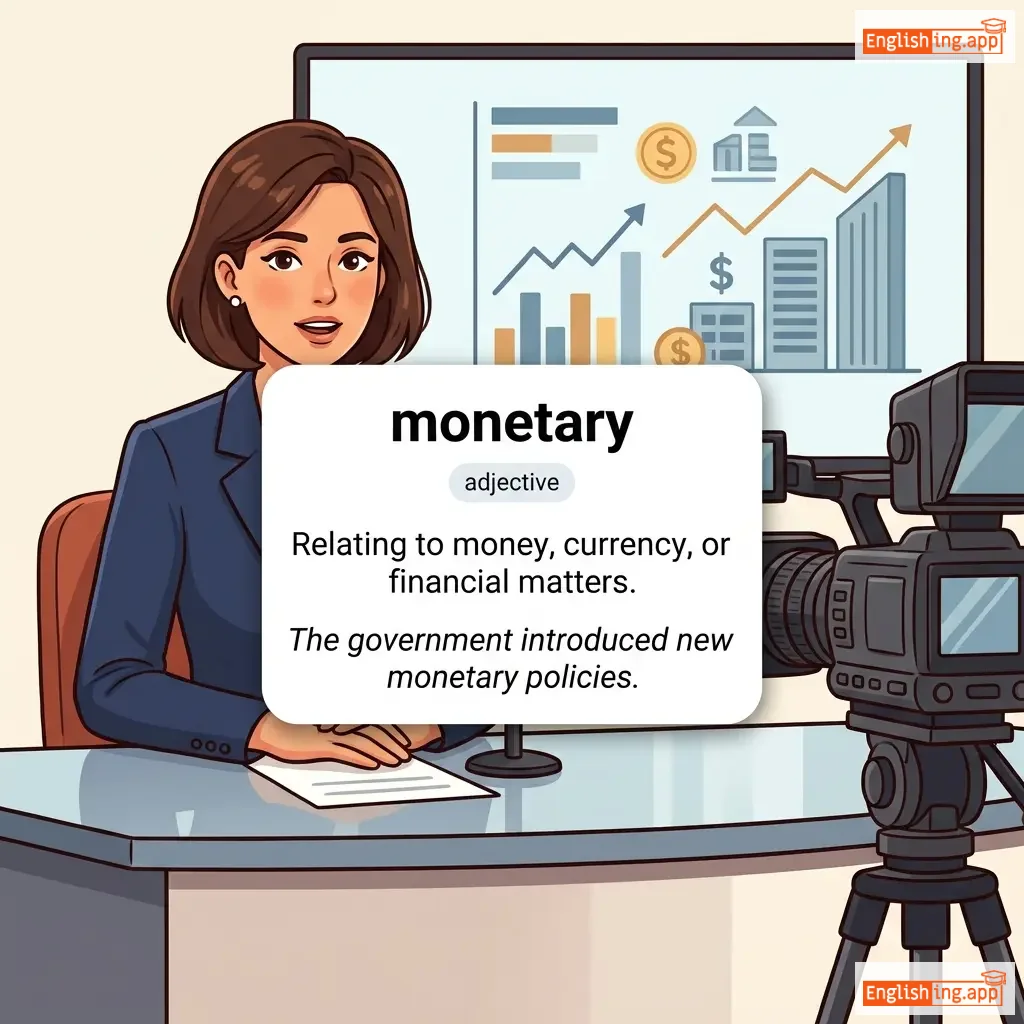
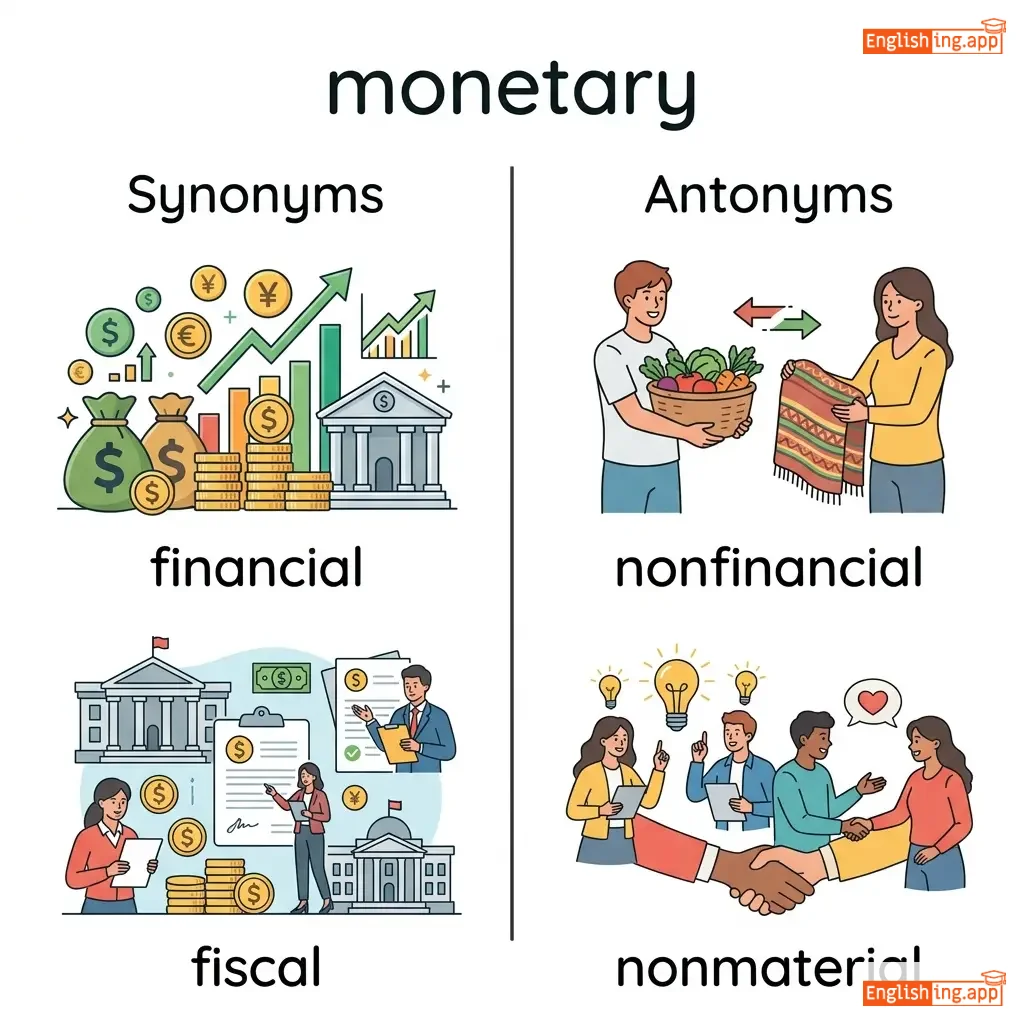
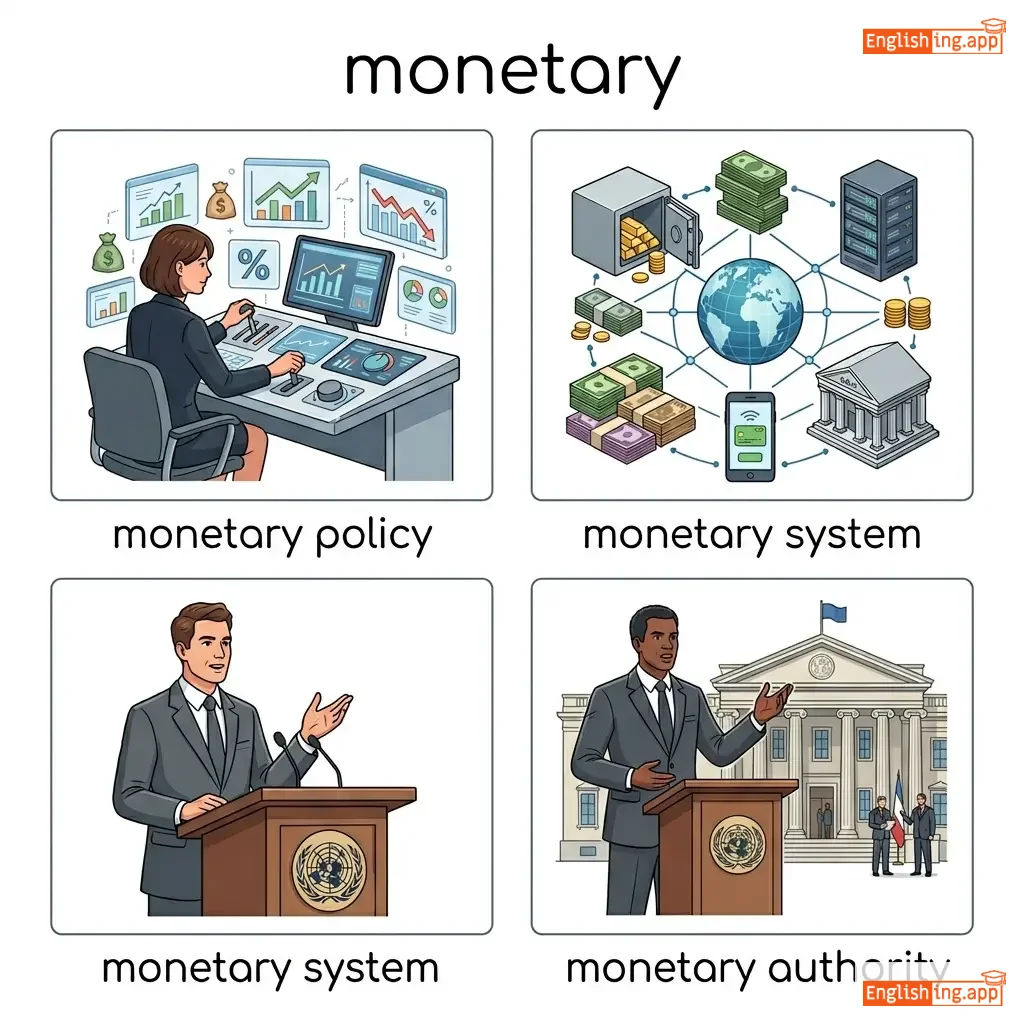
/ˈmʌn.ɪ.tri/
adjective
(货币)
••••••
|
|
货币的
huòbì de
••••••
|
Related to money, currency, and financial control by central banks.
••••••
|
The central bank controls monetary policy.
中央银行控制货币政策。
••••••
|
中央银行控制货币政策。
Zhōngyāng yínháng kòngzhì huòbì zhèngcè.
••••••
|
Financial, Economic, Banking
••••••
|
Non-monetary, Barter, Non-financial
••••••
|
Monetary policies are controlled by central banks, just like 'money' controls the world.
••••••
|
|
#3073
🏭
|
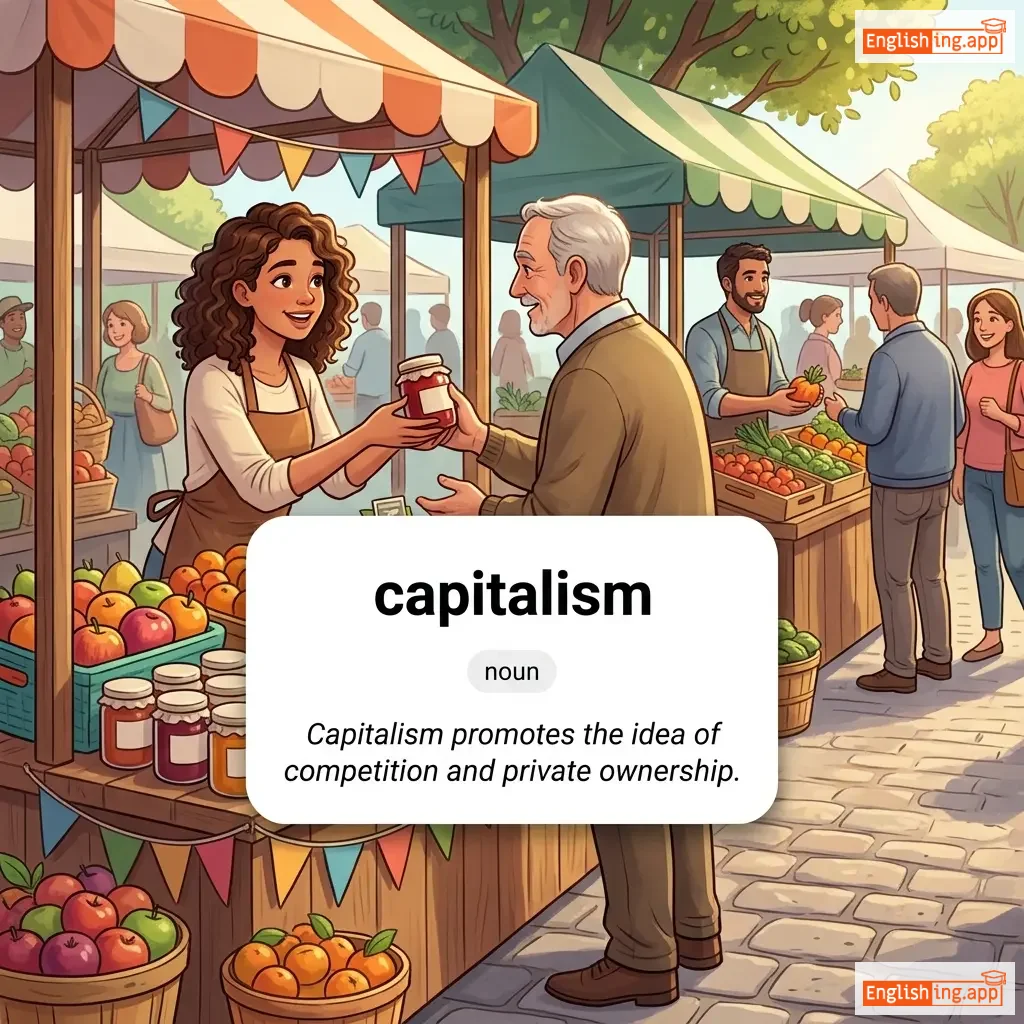
/ˈkæp.ɪ.təl.ɪ.zəm/
noun
(资本主义)
••••••
|
|
资本主义
zīběn zhǔyì
••••••
|
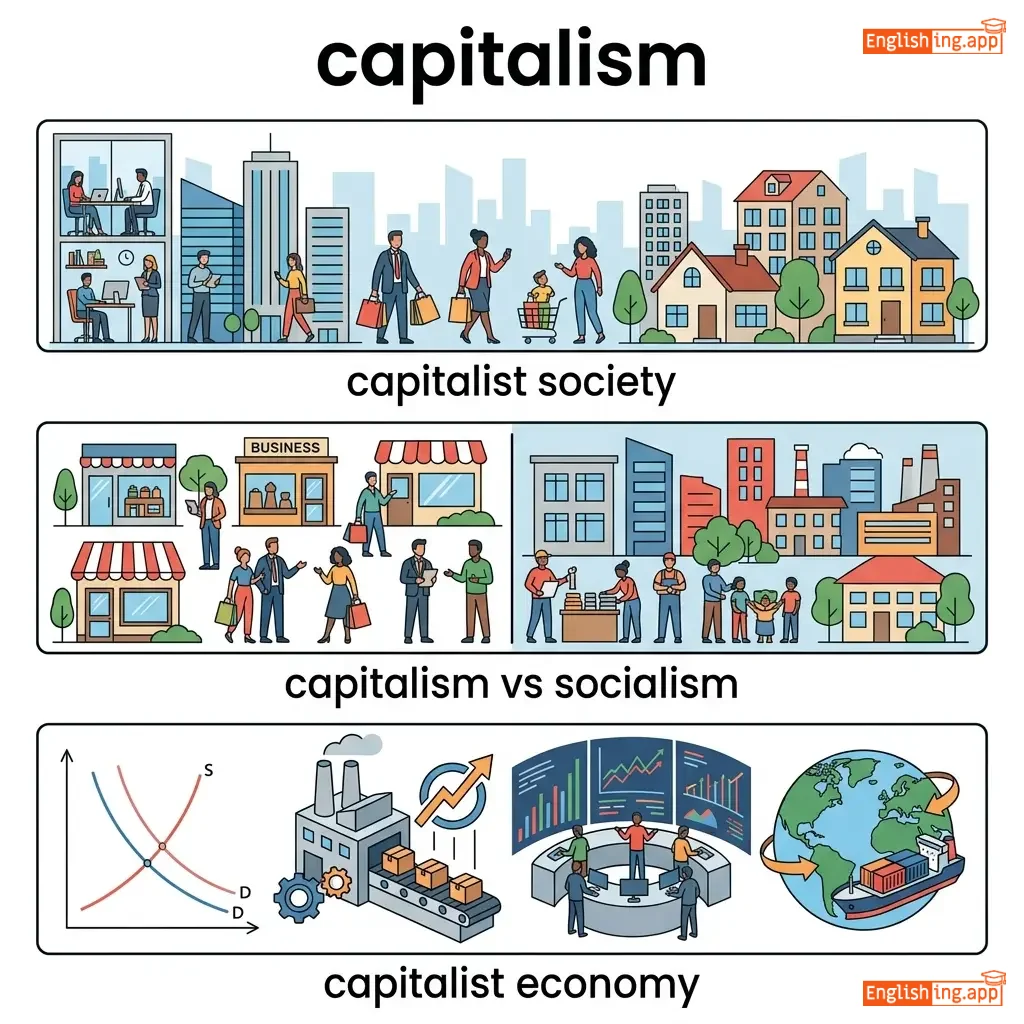
An economic system based on private ownership and free market competition.
••••••
|
Capitalism promotes competition and private ownership.
资本主义促进竞争和私人财产。
••••••
|
资本主义促进竞争和私人财产。
Zīběn zhǔyì cùjìn jìngzhēng hé sīrén cáichǎn.
••••••
|
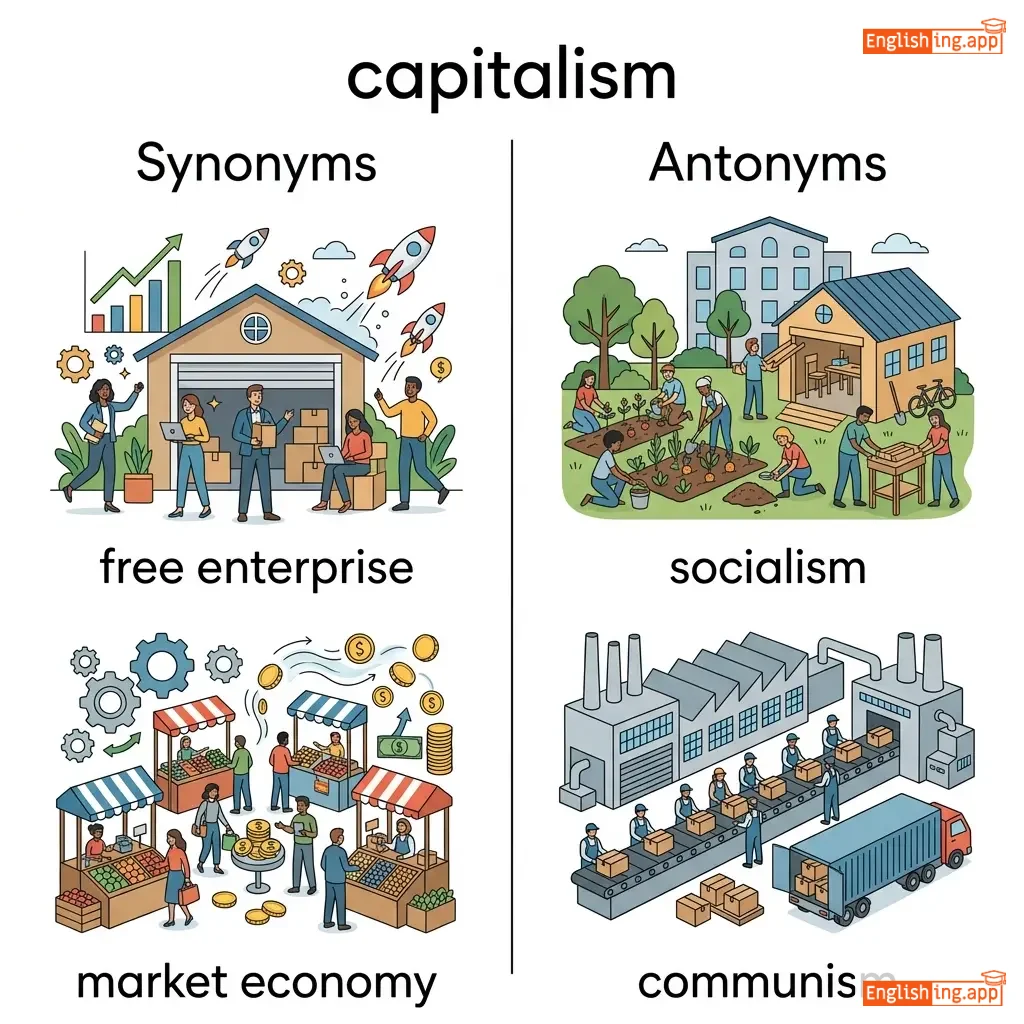
Free Market, Private Enterprise, Laissez-faire
••••••
|
Socialism, Communism, Collectivism
••••••
|
私人财产和市场竞争
••••••
|
|
#3074
🤝
|
/ˈsəʊ.ʃəl.ɪ.zəm/
noun
(社会主义)
••••••
|
|
社会主义
shehui zhuyi
••••••
|
An economic system where the means of production are owned by the state or community.
••••••
|
In socialism, resources are distributed equally among citizens. |
在社会主义中,资源在公民之间平等分配。
Zai shehui zhuyi zhong, ziran zai gongmin zhi jian pingdeng fenpei.
••••••
|
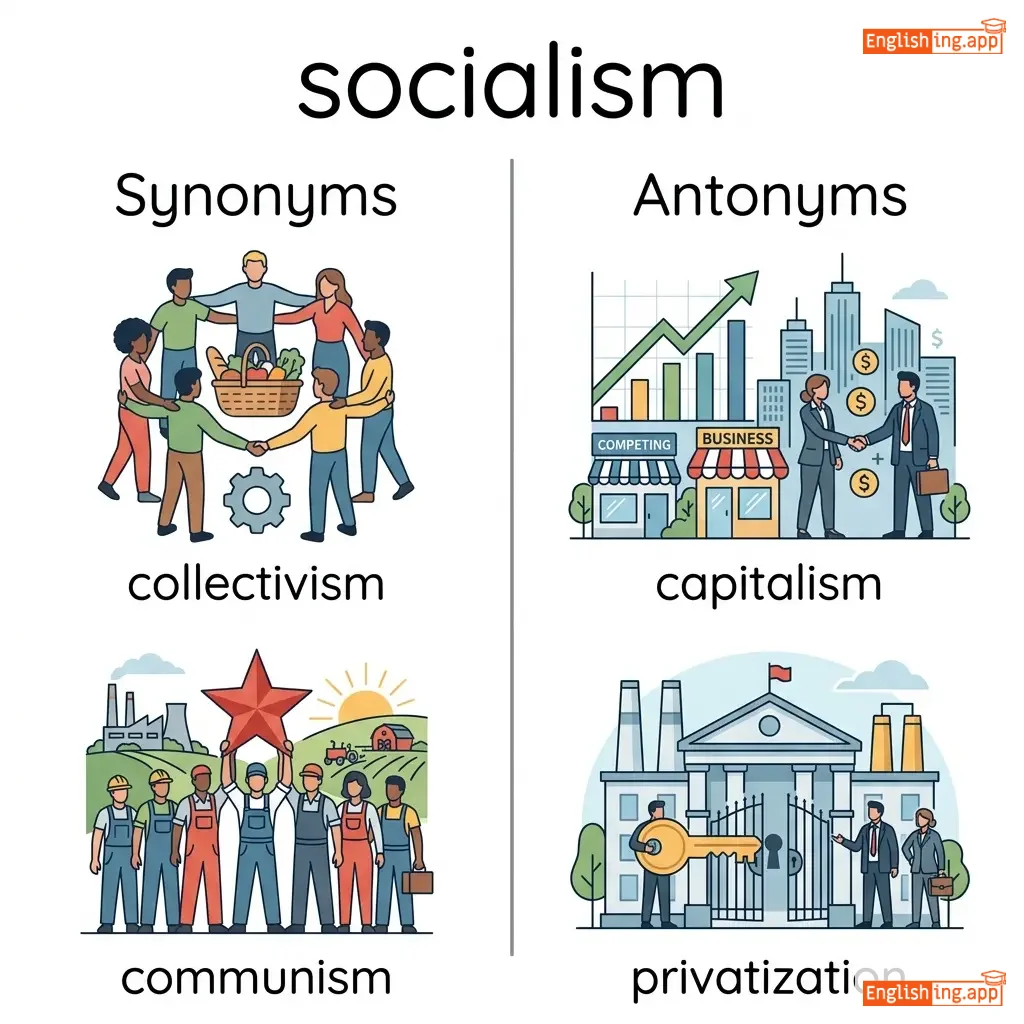
Collectivism, Public Ownership, State Control
••••••
|
Capitalism, Free Market, Privatization
••••••
|
社会主义 = 资源平等分配
••••••
|
|
#3075
⚖️
|
/mɪkst ɪˈkɒn.ə.mi/
noun
(mìkè sī tè yī kè nuò mǐ)
••••••
|
|
混合经济
hunhe jingji
••••••
|
An economic system where both government and private sector operate together.
••••••
|
Most countries today follow a mixed economy model. |
如今,大多数国家遵循混合经济模式。
Rújīn, dàduōshù guójiā zūnxún hùn hé jīngjì móshì.
••••••
|
Hybrid System, Regulated Market, Balanced Economy
••••••
|
Pure Capitalism, Pure Socialism, Command Economy
••••••
|
混合经济:政府和私人合作共赢。
••••••
|
|
#3076
🌾
|
/trəˈdɪʃ.ən.əl ɪˈkɒn.ə.mi/
noun
(传统经济)
••••••
|
|
传统经济
chuántǒng jīngjì
••••••
|
An economic system based on customs and traditions, often involving barter trade.
••••••
|
Tribes still practice a traditional economy based on barter trade. |
部落仍然实践着基于物物交换的传统经济。
Bùluò réngrán shíjiànzhe jīyú wù wù jiāohuàn de chuántǒng jīngjì.
••••••
|
Subsistence Economy, Barter System, Rural Economy
••••••
|
Industrial Economy, Modern Economy, Market Economy
••••••
|
在传统经济中,交换是最常见的方式。
••••••
|
|
#3077
🚫
|
/ˌlɛ.seɪ ˈfɛər/
noun
(莱塞-费尔)
••••••
|
|
不干预政策
bù gānyù zhèngcè
••••••
|
An economic policy where government does not intervene in business affairs.
••••••
|
Laissez-faire policies encourage private enterprise. |
不干预政策鼓励私人企业。
Bù gānyù zhèngcè gǔlì sīrén qǐyè.
••••••
|
Free Market, Non-Interventionism, Hands-off Approach
••••••
|
Regulation, Government Control, Socialism
••••••
|
没有政府干预,只有企业
••••••
|
|
#3078
🏢
|
/ˌpraɪ.və.taɪˈzeɪ.ʃən/
noun
(私有化)
••••••
|
|
私有化
sī yǒu huà
••••••
|
The transfer of ownership from government to private sector.
••••••
|
The government initiated privatization of the energy sector. |
政府开始了能源部门的私有化。
Zhèngfǔ kāishǐle néngyuán bùmén de sī yǒu huà.
••••••
|
Deregulation, Free Market Reform, Corporate Takeover
••••••
|
Nationalization, State Ownership, Socialization
••••••
|
私有化 = 政府到私营部门
••••••
|
|
#3079
🛒
|
/kəˌmɒd.ɪ.fɪˈkeɪ.ʃən/
noun
(kòmòdǐfīkèshēn)
••••••
|
|
商品化
shāngpǐnhuà
••••••
|
The transformation of goods, services, ideas, or social relations into market commodities.
••••••
|
The commodification of education has increased tuition costs.
教育的商品化提高了学费。
••••••
|
教育的商品化提高了学费。
Jiàoyù de shāngpǐnhuà tígāo le xuéfèi.
••••••
|
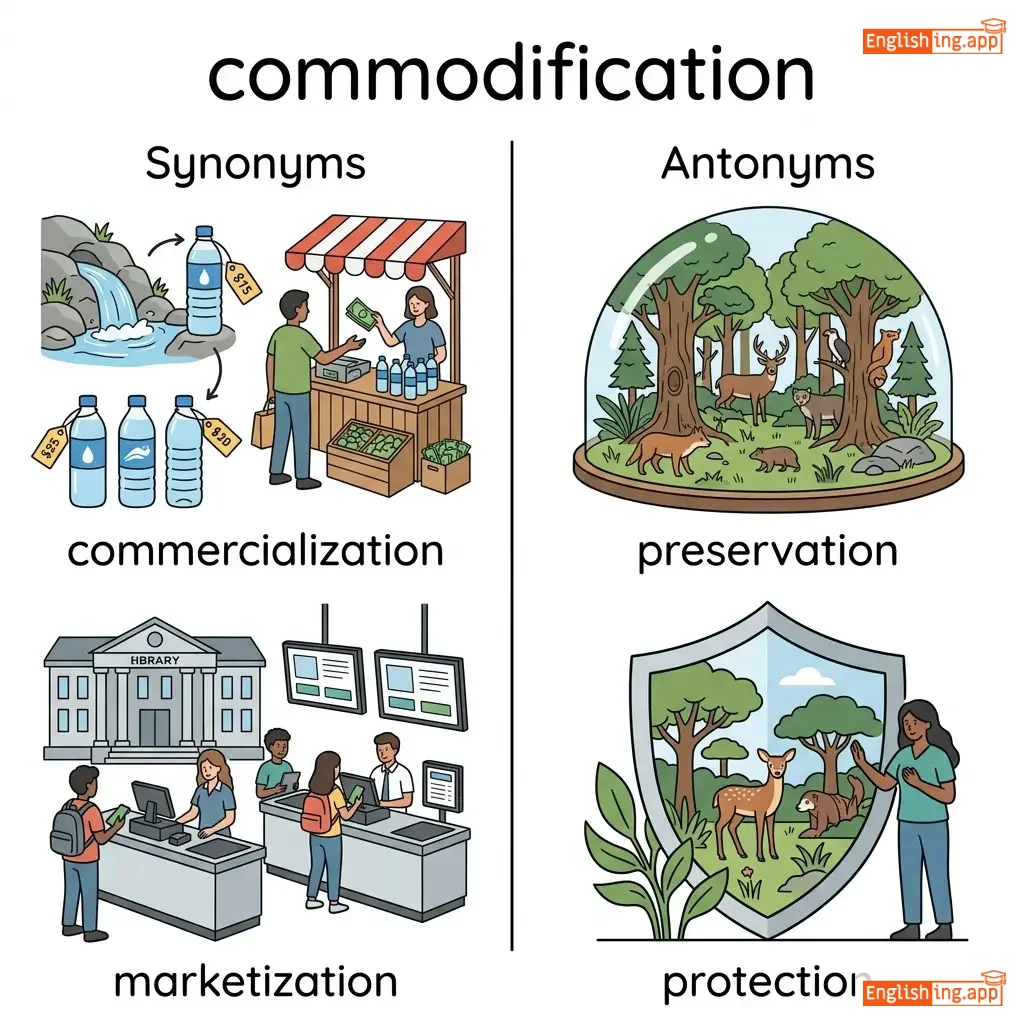
Commercialization, Marketization, Productization
••••••
|
Decommodification, Non-commercialization, Public Good
••••••
|
把教育变成市场商品,就像商品一样可以买卖。
••••••
|
|
#3080
🏛️
|
/ˌnæʃ.ən.ə.laɪˈzeɪ.ʃən/
noun
(国家化)
••••••
|
|
国家化
guojiahua
••••••
|
The transfer of private property or business to government ownership.
••••••
|
The nationalization of banks increased state control over finance.
银行的国家化增加了国家对金融的控制。
••••••
|
银行的国家化增加了国家对金融的控制。
Yinhang de guojiahua zengjia le guo jia dui jinrong de kongzhi.
••••••
|
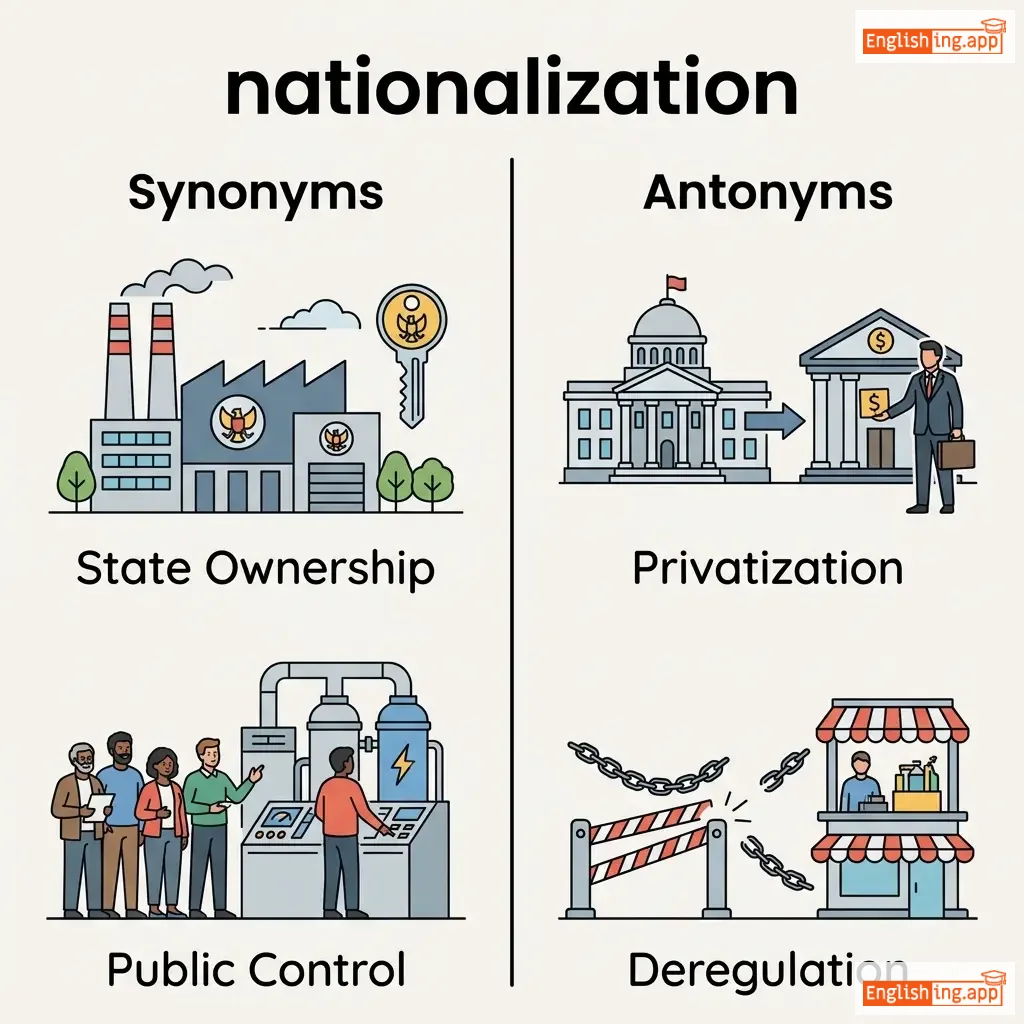
State Ownership, Public Control, Government Takeover
••••••
|
Privatization, Deregulation, Free Market
••••••
|
国家化意味着政府拥有所有权。
••••••
|
|
#3081
♻️
|
/ˌriː.dɪs.trɪˈbjuː.ʃən/
noun
(重分配)
••••••
|
|
重分配
chongfenpei
••••••
|
The sharing of wealth or resources more equally among society.
••••••
|
The government introduced a redistribution policy to reduce inequality.
政府出台了重分配政策,以减少不平等。
••••••
|
政府出台了重分配政策,以减少不平等。
Zhengfu chuchulai le chongfenpei zhengce, yi jianxiaobu pingdeng.
••••••
|
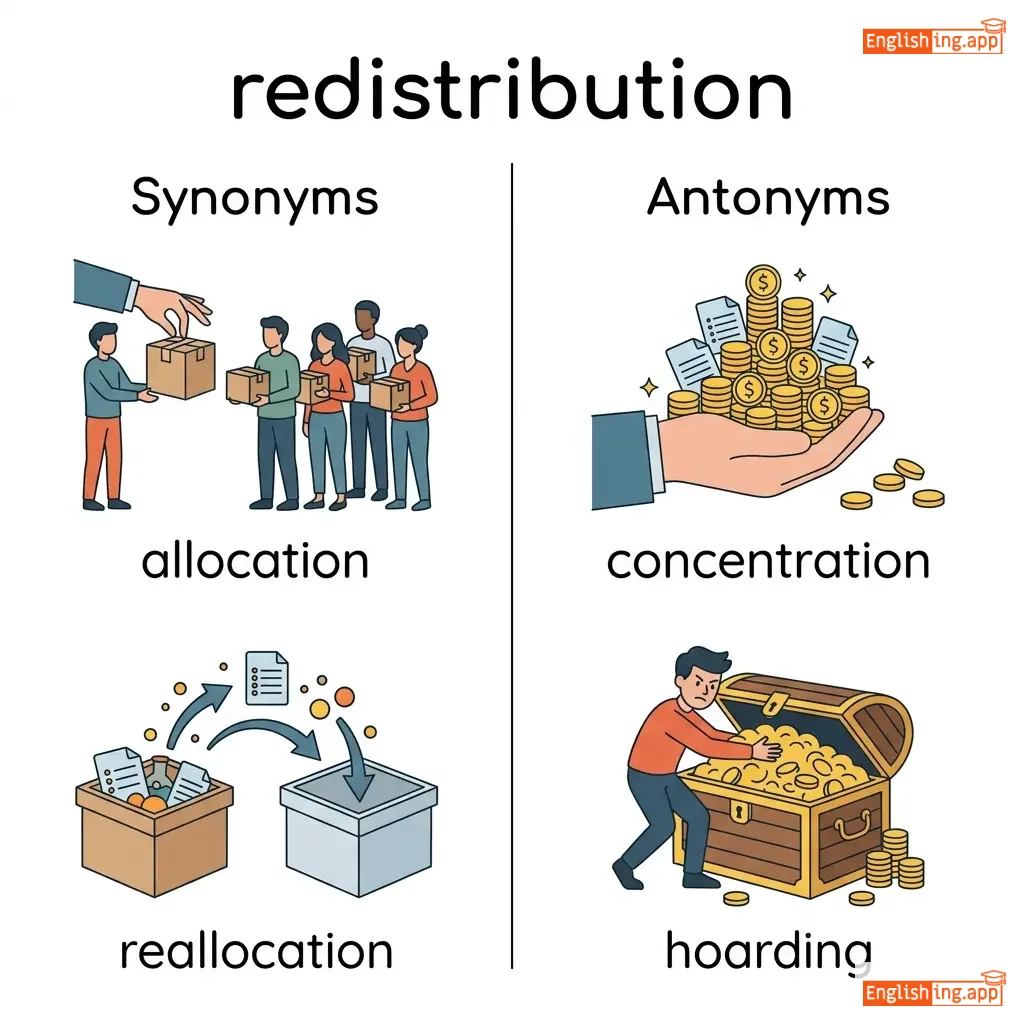
Reallocation, Reassignment, Reapportionment
••••••
|
Concentration, Hoarding, Retention
••••••
|
重分配 = 重新分配 + 公正
••••••
|
|
#3082
🎯
|
/ˌɪn.təˈvɛn.ʃə.nɪ.zəm/
noun
(干预主义)
••••••
|
|
干预主义
gānyù zhǔyì
••••••
|
Government policy of active involvement in economic affairs.
••••••
|
The central bank's interventionism helped stabilize inflation. |
中央银行的干预主义帮助稳定了通货膨胀。
Zhōngyāng yínháng de gānyù zhǔyì bāngzhù wěndìngle tōnghuò péngzhàng.
••••••
|
Regulation, Government Control, Market Oversight
••••••
|
Laissez-faire, Non-intervention, Free Market
••••••
|
政府干预经济以保持通货膨胀稳定。
••••••
|
|
#3083
💸
|
/ˈsʌb.sɪ.di/
noun
(补贴)
••••••
|
|
补贴
butie
••••••
|
Financial assistance provided by government to reduce costs of goods or services.
••••••
|
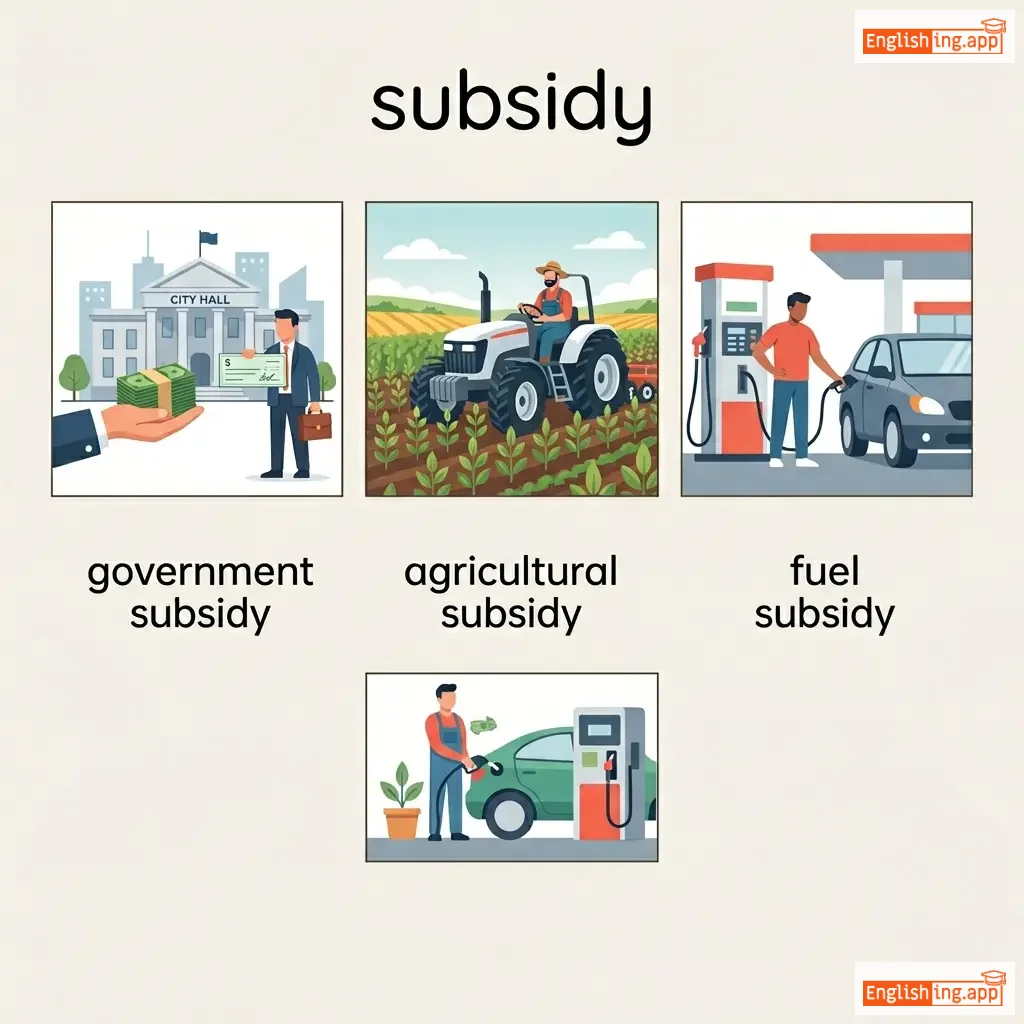
The government provides a fuel subsidy to control prices. |
政府提供燃料补贴以控制价格。
Zhengfu tigong ranliao butie yi kongzhi jiage.
••••••
|
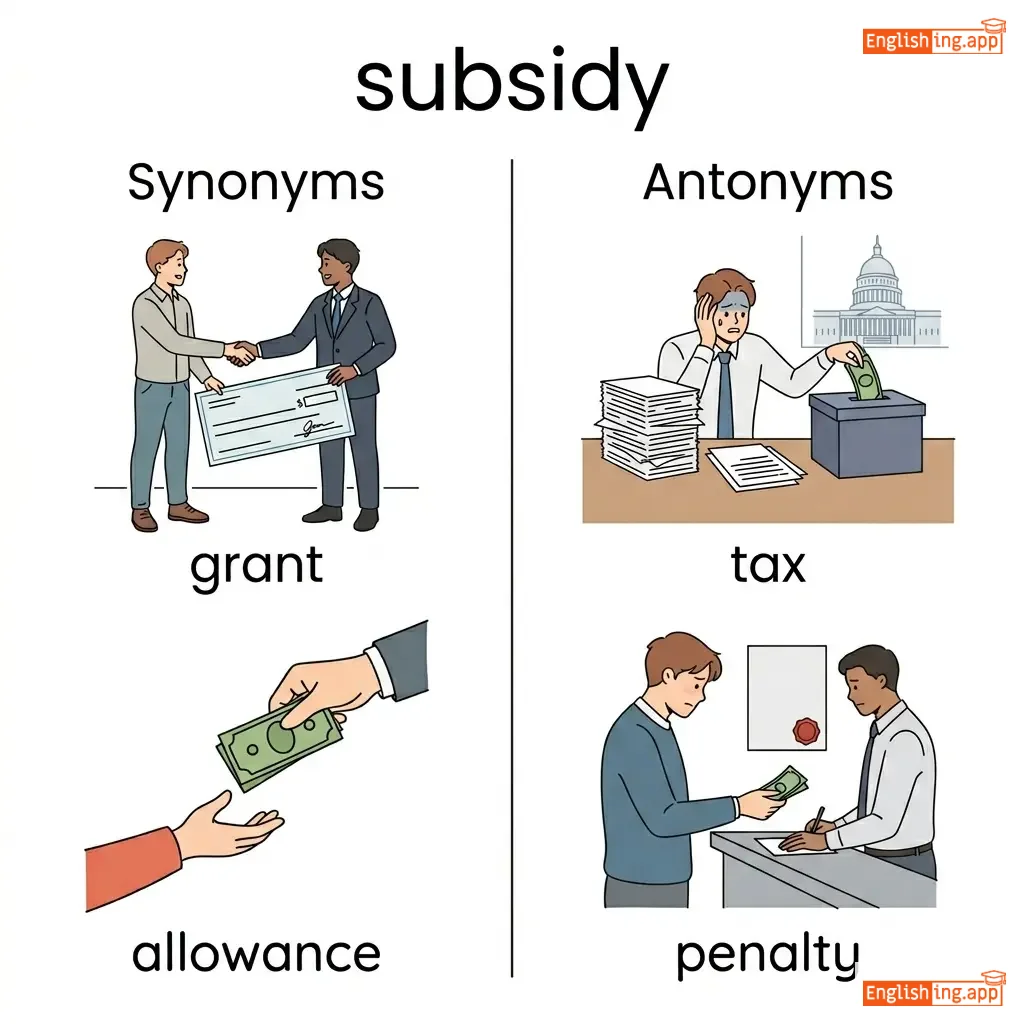
Grant, Financial Aid, Support
••••••
|
Taxation, Cost Increase, Cutback
••••••
|
中文的'补贴'和英文的'subsidy'发音相似。
••••••
|
|
#3084
🔓
|
/ˌdiː.rɛɡ.jʊˈleɪ.ʃən/
noun
(德瑞格拉申)
••••••
|
|
放宽管制
deregulation
••••••
|
The removal or reduction of government rules and restrictions in business.
••••••
|
Deregulation allows businesses to operate with fewer restrictions.
放宽管制使企业能够在更少的限制下经营。
••••••
|
放宽管制使企业能够在更少的限制下运营。
fangkuan guanzhi shi qiye nenggou zai gengshao de xianzhi xia yunying
••••••
|
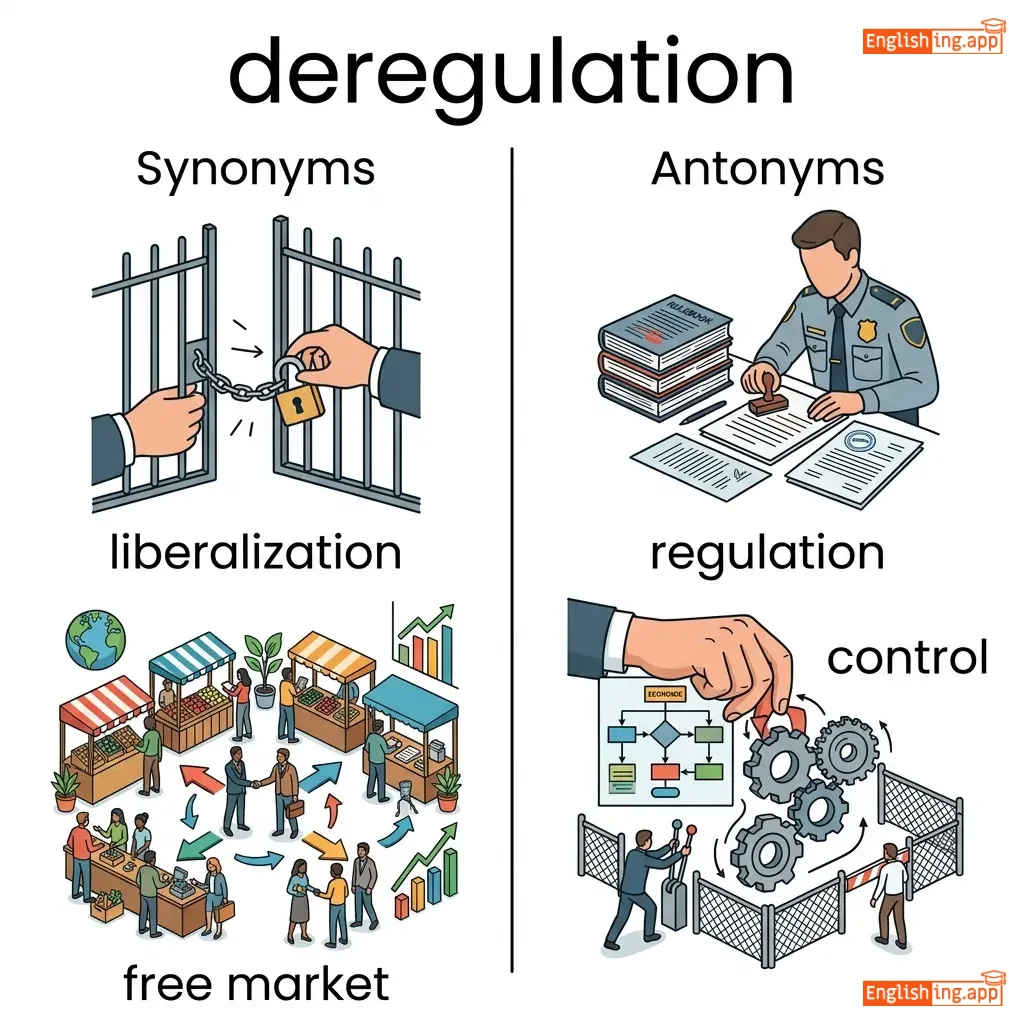
Liberalization, Free Market Reform, Privatization
••••••
|
Regulation, Government Oversight, Interventionism
••••••
|
De-RE-GU-LA-TION = De Release Government Laws, 放开政府法令,企业轻装上路
••••••
|
|
#3085
🔄
|
/ˈbɑːr.tər ˌsɪs.təm/
noun
(物物交换系统)
••••••
|
|
物物交换
wù wù jiāohuàn
••••••
|
A system of exchange where goods and services are traded directly without using money.
••••••
|
Ancient civilizations used the barter system for trade. |
古代文明使用物物交换系统进行贸易。
Gu dai wenming shi yong wu wu jiao huan xi tong jin xing mao yi.
••••••
|
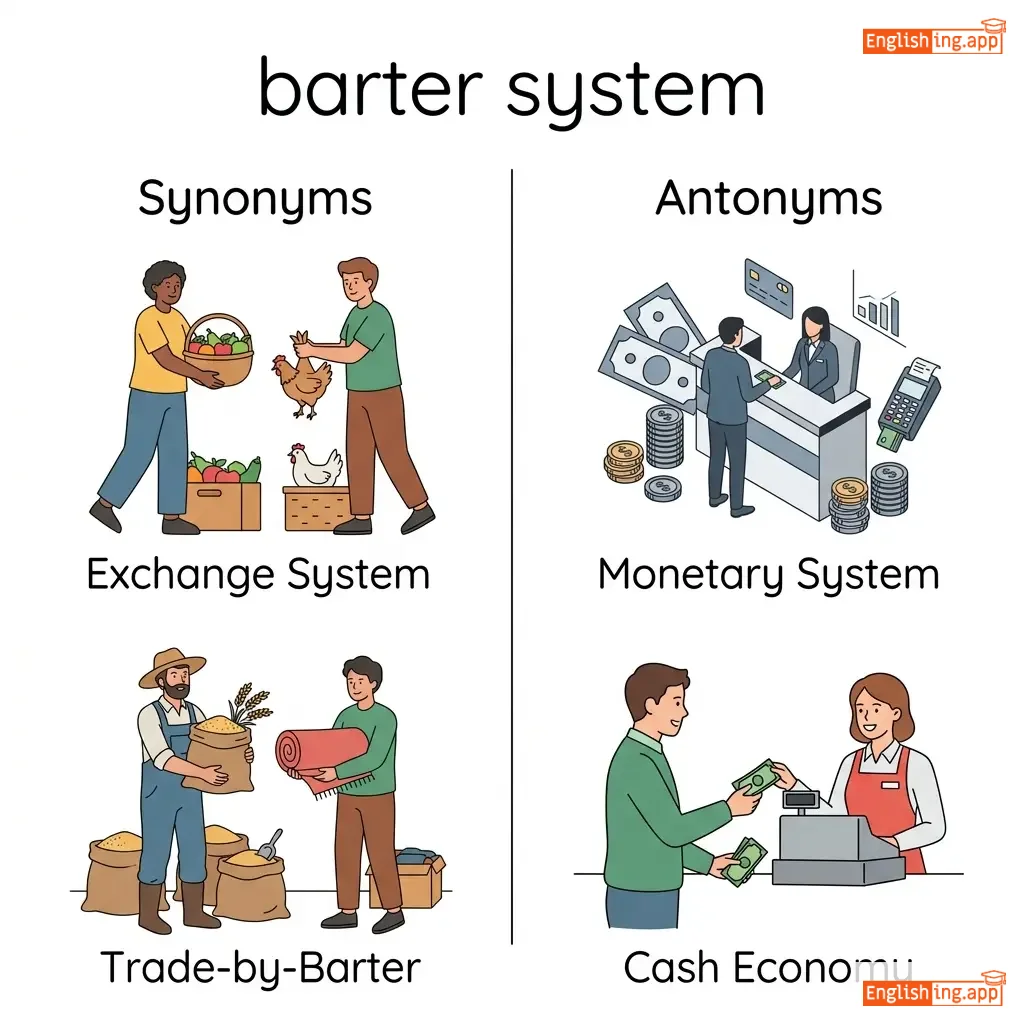
Exchange System, Trade-by-Barter, Swap Economy
••••••
|
Monetary System, Cash Economy, Capitalism
••••••
|
物物交换就像直接交换商品,不需要钱。
••••••
|
|
#3086
🏗️
|
/ˌiː.kəˈnɒm.ɪk ˈsɪs.təm/
noun
(经济系统)
••••••
|
|
经济系统
jingji xitong
••••••
|
The organized framework for production, distribution, and consumption of goods and services in society.
••••••
|
Capitalism, socialism, and mixed economies are types of economic systems.
资本主义、社会主义和混合经济是经济系统的类型。
••••••
|
资本主义、社会主义和混合经济是经济系统的类型。
Ziben zhuyi, shehuizhuyi he hunhe jingji shi jingji xitong de leixing.
••••••
|
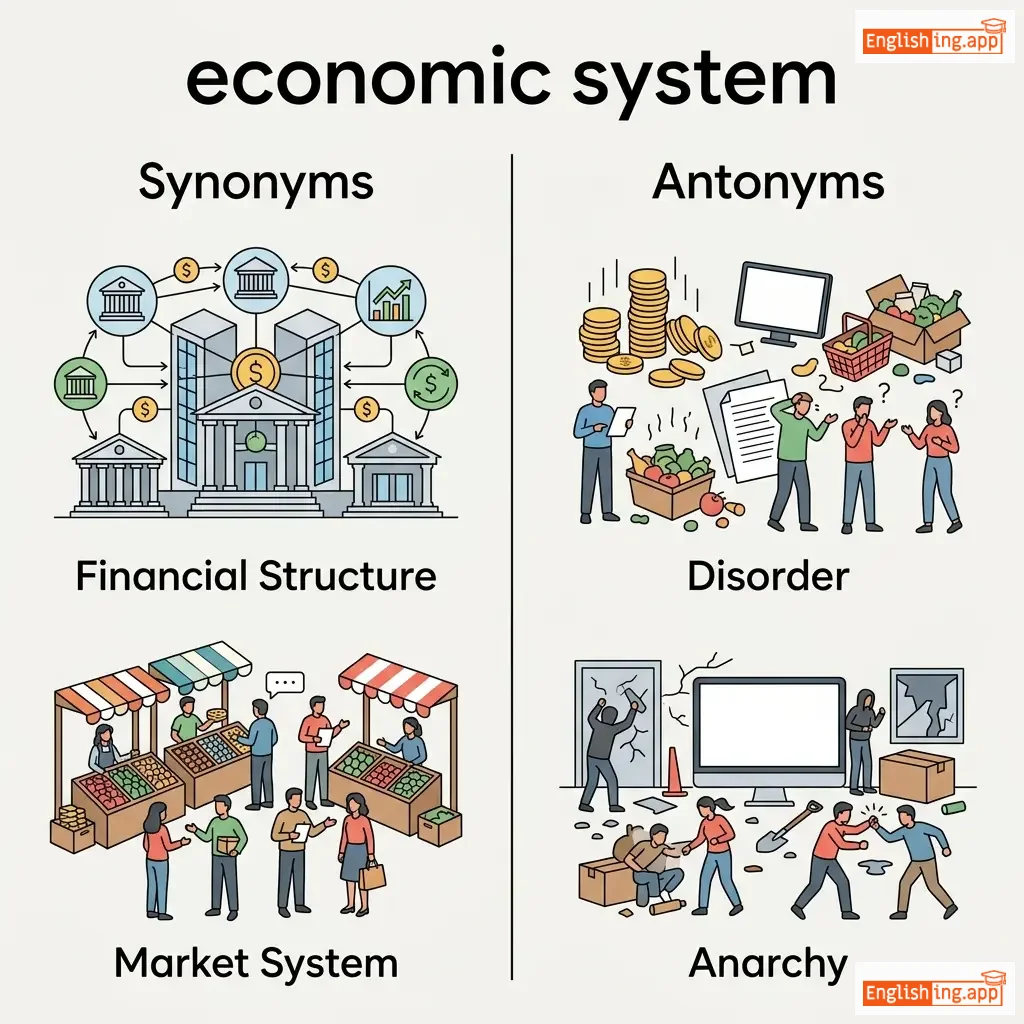
Financial Structure, Market System, Political Economy
••••••
|
Disorder, Anarchy, Unstructured Market
••••••
|
经济系统 = 经济框架的组成部分。
••••••
|
|
#3087
⚖️
|
/ˌiː.kwɪˈlɪb.ri.əm/
noun
(ɪkwɪˈlɪbriəm)
••••••
|
|
平衡
pingheng
••••••
|
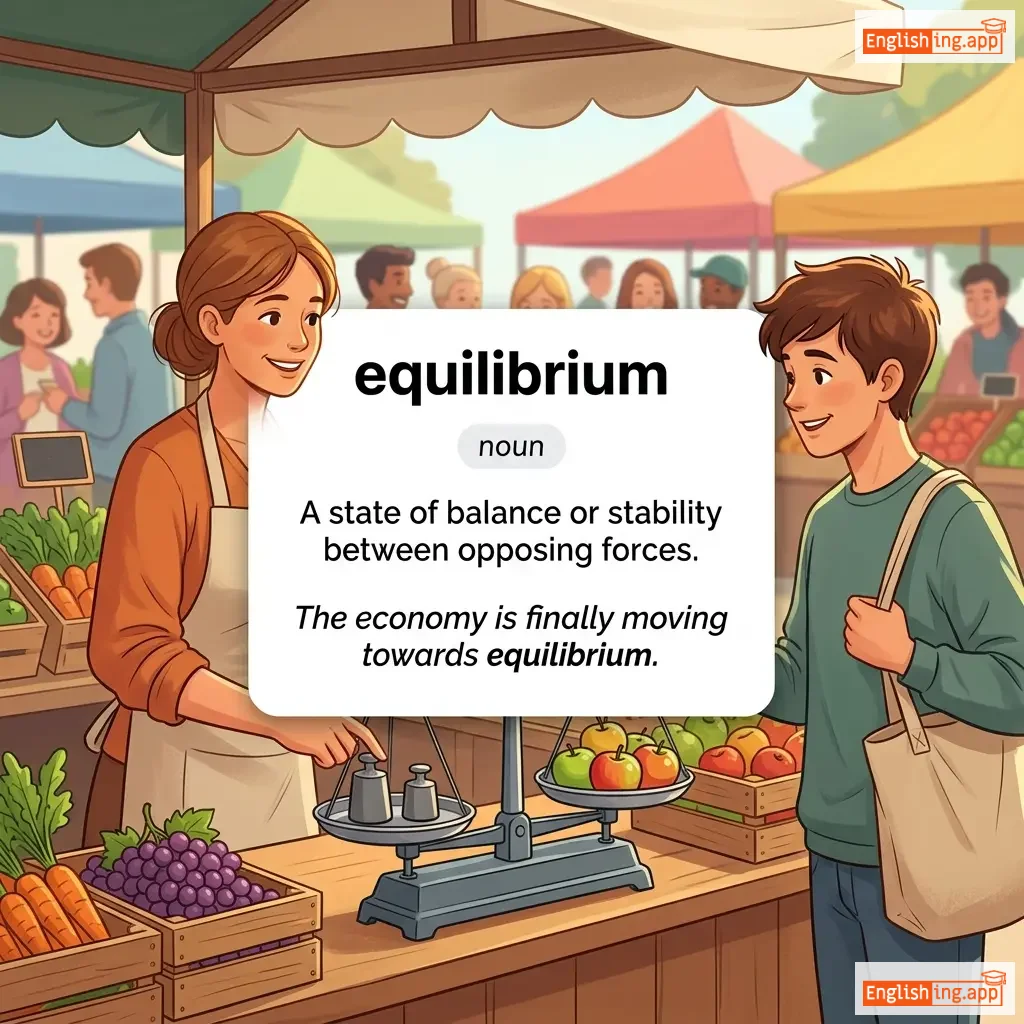
A state of balance between economic supply and demand, or between different economic forces.
••••••
|
The market reached equilibrium when supply met demand.
市场在供需平衡时达到了平衡。
••••••
|
市场在供需平衡时达到了平衡。
Shichang zai gongxu pingheng shi daole pingheng.
••••••
|
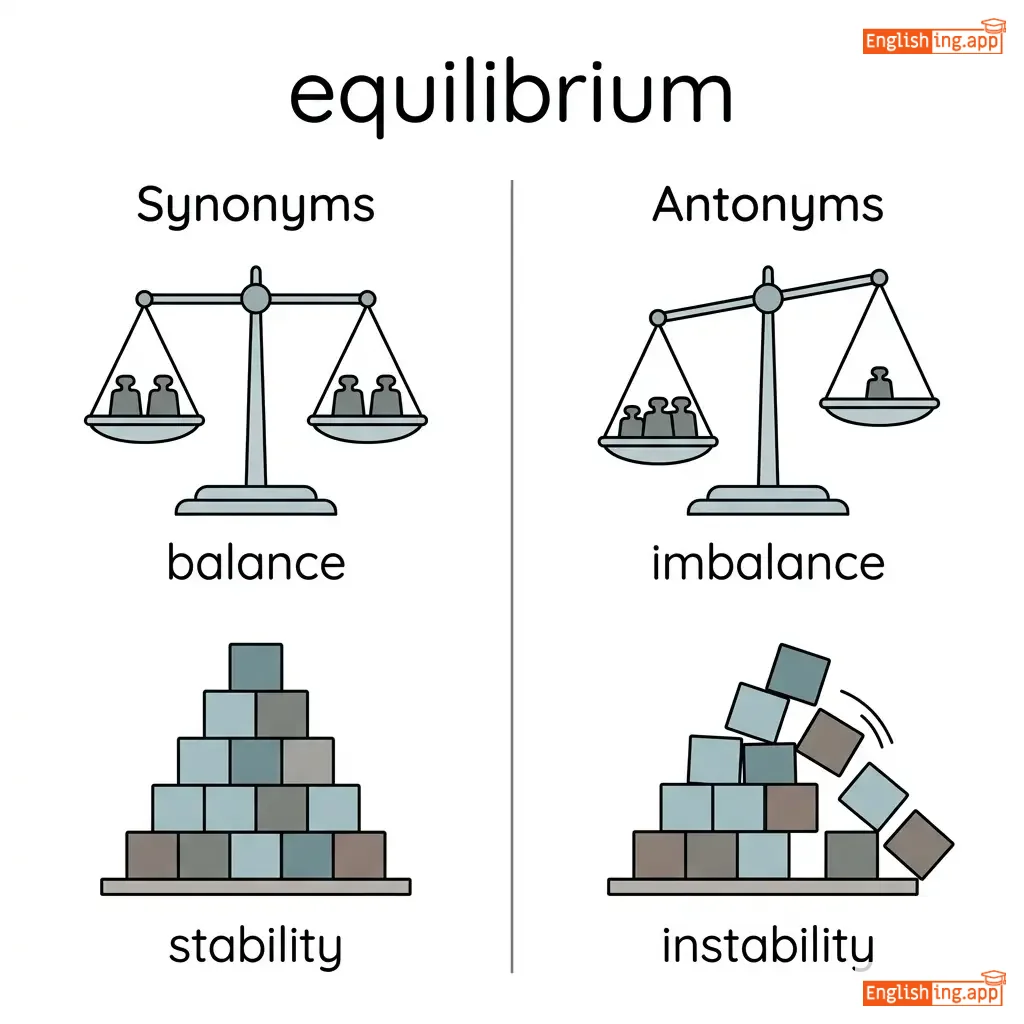
Balance, Stability, Steadiness
••••••
|
Disequilibrium, Instability, Imbalance
••••••
|
平衡像供需之间的平衡一样。
••••••
|
Vocabulary Quiz
Test your vocabulary by matching words with their translations or meanings.
Login to take the quiz
Comments (0)
Share your thoughts and join the discussion.
Join the discussion by logging in
Login to CommentNo comments yet
Be the first to share your thoughts!