

さまざまな種類の経済
The Different Types of Economies
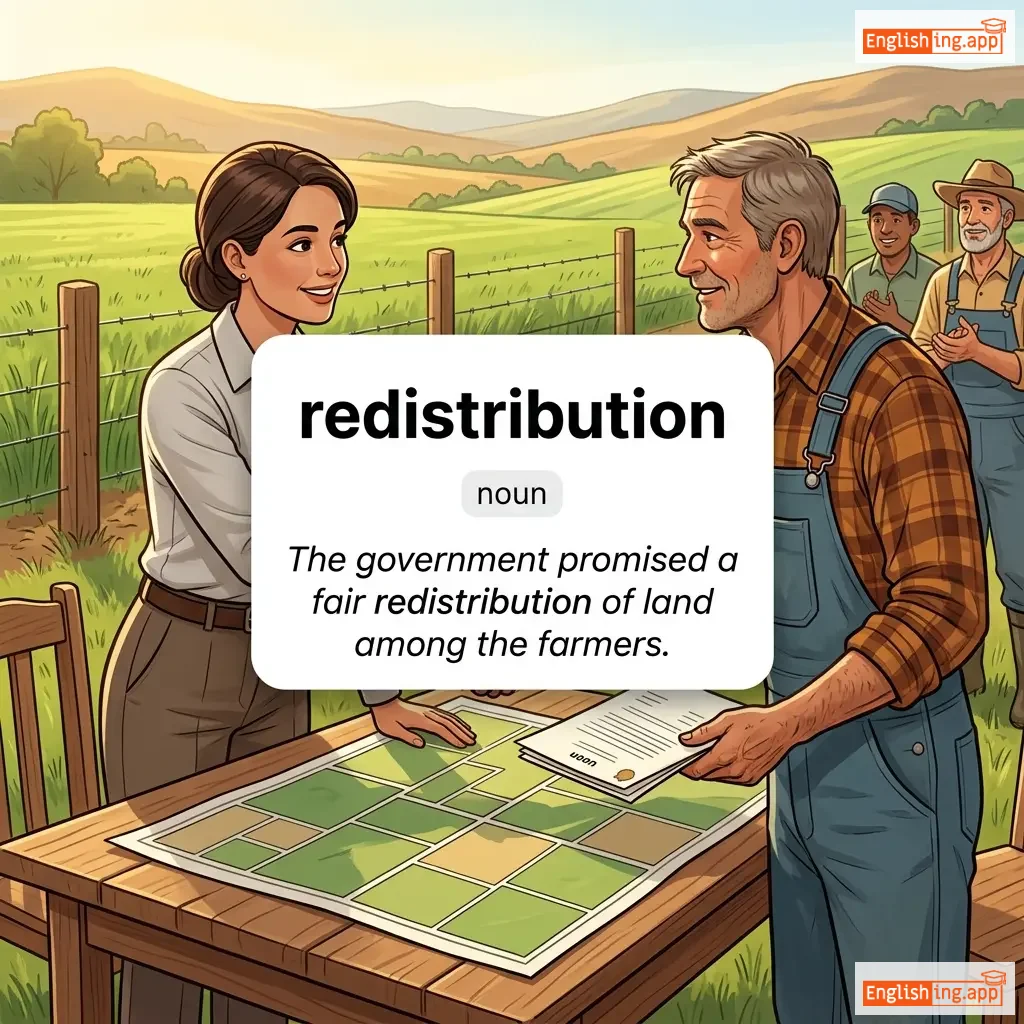
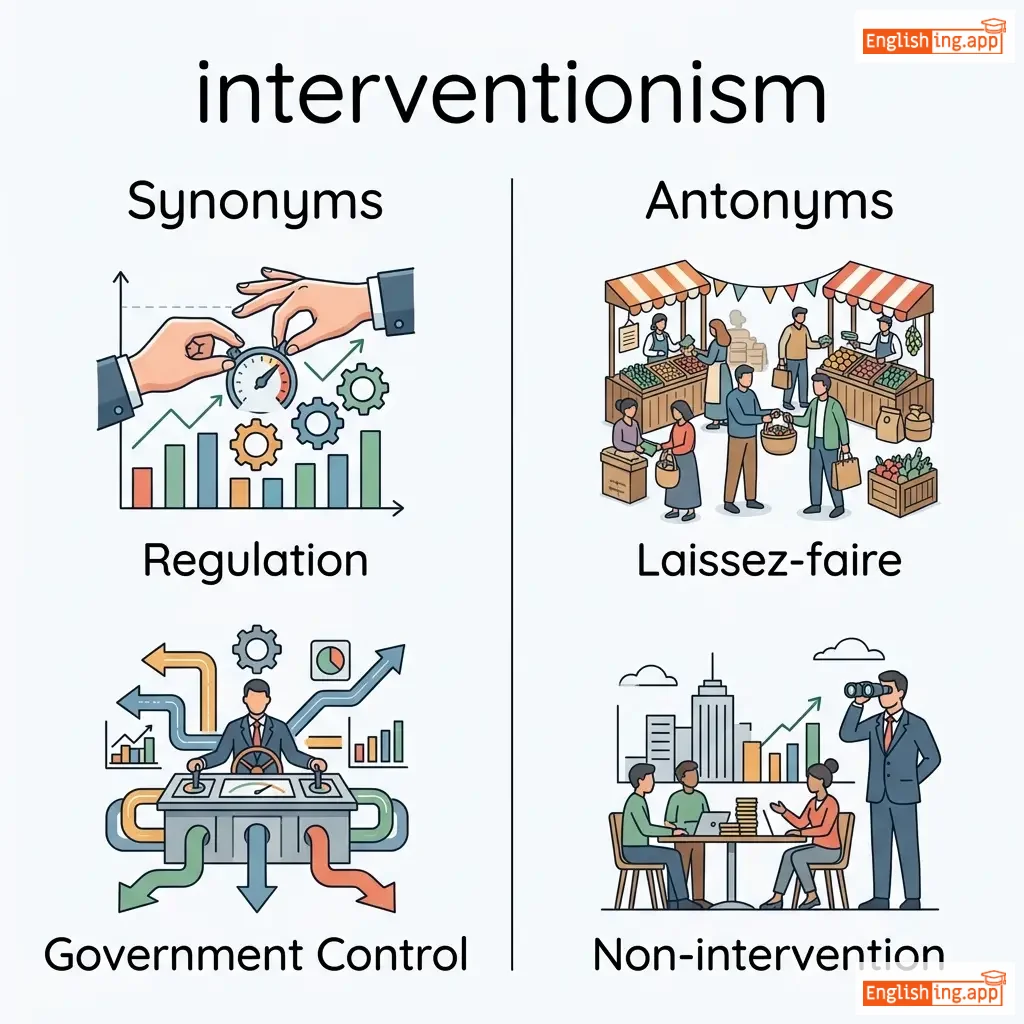
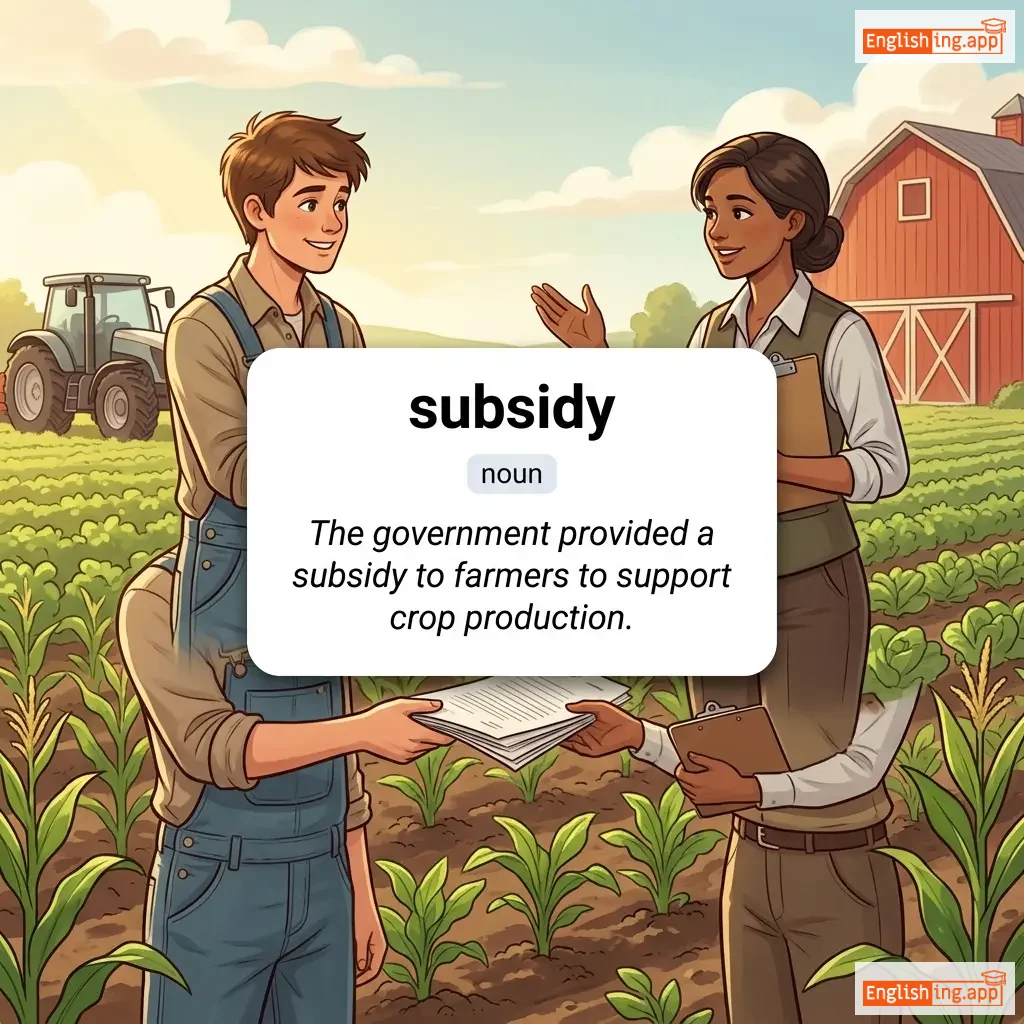
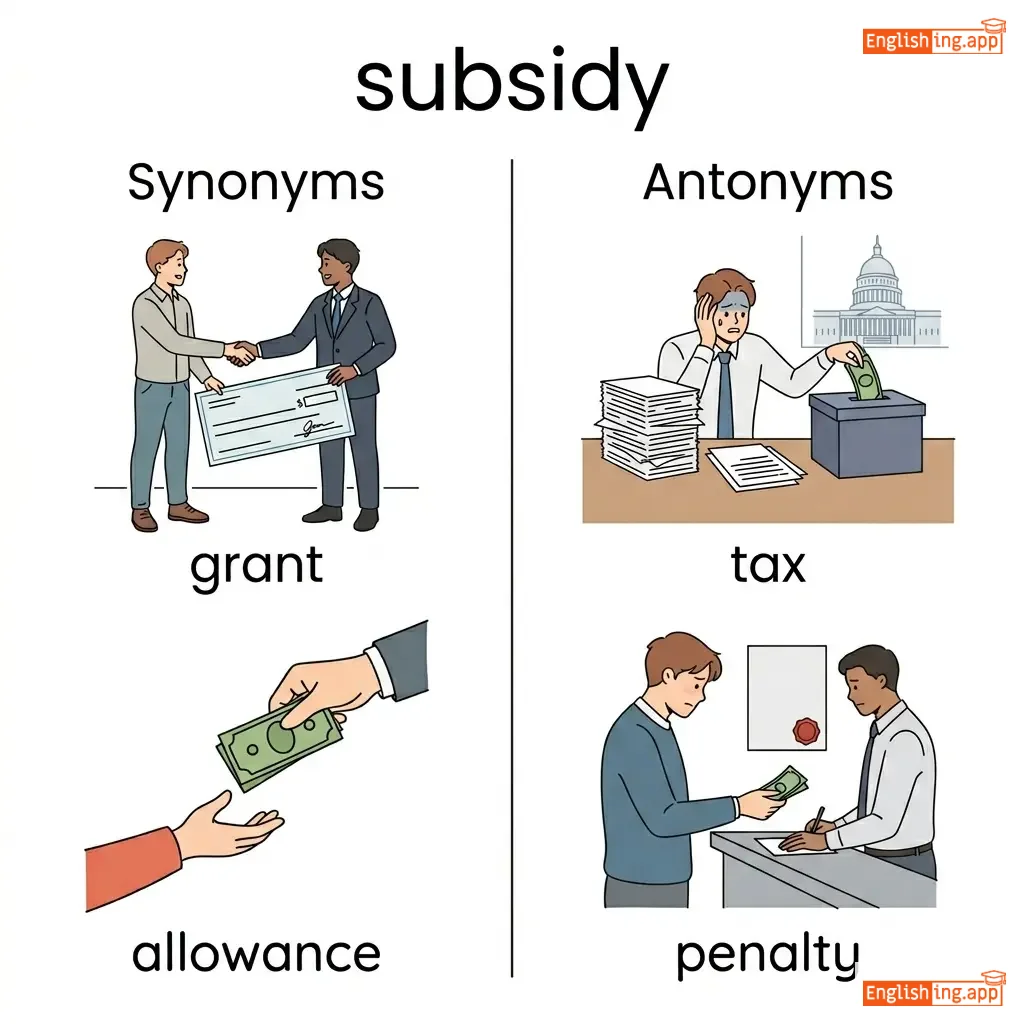
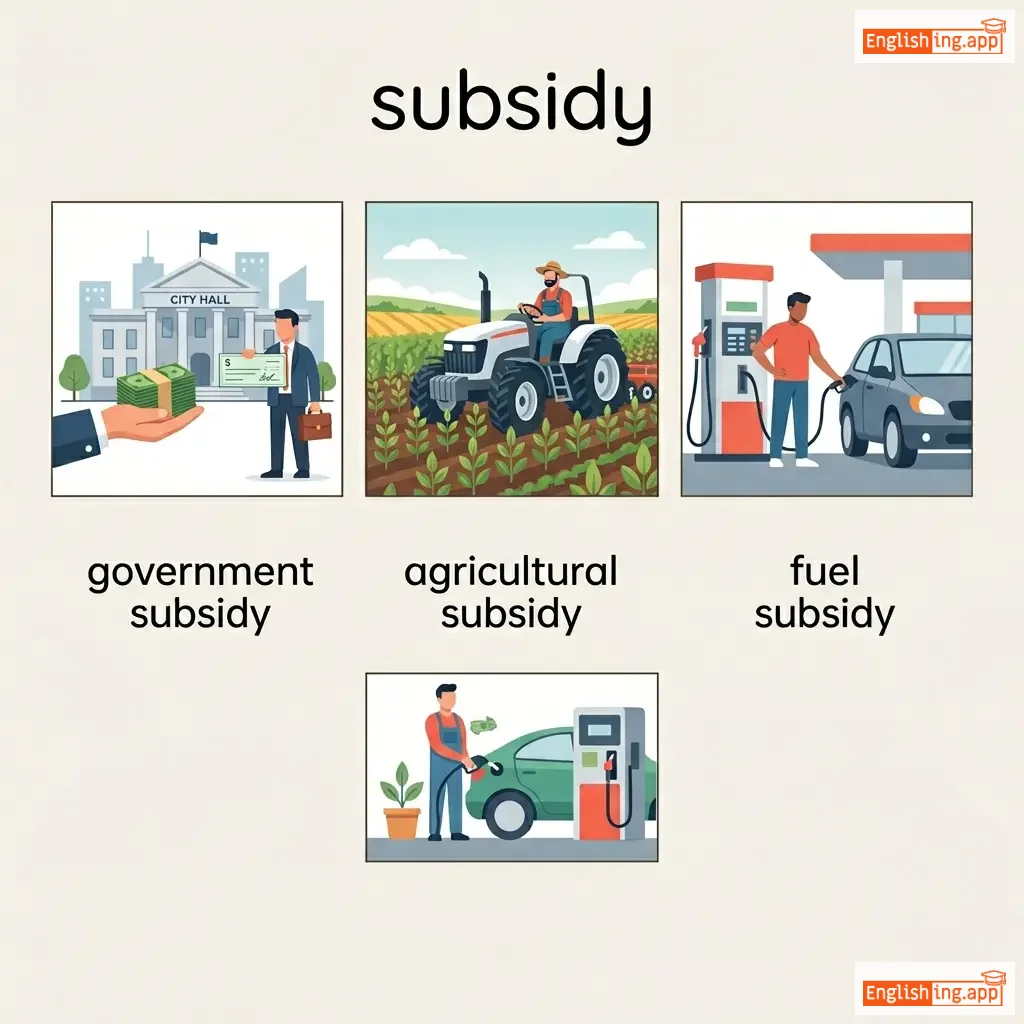
国の economy はその fiscal および monetary 政策に依存しています。一般的に、economy には4つのタイプがあります — capitalism、socialism、mixed economy、および traditional economy。Capitalism は laissez-faire 政策が採用されている制度であり、政府の介入はほとんどありません。そこでは privatization と commodification が多く、個人の所有権が重視されます。一方、socialism では政府が nationalization と redistribution のプロセスを使用し、富が平等に分配されるようにします。市場ではより多くの interventionism があり、多くの分野で subsidy が提供されます。Mixed economy では、deregulation と政府の interventionism が連携して機能し、政府はいくつかの分野を運営し、private sector が他の分野を管理します。Traditional economy では、一般的に barter system が普及しており、財やサービスが交換の手段として使用されます。したがって、それぞれの economic system には独自の長所と短所があり、国の equilibrium を維持するために適切な政策が必要です。
翻訳
過去
過去分詞
三人称単数
動名詞
意味
例文
例文の翻訳
同義語
対義語
コロケーション
ニーモニック
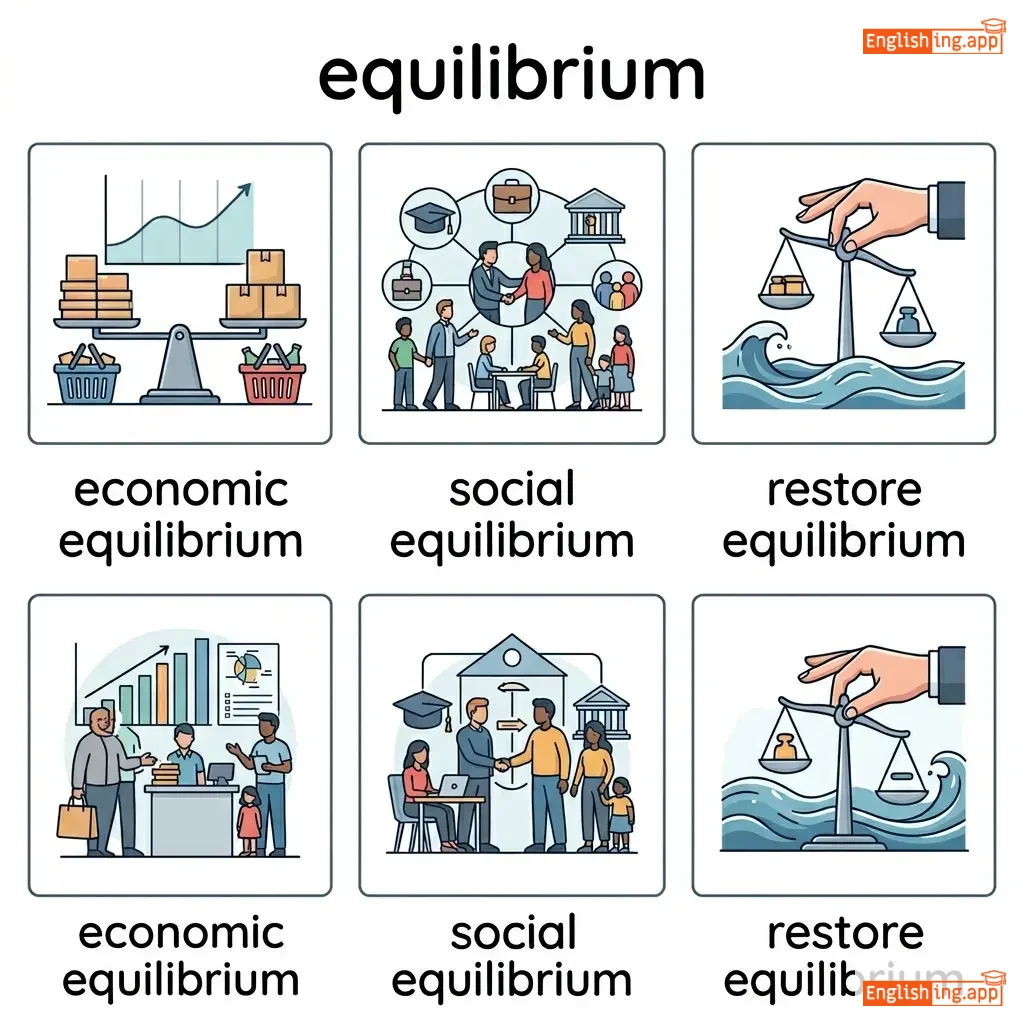
Swipe left or right, or use the buttons. Tap image to zoom.
例文の翻訳
単語
The Different Types of EconomiesThe Different Types of Economies - マスクトグル
|
絵文字
|
単語 | Images | 翻訳 | 意味 | 例文 | 例文の翻訳 | 同義語 | 対義語 | ニーモニック |
|---|---|---|---|---|---|---|---|---|---|
|
#3070
💰
|
/ɪˈkɒn.ə.mi/
noun
(イコノミー)
••••••
|
|
経済
keizai
••••••
|
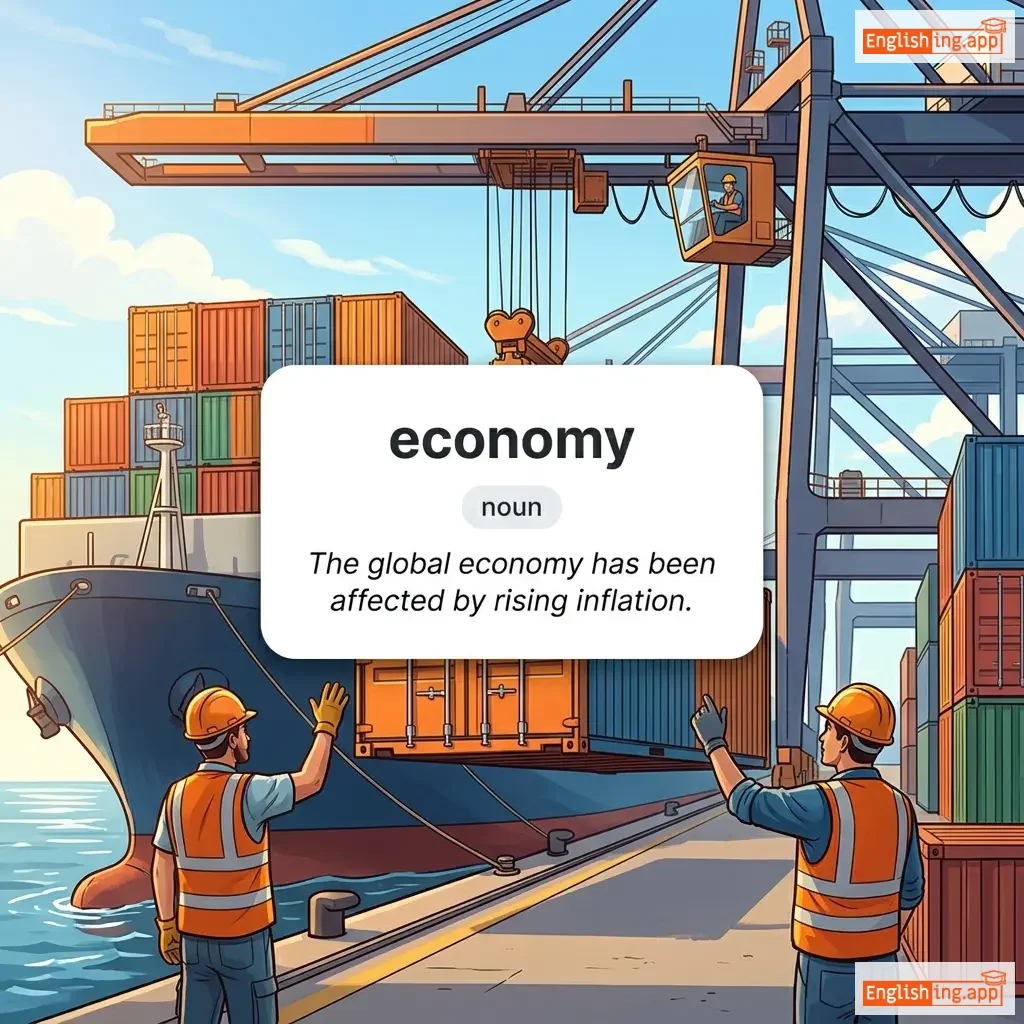
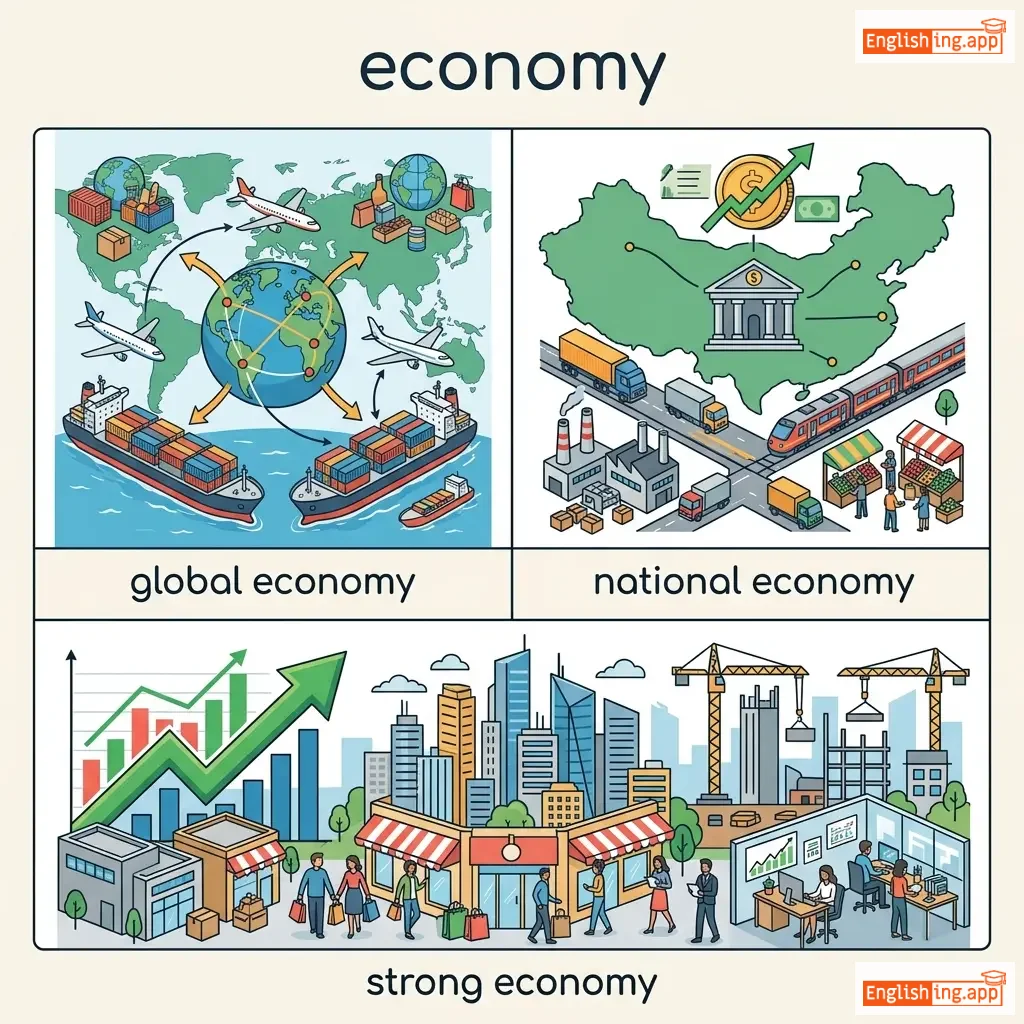
The system of production, distribution, and consumption of goods and services in a country or region.
••••••
|
The country's economy is growing rapidly.
その国の経済は急速に成長しています。
••••••
|
その国の経済は急速に成長しています。
Sono kuni no keizai wa kyūsoku ni seichō shiteimasu.
••••••
|
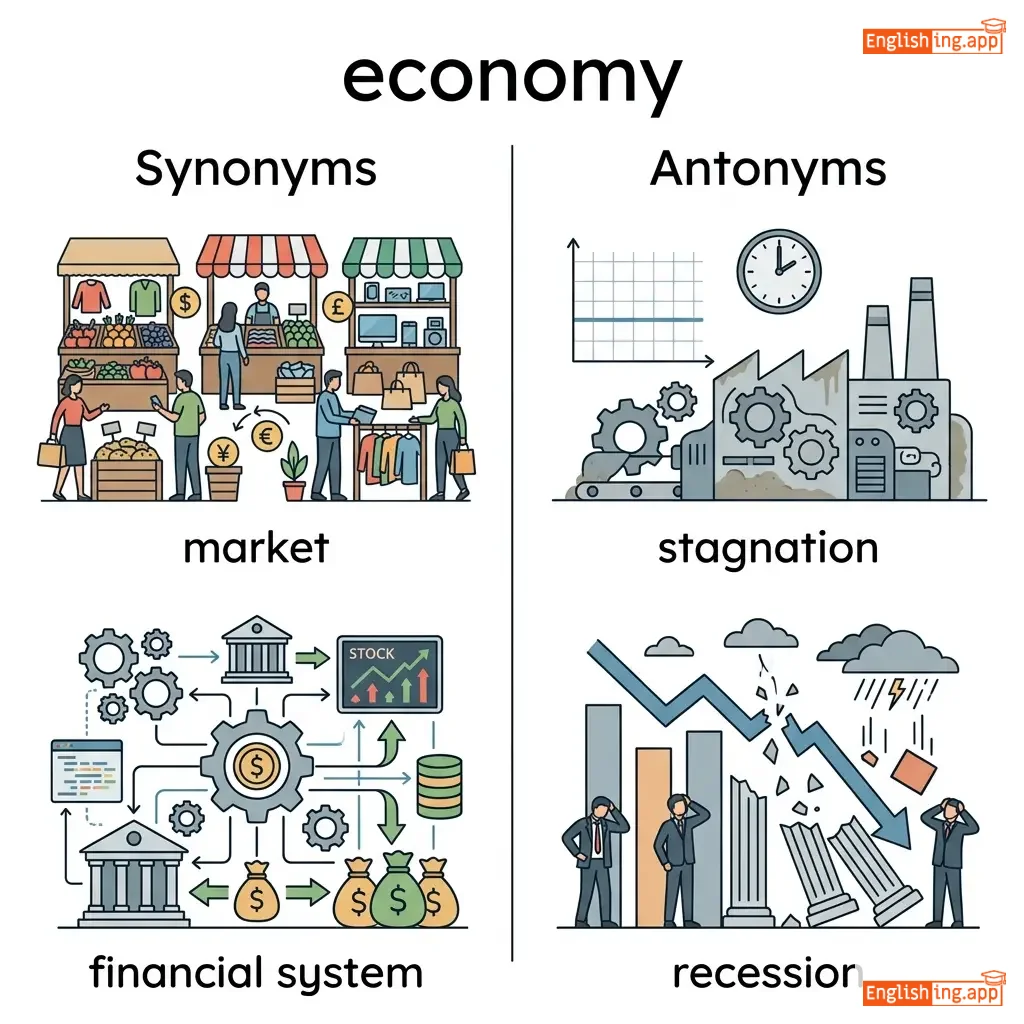
Financial System, Market, Trade
••••••
|
Stagnation, Recession, Instability
••••••
|
経済 in Japanese is a direct translation of 'economy', the study of resources and growth.
••••••
|
|
#3071
📊
|
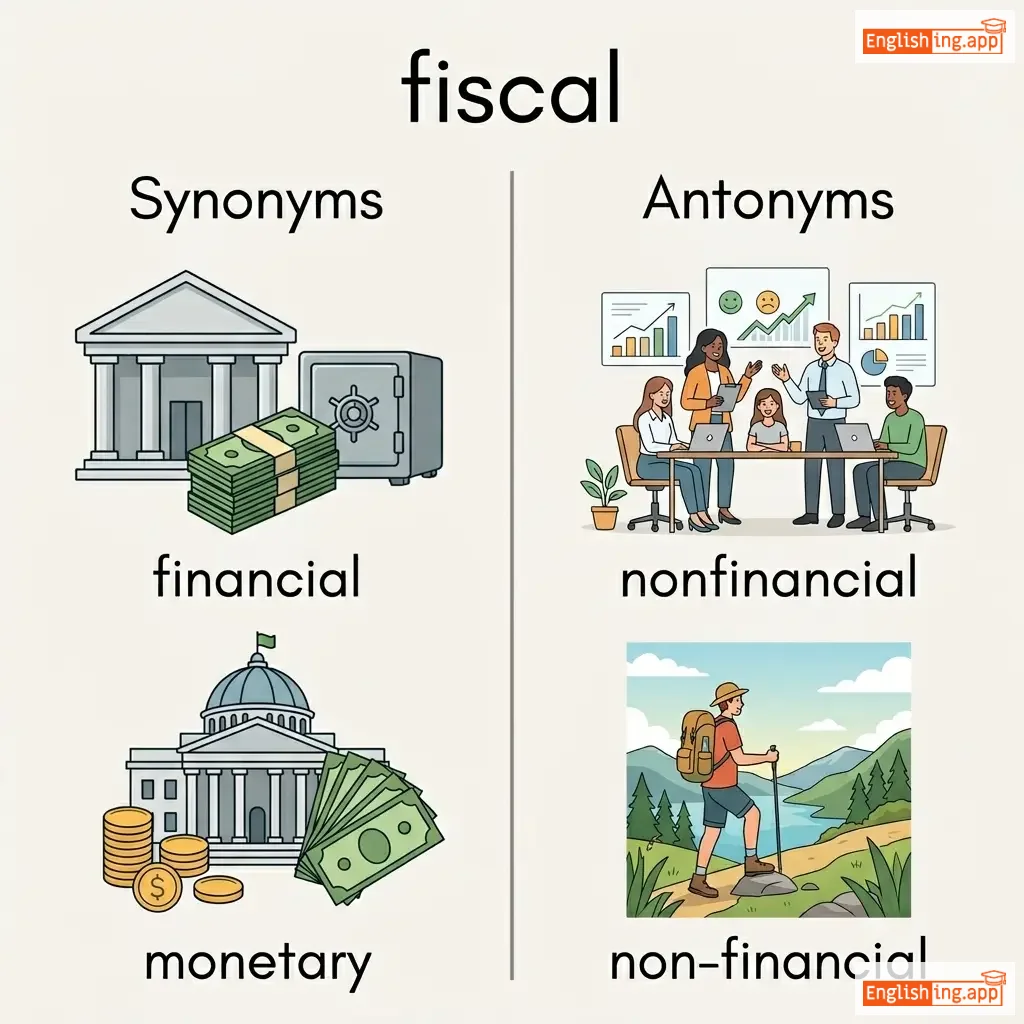
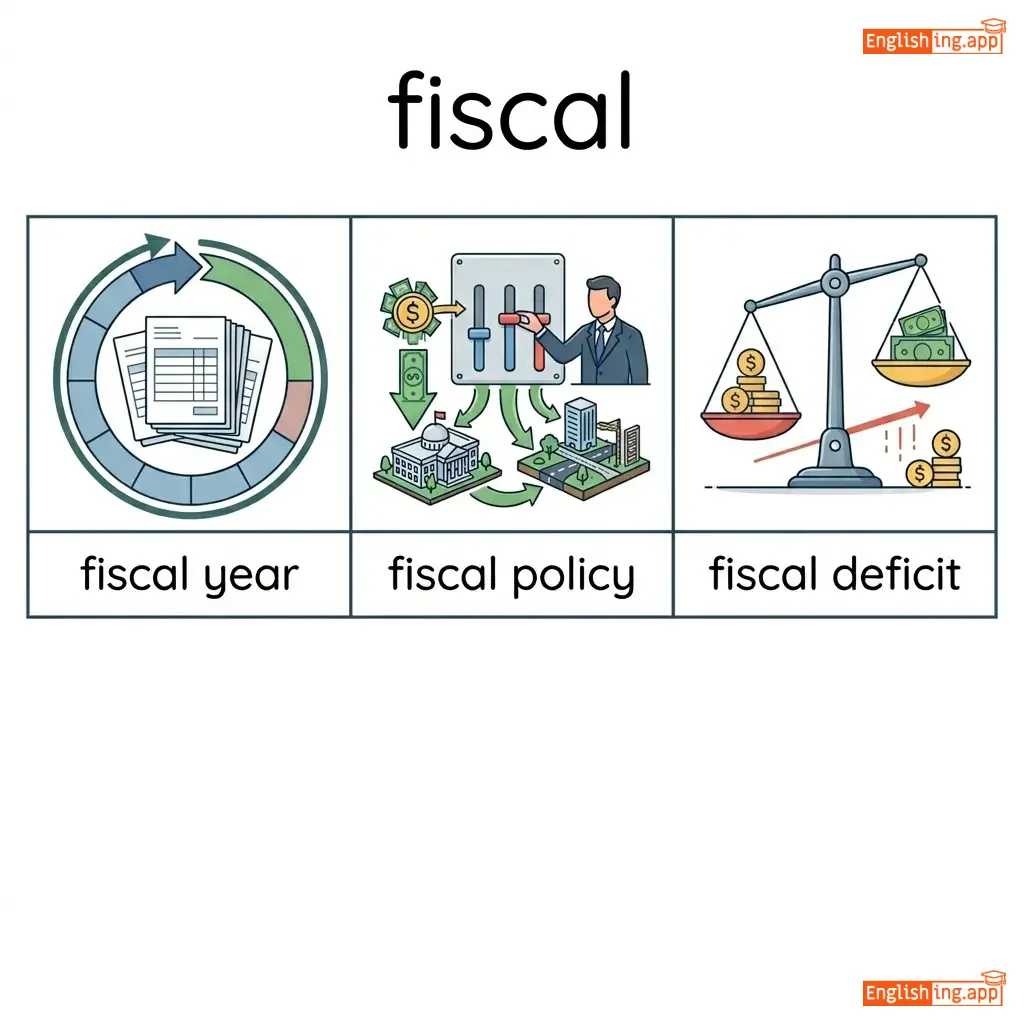
/ˈfɪs.kəl/
adjective
(フィスカル)
••••••
|
|
政府の収入や支出に関する
seifu no shūnyū ya shishutsu ni kansuru
••••••
|
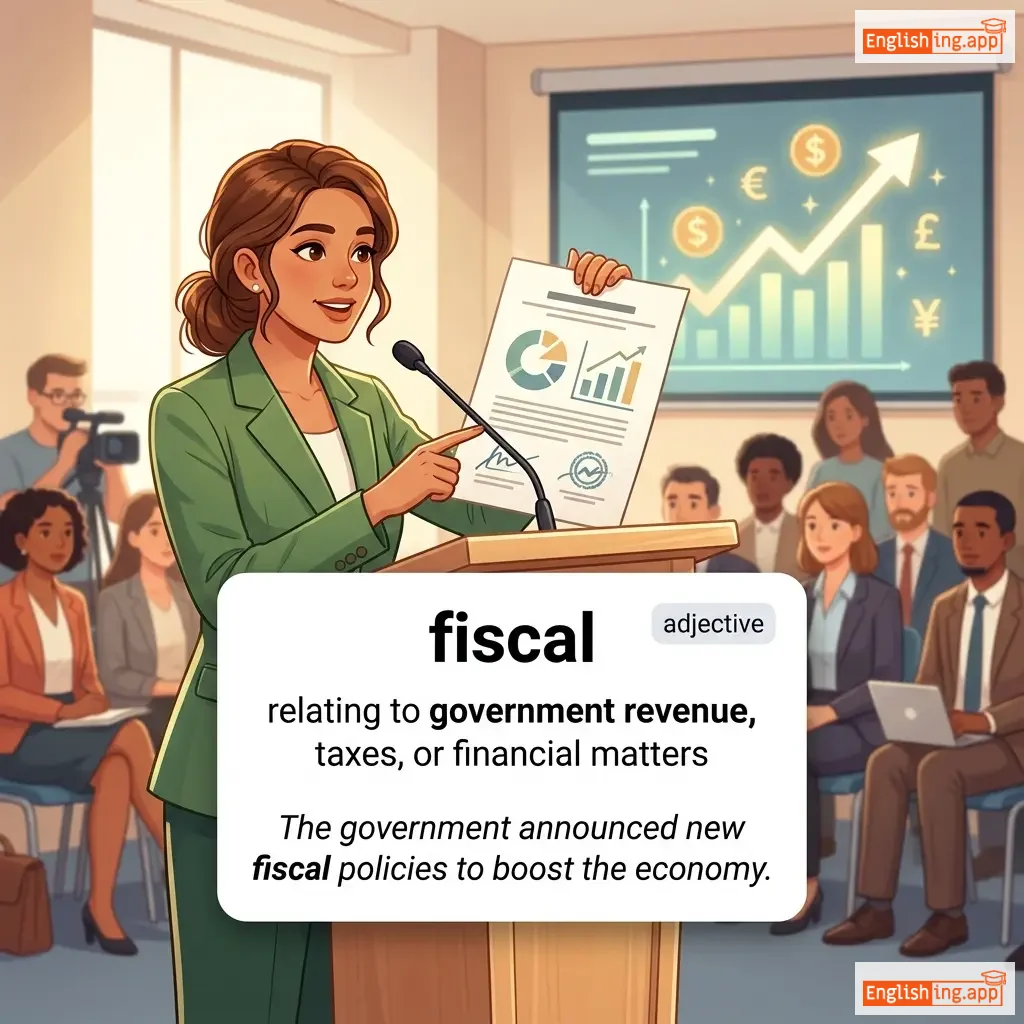
Related to government revenue, especially taxes and government spending.
••••••
|
The government introduced new fiscal policies.
政府は新しい財政政策を導入しました。
••••••
|
政府は新しい財政政策を導入しました。
Seifu wa atarashī zaisei seisaku o dōnyū shimashita.
••••••
|
Budgetary, Financial, Economic
••••••
|
Non-financial, Unrelated, Irrelevant
••••••
|
Fiscal policies are about government revenue and spending, like the Japanese '財政'.
••••••
|
|
#3072
💱
|
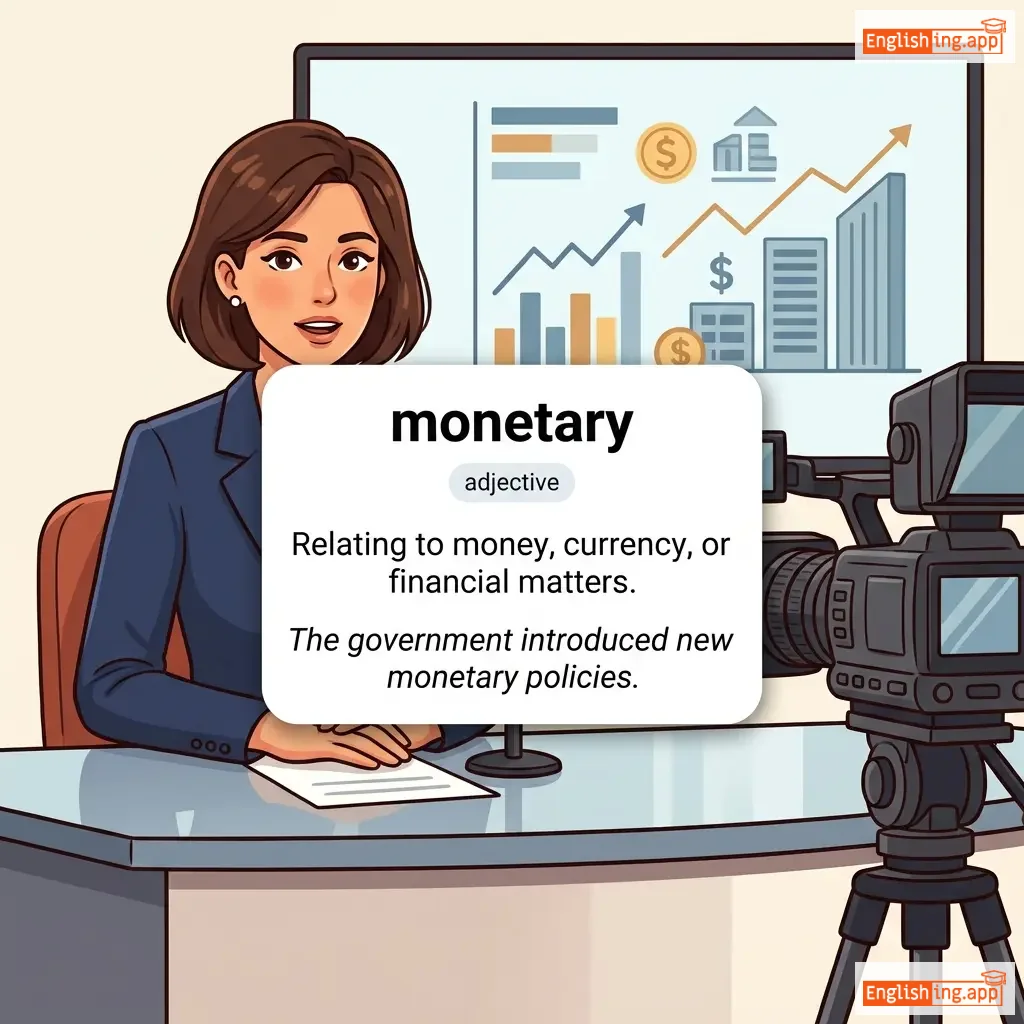
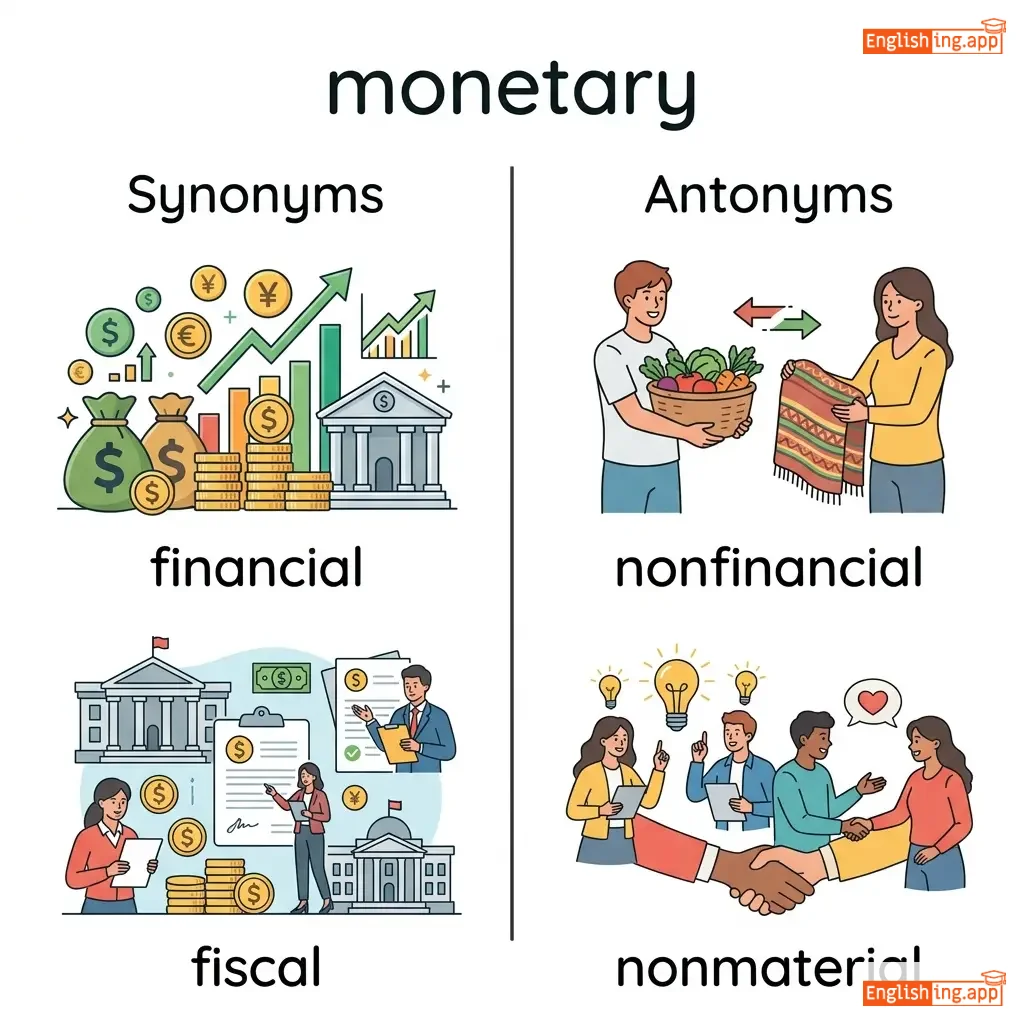
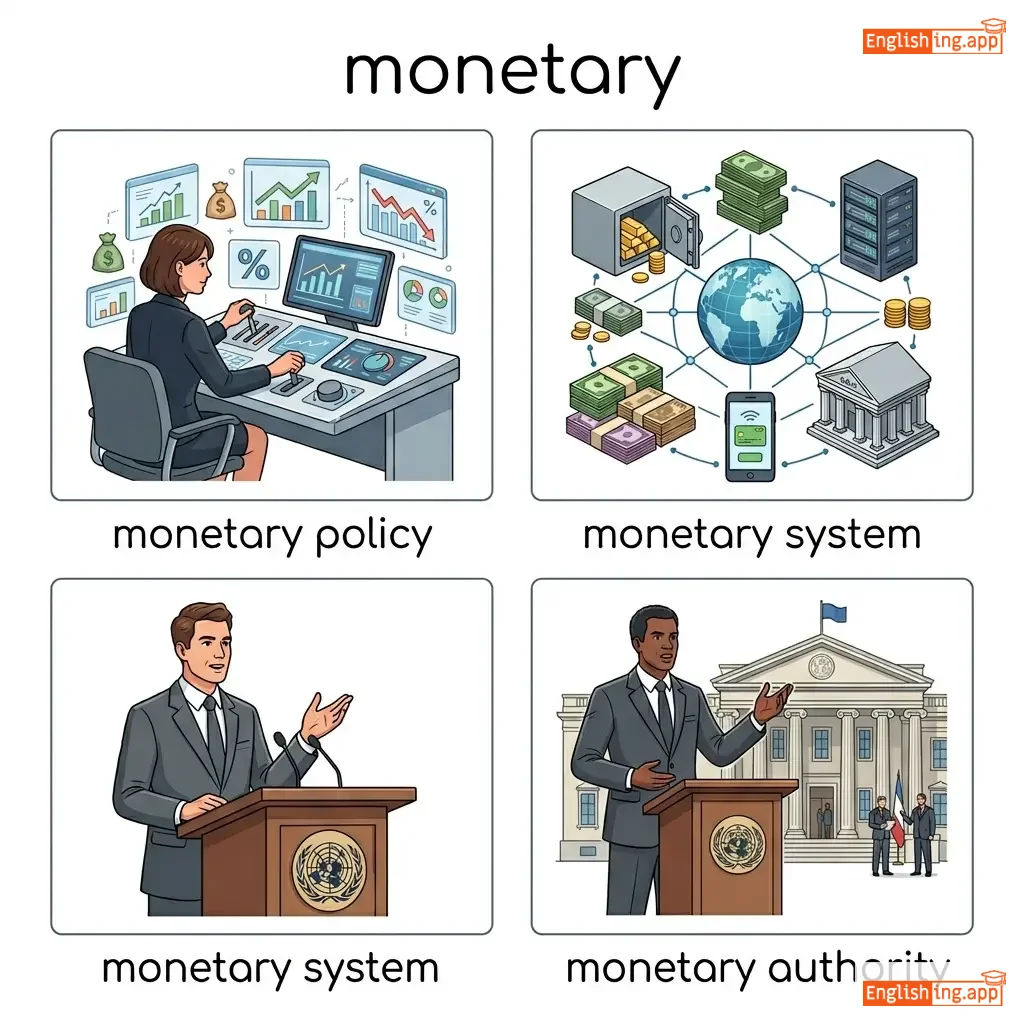
/ˈmʌn.ɪ.tri/
adjective
(モネタリー)
••••••
|
|
貨幣の
kahi no
••••••
|
Related to money, currency, and financial control by central banks.
••••••
|
The central bank controls monetary policy.
中央銀行は金融政策をコントロールします。
••••••
|
中央銀行は金融政策をコントロールします。
Chūō ginkō wa kin'yū seisaku o kontorōru shimasu.
••••••
|
Financial, Economic, Banking
••••••
|
Non-monetary, Barter, Non-financial
••••••
|
Monetary policy is like the central bank controlling the currency and money flow in the economy.
••••••
|
|
#3073
🏭
|
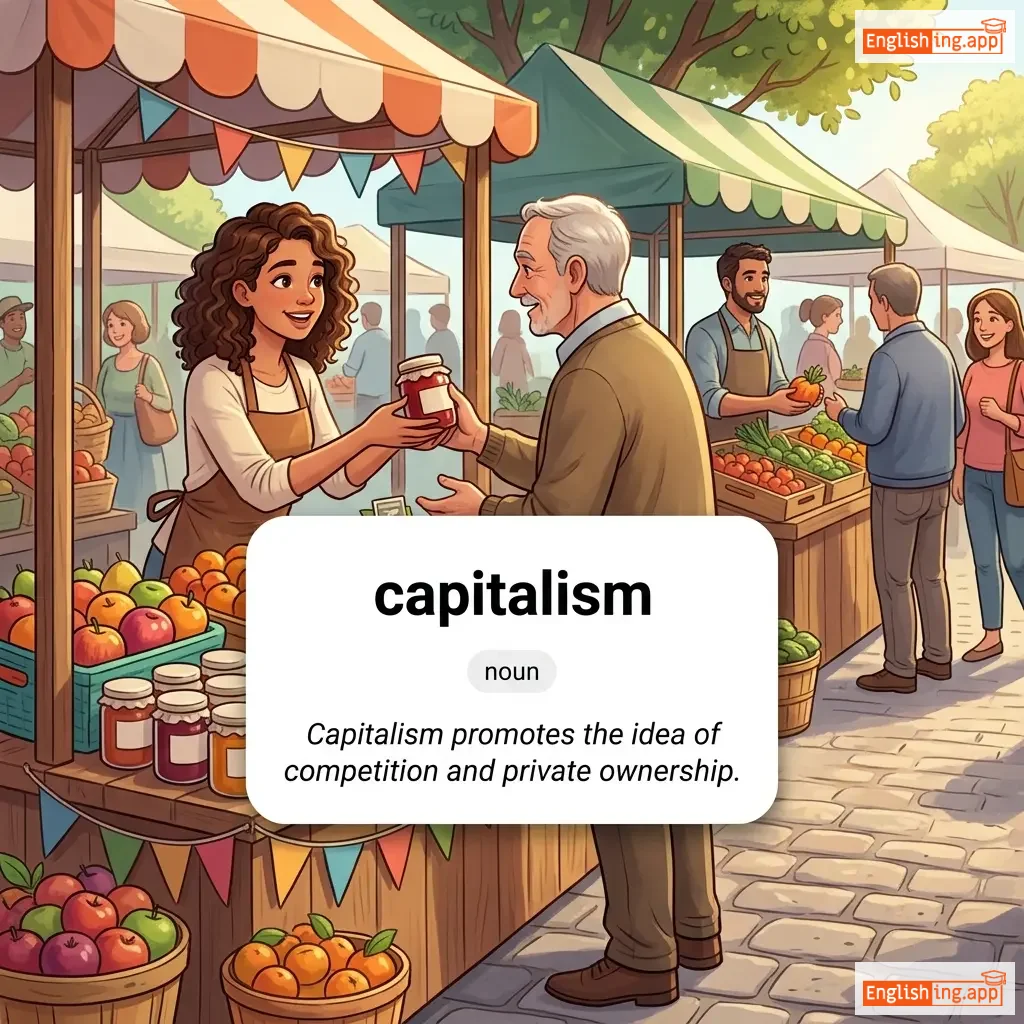
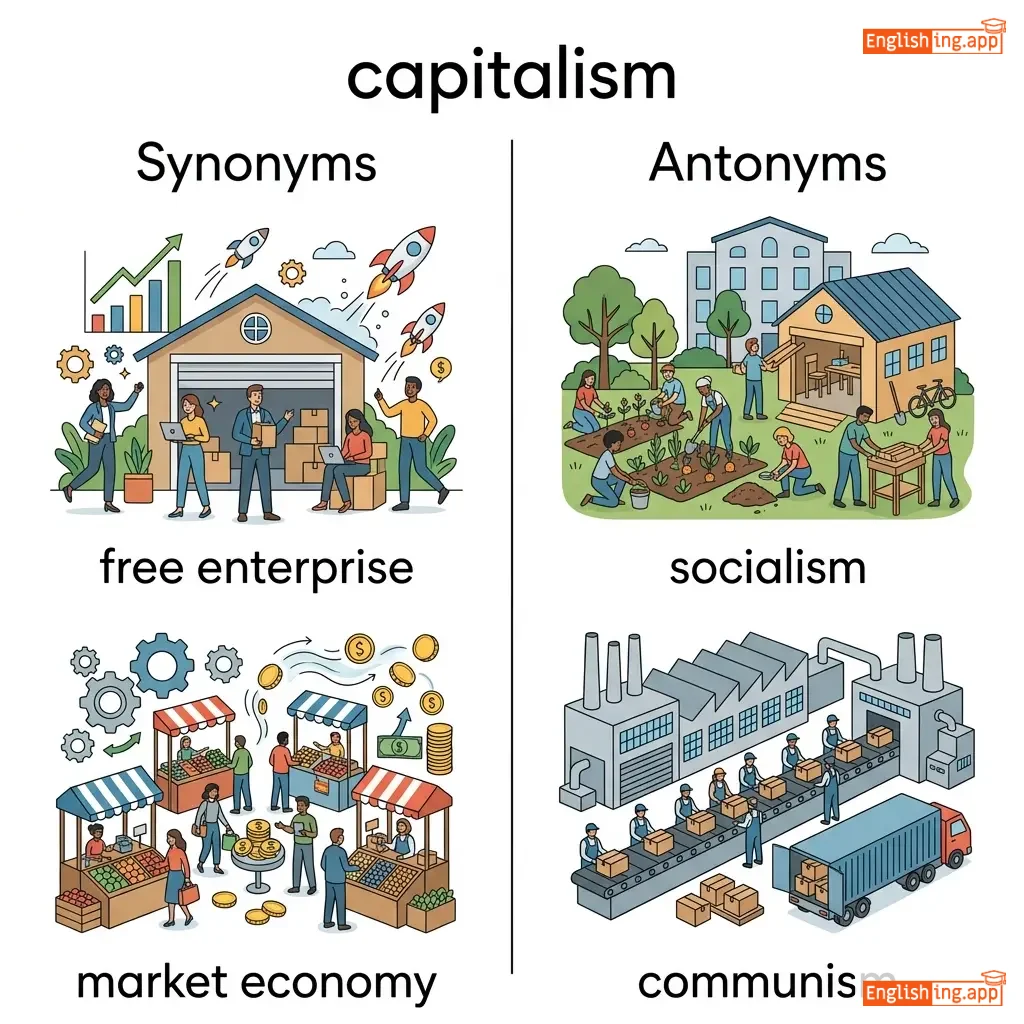
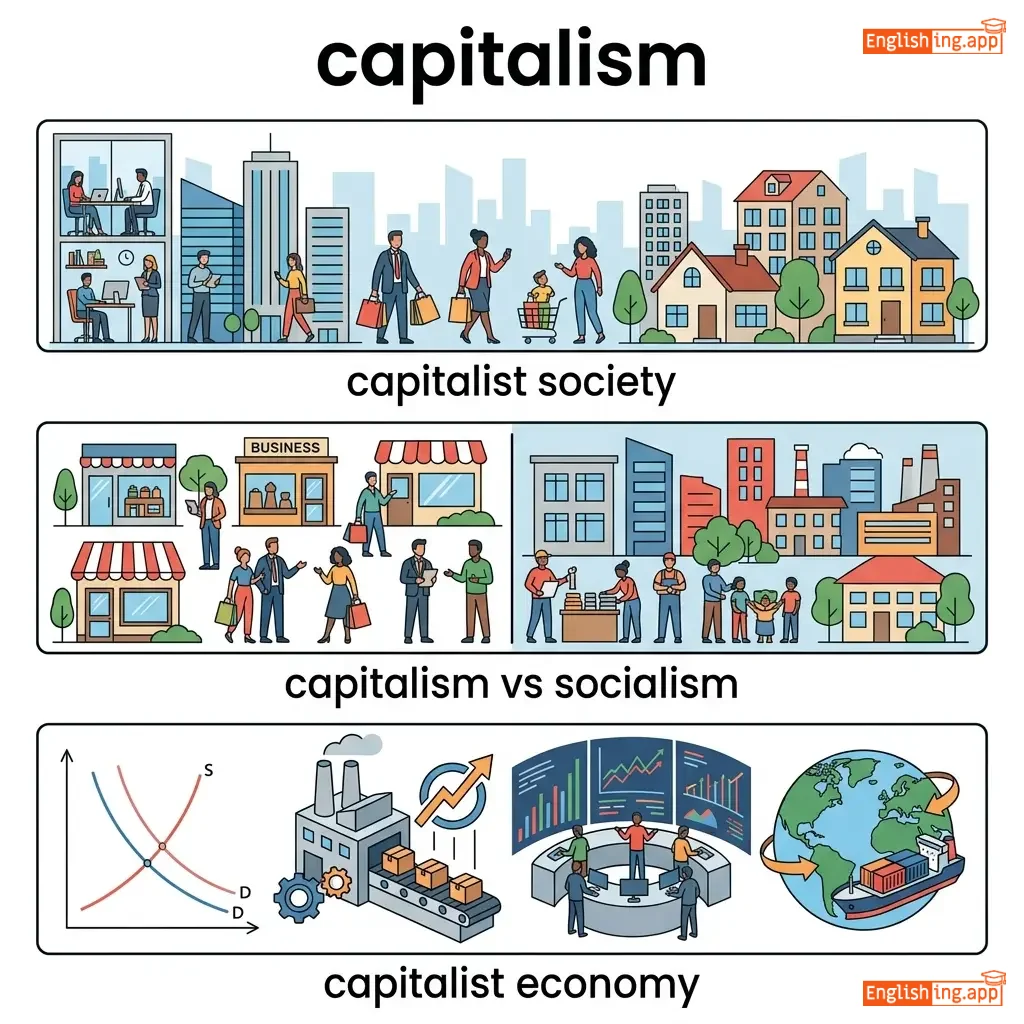
/ˈkæp.ɪ.təl.ɪ.zəm/
noun
(キャピタリズム)
••••••
|
|
資本主義
shihonshugi
••••••
|
An economic system based on private ownership and free market competition.
••••••
|
Capitalism promotes competition and private ownership.
資本主義は競争と私有財産を促進します。
••••••
|
資本主義は競争と私有財産を促進します。
Shihonshugi wa kyōsō to shiyū zaisan o sokushin shimasu.
••••••
|
Free Market, Private Enterprise, Laissez-faire
••••••
|
Socialism, Communism, Collectivism
••••••
|
資本と競争の自由
••••••
|
|
#3074
🤝
|
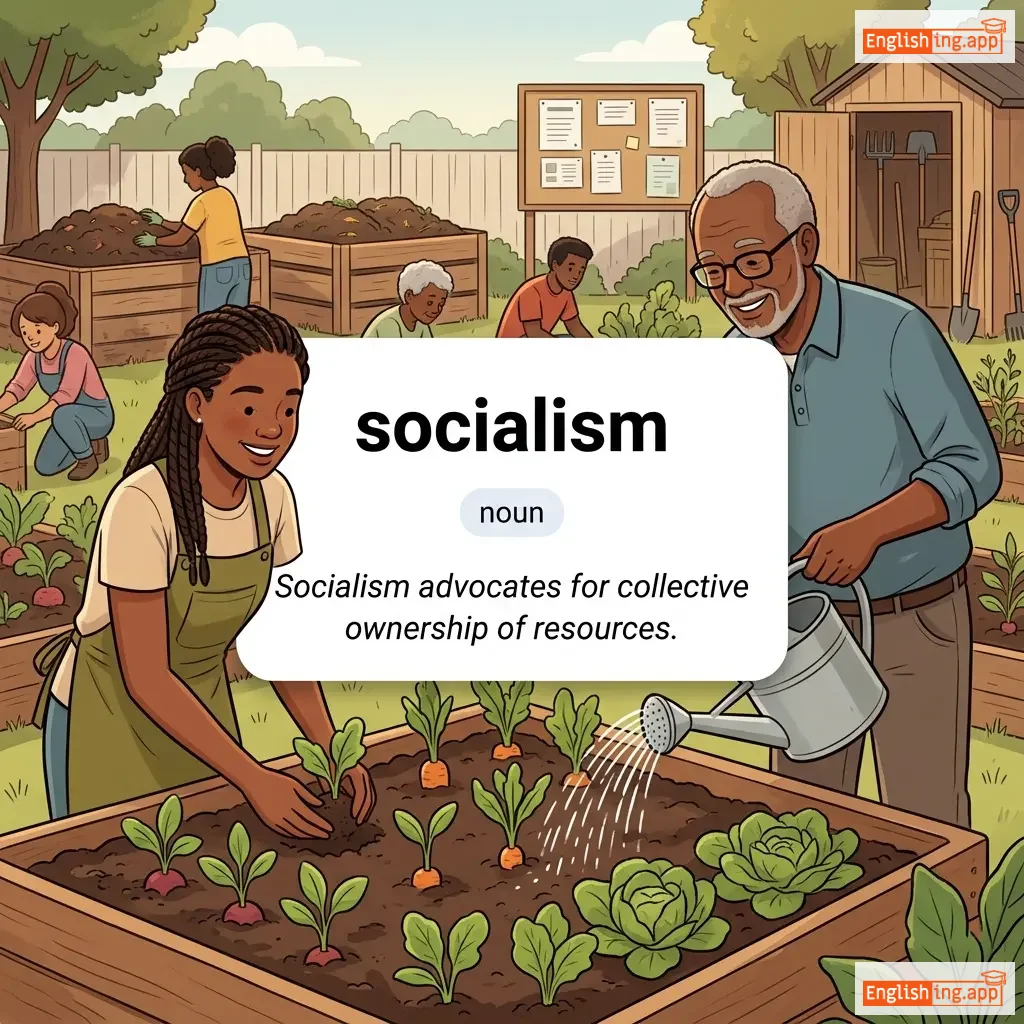
/ˈsəʊ.ʃəl.ɪ.zəm/
noun
(ソーシャリズム)
••••••
|
|
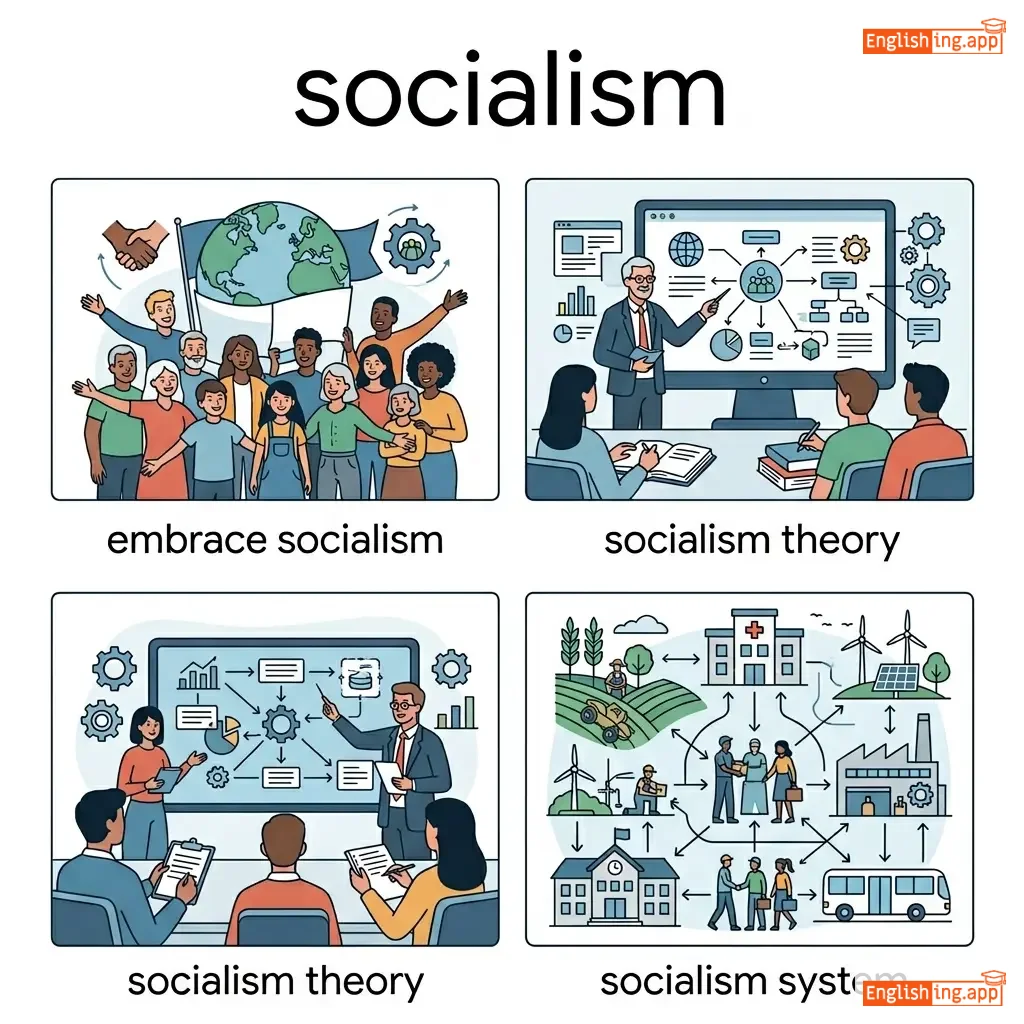
社会主義
shakaishugi
••••••
|
An economic system where the means of production are owned by the state or community.
••••••
|
In socialism, resources are distributed equally among citizens. |
社会主義では、資源が市民間で平等に分配されます。
Shakaishugi de wa, shigen ga shimin-kan de byoudou ni bunpai saremasu.
••••••
|
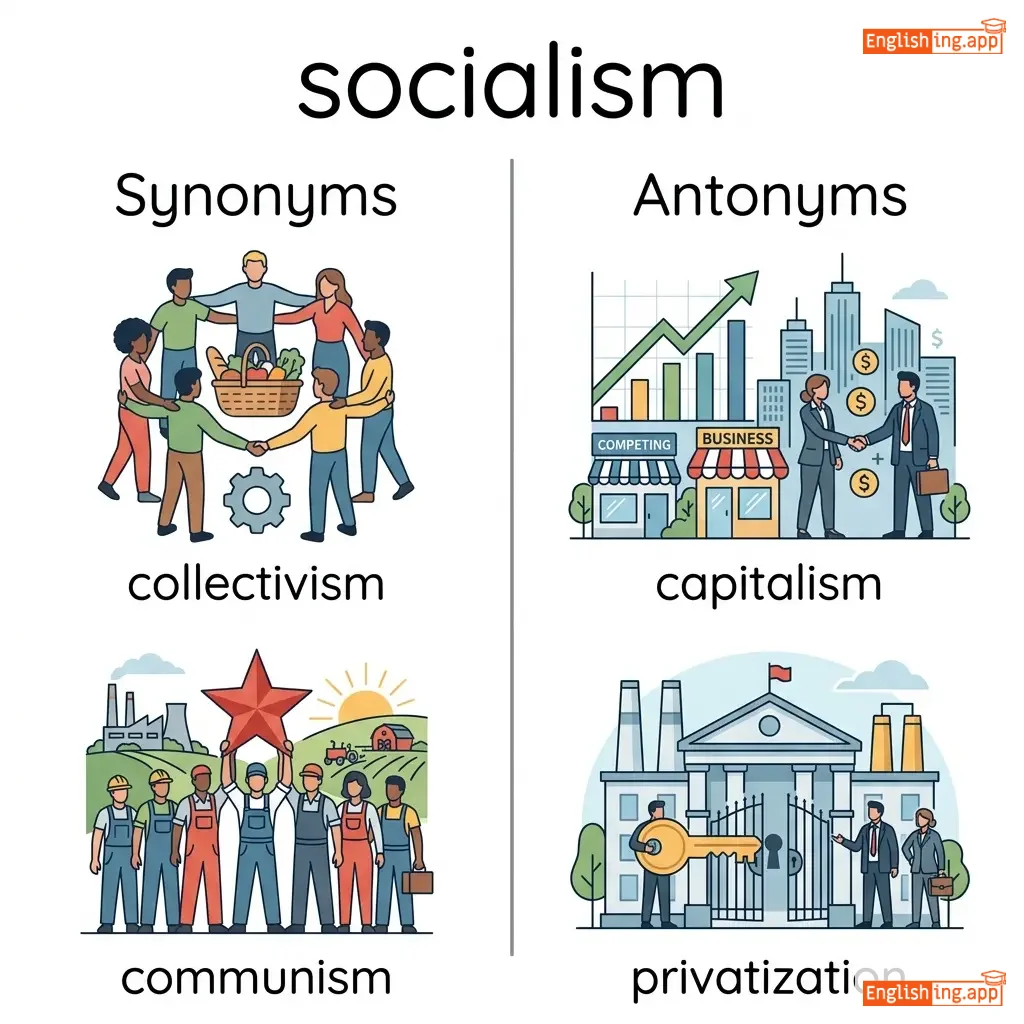
Collectivism, Public Ownership, State Control
••••••
|
Capitalism, Free Market, Privatization
••••••
|
社会主義 = 資源の平等分配
••••••
|
|
#3075
⚖️
|
/mɪkst ɪˈkɒn.ə.mi/
noun
(mikusuto ikonomi)
••••••
|
|
混合経済
kongō keizai
••••••
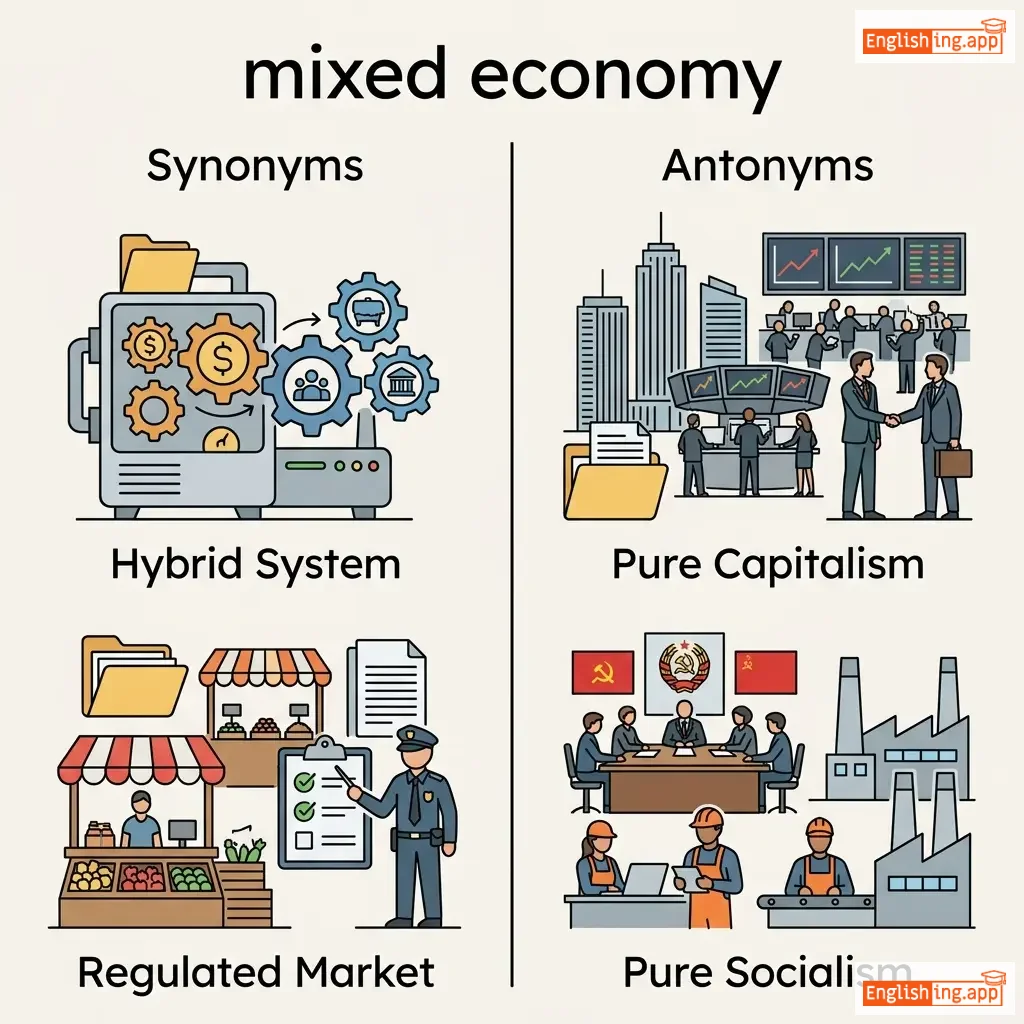
|
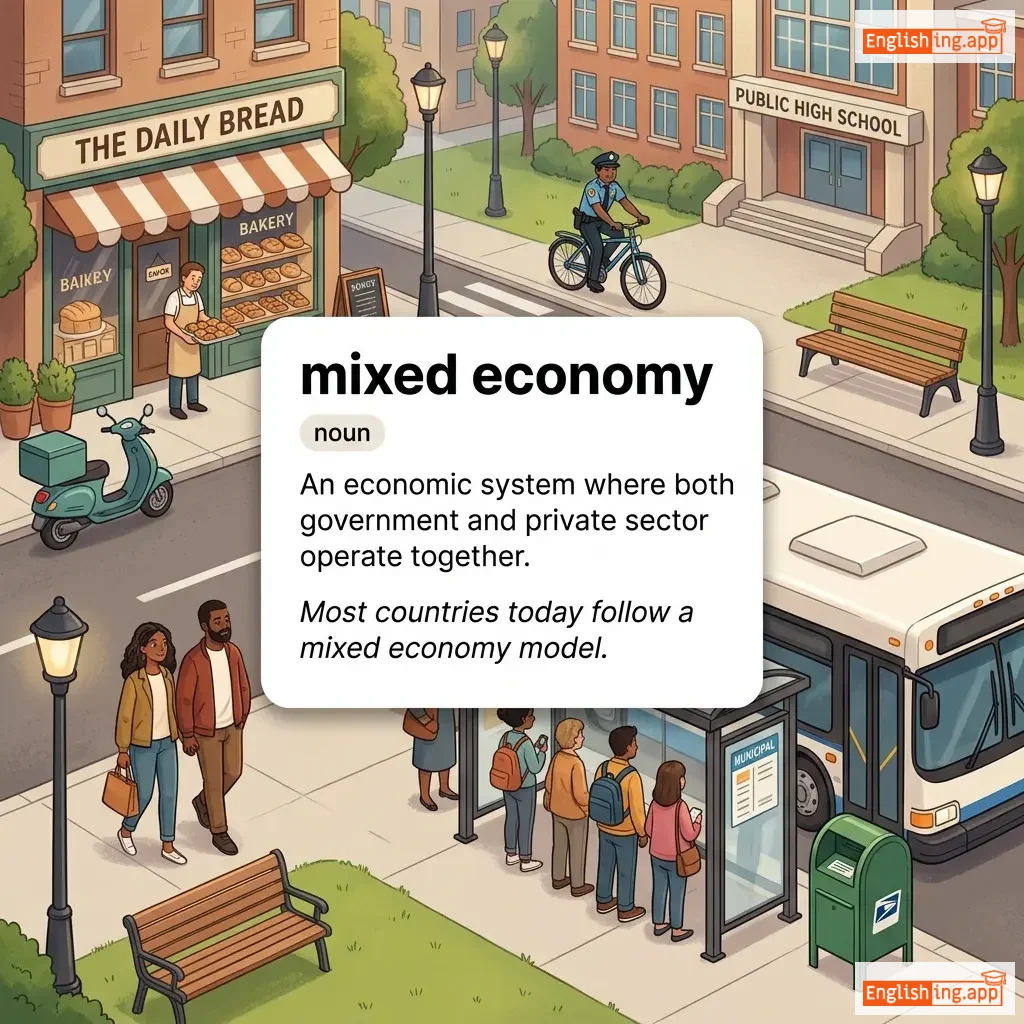
An economic system where both government and private sector operate together.
••••••
|
Most countries today follow a mixed economy model. |
現在、ほとんどの国が混合経済モデルを採用しています。
Genzai, hotondo no kuni ga kongō keizai moderu o sai-yō shiteimasu.
••••••
|
Hybrid System, Regulated Market, Balanced Economy
••••••
|
Pure Capitalism, Pure Socialism, Command Economy
••••••
|
混合経済:政府と民間の協力による経済。
••••••
|
|
#3076
🌾
|
/trəˈdɪʃ.ən.əl ɪˈkɒn.ə.mi/
noun
(伝統的な経済)
••••••
|
|
伝統経済
dentō keizai
••••••
|
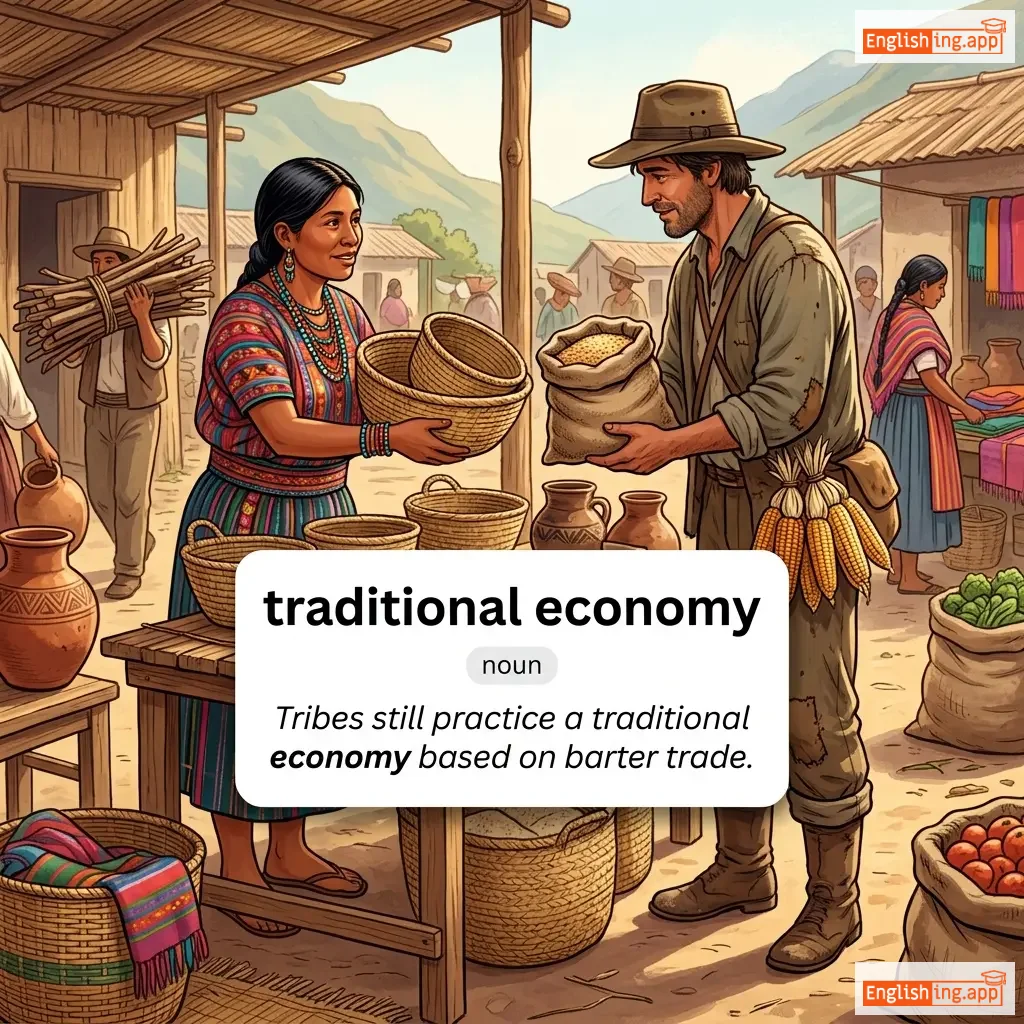
An economic system based on customs and traditions, often involving barter trade.
••••••
|
Tribes still practice a traditional economy based on barter trade. |
部族はまだ物々交換に基づいた伝統経済を実践しています。
Buzoku wa mada monomono kōkan ni motozuita dentō keizai o jissen shiteimasu.
••••••
|
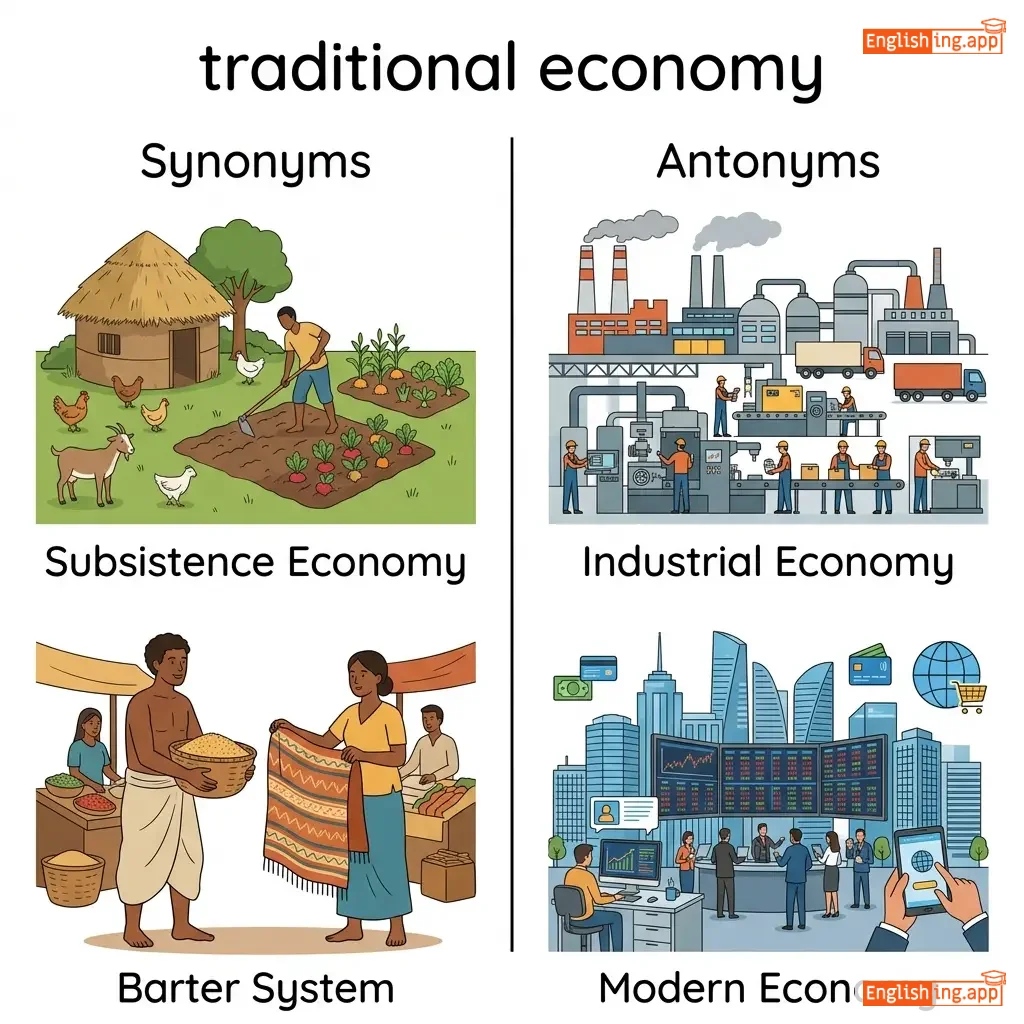
Subsistence Economy, Barter System, Rural Economy
••••••
|
Industrial Economy, Modern Economy, Market Economy
••••••
|
伝統経済では、物々交換が取引の主要な方法です。
••••••
|
|
#3077
🚫
|
/ˌlɛ.seɪ ˈfɛər/
noun
(レセ・フェール)
••••••
|
|
不干渉主義
fukanshō shugi
••••••
|
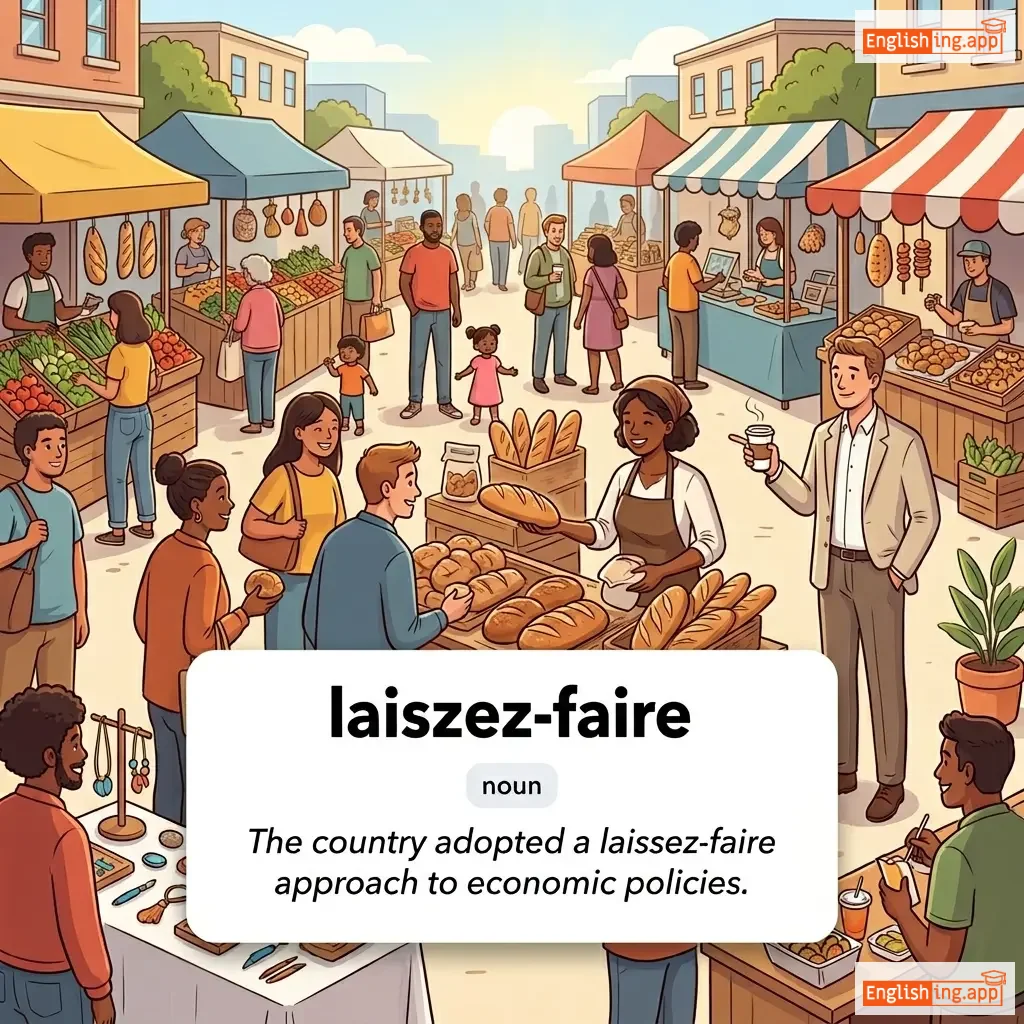
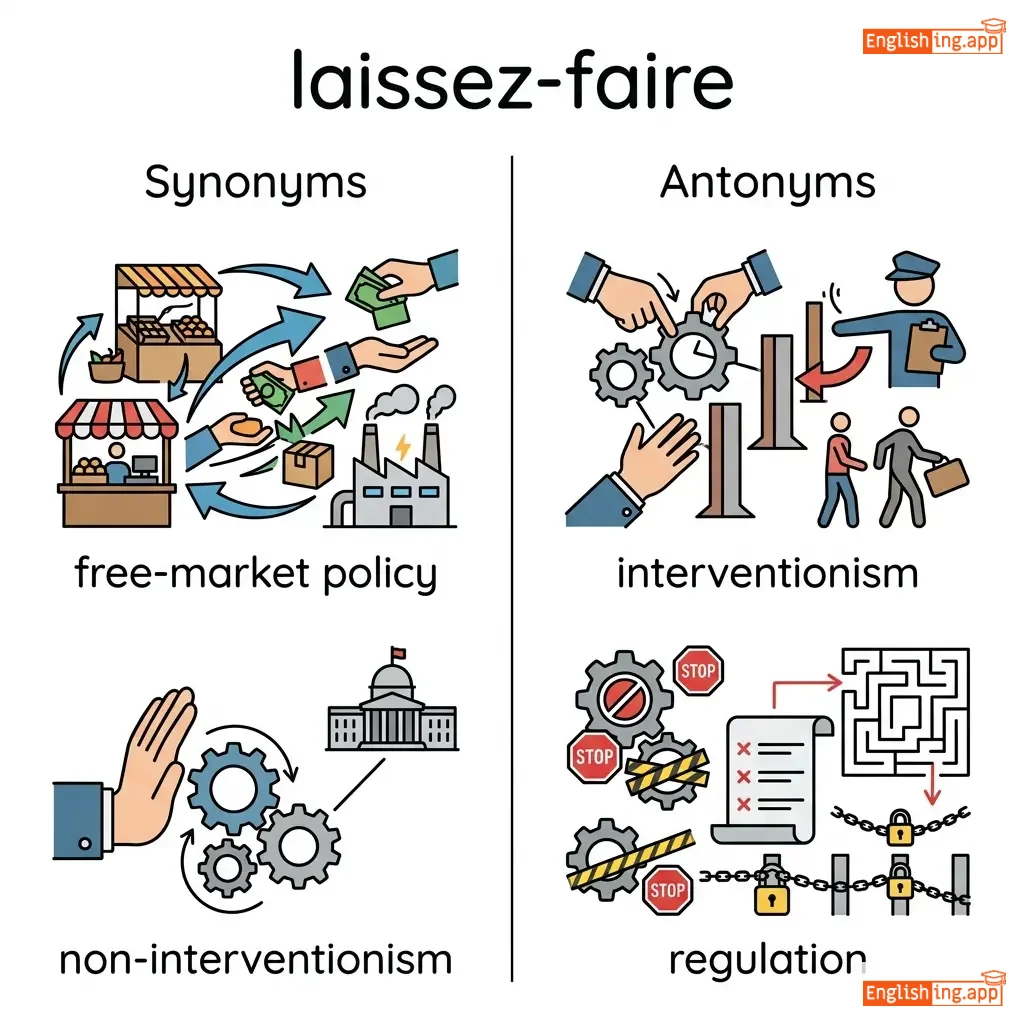
An economic policy where government does not intervene in business affairs.
••••••
|
Laissez-faire policies encourage private enterprise. |
レセ・フェール政策は民間企業を奨励します。
Rese-feiru seisaku wa minkan kigyō o shōrei shimasu.
••••••
|
Free Market, Non-Interventionism, Hands-off Approach
••••••
|
Regulation, Government Control, Socialism
••••••
|
政府介入なし、ビジネスは自由
••••••
|
|
#3078
🏢
|
/ˌpraɪ.və.taɪˈzeɪ.ʃən/
noun
(プライベタイズション)
••••••
|
|
民営化
min'eika
••••••
|
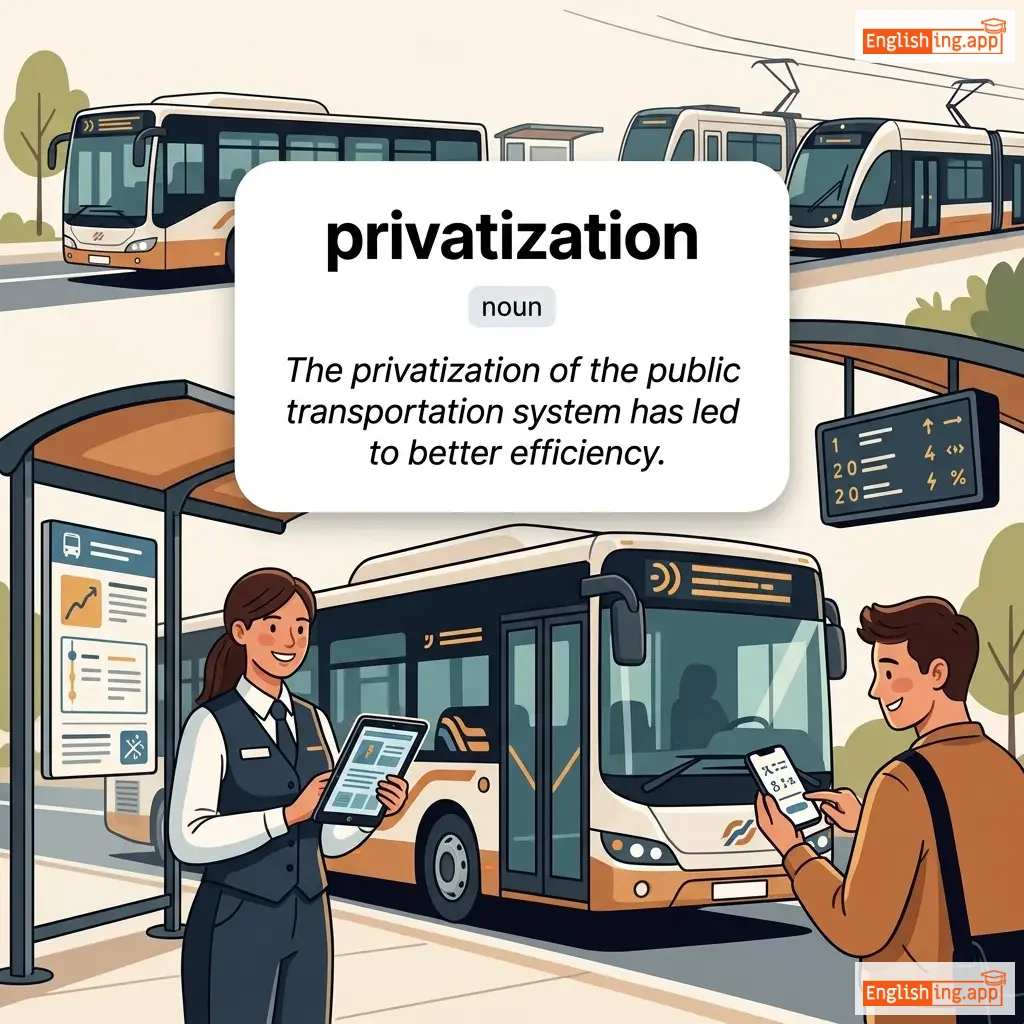
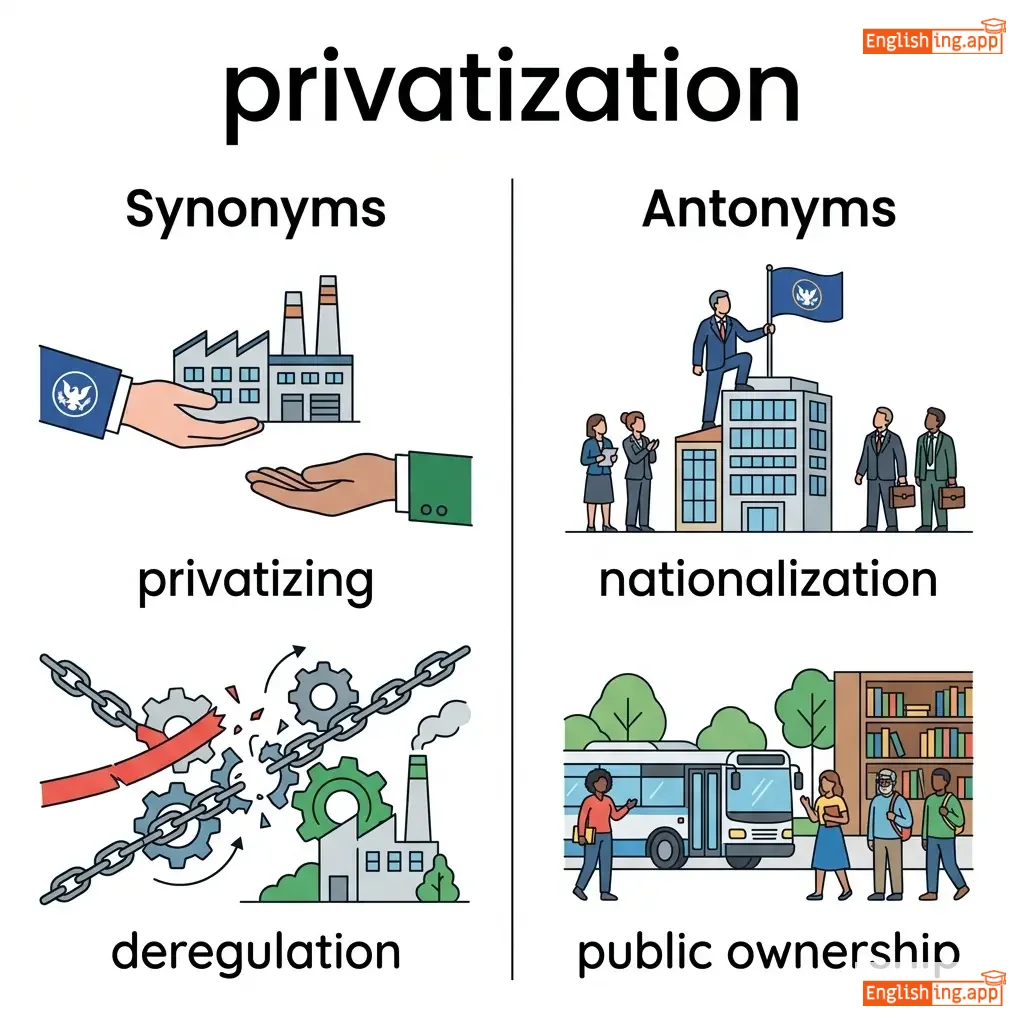
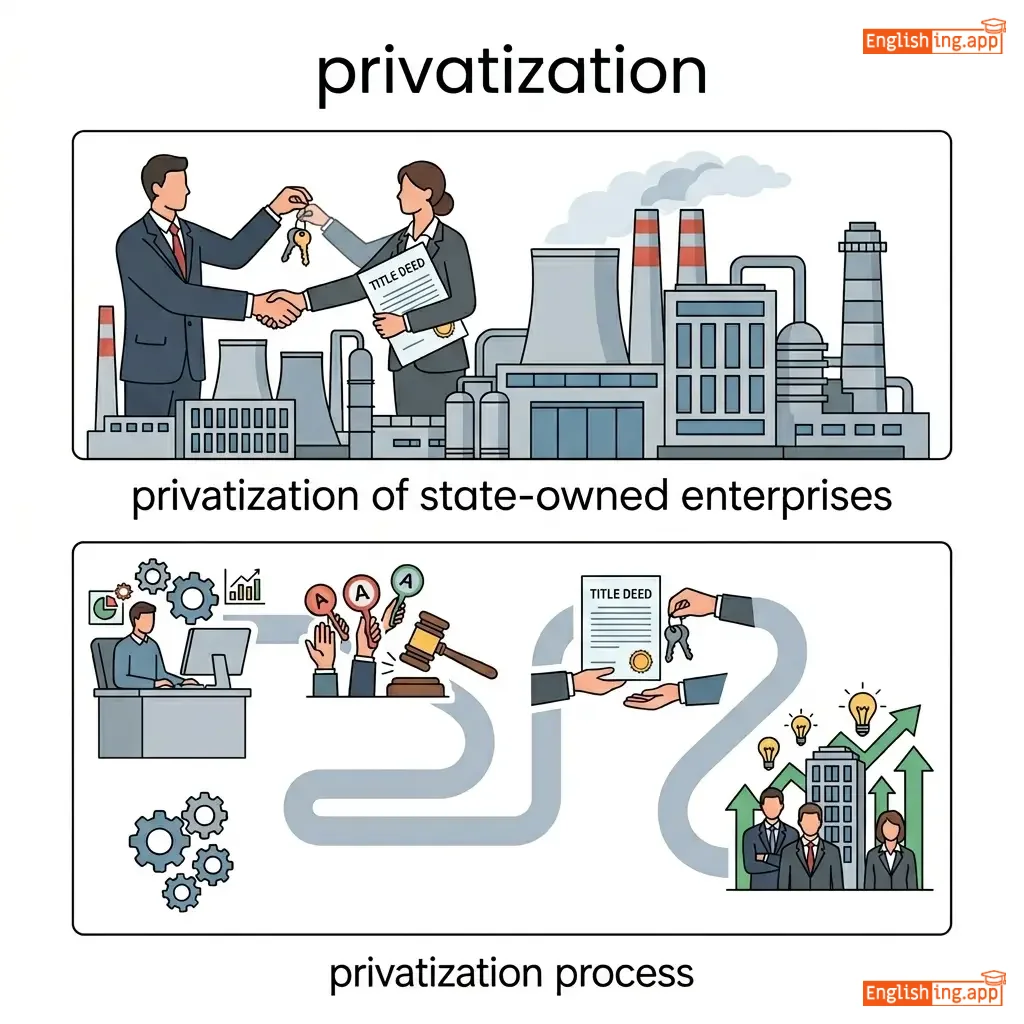
The transfer of ownership from government to private sector.
••••••
|
The government initiated privatization of the energy sector. |
政府はエネルギー部門の民営化を開始した。
Seifu wa enerugī bumon no min'eika o kaishi shita.
••••••
|
Deregulation, Free Market Reform, Corporate Takeover
••••••
|
Nationalization, State Ownership, Socialization
••••••
|
民営化 = 政府から民間部門へ所有権
••••••
|
|
#3079
🛒
|
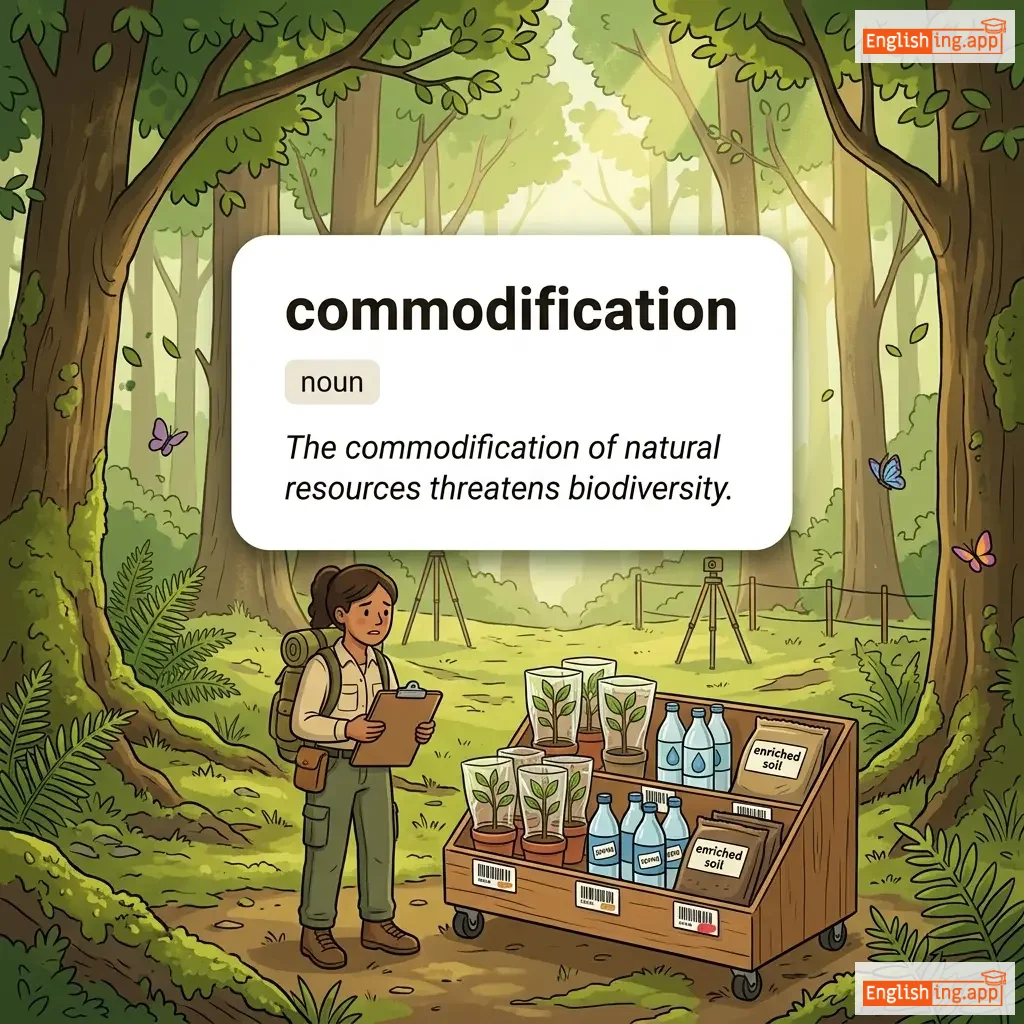
/kəˌmɒd.ɪ.fɪˈkeɪ.ʃən/
noun
(komodifikēshon)
••••••
|
|
商品化
shōhin-ka
••••••
|
The transformation of goods, services, ideas, or social relations into market commodities.
••••••
|
The commodification of education has increased tuition costs.
教育のコモディフィケーションは授業料の増加を引き起こしました。
••••••
|
教育の商品化は授業料の増加を引き起こしました。
Kyōiku no shōhin-ka wa jugyōryō no zōka o hikiokoshimashita.
••••••
|
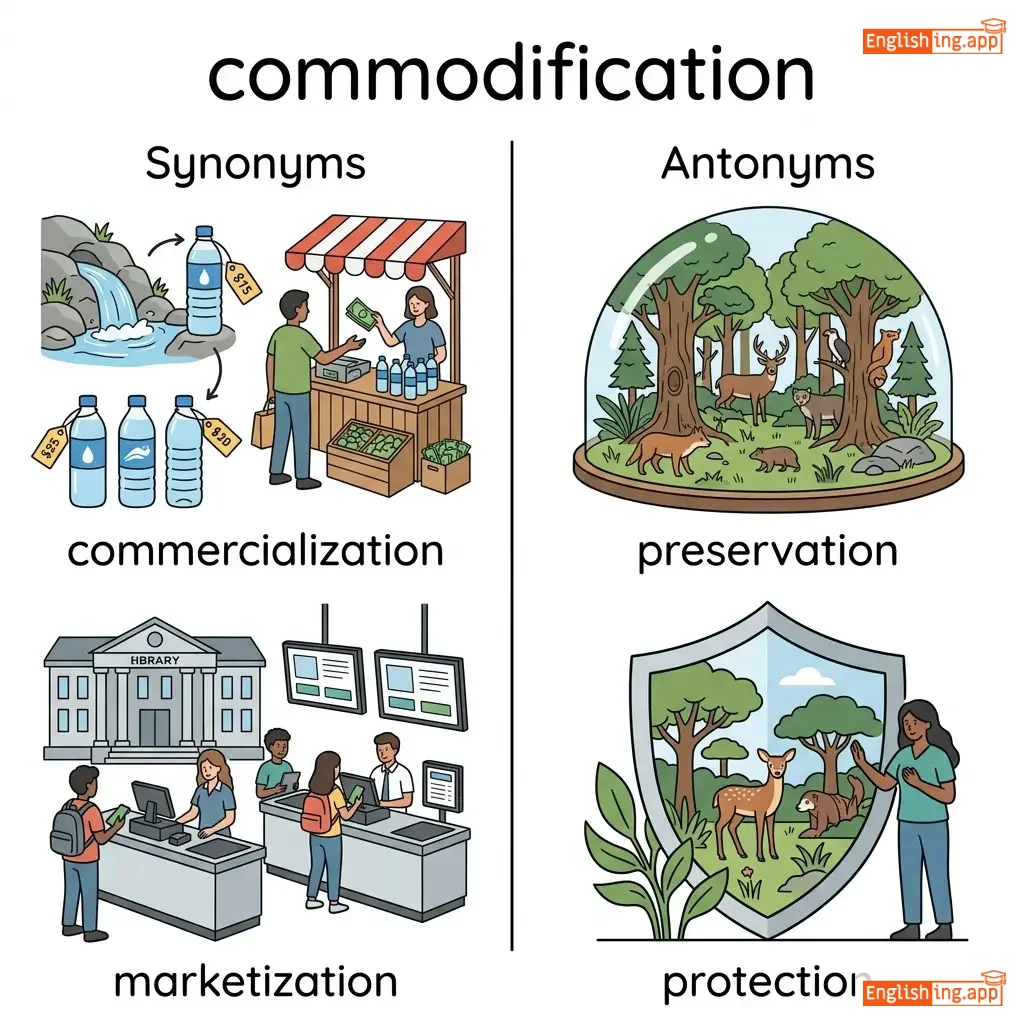
Commercialization, Marketization, Productization
••••••
|
Decommodification, Non-commercialization, Public Good
••••••
|
教育が商品化されると、市場で売買される商品になる。
••••••
|
|
#3080
🏛️
|
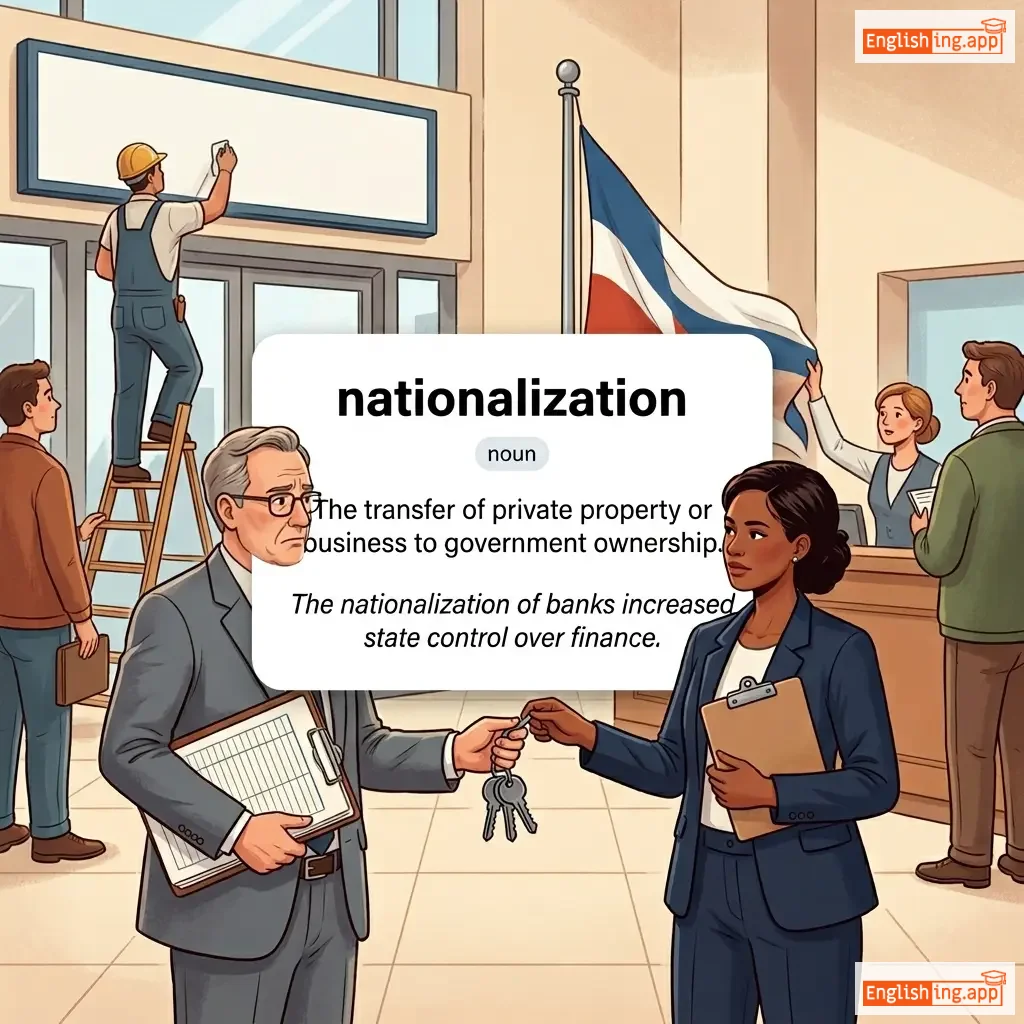
/ˌnæʃ.ən.ə.laɪˈzeɪ.ʃən/
noun
(ナショナリゼーション)
••••••
|
|
国有化
kokuyuka
••••••
|
The transfer of private property or business to government ownership.
••••••
|
The nationalization of banks increased state control over finance.
銀行の国有化は、金融への国家の管理を強化した。
••••••
|
銀行の国有化は、金融への国家の管理を強化した。
Ginkou no kokuyuka wa, kin'yu e no kokka no kanri o kyōka shita.
••••••
|
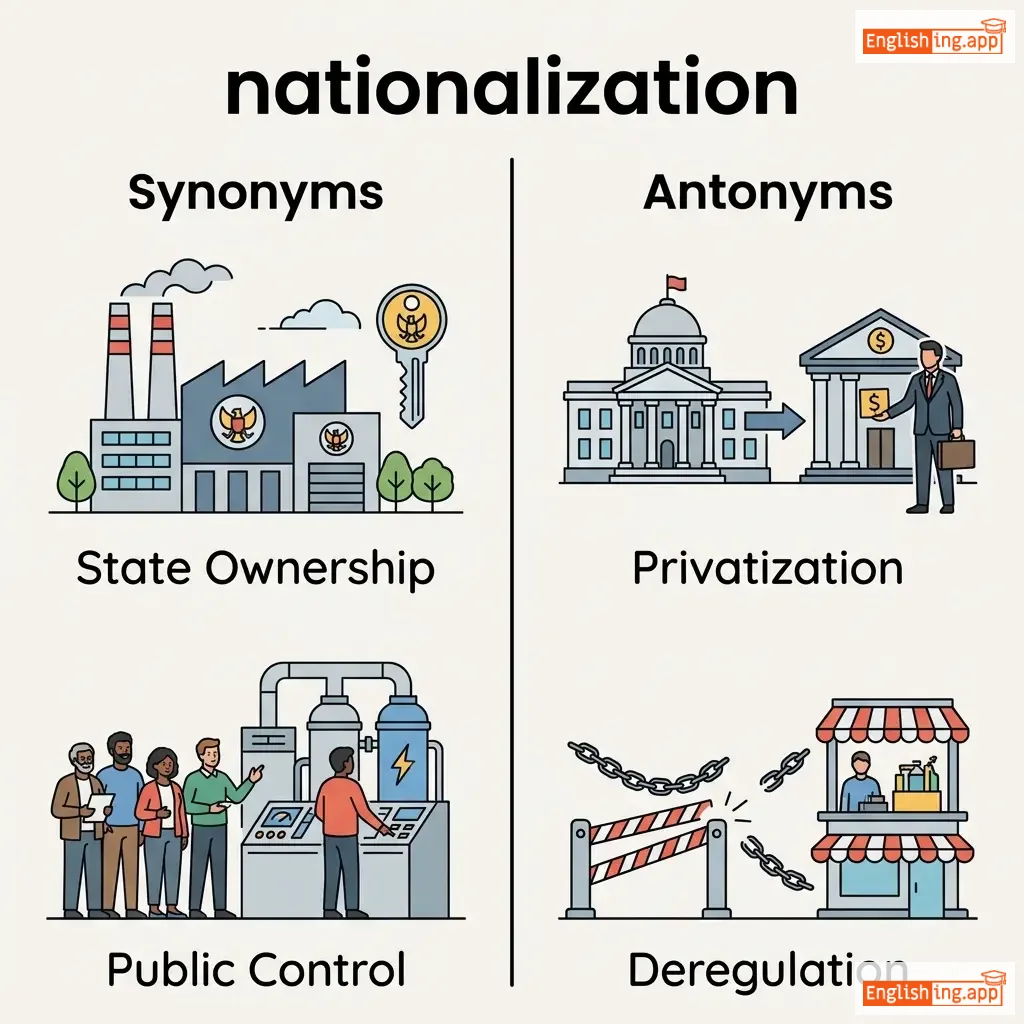
State Ownership, Public Control, Government Takeover
••••••
|
Privatization, Deregulation, Free Market
••••••
|
国有化は、政府が資産を所有することを意味します。
••••••
|
|
#3081
♻️
|
/ˌriː.dɪs.trɪˈbjuː.ʃən/
noun
(再分配)
••••••
|
|
再分配
saibunpati
••••••
|
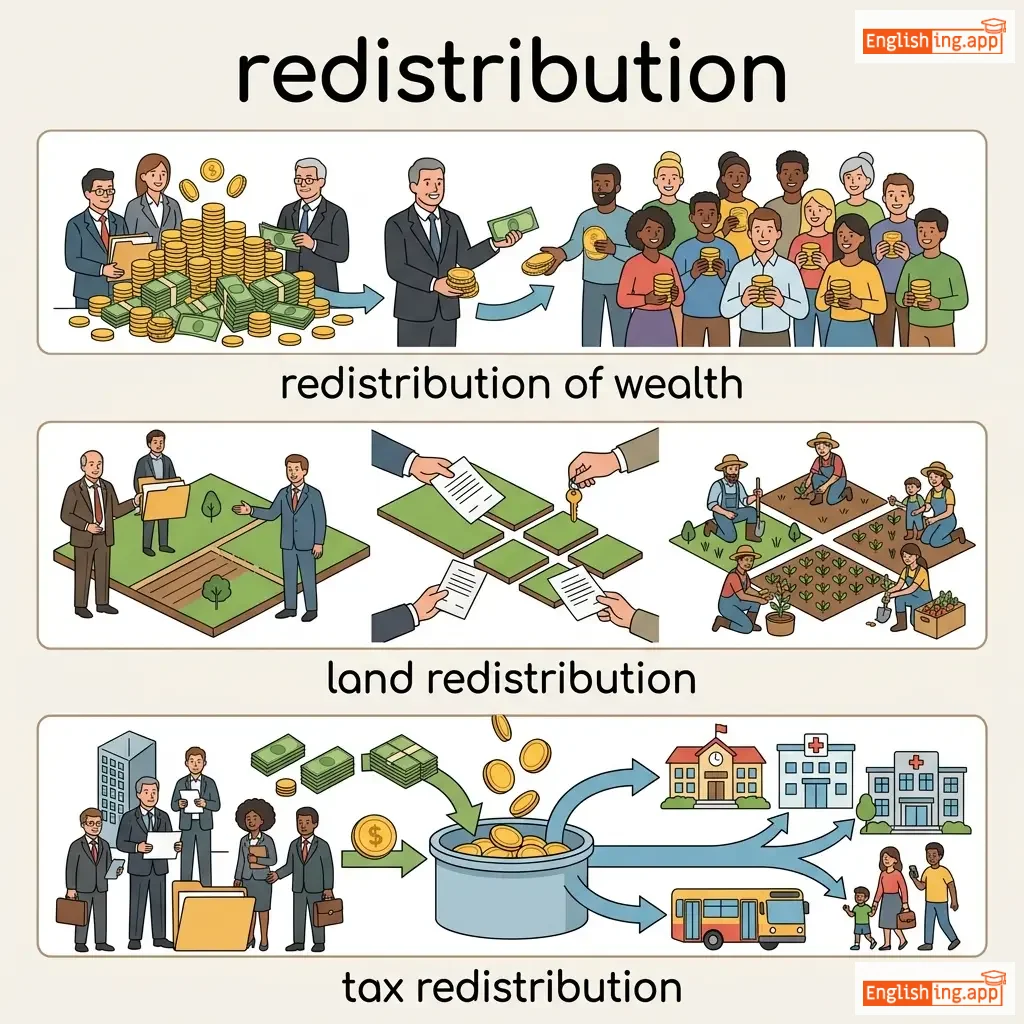
The sharing of wealth or resources more equally among society.
••••••
|
The government introduced a redistribution policy to reduce inequality.
政府は不平等を減らすために再分配政策を導入しました。
••••••
|
政府は不平等を減らすために再分配政策を導入しました。
Seifu wa fuboutou wo herasu tame ni saibunpati seisaku wo dounyuu shimashita.
••••••
|
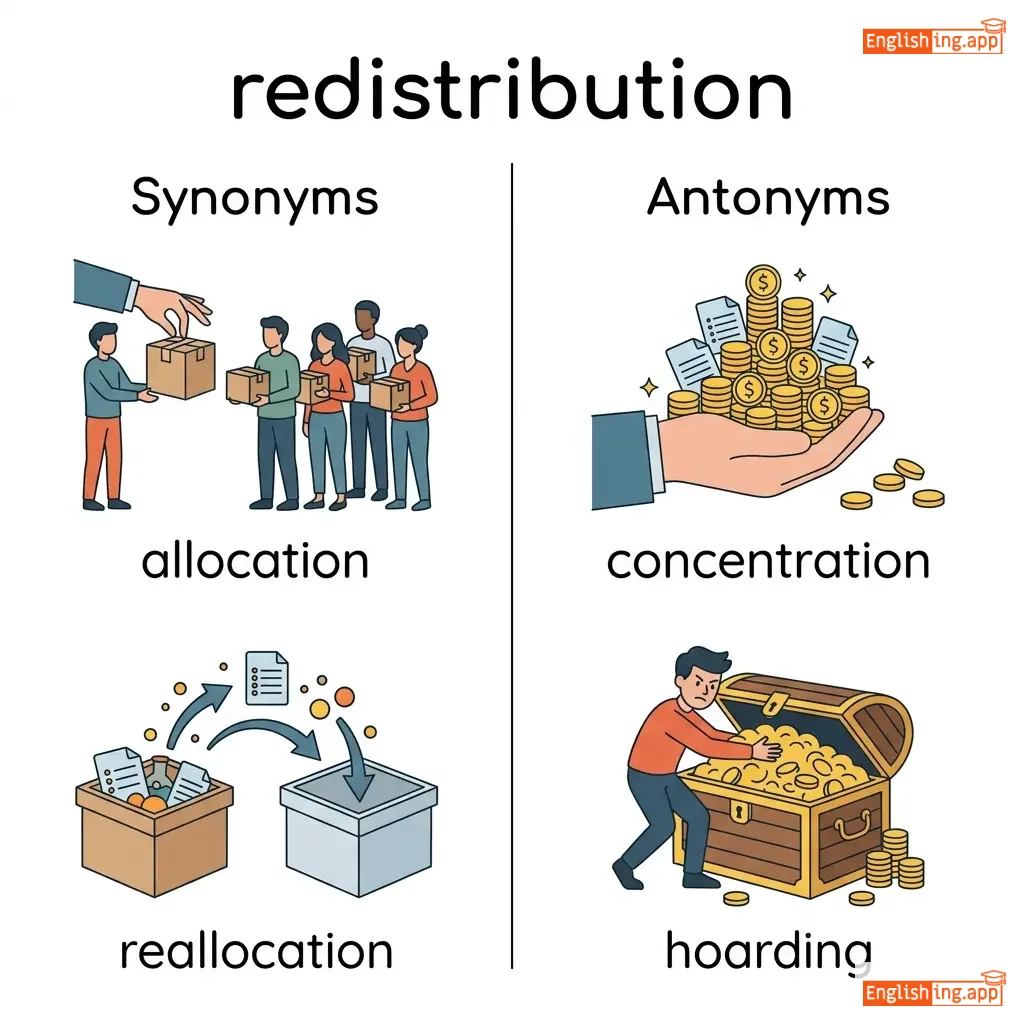
Reallocation, Reassignment, Reapportionment
••••••
|
Concentration, Hoarding, Retention
••••••
|
再分配 = 再び分配 + 公平
••••••
|
|
#3082
🎯
|
/ˌɪn.təˈvɛn.ʃə.nɪ.zəm/
noun
(インターベンショニズム)
••••••
|
|
介入主義
kainyū shugi
••••••
|
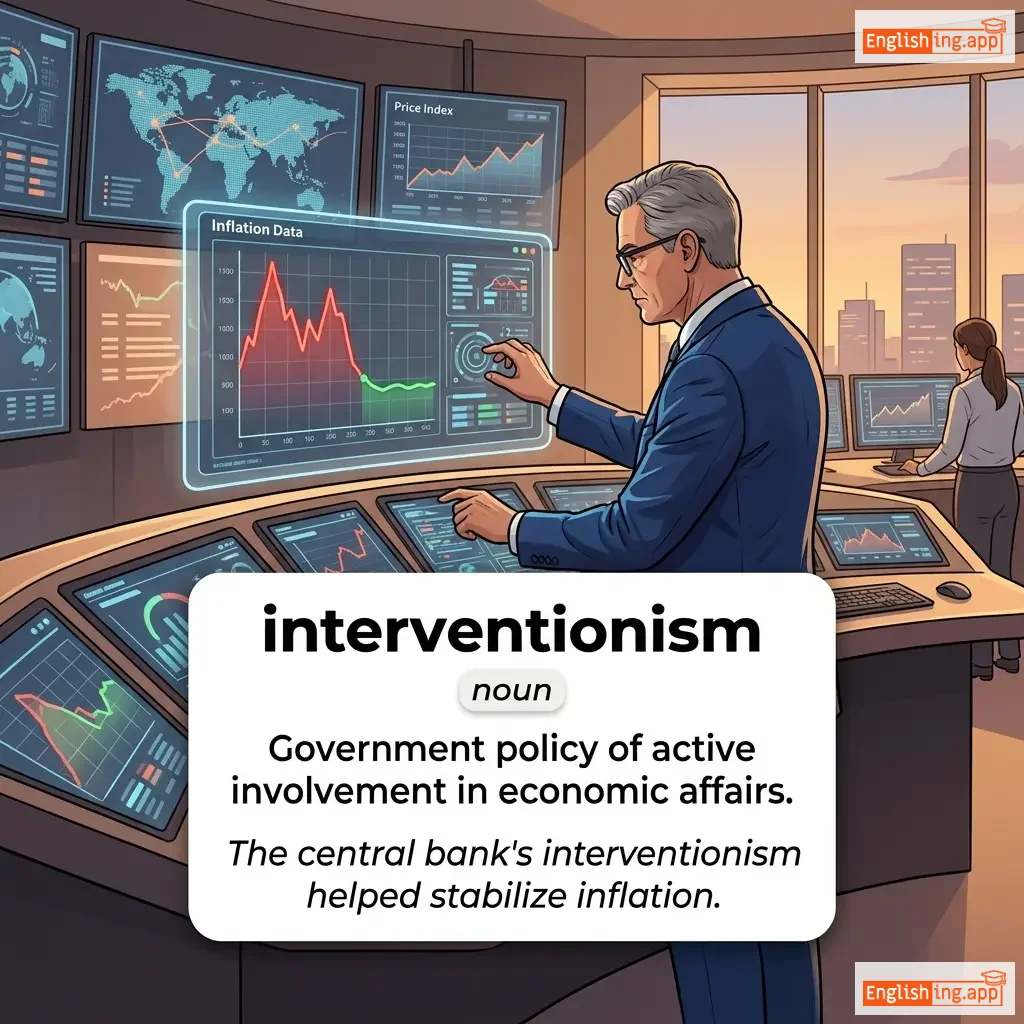
Government policy of active involvement in economic affairs.
••••••
|
The central bank's interventionism helped stabilize inflation. |
中央銀行の介入主義はインフレの安定に役立った。
Chūō ginkō no kainyū shugi wa infure no antei ni yakudatta.
••••••
|
Regulation, Government Control, Market Oversight
••••••
|
Laissez-faire, Non-intervention, Free Market
••••••
|
経済の安定を保つために政府が介入する。
••••••
|
|
#3083
💸
|
/ˈsʌb.sɪ.di/
noun
(サブシディ)
••••••
|
|
補助金
hojokin
••••••
|
Financial assistance provided by government to reduce costs of goods or services.
••••••
|
The government provides a fuel subsidy to control prices. |
政府は価格を抑制するために燃料補助金を提供しています。
Seifu wa kakaku o yokusei suru tame ni nenryō hojokin o teikyō shiteimasu.
••••••
|
Grant, Financial Aid, Support
••••••
|
Taxation, Cost Increase, Cutback
••••••
|
日本語の'補助金'は、英語の'subsidy'と似た意味です。
••••••
|
|
#3084
🔓
|
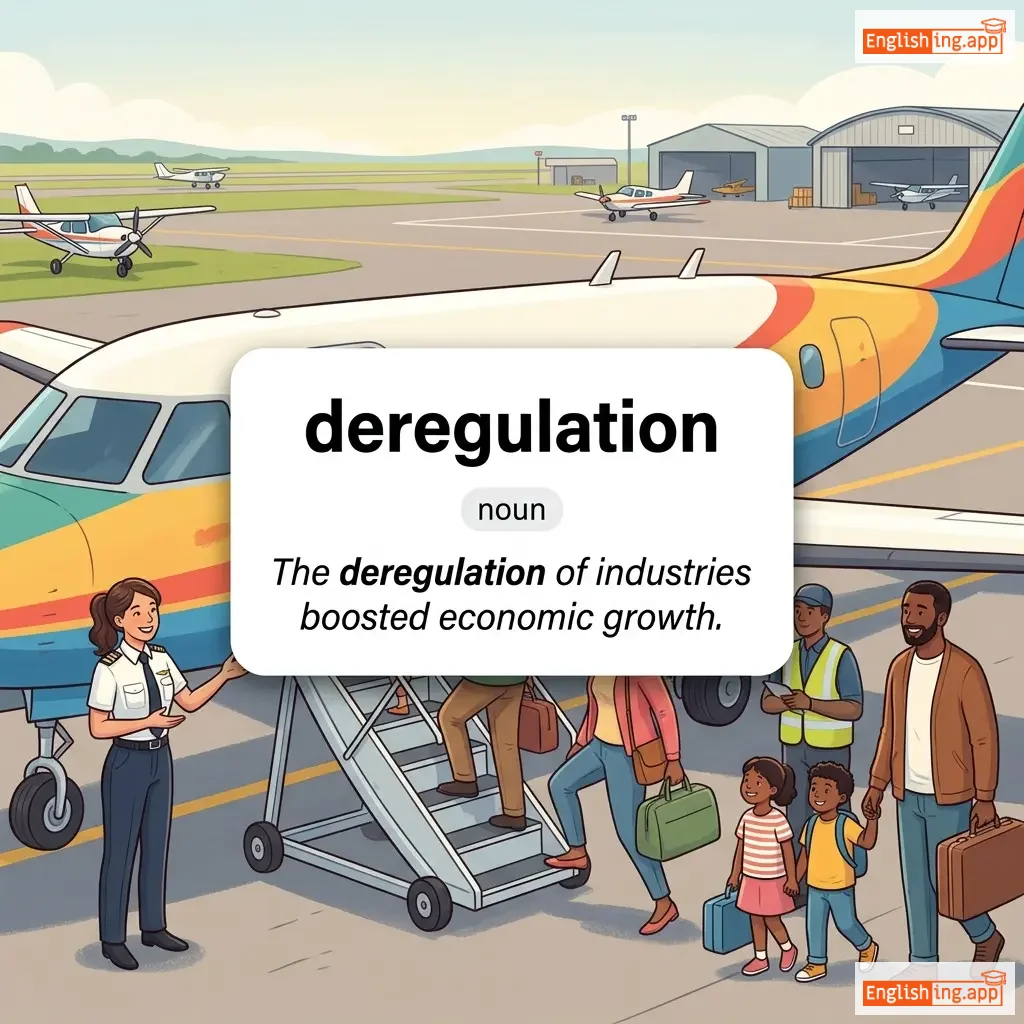
/ˌdiː.rɛɡ.jʊˈleɪ.ʃən/
noun
(ディレギュレーション)
••••••
|
|
規制緩和
diregyureeshon
••••••
|
The removal or reduction of government rules and restrictions in business.
••••••
|
Deregulation allows businesses to operate with fewer restrictions.
規制緩和は、企業がより少ない規制のもとで事業を行えるようにする。
••••••
|
規制緩和は、企業がより少ない規制のもとで事業を行えるようにする。
kisei kanwa wa kigyou ga yori sukunai kisei no moto de jigyou o okonaeru you ni suru
••••••
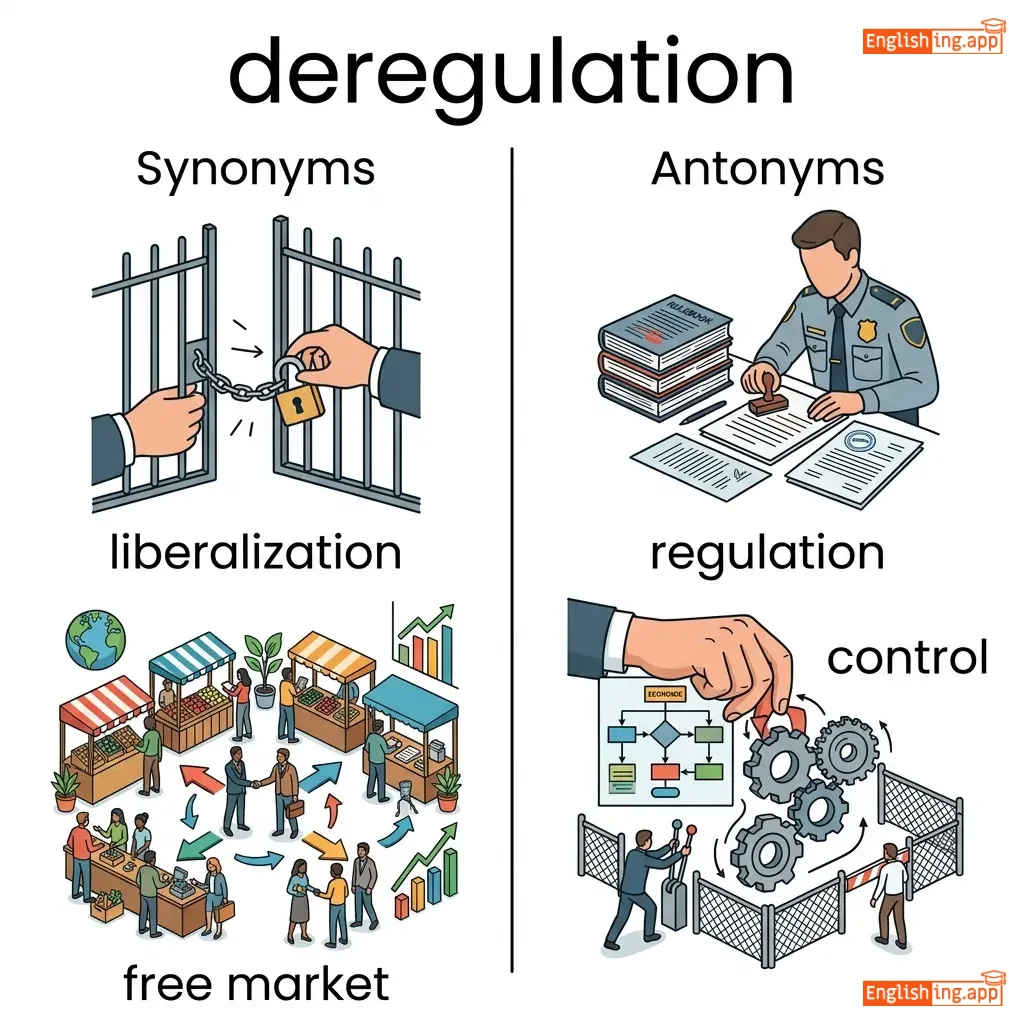
|
Liberalization, Free Market Reform, Privatization
••••••
|
Regulation, Government Oversight, Interventionism
••••••
|
DeRegulation = De + レギュレーション; imagine a red tape being peeled away to reveal open doors labeled 規制緩和 and自由 in a thriving market.
••••••
|
|
#3085
🔄
|
/ˈbɑːr.tər ˌsɪs.təm/
noun
(バーターシステム)
••••••
|
|
物々交換システム
butsubutsu kōkan shisutemu
••••••
|
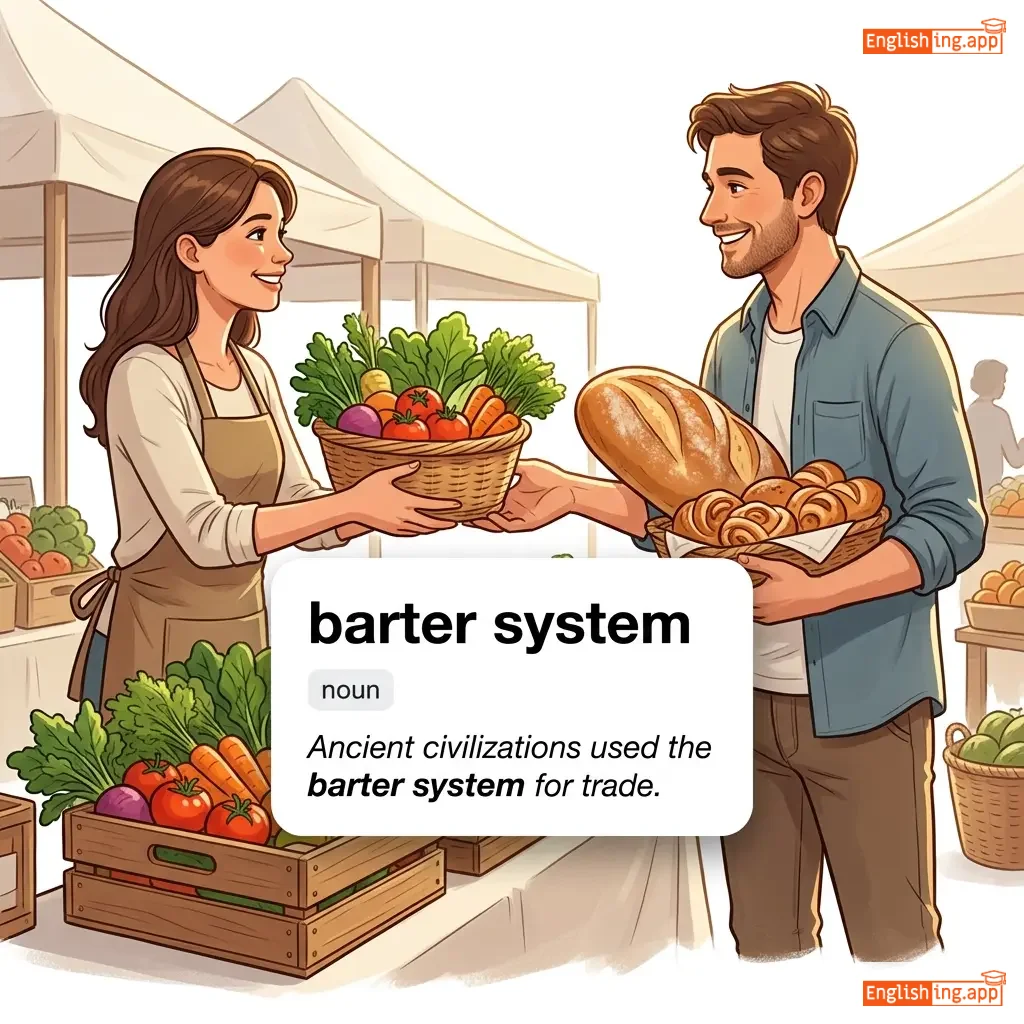
A system of exchange where goods and services are traded directly without using money.
••••••
|
Ancient civilizations used the barter system for trade. |
古代の文明は貿易のために物々交換システムを使用していました。
Kodai no bunmei wa bōeki no tame ni butsubutsu kōkan shisutemu o shiyou shite imashita.
••••••
|
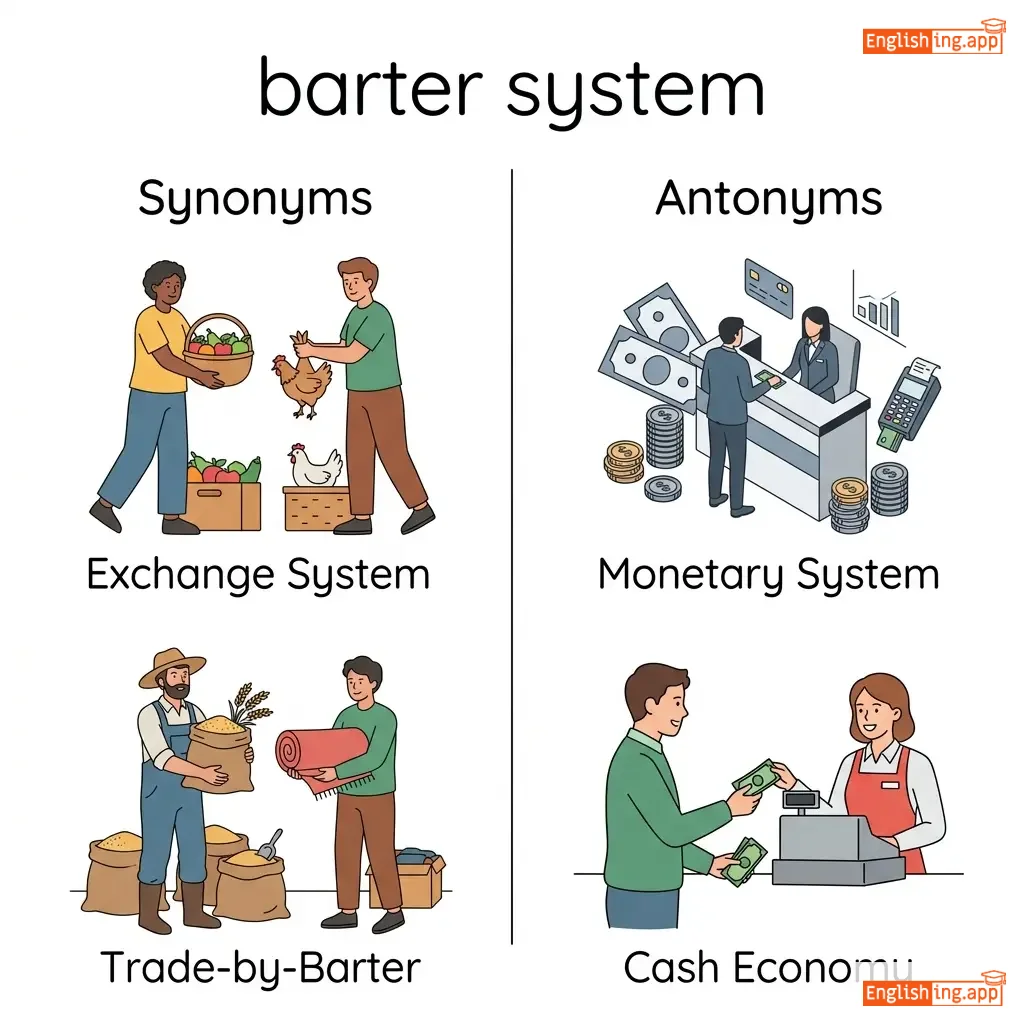
Exchange System, Trade-by-Barter, Swap Economy
••••••
|
Monetary System, Cash Economy, Capitalism
••••••
|
バーターシステムはお金を使わずに物と物を直接交換する仕組みです。
••••••
|
|
#3086
🏗️
|
/ˌiː.kəˈnɒm.ɪk ˈsɪs.təm/
noun
(経済システム)
••••••
|
|
経済システム
keizai shisutemu
••••••
|
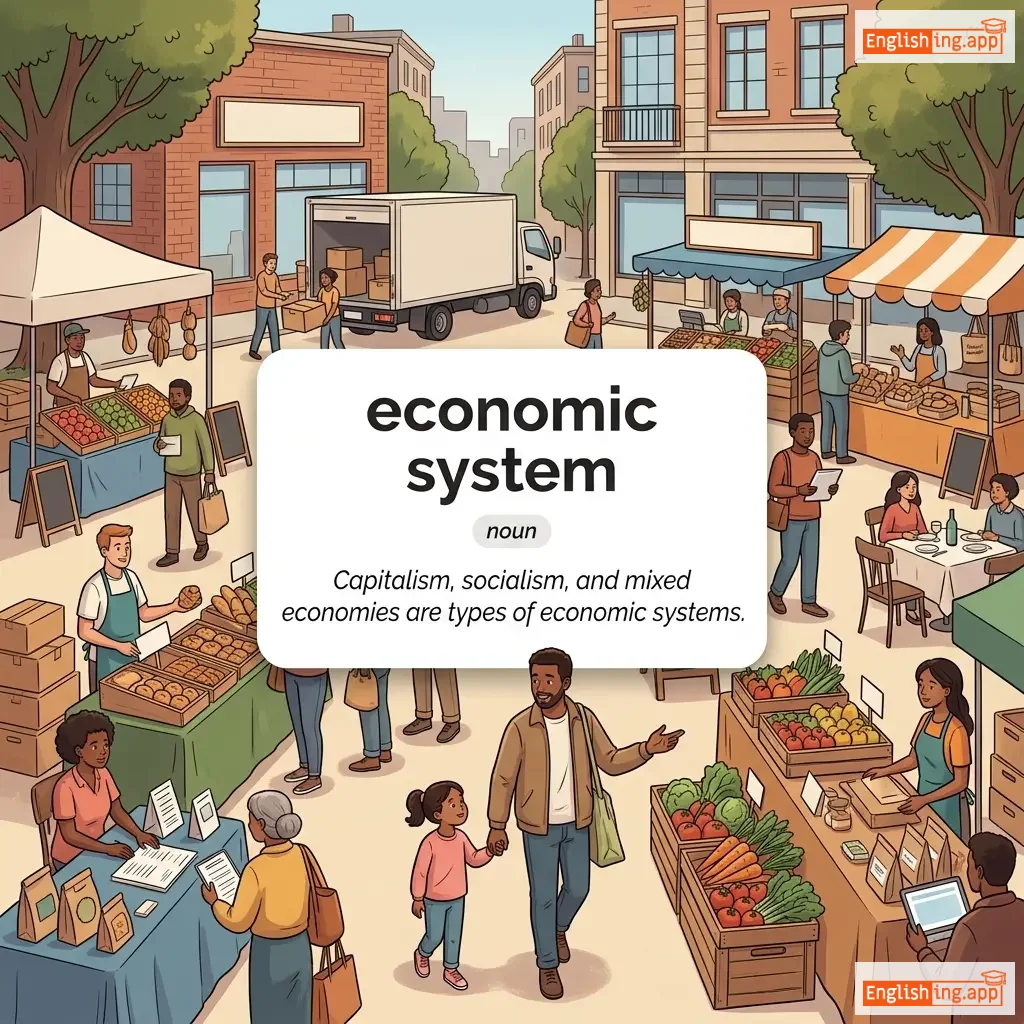
The organized framework for production, distribution, and consumption of goods and services in society.
••••••
|
Capitalism, socialism, and mixed economies are types of economic systems.
資本主義、社会主義、混合経済は経済システムのタイプです。
••••••
|
資本主義、社会主義、混合経済は経済システムのタイプです。
Shihonshugi, shakaishugi, kongō keizai wa keizai shisutemu no taipu desu.
••••••
|
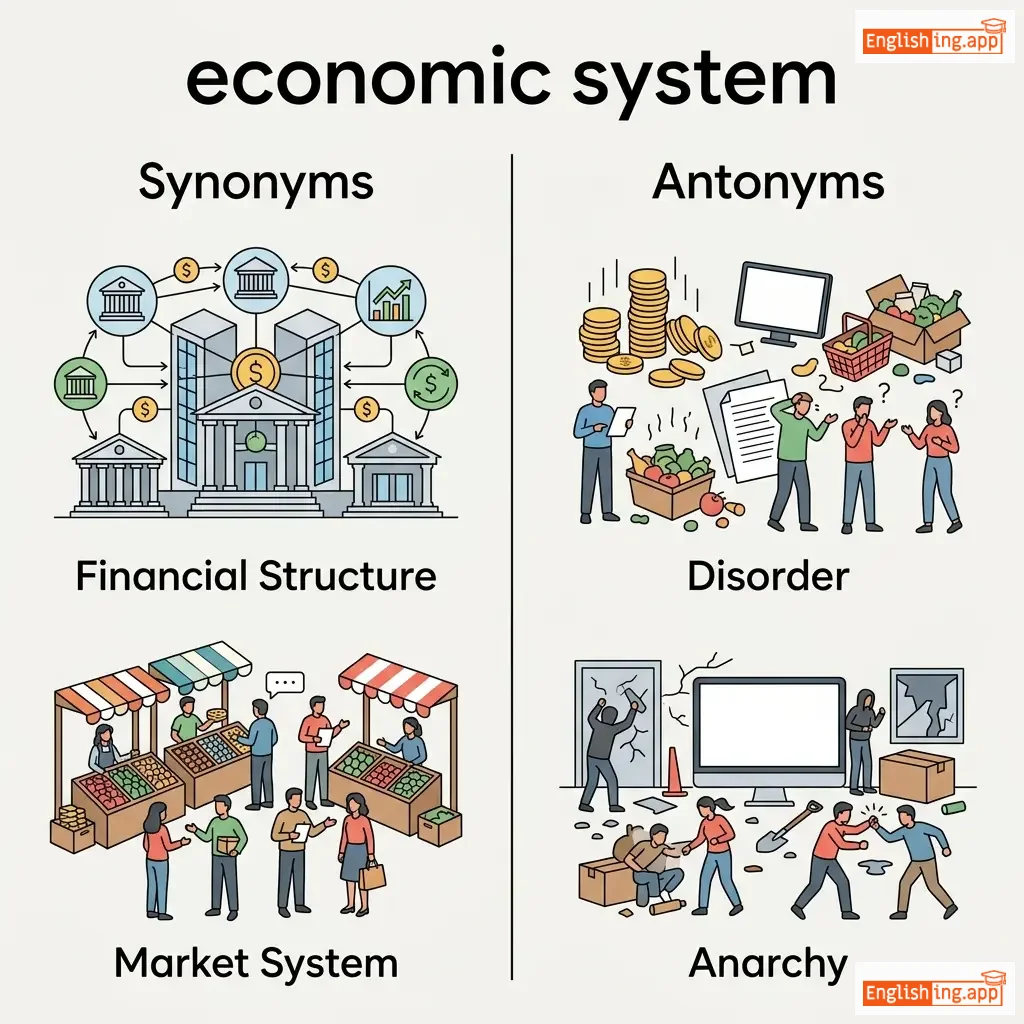
Financial Structure, Market System, Political Economy
••••••
|
Disorder, Anarchy, Unstructured Market
••••••
|
経済システム = 経済構造の基盤。
••••••
|
|
#3087
⚖️
|
/ˌiː.kwɪˈlɪb.ri.əm/
noun
(イクイリブリウム)
••••••
|
|
均衡
kinkou
••••••
|
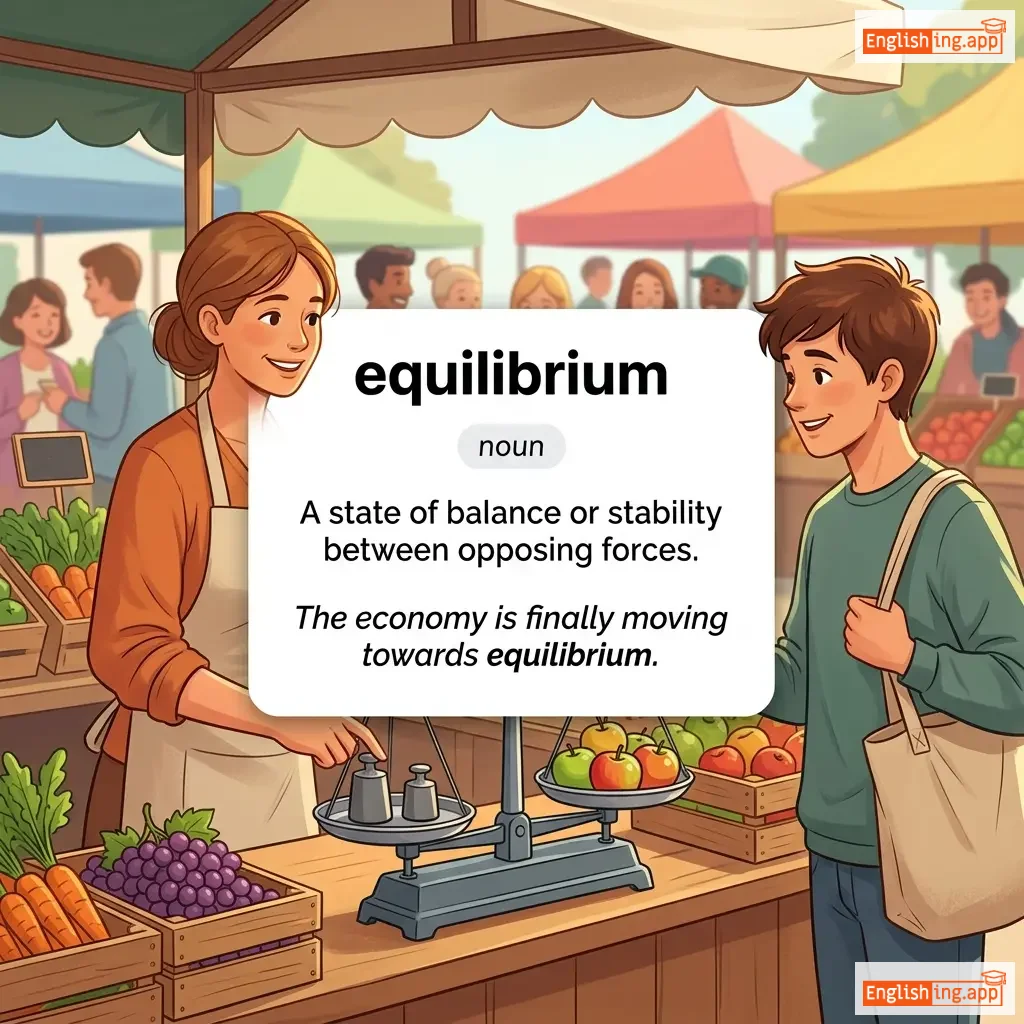
A state of balance between economic supply and demand, or between different economic forces.
••••••
|
The market reached equilibrium when supply met demand.
市場は供給が需要を満たしたときに均衡に達しました。
••••••
|
市場は供給が需要を満たしたときに均衡に達しました。
Shijou wa kyoukyuu ga juuyou o mitashita toki ni kinkou ni tasshimashita.
••••••
|
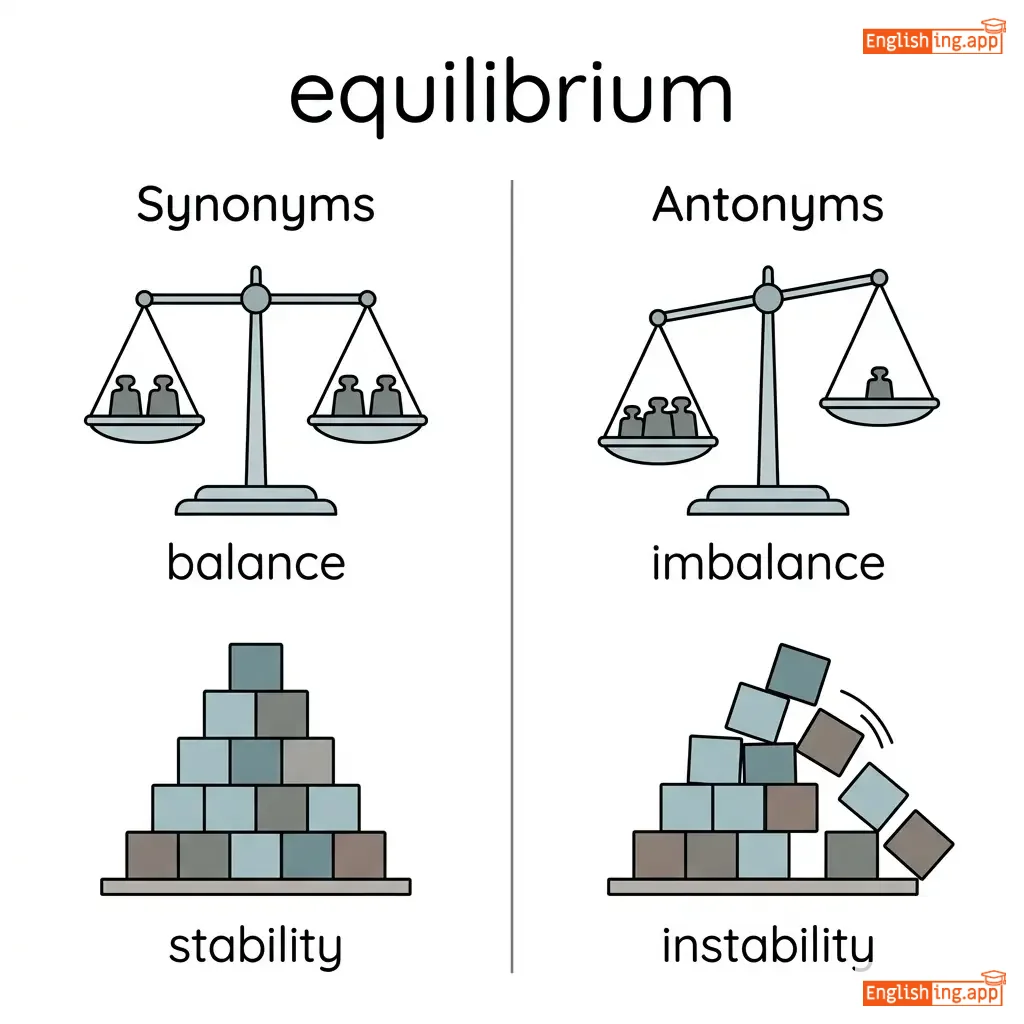
Balance, Stability, Steadiness
••••••
|
Disequilibrium, Instability, Imbalance
••••••
|
均衡は供給と需要のバランスです。
••••••
|
Vocabulary Quiz
Test your vocabulary by matching words with their translations or meanings.
Login to take the quiz
Comments (0)
Share your thoughts and join the discussion.
Join the discussion by logging in
Login to CommentNo comments yet
Be the first to share your thoughts!