

デジタルデトックスが集中力を改善する理由
Why Digital Detox Improves Focus
今日の世界では、スマートフォン、ラップトップ、ソーシャルメディアは私たちの生活の一部となっています。しかし、このoverstimulatedな生活の中で、digital detoxは私たちの集中力やcognitive能力を向上させる手助けになります。私たちが一定期間abstainすると、脳内のdistractionのレベルが下がり、perceptionが明確になります。
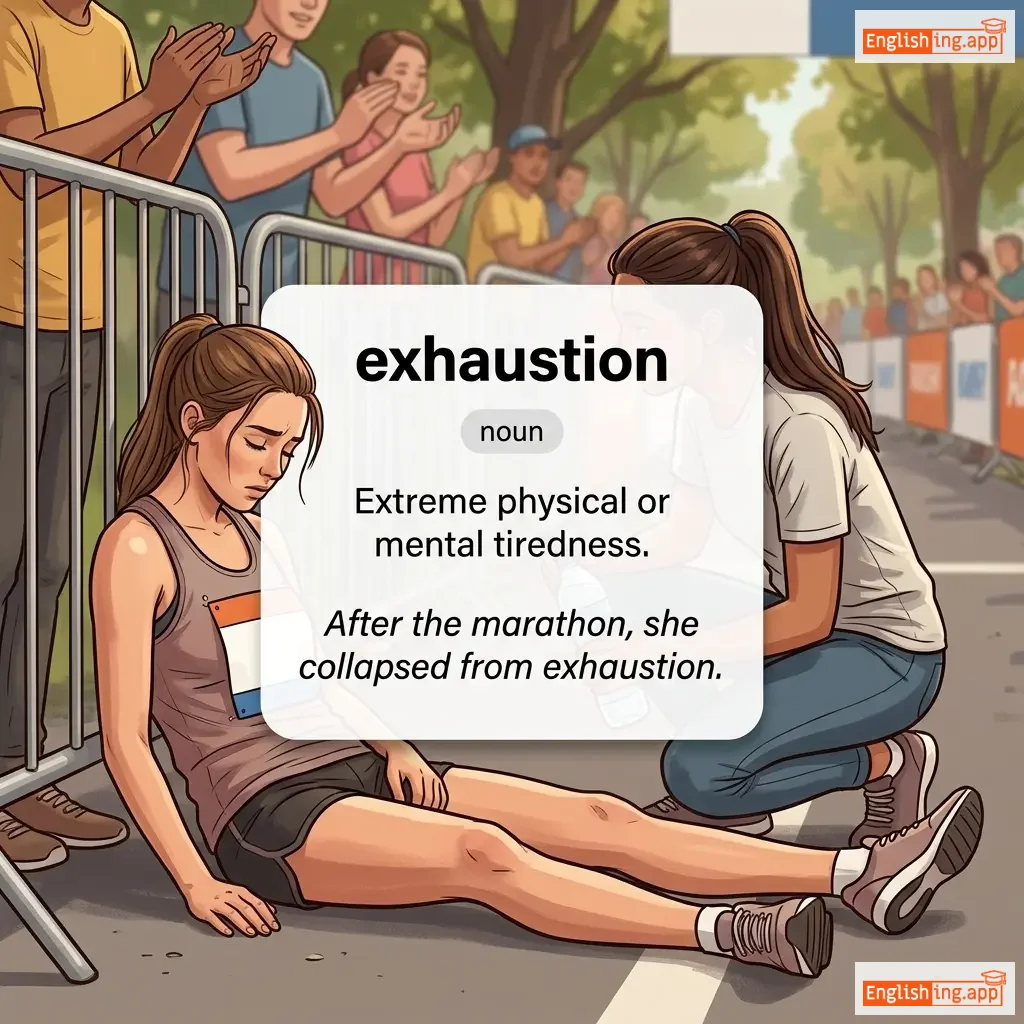
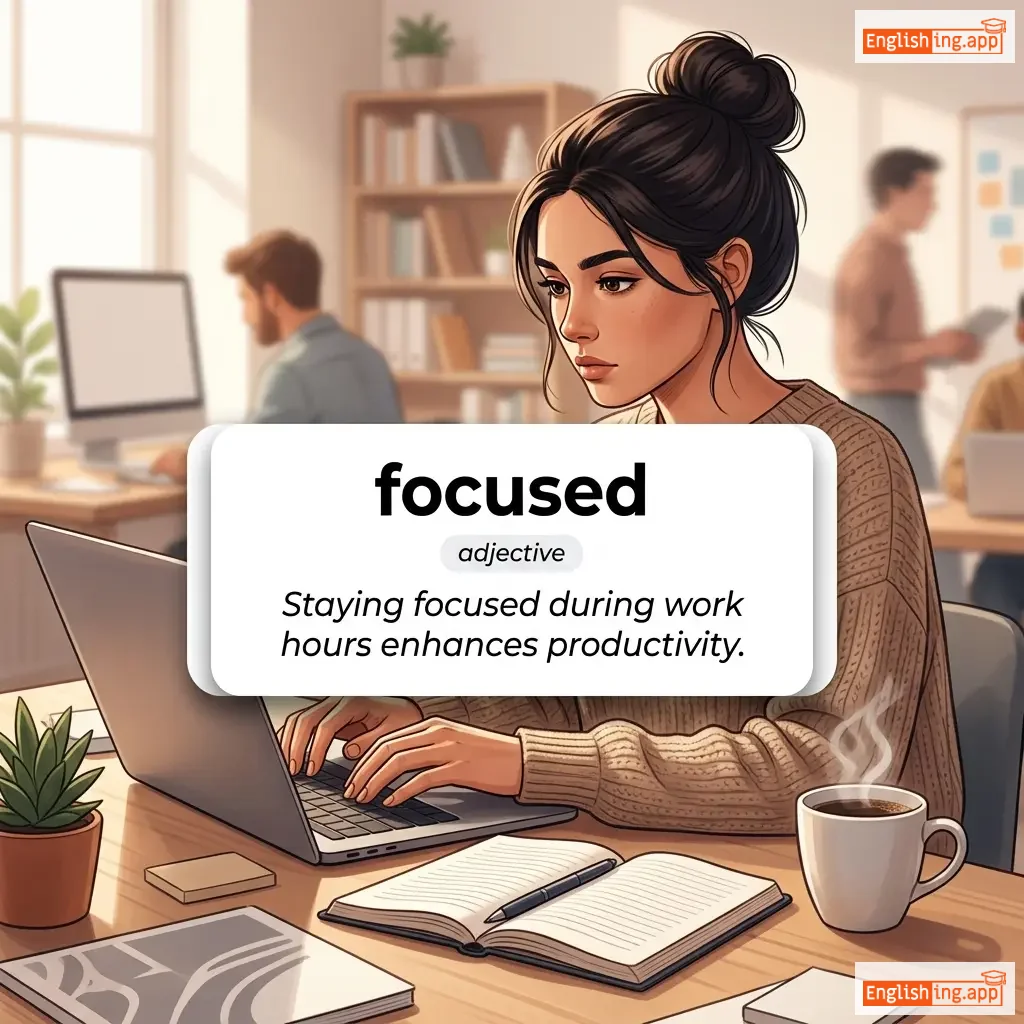
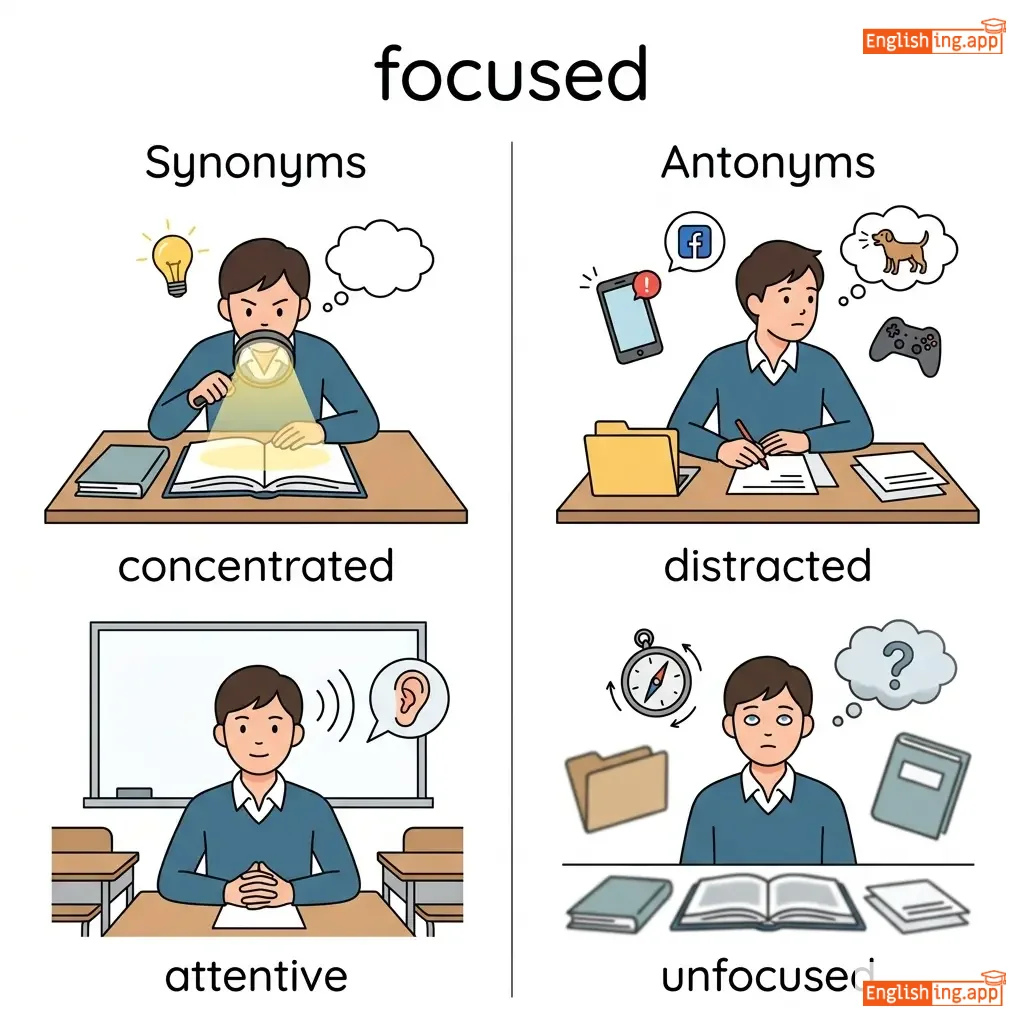
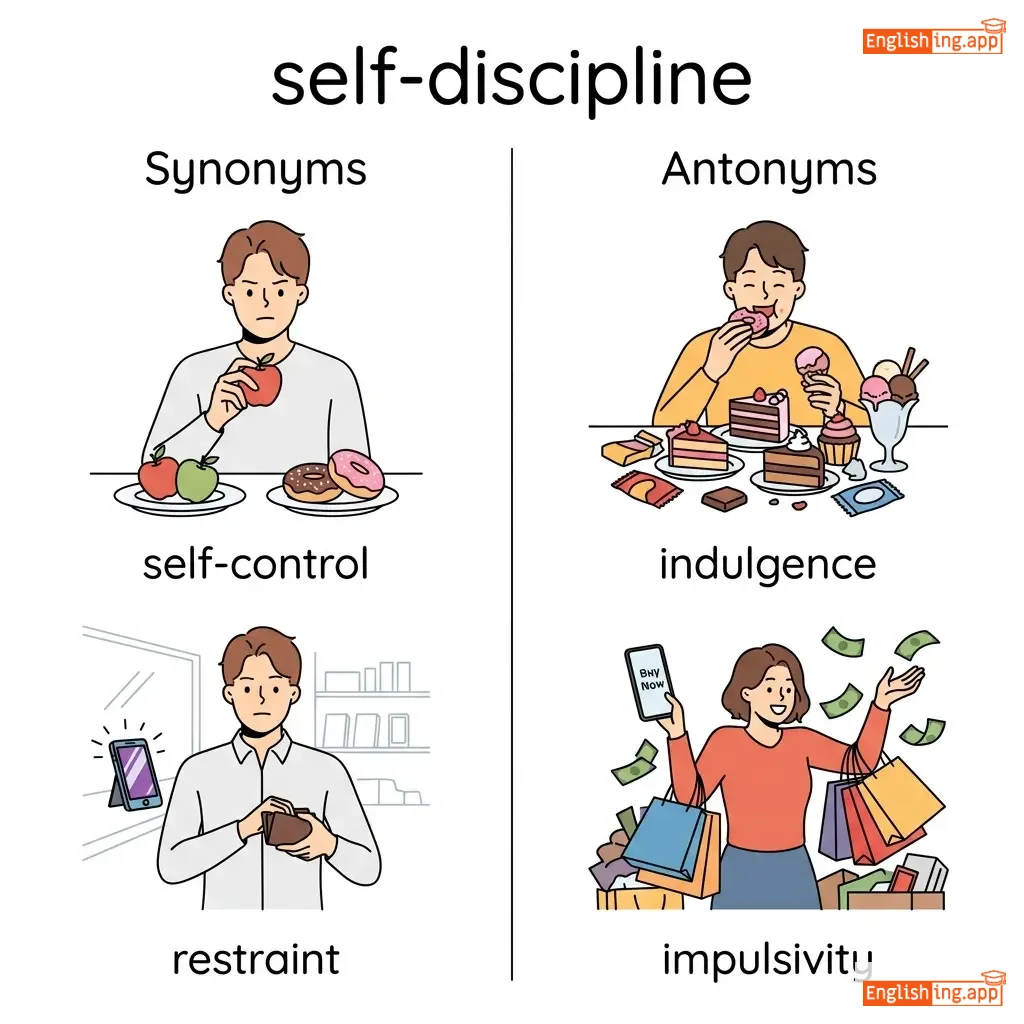
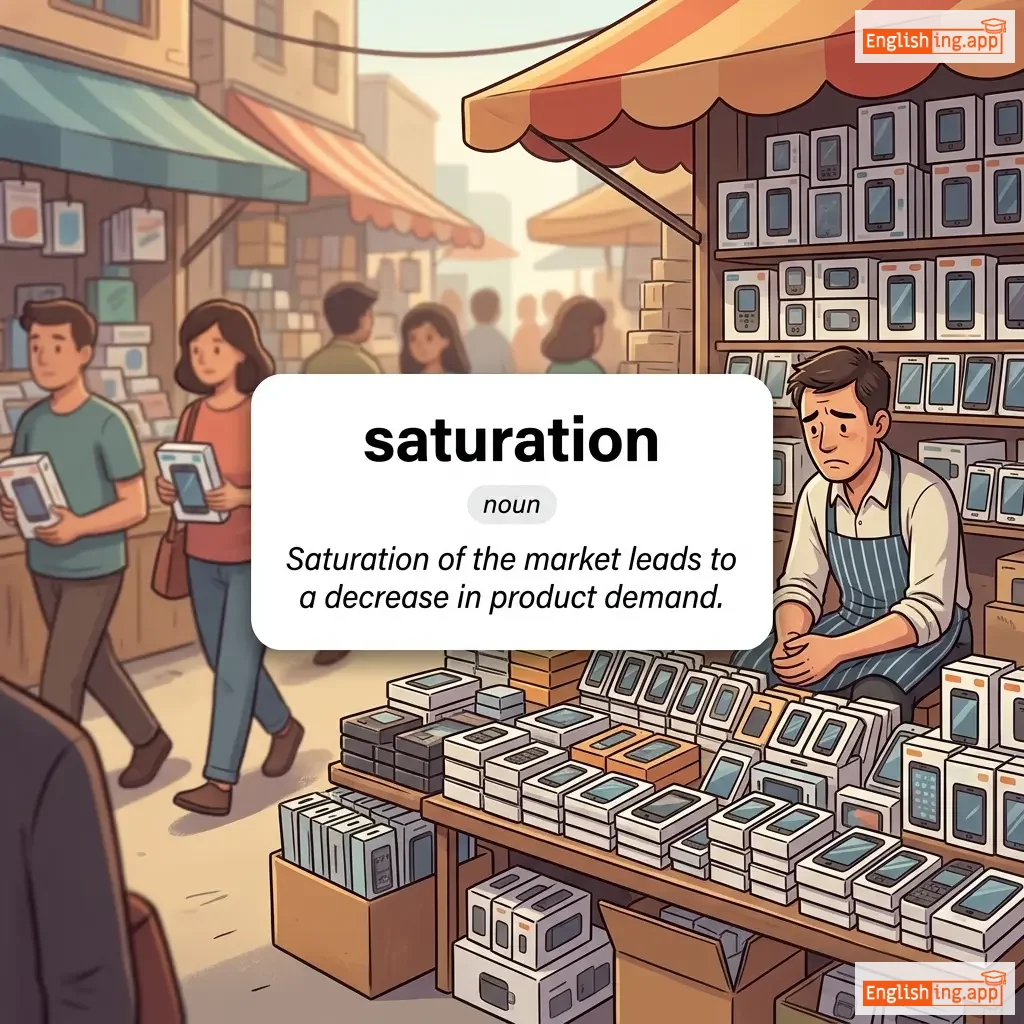
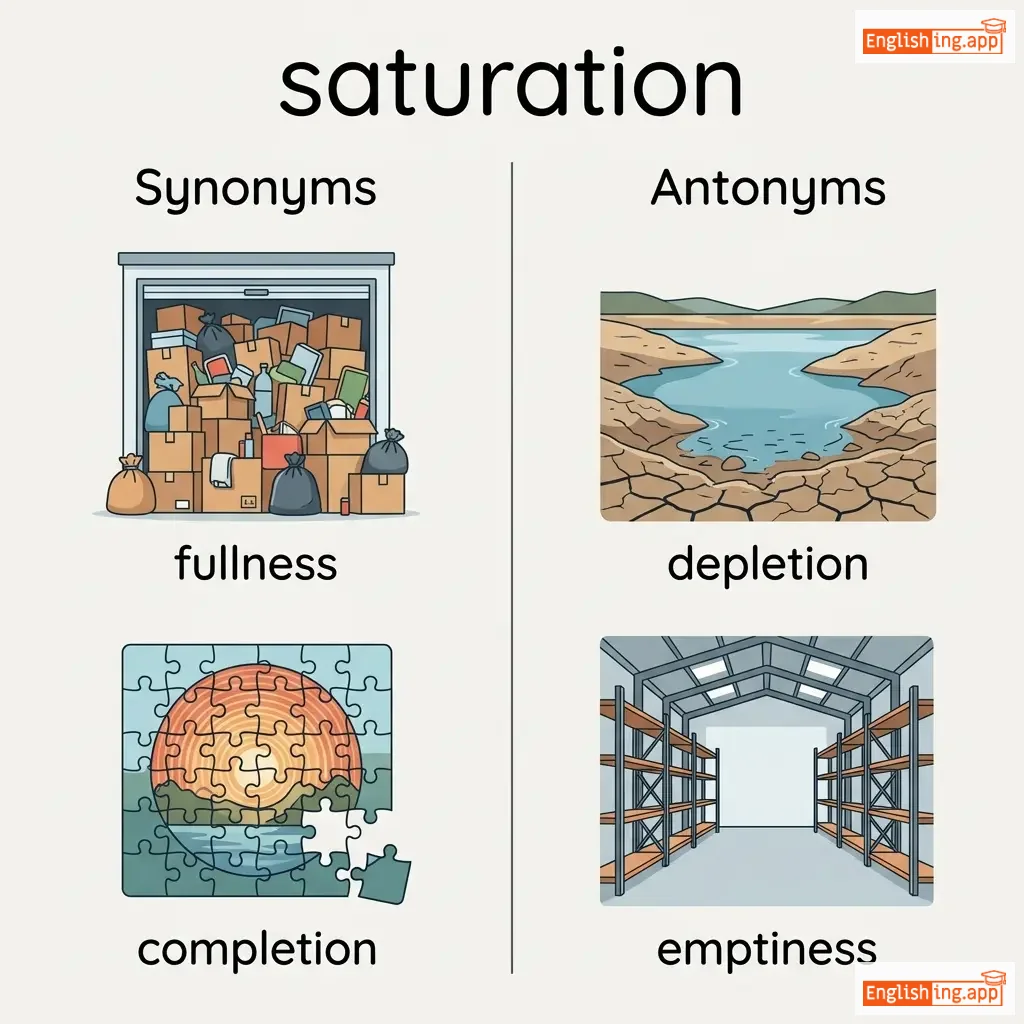
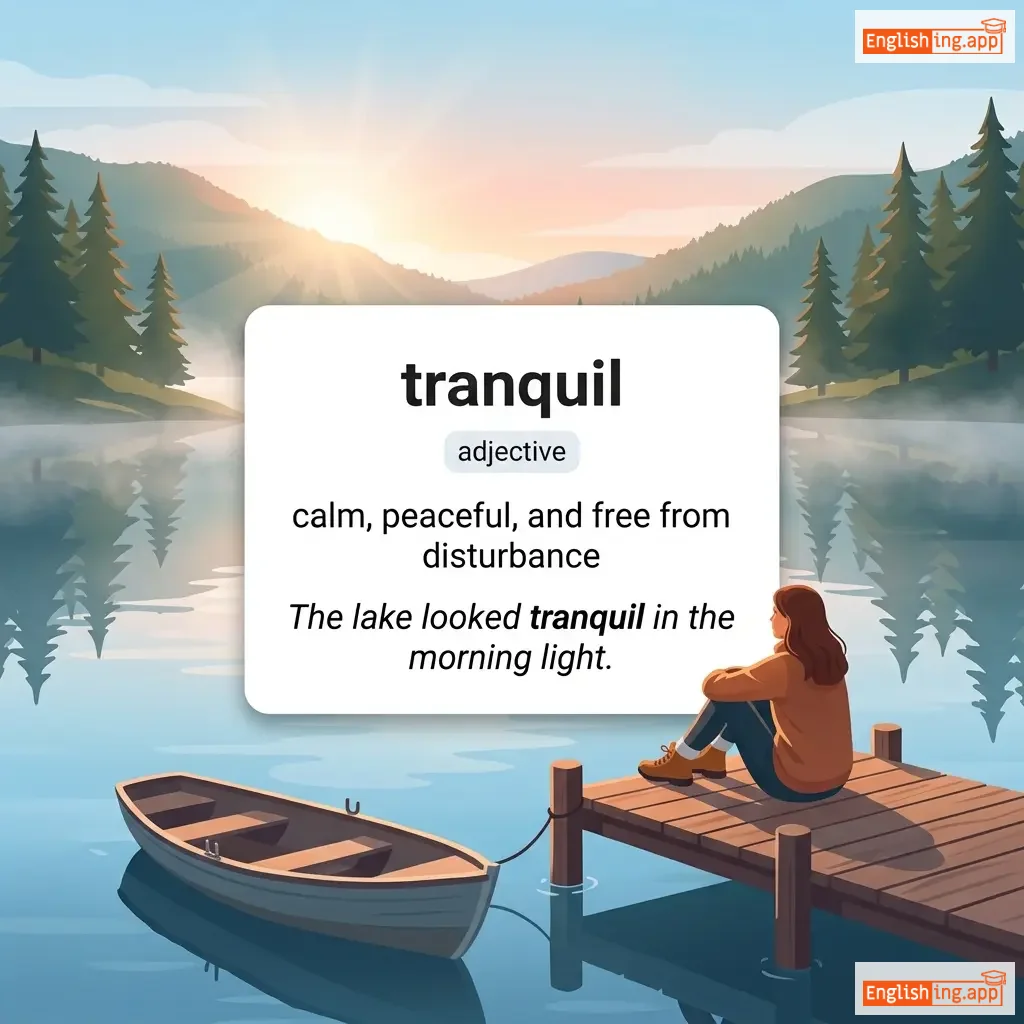
Digital detoxは私たちのsubconsciousに休息を与え、それが私たちのmeticulousな思考プロセスを再生させます。Monotonyとexhaustionから解放されることで、よりfocusedになり、self-disciplineを達成することができます。これにより、saturationが減少し、心は落ち着き、tranquilになります。
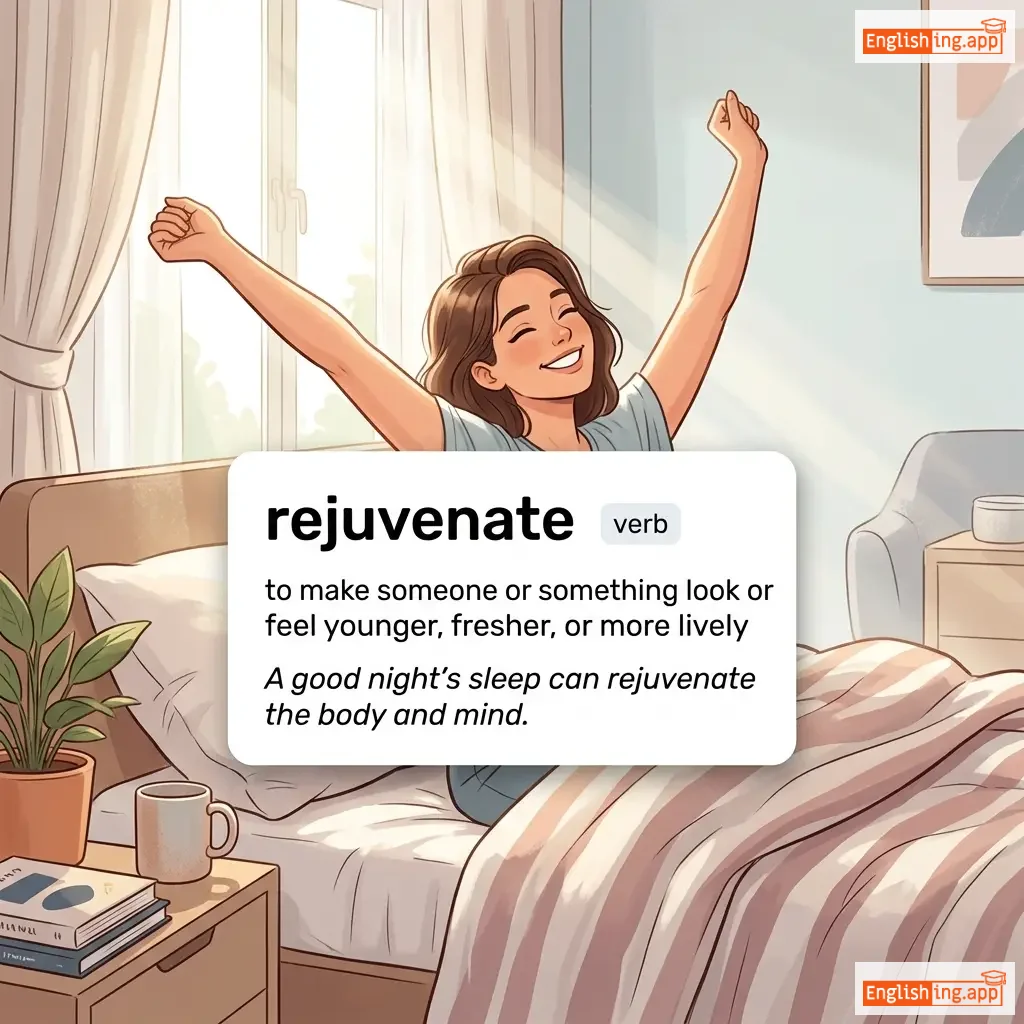
このプロセスは自然に私たちをrejuvenatesし、tangibleな目標に集中するのに役立ちます。したがって、デジタルデトックスは私たちの生活にsustainabilityと長期的な成功をもたらすことができます。
翻訳
過去
過去分詞
三人称単数
動名詞
意味
例文
例文の翻訳
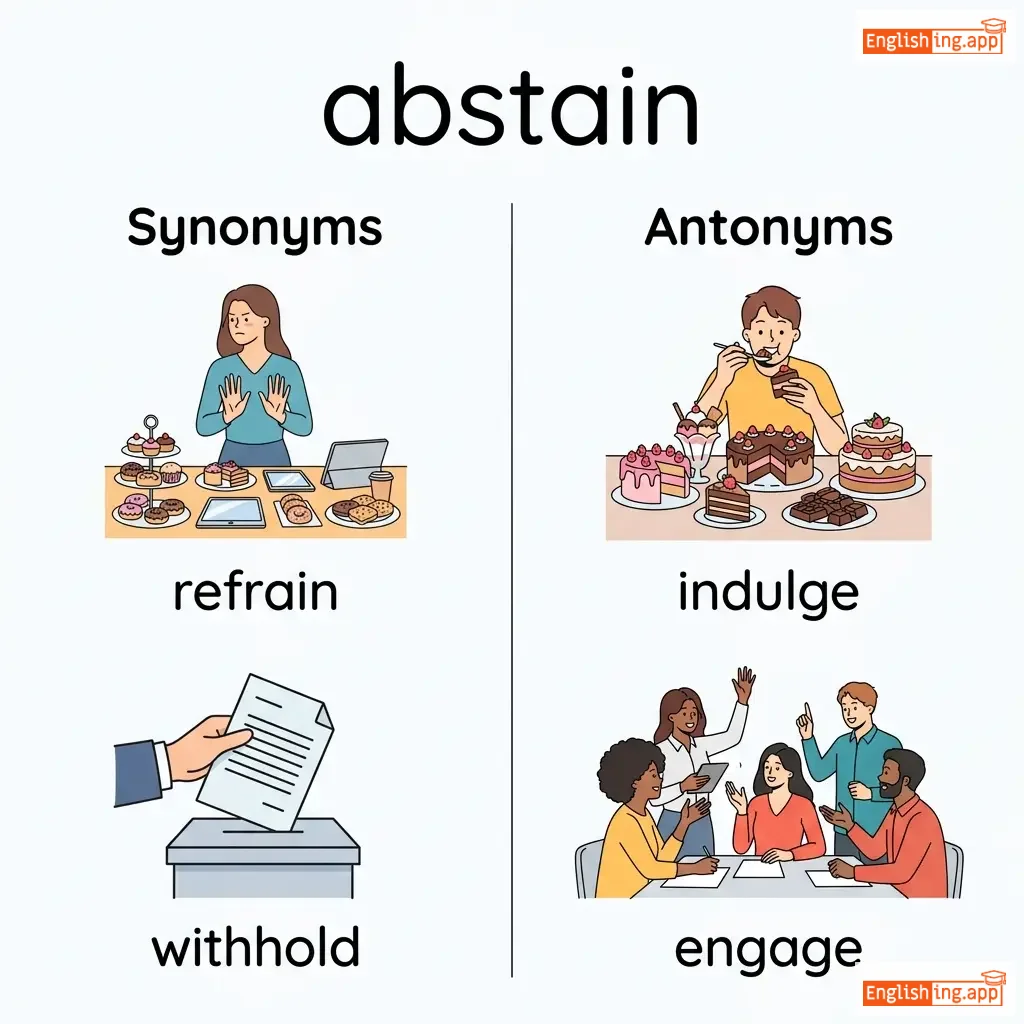
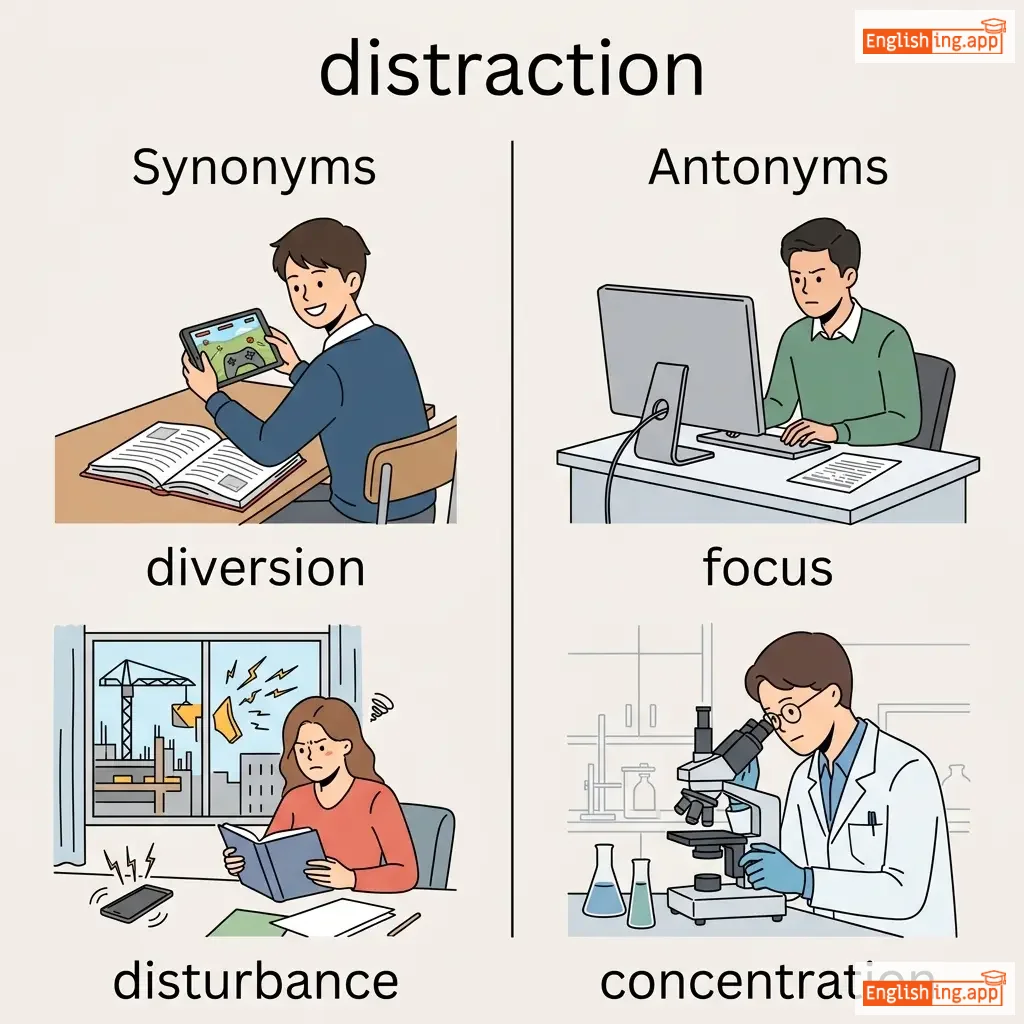
同義語
対義語
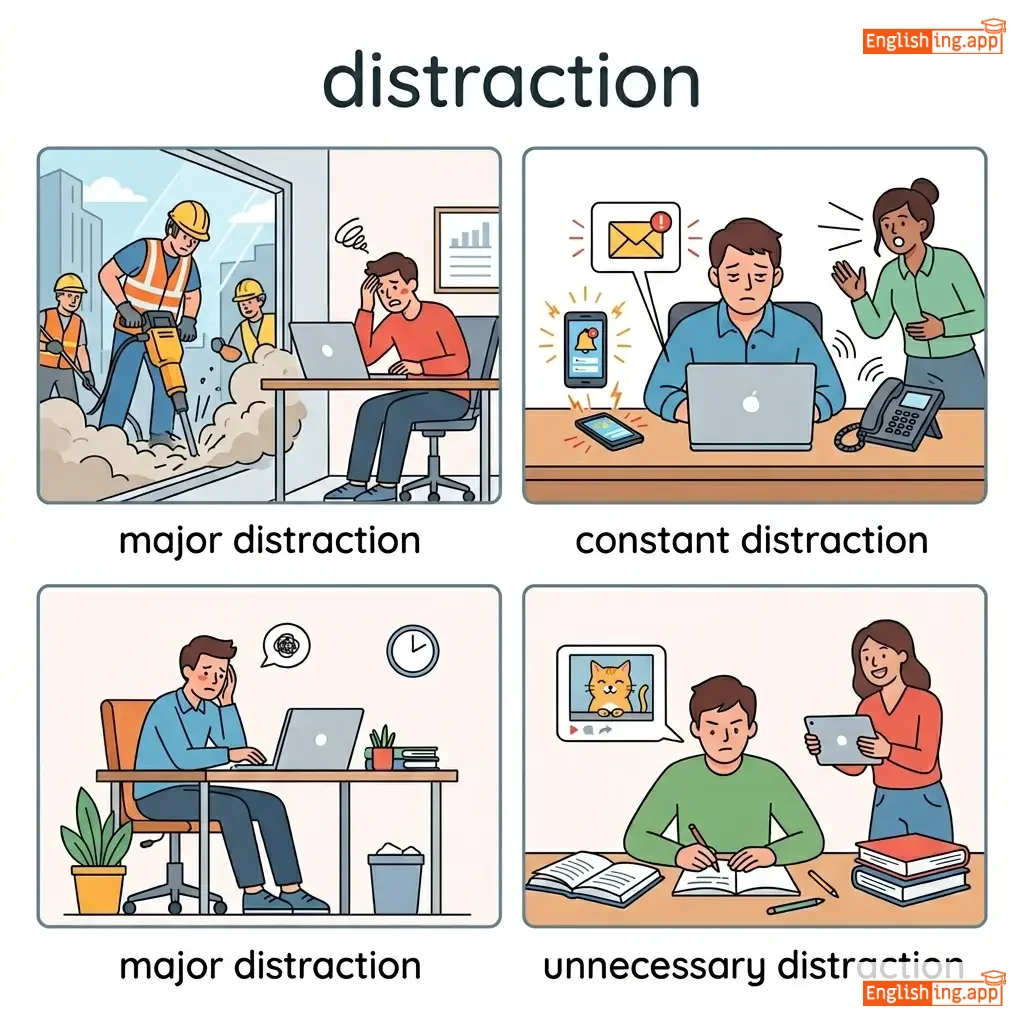
コロケーション
ニーモニック

Swipe left or right, or use the buttons. Tap image to zoom.
例文の翻訳
単語
Why Digital Detox Improves FocusWhy Digital Detox Improves Focus - マスクトグル
|
絵文字
|
単語 | Images | 翻訳 | 意味 | 例文 | 例文の翻訳 | 同義語 | 対義語 | ニーモニック |
|---|---|---|---|---|---|---|---|---|---|
|
#3909
🤯
|
/ˌəʊvərˈstɪmjʊˌleɪtɪd/
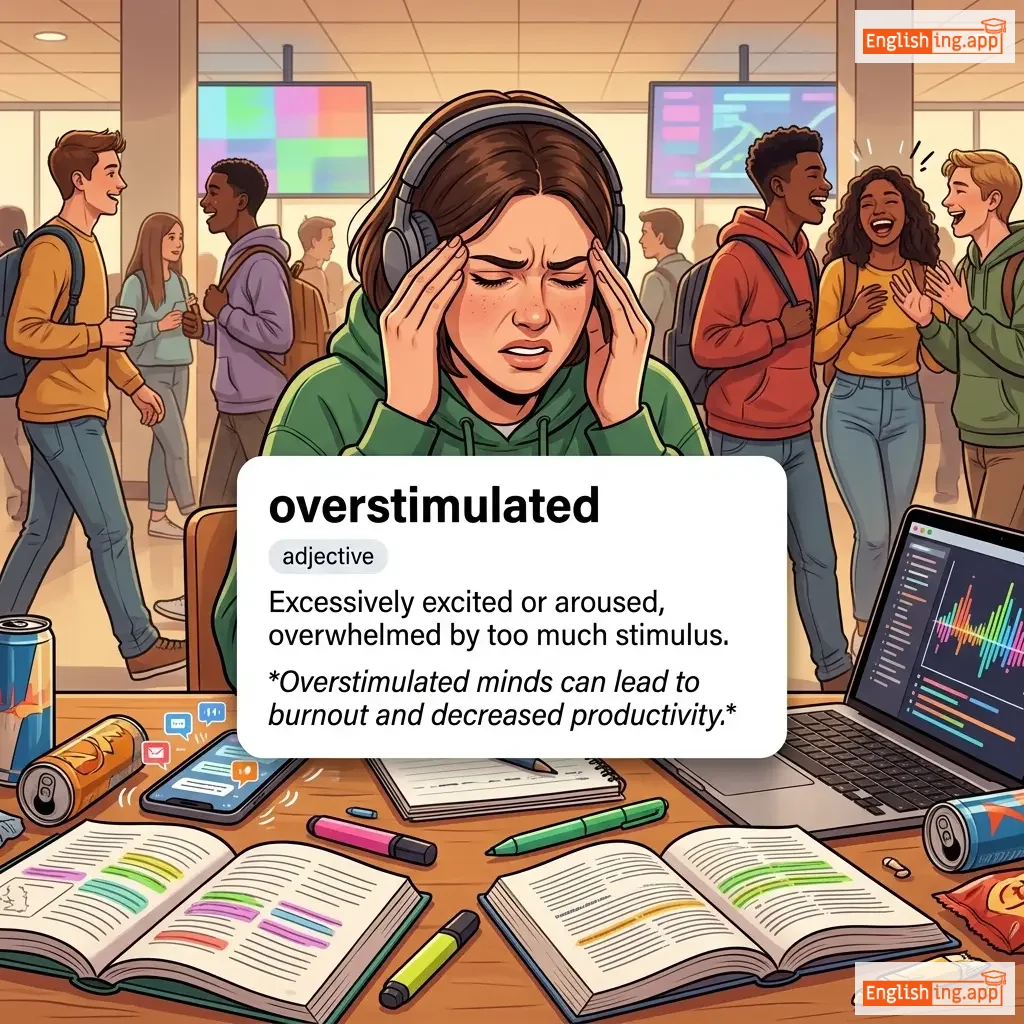
adjective
••••••
|
|
- •••••• |
Excessively excited or aroused, overwhelmed by too much stimulus.
••••••
|
Overstimulated minds can lead to burnout and decreased productivity. |
- •••••• |
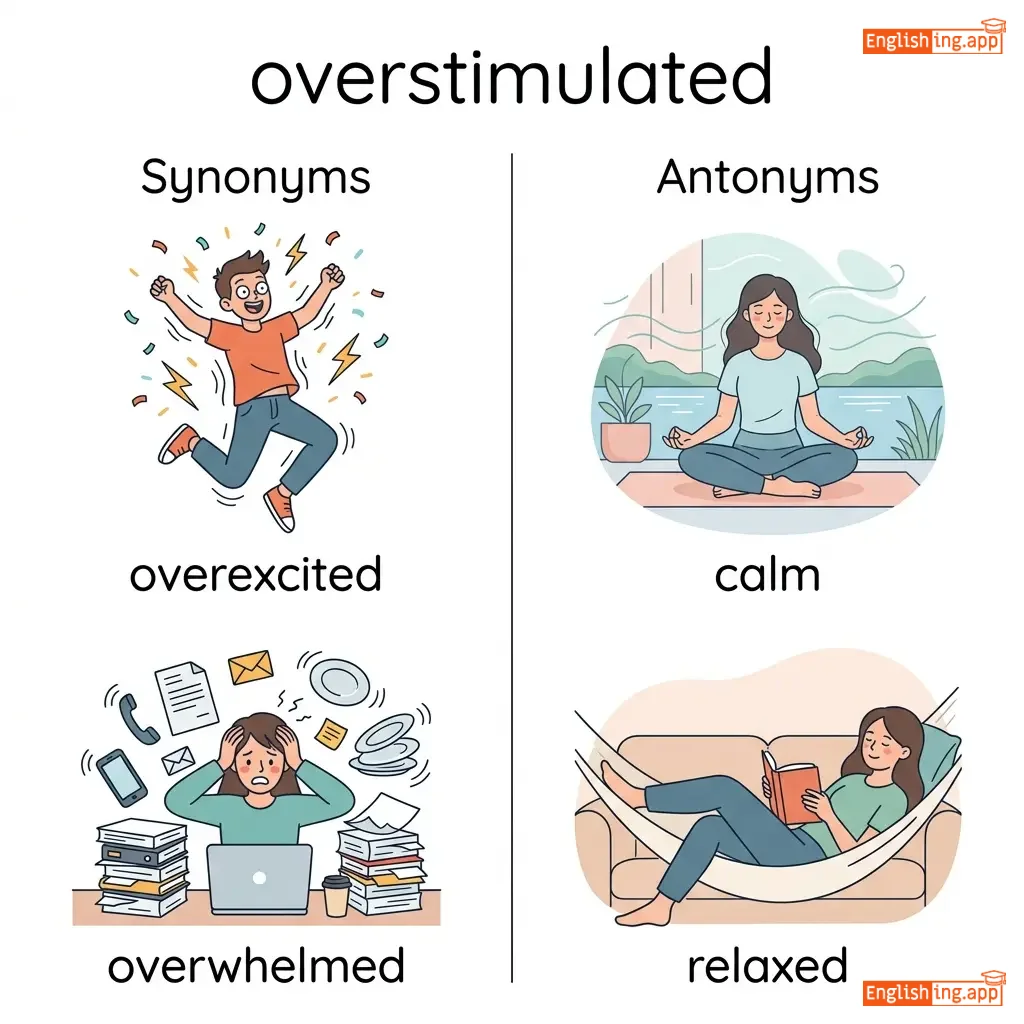
overexcited, overwhelmed, hyperactive, agitated
••••••
|
calm, relaxed, understimulated, peaceful
••••••
|
No •••••• |
|
#3910
🔌
|
/ˈdɪdʒɪtl ˈdɛtɒks/
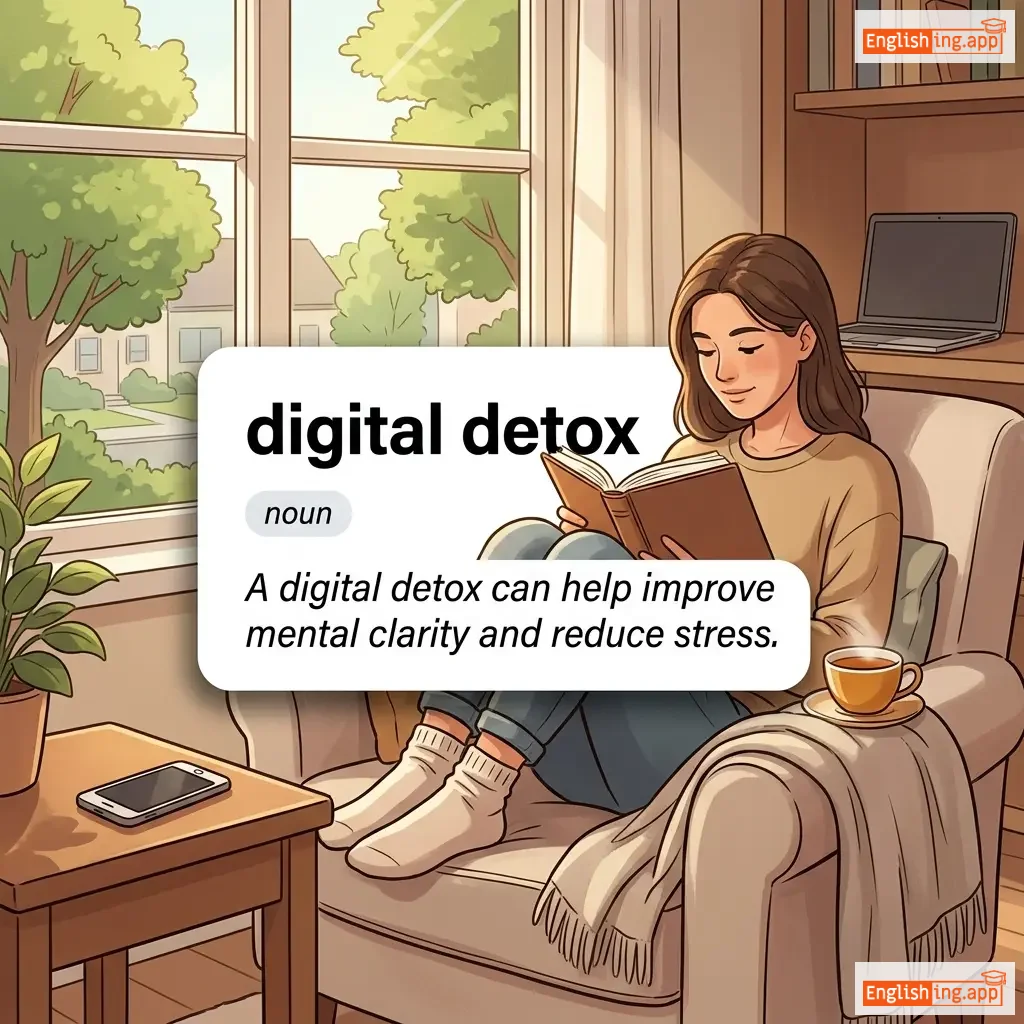
noun
(デジタルデトックス)
••••••
|
|
デジタルデトックス
dejitaru detokkusu
••••••
|
A period of time during which a person refrains from using electronic devices such as smartphones or computers, regarded as an opportunity to reduce stress or focus on social interaction in the physical world.
••••••
|
A digital detox can help improve mental clarity and reduce stress. |
デジタルデトックスは、精神的な明晰さを改善し、ストレスを減らすのに役立ちます。
Dejitaru detokkusu wa, seishinteki na meishikisa wo kaizen shi, sutoresu wo herasu no ni yakudachimasu.
••••••
|
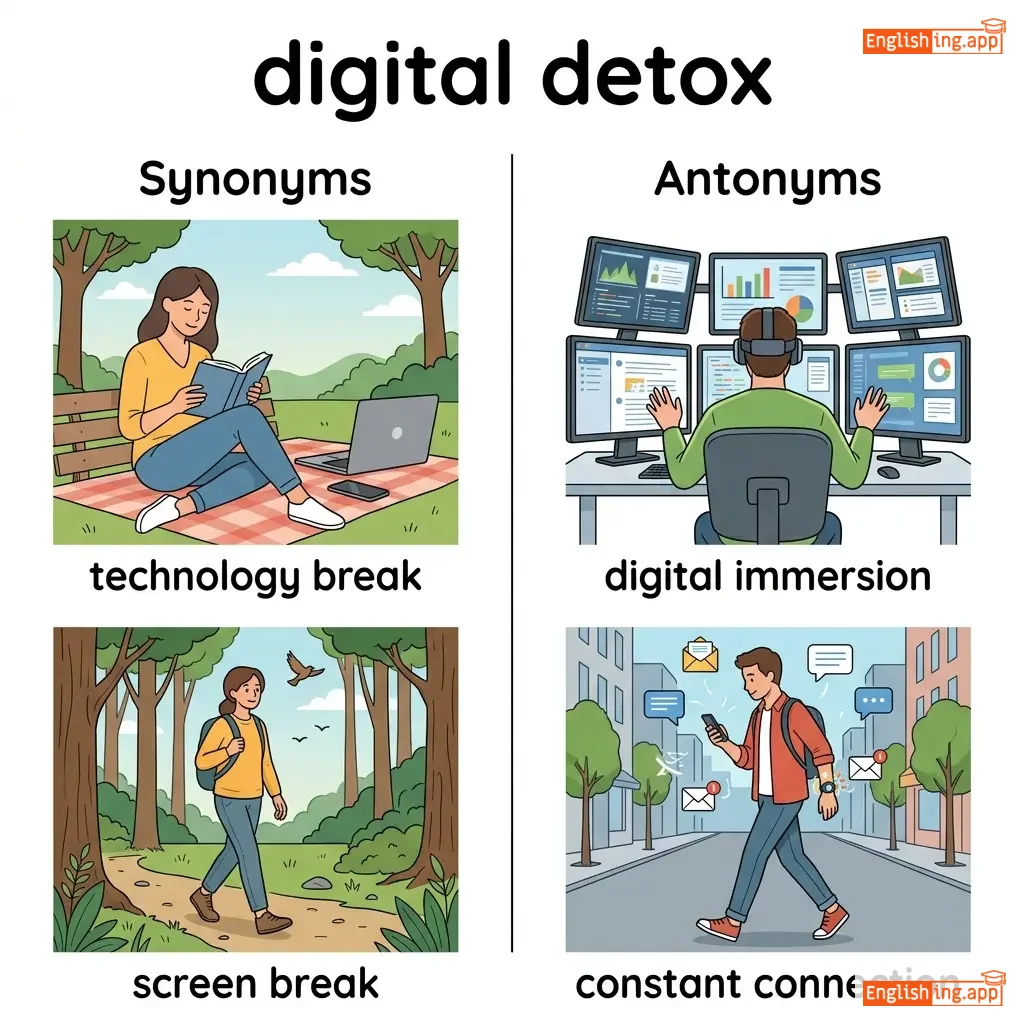
technology break, screen break, offline time, unplugging
••••••
|
digital immersion, constant connection, tech addiction
••••••
|
デジタルから離れて、心をリセットしよう!
••••••
|
|
#3911
🧠
|
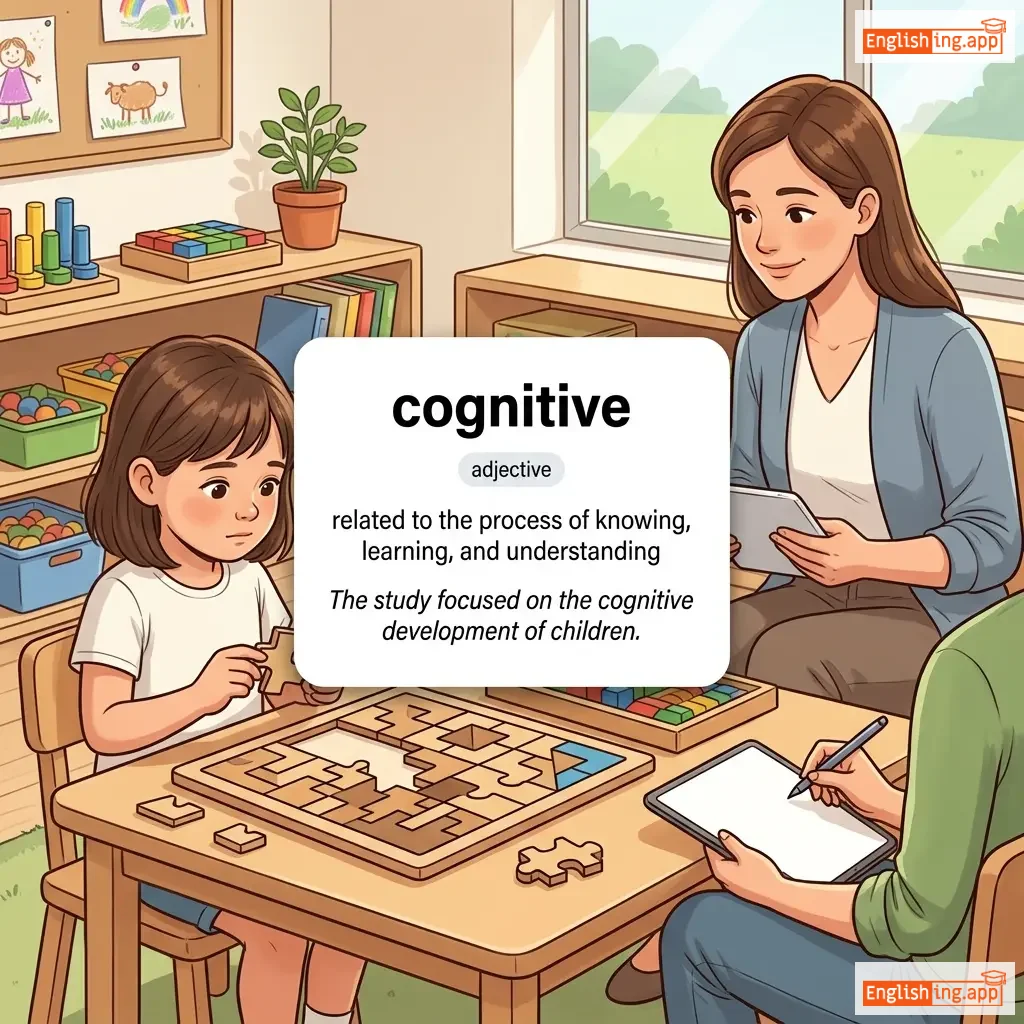
/ˈkɒɡnɪtɪv/
adjective
(コグニティブ)
••••••
|
|
認知的
ninchiteki
••••••
|
Related to cognition; concerning the mental processes of perception, memory, judgment, and reasoning.
••••••
|
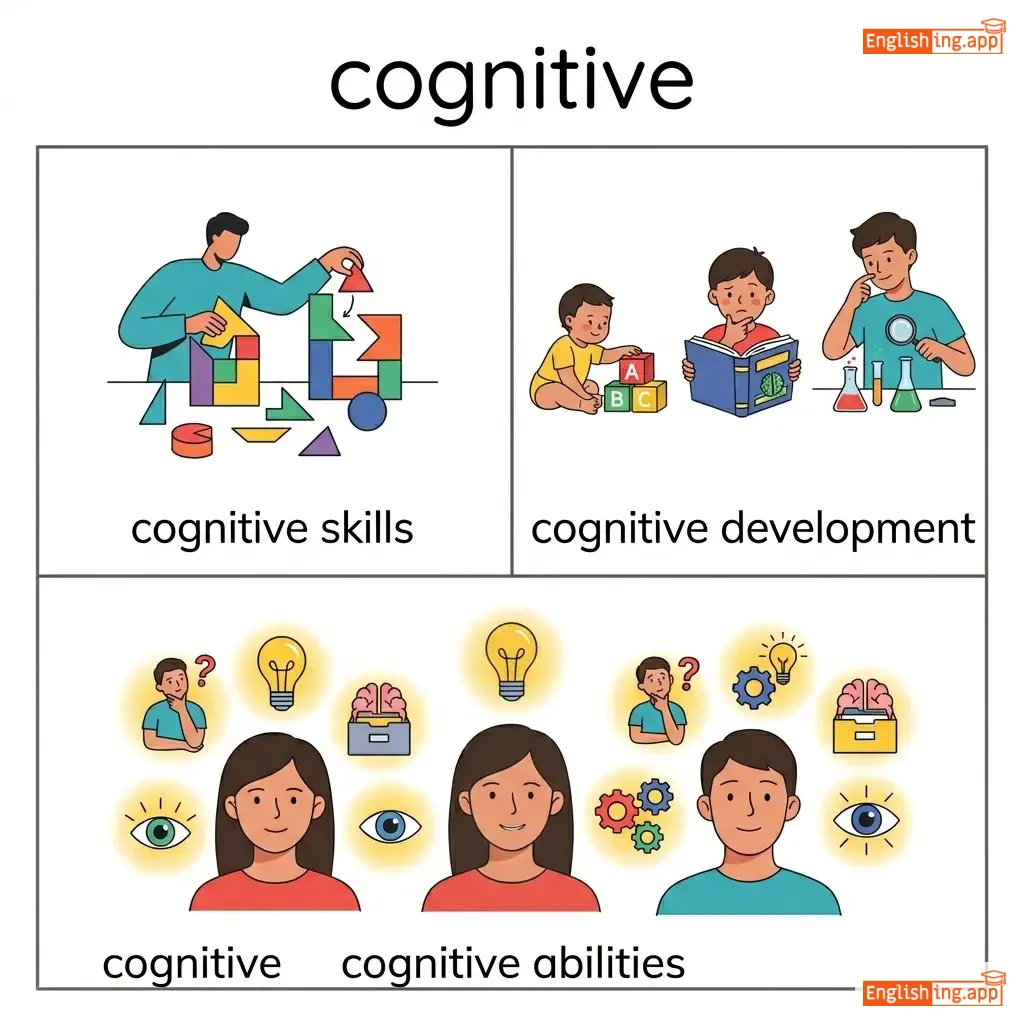
Cognitive abilities are crucial for effective problem solving. |
認知的能力は効果的な問題解決にとって重要です。
Ninchiteki nouryoku wa kouka teki na mondai kaiketsu ni totte juuyou desu.
••••••
|
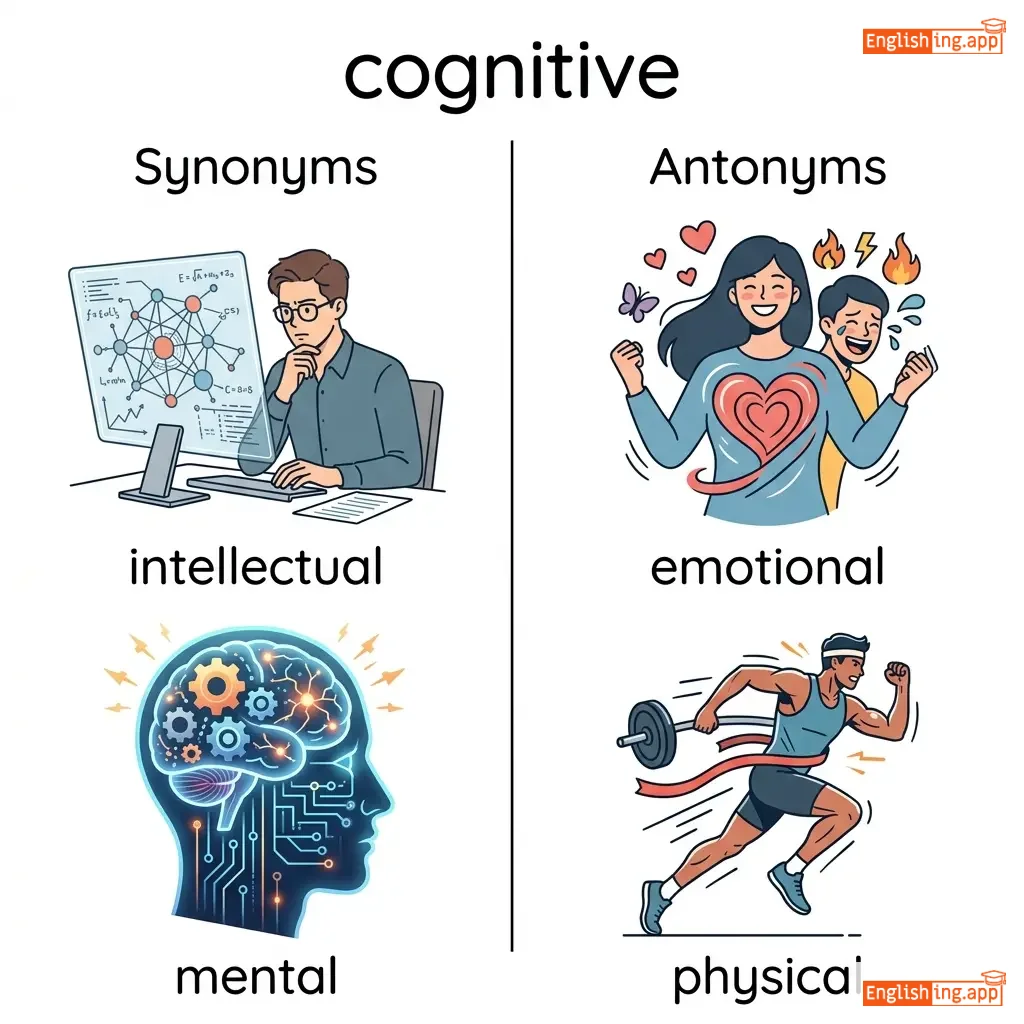
intellectual, mental, cerebral, psychological
••••••
|
emotional, physical, instinctive, intuitive
••••••
|
認知的な思考が問題を解決する鍵となる。
••••••
|
|
#3912
🚫
|
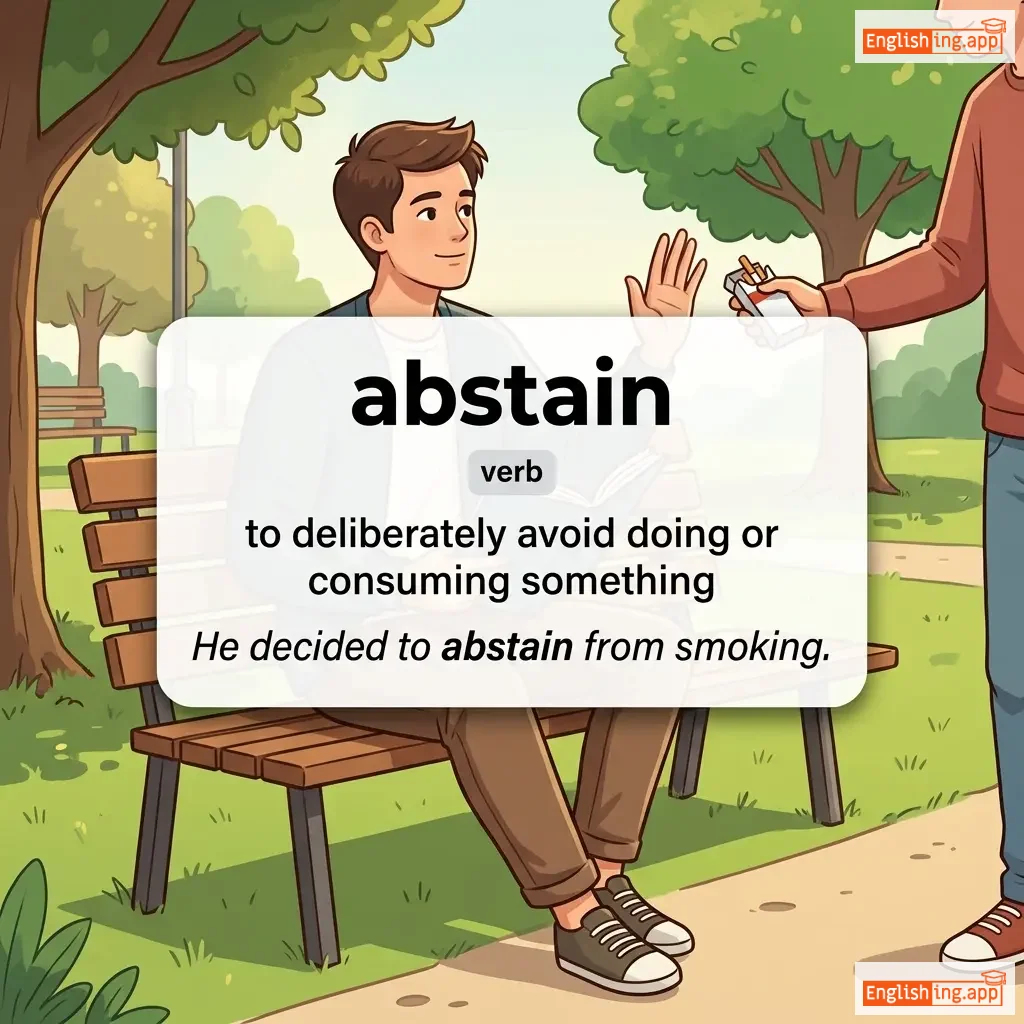
/əbˈsteɪn/
verb
(アブステイン)
••••••
|
|
自制する
jisei suru
••••••
|
To restrain oneself from indulging in or partaking of something.
••••••
|
People often abstain from digital devices to enhance focus. |
人々は集中力を高めるためにデジタル機器を使うのを自制することがよくあります。
Hitobito wa shūchūryoku o takameru tame ni dejitaru kiki o tsukau no o jisei suru koto ga yoku arimasu.
••••••
|
refrain, avoid, resist, forgo
••••••
|
indulge, partake, consume, engage
••••••
|
自制する、集中するために不要なものを避ける。
••••••
|
|
#3913
🎯
|
/dɪsˈtrækʃən/
noun
(ディストラクション)
••••••
|
|
気を散らすこと
ki wo chirasu koto
••••••
|
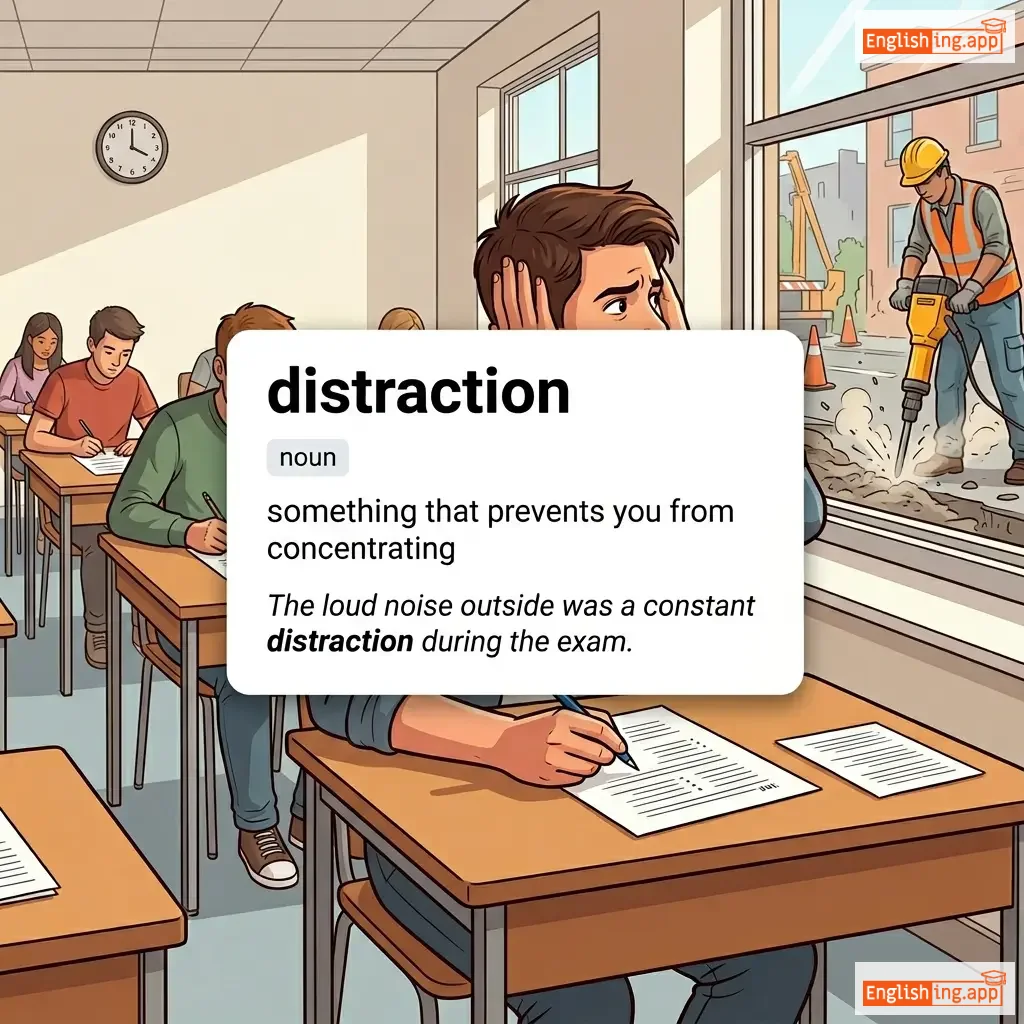
A thing that prevents someone from giving full attention to something else.
••••••
|
Distractions can severely impact your ability to concentrate.
ディストラクションは集中力に深刻な影響を与える可能性があります。
••••••
|
気を散らすことは集中力に深刻な影響を与える可能性があります。
Ki wo chirasu koto wa shuuchuuriyoku ni shinkoku na eikyou wo ataeru kanousei ga arimasu.
••••••
|
diversion, interruption, interference, disruption
••••••
|
focus, attention, concentration, engagement
••••••
|
気を散らすこととディストラクションは意味が同じで、どちらも集中力を失わせます。
••••••
|
|
#3914
👁️
|
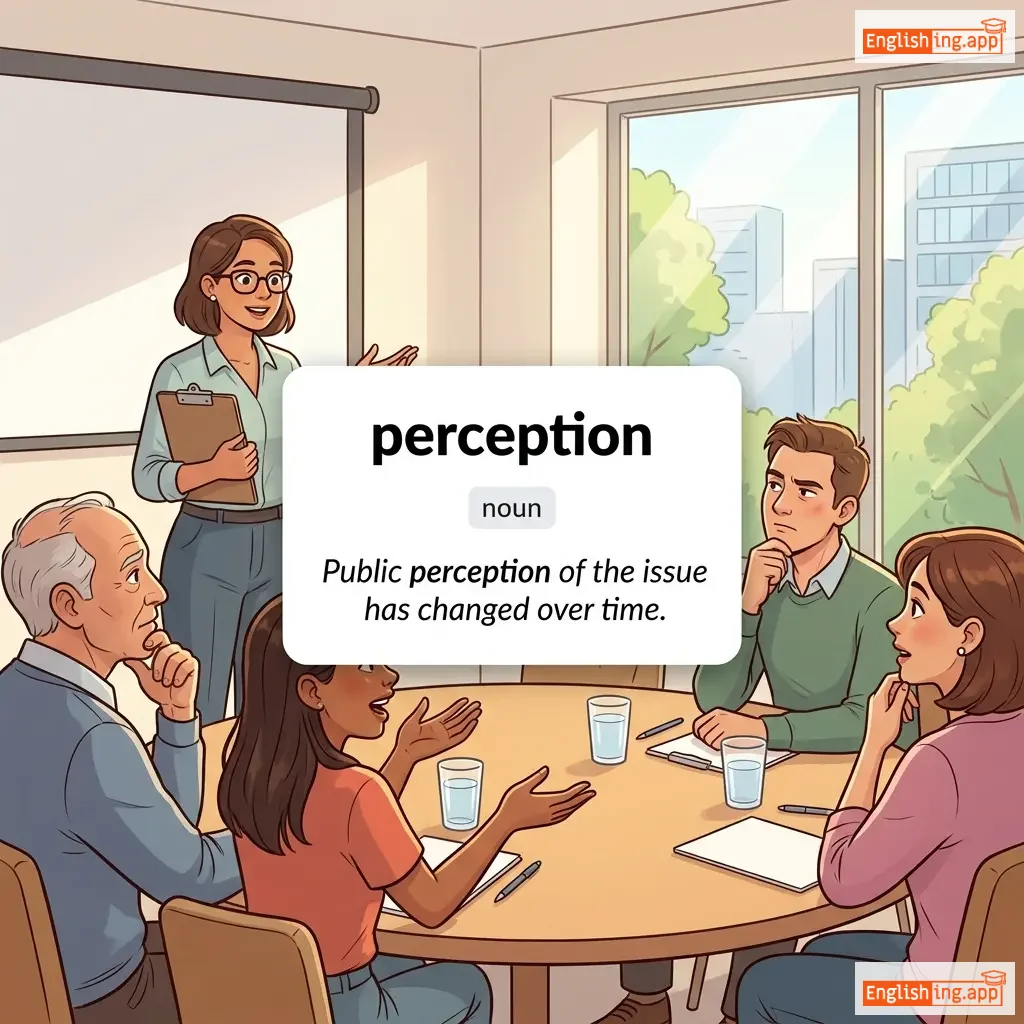
/pərˈsɛpʃən/
noun
(パーセプション)
••••••
|
|
知覚
chikaku
••••••
|
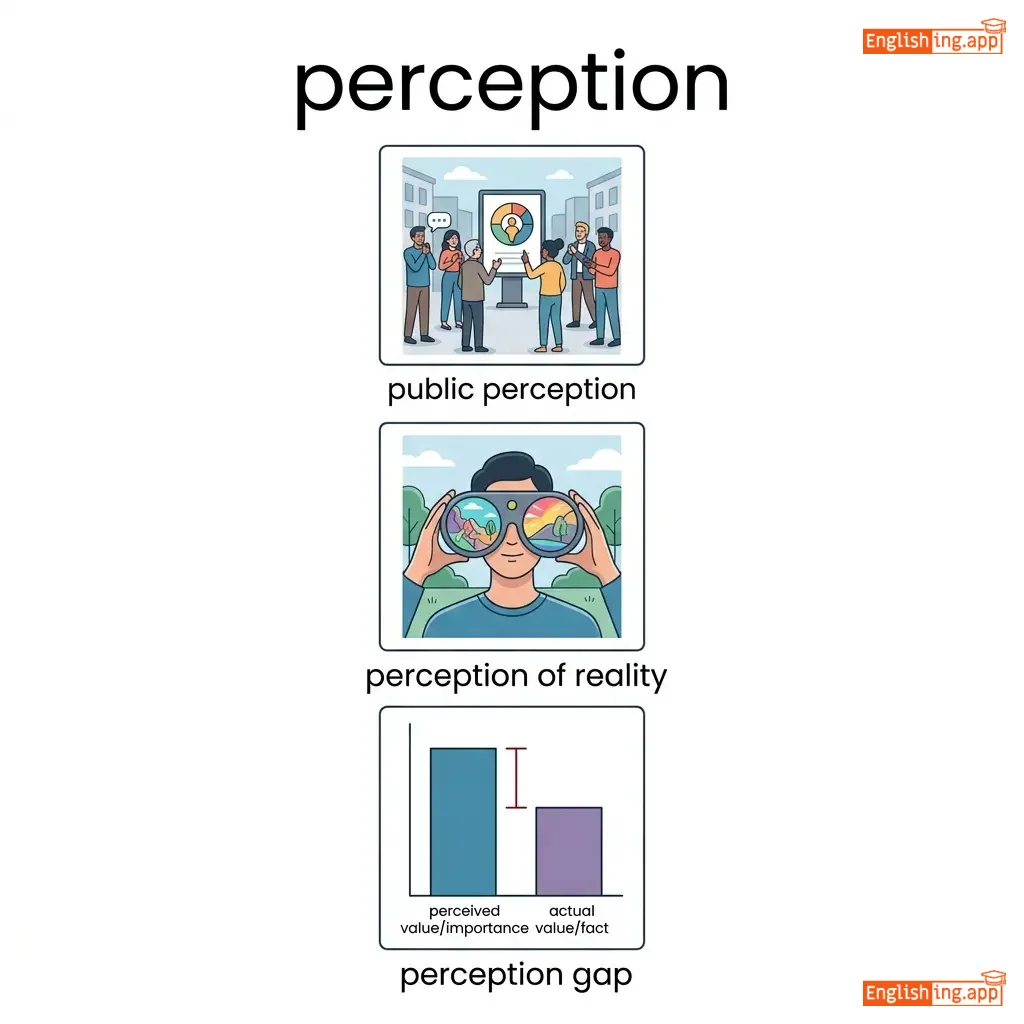
The ability to see, hear, or become aware of something through the senses; the way in which something is regarded, understood, or interpreted.
••••••
|
Our perception of stress often influences how we handle challenges.
ストレスに対する私たちの認識は、私たちが困難にどう対処するかにしばしば影響を与える。
••••••
|
ストレスに対する私たちの認識は、私たちが困難にどう対処するかにしばしば影響を与える。
Sutoresu ni taisuru watashitachi no ninshiki wa watashitachi ga konnan ni dou taisho suru ka ni shibashiba eikyo o ataeru
••••••
|
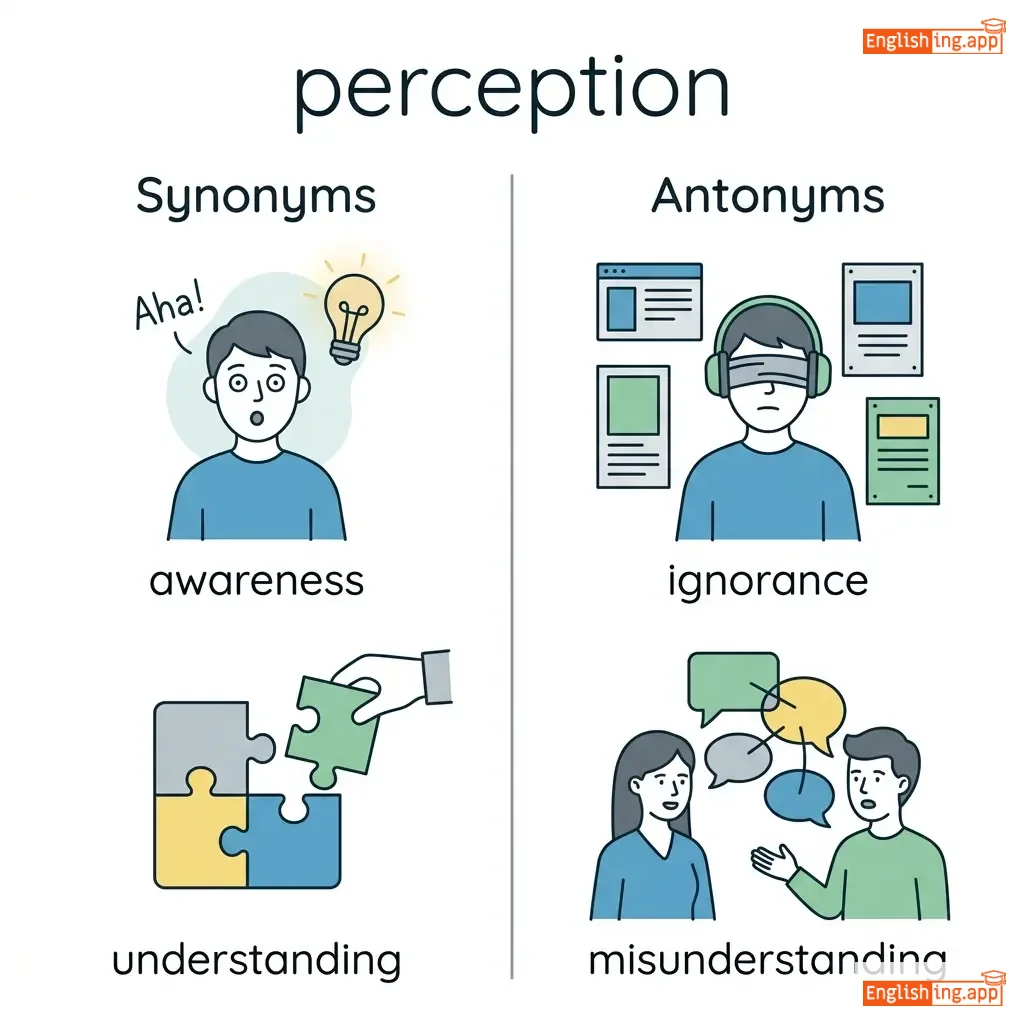
awareness, insight, understanding, recognition
••••••
|
misunderstanding, ignorance, blindness, unawareness
••••••
|
See chi-ka-ku to remember 知覚
••••••
|
|
#3915
🧘
|
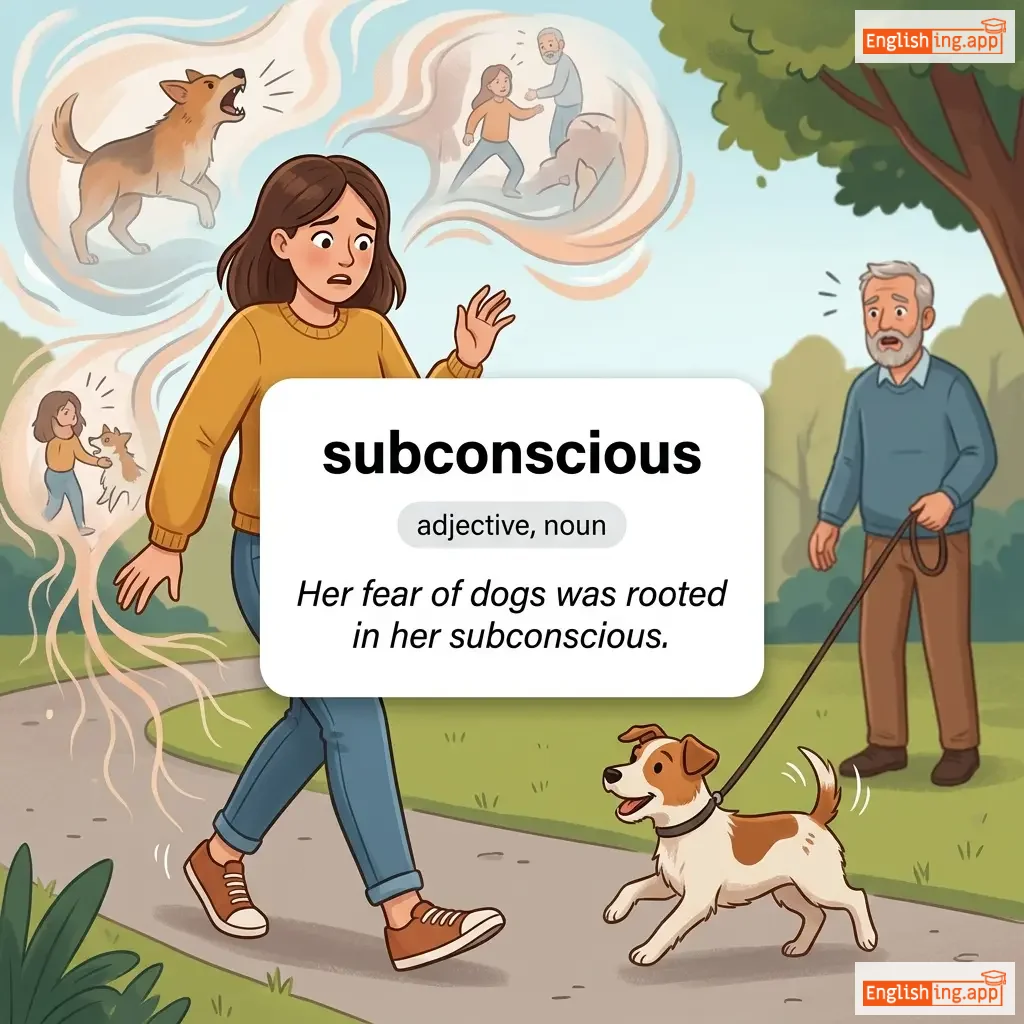
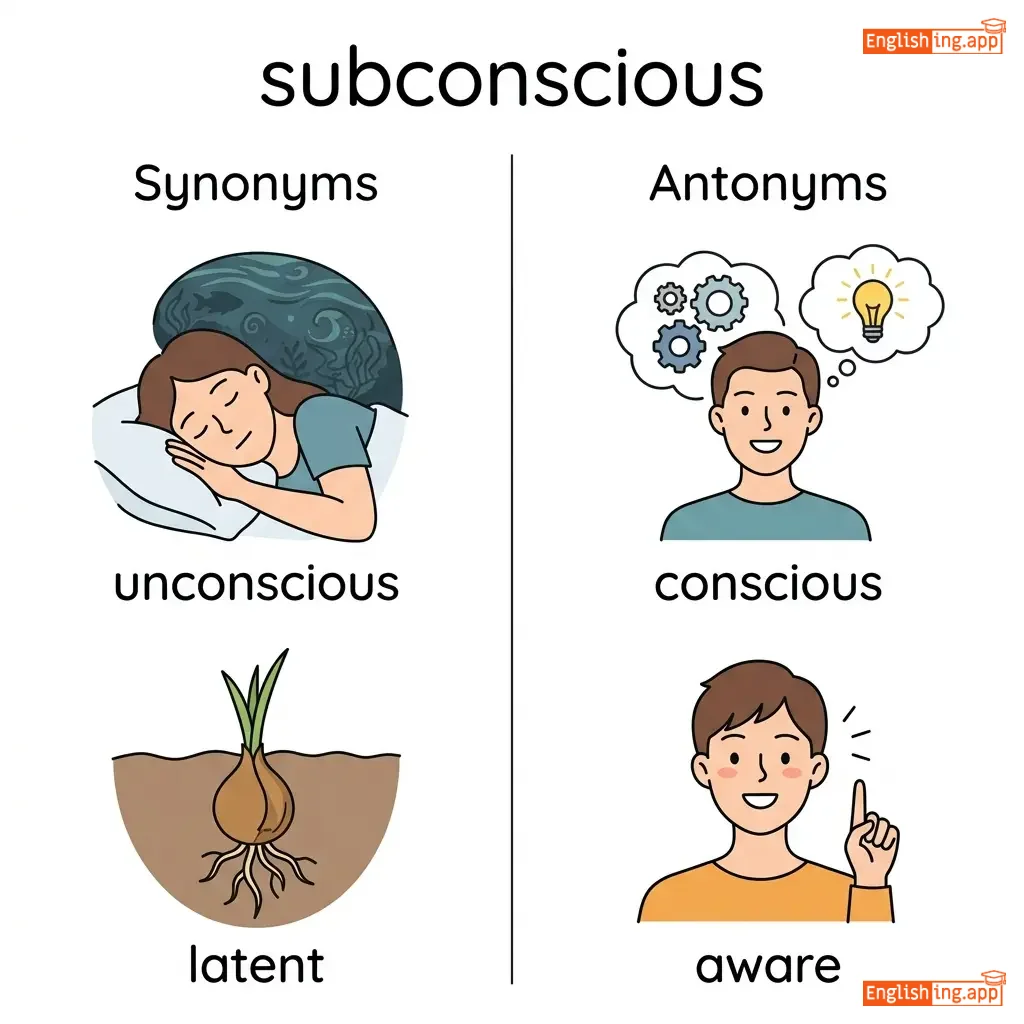
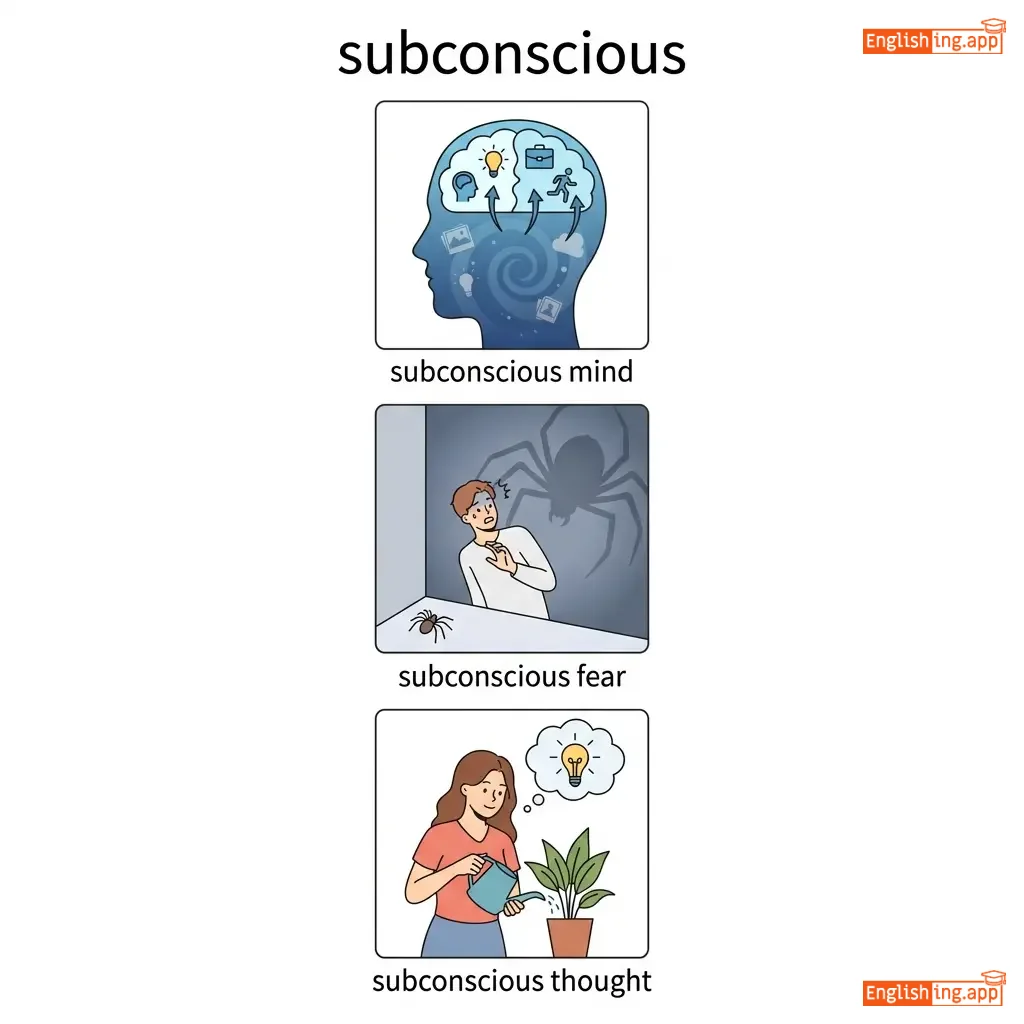
/ˌsʌbˈkɒnʃəs/
adjective
(サブコンシャス)
••••••
|
|
潜在意識
senzai ishiki
••••••
|
Of or concerning the part of the mind of which one is not fully aware but which influences one's actions and feelings.
••••••
|
The subconscious mind influences many of our actions without us realizing it. |
潜在意識は私たちの多くの行動に影響を与え、私たちはそれに気づいていません。
Senzai ishiki wa watashitachi no ōku no kōdō ni eikyō o ataete, watashitachi wa sore ni kidzuiteimasen.
••••••
|
unconscious, implicit, subliminal, latent
••••••
|
conscious, aware, deliberate, intentional
••••••
|
潜 = 隠れる, 意識 = 感覚
••••••
|
|
#3916
🔍
|
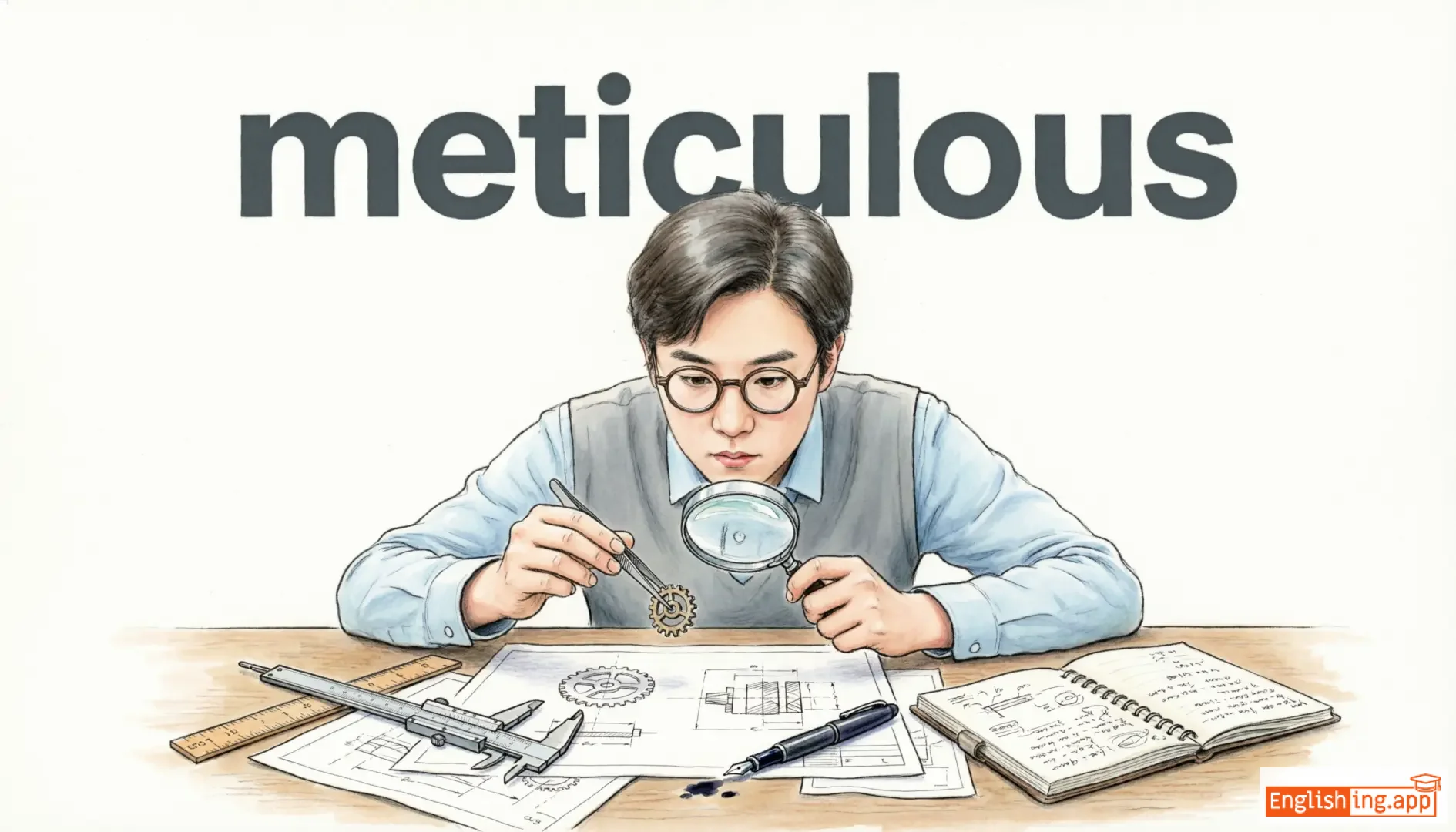
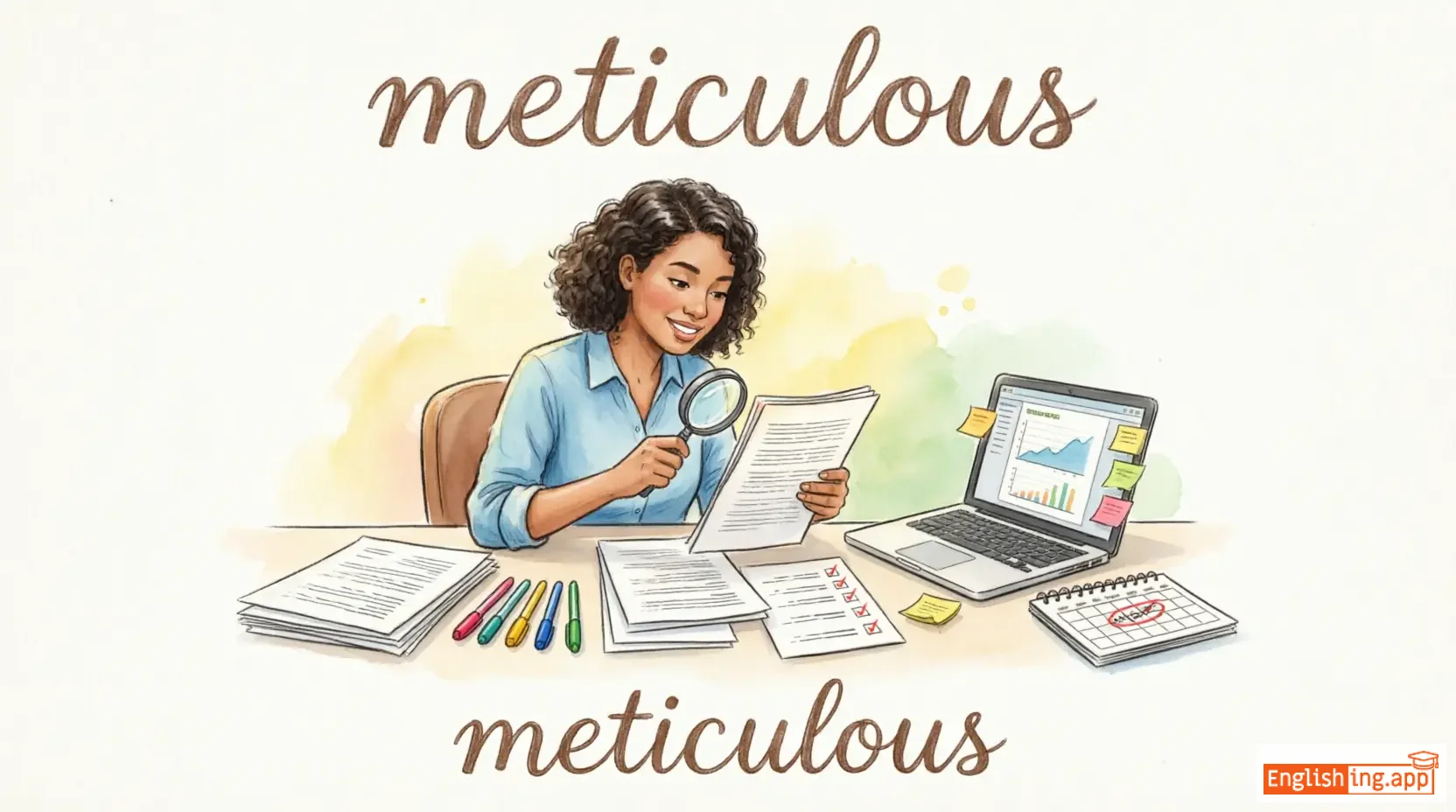
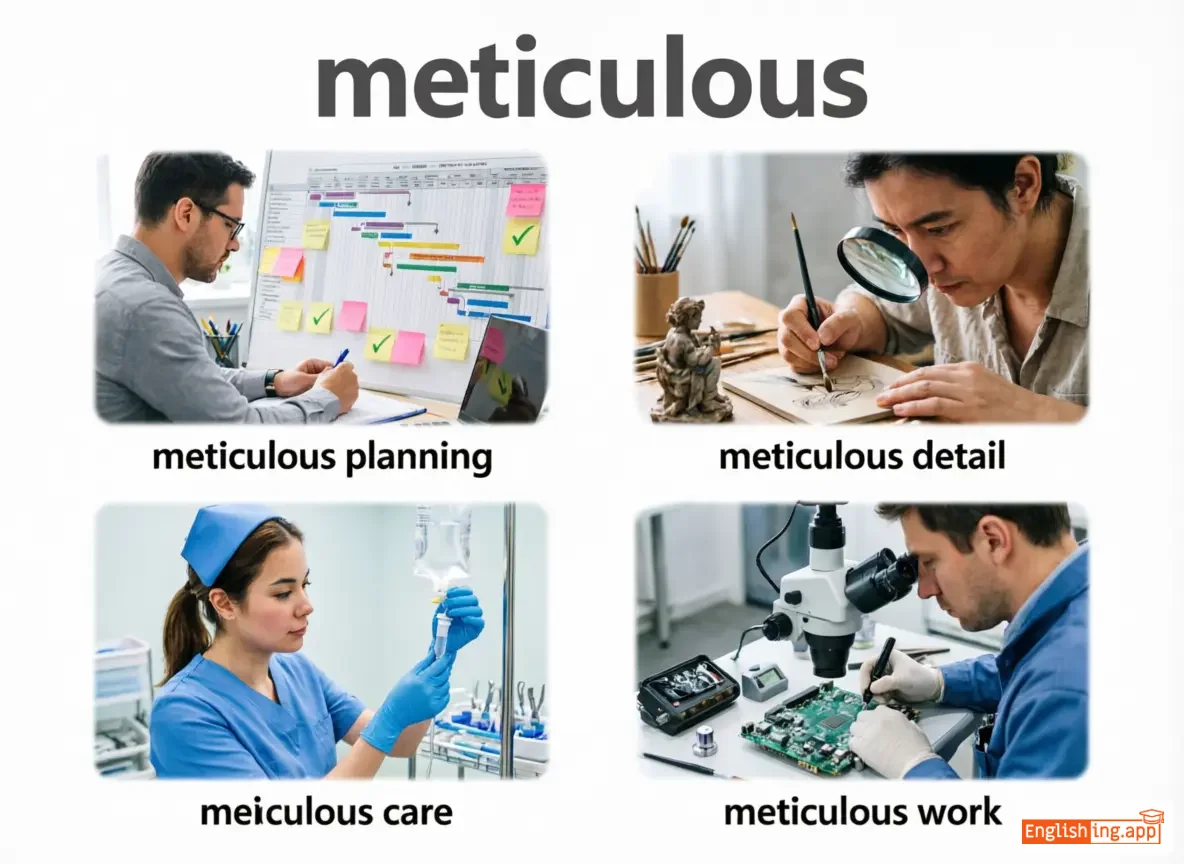
/mɪˈtɪkjʊləs/
adjective
(メティキュラス)
••••••
|
|
綿密な
memitsu na
••••••
|
Showing great attention to detail; very careful and precise.
••••••
|
She is meticulous in her planning, ensuring every detail is covered. |
彼女は計画において非常に綿密で、すべての詳細がカバーされていることを確認しています。
Kanojo wa keikaku ni oite hijou ni memitsu de, subete no shousai ga kabā sarete iru koto o kakunin shiteimasu.
••••••
|
careful, diligent, thorough, precise
••••••
|
careless, negligent, sloppy, hasty
••••••
|
細部にこだわることが、慎重さと精度を生む。
••••••
|
|
#3917
😴
|
/məˈnɒtəni/
noun
(モノトニー)
••••••
|
|
単調さ
tanchōsa
••••••
|
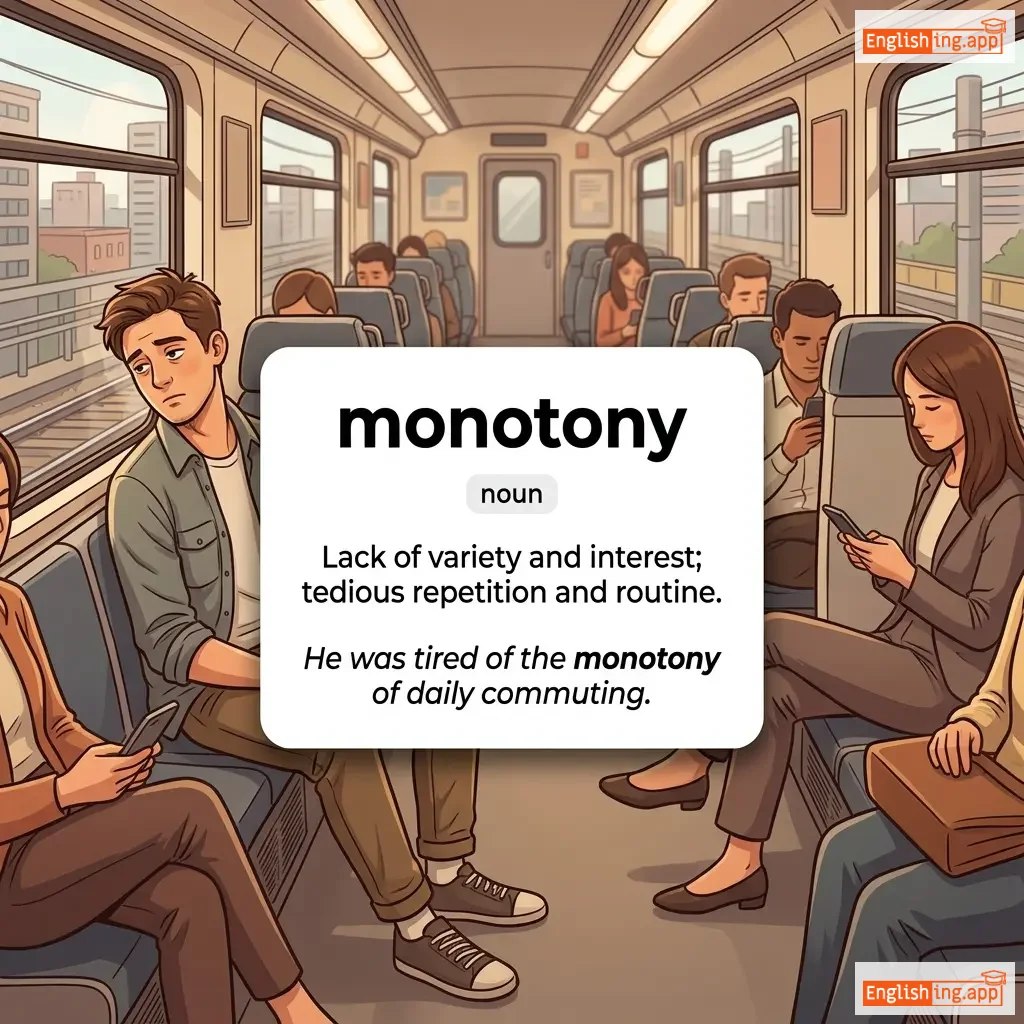
Lack of variety and interest; tedious repetition and routine.
••••••
|
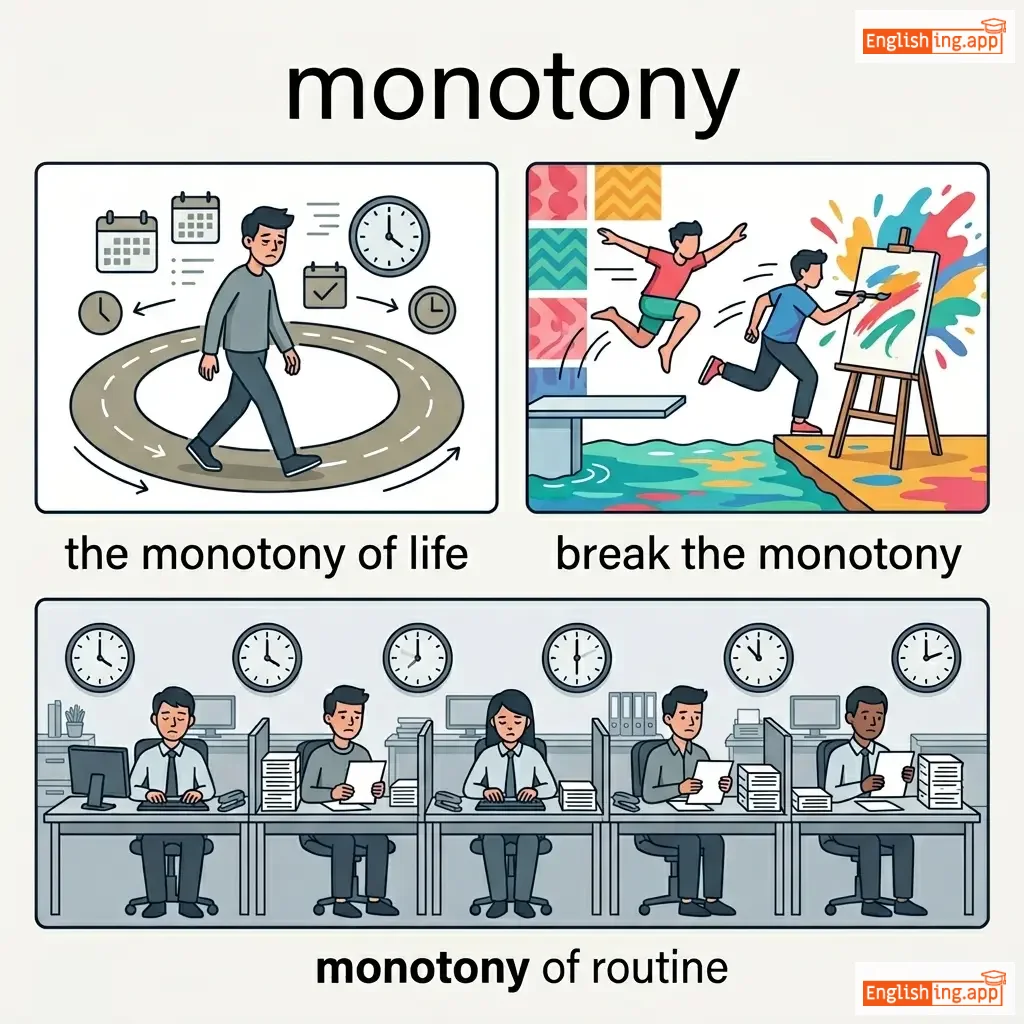
Breaking the monotony of everyday life can improve mental health.
日常生活の単調さを打破することは、メンタルヘルスの改善に役立つことがあります。
••••••
|
日常生活の単調さを打破することは、メンタルヘルスの改善に役立つことがあります。
Nichijō seikatsu no tanchōsa o daho suru koto wa, mentaru herusu no kaizen ni yakudatsu koto ga arimasu.
••••••
|
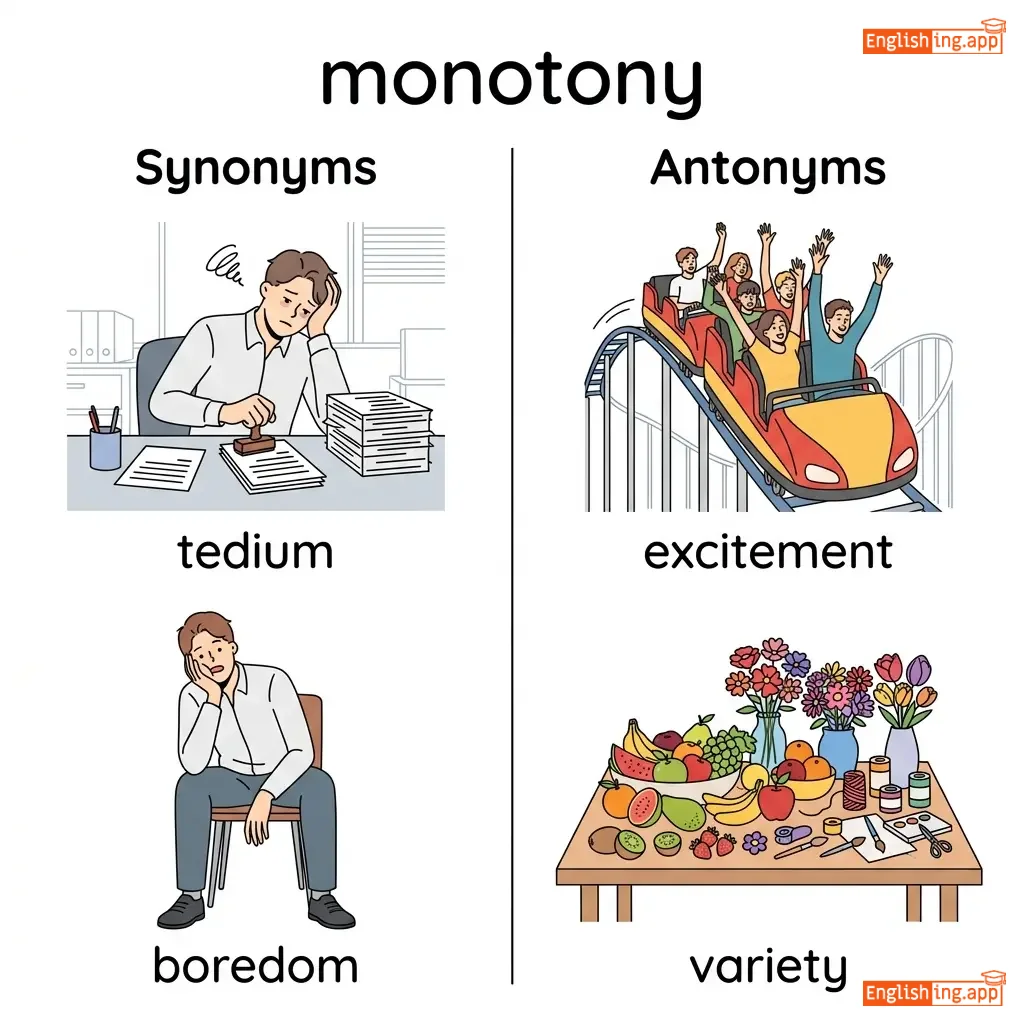
repetition, dullness, tedium, uniformity
••••••
|
variety, change, excitement, diversity
••••••
|
毎日が同じだと、単調さがあなたを追いかけてくる。
••••••
|
|
#3918
😵
|
/ɪɡˈzɔːstʃən/
noun
(エクゾースション)
••••••
|
|
疲労
hirou
••••••
|
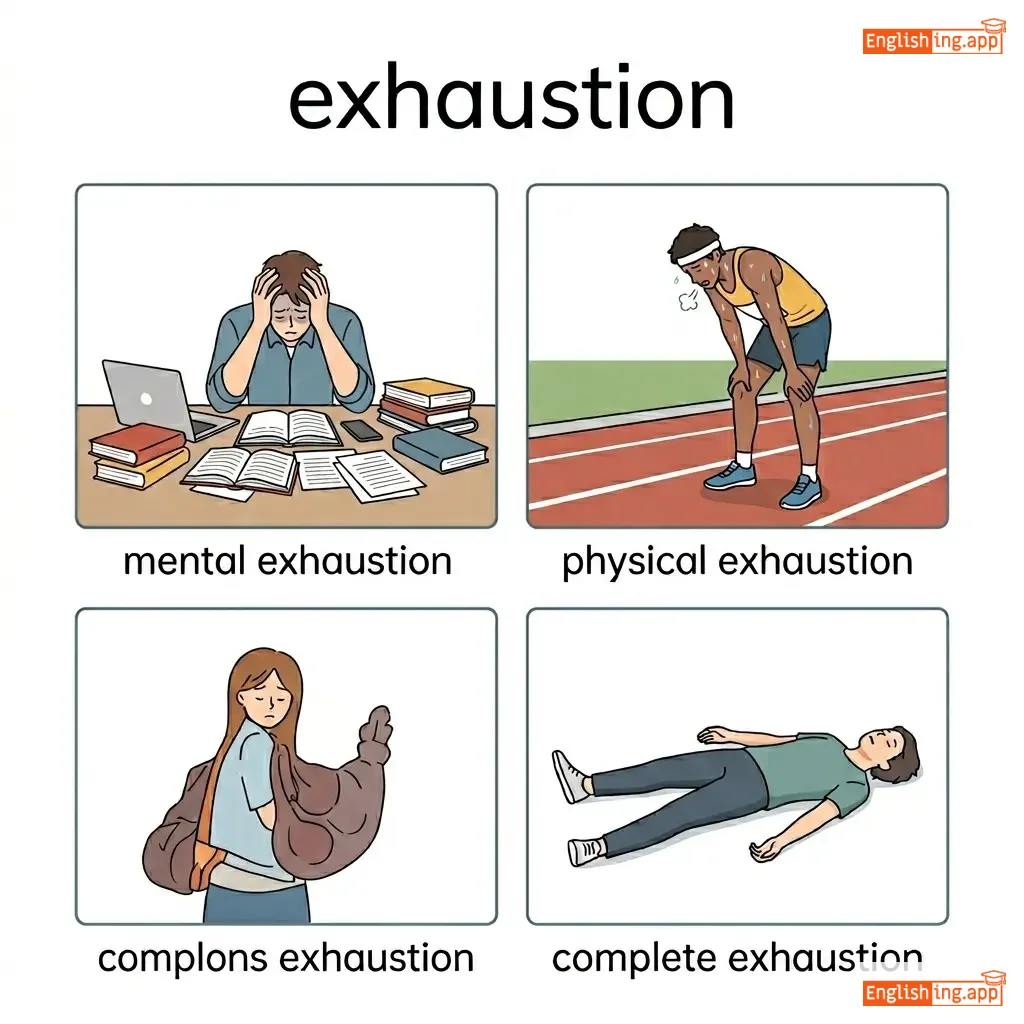
A state of extreme physical or mental fatigue.
••••••
|
Chronic exhaustion can lead to burnout and decreased productivity.
慢性的な疲労は、バーンアウトや生産性の低下を引き起こす可能性があります。
••••••
|
慢性的な疲労は、バーンアウトや生産性の低下を引き起こす可能性があります。
Manseiteki na hirou wa, baanauto ya seisanteki no teika wo hikiokosu kanousei ga arimasu.
••••••
|
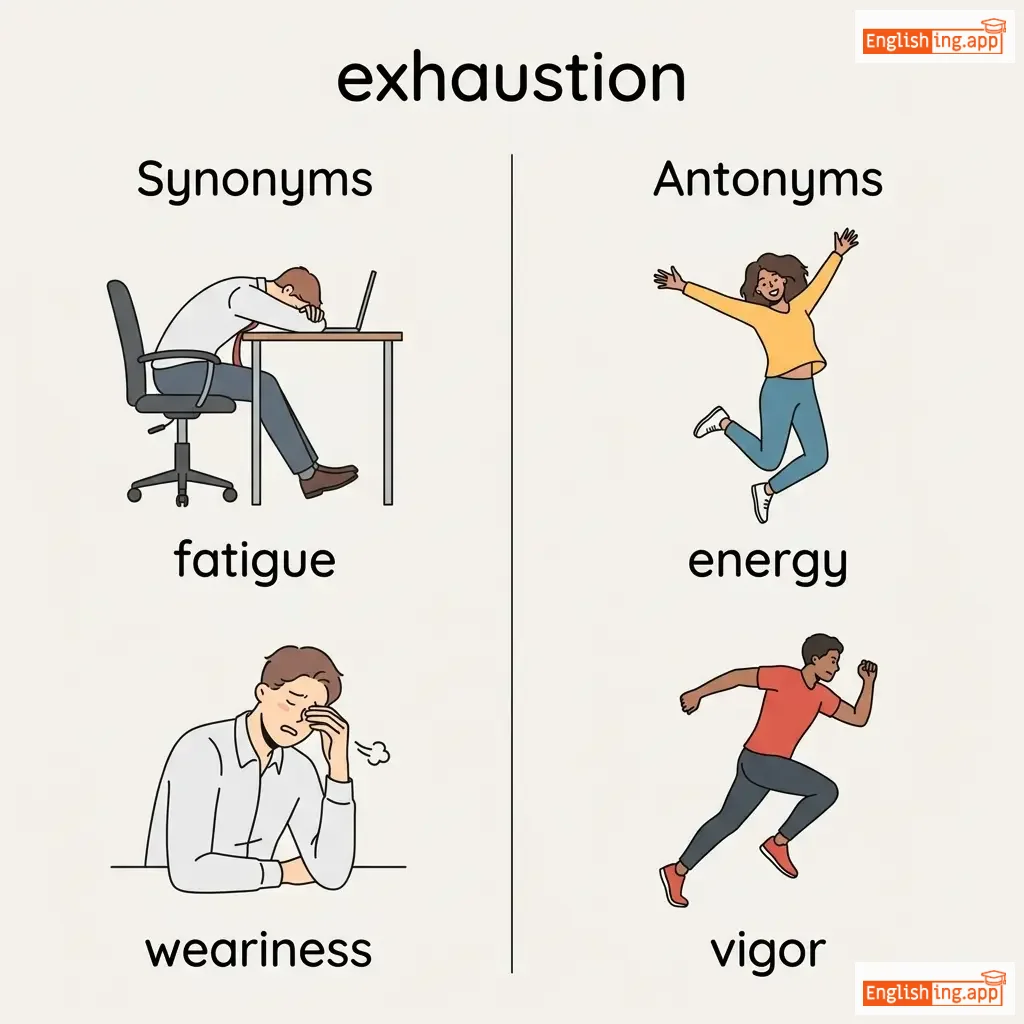
fatigue, tiredness, weariness, depletion
••••••
|
vitality, energy, vigor, strength
••••••
|
疲労が続くと、効率が著しく低下します。
••••••
|
|
#3919
🎯
|
/ˈfəʊkəst/
adjective
(fokasudo)
••••••
|
|
集中
shūchū
••••••
|
Directing a great deal of attention or effort toward a particular activity, situation, or person.
••••••
|
Staying focused during work hours enhances productivity. |
勤務時間中に集中することで生産性が向上します。
Kinmu jikan-chū ni shūchū suru koto de seisansei ga kōjō shimasu.
••••••
|
concentrated, attentive, absorbed, dedicated
••••••
|
distracted, unfocused, scattered, inattentive
••••••
|
集中すると、効果的に働けます
••••••
|
|
#3920
💪
|
/ˈsɛlf ˈdɪsɪplɪn/
noun
(セルフディシプリン)
••••••
|
|
自己規律
jiko kiritsu
••••••
|
The ability to control one's feelings and overcome one's weaknesses; the ability to pursue what one thinks is right despite temptations to abandon it.
••••••
|
Self-discipline is essential for achieving long-term goals.
セルフディシプリンは長期的な目標を達成するために必要です。
••••••
|
自己規律は長期的な目標を達成するために必要です。
Jiko kiritsu wa chōkitekina mokuhyō o tassei suru tame ni hitsuyō desu.
••••••
|
self-control, restraint, willpower, determination
••••••
|
indulgence, impulsivity, weakness, lack of control
••••••
|
自己規律 = 自分を律する力
••••••
|
|
#3921
💧
|
/ˌsætʃəˈreɪʃən/
noun
(サチュレーション)
••••••
|
|
飽和
hōwa
••••••
|
The state or process that occurs when no more of something can be absorbed, combined with, or added.
••••••
|
Saturation of the market leads to a decrease in product demand. |
市場の飽和は製品の需要の減少を引き起こします。
Shijō no hōwa wa seihin no juyō no genshō o hikiokoshimasu.
••••••
|
fullness, completion, satiety, maximum capacity
••••••
|
depletion, emptiness, scarcity, deficiency
••••••
|
飽和とは、物が満杯になってこれ以上入らない状態です。
••••••
|
|
#3922
🧘♀️
|
/ˈtræŋkwɪl/
adjective
(トランクウィル)
••••••
|
|
静かな
shizukana
••••••
|
Free from disturbance; calm and peaceful.
••••••
|
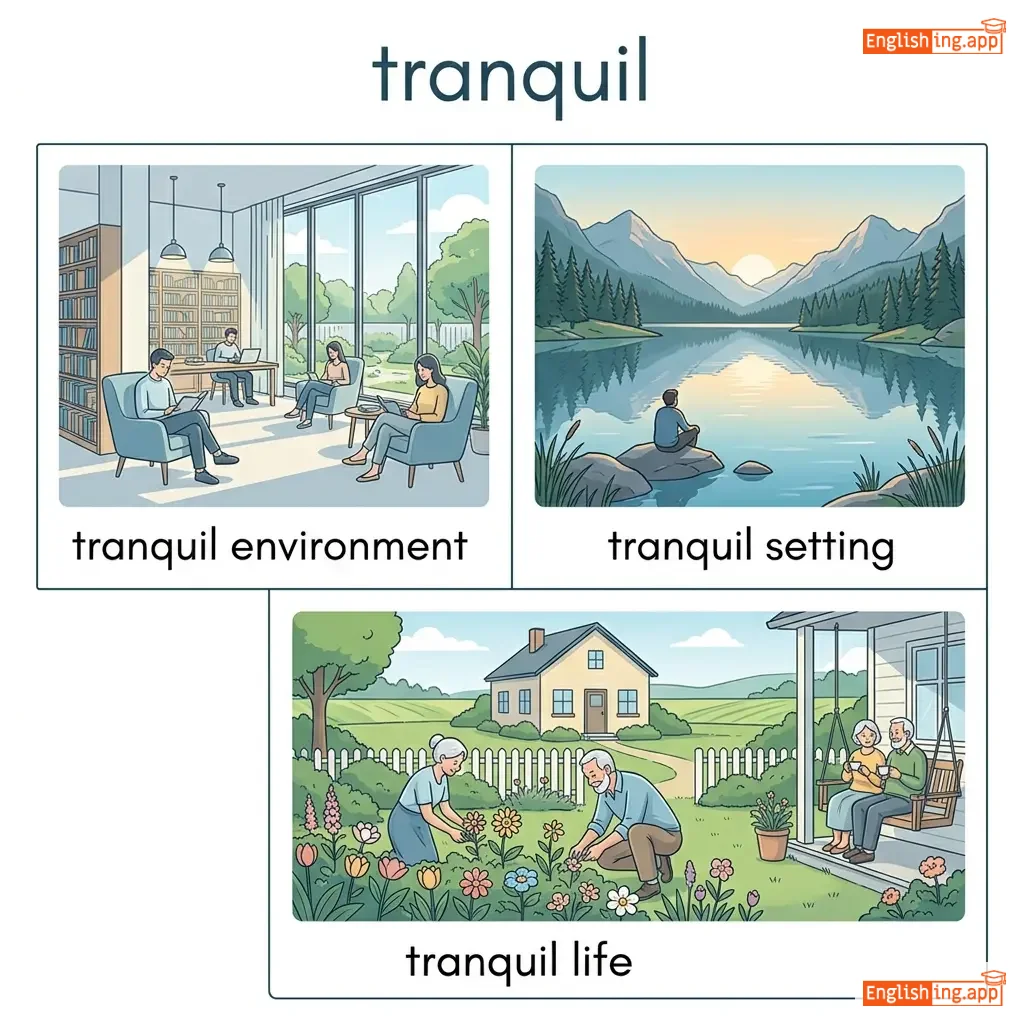
A tranquil environment promotes relaxation and focus.
静かな環境はリラックスと集中を促進します。
••••••
|
静かな環境はリラックスと集中を促進します。
Shizukana kankyō wa rirakkusu to shūchū o sokushin shimasu.
••••••
|
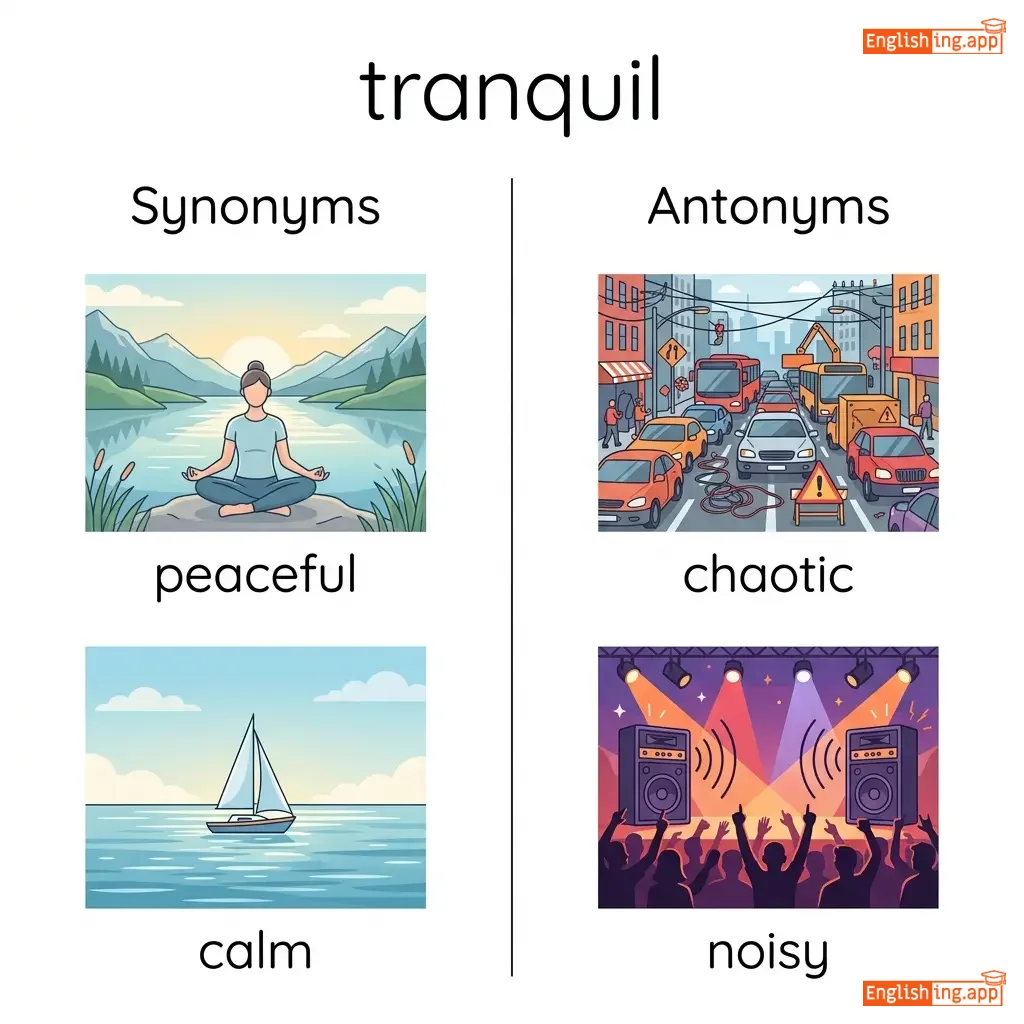
calm, peaceful, serene, quiet
••••••
|
agitated, disturbed, chaotic, turbulent
••••••
|
静かな場所で心を落ち着けよう。
••••••
|
|
#3923
🌱
|
/rɪˈdʒuːvəneɪt/
verb
(リジュヴェネート)
••••••
|
|
活力を取り戻す
katsuryoku wo torimodosu
••••••
|
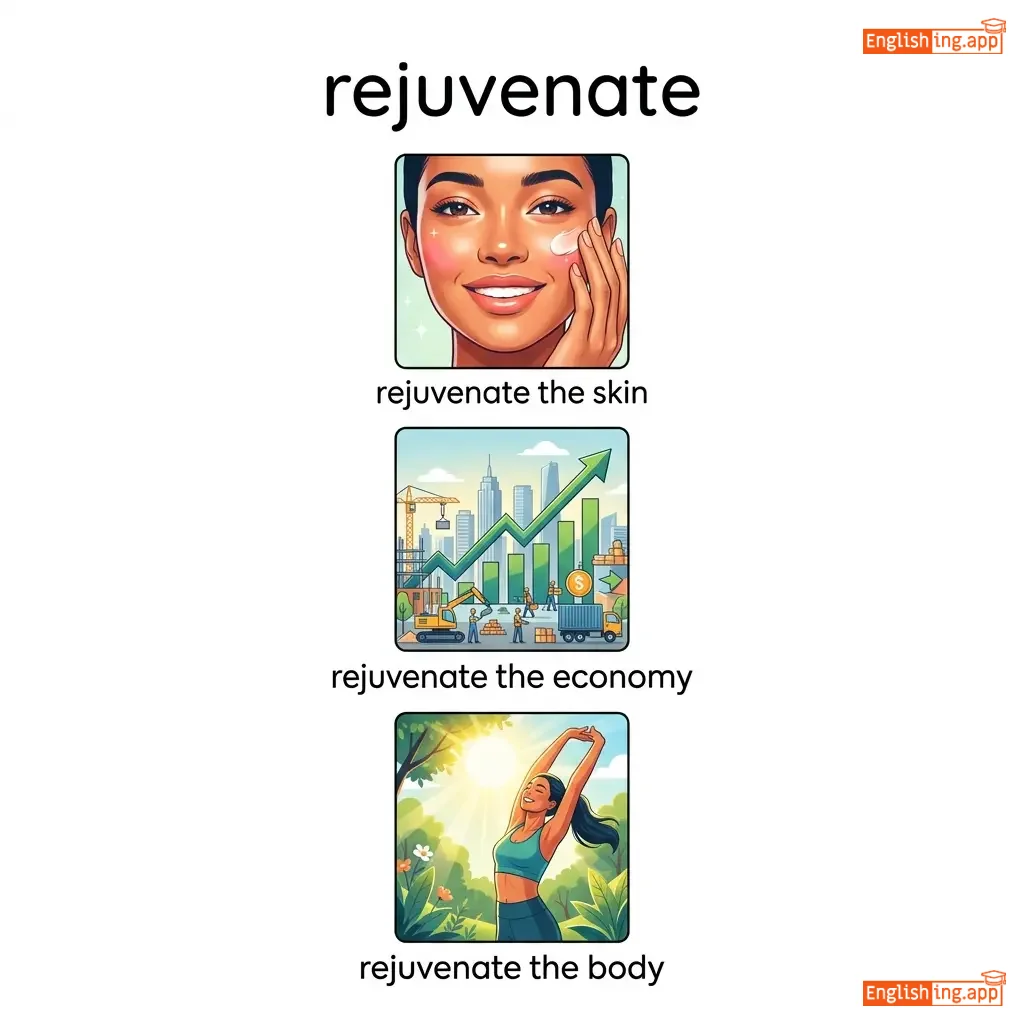
To make or feel young, healthy, or energetic again; to give new energy or vigor to.
••••••
|
Taking a break can rejuvenate your energy and focus.
休憩はエネルギーと集中力を再生させることができます。
••••••
|
休憩はエネルギーと集中力を再生させることができます。
Kyūkei wa enerugī to shūchūryoku o saisei saseru koto ga dekimasu.
••••••
|
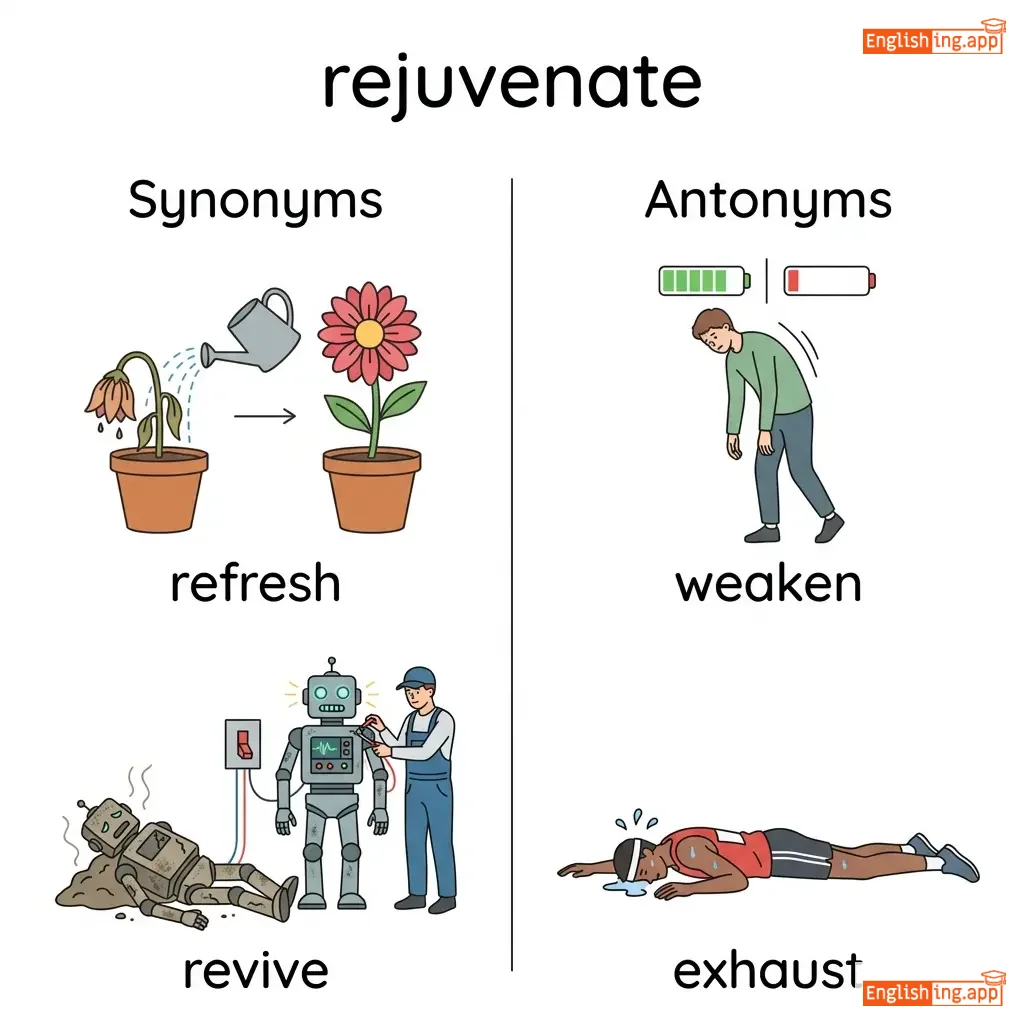
revitalize, refresh, renew, restore
••••••
|
deteriorate, deplete, exhaust, weaken
••••••
|
休憩して活力を取り戻そう!
••••••
|
|
#3924
👆
|
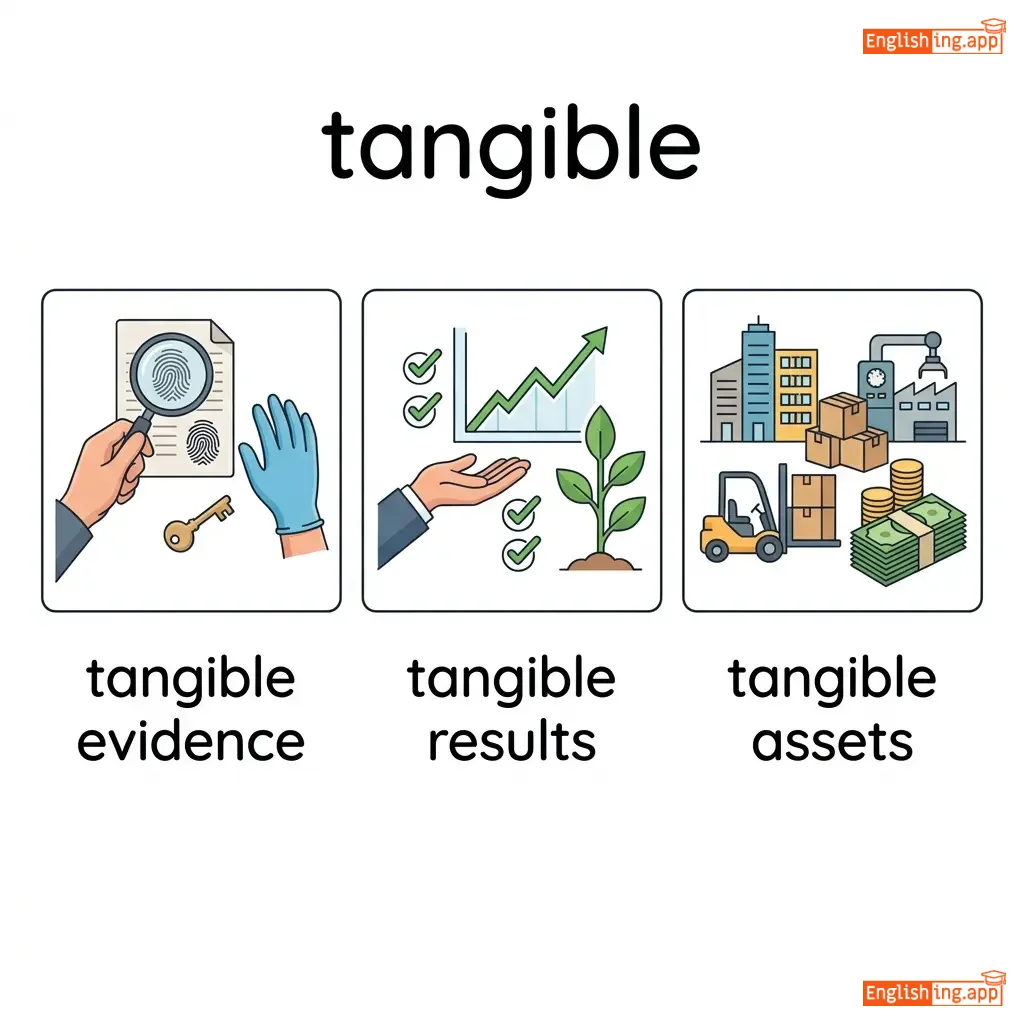
/ˈtændʒɪbəl/
adjective
(タンジブル)
••••••
|
|
触知可能
shokuchikanou
••••••
|
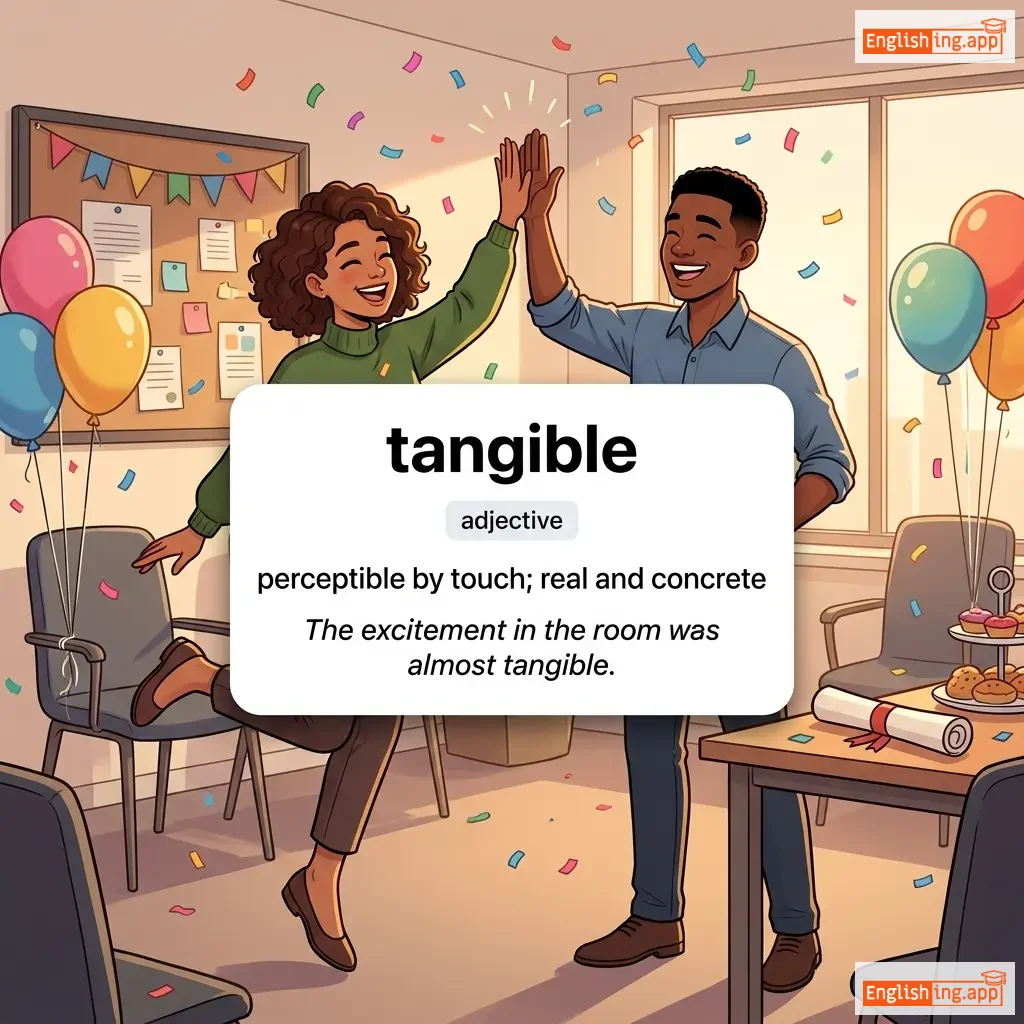
Perceptible by touch; clear and definite; real.
••••••
|
Tangible results are easier to measure and track. |
触知可能な結果は、測定と追跡が容易です。
Shokuchikanou na kekka wa, sokutei to tsuiseki ga youi desu.
••••••
|
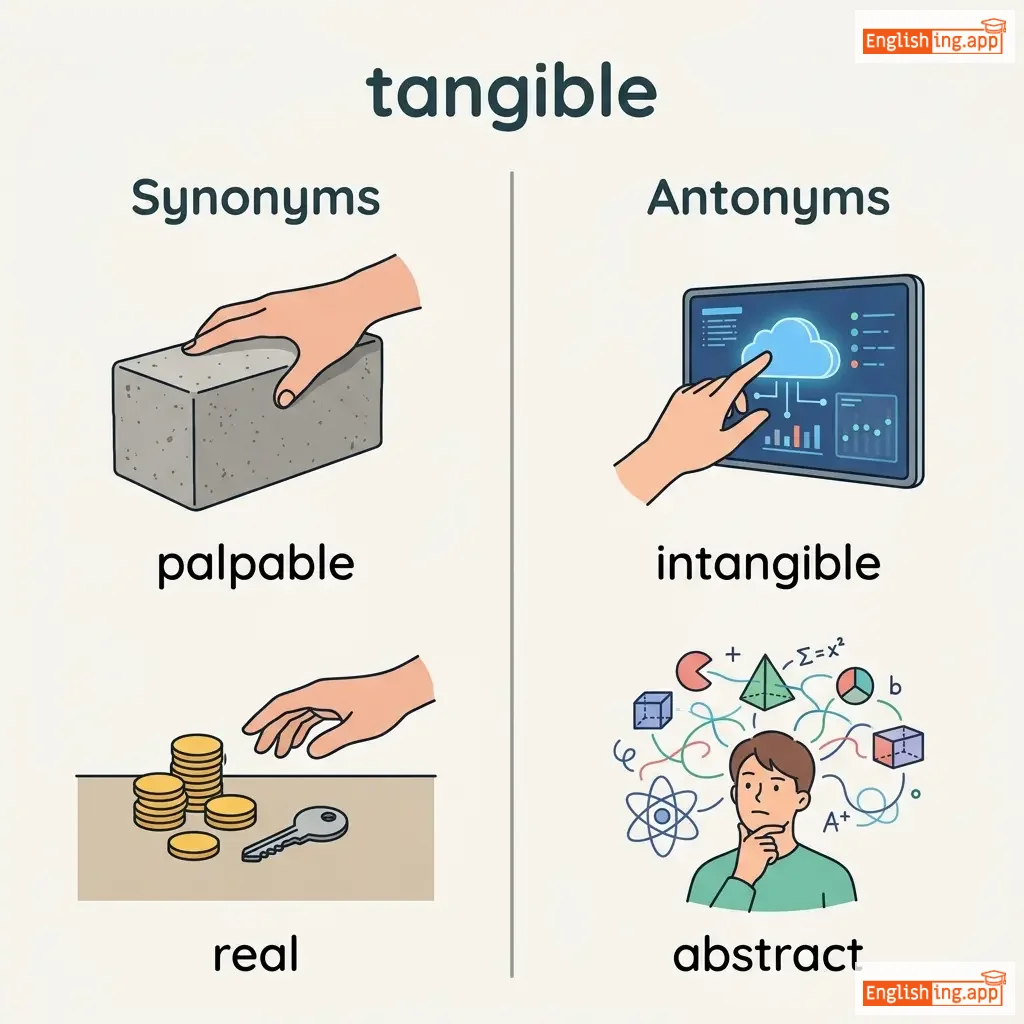
concrete, palpable, physical, real
••••••
|
intangible, abstract, theoretical, conceptual
••••••
|
触知可能(shokuchikanou)とは触れることで分かる物のように、実際に存在することを意味します。
••••••
|
|
#3925
♻️
|
/səˌsteɪnəˈbɪləti/
noun
(サステナビリティ)
••••••
|
|
持続可能性
jizoku kanosei
••••••
|
The ability to be maintained at a certain rate or level; the ability to be upheld or defended.
••••••
|
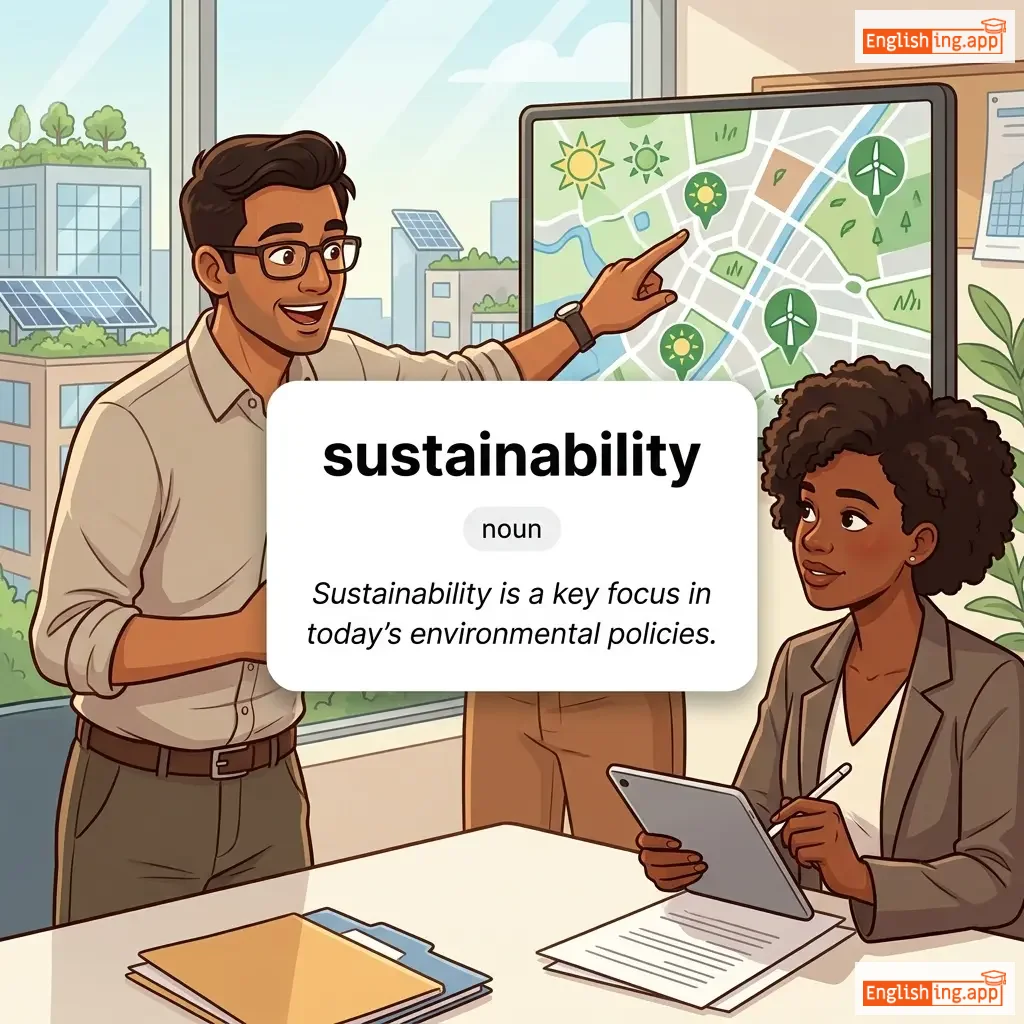
Sustainability is a key focus in today's environmental policies. |
持続可能性は今日の環境政策の重要な焦点です。
Jizoku kanosei wa kyou no kankyousaisaku no juuyou na shouten desu.
••••••
|
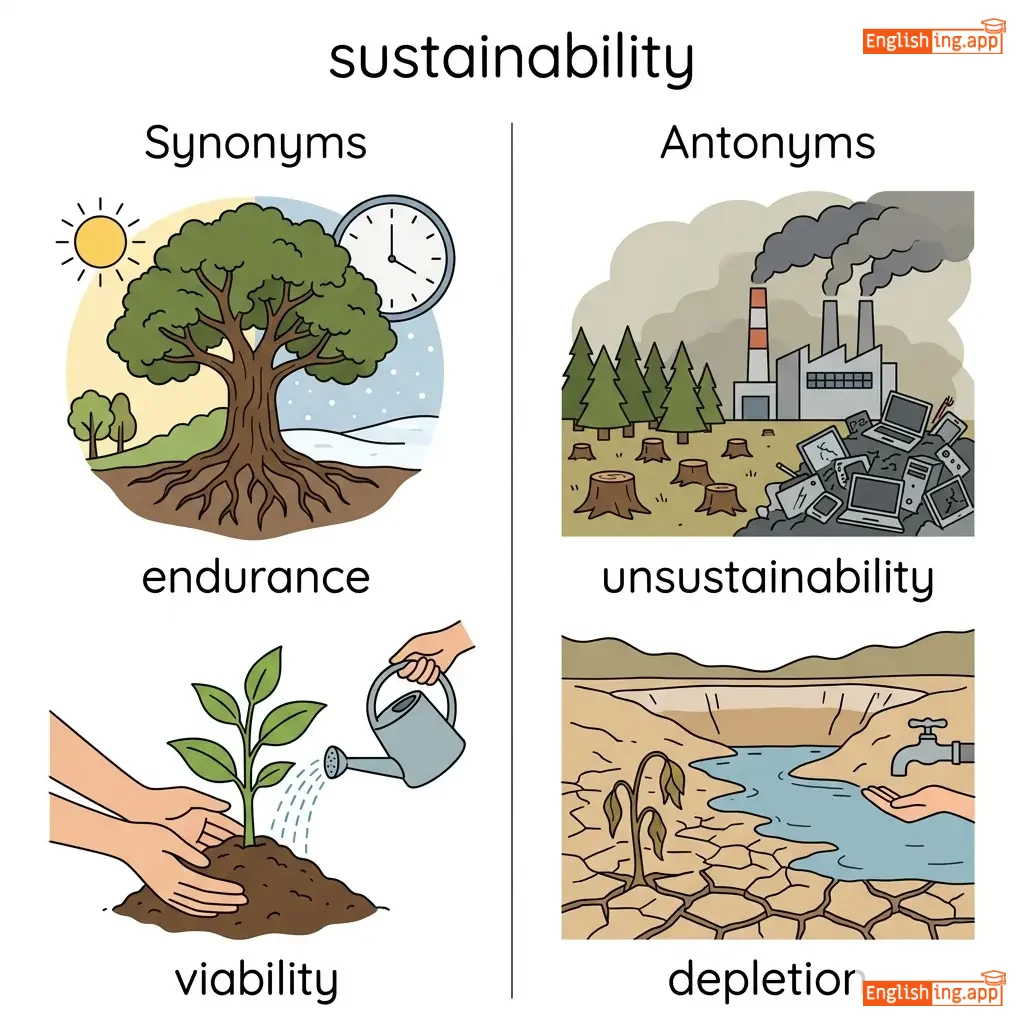
endurance, viability, longevity, permanence
••••••
|
unsustainability, depletion, temporariness, instability
••••••
|
持続可能性、バランスを保ち続ける能力。
••••••
|
Vocabulary Quiz
Test your vocabulary by matching words with their translations or meanings.
Login to take the quiz
Comments (0)
Share your thoughts and join the discussion.
Join the discussion by logging in
Login to CommentNo comments yet
Be the first to share your thoughts!