

富の成長のための投資と貯金
Investing vs. Saving for Wealth Growth
貯金と投資は富の成長にとって重要な方法です。しかし、これら二つのアプローチの間には大きなdisparityがあり、長期的な富に直接的な影響を与えます。貯金はmonetaryな習慣であり、特定の場所にお金を保管しますが、inflationaryなレートには追いつきません。一方、投資はcompoundingを通じてお金を長期的に増やします。成功した投資家は、常に自分のポートフォリオを資産配分を通じて適切に管理します。流動性に頼るだけでは、長期的な富を作ることはできません。
貯金だけに頼る人々はお金の本当の評価を得ることはありません、なぜならそれは時間の経過とともに不況の圧力を受けるからです。しかし、diversificationとequityに投資する人々は、長期的にお金の利回りを楽しむことができます。
したがって、投資は長期的な富の構築においてより効果的であり、適切な財政知識と投機を強調する必要があります。
翻訳
過去
過去分詞
三人称単数
動名詞
意味
例文
例文の翻訳
同義語
対義語
コロケーション
ニーモニック









Swipe left or right, or use the buttons. Tap image to zoom.
例文の翻訳
単語
Investing vs. Saving for Wealth GrowthInvesting vs. Saving for Wealth Growth - マスクトグル
|
絵文字
|
単語 | Images | 翻訳 | 意味 | 例文 | 例文の翻訳 | 同義語 | 対義語 | ニーモニック |
|---|---|---|---|---|---|---|---|---|---|
|
#2464
💰
|
ˈseɪ.vɪŋ
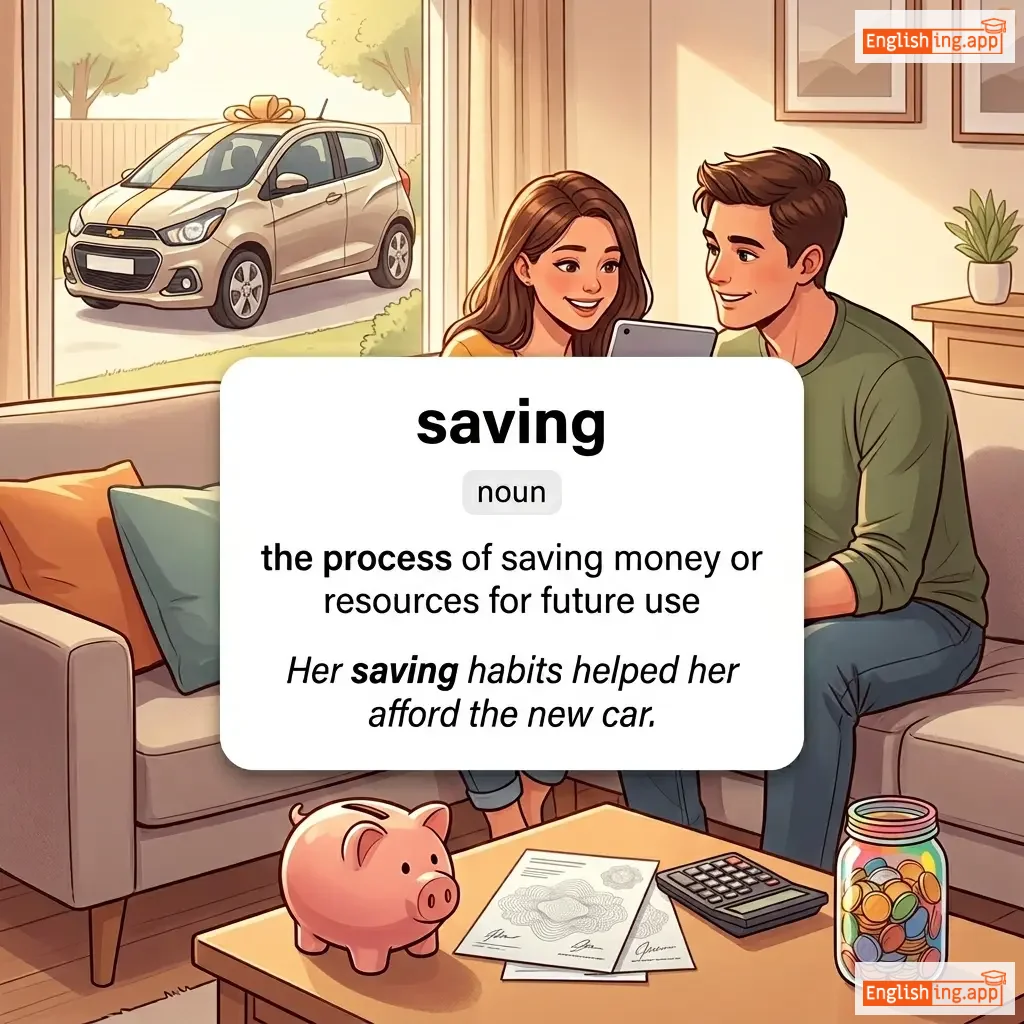
noun
(セイヴィング)
••••••
|
|
貯金
chokin
••••••
|
The practice of keeping and accumulating money for future use rather than spending it immediately.
••••••
|
Regular saving habits ensure financial security.
定期的な貯金習慣は、財政的な安全を確保します。
••••••
|
定期的な貯金習慣は、財政的な安全を確保します。
Teikitekina chokin shūkan wa, zaiseiteki na anzen o kakuho shimasu.
••••••
|
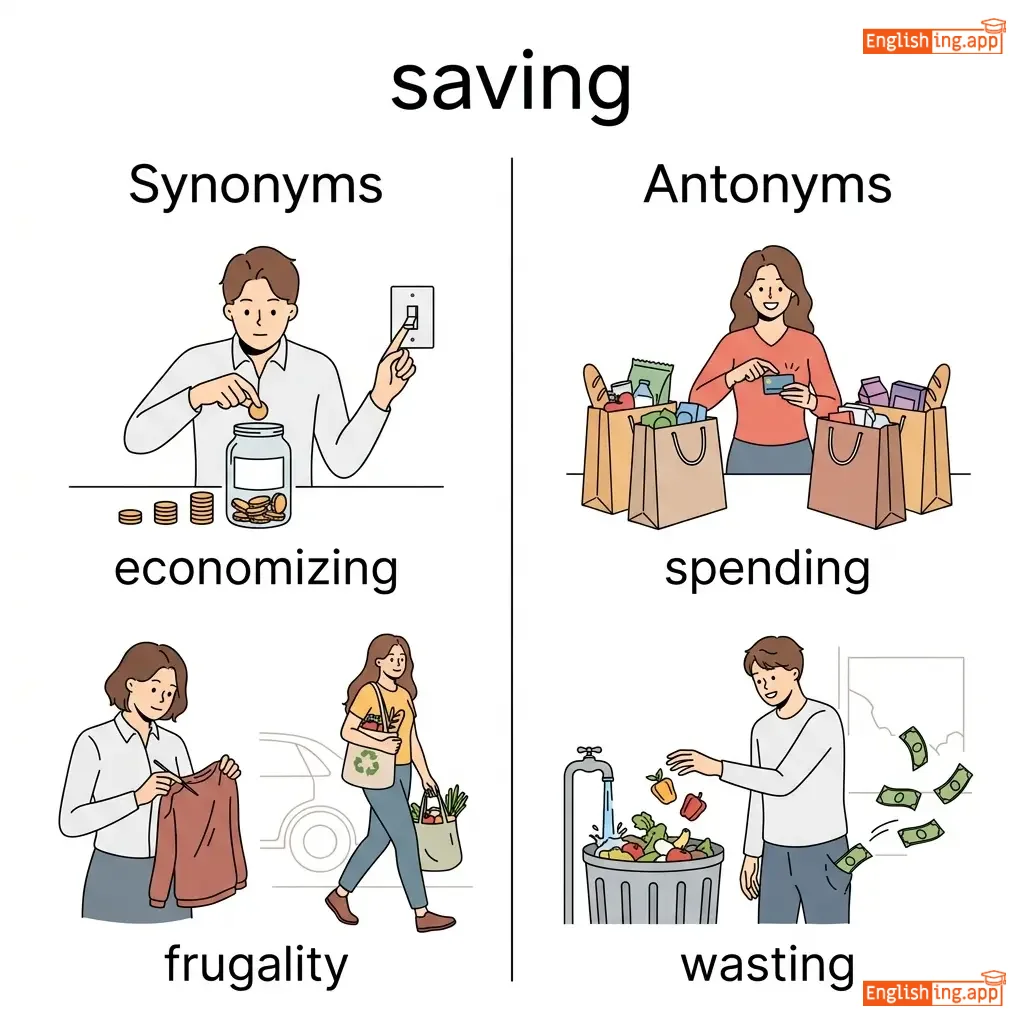
savings, preservation, economy
••••••
|
spending, expenditure, consumption
••••••
|
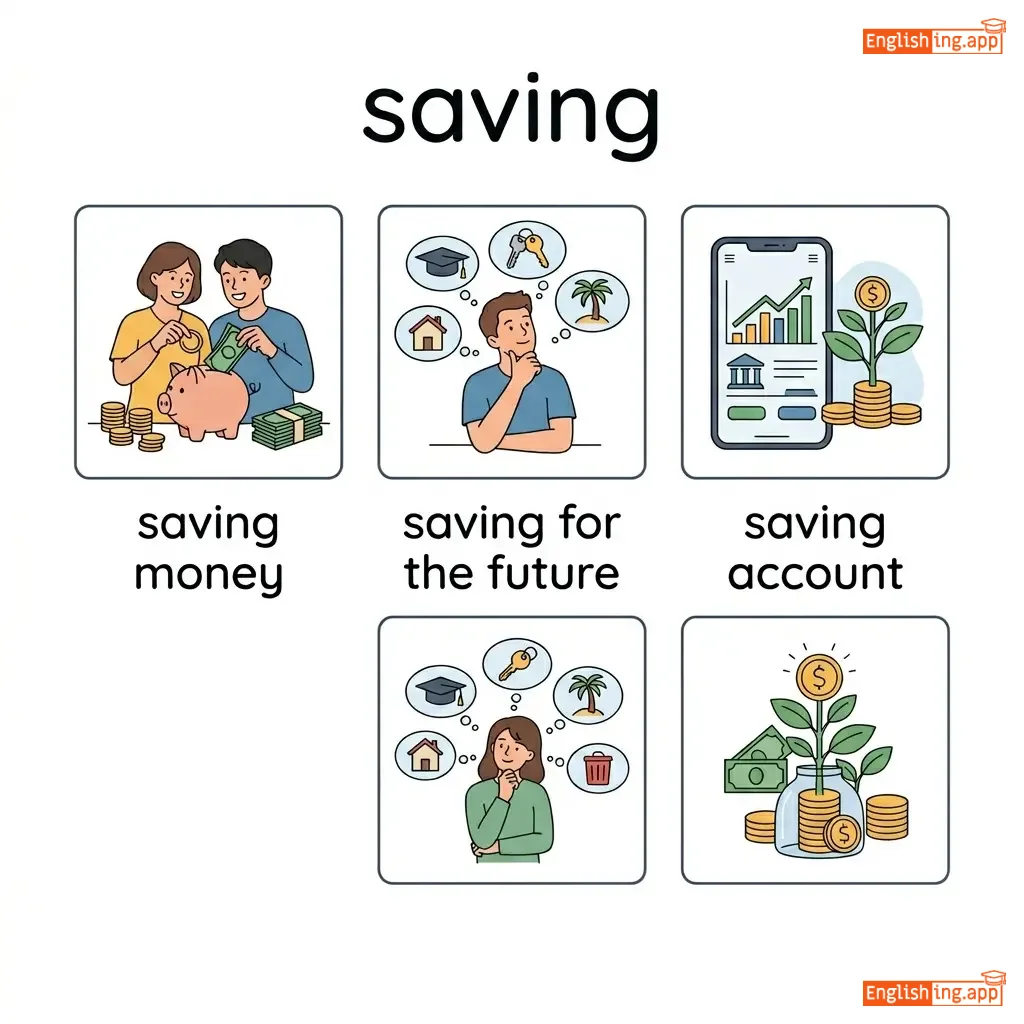
貯金はあなたの未来のための投資です。
••••••
|
|
#2465
📈
|
ɪnˈvɛst.ɪŋ
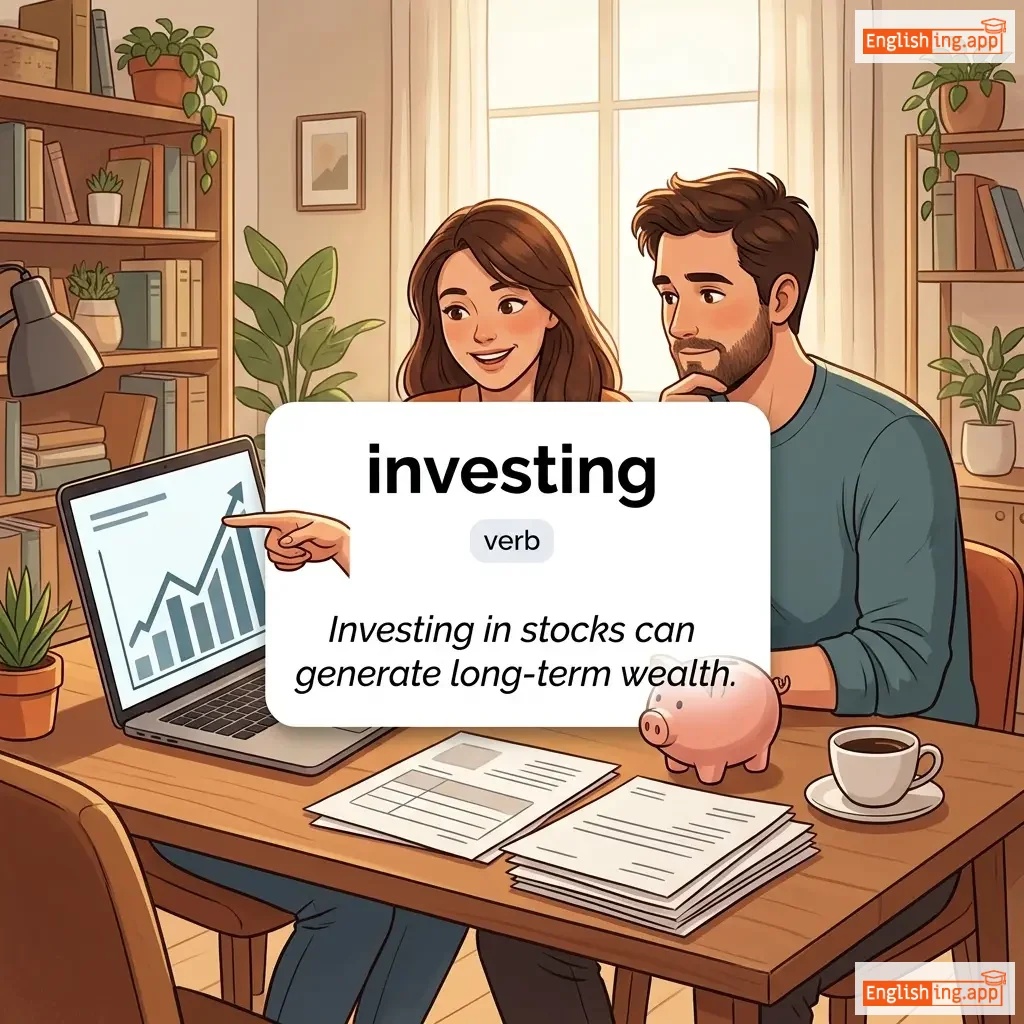
verb
(インヴェスティング)
••••••
|
|
投資
toushi
••••••
|
The act of putting money into financial schemes, shares, property, or a commercial venture with the expectation of achieving a profit.
••••••
|
Investing in stocks can generate long-term wealth.
投資は長期的な富を生むことができます。
••••••
|
株式投資は長期的な富を生むことができます。
Kabushiki tōshi wa chōkitekina tomi o umu koto ga dekimasu.
••••••
|
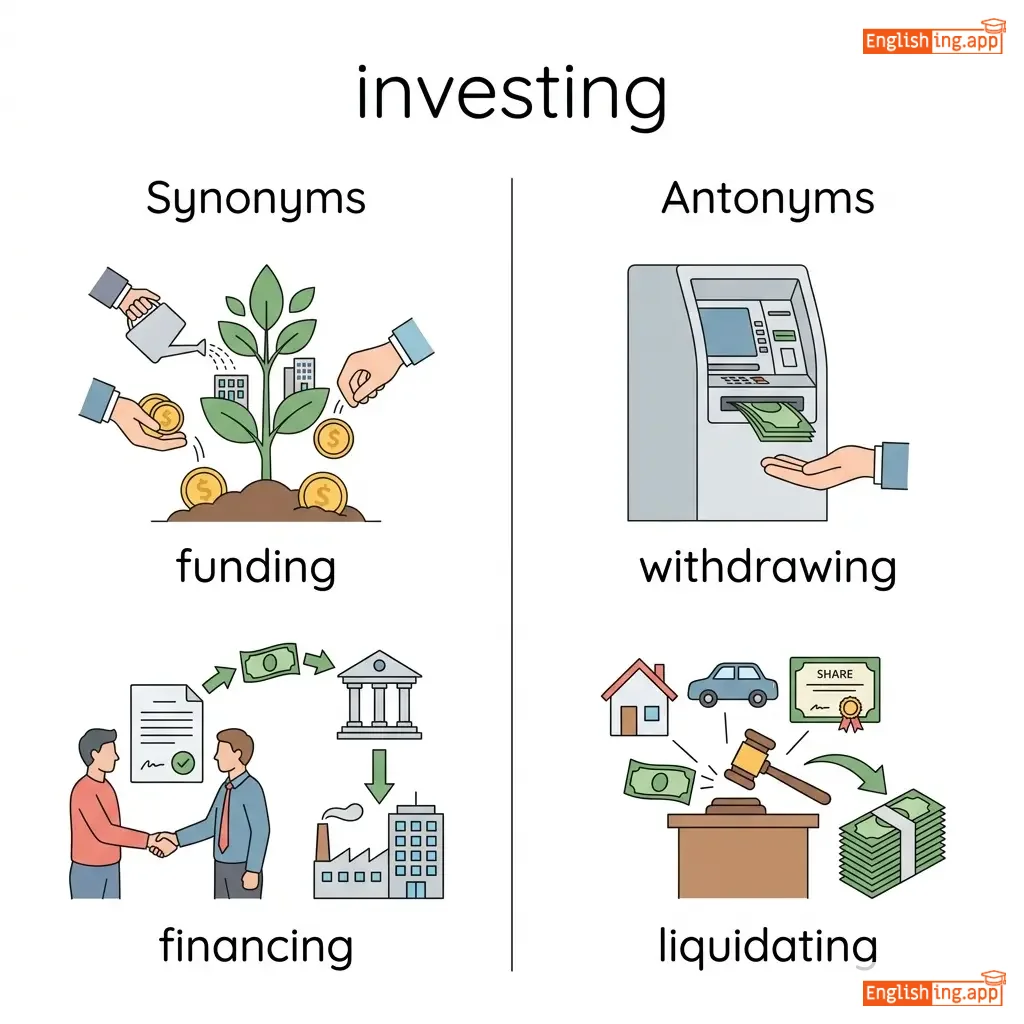
funding, financing, capitalizing
••••••
|
withdrawing, liquidating, spending
••••••
|
Investing in stocks = Kabushiki tōshi
••••••
|
|
#2466
⚖️
|
dɪˈspær.ə.ti
noun
(ディスパリティ)
••••••
|
|
不平等
fu byoutou
••••••
|
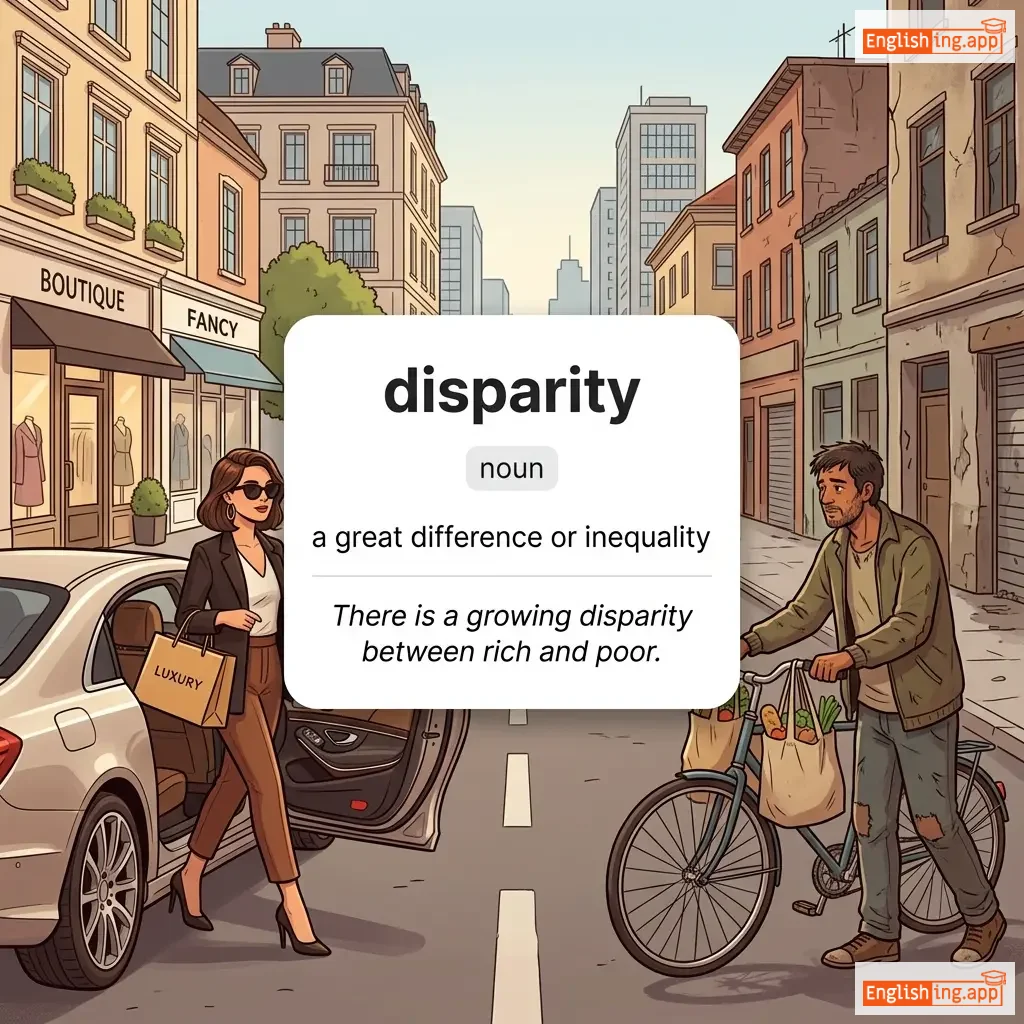
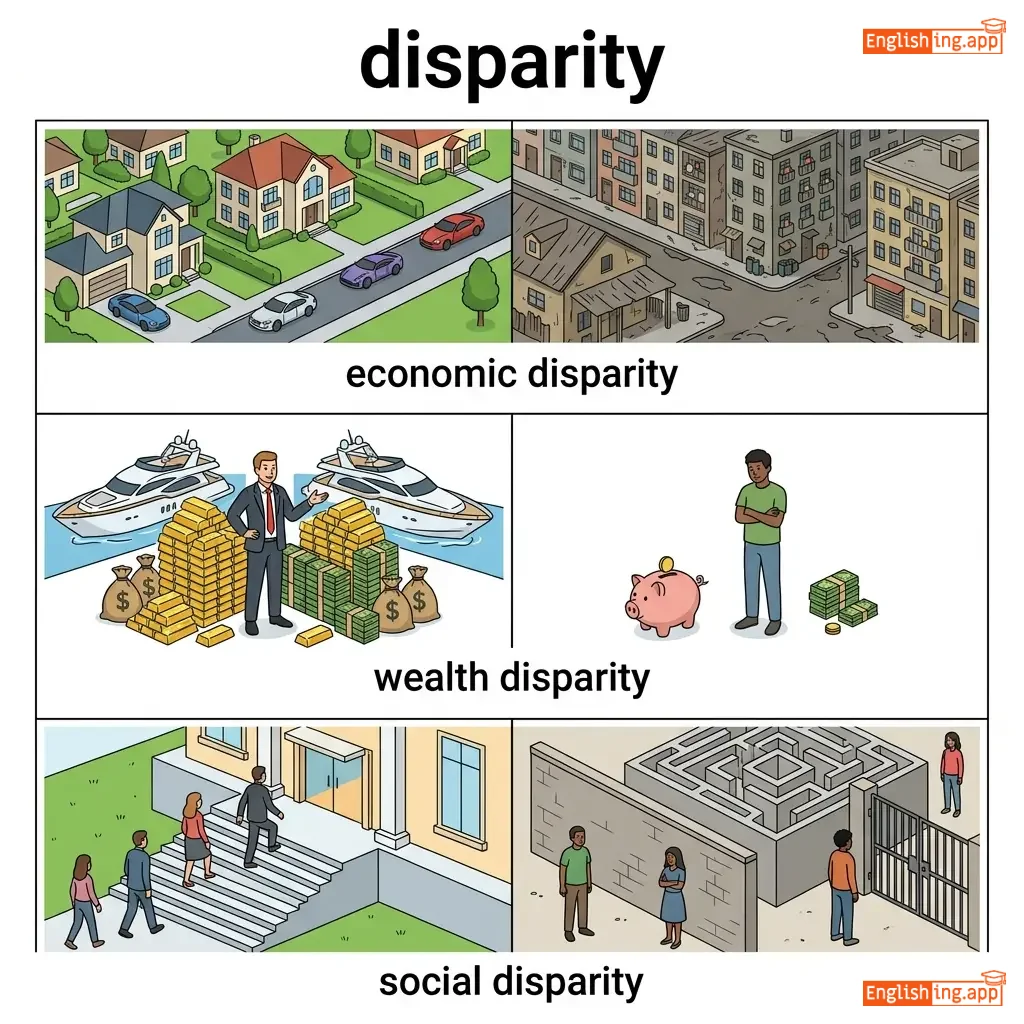
A great difference or inequality between two or more things.
••••••
|
The disparity in wealth between rich and poor is increasing.
富裕層と貧困層の間での富の不平等が増加している。
••••••
|
富裕層と貧困層の間での富の不平等が増加している。
Fuyuusou to hinkonsou no aida de no tomi no fubyoutou ga zouka shiteiru.
••••••
|
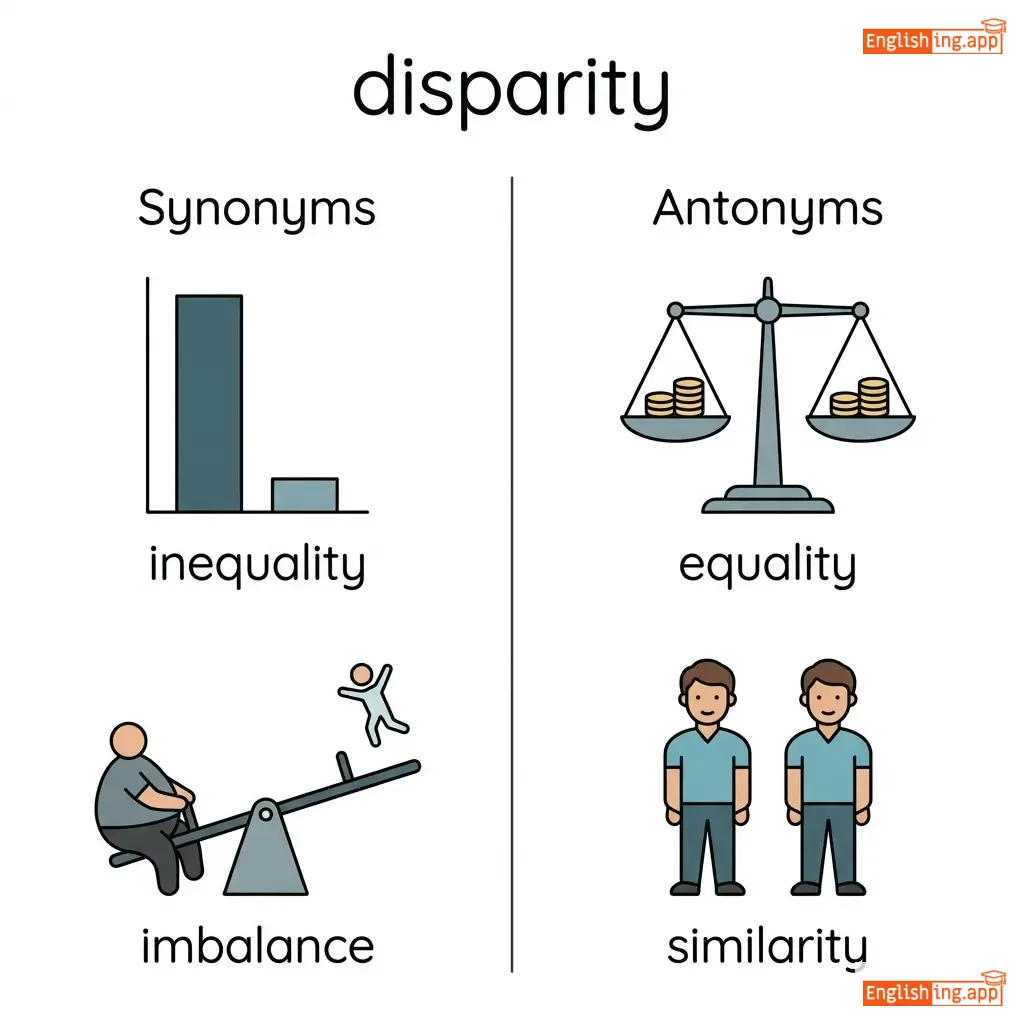
inequality, difference, gap
••••••
|
equality, similarity, balance
••••••
|
不平等を覚えるために、富と貧困の差を考えよう。
••••••
|
|
#2467
💵
|
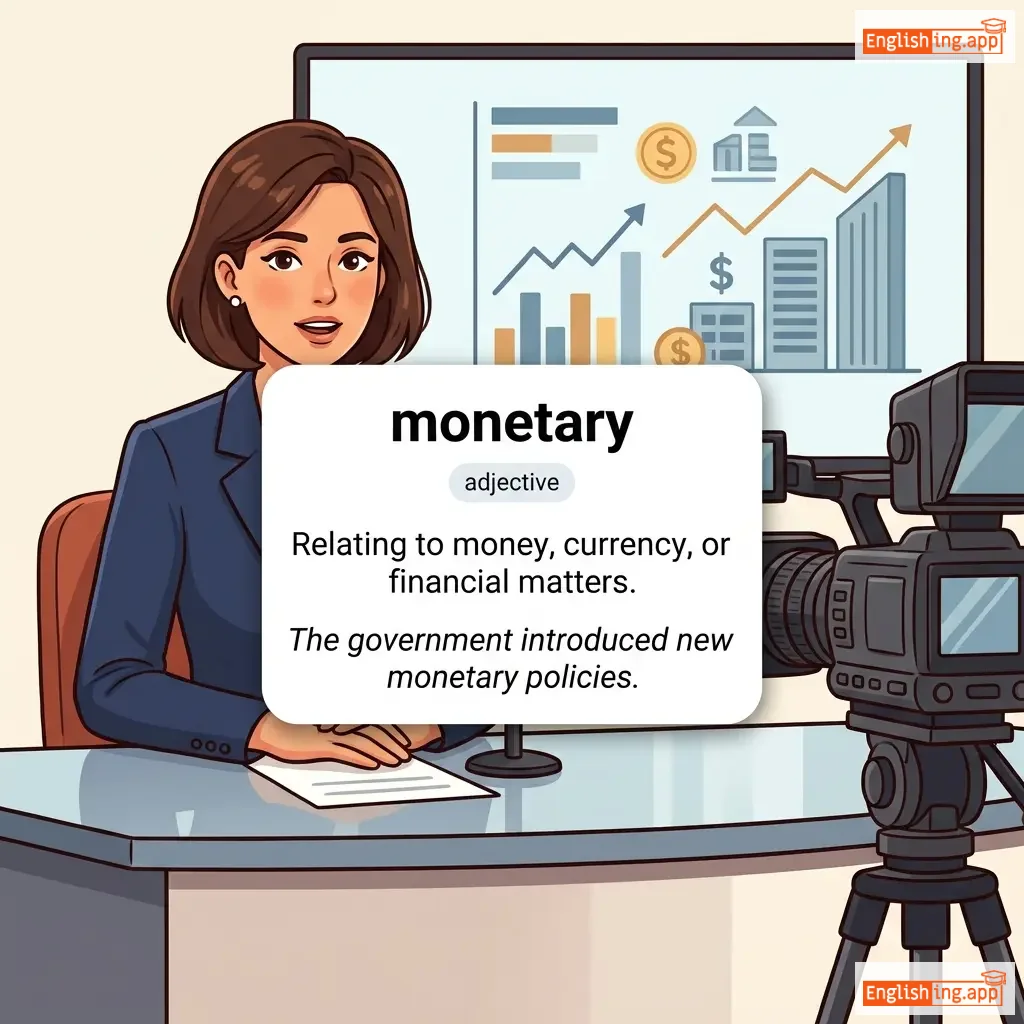
ˈmʌn.ɪ.tri
adjective
(モネタリー)
••••••
|
|
貨幣の
kahei no
••••••
|
Relating to money or currency.
••••••
|
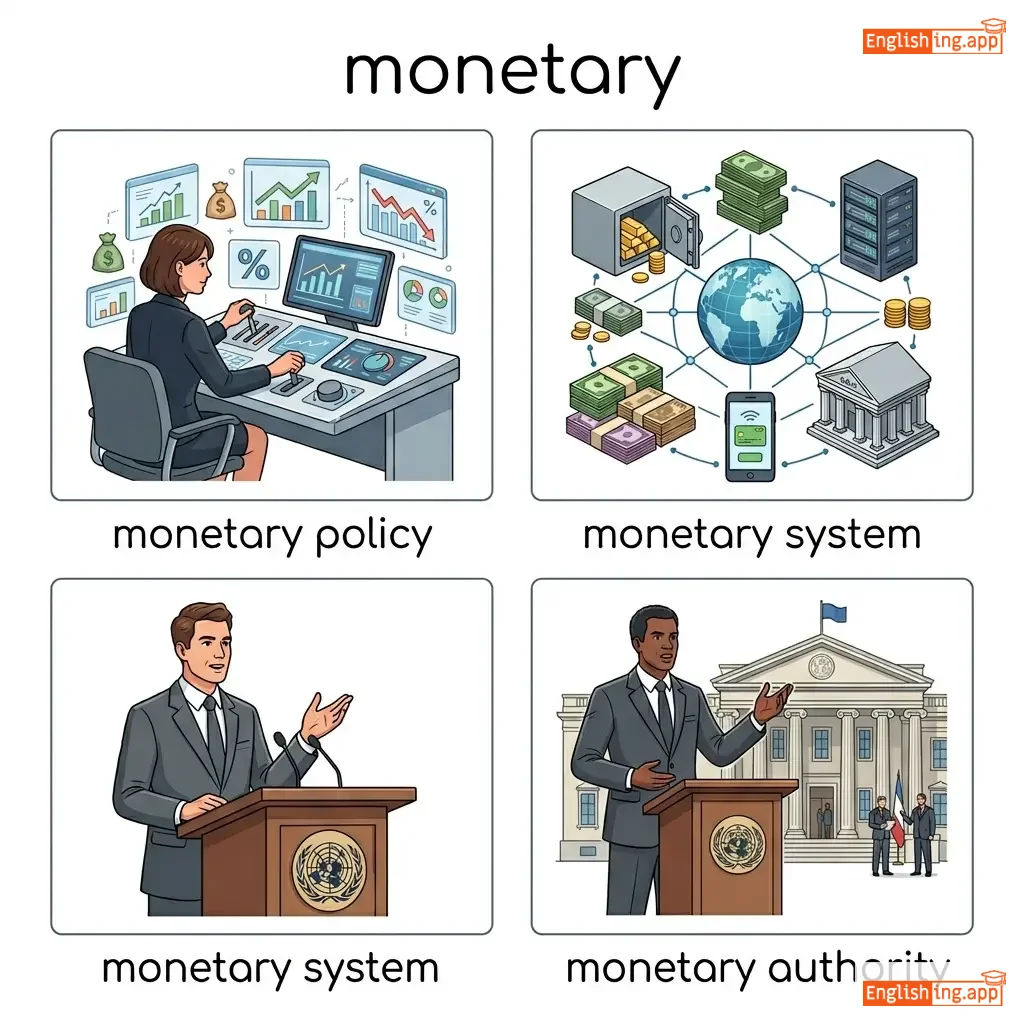
The government adopted strict monetary policies to control inflation.
政府はインフレを抑制するために厳格なモネタリー政策を採用しました。
••••••
|
政府はインフレを抑制するために厳格な貨幣の政策を採用しました。
Seifu wa infure o yokusei suru tame ni genkaku na kahei no seisaku o saiyō shimashita.
••••••
|
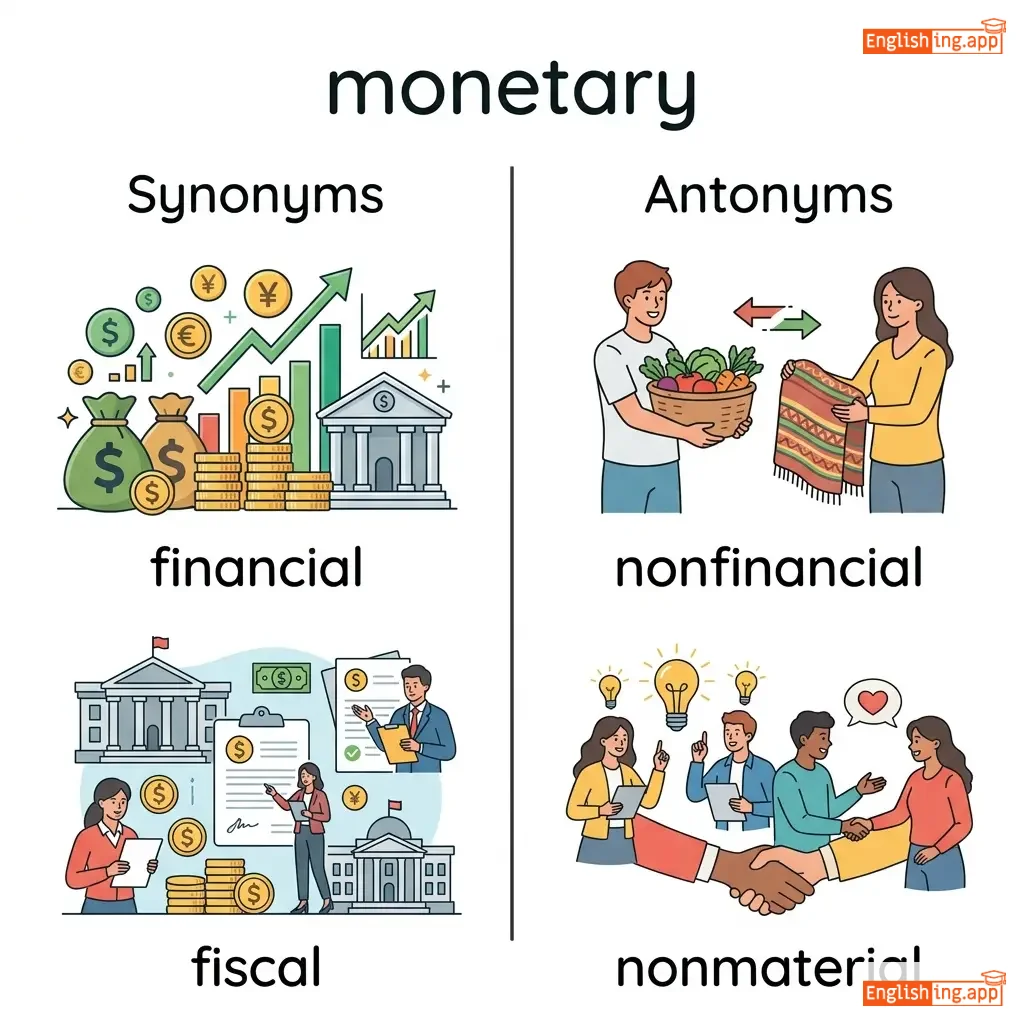
financial, fiscal, economic
••••••
|
non-financial, barter, non-monetary
••••••
|
貨幣の = Money
••••••
|
|
#2468
📊
|
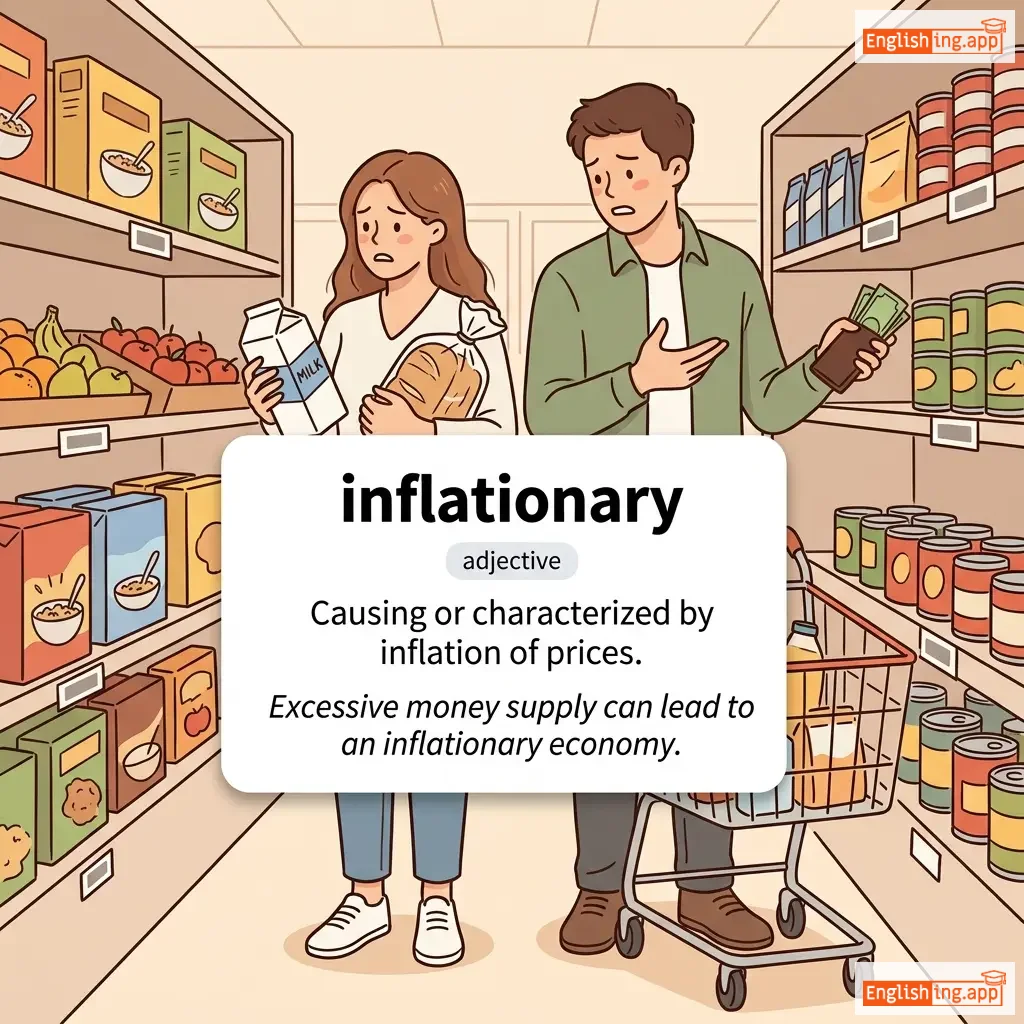
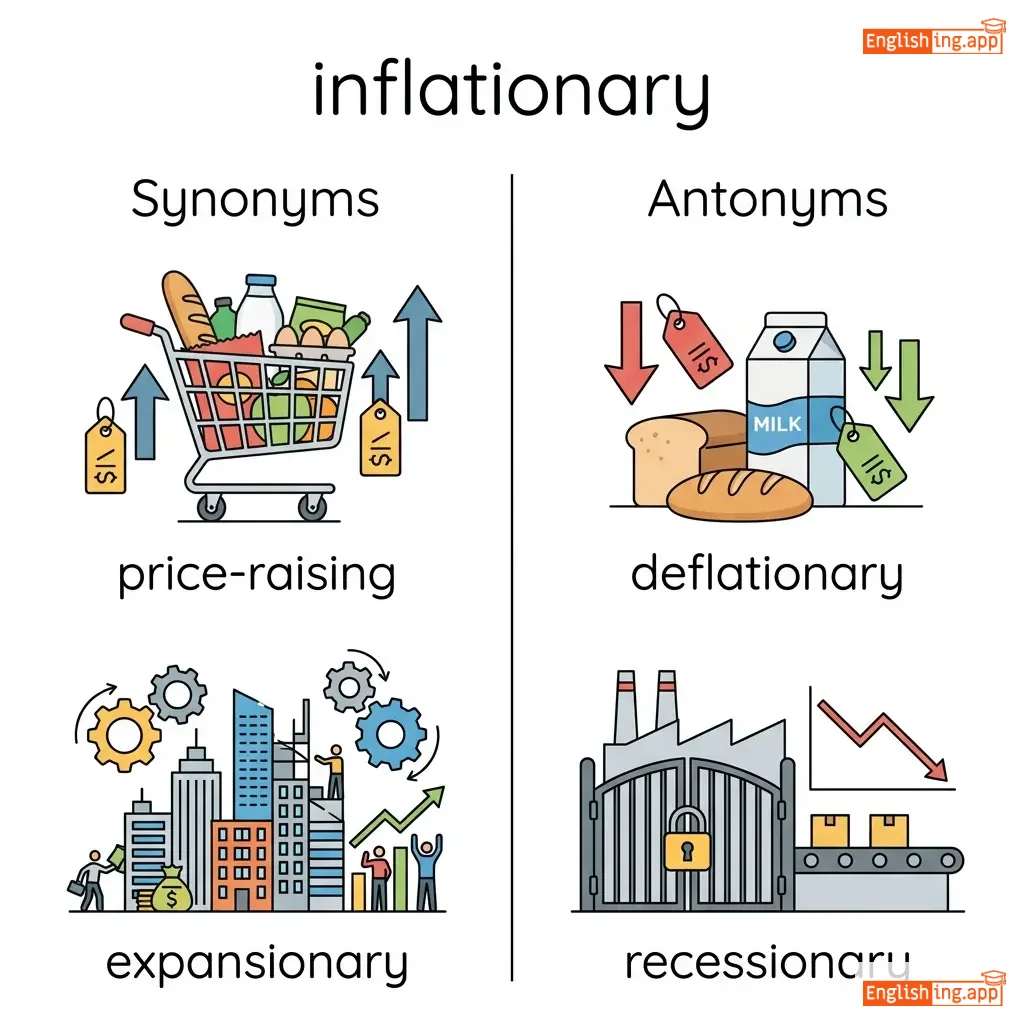
ɪnˈfleɪ.ʃən.ər.i
adjective
(インフレショナリー)
••••••
|
|
インフレショナリー
infureshonarī
••••••
|
Characterized by or tending to cause monetary inflation.
••••••
|
Excessive printing of money can lead to an inflationary crisis.
過剰な貨幣印刷はインフレショナリー危機を引き起こす可能性があります。
••••••
|
過剰な貨幣印刷はインフレショナリー危機を引き起こす可能性があります。
Kajōna kahei insatsu wa infureshonarī kiki o hikiokosu kanōsei ga arimasu.
••••••
|
price-rising, cost-increasing, expansionary
••••••
|
deflationary, price-reducing, contractionary
••••••
|
インフレと印刷は常に一緒に起こる。
••••••
|
|
#2469
🔄
|
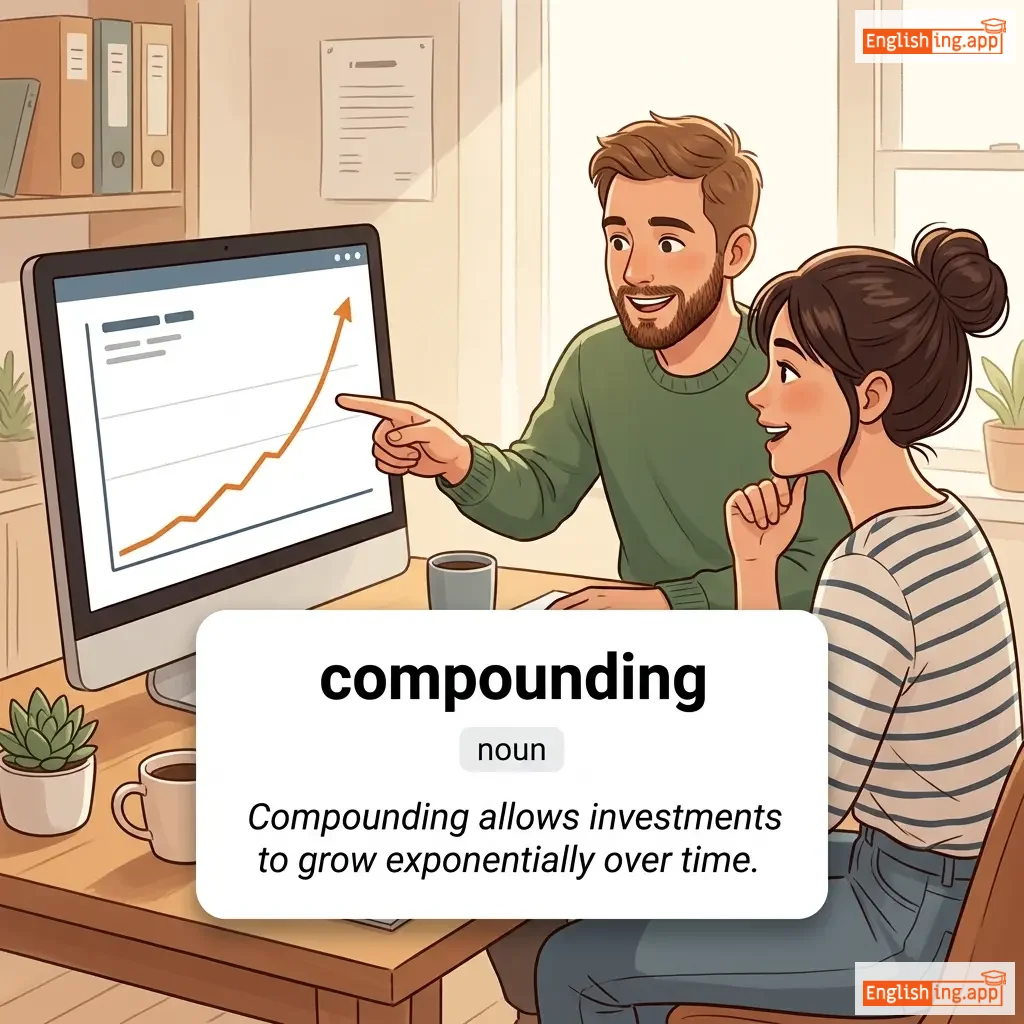
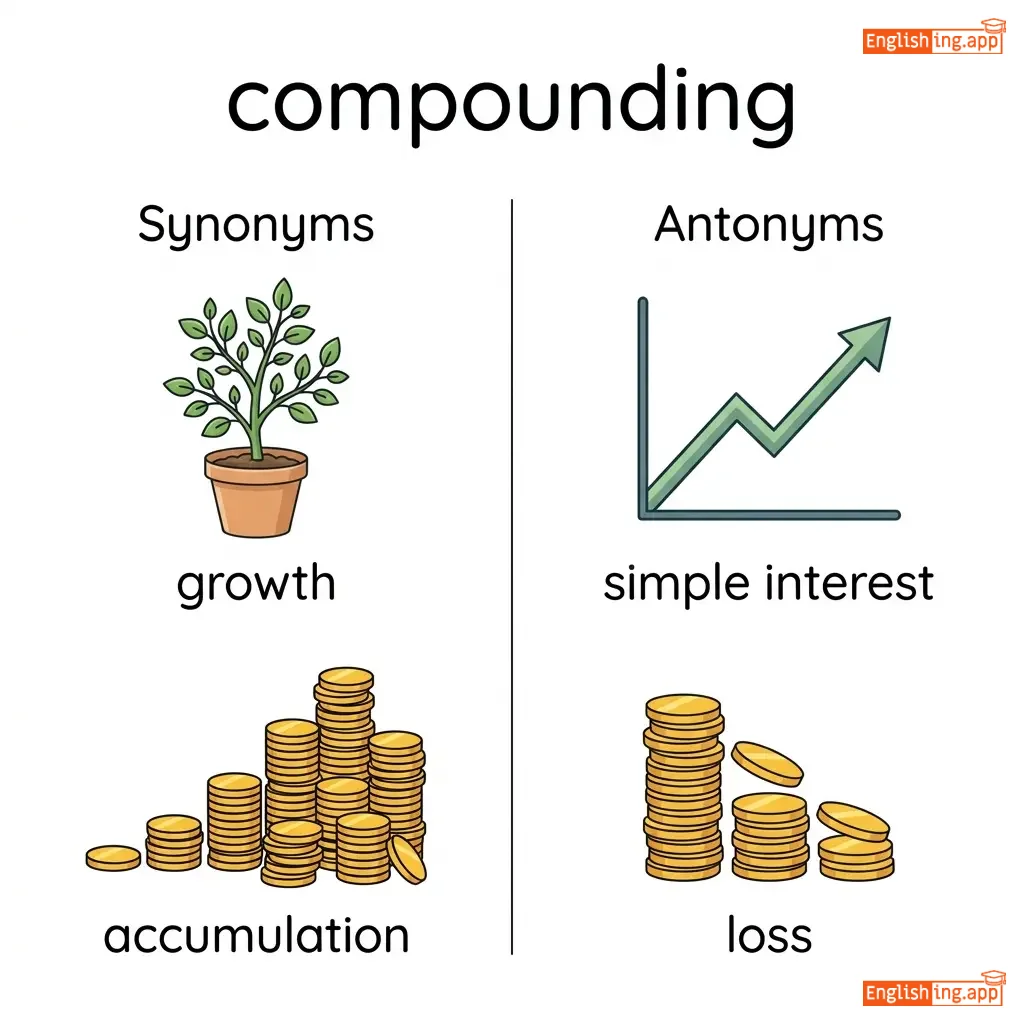
kəmˈpaʊnd.ɪŋ
noun
(コンパウンディング)
••••••
|
|
複利
fukuri
••••••
|
The process in which an asset's earnings, from either capital gains or interest, are reinvested to generate additional earnings over time.
••••••
|
Compounding allows investments to grow exponentially over time. |
複利は、投資を時間とともに指数関数的に成長させます。
Fukuri wa, tōshi o jikan to tomo ni shisū kansūteki ni seichō sasemasu.
••••••
|
growth, accumulation, exponential return
••••••
|
simple interest, loss, depreciation
••••••
|
Fukuri, growing like multiplying your investment returns.
••••••
|
|
#2470
📊
|
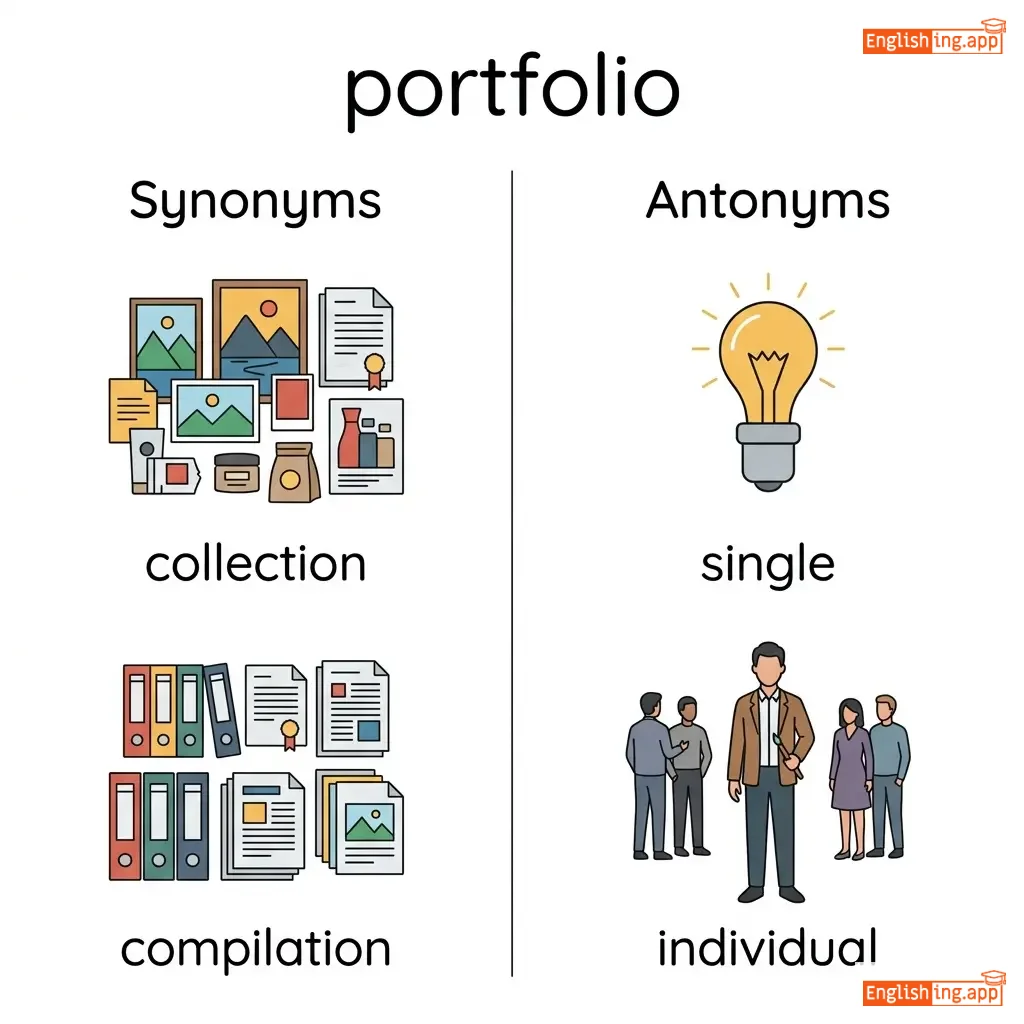
ˌpɔːtˈfəʊ.li.əʊ
noun
(ポートフォリオ)
••••••
|
|
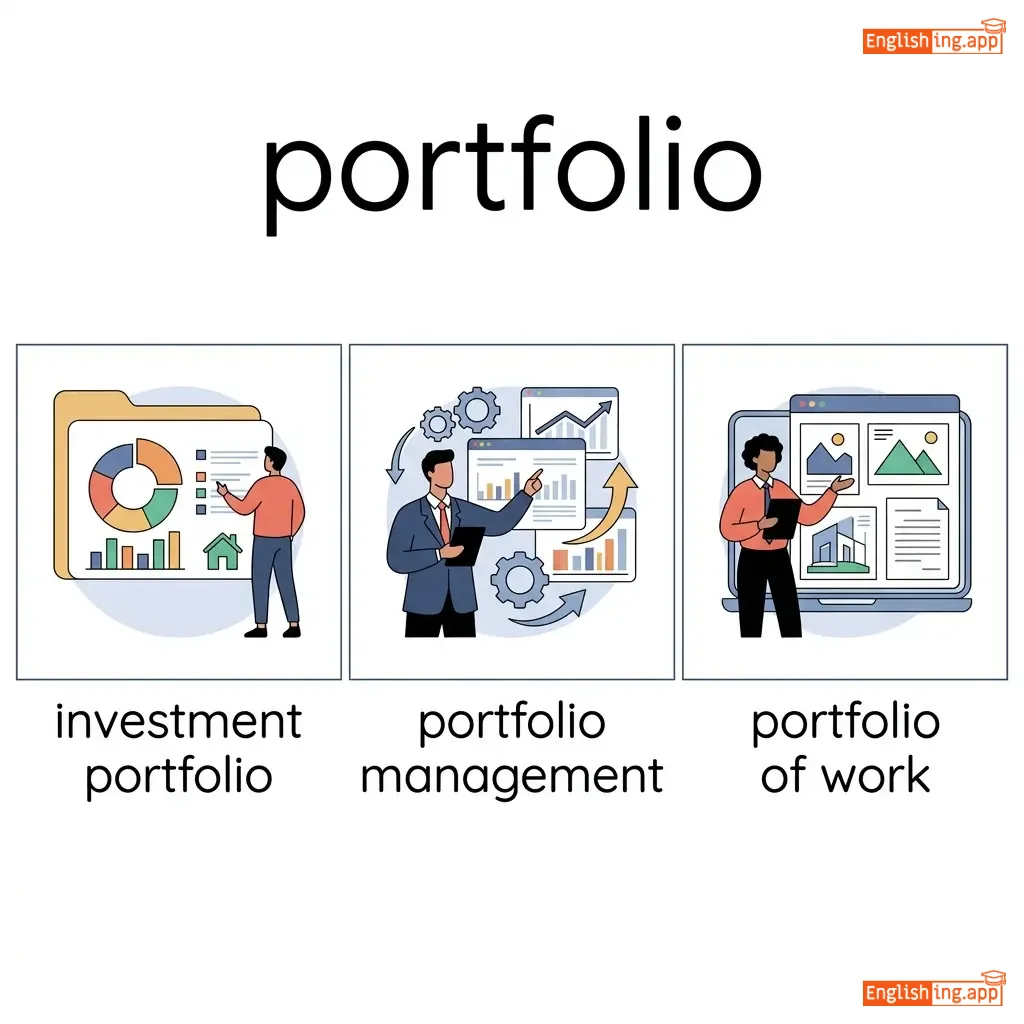
投資ポートフォリオ
toushi pōtoforio
••••••
|
A range of investments held by a person or organization.
••••••
|
Diversifying your portfolio reduces investment risk.
ポートフォリオを多様化することは、投資リスクを減らします。
••••••
|
投資ポートフォリオを多様化することは、投資リスクを減らします。
Tōshi pōtoforio o tayōka suru koto wa, tōshi risuku o herashimasu.
••••••
|
investment mix, asset collection, holdings
••••••
|
single investment, disinvestment, liquidation
••••••
|
ポートフォリオは、リスクを減らすために投資を分散することを意味します。
••••••
|
|
#2471
📈
|
ˈæ.sɛt ˌæl.əˈkeɪ.ʃən
noun
(アセットアロケーション)
••••••
|
|
資産配分
shisan haibun
••••••
|
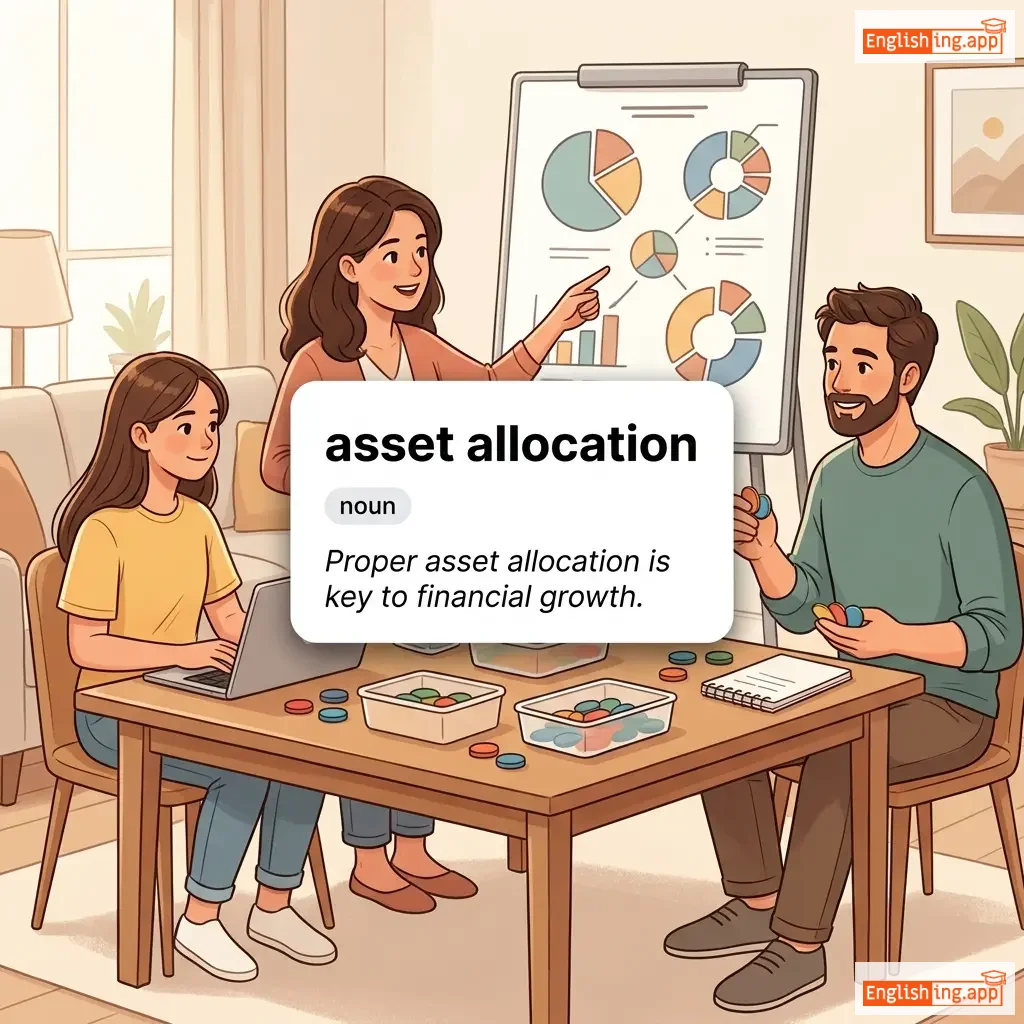
An investment strategy that aims to balance risk and reward by apportioning a portfolio's assets according to an individual's goals, risk tolerance, and investment horizon.
••••••
|
Proper asset allocation is key to financial growth. |
正しい資産配分は、金融成長の鍵です。
Tadashī shisan haibun wa, kin'yū seichō no kagi desu.
••••••
|
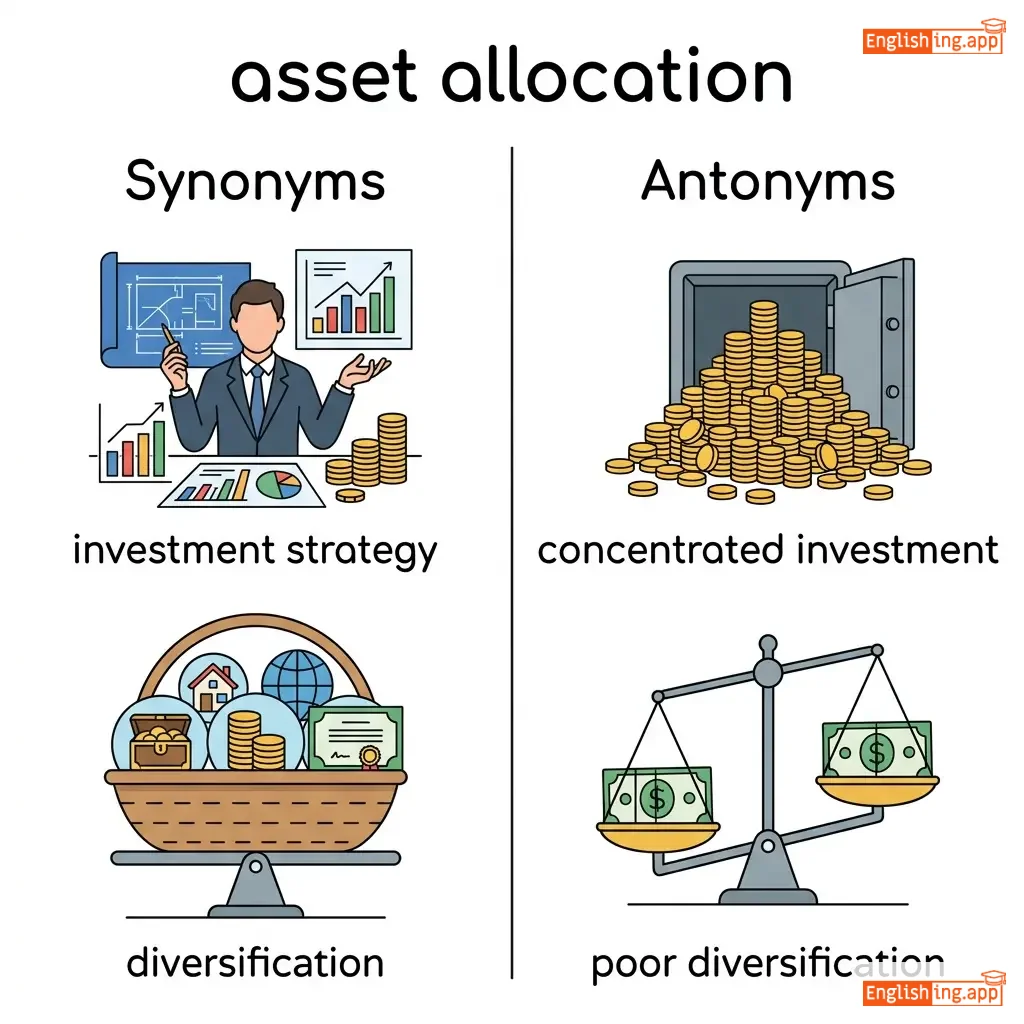
investment strategy, diversification, capital distribution
••••••
|
concentrated investment, poor diversification, risky allocation
••••••
|
資産配分 = Asset Allocation - 賢く資産を配分し、リスクとリターンをバランスよく管理。
••••••
|
|
#2472
💧
|
lɪˈkwɪd.ə.ti
noun
(リクイディティ)
••••••
|
|
流動性
ryūdōsei
••••••
|
The availability of liquid assets to a market or company; the degree to which an asset or security can be quickly bought or sold in the market without affecting the asset's price.
••••••
|
High liquidity allows businesses to meet short-term obligations. |
高い流動性は、企業が短期的な義務を果たすのに役立ちます。
Takai ryūdōsei wa, kigyō ga tanki-tekina gimu o hatasu no ni yakudachimasu.
••••••
|
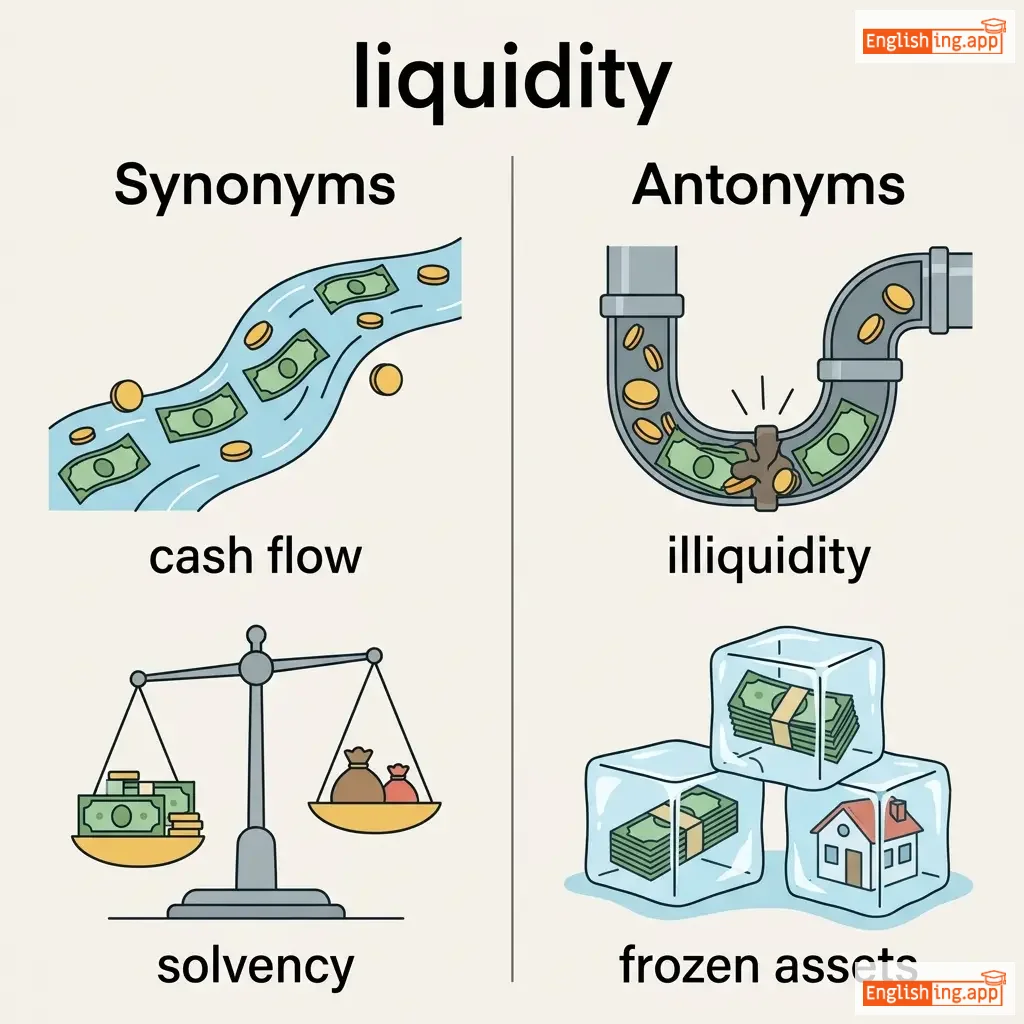
cash flow, marketability, convertibility
••••••
|
illiquidity, fixed assets, inaccessibility
••••••
|
流動性は水のようにすぐに流れ、資産も素早く売買できることを意味します。
••••••
|
|
#2473
💎
|
ˈæf.lu.əns
noun
(æfluensu)
••••••
|
|
富裕
fuyu
••••••
|
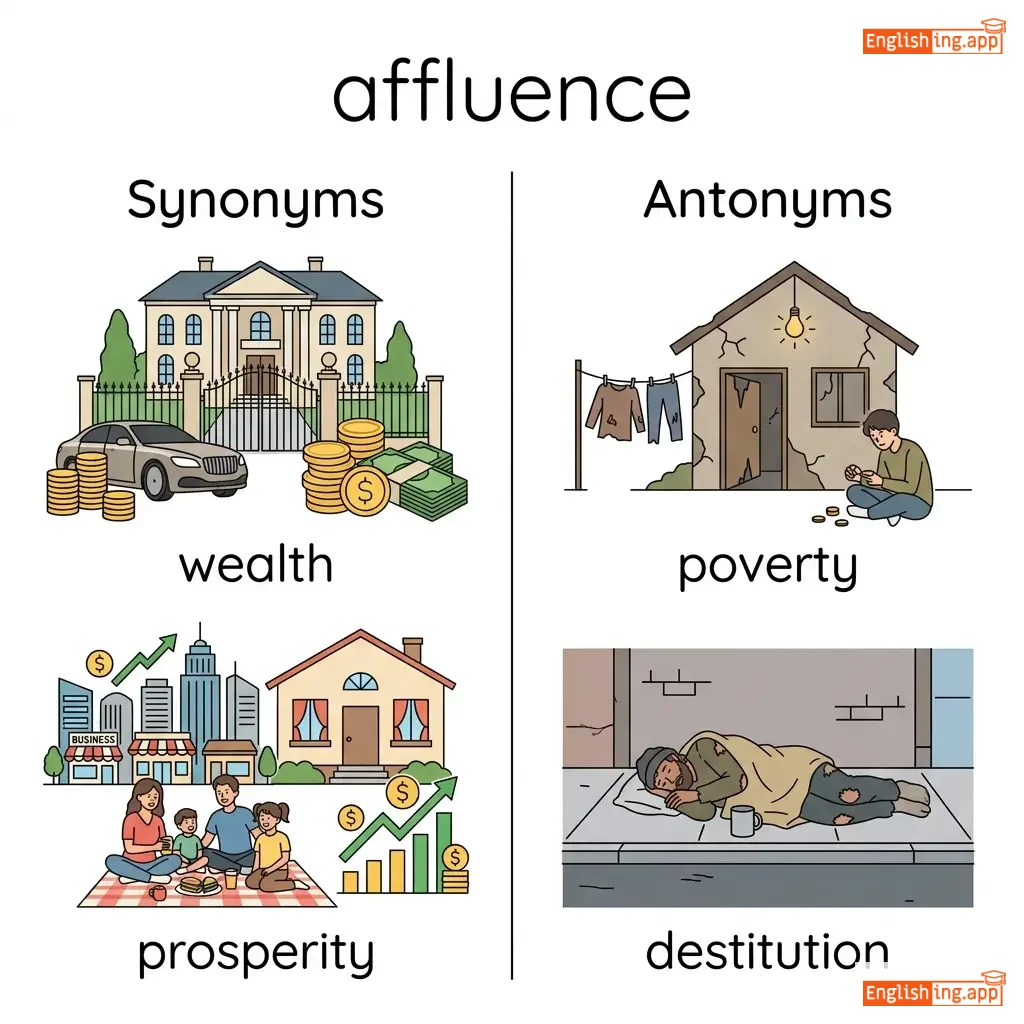
The state of having a great deal of money; wealth.
••••••
|
His business success led to great affluence. |
彼のビジネスの成功は大きな富をもたらしました。
Kare no bijinesu no seikō wa ōkina tomi o motarashimashita.
••••••
|
wealth, prosperity, abundance
••••••
|
poverty, scarcity, destitution
••••••
|
富裕はaffluenceから
••••••
|
|
#2474
📈
|
əˌpriː.ʃiˈeɪ.ʃən
noun
(アプレシエーション)
••••••
|
|
価値の上昇
kachi no joushou
••••••
|
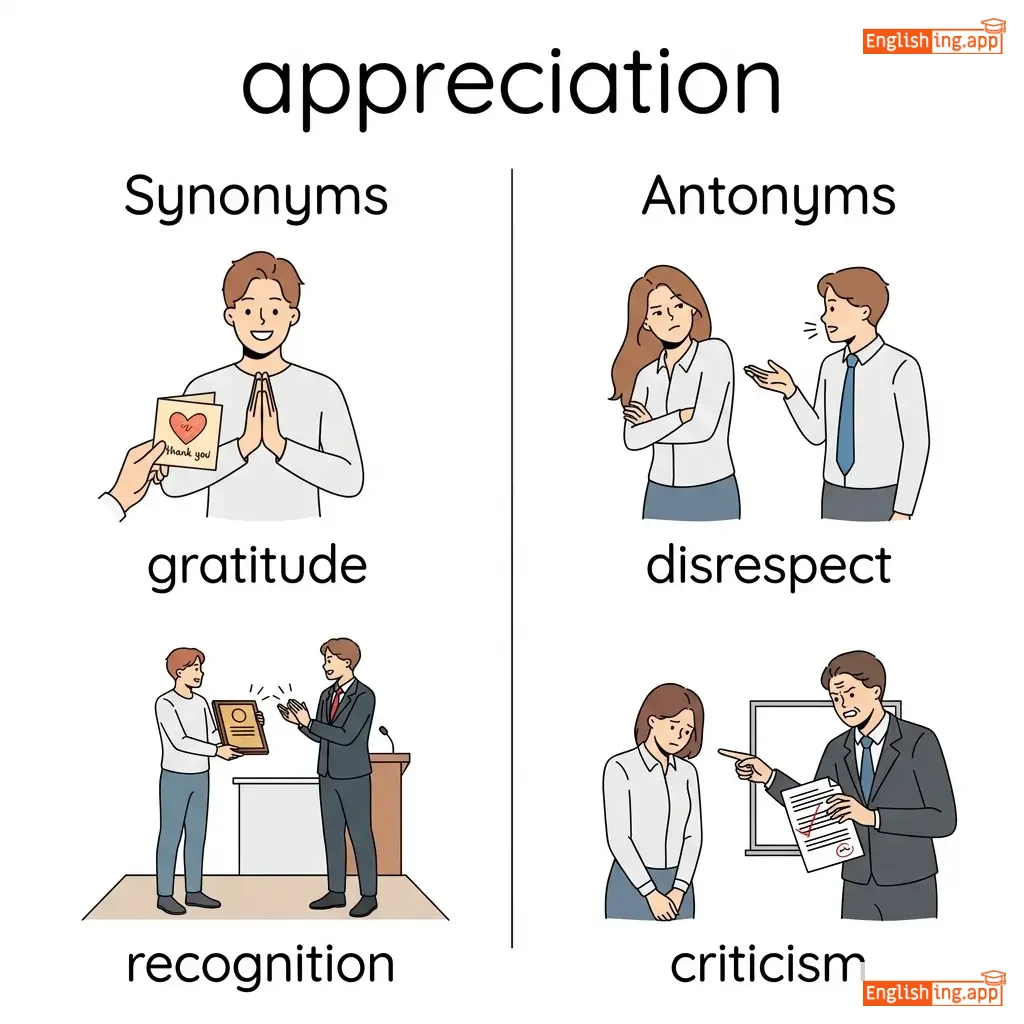
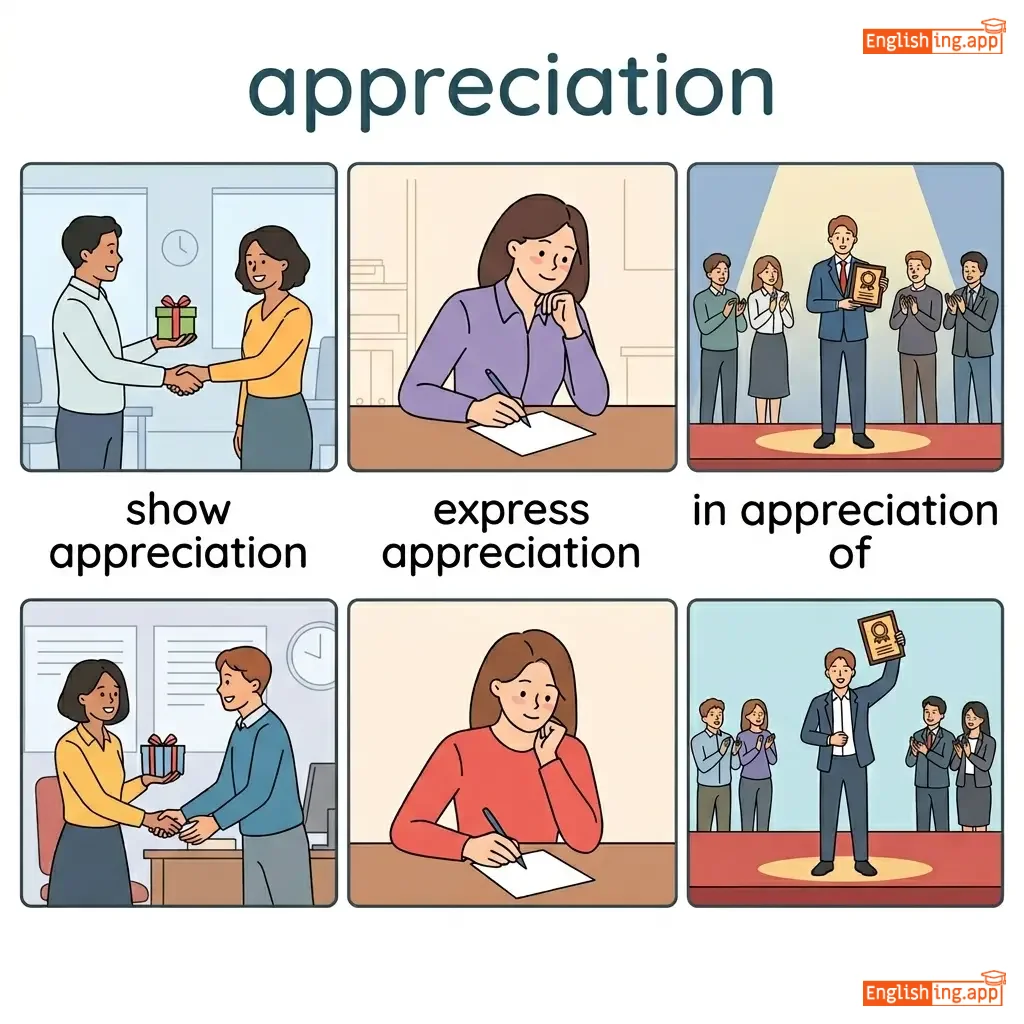
An increase in the value of an asset over time.
••••••
|
Real estate properties often experience appreciation over time.
不動産は通常、時間の経過とともに価値が上昇します。
••••••
|
不動産は通常、時間の経過とともに価値が上昇します。
Fudōsan wa tsūjō, jikan no keika to tomo ni kachi ga jōshō shimasu.
••••••
|
increase, growth, recognition
••••••
|
depreciation, devaluation, decline
••••••
|
不動産の価値の上昇は時間とともに増します。
••••••
|
|
#2475
📉
|
rɪˈsɛʃ.ən.er.i
adjective
(リセッション)
••••••
|
|
不況に関する
fukyou ni kansuru
••••••
|
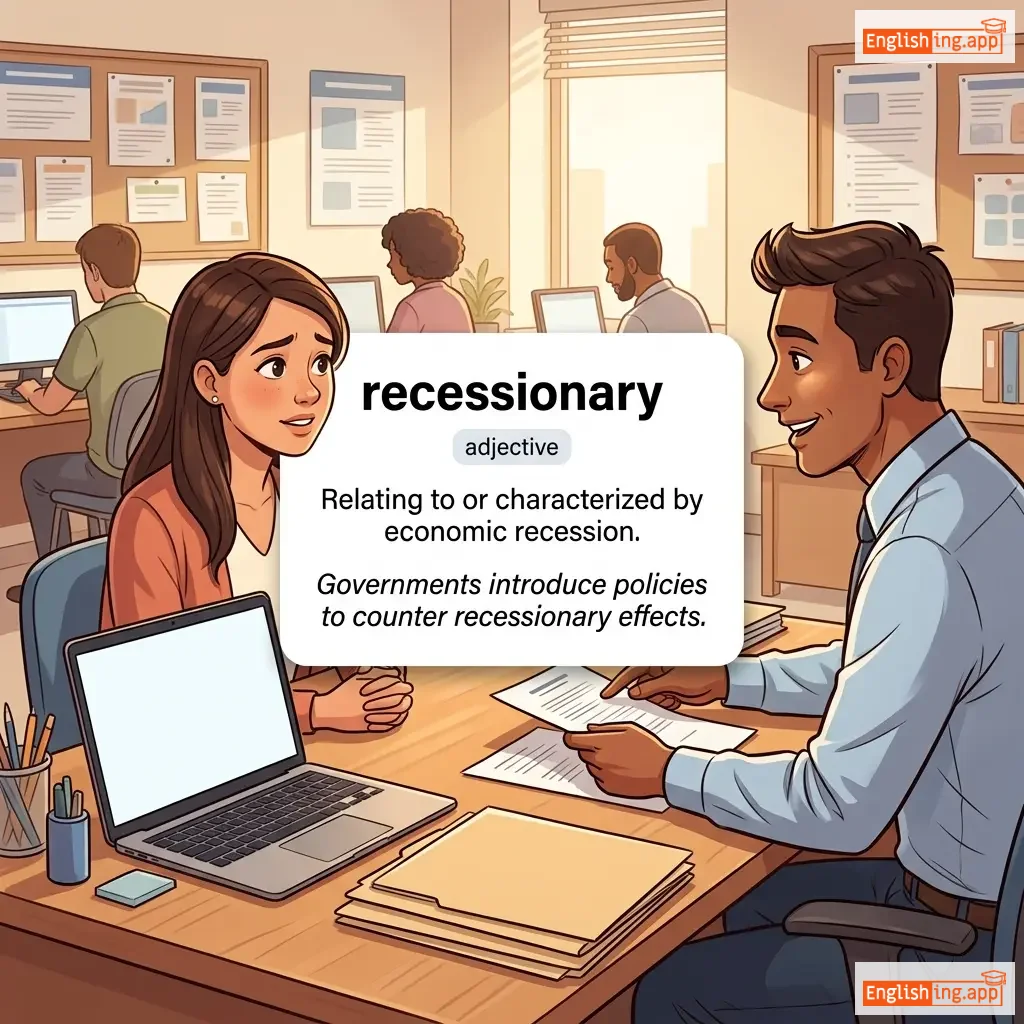
Relating to or characterized by economic recession.
••••••
|
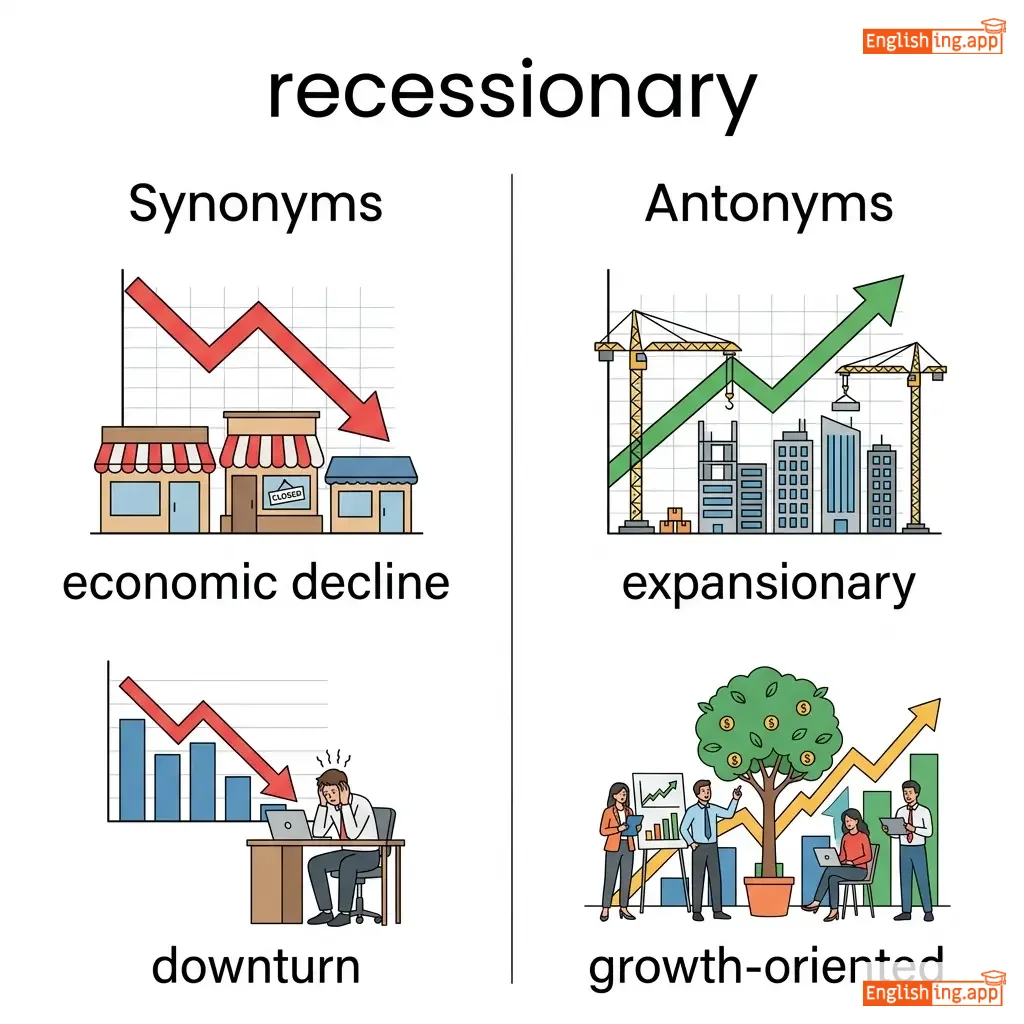
Governments introduce policies to counter recessionary effects.
政府は景気後退の影響に対処するために政策を導入しています。
••••••
|
政府は景気後退の影響に対処するために政策を導入しています。
Seifu wa keiki koutai no eikyō ni taisho suru tame ni seisaku o dōnyū shiteimasu.
••••••
|
economic decline, downturn, slowdown
••••••
|
expansionary, growth-oriented, prosperous
••••••
|
不況の影響を受けて、リセッション政策を取ります。
••••••
|
|
#2476
🔀
|
daɪˌvɜː.sɪ.fɪˈkeɪ.ʃən
noun
(ダイバーシフィケーション)
••••••
|
|
多様化
tayōka
••••••
|
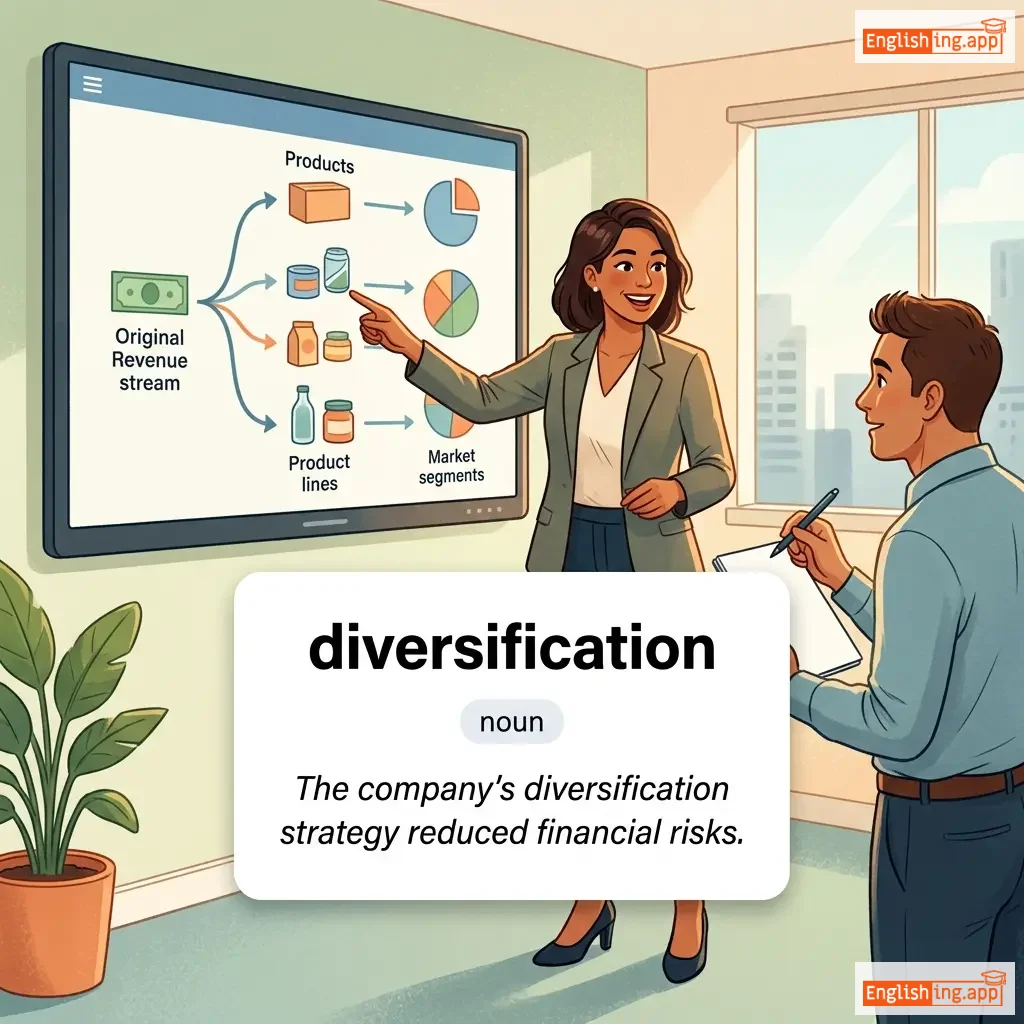
The practice of spreading investments across different assets to reduce risk.
••••••
|
Investment diversification reduces financial risk. |
投資の多様化は、財務リスクを減らします。
Tōshi no tayōka wa, zaiimu risuku o herashimasu.
••••••
|
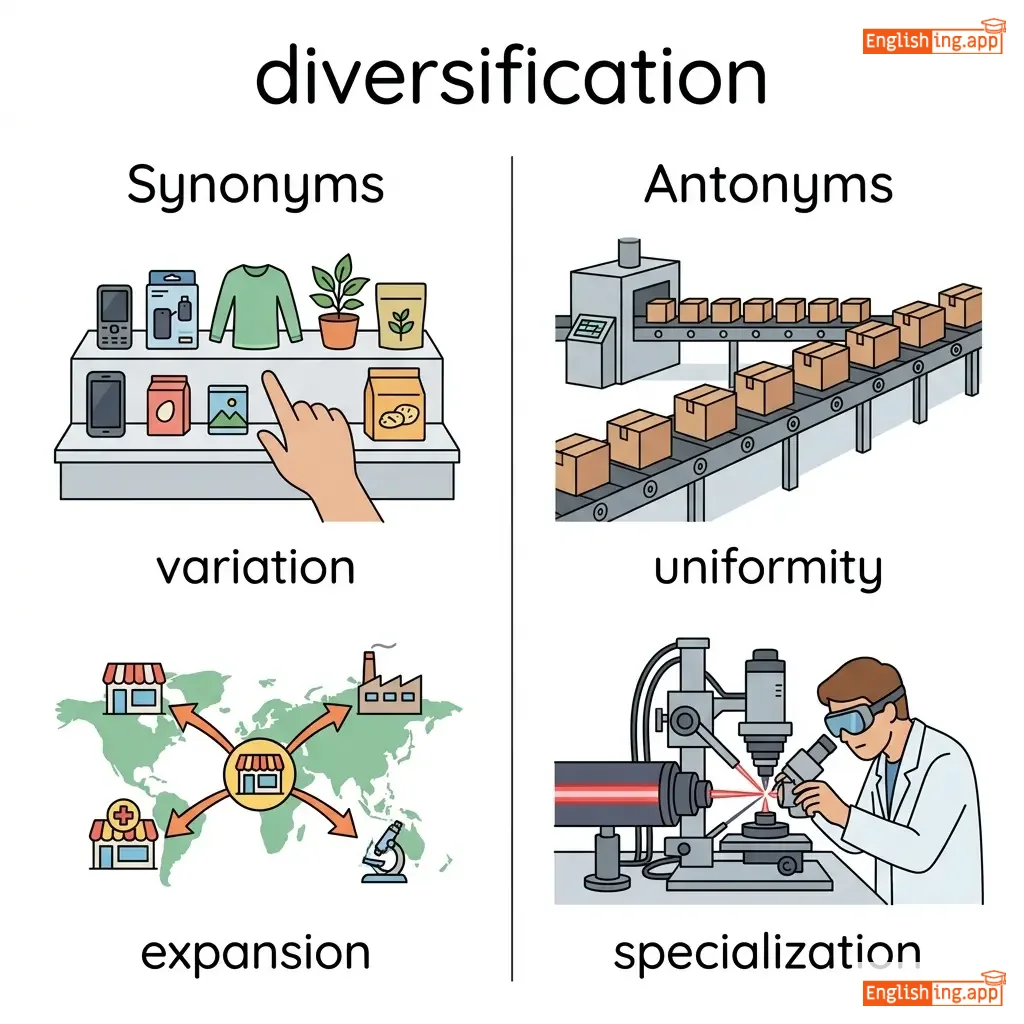
expansion, variety, differentiation
••••••
|
specialization, uniformity, concentration
••••••
|
多様化はリスク分散のキーです。
••••••
|
|
#2477
📊
|
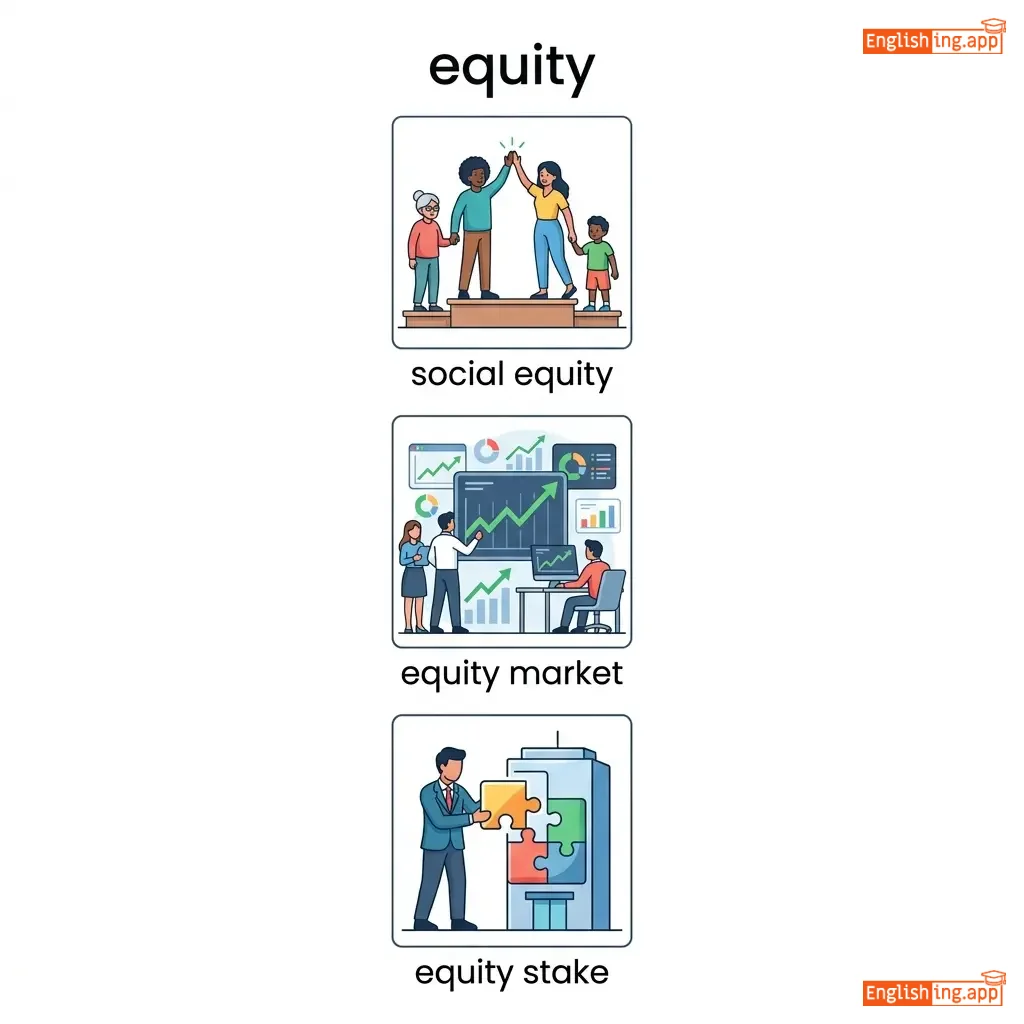
ˈɛk.wɪ.ti
noun
(エクイティ)
••••••
|
|
株式
kabushiki
••••••
|
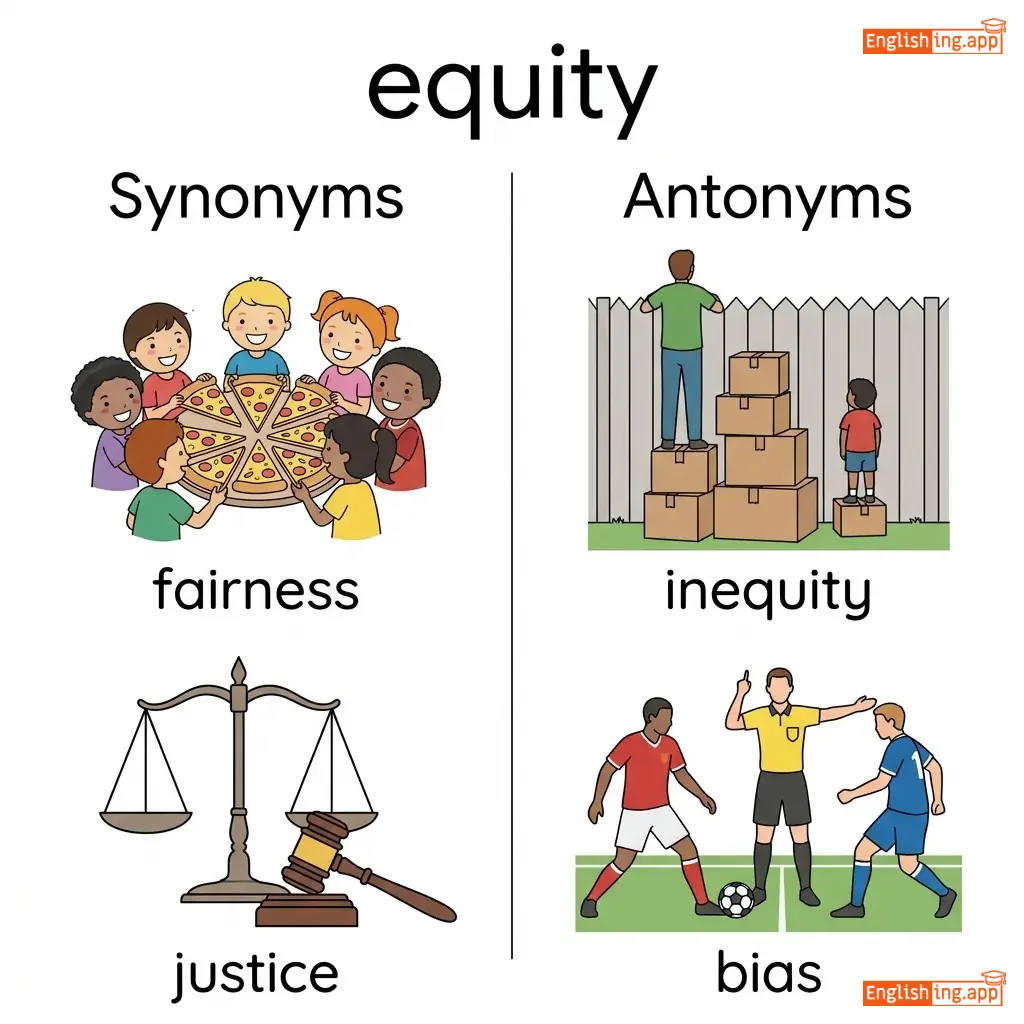
The value of shares issued by a company; ownership interest in a company.
••••••
|
He invested in company equity for long-term gains.
彼は長期的な利益のために会社のエクイティに投資しました。
••••••
|
彼は長期的な利益のために会社のエクイティに投資しました。
Kare wa chōkitekina rieki no tame ni kaisha no eqwiti ni tōshi shimashita.
••••••
|
ownership, stake, shareholding
••••••
|
debt, liability, unequal distribution
••••••
|
株式 = 'カ'イシャの「株」で「式」式
••••••
|
|
#2478
💰
|
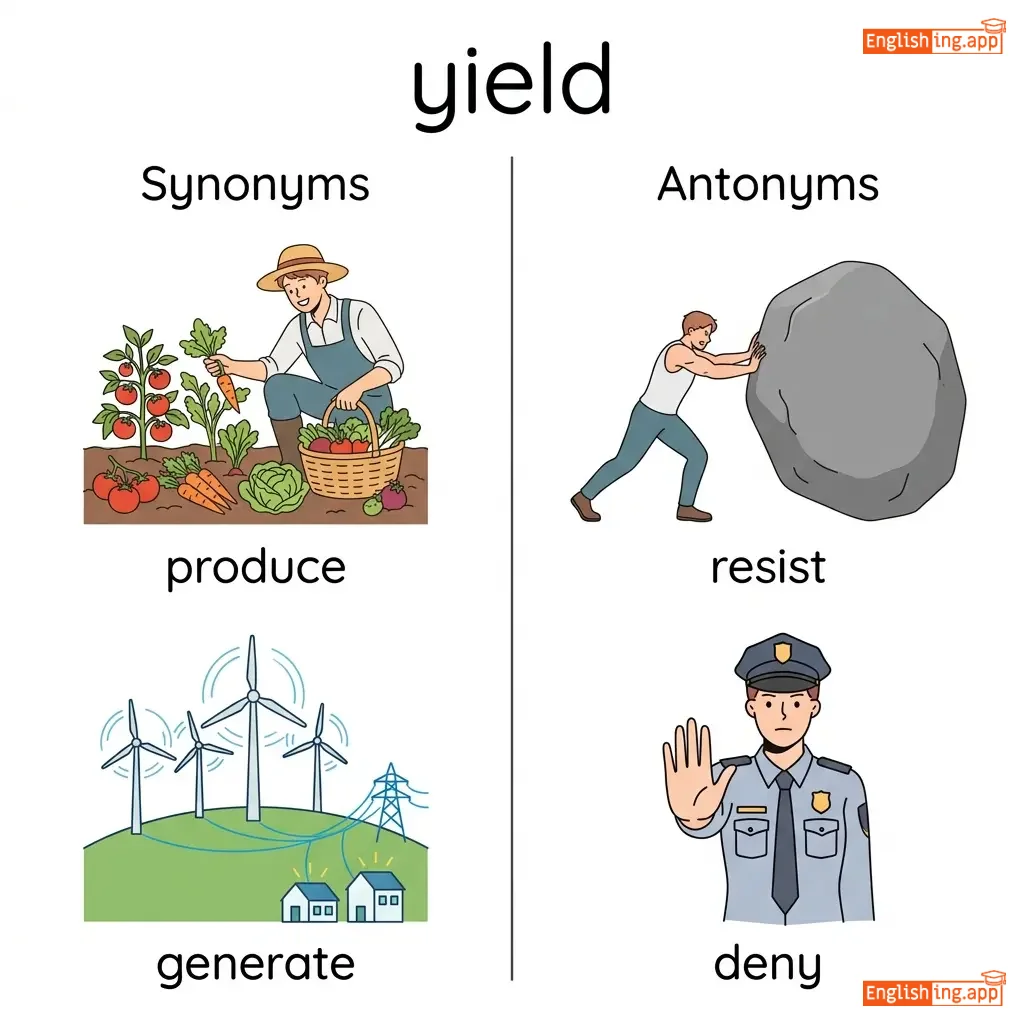
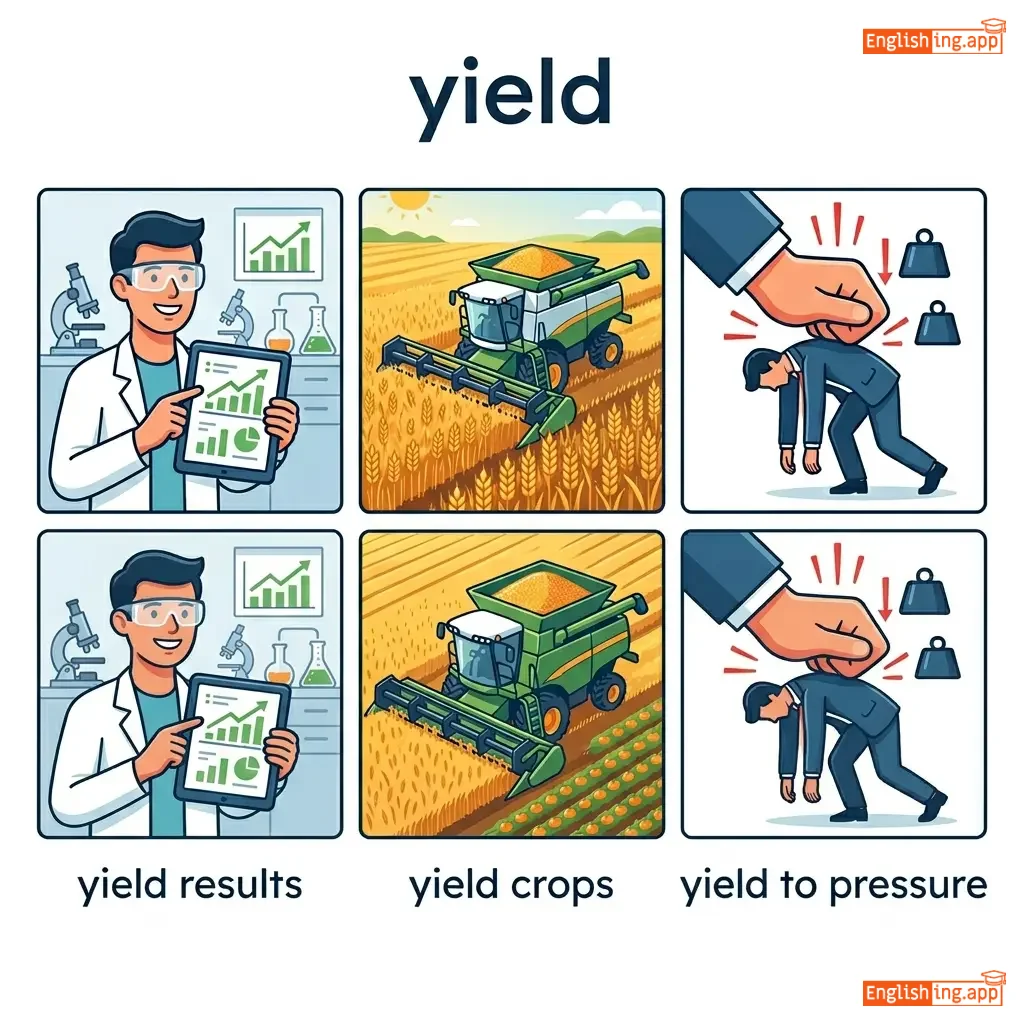
jiːld
noun/verb
(yīrudo)
••••••
|
|
利回り
rimawari
••••••
|
The income return on an investment, such as the interest or dividends received.
••••••
|
Bonds with higher yield offer better returns.
利回りが高い債券は、より良いリターンを提供します。
••••••
|
利回りが高い債券は、より良いリターンを提供します。
Rimawari ga takai saiken wa, yori yoi ritān o teikyō shimasu.
••••••
|
return, profit, earnings
••••••
|
loss, decline, deficit
••••••
|
Think of 'rimawari' when you imagine how bonds can give great returns.
••••••
|
|
#2479
🏛️
|
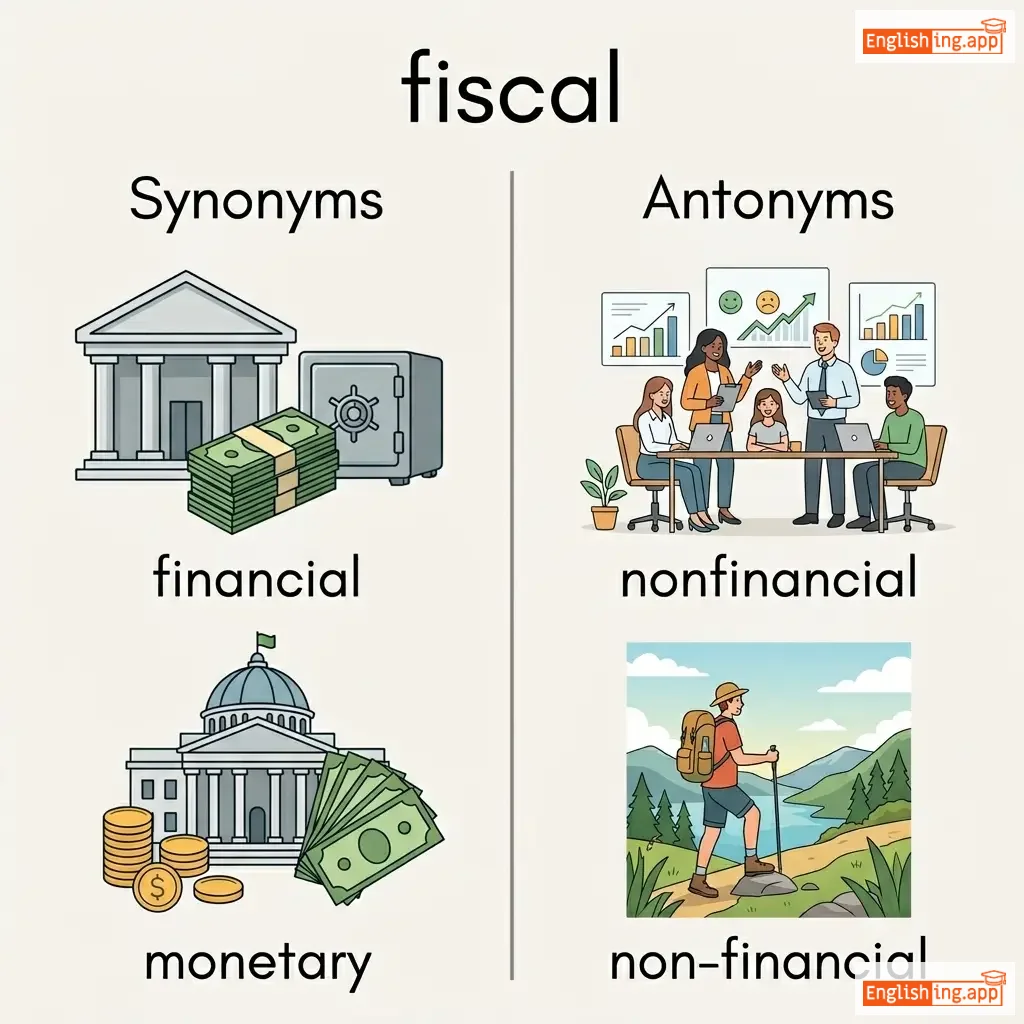
ˈfɪs.kəl
adjective
(フィスカル)
••••••
|
|
財政の
zaisei no
••••••
|
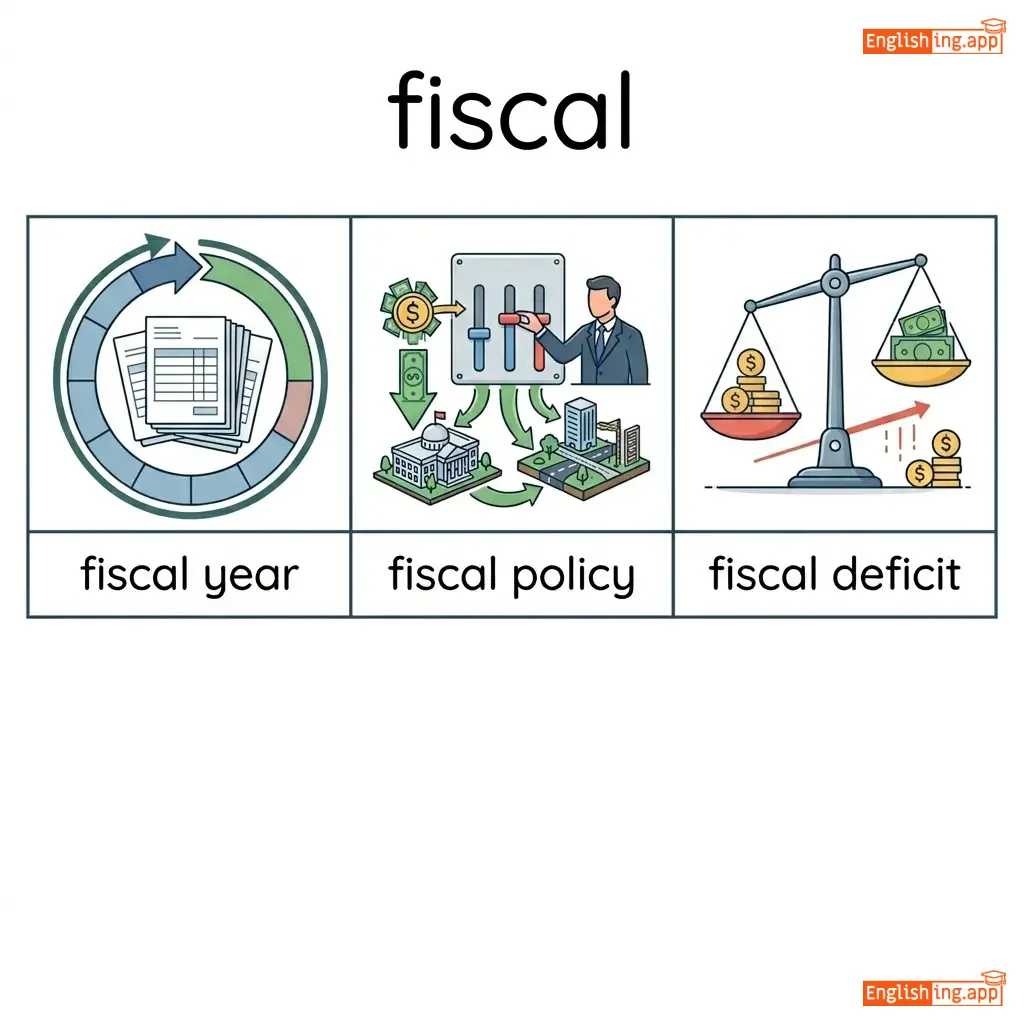
Relating to government revenue, especially taxes.
••••••
|
The government introduced new fiscal policies to boost the economy. |
政府は経済を活性化させるために新しい財政政策を導入しました。
Seifu wa keizai o kasseika saseru tame ni atarashī zaisei seisaku o dōnyū shimashita.
••••••
|
financial, monetary, budgetary
••••••
|
non-financial, unbudgeted, non-monetary
••••••
|
Fiscal sounds like 'zaisei' in Japanese – linked to government funds and taxes.
••••••
|
|
#2480
🎲
|
ˌspɛk.jʊˈleɪ.ʃən
noun
(スペキュレーション)
••••••
|
|
投機
tōki
••••••
|
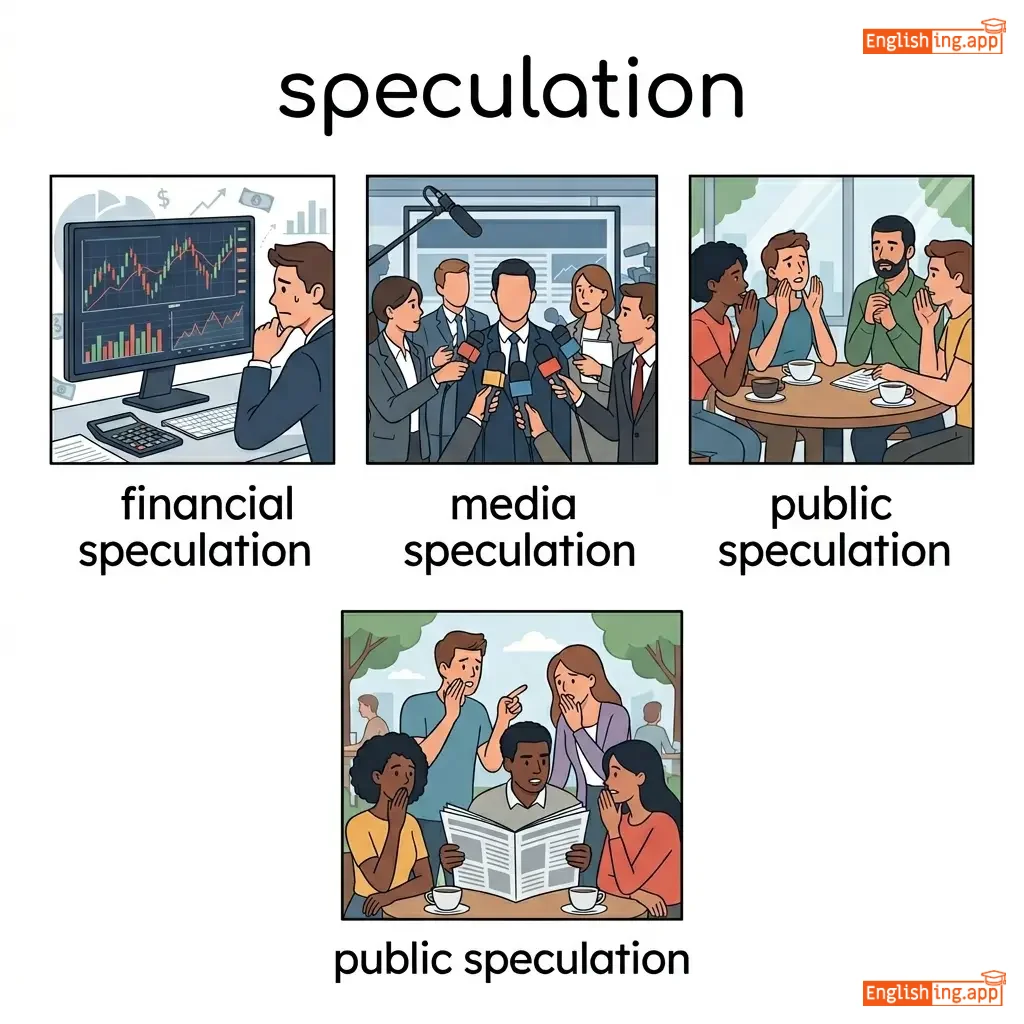
Investment in stocks, property, or other ventures in the hope of gain but with the risk of loss.
••••••
|
Stock market speculation can lead to high volatility.
株式市場のスペキュレーションは高いボラティリティを引き起こす可能性があります。
••••••
|
株式市場のスペキュレーションは高いボラティリティを引き起こす可能性があります。
Kabushiki shijō no supekūrēshon wa takai boratiriti o hikiokosu kanōsei ga arimasu.
••••••
|
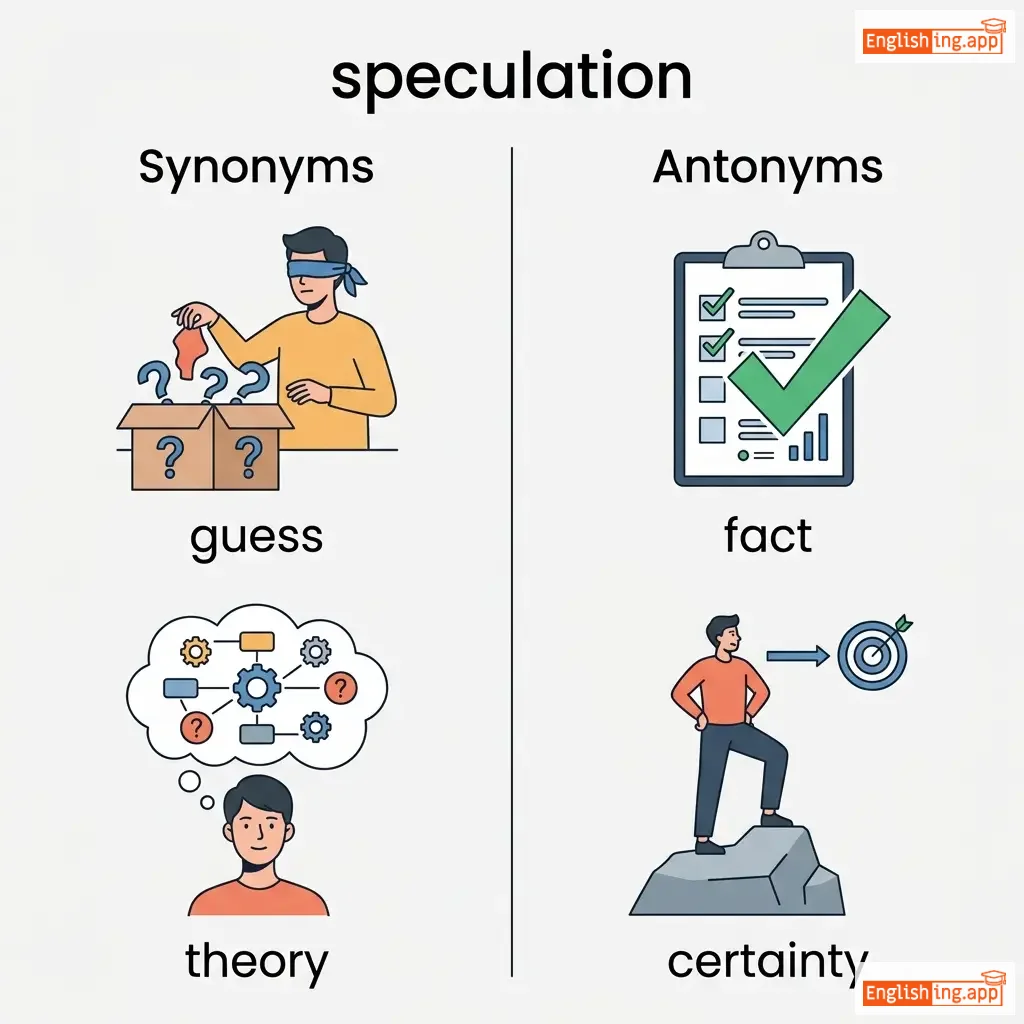
risk-taking, prediction, guesswork
••••••
|
certainty, stability, assurance
••••••
|
Speculation in Japanese shares a word with 'tōki,' suggesting a calculated risk for future reward.
••••••
|
Vocabulary Quiz
Test your vocabulary by matching words with their translations or meanings.
Login to take the quiz
Comments (0)
Share your thoughts and join the discussion.
Join the discussion by logging in
Login to CommentNo comments yet
Be the first to share your thoughts!