

時間管理における80/20ルール
The 80/20 Rule in Time Management
80/20ルール は時間管理において重要な原則です。この原則によれば、成果の80%は努力の20%から生まれ、残りの時間は不要な作業に浪費されます。この dichotomy は、効果的な仕事に対する assiduous な注意と meticulous な計画が efficacious な結果を得るために不可欠であることを教えてくれます。私たちが1日の salient なタスクを特定すると、pragmatic なアプローチを採用して無駄な作業を避けることが可能になります。しかし、この conundrum は多くの人にとって intransigent な問題です。なぜなら、一部の人々には quixotic な夢や recalcitrant な習慣があるからです。したがって、scrupulous な労働とチームの camaraderie によって、私たちは自分の propensity と proclivity を変え、時間の適切な活用を確保することができます。この原則は、私たちの生活に transcendent、unprecedented、そして magnanimous な変化をもたらす可能性があります。voluminous なタスクの中で正しい活動に集中すれば、時間管理における私たちの assiduous な努力は実を結ぶでしょう。この 80/20 rule を採用することで、私たちは個人生活と職業生活の両方で進歩を遂げることができます。
適切な時間の使い方と計画によって、私たちは生活の質と生産性を向上させることができます。この原則は私たちの指針です。時間を正しく使いましょう。
翻訳
過去
過去分詞
三人称単数
動名詞
意味
例文
例文の翻訳
同義語
対義語
コロケーション
ニーモニック





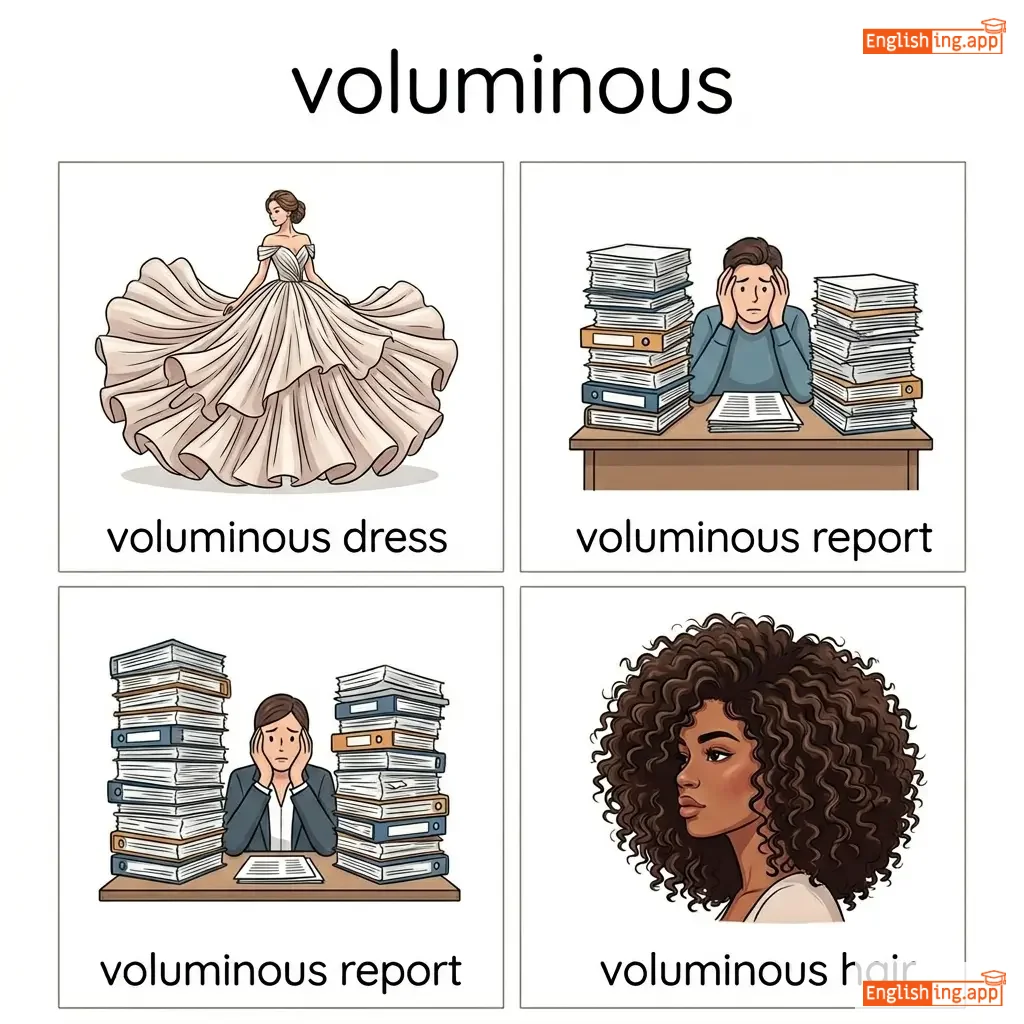
Swipe left or right, or use the buttons. Tap image to zoom.
例文の翻訳
単語
The 80/20 Rule in Time ManagementThe 80/20 Rule in Time Management - マスクトグル
|
絵文字
|
単語 | Images | 翻訳 | 意味 | 例文 | 例文の翻訳 | 同義語 | 対義語 | ニーモニック |
|---|---|---|---|---|---|---|---|---|---|
|
#2999
⚖️
|
/daɪˈkɑː.t̬ə.mi/
noun
(ダイコトミー)
••••••
|
|
二分法
nibunhō
••••••
|
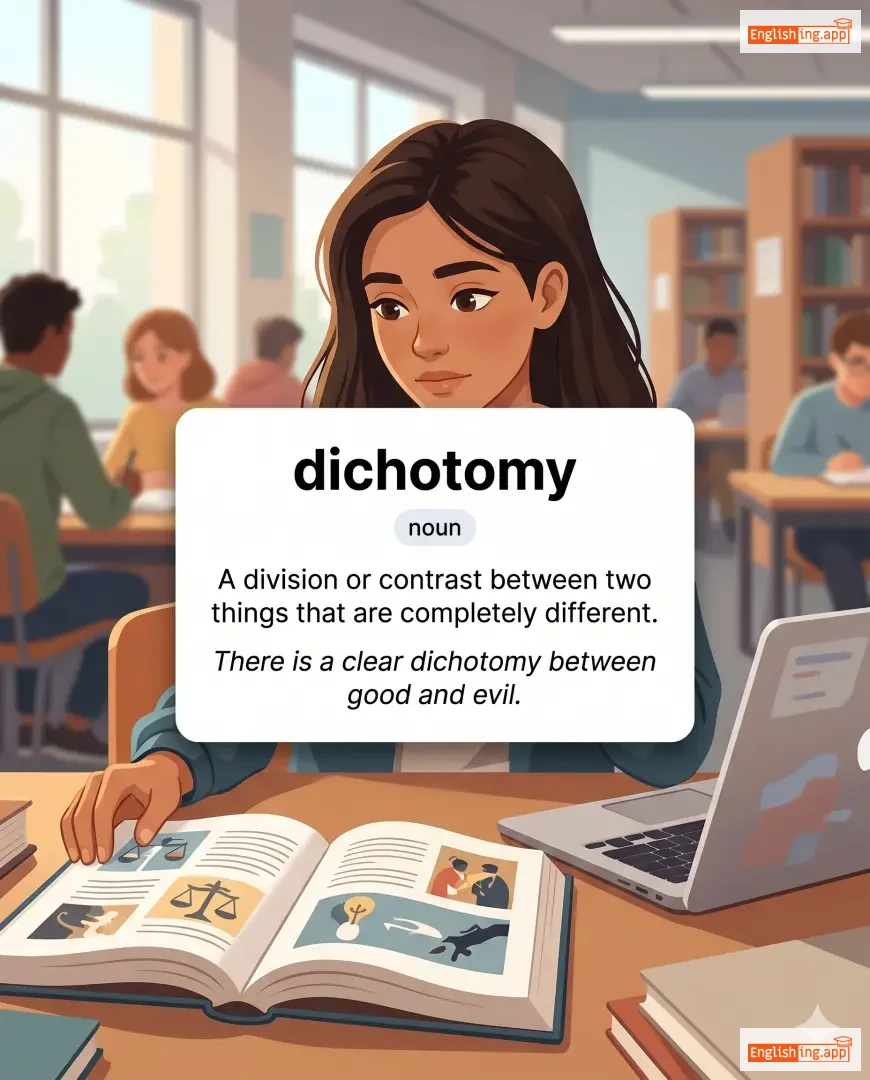
A division or contrast between two things that are or are represented as being opposed or entirely different.
••••••
|
The dichotomy between wealth and poverty is evident. |
富と貧困の間の二分法は明らかです。
Tomi to hinkon no aida no nibunhō wa akiraka desu.
••••••
|
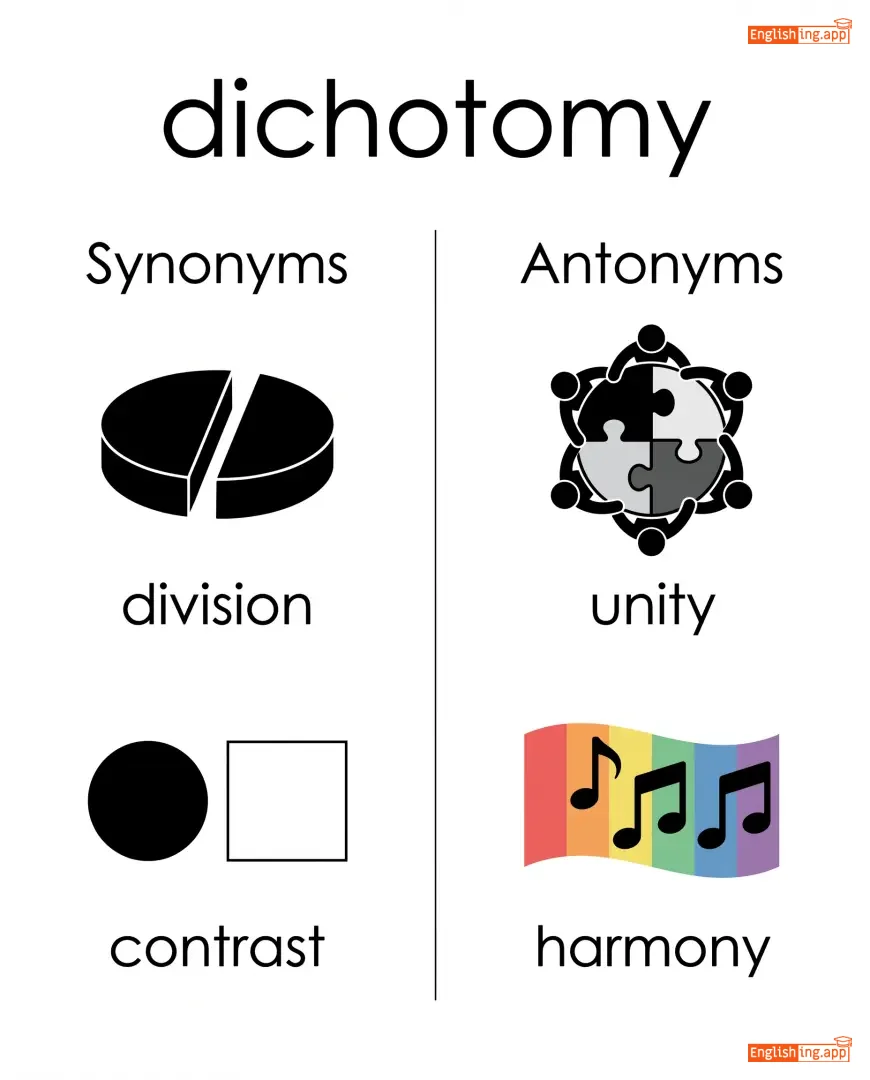
contrast, division, polarity
••••••
|
unity, similarity, harmony
••••••
|
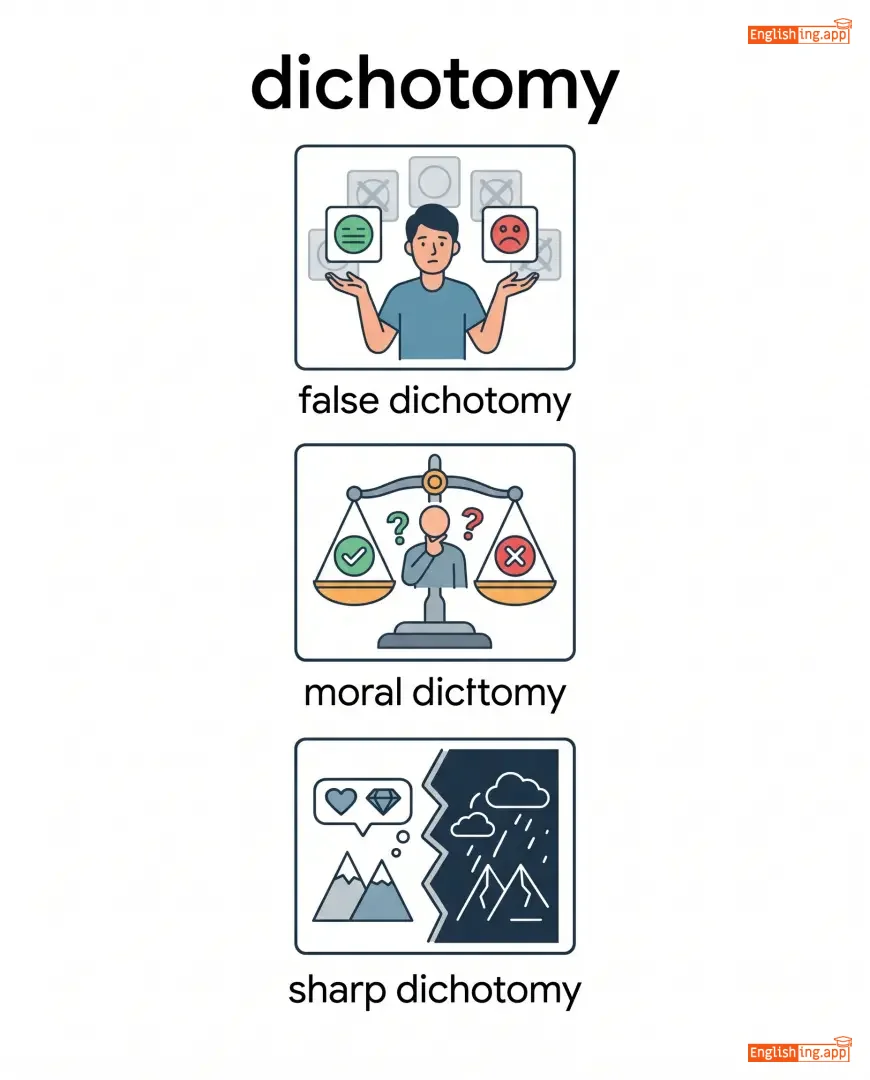
二分法は物事をはっきりと対立させる方法です。
••••••
|
|
#3000
🔥
|
/əˈsɪd.ju.əs/
adjective
(アスィデュアス)
••••••
|
|
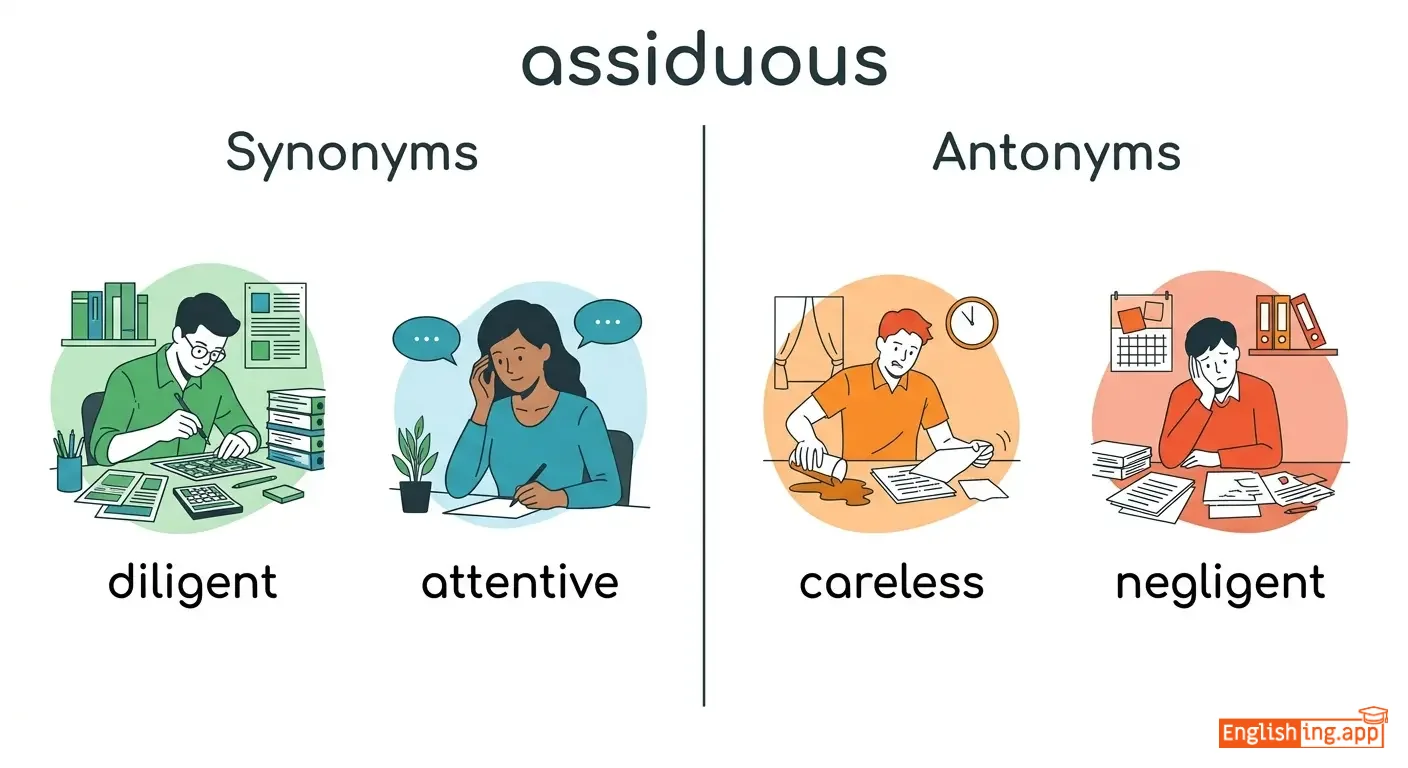
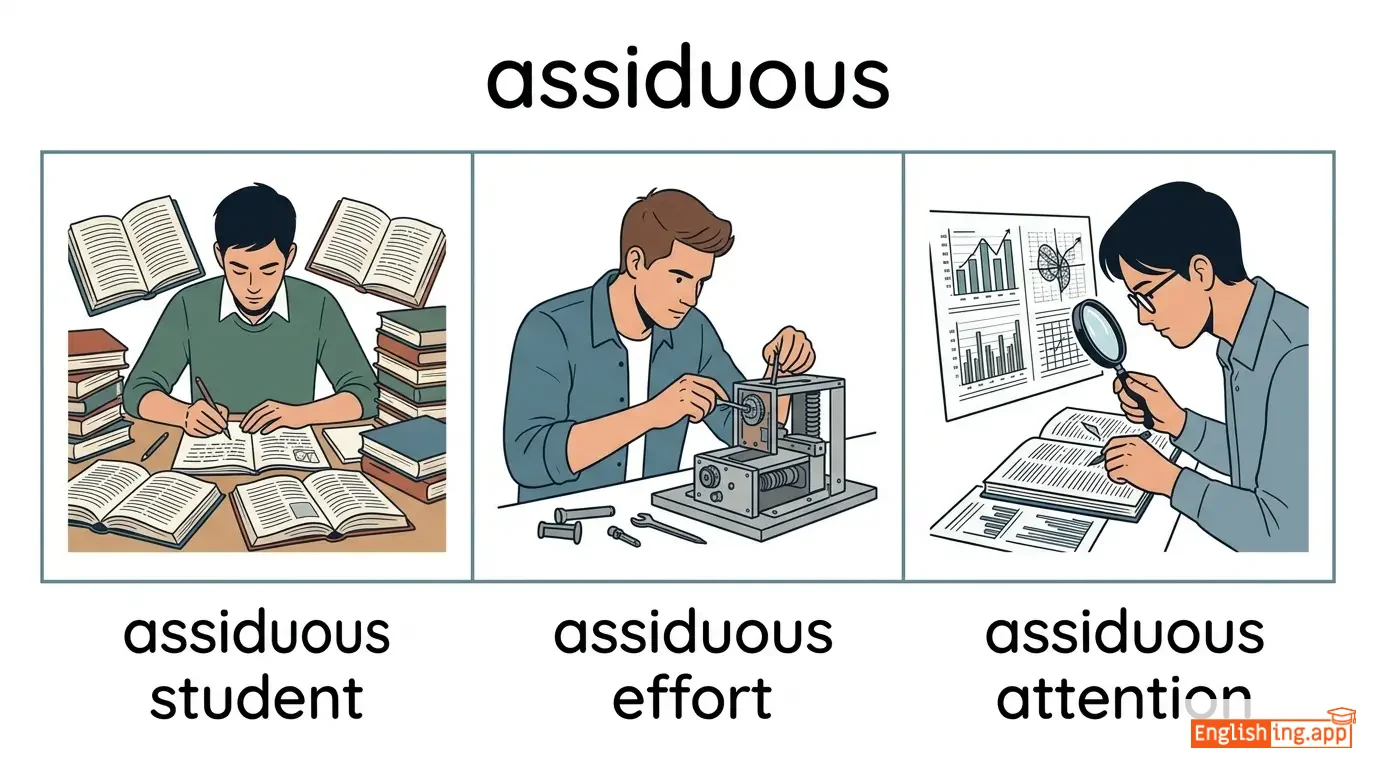
勤勉な、粘り強い、熱心な
kinmen na, nebarizuyoi, nesshin na
••••••
|
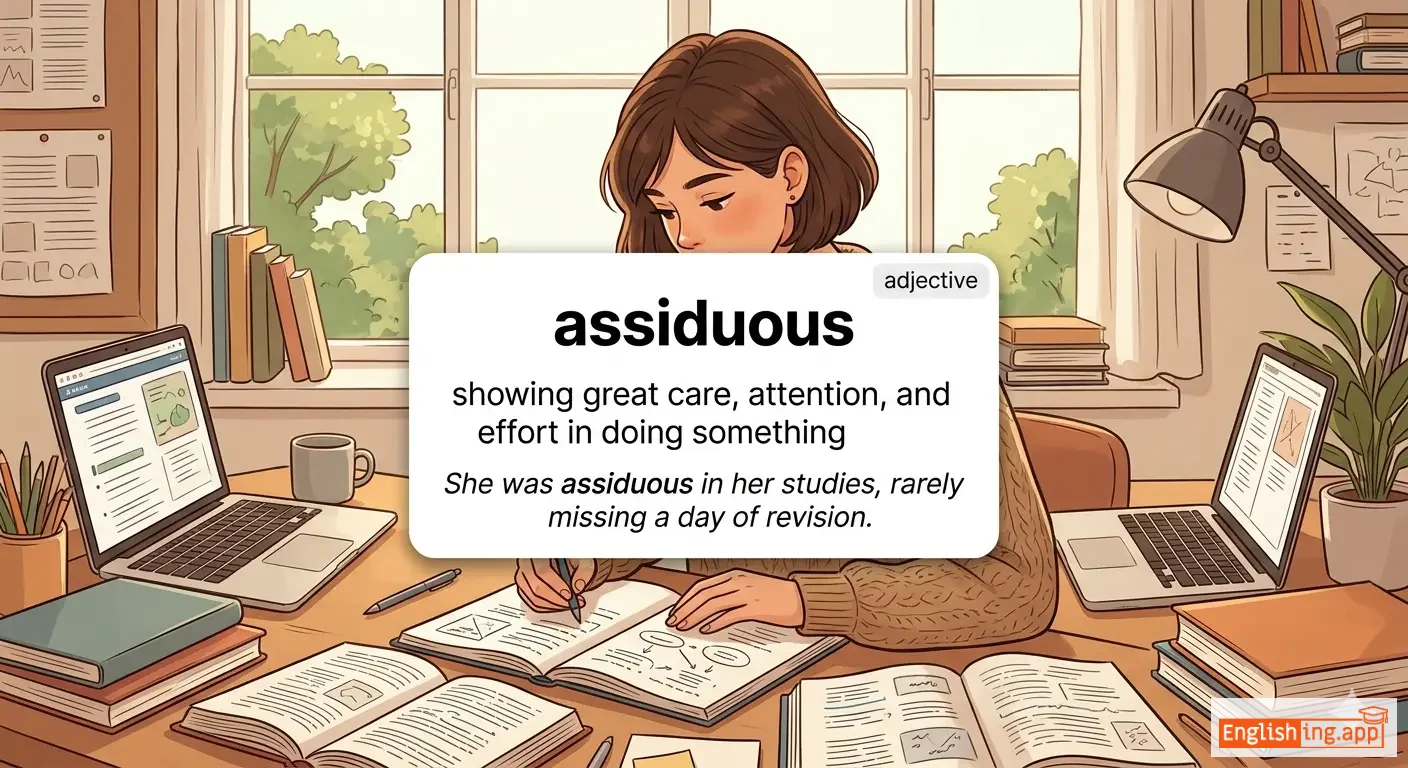
Showing great care and perseverance.
••••••
|
His assiduous efforts led to success. |
彼の勤勉な努力が成功に繋がった。
Kare no kinmen na doryoku ga seikō ni tsunagatta.
••••••
|
diligent, hardworking, persistent
••••••
|
lazy, negligent, careless
••••••
|
アスィデュアスから、'あ' は '熱心' から来ている。
••••••
|
|
#3001
🔍
|
/məˈtɪk.jə.ləs/
adjective
(メティキュラス)
••••••
|
|
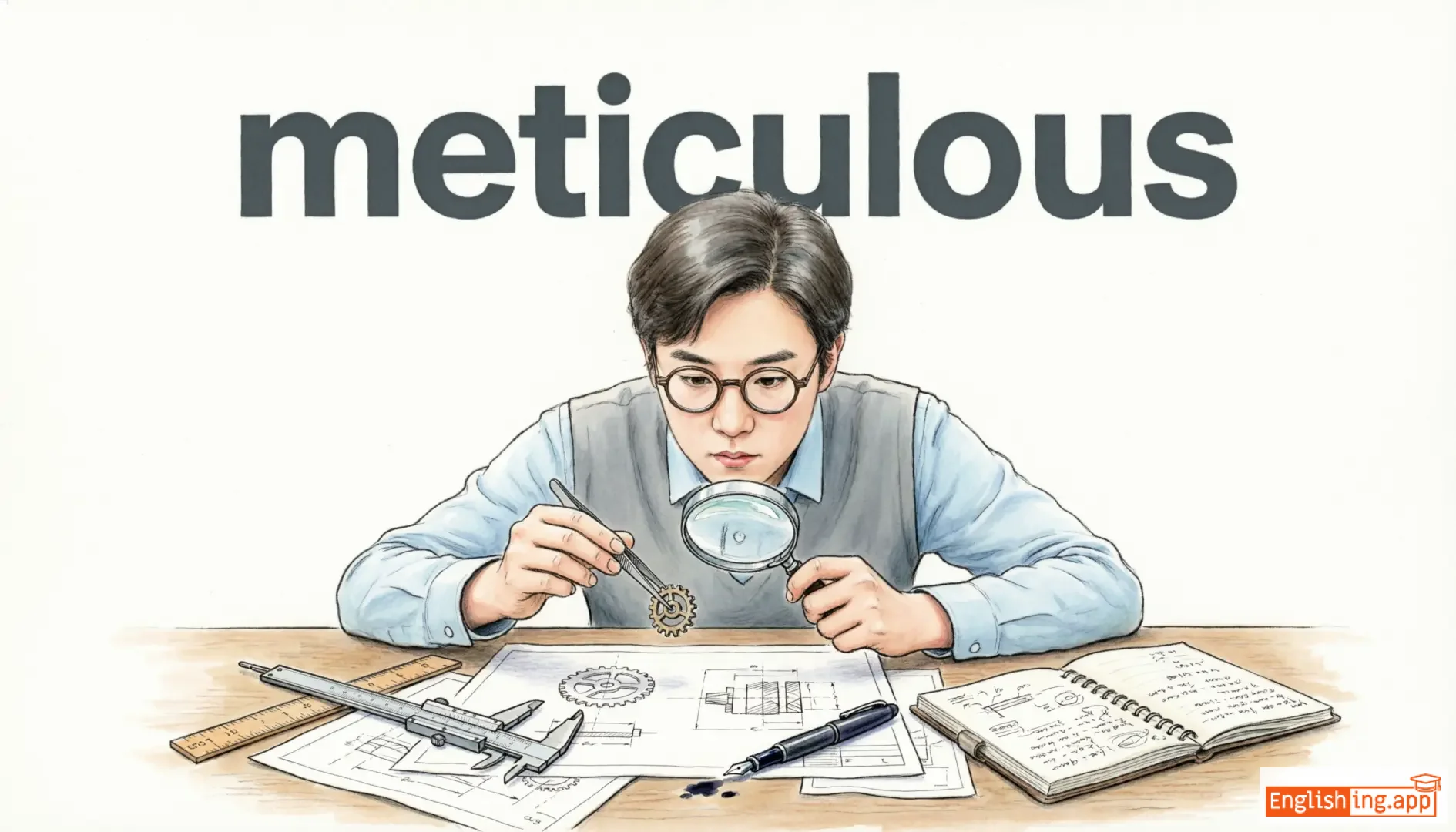
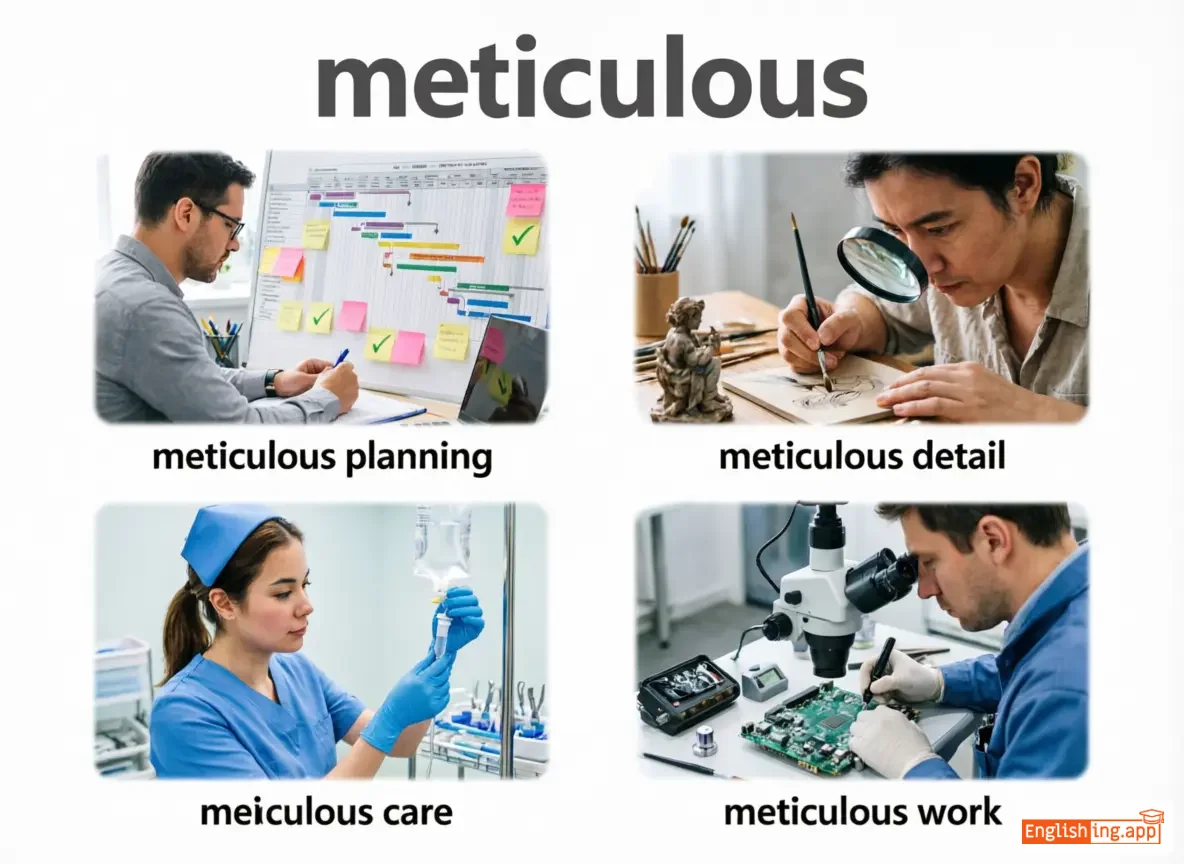
非常に注意深い、精密、詳細に観察する
hijō ni chūi bukai, seimitsu, shōsai ni kansatsu suru
••••••
|
Showing great attention to detail; very careful and precise.
••••••
|
She is meticulous in her research. |
彼女は研究に非常に注意深いです。
kanojo wa kenkyū ni hijō ni chūi bukai desu.
••••••
|
precise, fastidious, thorough
••••••
|
careless, reckless, inaccurate
••••••
|
メティキュラスは細部に焦点を当てる慎重な人を連想させます。
••••••
|
|
#3002
✅
|
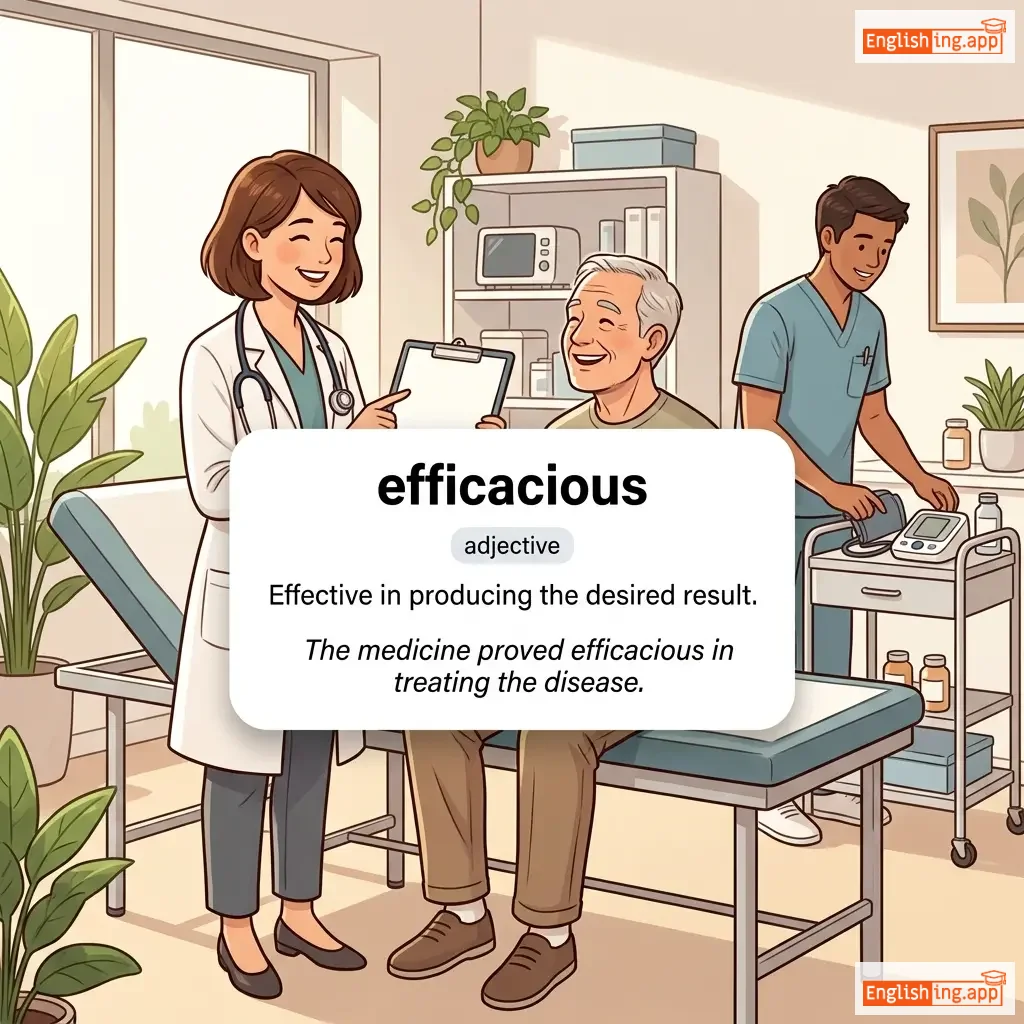
/ˌef.ɪˈkeɪ.ʃəs/
adjective
(エフィカシアス)
••••••
|
|
効果的, 有効, 成功した
kōkateki, yūkō, seikō shita
••••••
|
Successful in producing a desired or intended result; effective.
••••••
|
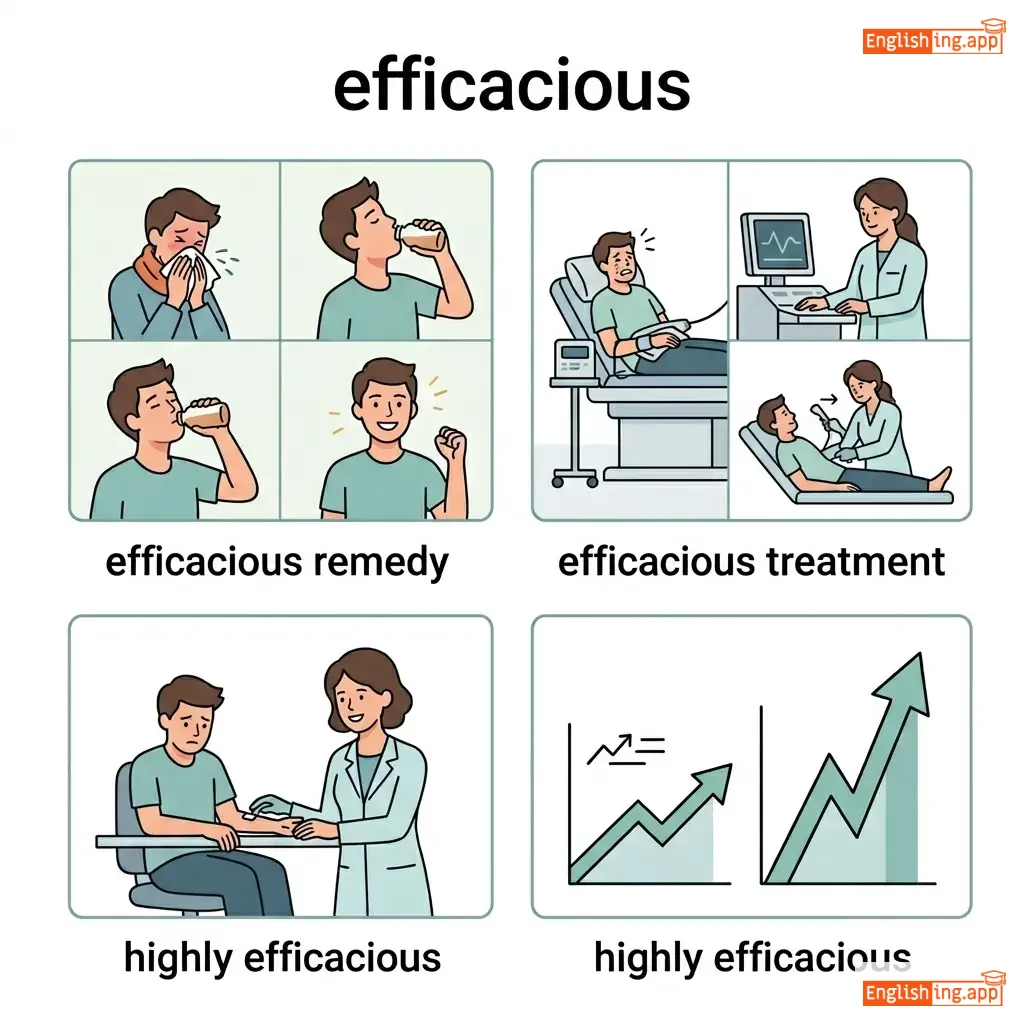
The new vaccine proved to be highly efficacious. |
新しいワクチンは非常に効果的であることが証明されました。
Atarashī wakuchin wa hijō ni kōkateki de aru koto ga shōmei sa remashita.
••••••
|
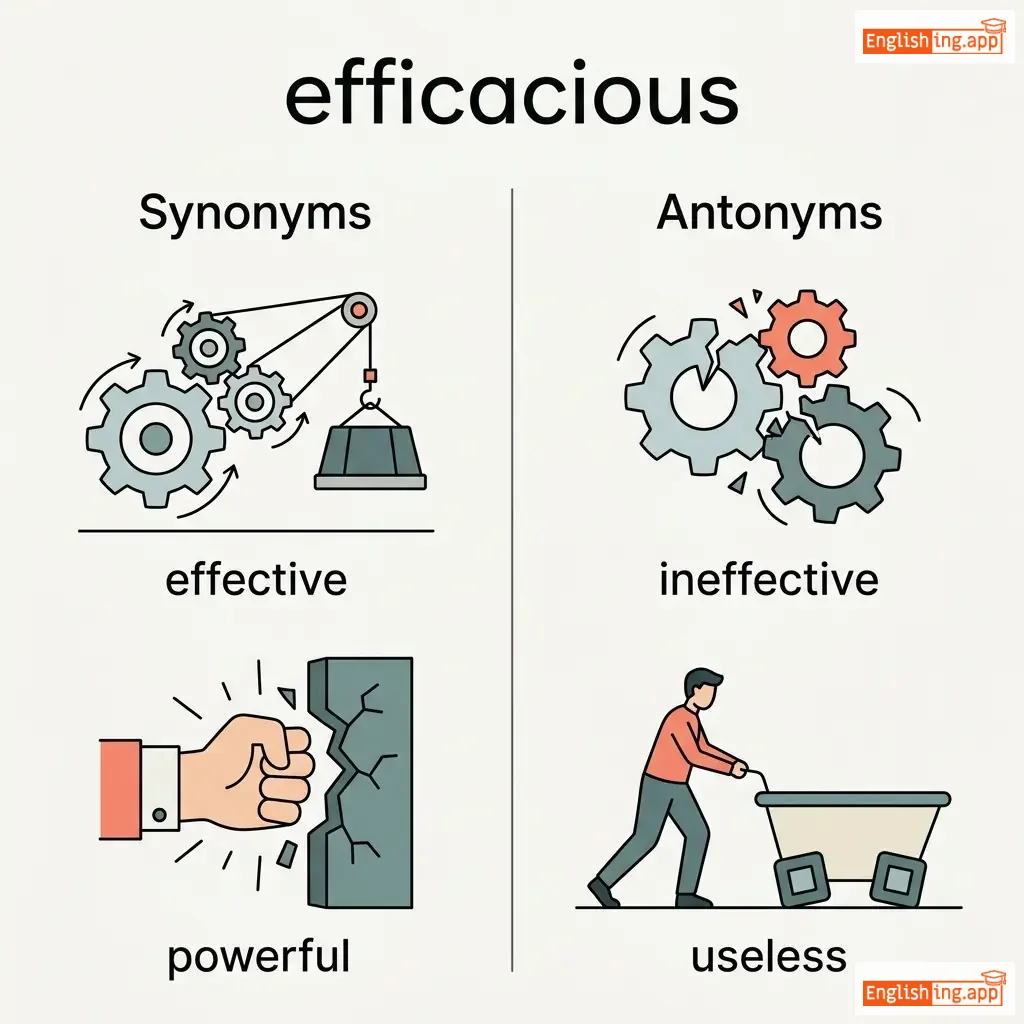
effective, successful, productive
••••••
|
ineffective, useless, inefficient
••••••
|
No •••••• |
|
#3003
⭐
|
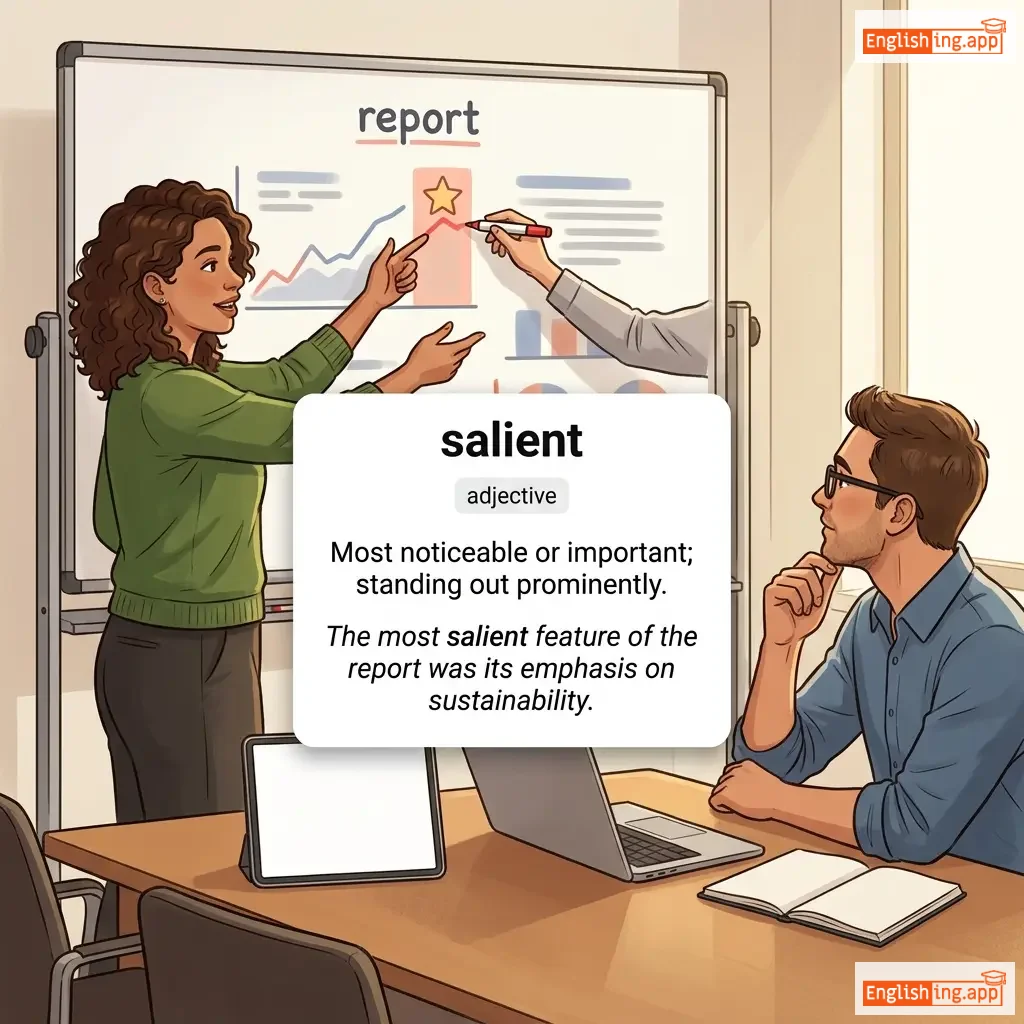
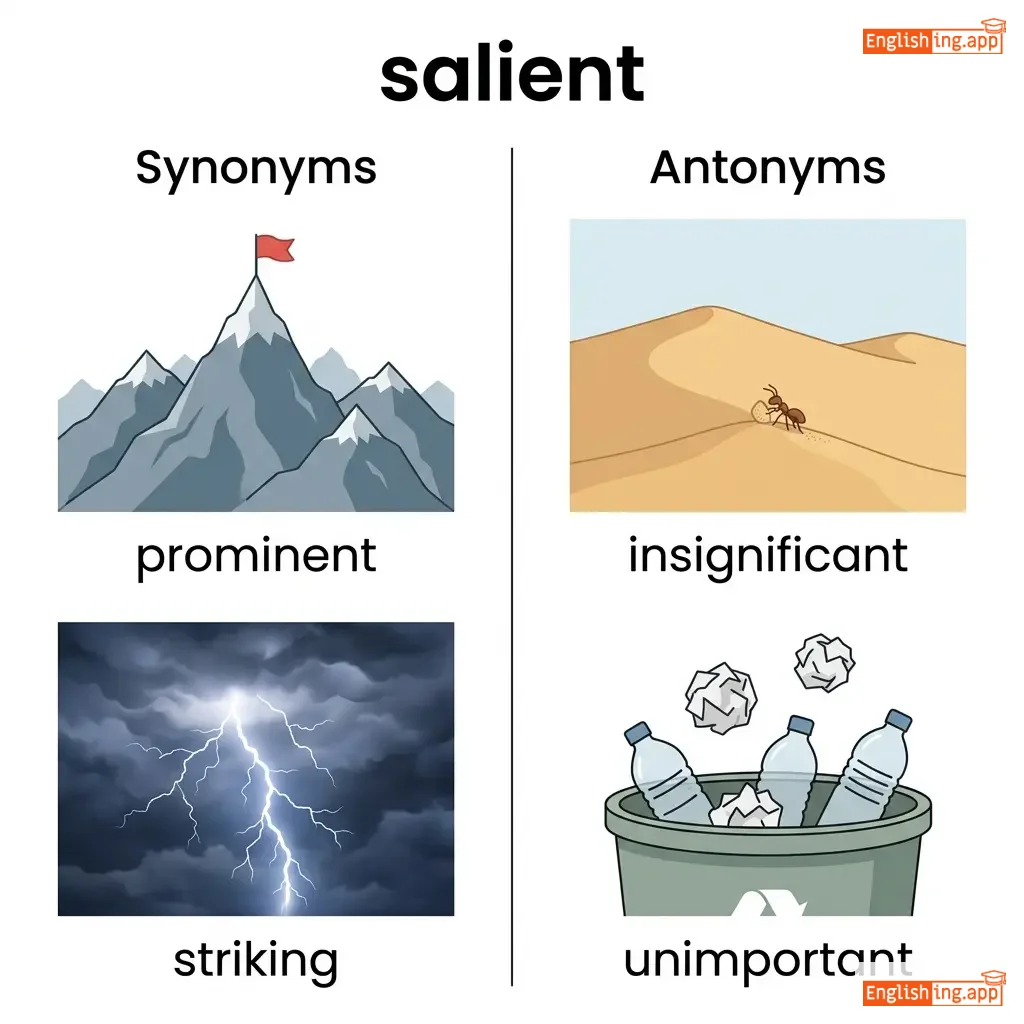
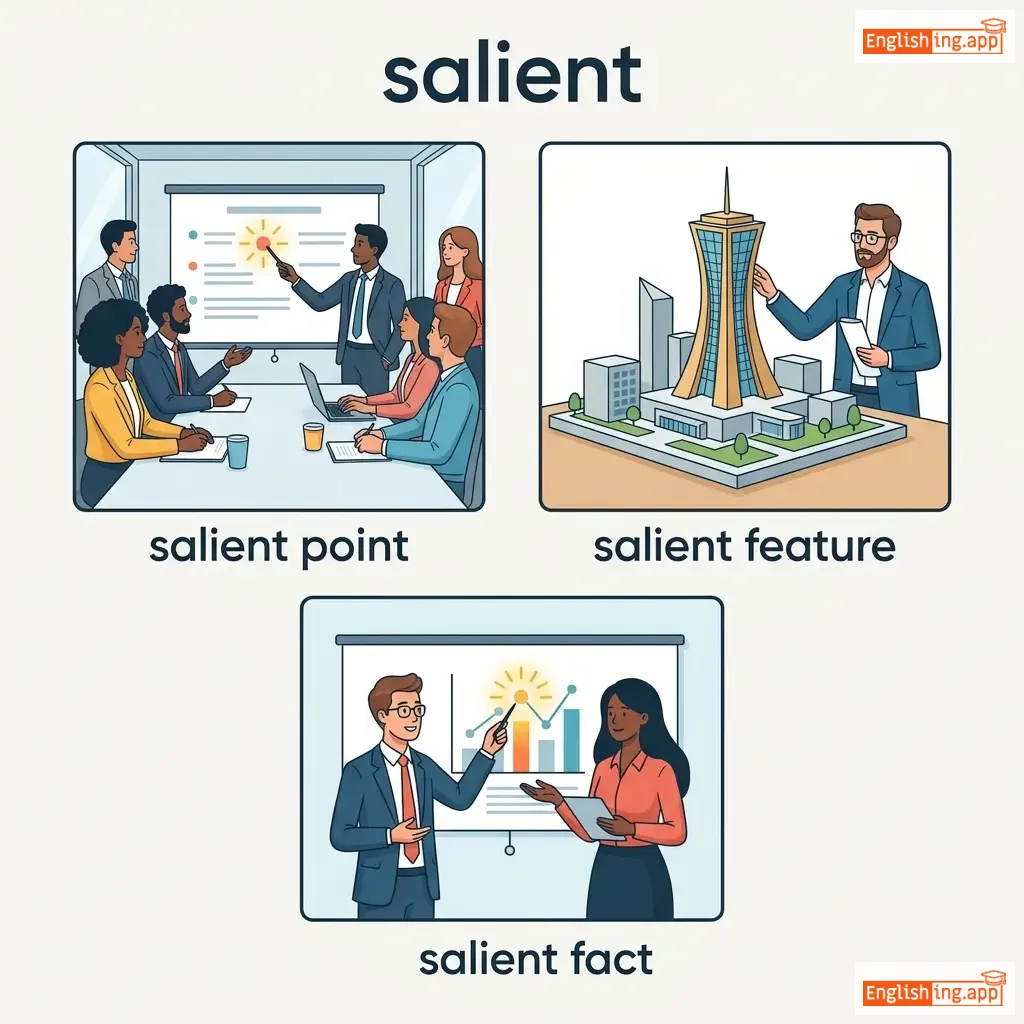
/ˈseɪ.li.ənt/
adjective
(セイリアント)
••••••
|
|
重要な、顕著な、目立つ
juuyou na, kenchou na, medatsu
••••••
|
Most noticeable or important.
••••••
|
The salient points of the speech were well received. |
スピーチの重要な点はよく受け入れられました。
Supīchi no jūyōna ten wa yoku ukeirare mashita.
••••••
|
notable, prominent, essential
••••••
|
insignificant, unimportant, minor
••••••
|
セイリアントの意味は目立つ、重要、鮮やかです。
••••••
|
|
#3004
🎯
|
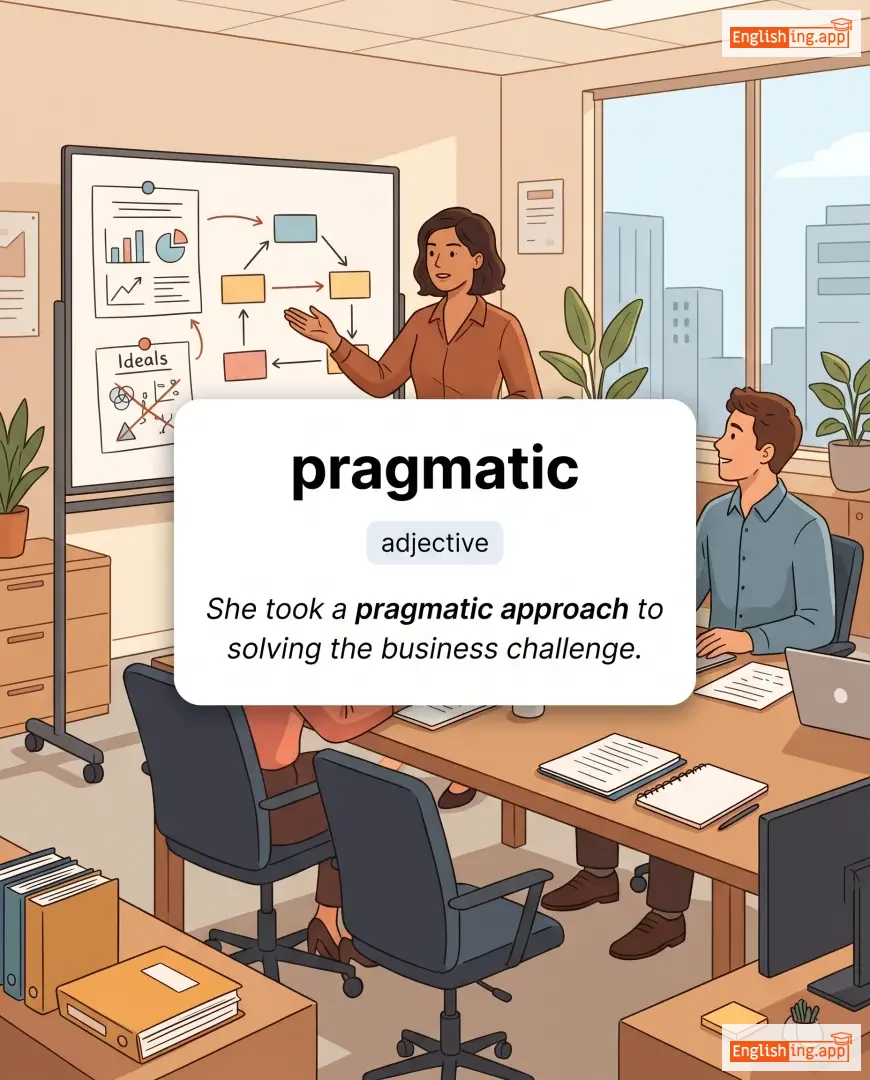
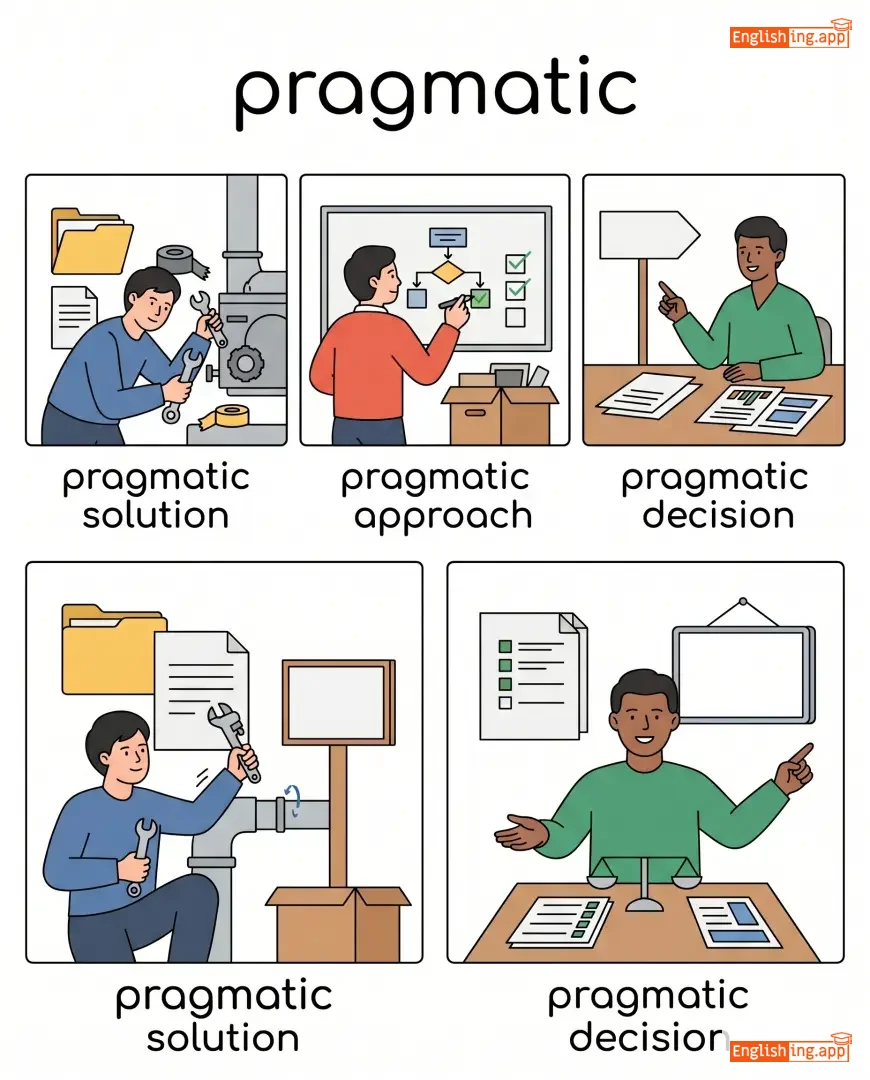
/præɡˈmæt̬.ɪk/
adjective
(プラグマティック)
••••••
|
|
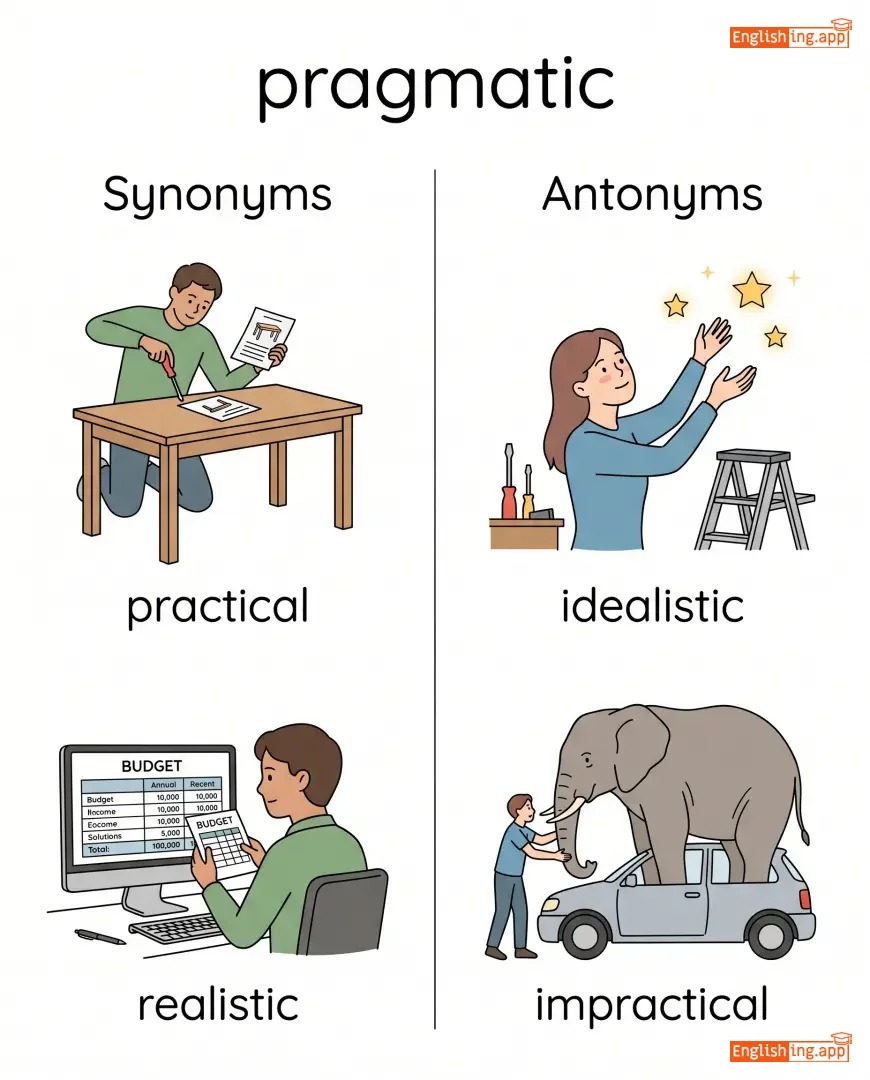
実用的, 現実的, 実務的
jitsuyoteki, genjitsuteki, jitsumuteki
••••••
|
Dealing with things sensibly and realistically in a way that is based on practical rather than idealistic considerations.
••••••
|
His pragmatic approach solved the problem. |
彼の実用的なアプローチは問題を解決しました。
Kare no jitsuyō-teki na apurōchi wa mondai o kaiketsu shimashita.
••••••
|
practical, realistic, sensible
••••••
|
idealistic, impractical, theoretical
••••••
|
実用的な方法が問題解決を導く。
••••••
|
|
#3005
❓
|
/kəˈnʌn.drəm/
noun
(カナンドラム)
••••••
|
|
複雑な問題
fukuzatsu na mondai
••••••
|
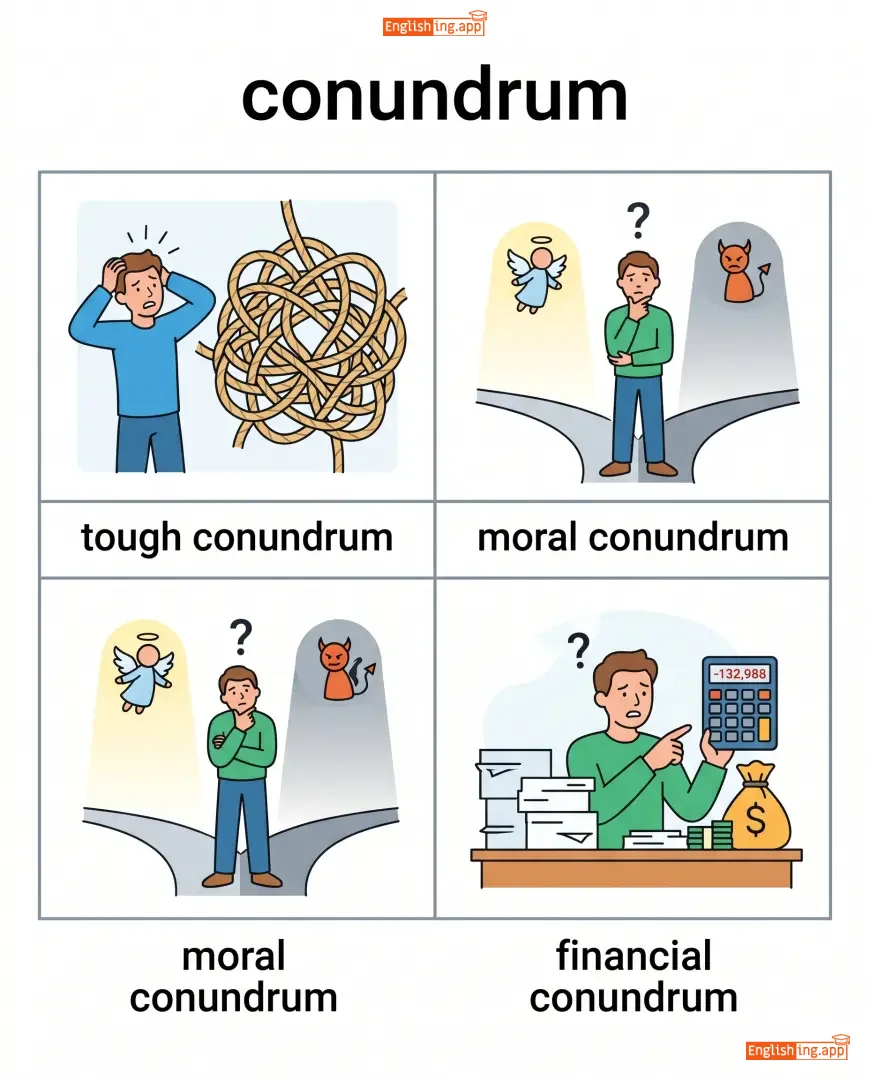
A confusing and difficult problem or question.
••••••
|
The budget deficit remains a conundrum. |
予算の赤字は依然として複雑な問題です。
Yosan no akaji wa izen to shite fukuzatsu na mondai desu.
••••••
|
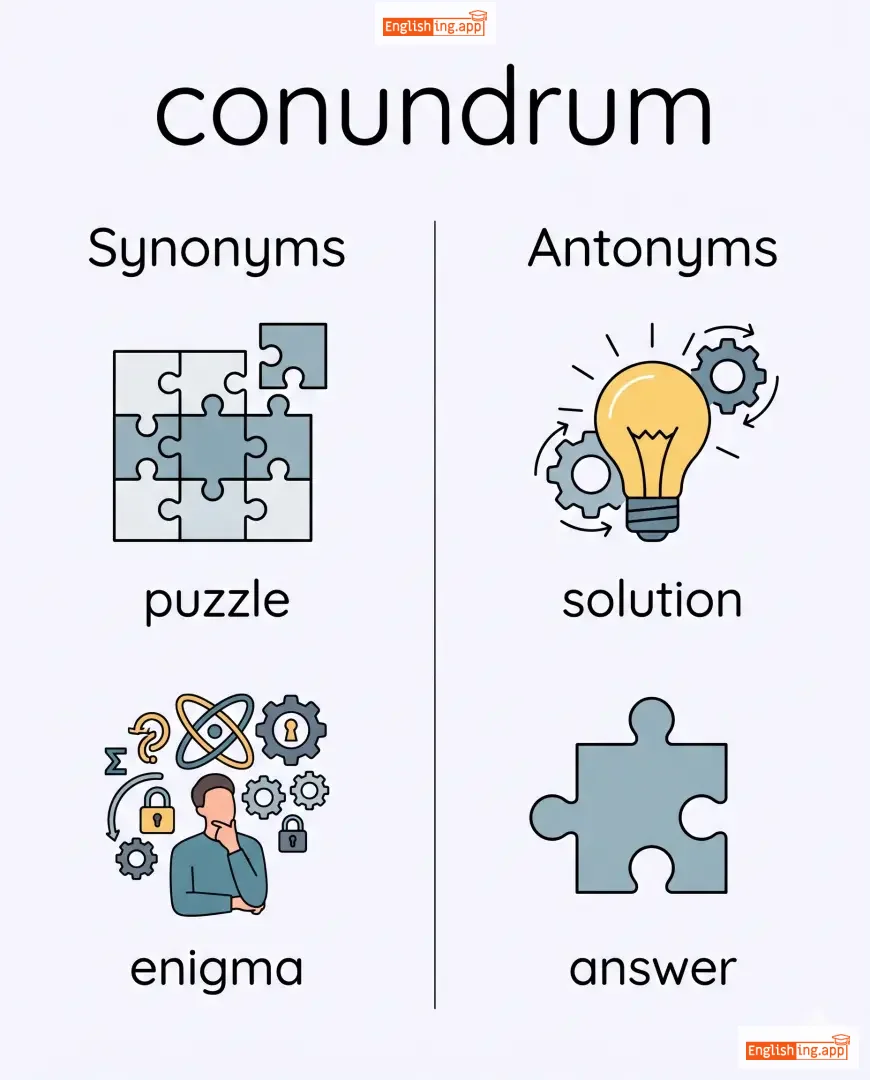
dilemma, puzzle, enigma
••••••
|
solution, clarity, certainty
••••••
|
複雑な問題、解決方法が見つからないのはまさに conundrum だ!
••••••
|
|
#3006
🚫
|
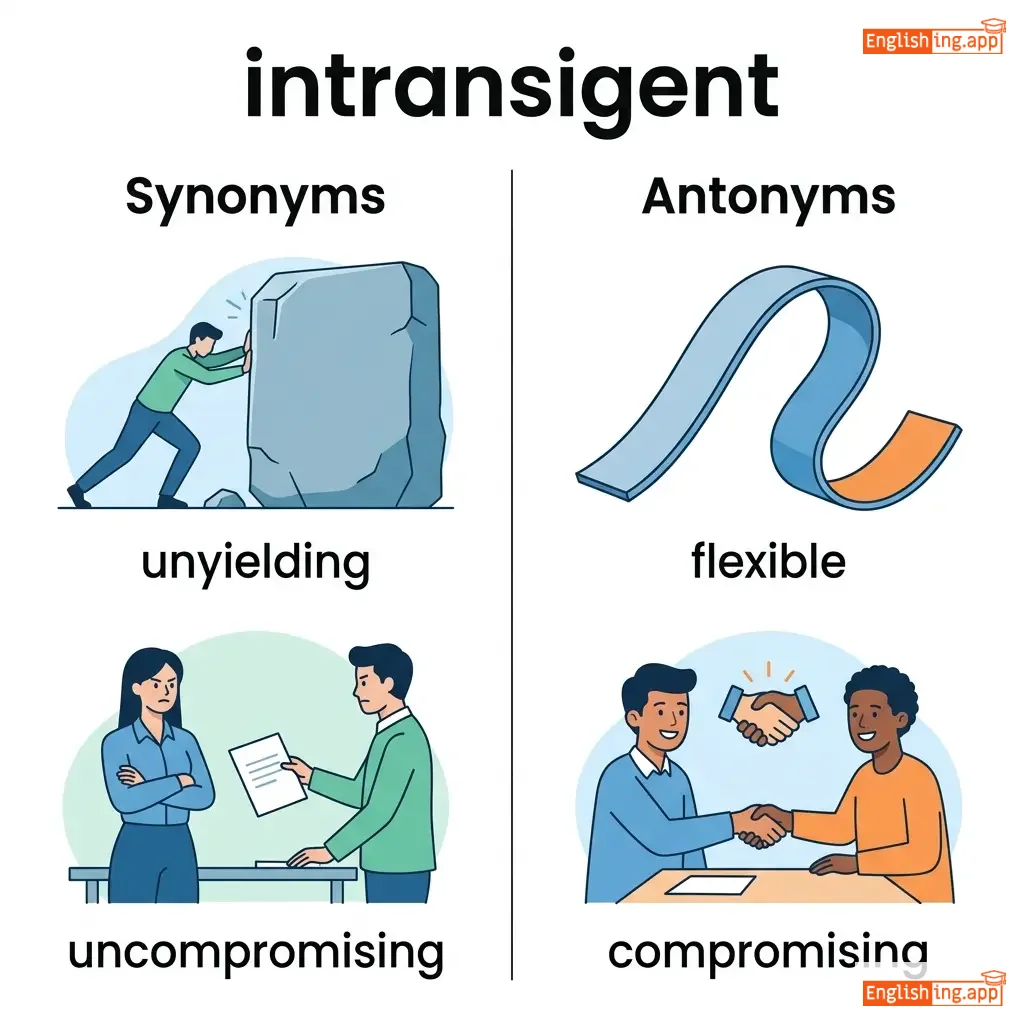
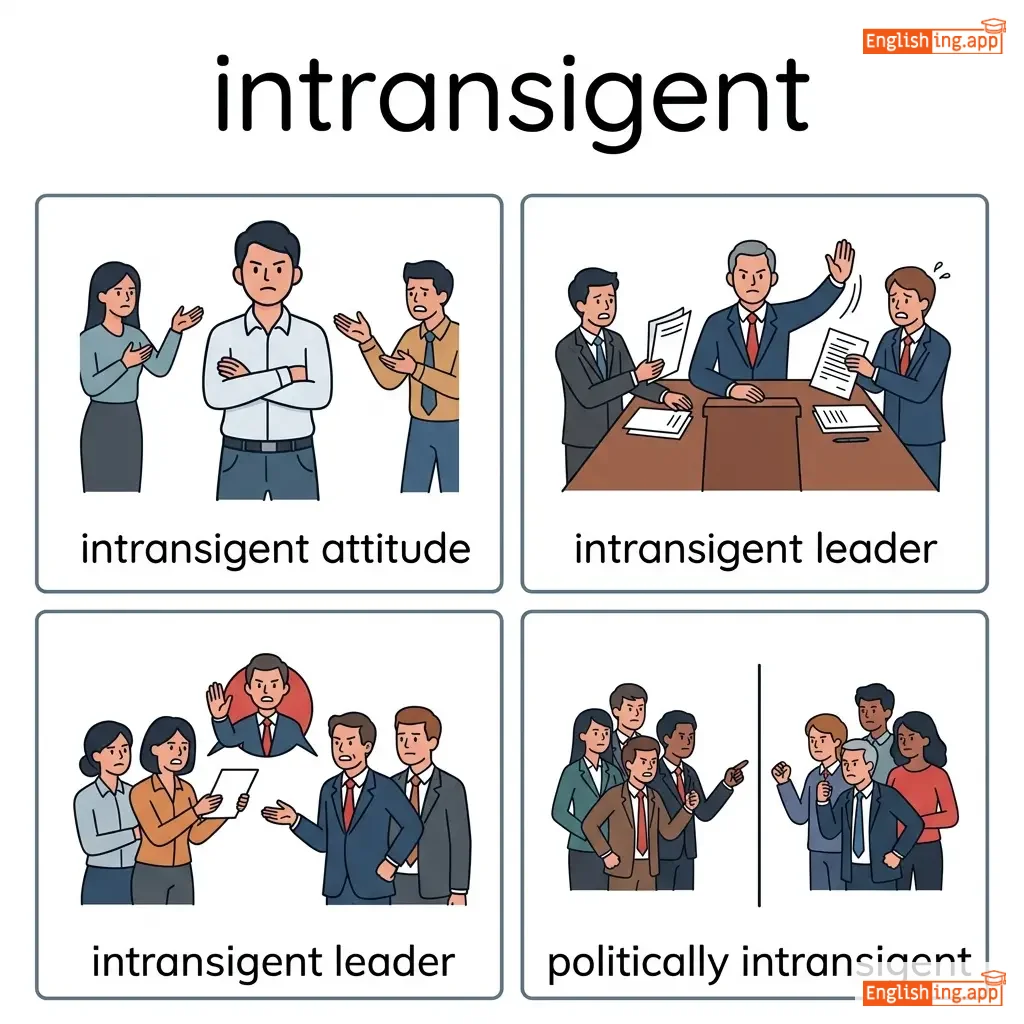
/ɪnˈtræn.sɪ.dʒənt/
adjective
(イントランジジェント)
••••••
|
|
頑固な, 譲らない, 固執した
ganko na, yuzuranai, kocchishita
••••••
|
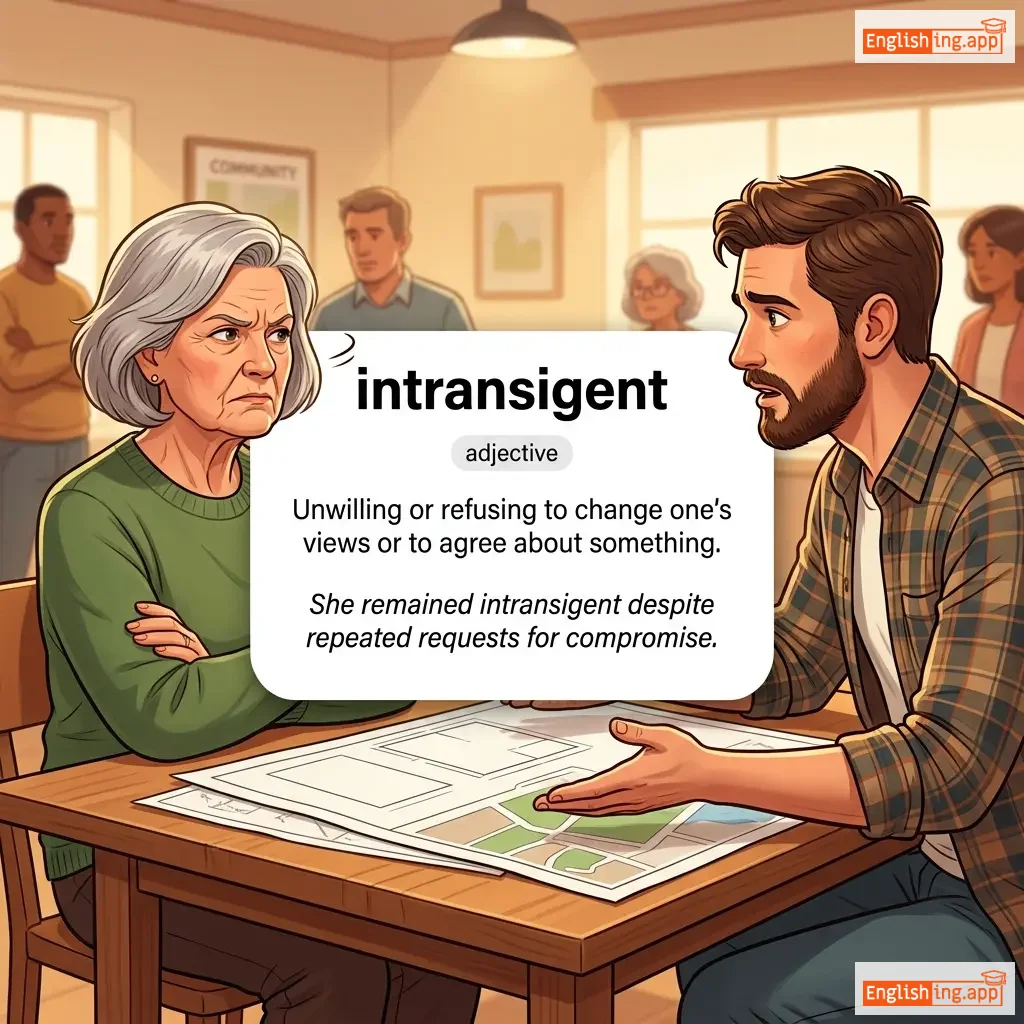
Unwilling or refusing to change one's views or to agree about something.
••••••
|
His intransigent stance delayed the agreement. |
彼の頑固な態度が合意を遅らせました。
Kare no ganko na taido ga goui wo okurasemashita.
••••••
|
stubborn, unyielding, adamant
••••••
|
flexible, compliant, agreeable
••••••
|
Think of 'ganko' as stubborn, perfect for remembering intransigent in Japanese.
••••••
|
|
#3007
🌙
|
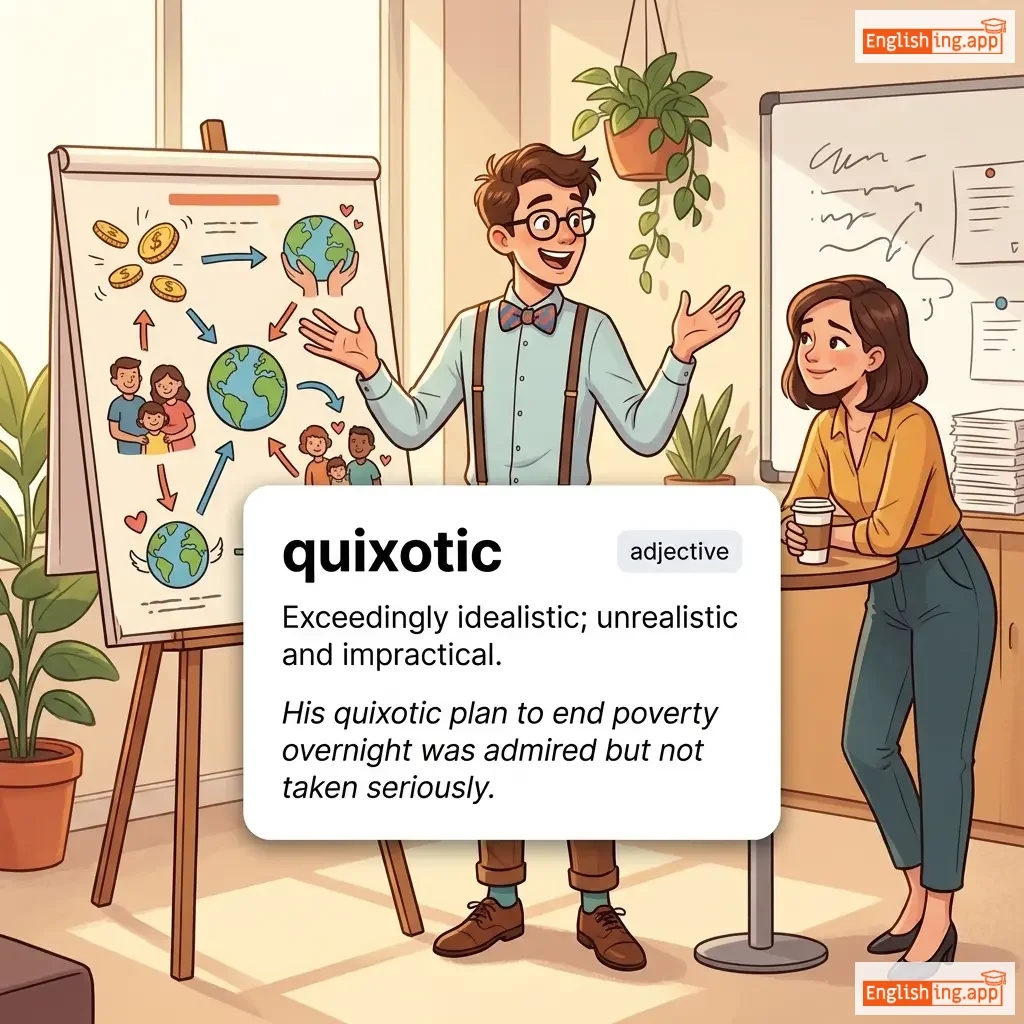
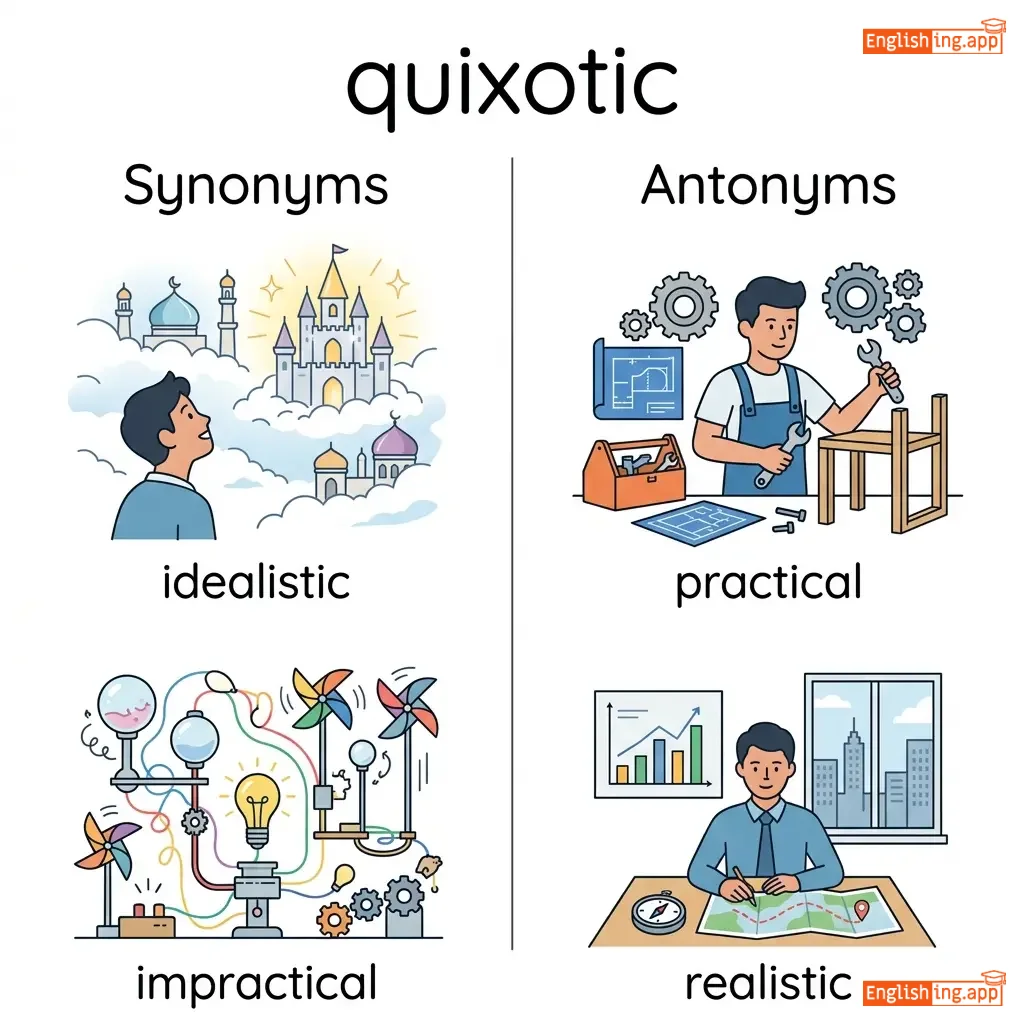
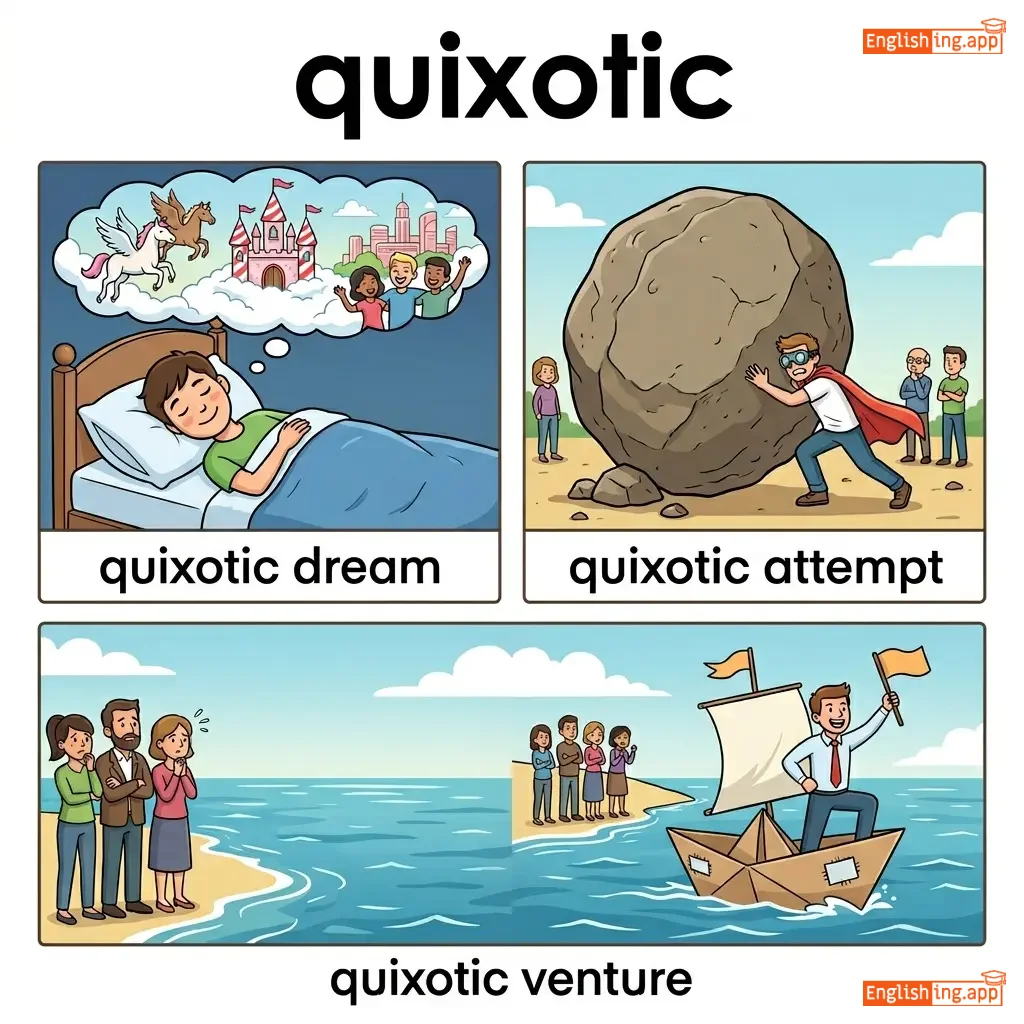
/kwɪkˈsɑː.t̬ɪk/
adjective
(クイックスオティック)
••••••
|
|
非常に理想主義的で非現実的な、非実用的な
hijou ni risou shugi teki de hi genjitsuteki na, hi jitsuyou teki na
••••••
|
Extremely idealistic, unrealistic, and impractical.
••••••
|
His quixotic dreams often led to disappointment. |
彼の非現実的な夢はしばしば失望につながった。
Kare no hi genjitsuteki na yume wa shibashiba shitsubou ni tsunagatta.
••••••
|
idealistic, impractical, unrealistic
••••••
|
practical, realistic, sensible
••••••
|
Quixotic dreams in Japanese often lead to falling short of reality.
••••••
|
|
#3008
🙅
|
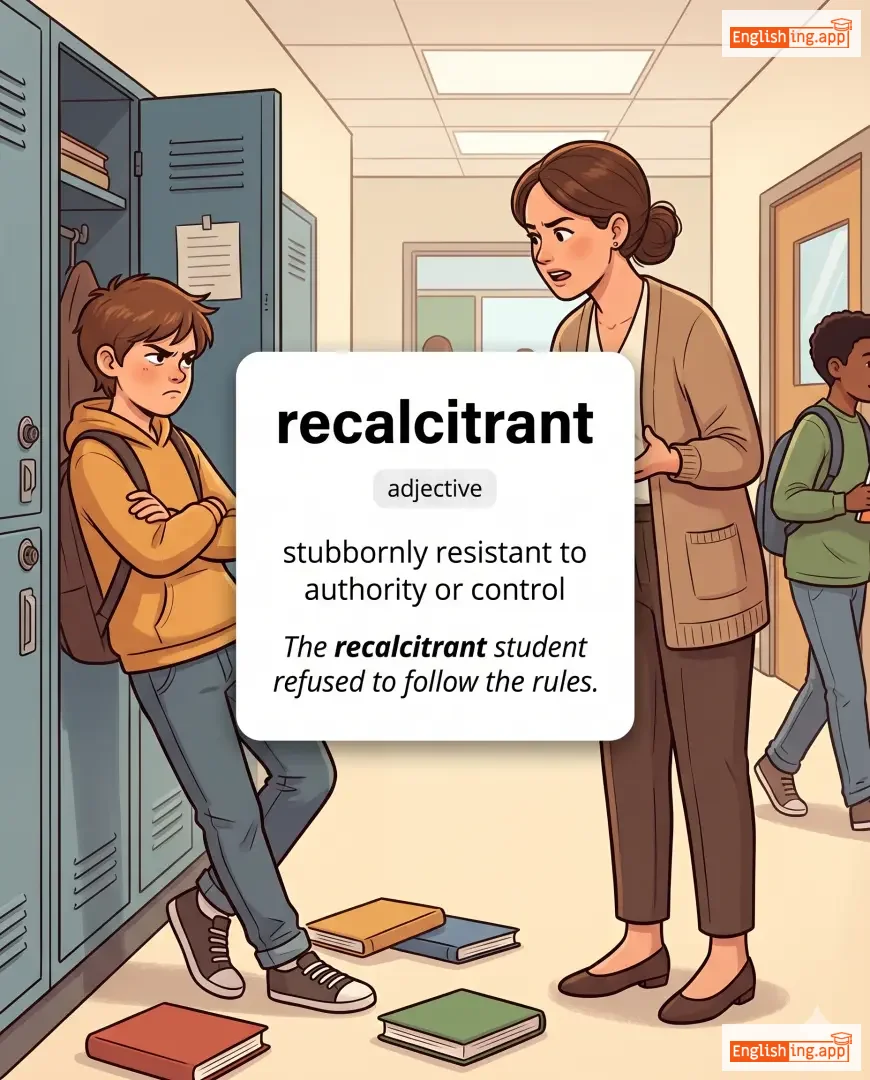
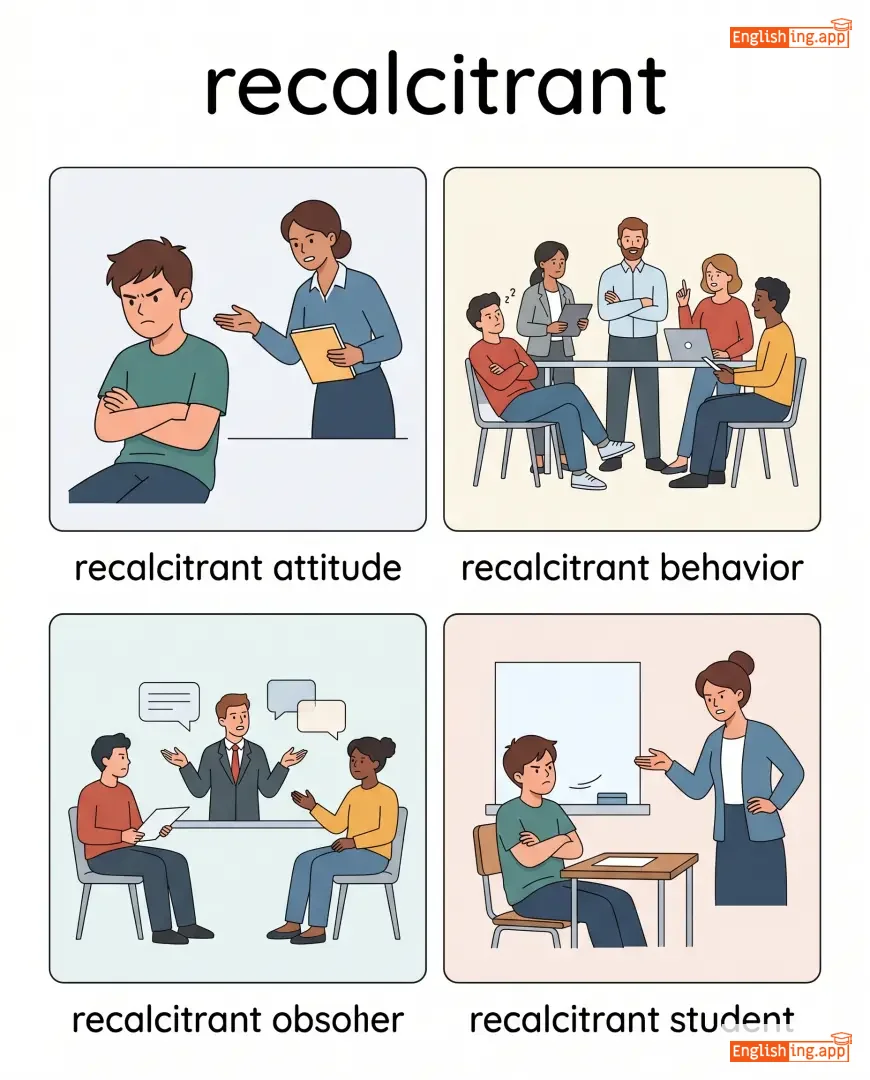
/rɪˈkæl.sɪ.trənt/
adjective
(rikar-sitrannt)
••••••
|
|
反抗的, 頑固な, 服従しない
hankō-teki, ganko na, fukujū shinai
••••••
|
Having an obstinately uncooperative attitude toward authority or discipline.
••••••
|
The recalcitrant student refused to follow rules. |
反抗的な学生は規則に従うことを拒否した。
Hankō-teki na gakusei wa kisoku ni shitagau koto o kyohi shita.
••••••
|
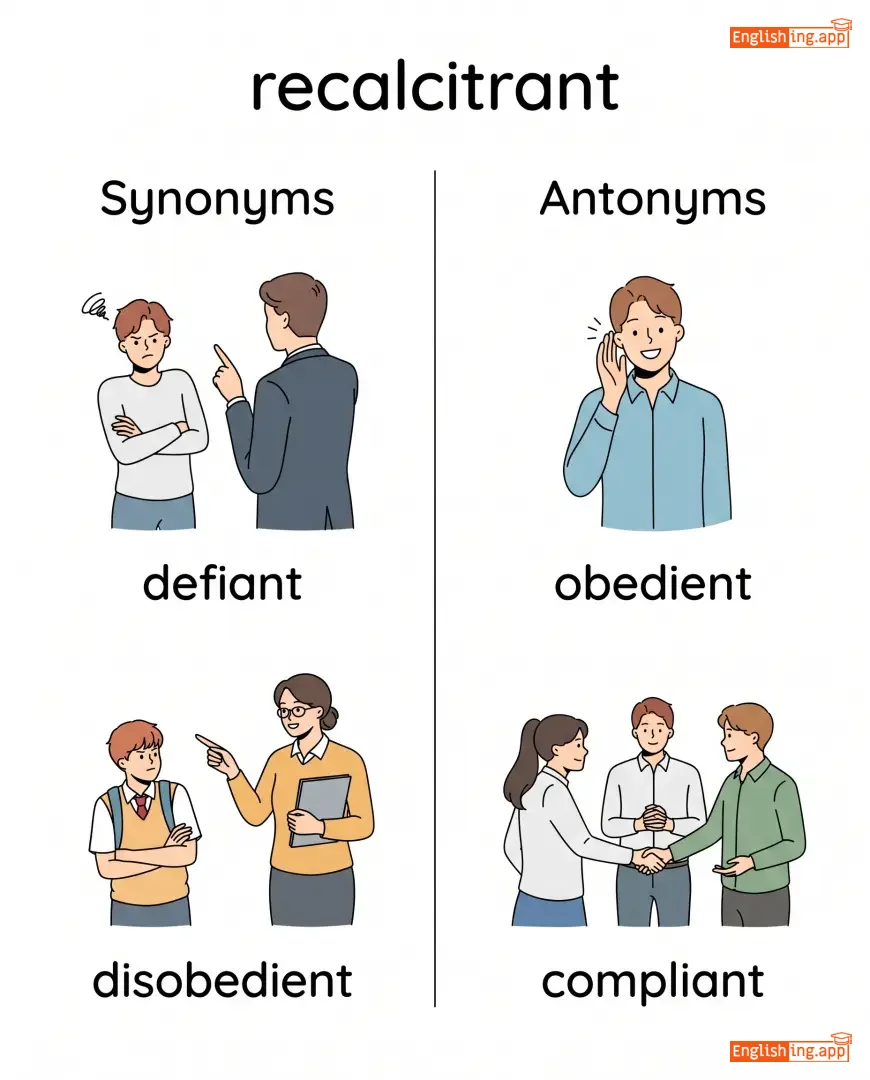
defiant, stubborn, uncooperative
••••••
|
obedient, compliant, submissive
••••••
|
規則に従うことを拒否する反抗的な学生。
••••••
|
|
#3009
👌
|
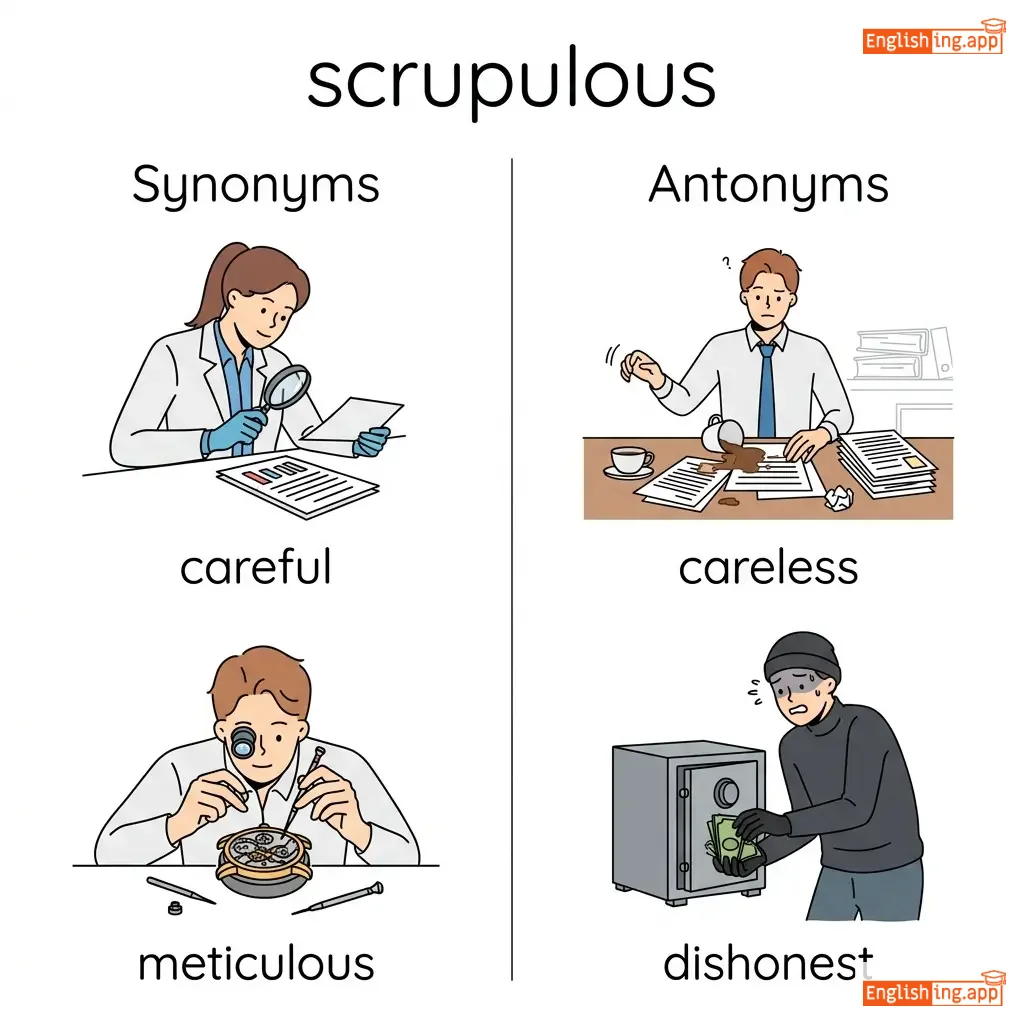
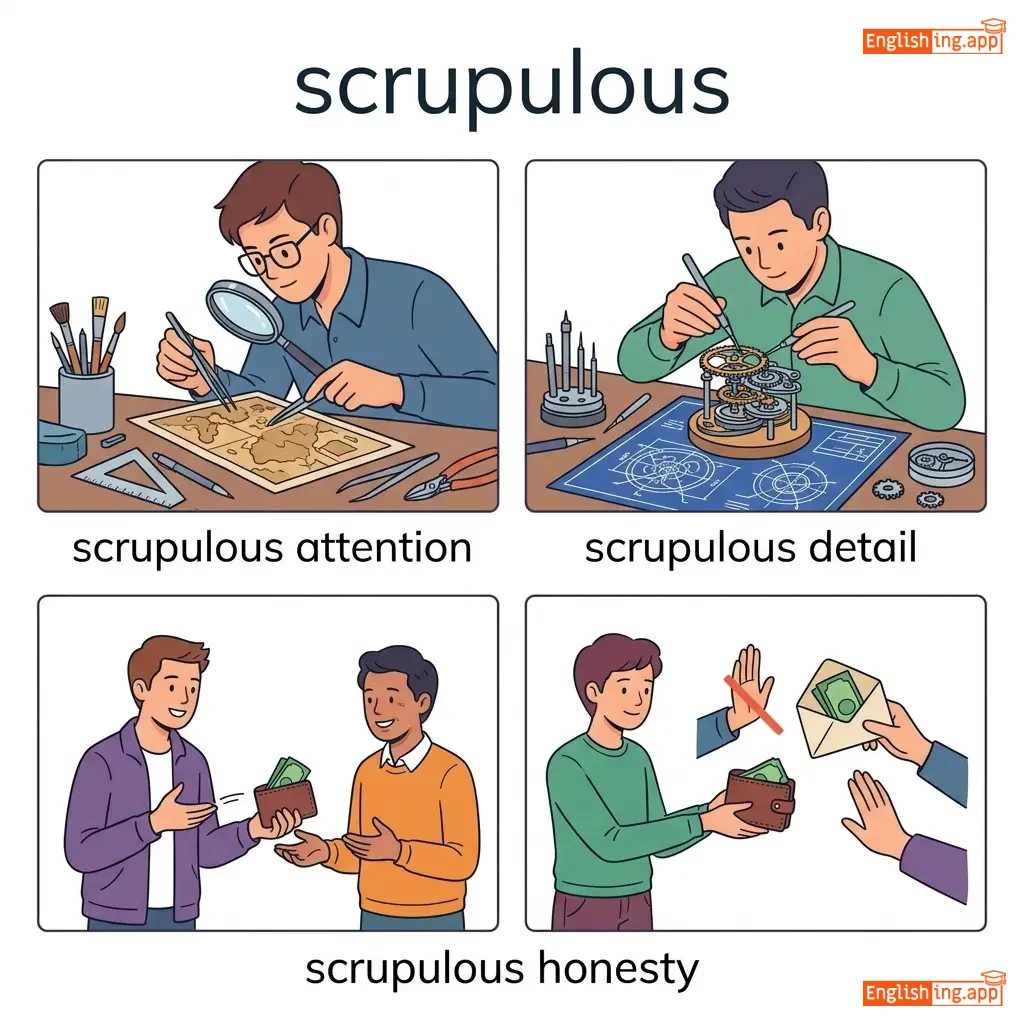
/ˈskruː.pjə.ləs/
adjective
(スクルプラス)
••••••
|
|
細心の注意を払う, 倫理的で, 極めて詳細に注意を払う
saishin no chuui o harau, rinriteki de, kyokumete shousai ni chuui o harau
••••••
|
Diligent, thorough, and extremely attentive to details.
••••••
|
He was scrupulous in his financial dealings.
彼は彼の財務取引において非常に慎重だった。
••••••
|
彼は彼の財務取引において非常に慎重だった。
Kare wa kare no zaimu torihiki ni oite hijou ni shinchou datta.
••••••
|
honest, conscientious, meticulous
••••••
|
dishonest, careless, negligent
••••••
|
一つ一つの細かいことに慎重に取り組む
••••••
|
|
#3010
🤝
|
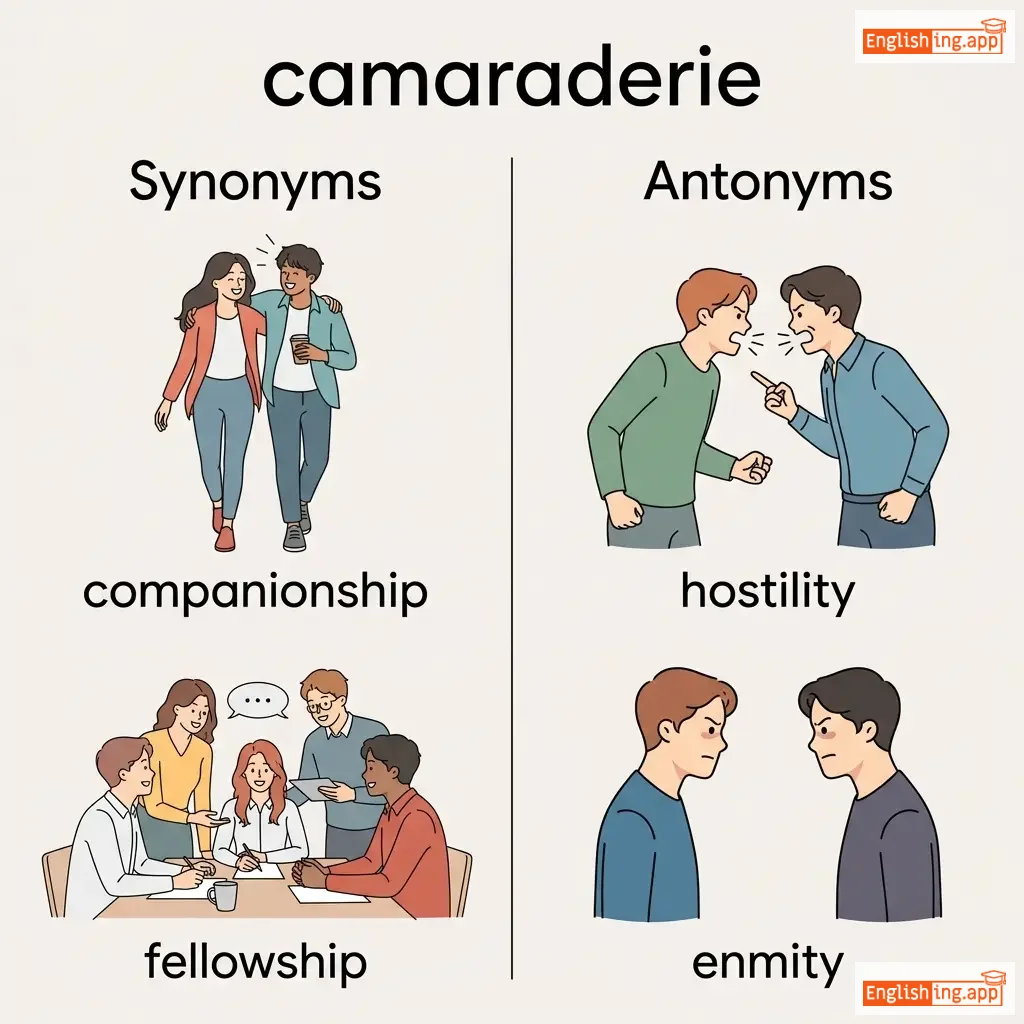
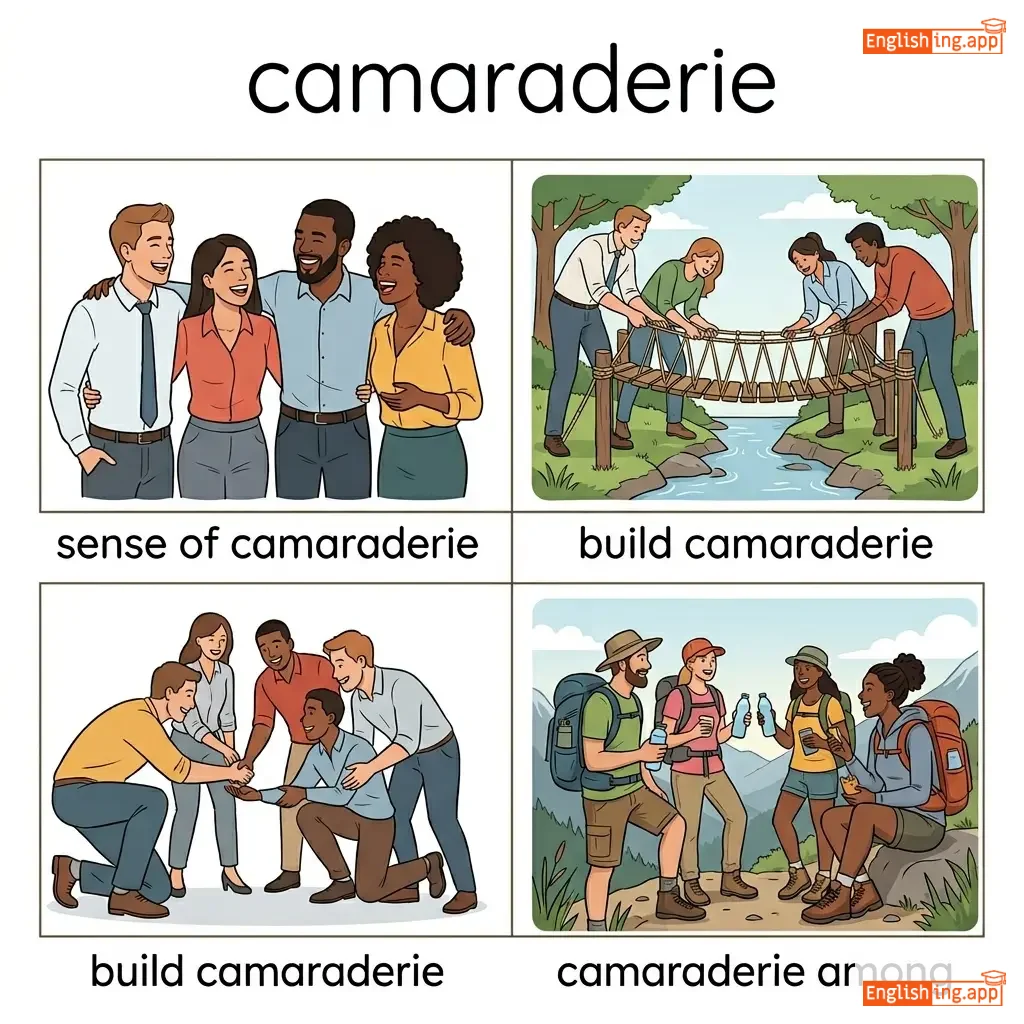
/ˌkæm.əˈrɑː.dɚ.i/
noun
(カマラデリー)
••••••
|
|
仲間意識, 友情, 連帯感
nakama ishiki, yuujou, rentaikan
••••••
|
Mutual trust and friendship among people who spend a lot of time together.
••••••
|
The camaraderie among teammates was inspiring.
チームメイト間の仲間意識は感動的でした。
••••••
|
チームメイト間の仲間意識は感動的でした。
Chiimu meito kan no nakama ishiki wa kandouteki deshita.
••••••
|
friendship, companionship, brotherhood
••••••
|
hostility, rivalry, enmity
••••••
|
Camaraderie は共に過ごした時間から生まれる絆です。
••••••
|
|
#3011
➡️
|
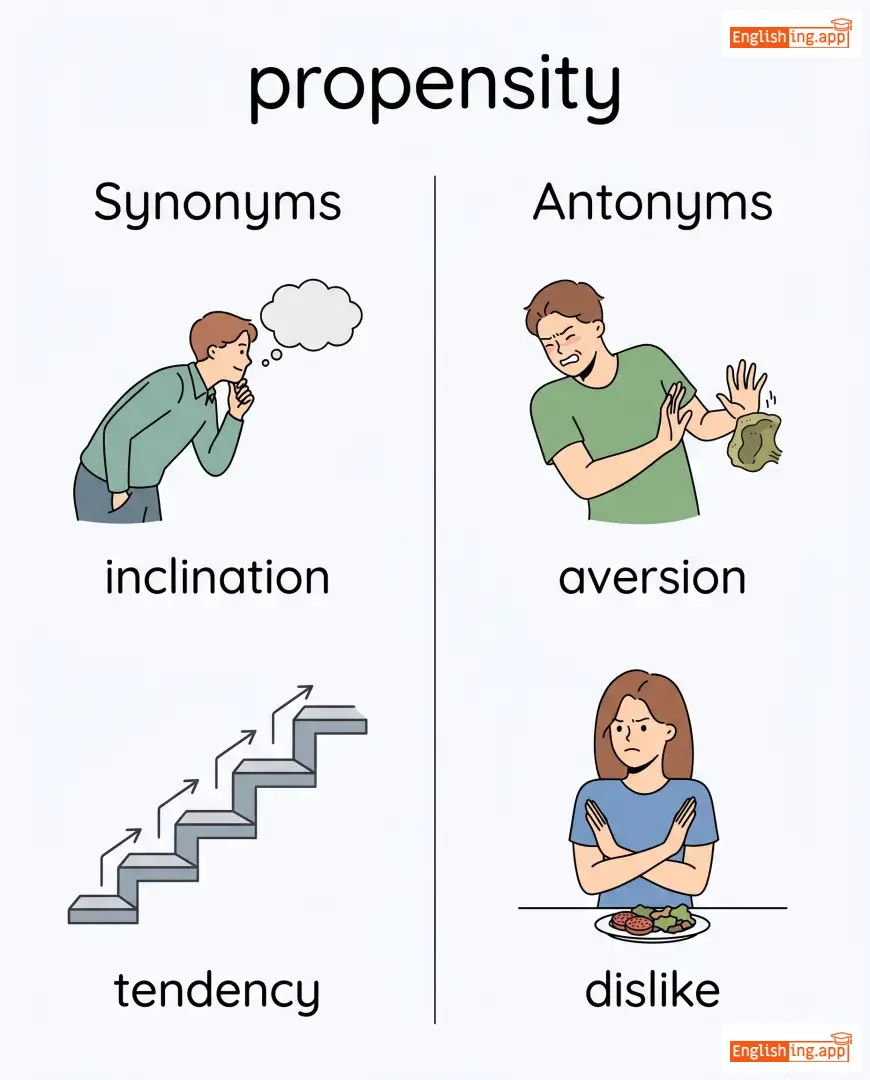
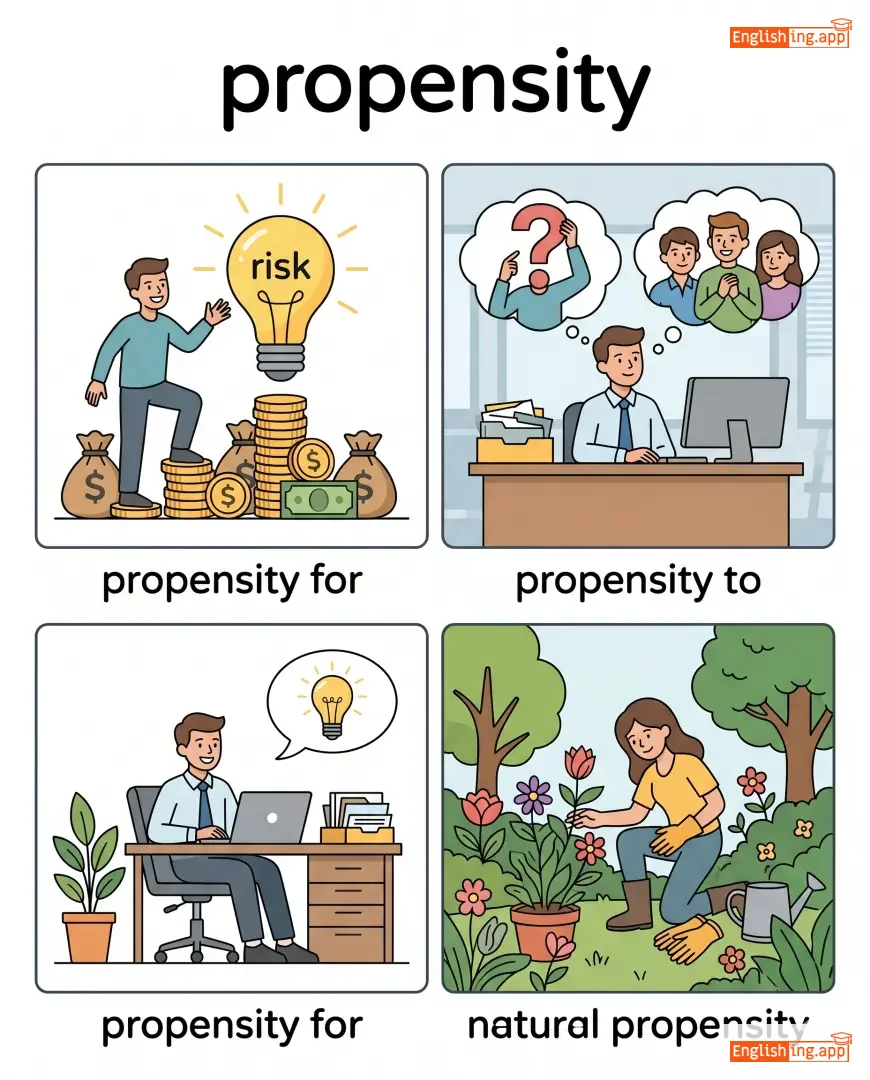
/prəˈpen.sə.t̬i/
noun
(プロペンシティ)
••••••
|
|
傾向、自然な傾向、性質
keikou, shizen na keikou, seishitsu
••••••
|
An inclination or natural tendency to behave in a particular way.
••••••
|
He has a propensity for taking risks. |
彼はリスクを取る傾向がある。
Kare wa risuku o toru keikou ga aru.
••••••
|
inclination, tendency, disposition
••••••
|
disinclination, aversion, reluctance
••••••
|
プロペンシティは、リスクを取るための自然な傾向
••••••
|
|
#3012
💫
|
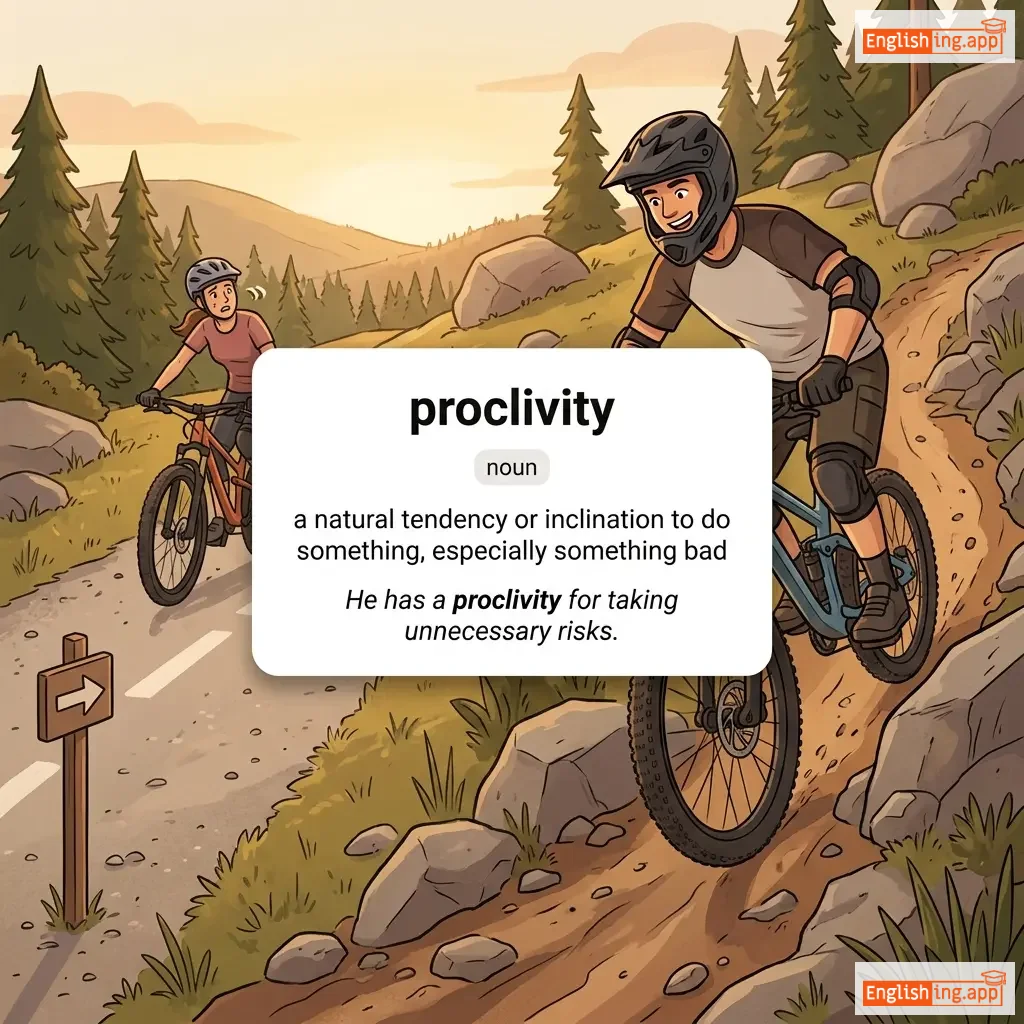
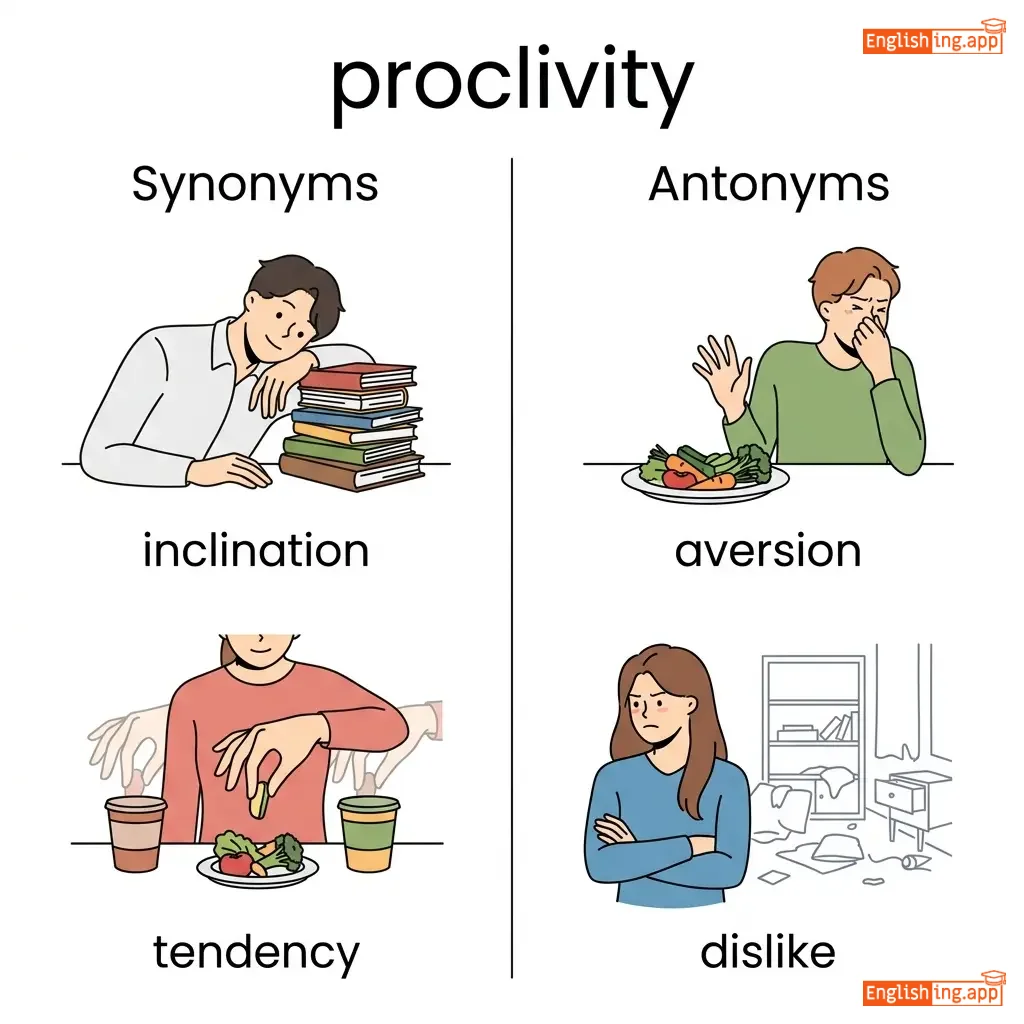
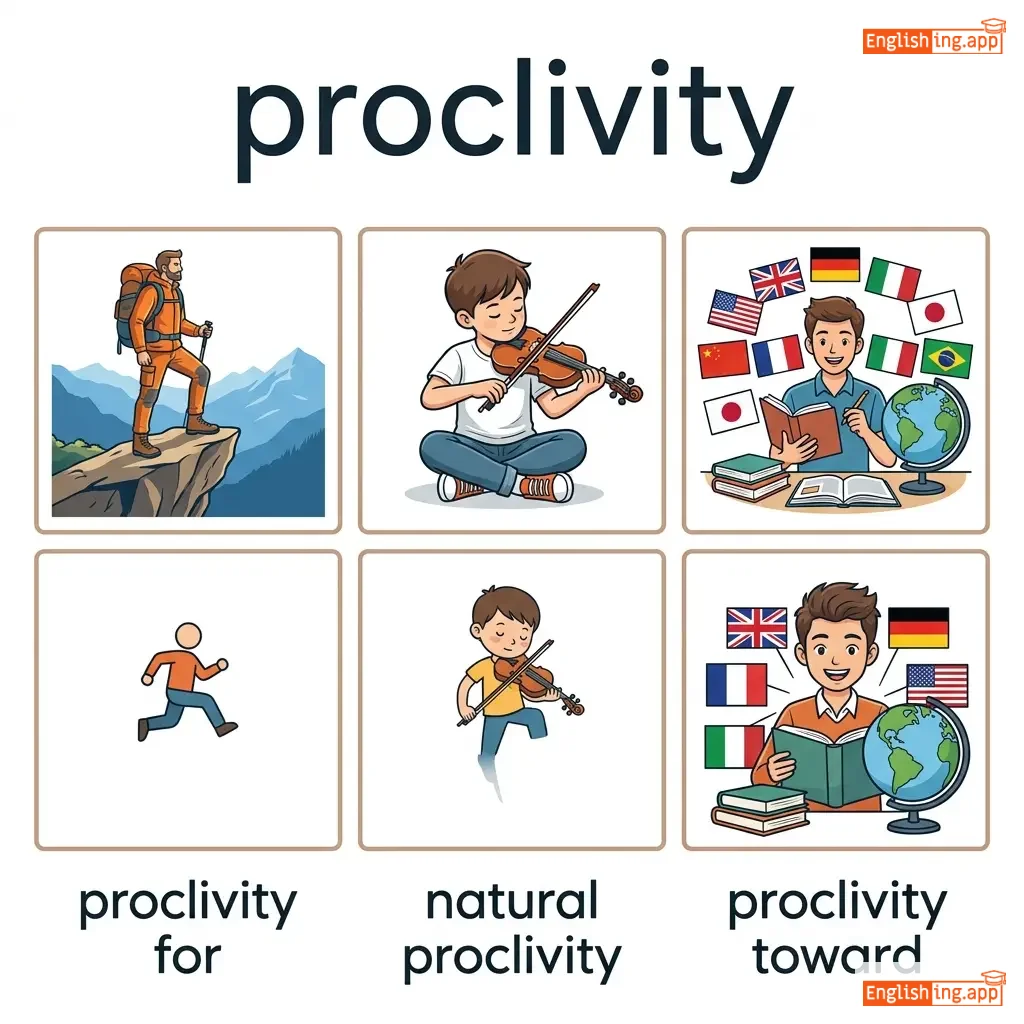
/prəˈklɪv.ə.t̬i/
noun
(プロクライビティ)
••••••
|
|
傾向、好み、嗜好
keikou, konomi, shikou
••••••
|
A tendency to choose or do something regularly; an inclination or predisposition toward a particular thing.
••••••
|
His proclivity for music is evident. |
彼の音楽に対する傾向は明らかです。
Kare no ongaku ni taisuru keikou wa akiraka desu.
••••••
|
inclination, affinity, penchant
••••••
|
aversion, dislike, indifference
••••••
|
音楽に向かう傾向は、自然に湧き上がるもののように、何かに引き寄せられる感覚を与える。
••••••
|
|
#3013
🌟
|
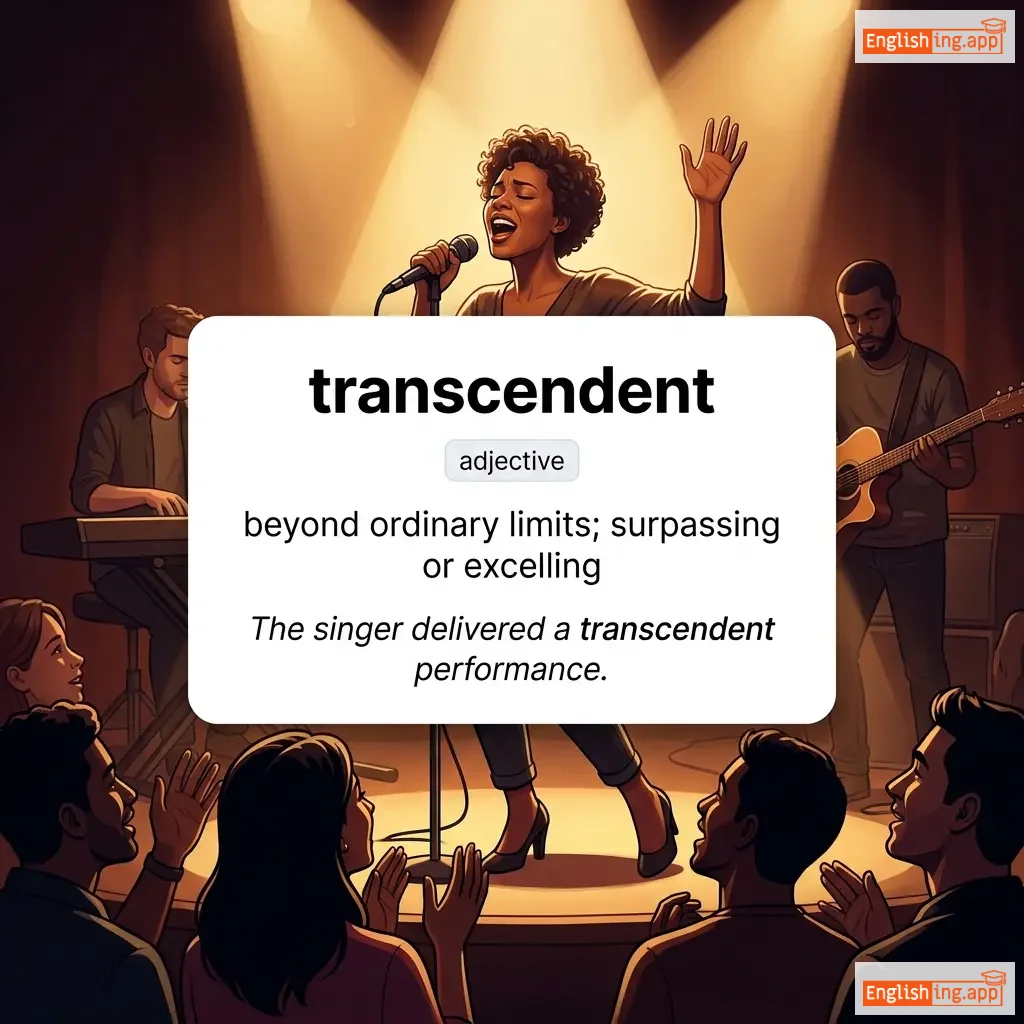
/trænˈsen.dənt/
adjective
(トランスセンダント)
••••••
|
|
通常のまたは単に物理的な人間の経験の範囲を超えている
tsuujou no matawa tan ni butsuriteki na ningen no keiken no han'i o koete iru
••••••
|
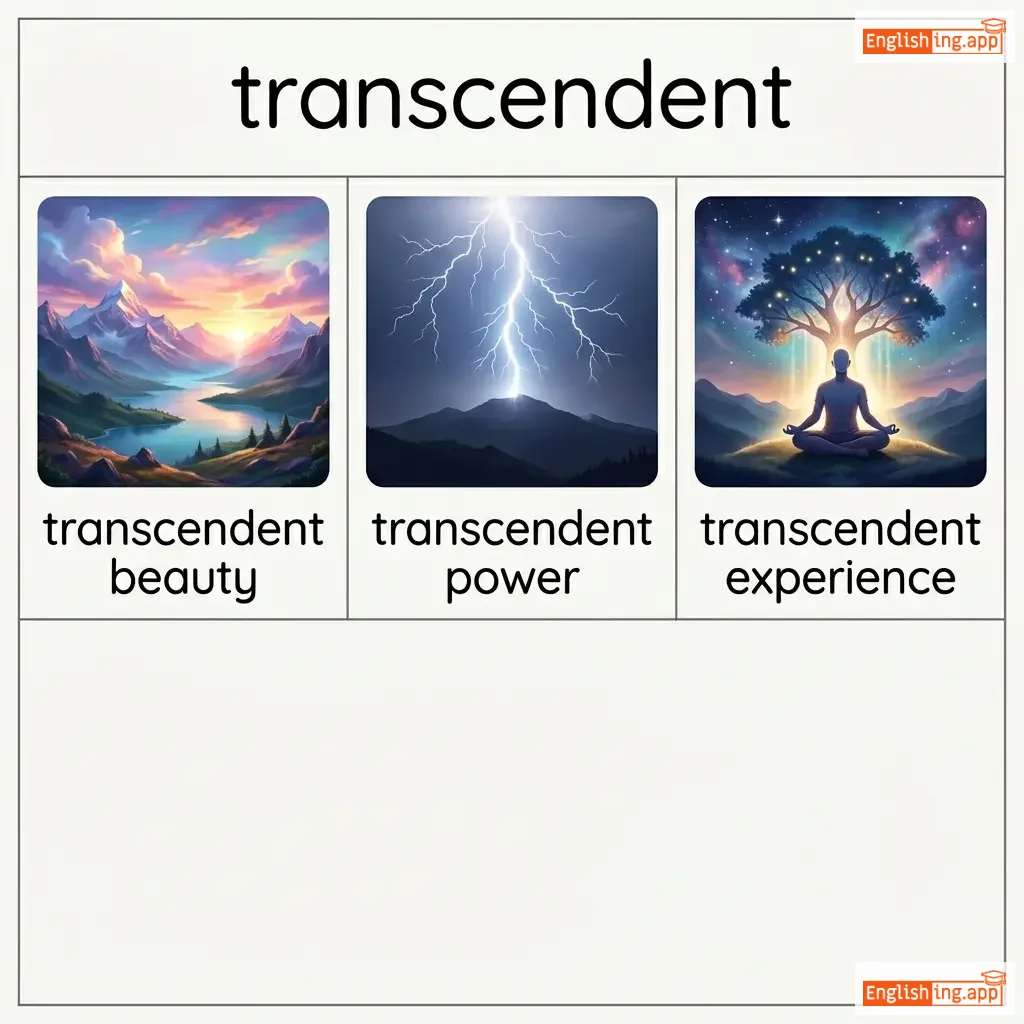
Beyond or above the range of normal or merely physical human experience.
••••••
|
His art has a transcendent quality. |
彼の芸術は超越的な品質を持っています。
Kare no geijutsu wa chōetsu-teki na hinshitsu o motteimasu.
••••••
|
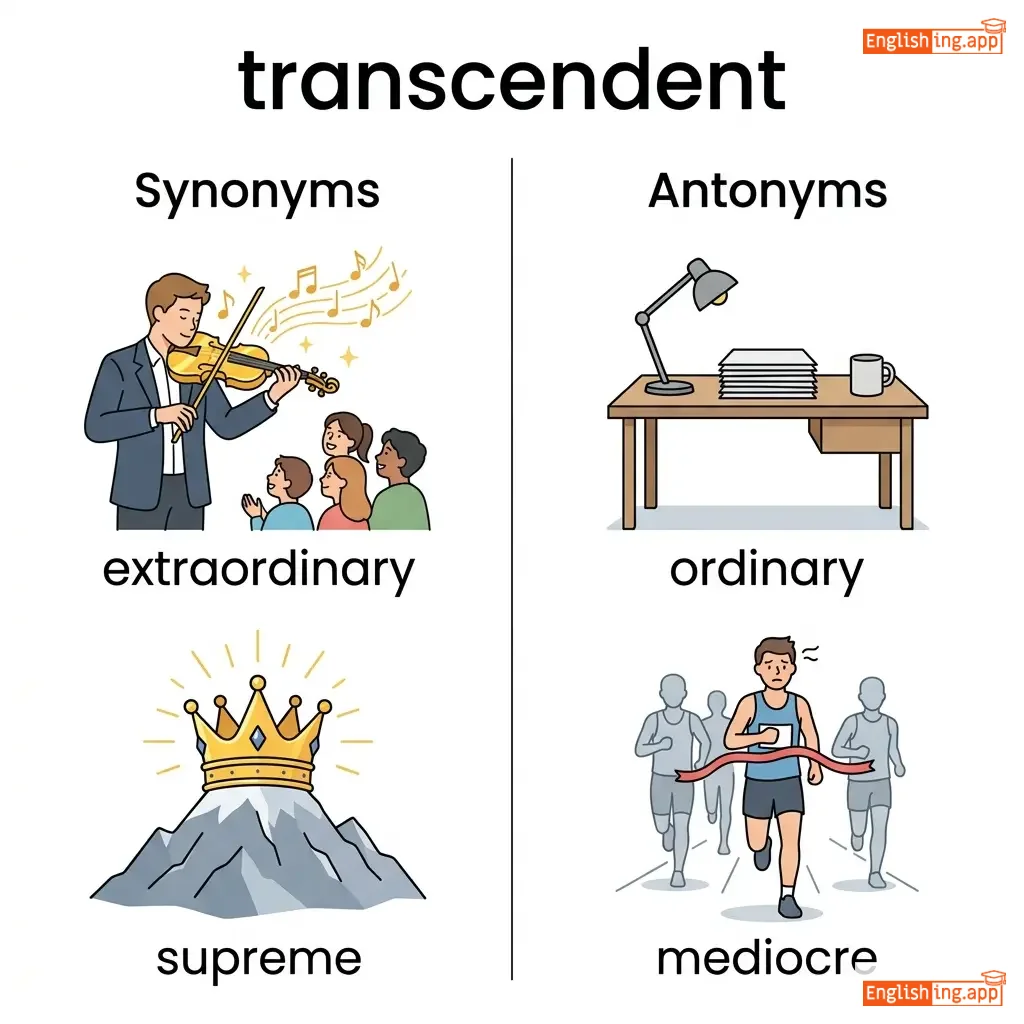
supreme, unparalleled, extraordinary
••••••
|
inferior, mediocre, ordinary
••••••
|
超越的 - 物理的な限界を超えた芸術のように。
••••••
|
|
#3014
🚀
|
/ʌnˈpres.ə.den.t̬ɪd/
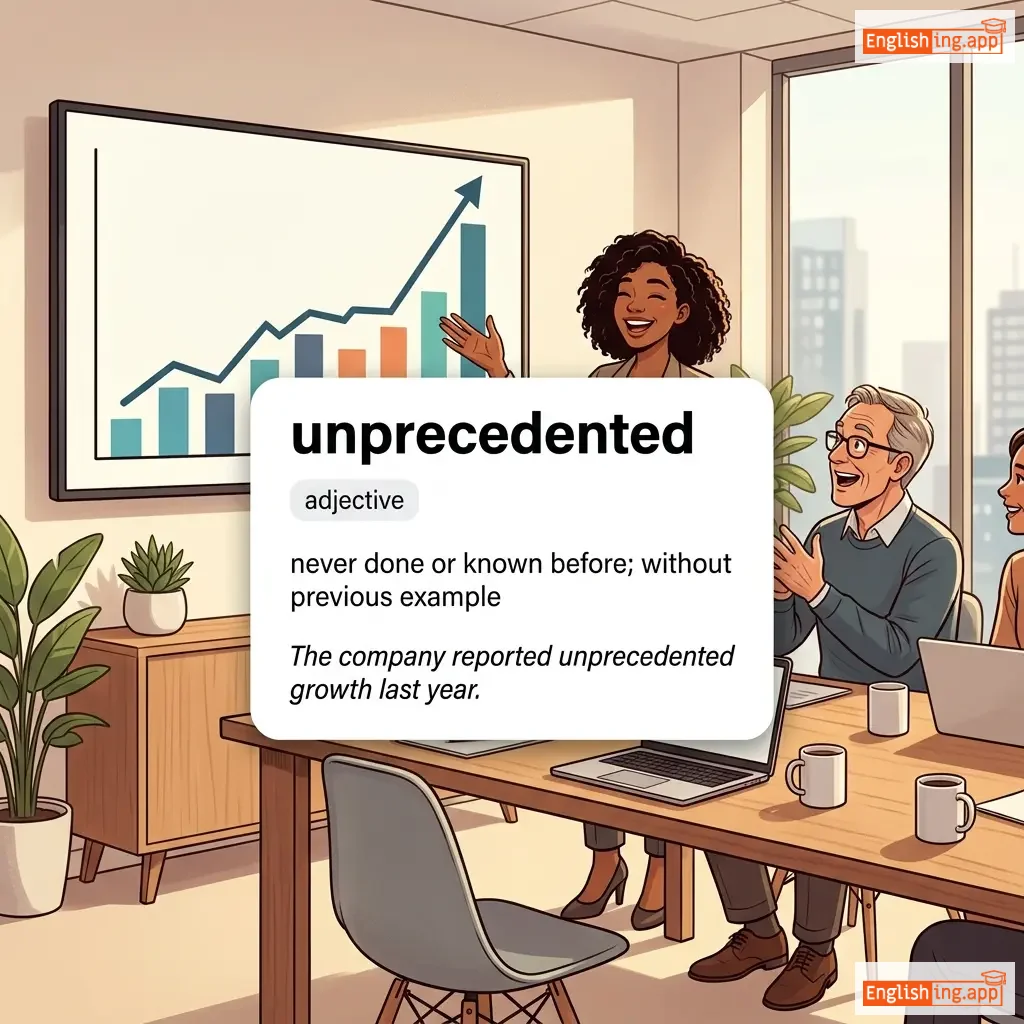
adjective
(アンプレシデンテッド)
••••••
|
|
前例のない
zenrei no nai
••••••
|
Never done or known before.
••••••
|
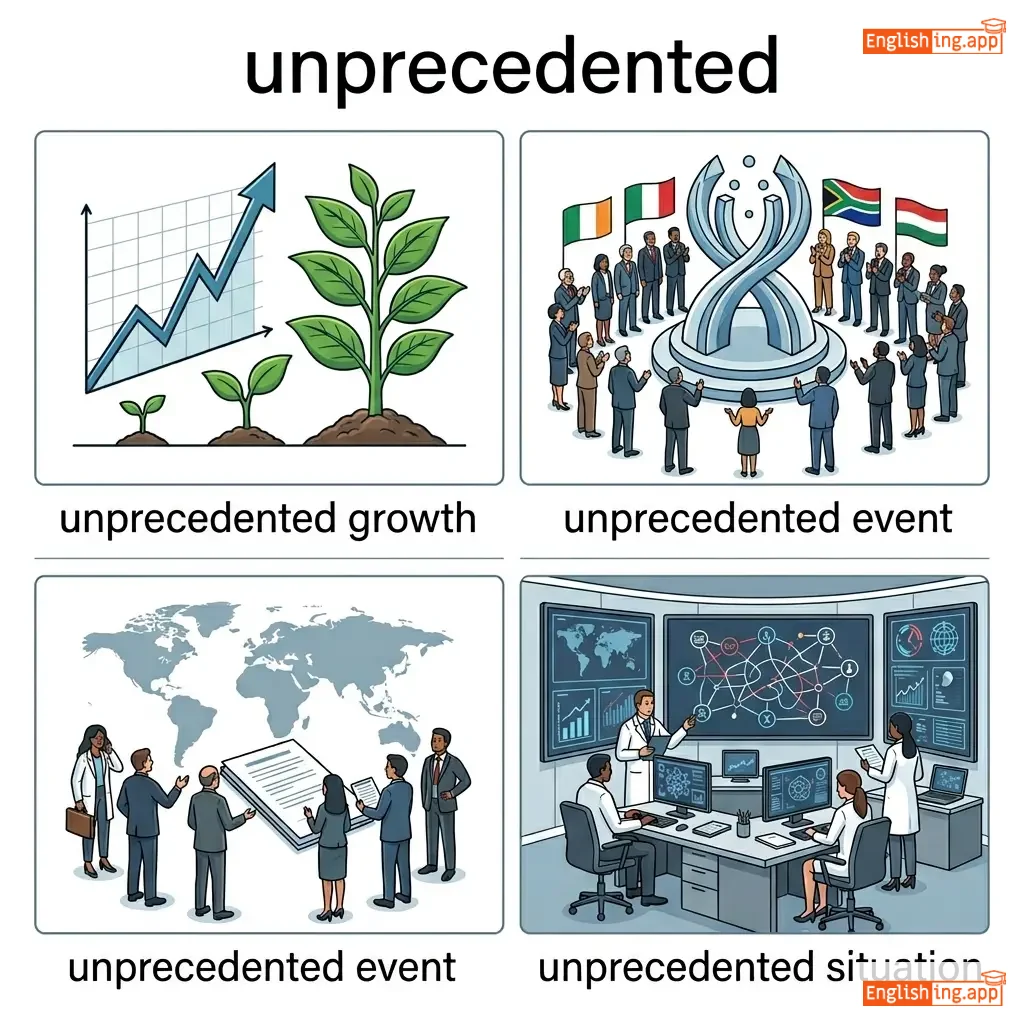
The crisis created an unprecedented challenge. |
この危機は前例のない挑戦を生み出しました。
Kono kiki wa zenrei no nai chōsen o umidashimashita.
••••••
|
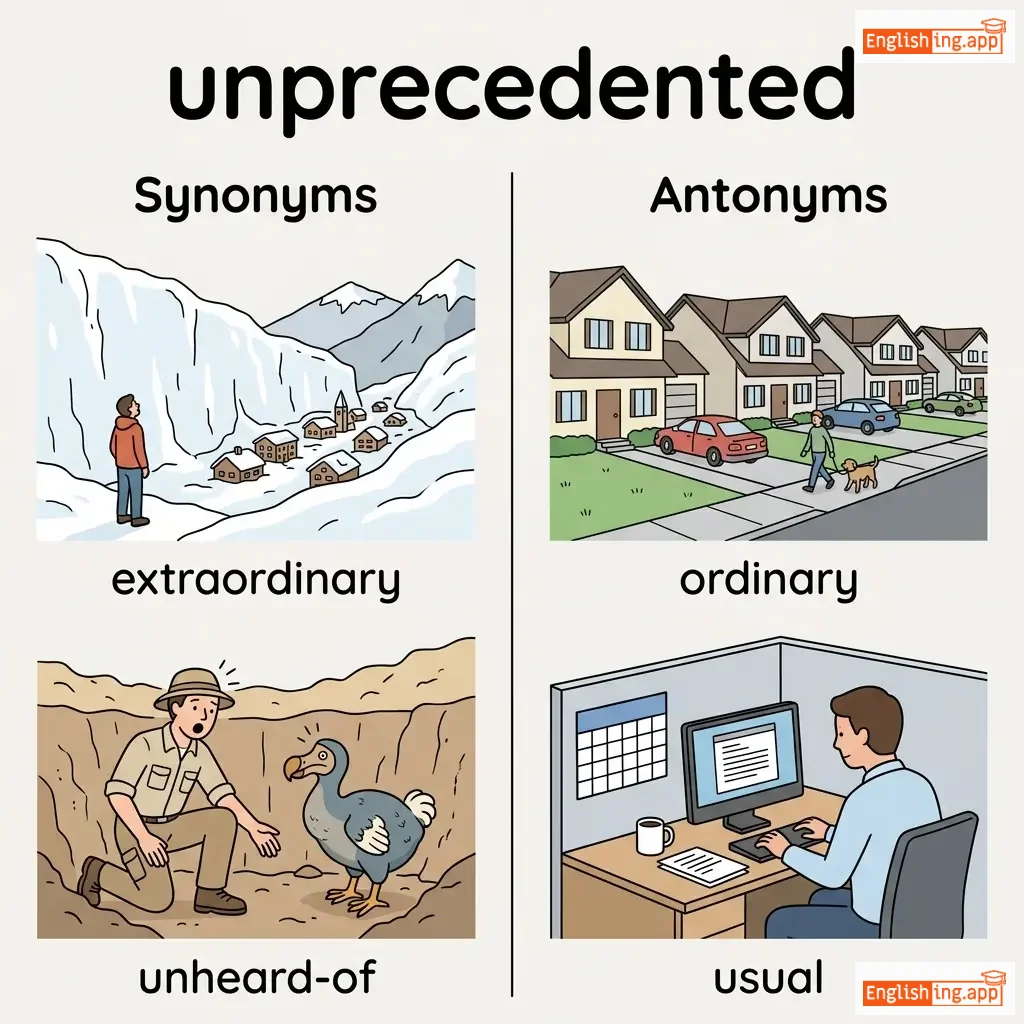
unheard-of, groundbreaking, revolutionary
••••••
|
common, familiar, expected
••••••
|
以前は決してなかった挑戦
••••••
|
|
#3015
❤️
|
/mæɡˈnæn.ɪ.məs/
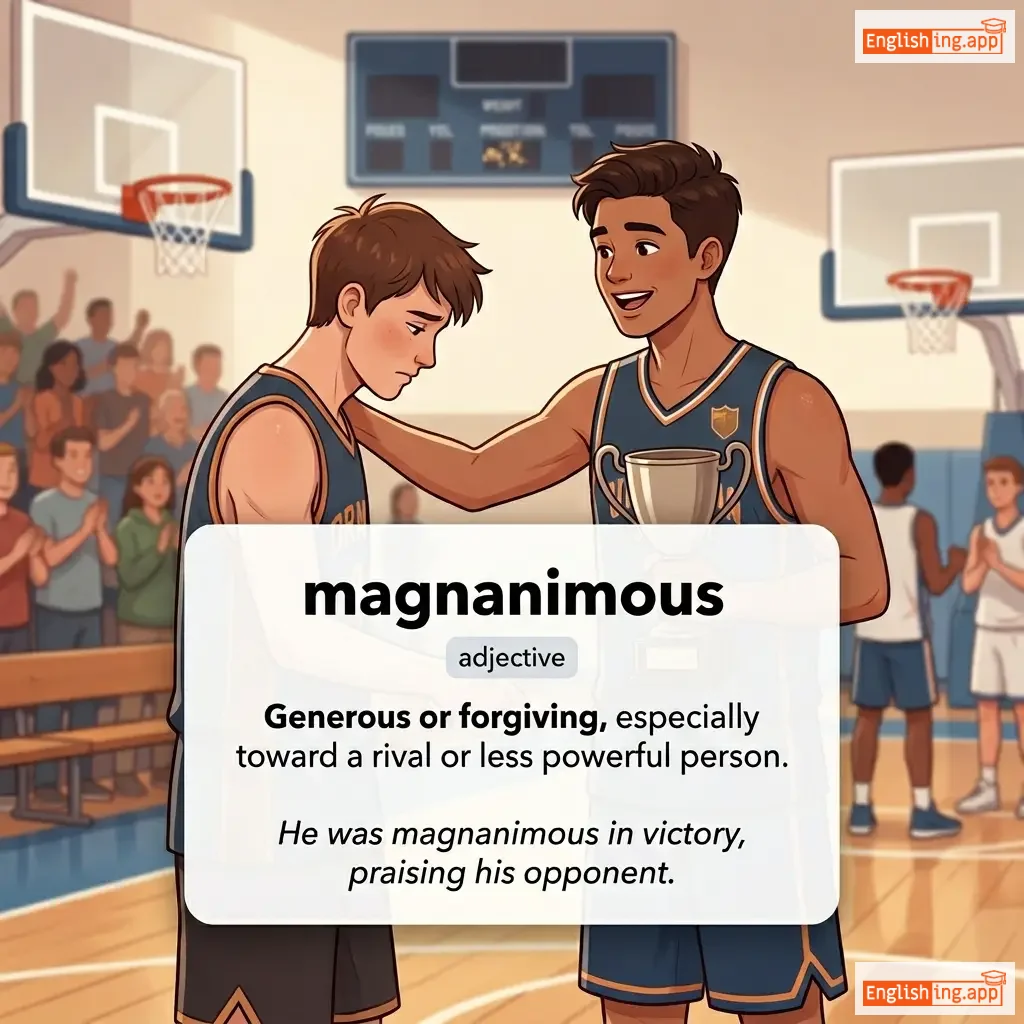
adjective
(マグナニマス)
••••••
|
|
寛大, 気前が良い, 寛容
kandai, kimae ga yoi, kanyou
••••••
|
Very kind and generous, especially towards a rival or someone less powerful than oneself.
••••••
|
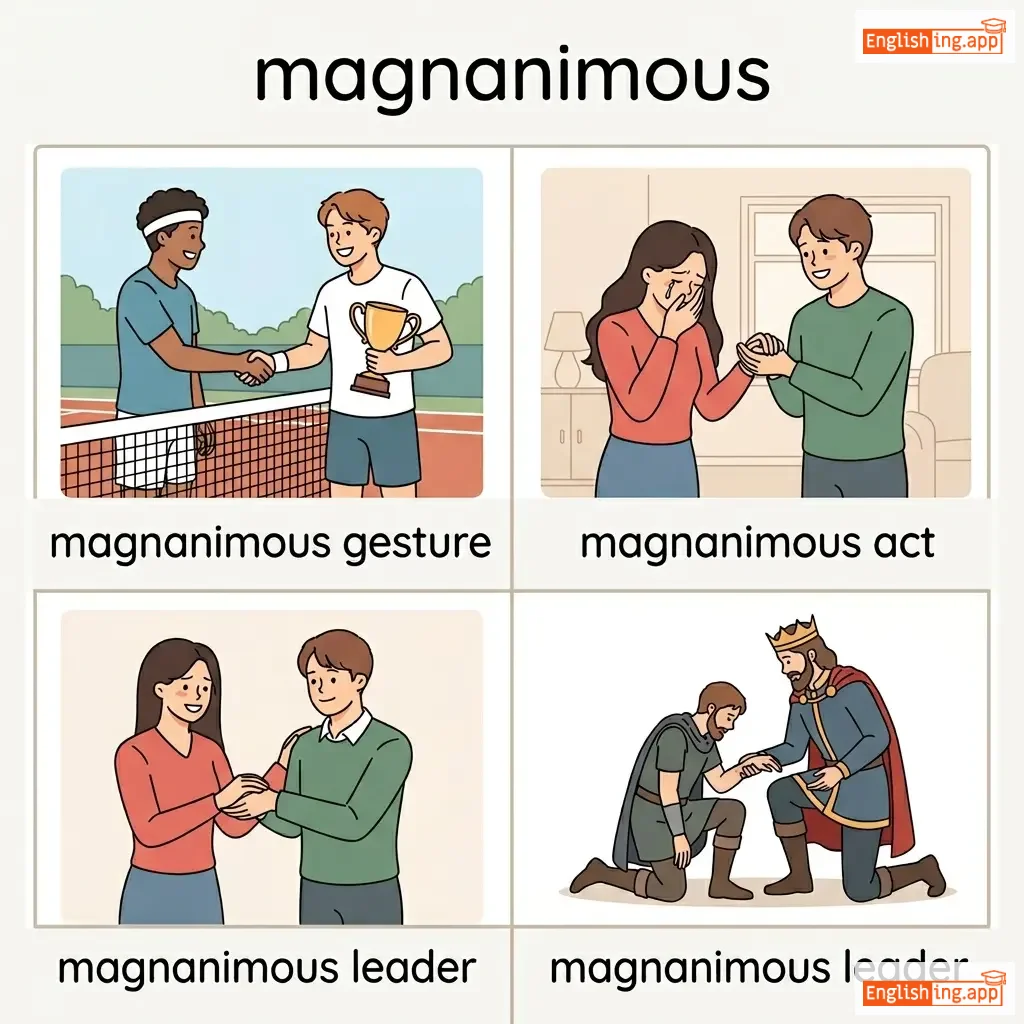
His magnanimous nature made him respected by all.
His magnanimous nature made him respected by all.
••••••
|
彼の寛大な性格は彼を皆から尊敬される存在にしました。
Kare no kandai na seikaku wa kare wo minna kara sonkei sareru sonzai ni shimashita.
••••••
|
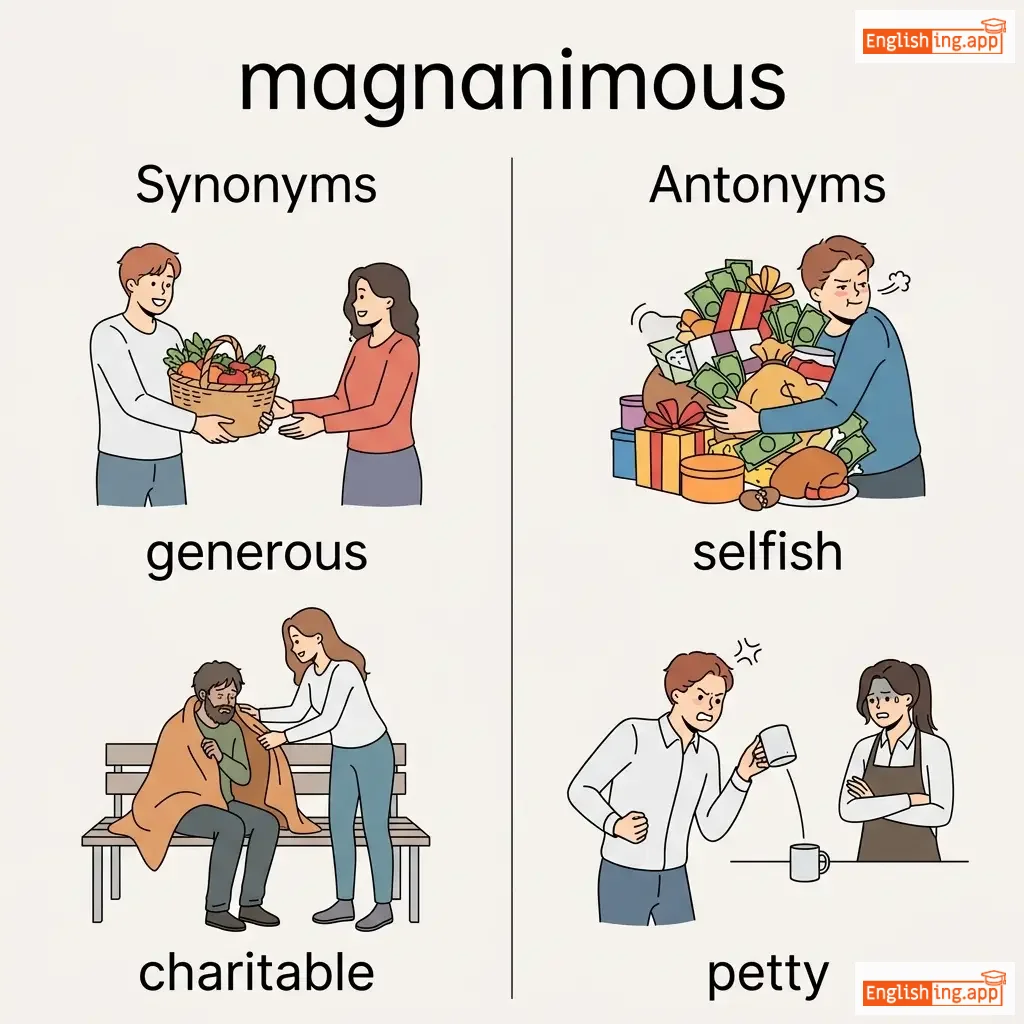
generous, charitable, benevolent
••••••
|
selfish, petty, mean
••••••
|
Visualize a magnanimous person sharing their wealth and earning admiration from all.
••••••
|
|
#3016
📚
|
/vəˈluː.mə.nəs/
adjective
(ボリューミナス)
••••••
|
|
膨大, 広大, 巨大
bōdai, kōdai, kyodai
••••••
|
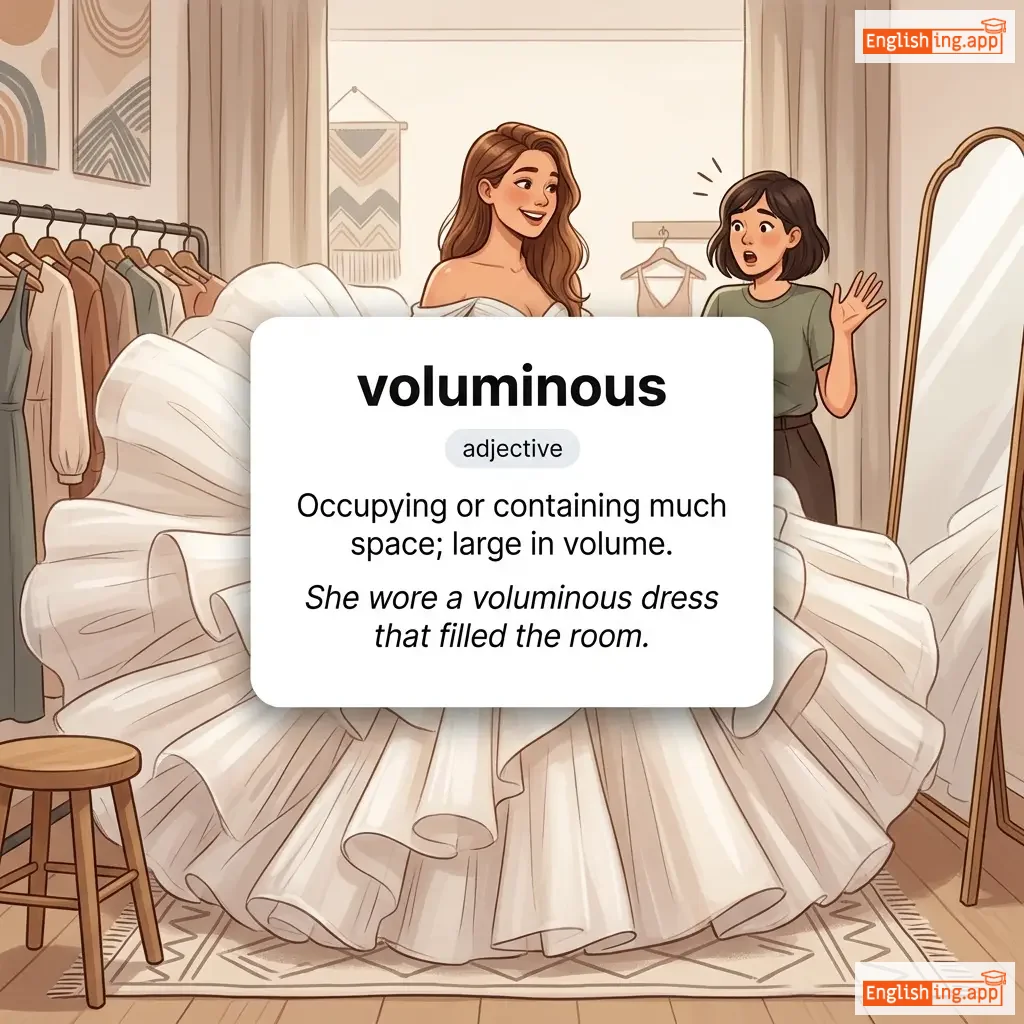
Occupying or containing much space; large in volume, in particular.
••••••
|
The library contained a voluminous collection of books.
図書館には非常に大きな本のコレクションがありました。
••••••
|
図書館には非常に大きな本のコレクションがありました。
Toshokan ni wa hijō ni ōkina hon no korekushon ga arimashita.
••••••
|
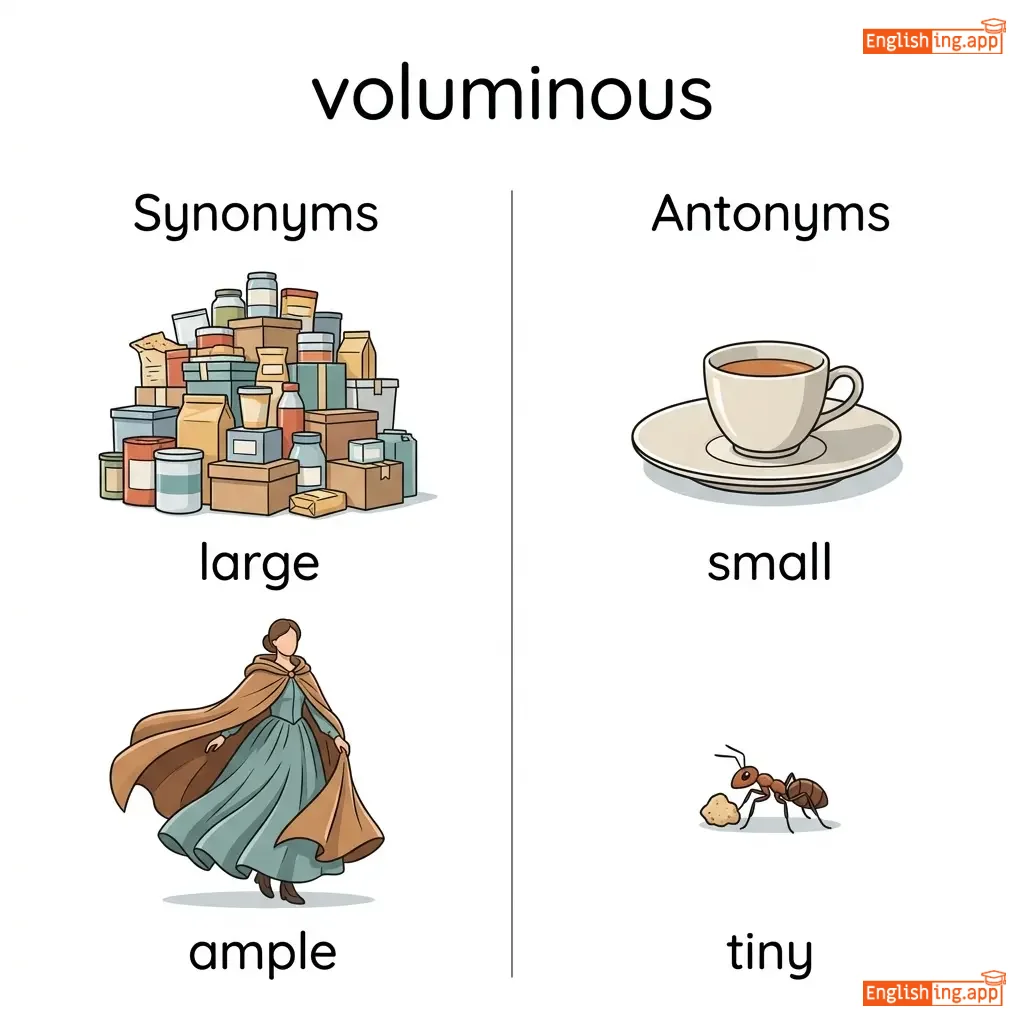
extensive, massive, ample
••••••
|
small, compact, limited
••••••
|
巨大な本のコレクションを持つ図書館を思い浮かべてください。
••••••
|
Vocabulary Quiz
Test your vocabulary by matching words with their translations or meanings.
Login to take the quiz
Comments (0)
Share your thoughts and join the discussion.
Join the discussion by logging in
Login to CommentNo comments yet
Be the first to share your thoughts!