

読書がどのようにCritical Thinkingを高めるか
How Reading Enhances Critical Thinking
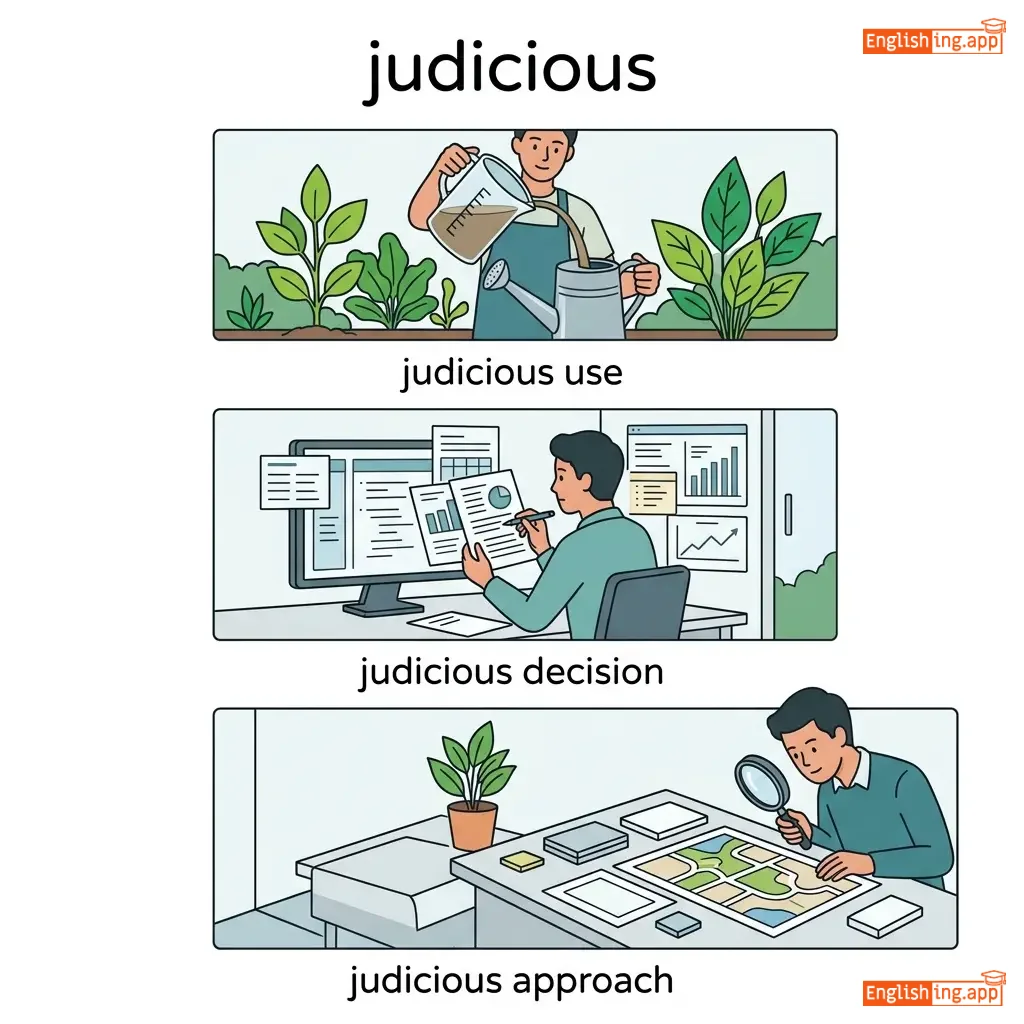
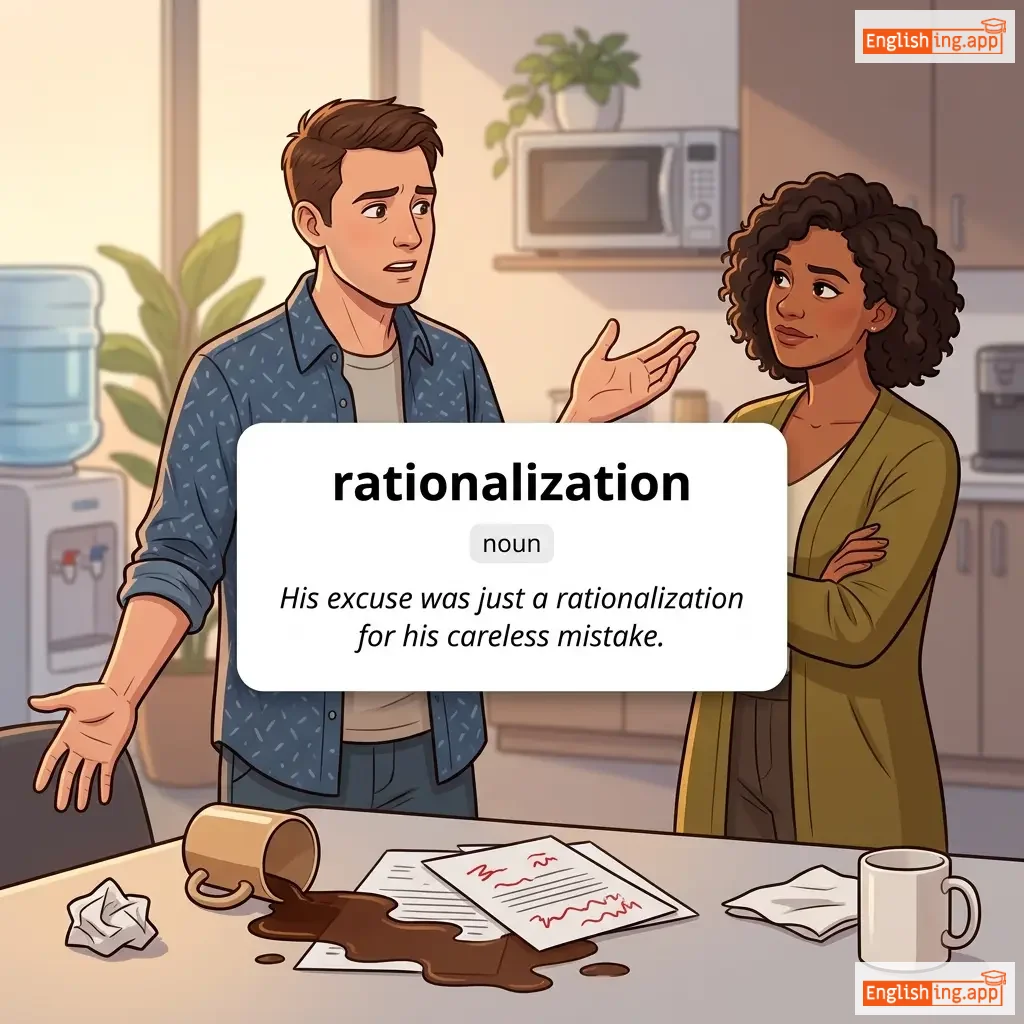
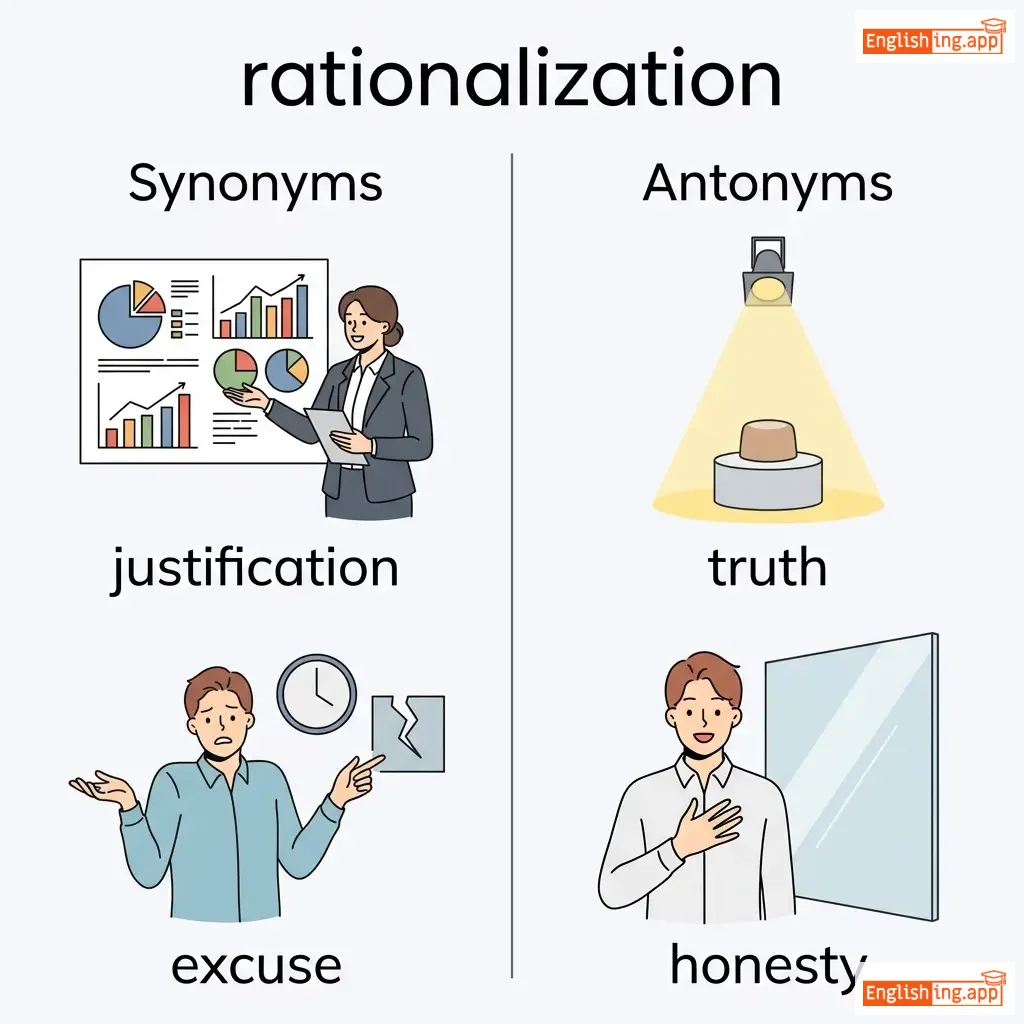
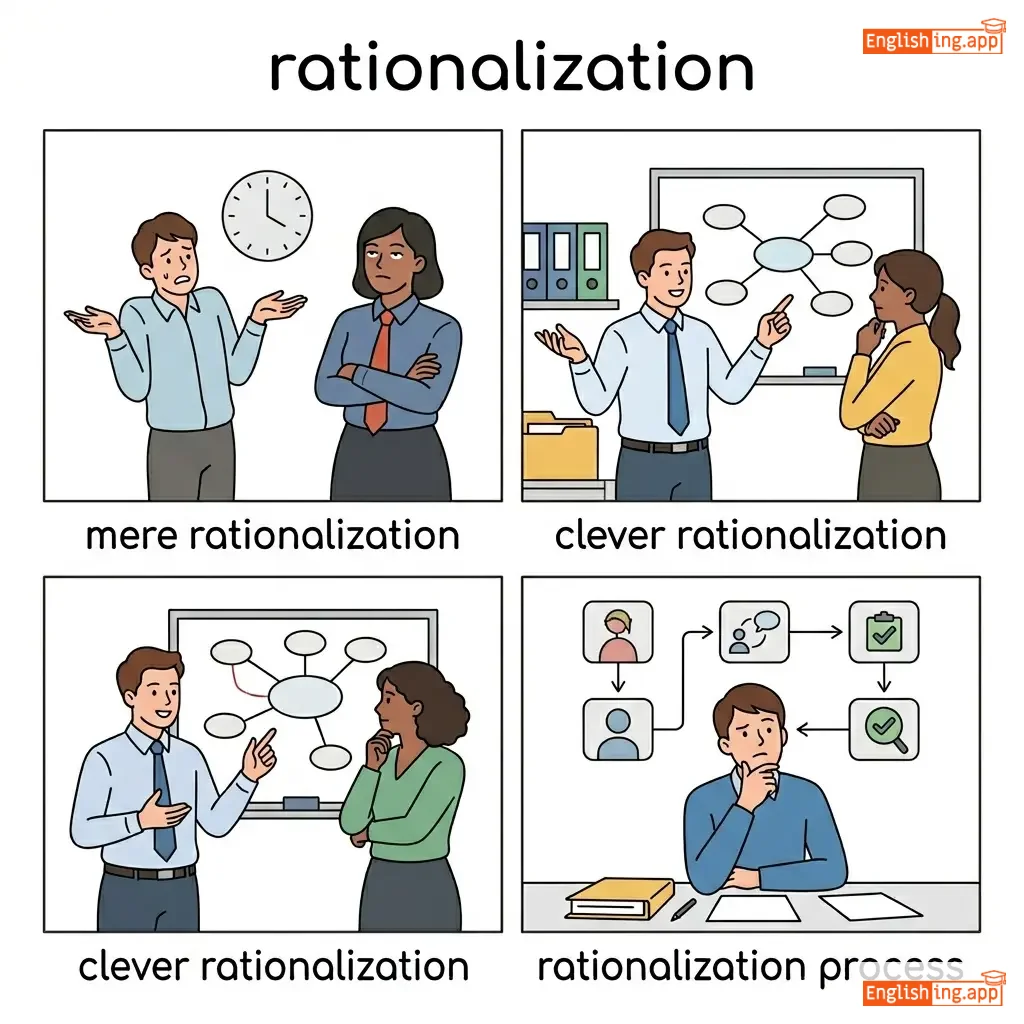
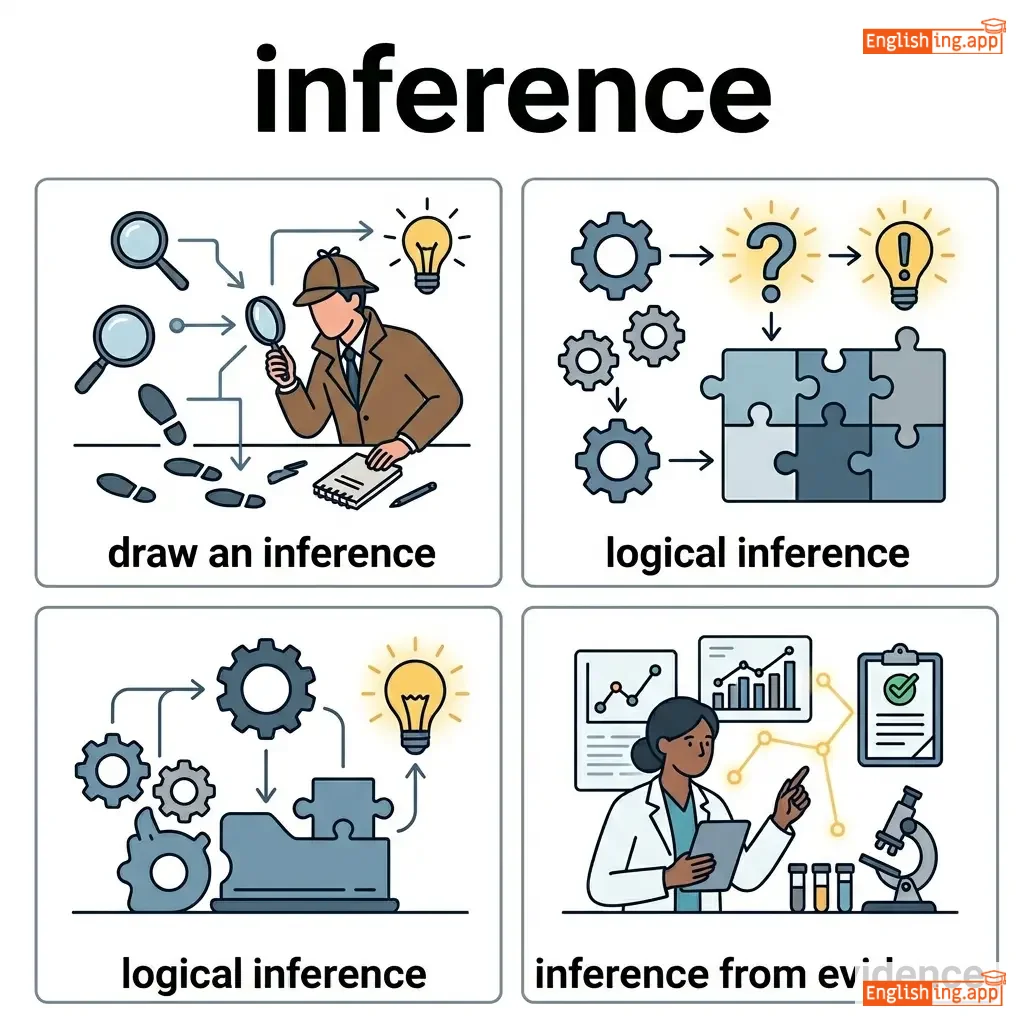
読書は単なる情報取得の手段ではなく、critical thinking を高める最も重要な方法の一つです。複雑な文章を読むと、comprehension の能力が向上し、analytical な思考パターンが発達します。読書を通じて、新しい概念を assimilate し、テーマをより深く理解します。これにより discernment が高まり、さまざまな nuances を理解する力がつきます。時間が経つにつれて、単に情報を吸収するだけでなく、それらを synthesizing して新しい思考パターンを作り出すようになります。良い読者は、すべての文章や情報に特定の paradigm が含まれていることを cognizant になります。読書の習慣は、judicious な判断を助け、rationalization の能力を強化します。inference と extrapolate のスキルを発達させることで、どんなテーマでもより深く分析でき、scrutiny と metacognition が高まります。したがって、読書習慣を身につけることは、思考の深さと eloquence を高めることを意味します。
翻訳
過去
過去分詞
三人称単数
動名詞
意味
例文
例文の翻訳
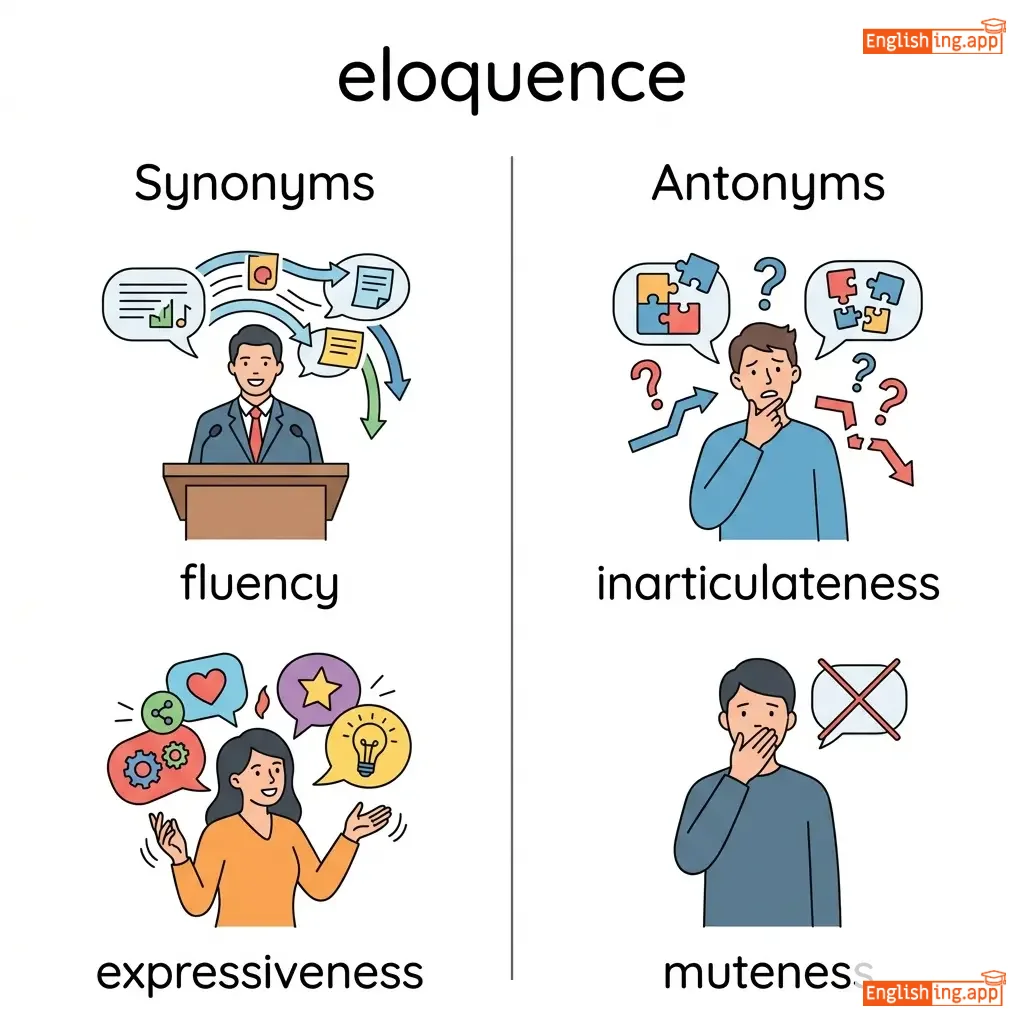
同義語
対義語
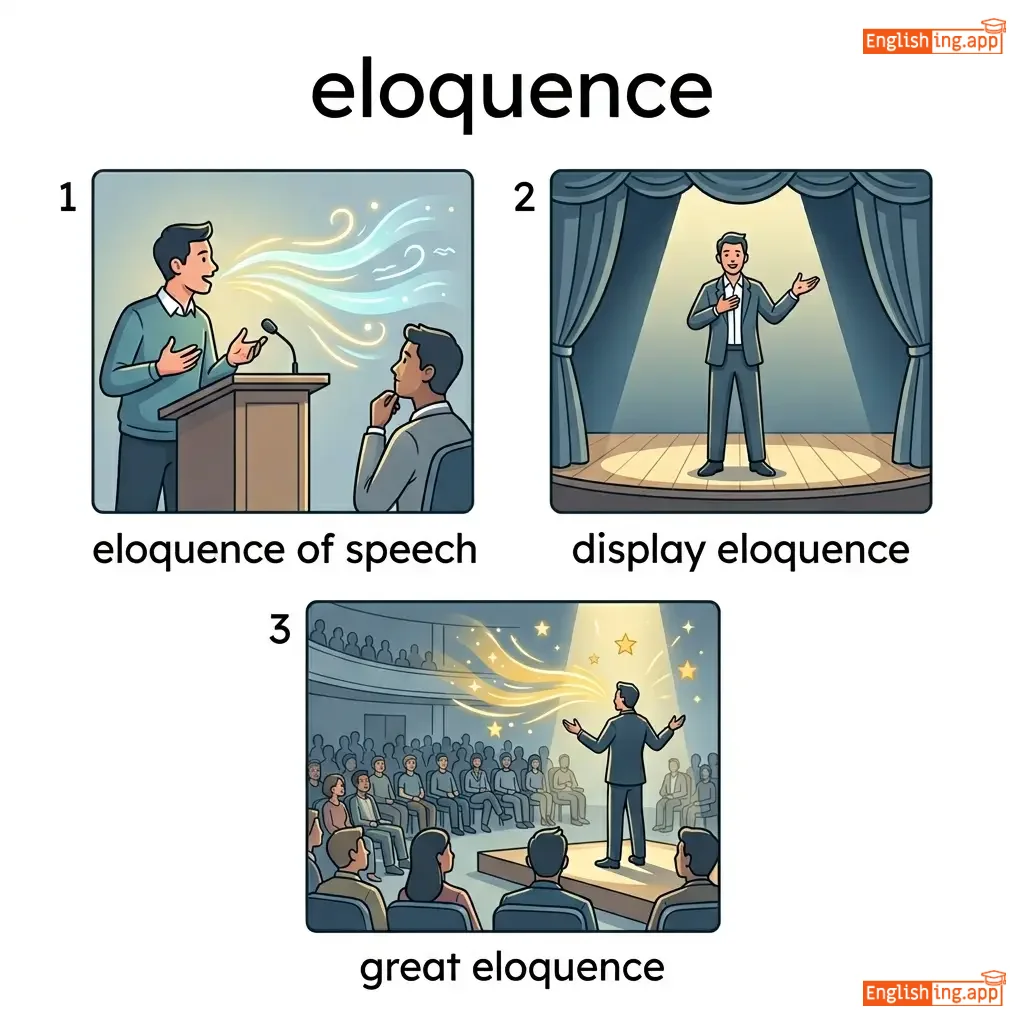
コロケーション
ニーモニック

Swipe left or right, or use the buttons. Tap image to zoom.
例文の翻訳
単語
How Reading Enhances Critical ThinkingHow Reading Enhances Critical Thinking - マスクトグル
|
絵文字
|
単語 | Images | 翻訳 | 意味 | 例文 | 例文の翻訳 | 同義語 | 対義語 | ニーモニック |
|---|---|---|---|---|---|---|---|---|---|
|
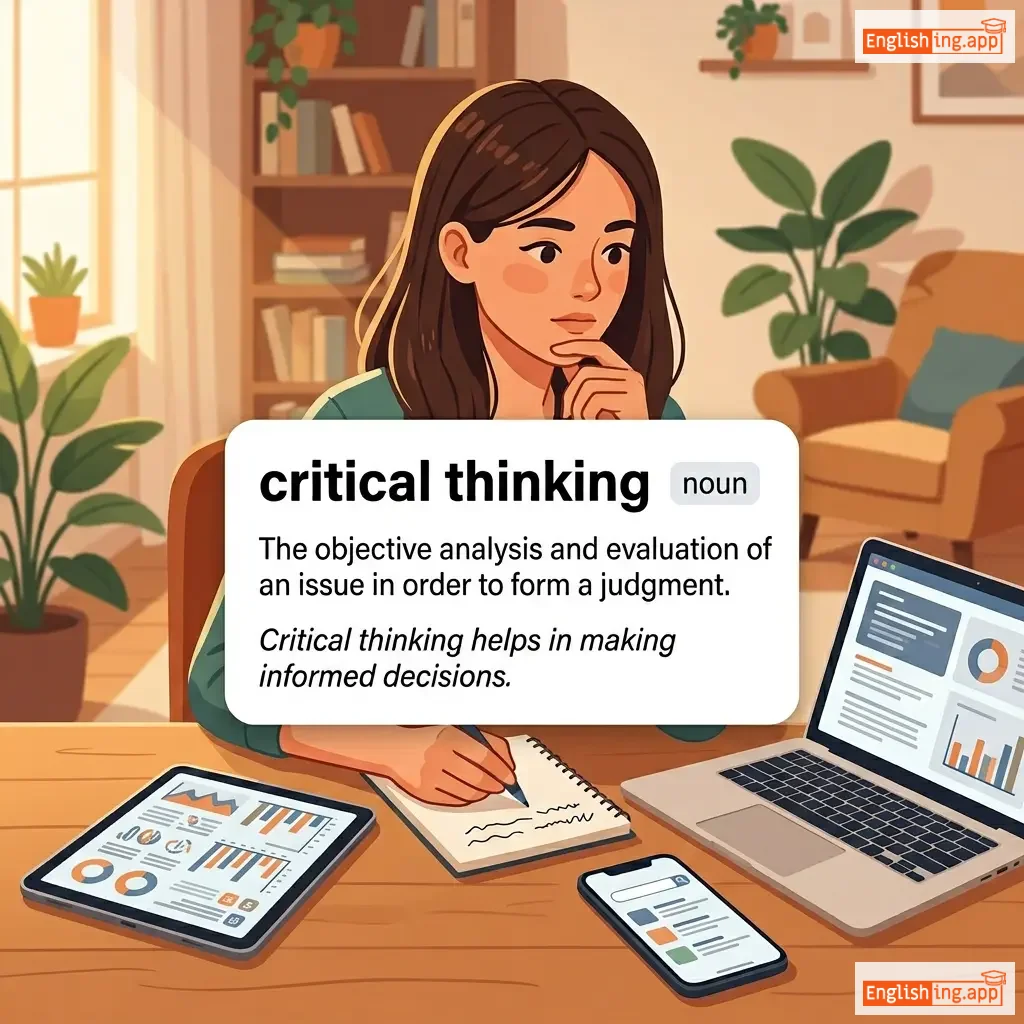
#2066
🧠
|
ˈkrɪt.ɪ.kəl ˈθɪŋ.kɪŋ
noun
(kritikaru thinkingu)
••••••
|
|
批判的思考
hihan teki shikou
••••••
|
The objective analysis and evaluation of an issue in order to form a judgment.
••••••
|
Critical thinking helps in making informed decisions. |
批判的思考は情報に基づいた意思決定に役立ちます。
Hihanteki shikou wa jouhou ni motozuita ishikettei ni yakudachimasu.
••••••
|
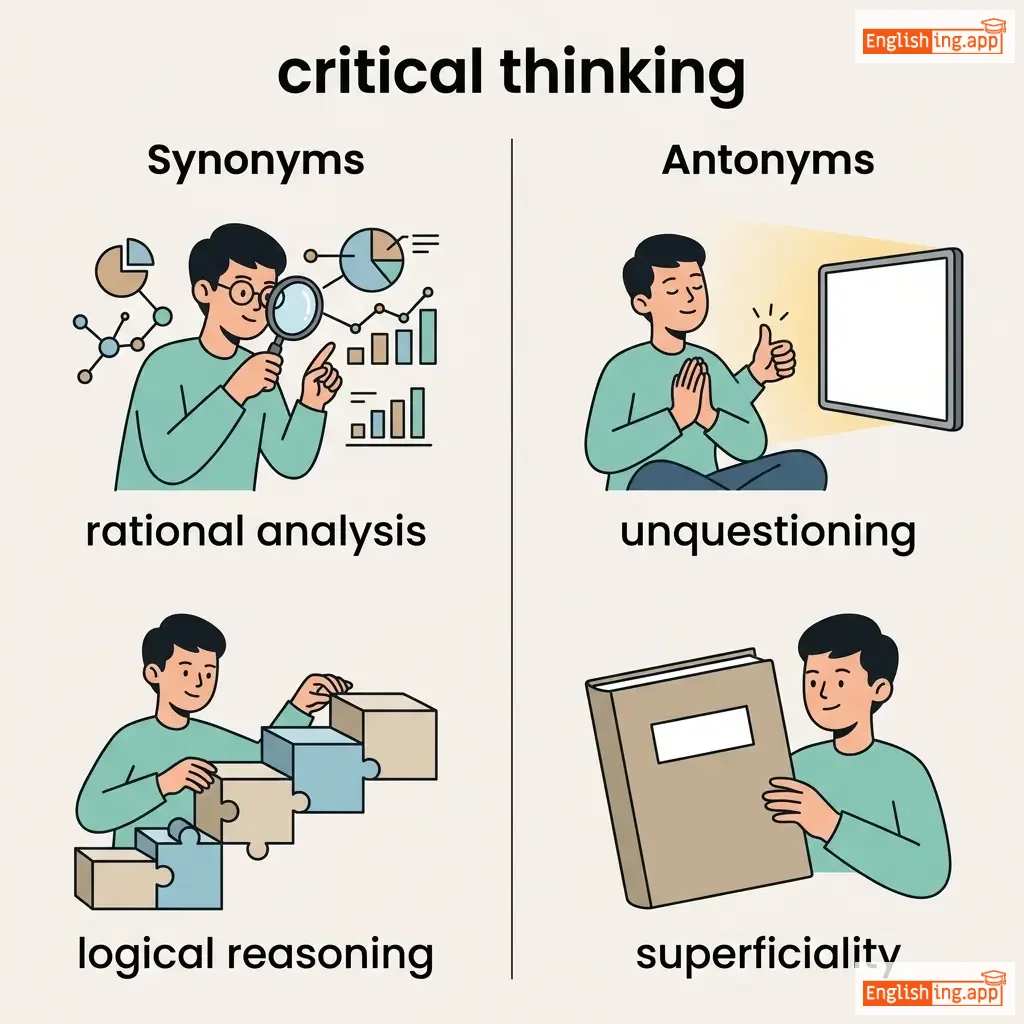
rational analysis, logical reasoning
••••••
|
unquestioning, superficiality
••••••
|
批判的思考は、冷静に考えることから始まります。
••••••
|
|
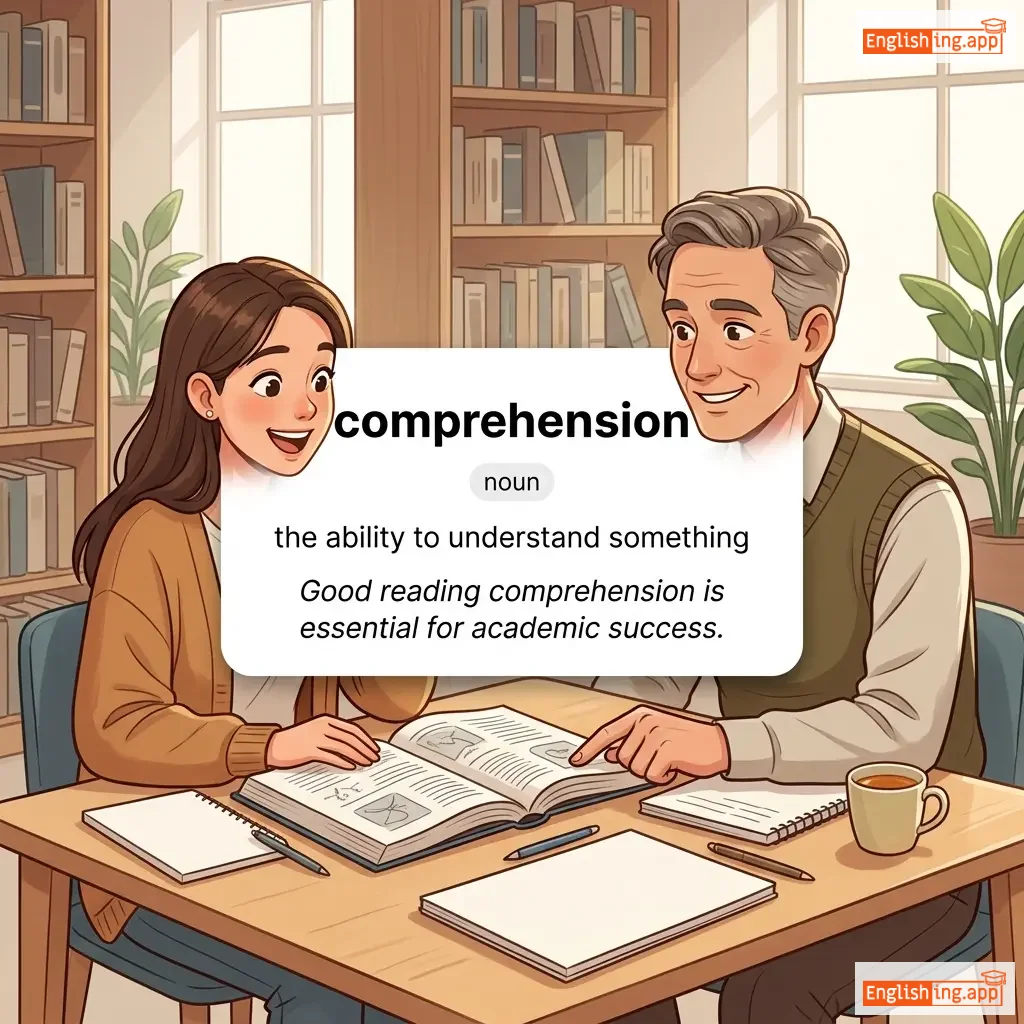
#2067
📖
|
ˌkɑːm.prɪˈhen.ʃən
noun
(コンプリヘンション)
••••••
|
|
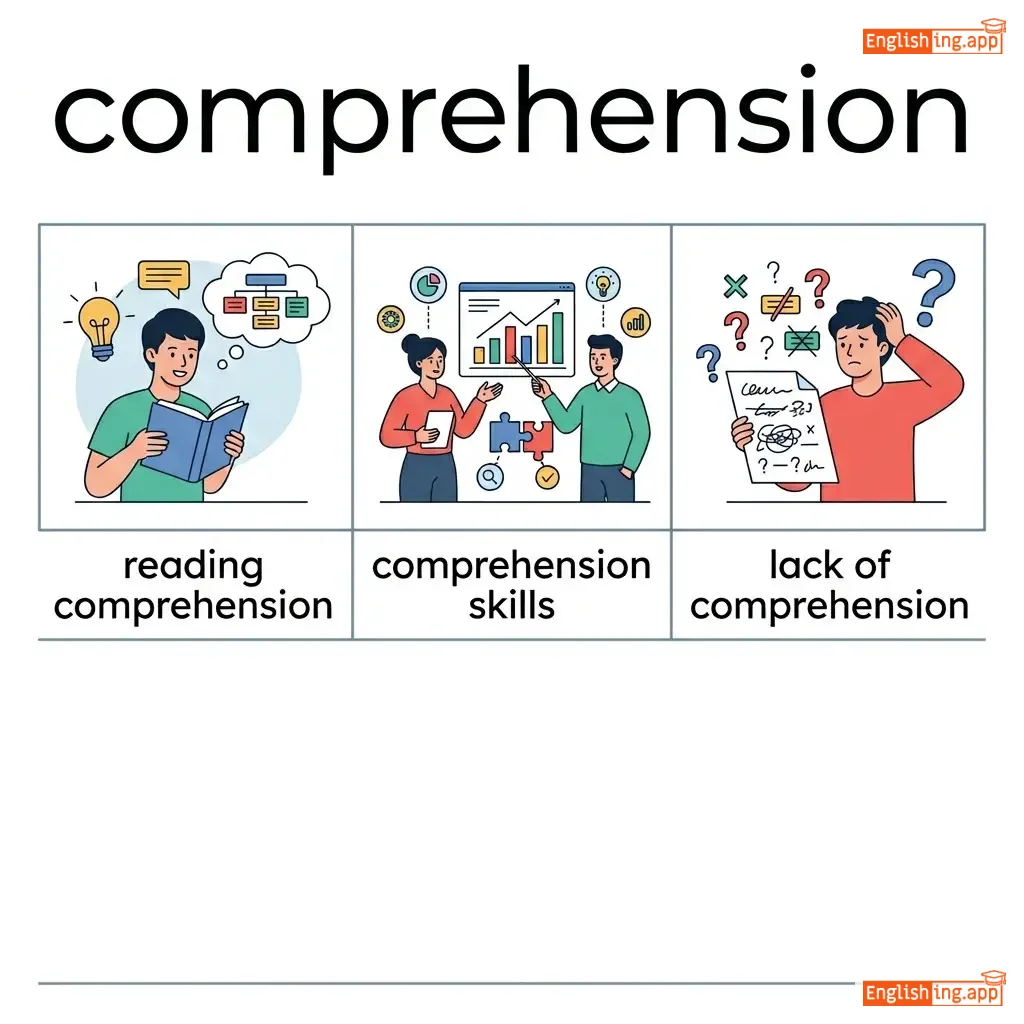
何かを理解する行為または能力
nanika o rikai suru kōi mata wa nōryoku
••••••
|
The action or capability of understanding something.
••••••
|
His comprehension of complex theories is impressive. |
彼の複雑な理論の理解は印象的です。
Kare no fukuzatsu na riron no rikai wa inshō-teki desu.
••••••
|
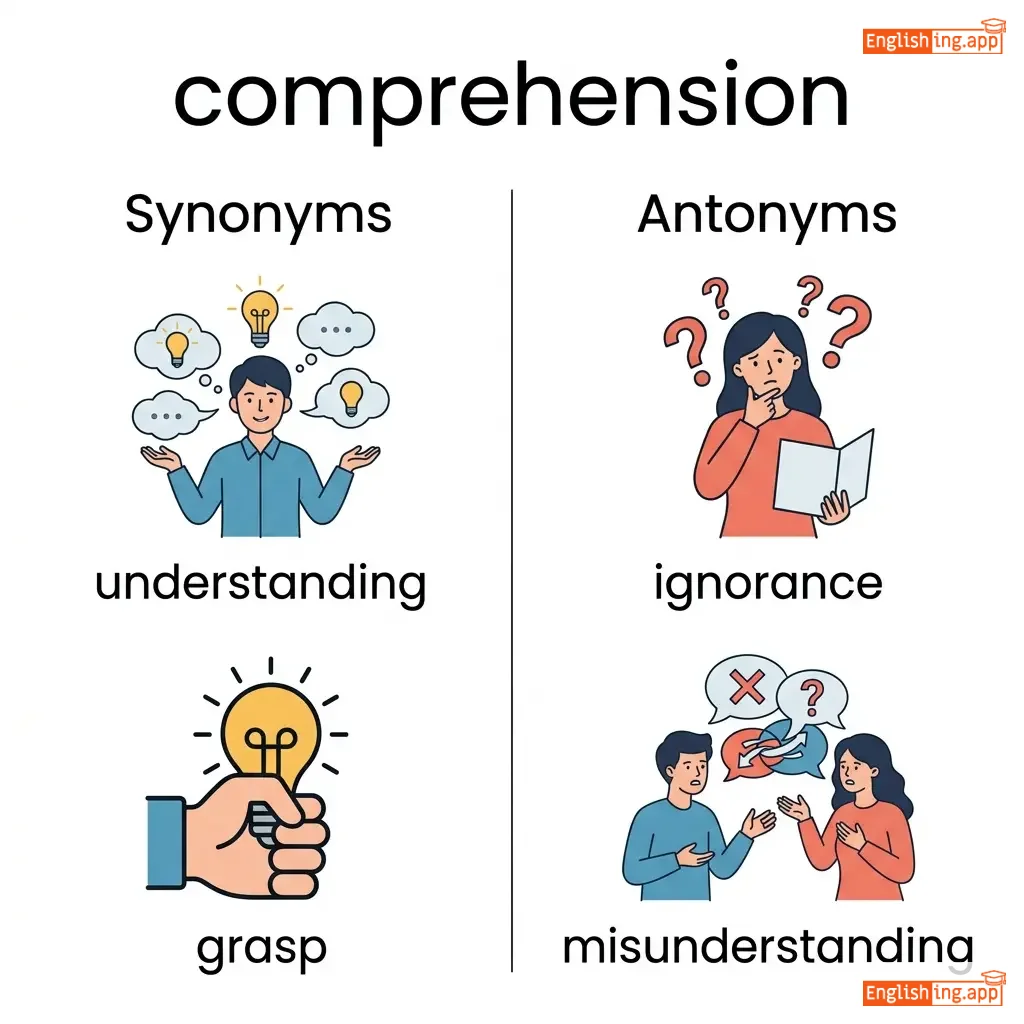
understanding, interpretation
••••••
|
misunderstanding, confusion
••••••
|
理解 – 複雑な理論を理解する力を育てましょう。
••••••
|
|
#2068
🔍
|
ˌæn.əlˈɪt.ɪ.kəl
adjective
(アナリティカル)
••••••
|
|
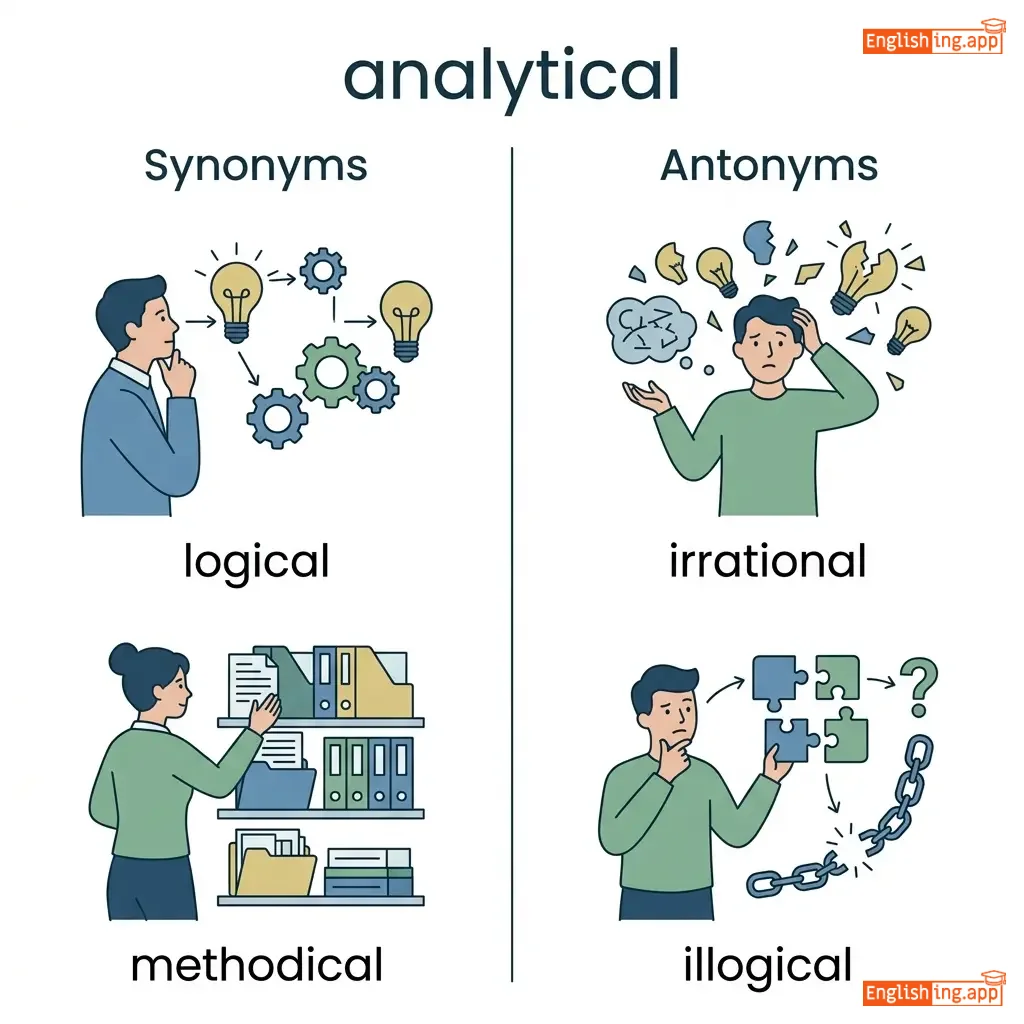
分析的, 研究的, 論理的
bunseki-teki, kenkyu-teki, ronri-teki
••••••
|
Using or skilled in using analysis (i.e., separating a whole—intellectual or substantial—into its elemental parts or basic principles).
••••••
|
She has an analytical approach to problem-solving. |
彼女は問題解決に分析的アプローチを取っています。
Kanojo wa mondai kaiketsu ni bunsekiteki apurouchi o totteimasu.
••••••
|
logical, investigative
••••••
|
illogical, irrational
••••••
|
アナリティカルな思考は、問題を分解して細かく理解する力です。
••••••
|
|
#2069
🧲
|
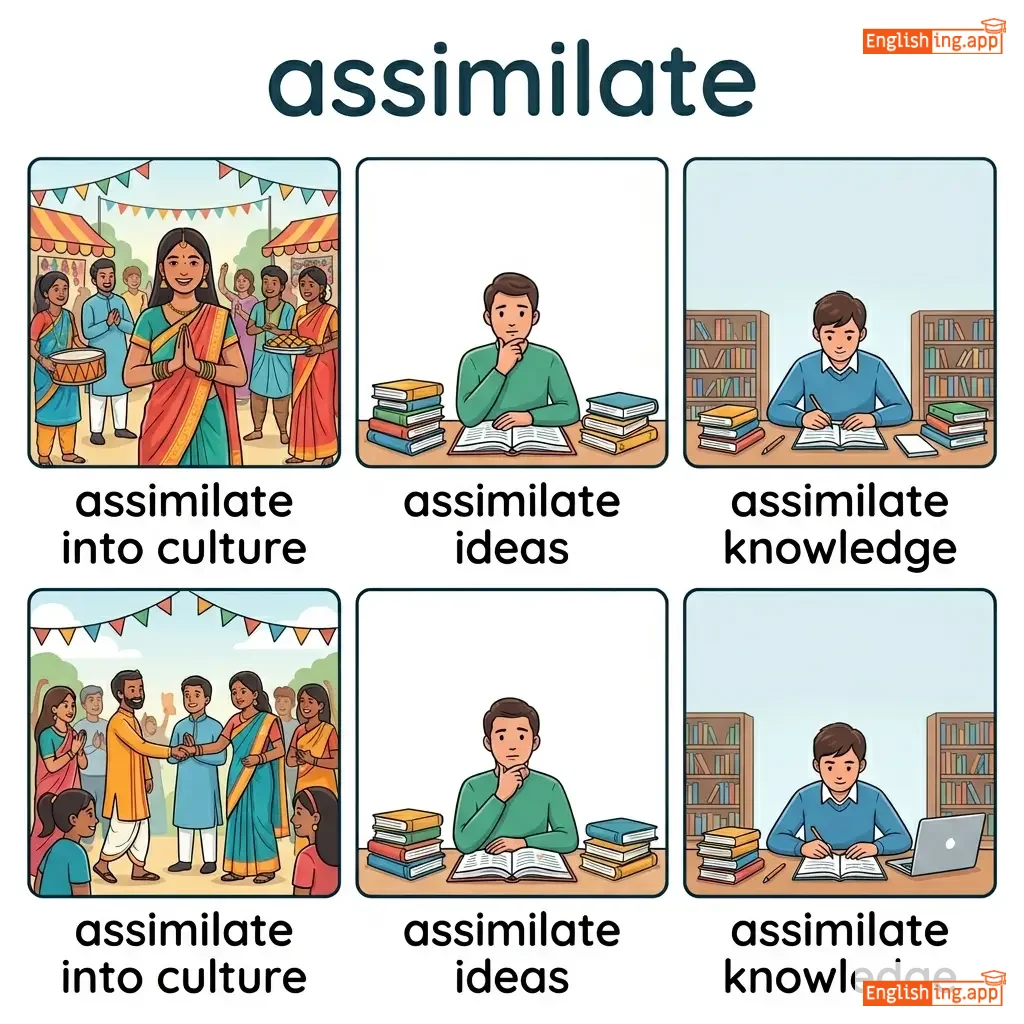
əˈsɪm.ɪ.leɪt
verb
(アシミレート)
••••••
|
|
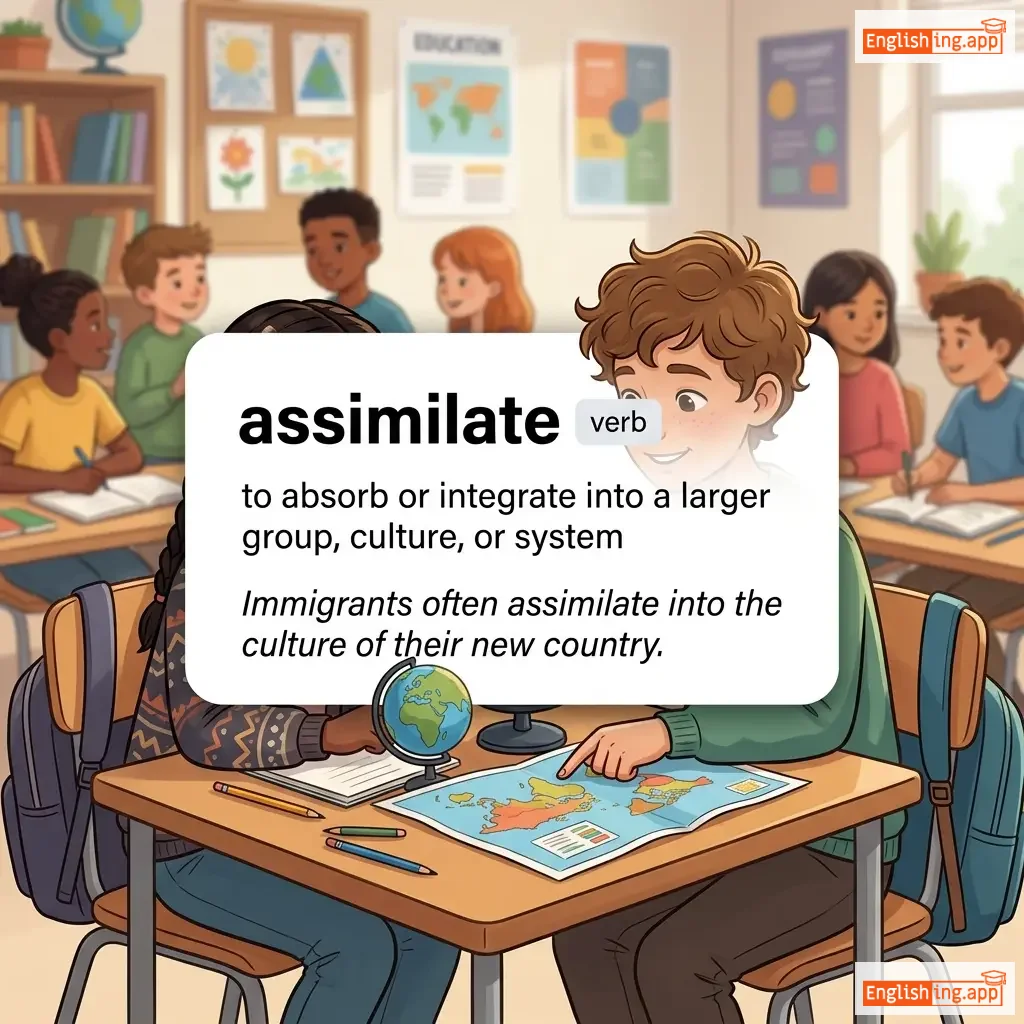
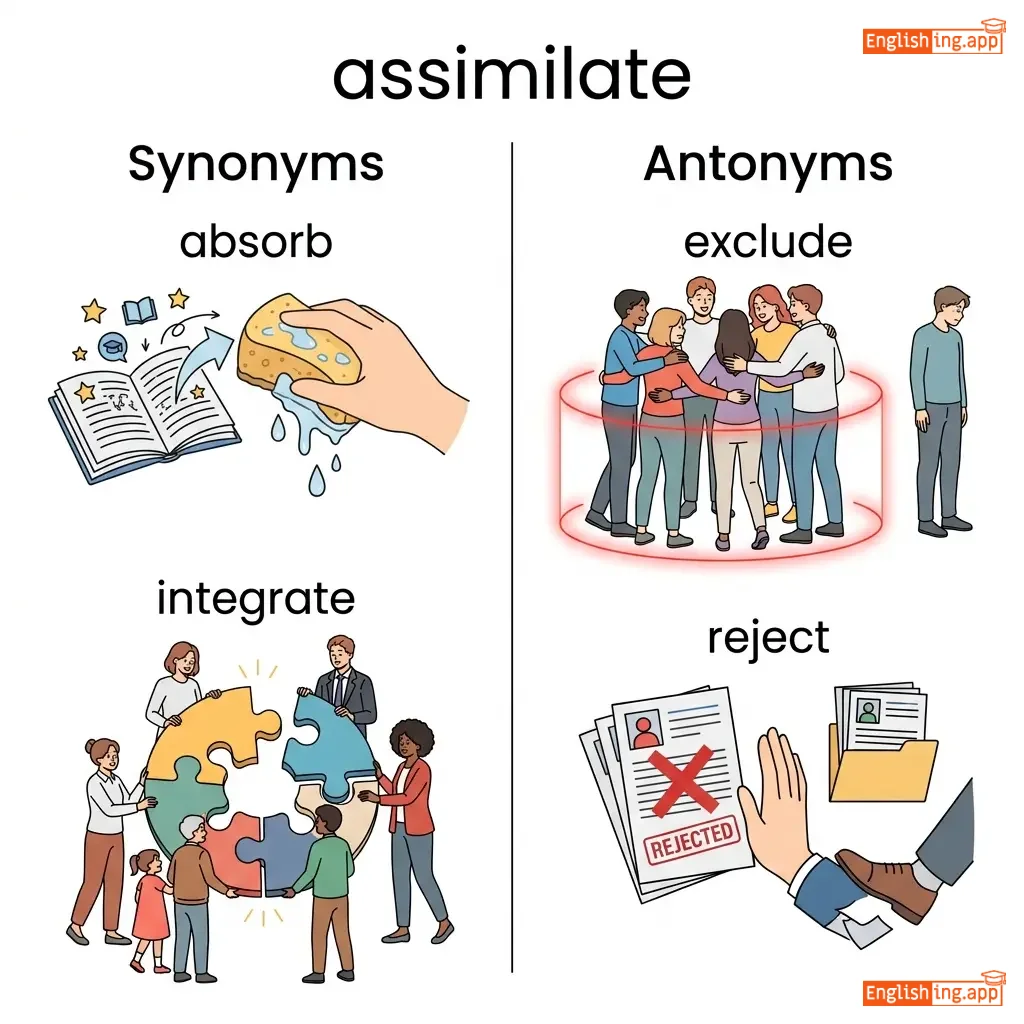
同化する, 統合する, 受け入れる
dōka suru, tōgō suru, ukeireru
••••••
|
Take in (information, ideas, or culture) and understand fully.
••••••
|
Immigrants often assimilate into the local culture. |
移民はしばしば地元の文化に同化します。
Imin wa shibashiba jimoto no bunka ni dōka shimasu.
••••••
|
absorb, integrate
••••••
|
reject, isolate
••••••
|
同化するとは、新しい文化を完全に受け入れること。移民が地元の文化に溶け込むように。
••••••
|
|
#2070
🎯
|
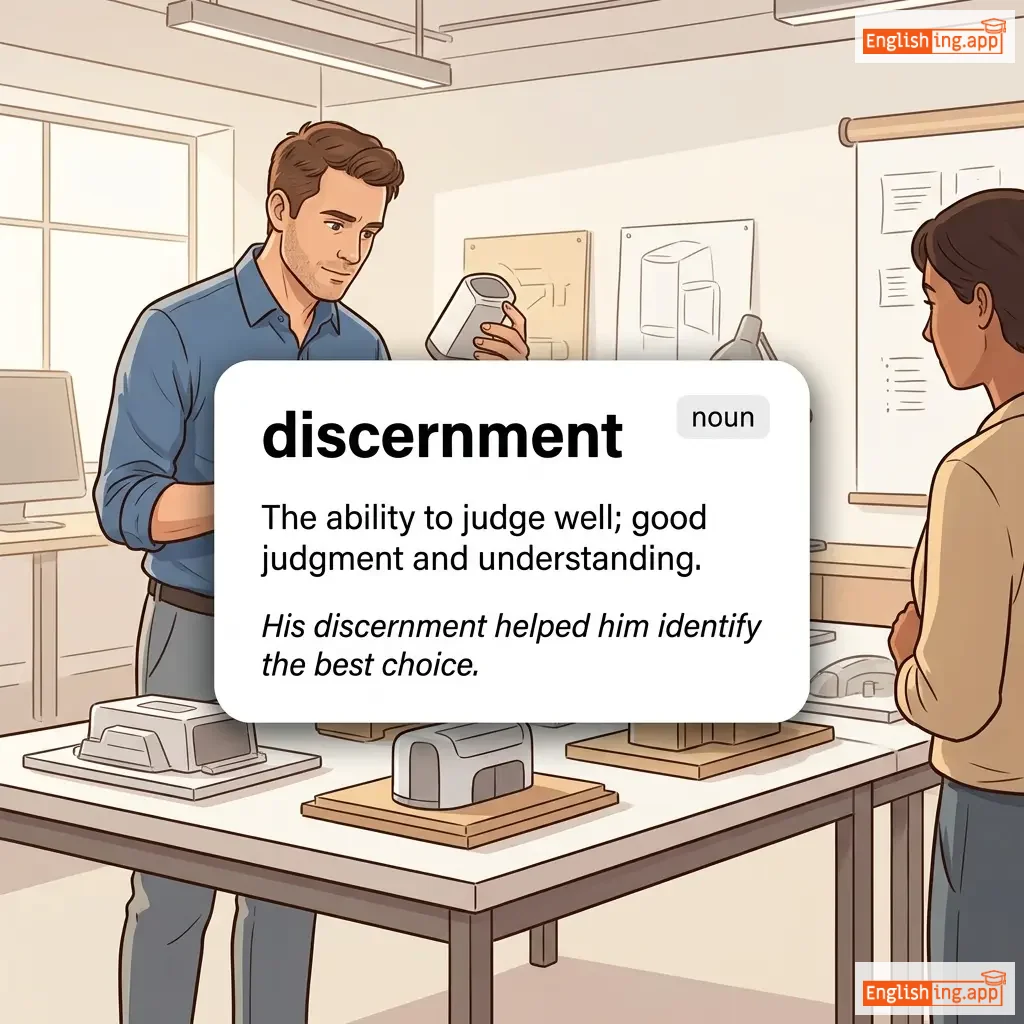
dɪˈsɝːn.mənt
noun
(ディスアーメント)
••••••
|
|
識別力、正しく判断する能力
shikibetsuryoku, tadashiku handan suru nōryoku
••••••
|
The ability to judge well.
••••••
|
His discernment in business decisions is remarkable. |
彼のビジネスの決定における識別力は素晴らしい。
Kare no bijinesu no kettei ni okeru shikibetsuryoku wa subarashī.
••••••
|
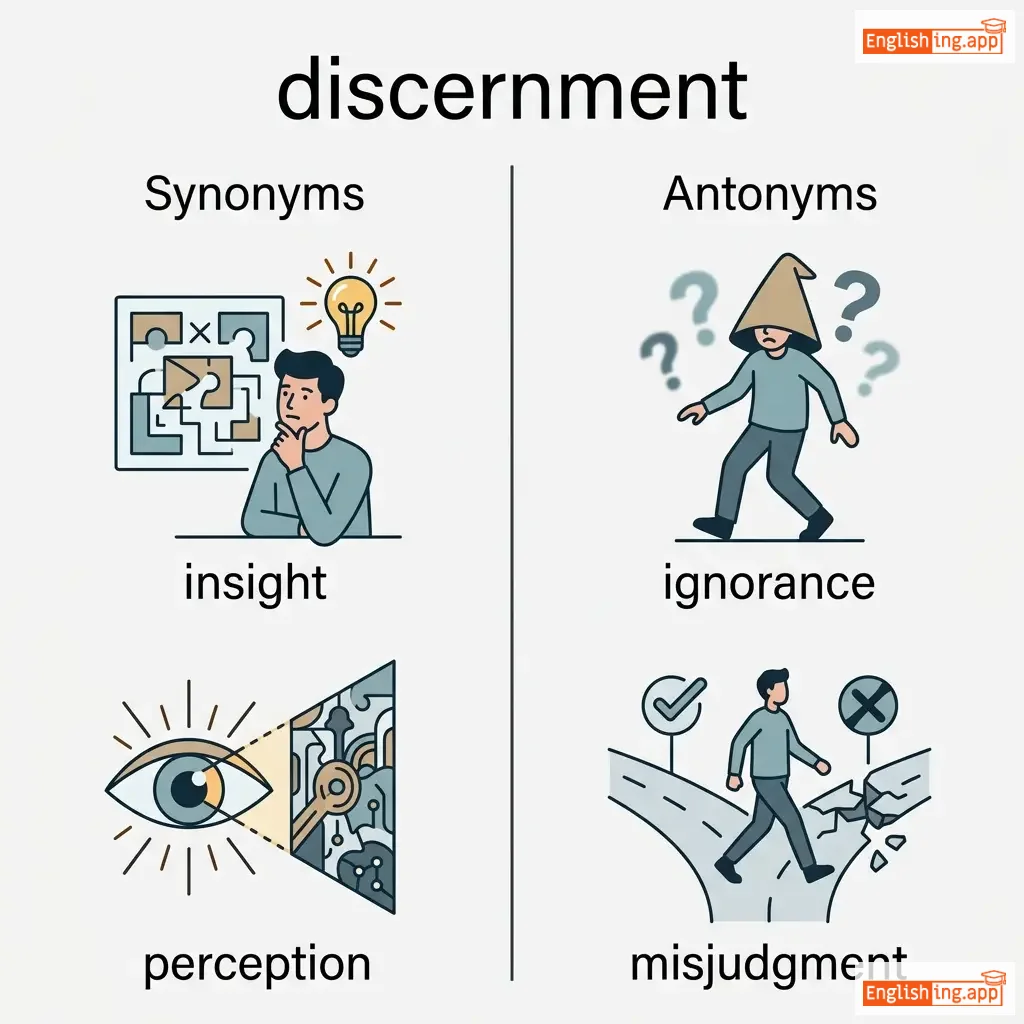
insight, perception
••••••
|
ignorance, misjudgment
••••••
|
識別力 = discernment, ability to judge well
••••••
|
|
#2071
🎭
|
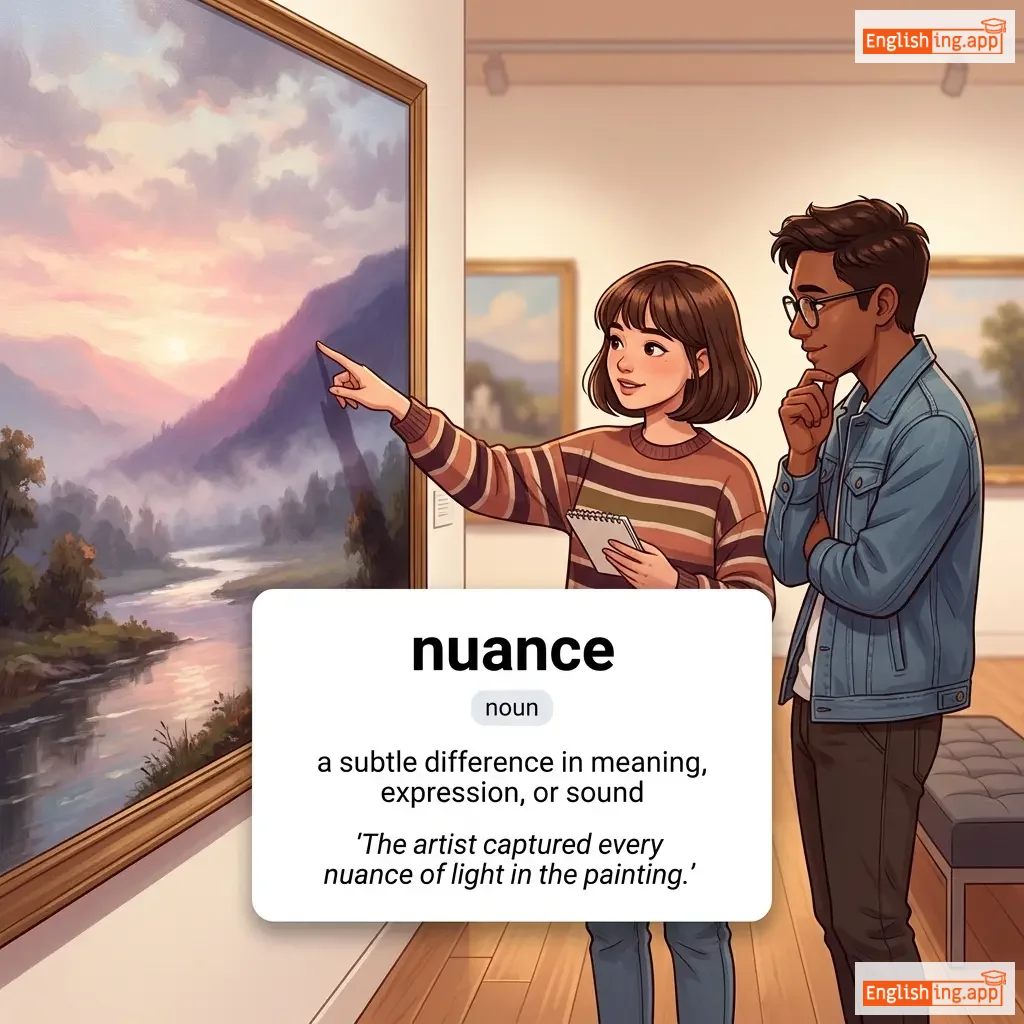
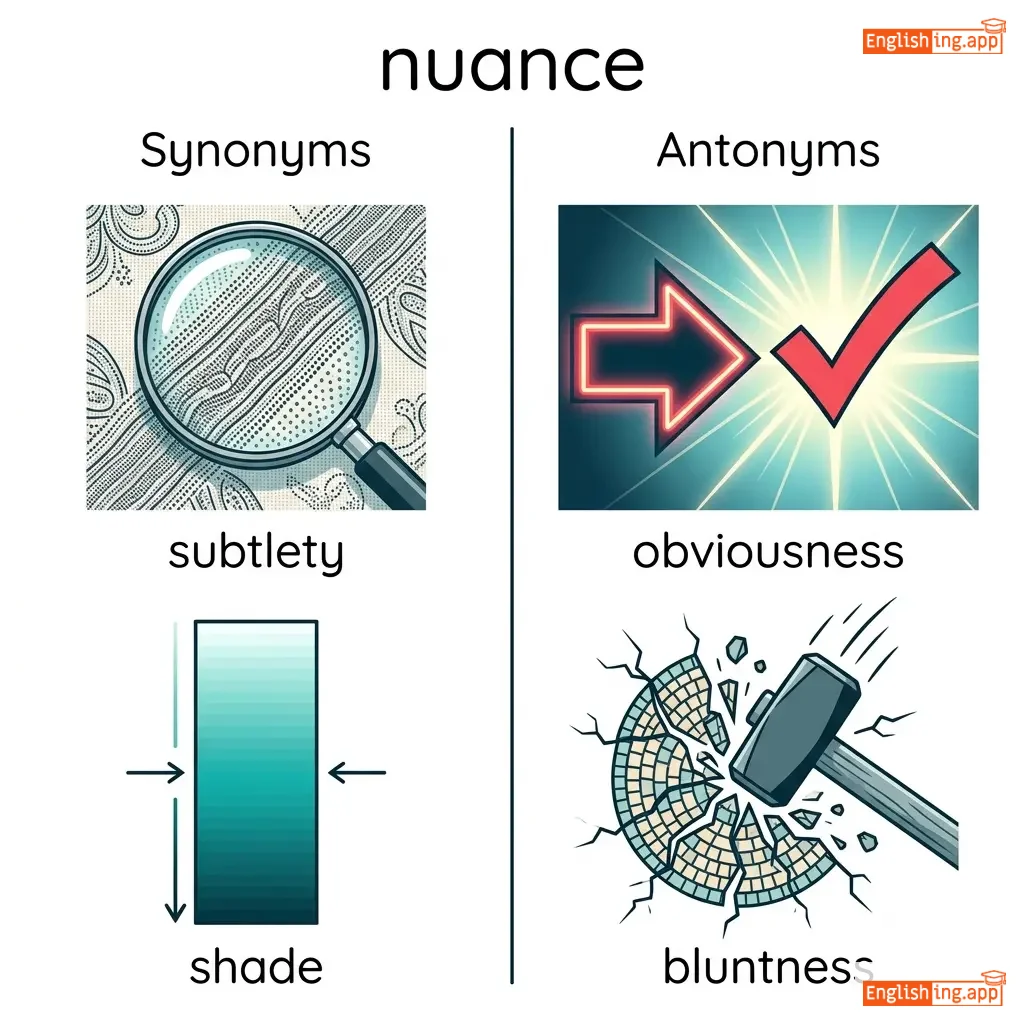
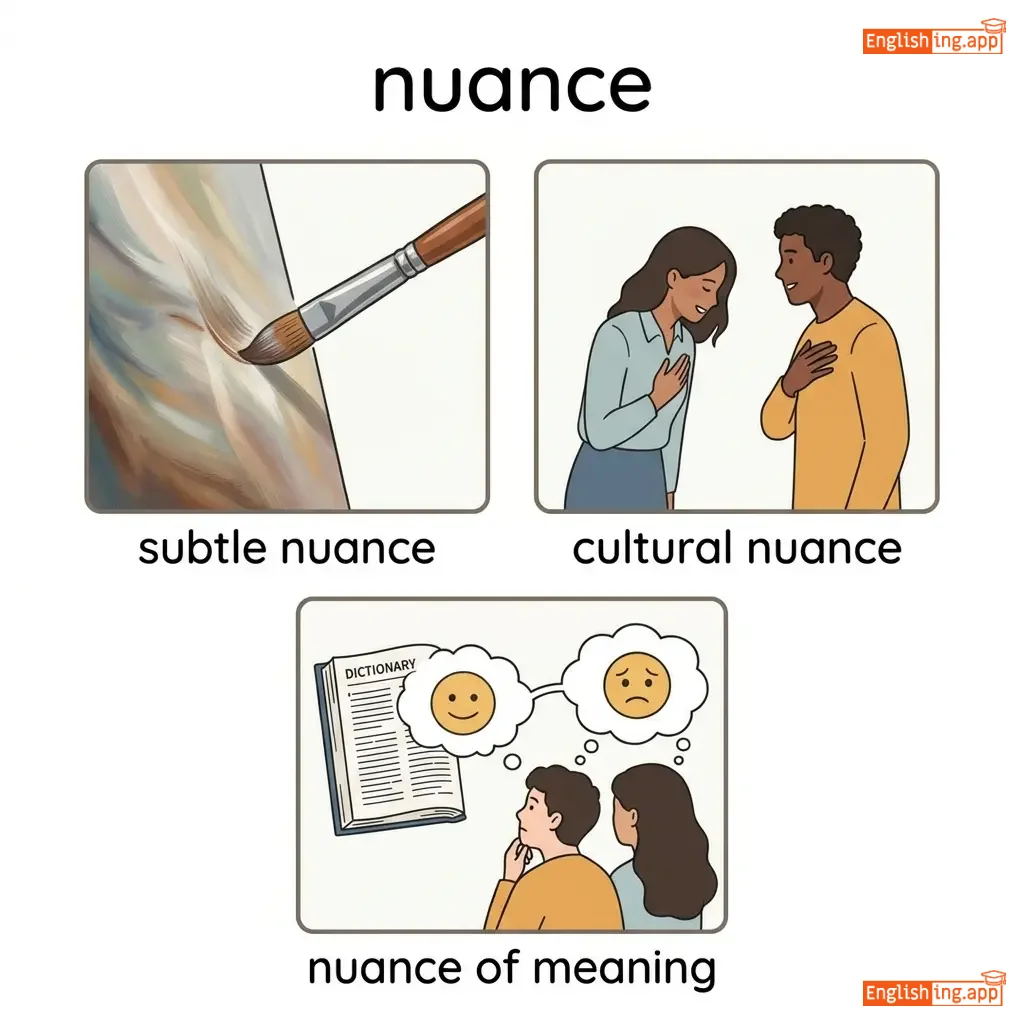
ˈnuː.ɑːns
noun
(ニュアンス)
••••••
|
|
微妙な違い、ニュアンス
bimyō na chigai, nyuansu
••••••
|
A subtle difference in or shade of meaning, expression, or response.
••••••
|
The nuance in her speech made it more impactful. |
彼女のスピーチのニュアンスは、それをより影響力のあるものにしました。
Kanojo no supīchi no nyuansu wa, sore o yori eikyōryoku no aru mono ni shimashita.
••••••
|
subtlety, refinement
••••••
|
obviousness, simplicity
••••••
|
ニュアンスは、何かを変える微細な違いを表します。
••••••
|
|
#2072
🔗
|
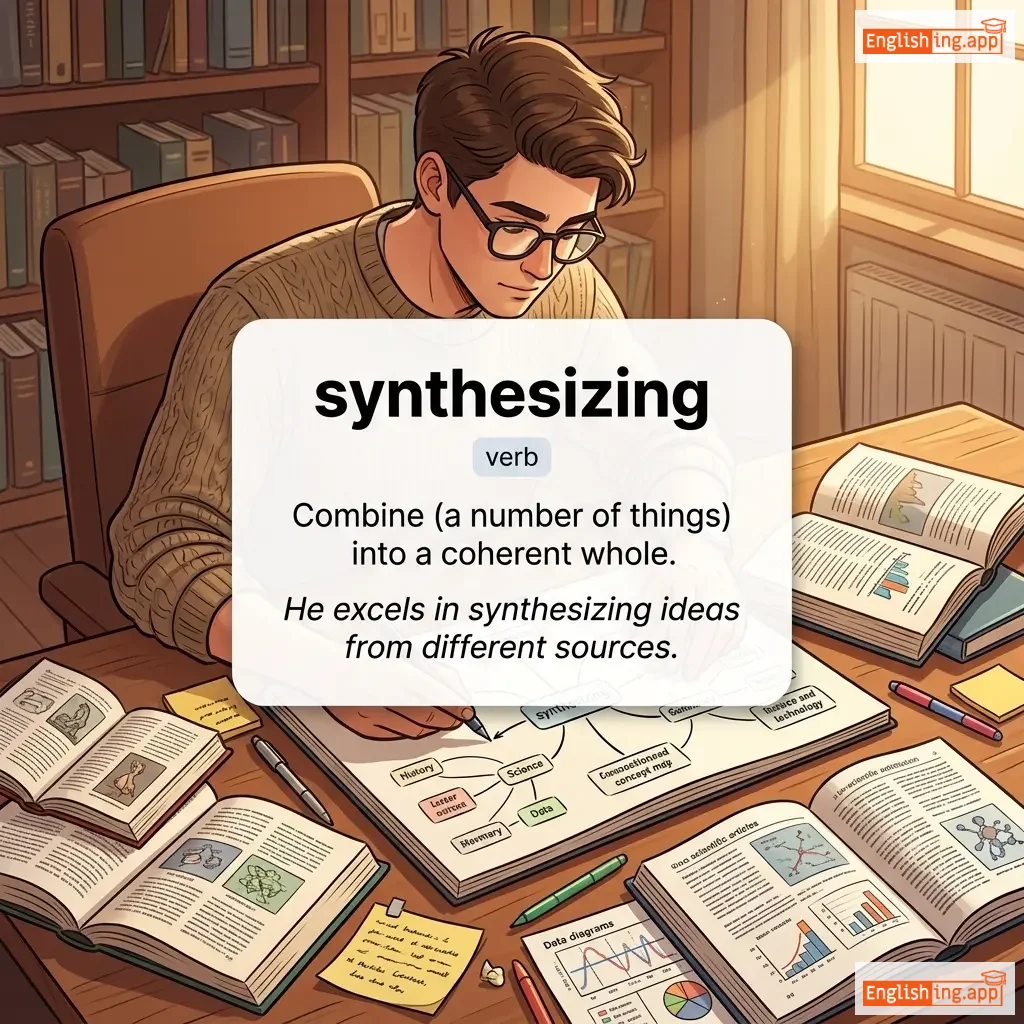
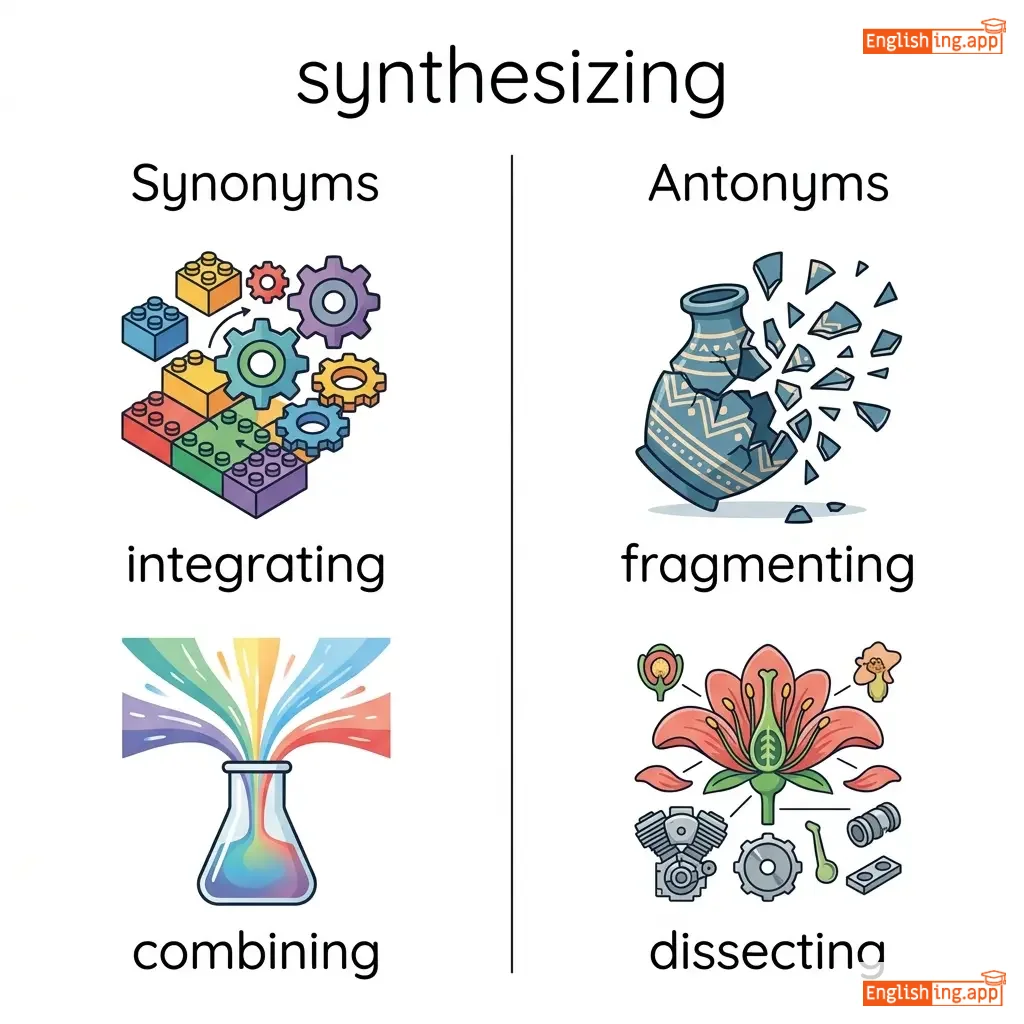
ˈsɪn.θə.saɪ.zɪŋ
verb
(シンセサイズング)
••••••
|
|
合成する, 組み合わせる, 論理的に提示する
gōsei suru, kumiawaseru, ronriteki ni teiji suru
••••••
|
Combine (a number of things) into a coherent whole.
••••••
|
He excels in synthesizing ideas from different sources. |
彼は異なるソースからアイデアを合成するのが得意です。
Kare wa kotonaru sōsu kara aidea o gōsei suru no ga tokui desu.
••••••
|
integrating, combining
••••••
|
fragmenting, dissecting
••••••
|
アイデアを合成することは日本語で物事を論理的に組み合わせることを意味します。
••••••
|
|
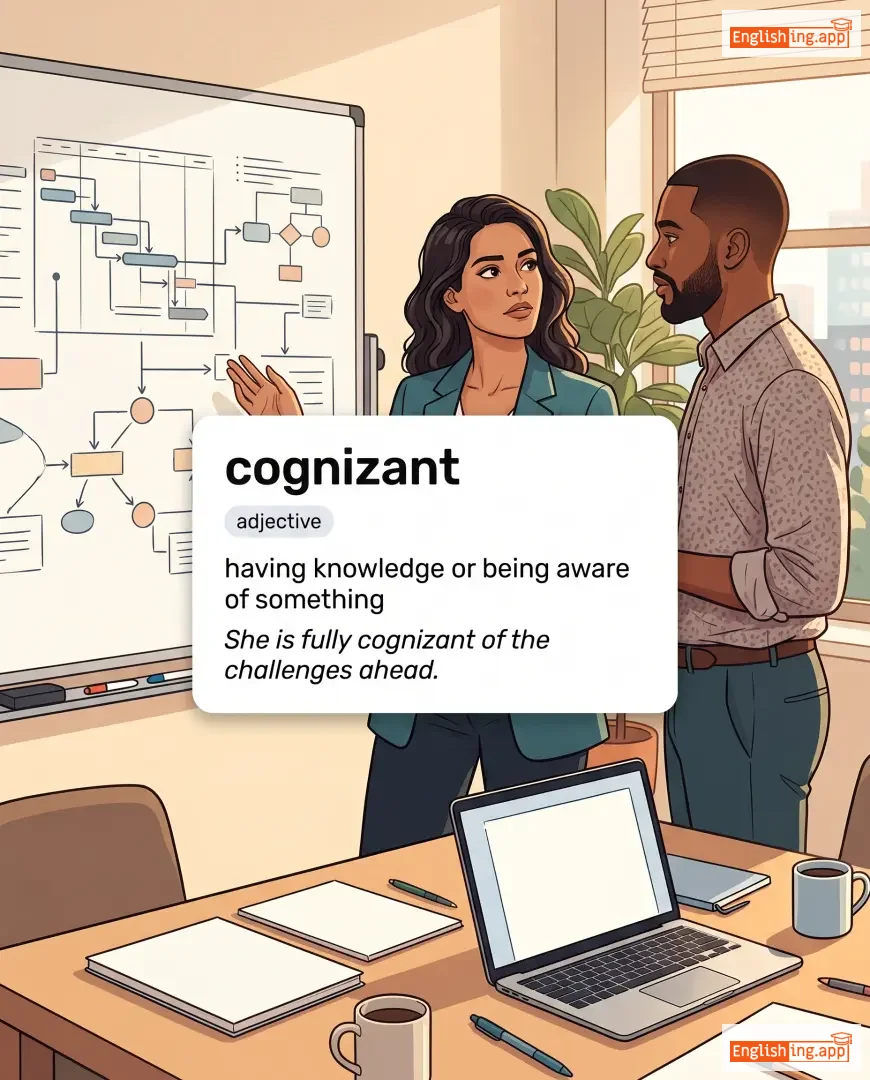
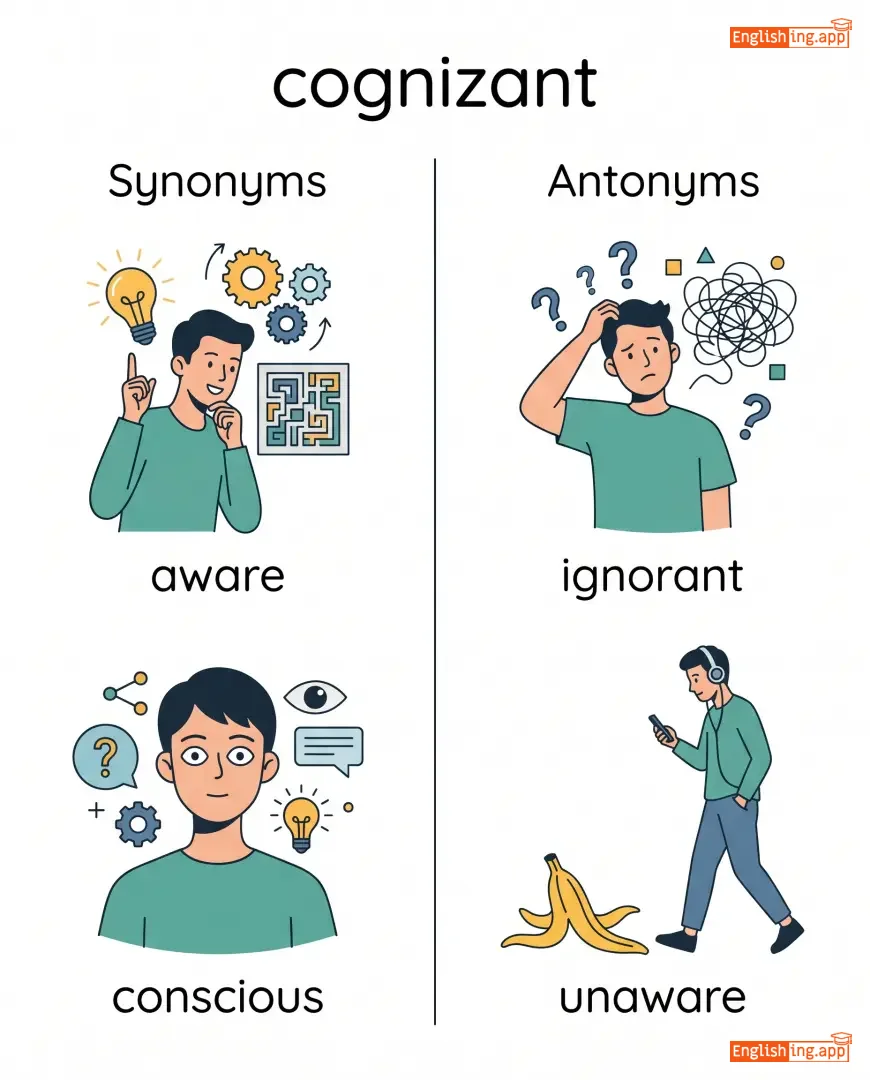
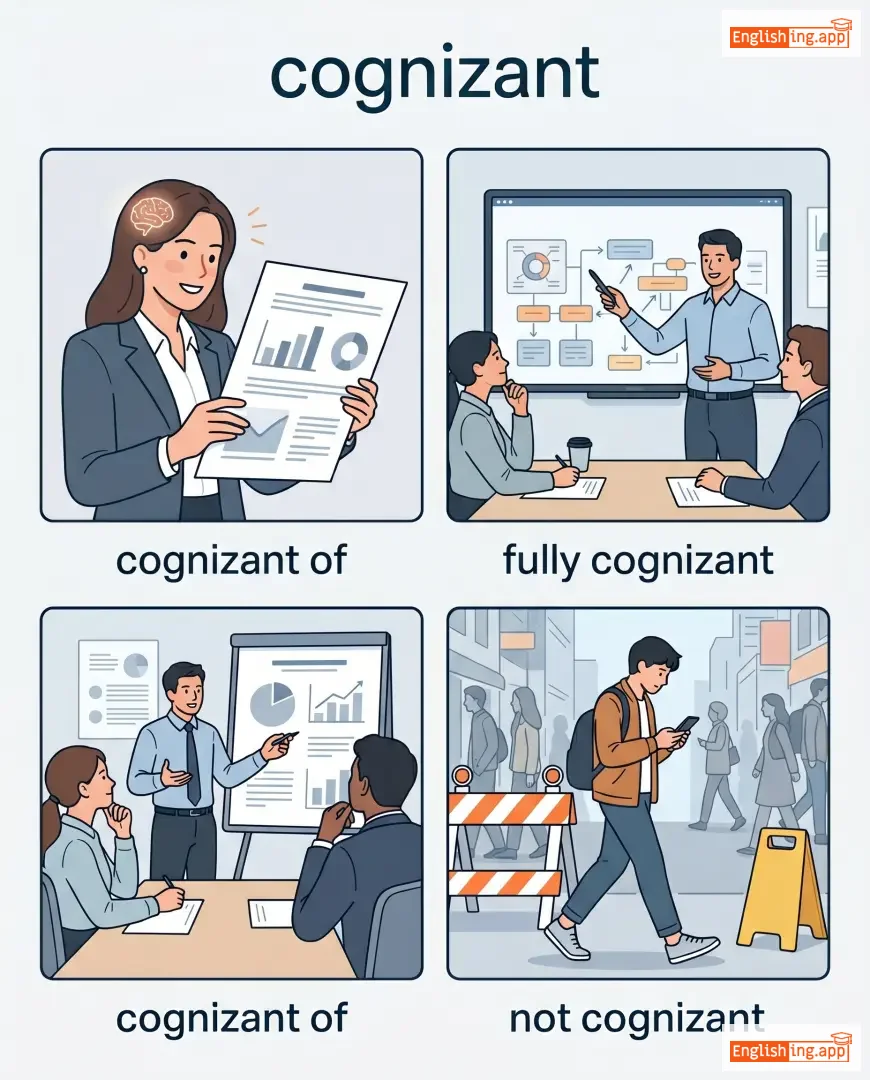
#2073
👁️
|
ˈkɒɡ.nɪ.zənt
adjective
(コグニザント)
••••••
|
|
認識している
ninshiki shite iru
••••••
|
Having knowledge or being aware of.
••••••
|
We should be cognizant of the impact of our actions. |
私たちは自分の行動が与える影響に認識しているべきです。
Watashitachi wa jibun no kōdō ga ataeru eikyō ni ninshiki shite iru beki desu.
••••••
|
aware, mindful
••••••
|
unaware, oblivious
••••••
|
認識しているとは、周囲の出来事に対して完全に意識的であることを意味します。
••••••
|
|
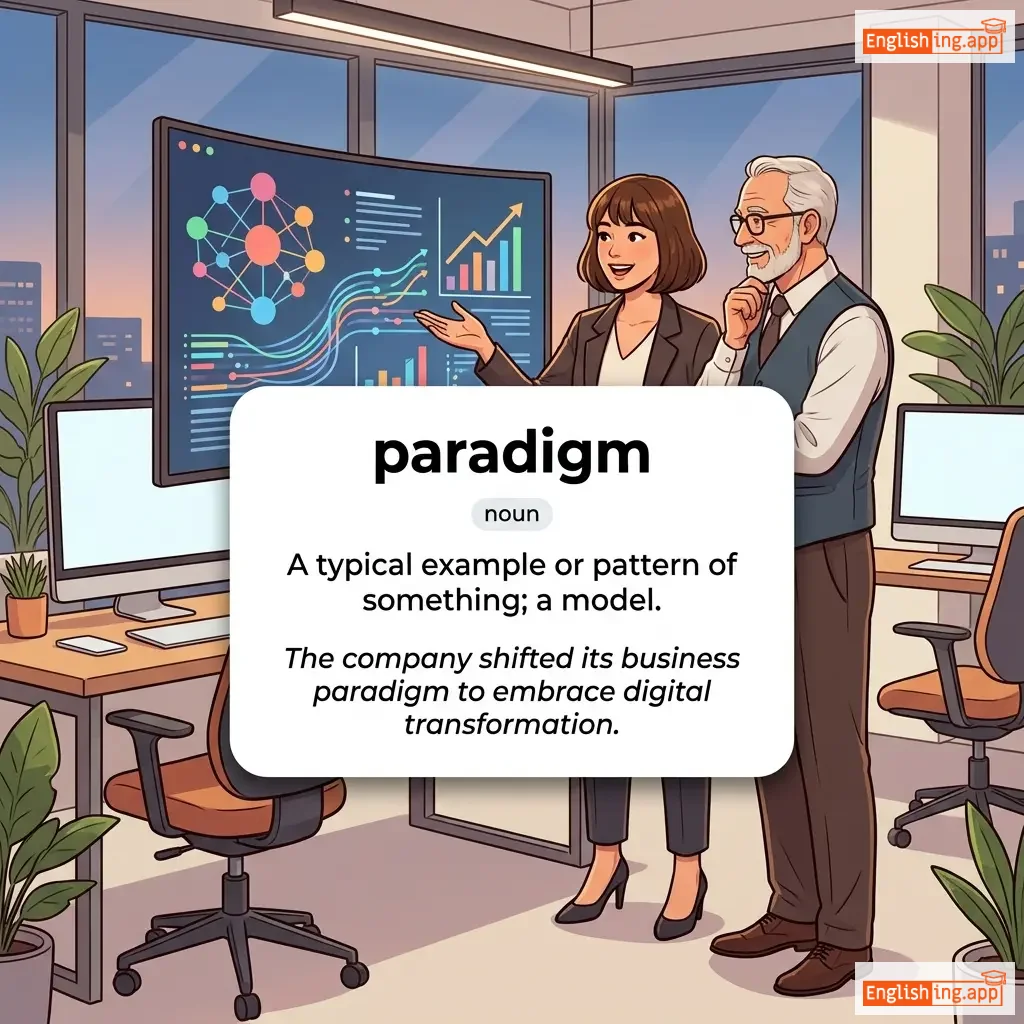
#2074
🏗️
|
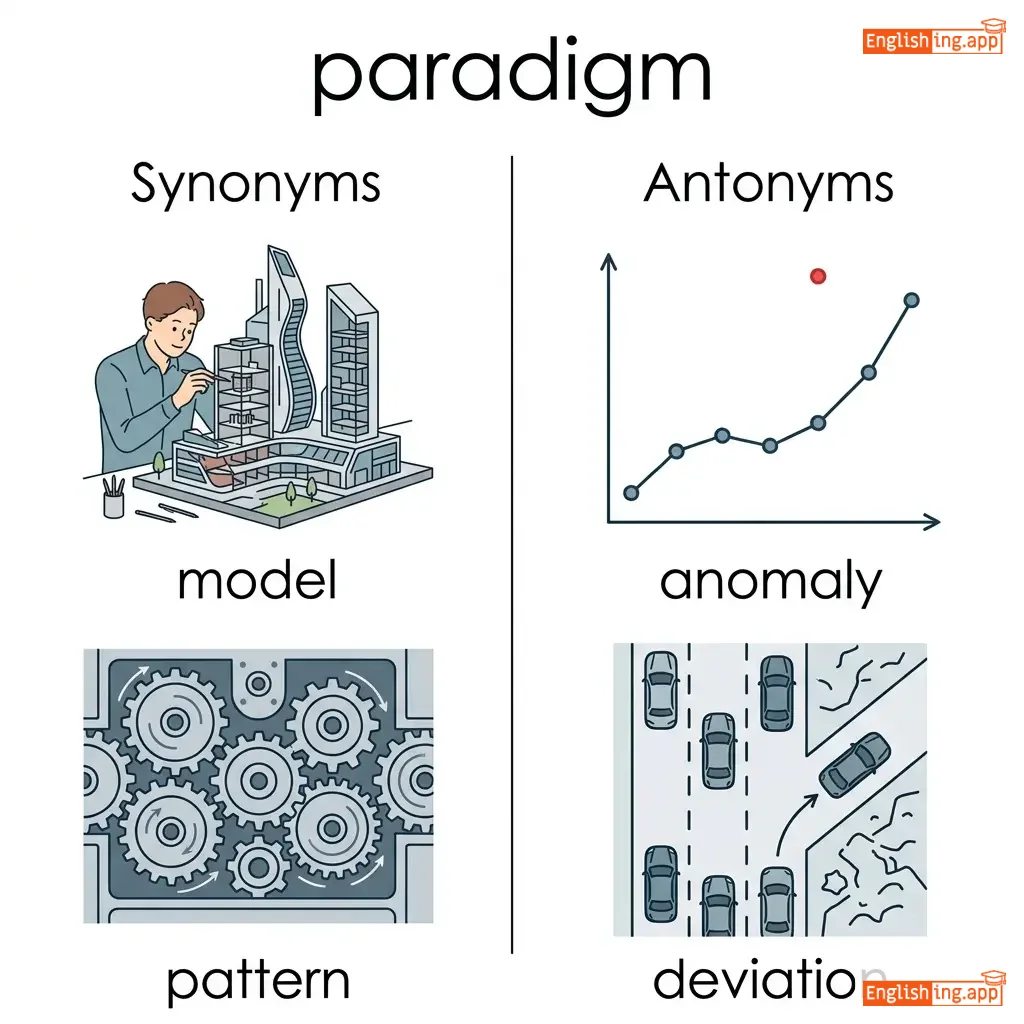
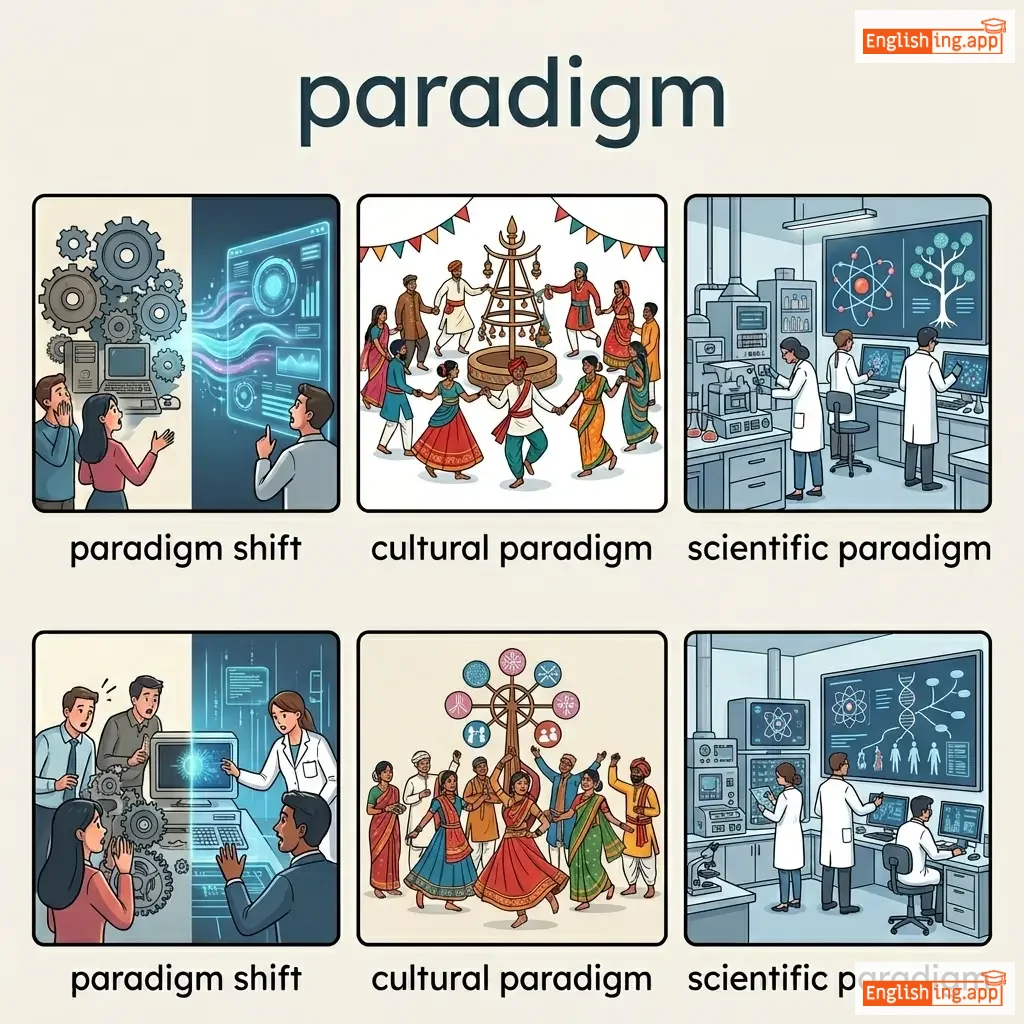
ˈpær.ə.daɪm
noun
(パラダイム)
••••••
|
|
パラダイム、モデル
paradaimu, moderu
••••••
|
A typical example or pattern of something; a model.
••••••
|
The internet has changed the paradigm of communication. |
インターネットはコミュニケーションのパラダイムを変えました。
Intānetto wa komyunikēshon no paradaimu o kaemashita.
••••••
|
model, framework
••••••
|
disorganization, disorder
••••••
|
完璧なコミュニケーションのモデル、パラダイム!
••••••
|
|
#2075
⚖️
|
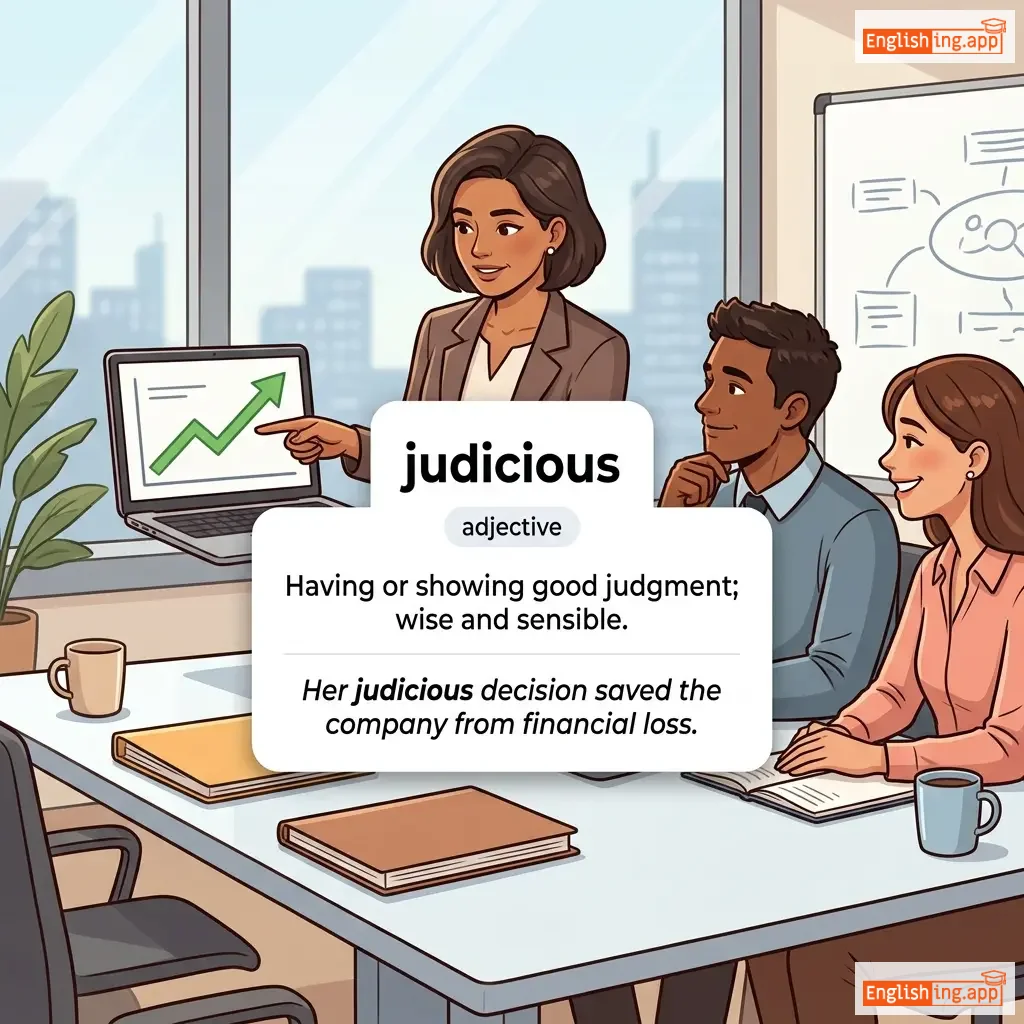
dʒuːˈdɪʃ.əs
adjective
(judicious)
••••••
|
|
賢明な, 分別のある, 慎重な
kenmei na, funbetsu no aru, shinchou na
••••••
|
Having, showing, or done with good judgment or sense.
••••••
|
A judicious leader makes well-informed decisions.
賢明なリーダーは十分に情報を得た決定を下します。
••••••
|
賢明なリーダーは十分に情報を得た決定を下します。
Kenmei na riidaa wa juubun ni jouhou wo eta kettei wo kudashimasu.
••••••
|
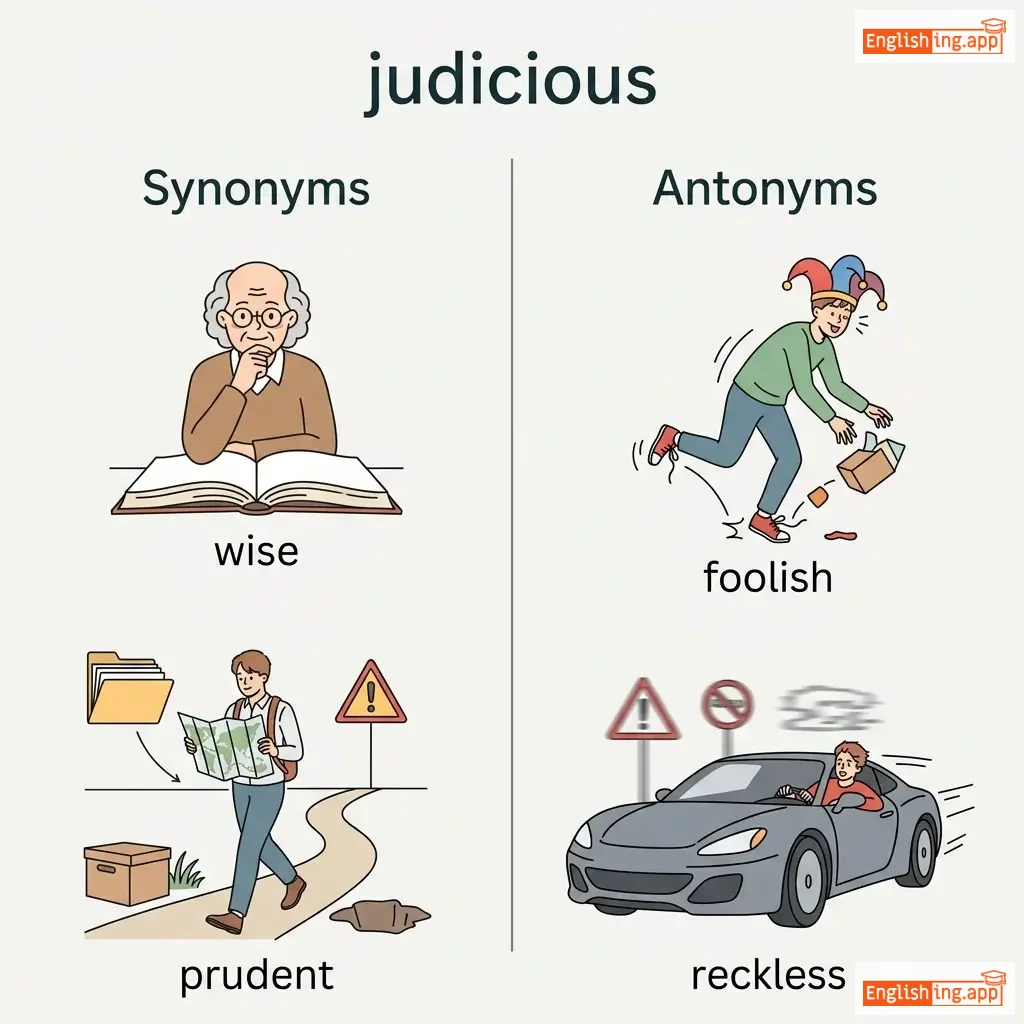
wise, prudent
••••••
|
reckless, impulsive
••••••
|
賢明さと理性は常に最良の決定を導きます。
••••••
|
|
#2076
💭
|
ˌræʃ.ən.əl.ɪˈzeɪ.ʃən
noun
(ラショナライゼーション)
••••••
|
|
合理化
gōrika
••••••
|
The practice of finding reasons for behavior or actions that are not the real reasons.
••••••
|
His rationalization of the mistake was not convincing. |
彼の間違いの合理化は説得力がなかった。
Kare no machigai no gōrika wa settokuryoku ga nakatta.
••••••
|
justification, explanation
••••••
|
irrationality, misinterpretation
••••••
|
合理化は、実際の理由を隠して理屈をつけることです。
••••••
|
|
#2077
🤔
|
ˈɪn.fɚ.əns
noun
(インフェレンス)
••••••
|
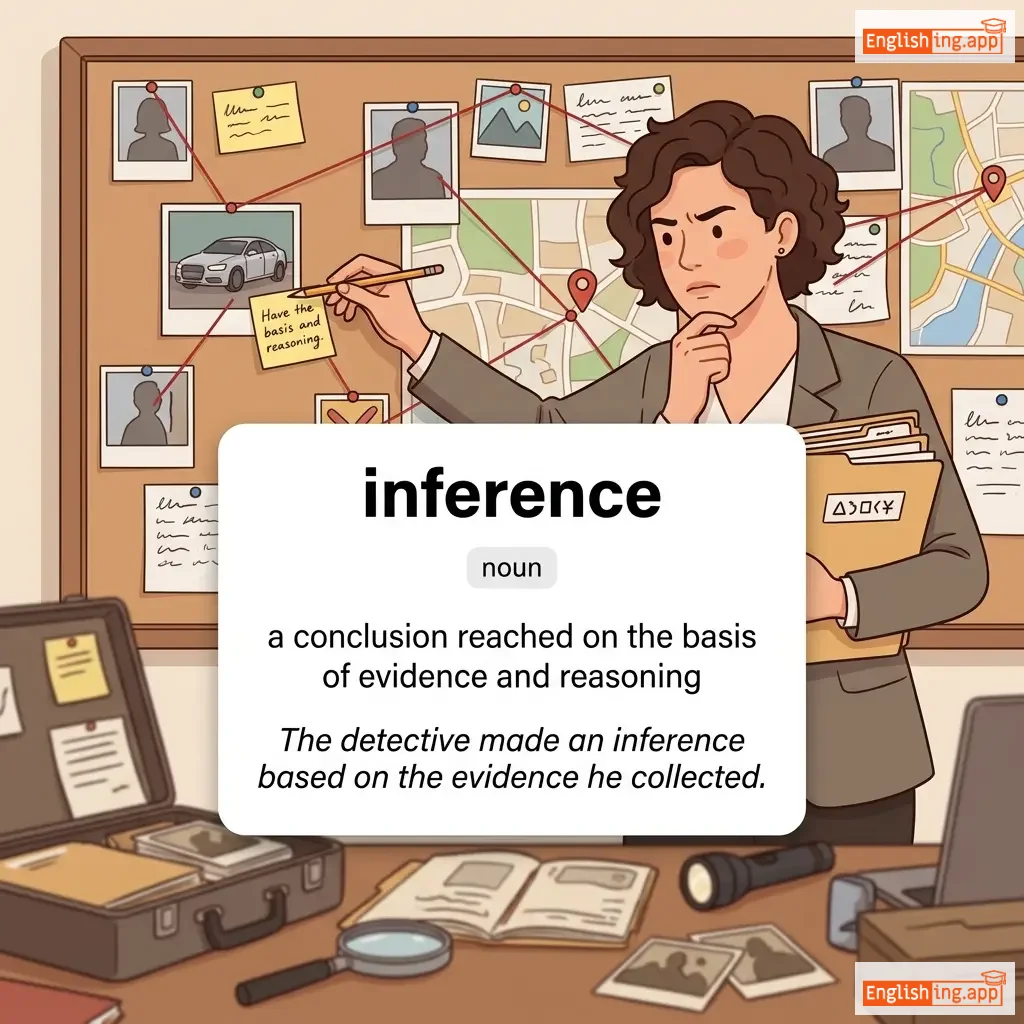
|
推論、結論、証拠と論理に基づく結論
suiron, ketsuron, shōko to ronri ni motoduku ketsuron
••••••
|
A conclusion reached on the basis of evidence and reasoning.
••••••
|
Based on the evidence, his inference was accurate.
証拠に基づいて、彼のインフェレンスは正確でした。
••••••
|
証拠に基づいて、彼の推論は正確でした。
Shōko ni motoduite, kare no suiron wa seikaku deshita.
••••••
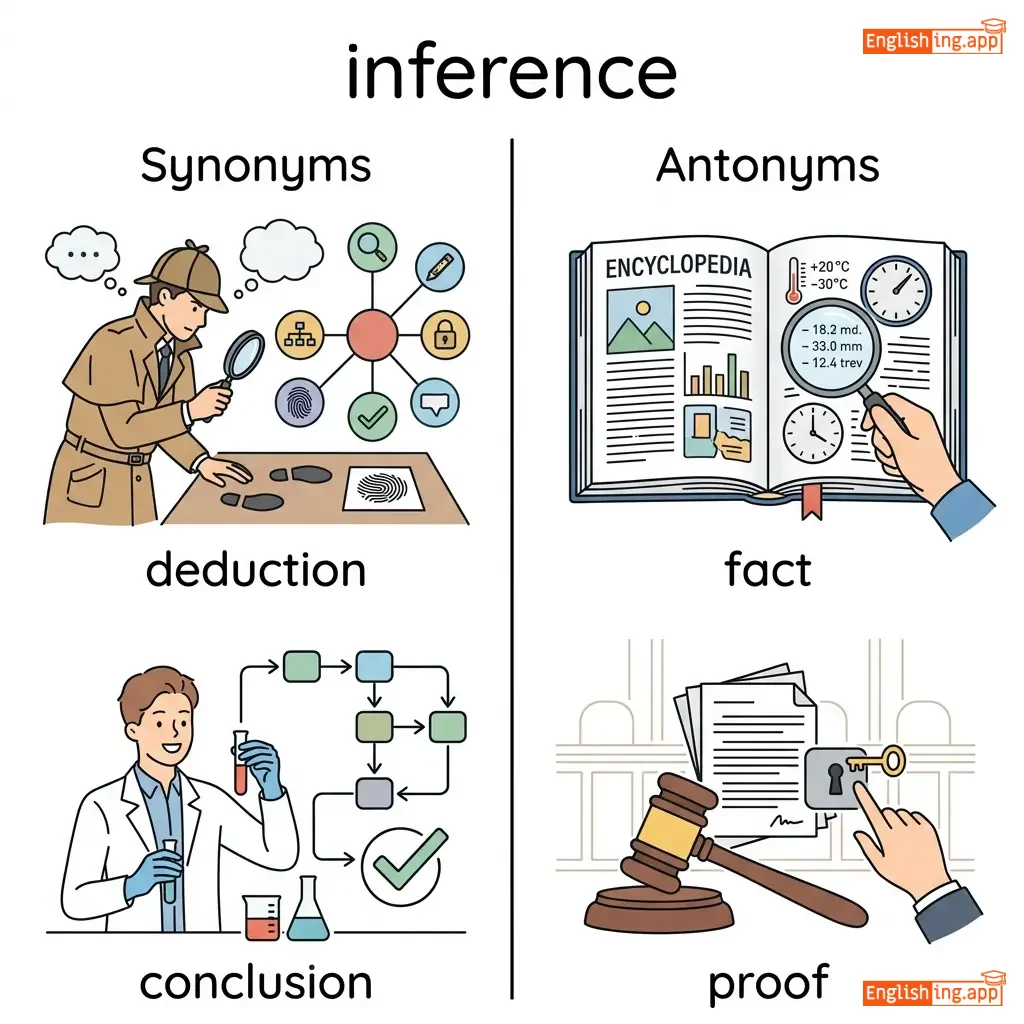
|
conclusion, deduction
••••••
|
assumption, misjudgment
••••••
|
推論: 証拠から結論を導く探偵のように。
••••••
|
|
#2078
📈
|
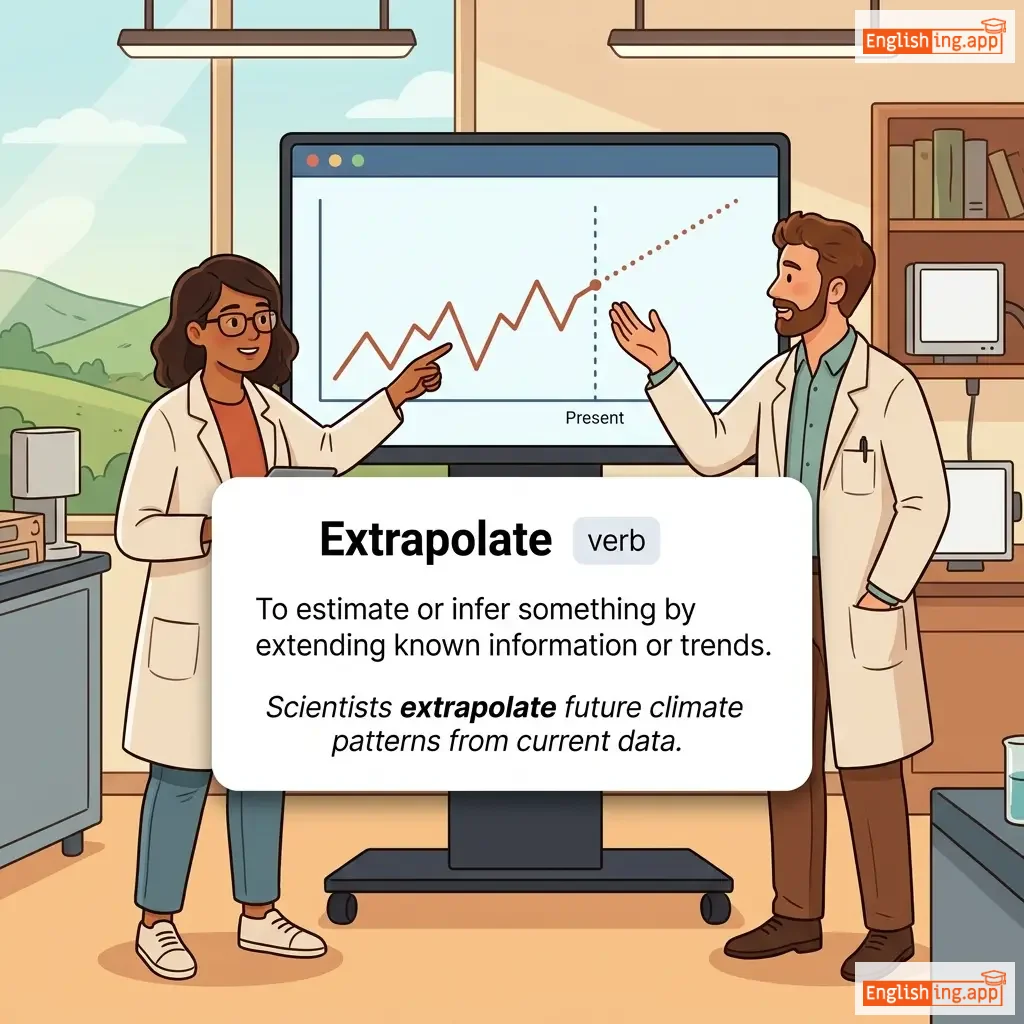
ɪkˈstræp.ə.leɪt
verb
(エクストラポレート)
••••••
|
|
外挿する
gaizō suru
••••••
|
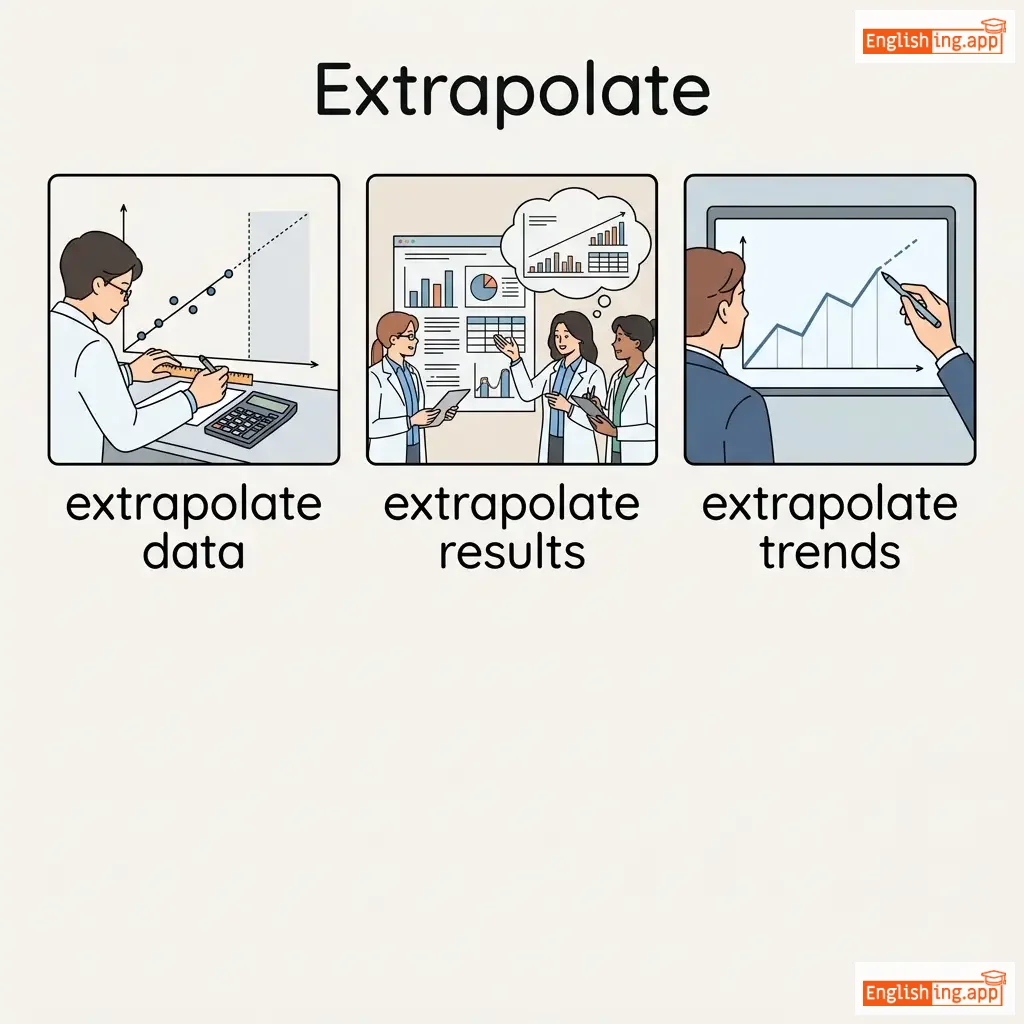
Extend the application of (a method or conclusion) to an unknown situation by assuming that existing trends will continue.
••••••
|
Scientists extrapolate future climate trends from past data. |
科学者たちは過去のデータから将来の気候の傾向を外挿します。
Kagakusha-tachi wa kako no dēta kara shōrai no kikō no keikō o gaizō shimasu.
••••••
|
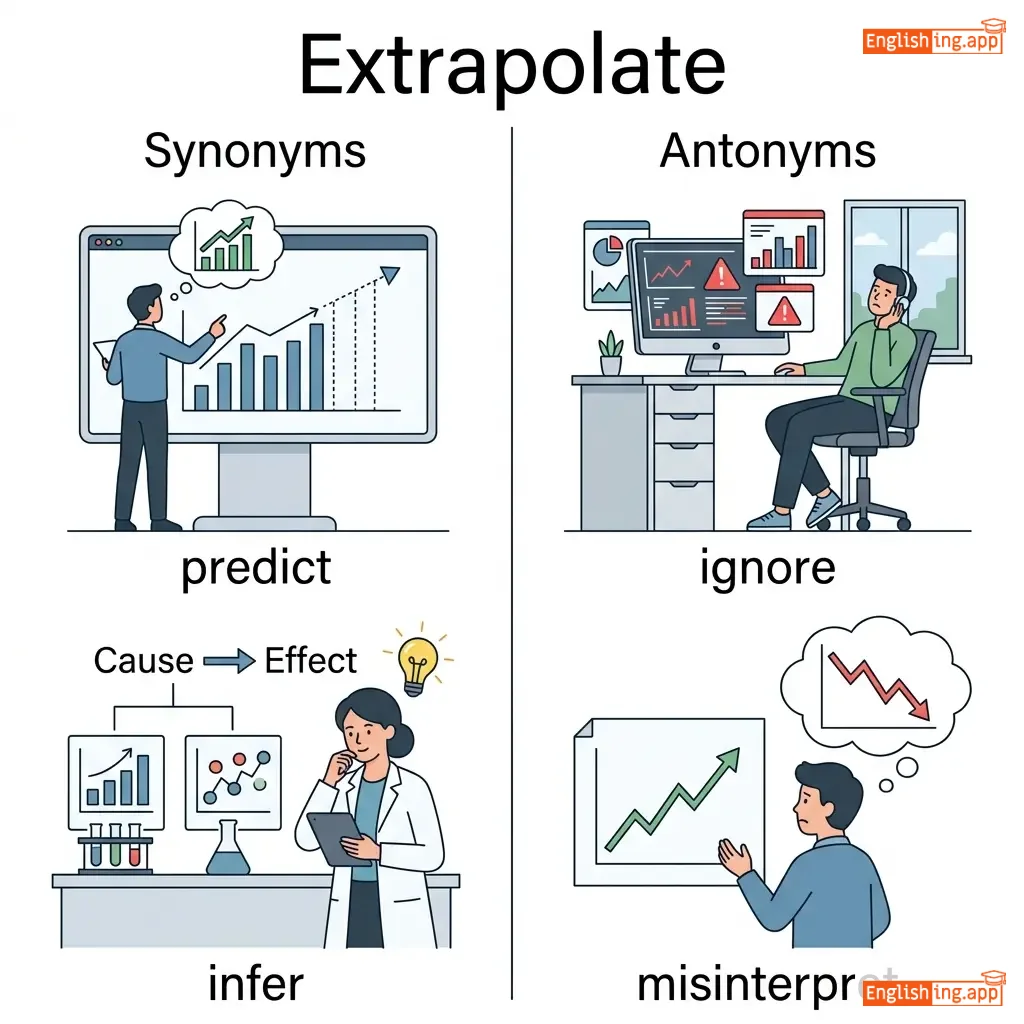
predict, infer
••••••
|
miscalculate, misinterpret
••••••
|
外挿するは過去の情報から未来を予測すること。
••••••
|
|
#2079
🔬
|
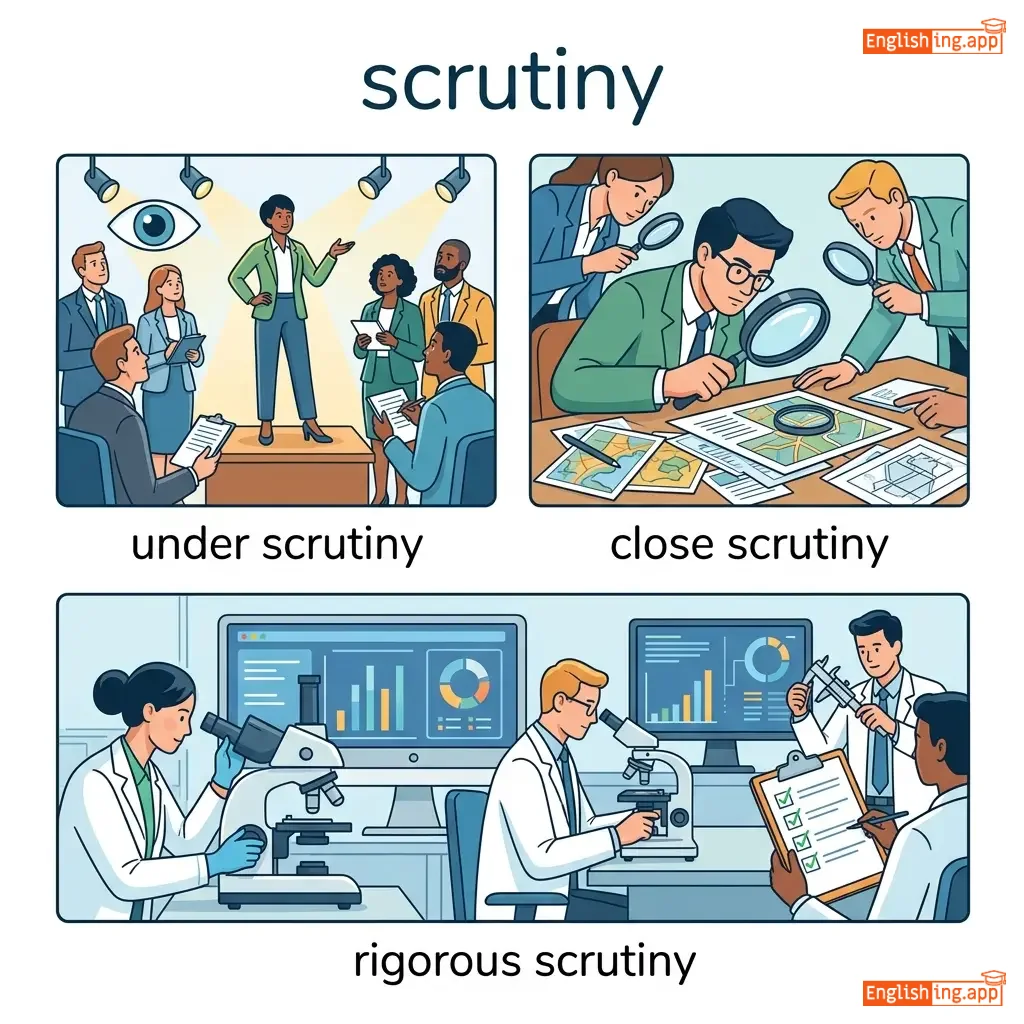
ˈskruː.tɪ.ni
noun
(スクルーチニー)
••••••
|
|
詳細な調査, 厳密な検査, 監視
shousaina chousa, genmitsu na kensa, kanshi
••••••
|
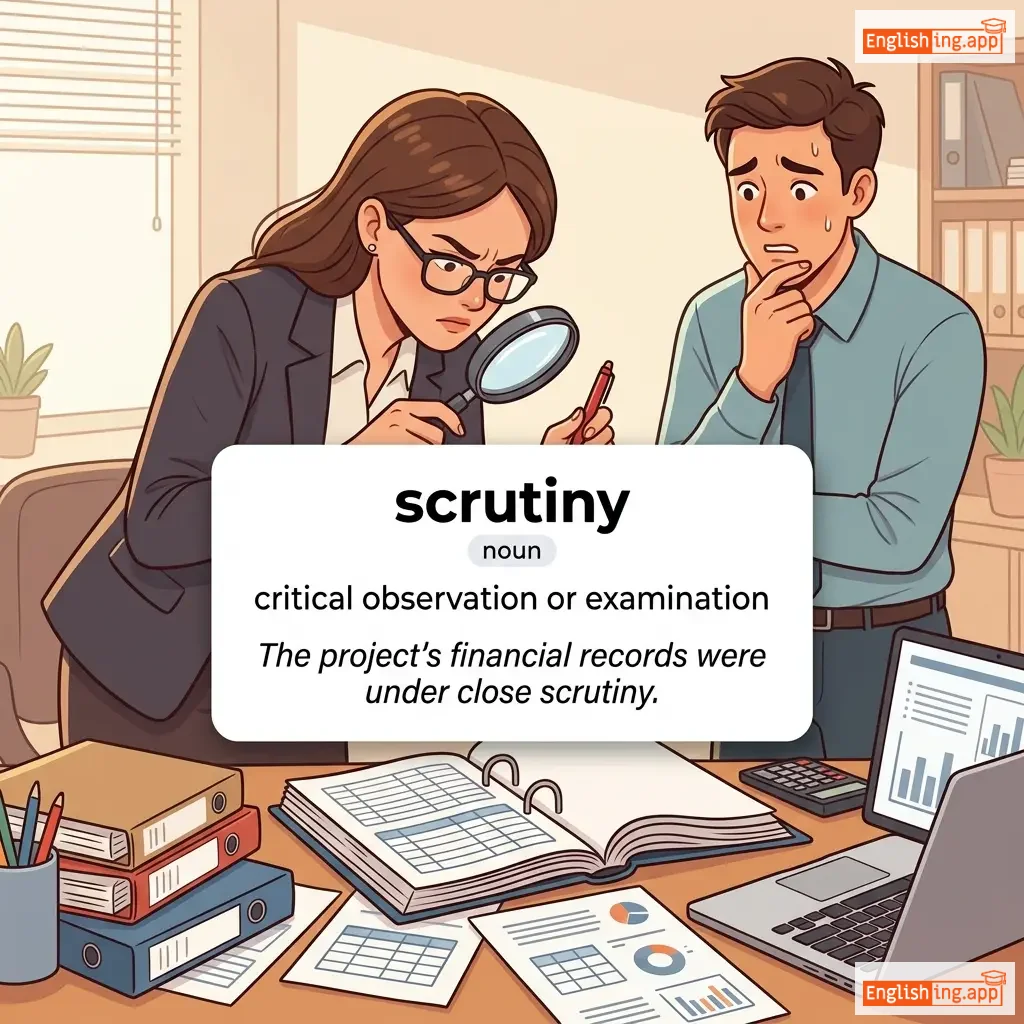
Critical observation or examination.
••••••
|
The report is under intense scrutiny by experts. |
報告書は専門家による厳密な調査を受けています。
Houkokusho wa senmonka ni yoru genmitsu na chousa wo uketeimasu.
••••••
|
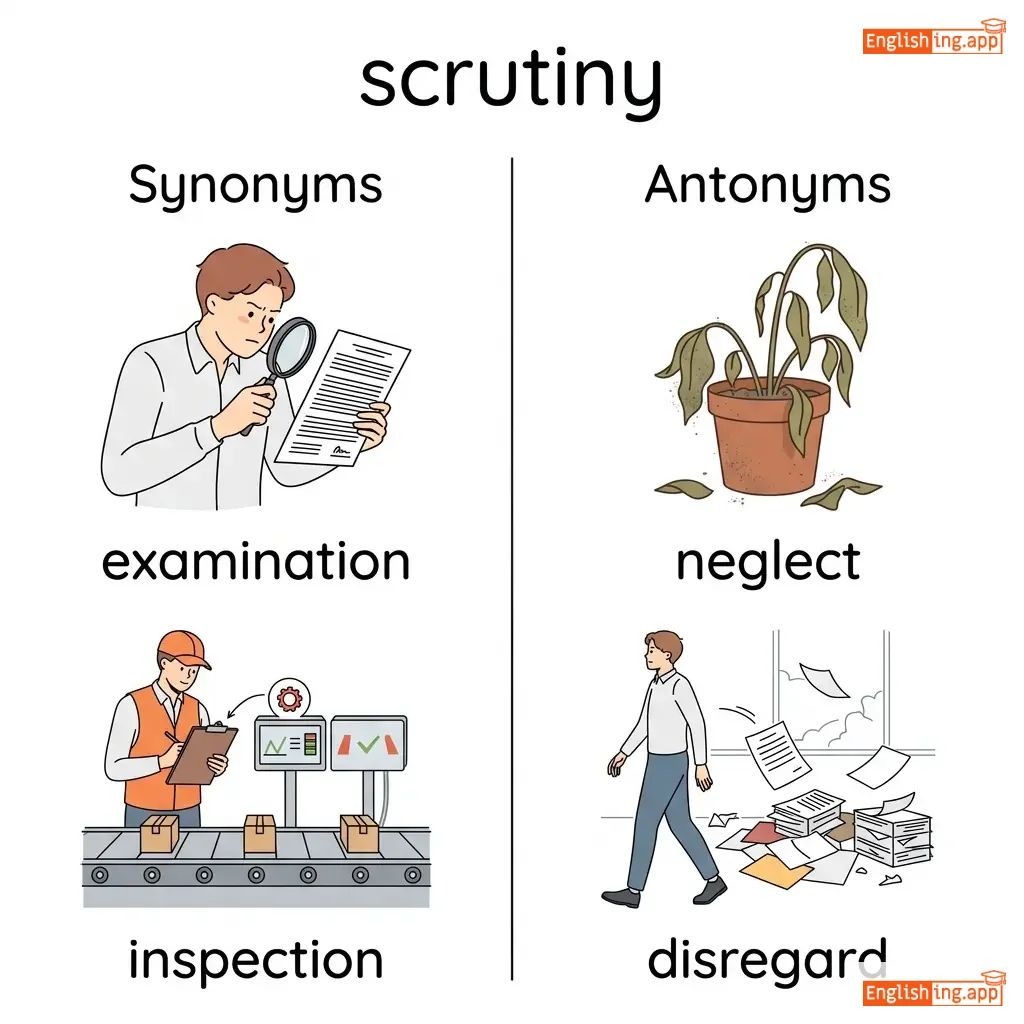
inspection, examination
••••••
|
neglect, oversight
••••••
|
注意深い監視で事実が明らかに。
••••••
|
|
#2080
🪞
|
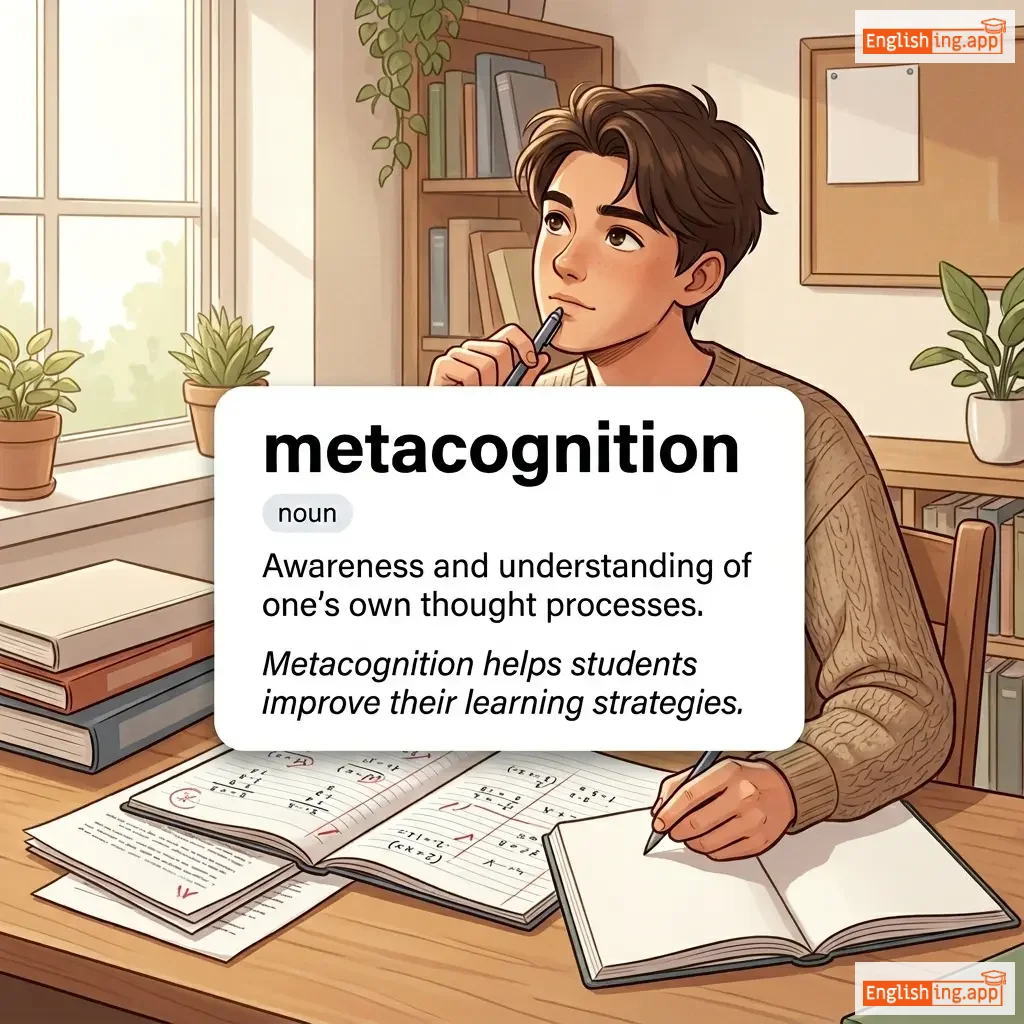
ˌmet.ə.kɒɡˈnɪʃ.ən
noun
(メタ認知)
••••••
|
|
自分の思考過程に対する認識と理解
jibun no shikou katei ni taisuru ninshiki to rikai
••••••
|
Awareness and understanding of one's own thought processes.
••••••
|
Metacognition helps students assess their own learning strategies.
メタ認知は学生が自分の学習戦略を評価するのを助けます。
••••••
|
メタ認知は学生が自分の学習戦略を評価するのを助けます。
Meta ninchi wa gakusei ga jibun no gakushū senryaku o hyōka suru no o tasukemasu.
••••••
|
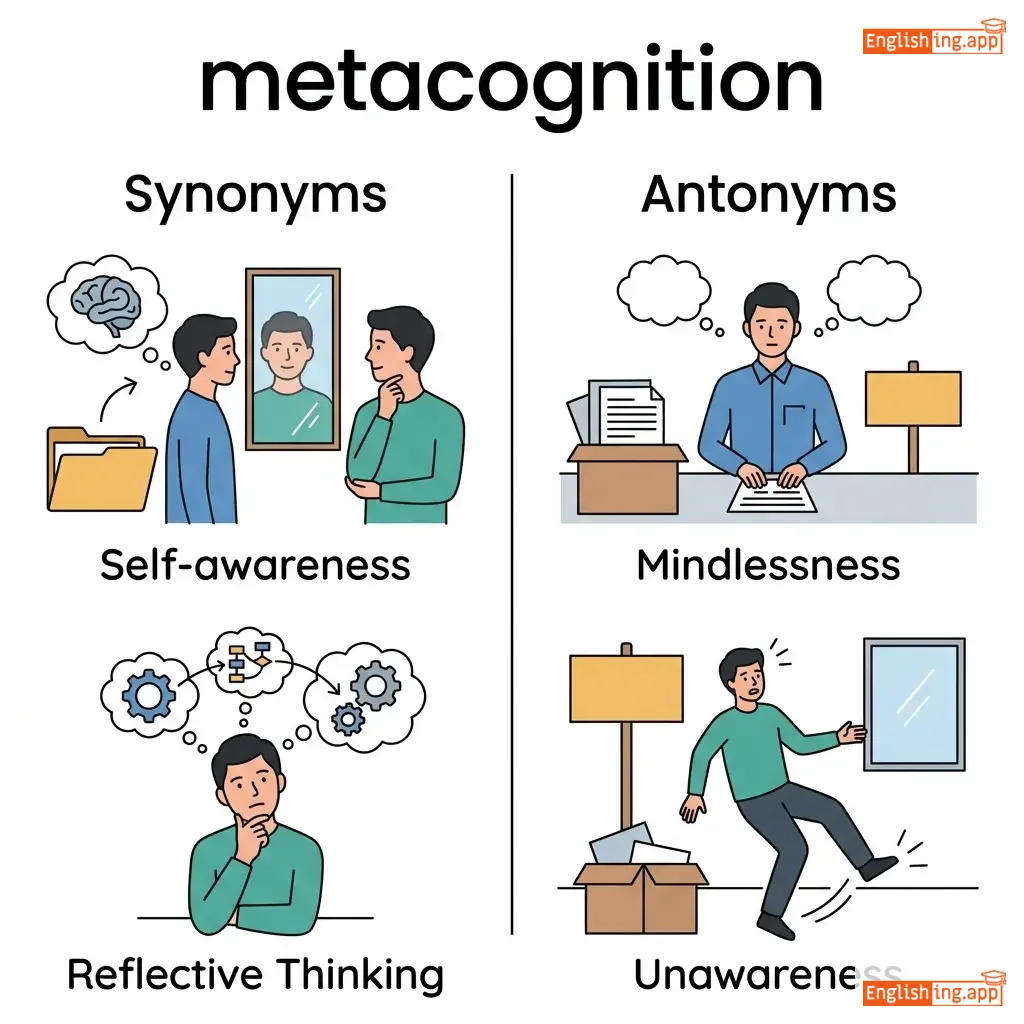
self-awareness, reflection
••••••
|
unawareness, ignorance
••••••
|
Metacognition is being aware of your thinking process and helps students evaluate learning strategies.
••••••
|
|
#2081
🎤
|
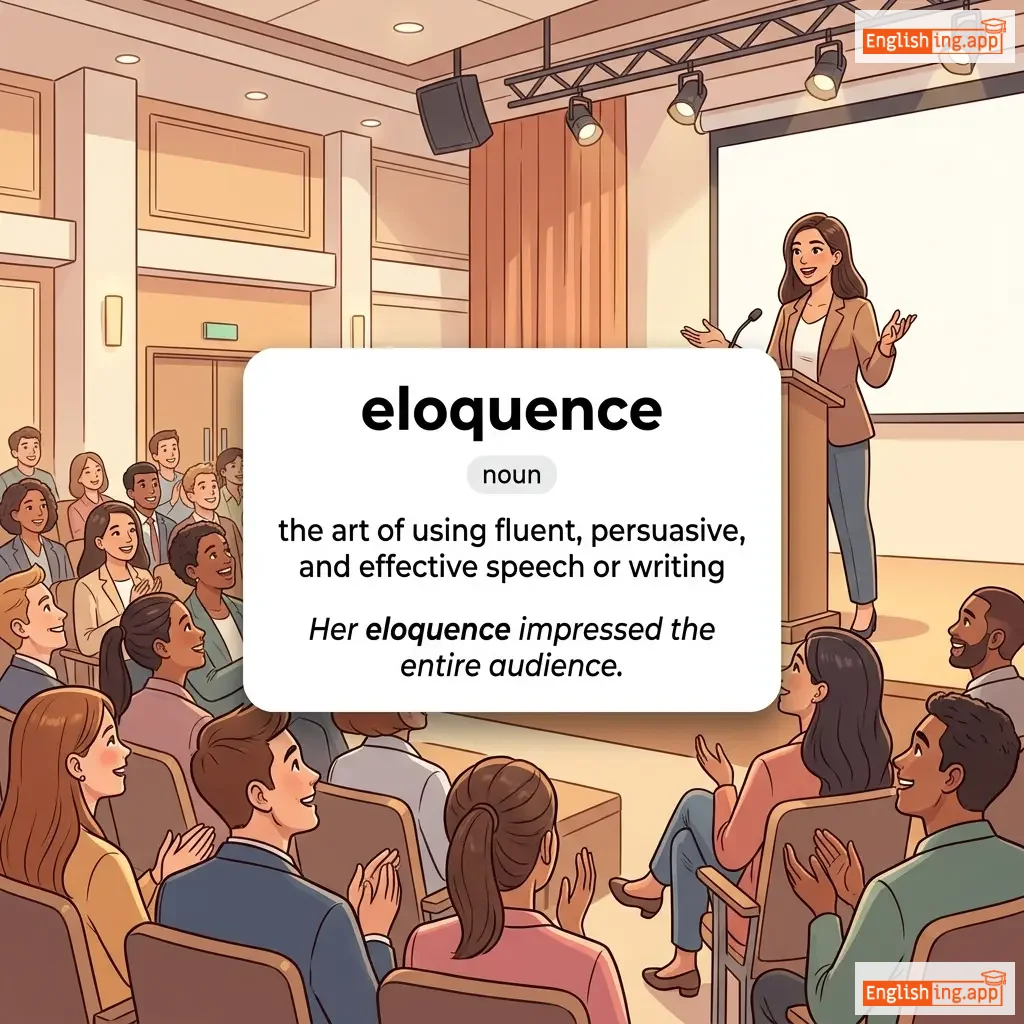
ˈel.ə.kwəns
noun
(エロクエンス)
••••••
|
|
雄弁、説得力のある話し方や書き方
yūben, settokuryoku no aru hanashikata ya kakikata
••••••
|
Fluent or persuasive speaking or writing.
••••••
|
His eloquence made the speech inspiring.
彼の雄弁はスピーチを感動的にしました。
••••••
|
彼の雄弁はスピーチを感動的にしました。
Kare no yūben wa supīchi o kandō-teki ni shimashita.
••••••
|
articulacy, fluency
••••••
|
incoherence, hesitation
••••••
|
In Japanese, '雄弁' means eloquence, emphasizing fluent and persuasive speaking or writing.
••••••
|
Vocabulary Quiz
Test your vocabulary by matching words with their translations or meanings.
Login to take the quiz
Comments (0)
Share your thoughts and join the discussion.
Join the discussion by logging in
Login to CommentNo comments yet
Be the first to share your thoughts!