📈extrapolate (エクストラポレート)

verb
/ɪkˈstræp.əˌleɪt/
外挿する (gaisō suru)

意味

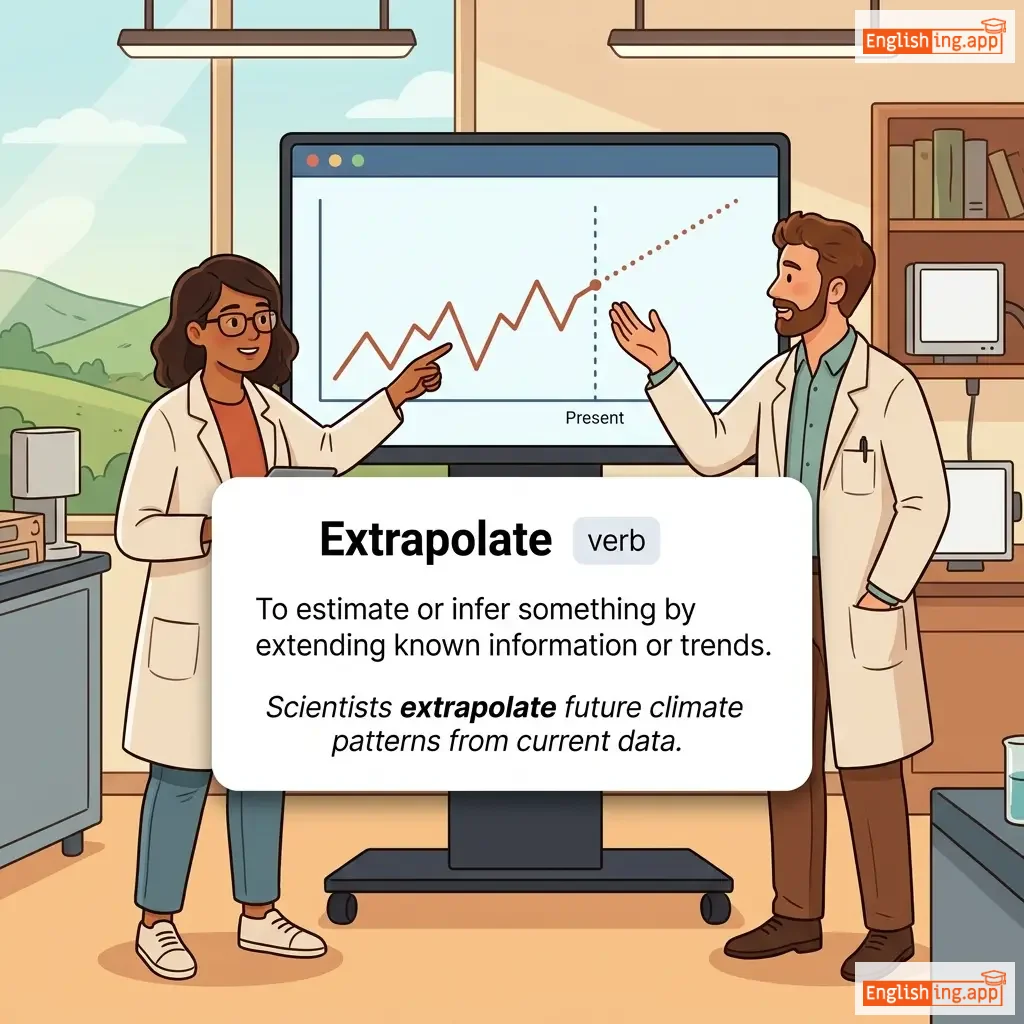
To estimate or infer something by extending known information or trends.
Making future estimates based on existing information
Extend the application of a method or conclusion to an unknown situation by assuming that existing trends will continue.
意味の翻訳
既知の情報や傾向を拡張して何かを推定または推測すること
kichi no jōhō ya keikō o kakuchō shite nanika o suitei mata wa suisoku suru koto

例文

Scientists extrapolate future climate patterns from current data.

科学者たちは現在のデータから将来の気候パターンを外挿します。
Kagakusha-tachi wa genzai no dēta kara shōrai no kikō patān o gaisō shimasu.

Scientists extrapolate climate changes based on past data.

科学者たちは過去のデータに基づいて気候変動を外挿します。
Kagakusha-tachi wa kako no dēta ni motozuite kikō hendō o gaisō shimasu.

Scientists extrapolate climate data to predict future trends.
科学者たちは気候データを外挿して、未来の傾向を予測します。
Kagakusha-tachi wa kikō dēta o gaizō shite, mirai no keikō o yosoku shimasu.

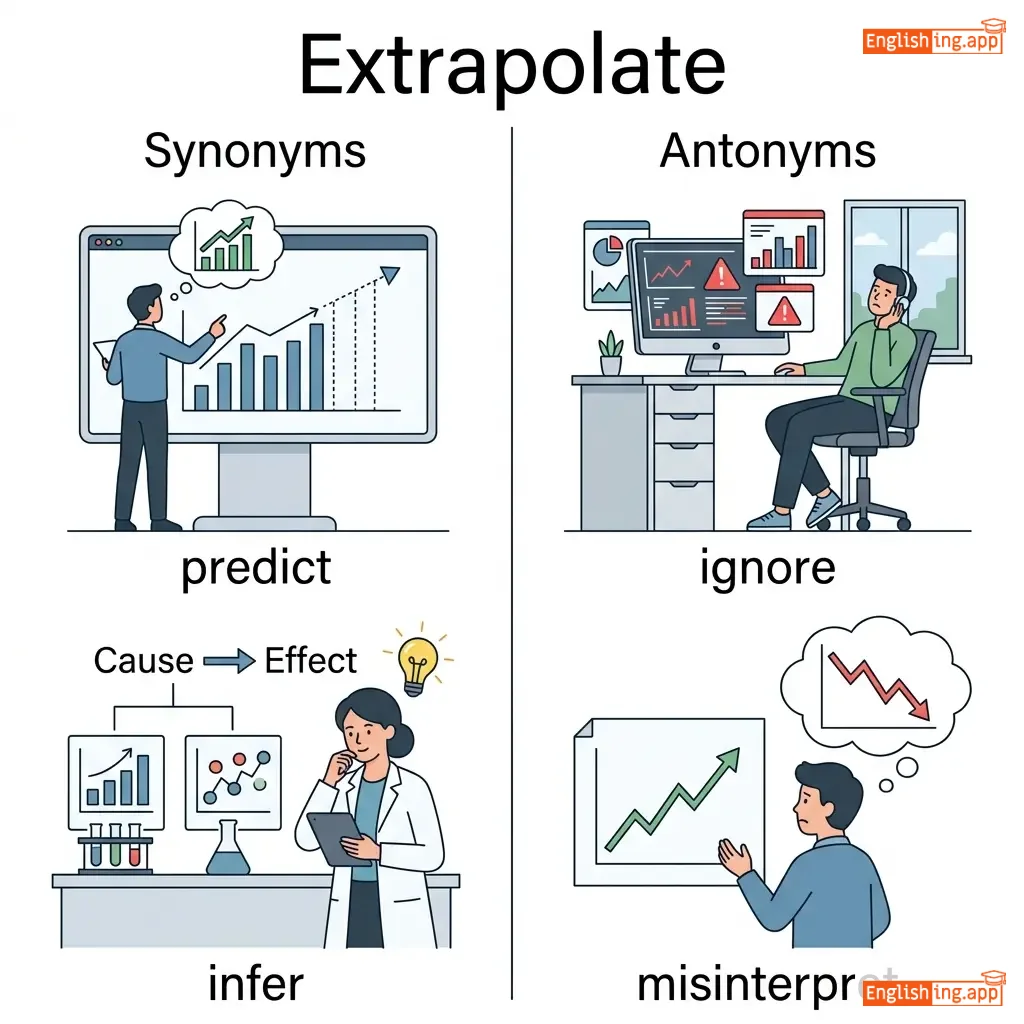
同義語

predict, infer, project, estimate, deduce, Predict, Infer, Deduce
エントリー 1
predict, infer, project, estimate, deduce
エントリー 2
Predict, Infer, Deduce
エントリー 3
infer, predict, estimate

対義語

ignore, misinterpret, Misinterpret, Miscalculate, Guess, miscalculate, distort
エントリー 1
ignore, misinterpret
エントリー 2
Misinterpret, Miscalculate, Guess
エントリー 3
misinterpret, miscalculate, distort

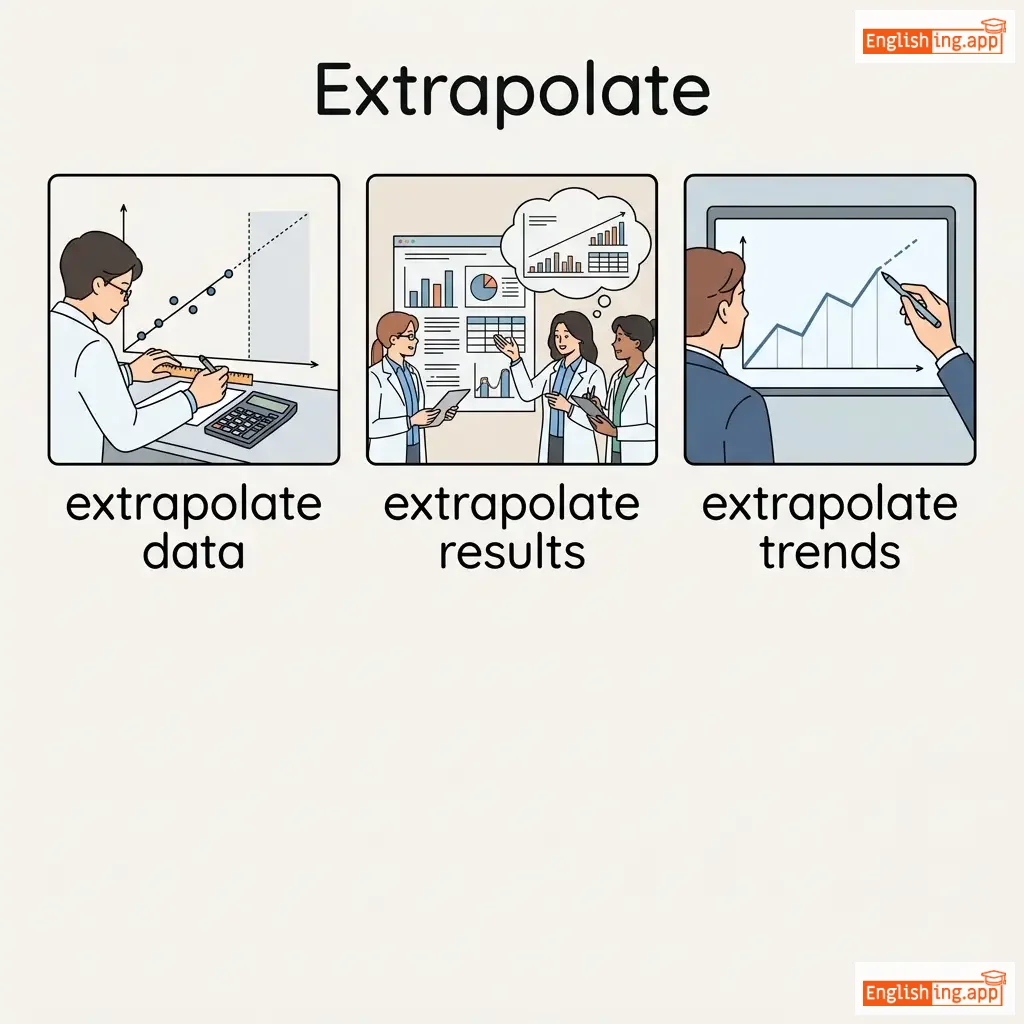
コロケーション

extrapolate data, extrapolate results, extrapolate trends, extrapolate figures