📈extrapolate (एक्सट्रैपोलेट)

verb
/ɪkˈstræp.əˌleɪt/
पूर्वानुमान करना (purvanuman karna)

मीनिंग

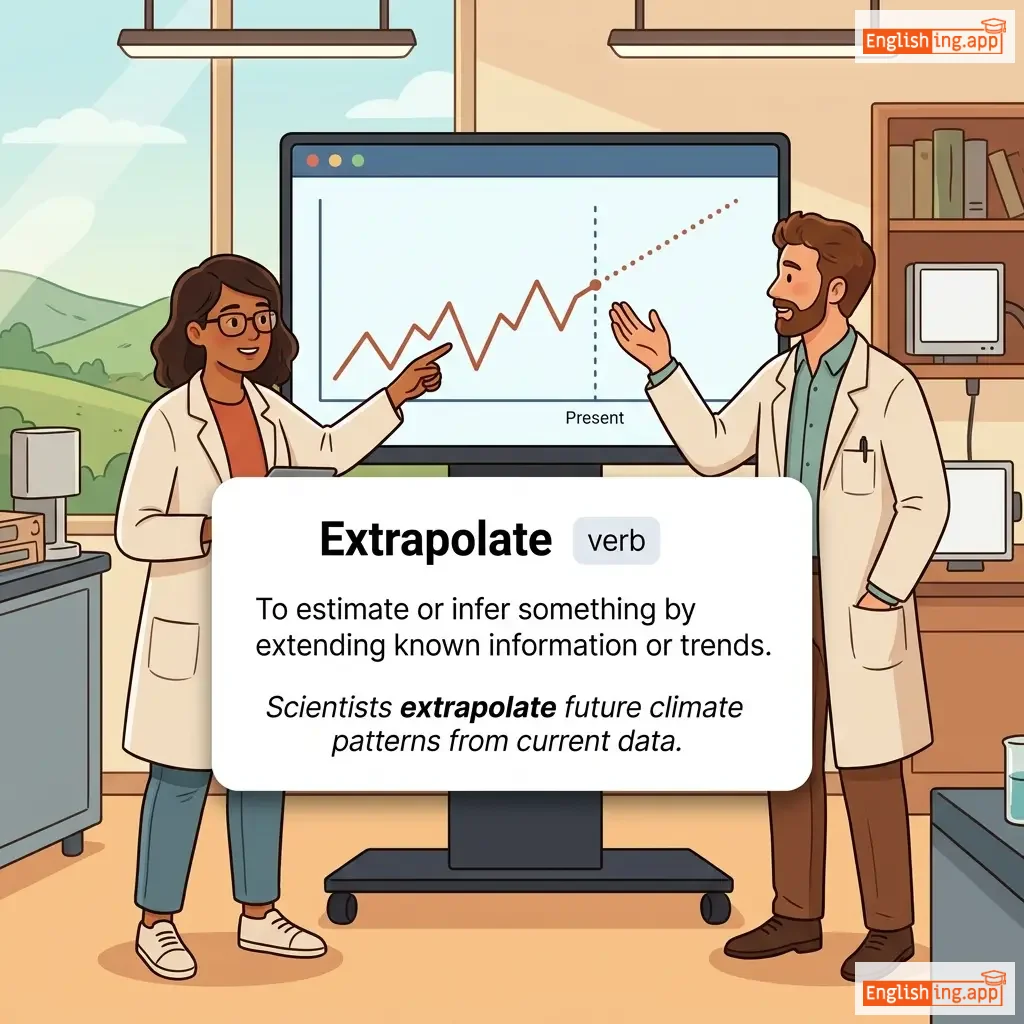
To estimate or infer something by extending known information or trends.
Making future estimates based on existing information
Extend the application of a method or conclusion to an unknown situation by assuming that existing trends will continue.
मीनिंग ट्रांसलेशन
ज्ञात जानकारी या प्रवृत्तियों के आधार पर कुछ का अनुमान लगाना
jnat jankari ya pravrittiyon ke aadhar par kuch ka anuman lagana

एक्जाम्पल सेंटेंसेस

Scientists extrapolate future climate patterns from current data.

वैज्ञानिक वर्तमान डेटा से भविष्य के जलवायु पैटर्न का अनुमान लगाते हैं।
Vigyanik vartaman data se bhavishya ke jalvayu pattern ka anuman lagate hain.

Scientists extrapolate climate changes based on past data.

वैज्ञानिक पिछले डेटा के आधार पर जलवायु परिवर्तन का अनुमान लगाते हैं।
Vaigyanik pichle data ke aadhar par jalvayu parivartan ka anumaan lagate hain.

Scientists extrapolate climate data to predict future trends.

वैज्ञानिक भविष्यवाणी करने के लिए जलवायु डेटा का पूर्वानुमान करते हैं।
Vaigyanik bhavishyavani karne ke liye jalvayu data ka purvanuman karte hain.

सिनोनिम्स

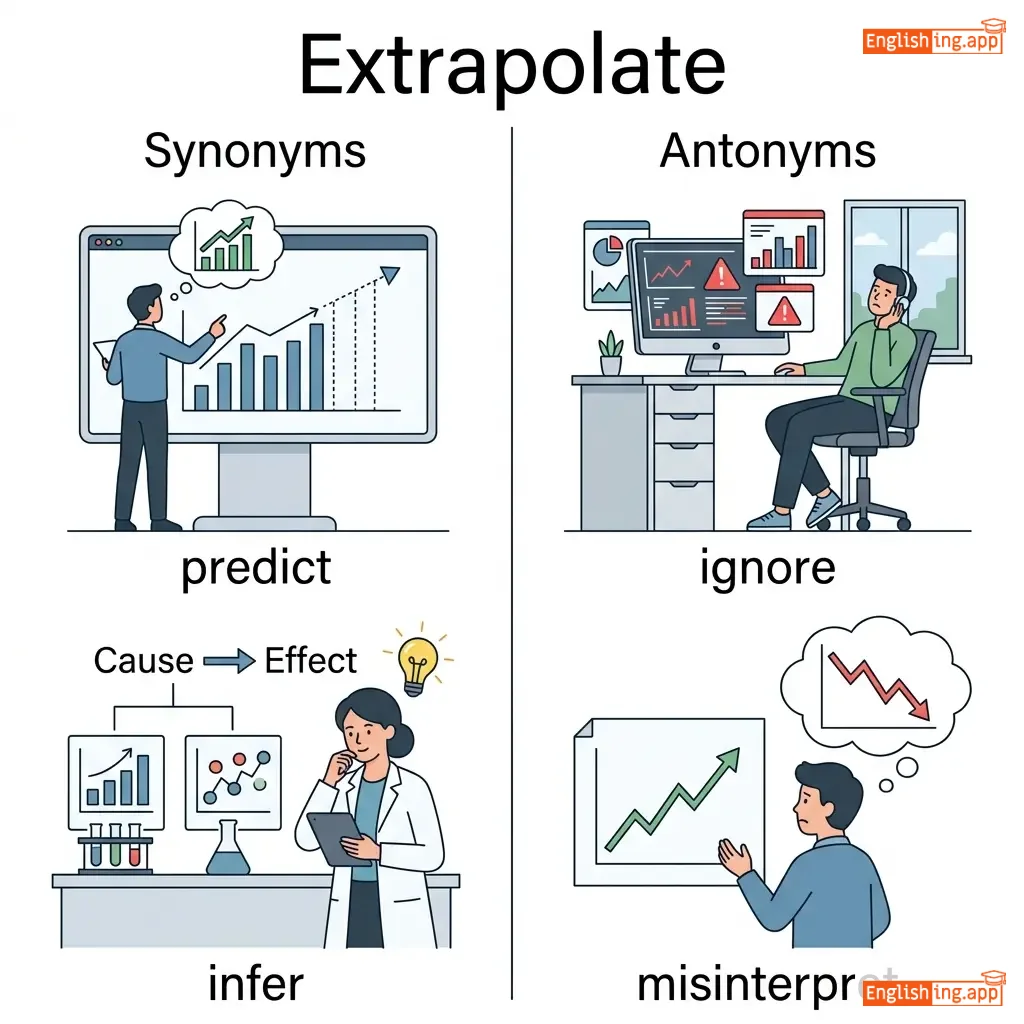
predict, infer, project, estimate, deduce, Predict, Infer, Deduce
एंट्री 1
predict, infer, project, estimate, deduce
एंट्री 2
Predict, Infer, Deduce
एंट्री 3
infer, predict, estimate

एंटोनिम्स

ignore, misinterpret, Misinterpret, Miscalculate, Guess, miscalculate, distort
एंट्री 1
ignore, misinterpret
एंट्री 2
Misinterpret, Miscalculate, Guess
एंट्री 3
misinterpret, miscalculate, distort

कॉलोकेशन्स

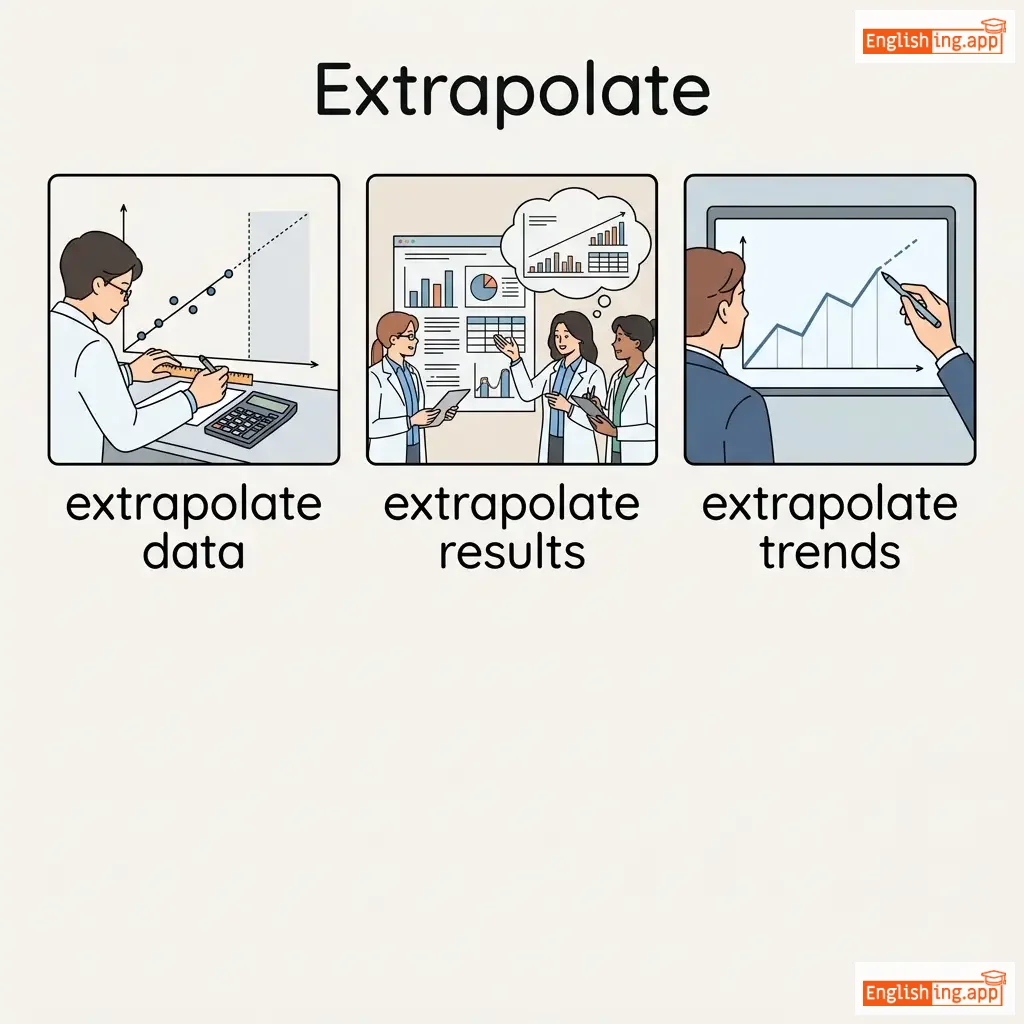
extrapolate data, extrapolate results, extrapolate trends, extrapolate figures

रिलेटेड वोकैबुलरीज

to confine or keep someone in a prison or under restraint
to cut something quickly with scissors or a sharp tool
To cut off the head of a person or animal.
to leave something, especially property or money, to someone in a will
to warn of danger; to frighten or disturb
to make or become greater in intensity or degree