

通货膨胀如何影响你的储蓄
How Inflation Affects Your Savings
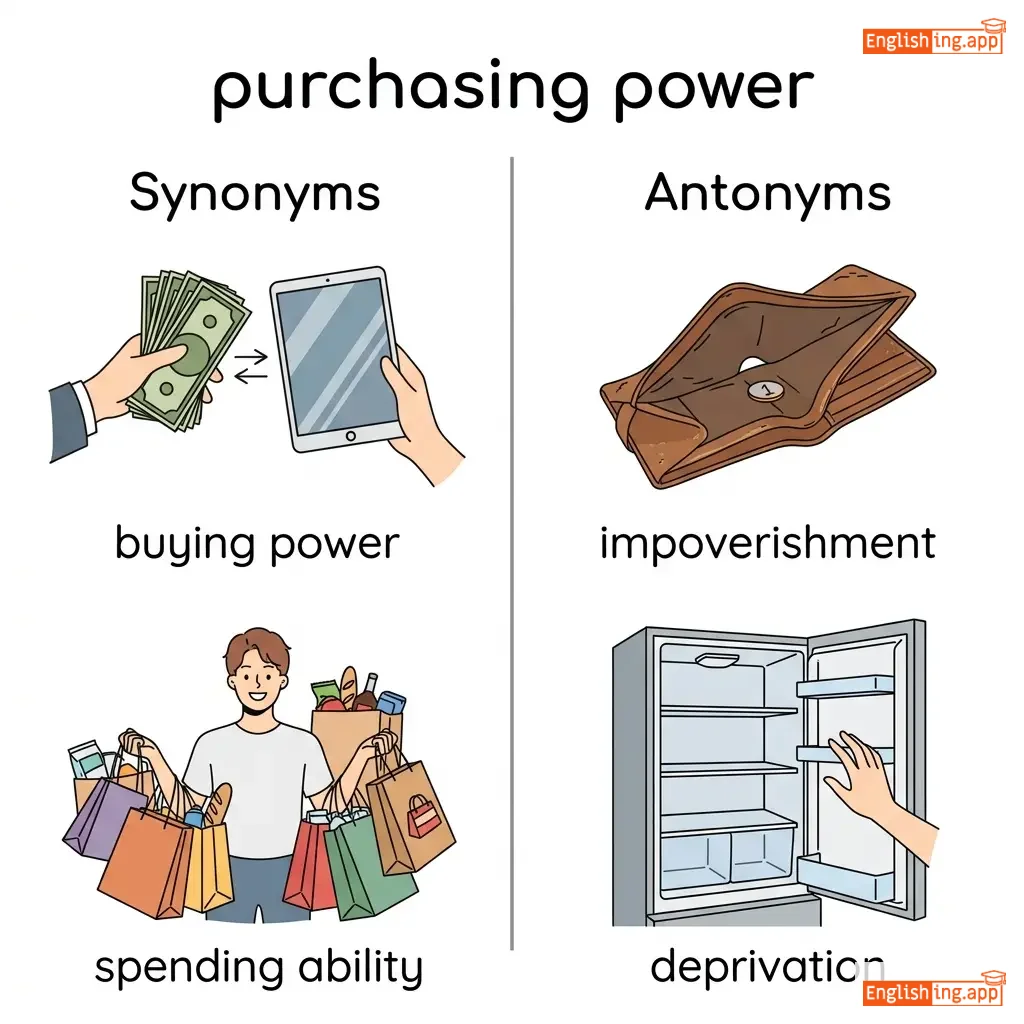
经济学是一门重要的学科,其中 inflation 直接影响每个人的 purchasing power。如果你存钱,inflation 可能会导致你的 assets 出现 depreciation。
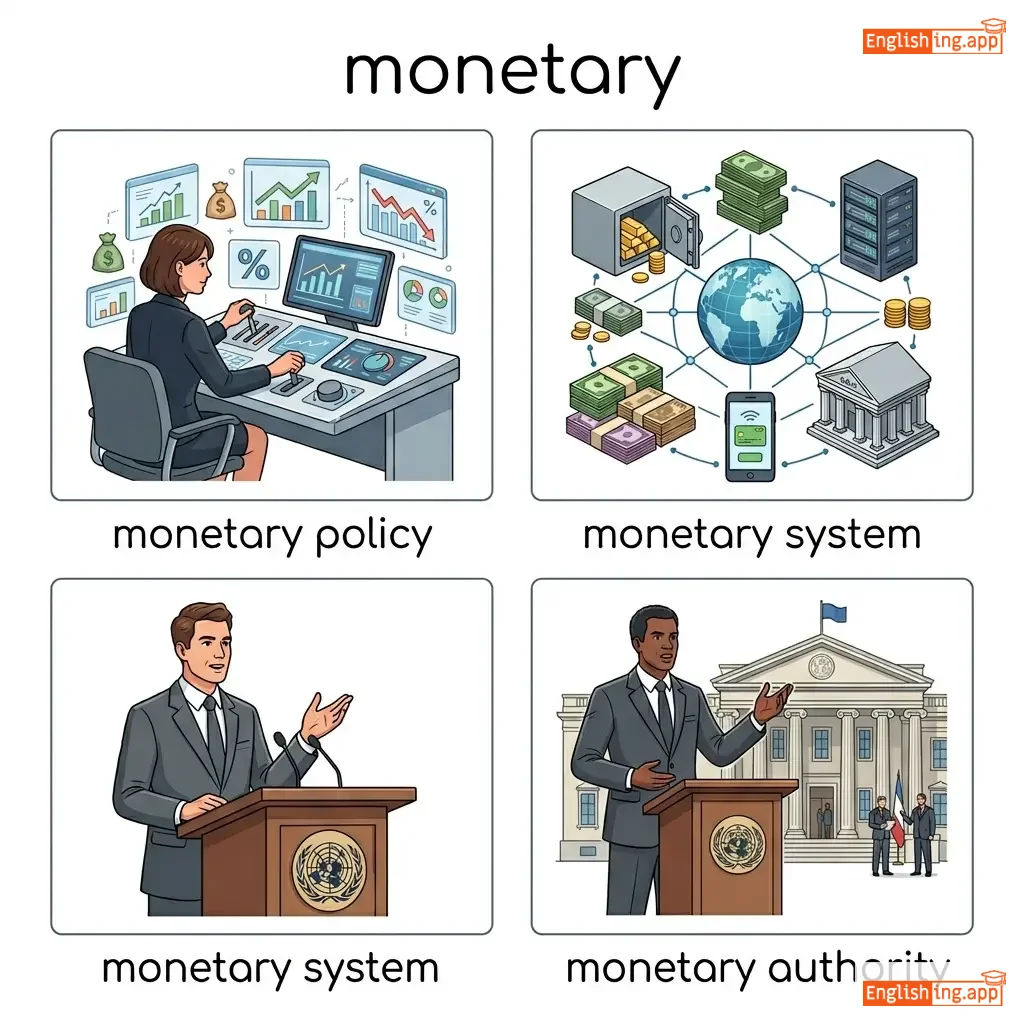
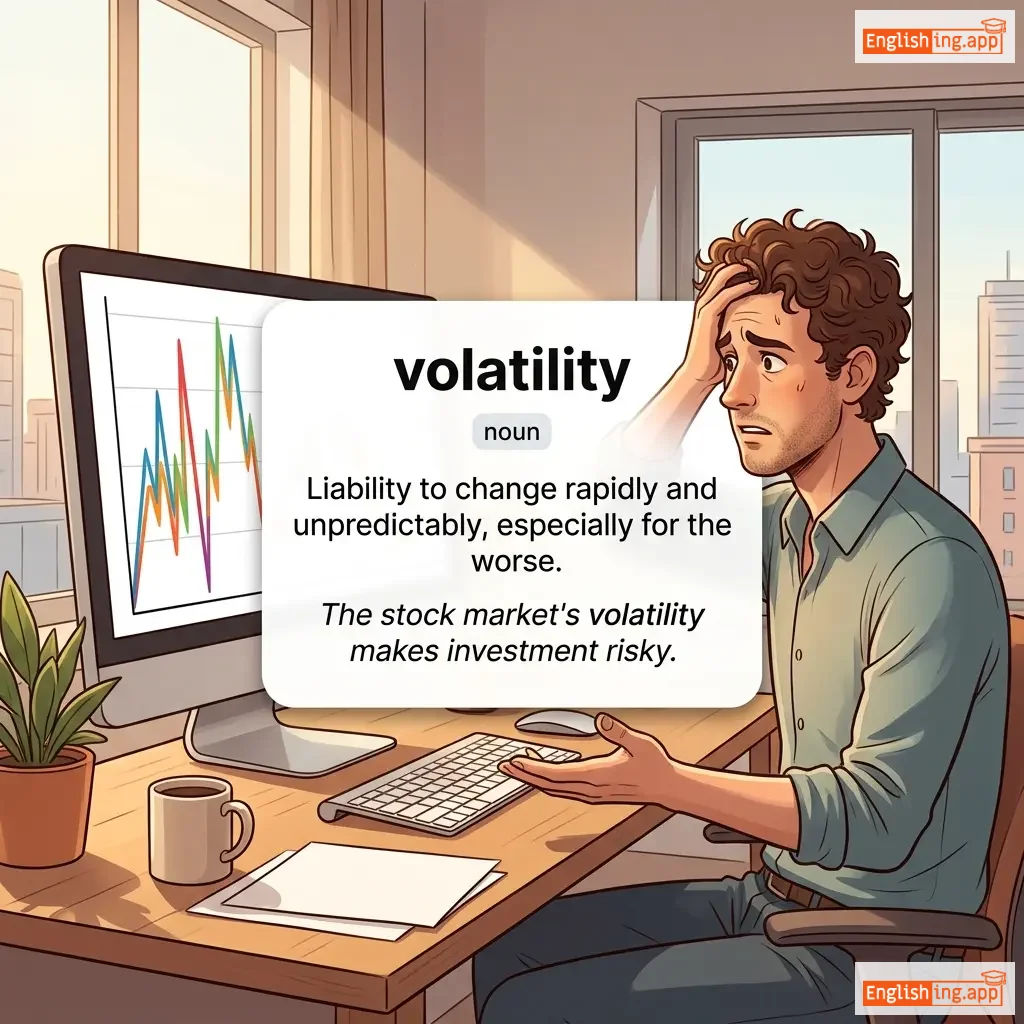
曾经,相同数量的钱可以买到更多的 commodities,但由于 macroeconomic 变化,这些钱不再具有相同的价值。Monetary 政策的变化和市场的 volatility 是造成这种情况的原因。
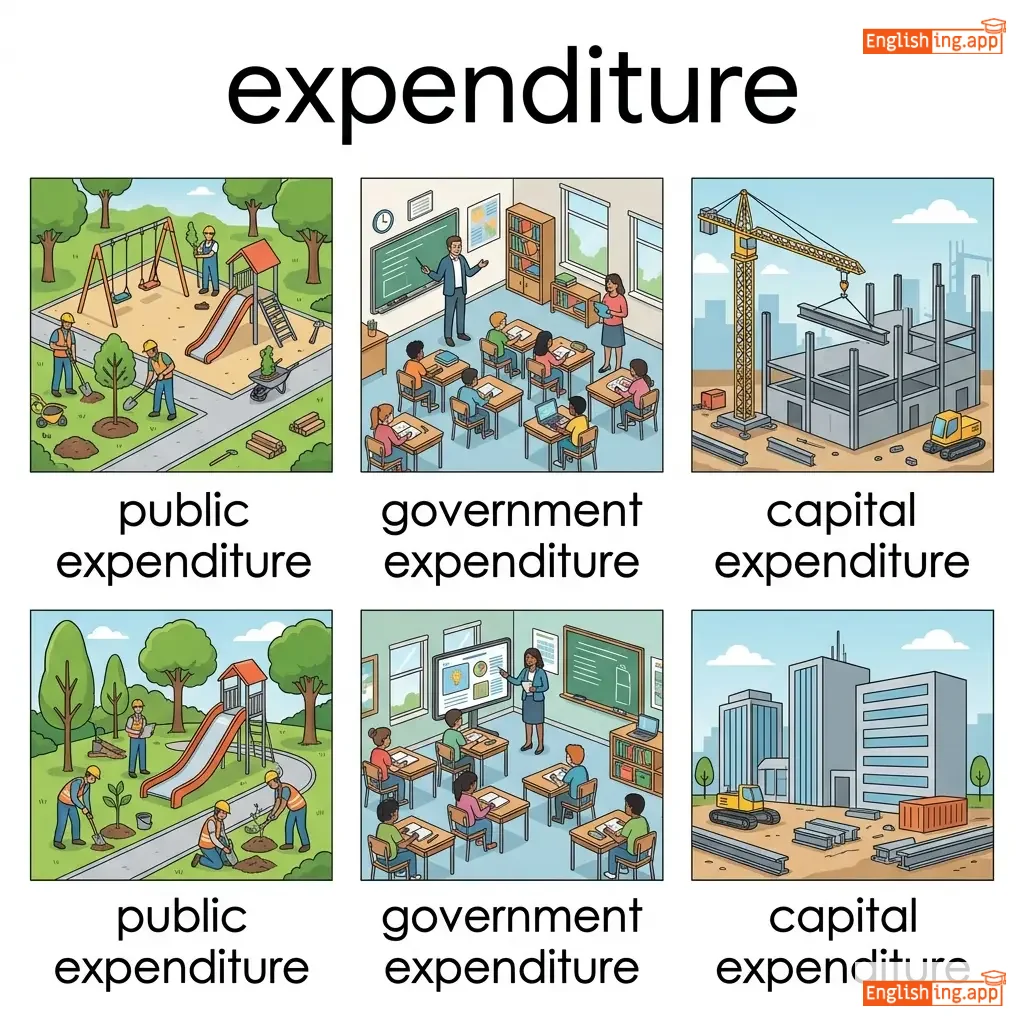
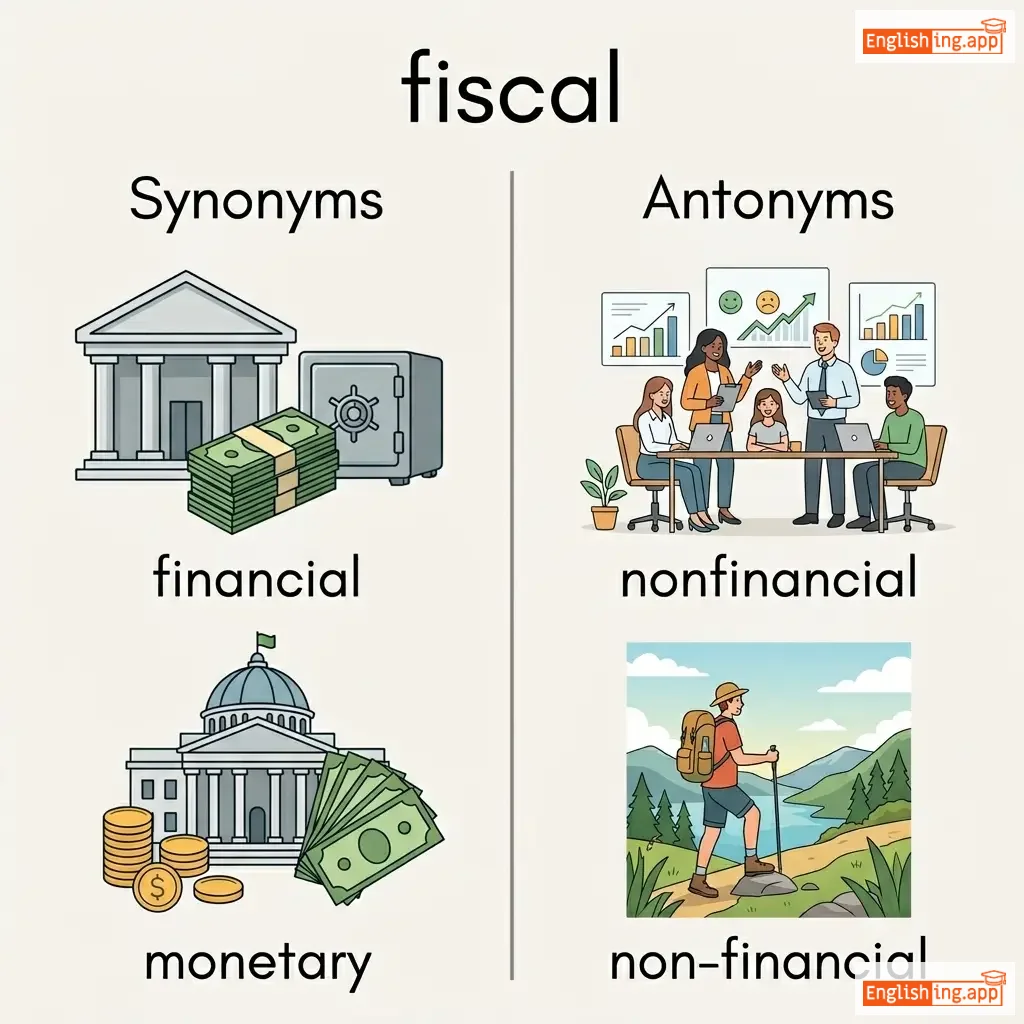
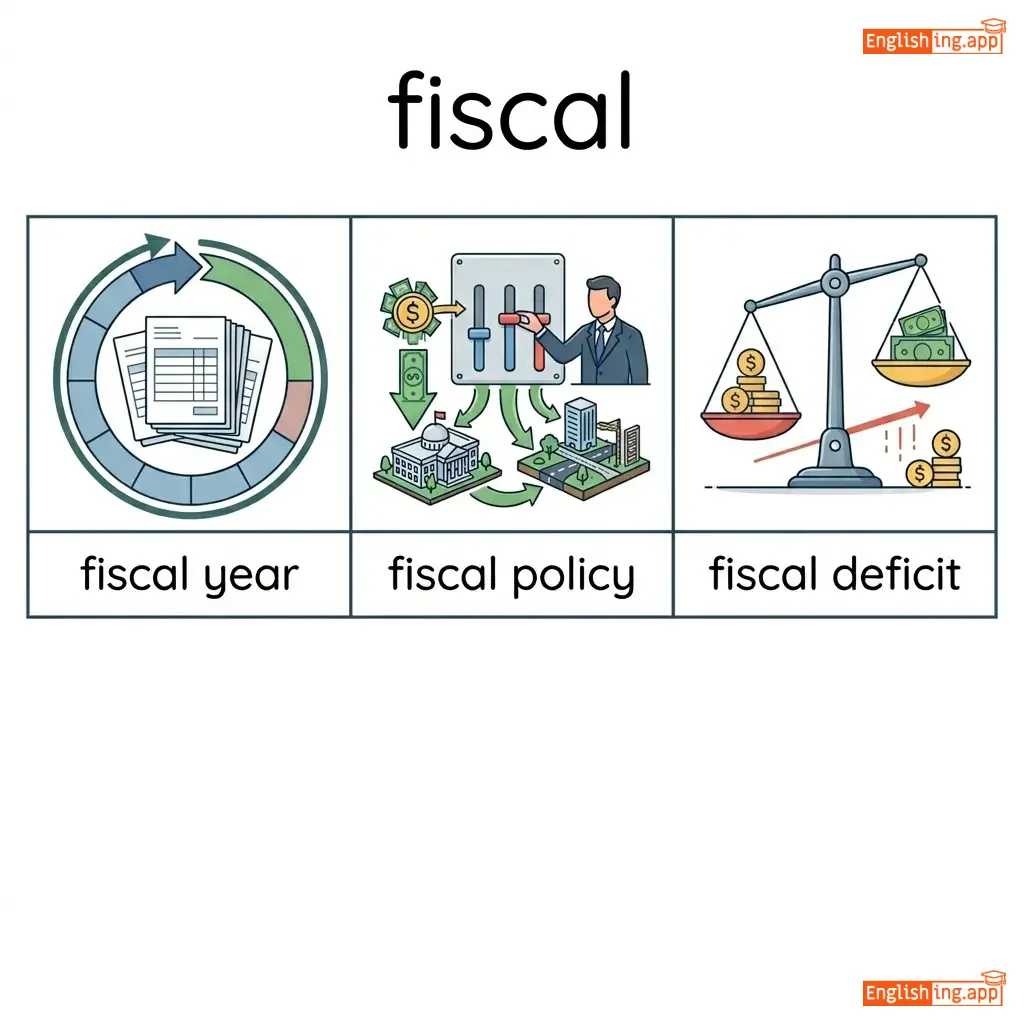
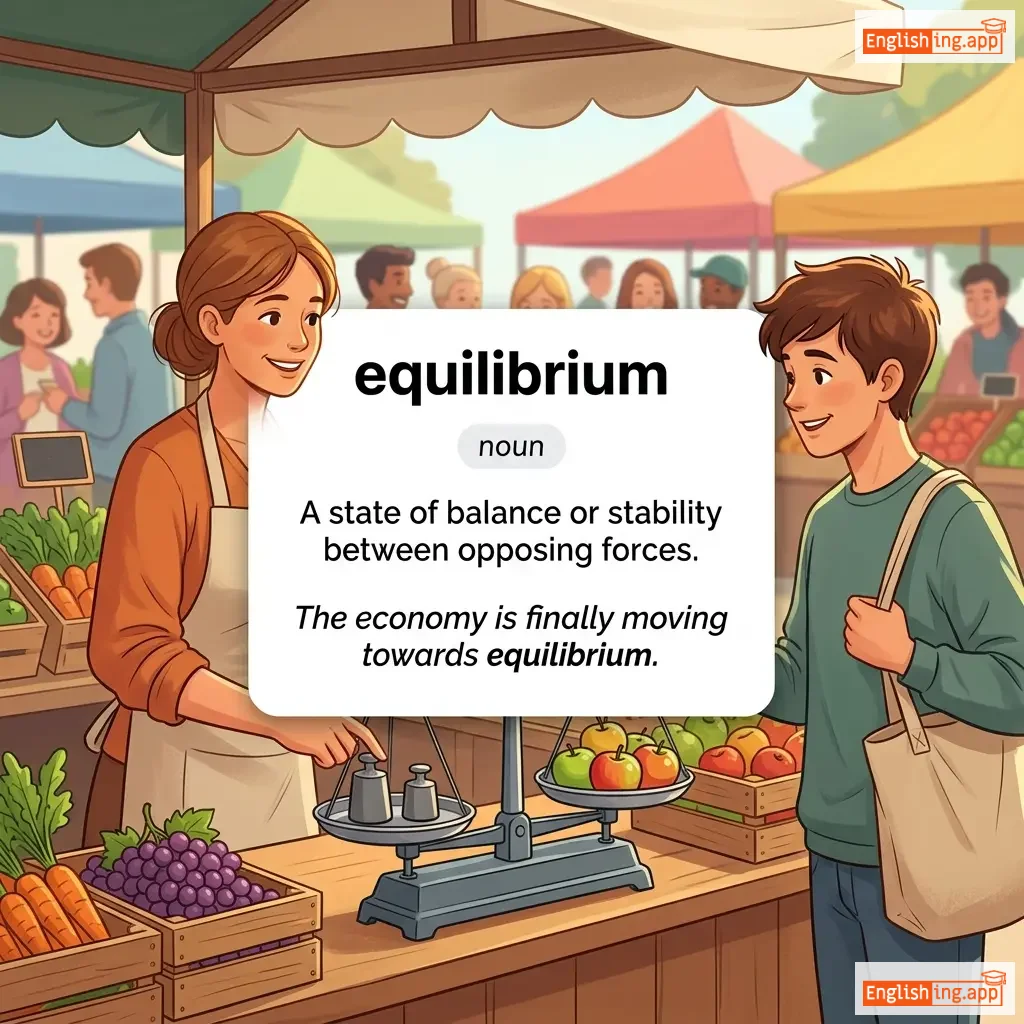
当 inflation 上升时,expenditure 增加,从而减少 savings。尽管政府试图通过 fiscal 政策实现 equilibrium,但大多数人仍然经历 marginalization。
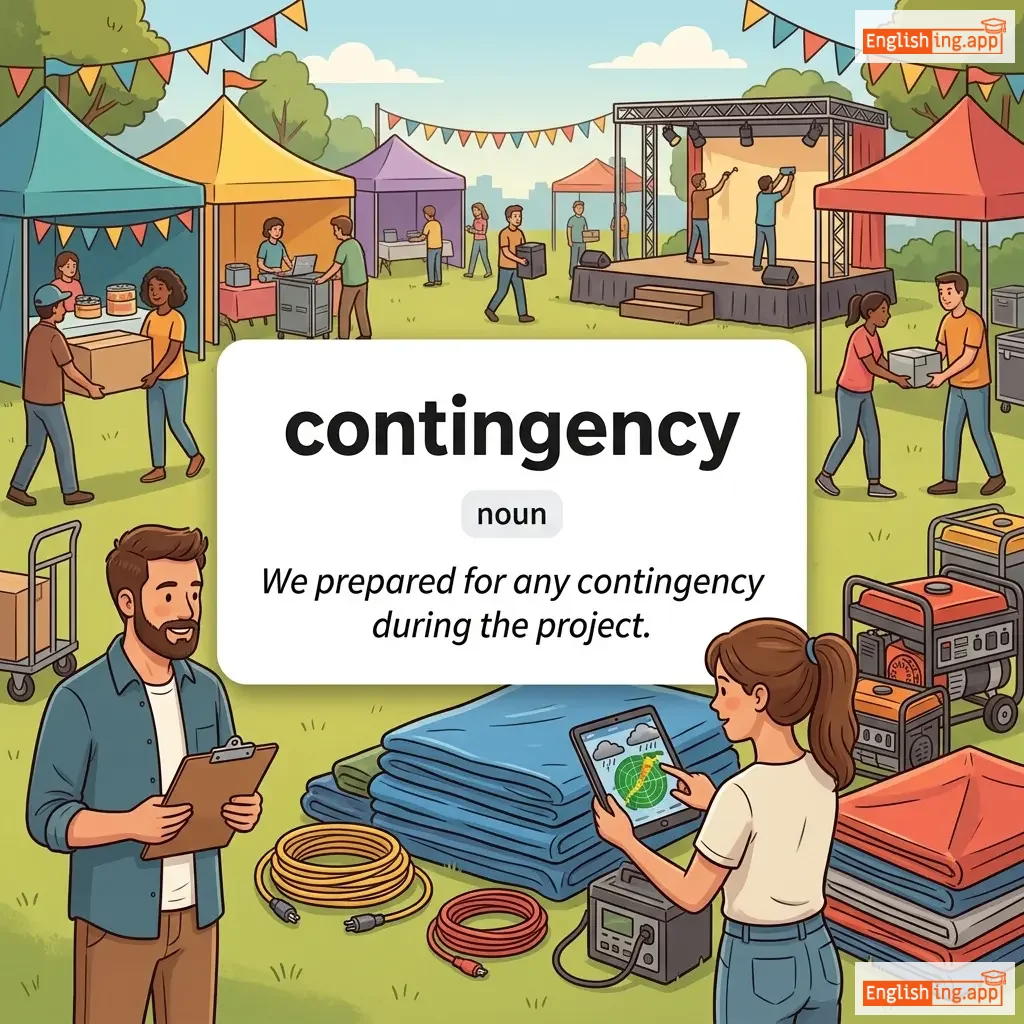
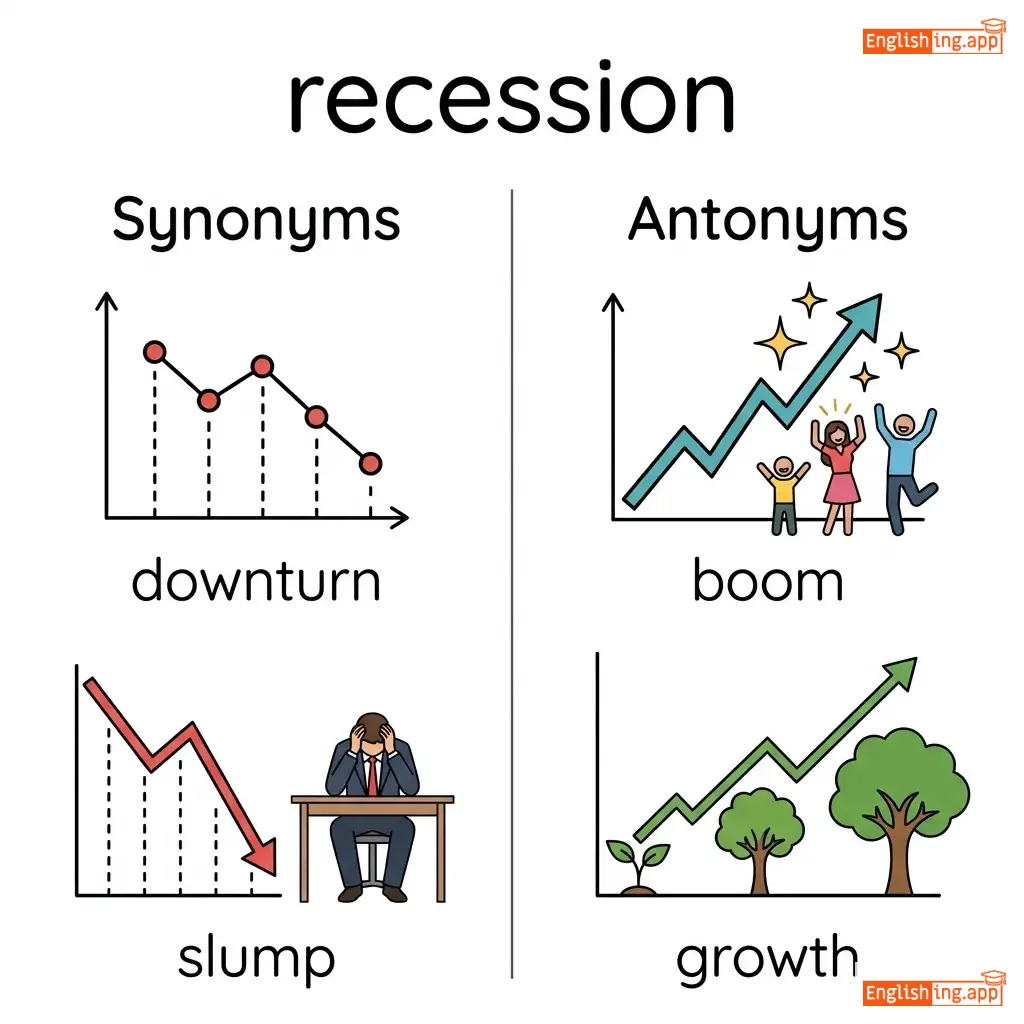
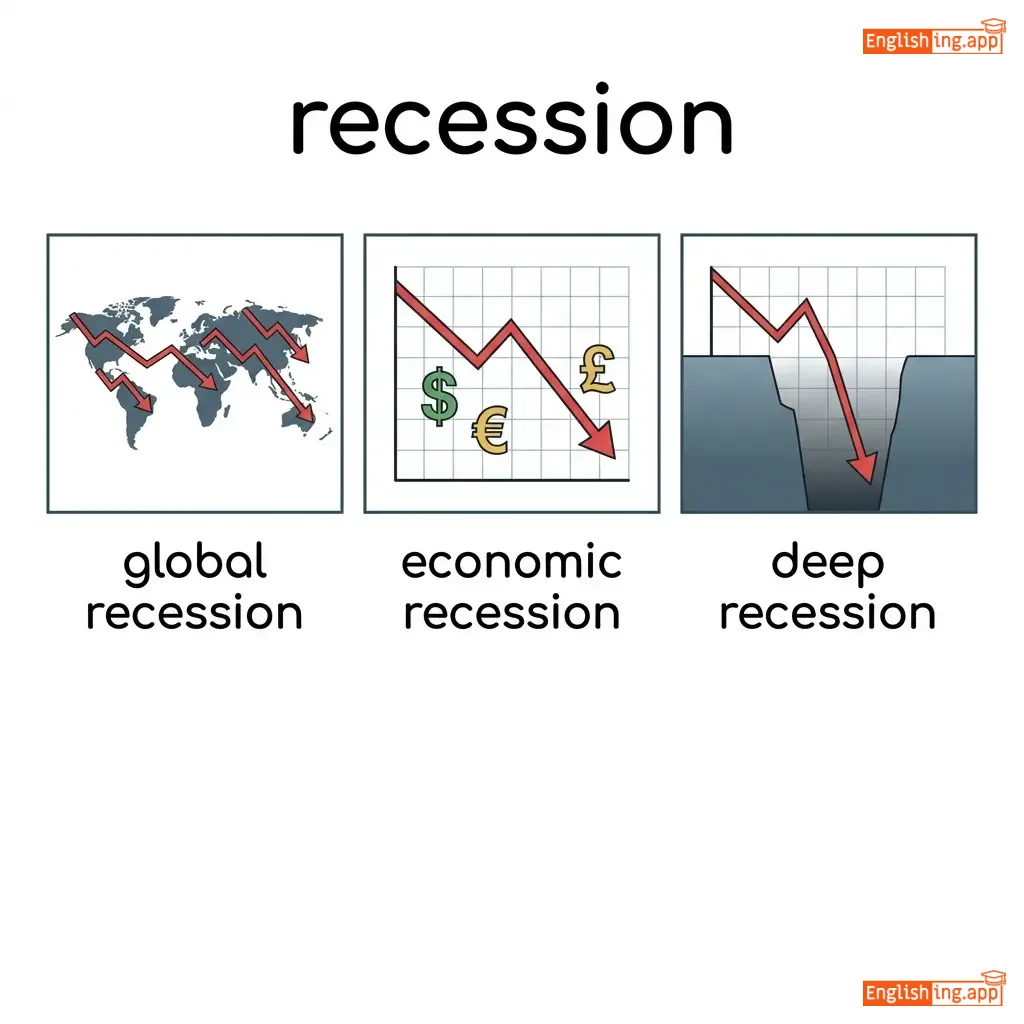
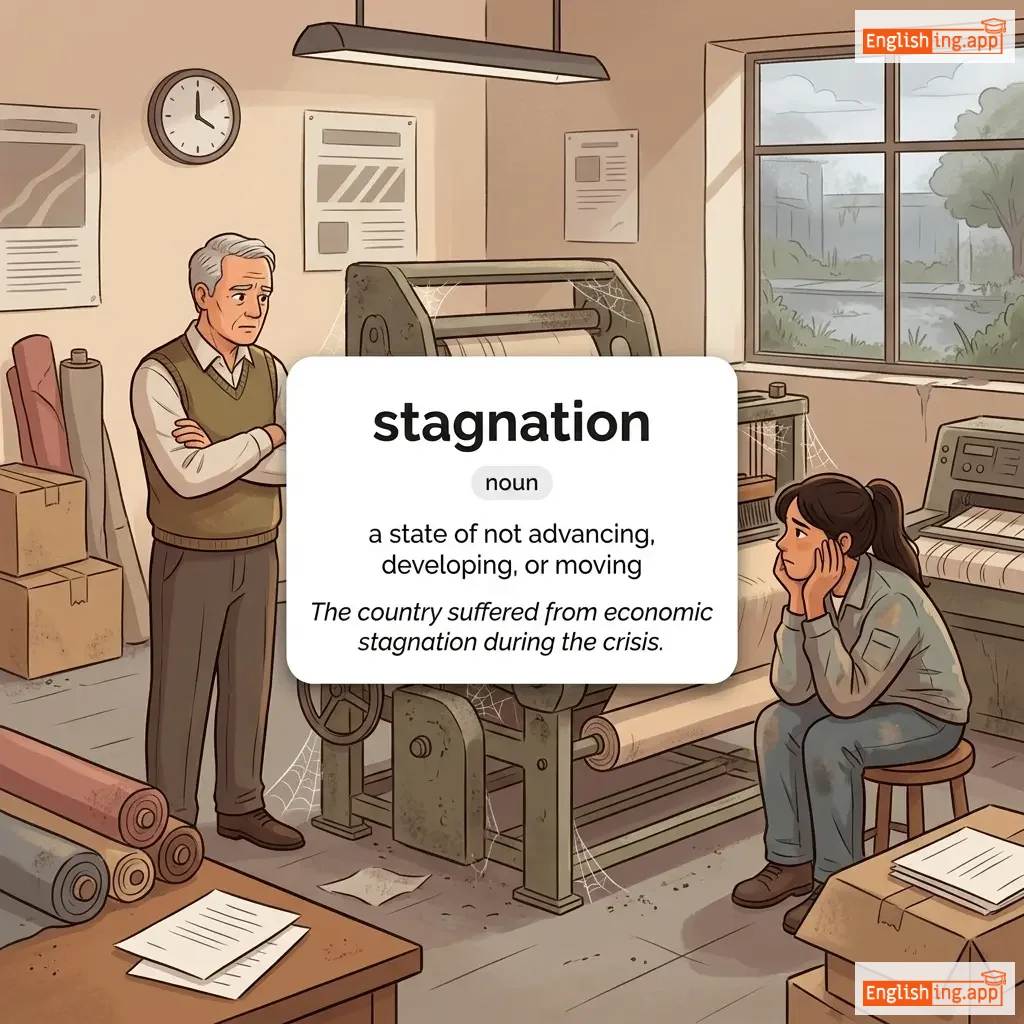
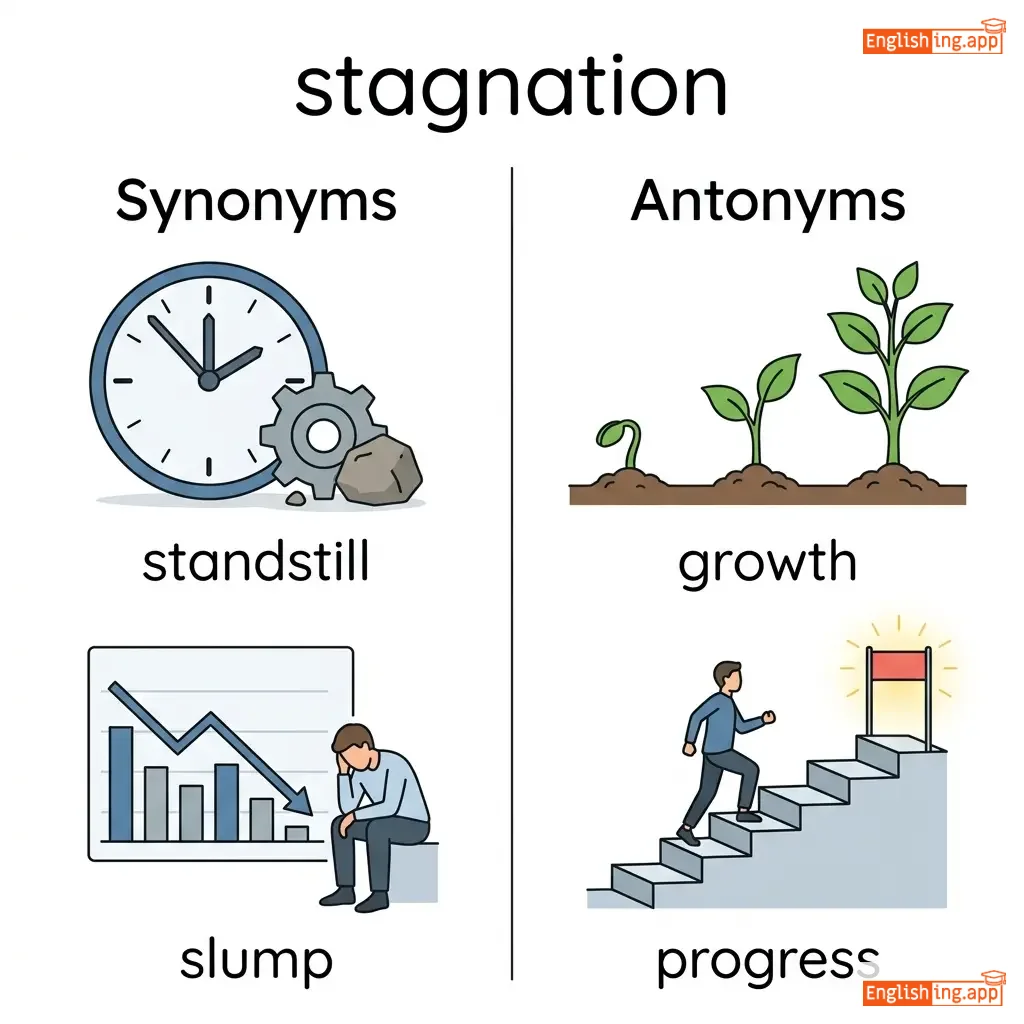
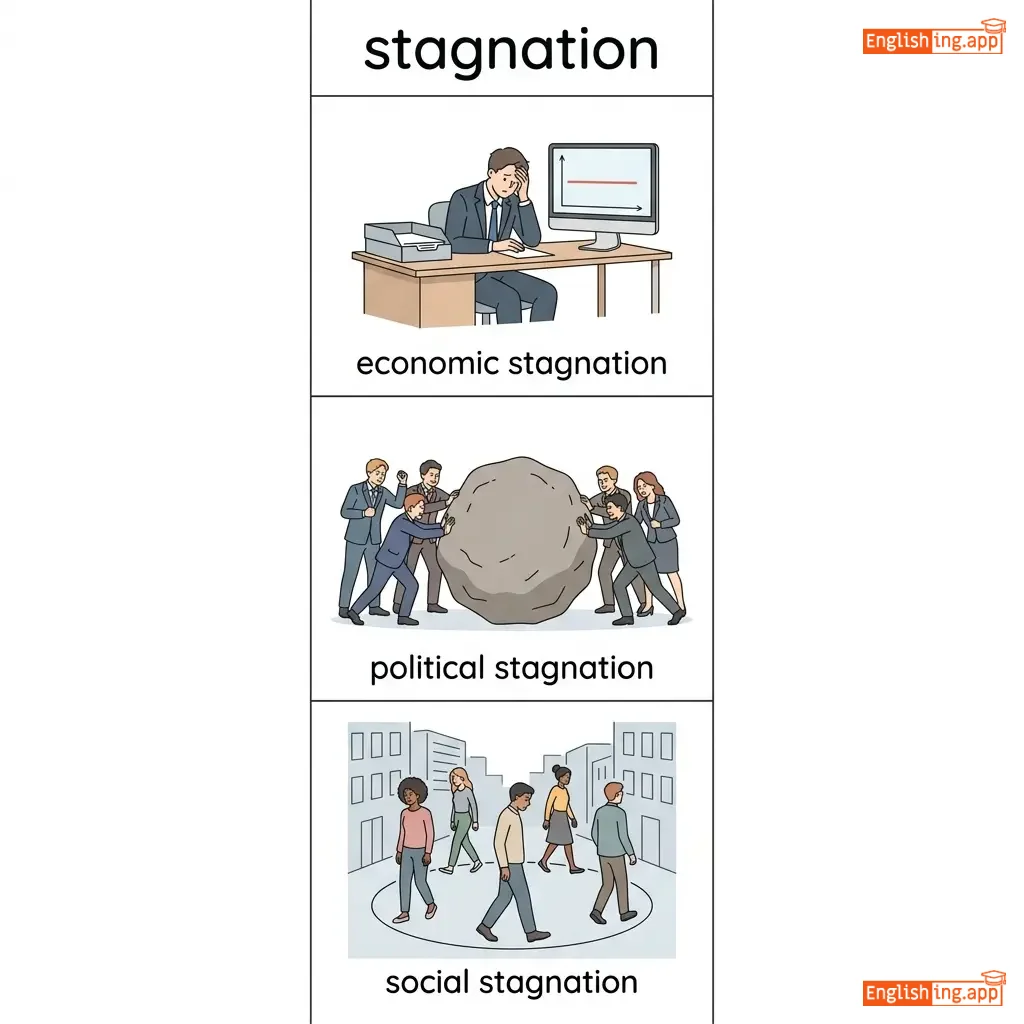
为了保护你的 savings,capitalization、arbitrage 和适当的 contingency 计划至关重要。否则,长期的 recession 和 stagnation 可能会让你面临财务压力。





Swipe left or right, or use the buttons. Tap image to zoom.
例句翻译
单词
How Inflation Affects Your SavingsHow Inflation Affects Your Savings - 遮罩切换
|
表情符号
|
单词 | Images | 翻译 | 含义 | 例句 | 例句翻译 | 同义词 | 反义词 | 助记符 |
|---|---|---|---|---|---|---|---|---|---|
|
#1961
📈
|
/ɪnˈfleɪ.ʃən/
noun
(yin-fu-lay-shan)
••••••
|
|
通货膨胀
tōng huò péng zhàng
••••••
|
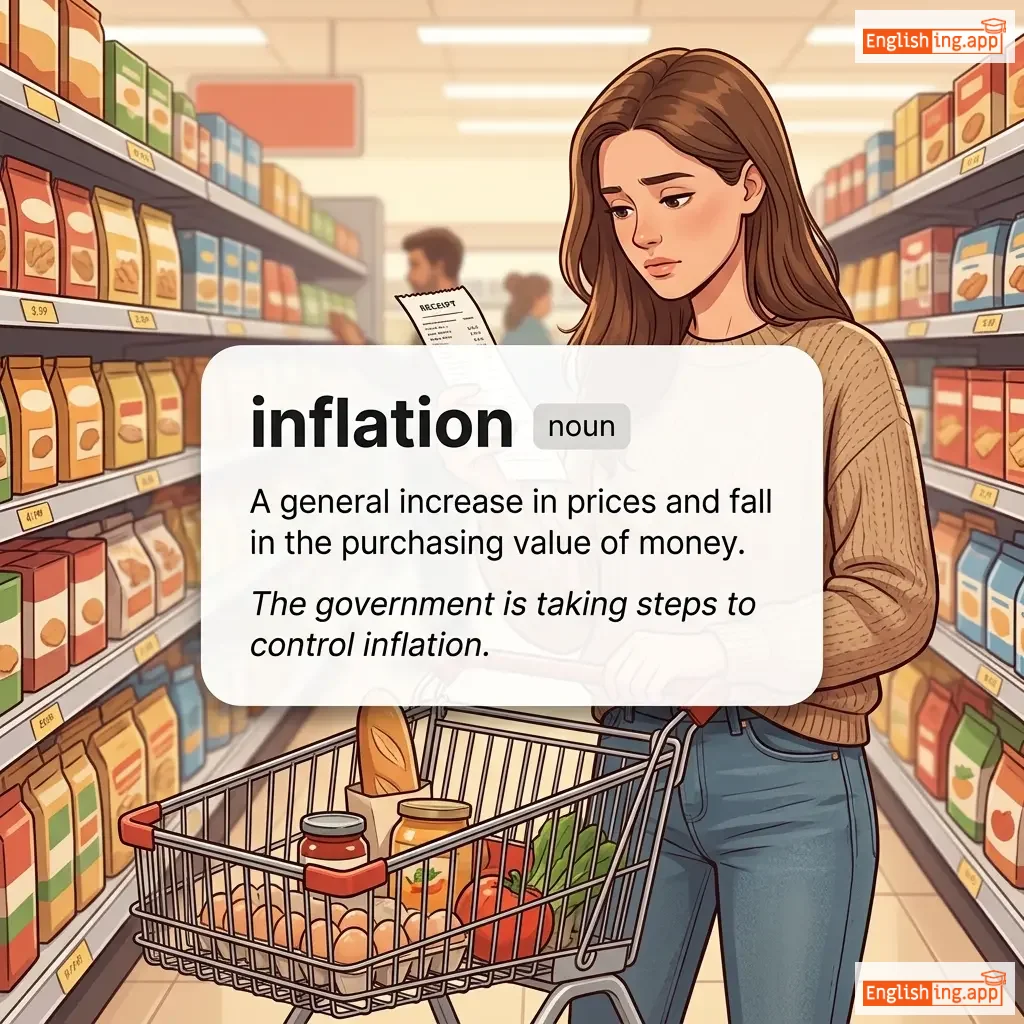
The general increase in prices and fall in the purchasing value of money in an economy over time.
••••••
|
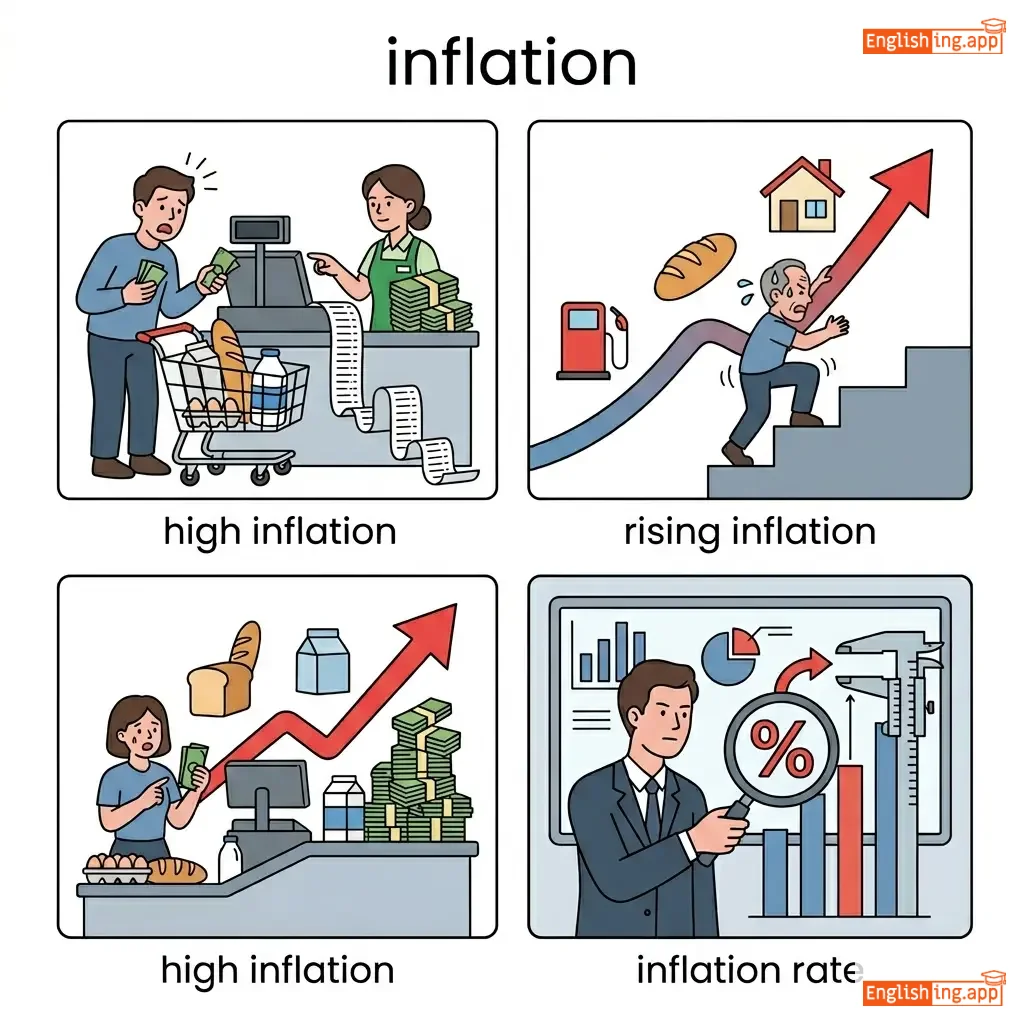
High inflation reduces the value of money over time.
高通胀会随着时间推移减少货币的价值。
••••••
|
高通胀会随着时间推移减少货币的价值。
Gāo tōng huò péng zhàng huì suí zhe shíjiān tuīyí jiǎnshǎo huòbì de jiàzhí.
••••••
|
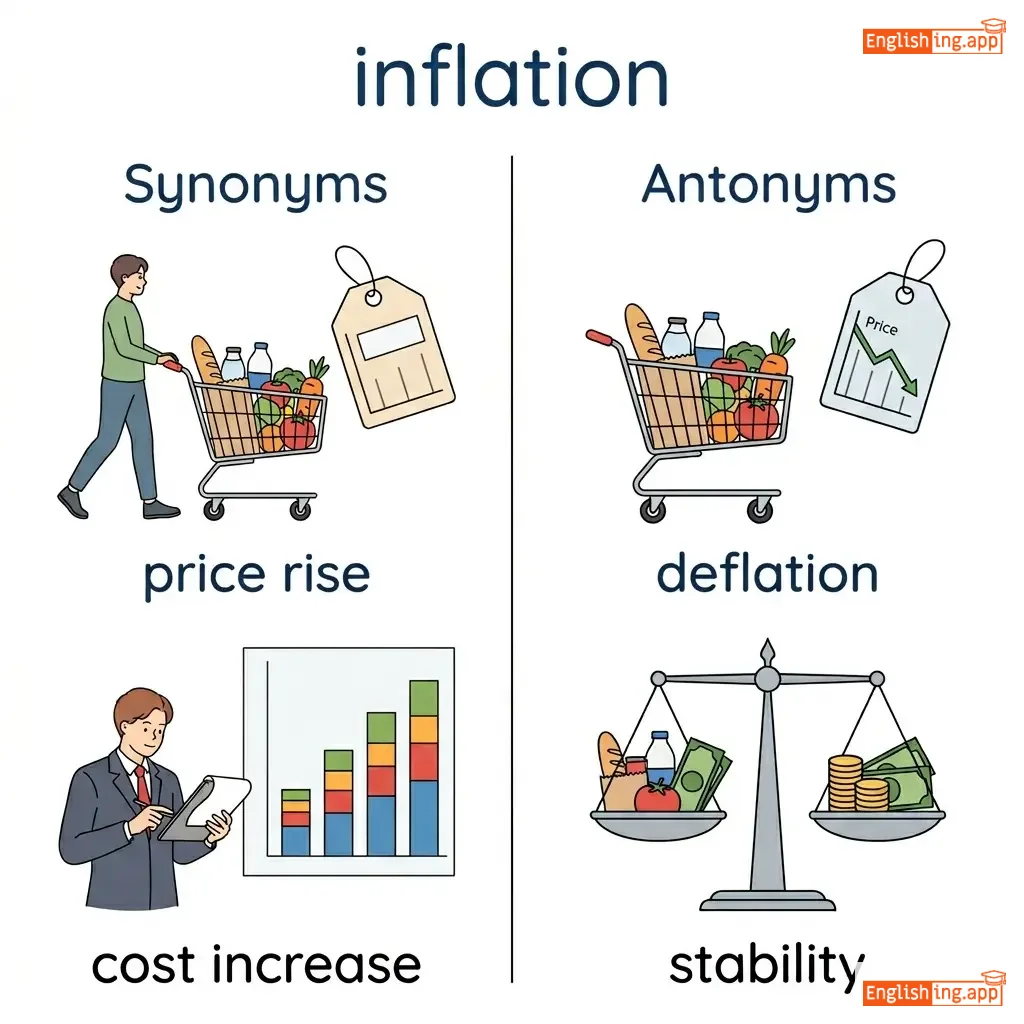
price increase, cost escalation, currency devaluation
••••••
|
deflation, price stability, cost reduction
••••••
|
通货膨胀 - 就像气球膨胀一样,货币价值变得越来越小。
••••••
|
|
#1962
💰
|
/ˈpɜː.tʃəs.ɪŋ ˈpaʊ.ɚ/
noun
(购买力)
••••••
|
|
购买力
gòumǎ lì
••••••
|
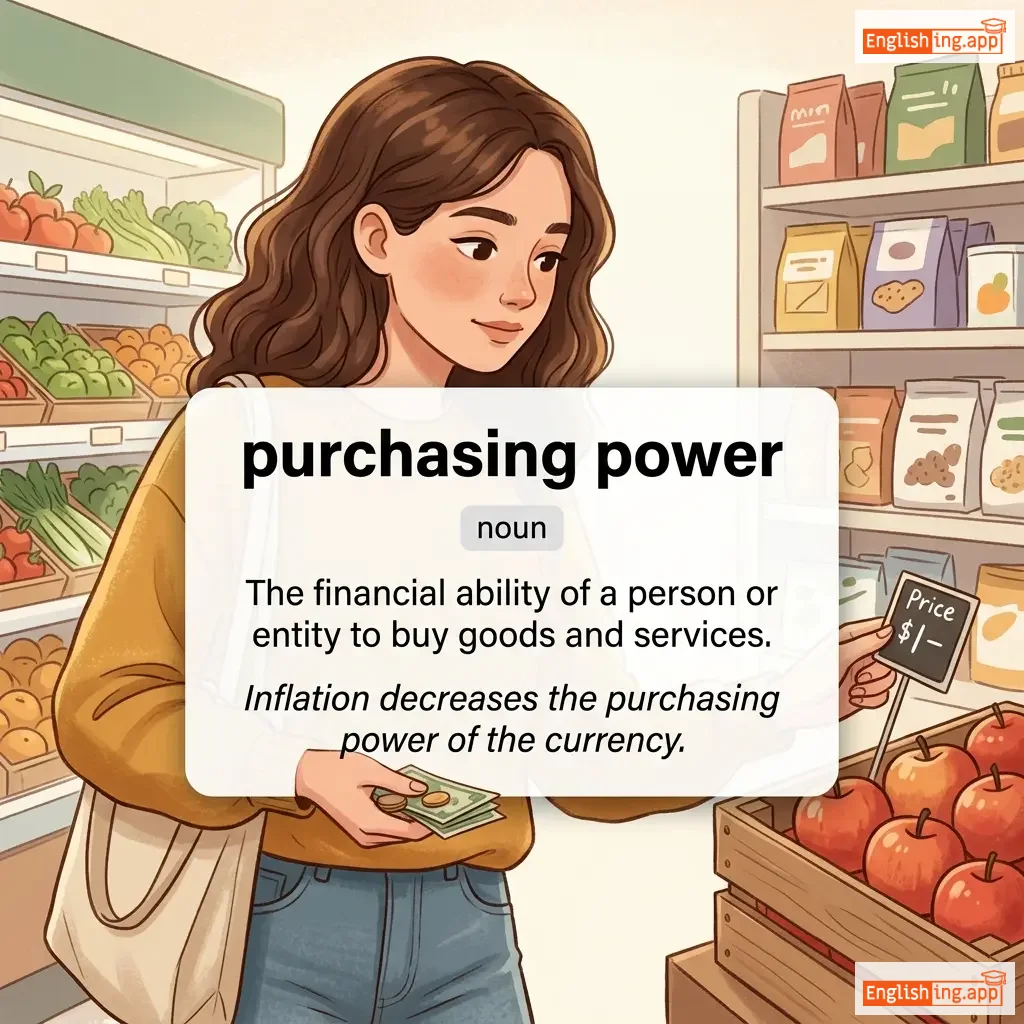
The amount of goods and services that can be purchased with a unit of currency.
••••••
|
Due to inflation, people's purchasing power has decreased. |
由于通货膨胀,人们的购买力下降了。
Yóuyú tōnghuò péngzhàng, rénmen de gòumǎ lì xiàjiàngle.
••••••
|
buying capacity, financial strength, consumer power
••••••
|
weak purchasing power, economic decline, low affordability
••••••
|
购买力指的是你能用钱购买多少东西。
••••••
|
|
#1963
🏠
|
/ˈæs.et/
noun
(ā xī tè)
••••••
|
|
资产
zīchǎn
••••••
|
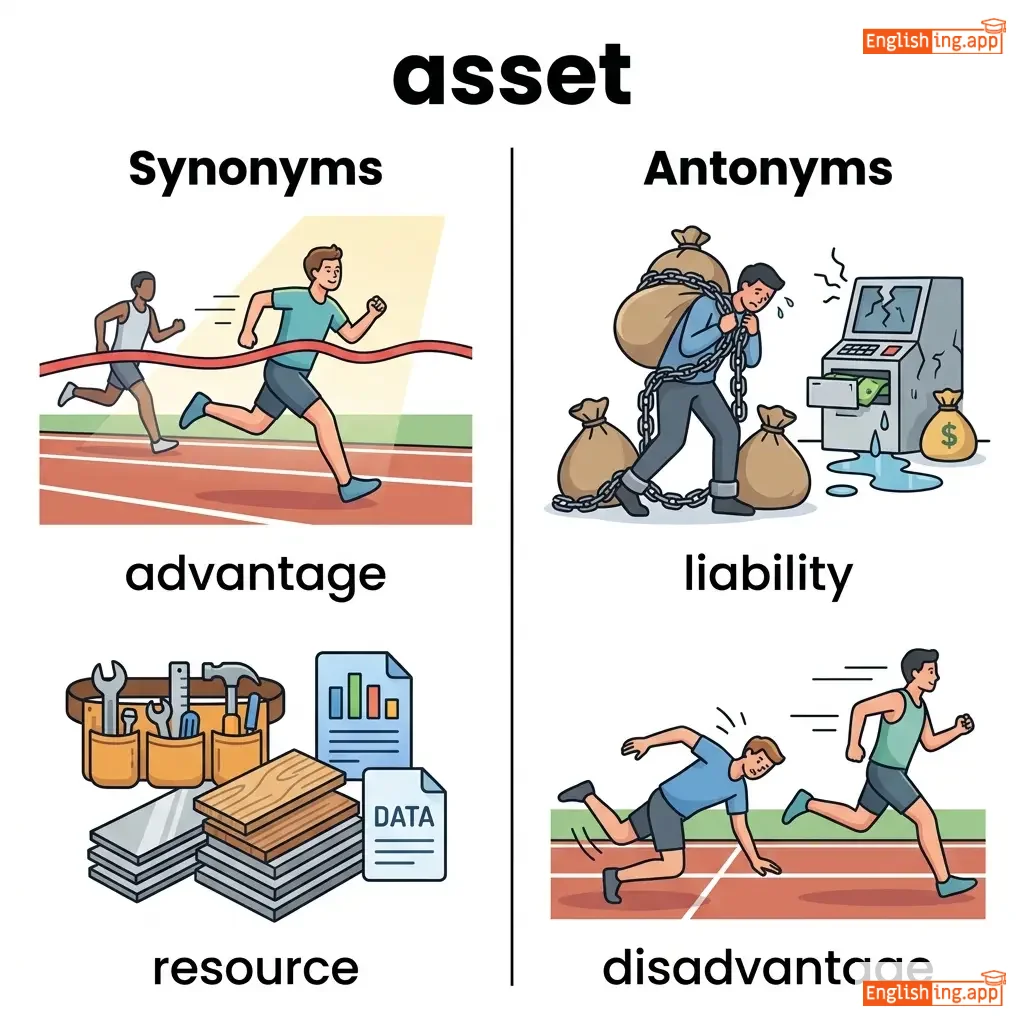
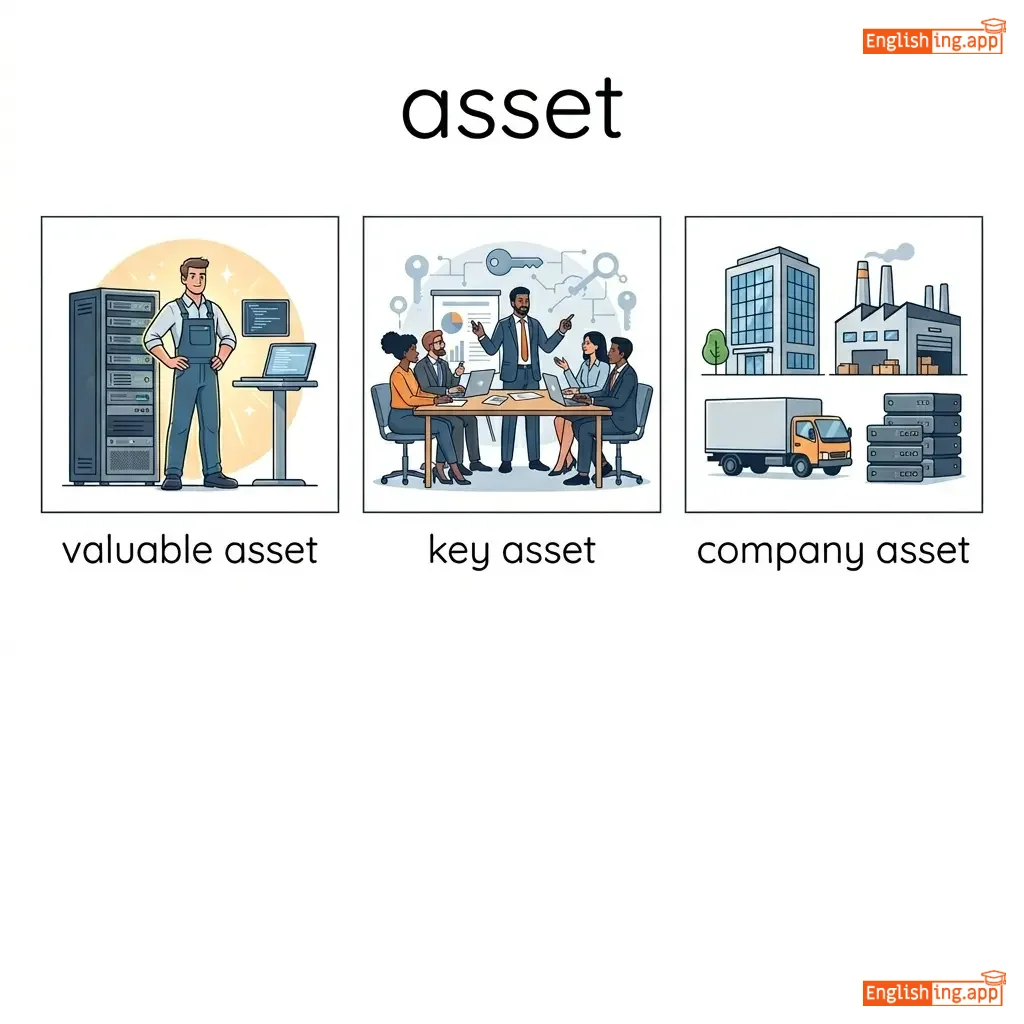
A useful or valuable thing, person, or quality that can provide economic value.
••••••
|
Real estate is a valuable asset in an investment portfolio. |
房地产是投资组合中的一项宝贵资产。
Fángdìchǎn shì tóuzī zǔhé zhōng de yī xiàng bǎoguì zīchǎn.
••••••
|
property, resource, wealth
••••••
|
liability, debt, obligation
••••••
|
资产和asset都能带来经济收益,记住它们的意义。
••••••
|
|
#1964
📉
|
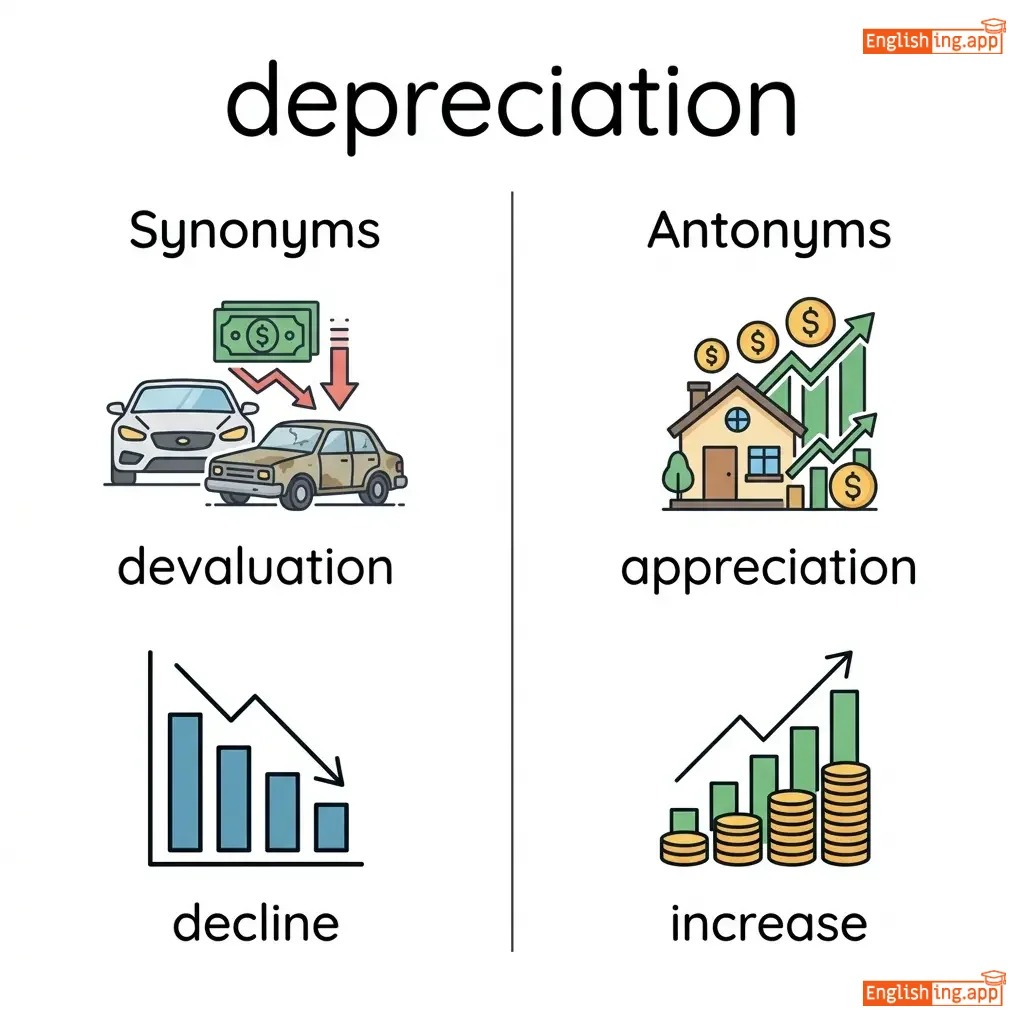
/dɪˌpriː.ʃiˈeɪ.ʃən/
noun
(折旧)
••••••
|
|
折旧
zhéjiù
••••••
|
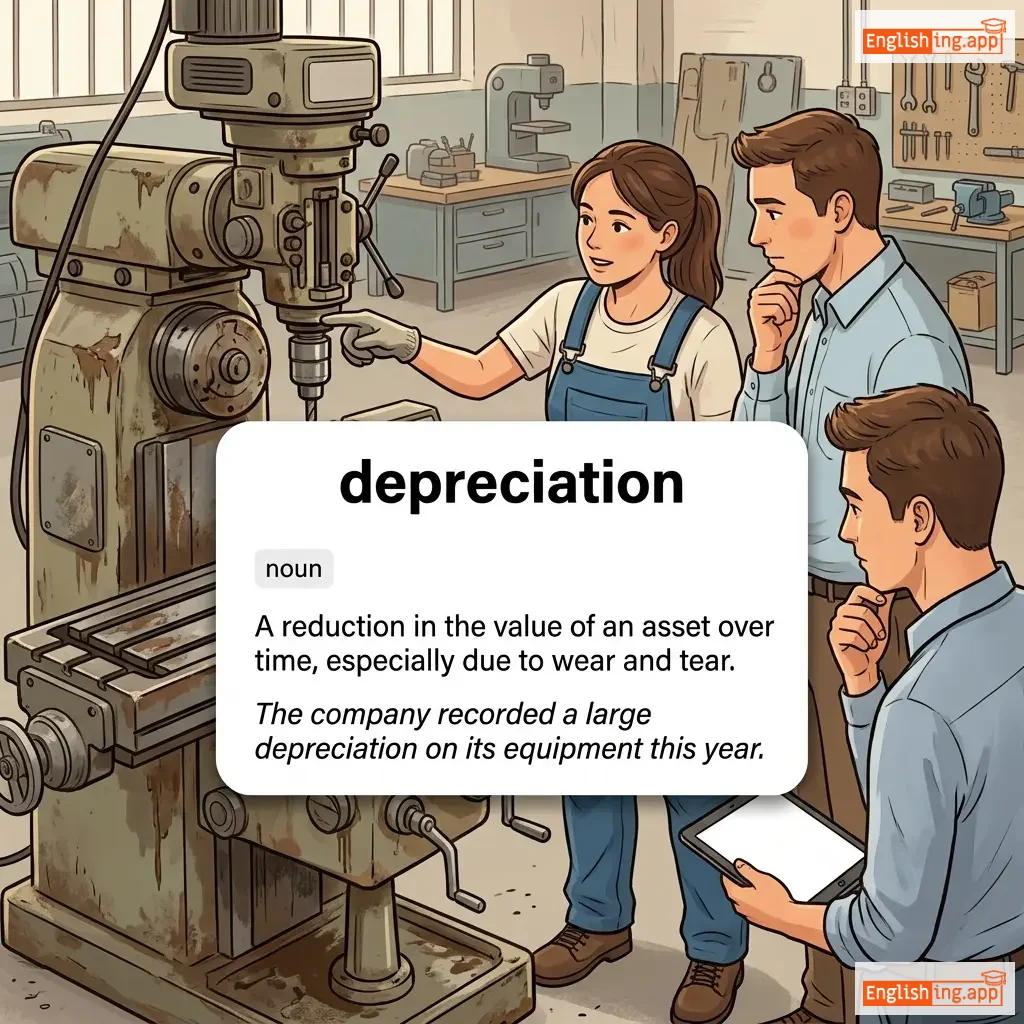
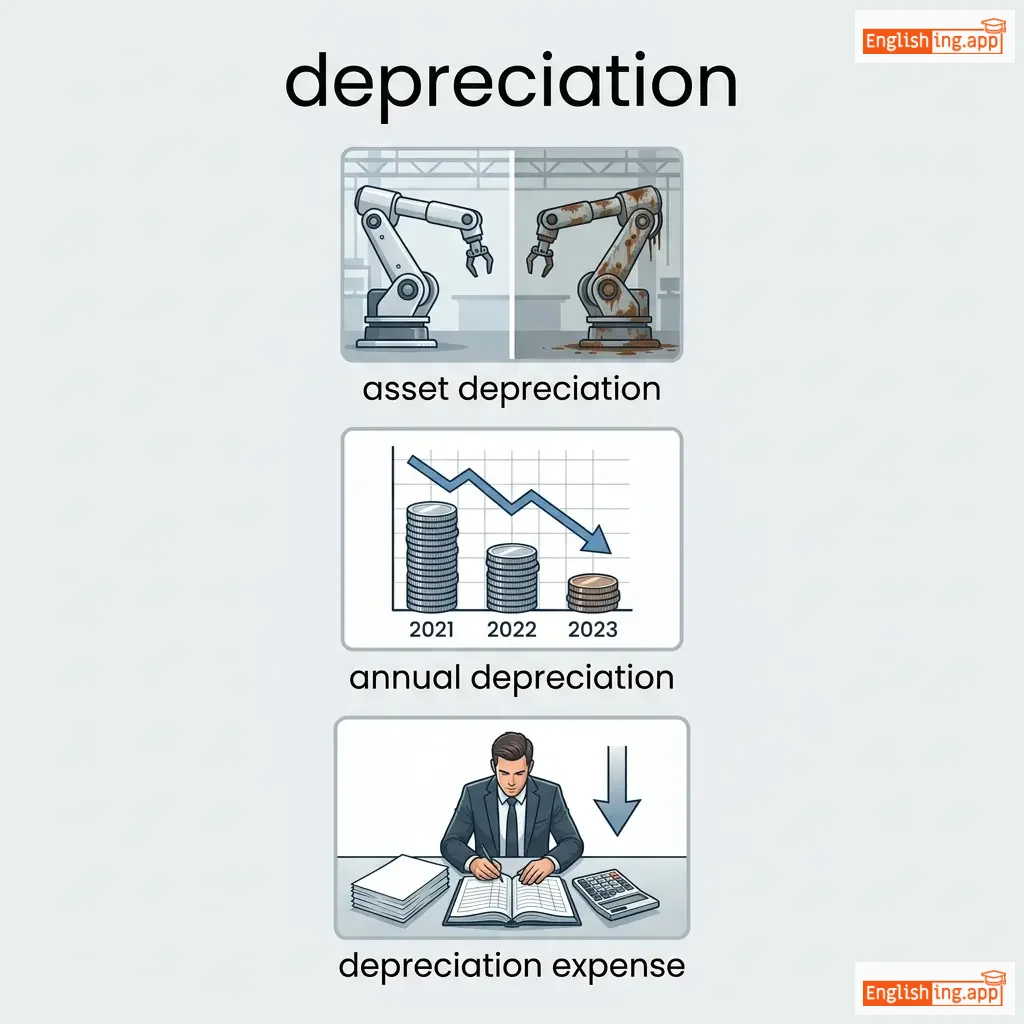
A reduction in the value of an asset with the passage of time, due to wear and tear.
••••••
|
The car's depreciation rate is high after five years. |
五年后,汽车的折旧率很高。
Wǔ nián hòu, qìchē de zhéjiù lǜ hěn gāo.
••••••
|
devaluation, decline, wear and tear
••••••
|
appreciation, value increase, enhancement
••••••
|
折旧是资产随着时间的流逝而失去价值。
••••••
|
|
#1965
📦
|
/kəˈmɒ.dɪ.tiz/
noun
(komodities)
••••••
|
|
商品
shāngpǐn
••••••
|
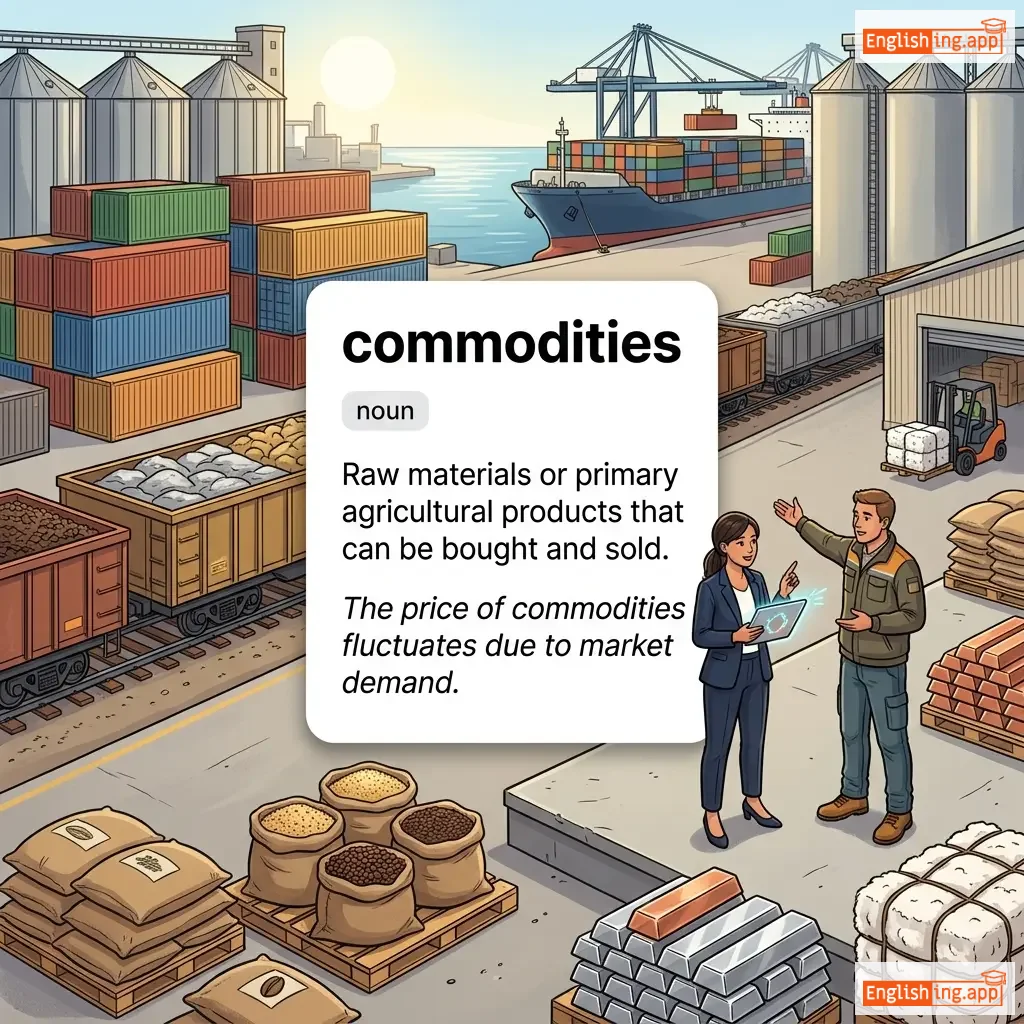
Raw materials or primary agricultural products that can be bought and sold.
••••••
|
The prices of commodities like oil and gold fluctuate frequently.
商品如石油和黄金的价格经常波动。
••••••
|
像石油和黄金这样的商品价格经常波动。
Xiàng shíyóu hé huángjīn zhèyàng de shāngpǐn jiàgé jīngcháng bōdòng.
••••••
|
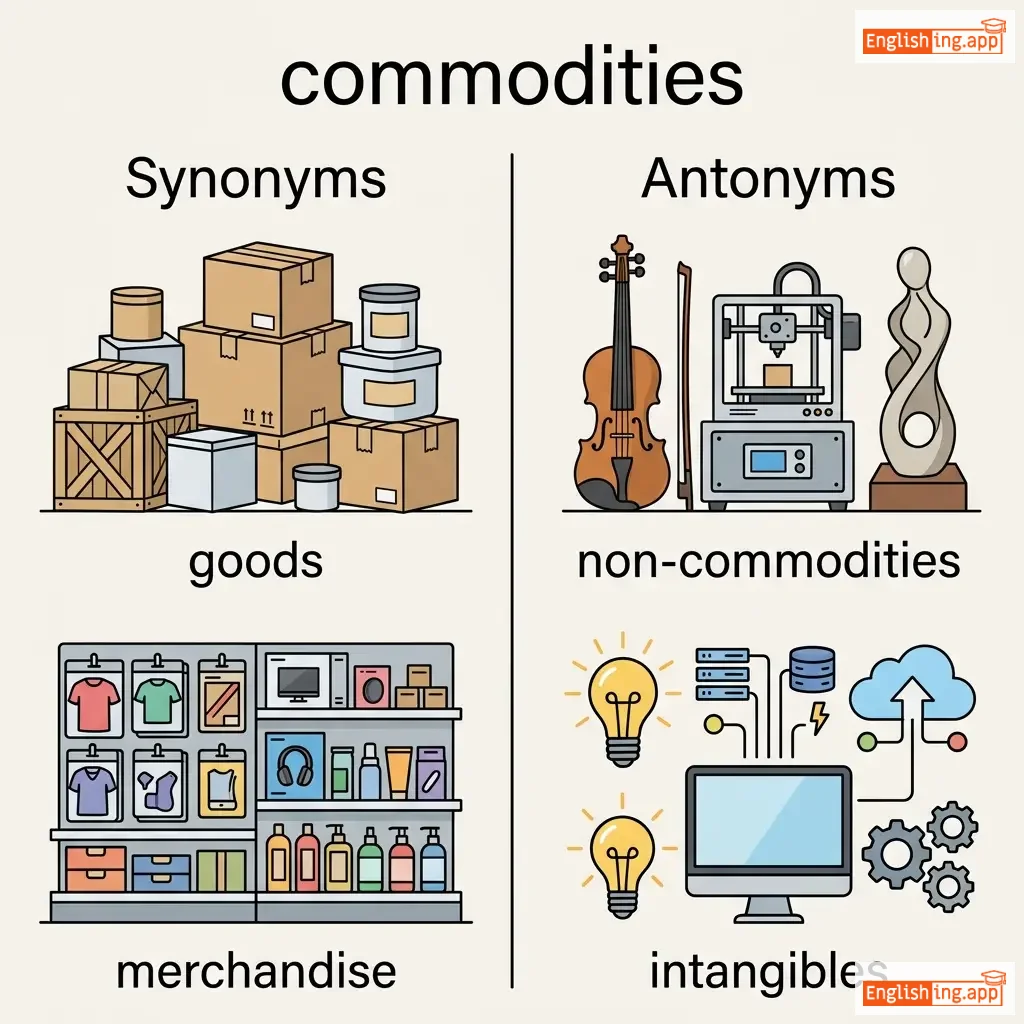
goods, products, merchandise
••••••
|
services, non-tradable goods, intangibles
••••••
|
商品 (shāngpǐn) 是所有可以买卖的东西.
••••••
|
|
#1966
🏛️
|
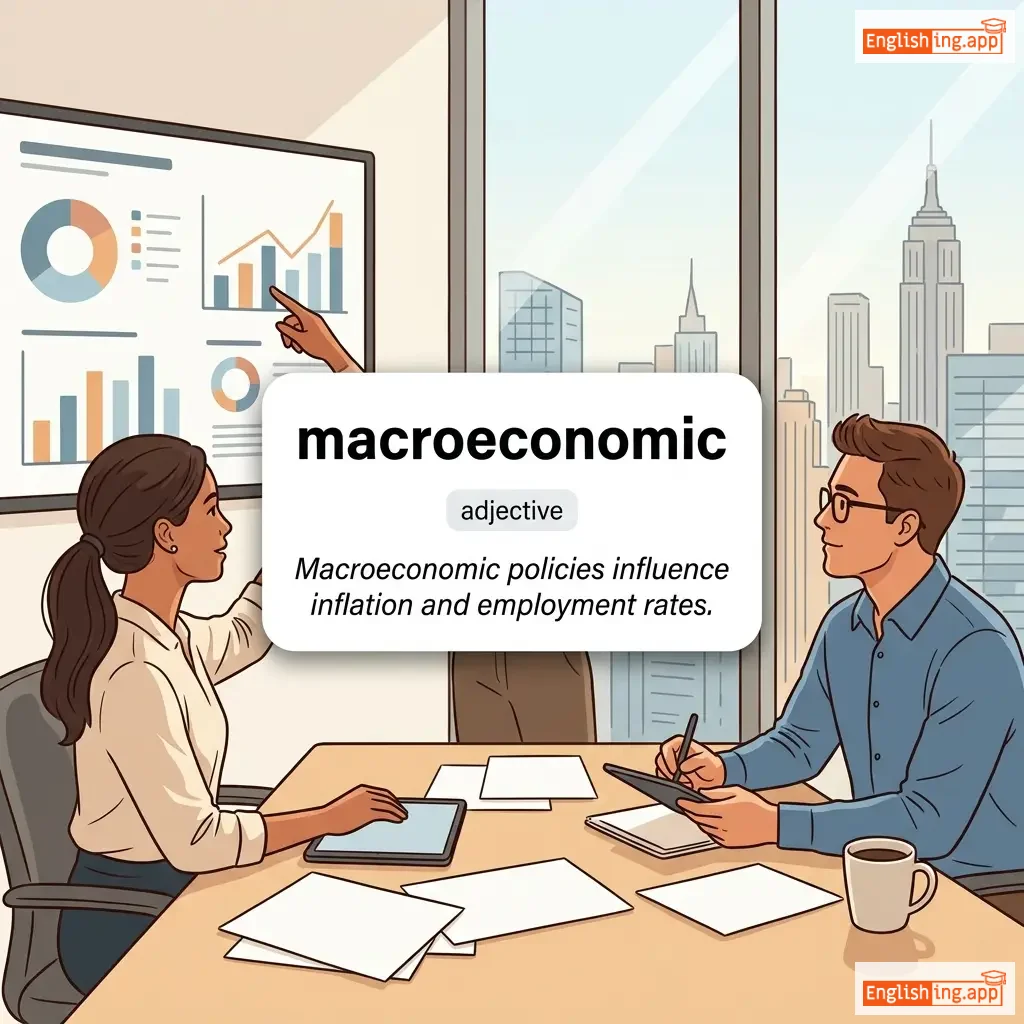
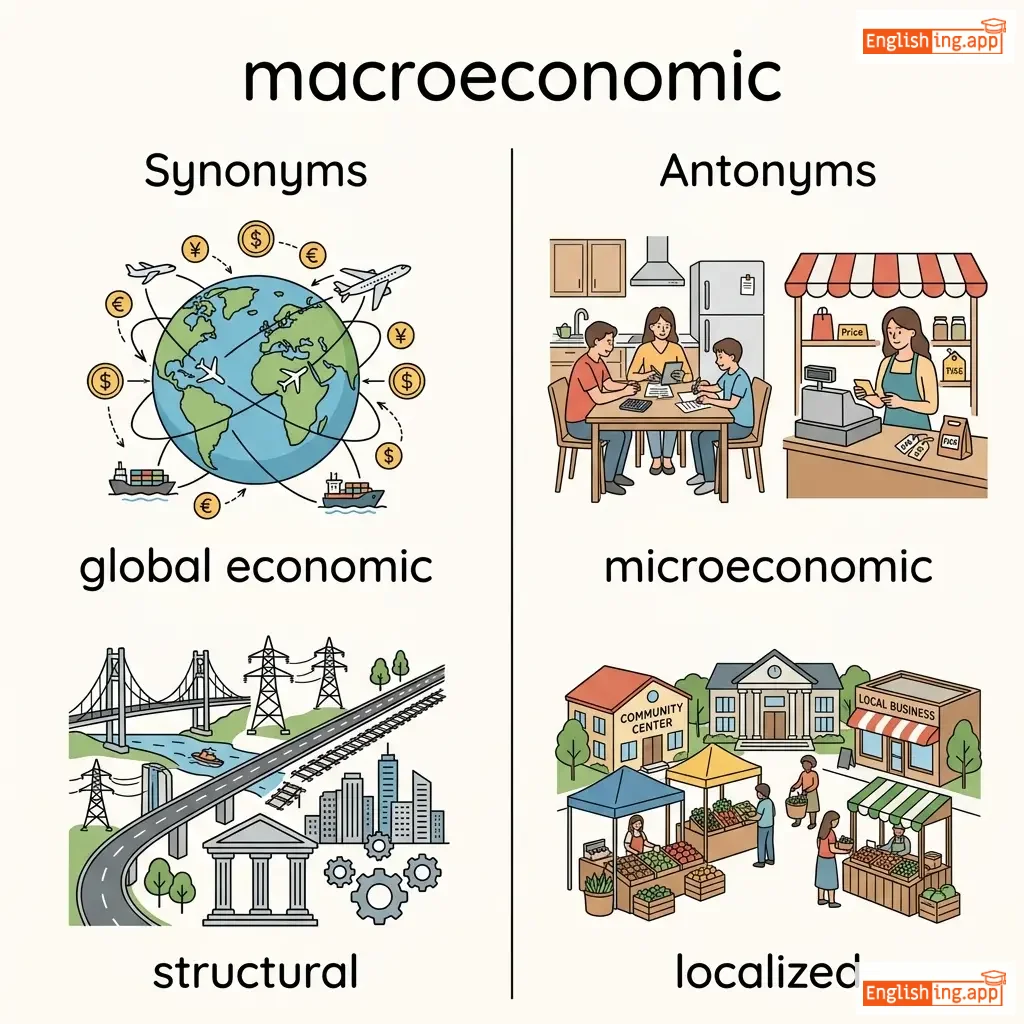
/ˌmæk.roʊ.iː.kəˈnɒm.ɪk/
adjective
(宏观经济的)
••••••
|
|
宏观经济的
hongguan jingji de
••••••
|
Relating to large-scale or general economic factors, such as interest rates and national productivity.
••••••
|
Government policies impact macroeconomic stability.
政府政策影响宏观经济稳定。
••••••
|
政府政策影响宏观经济稳定。
Zhengfu zhengce yingxiang hongguan jingji wending.
••••••
|
national economy, economic trends, large-scale financial system
••••••
|
microeconomic, individual finance, localized economy
••••••
|
Think 'hongguan' for large-scale and 'jingji' for economy.
••••••
|
|
#1967
💱
|
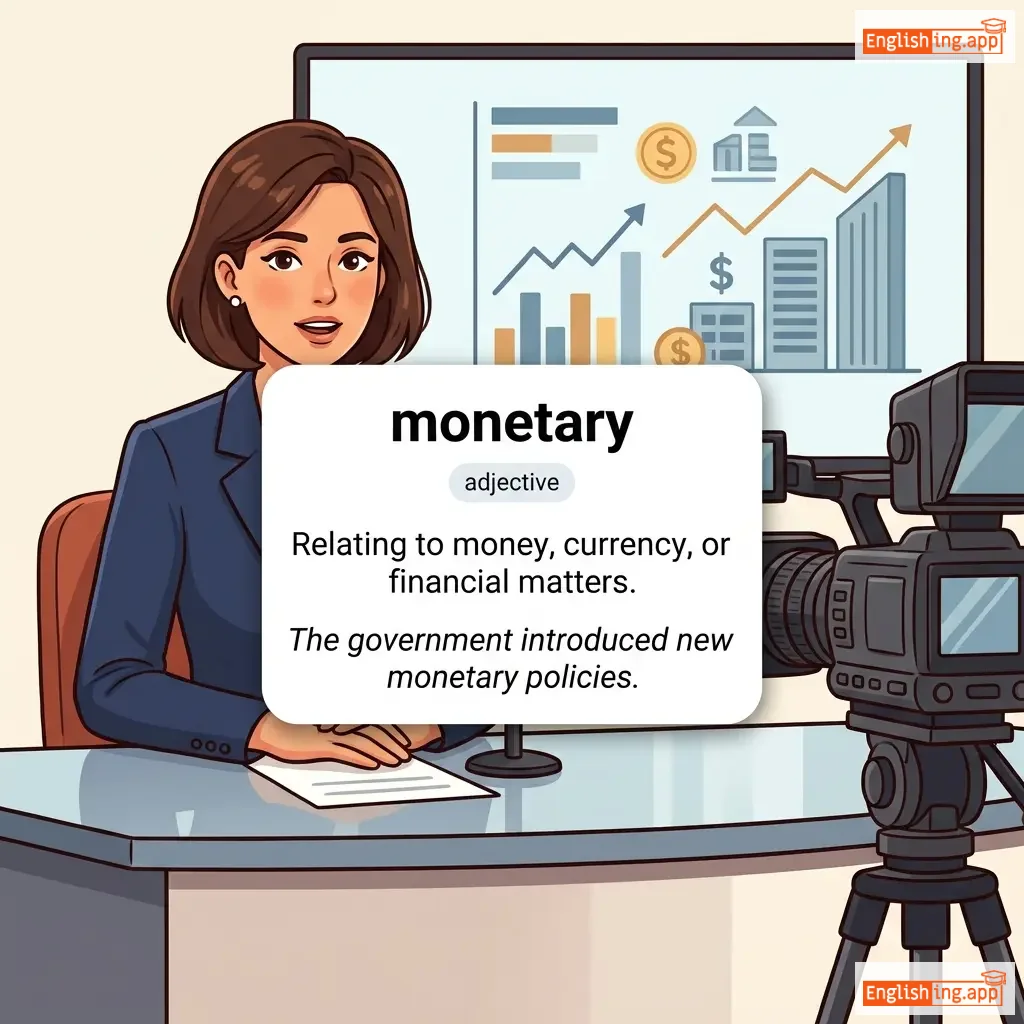
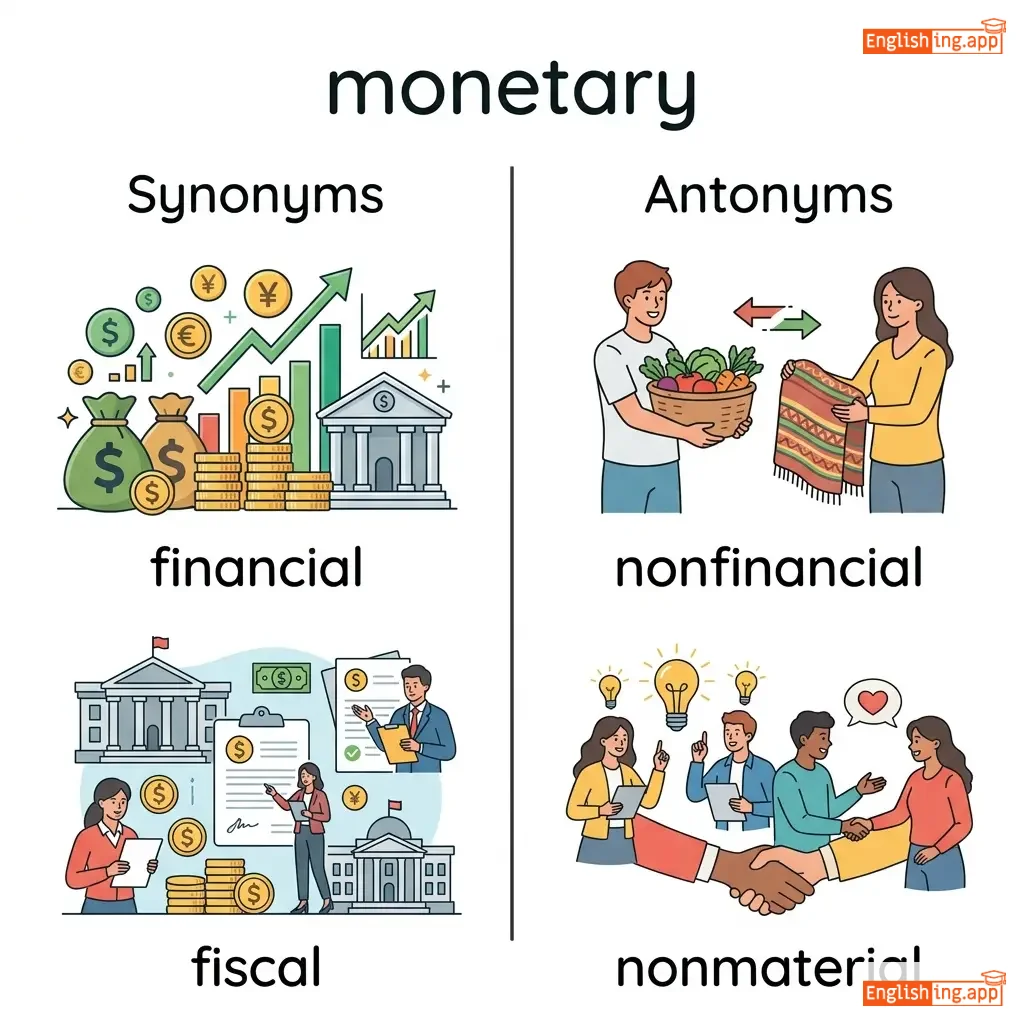
/ˈmʌn.ɪ.tri/
adjective
(货币的)
••••••
|
|
货币的
huobide
••••••
|
Relating to money or currency, especially government policy concerning money supply and interest rates.
••••••
|
The central bank controls monetary policies to manage inflation. |
中央银行控制货币政策以管理通货膨胀。
Zhongyang yinhang kongzhi huobi zhengce yi guanli tonghuo pengzhang.
••••••
|
financial, fiscal, economic
••••••
|
non-financial, barter-based, non-monetary
••••••
|
货币=money,记住它的发音就像‘money’
••••••
|
|
#1968
⚡
|
/ˌvɒl.əˈtɪl.ɪ.ti/
noun
(波动性)
••••••
|
|
波动性
bodongxing
••••••
|
Liability to change rapidly and unpredictably, especially for the worse in financial markets.
••••••
|
The stock market is known for its volatility.
股市以其波动性而闻名。
••••••
|
股市以其波动性而闻名。
Gǔshì yǐ qí bōdòngxìng ér wénmíng.
••••••
|
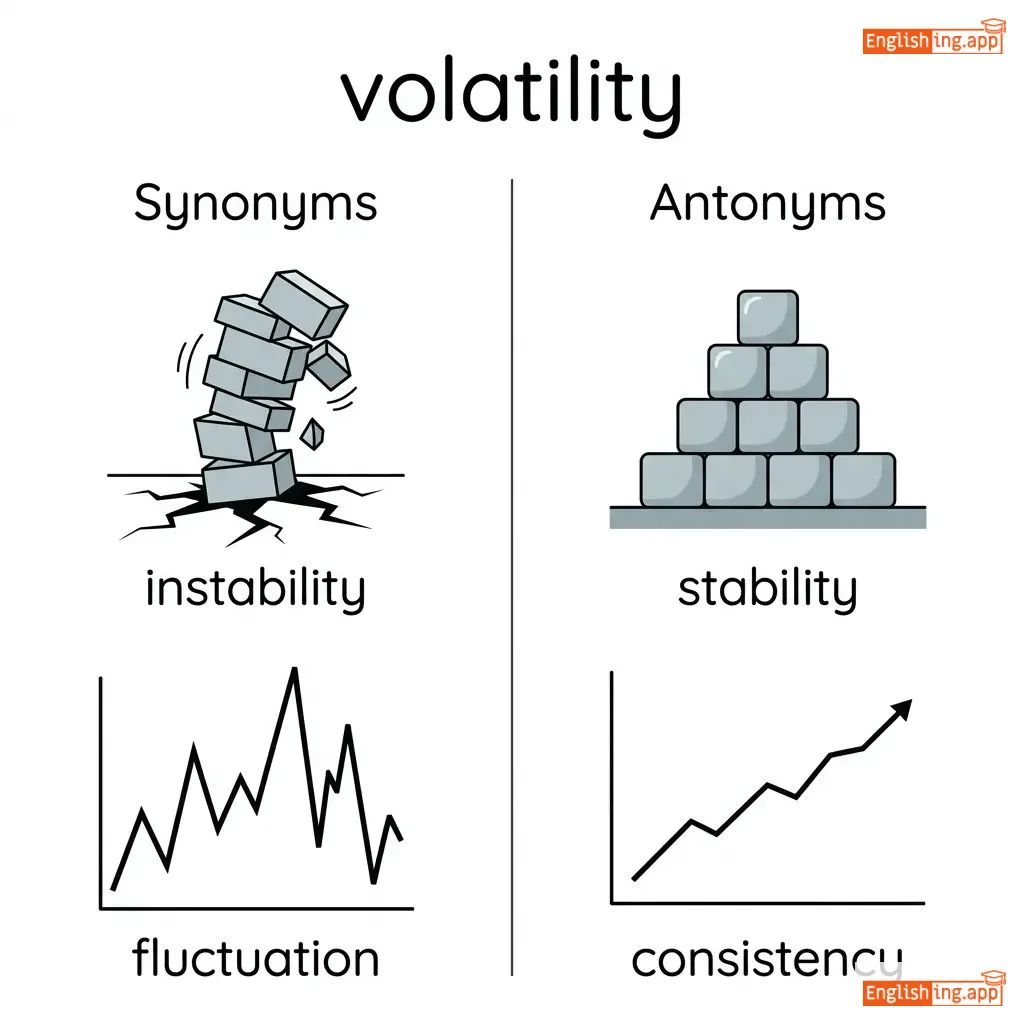
instability, fluctuation, uncertainty
••••••
|
stability, consistency, predictability
••••••
|
市场波动大,波动性是关键。
••••••
|
|
#1969
💸
|
/ɪkˈspɛn.dɪ.tʃɚ/
noun
(ik-spen-di-chur)
••••••
|
|
支出
zhīchū
••••••
|
The action of spending funds or an amount of money spent.
••••••
|
The government increased its expenditure on healthcare. |
政府增加了在医疗保健上的支出。
Zhèngfǔ zēngjiāle zài yīliáo bǎojiàn shàng de zhīchū.
••••••
|
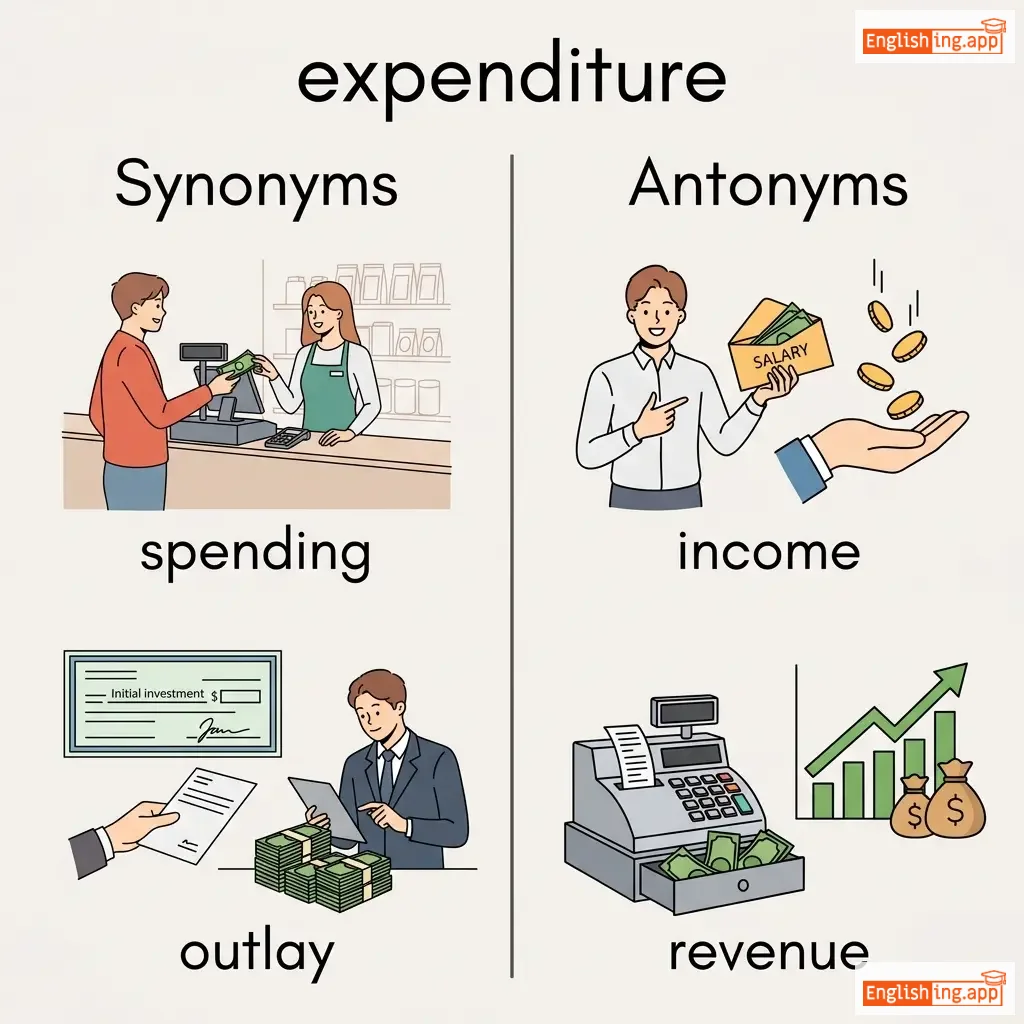
spending, costs, outlay
••••••
|
savings, revenue, income
••••••
|
支出 = 花钱 (spend money)
••••••
|
|
#1970
🏦
|
/ˈfɪs.kəl/
adjective
(财政的)
••••••
|
|
财政的
cáizhèng de
••••••
|
Relating to government revenue, especially taxes, or public money management.
••••••
|
The government introduced new fiscal policies to control inflation. |
政府推出了新的财政政策来控制通货膨胀。
Zhèngfǔ tuīchūle xīn de cáizhèng zhèngcè lái kòngzhì tōnghuò péngzhàng.
••••••
|
financial, budgetary, economic
••••••
|
non-financial, unrelated to money
••••••
|
财政有点像财务管理,控制公共资金的流动。
••••••
|
|
#1971
⚖️
|
/ˌiː.kwɪˈlɪb.ri.əm/
noun
(平衡)
••••••
|
|
平衡
pingheng
••••••
|
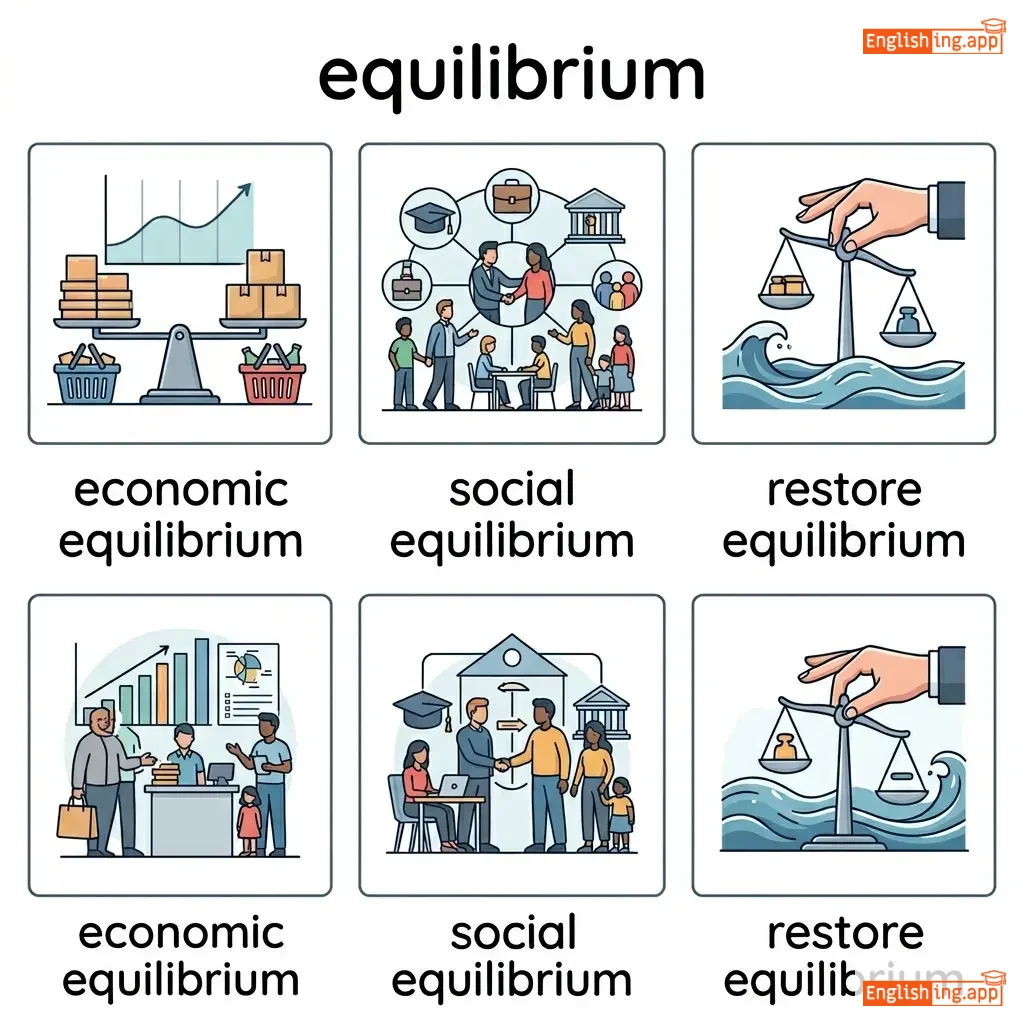
A state in which opposing forces or influences are balanced in economic markets.
••••••
|
The market reached an equilibrium between supply and demand. |
市场达到了供需之间的平衡。
Shìchǎng dádào le gōngxū zhī jiān de pínghéng.
••••••
|
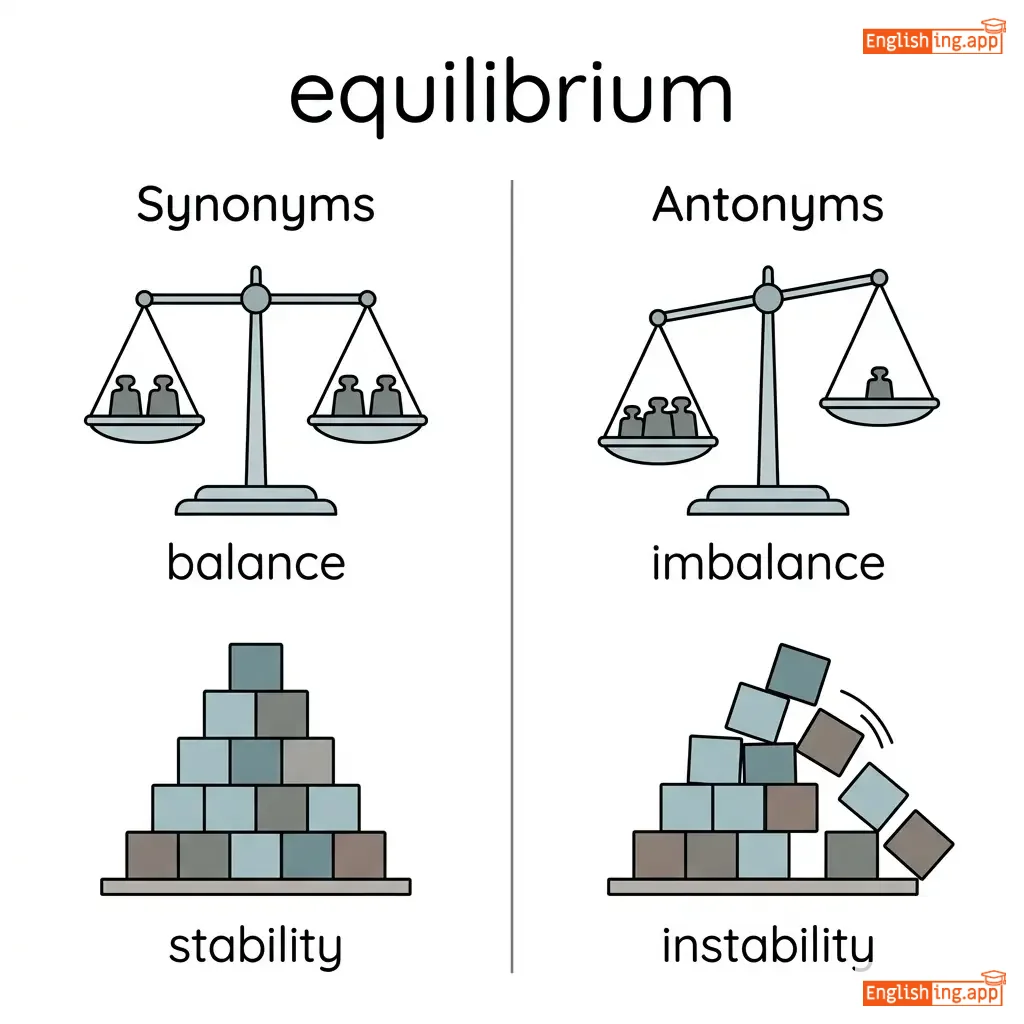
balance, stability, steadiness
••••••
|
imbalance, instability, disequilibrium
••••••
|
想象一架天平,两边平衡,正如供给与需求的关系。
••••••
|
|
#1972
🚫
|
/ˌmɑːr.dʒɪ.nəl.aɪˈzeɪ.ʃən/
noun
(mɑːr.dʒɪ.nəl.aɪˈzeɪ.ʃən)
••••••
|
|
边缘化
bian yuan hua
••••••
|
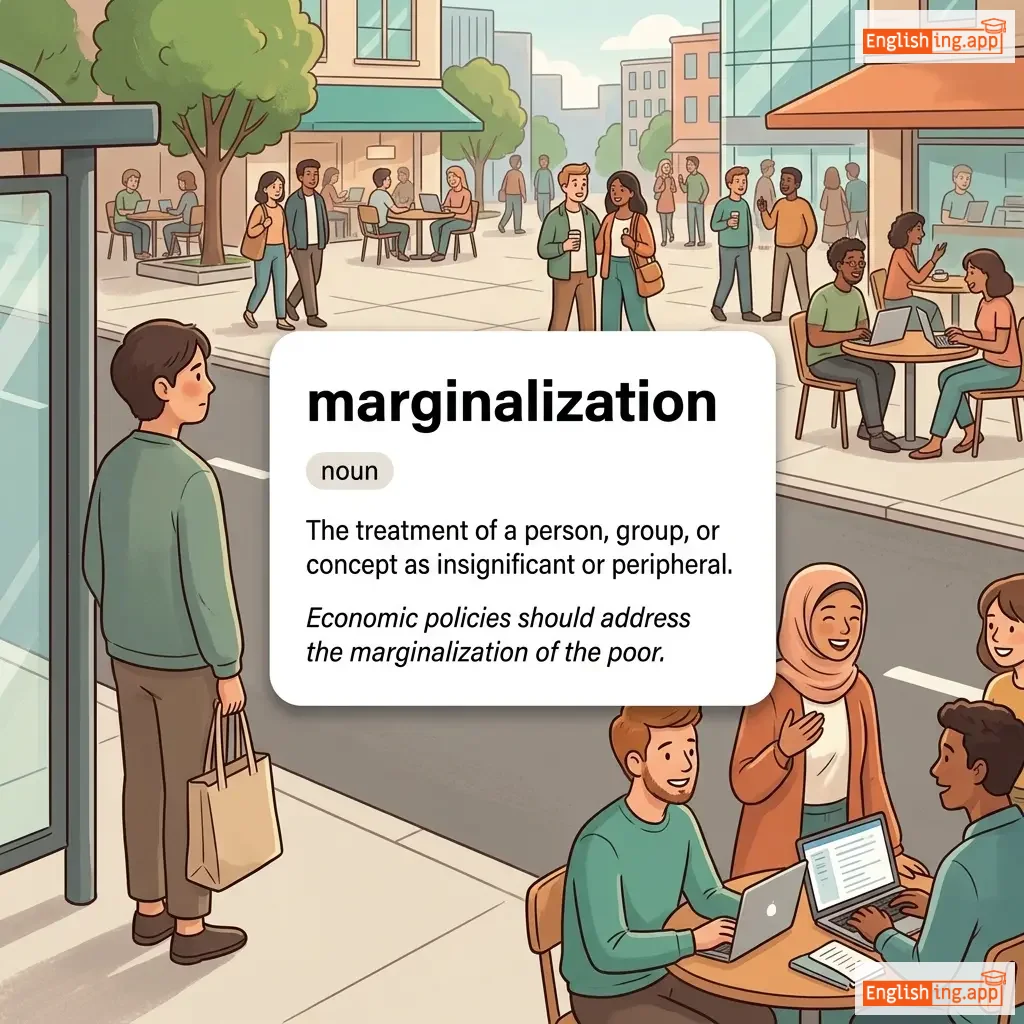
The process of pushing a group or individual to the edge of society by not allowing them full participation.
••••••
|
Economic policies should address the marginalization of the poor.
经济政策应该解决贫困人口的边缘化问题。
••••••
|
经济政策应该解决贫困人口的边缘化问题。
Jingji zhengce yinggai jieju poor renkou de bianyuanhua wenti.
••••••
|
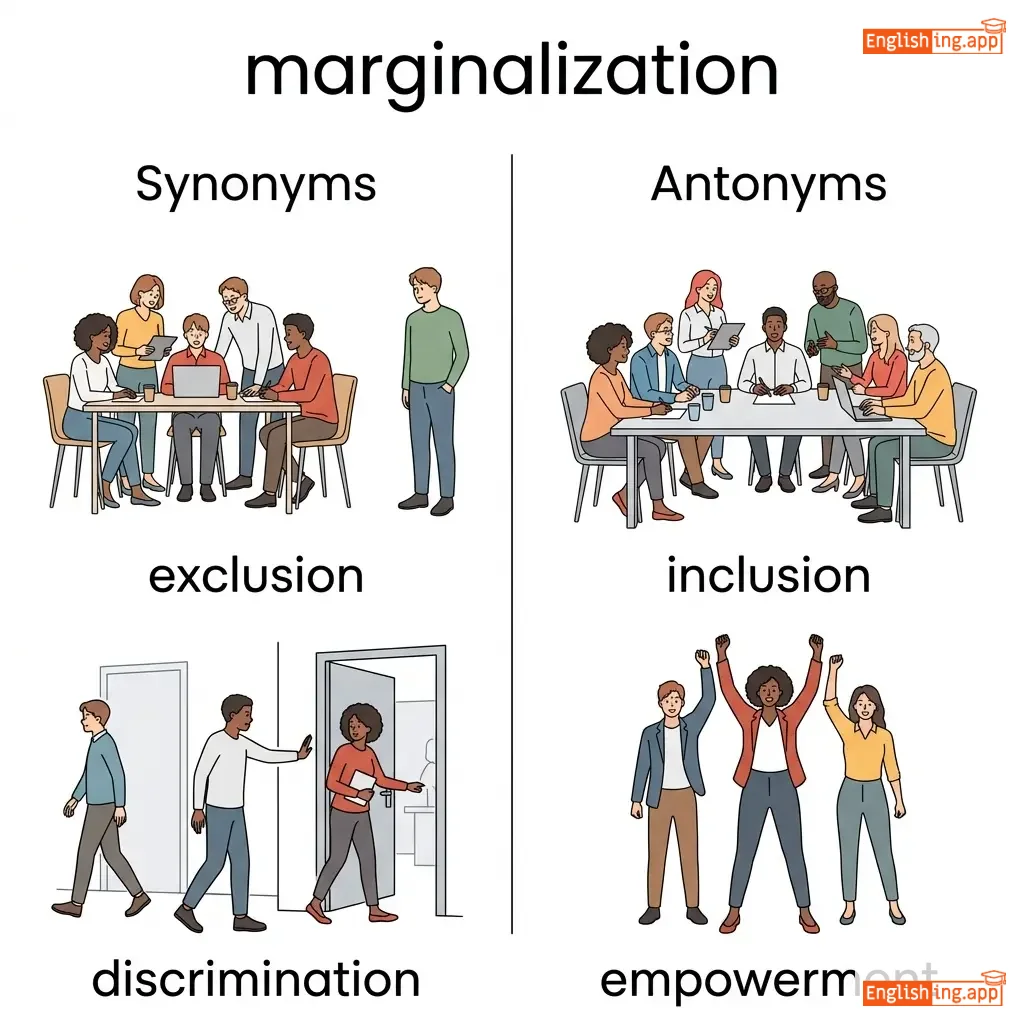
exclusion, discrimination, alienation
••••••
|
inclusion, empowerment, recognition
••••••
|
中文‘边缘化’帮助记住‘marginalization’,可以理解为边缘的意思。
••••••
|
|
#1973
💰
|
/ˈseɪ.vɪŋz/
noun
(seivings)
••••••
|
|
储蓄
chuxu
••••••
|
Money that is saved, especially in a bank or official scheme for future use.
••••••
|
Many people invest their savings in real estate.
许多人将他们的储蓄投资于房地产。
••••••
|
许多人将他们的储蓄投资于房地产。
Xǔduō rén jiāng tāmen de chǔxù tóuzī yú fángdìchǎn.
••••••
|
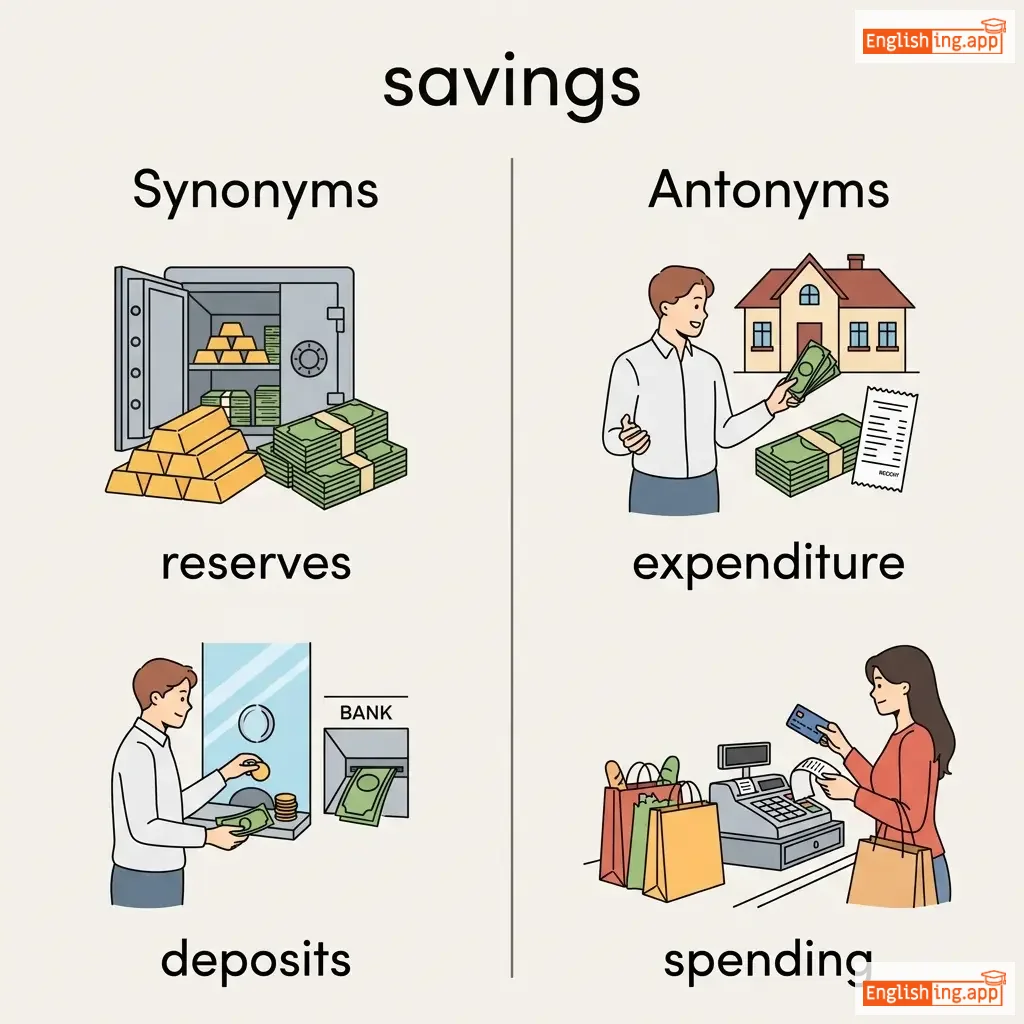
reserves, deposits, funds
••••••
|
expenditure, spending, debt
••••••
|
储蓄为未来提供了经济保障。
••••••
|
|
#1974
📊
|
/ˌkæp.ɪ.t̬əl.aɪˈzeɪ.ʃən/
noun
(资本化)
••••••
|
|
资本化
zibenghua
••••••
|
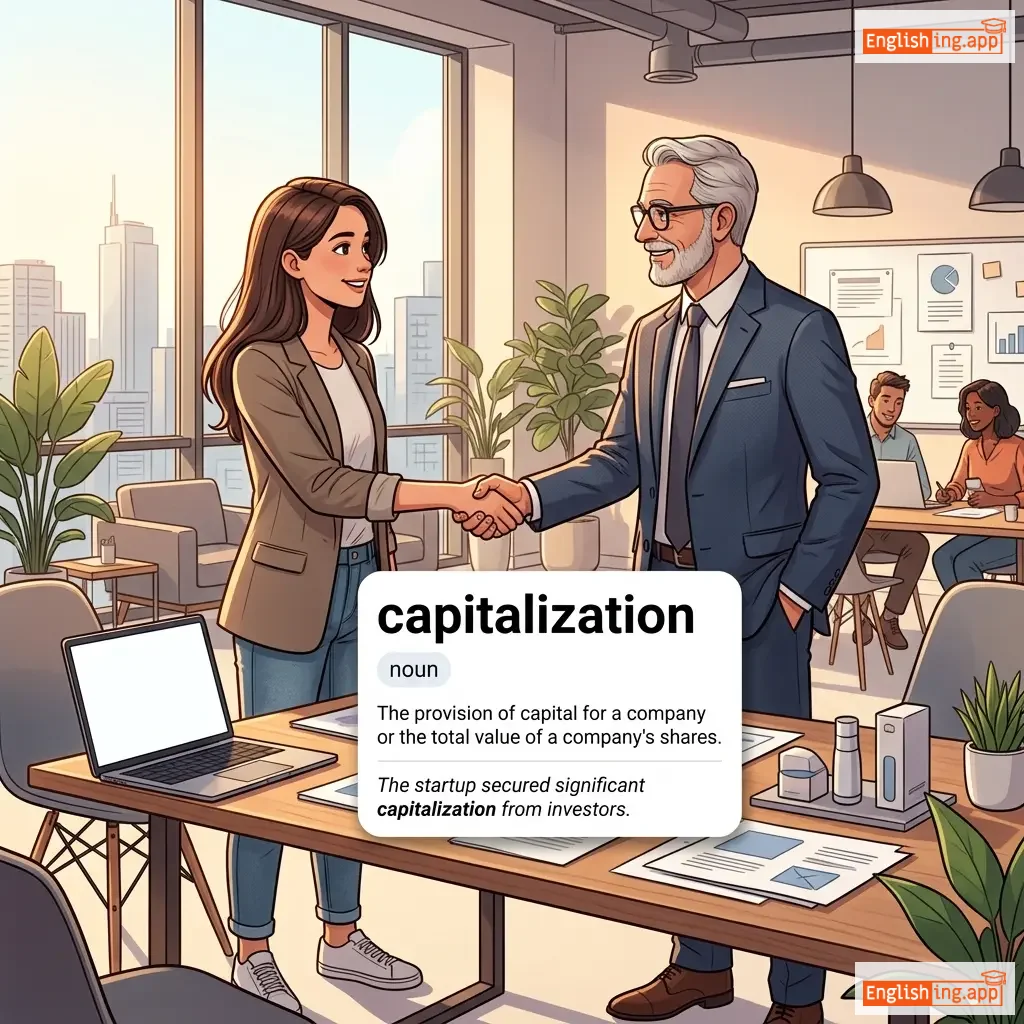
The provision of capital for a company or the total value of a company's shares.
••••••
|
The company increased its capitalization through new investments.
公司通过新的投资增加了它的资本化。
••••••
|
公司通过新的投资增加了它的资本化。
Gongsi tongguo xin de touzi zengjia le ta de zibenghua.
••••••
|
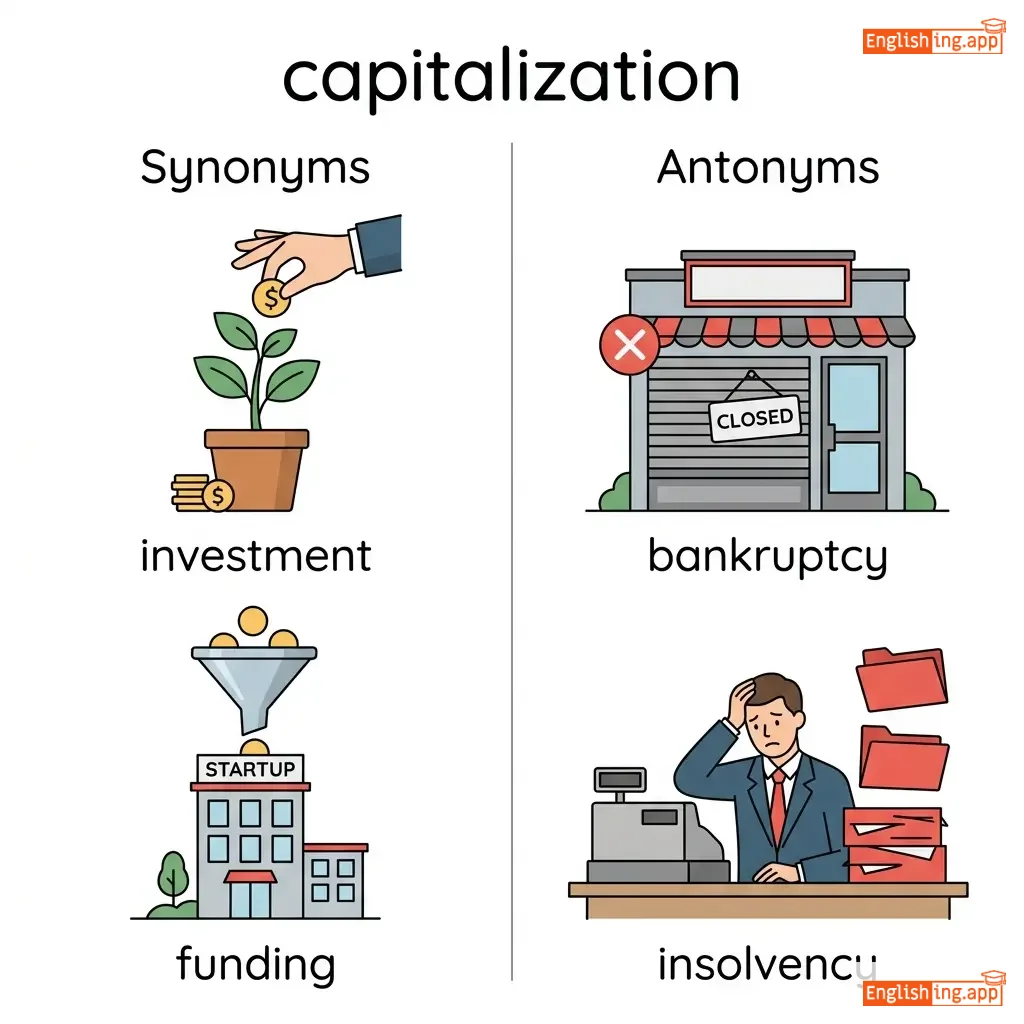
investment, funding, financial growth
••••••
|
underfunding, bankruptcy, liquidation
••••••
|
Zibenhua - Zibenghua (Chinese for capitalization)
••••••
|
|
#1975
💹
|
/ˈɑːr.bɪ.trɑːʒ/
noun
(ā-bǐ-tuó-luó)
••••••
|
|
套利
taolì
••••••
|
The simultaneous buying and selling of securities in different markets to take advantage of differing prices.
••••••
|
Investors use arbitrage to make profits in global markets. |
投资者利用套利在全球市场中获取利润。
Tóuzī zhě lìyòng tàolì zài quánqiú shìchǎng zhōng huòqǔ lìrùn.
••••••
|
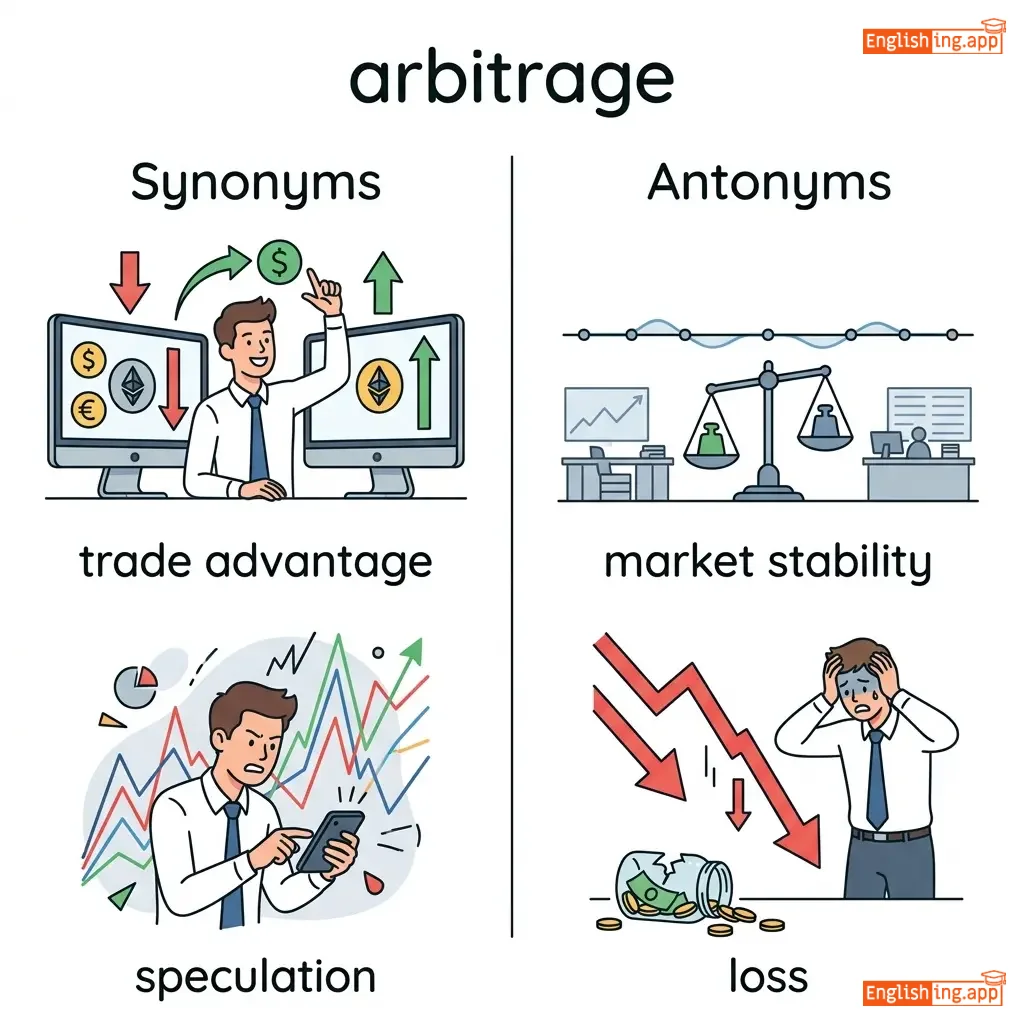
trading, exploiting price differences, speculation
••••••
|
fixed pricing, loss-making trade, unprofitability
••••••
|
套利: 在不同市场之间利用价格差异赚取利润。
••••••
|
|
#1976
🛡️
|
/kənˈtɪn.dʒən.si/
noun
(kənˈtɪndʒənsi)
••••••
|
|
应急计划
yìngjí jìhuà
••••••
|
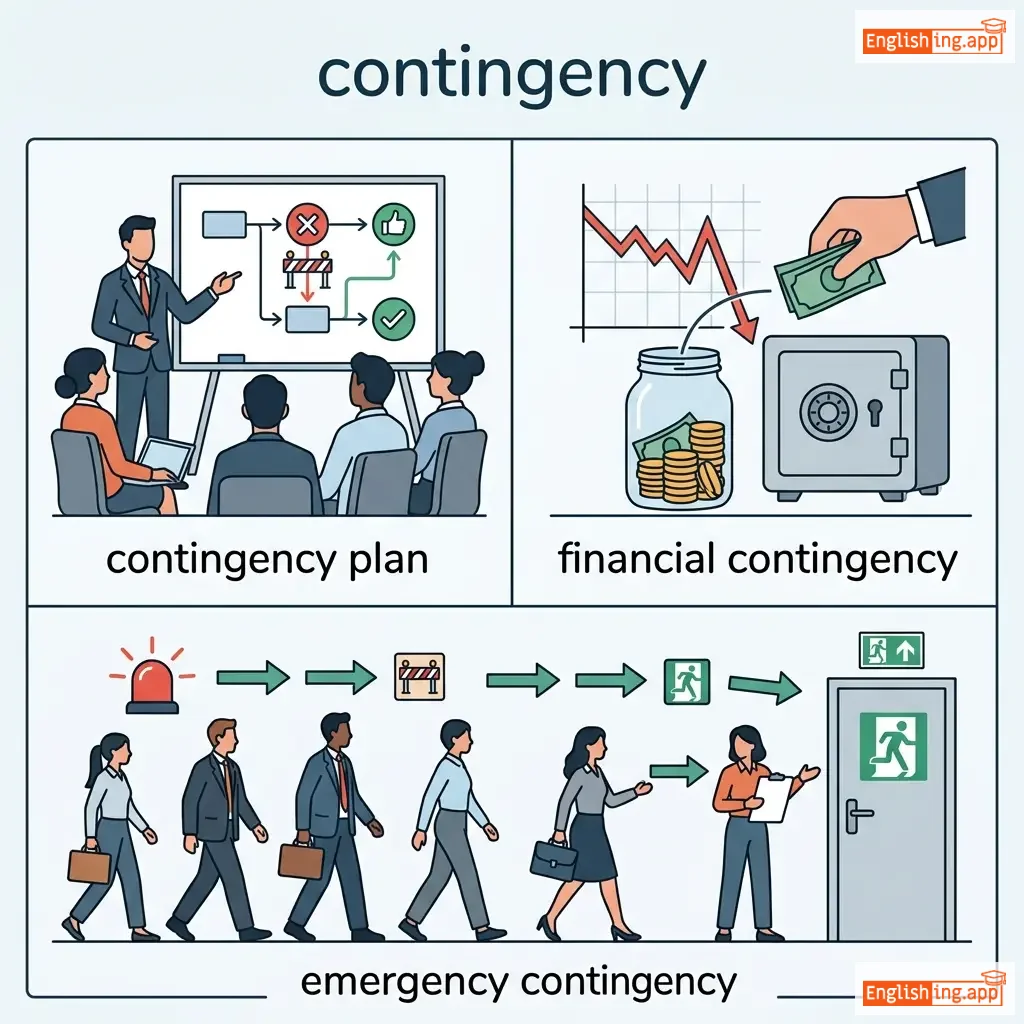
A provision for an unforeseen event or circumstance, especially in financial planning.
••••••
|
The company has a contingency plan for economic downturns. |
公司有一个应急计划来应对经济衰退。
Gōngsī yǒu yīgè yìngjí jìhuà lái yìngduì jīngjì shuāituì.
••••••
|
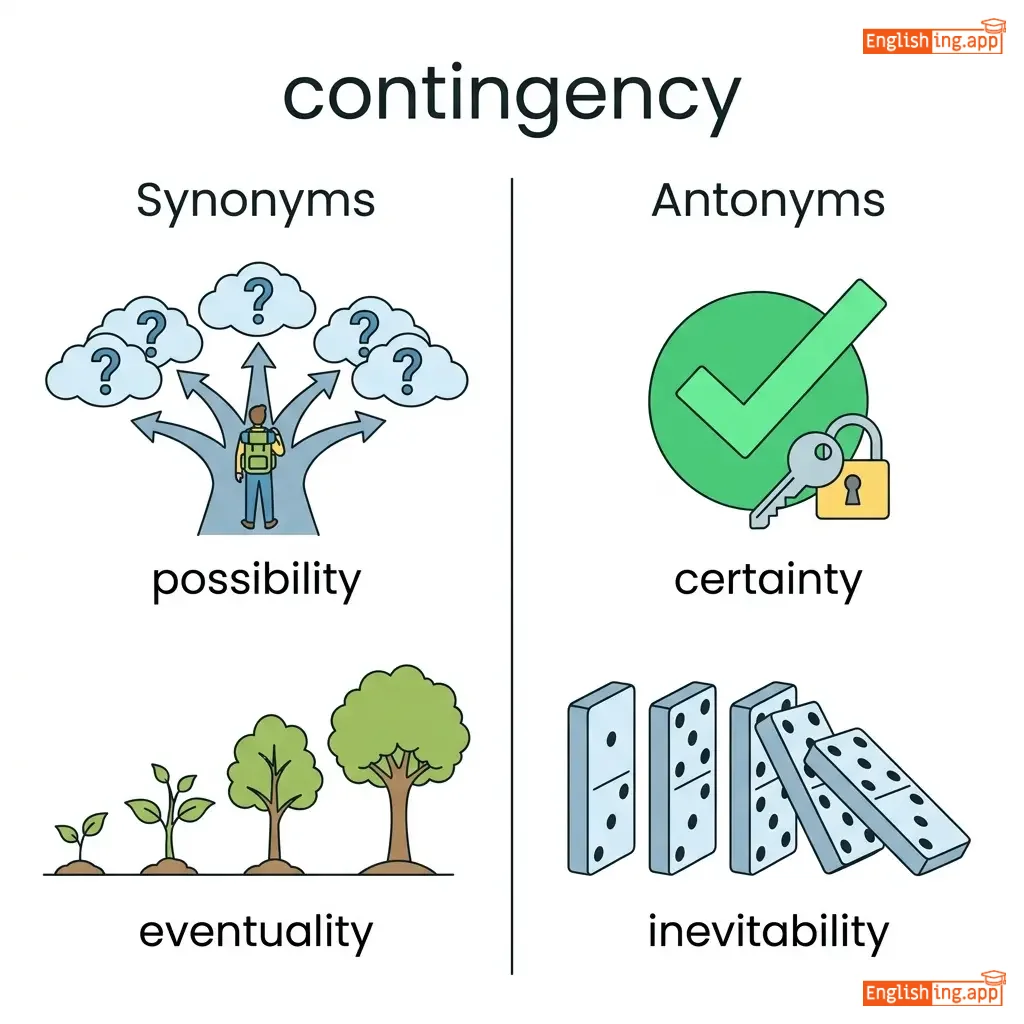
emergency plan, backup, alternative
••••••
|
certainty, assurance, predictability
••••••
|
Contingency = 公司应对突发事件的计划
••••••
|
|
#1977
📉
|
/rɪˈsɛʃ.ən/
noun
(lǐ sè xiān)
••••••
|
|
经济衰退
jingji shuitui
••••••
|
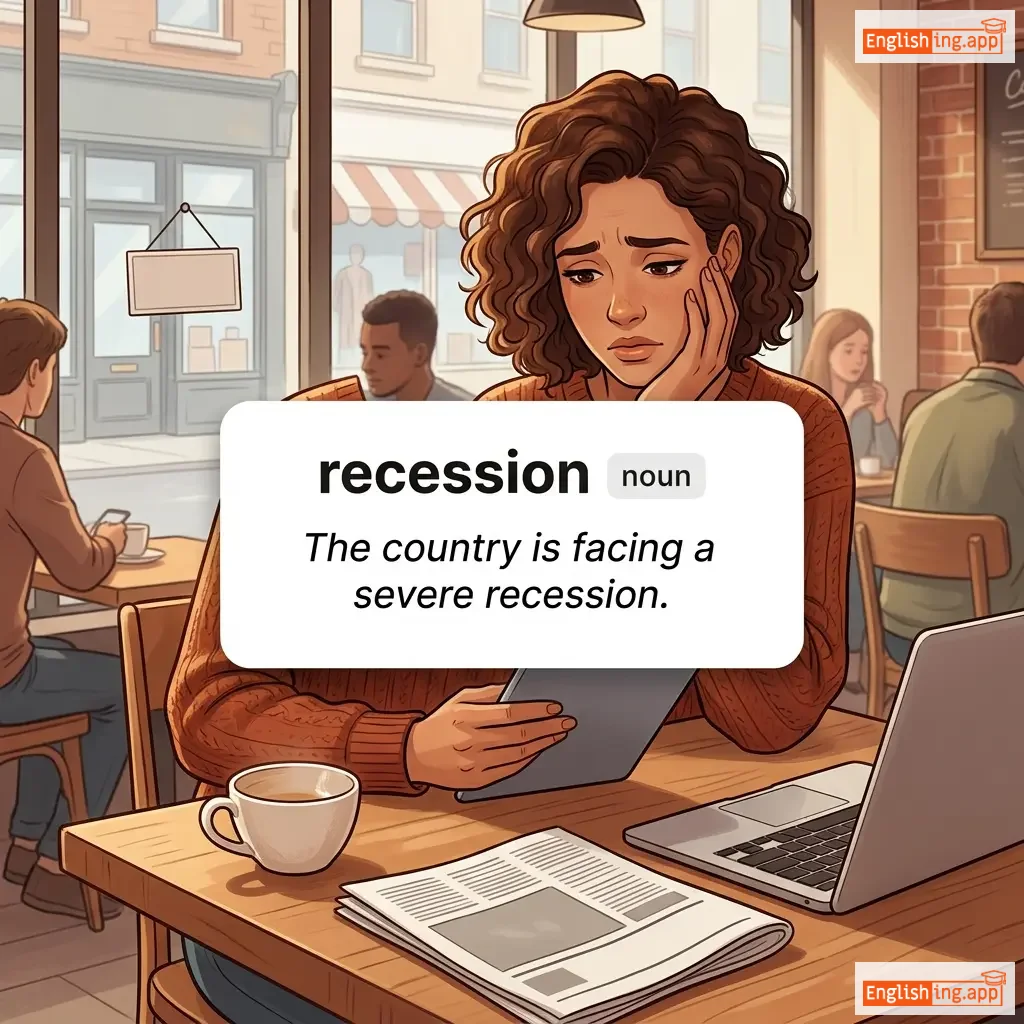
A period of temporary economic decline during which trade and industrial activity are reduced.
••••••
|
The country faced a severe recession after the financial crisis.
该国在金融危机后面临严重的经济衰退。
••••••
|
该国在金融危机后面临严重的经济衰退。
Gai guo zai jinrong weiji hou mianlin yanzhong de jingji shuitui.
••••••
|
economic decline, downturn, slump
••••••
|
boom, growth, expansion
••••••
|
经济衰退 = 商业周期减缓,市场低迷!
••••••
|
|
#1978
🔄
|
/stæɡˈneɪ.ʃən/
noun
(停滞)
••••••
|
|
停滞
tíngzhì
••••••
|
A state of inactivity or lack of growth, especially in an economy.
••••••
|
High unemployment led to economic stagnation. |
高失业率导致了经济停滞。
Gāo shīyè lǜ dǎozhìle jīngjì tíngzhì.
••••••
|
standstill, decline, sluggishness
••••••
|
progress, development, movement
••••••
|
No •••••• |
Vocabulary Quiz
Test your vocabulary by matching words with their translations or meanings.
Login to take the quiz
Comments (0)
Share your thoughts and join the discussion.
Join the discussion by logging in
Login to CommentNo comments yet
Be the first to share your thoughts!