

全球森林类型
Types of Forests Around the World
全球有不同的树木环境,这些环境取决于气候和生态特征。森林主要分为三大类——针叶森林、落叶森林和热带森林。
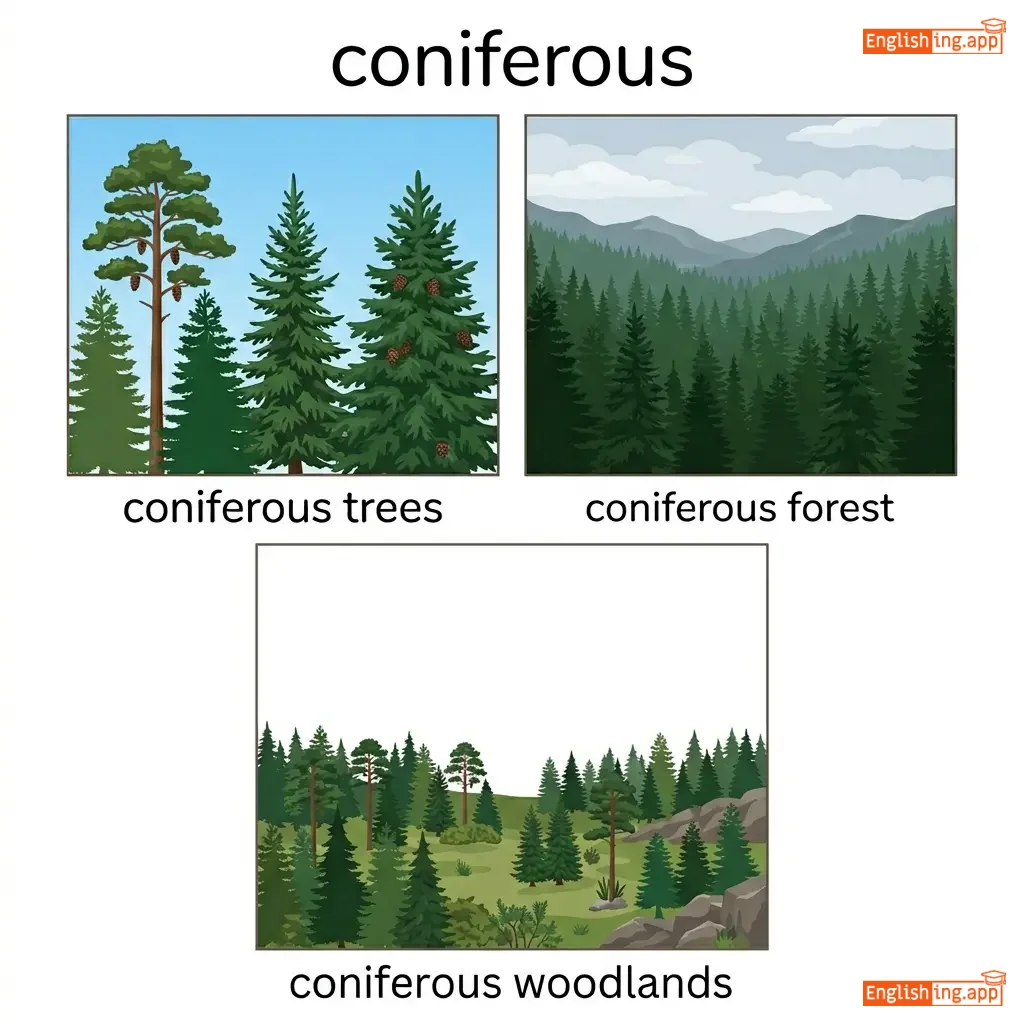
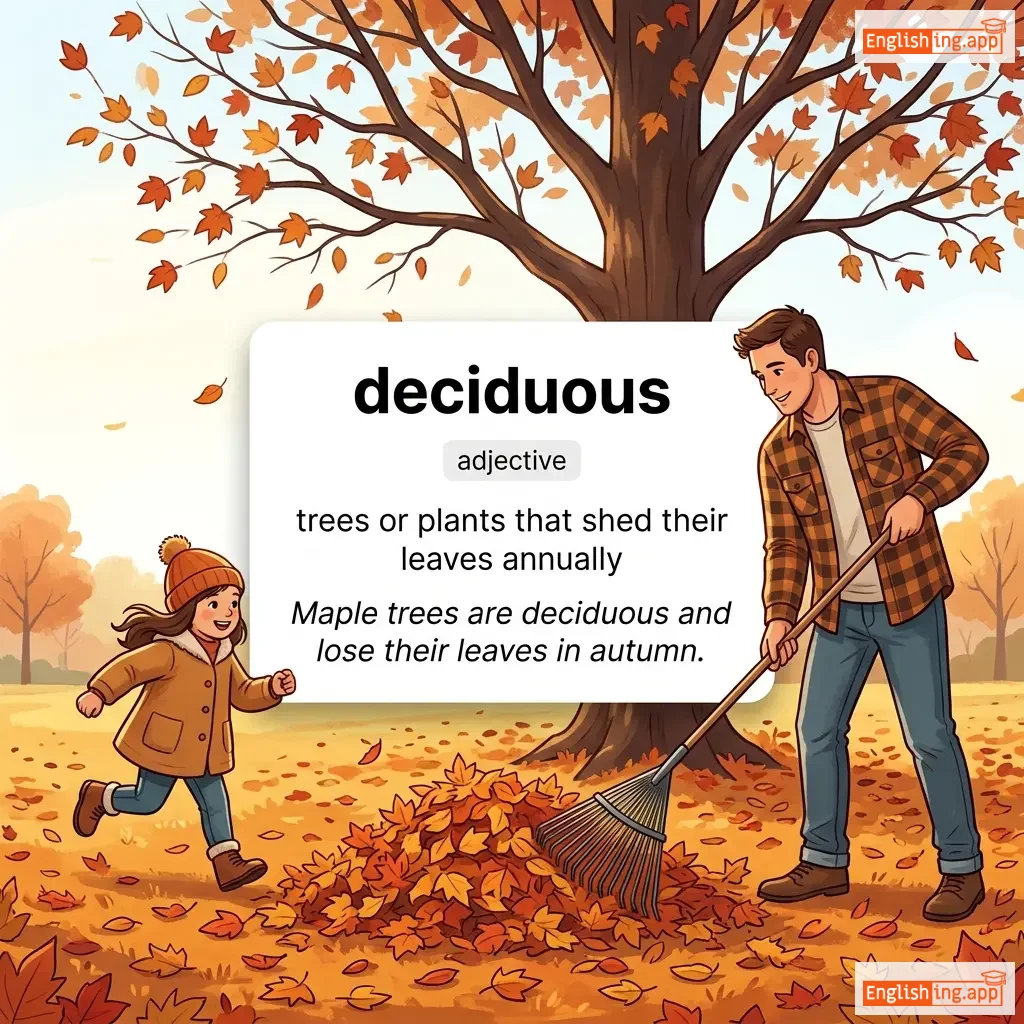
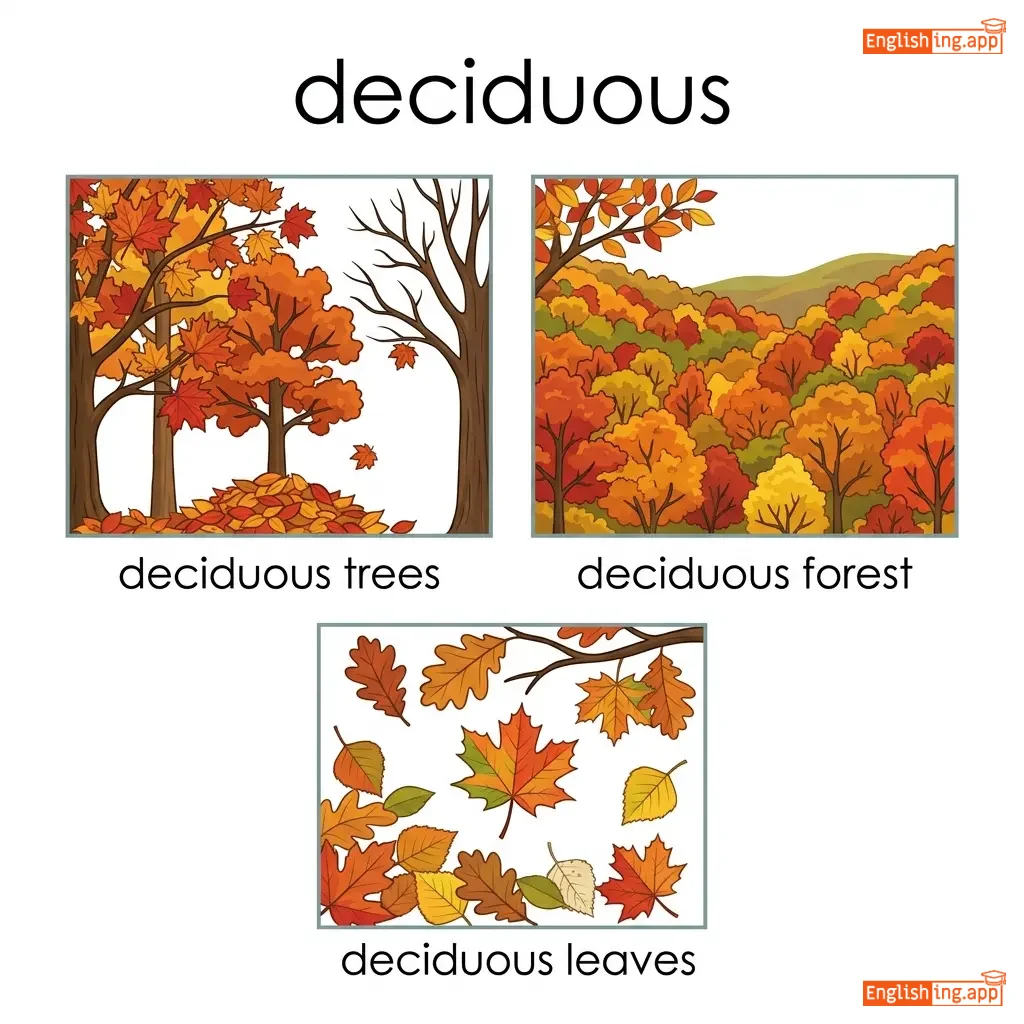
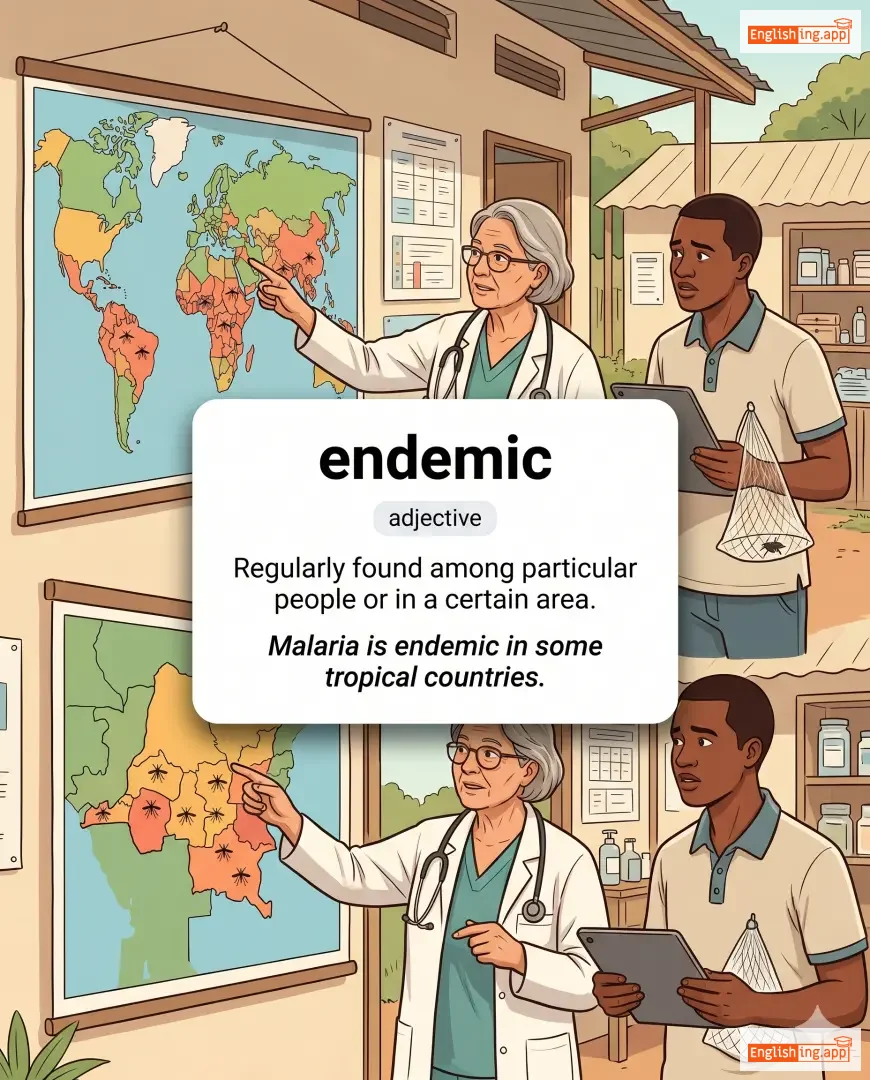
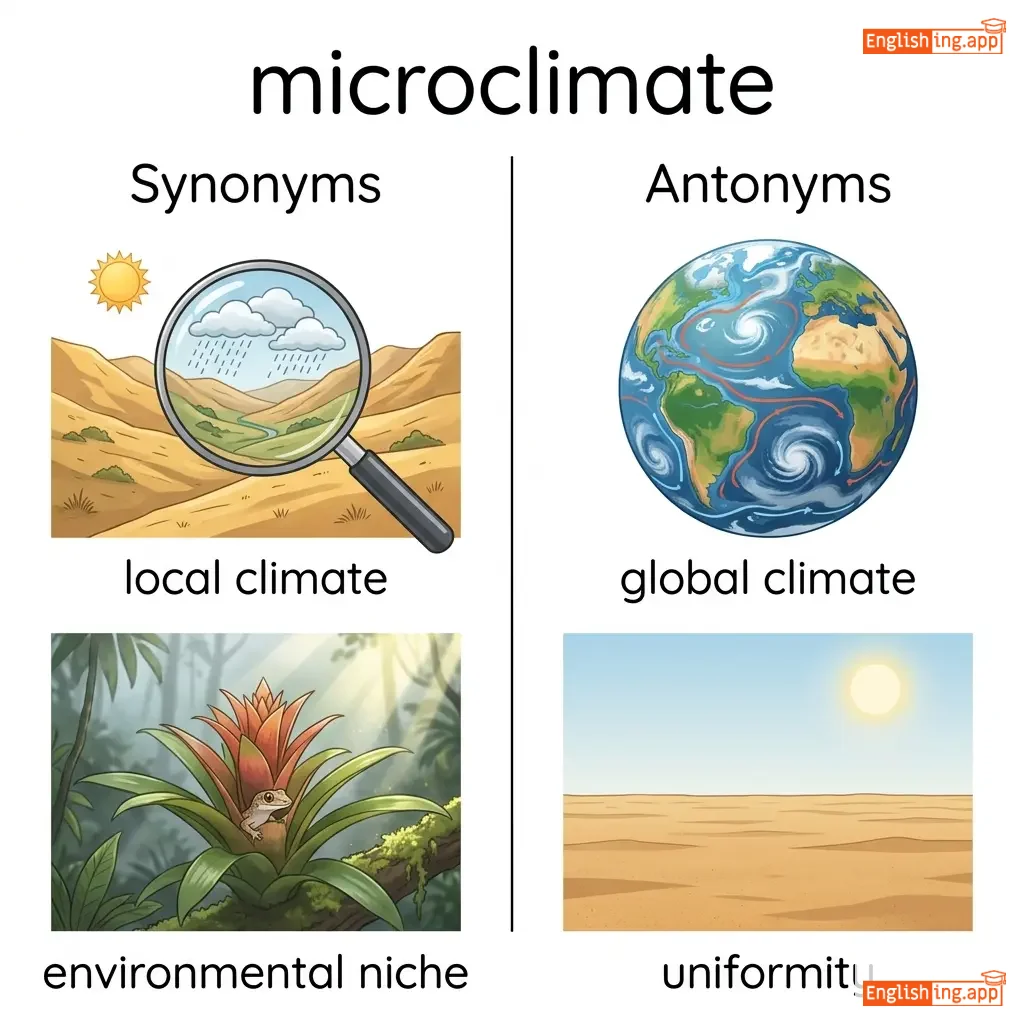
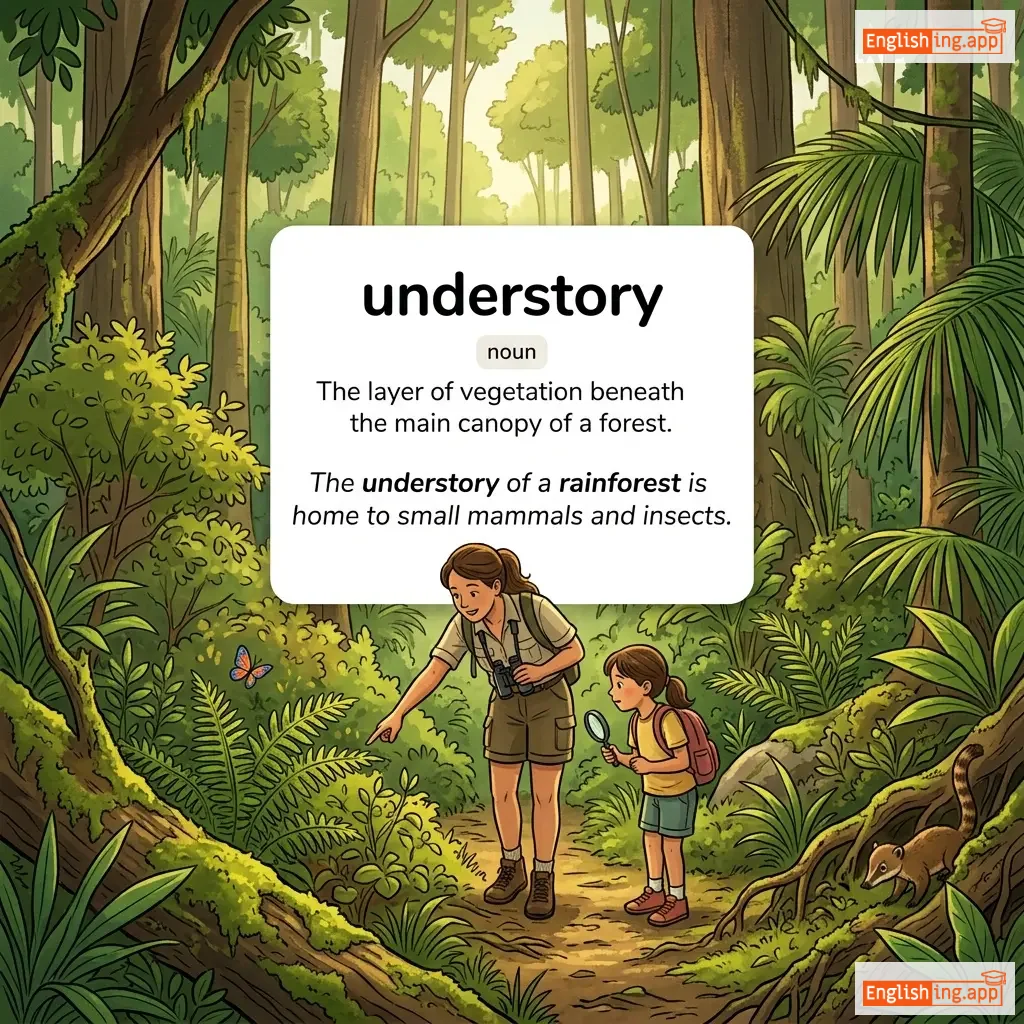
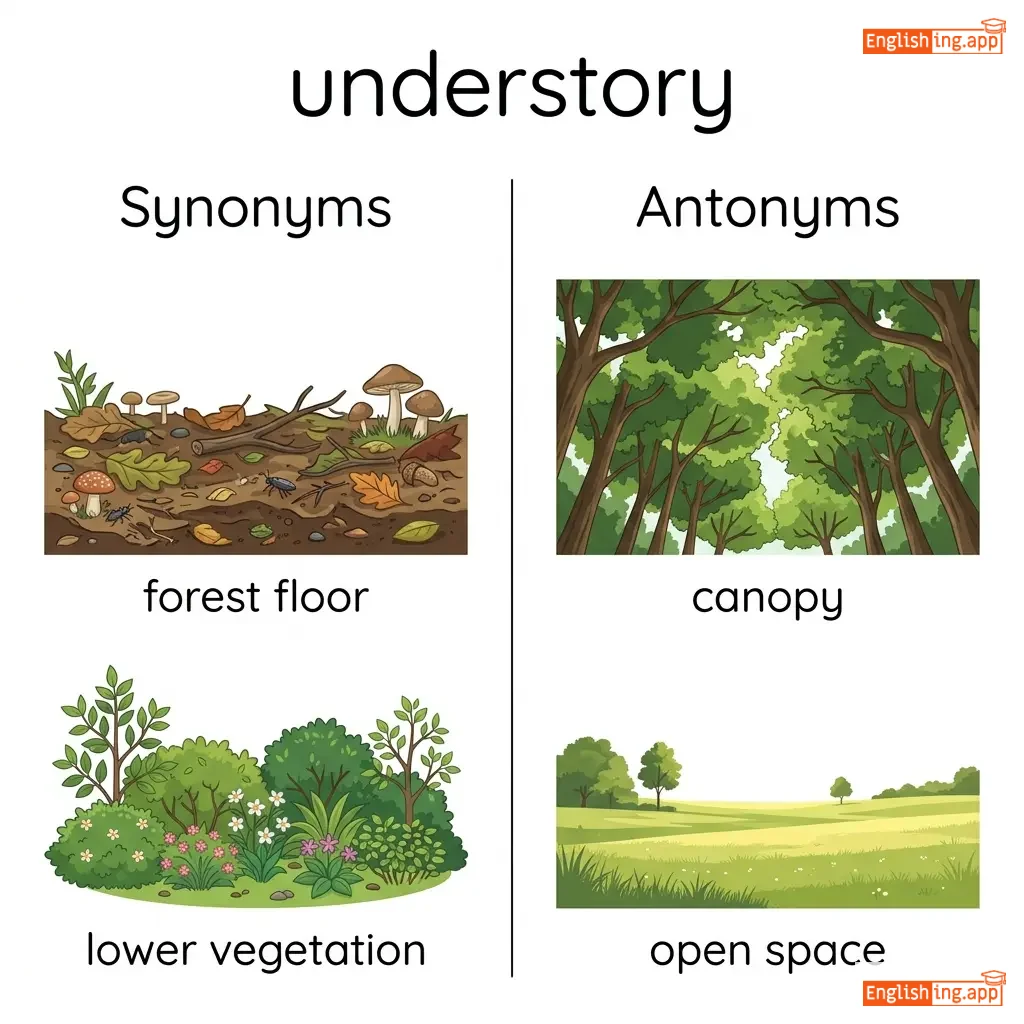
针叶森林主要分布在寒冷地区,在这些地区常绿树木年复一年地生长。它们的树冠密集,为土壤中的动物群落创造了重要的栖息地。另一方面,落叶森林会随着季节变化而掉叶。这里的生物多样性丰富,森林的植物群落每年都会通过演替过程发生变化。热带森林位于温暖潮湿的地区,如亚马逊,降水量丰富,是许多特有植物和动物物种的栖息地。此外,山区森林位于山脉地区,河岸森林则靠近河流。然而,过度的森林砍伐和碎片化威胁到森林的生存,破坏了自然的小气候和下层植被。没有森林保护,就无法维持生态平衡。

Swipe left or right, or use the buttons. Tap image to zoom.
例句翻译
单词
Types of Forests Around the WorldTypes of Forests Around the World - 遮罩切换
|
表情符号
|
单词 | Images | 翻译 | 含义 | 例句 | 例句翻译 | 同义词 | 反义词 | 助记符 |
|---|---|---|---|---|---|---|---|---|---|
|
#3853
🌳
|
/ɑːrˈbɔːr.i.əl/
adjective
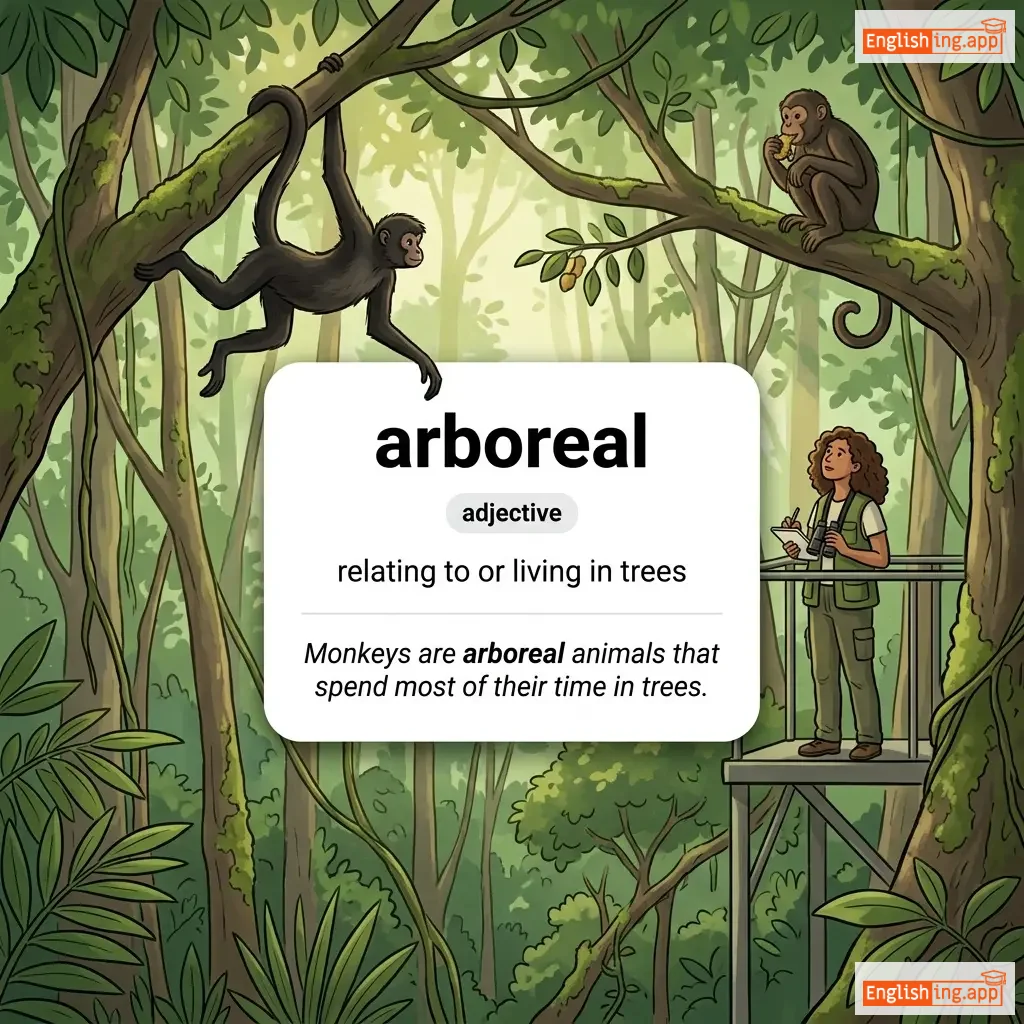
(树栖)
••••••
|
|
与树相关
yǔ shù xiāngguān
••••••
|
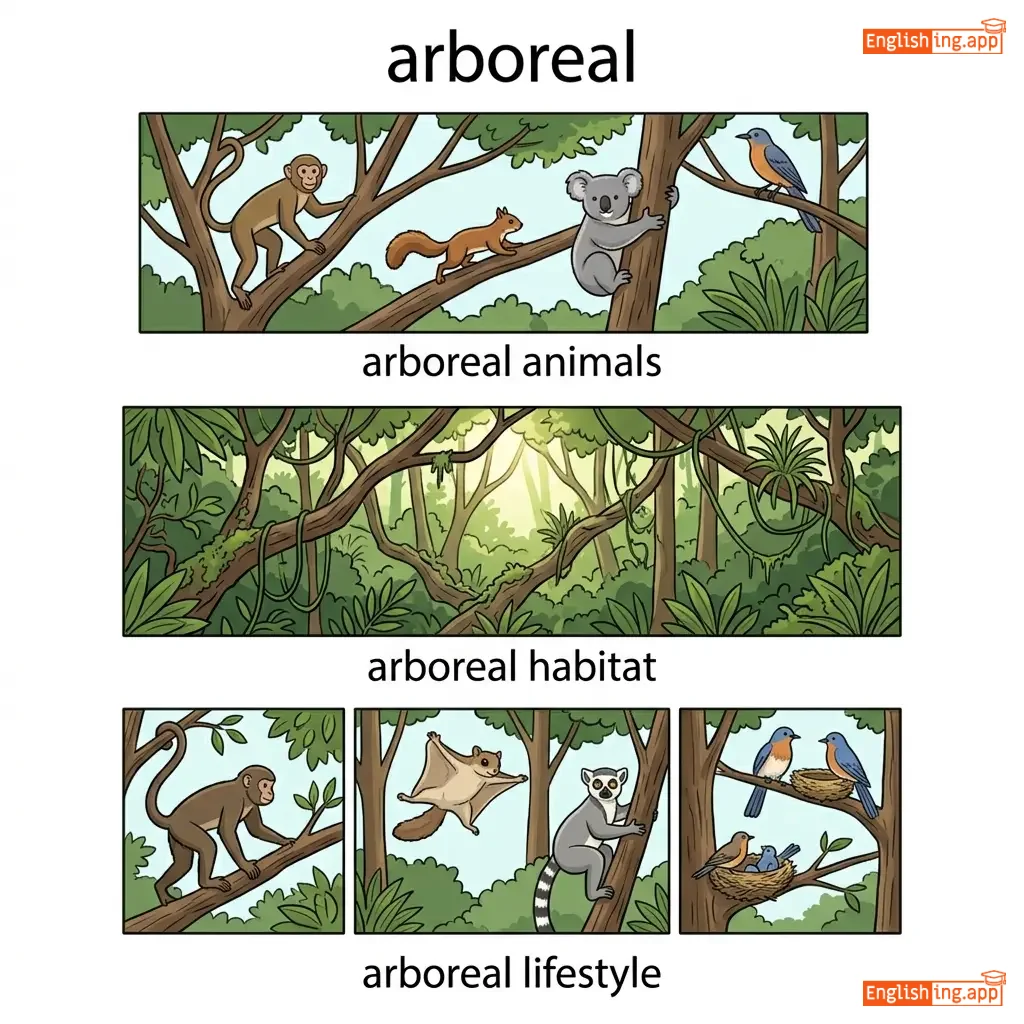
Relating to trees or living in trees; tree-dwelling.
••••••
|
Monkeys are arboreal animals that spend most of their time in trees. |
猴子是树栖动物,它们大部分时间都待在树上。
Hóuzi shì shùqī dòngwù, tāmen dà bùfen shíjiān dōu dāi zài shù shàng.
••••••
|
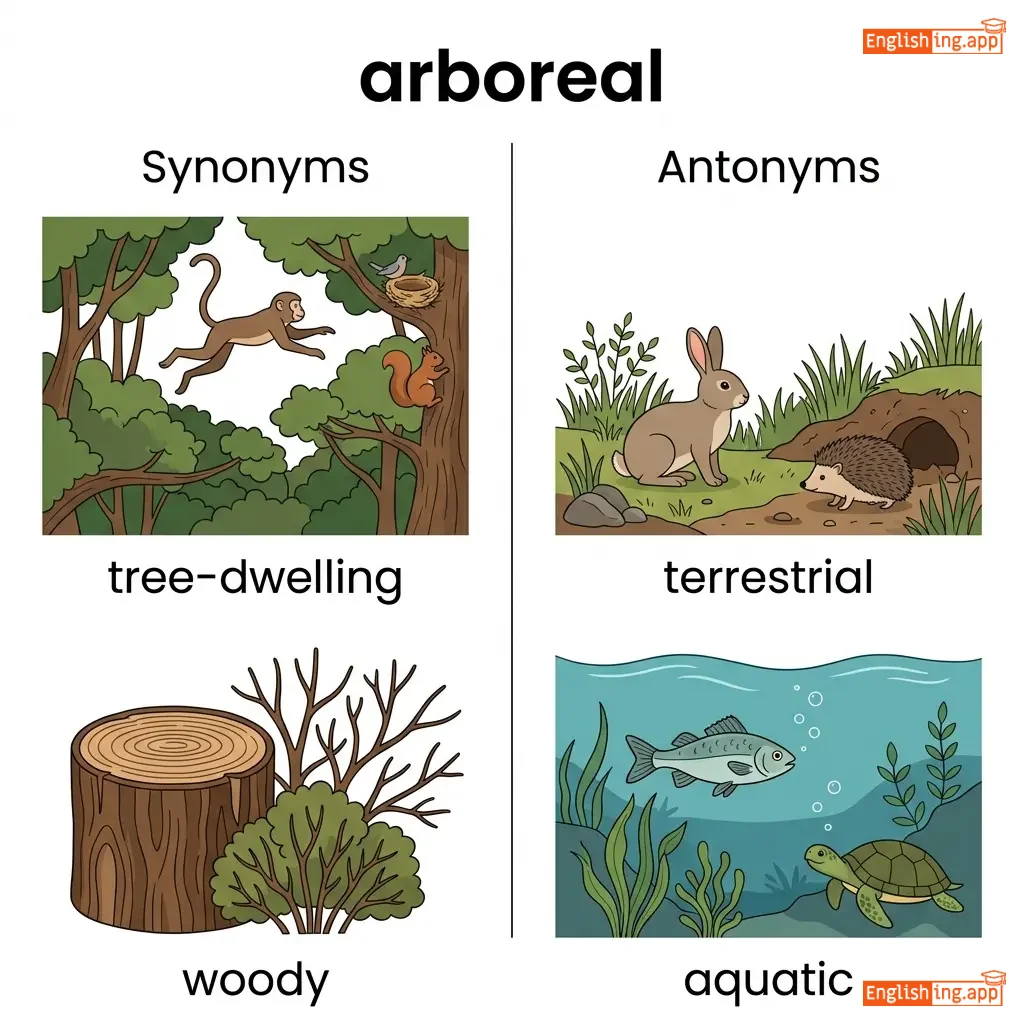
tree-dwelling, forest-related, woody
••••••
|
terrestrial, ground-dwelling, non-forest
••••••
|
树 + 栖 = 树栖, 就像猴子住在树上。
••••••
|
|
#3854
🌿
|
/ˌiː.kəˈlɒdʒ.ɪ.kəl/
adjective
(生态的)
••••••
|
|
生态的
shēngtài de
••••••
|
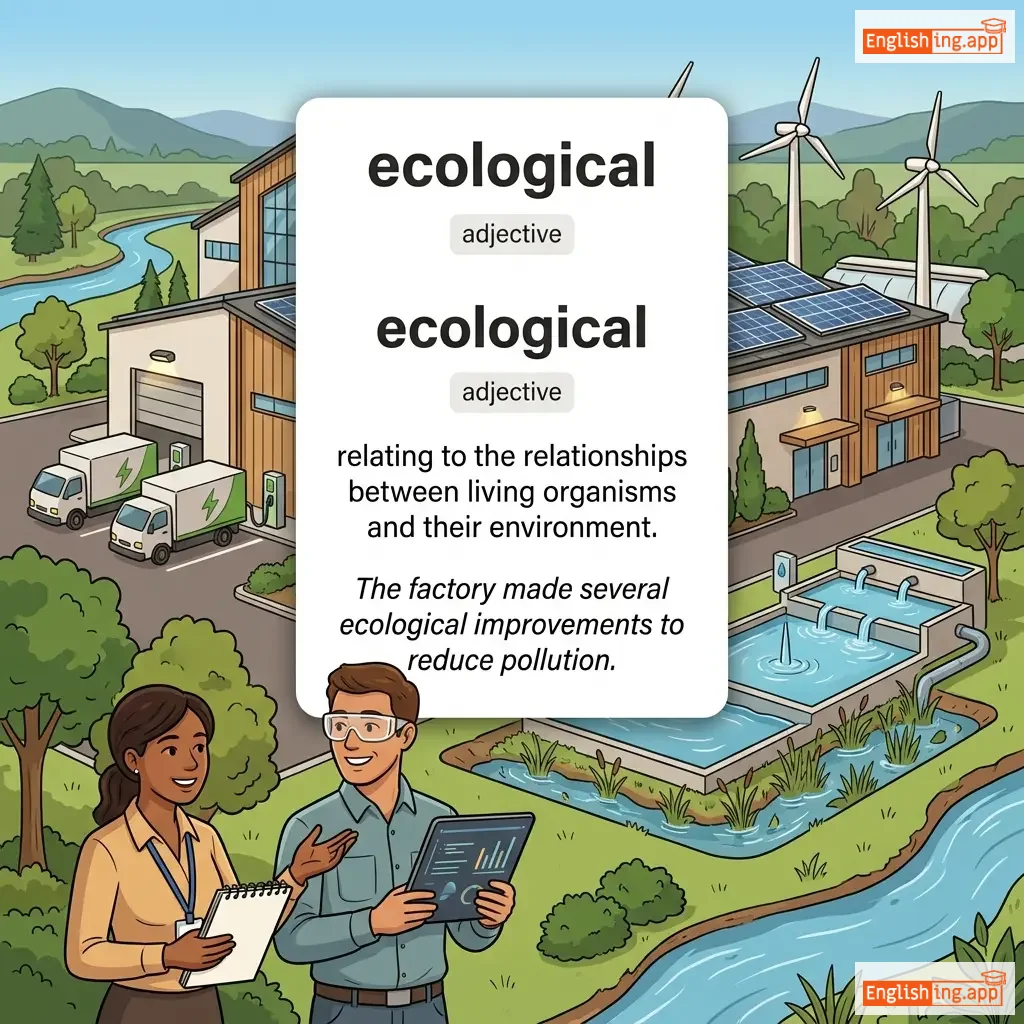
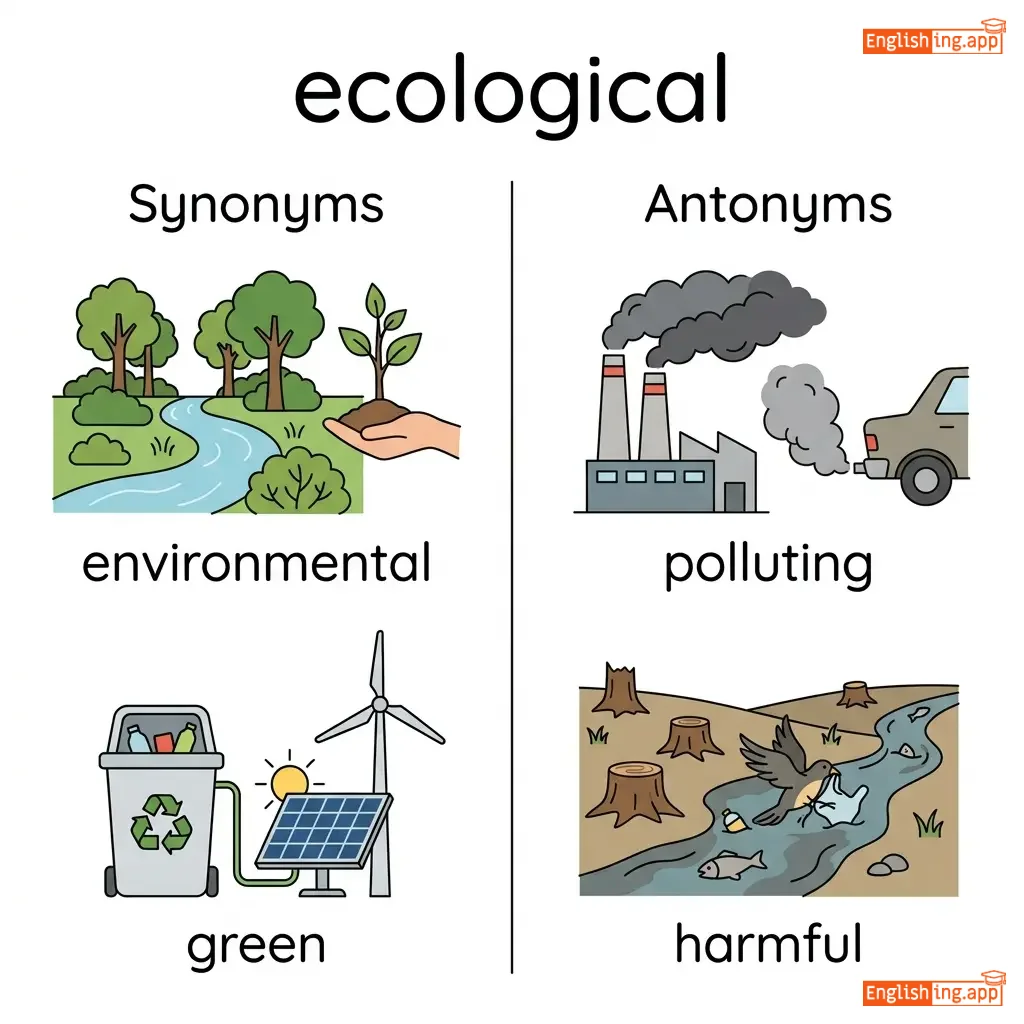
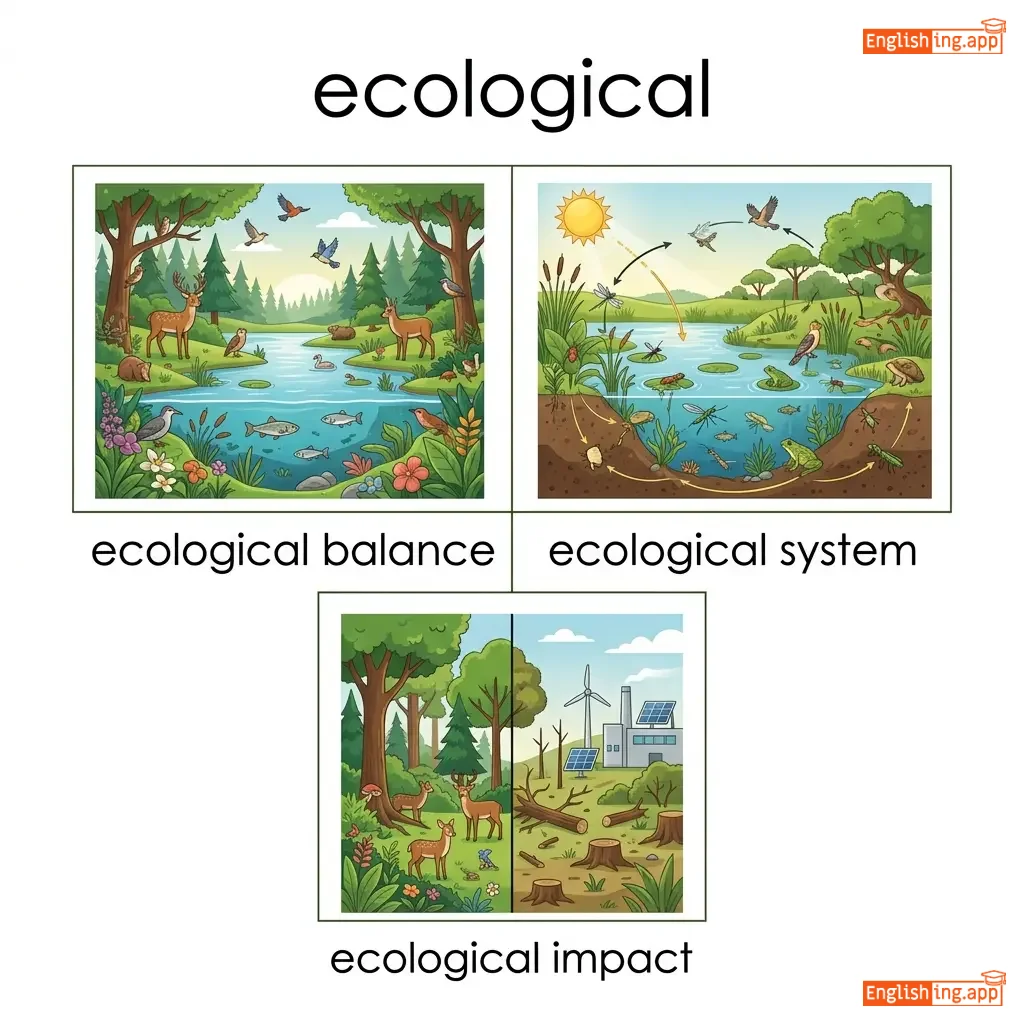
Relating to ecology or the relationships between living organisms and their environment.
••••••
|
The factory adopted ecological practices to reduce pollution. |
工厂采用了生态实践以减少污染。
Gōngchǎng cǎiyòngle shēngtài shíjiàn yǐ jiǎnshǎo wūrǎn.
••••••
|
environmental, green, sustainable
••••••
|
artificial, non-biological, man-made
••••••
|
生态的就是和环境以及生物息息相关
••••••
|
|
#3855
🌲
|
/ˈkɒn.ɪ.fər.əs/
adjective
(kēnìfèruòsī)
••••••
|
|
与针叶树有关
yǔ zhēn yè shù yǒuguān
••••••
|
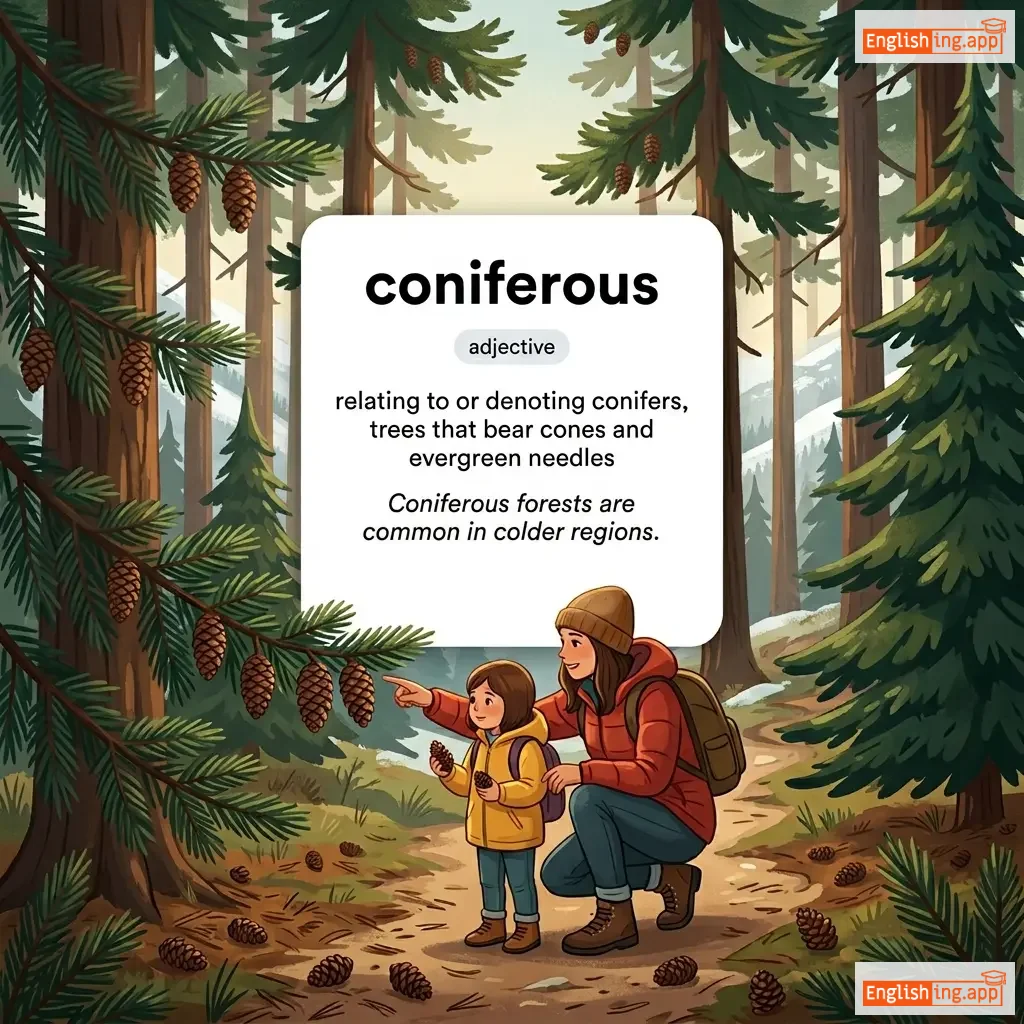
Relating to cone-bearing trees that usually have needle-like leaves and remain green year-round.
••••••
|
Pine trees are coniferous and grow in colder climates.
松树是针叶树,在寒冷的气候中生长。
••••••
|
松树是针叶树,在寒冷的气候中生长。
Sōng shù shì zhēn yè shù, zài hánlěng de qìhòu zhōng shēngzhǎng.
••••••
|
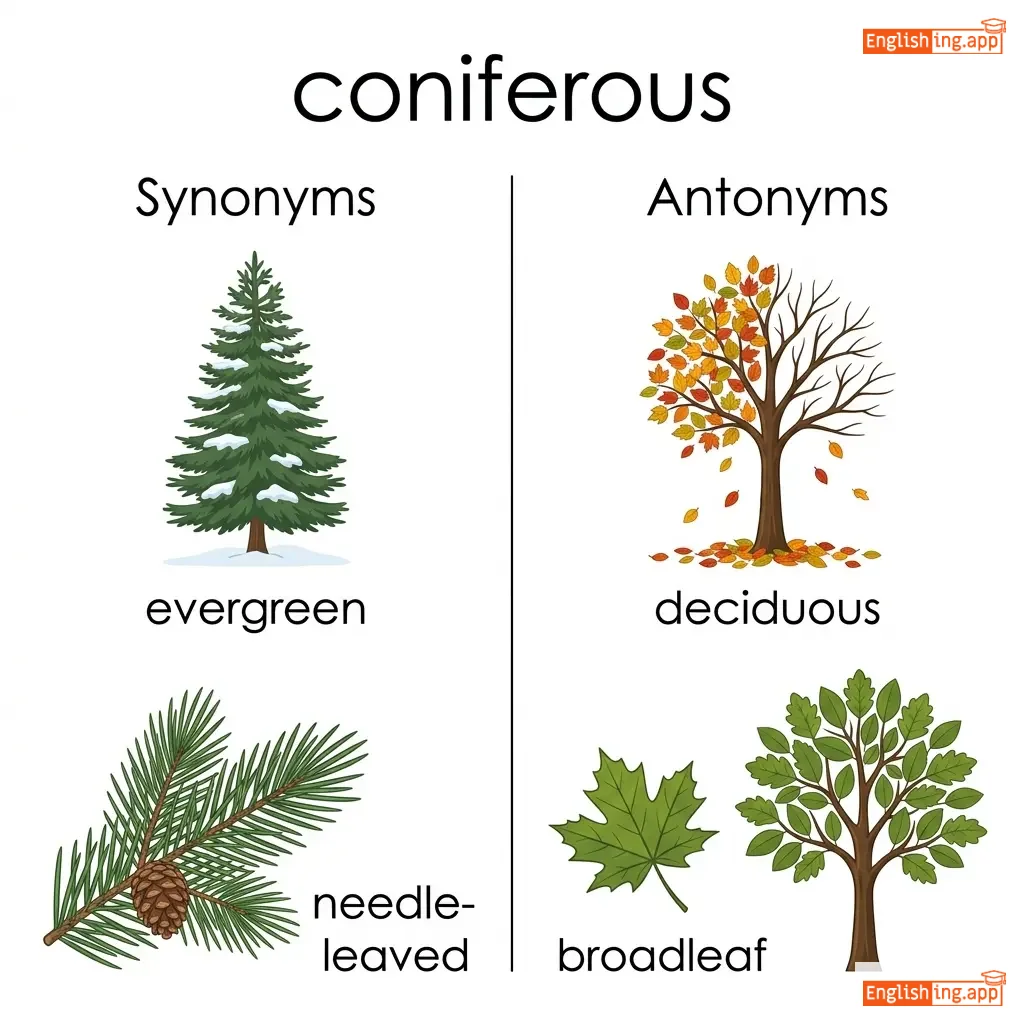
needle-leaved, pine-bearing, evergreen
••••••
|
deciduous, leaf-shedding, non-coniferous
••••••
|
松树是针叶树,全年绿色生长。
••••••
|
|
#3856
🍂
|
/dɪˈsɪd.ju.əs/
adjective
(desiduos)
••••••
|
|
落叶性
luòyèxìng
••••••
|
Referring to trees that shed their leaves seasonally, typically in autumn.
••••••
|
Oak and maple trees are deciduous, shedding leaves in autumn. |
橡树和枫树是落叶性树木,在秋天掉落叶子。
Xiàngshù hé fēngshù shì luòyèxìng shùmù, zài qiūtiān diàoluò yèzi.
••••••
|
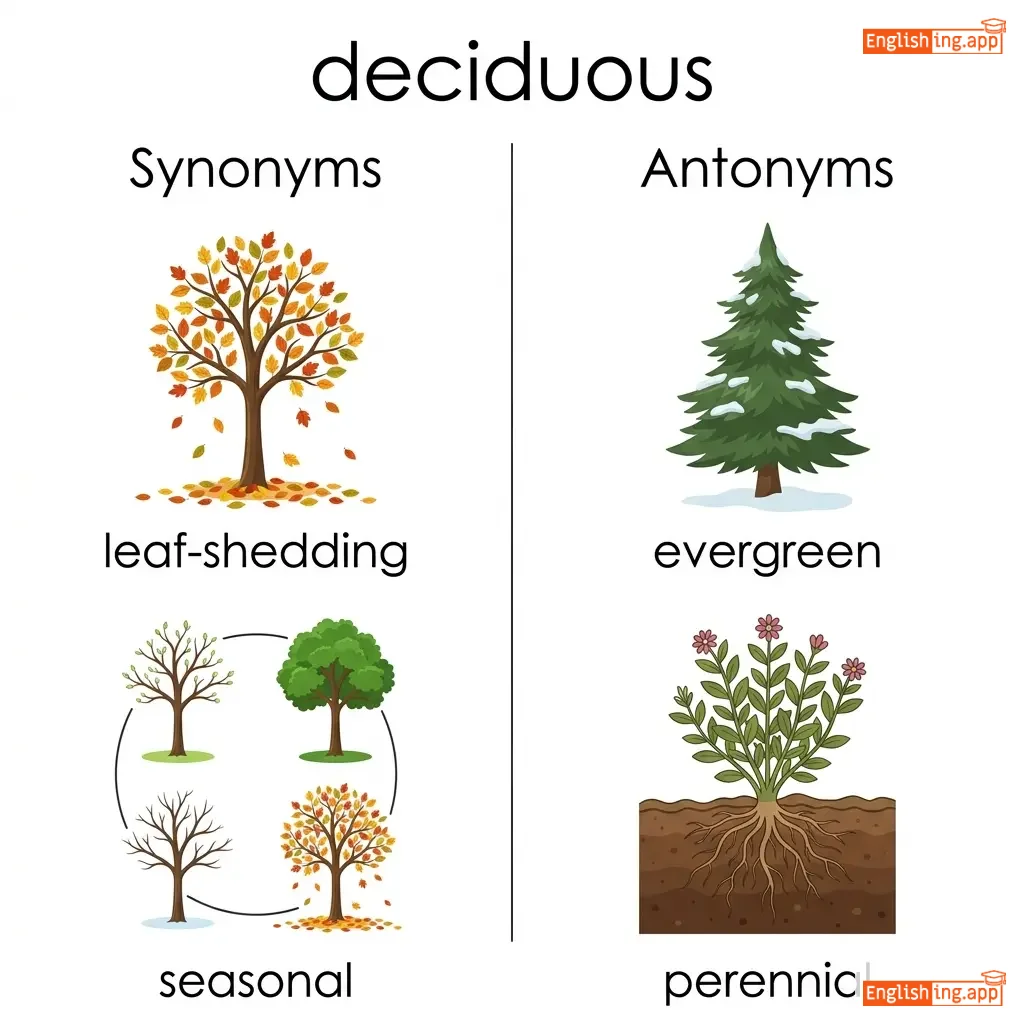
leaf-shedding, seasonal, broad-leaved
••••••
|
evergreen, perennial, coniferous
••••••
|
秋天掉落叶子的树,像枫树和橡树。
••••••
|
|
#3857
🌴
|
/ˈtrɒp.ɪ.kəl/
adjective
(热带)
••••••
|
|
热带
rèdài
••••••
|
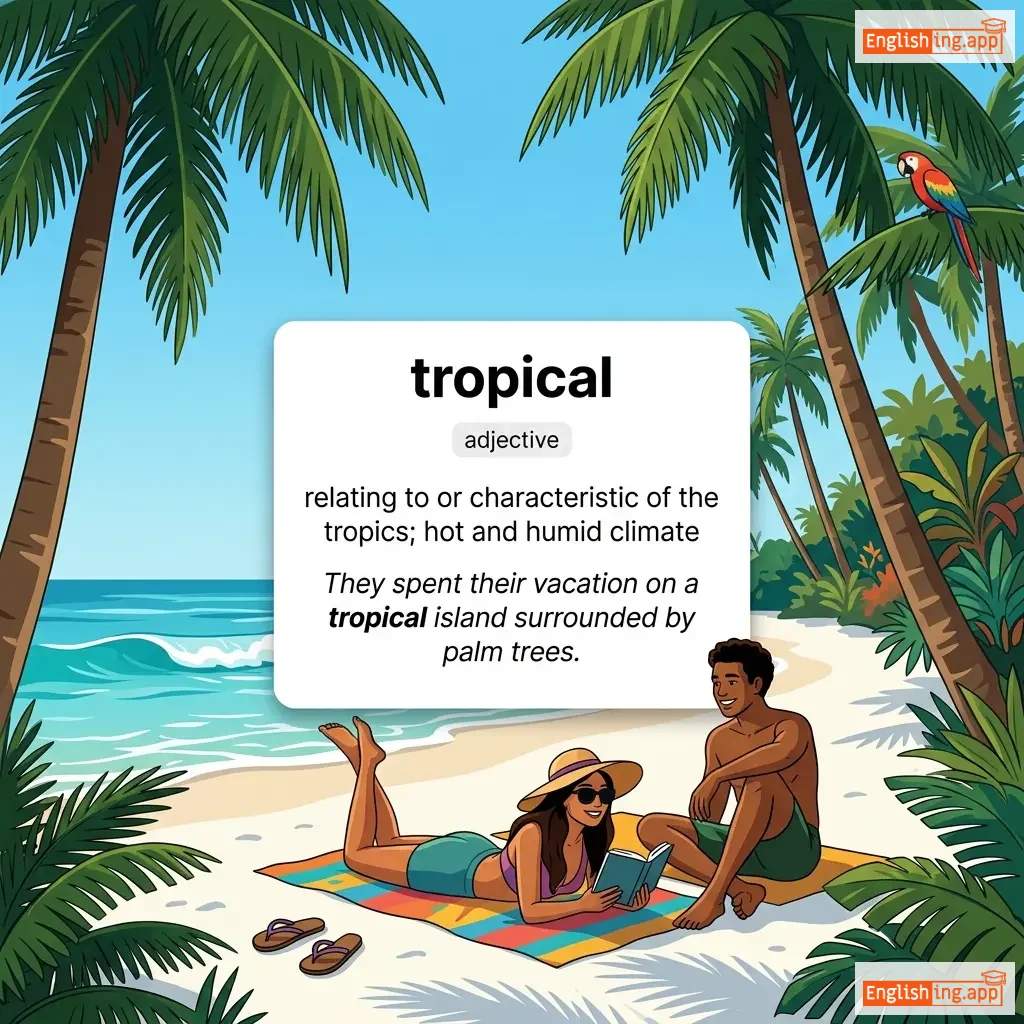
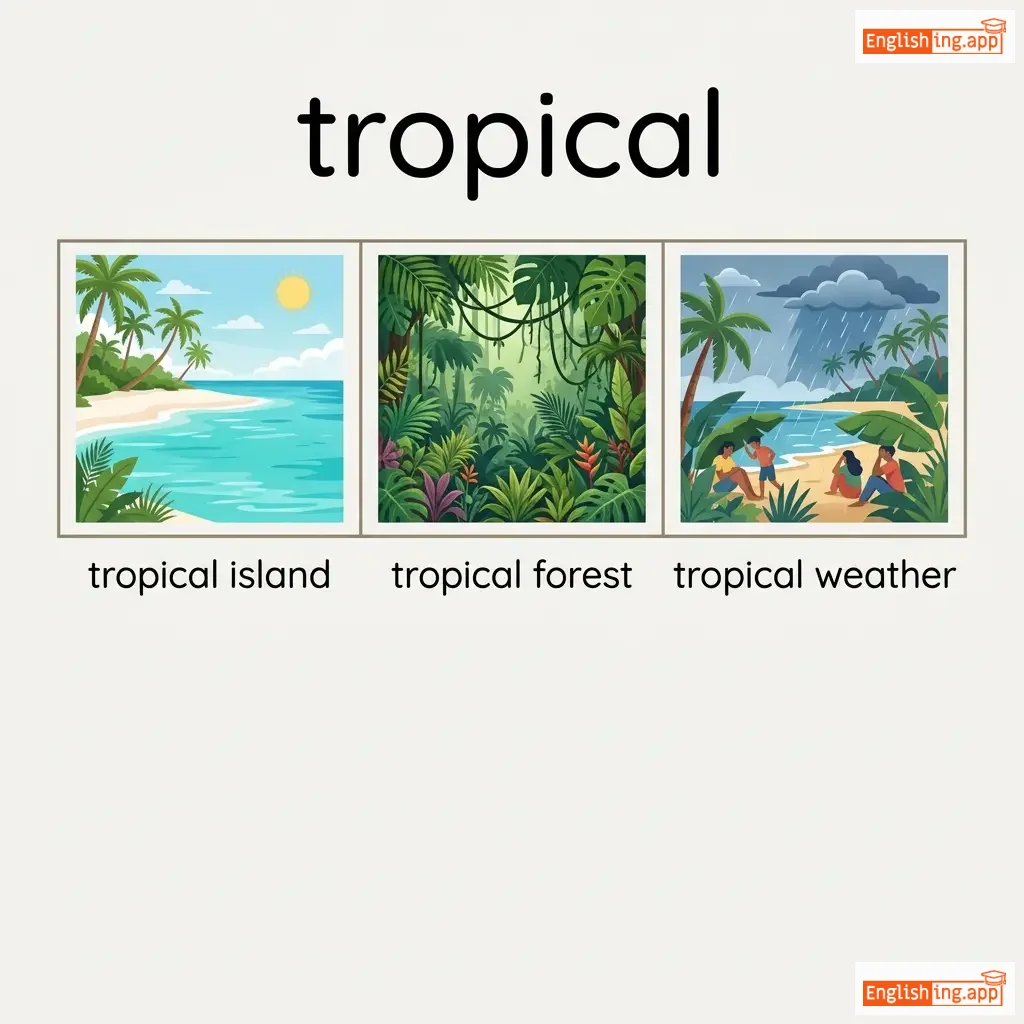
Relating to the tropics; characterized by hot and humid climate.
••••••
|
The Amazon rainforest is home to many tropical species. |
亚马逊雨林是许多热带物种的家园。
Yàmǎxùn yǔlín shì xǔduō rèdài wùzhǒng de jiāyuán.
••••••
|
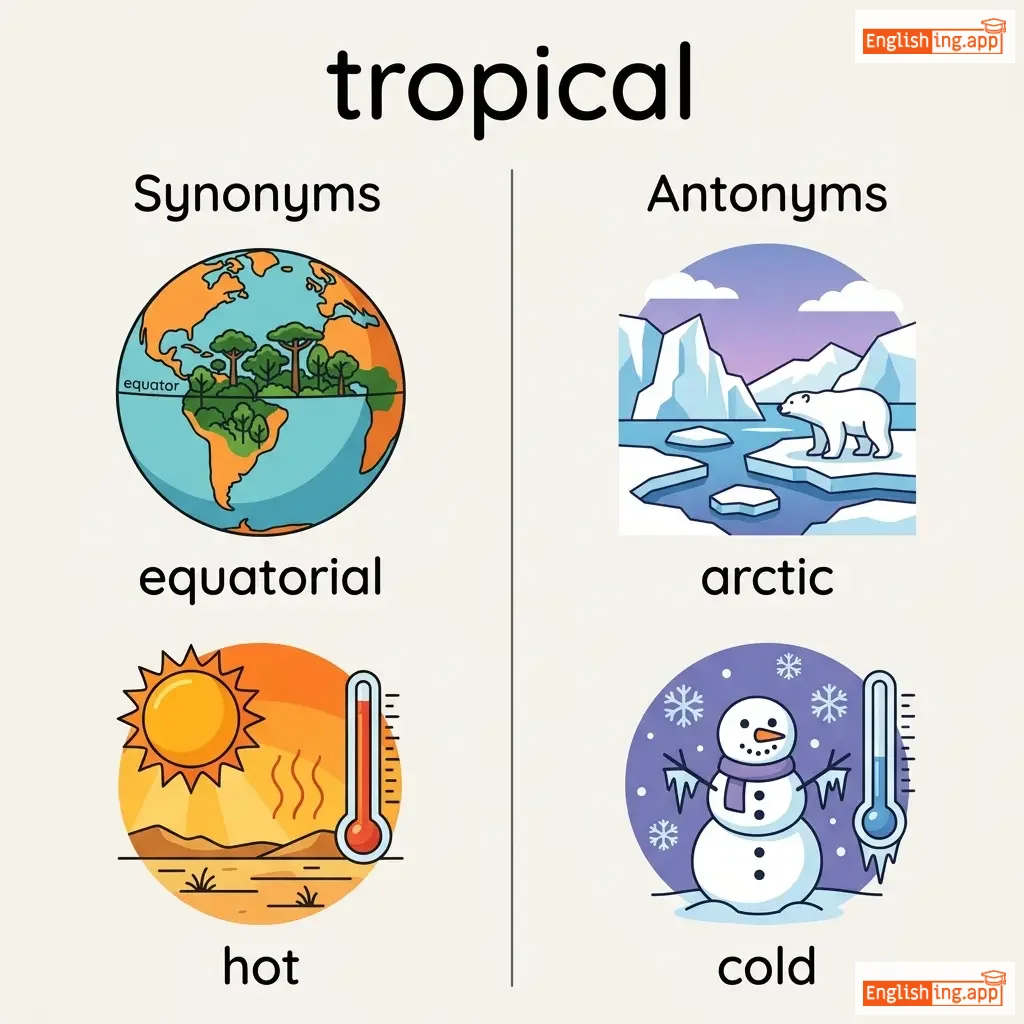
equatorial, hot-climate, humid
••••••
|
temperate, arctic, cold-climate
••••••
|
热带地区气候炎热湿润,就像亚马逊雨林。
••••••
|
|
#3858
🌲
|
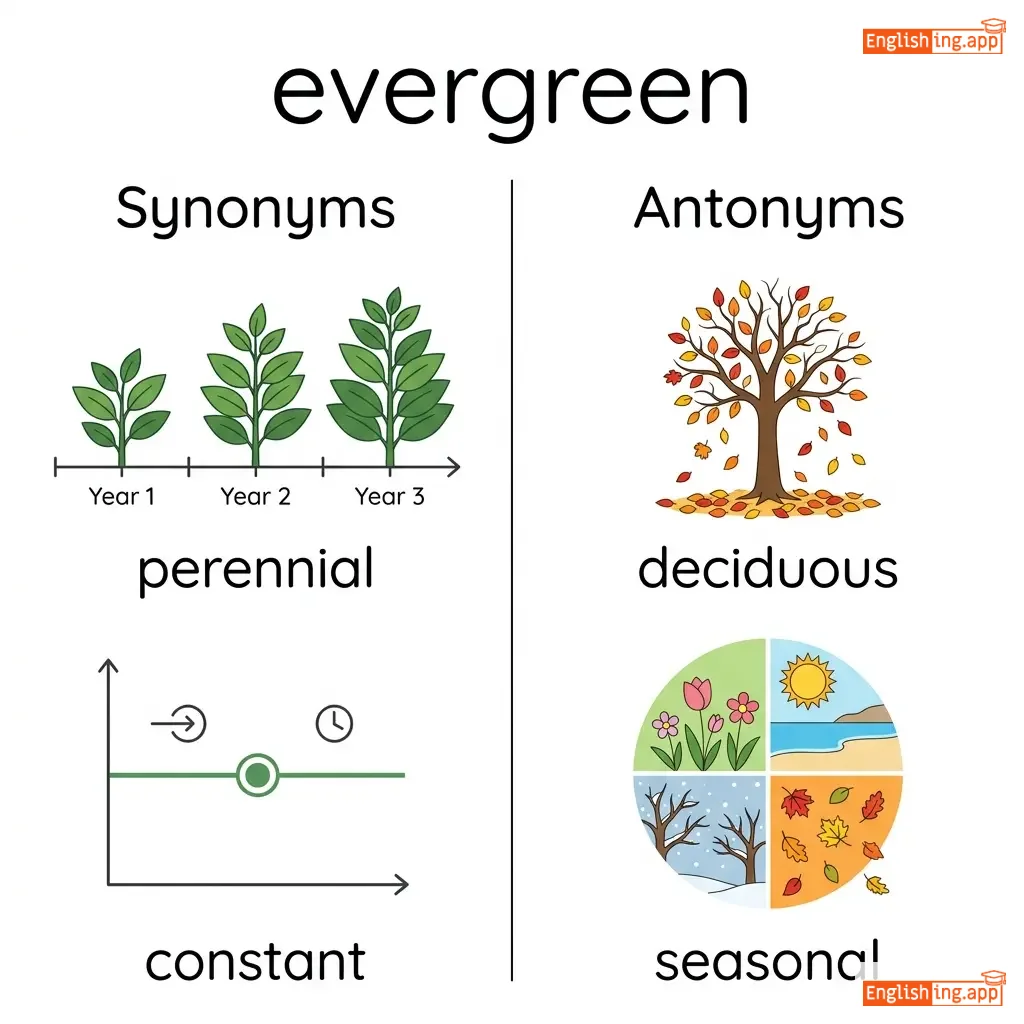
/ˈɛv.ə.ɡriːn/
adjective
(常青)
••••••
|
|
常绿
chánglǜ
••••••
|
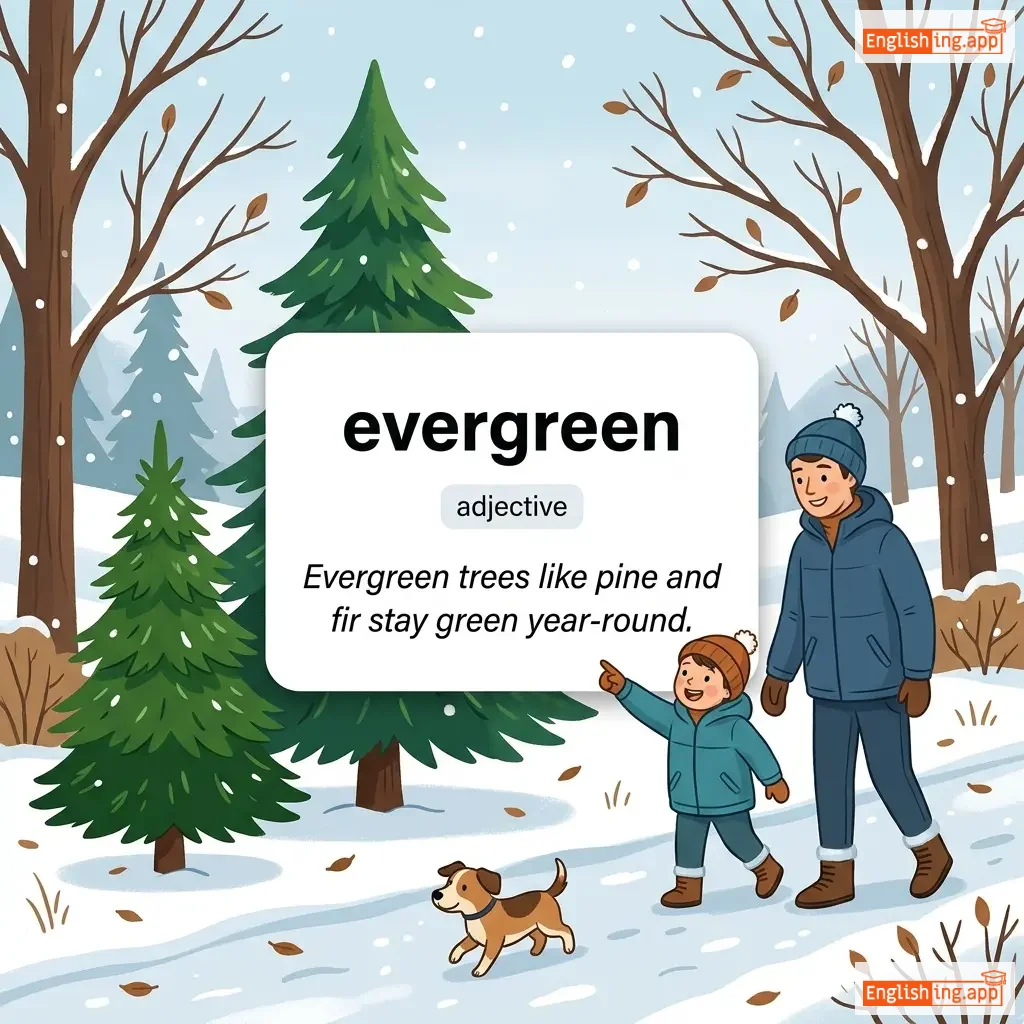
Remaining green and functional throughout the year; not shedding leaves seasonally.
••••••
|
Evergreen trees like pine and fir stay green year-round. |
常绿树木如松树和冷杉树全年保持绿色。
Cháng lǜ shùmù rú sōng shù hé lěng shān shù quán nián bǎo chí lǜsè.
••••••
|
perennial, constant, always-green
••••••
|
deciduous, seasonal, leaf-shedding
••••••
|
常绿的树像松树一样,全年绿意盎然!
••••••
|
|
#3859
🌳
|
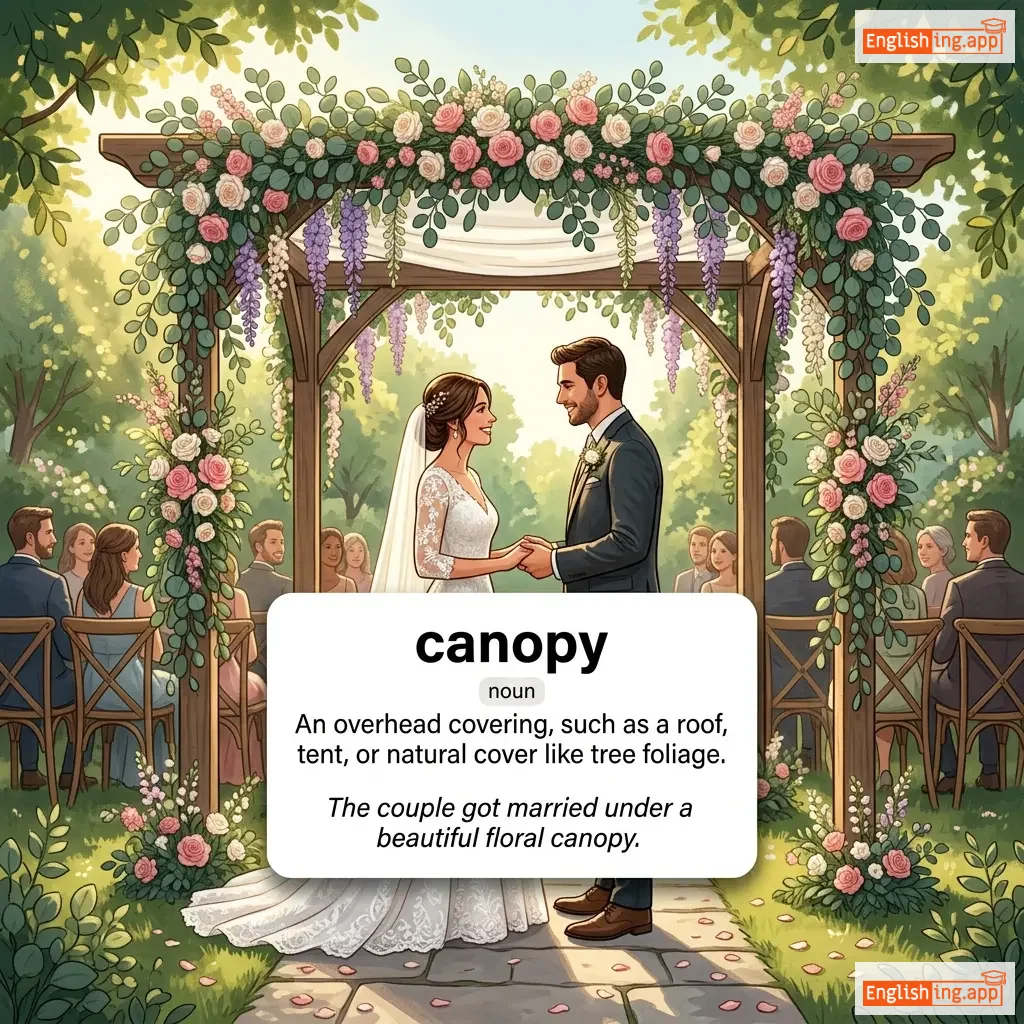
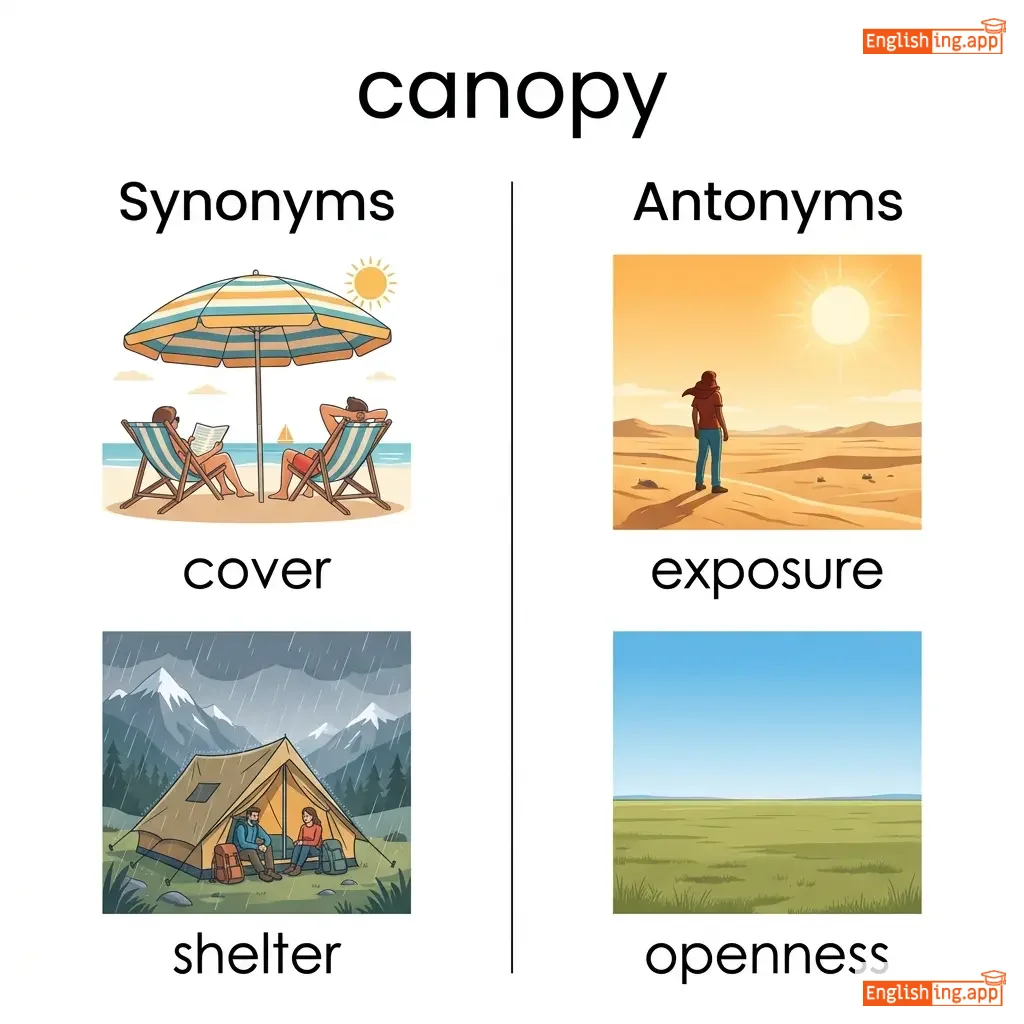
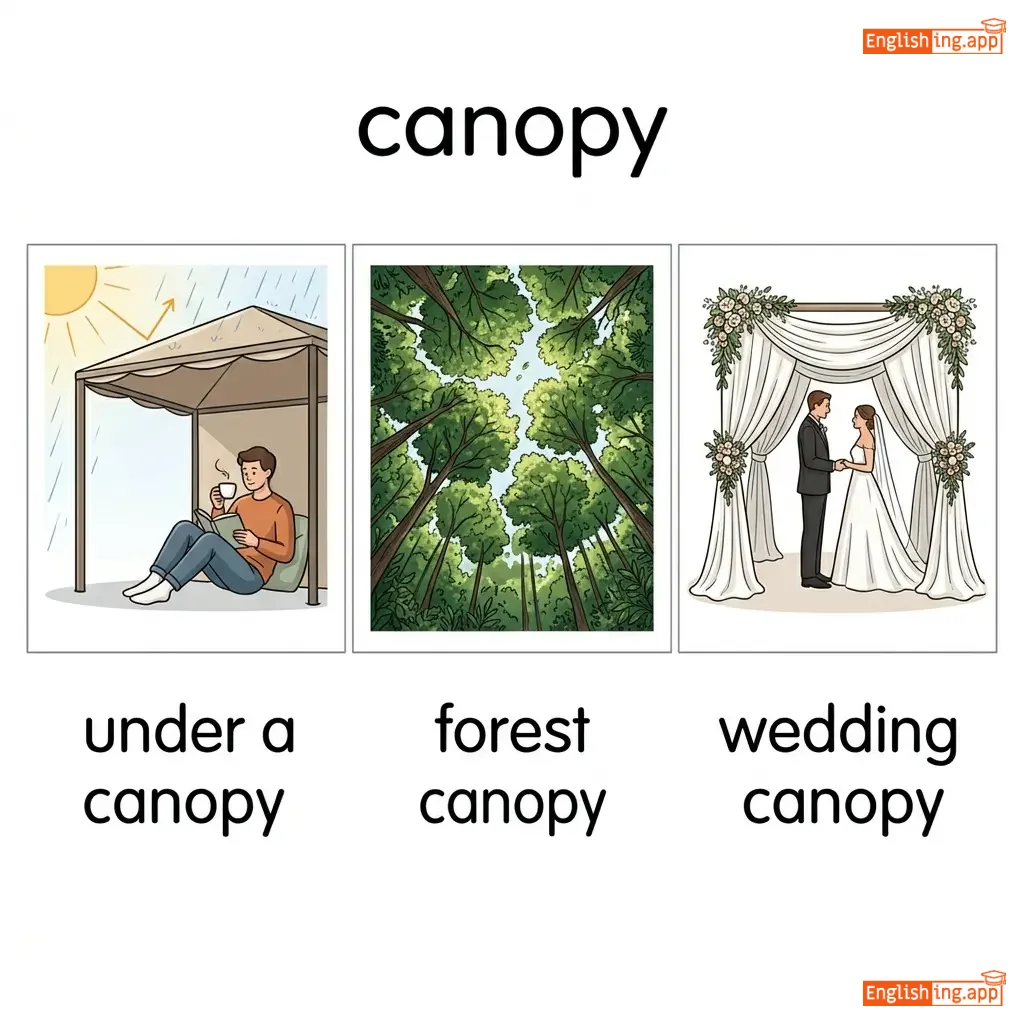
/ˈkæn.ə.pi/
noun
(天篷)
••••••
|
|
森林的上层,由树冠形成; 上方遮蔽
tiānpéng
••••••
|
The upper layer of a forest formed by the crowns of trees; overhead cover.
••••••
|
The rainforest canopy provides shelter to many birds and insects. |
雨林的天篷为许多鸟类和昆虫提供庇护。
yǔlín de tiānpéng wèi xǔduō niǎo lèi hé kūnchóng tígōng bìhù.
••••••
|
overhead cover, tree cover, forest roof
••••••
|
understory, ground layer, open space
••••••
|
树冠形成自然的天篷,像给动物提供的保护伞。
••••••
|
|
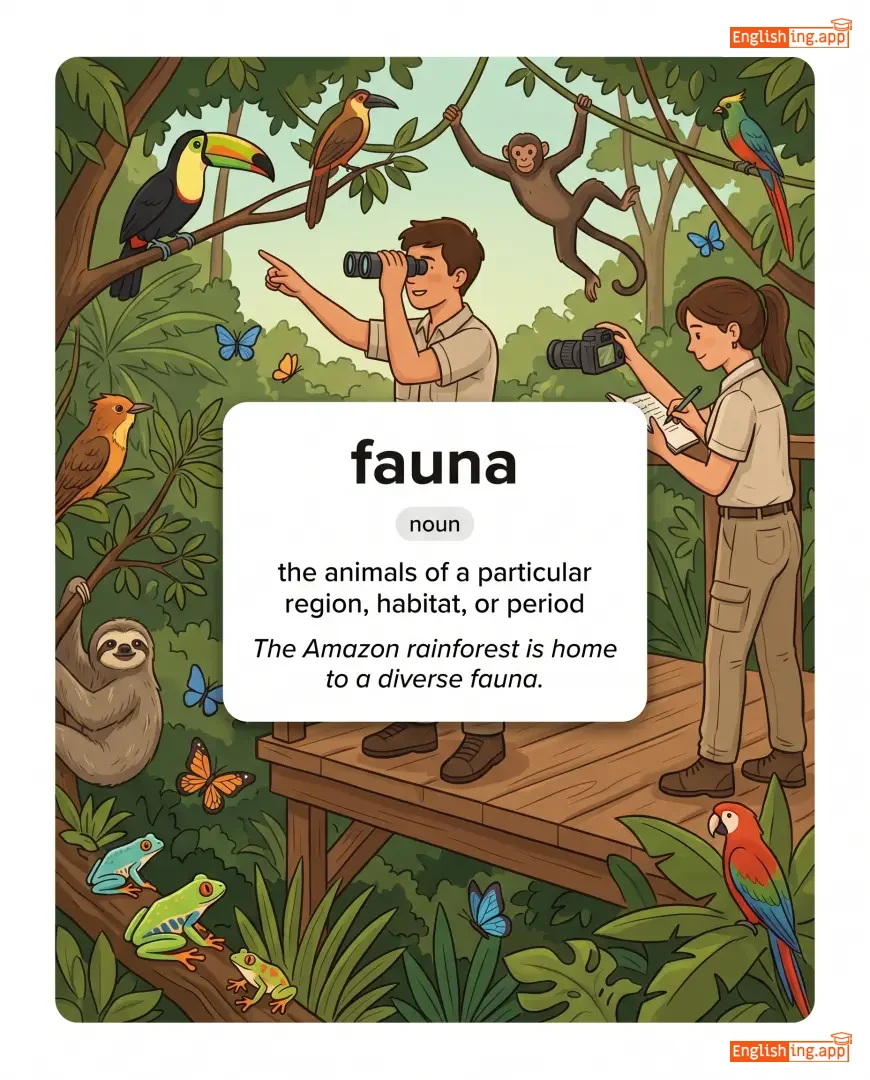
#3860
🦌
|
/ˈfɔː.nə/
noun
(动植物群)
••••••
|
|
特定地区的动物生命
tedi diqu de dongwu shengming
••••••
|
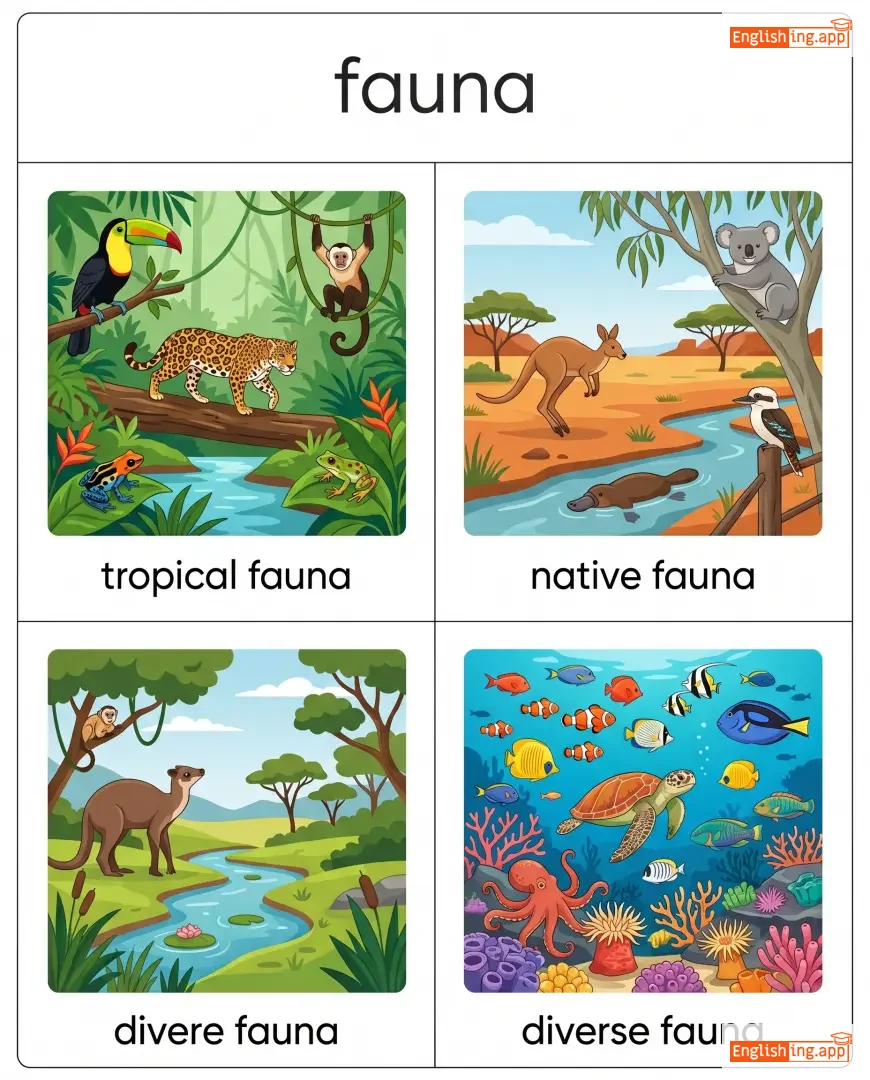
The animal life of a particular region, habitat, or geological period.
••••••
|
The fauna of the African savannah includes lions and elephants. |
非洲草原的动植物群包括狮子和大象。
Feizhou caoyuan de dongwu qun bao kuo shizi he daxiang.
••••••
|
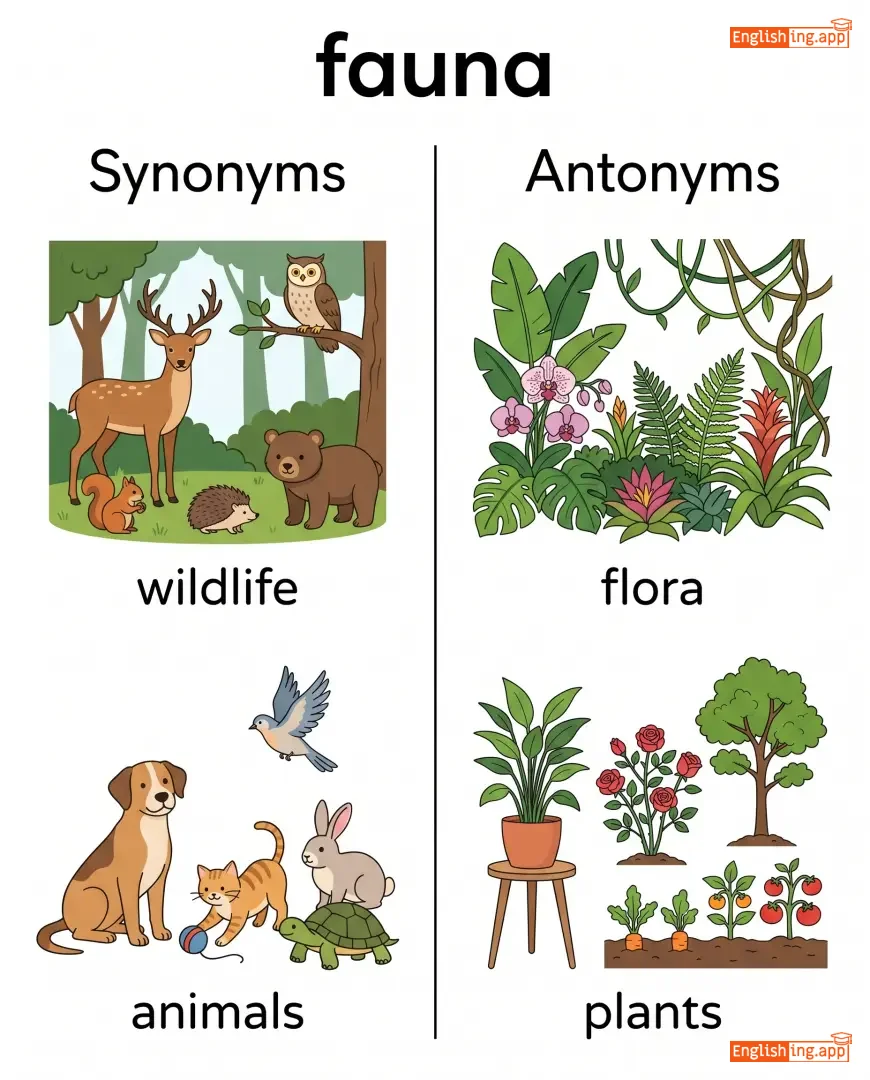
wildlife, animals, zoological life
••••••
|
flora, plants, vegetation
••••••
|
想象在非洲草原上漫游的狮子和大象。
••••••
|
|
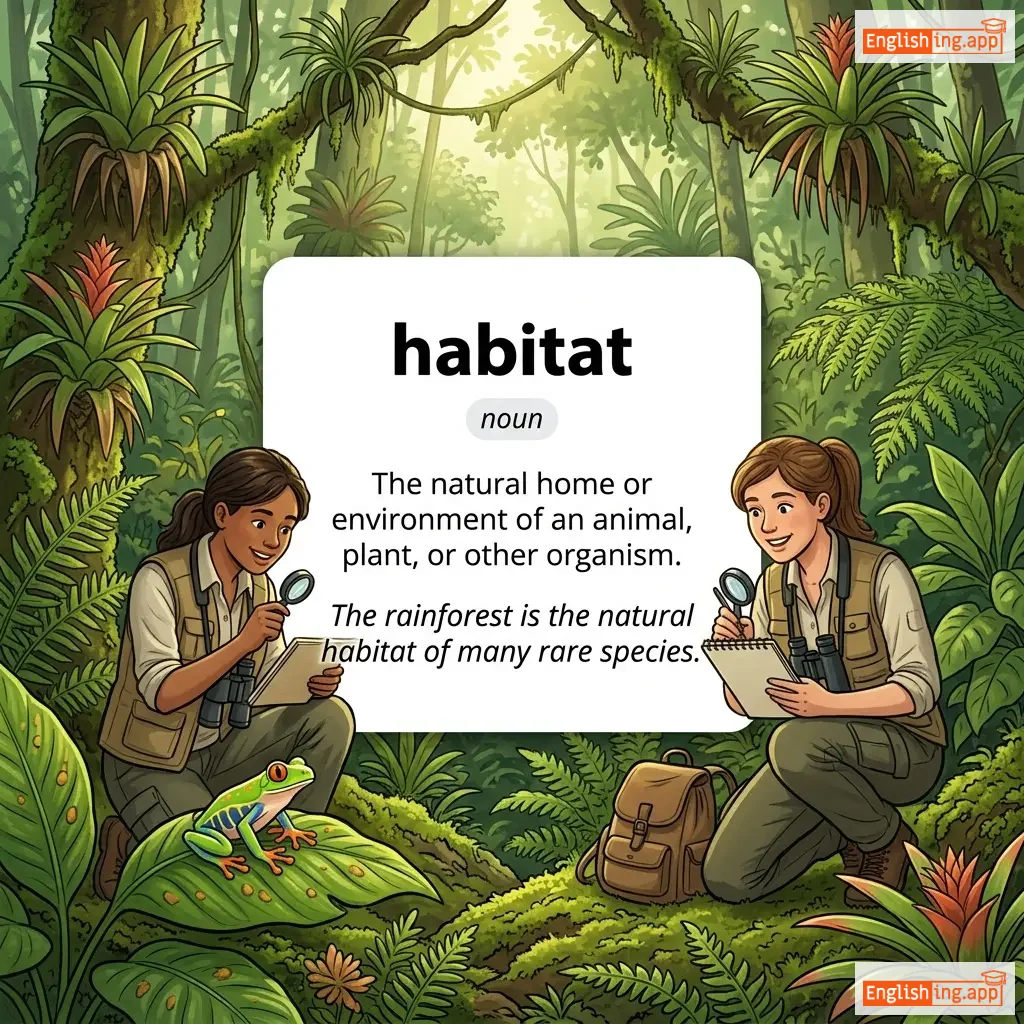
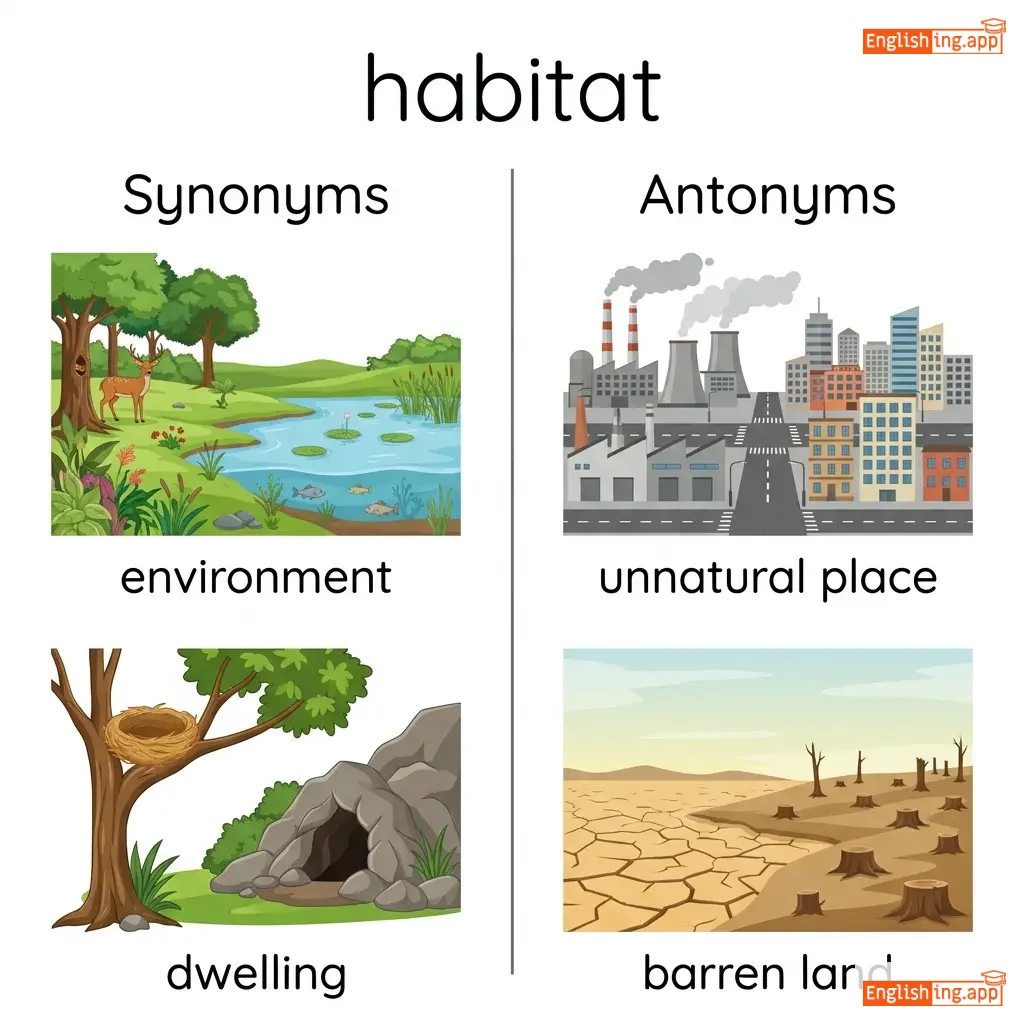
#3861
🏠
|
/ˈhæb.ɪ.tæt/
noun
(栖息地)
••••••
|
|
栖息地
qīxīdì
••••••
|
The natural environment where an organism lives and meets its needs.
••••••
|
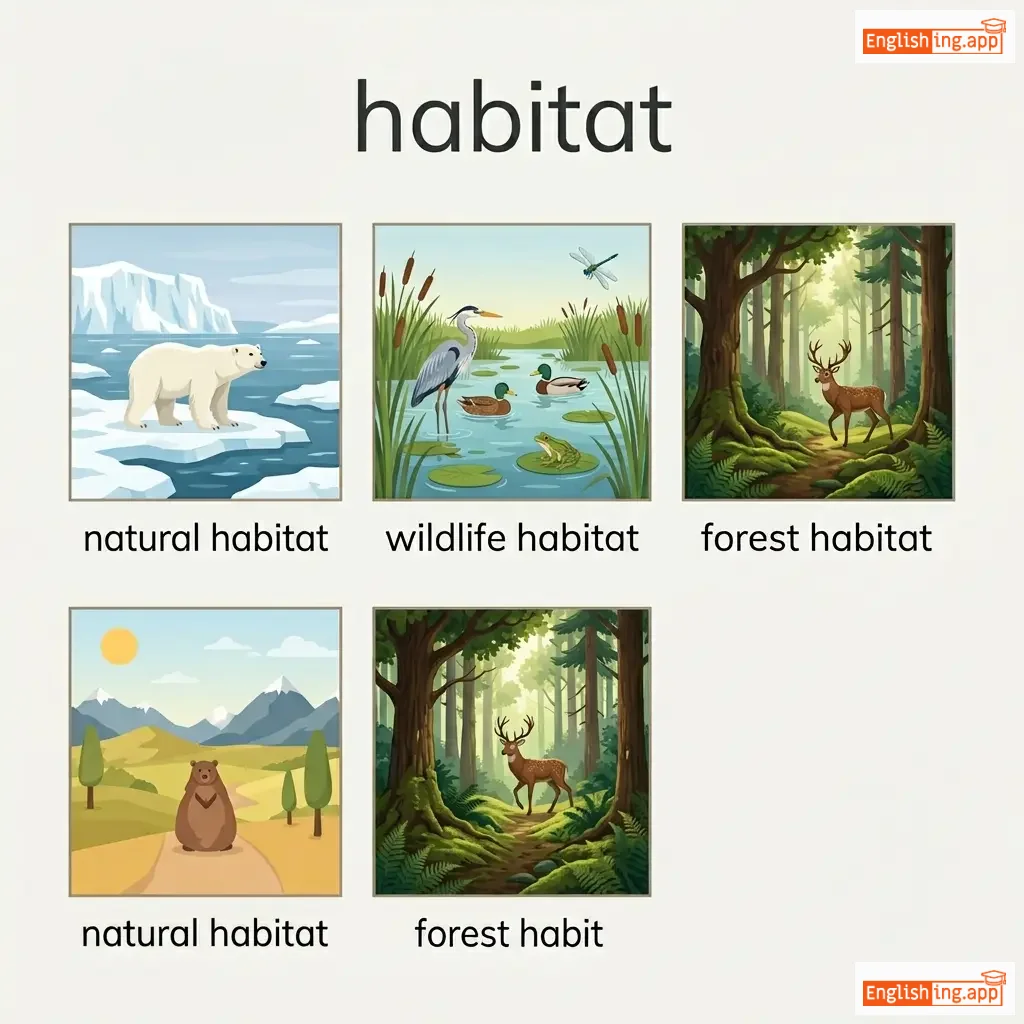
The polar bear's natural habitat is the Arctic region.
北极熊的自然栖息地是北极地区。
••••••
|
北极熊的自然栖息地是北极地区。
Běijí xióng de zìrán qīxīdì shì běijí dìqū.
••••••
|
natural environment, ecosystem, living area
••••••
|
uninhabitable, artificial setting, displacement
••••••
|
记住'栖息地'是动物满足需求的地方。
••••••
|
|
#3862
🌺
|
/ˌbaɪ.əʊ.daɪˈvɜː.sɪ.ti/
noun
(bàiyóu dàiwéishìtǐ)
••••••
|
|
生物多样性
shengwuduoxiangxing
••••••
|
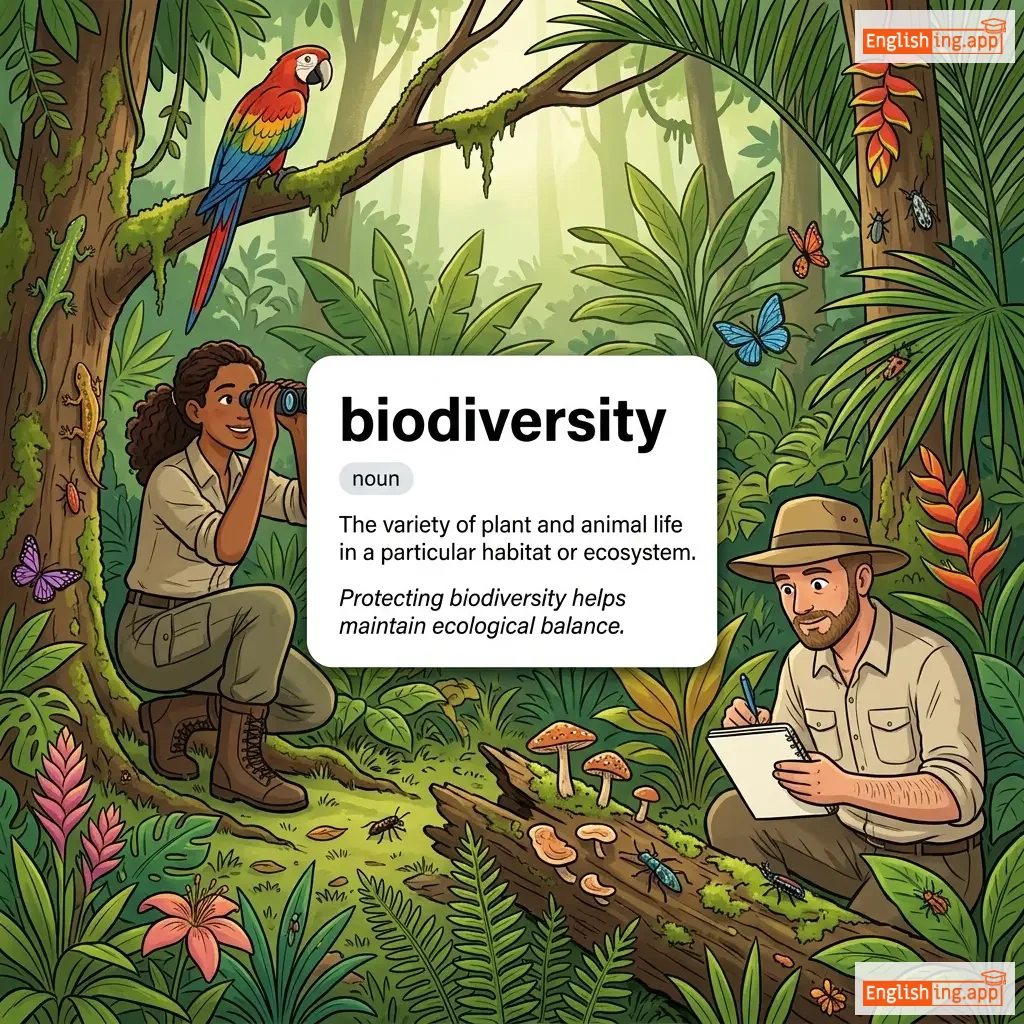
The variety of plant and animal life in a particular habitat or ecosystem.
••••••
|
Protecting biodiversity helps maintain ecological balance. |
保护生物多样性有助于保持生态平衡。
Bǎohù shēngwù duōyàngxìng yǒu zhù yú bǎochí shēngtài pínghéng.
••••••
|
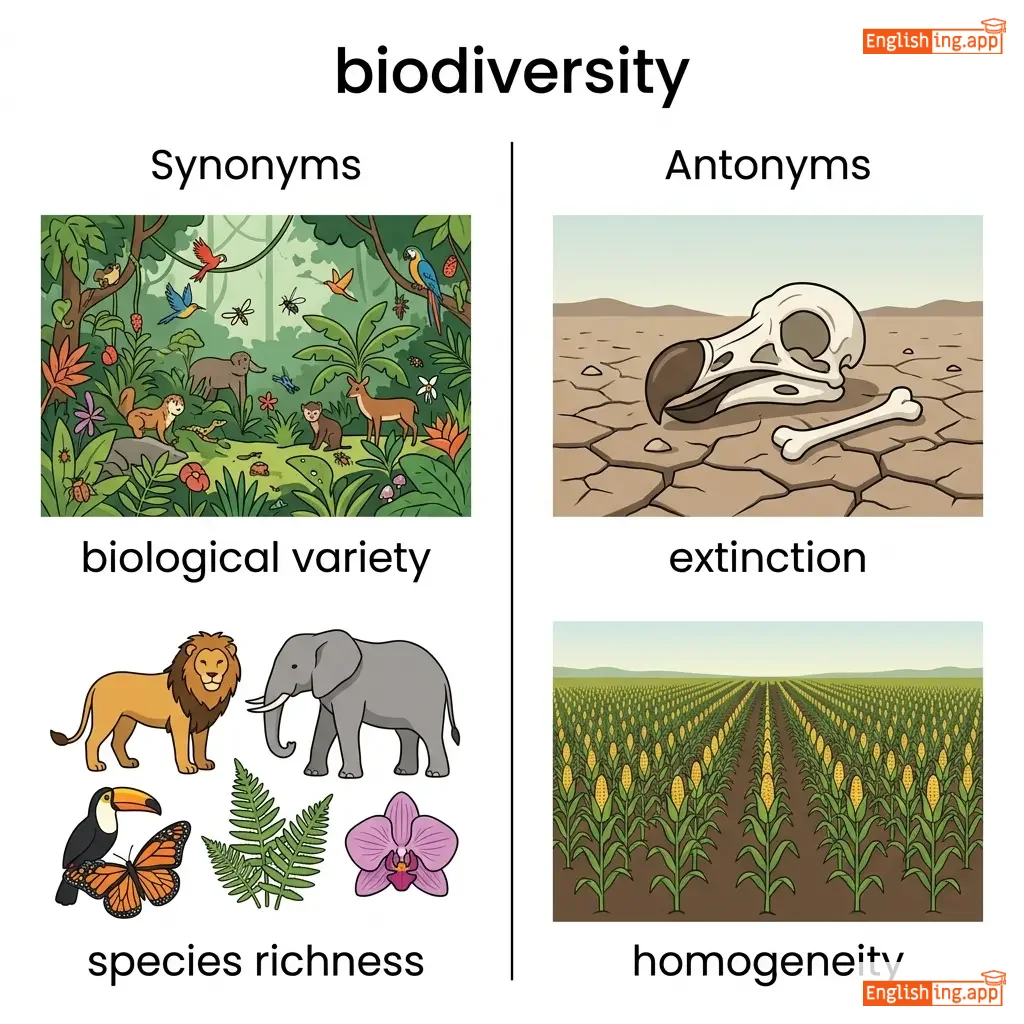
biological variety, species richness, ecological diversity
••••••
|
extinction, homogeneity, monoculture
••••••
|
生物 (shengwu) + 多样性 (duoxiangxing) = 生物多样性
••••••
|
|
#3863
🌸
|
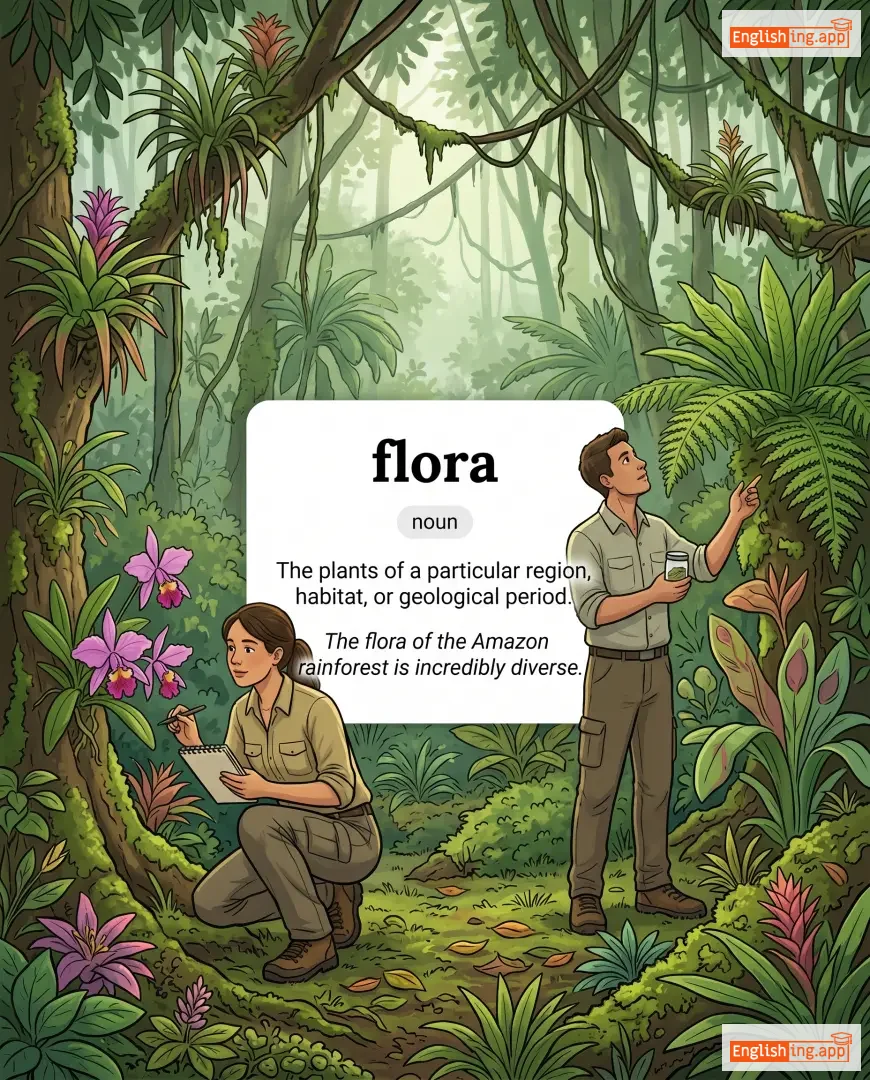
/ˈflɔː.rə/
noun
(植物群)
••••••
|
|
在特定地区或栖息地中发现的植物生命
zai teding diqu huo qixi di zhong faxian de zhiwu shengming
••••••
|
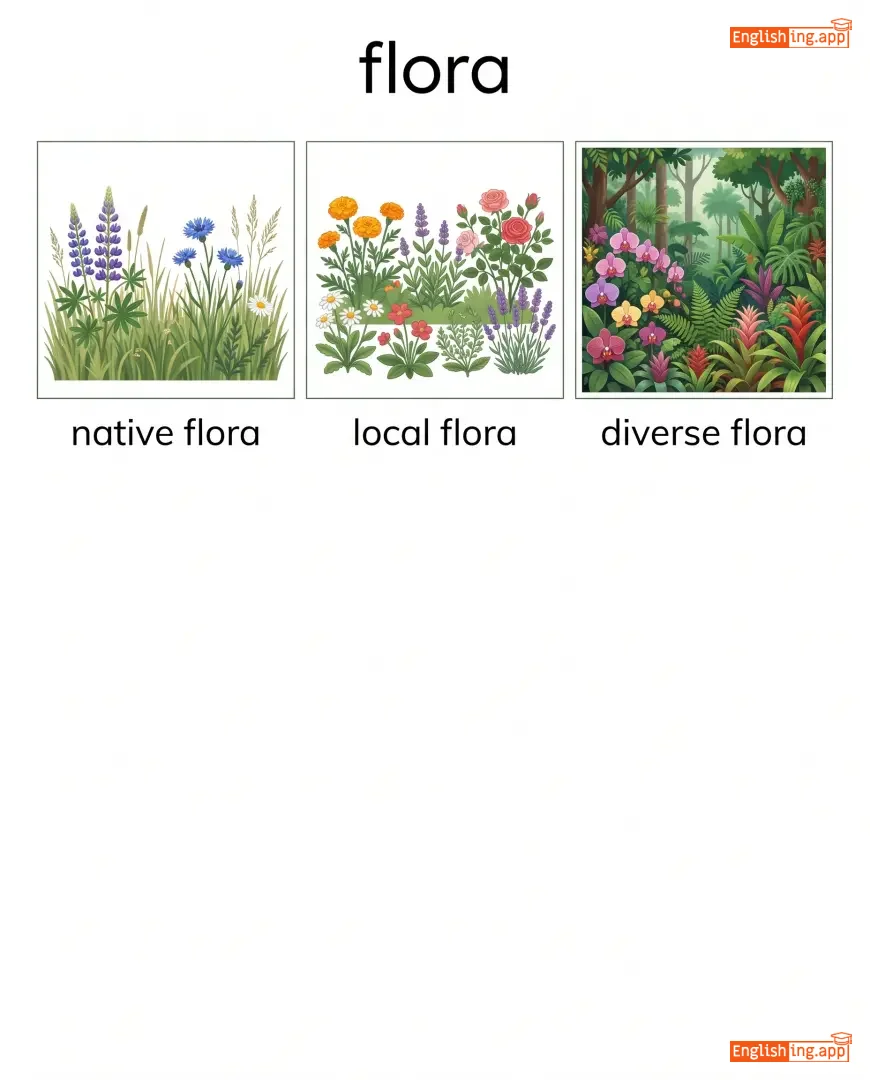
The plant life found in a particular region or habitat.
••••••
|
The Amazon rainforest is home to a vast flora diversity. |
亚马逊雨林是丰富的植物群多样性的家园。
Yàmǎxùn yǔlín shì fēngfù de zhíwù qún duōyàngxìng de jiāyuán.
••••••
|
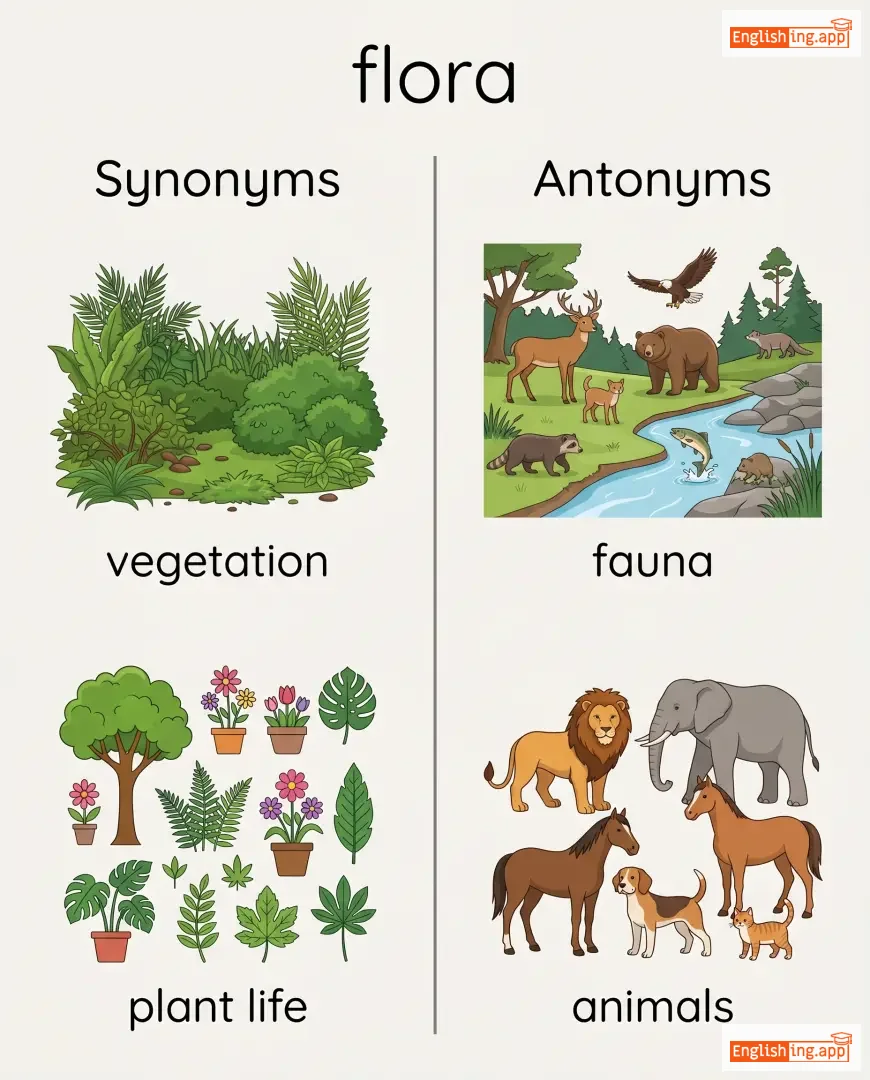
plant life, vegetation, botany
••••••
|
fauna, wildlife, animals
••••••
|
‘植物群’帮助我们记住大自然中各种各样的生命形式。
••••••
|
|
#3864
🔄
|
/səkˈsɛʃ.ən/
noun
(sūkèxièshēn)
••••••
|
|
生态演替
shengtai yantui
••••••
|
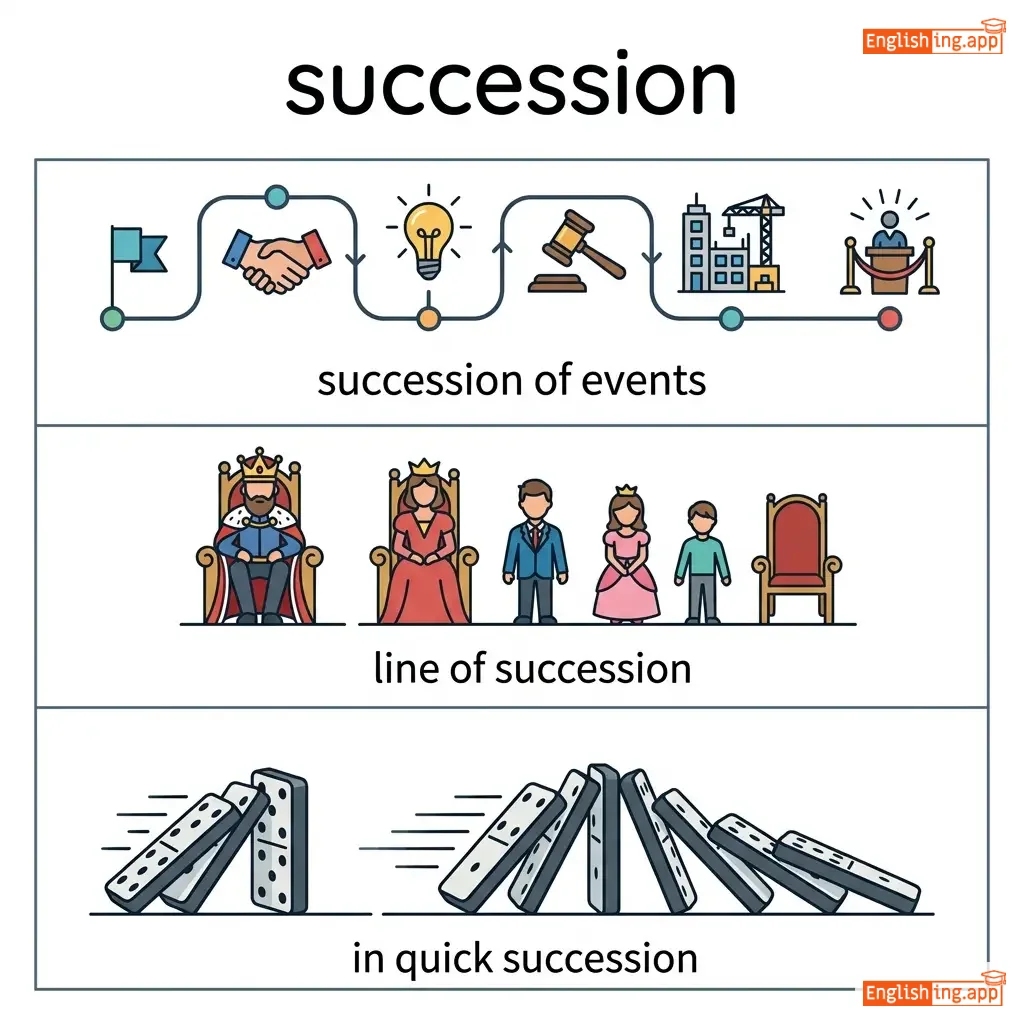
The process of ecological change in which one community of organisms is gradually replaced by another.
••••••
|
Forest succession occurs when old ecosystems are replaced by new ones.
森林演替发生在旧的生态系统被新的生态系统取代时。
••••••
|
森林演替发生在旧的生态系统被新的生态系统取代时。
Senlin yantui fasheng zai jiu de shengtai xitong bei xin de shengtai xitong qudai shi.
••••••
|
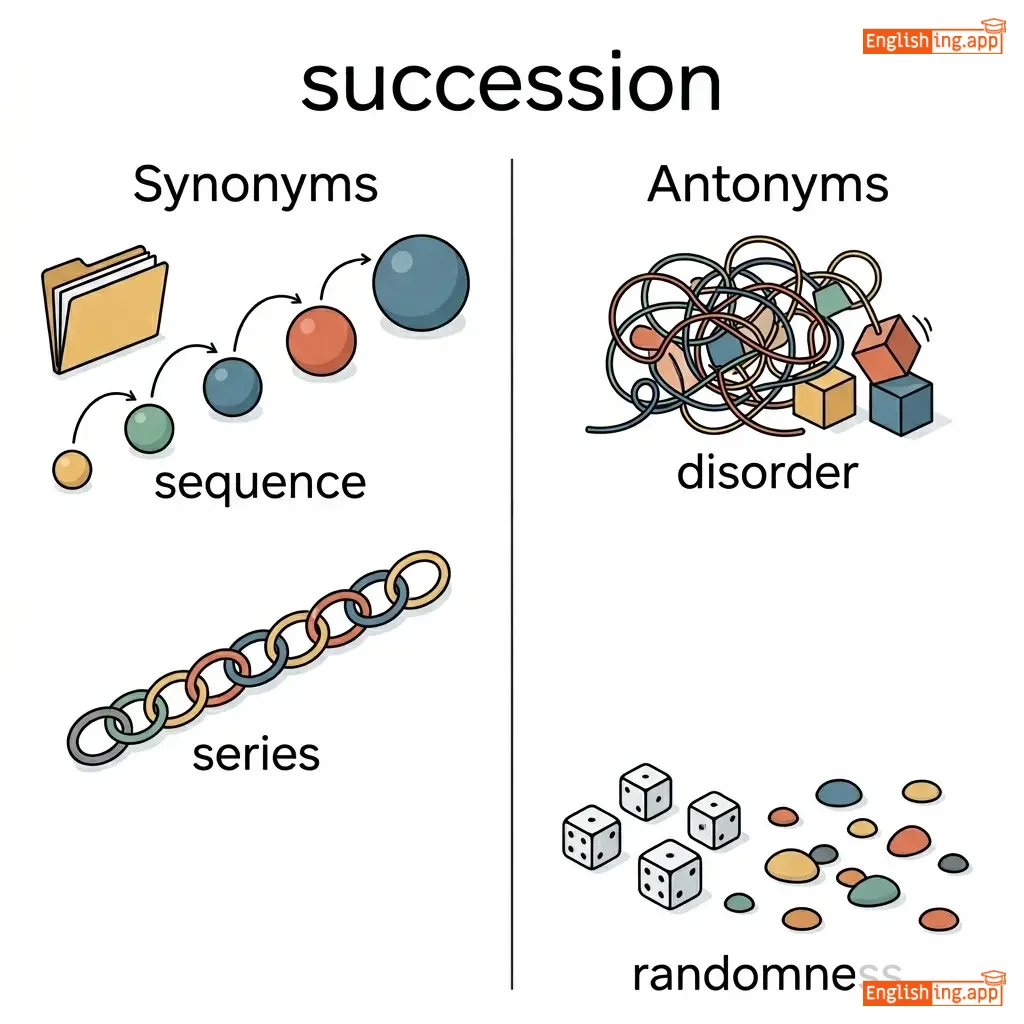
ecological progression, natural development, evolution
••••••
|
stagnation, unchangeability, constancy
••••••
|
演替过程可以想象为生态系统的一种自然更新现象。
••••••
|
|
#3865
🌧️
|
/prɪˌsɪp.ɪˈteɪ.ʃən/
noun
(普雷西皮提申)
••••••
|
|
降水
presipiteishen
••••••
|
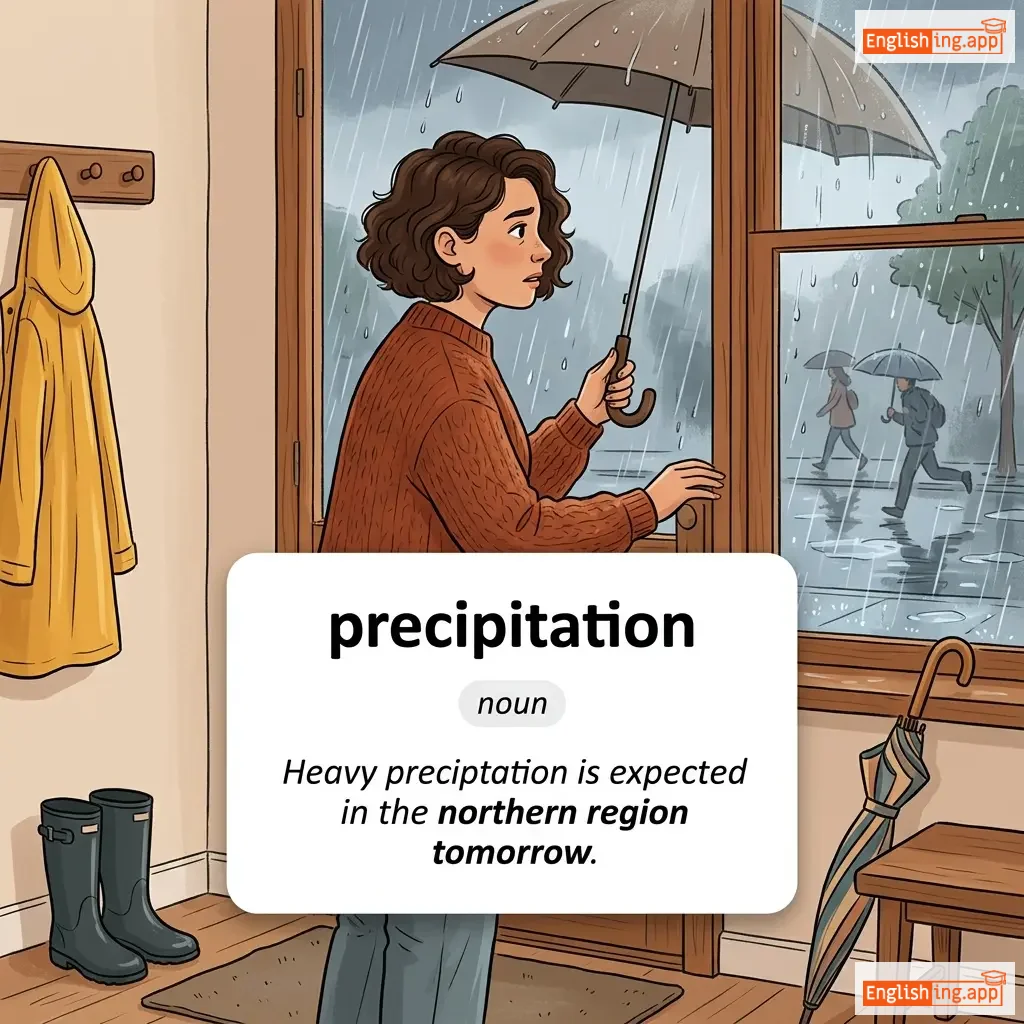
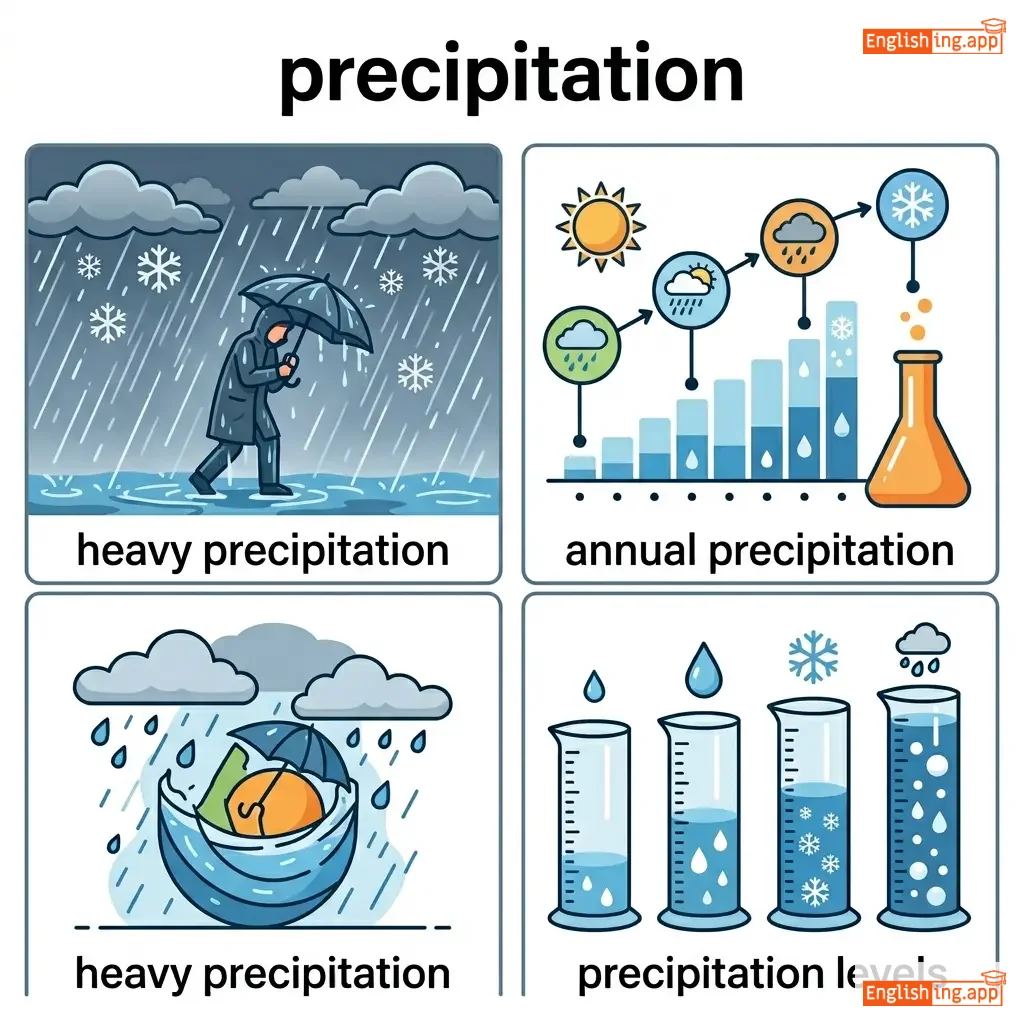
Water that falls from the atmosphere to the Earth's surface, including rain, snow, sleet, and hail.
••••••
|
Heavy precipitation can cause flooding in low-lying areas.
大量降水可能在低洼地区引发洪水。
••••••
|
大量降水可能在低洼地区引发洪水。
dai liang jiang shui keneng zai di wa di qu yinfa hong shui
••••••
|
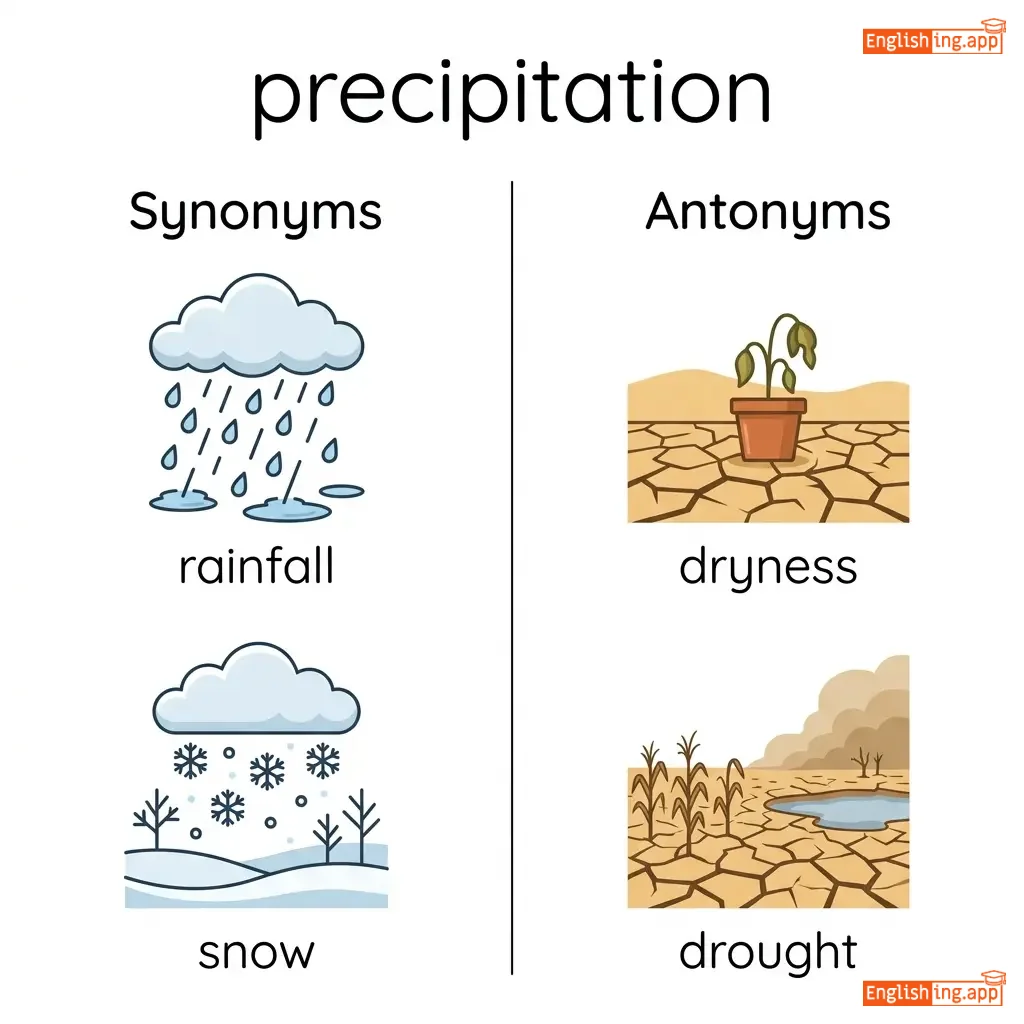
rainfall, snowfall, moisture
••••••
|
aridity, dryness, drought
••••••
|
Precipitation = 普雷西皮提申; 记忆口诀: preci pi ti shen 天空把 water drop 掉到 地面, 低洼地区 变成 洪水
••••••
|
|
#3866
🦘
|
/ɛnˈdɛm.ɪk/
adjective
(特有的)
••••••
|
|
仅在特定区域内原生且只在那里存在
jin zai te ding qu yu nei yuan sheng qie zhi zai na li cun zai
••••••
|
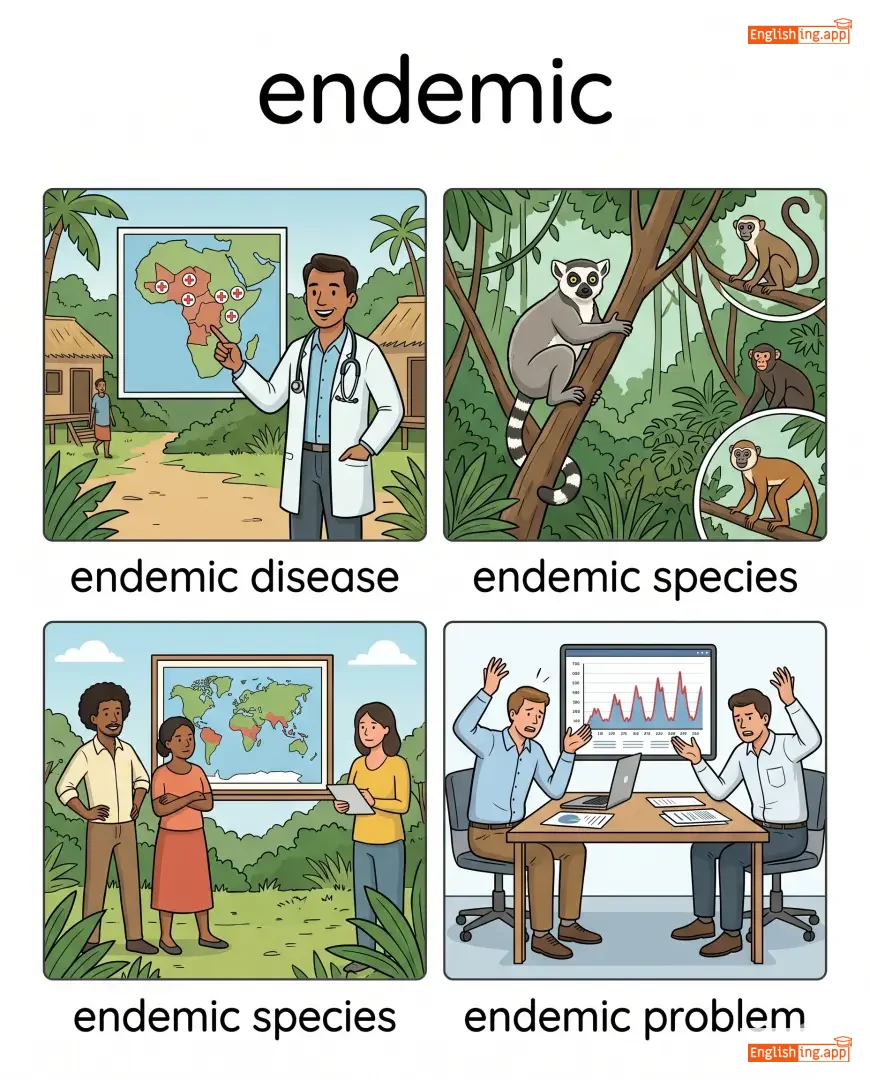
Native to and found only in a particular region; not occurring naturally elsewhere.
••••••
|
The Bengal tiger is endemic to the Indian subcontinent.
孟加拉虎是印度次大陆的特有物种。
••••••
|
孟加拉虎是印度次大陆的特有物种。
Meng jia la hu shi yin du ci da lu de te you wu zhong.
••••••
|
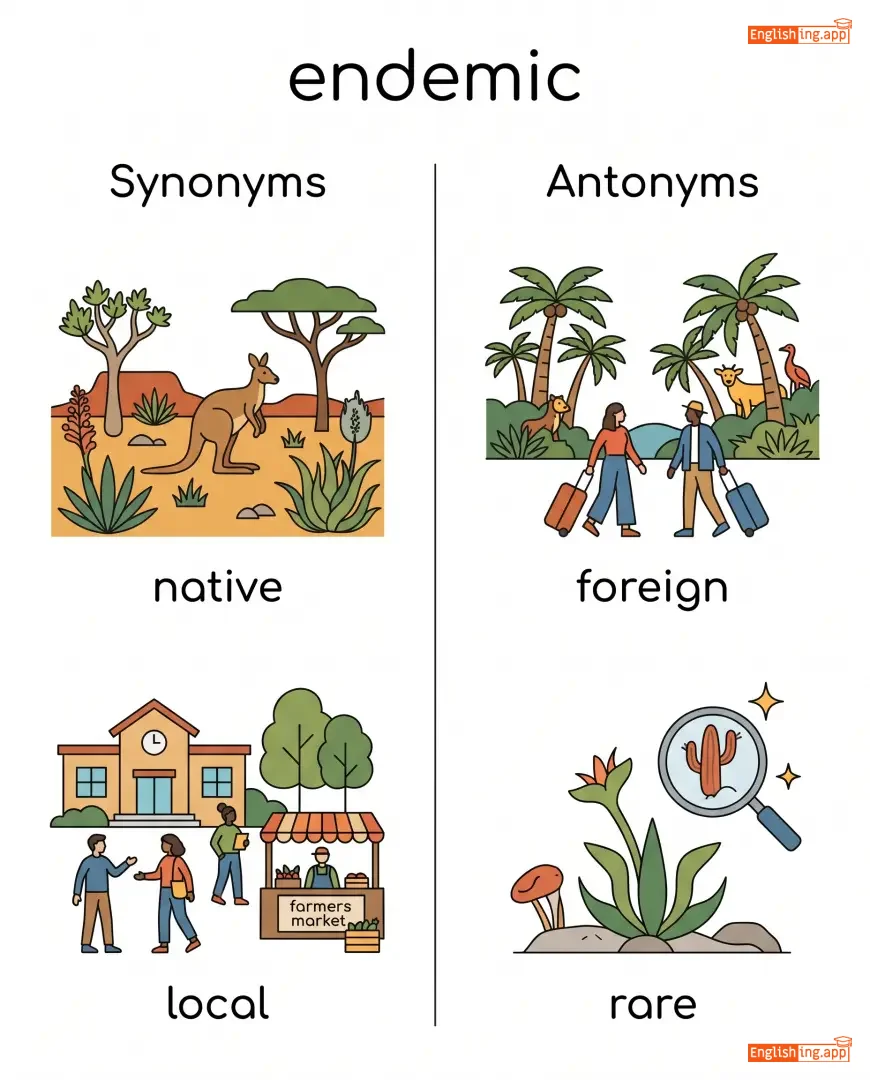
native, localized, indigenous
••••••
|
foreign, non-native, exotic
••••••
|
特有的, 就像孟加拉虎只存在于印度
••••••
|
|
#3867
⛰️
|
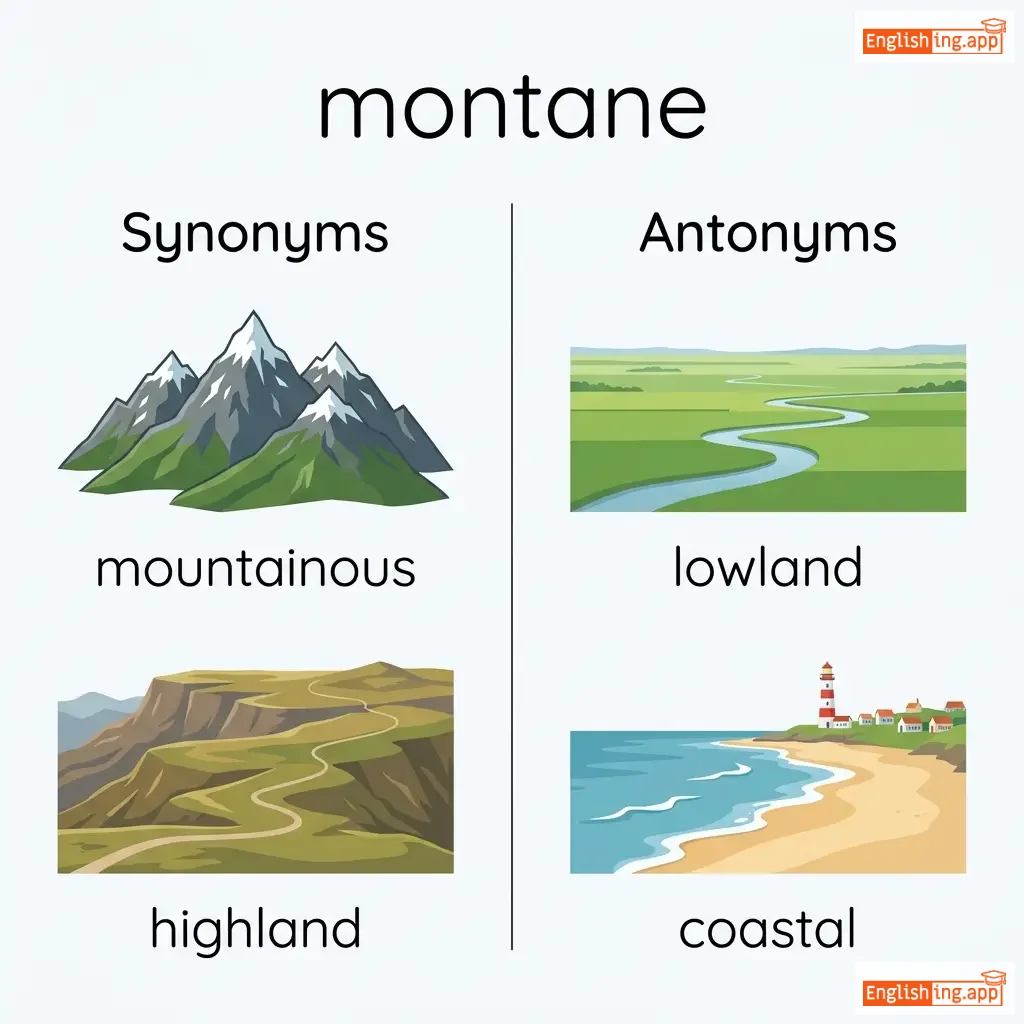
/ˈmɒn.teɪn/
adjective
(蒙泰恩)
••••••
|
|
与山区地区相关的; 在山区环境中发现
yu shanqu diqu xiangguan de; zai shanqu huanjing zhong faxian
••••••
|
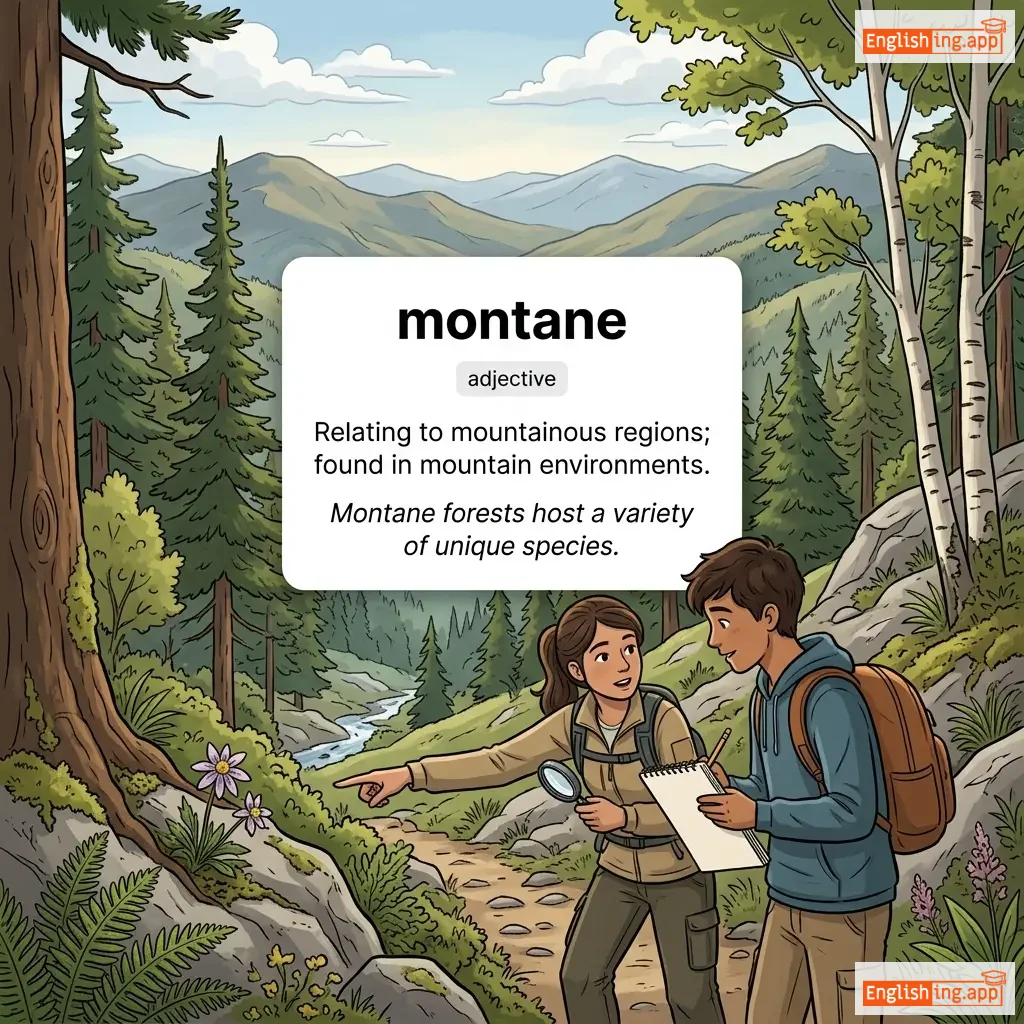
Relating to mountainous regions; found in mountain environments.
••••••
|
Montane forests host a variety of unique species. |
山区森林是独特物种的栖息地。
Shanqu senlin shi dutu wuzhong de qixidi.
••••••
|
mountainous, highland, alpine
••••••
|
lowland, coastal, plains
••••••
|
蒙泰恩 - 这是高山,物种丰富的地方
••••••
|
|
#3868
🏞️
|
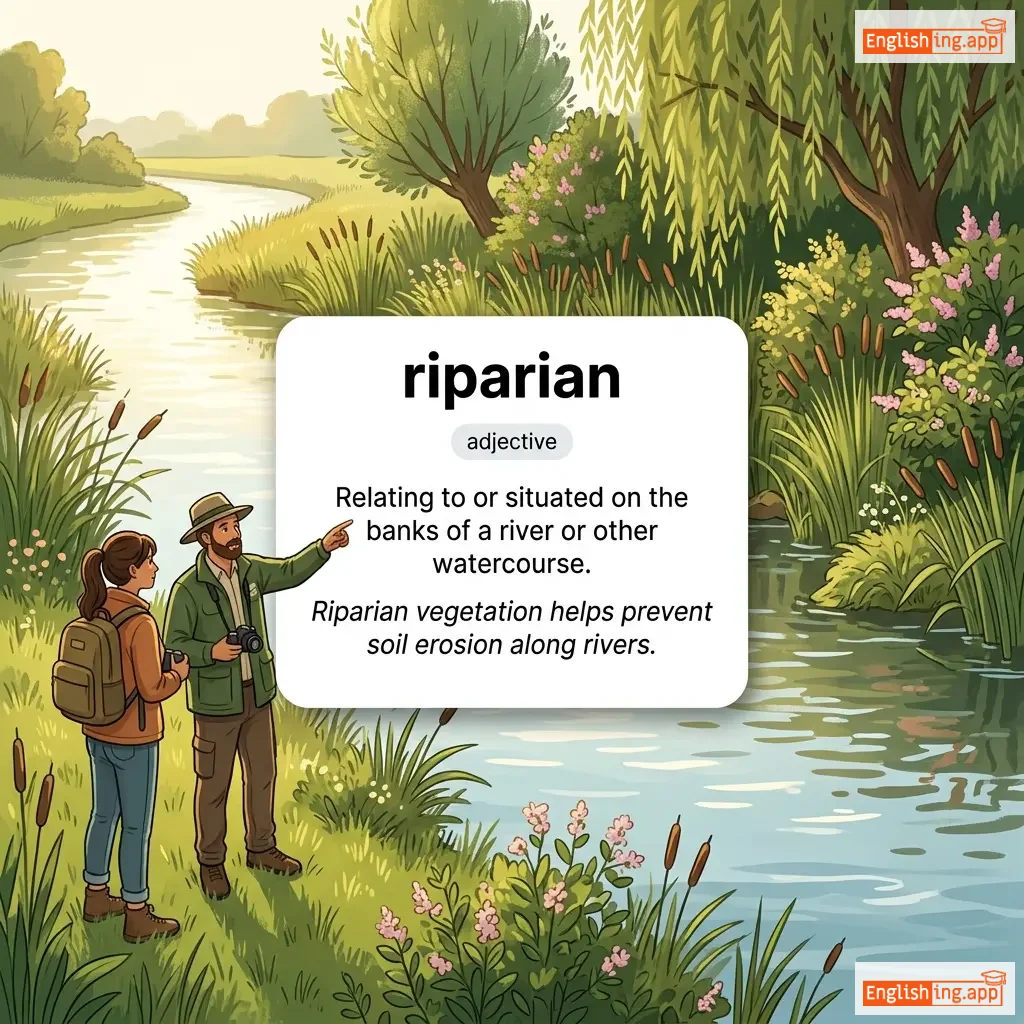
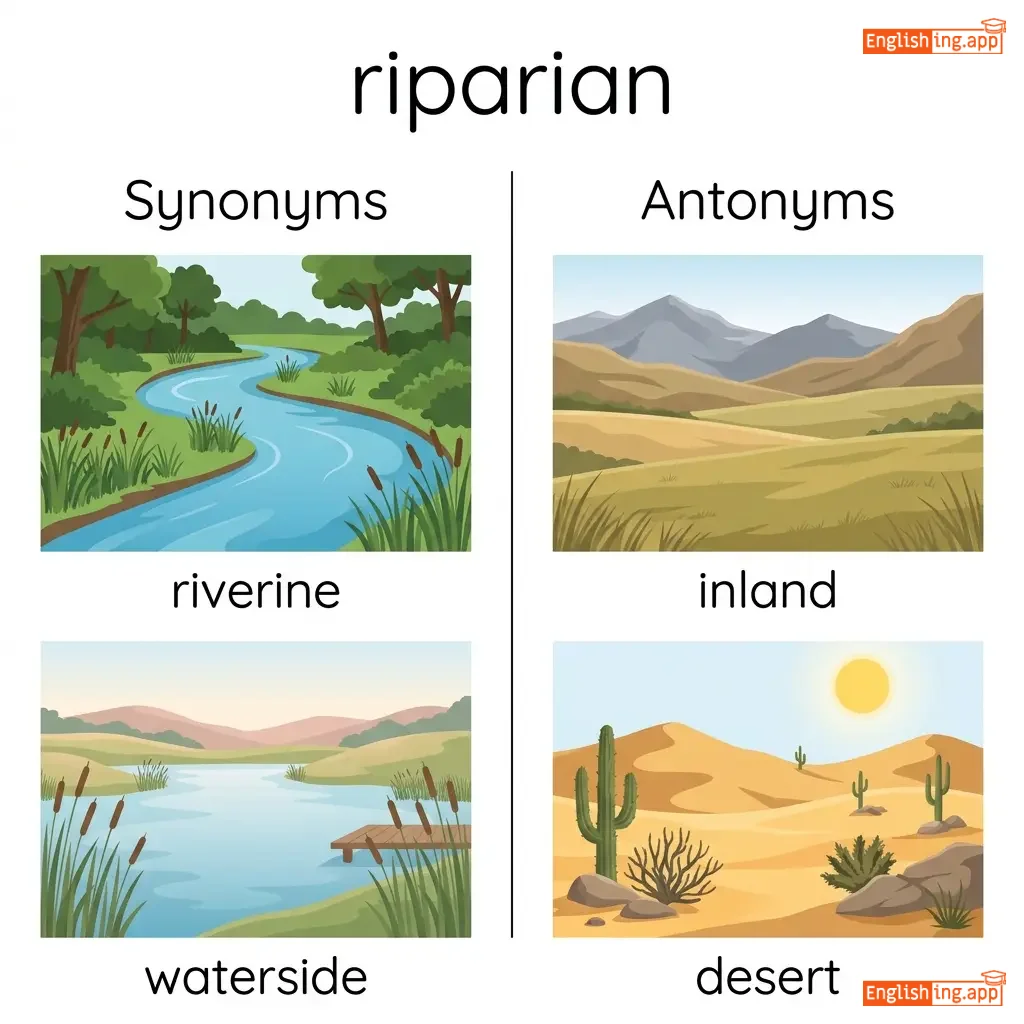
/raɪˈpɛə.ri.ən/
adjective
(raɪˈpɛə.ri.ən)
••••••
|
|
位于河流或其他水道的岸边或与之相关的
wei yu heliu huo qita shuidao de anbian huo yu zhi xiangguan de
••••••
|
Relating to or situated on the banks of a river or other watercourse.
••••••
|
Riparian vegetation helps prevent soil erosion along rivers. |
河岸植被有助于防止河流沿岸的土壤侵蚀。
Hé'àn zhíwù yǒuzhù yú fángzhǐ héliú yán'àn de tǔrǎng qīnshí.
••••••
|
riverine, waterside, bank-related
••••••
|
inland, desert, dryland
••••••
|
河岸 = 水边植物,防止侵蚀。
••••••
|
|
#3869
🪓
|
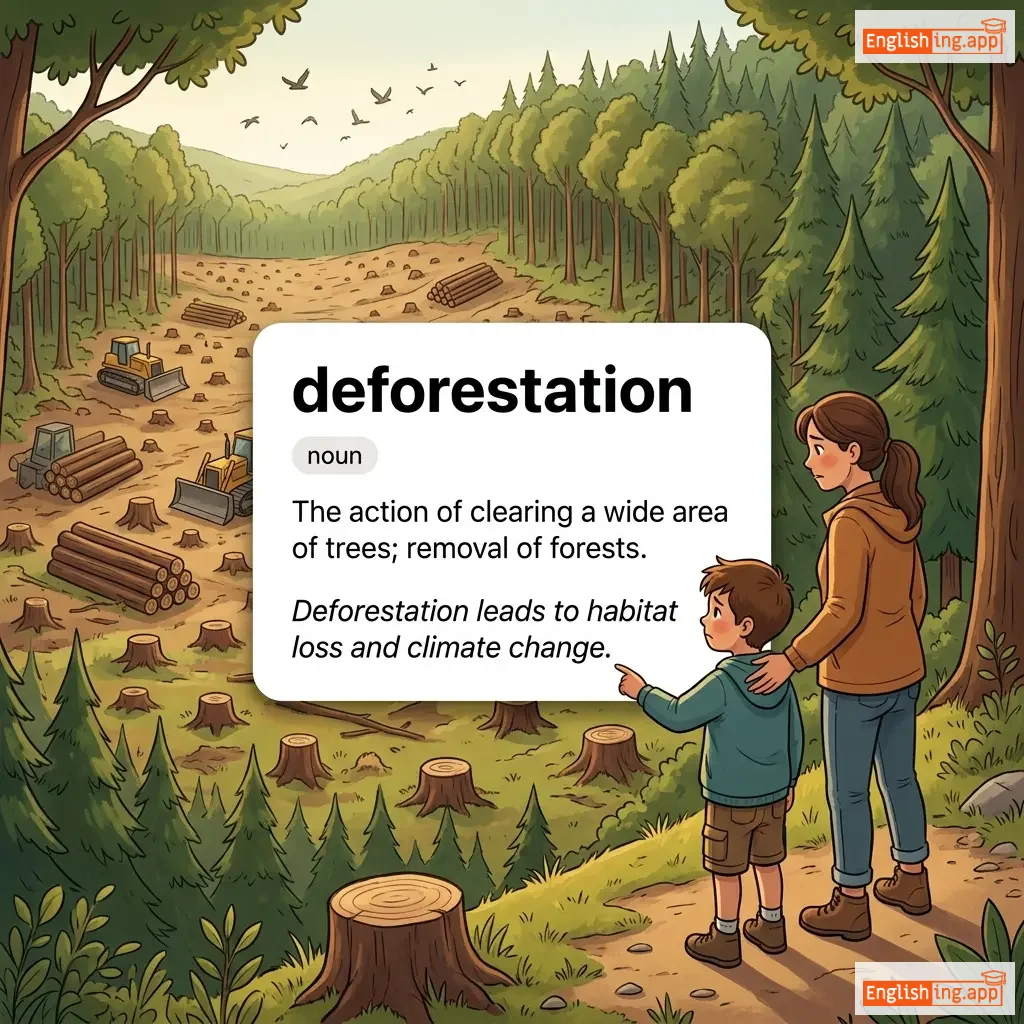
/ˌdiː.fɒr.ɪˈsteɪ.ʃən/
noun
(砍伐森林)
••••••
|
|
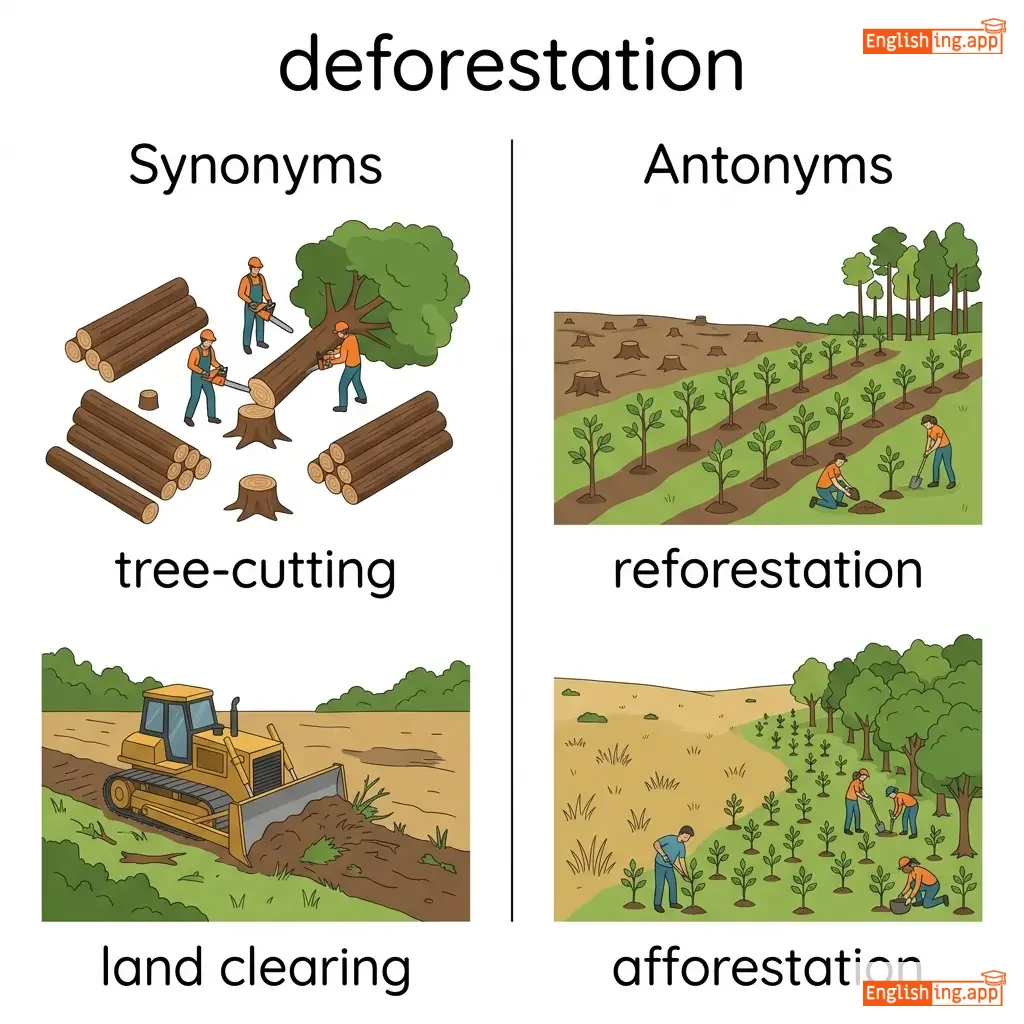
砍伐森林
kanfa senlin
••••••
|
The action of clearing a wide area of trees; removal of forests.
••••••
|
Deforestation leads to habitat loss and climate change. |
砍伐森林导致栖息地丧失和气候变化。
Kanfa senlin dǎozhì qīxī dì sàngshī hé qìhòu biànhuà.
••••••
|
tree-cutting, land clearing, deforesting
••••••
|
reforestation, afforestation, forest preservation
••••••
|
砍伐森林 = 摧毁森林
••••••
|
|
#3870
🧩
|
/ˌfræɡ.mənˈteɪ.ʃən/
noun
(碎片化)
••••••
|
|
碎片化
suìpiàn huà
••••••
|
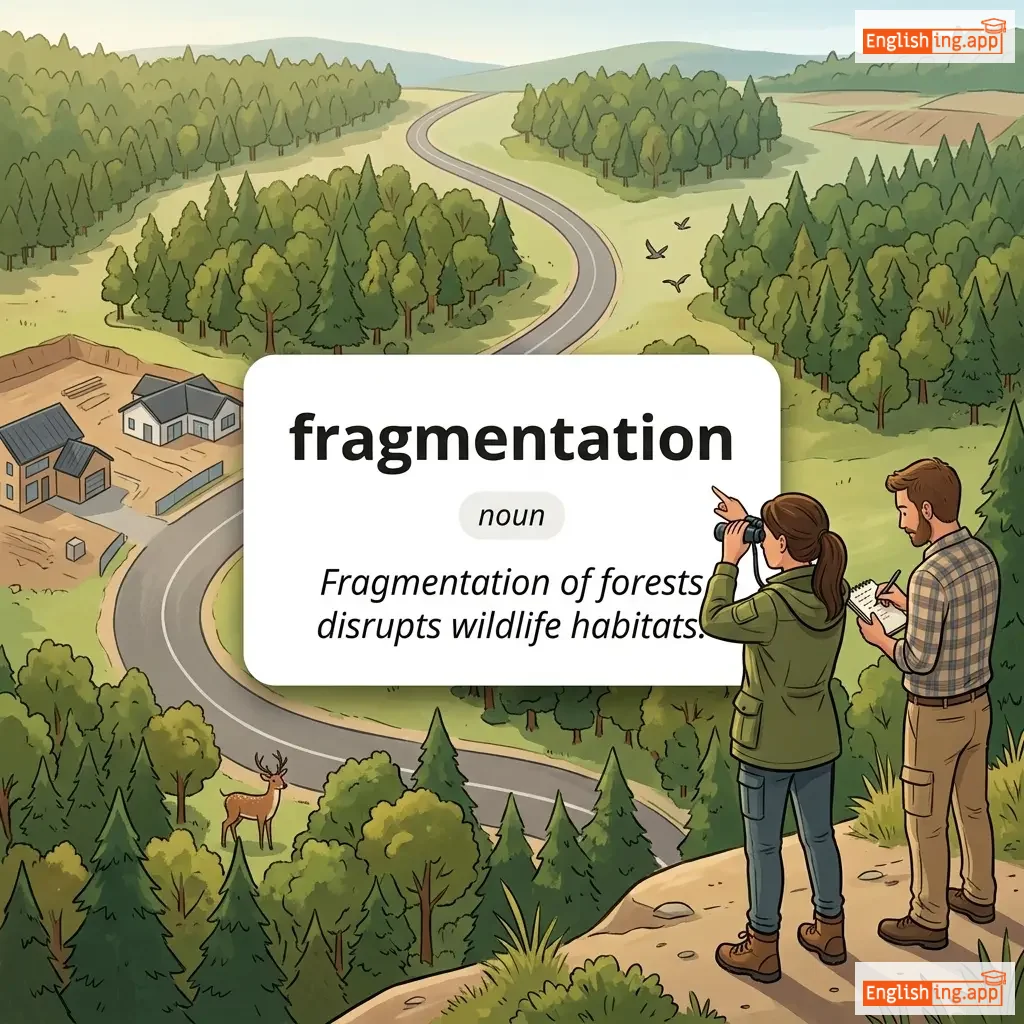
The process of breaking into fragments; division of habitat into isolated patches.
••••••
|
Fragmentation of forests disrupts wildlife habitats.
森林的碎片化破坏了野生动物的栖息地。
••••••
|
森林的碎片化破坏了野生动物的栖息地。
Sēnlín de suìpiàn huà pòhuài le yěshēng dòngwù de qīxī dìdì.
••••••
|
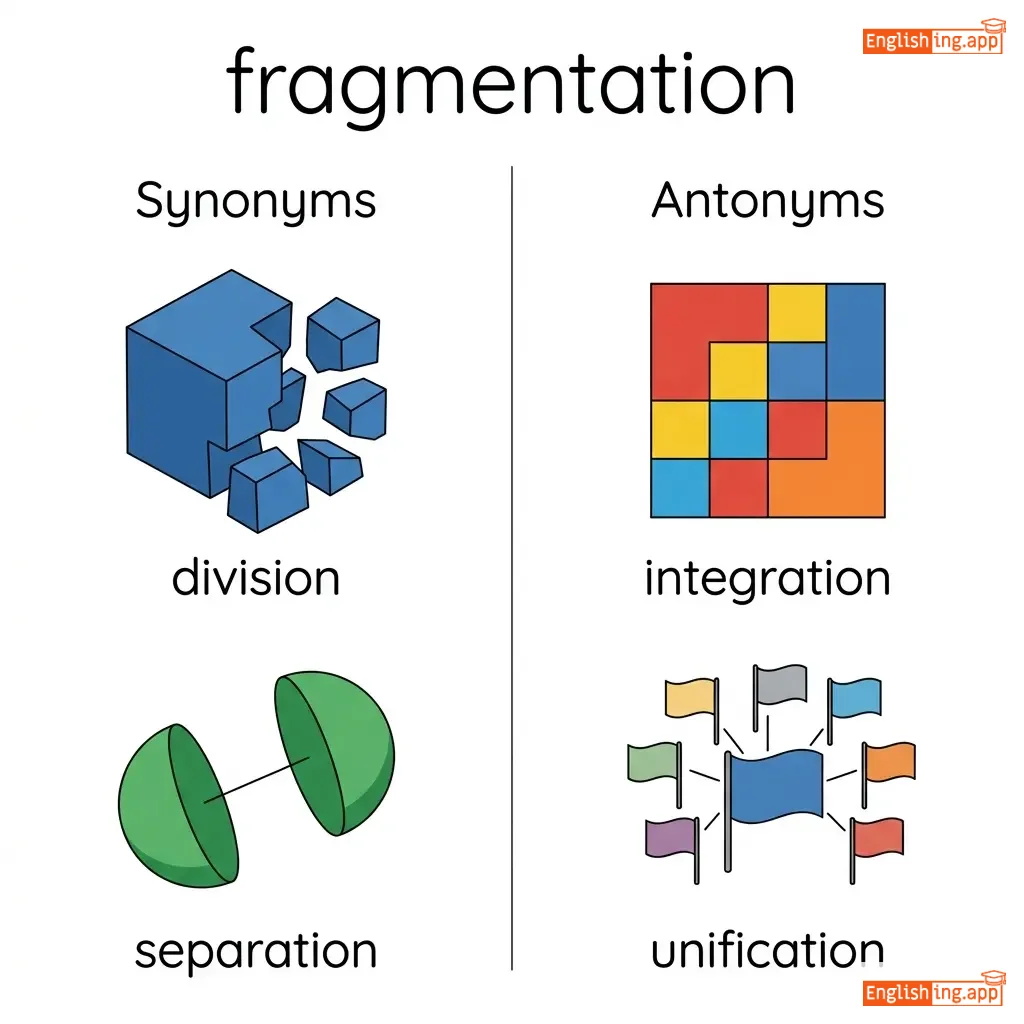
division, separation, disintegration
••••••
|
integration, unification, continuity
••••••
|
Think of '碎片化' as fragmentation in Chinese, breaking down like pieces.
••••••
|
|
#3871
🌡️
|
/ˈmaɪ.krəʊˌklaɪ.mət/
noun
(微气候)
••••••
|
|
微气候
wei qihou
••••••
|
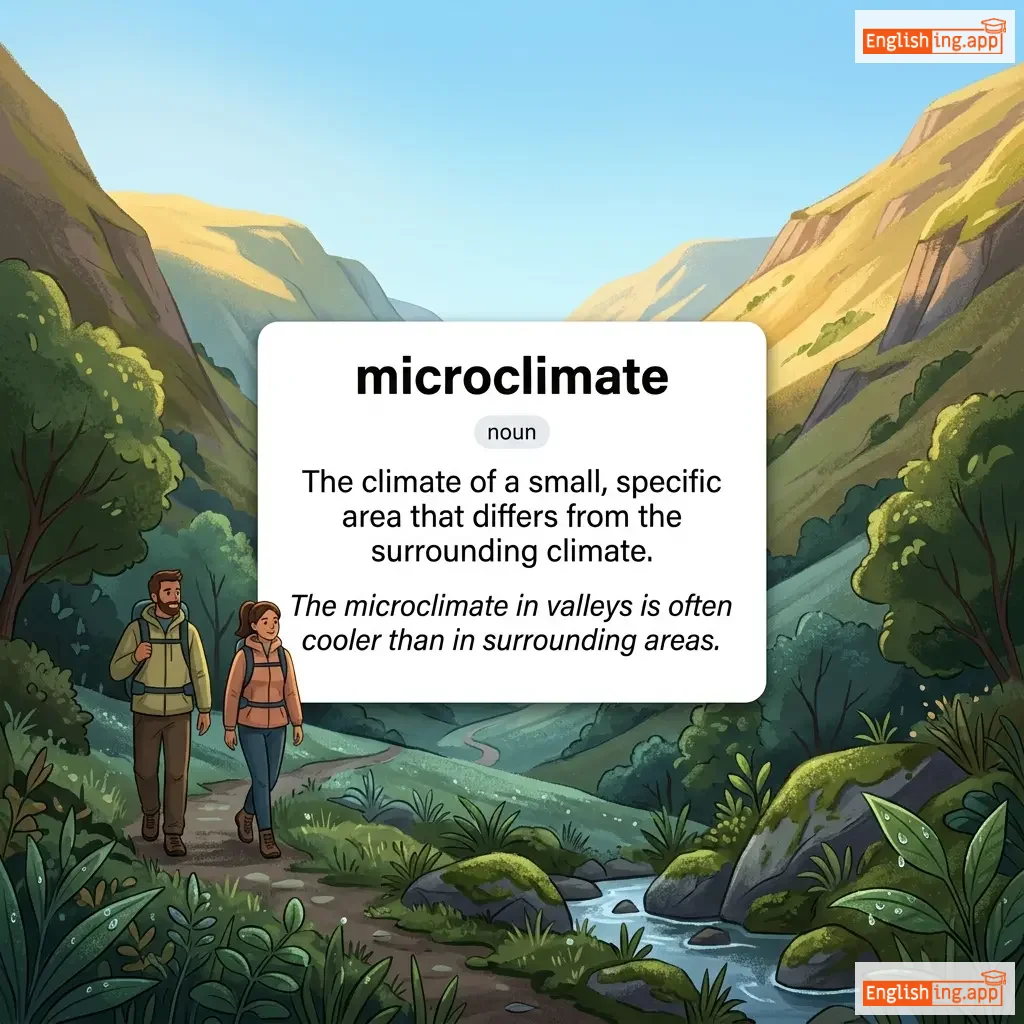
The climate of a small, specific area that differs from the surrounding climate.
••••••
|
The microclimate in valleys is often cooler than in surrounding areas.
山谷中的微气候通常比周围地区凉爽。
••••••
|
山谷中的微气候通常比周围地区凉爽。
Shangu zhong de wei qihou tongchang bi zhouwei diqu liangshuang.
••••••
|
local climate, environmental niche, weather condition
••••••
|
global climate, uniformity, general weather
••••••
|
微气候是一种微小的气候,就像微型天气一样。
••••••
|
|
#3872
🌿
|
/ˈʌn.dɚˌstɔː.ri/
noun
(安德斯托里)
••••••
|
|
下层植被
xiaceng zhipei
••••••
|
The layer of vegetation beneath the main canopy of a forest.
••••••
|
The understory of a rainforest is home to small mammals and insects. |
雨林的下层植被是小型哺乳动物和昆虫的家园。
Yulin de xiaceng zhipei shi xiaoxing buru dongwu he kunchong de jiayuan.
••••••
|
forest floor, lower vegetation, shrub layer
••••••
|
canopy, open space, upper layer
••••••
|
在森林的下层,住着许多小动物。
••••••
|
Vocabulary Quiz
Test your vocabulary by matching words with their translations or meanings.
Login to take the quiz
Comments (0)
Share your thoughts and join the discussion.
Join the discussion by logging in
Login to CommentNo comments yet
Be the first to share your thoughts!