23 Lesson 23 - Learn Vocabulary Through Stories - BPSC (第23课 - 通过故事学习词汇 - BPSC)

通过故事学习词汇 - BPSC

Learn Vocabulary Through Stories - BPSC

孟加拉国的 independent constitutional body,BPSC,负责民主政府中 eligible candidatesrecruitmentselection。它于1972年4月8日 established,并通过BCS examinations 为26个 cadres 提供 appointmentsassessment process 分为三个阶段:Preliminary、Written 和 Viva Voce

委员会的 chairpersonmembers 由总统 appointed。它不仅处理招聘,还在 eligibility 确定、晋升、转移以及 disciplinary advice 上发挥作用。

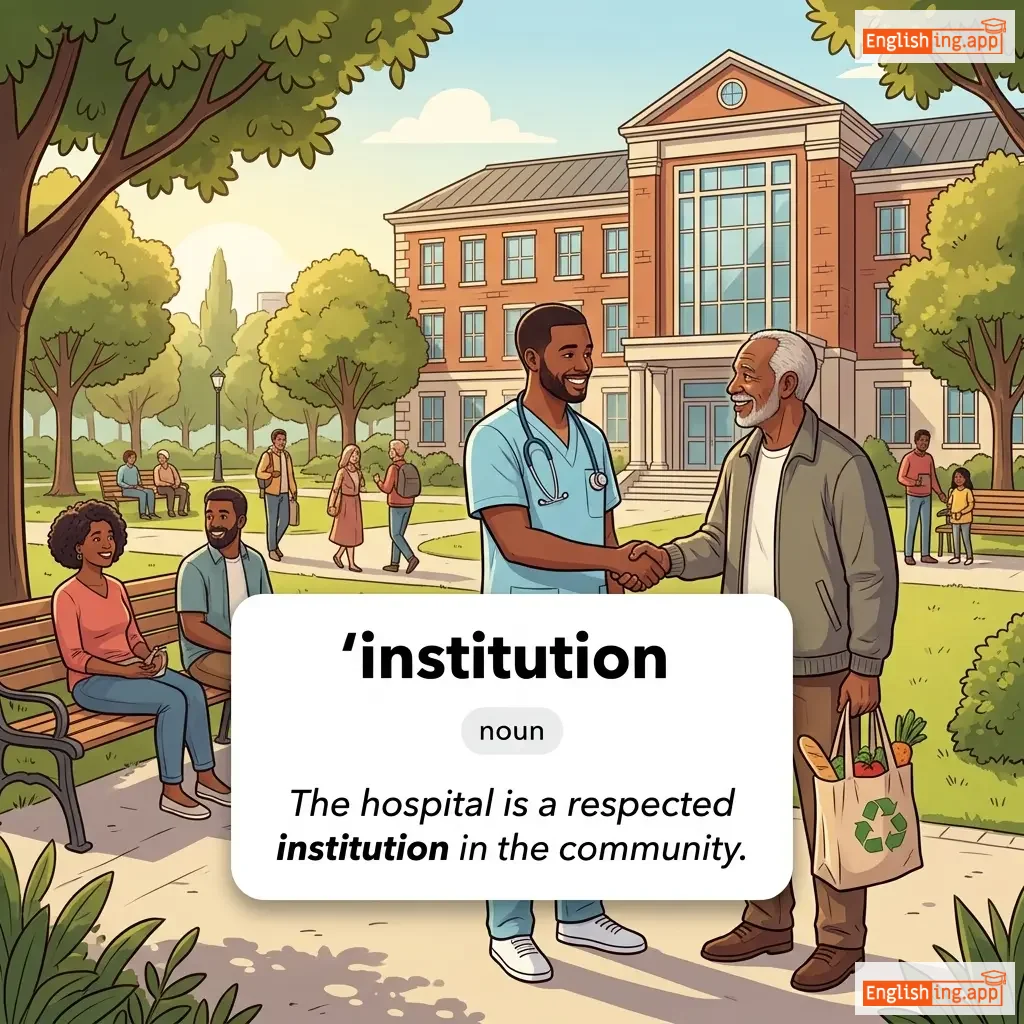
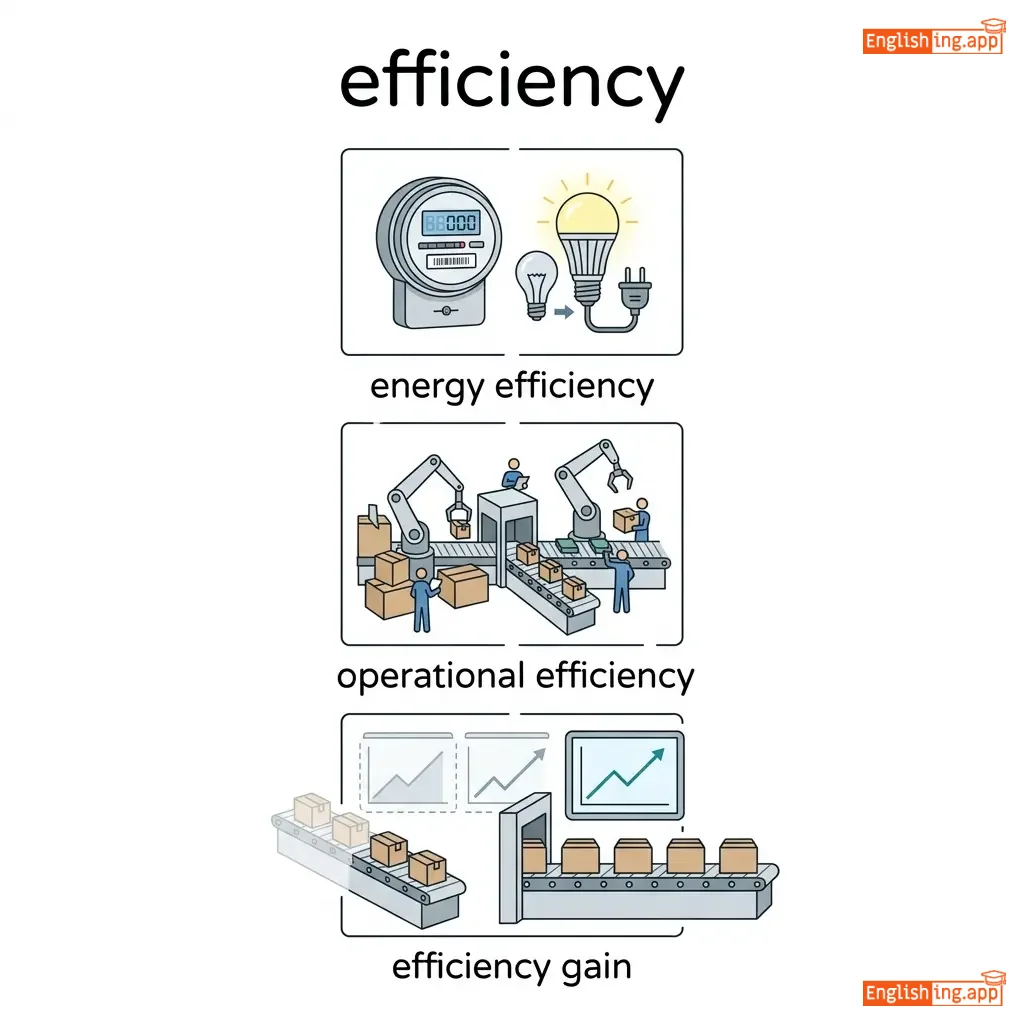
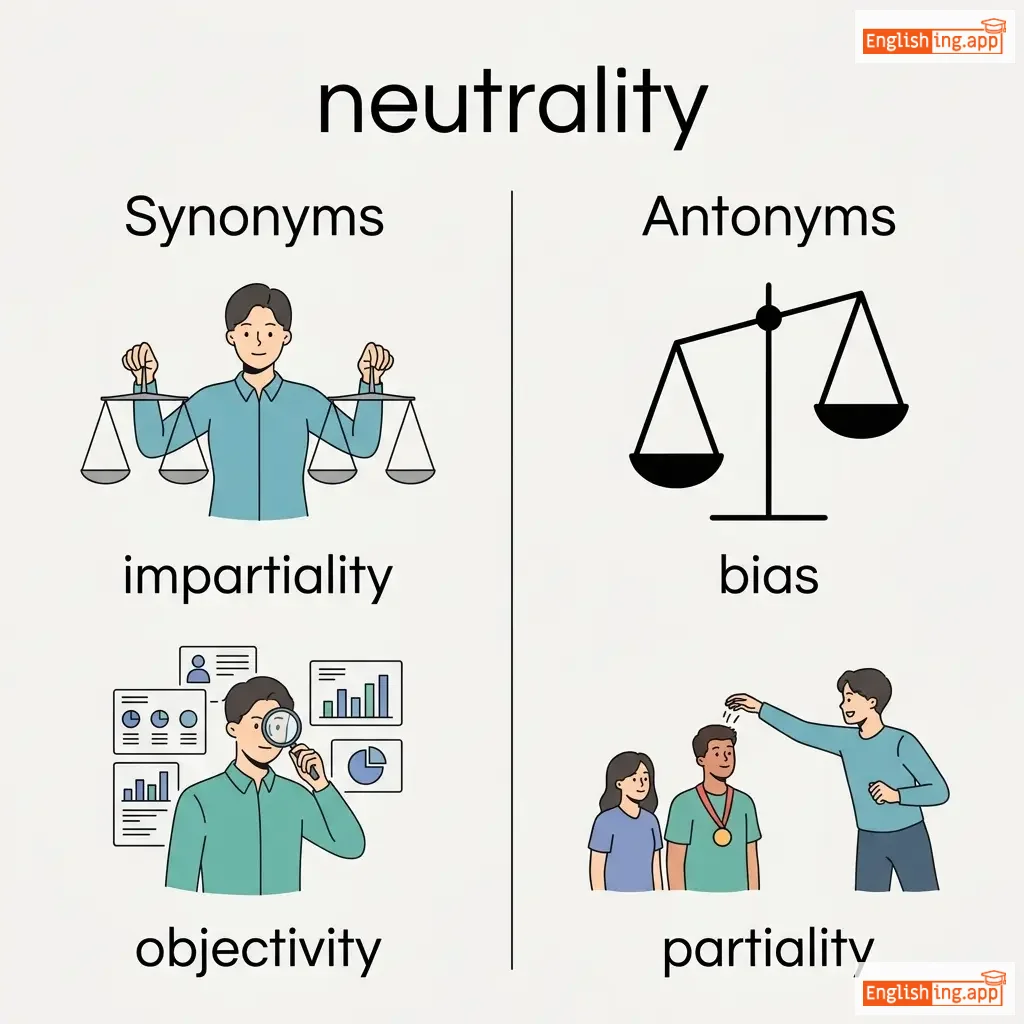
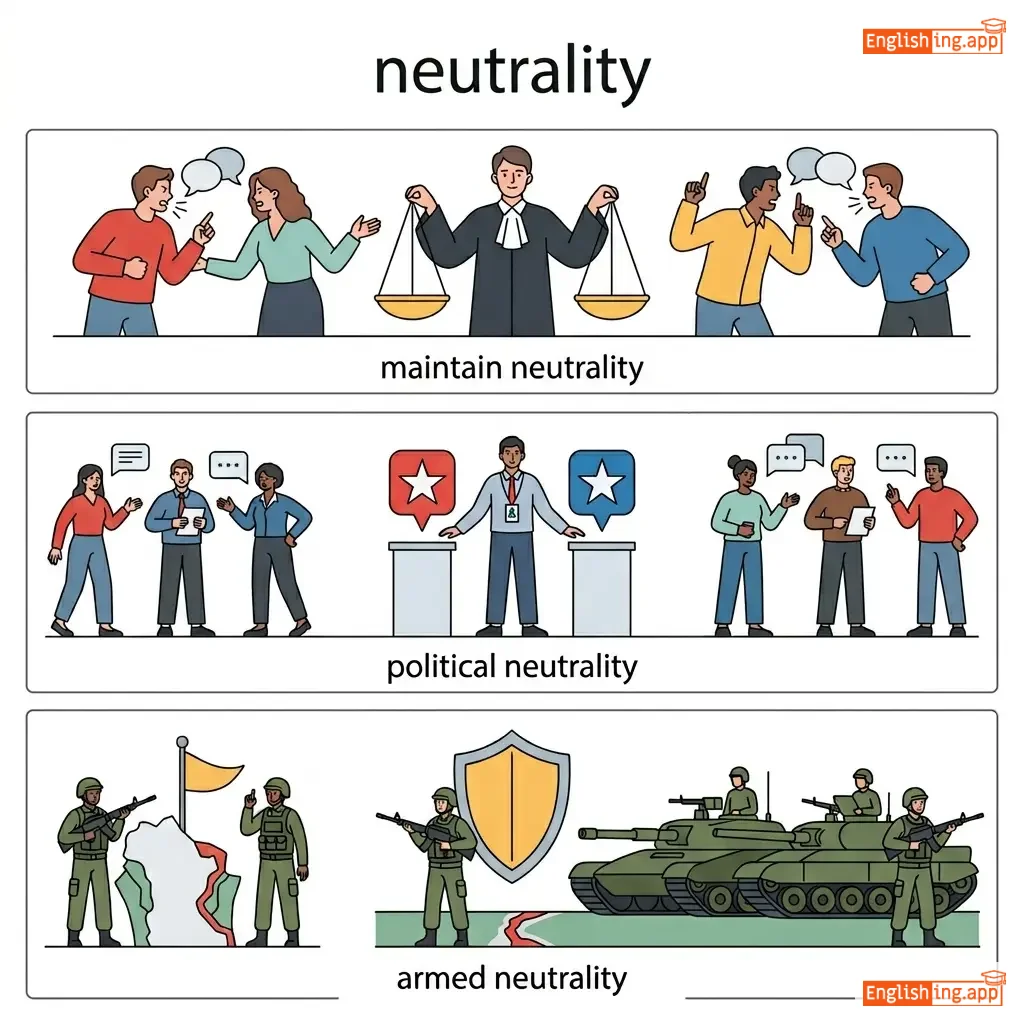
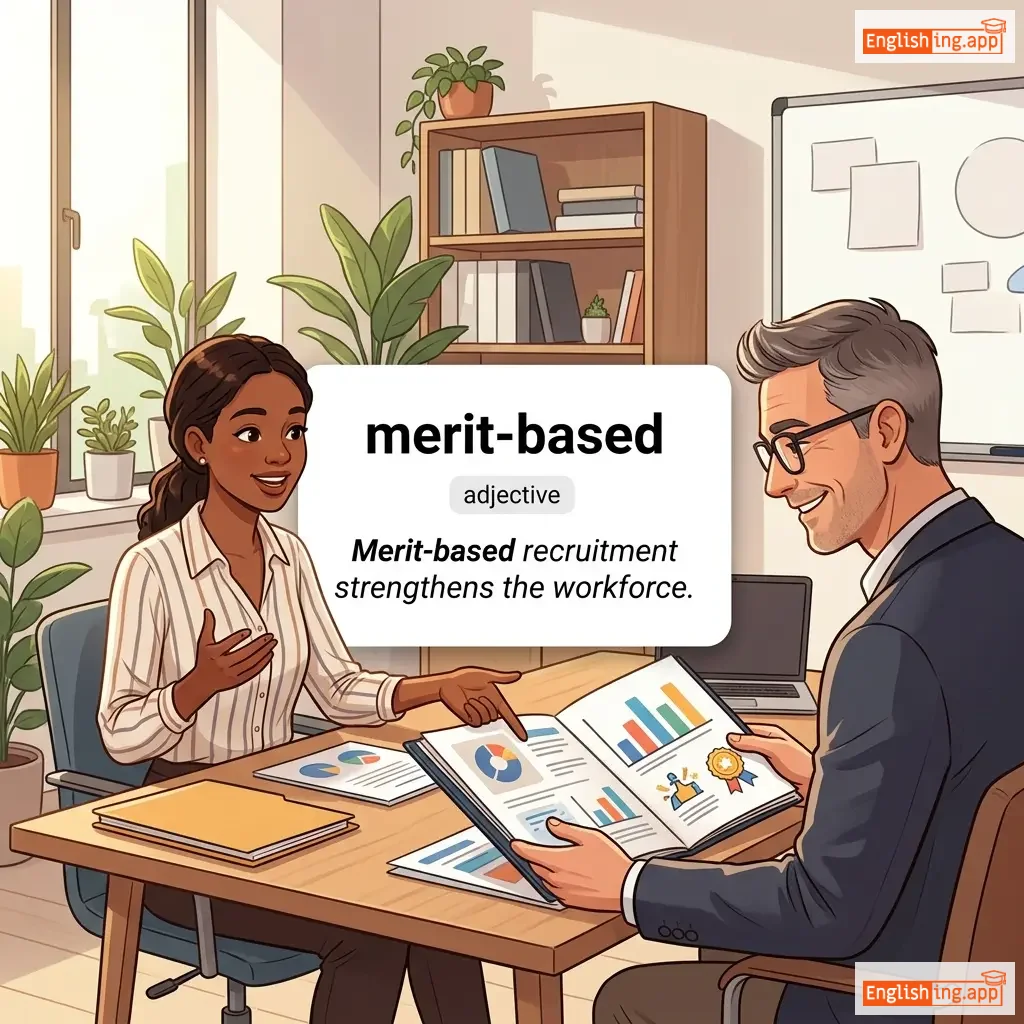
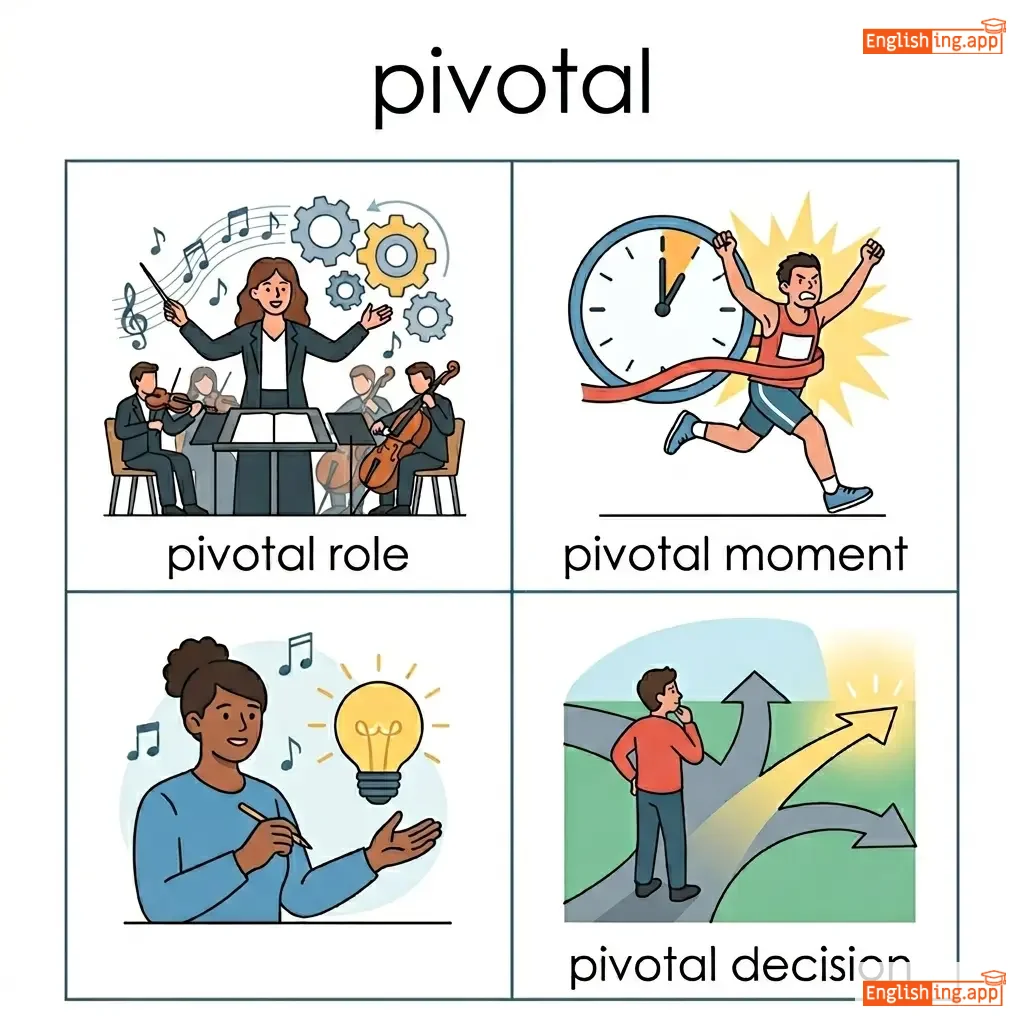
这个 institution 致力于确保民主中的 governance efficiencyneutrality。通过 merit-based recruitmenttransparency,它加强了国家的 administrative framework。BPSC 在实现公共服务 improvementseffective governance 中扮演着 pivotal role

Learn Vocabulary Through Stories - BPSCLearn Vocabulary Through Stories - BPSC Details
/
/

Learn Vocabulary Through Stories - BPSCLearn Vocabulary Through Stories - BPSC - 遮罩切换

表情符号
单词 Images 翻译 含义 例句 例句翻译 同义词 反义词 助记符
#287
🆓
••••••
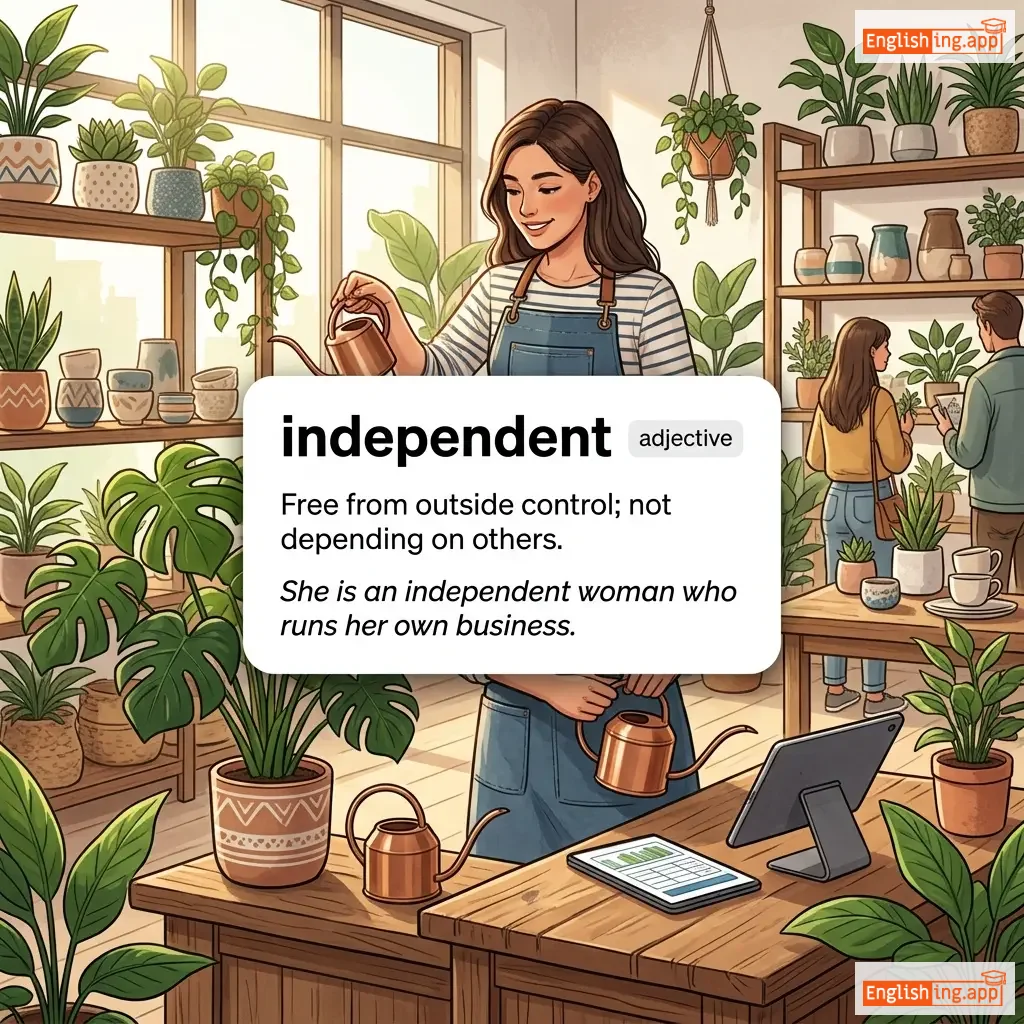
ˌɪn.dɪˈpen.dənt
adjective
(独立)
••••••
••••••
独立
duli
••••••
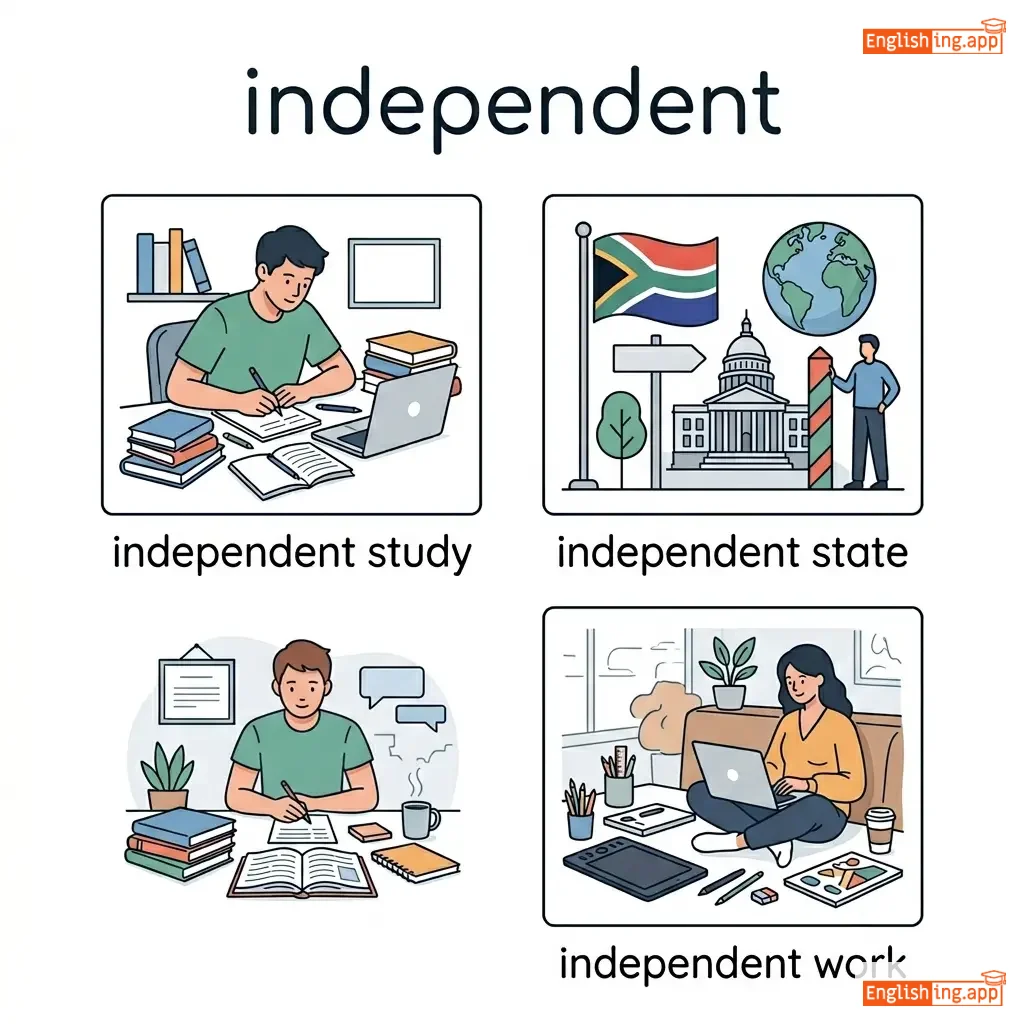
Not depending on another for livelihood or subsistence; free from outside control; not subject to another's authority.
••••••

An independent institution ensures transparency in governance.

••••••
一个独立的机构确保政府的透明度。
Yi ge duli de jigou quebao zhengfu de toumingdu.
••••••
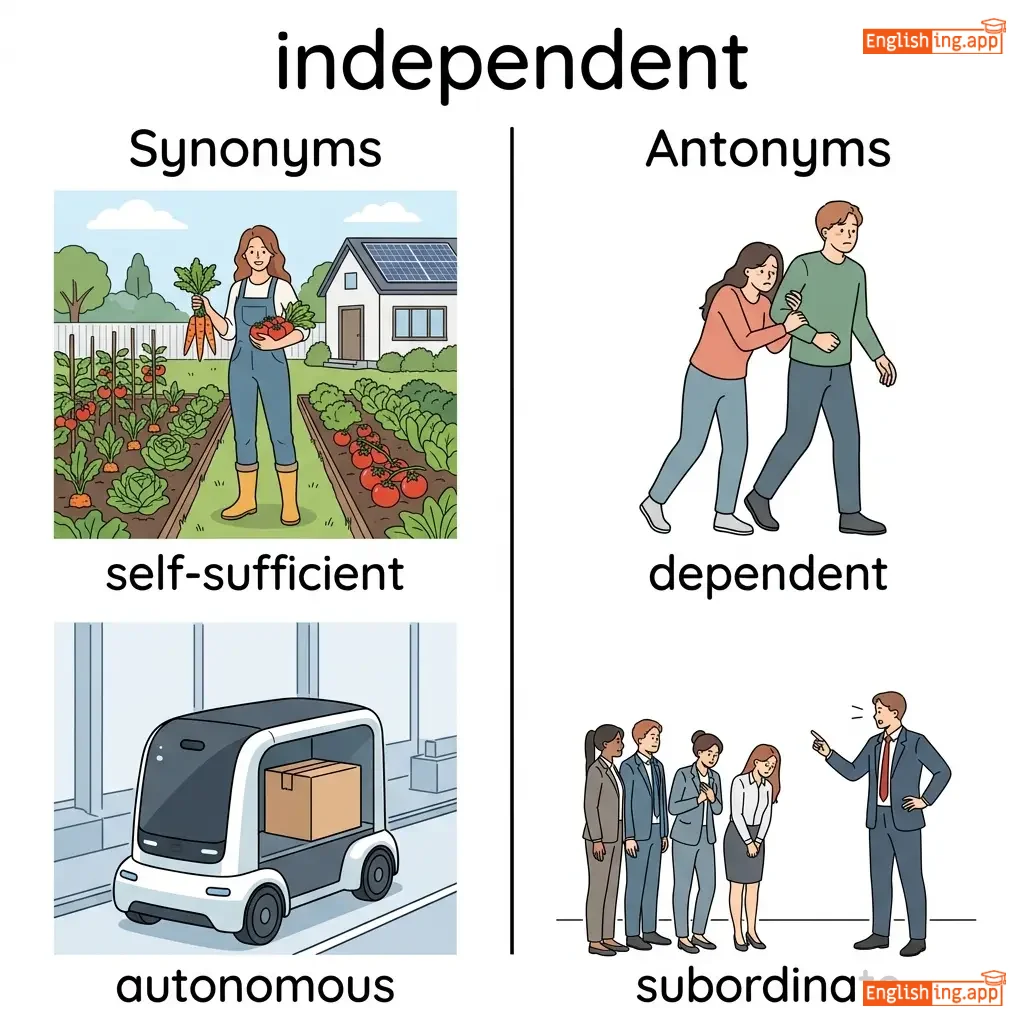
autonomous, sovereign, free, self-governing, self-reliant, uncontrolled
••••••
dependent, subordinate, controlled, subject, reliant, governed
••••••
Independent and 独立 in Chinese – 独立
••••••
#288
📜
••••••
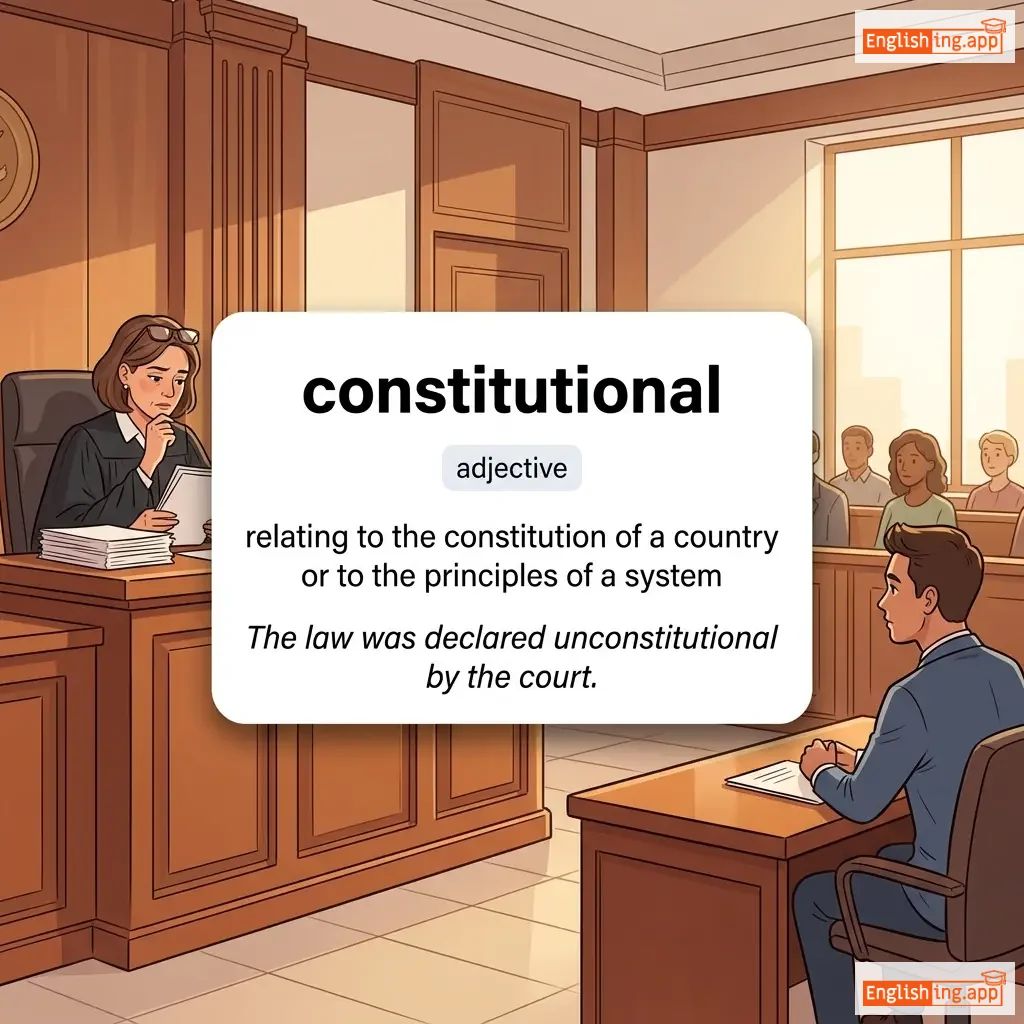
ˌkɒn.stɪˈtjuː.ʃən.əl
adjective
(宪法的)
••••••
••••••
宪法的
xianfa de
••••••
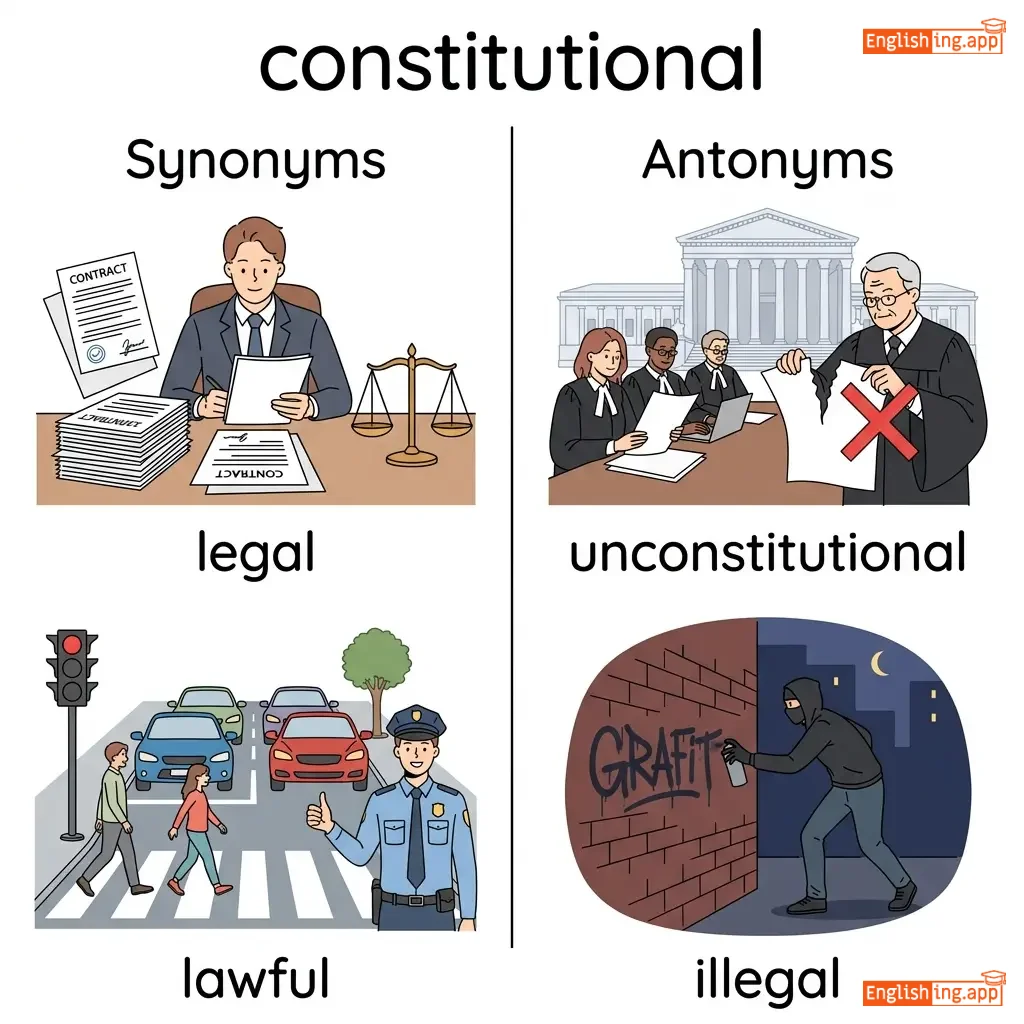
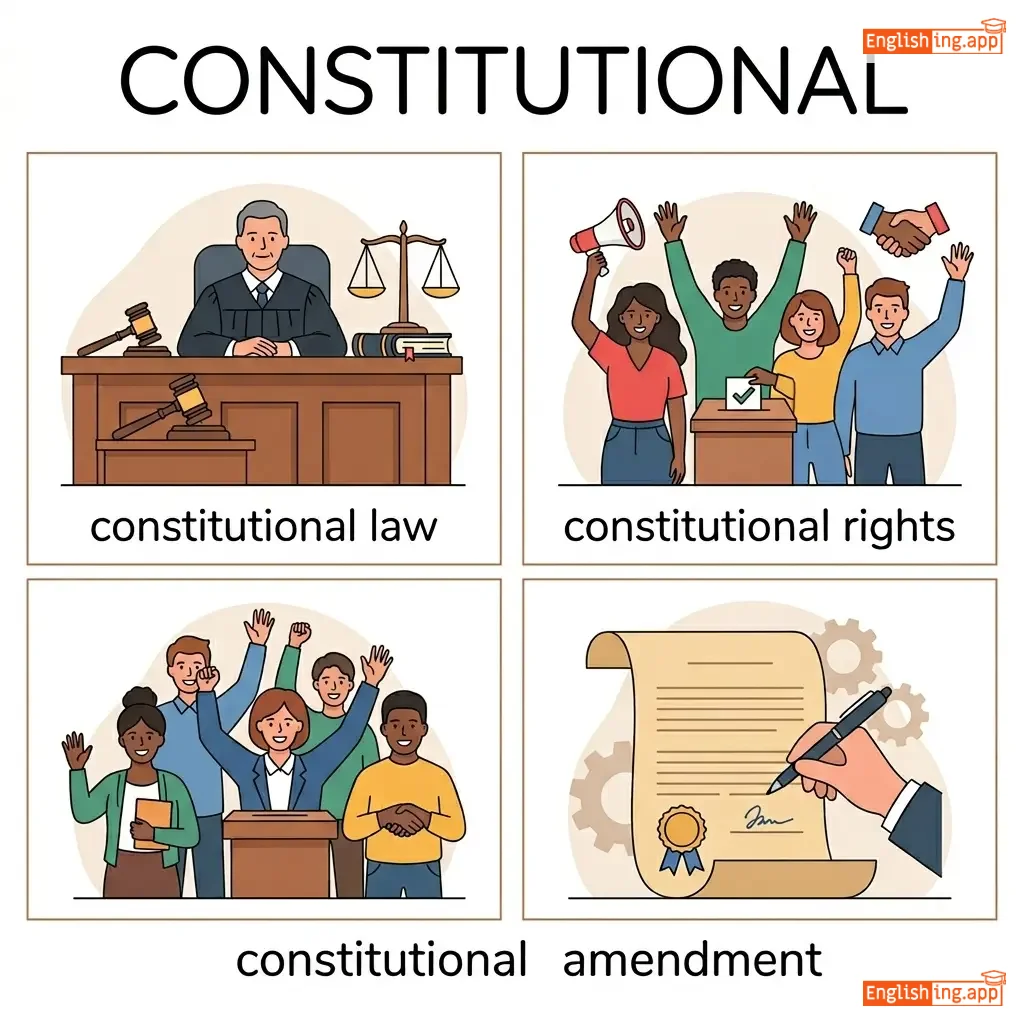
Relating to an established set of principles governing a state; in accordance with a political constitution.
••••••

Constitutional reforms ensure fairness in the system.

宪法改革确保系统中的公平性。
••••••
宪法改革确保系统中的公平性。
Xianfa gaige quèbǎo xìtǒng zhōng de gōngpíngxìng.
••••••
legal, chartered, lawful, legitimate, statutory, authorized
••••••
unconstitutional, illegal, unlawful, illegitimate, unauthorized, invalid
••••••
宪法的意味着与宪法有关。
••••••
#289
••••••
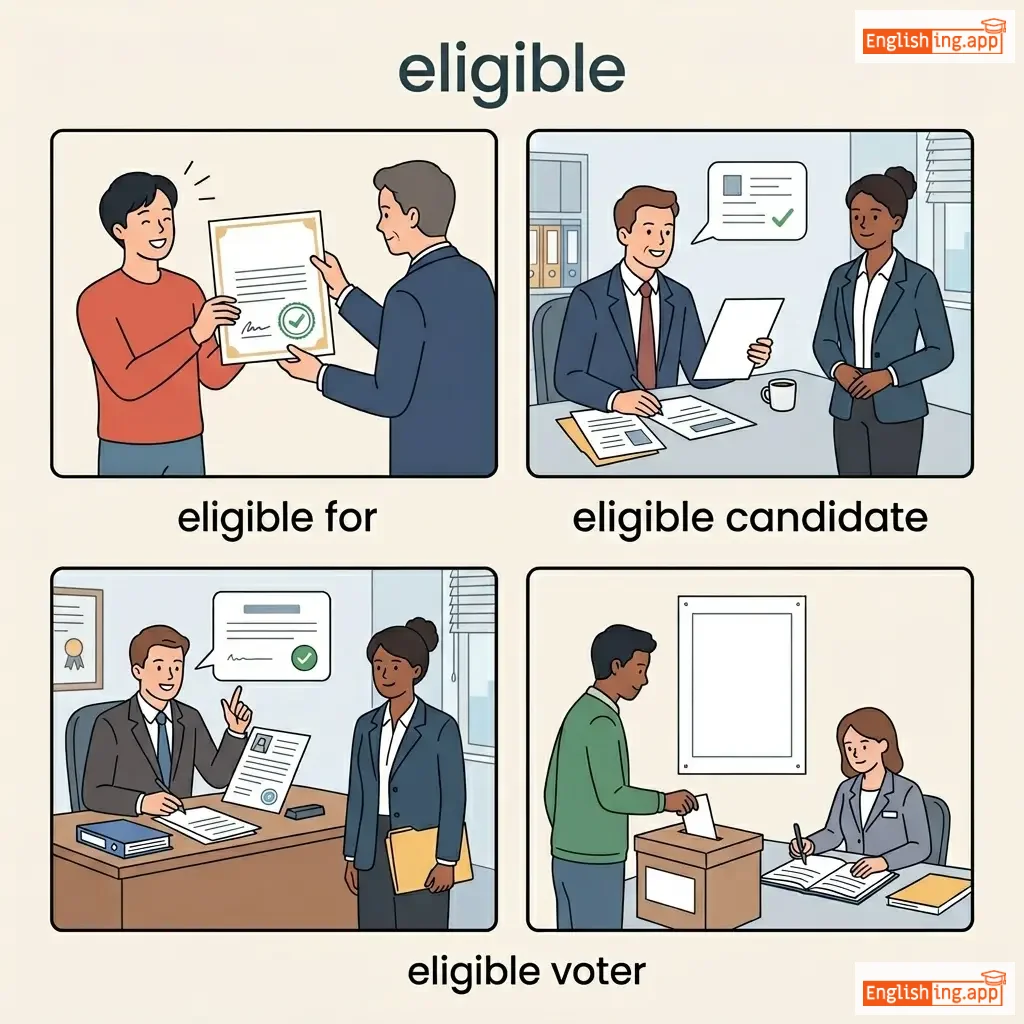
ˈel.ɪ.dʒə.bəl
adjective
(艾莉吉布尔)
••••••
••••••
有资格的
you zige de
••••••
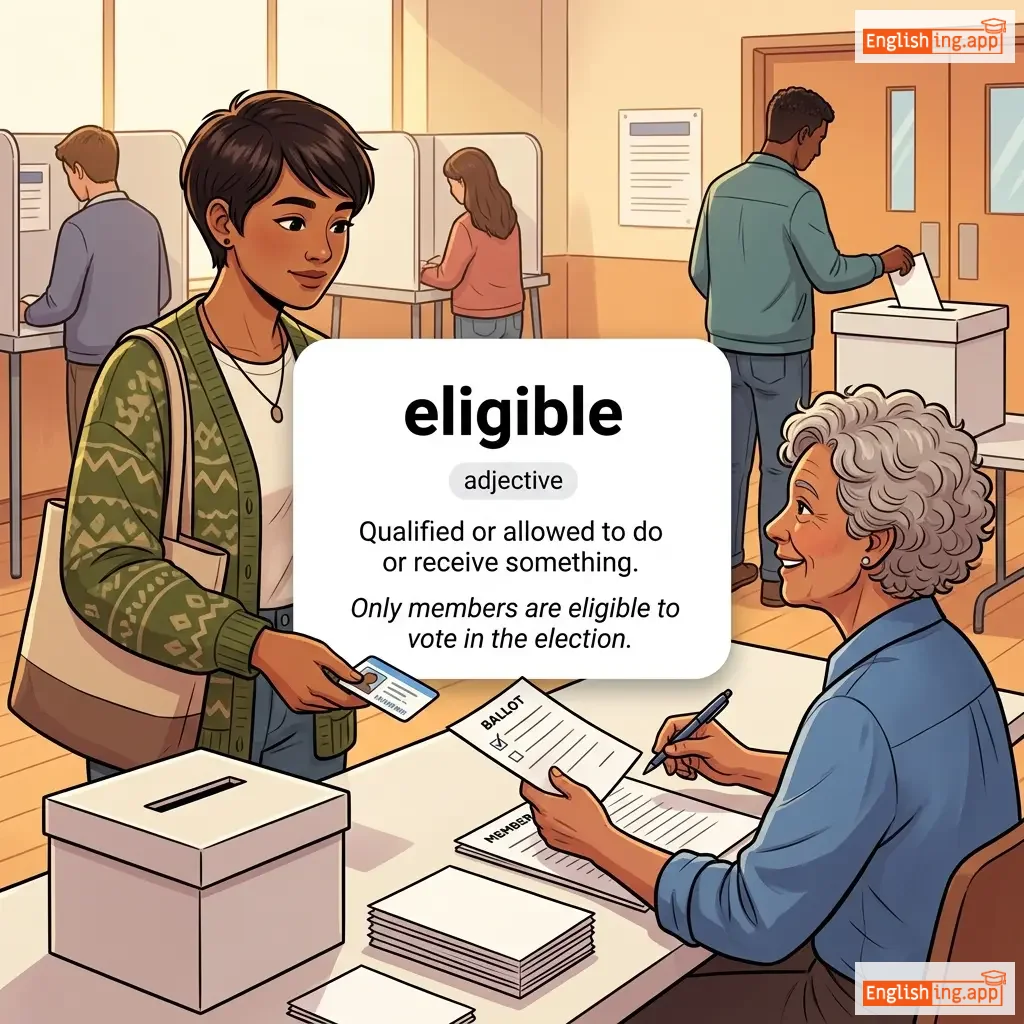
Having the right to do or obtain something through satisfaction of the appropriate conditions.
••••••

Only eligible candidates are considered for appointments.

••••••
只有有资格的候选人才会被考虑任命。
Zhiyou you zige de houxuanren cai hui bei kǎolǜ rènmìng.
••••••
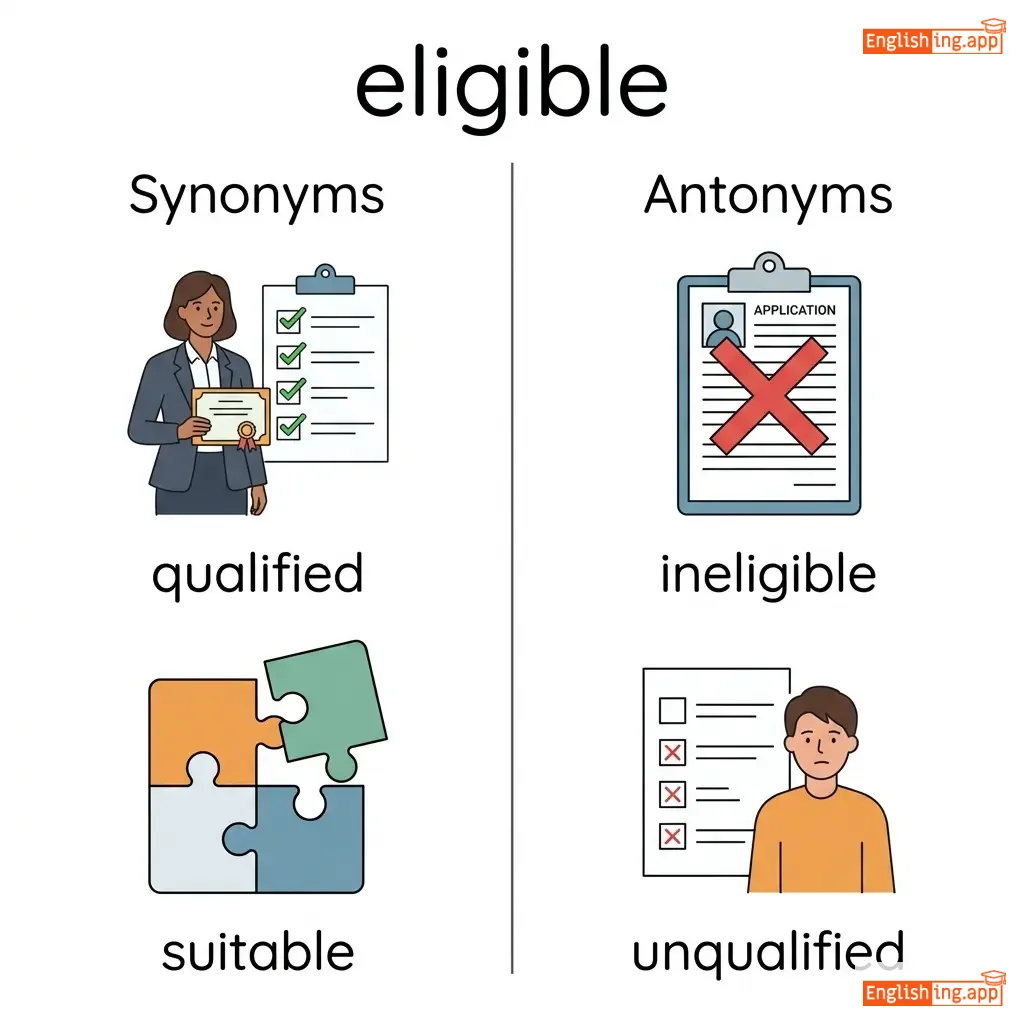
qualified, suitable, entitled, fit, worthy, competent
••••••
ineligible, unsuitable, unqualified, unfit, unworthy, incompetent
••••••
有资格 - 符合条件,成功就在眼前!
••••••
#290
👥
••••••
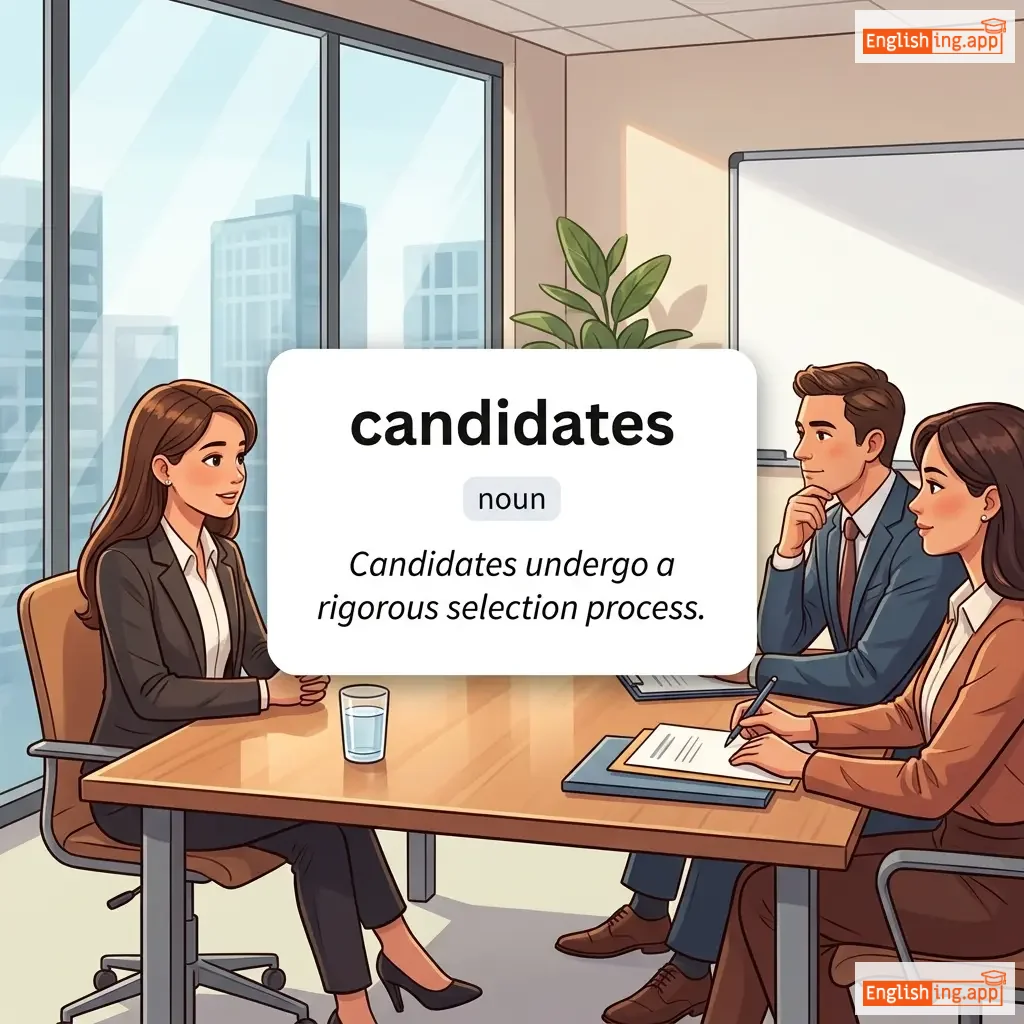
ˈkæn.dɪ.deɪts
noun
(候选人)
••••••
••••••
候选人
hòuxuǎn rén
••••••
A person who applies for a job or is nominated for election; someone being considered for a position.
••••••

Candidates undergo a rigorous selection process.

••••••
候选人经历了一个严格的选拔过程。
Hòuxuǎn rén jīnglìle yīgè yángé de xuǎnbá guòchéng.
••••••
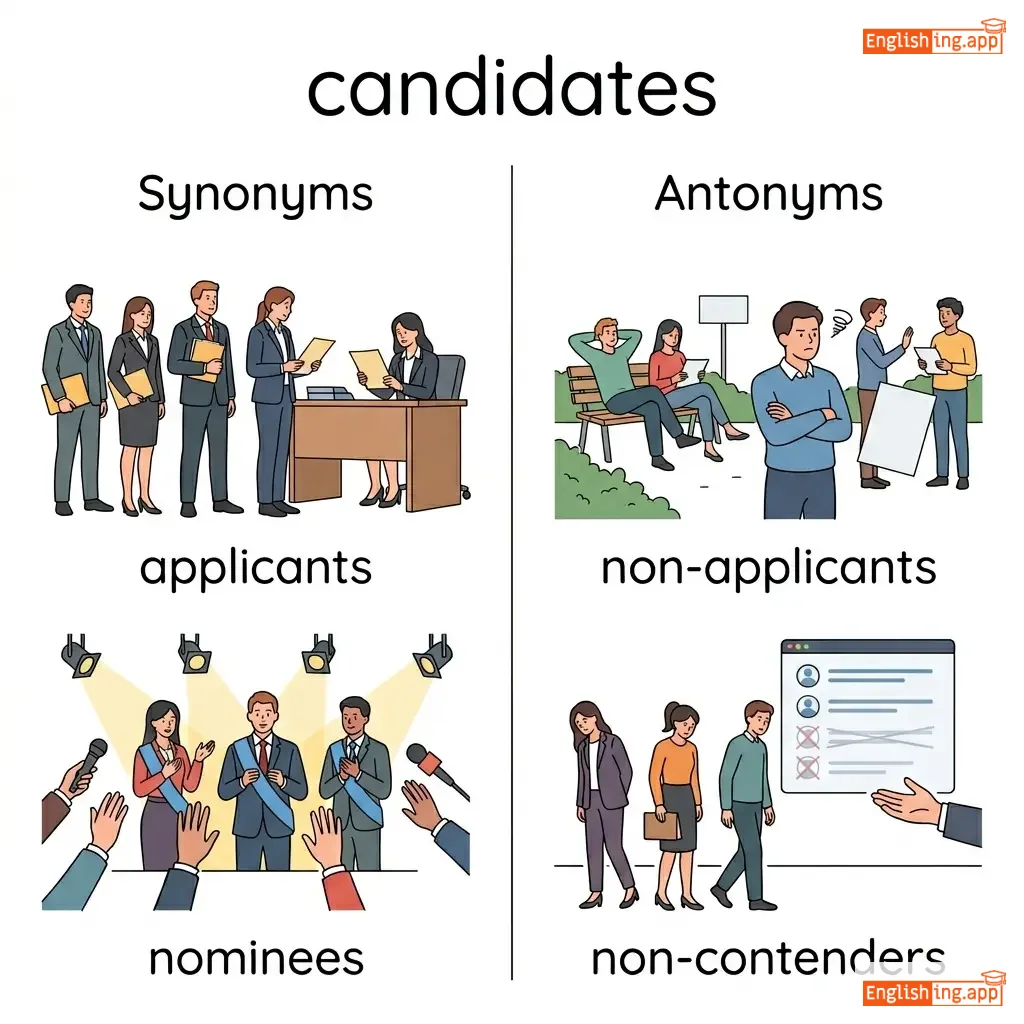
applicants, nominees, contenders, aspirants, hopefuls, prospects
••••••
non-applicants, non-contenders, excludees, rejectees, disqualified, ineligible
••••••
候选人 (hòuxuǎn rén) 就是正在等待选择的那些人。
••••••
#291
🔍
••••••
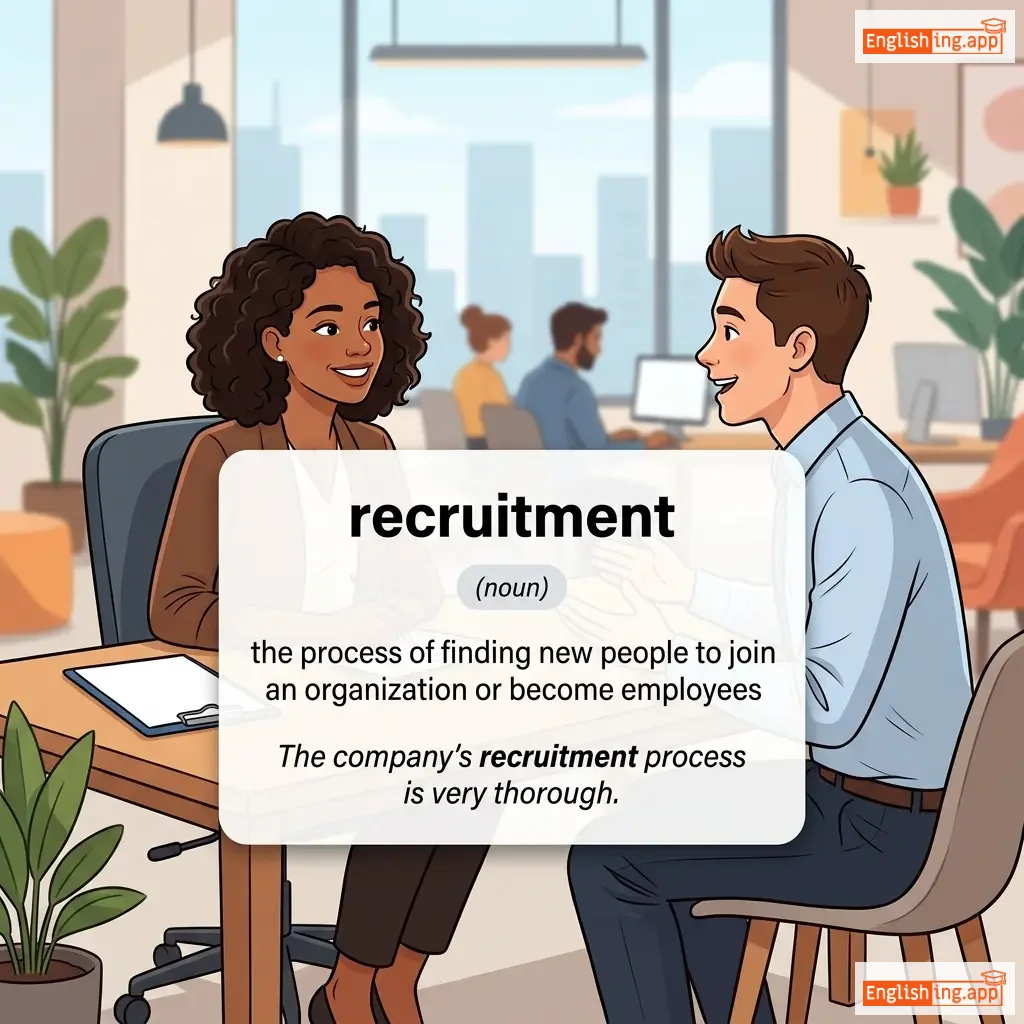
rɪˈkruːt.mənt
noun
(rɪˈkruːtmənt)
••••••
••••••
招聘
zhaopin
••••••
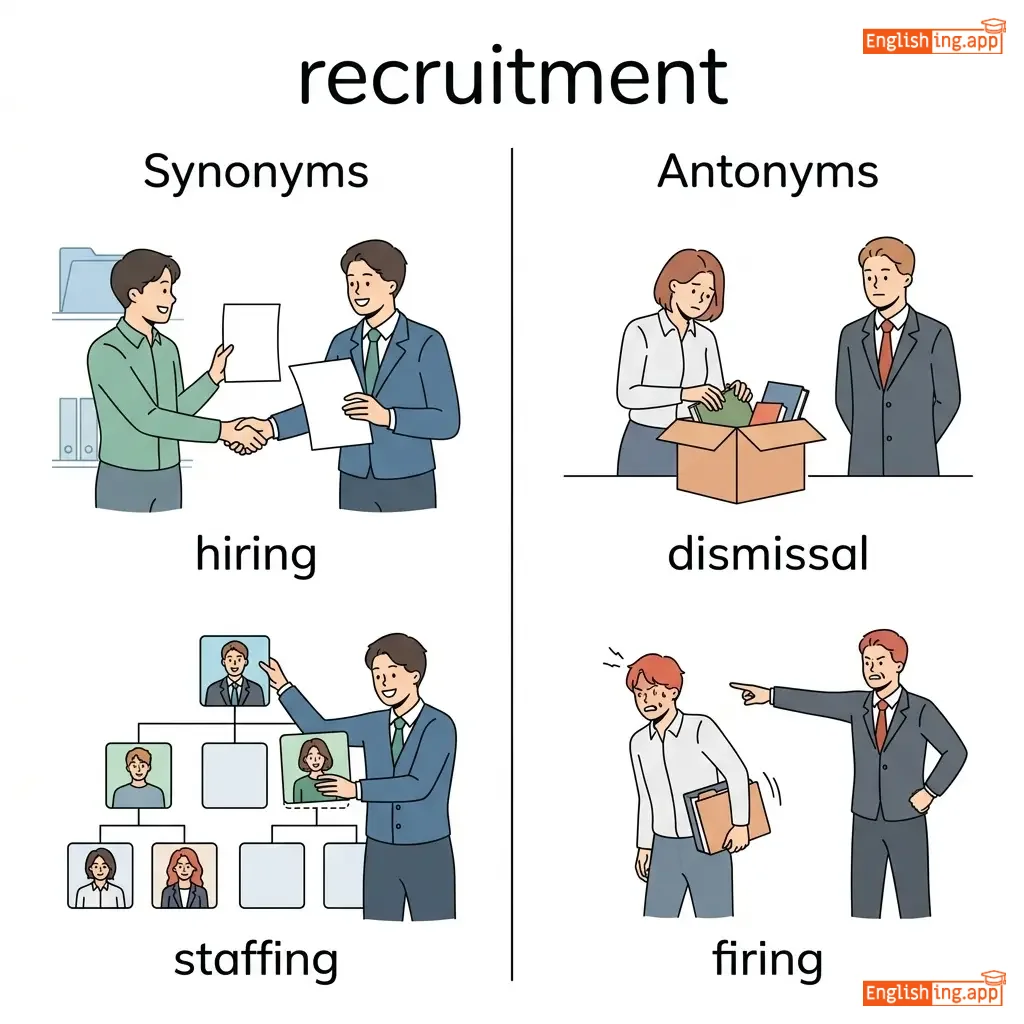
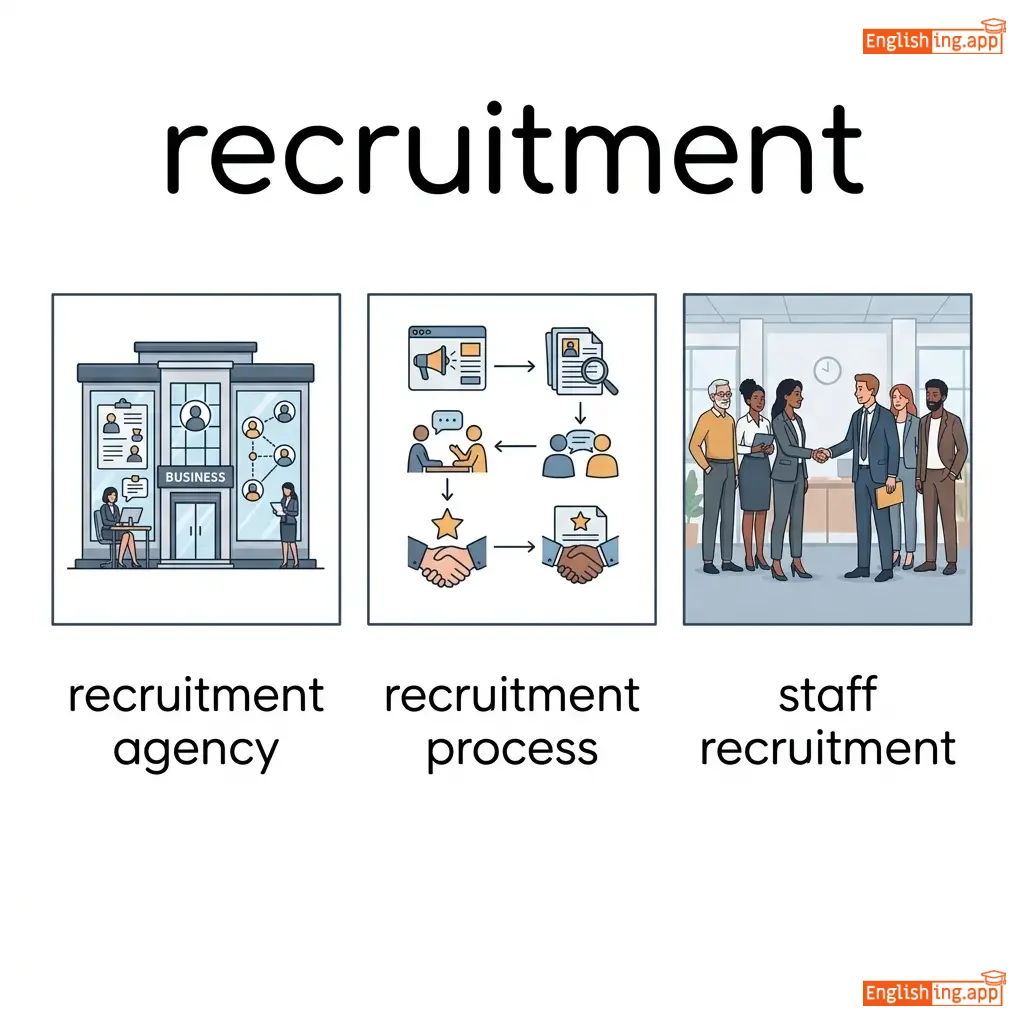
The action of finding new people to join an organization or support a cause.
••••••

Recruitment strengthens the workforce.

••••••
招聘增强了劳动力。
Zhaopin zengqiangle laodongli.
••••••
hiring, enrollment, selection, engagement, appointment, employment
••••••
dismissal, retrenchment, firing, discharge, layoff, termination
••••••
招聘意味着你需要找到合适的人加入团队。
••••••
#292
🎯
••••••
sɪˈlek.ʃən
noun
(选择)
••••••
••••••
选择
xuanze
••••••
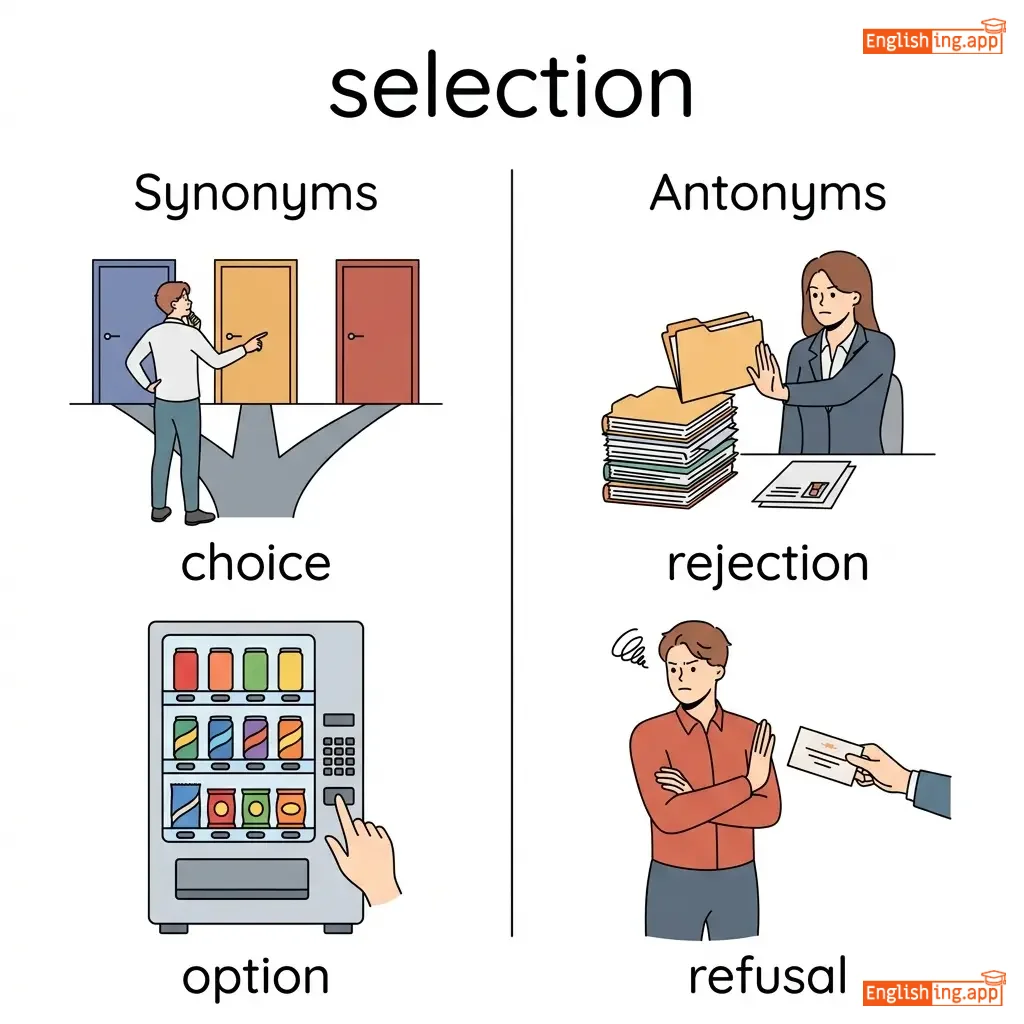
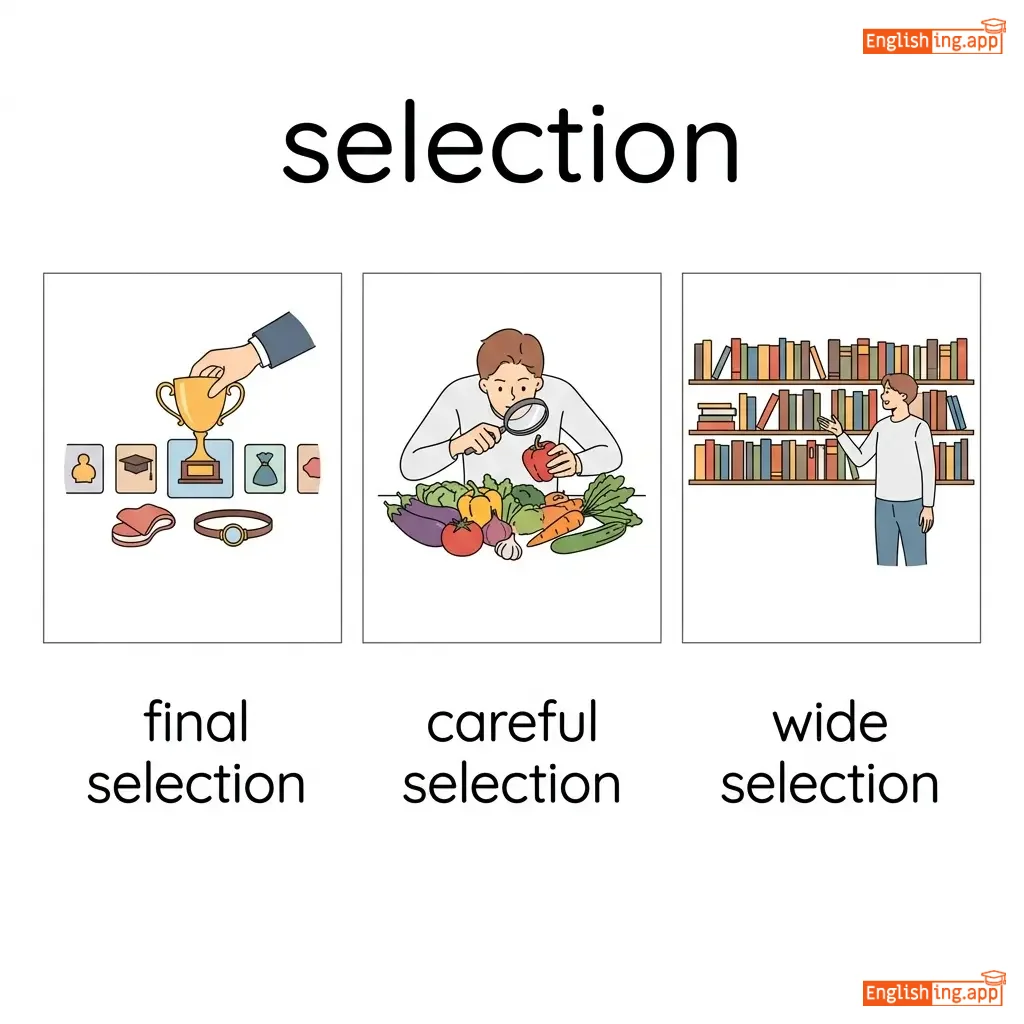
The action or fact of carefully choosing someone or something as being the best or most suitable.
••••••

The selection process is based on merit.

选择过程基于优点。
••••••
选择过程基于优点。
Xuanze guocheng jiyu youdian.
••••••
choice, shortlisting, picking, choosing, election, appointment
••••••
rejection, exclusion, elimination, dismissal, refusal, denial
••••••
选择最佳,才是最佳的选择。
••••••
#293
🏛️
••••••
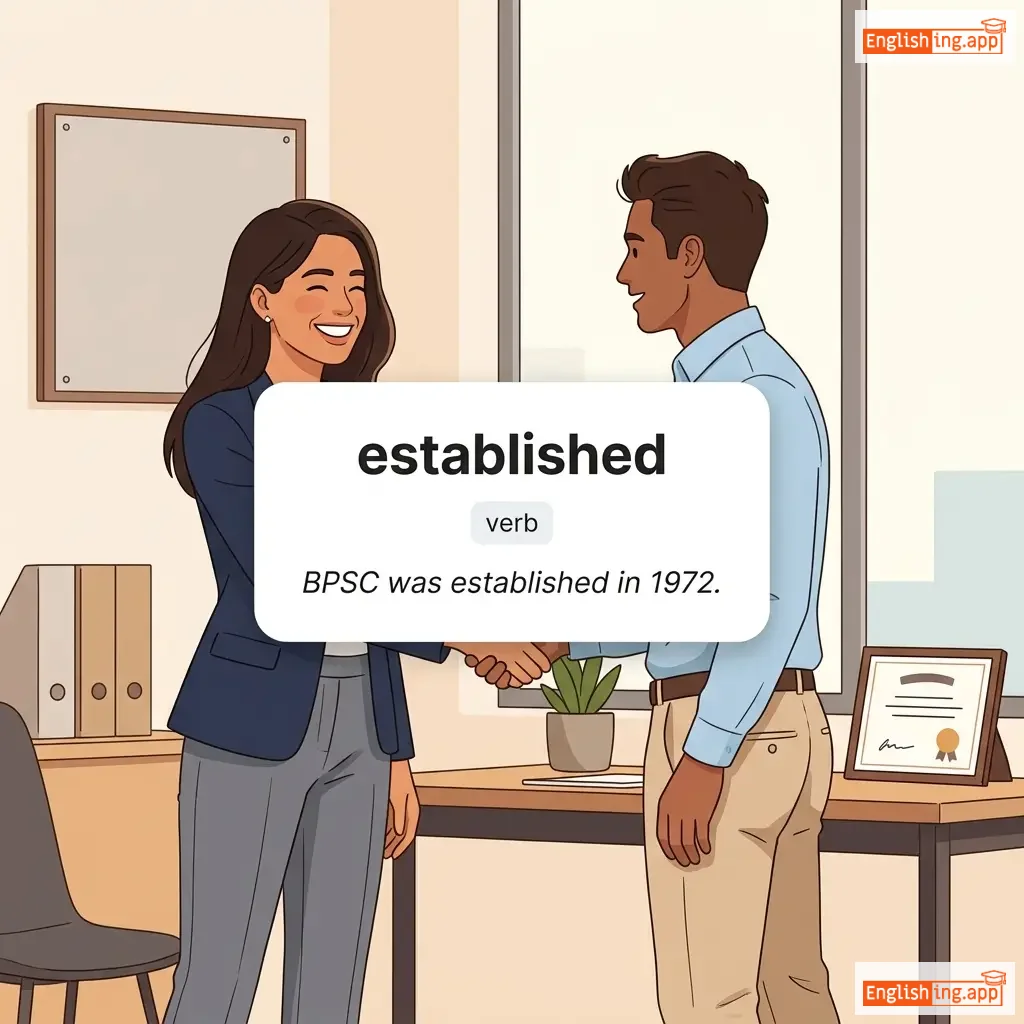
ɪˈstæb.lɪʃt
verb
(ɪˈstæb.lɪʃt)
••••••
••••••
建立
jiànlì
••••••
Set up on a firm or permanent basis; having existed for a long time and therefore recognized.
••••••

BPSC was established in 1972.

••••••
BPSC 于 1972 年成立。
BPSC yú 1972 nián chénglì.
••••••
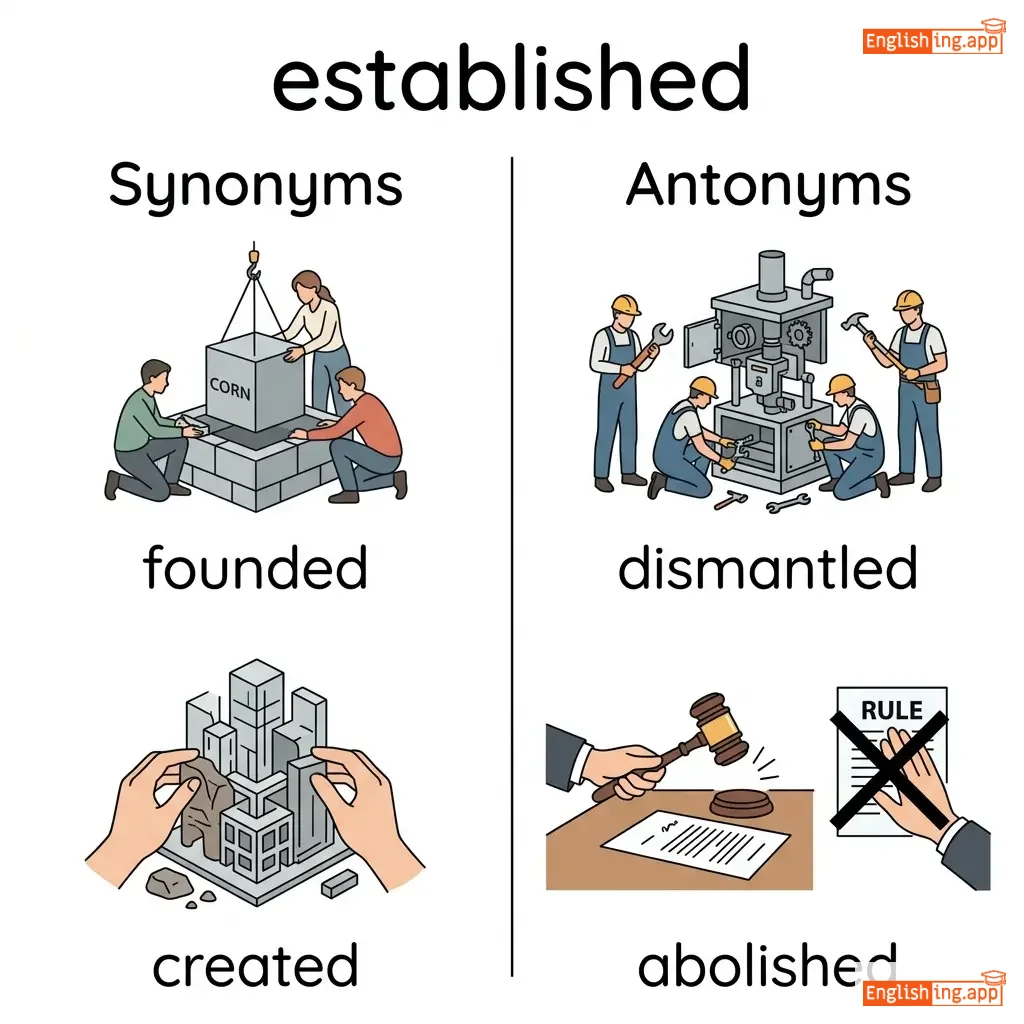
founded, created, instituted, formed, set up, built
••••••
dismantled, abolished, destroyed, dissolved, eliminated, closed
••••••
建立 = 一切稳固、长久而得认可。
••••••
#294
📝
••••••
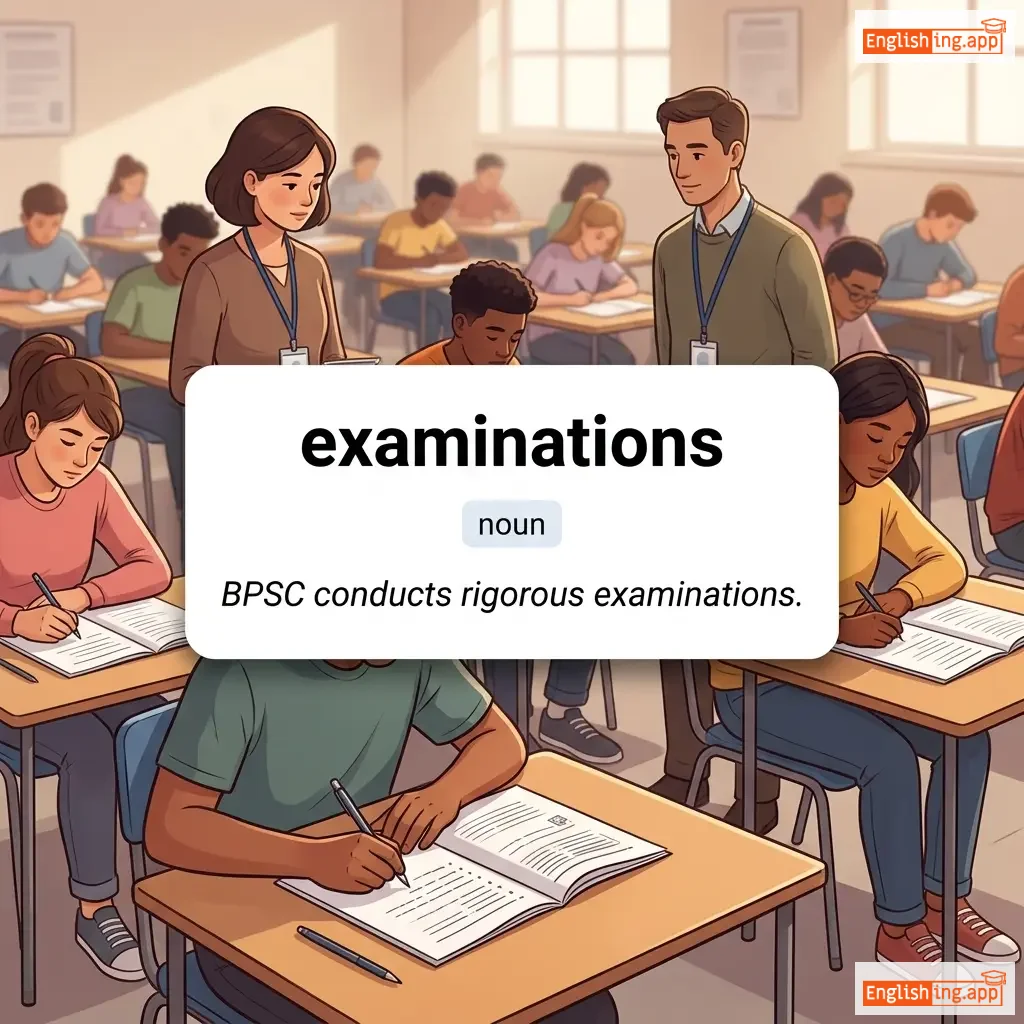
ɪɡˌzæm.ɪˈneɪ.ʃənz
noun
(考试)
••••••
••••••
考试
kaoshi
••••••
A detailed inspection or investigation; a formal test of a person's knowledge or proficiency.
••••••

BPSC conducts rigorous examinations.

BPSC 进行严格的考试。
••••••
BPSC 进行严格的考试。
BPSC jinxing yángé de kaoshi.
••••••
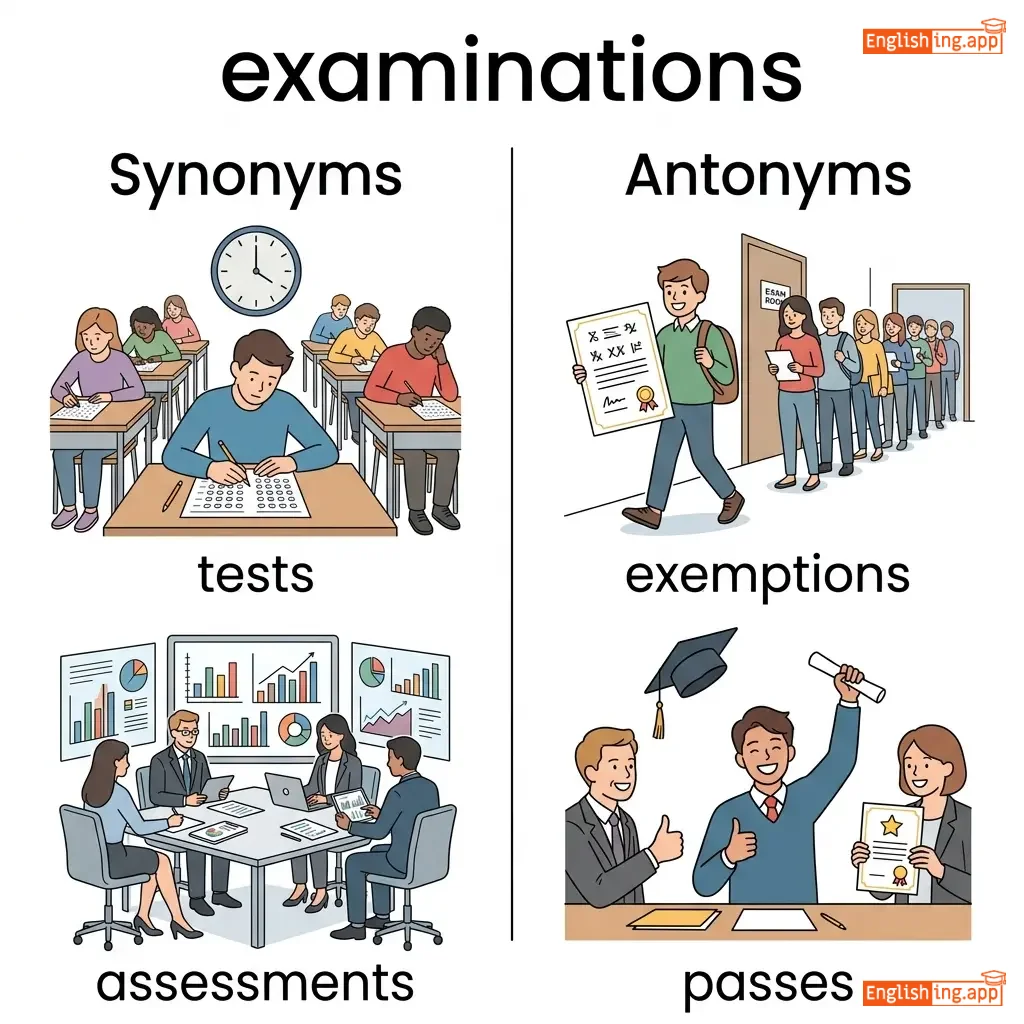
tests, assessments, evaluations, inspections, reviews, analyses
••••••
exemptions, passes, approvals, acceptances, waivers, dispensations
••••••
考生面对考试时,要注意准备充分!
••••••
#295
👔
••••••
ˈkɑː.dərz
noun
(凯德尔兹)
••••••
••••••
干部
gànbù
••••••
A small group of people specially trained for a particular purpose or profession; a group of activists in a communist or other political organization.
••••••

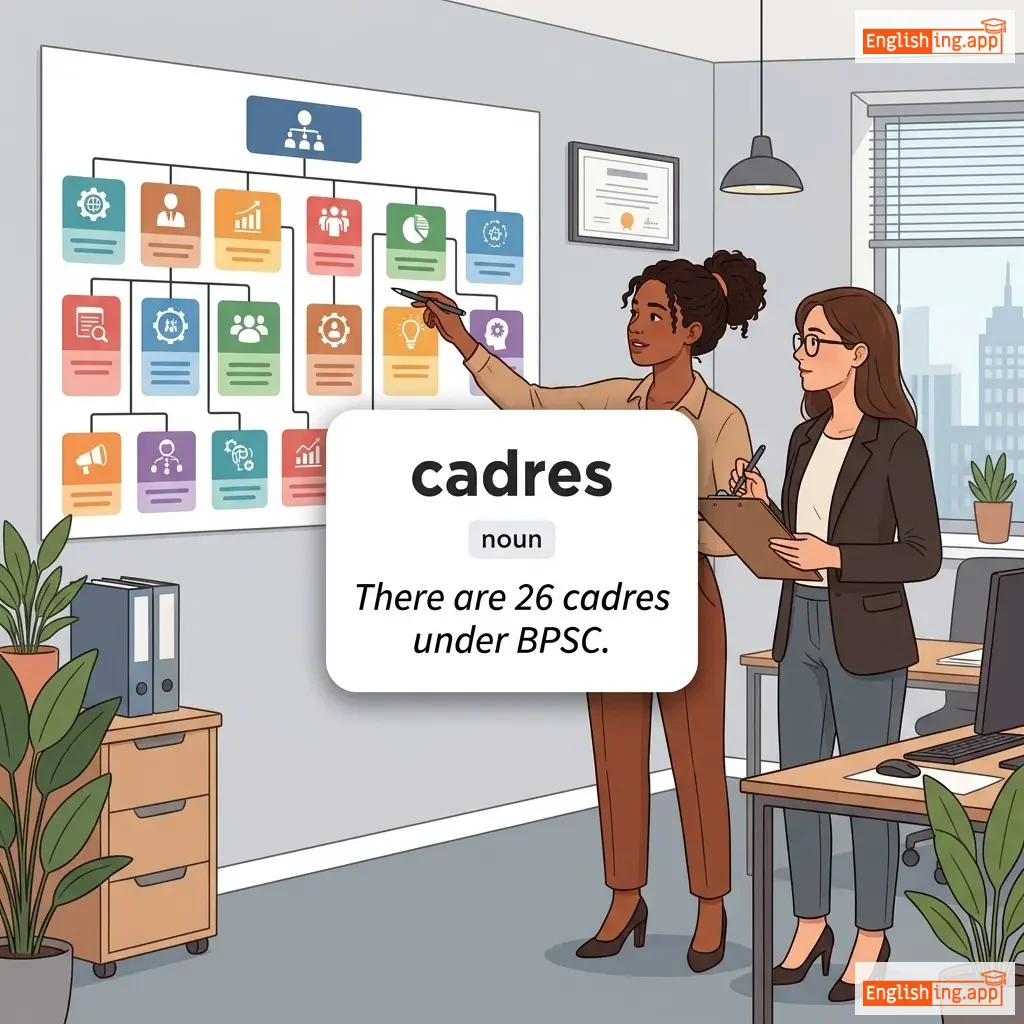
There are 26 cadres under BPSC.

BPSC下有26个干部。
••••••
BPSC下有26个干部。
BPSC xià yǒu 26 gè gànbù.
••••••
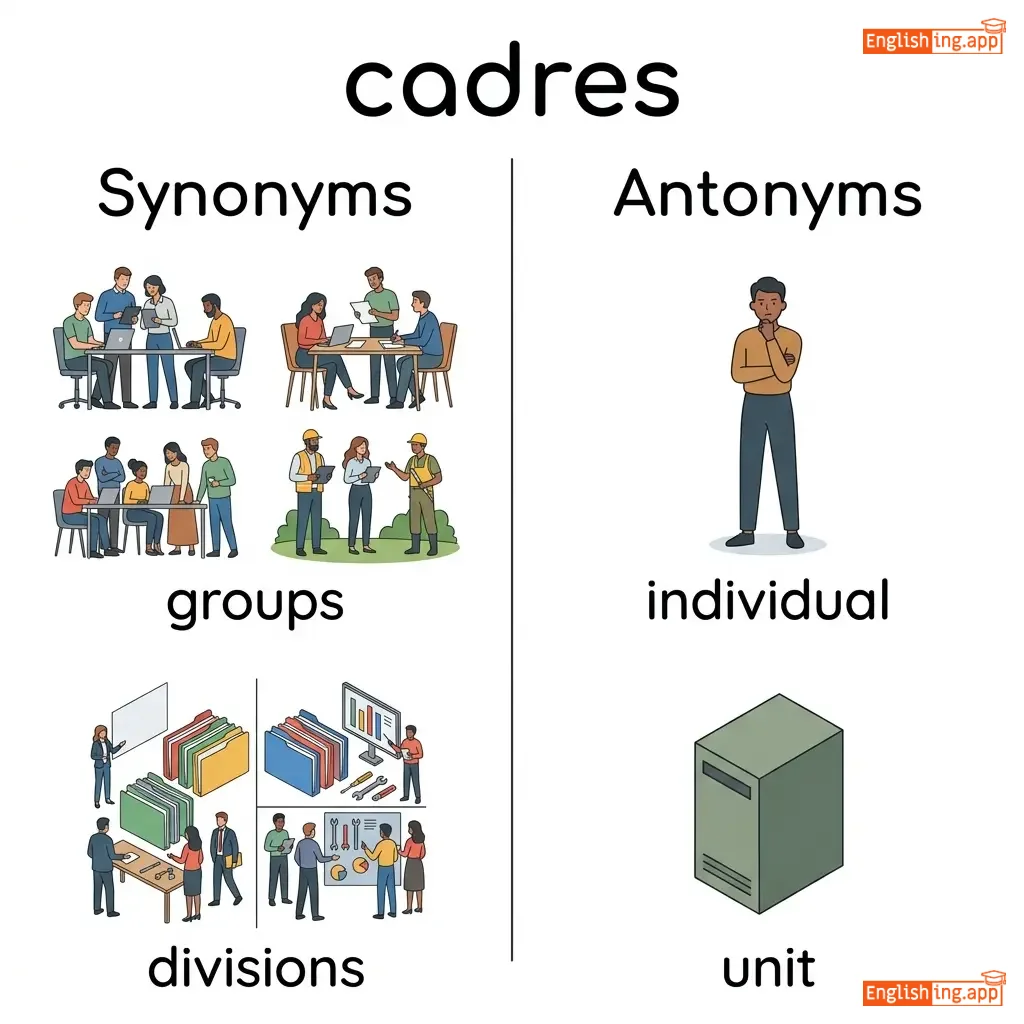
groups, divisions, units, corps, teams, squads
••••••
individual, unit, single, lone, solitary, separate
••••••
干部 = 训练有素的团队成员。
••••••
#296
📋
••••••
əˈpɔɪnt.mənts
noun
(ā pō yīnt mèn zī)
••••••
••••••
任命
renming
••••••
An arrangement to meet someone at a particular time and place; the action of assigning a job or role to someone.
••••••

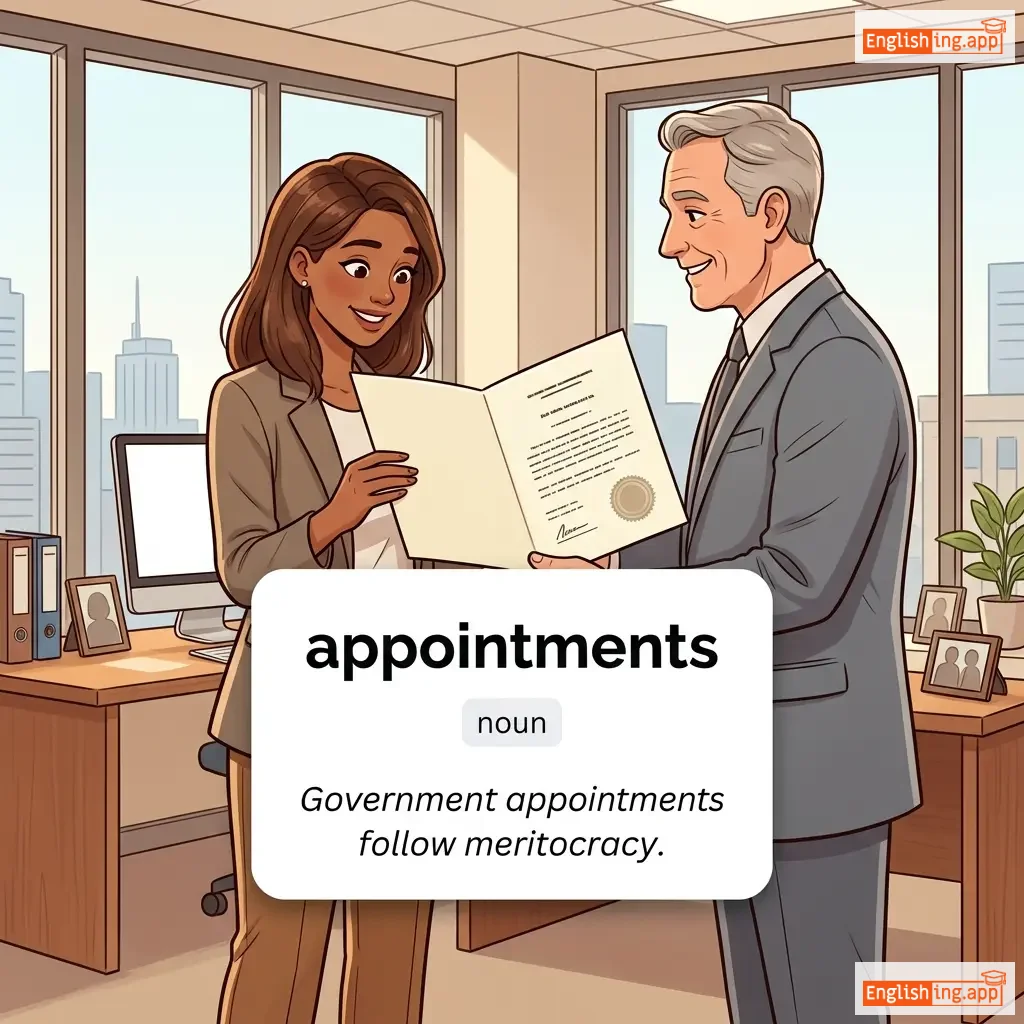
Government appointments follow meritocracy.

政府任命遵循选贤任能的原则。
••••••
政府任命遵循选贤任能的原则。
Zhengfu renming zunxun xuanxian rennen de yuanze.
••••••
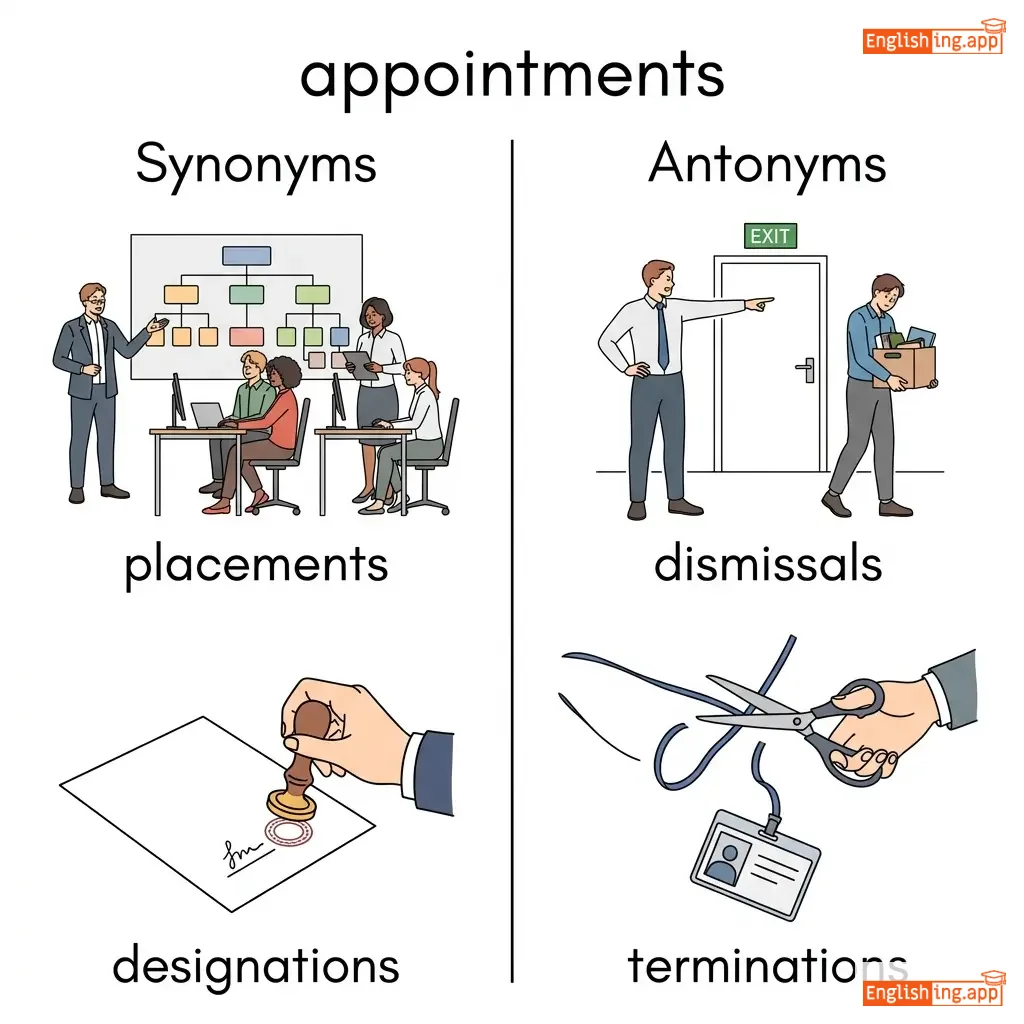
placements, designations, assignments, positions, postings, jobs
••••••
dismissals, terminations, removals, discharges, layoffs, firings
••••••
Renming (appointments) are roles assigned based on merit, like the official ‘renming’ in government.
••••••
#297
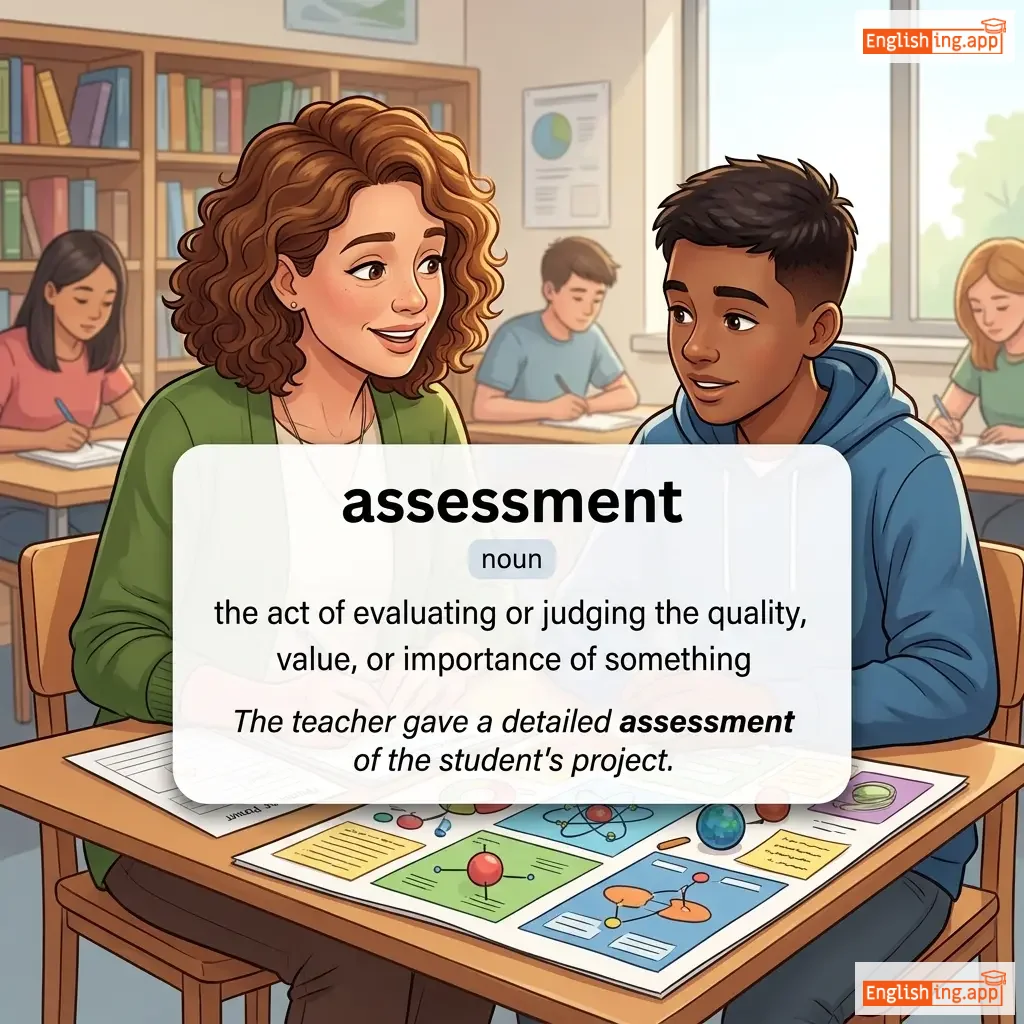
📊
••••••
əˈses.mənt
noun
(评估)
••••••
••••••
评估
pinggu
••••••
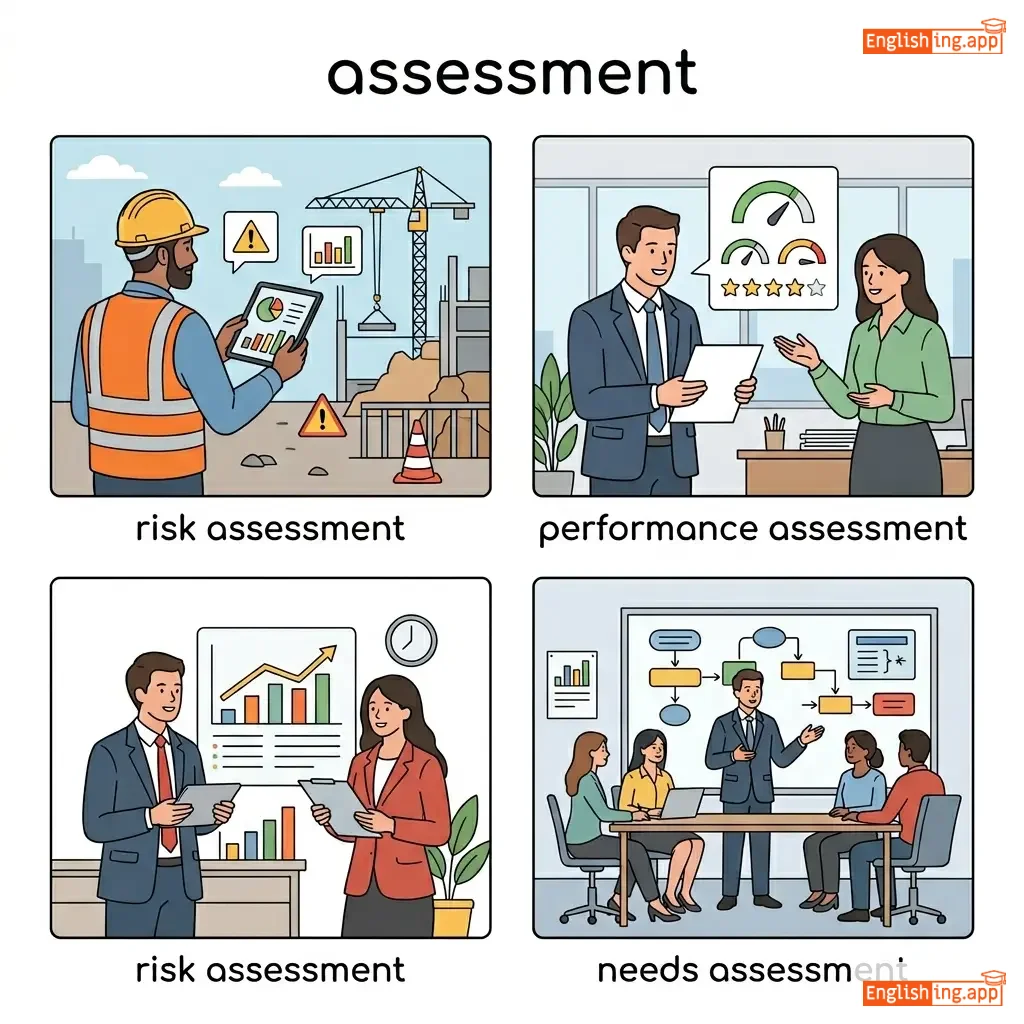
The evaluation or estimation of the nature, quality, or ability of someone or something.
••••••

The assessment process ensures fairness.

••••••
评估过程确保公平。
Pinggu guocheng quebao gongping.
••••••
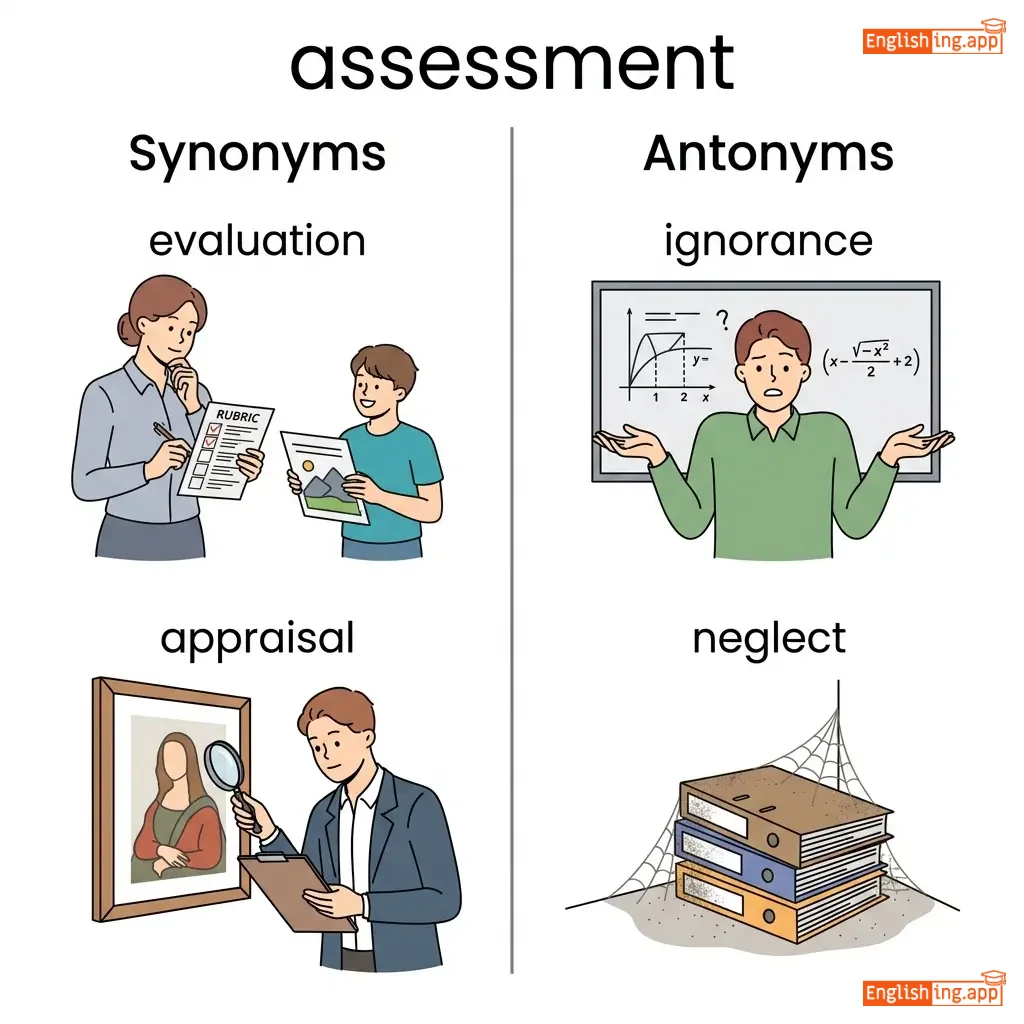
evaluation, review, appraisal, analysis, examination, judgment
••••••
neglect, guesswork, assumption, ignorance, oversight, disregard
••••••
评估是对事物的评价,就像英文中的assessment一样。
••••••
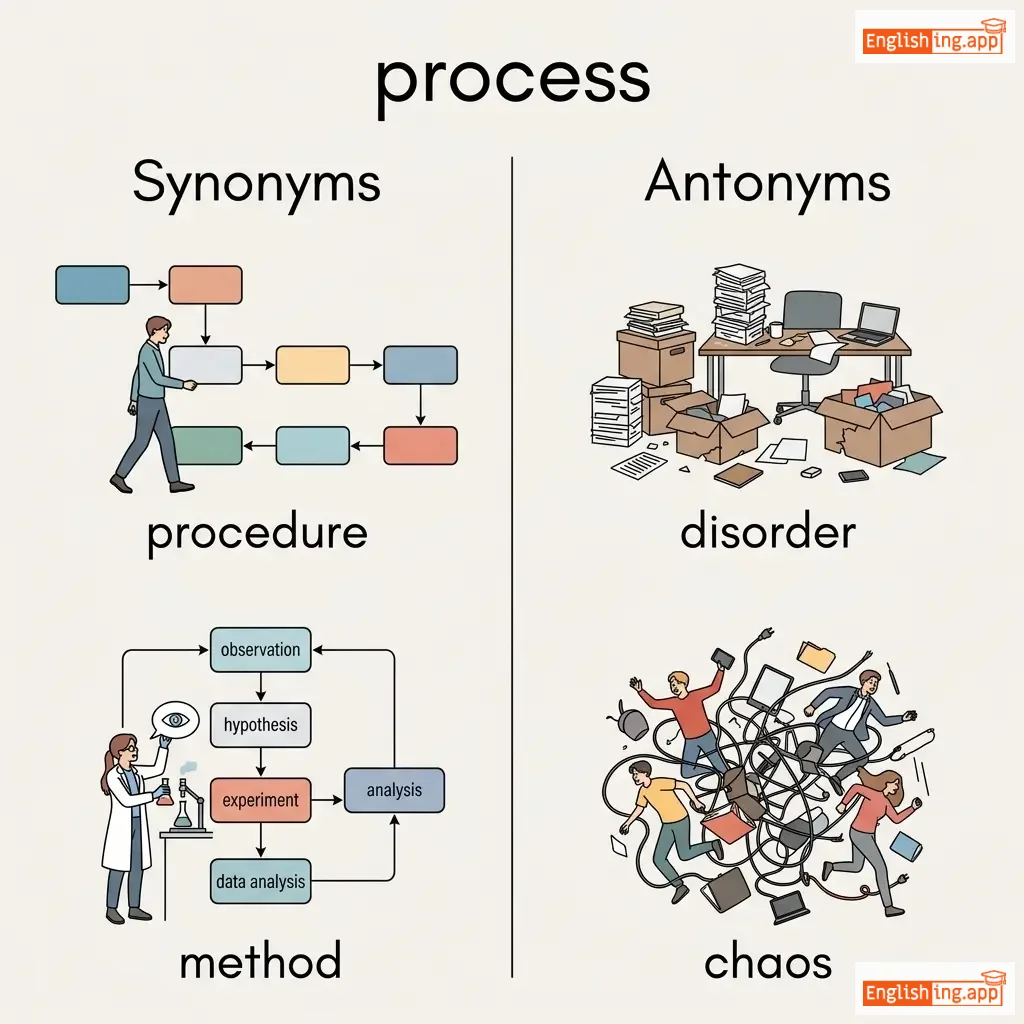
#298
⚙️
••••••
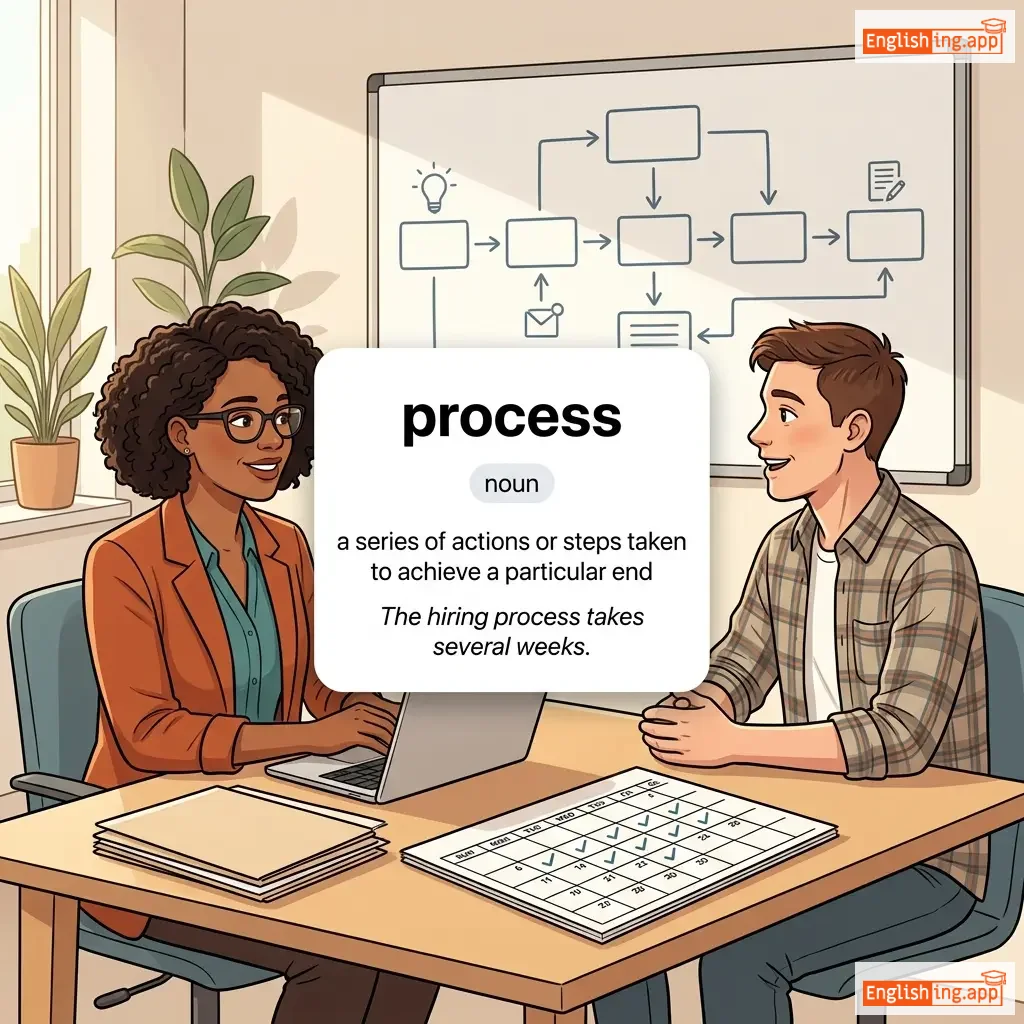
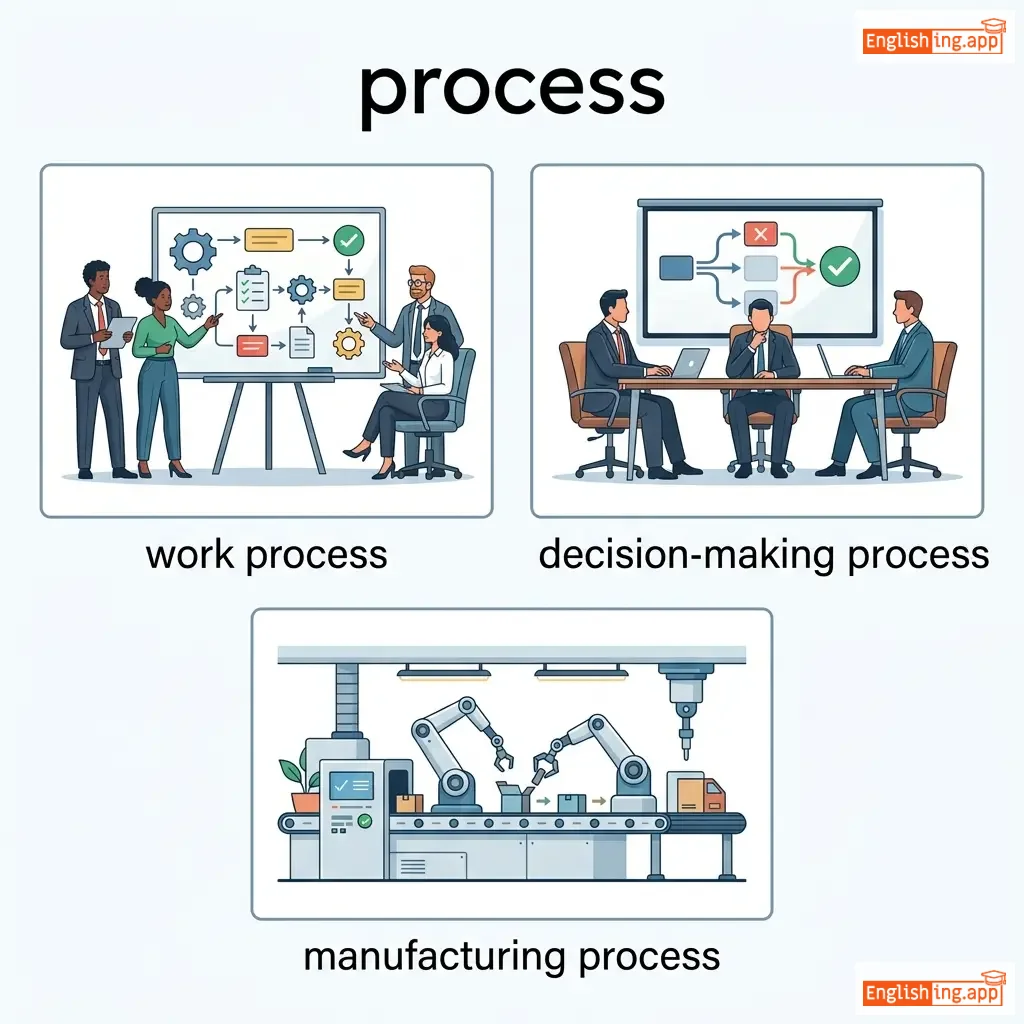
ˈprəʊ.ses
noun
(pù-ruò-sè-sī)
••••••
••••••
过程
guòchéng
••••••
A series of actions or steps taken in order to achieve a particular end.
••••••

Recruitment involves a three-stage process.

招聘过程包括三个阶段。
••••••
招聘过程包括三个阶段。
Zhāopìn guòchéng bāokuò sān gè jiēduàn.
••••••
procedure, method, system, technique, approach, way
••••••
stagnation, disruption, chaos, disorder, confusion, halt
••••••
过程 = 按步骤推进直到完成目标
••••••
#299
🚀
••••••
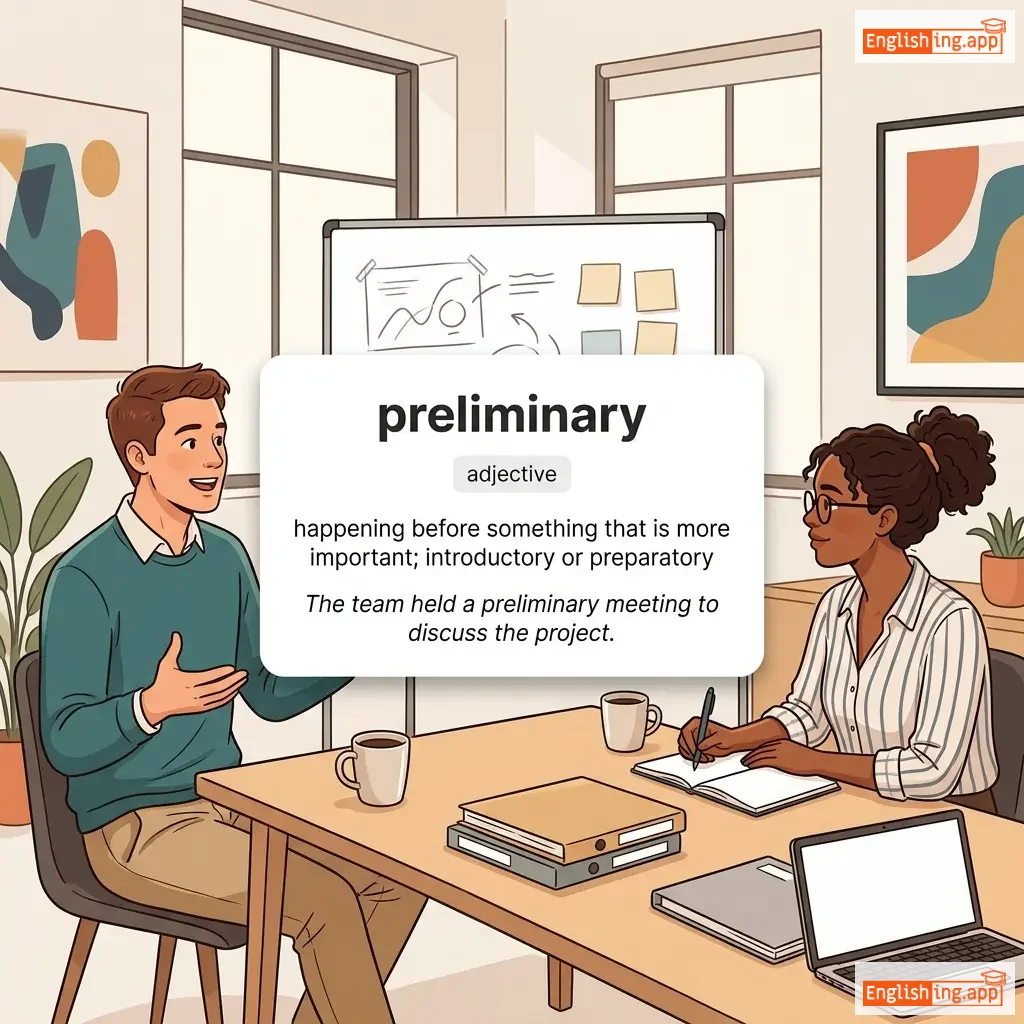
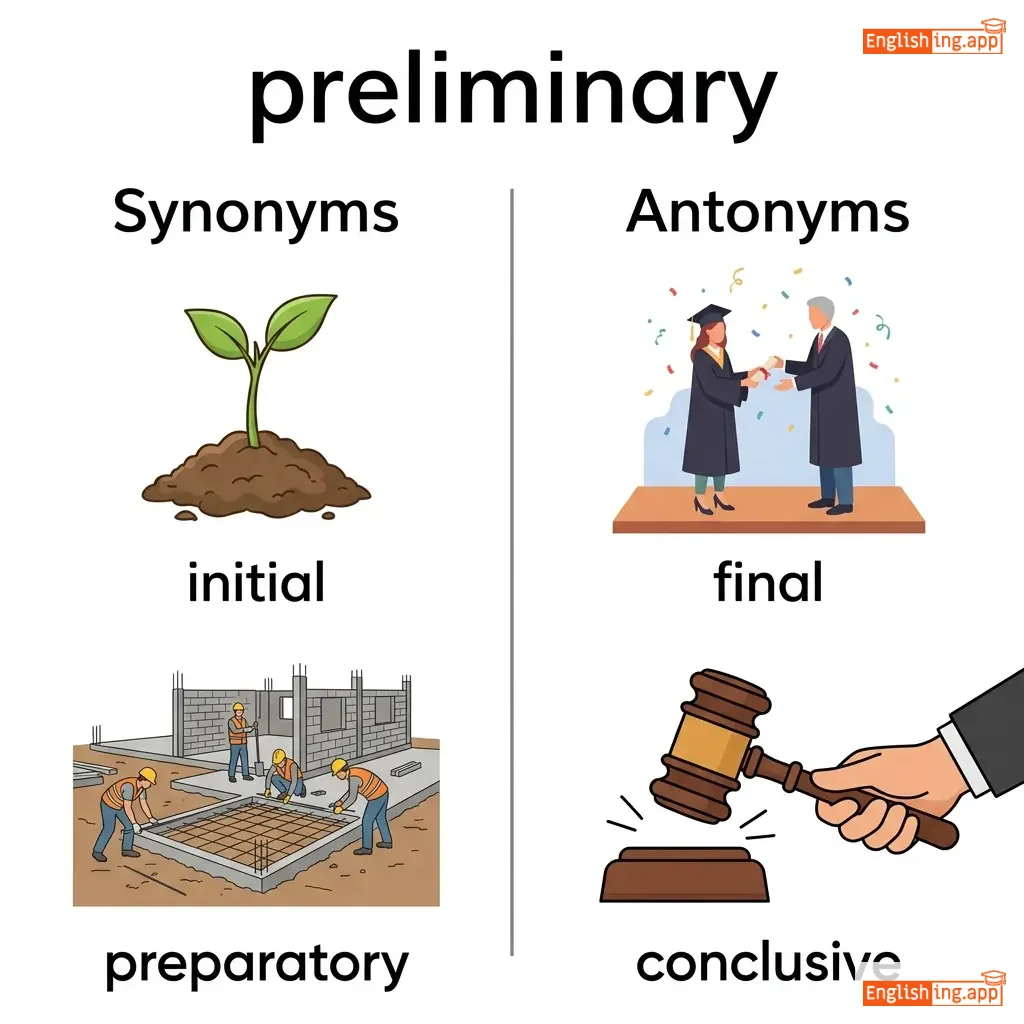
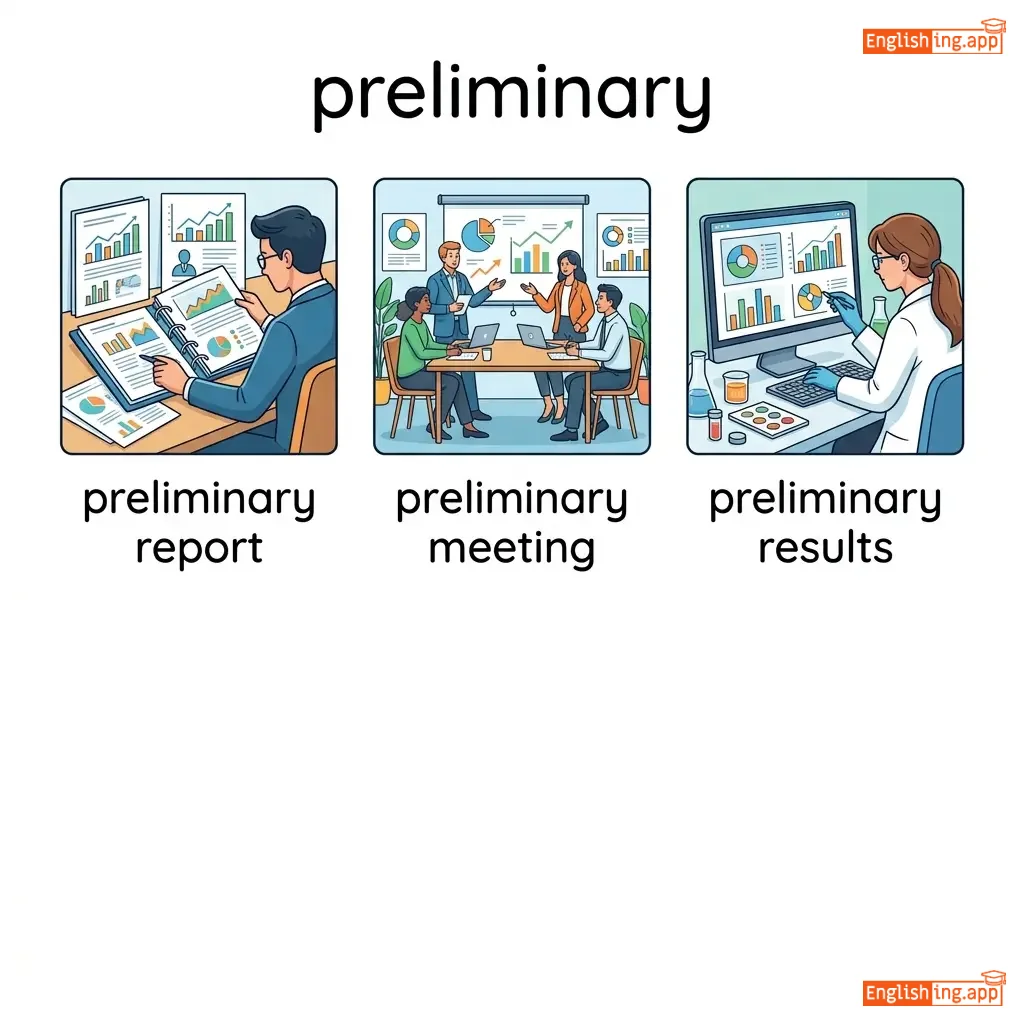
prɪˈlɪm.ɪ.nər.i
adjective
(priliminary)
••••••
••••••
初步的
chubude
••••••
Denoting an action or event preceding or done in preparation for something fuller or more important.
••••••

Preliminary exams filter eligible candidates.

初步考试筛选合格的候选人。
••••••
初步考试筛选合格的候选人。
Chubu kaoshi shaixuan hege de houxuanren.
••••••
initial, introductory, preparatory, opening, first, primary
••••••
final, conclusive, ultimate, definitive, last, closing
••••••
初步的意思是先做一些准备工作,再进入更重要的阶段。
••••••
#300
🗣️
••••••
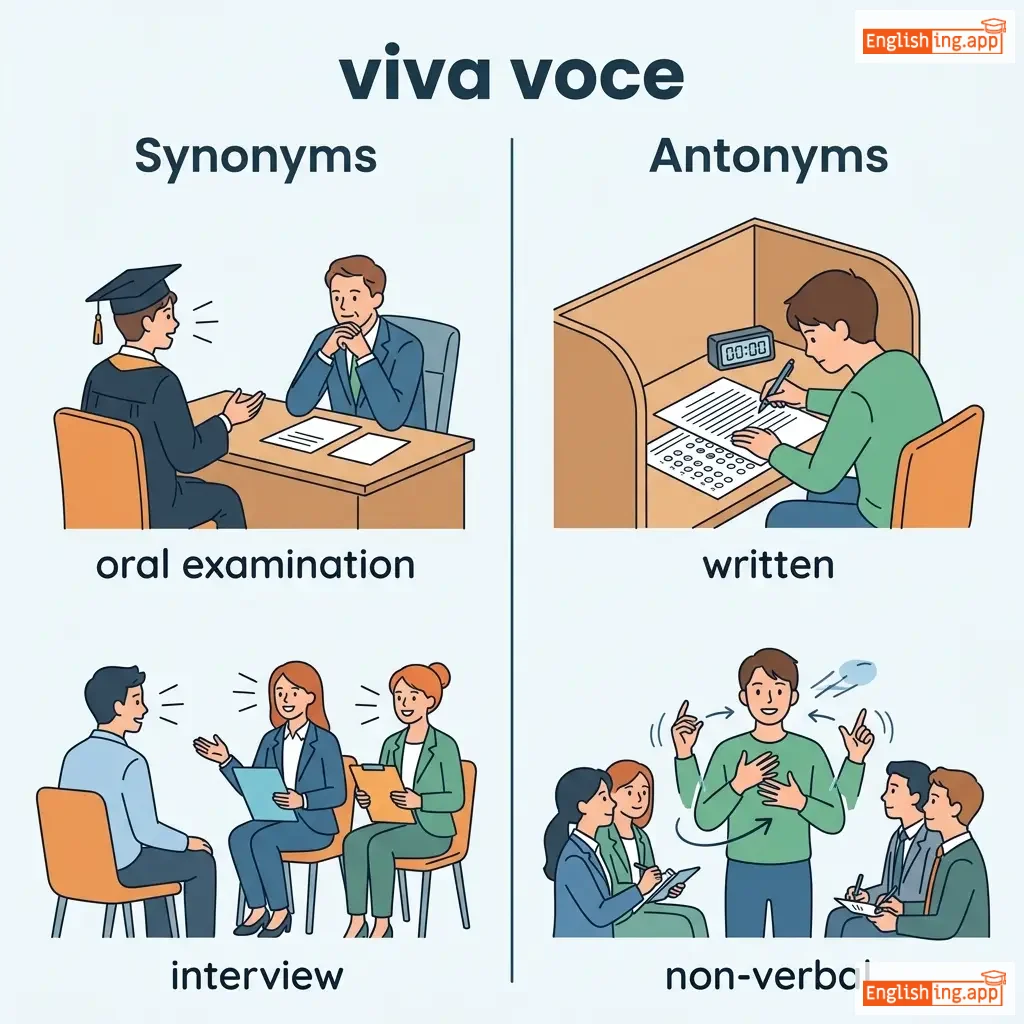
ˈvaɪ.və ˈvəʊs
noun
(viva voce)
••••••
••••••
口试
kǒushì
••••••
An oral examination, typically for an academic qualification.
••••••

Viva Voce tests communication skills.

Viva Voce 考试评估沟通技巧。
••••••
Viva Voce 考试评估沟通技巧。
Viva Voce kǎoshì pínggū gōutōng jìqiǎo.
••••••
oral examination, interview, verbal test, spoken test, face-to-face assessment, oral quiz
••••••
written, non-verbal, silent, mute, paper-based, textual
••••••
Viva Voce = 口试,口才考试!
••••••
#301
🪑
••••••
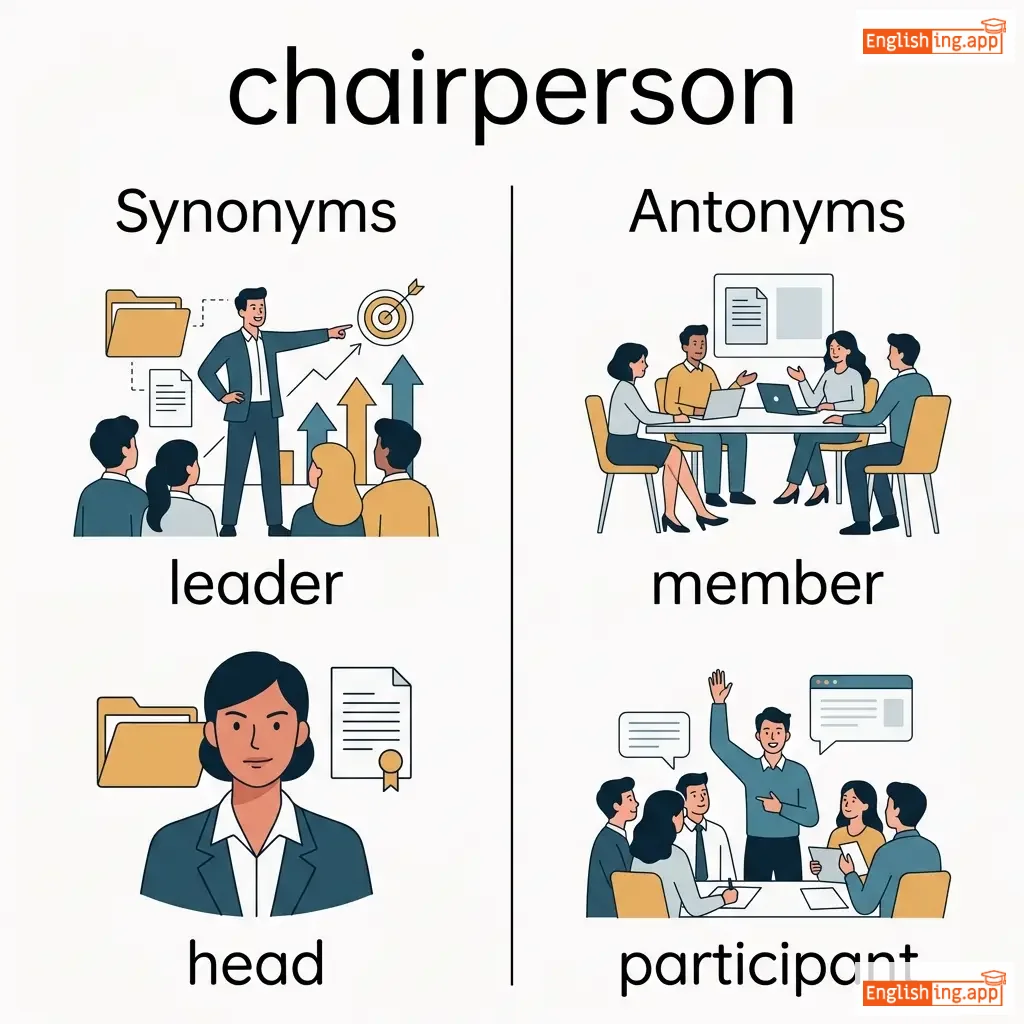
ˈtʃeə.pɜː.sən
noun
(tʃɛəˈpɜːrsən)
••••••
••••••
主席
zhǔxí
••••••
A person who is in charge of a meeting or organization; the presiding officer of a committee, board, or organization.
••••••

The chairperson ensures procedural integrity.

••••••
主席确保程序的完整性。
Zhǔxí quèbǎo chéngxù de wánzhěng xìng.
••••••
leader, head, president, director, chief, moderator
••••••
member, participant, follower, subordinate, assistant, deputy
••••••
In Chinese, '主席' refers to someone at the top, similar to a chairperson leading an organization.
••••••
#302
👥
••••••
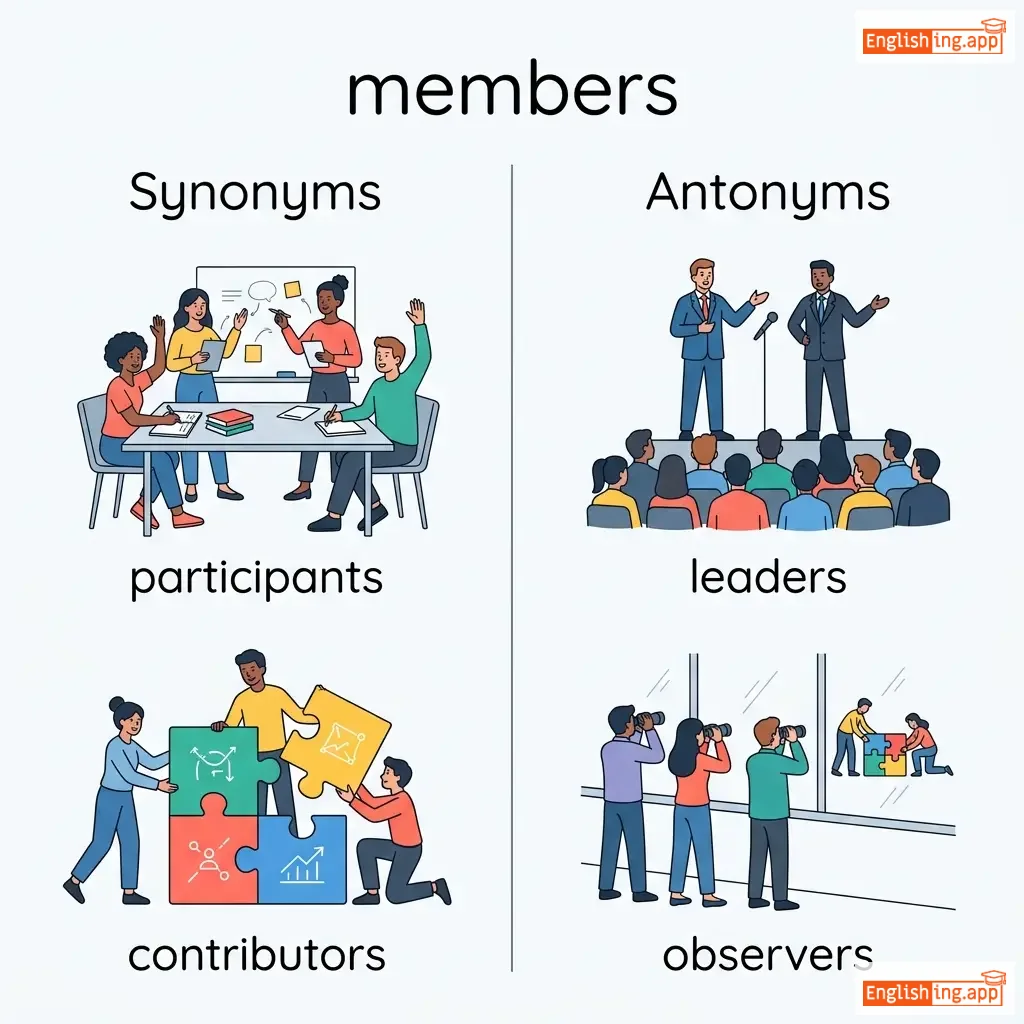
ˈmem.bərz
noun
(成员)
••••••
••••••
成员
chengyuan
••••••
A person, animal, or plant belonging to a particular group; an individual belonging to a group such as a society or team.
••••••

Members collaborate to finalize recruitment decisions.

••••••
成员们合作以最终确定招聘决策。
Chéngyuánmen hézuò yǐ zuìzhōng quèdìng zhāopìn juécè.
••••••
participants, contributors, associates, colleagues, partners, affiliates
••••••
leaders, observers, outsiders, non-members, strangers, excluded
••••••
中文里的 '成员' 与英文 'members' 一样,指的是某个团体中的人。
••••••
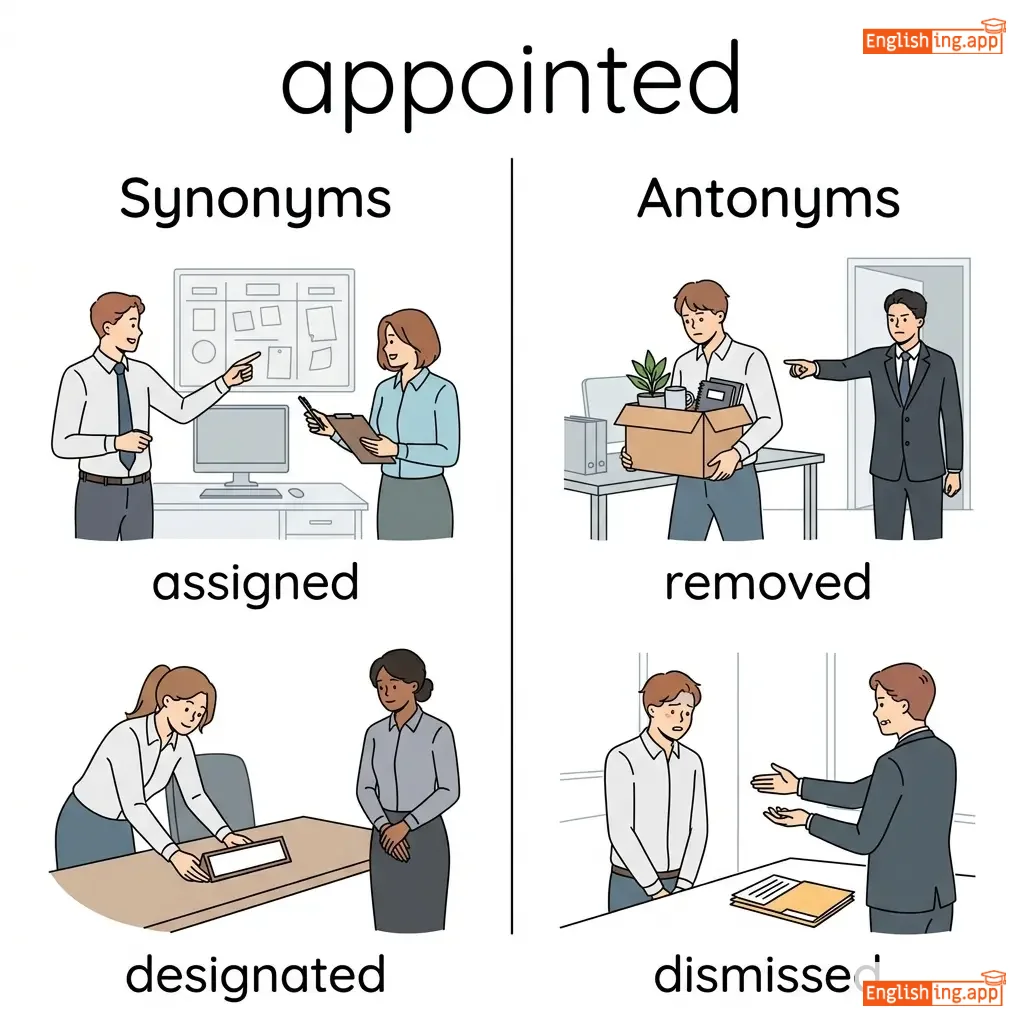
#303
••••••
əˈpɔɪn.tɪd
verb
(æpɔɪntɪd)
••••••
••••••
任命
rènmìng
••••••
Assign a job or role to someone; designate someone to a position.
••••••

Appointed officials carry significant responsibilities.

任命的官员承担重大责任。
••••••
任命的官员承担重要责任。
Rènmìng de guānyuán chéngdān zhòngdà zhízé.
••••••
assigned, designated, nominated, selected, chosen, commissioned
••••••
removed, dismissed, discharged, fired, terminated, relieved
••••••
Chinese '任命' sounds like 'ren-ming', meaning appointed
••••••
#304
🎯
••••••
ˌel.ɪ.dʒəˈbɪl.ə.ti
noun
(资格)
••••••
••••••
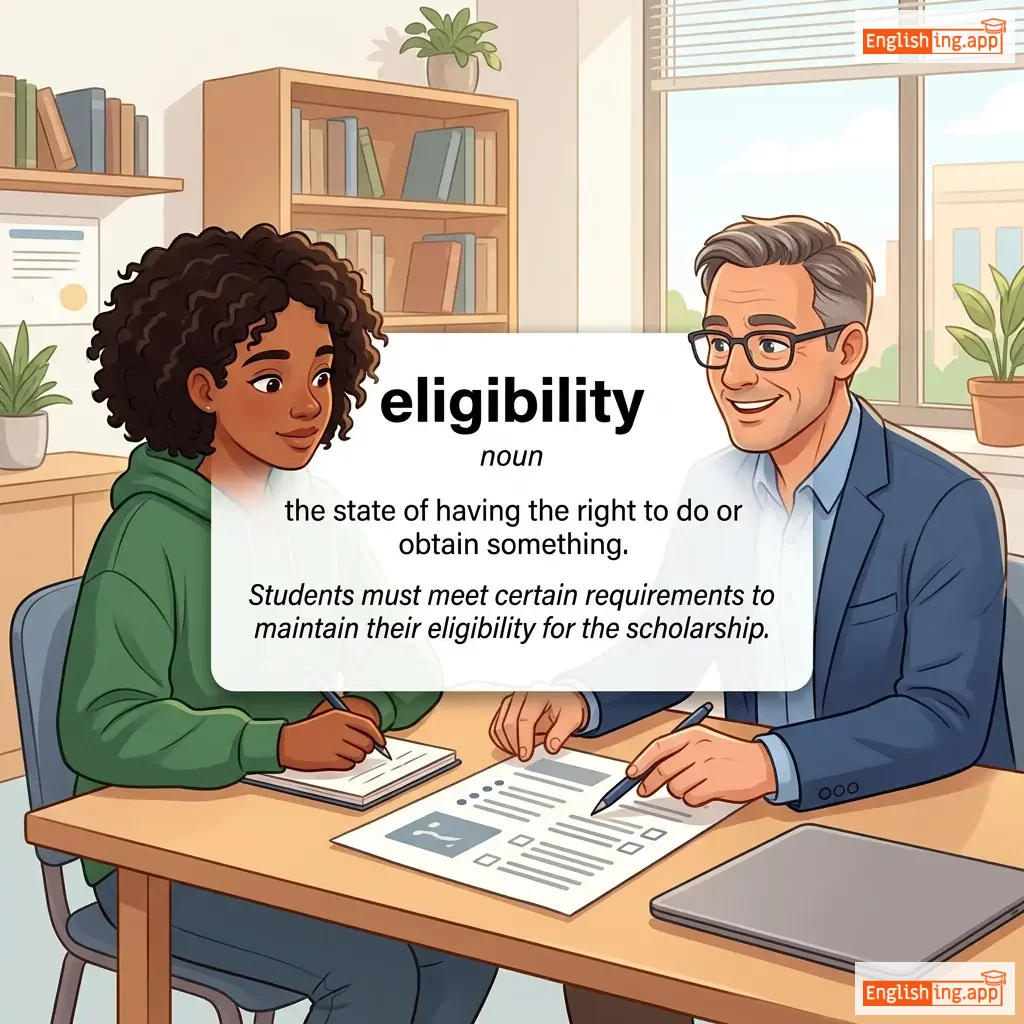
资格
ziga
••••••
The state of having the right to do or obtain something through satisfaction of the appropriate conditions.
••••••

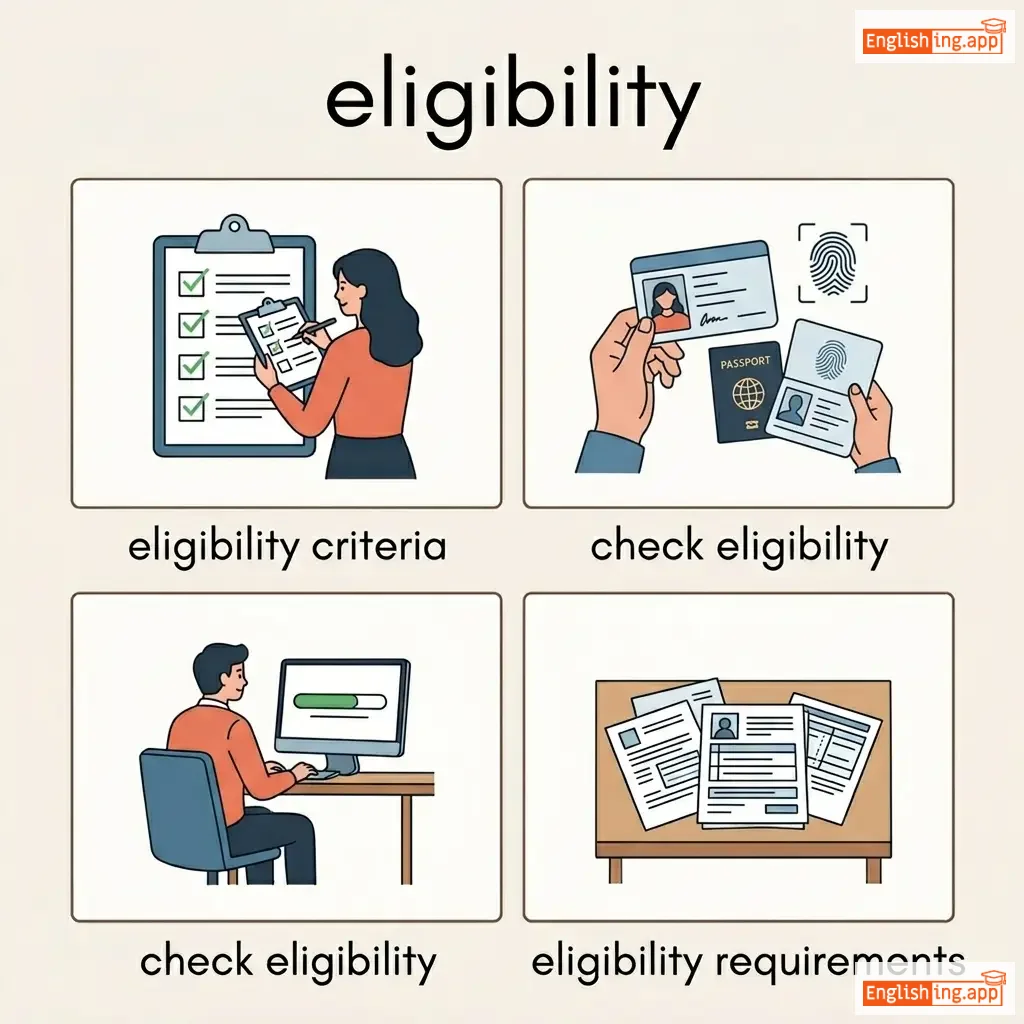
Eligibility criteria maintain fairness.

资格标准确保公平。
••••••
资格标准确保公平。
Ziga biaozhun quebao gongping.
••••••
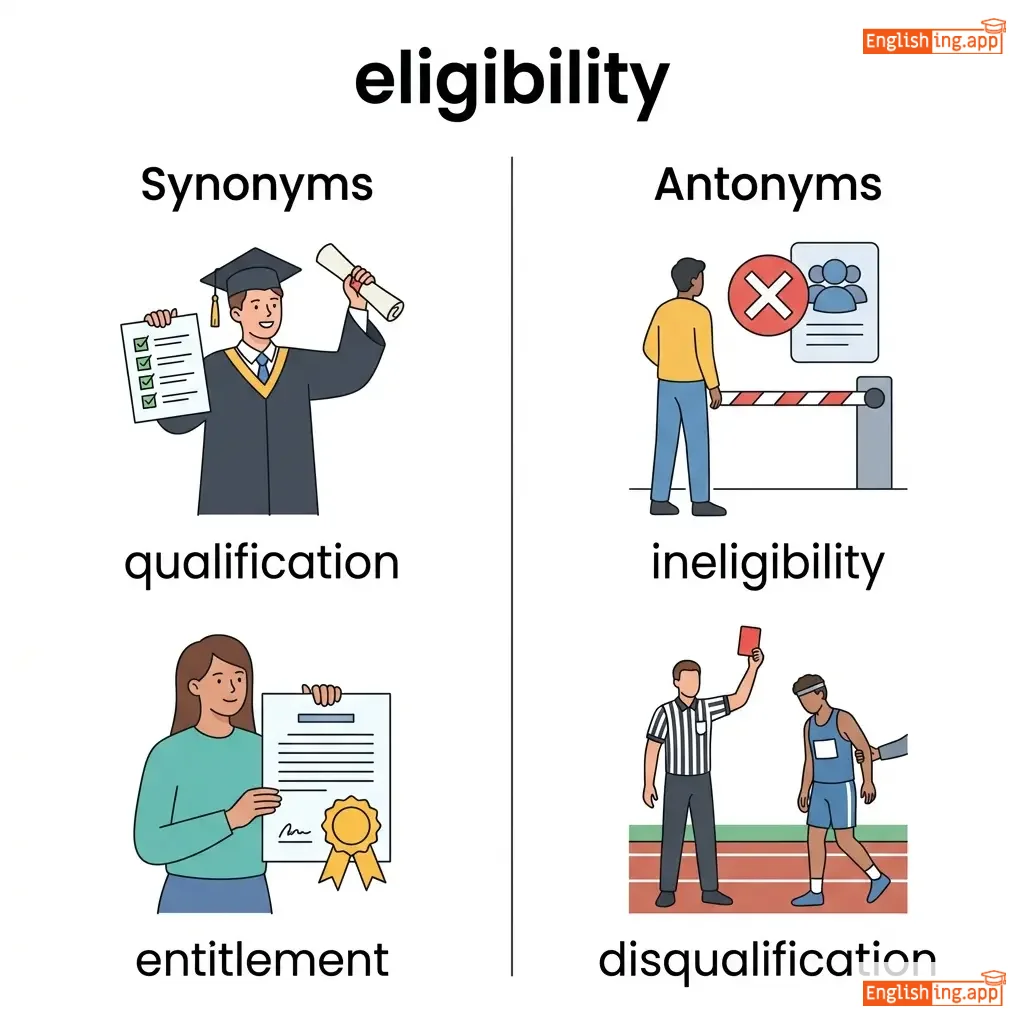
qualification, suitability, entitlement, fitness, competency, worthiness
••••••
ineligibility, unsuitability, disqualification, unfitness, incompetency, unworthiness
••••••
资格是满足所有条件后才能获得的权限。
••••••
#305
🏛️
••••••
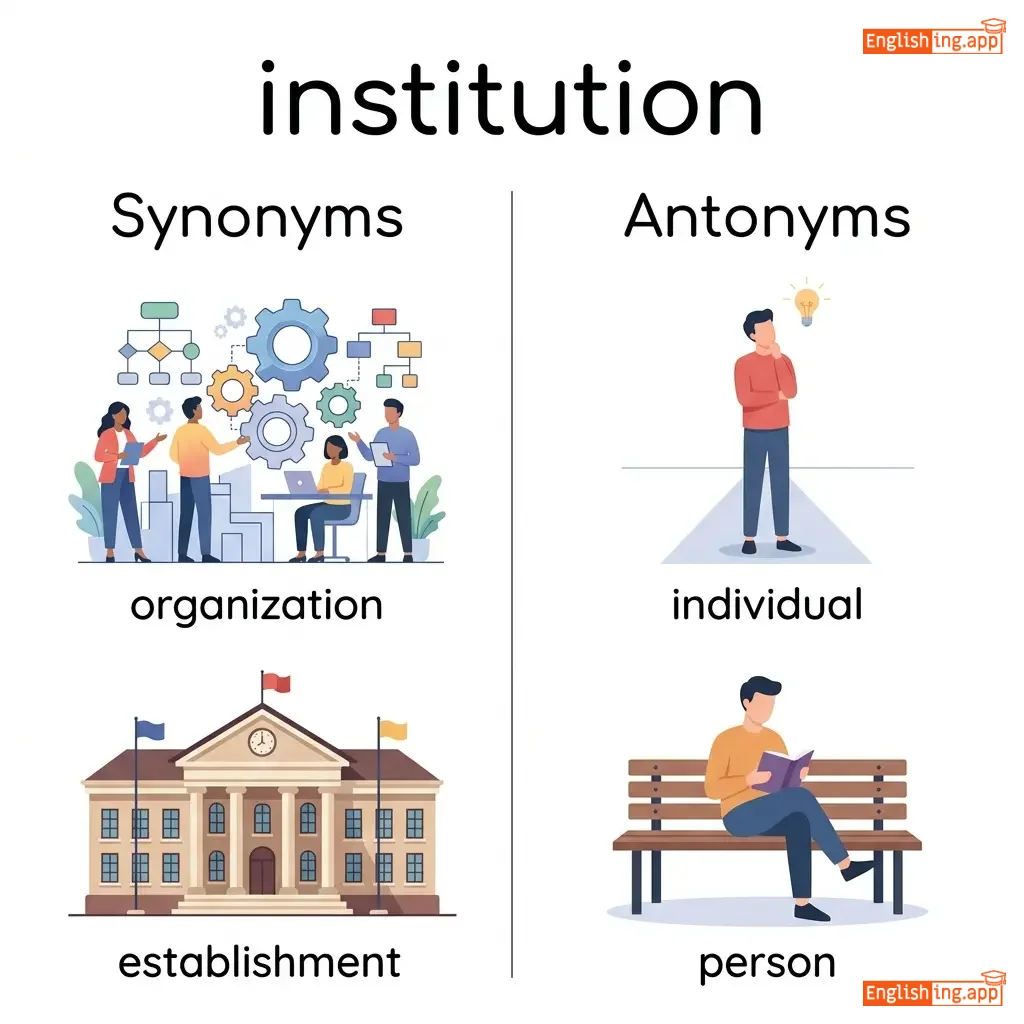
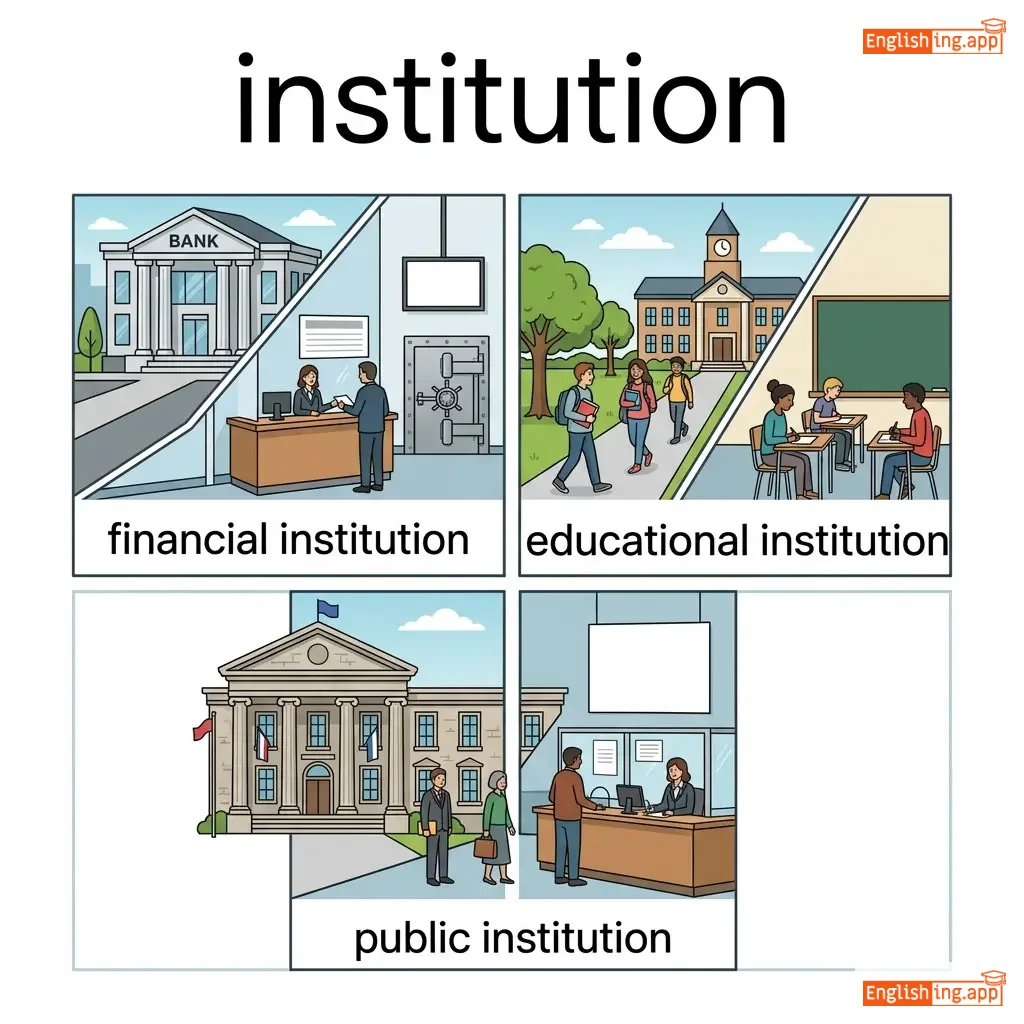
ˌɪn.stɪˈtjuː.ʃən
noun
(学院)
••••••
••••••
机构
jīgòu
••••••
An organization founded and united for a specific purpose; an established law, practice, or custom.
••••••

Institutions play a crucial role in governance.

机构在治理中起着至关重要的作用。
••••••
机构在治理中起着至关重要的作用。
Jīgòu zài zhìlǐ zhōng qǐzhe zhìguān zhòngyào de zuòyòng.
••••••
organization, establishment, foundation, body, agency, entity
••••••
individual, entity, person, dissolution, breakdown, destruction
••••••
机构如同一座架构,推动规则和法律的运作。
••••••
#306
⚖️
••••••
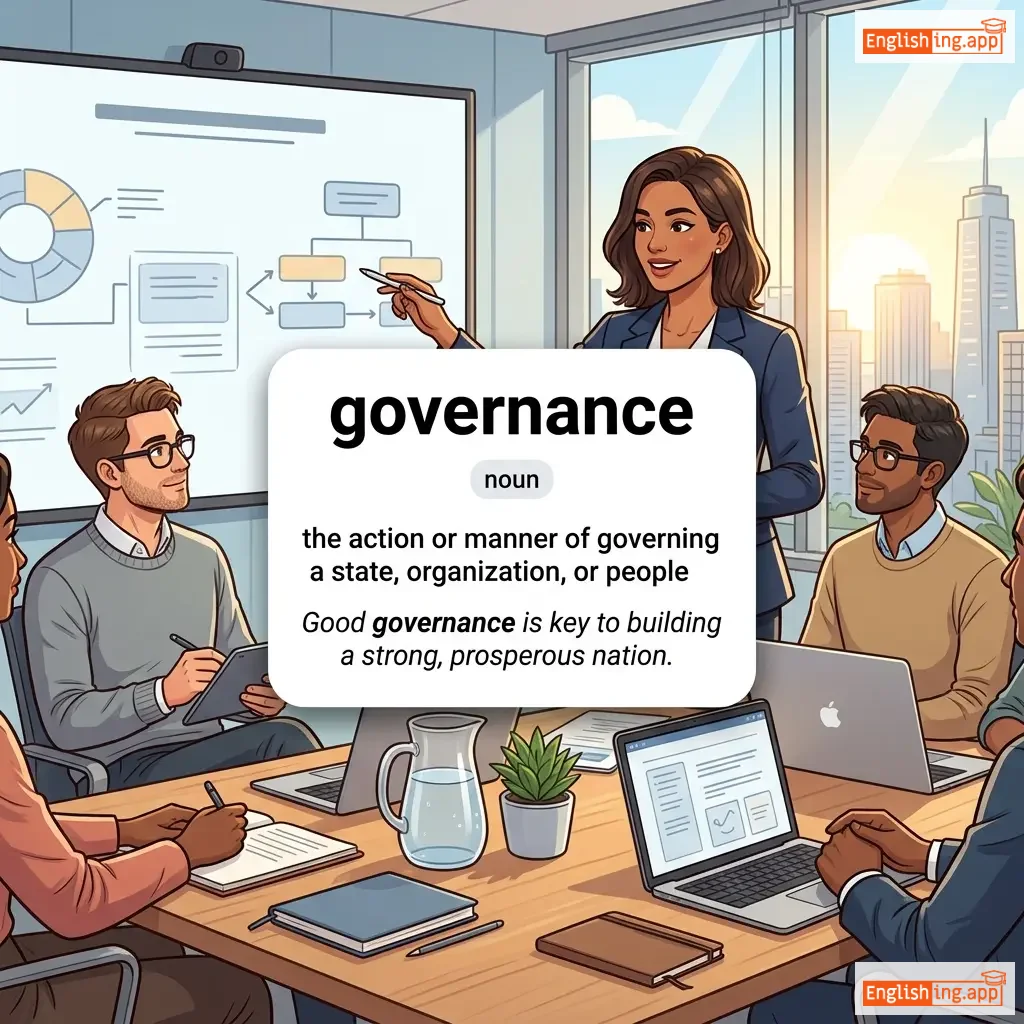
ˈɡʌv.ən.əns
noun
(治理)
••••••
••••••
治理
zhìlǐ
••••••
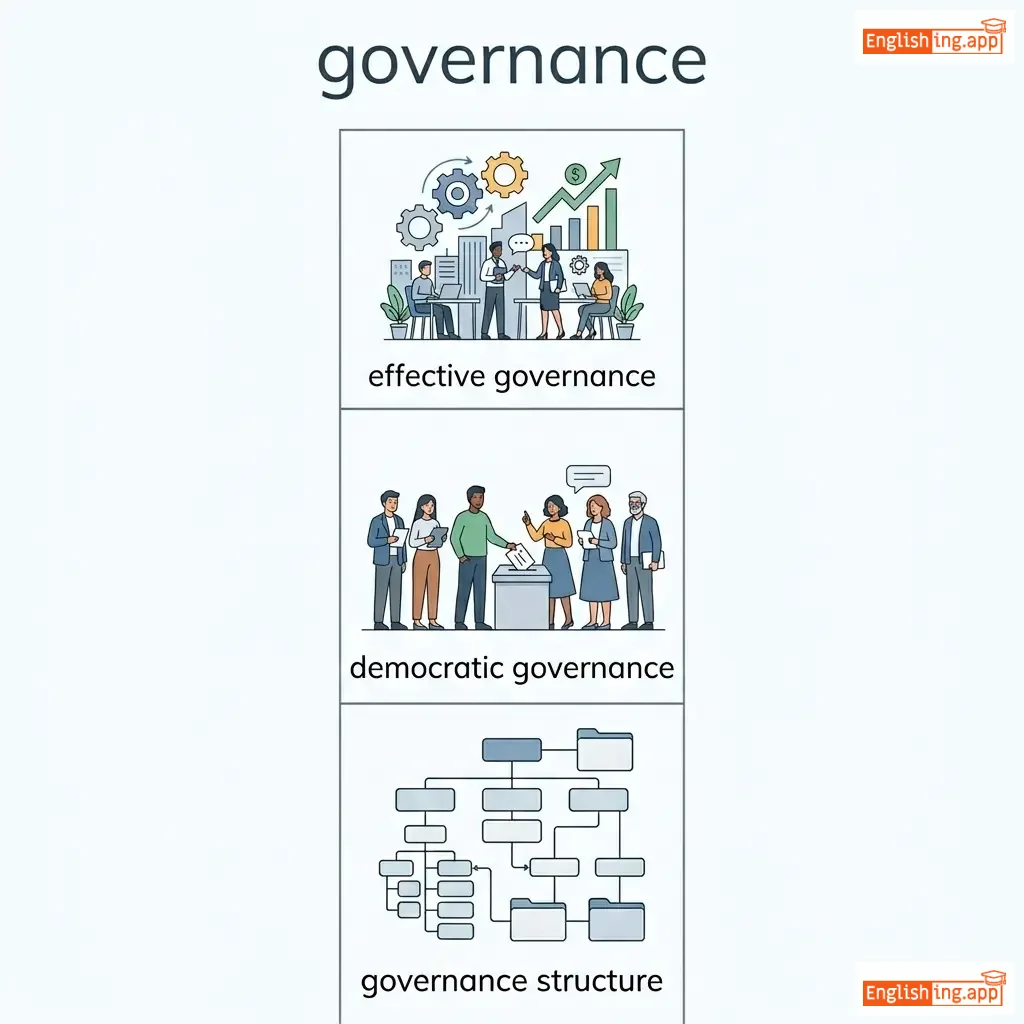
The action or manner of governing; the conduct of the policy, actions, and affairs of a state, organization, or people.
••••••

Effective governance ensures sustainable development.

••••••
有效的治理确保可持续发展。
Yǒuxiào de zhìlǐ quèbǎo kěchíxù fāzhǎn.
••••••
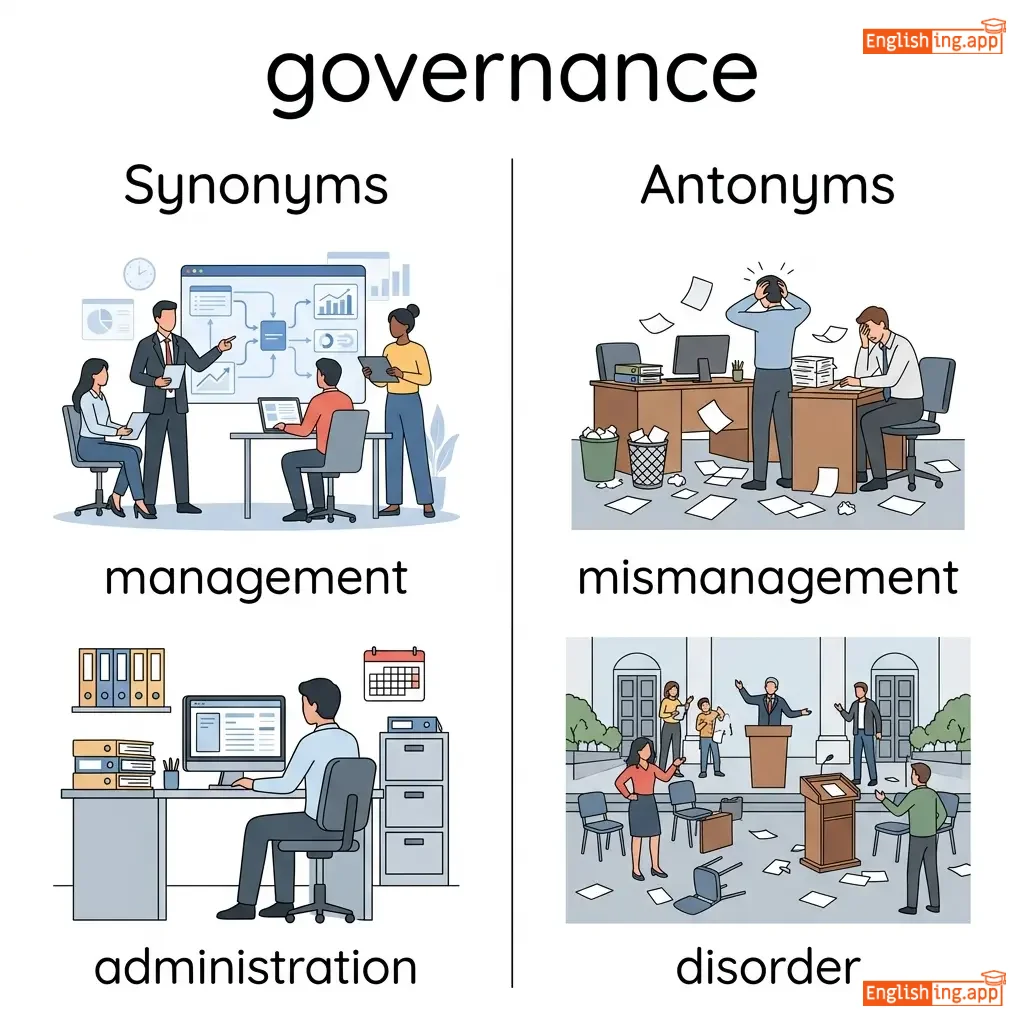
administration, leadership, management, control, rule, direction
••••••
disorder, mismanagement, chaos, anarchy, neglect, abandonment
••••••
In Chinese, '治理' ensures that development is sustainable.
••••••
#307
••••••
ɪˈfɪʃ.ən.si
noun
(yǐ fú shì ān sī)
••••••
••••••
效率
xiaolü
••••••
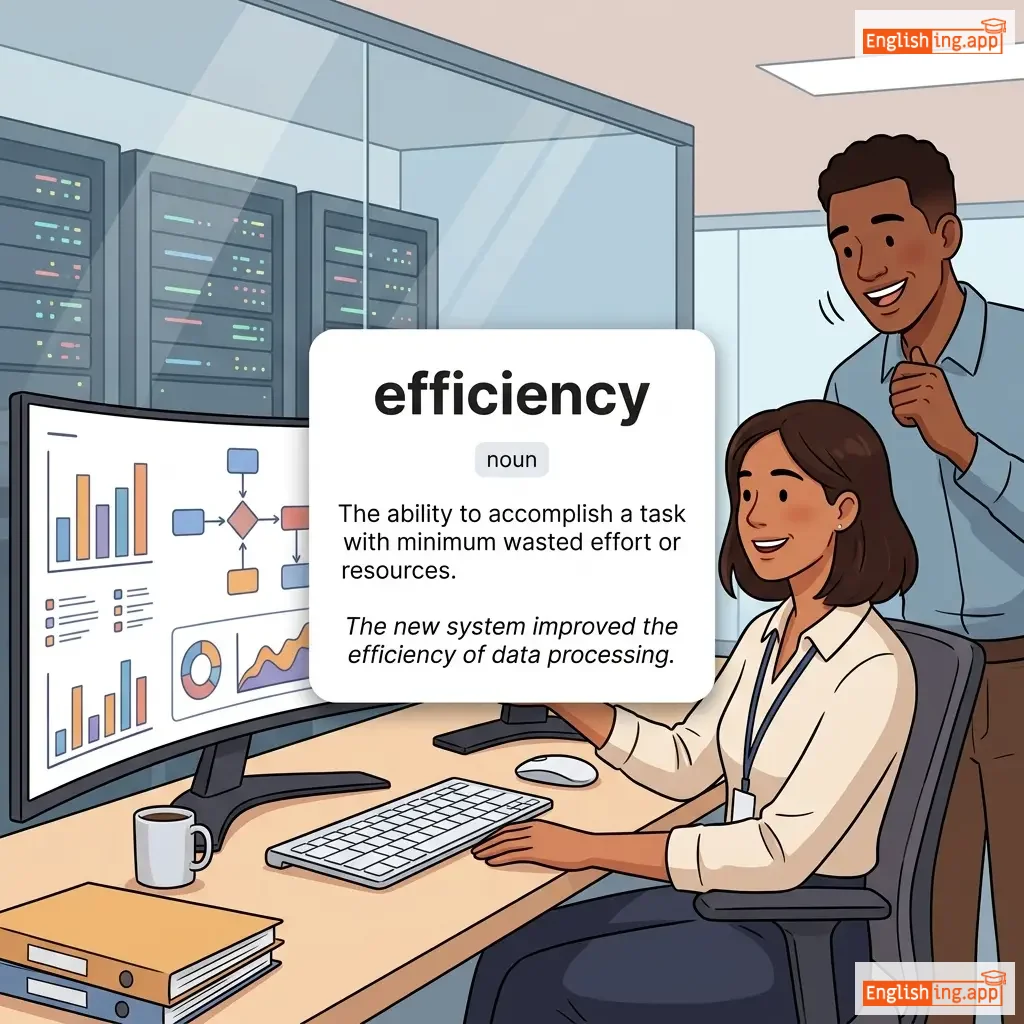
The state or quality of being efficient; achievement of maximum productivity with minimum wasted effort or expense.
••••••

Efficiency enhances resource utilization.

••••••
效率提高了资源利用率。
Xiaolü tígāo le zīyuán lìyòng lǜ.
••••••
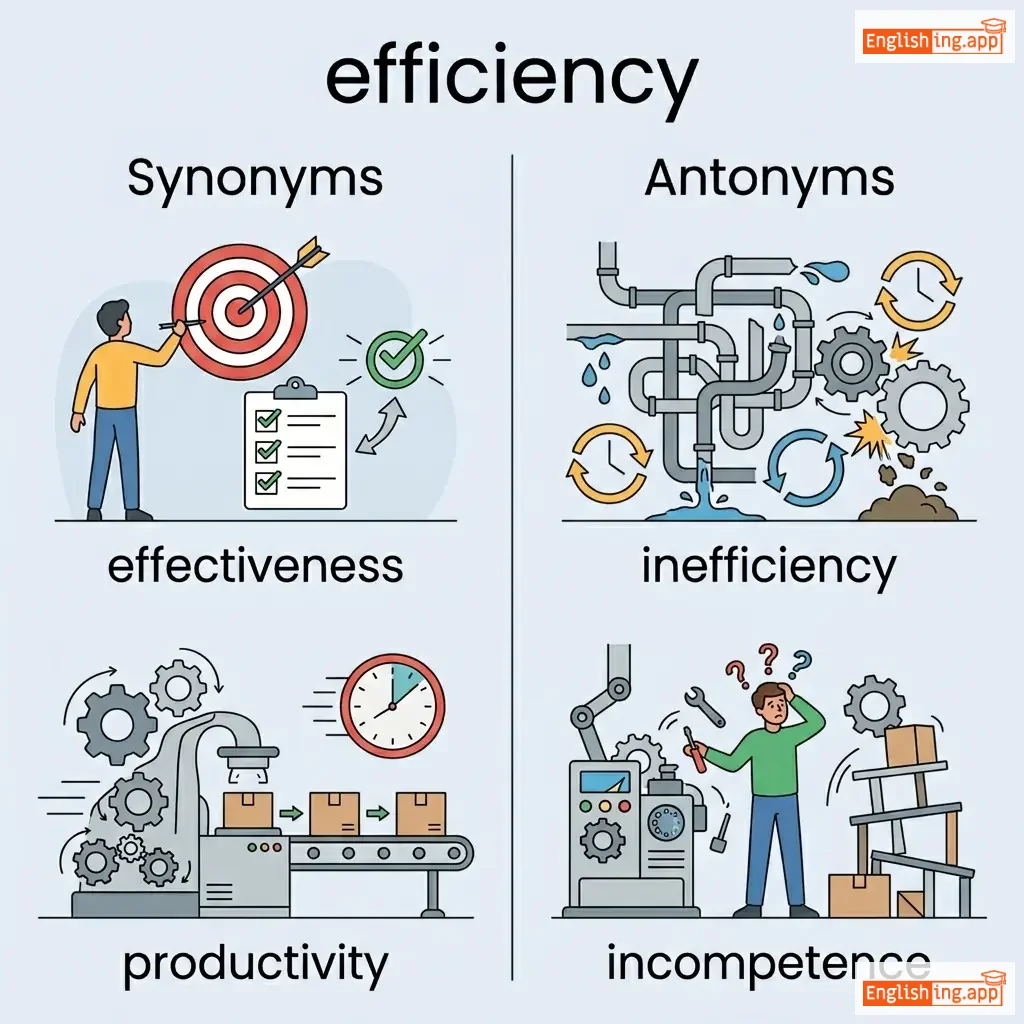
productivity, effectiveness, competence, capability, proficiency, performance
••••••
inefficiency, wastefulness, incompetence, sluggishness, slowness, inadequacy
••••••
高效率就像快速而精准地完成任务。
••••••
#308
⚖️
••••••
njuːˈtræl.ə.ti
noun
(纽特拉利蒂)
••••••
••••••
中立
zhōnglì
••••••
The state of not supporting or helping either side in a conflict, disagreement, etc.; impartiality.
••••••

Neutrality fosters trust in decision-making.

••••••
中立有助于决策中的信任。
Zhōnglì yǒuzhù yú juécè zhōng de xìnrèn.
••••••
impartiality, fairness, objectivity, balance, detachment, non-alignment
••••••
bias, prejudice, partiality, favoritism, discrimination, unfairness
••••••
中立是像公正的裁判一样,不偏向任何一方。
••••••
#309
🏆
••••••
ˈmer.ɪt beɪst
adjective
(梅里特-贝斯特)
••••••
••••••
基于优点
jī yú yōu diǎn
••••••
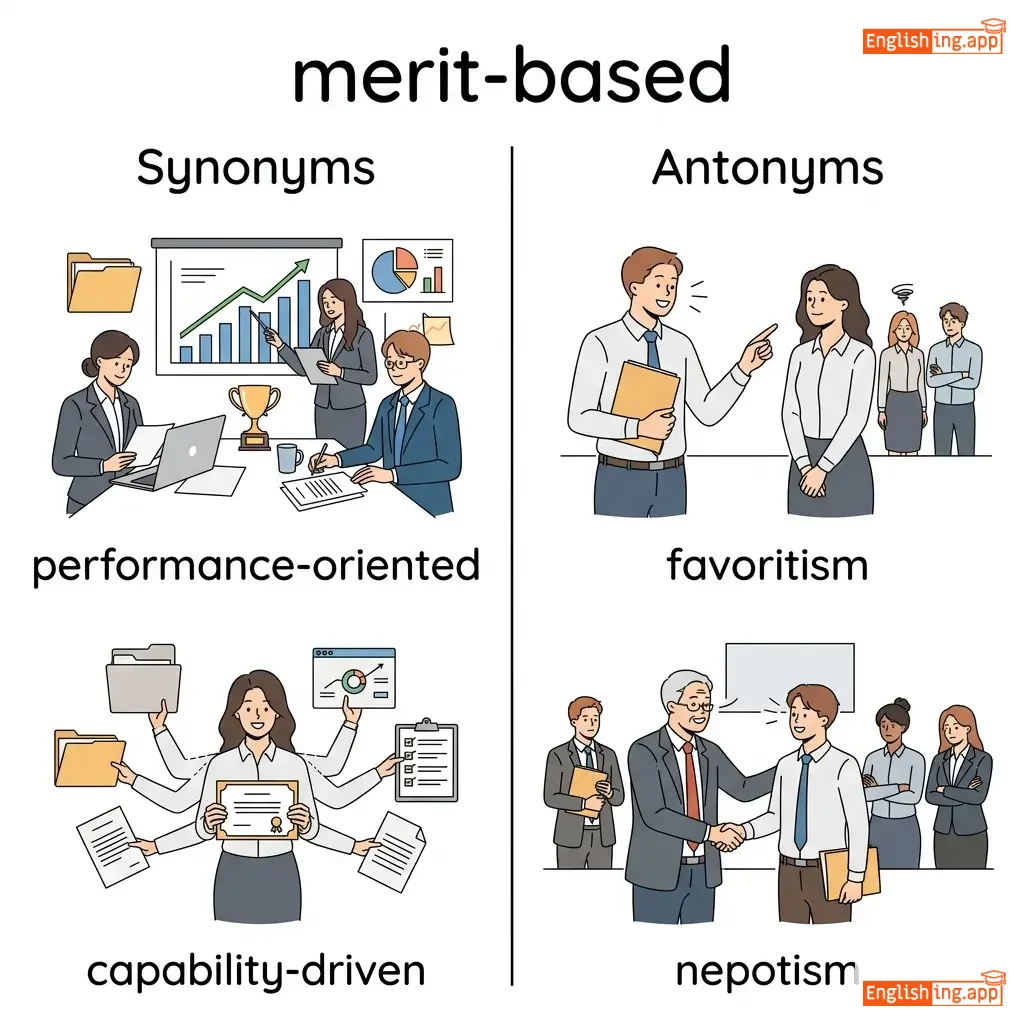
Based on or determined by individual merit, ability, or achievement rather than other factors.
••••••

Merit-based recruitment strengthens the workforce.

基于优点的招聘强化了劳动力。
••••••
基于优点的招聘强化了劳动力。
Jī yú yōu diǎn de zhāopìn qiánghuàle láodònglì.
••••••
performance-oriented, capability-driven, skill-based, competency-focused, ability-centered, talent-driven
••••••
favoritism, nepotism, bias-based, prejudiced, unfair, discriminatory
••••••
Merit-based sounds like '优点' (yōu diǎn) in Chinese, referring to achievements.
••••••
#310
🔍
••••••
trænˈspær.ən.si
noun
(透明度)
••••••
••••••
透明度
toumingdu
••••••
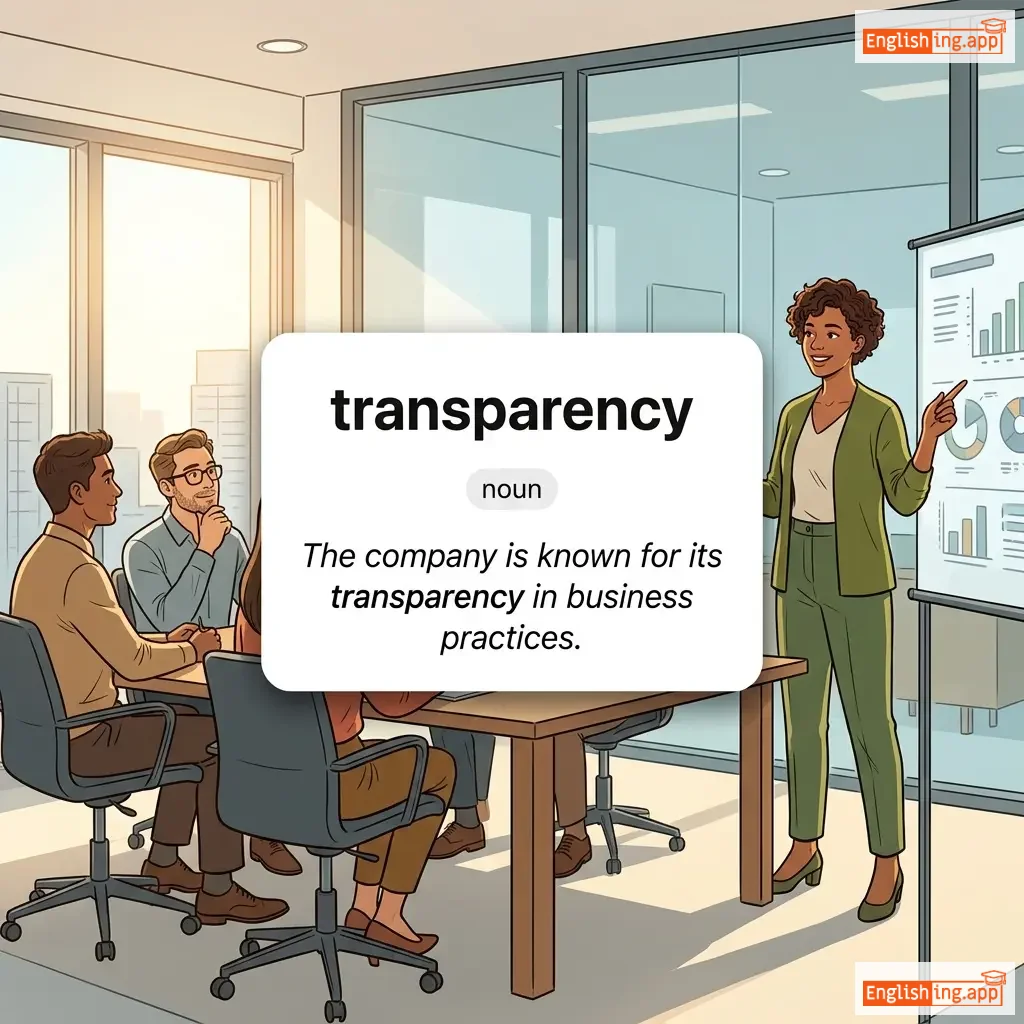
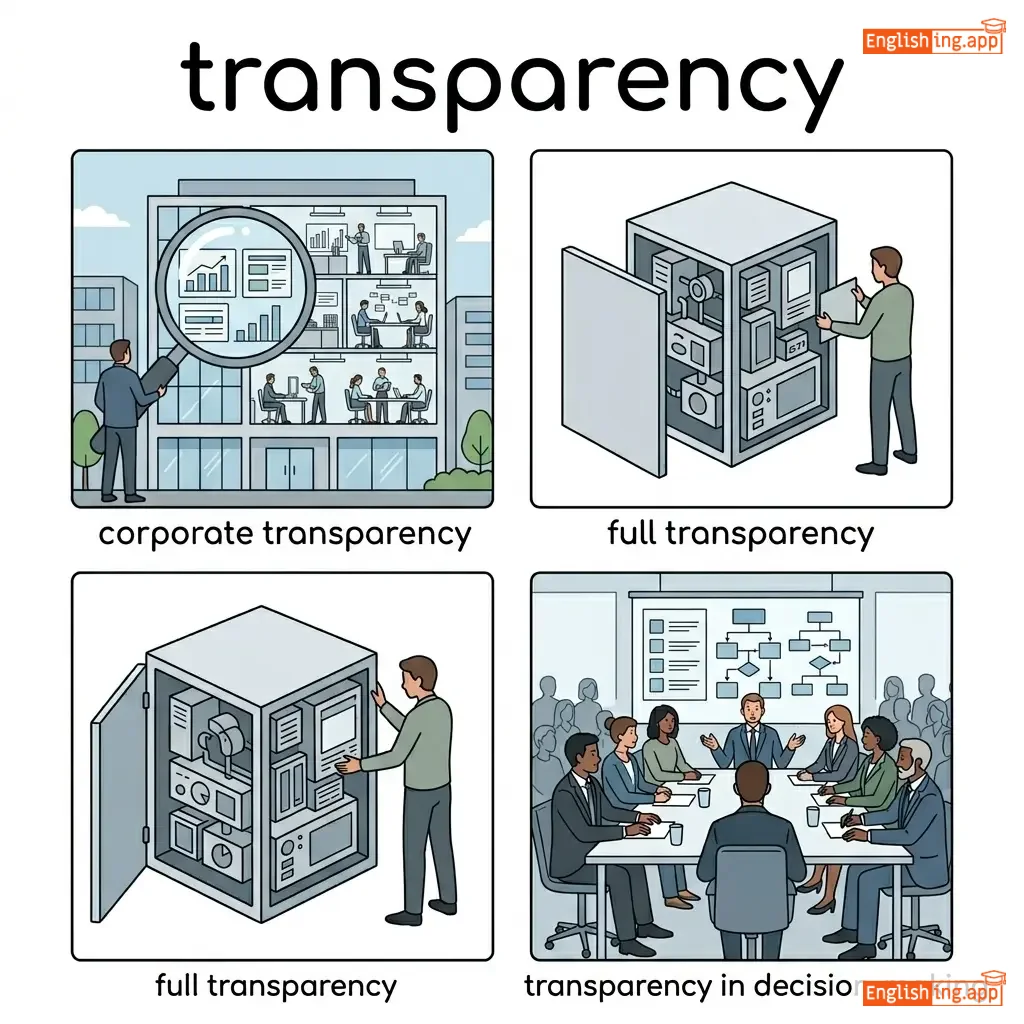
The quality of being easy to perceive or detect; openness, accountability, and honesty in governance or operations.
••••••

Transparency fosters trust in governance.

透明度促进了治理中的信任。
••••••
透明度促进了治理中的信任。
Toumingdu cujinle zhili zhong de xinyang.
••••••
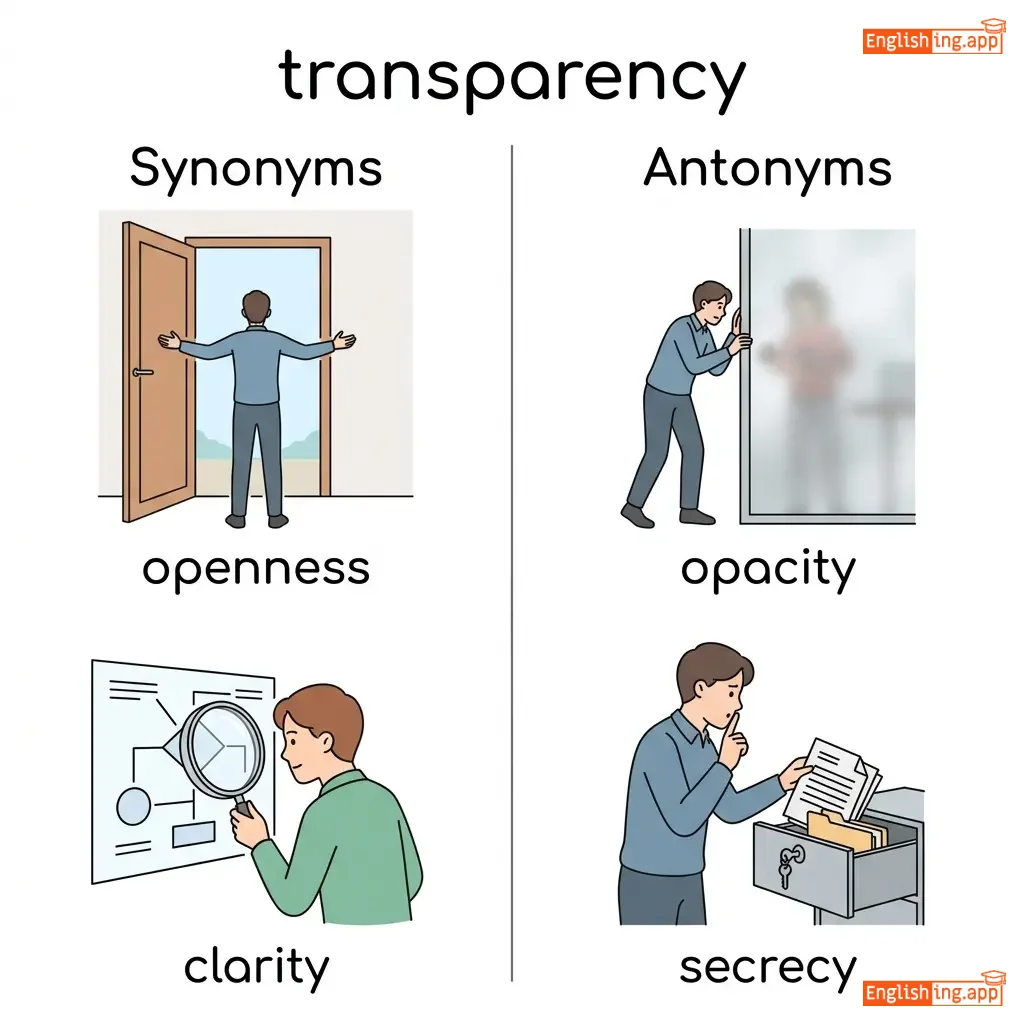
clarity, openness, honesty, accountability, visibility, disclosure
••••••
opaceness, ambiguity, secrecy, concealment, opacity, obscurity
••••••
Transparency is like clear water that lets us see everything beneath.
••••••
#311
📋
••••••
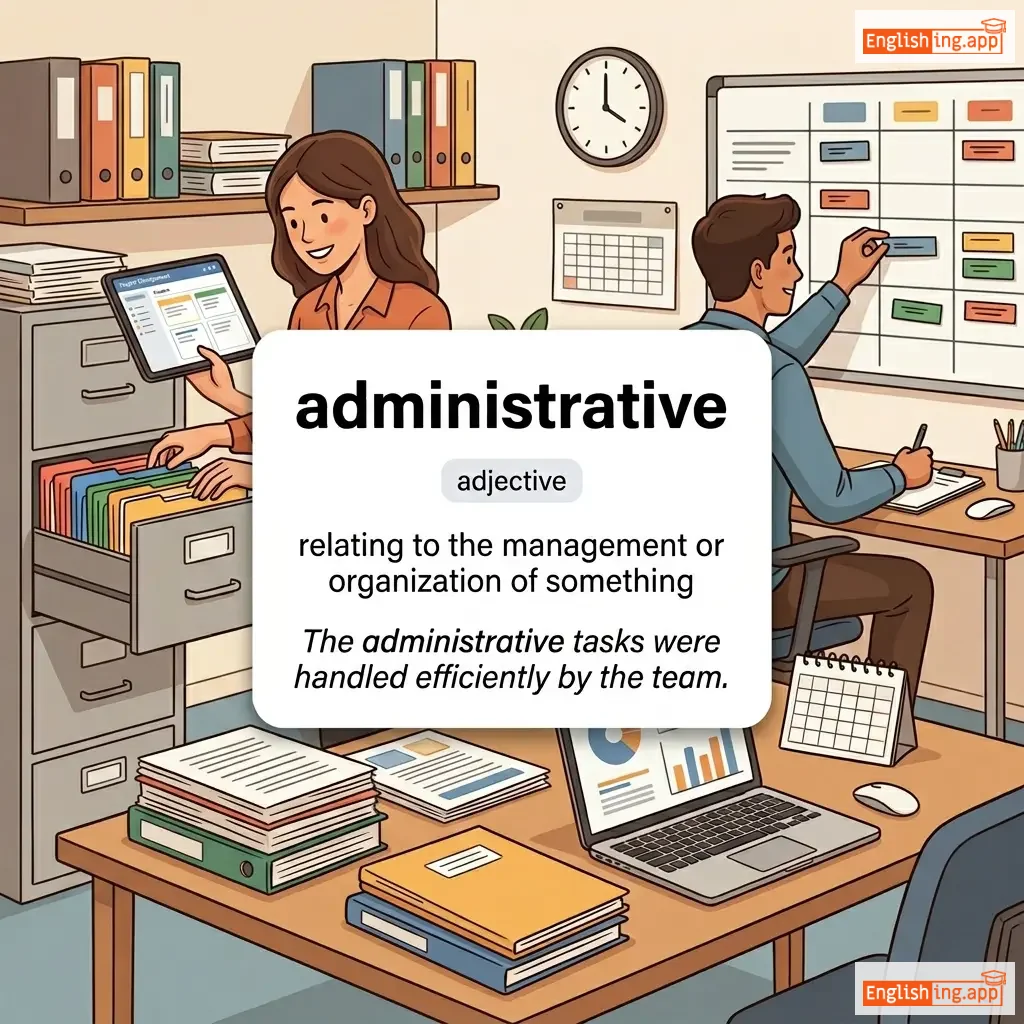
ədˈmɪn.ɪ.strə.tɪv
adjective
(行政的)
••••••
••••••
行政的
xingzhengde
••••••
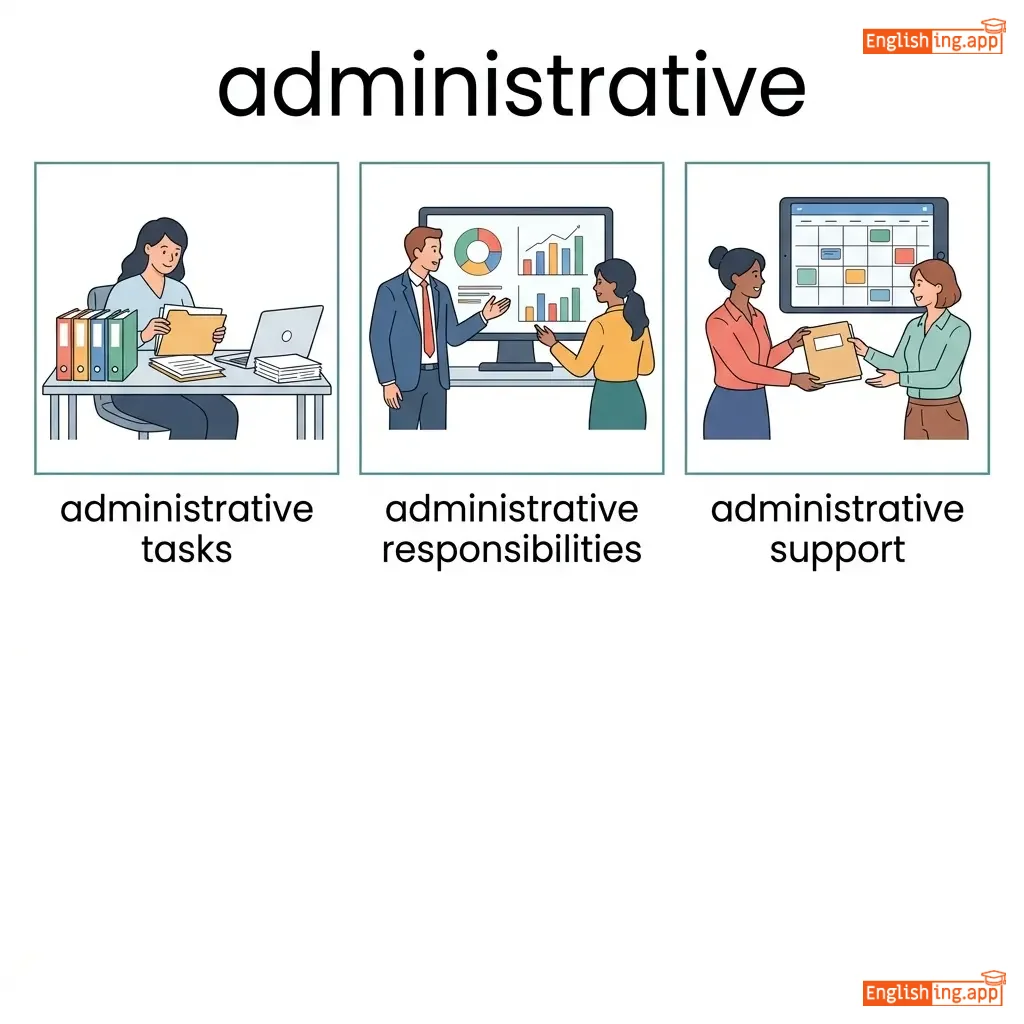
Relating to the running of a business, organization, etc.; concerned with or relating to management or administration.
••••••

Administrative reforms improve efficiency.

行政改革提高了效率。
••••••
行政改革提高了效率。
Xingzheng gaige tigao le xiaolv.
••••••
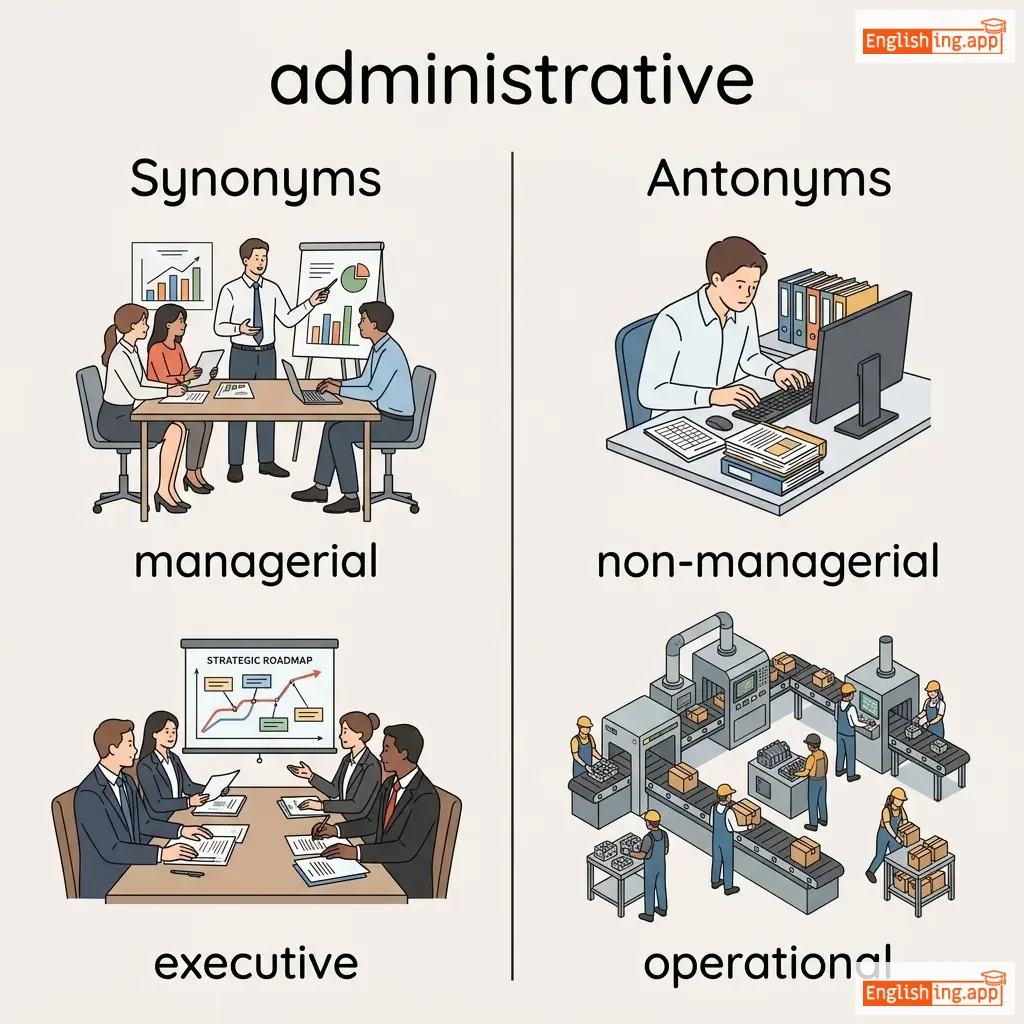
managerial, operational, executive, bureaucratic, organizational, supervisory
••••••
non-managerial, unstructured, informal, unorganized, chaotic, disorderly
••••••
Xingzhengde = Administrative, 与政府和管理有关。
••••••
#312
🏗️
••••••
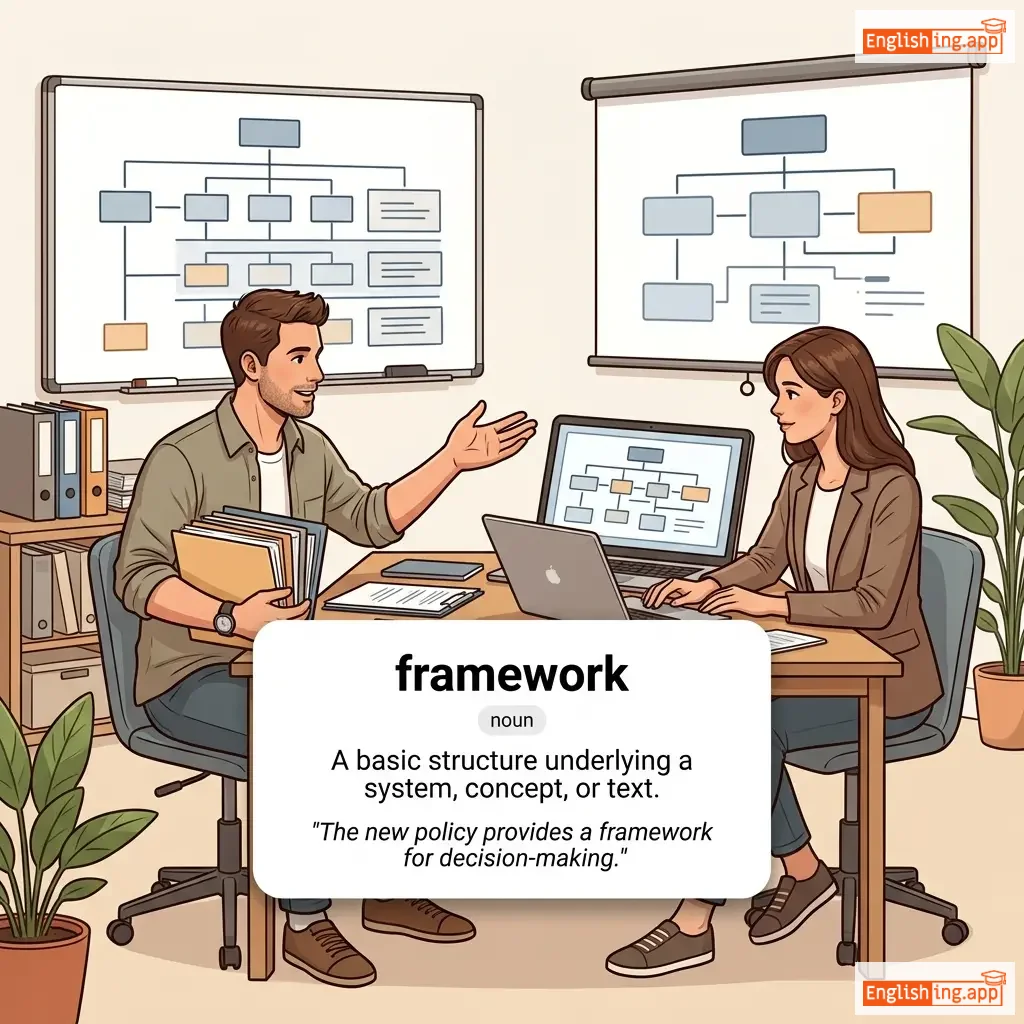
ˈfreɪm.wɜːk
noun
(fuleimwək)
••••••
••••••
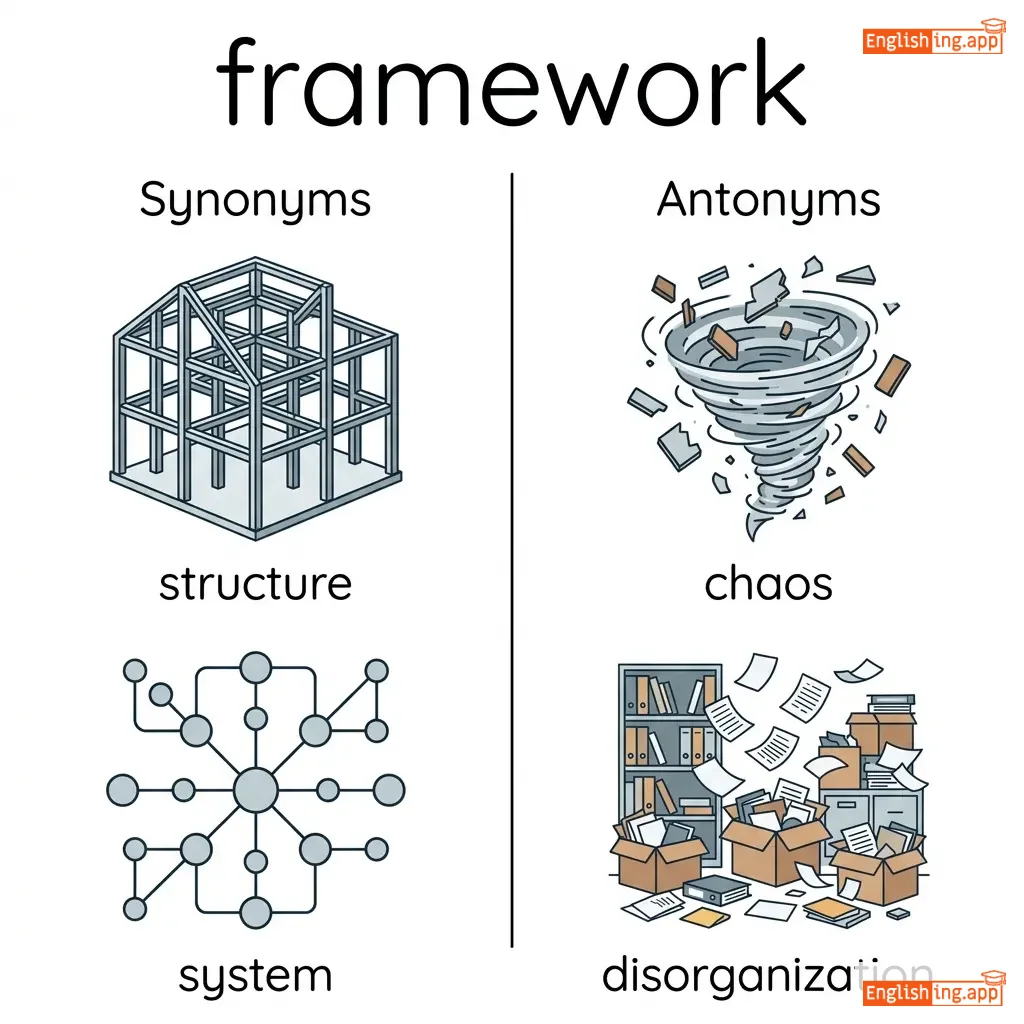
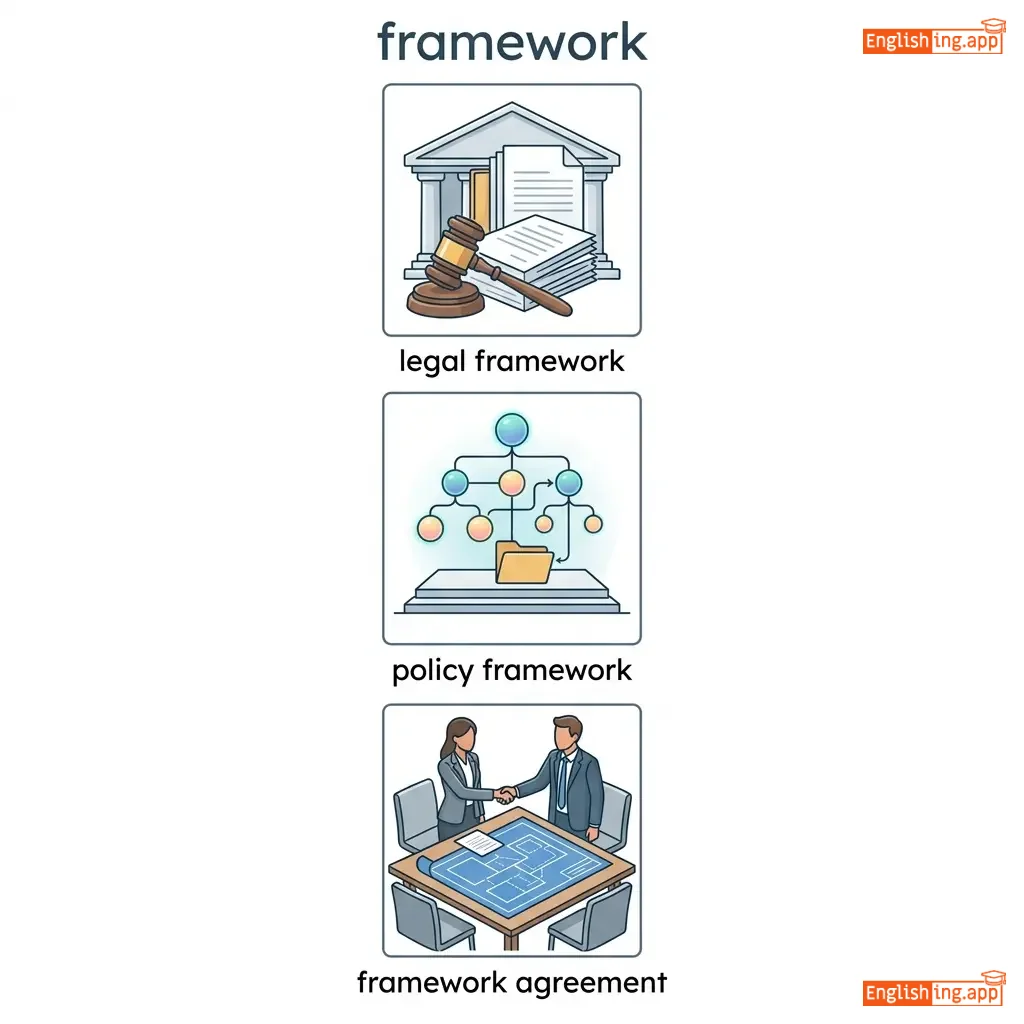
框架
kuàngjià
••••••
A basic structure underlying a system, concept, or text; an essential supporting structure.
••••••

A strong framework ensures stability.

一个强大的框架确保稳定。
••••••
一个强大的框架确保稳定。
Yīgè qiángdà de kuàngjià quèbǎo wěndìng.
••••••
structure, foundation, system, model, skeleton, architecture
••••••
disorder, disorganization, chaos, instability, breakdown, collapse
••••••
Zh: 框架 = 结构,就像框架 (frame) 一样。
••••••
#313
📈
••••••
ɪmˈpruːv.mənts
noun
(imprúvments)
••••••
••••••
改善
gaishan
••••••
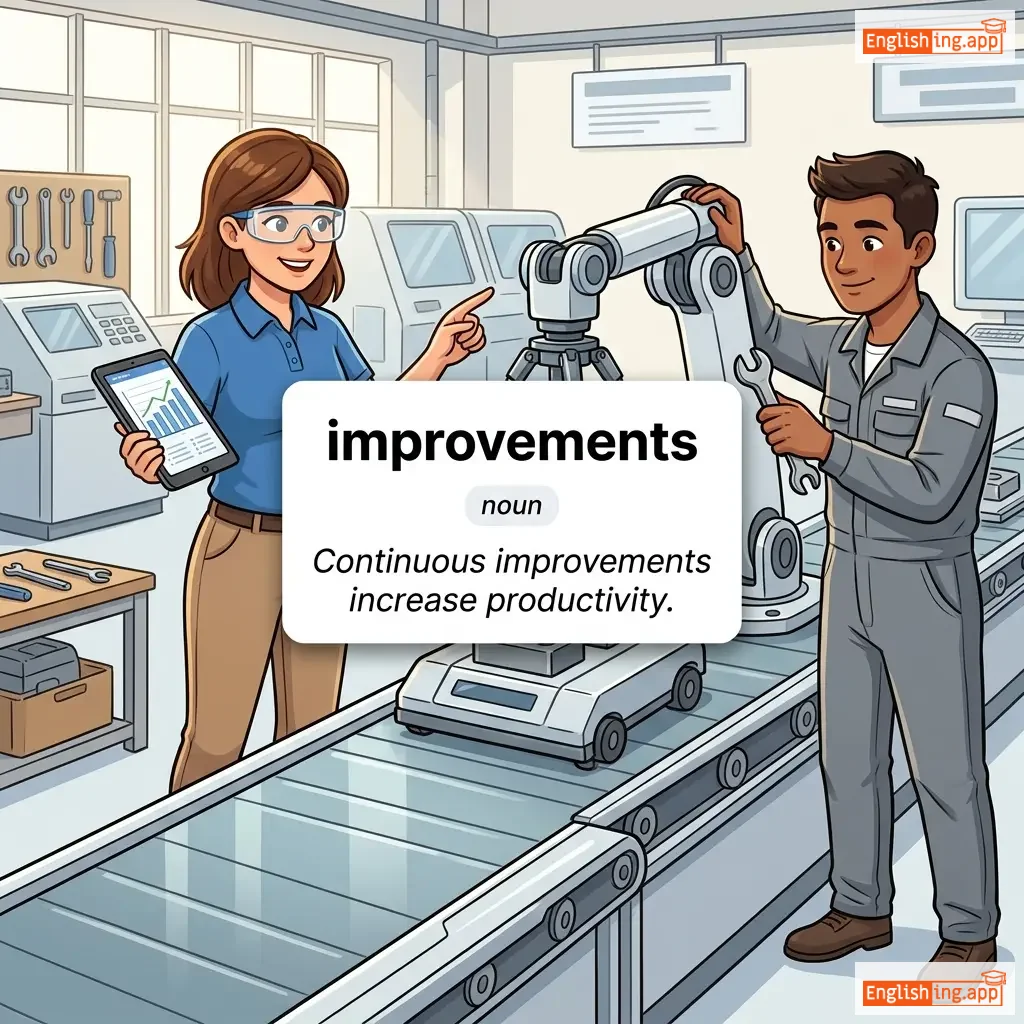
The action of making or becoming better; an instance of something becoming or being made better.
••••••

Continuous improvements increase productivity.

••••••
持续的改善提高了生产力。
Chíxù de gǎishàn tígāo le shēngchǎnlì.
••••••
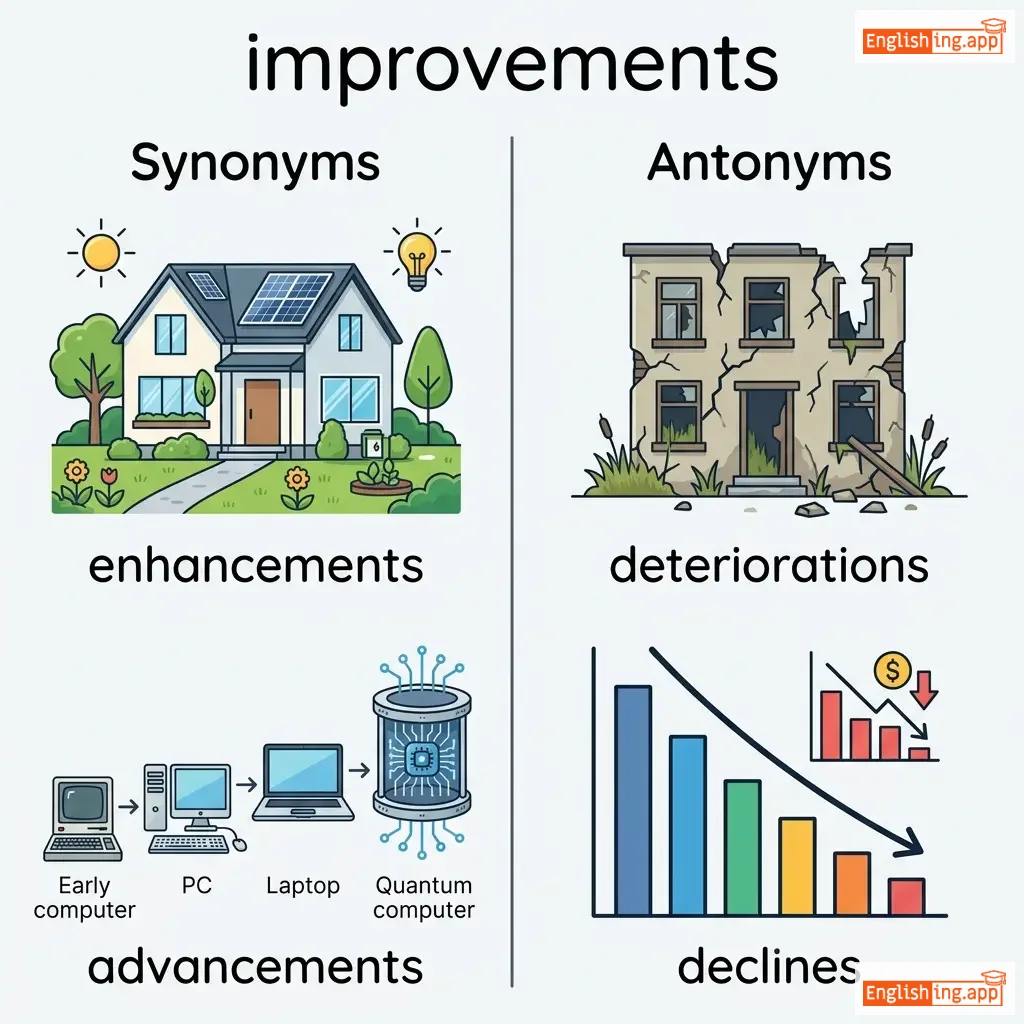
enhancements, advancements, upgrades, betterments, refinements, progress
••••••
deteriorations, declines, regressions, setbacks, worsening, degradation
••••••
Chinese '改善' (improvements) sounds like 'gain' improvements.
••••••
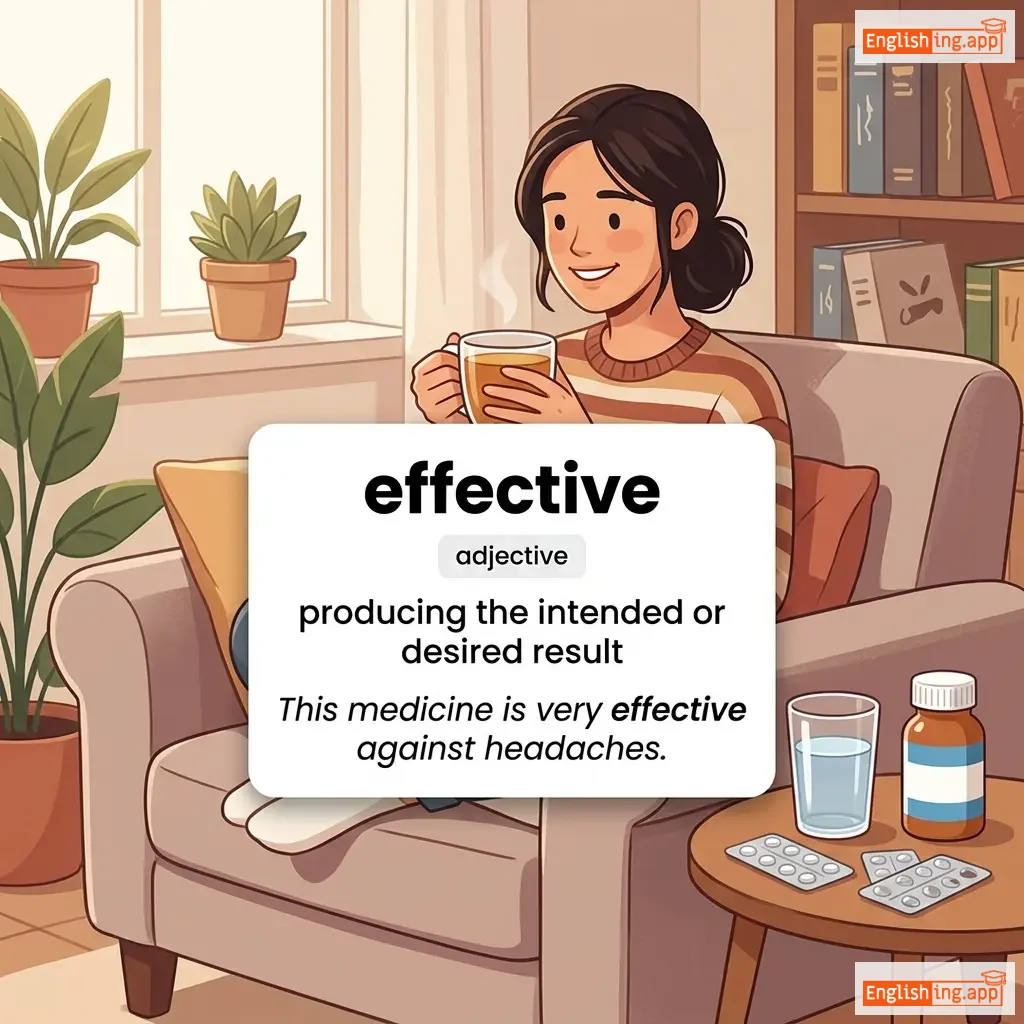
#314
••••••
ɪˈfek.tɪv
adjective
(yǐfékè tífū)
••••••
••••••
有效的
youxiao de
••••••
Successful in producing a desired or intended result; having the power to influence or produce a result.
••••••

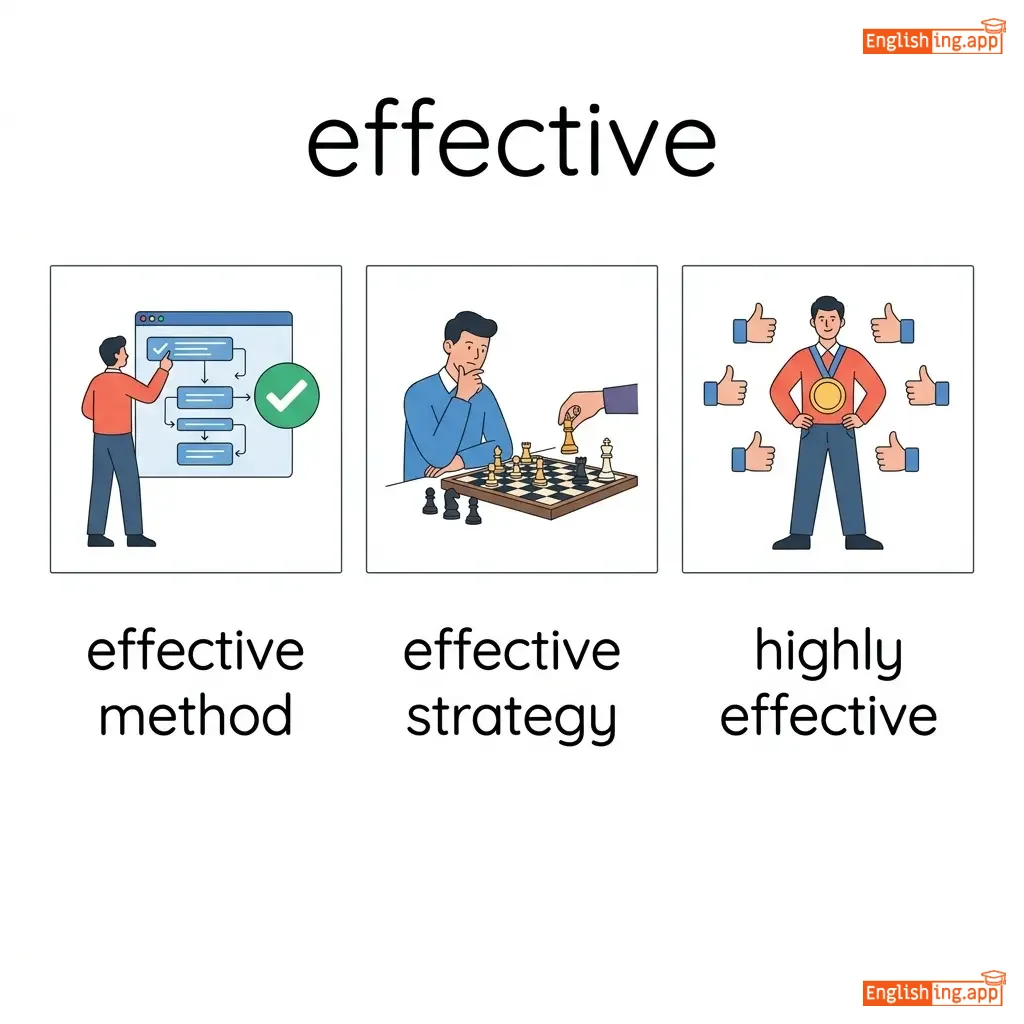
Effective policies drive organizational success.

有效的政策推动组织成功。
••••••
有效的政策推动组织成功。
Youxiao de zhengce tuidong zuzhi chenggong.
••••••
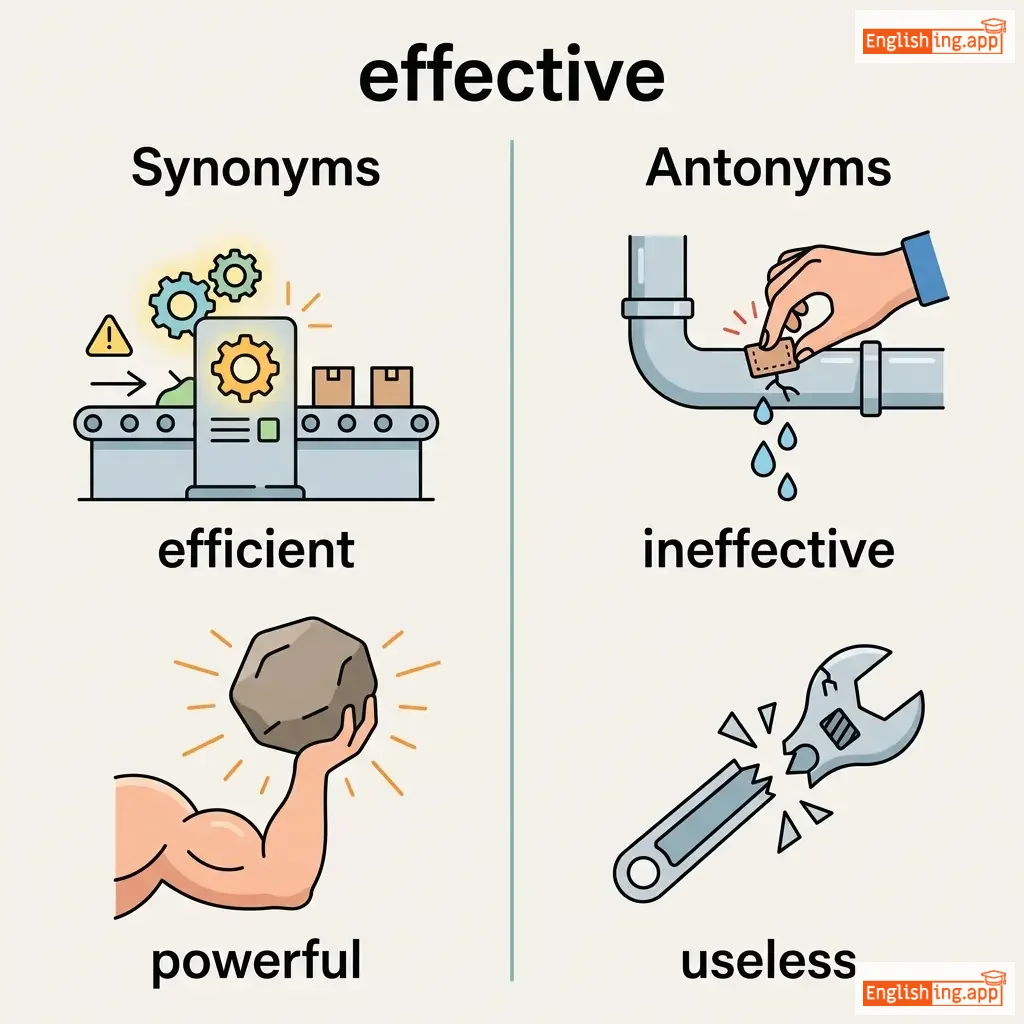
efficient, productive, successful, powerful, potent, influential
••••••
ineffective, unproductive, unsuccessful, weak, powerless, useless
••••••
有效的 (effective) 意味着产生期望的结果。
••••••
#315
🔄
••••••
ˈpɪv.ə.təl
adjective
(皮沃塔尔)
••••••
••••••
关键
guanjian
••••••
Of crucial importance in relation to the development or success of something else; central, vital.
••••••

BPSC plays a pivotal role in governance.

BPSC 在治理中发挥着关键作用。
••••••
BPSC 在治理中发挥着关键作用。
BPSC zai zhili zhong fa hui zhe guanjian zuoyong.
••••••
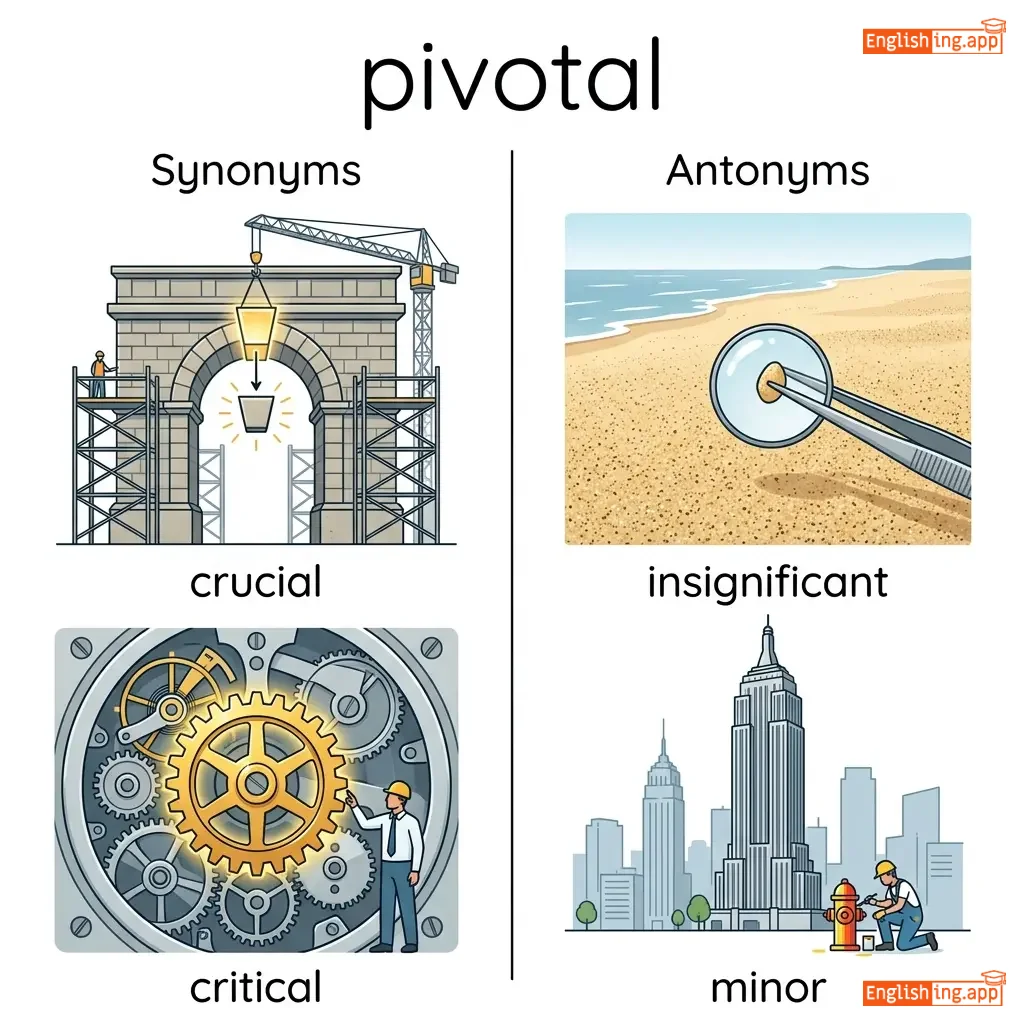
central, key, crucial, vital, essential, critical
••••••
peripheral, minor, insignificant, trivial, unimportant, secondary
••••••
Pivotal 就是关键信息,改变了所有的决策!
••••••

Vocabulary Quiz

Test your vocabulary by matching words with their translations or meanings.

Login to take the quiz

课程列表

Learn Vocabulary Through Article
(通过文章学习词汇)

/241
1
Lesson 1 - Volunteering: Can Transform Society and Human Lives
(第1课 - 志愿服务:可以改变社会和人类生活)
2
Lesson 2 - Investment and Infrastructure Development Required for Plastic Waste Management
(第2课——塑料废弃物管理所需的投资与基础设施建设)
3
Lesson 3 - Global Youth Unemployment Rate Lowest in 15 Years
(第3课 - 全球青年失业率创15年来最低水平)
4
Lesson 4 - How Prepared is Bangladesh's Young Generation for Old Age?
(第4课 - 孟加拉国年轻一代对老年生活的准备程度如何?)
5
Lesson 5 - Are You Rubbing Your Eyes? Damage Is Happening!
(第5课 - 你在揉眼睛吗?损伤正在发生!)
6
Lesson 6 - Artemis Mission: A New Chapter in Returning to the Moon
(第6课 - 阿耳忒弥斯任务:重返月球的新篇章)
7
Lesson 7 - Does Smartphone Scrolling Cause Finger Damage?
(第7课 - 智能手机滚动会导致手指受伤吗?)
8
Lesson 8 - Amazon Rainforest Conservation Efforts in 2024
(第8课 - 2024年亚马逊雨林保护工作)
9
Lesson 9 - World Environment Day: Pollution and Vulnerability
(第9课 - 世界环境日:污染与脆弱性)
10
Lesson 10 - World's Most Polluted Country Bangladesh
(第10课 - 世界上污染最严重的国家孟加拉国)
11
Lesson 11 - World's Longest Submarine Cable Project Nearing Completion
(第11课 - 世界上最长的海底电缆项目即将完工)
12
Lesson 12 - Loneliness in Old Age: A Painful Torment
(第12课——老年孤独:一种痛苦的折磨)
13
Lesson 13 - Solar-Powered Cities in the Middle East: Conceptualization and Implementation
(第13课 - 中东的太阳能城市:概念化与实施)
14
Lesson 14 - Building Trust in Relationships
(第14课 - 建立关系中的信任)
15
Lesson 15 - Why Was the State Language Question So Important?
(第15课——为什么国家语言的问题如此重要?)
16
Lesson 16 - Why doesn't it snow in Bangladesh during winter?
(第16课 - 为什么孟加拉国冬天不下雪?)
17
Lesson 17 - How does social media affect relationships?
(第17课——社交媒体如何影响人际关系?)
18
Lesson 18 - African Revolutions and Independence Movements
(第18课 - 非洲革命与独立运动)
19
Lesson 19 - The Challenge of Food Security Due to Global Warming
(第19课 - 全球变暖导致的粮食安全挑战)
20
Lesson 20 - Causes and Prevention of Juvenile Crime
(第20课——青少年犯罪的原因与预防)
21
Lesson 21 - Learn Vocabulary Through Stories - Chapter 21: UN General Assembly Session
(第21课 - 通过故事学习词汇 - 第21章:联合国大会会议)
22
Lesson 22 - Genetic Engineering: The Revolutionary Aspect of Biotechnology
(第22课 - 基因工程:生物技术的革命性方面)
23
Lesson 23 - Learn Vocabulary Through Stories - BPSC
(第23课 - 通过故事学习词汇 - BPSC)
24
Lesson 24 - Learn Vocabulary Through Stories - Robotic Surgery
(第24课 - 通过故事学习词汇 - 机器人手术)
25
Lesson 25 - Space Dining Revolution: The First Culinary Space Restaurant
(第25课 - 太空用餐革命:首家烹饪太空餐厅)
26
Lesson 26 - Bangladesh's Progress in Human Development Index
(第26课——孟加拉国在人类发展指数方面的进展)
27
Lesson 27 - Learning Vocabulary Through Stories
(第27课 - 通过故事学习词汇)
28
Lesson 28 - Why More Vegetables Grow in Winter
(第28课 - 为什么冬天蔬菜长得更多)
29
Lesson 29 - What is life's most valuable lesson?
(第29课 - 人生中最宝贵的教训是什么?)
30
Lesson 30 - The 6-Point Demand of 1966
(第30课 - 1966年的六点要求)
31
Lesson 31 - The Bay of Bengal Could Become Fishless, Warn Researchers
(第31课 - 研究人员警告:孟加拉湾可能会变得没有鱼)
32
Lesson 32 - 27 Bangladeshis on the way to Antarctica
(第32课 - 27名孟加拉国人前往南极)
33
Lesson 33 - Importance of Effective Communication Skills
(第33课 - 有效沟通技巧的重要性)
34
Lesson 34 - Japanese Researchers Launch World's First Wooden Satellite 'LignoSat'
(第34课 - 日本研究人员发射世界首颗木制卫星“LignoSat”)
35
Lesson 35 - Learn Vocabulary Through Stories
(第35课 - 通过故事学习词汇)
36
Lesson 36 - Learn Vocabulary Through Stories - Language Movement
(第36课 - 通过故事学习词汇 - 语言运动)
37
Lesson 37 - Learn Vocabulary Through Stories
(第37课 - 通过故事学习词汇)
38
Lesson 38 - Jagadish Chandra Bose: The First Biophysicist
(第38课——贾格迪什·钱德拉·玻色:第一位生物物理学家)
39
Lesson 39 - The Relationship Between Poverty and Education
(第39课——贫困与教育的关系)
40
Lesson 40 - Mirsarai - Asia's Largest Economic Zone
(第40课 - 米尔萨莱 - 亚洲最大的经济区)
41
Lesson 41 - Planning Implementation: The Main Challenge
(第41课 - 规划实施:主要挑战)
42
Lesson 42 - The Great Wall of China
(第42课 - 万里长城)
43
Lesson 43 - BIMSTEC Summit: Bangladesh's Leadership in Regional Cooperation
(第43课 - BIMSTEC峰会:孟加拉国在区域合作中的领导作用)
44
Lesson 44 - Complete Solar Power Driven City Conceptualization and Implementation in the Middle East
(第44课 - 中东地区完全由太阳能驱动的城市概念与实施)
45
Lesson 45 - The British Thought of Leaving India
(第45课 - 英国人考虑离开印度)
46
Lesson 46 - The Strength of the Strong Force
(第46课 - 强相互作用的强度)
47
Lesson 47 - Causes and Prevention of Child Labour
(第47课 - 童工的原因与预防)
48
Lesson 48 - Learn Vocabulary Through Stories - Asian Cup Football 2024
(第48课 - 通过故事学习词汇 - Asian Cup Football 2024)
49
Lesson 49 - The Commonwealth Summit: Forging a Path to Sustainable Future
(第49课 - 英联邦峰会:开辟通往可持续未来的道路)
50
Lesson 50 - Climate Action and Renewable Energy Commitments
(第50课 - 气候行动与可再生能源承诺)
51
Lesson 51 - World's First Fault-Tolerant Quantum Computer
(第51课 - 世界上第一台容错量子计算机)
52
Lesson 52 - Climate Change Conference COP-28: A New Agreement for Global Transition
(第52课 - 气候变化大会COP-28:全球转型新协议)
53
Lesson 53 - Learn Vocabulary Through Stories - Medical Education
(第53课 - 通过故事学习词汇 - 医学教育)
54
Lesson 54 - The Impact of Climate Change
(第54课 - 气候变化的影响)
55
Lesson 55 - Learn Vocabulary Through Stories - Air Pollution in Dhaka
(第55课 - 通过故事学习词汇 - 达卡的空气污染)
56
Lesson 56 - Water Terminals and Maritime Transportation
(第56课 - Water terminals 和 Maritime transportation)
57
Lesson 57 - Bangladesh's Environmental Problems
(第57课 - 孟加拉国的环境问题)
58
Lesson 58 - Anti-discrimination Student Movement
(第58课 - Anti-discrimination Student Movement)
59
Lesson 59 - Constitutional Reform Commission
(第59课 - 宪法改革委员会)
60
Lesson 60 - Seven Martyrs of the Border
(第60课 - 边境的七位烈士)
61
Lesson 61 - Digital Literacy
(第61课 - 数字素养)
62
Lesson 62 - Environmental Movement
(第62课 - 环保运动)
63
Lesson 63 - Learn Vocabulary Through Stories - Plastic Recycling
(第63课 - 通过故事学习词汇 - 塑料回收)
64
Lesson 64 - Learn Vocabulary Through Stories - Sarco Capsule
(第64课 - 通过故事学习词汇 - Sarco Capsule)
65
Lesson 65 - AI Guidelines and Policies: Global Deliberations
(第65课 - AI 指南和政策:全球讨论)
66
Lesson 66 - 5 Valuable Lessons from 'The Almanack'
(第66课 - 来自《The Almanack》的5个宝贵教训)
67
Lesson 67 - 5 Valuable Lessons from 'The Almanack'
(第67课 - 来自《The Almanack》的5个宝贵教训)
68
Lesson 68 - Captain-Crew Free Autonomous Container Ship
(第68课 - 无船长和船员的自主集装箱船)
69
Lesson 69 - Ecotourism
(第69课 - 生态旅游)
70
Lesson 70 - Bangladesh Victory Day
(第70课 - 孟加拉国胜利日)
71
Lesson 71 - A Tale of Two Cities
(第71课 - A Tale of Two Cities)
72
Lesson 72 - Advancements in Public Transport Infrastructure
(第72课 - 公共交通基础设施的进步)
73
Lesson 73 - As a Man Thinketh
(第73课 - 人的思想决定一切)
74
Lesson 74 - Atomic Habits
(第74课 - Atomic Habits)
75
Lesson 75 - Balancing Work and Family Life
(第75课——平衡工作与家庭生活)
76
Lesson 76 - Best Practices for Digital Safety Online
(第76课 - 在线数字安全的最佳实践)
77
Lesson 77 - Best Techniques for Effective Memorization
(第77课 - 高效记忆的最佳技巧)
78
Lesson 78 - Best Techniques for Strengthening Memory
(第78课 - 增强记忆力的最佳技巧)
79
Lesson 79 - Breathing Techniques for Instant Calmness
(第79课 - 即刻平静的呼吸技巧)
80
Lesson 80 - Building a Strong Freelance Portfolio
(第80课 - 打造强大的自由职业 portfolio)
81
Lesson 81 - Building Trust Between Parents and Children
(第81课 - 在父母与孩子之间建立信任)
82
Lesson 82 - Building Trust Within Family Members
(第82课 - 在家庭成员之间建立信任)
83
Lesson 83 - Challenges Faced by Small Businesses
(第83课 - 小型企业面临的挑战)
84
Lesson 84 - Challenges Faced by Small-Scale Farmers
(第84课 - 小规模农民面临的挑战)
85
Lesson 85 - ChatGPT in Education and Learning
(第85课 - ChatGPT在教育与学习中的应用)
86
Lesson 86 - Cleaning and Maintaining Home Appliances
(第86课 - 清洁与维护家用电器)
87
Lesson 87 - Common Habits That Weaken Memory
(第87课 - 削弱记忆力的常见习惯)
88
Lesson 88 - Common Mistakes in Dopamine Detoxing
(第88课 - Dopamine排毒中的常见错误)
89
Lesson 89 - Daily Habits for Stronger Willpower
(第89课 - 增强意志力的日常习惯)
90
Lesson 90 - Deforestation and Its Environmental Impact
(第90课 - Deforestation及其对环境的影响)
91
Lesson 91 - Developing Confidence in Everyday Conversations
(第91课 - 在日常对话中培养自信)
92
Lesson 92 - Digital vs. Paper Time-Blocking Methods
(第92课 - 数字与纸质 Time-Blocking 方法)
93
Lesson 93 - Diversification: Key to Wealth Growth
(第93课 - 多元化:财富增长的关键)
94
Lesson 94 - Don't chase 2 rabbits at once
(第94课 - 不要同时追两只兔子)
95
Lesson 95 - E-commerce Trends Shaping the Future
(第95课 - 塑造未来的电子商务趋势)
96
Lesson 96 - Effective Communication in Parenting Today
(第96课 - 当代育儿中的 Effective Communication)
97
Lesson 97 - Effective Marketing for Small Businesses
(第97课 - 针对小型企业的有效营销)
98
Lesson 98 - Effective Strategies for Self-Discipline
(第98课 - Effective Strategies for Self-Discipline)
99
Lesson 99 - Effective Strategies for Time Management
(第99课 - 时间管理的有效策略)
100
Lesson 100 - Effects of Processed Foods on Health
(第100课 - 加工食品对健康的影响)
101
Lesson 102 - Essential Life Skills for Success
(第102课 - 成功的基本生活技能)
102
Lesson 103 - Essential Wardrobe Pieces for Everyone
(第103课 - 每个人必备的衣橱单品)
103
Lesson 104 - Exercises to Boost Long-Term Memory
(第104课 - 提高长期记忆的练习)
104
Lesson 105 - Famous Scientists and Their Discoveries
(第105课 - 著名科学家及其发现)
105
Lesson 106 - Future of Brain-Training Wearable Devices
(第106课 - 脑部训练可穿戴设备的未来)
106
Lesson 107 - Future Trends in Digital Economies
(第107课 - 数字经济的未来趋势)
107
Lesson 108 - Great Inventions That Changed History
(第108课 - 改变历史的伟大发明)
108
Lesson 109 - Grit: The Power of Passion
(第109课 - Grit:激情的力量)
109
Lesson 110 - Healthy Eating Habits for Longevity
(第110课 - 有助于长寿的健康饮食习惯)
110
Lesson 111 - Healthy Lifestyle Habits for Longevity
(第111课 - 健康生活方式习惯促进长寿)
111
Lesson 112 - History of the Olympic Games
(第112课 - 奥林匹克运动会的历史)
112
Lesson 113 - How Afforestation Helps Restore Ecosystems
(第113课 - 植树造林如何帮助恢复生态系统)
113
Lesson 114 - How Autonomous Vehicles Will Change Transport
(第114课 - 自动驾驶车辆将如何改变交通运输)
114
Lesson 115 - How ChatGPT Processes Human Language
(第115课 - ChatGPT如何处理人类语言)
115
Lesson 116 - How Exercise Improves Brain Function
(第116课 - 锻炼如何改善大脑功能)
116
Lesson 117 - How Family Traditions Shape Values
(第117课 - 家庭传统如何塑造价值观)
117
Lesson 118 - How Farmers Can Improve Crop Yield
(第118课 - 农民如何提高作物产量)
118
Lesson 119 - How Focus Tracking Boosts Productivity
(第119课 - 专注追踪如何提升生产力)
119
Lesson 120 - Common Myths About Weight Loss
(第120课 - 关于减肥的常见误区)
120
Lesson 121 - How Gaming Improves Cognitive Skills
(第121课 - 游戏如何提高认知能力)
121
Lesson 122 - How Globalization Affects World Economies
(第122课 - 全球化如何影响世界经济)
122
Lesson 123 - How Inflation Affects Your Savings
(第123课 - 通货膨胀如何影响你的储蓄)
123
Lesson 124 - How Internet Transformed Global Communication
(第124课 - 互联网如何改变全球通信)
124
Lesson 125 - How Journaling Improves Mental Health
(第125课 - 写日记如何改善心理健康)
125
Lesson 126 - How Mnemonics Enhance Learning Ability
(第126课 - 记忆术如何增强学习能力)
126
Lesson 127 - How Mobile Apps Improve Productivity
(第127课 - 移动应用如何提高生产力)
127
Lesson 128 - How Neurofeedback Affects Learning Ability
(第128课 - 神经反馈如何影响学习能力)
128
Lesson 129 - How Reading Enhances Critical Thinking
(第129课 - 阅读如何增强批判性思维)
129
Lesson 130 - How Social Media Apps Influence Life
(第130课 - 社交媒体应用如何影响生活)
130
Lesson 131 - How Superfoods Boost Your Health
(第131课 - Superfoods如何提升你的健康)
131
Lesson 132 - How Technology is Changing Agriculture
(第132课 - 技术如何改变农业)
132
Lesson 133 - How Time-Blocking Improves Efficiency
(第133课 - Time-blocking 如何提高效率)
133
Lesson 134 - How Time-Blocking Reduces Procrastination
(第134课 - Time-blocking 如何减少拖延)
134
Lesson 135 - How to Build Mental Toughness
(第135课 - 如何培养心理韧性)
135
Lesson 136 - How to Develop Leadership Skills?
(第136课 - 如何培养领导能力?)
136
Lesson 137 - How to Draw Your Own Family Tree
(第137课 - 如何绘制自己的家谱)
137
Lesson 138 - How to Grow a Small Business
(第138课 - 如何发展小型企业)
138
Lesson 139 - How to Improve Public Speaking
(第139课 - 如何提高Public speaking)
139
Lesson 140 - How to learn a new language quickly
(第140课 - 如何快速学习一门新语言)
140
Lesson 141 - How to Manage Business Finances
(第141课 - 如何管理商业财务)
141
Lesson 142 - How to Overcome Procrastination
(第142课 - 如何克服拖延症)
142
Lesson 143 - How to Protect Personal Data
(第143课 - 如何保护个人数据)
143
Lesson 144 - How to Set Up a Tent
(第144课 - 如何搭建帐篷)
144
Lesson 145 - How to Start a Startup
(第145课 - 如何创办一家创业公司)
145
Lesson 146 - How to Use Time-Blocking Effectively
(第146课 - 如何有效地使用Time-Blocking)
146
Lesson 147 - How Traditions Keep Families United
(第147课 - 传统如何让家庭团结在一起)
147
Lesson 148 - Impact of Stress on Well-being
(第148课 - 压力对幸福感的影响)
148
Lesson 149 - Importance of Emergency Savings Fund
(第149课 - 应急储蓄基金的重要性)
149
Lesson 150 - Importance of Emotional Intelligence Today
(第150课 - 当今情商的重要性)
150
Lesson 151 - Innovation Leadership Frameworks
(第151课 - 创新领导力框架)
151
Lesson 152 - Investing vs. Saving for Wealth Growth
(第152课 - 为财富增长而投资与储蓄)
152
Lesson 153 - Largest Oceans and Their Importance
(第153课 - 最大的海洋及其重要性)
153
Lesson 154 - Major Space Missions and Discoveries
(第154课 - 主要太空任务与发现)
154
Lesson 155 - Market vs. Command Economies Explained
(第155课 - 市场经济与指令经济的解释)
155
Lesson 156 - Men vs Wild
(第156课 - 人类与荒野)
156
Lesson 157 - Mindfulness for Better Mental Focus
(第157课 - 提高心理专注力的正念)
157
Lesson 158 - Mindset: The New Psychology
(第158课 - Mindset:新的心理学)
158
Lesson 159 - Mysterious Object Racing Through the Milky Way
(第159课 - 神秘物体穿越银河系)
159
Lesson 160 - Nonverbal Cues and Their Importance
(第160课 - 非语言暗示及其重要性)
160
Lesson 161 - Nutritional Benefits of Organic Foods
(第161课 - 有机食品的营养益处)
161
Lesson 162 - Organic Farming vs. Conventional Farming
(第162课 - 有机农业与传统农业)
162
Lesson 163 - Overcoming Barriers in Communication
(第163课 - 克服沟通中的障碍)
163
Lesson 164 - Overcoming Procrastination with Discipline
(第164课 - 通过自律克服拖延)
164
Lesson 165 - Overcoming Procrastination with Smart Planning
(第165课 - 通过智能计划克服拖延症)
165
Lesson 166 - Parenting Styles and Their Impact
(第166课 - 教养方式及其影响)
166
Lesson 167 - Pomodoro Technique
(第167课 - 番茄工作法)
167
Lesson 168 - Preventing Pest Infestations in Your Home
(第168课 - 预防家中虫害侵扰)
168
Lesson 169 - Problem-Solving Skills for Everyday Life
(第169课 - 日常生活中的解决问题技巧)
169
Lesson 170 - Quality Time for Stronger Family Bonds
(第170课 - 高质量的家庭时光以增强家庭纽带)
170
Lesson 171 - Rainforests: The Lungs of Earth
(第171课 - 雨林:地球之肺)
171
Lesson 172 - Safety Tips for Camping Adventures
(第172课 - 露营探险的安全提示)
172
Lesson 173 - Save the Golden Butterfly
(第173课 - 拯救金色的蝴蝶)
173
Lesson 174 - Setting Goals for Better Time Use
(第174课 - 为更好地利用时间设定目标)
174
Lesson 175 - Spaced Repetition for Long-Term Memory
(第175课 - 间隔重复以增强长期记忆)
175
Lesson 176 - Steps to Achieve Your Goals
(第176课 - 实现目标的步骤)
176
Lesson 177 - Sustainable Farming for a Greener Future
(第177课——为更绿色的未来实现可持续农业)
177
Lesson 178 - Teacher's Hard Lifestyle in Bangladesh
(第178课 - 孟加拉国教师的艰难生活)
178
Lesson 179 - Teaching Kids Financial Responsibility Early
(第179课 - 让孩子从小学习财务责任)
179
Lesson 180 - Techniques for Enhancing Mental Focus
(第180课 - 提高心理专注力的技巧)
180
Lesson 181 - Technology's Role in Modern Homeschooling
(第181课 - 科技在现代在家教育中的作用)
181
Lesson 182 - The 80/20 Rule in Time Management
(第182课 - 时间管理中的80/20法则)
182
Lesson 183 - The Art of Effective Communication
(第183课 - 有效沟通的艺术)
183
Lesson 184 - The Challenges of Freelancing Career
(第184课 - 自由职业生涯的挑战)
184
Lesson 185 - The Daily Stoic
(第185课 - The Daily Stoic)
185
Lesson 186 - The Different Types of Economies
(第186课 - 不同类型的经济体)
186
Lesson 187 - The Economic Value of Forest Resources
(第187课 - 森林资源的经济价值)
187
Lesson 188 - The Evolution of Human Civilization
(第188课 - 人类文明的演变)
188
Lesson 189 - The Evolution of Modern Farming
(第189课 - 现代农业的发展)
189
Lesson 190 - The Four Agreements
(第190课 - 四项协议)
190
Lesson 191 - The Future of Electric Vehicles
(第191课 - 电动汽车的未来)
191
Lesson 192 - The Future of Flying Cars
(第192课 - 飞行汽车的未来)
192
Lesson 193 - The Future of Mobile Applications
(第193课 - 移动应用的未来)
193
Lesson 194 - The Growth Mindset Coach
(第194课 - 成长型思维教练)
194
Lesson 195 - The Impact of Climate on Farming
(第195课 - 气候对农业的影响)
195
Lesson 196 - The Impact of Nature on Stress
(第196课 - 自然对压力的影响)
196
Lesson 197 - The Impact of Trade on Economies
(第197课 - 贸易对经济的影响)
197
Lesson 198 - The Impact of Traffic on Mobility
(第198课 - 交通对出行的影响)
198
Lesson 199 - The Importance of Balanced Diet
(第199课 - 均衡饮食的重要性)
199
Lesson 200 - The Importance of Livestock Farming
(第200课 - 畜牧业的重要性)
200
Lesson 201 - The Importance of Quality Sleep
(第201课 - 优质睡眠的重要性)
201
Lesson 202 - The Importance of Sustainable Economies
(第202课 - 可持续经济的重要性)
202
Lesson 203 - The Let Them Theory
(第203课 - Let Them Theory)
203
Lesson 204 - The Magic of Thinking Big
(第204课 - 大思维的魔力)
204
Lesson 205 - The Obstacle Is the Way
(第205课 - 障碍就是道路)
205
Lesson 206 - The Power of Now
(第206课 - 当下的力量)
206
Lesson 207 - The Power of Positive Thinking
(第207课 - 积极思考的力量)
207
Lesson 208 - The Power of Written Goals
(第208课 - **Written goals** 的力量)
208
Lesson 209 - The Psychology of Decision-Making
(第209课 - 决策心理学)
209
Lesson 210 - The Rise of Virtual Reality
(第210课 - 虚拟现实的兴起)
210
Lesson 211 - The Role of Creativity in Skills
(第211课 - Creativity 在技能中的作用)
211
Lesson 212 - The Role of Focus in Learning
(第212课 - Focus 在学习中的作用)
212
Lesson 213 - The Role of Inflation in Economies
(第213课 - 通货膨胀在经济中的作用)
213
Lesson 214 - The Role of Innovation in Business
(第214课 - **Innovation** 在商业中的作用)
214
Lesson 215 - The Role of Mobility Apps Today
(第215课 - 当今 Mobility Apps 的作用)
215
Lesson 216 - The Role of Routine in Discipline
(第216课 - 纪律中常规的作用)
216
Lesson 217 - The Role of Soil in Farming
(第217课 - 土壤在农业中的作用)
217
Lesson 218 - The Science Behind Healthy Eating
(第218课——健康饮食背后的科学)
218
Lesson 219 - The Science Behind Self-Discipline
(第219课——自律背后的科学)
219
Lesson 220 - The Science of Habit Formation
(第220课 - 习惯养成的科学)
220
Lesson 221 - The Seven Habits
(第221课 - 七个习惯)
221
Lesson 222 - The Seven Wonders of World
(第222课 - 世界的 Seven Wonders)
222
Lesson 223 - Think and Grow Rich
(第223课 - Think and Grow Rich)
223
Lesson 224 - Time Management and Self-Discipline
(第224课 - 时间管理与自律)
224
Lesson 225 - Time Management for Reducing Stress Levels
(第225课 - Time Management for Reducing Stress Levels)
225
Lesson 226 - Time Management Tips for Homeschooling Parents
(第226课 - 适用于在家教育家长的 Time Management 提示)
226
Lesson 227 - Time Management Tips for Students
(第227课 - 学生时间管理技巧)
227
Lesson 228 - Tracking Progress Towards Your Goals
(第228课 - Tracking Progress 朝着你的目标)
228
Lesson 229 - Types of Forests Around the World
(第229课 - 世界各地的森林类型)
229
Lesson 230 - Vertical Farming: The Future of Agriculture
(第230课 - Vertical Farming: The Future of Agriculture)
230
Lesson 231 - Why Active Recall Boosts Learning
(第231课 - 为什么 Active Recall 能加速学习)
231
Lesson 232 - Why Digital Detox Improves Focus
(第232课 - 为什么数字排毒能提高专注力)
232
Lesson 233 - Why Hydration is Essential Daily
(第233课 - 为什么补水每天都很重要)
233
Lesson 234 - Mnemonics Memory
(第234课 - **Mnemonics** 记忆法)
234
Lesson 235 - Why Multitasking Reduces Productivity
(第235课 - 为什么多任务处理会降低生产力)
235
Lesson 236 - Why Reading is a Great Hobby
(第236课——为什么阅读是一种很棒的爱好)
236
Lesson 237 - Why Regular Paint Touch-Ups Are Necessary
(第237课 - 为什么定期进行油漆修补是必要的)
237
Lesson 238 - Why Self-Control Leads to Growth
(第238课 - 为什么自控力能带来成长)
238
Lesson 239 - Why So Many CEOs Are Engineers
(第239课 - 为什么这么多CEO是工程师)
239
Lesson 240 - Why Some Economies Grow Faster
(第240课 - 为什么一些经济体增长更快)
240
Lesson 241 - Why Startups Fail or Succeed
(第241课 - 为什么创业公司失败或成功)
241
Lesson 242 - You Are Awesome
(第242课 - 你太棒了)

保存并分享

Ratings (0)

Share your experience and rating.

Login to rate this item

Login to Rate

No ratings yet

Be the first to rate this item!

Comments (0)

Share your thoughts and join the discussion.

Join the discussion by logging in

Login to Comment

No comments yet

Be the first to share your thoughts!