

全球化如何影响世界经济
How Globalization Affects World Economies
Globalization 为当今世界经济带来了重大变化。随着不同国家之间的 convergence 增强,国际 trade 的 affluence 也在增长。然而,这可能会造成 disparity,发达国家在经济上更强大,而发展中国家则面临 marginalization。许多国家采取了 liberalization 政策,导致 outsourcing 和 privatization 的增加。因此,一些国家实现了经济 consolidation,而其他国家由于 protectionism 政策导致市场收缩。尽管发生了 macroeconomic 发展,但某些地区仍出现 fluctuation,这是由于 bureaucracy 和政策复杂性造成的。大型公司实现了 monopolization 并控制市场,使小企业面临 subjugation。然而,通过 globalization,可以增加 diversification,从而带来经济稳定。通过适当的 restructuring 和公平的 tariff 政策,全球经济可以变得更加透明。





Swipe left or right, or use the buttons. Tap image to zoom.
例句翻译
单词
How Globalization Affects World EconomiesHow Globalization Affects World Economies - 遮罩切换
|
表情符号
|
单词 | Images | 翻译 | 含义 | 例句 | 例句翻译 | 同义词 | 反义词 | 助记符 |
|---|---|---|---|---|---|---|---|---|---|
|
#1942
🌍
|
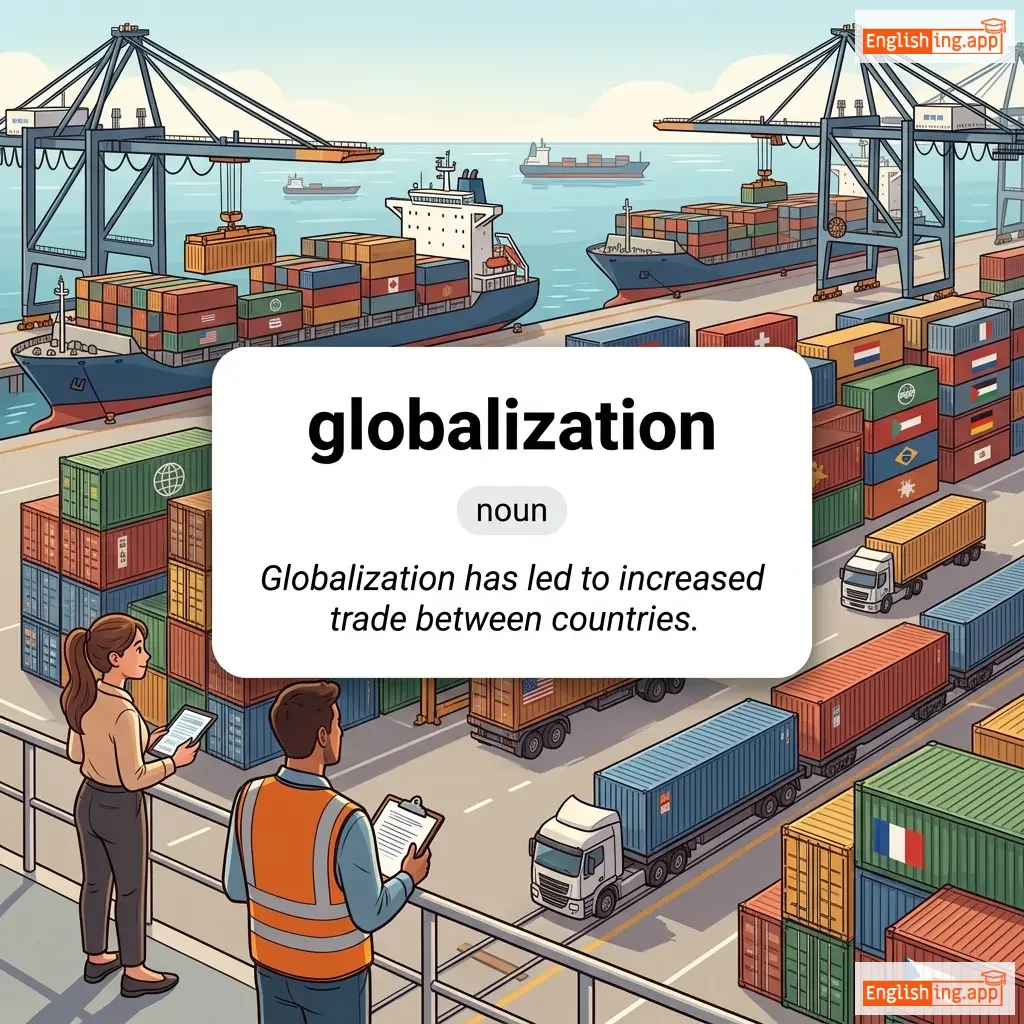
ˌɡloʊ.bəl.aɪˈzeɪ.ʃən
noun
(全球化)
••••••
|
|
全球化
quanqiuhua
••••••
|
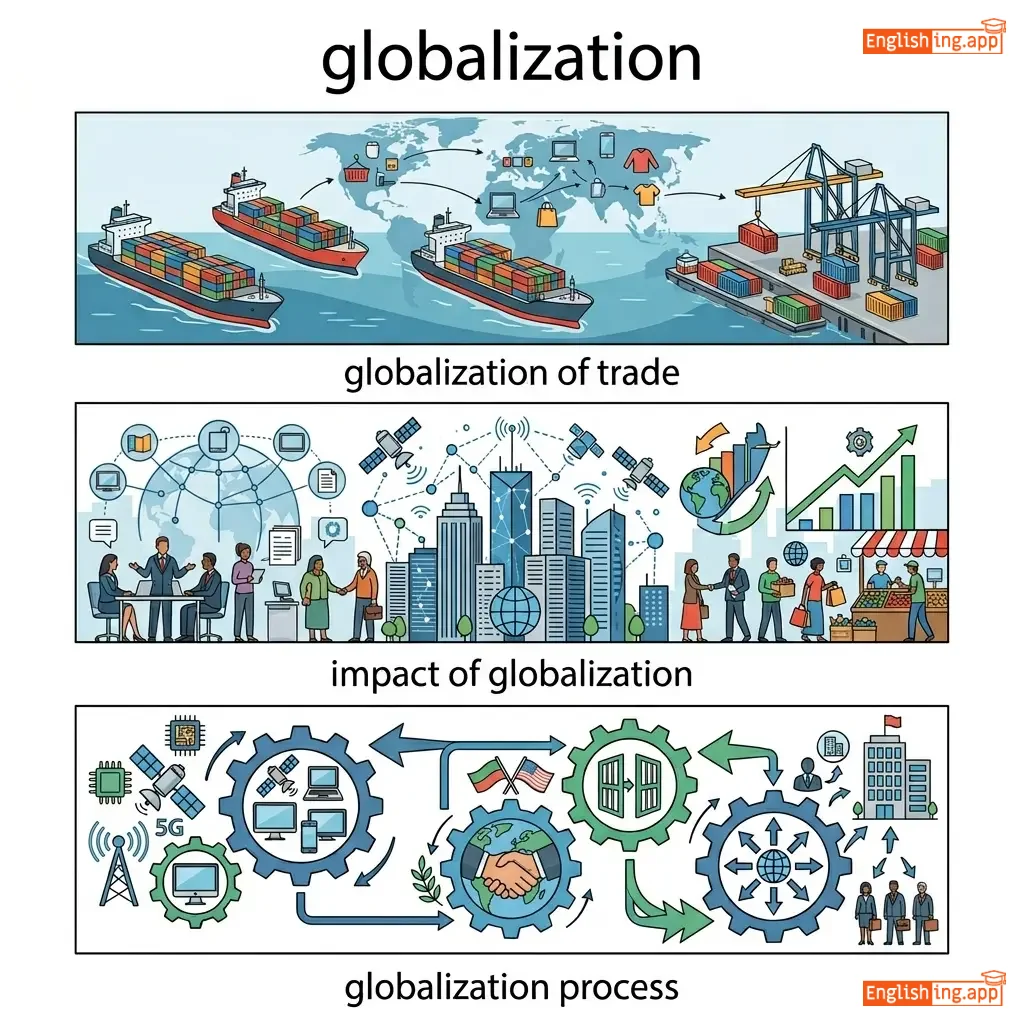
The process by which businesses or other organizations develop international influence or start operating on an international scale.
••••••
|
Globalization has connected economies across the world.
全球化已经将世界各地的经济联系起来。
••••••
|
全球化已经将世界各地的经济联系起来。
Quanqiuhua yijing jiang shijie gedi de jingji lianxi qilai.
••••••
|
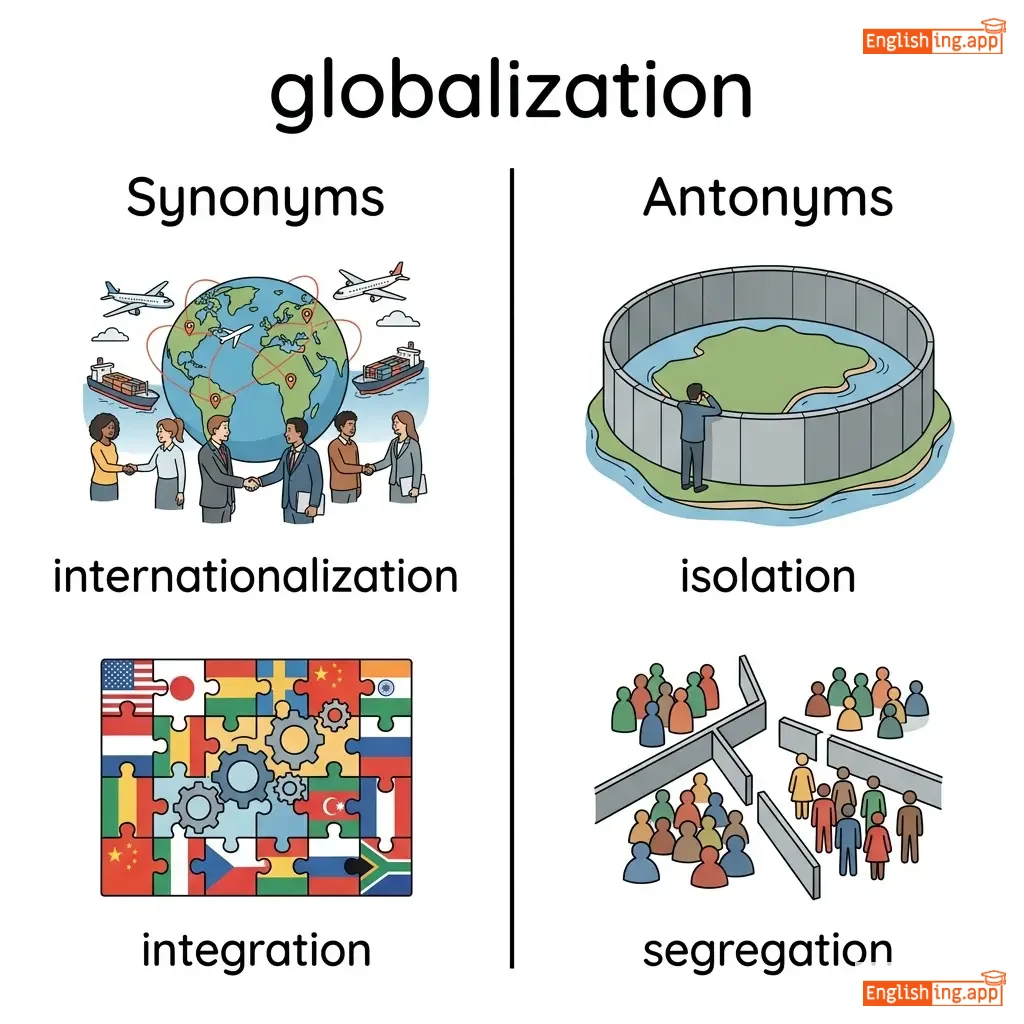
internationalization, integration, expansion
••••••
|
isolation, protectionism, nationalism
••••••
|
Globalization = '全球化', 连接世界经济,全球合作。
••••••
|
|
#1943
🔗
|
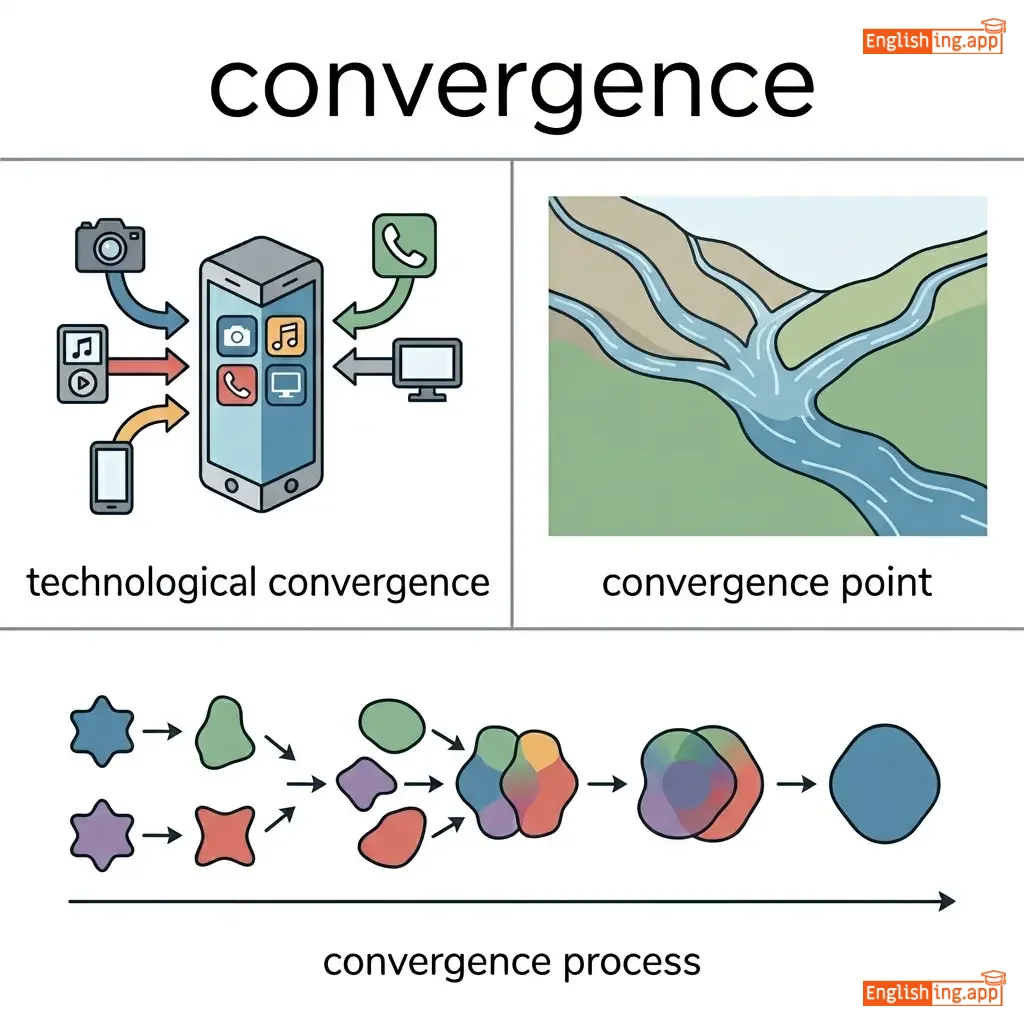
kənˈvɜː.dʒəns
noun
(融合)
••••••
|
|
融合
ronghe
••••••
|
The process or state of converging or coming together.
••••••
|
The convergence of technology and healthcare has led to medical advancements. |
技术和医疗保健的融合推动了医学进步。
Jìshù hé yīliáo bǎojiàn de rónghé tuīdòngle yīxué jìnbù.
••••••
|
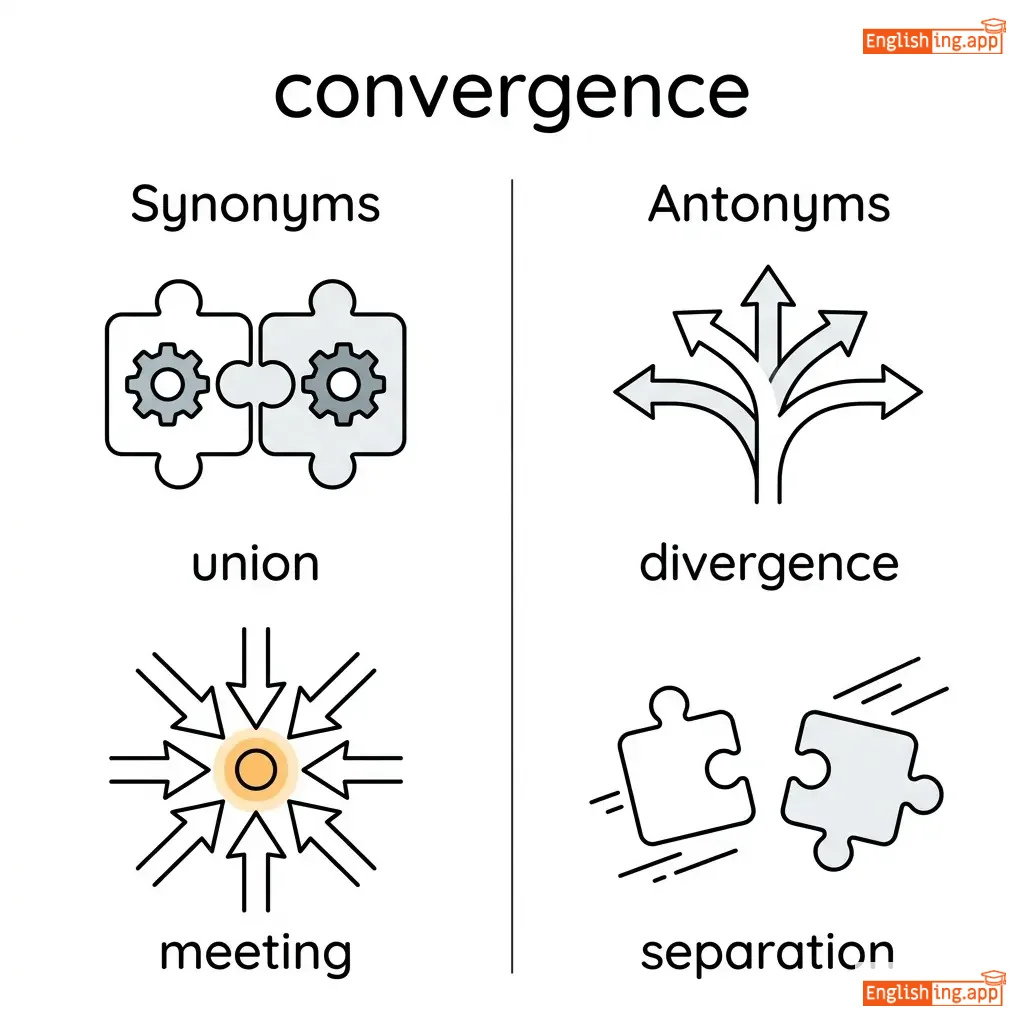
union, merging, alignment
••••••
|
divergence, separation, deviation
••••••
|
融合 - 两个方向汇聚,就像技术和医学的结合。
••••••
|
|
#1944
💼
|
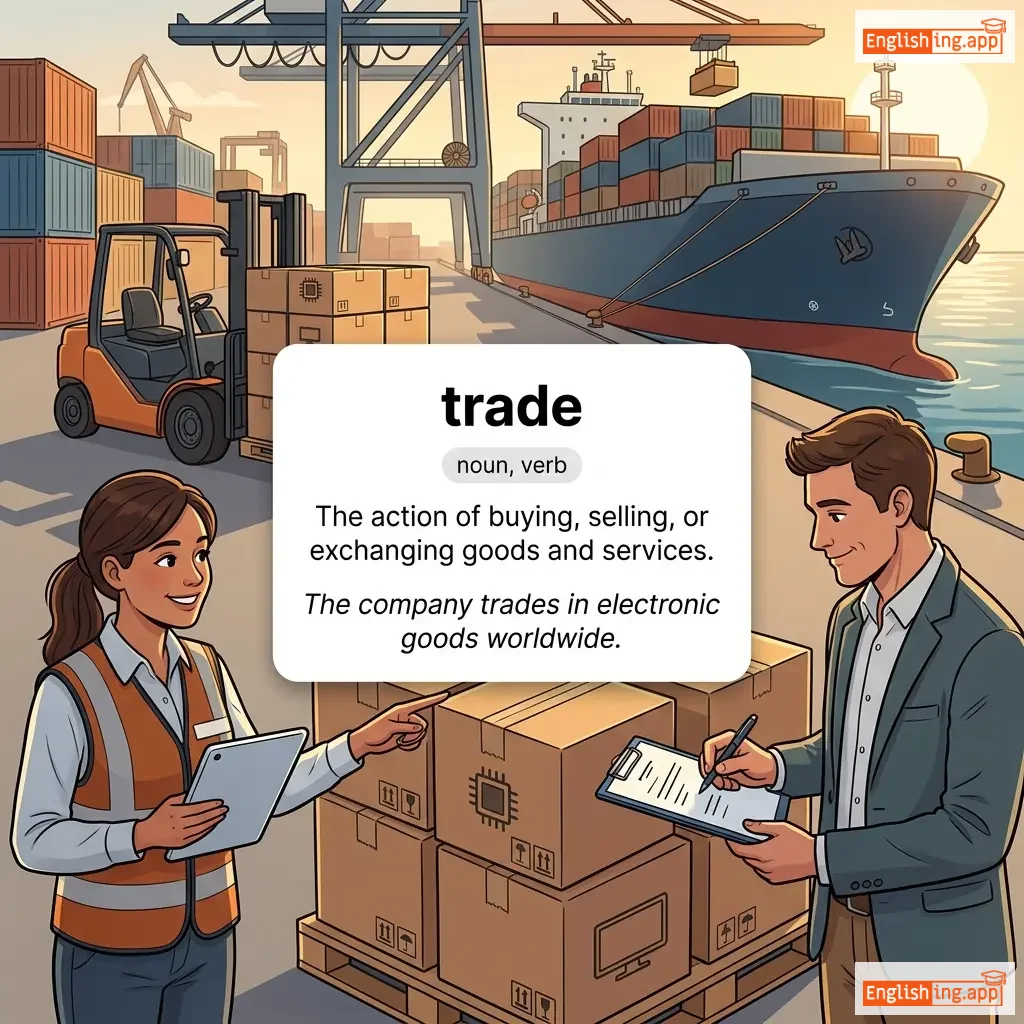
treɪd
noun/verb
(trɛɪd)
••••••
|
|
贸易
maoyi
••••••
|
The action of buying and selling goods and services.
••••••
|
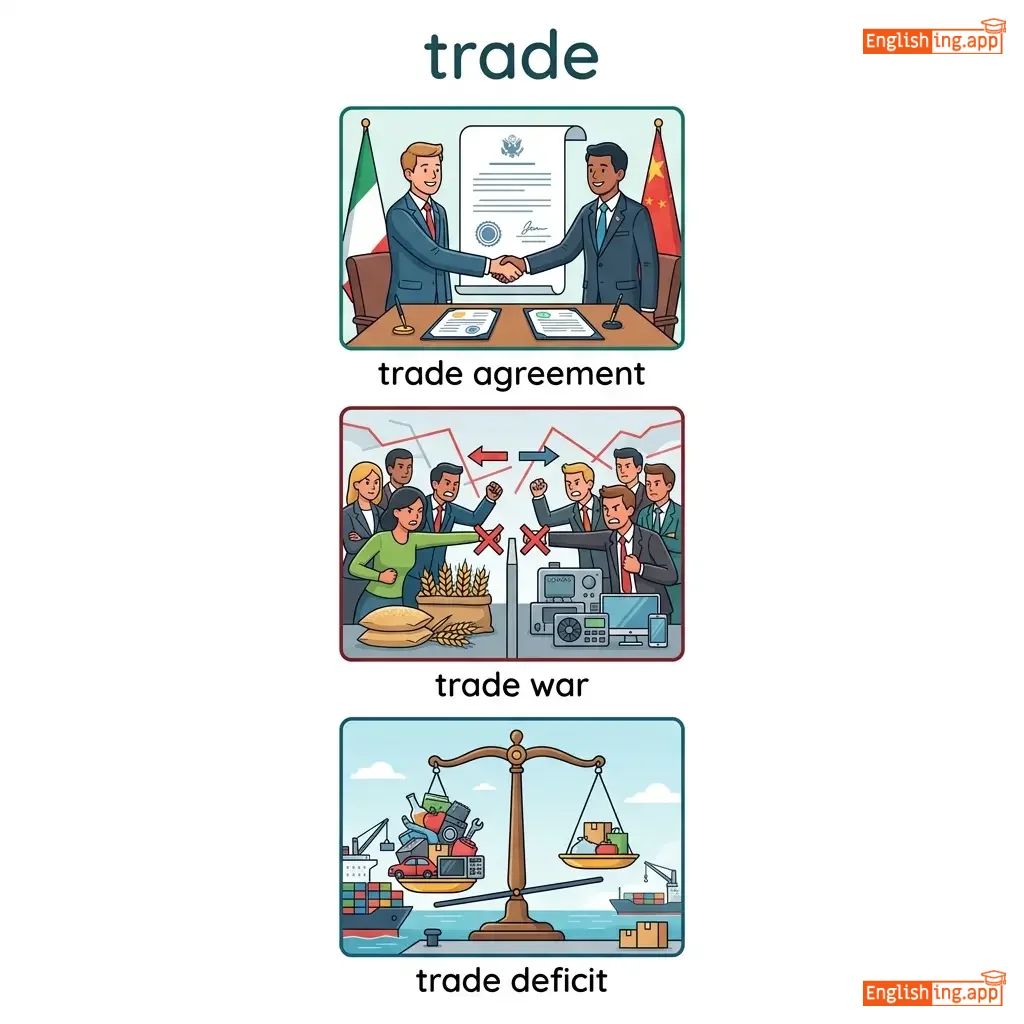
Trade agreements help boost economic growth. |
贸易协议有助于促进经济增长。
Maoyi xieyi youzhu yu cucjin jingji zengzhang.
••••••
|
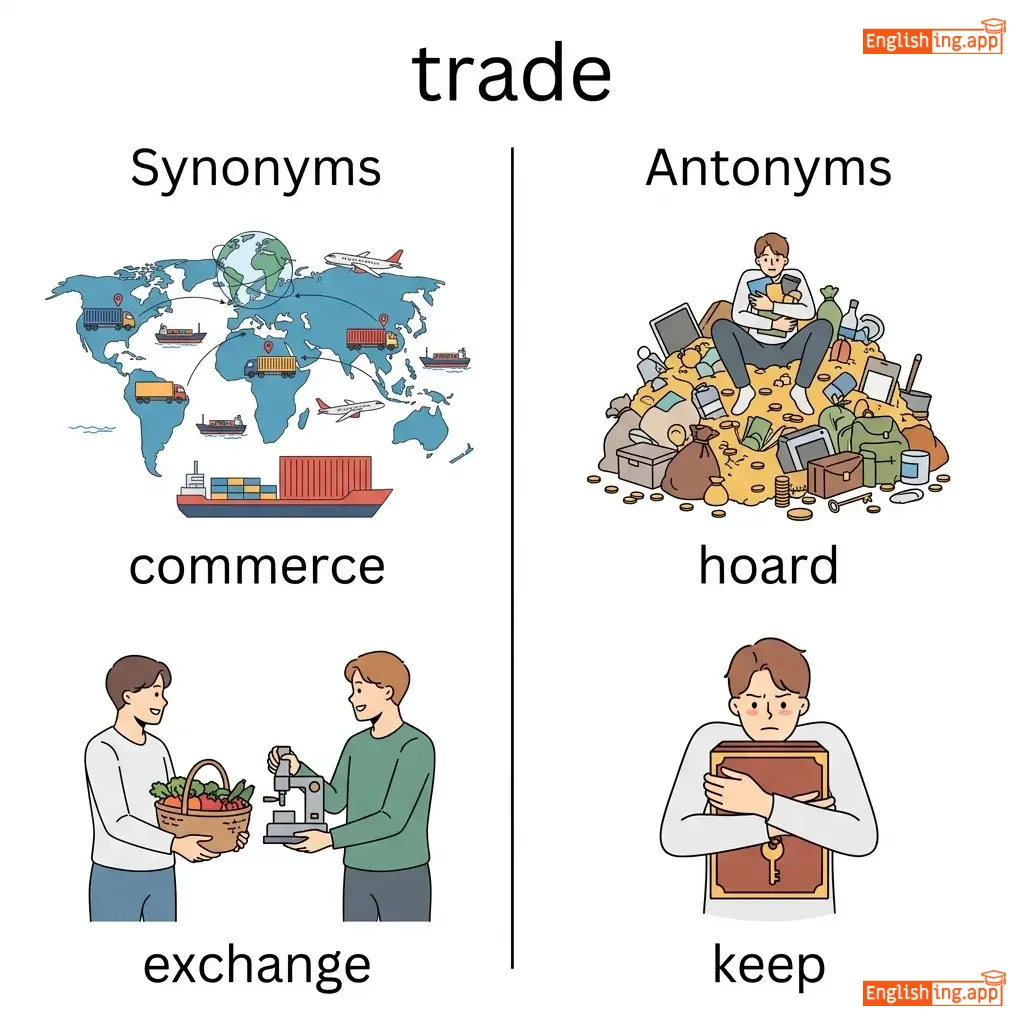
commerce, exchange, transactions
••••••
|
self-sufficiency, hoarding, monopoly
••••••
|
贸易就像市场上的交换,物品交换成经济增长。
••••••
|
|
#1945
💰
|
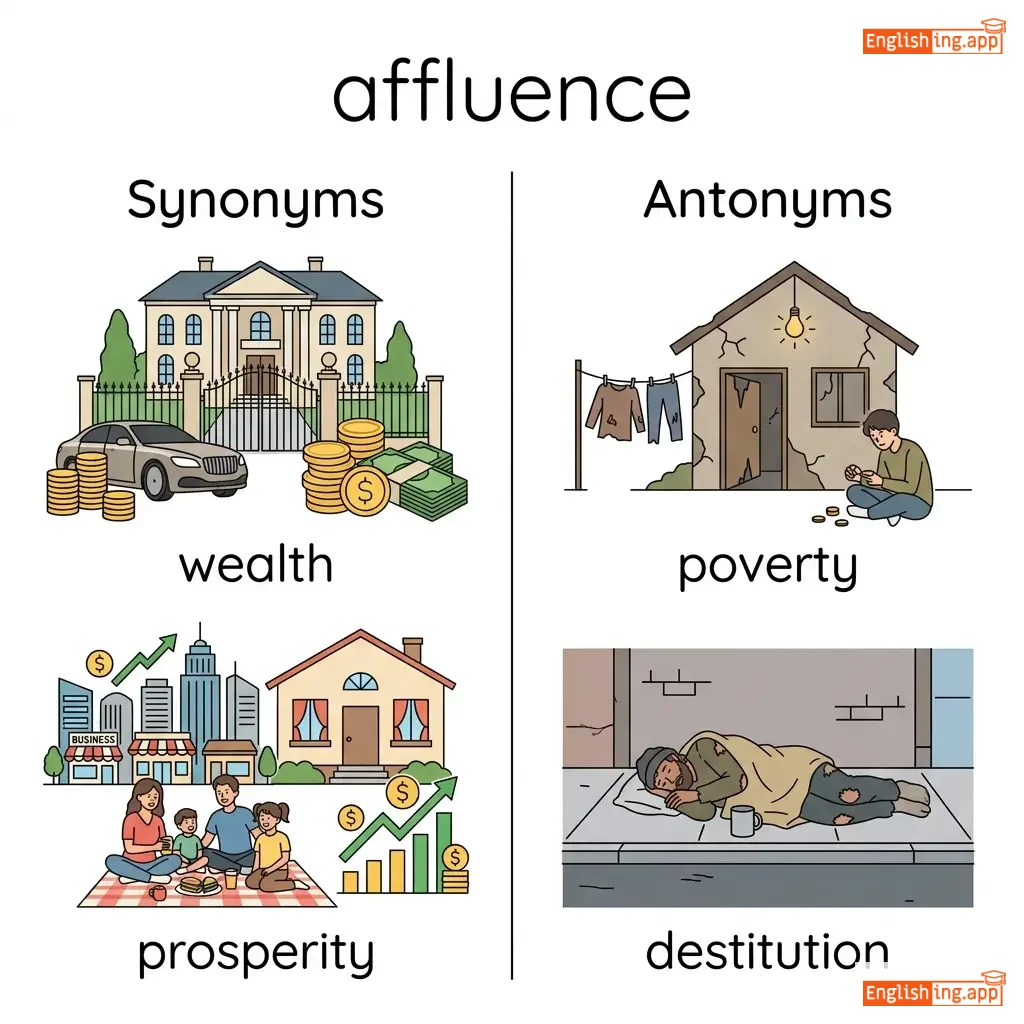
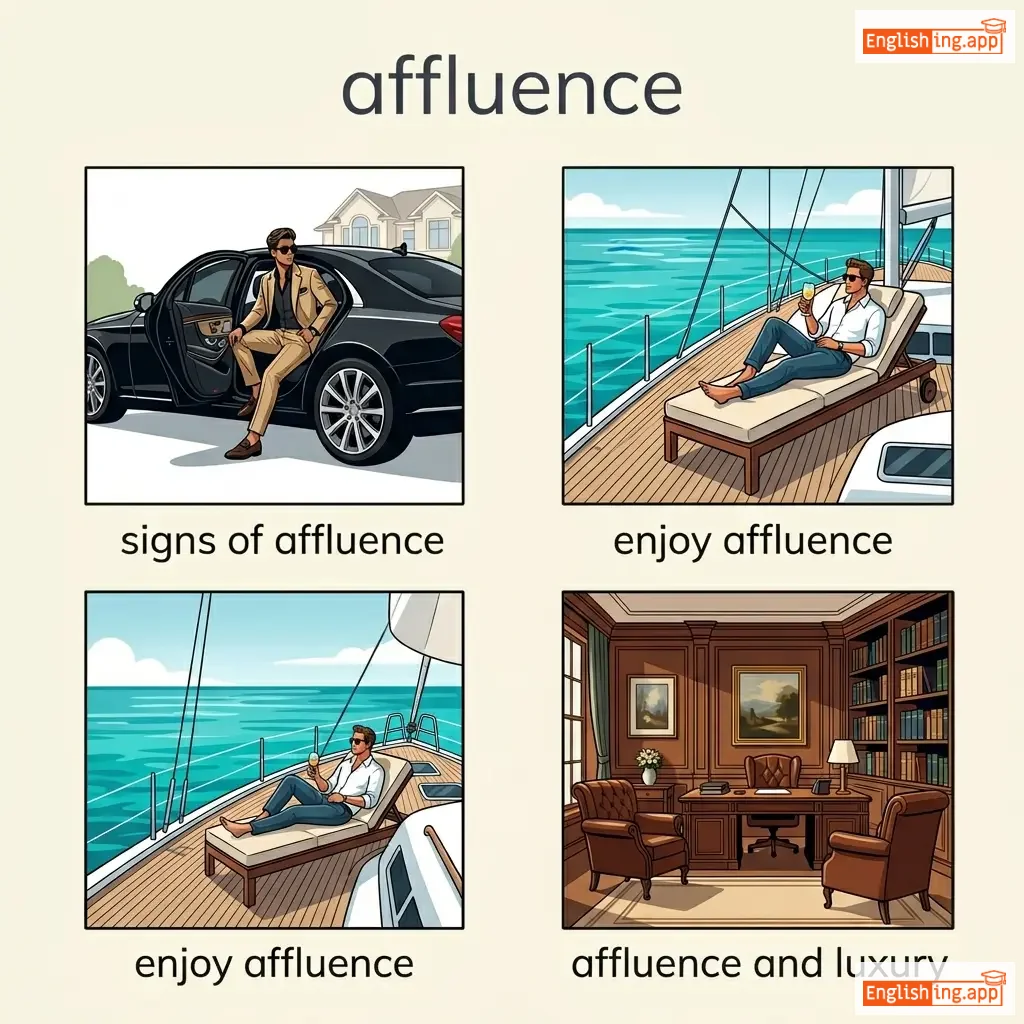
ˈæf.lu.əns
noun
(阿富汗)
••••••
|
|
富裕
fuyu
••••••
|
The state of having a great deal of money; wealth.
••••••
|
His affluence allowed him to travel the world.
他的财富使他能够环游世界。
••••••
|
他的财富使他能够环游世界。
Tā de cáifù shǐ tā nénggòu huányóu shìjiè.
••••••
|
wealth, prosperity, opulence
••••••
|
poverty, scarcity, hardship
••••••
|
In Chinese, '富裕' refers to wealth, closely matching the meaning of affluence.
••••••
|
|
#1946
⚖️
|
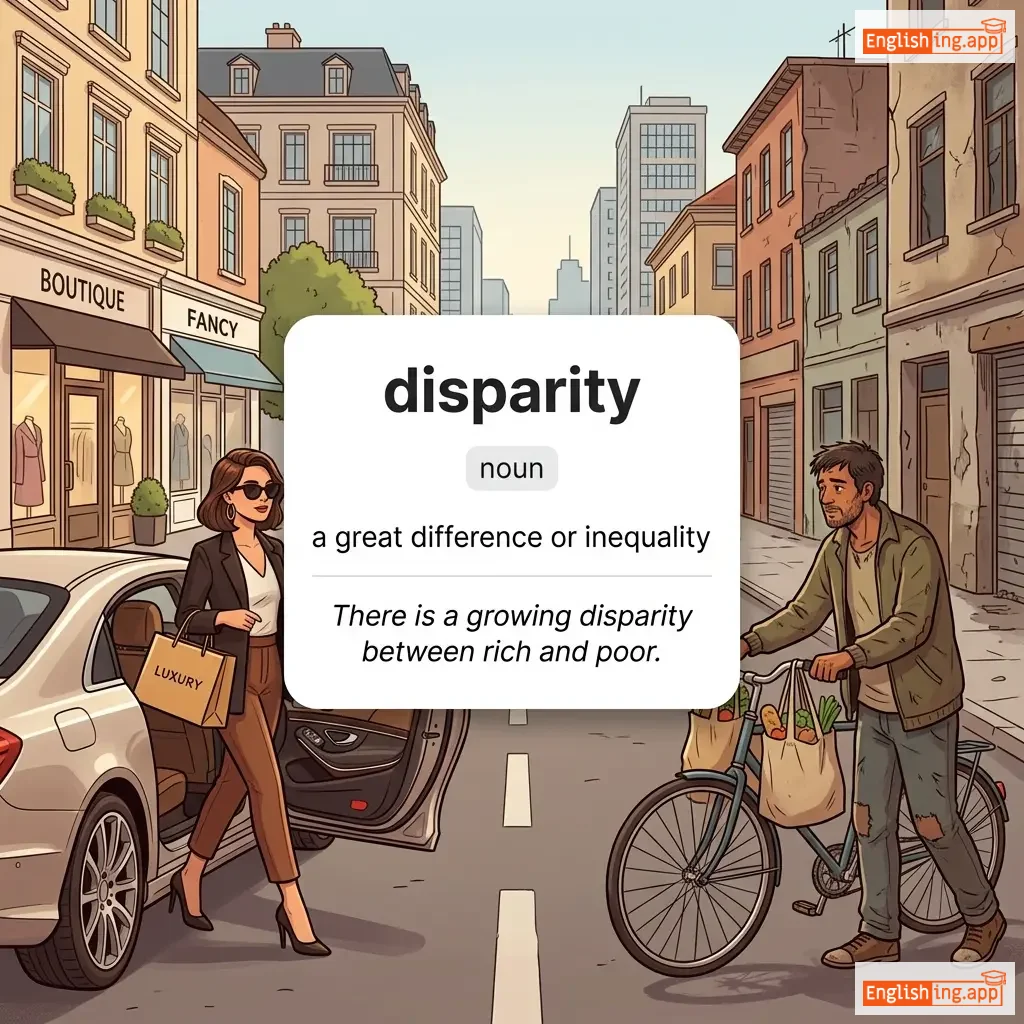
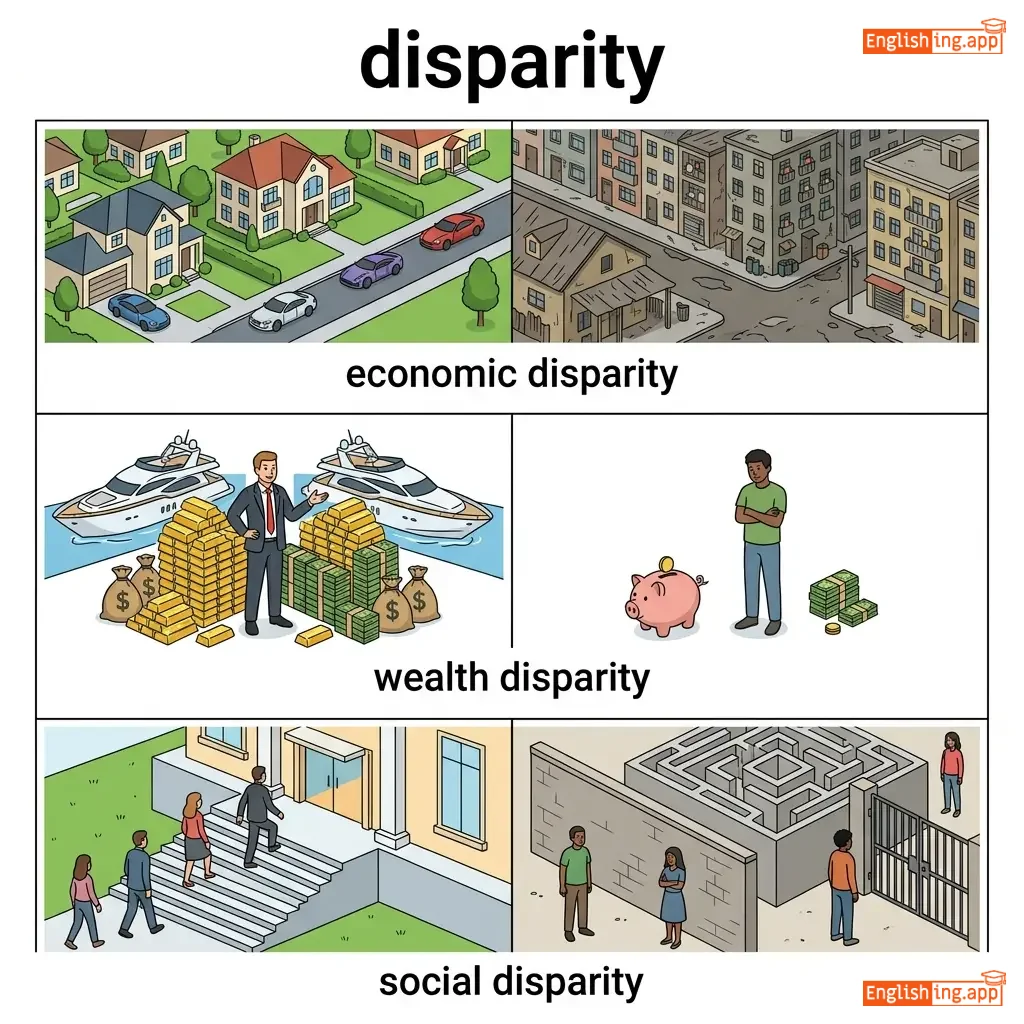
dɪˈspær.ɪ.ti
noun
(差异)
••••••
|
|
差距
chaju
••••••
|
A great difference between things; inequality.
••••••
|
Economic disparity exists between rural and urban areas. |
农村和城市地区之间存在经济差距。
Nóngcūn hé chéngshì dìqū zhī jiān cúnzài jīngjì chājù.
••••••
|
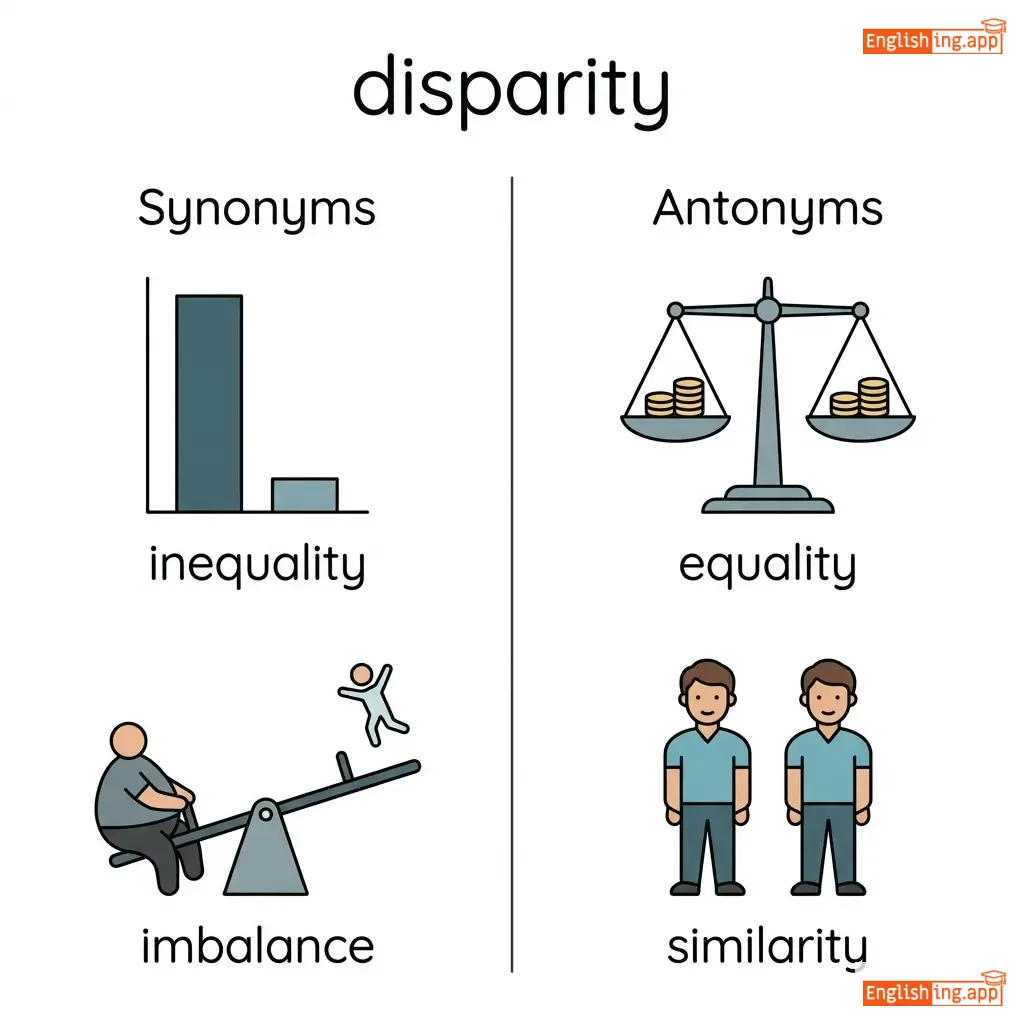
inequality, imbalance, difference
••••••
|
equality, uniformity, fairness
••••••
|
No •••••• |
|
#1947
🚫
|
ˌmɑːr.dʒɪ.nəl.aɪˈzeɪ.ʃən
noun
(mɑːr.dʒɪ.nəl.aɪˈzeɪ.ʃən)
••••••
|
|
边缘化
bian yuan hua
••••••
|
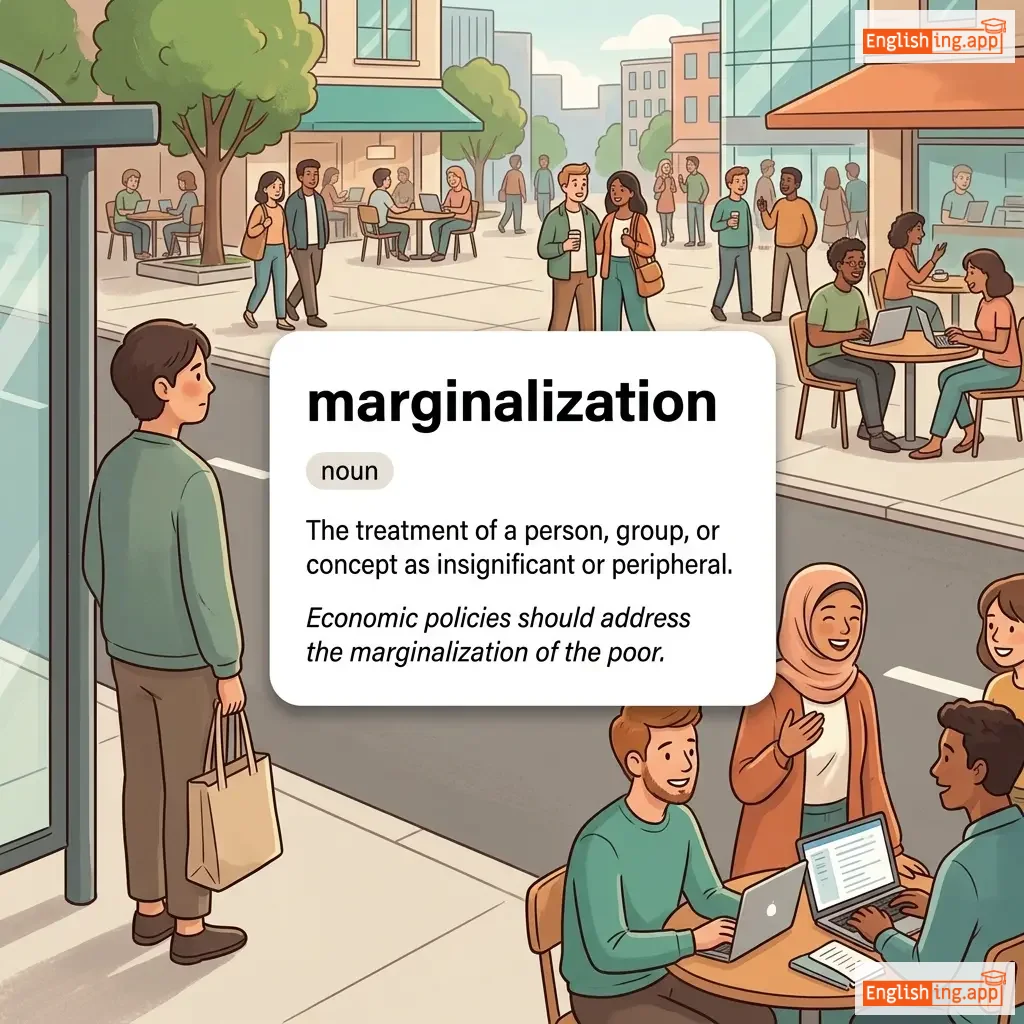
The treatment of a person, group, or concept as insignificant or peripheral.
••••••
|
Economic policies should address the marginalization of the poor. |
经济政策应解决贫困者的边缘化问题。
Jingji zhengce ying jie jue pin kun zhe de bianyuanhua wenti.
••••••
|
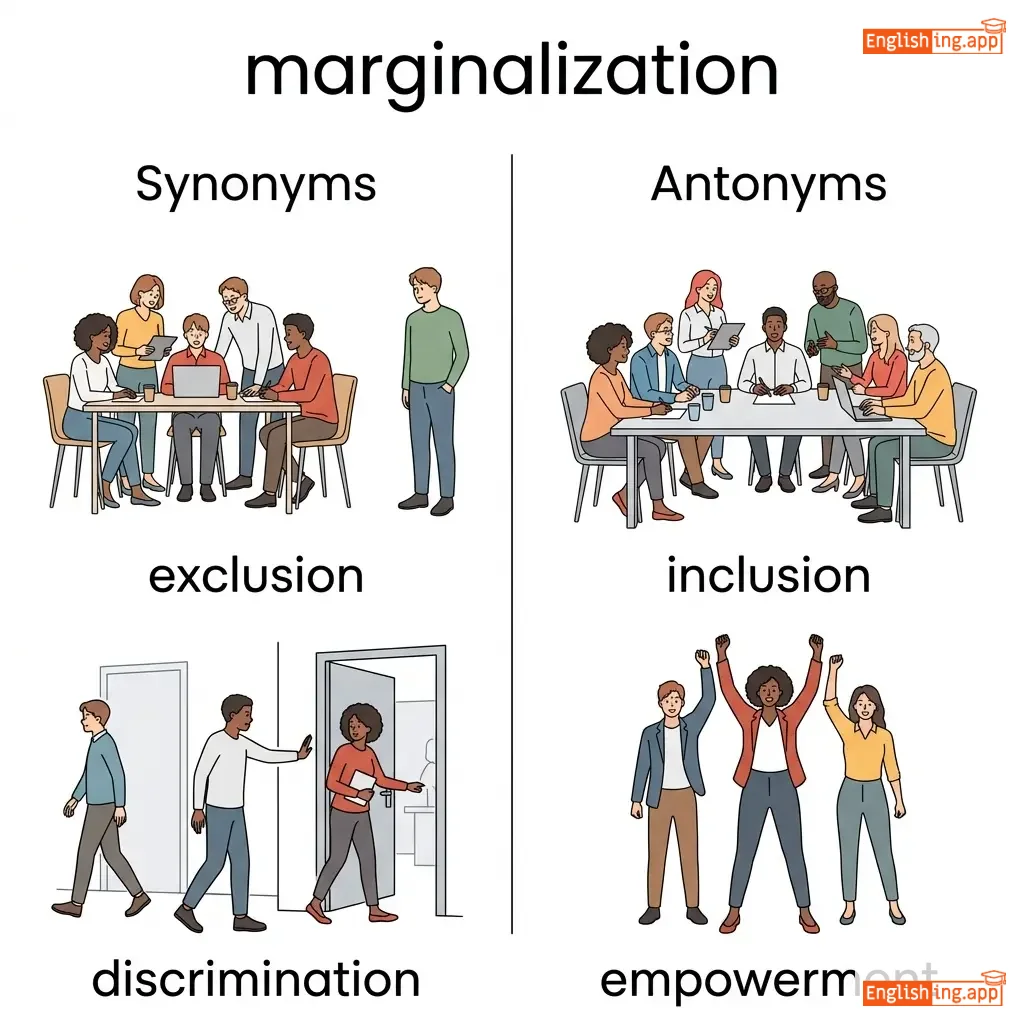
exclusion, discrimination, alienation
••••••
|
inclusion, empowerment, recognition
••••••
|
边缘化的意思是把某人或事物放在边边角角
••••••
|
|
#1948
🔓
|
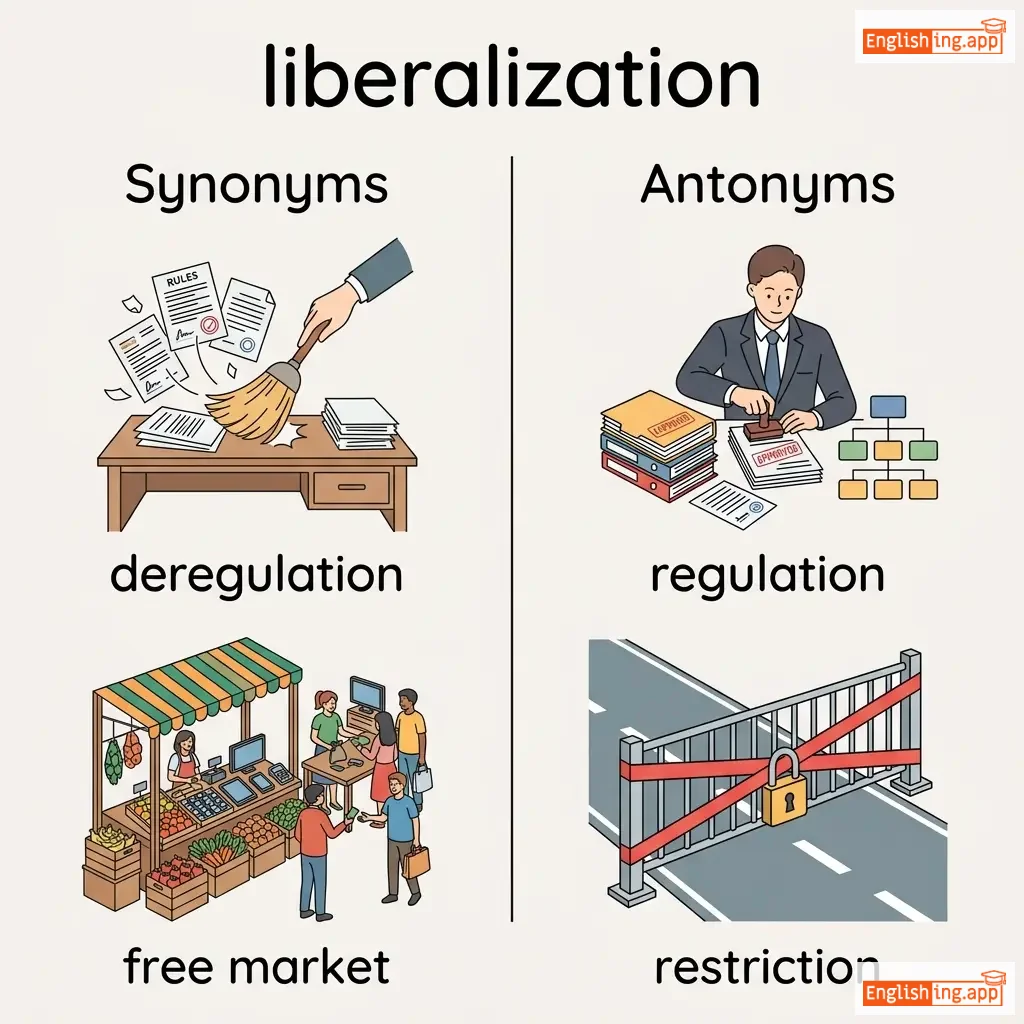
ˌlɪb.ər.ə.laɪˈzeɪ.ʃən
noun
(自由化)
••••••
|
|
自由化
zì yóu huà
••••••
|
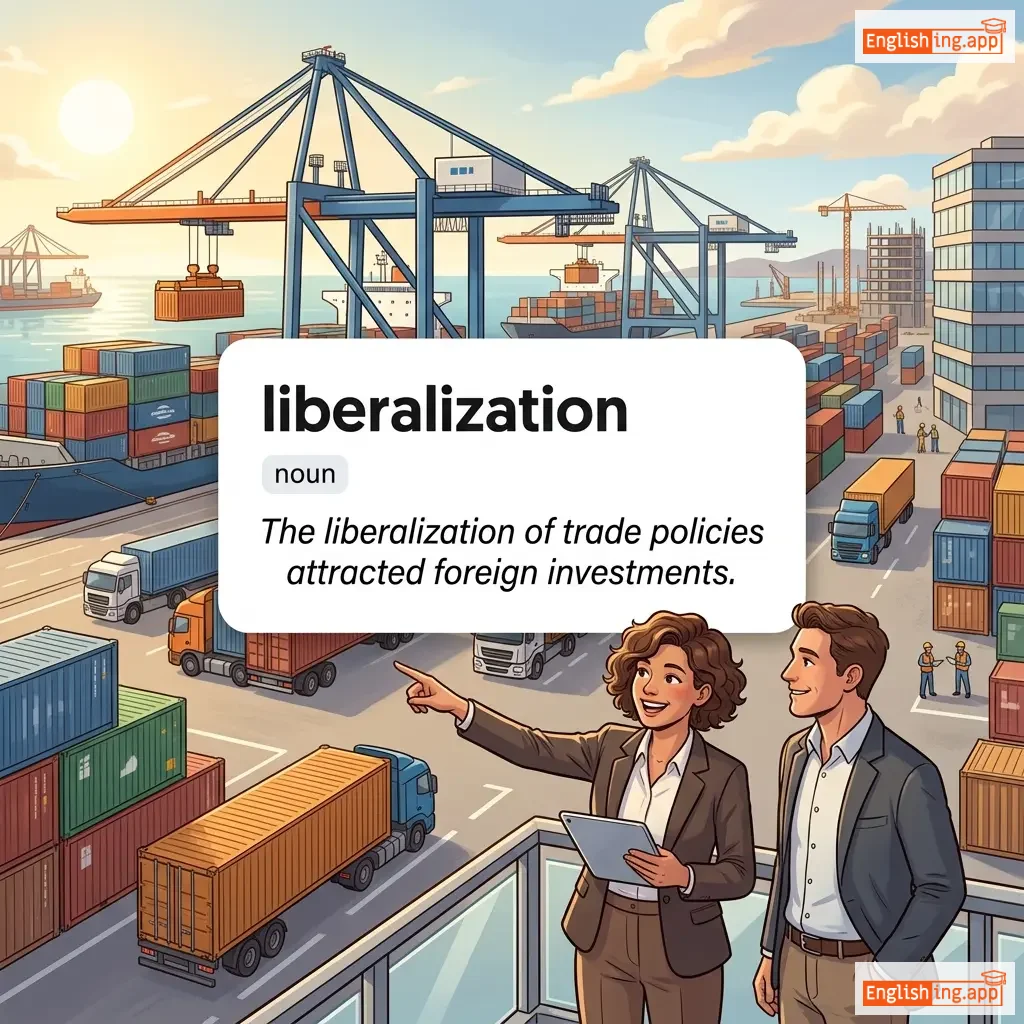
The removal or loosening of restrictions on something, typically an economic or political system.
••••••
|
The liberalization of trade policies attracted foreign investments. |
贸易政策的自由化吸引了外国投资。
Màoyì zhèngcè de zìyóuhuà xīyǐnle wàiguó tóuzī.
••••••
|
deregulation, free market, relaxation
••••••
|
regulation, restriction, control
••••••
|
自由化意味着'自由'经济活动,允许更多的投资和增长。
••••••
|
|
#1949
🌐
|
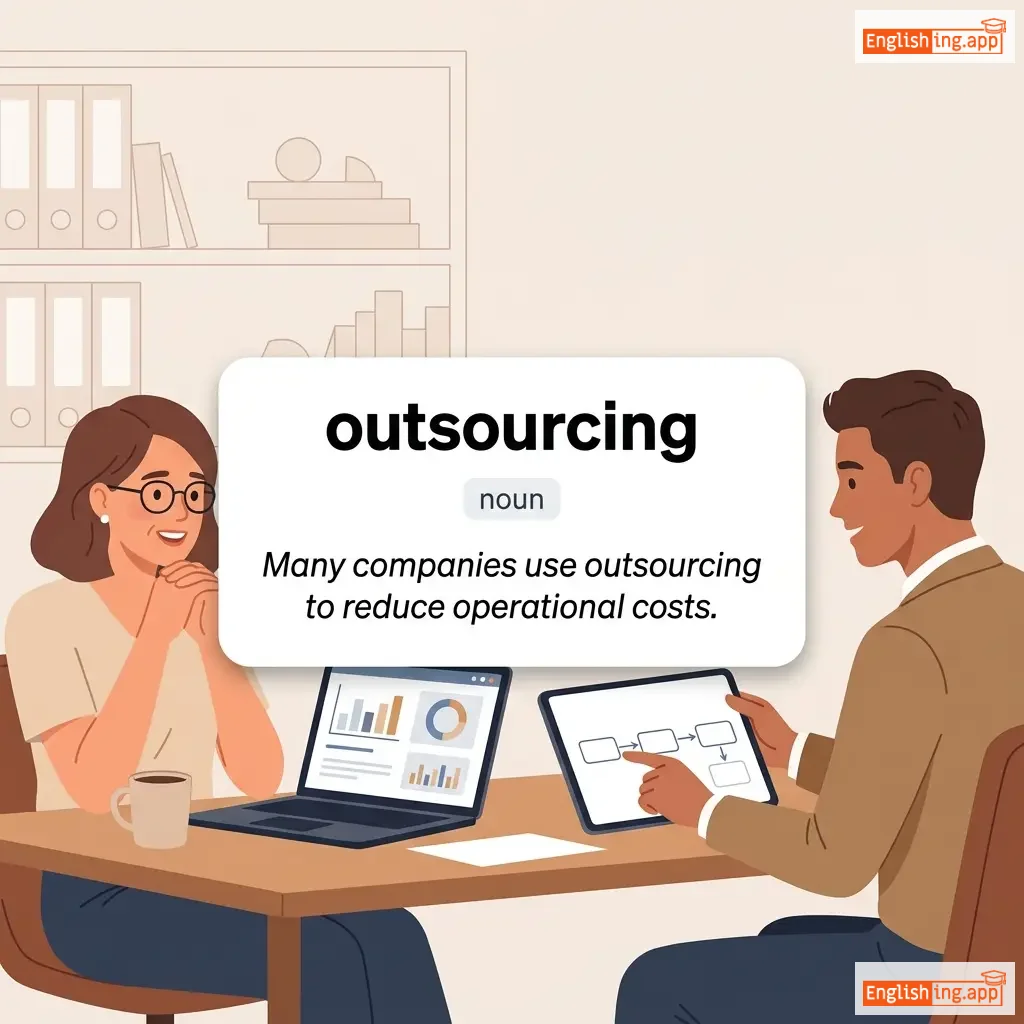
ˈaʊt.sɔːr.sɪŋ
noun
(外包)
••••••
|
|
外包
waibao
••••••
|
The practice of having certain job functions done outside a company instead of having an in-house department or employee handle them.
••••••
|
Many companies use outsourcing to reduce labor costs. |
许多公司使用外包来降低劳动力成本。
Xu duo gongsi shiyong waibao lai jiangdi laodongli chengben.
••••••
|
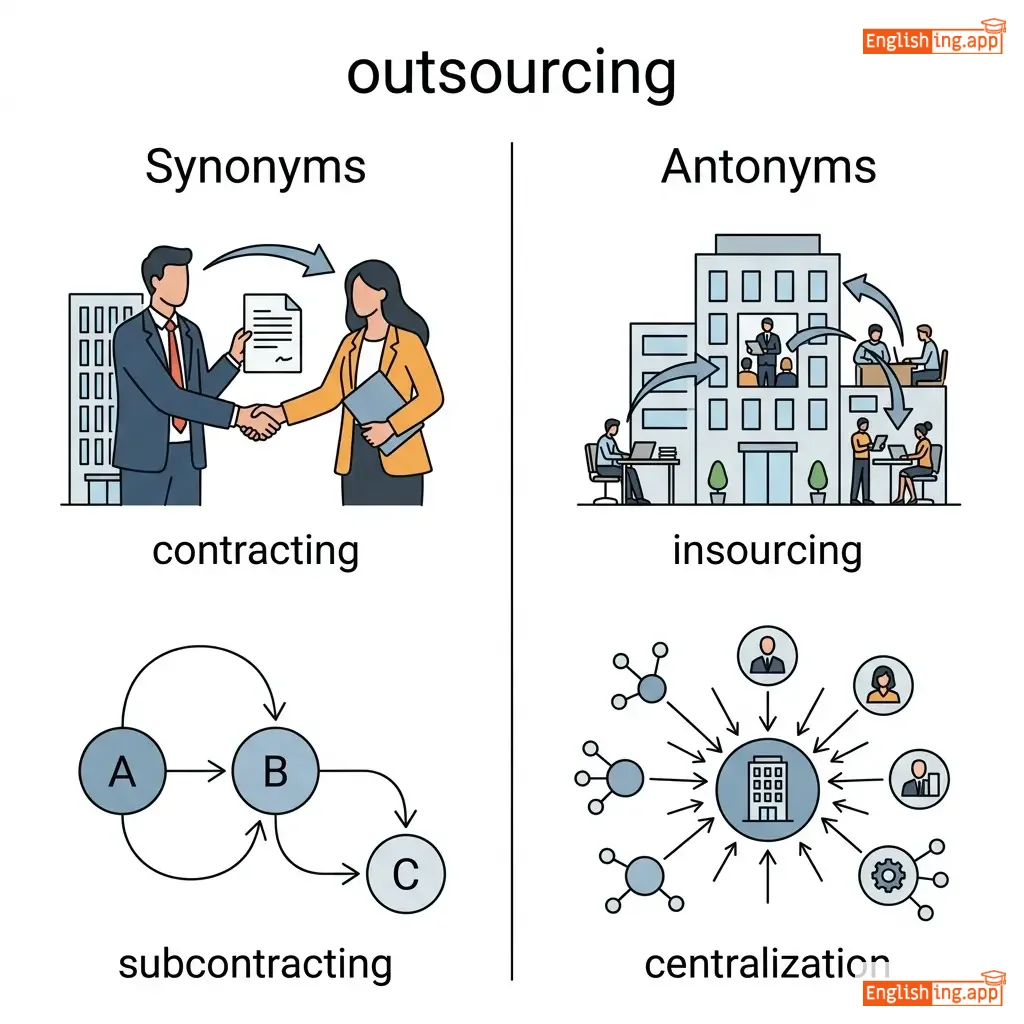
contracting, delegation, offshoring
••••••
|
insourcing, domestic hiring, internalization
••••••
|
外包就是把工作交给外部,像是在节省成本一样。
••••••
|
|
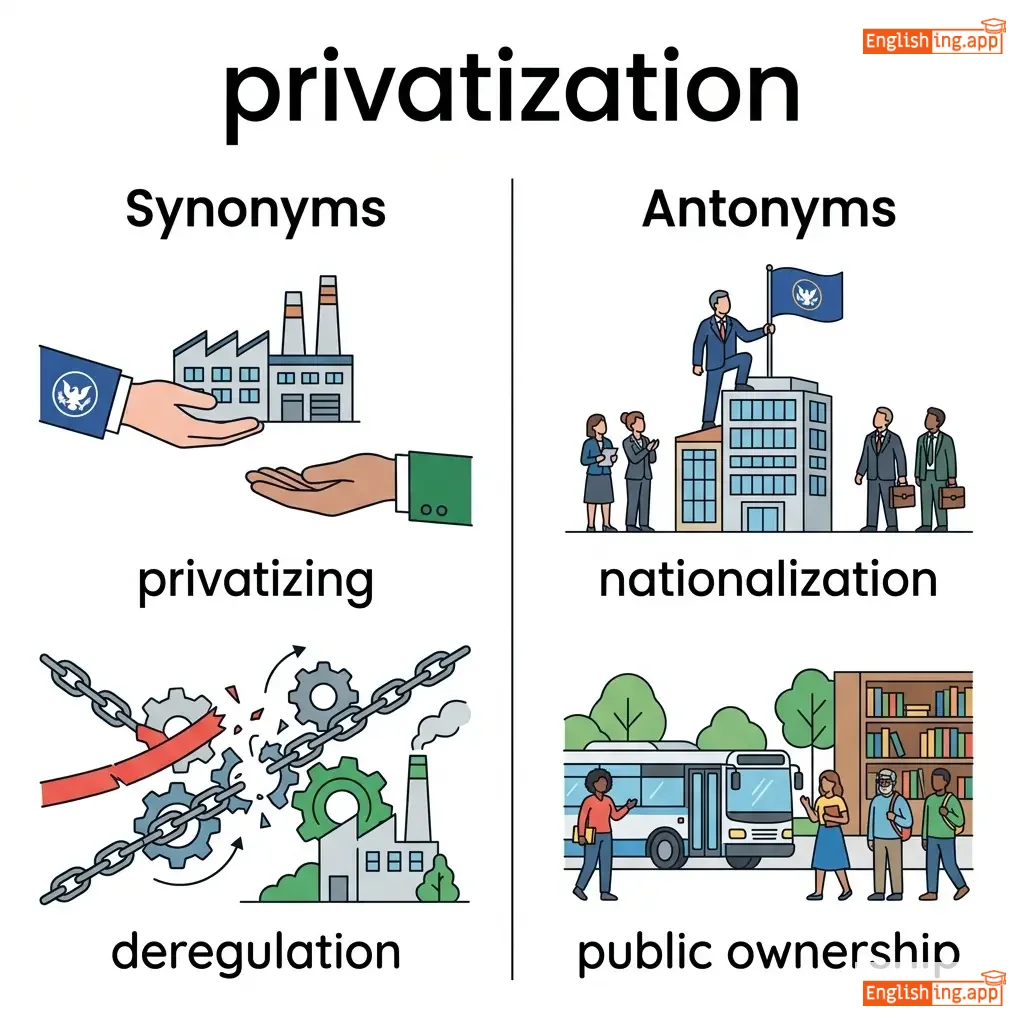
#1950
🏢
|
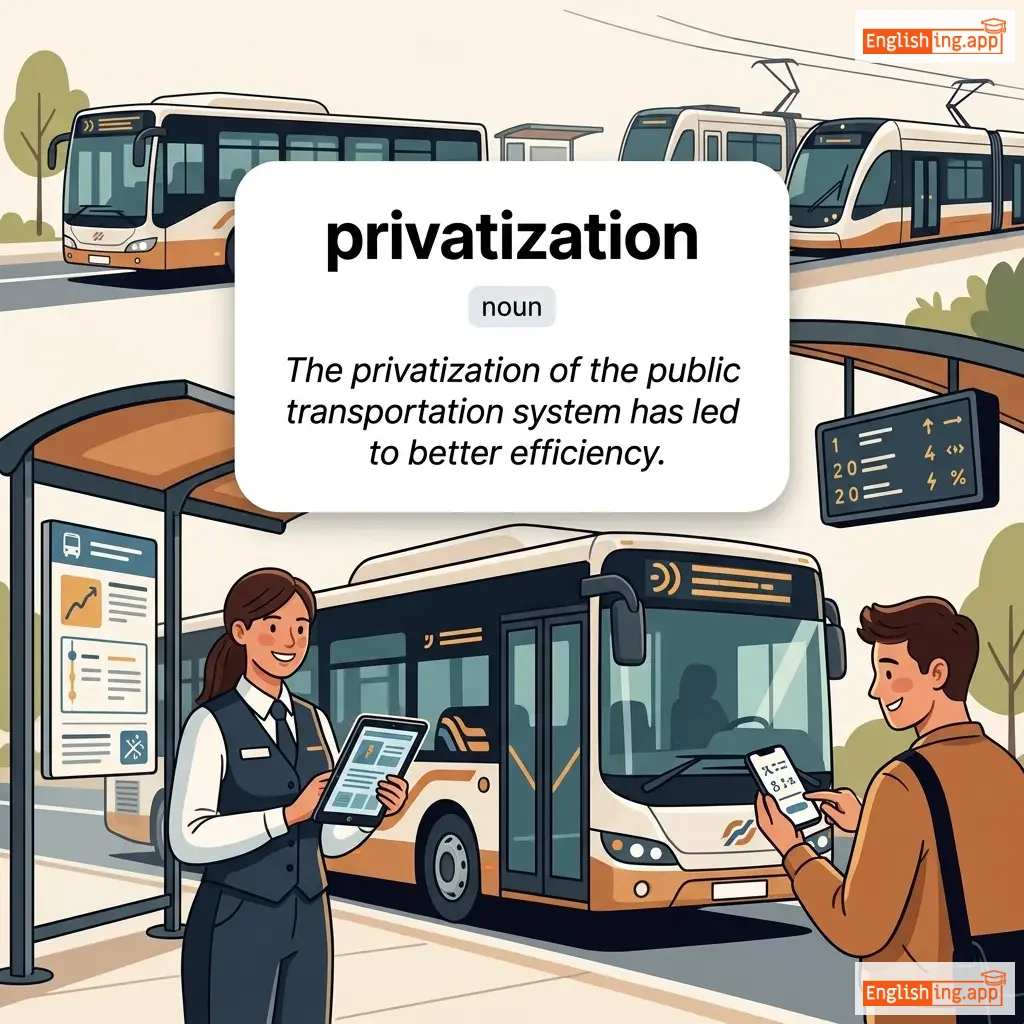
ˌpraɪ.vɪ.taɪˈzeɪ.ʃən
noun
(pǔ lái wéi tè zāi shùn)
••••••
|
|
私有化
sī yǒu huà
••••••
|
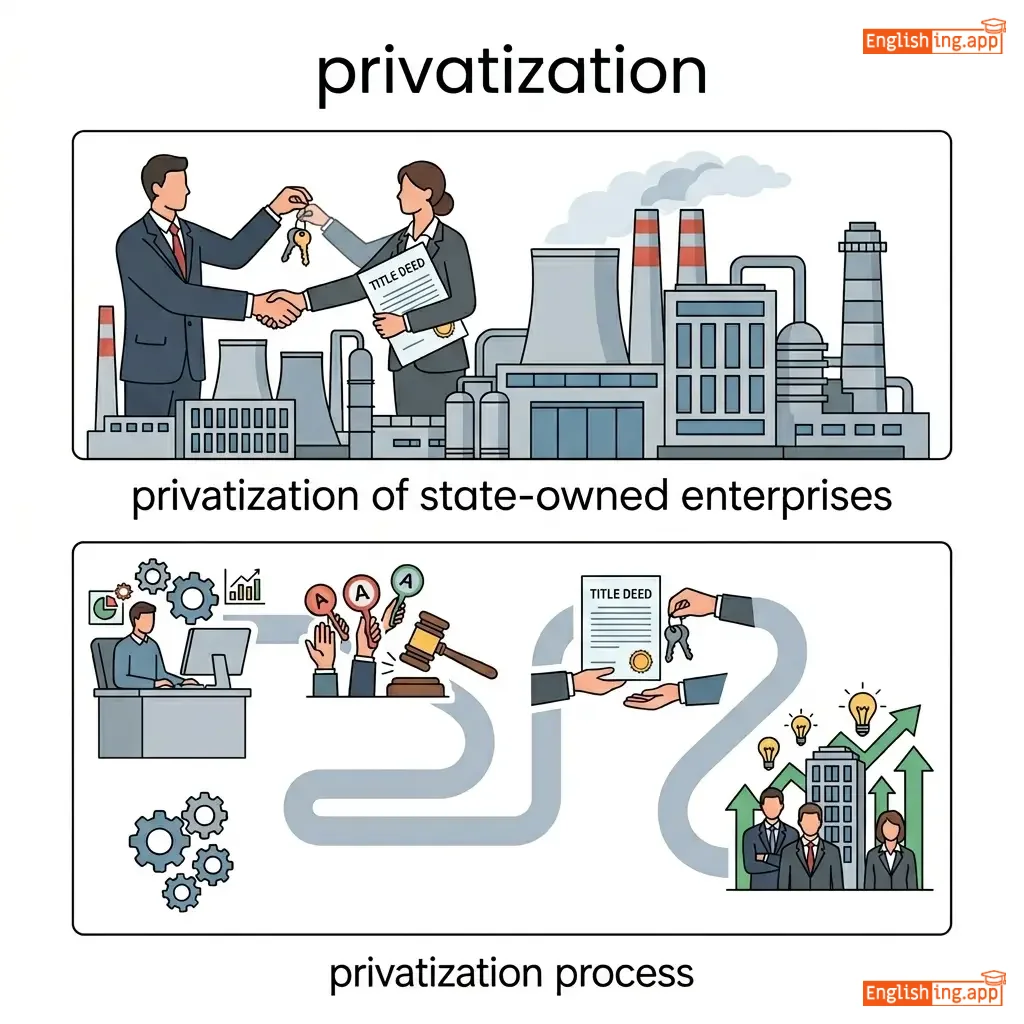
The transfer of a business, industry, or service from public to private ownership and control.
••••••
|
The privatization of state-owned companies increased efficiency.
国有企业的私有化提高了效率。
••••••
|
国有企业的私有化提高了效率。
Guó yǒu qǐ yè de sī yǒu huà tí gāo le xiào lǜ.
••••••
|
commercialization, private ownership, de-nationalization
••••••
|
nationalization, public ownership, socialization
••••••
|
Privat + 化 = 私有化
••••••
|
|
#1951
🤝
|
kənˌsɒl.ɪˈdeɪ.ʃən
noun
(kənˌsɒl.ɪˈdeɪ.ʃən)
••••••
|
|
合并
hébìng
••••••
|
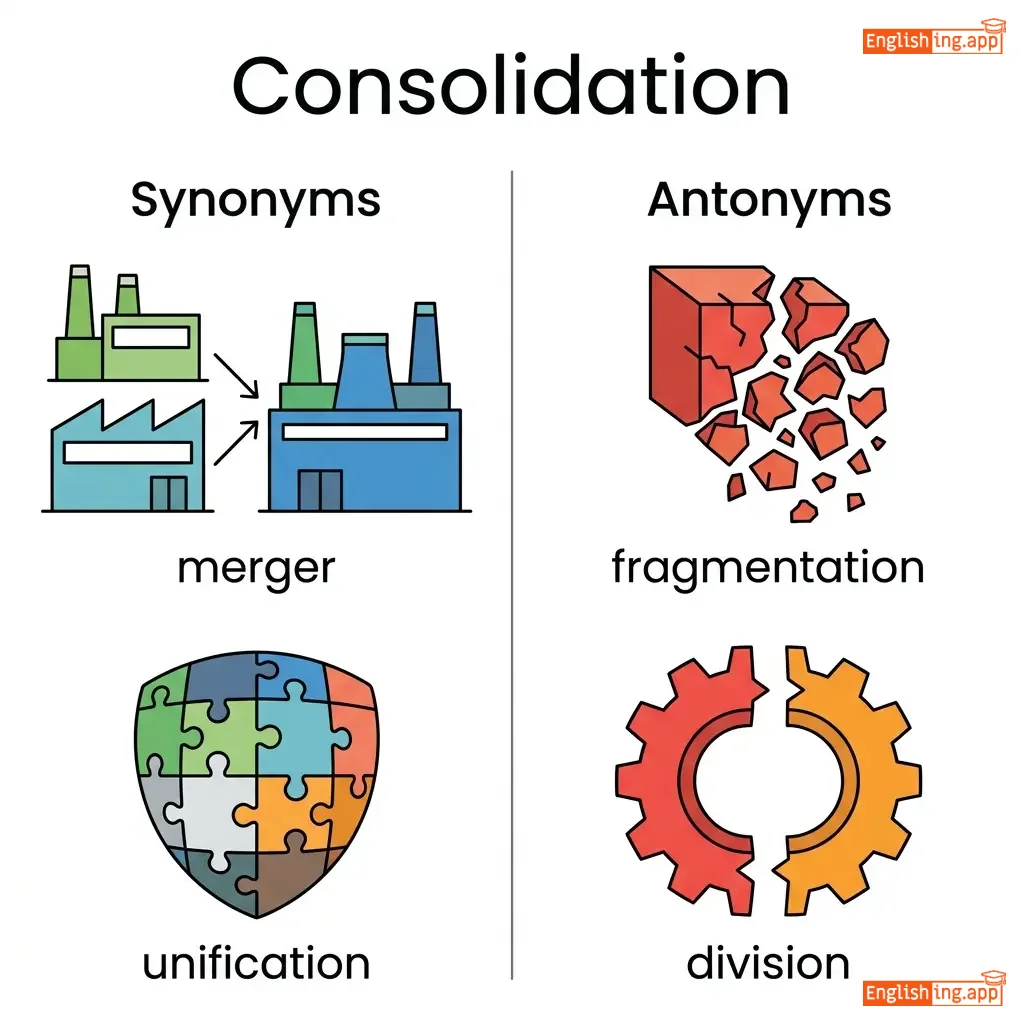
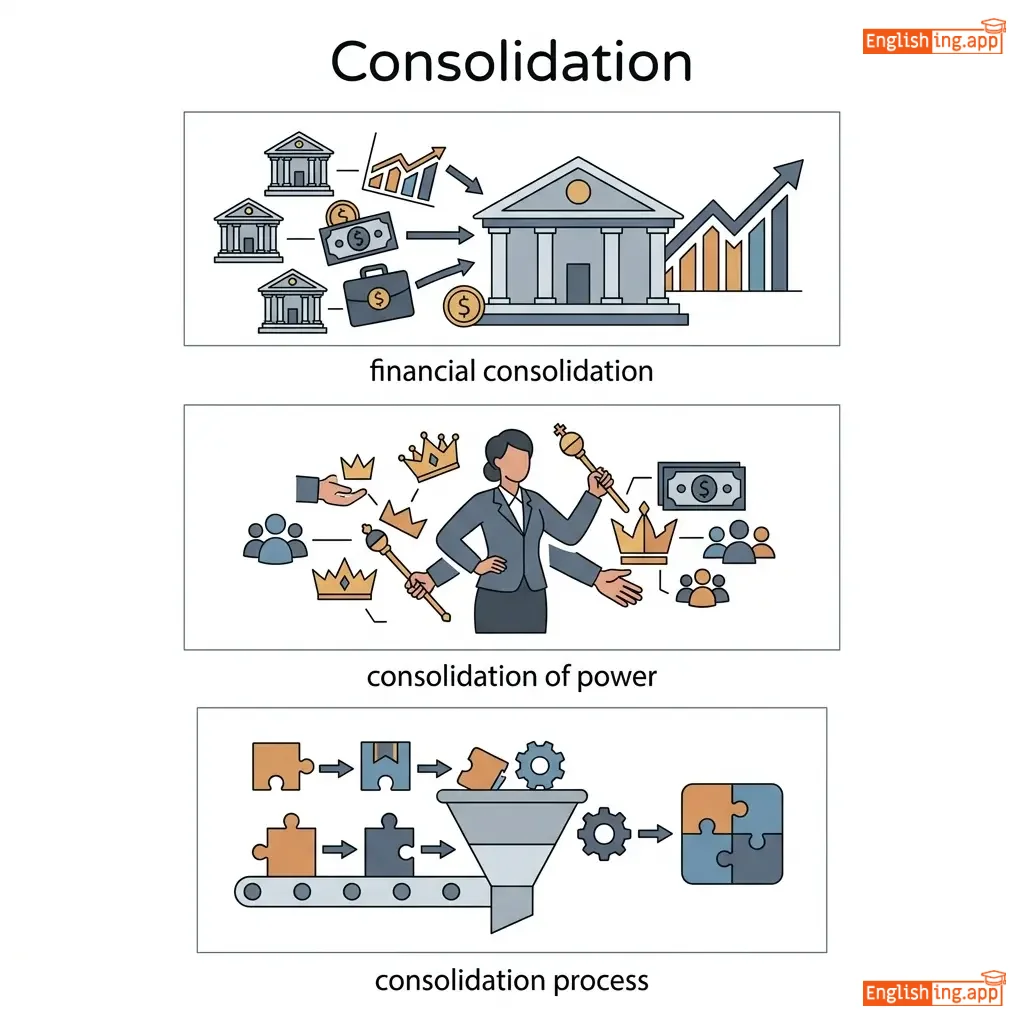
The action or process of making something stronger or more solid.
••••••
|
The consolidation of companies led to a more efficient business structure.
公司整合导致了更高效的商业结构。
••••••
|
公司整合导致了更高效的商业结构。
Gōngsī zhěnghé dǎozhìle gèng gāoxiào de shāngyè jiégòu.
••••••
|
merger, unification, strengthening
••••••
|
fragmentation, division, separation
••••••
|
合并让事物变得更强,像一道墙。
••••••
|
|
#1952
🛡️
|
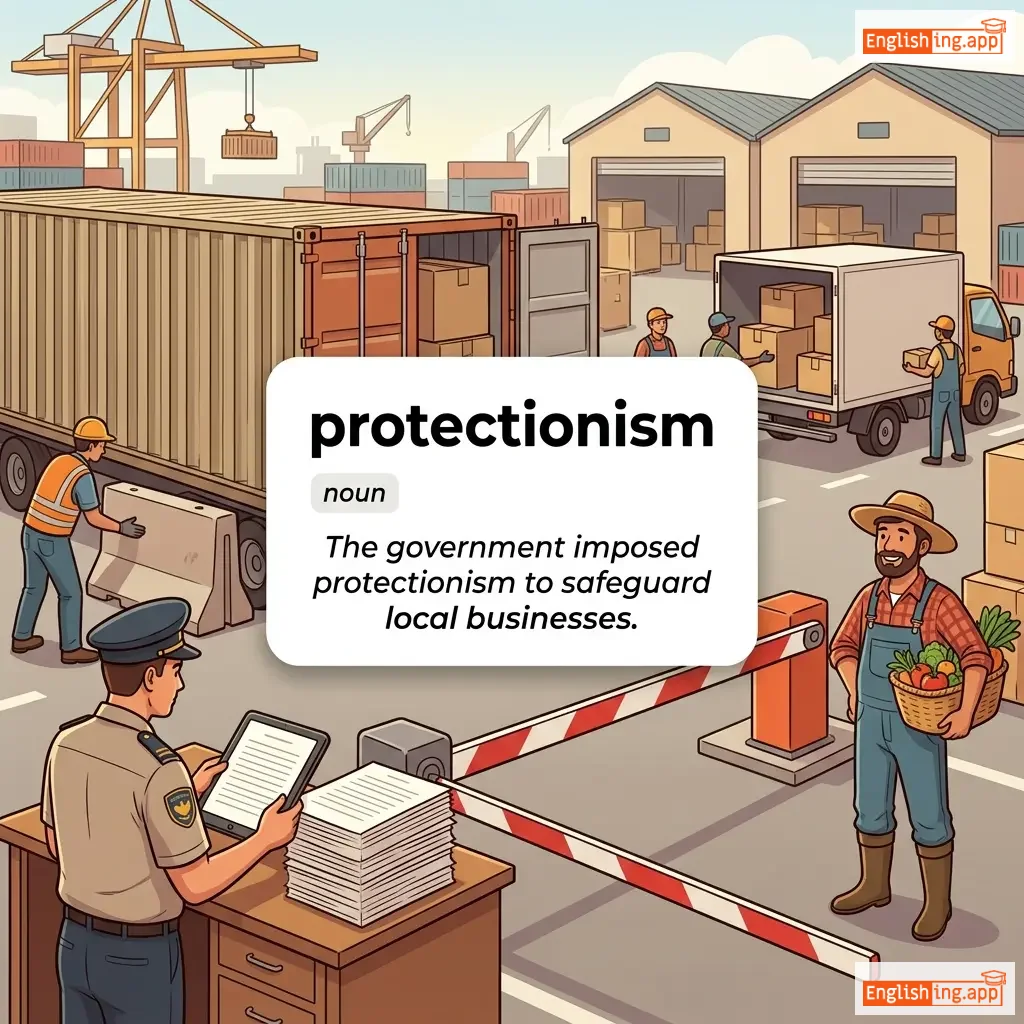
prəˈtɛk.ʃə.nɪ.zəm
noun
(保护主义)
••••••
|
|
保护主义
baohu zhuyi
••••••
|
The theory or practice of shielding a country's domestic industries from foreign competition by taxing imports.
••••••
|
The government's protectionism helped local businesses grow.
政府的保护主义帮助了本地企业的成长。
••••••
|
政府的保护主义帮助了本地企业的成长。
Zhengfu de baohu zhuyi bangzhu le bendian qiye de chengzhang.
••••••
|
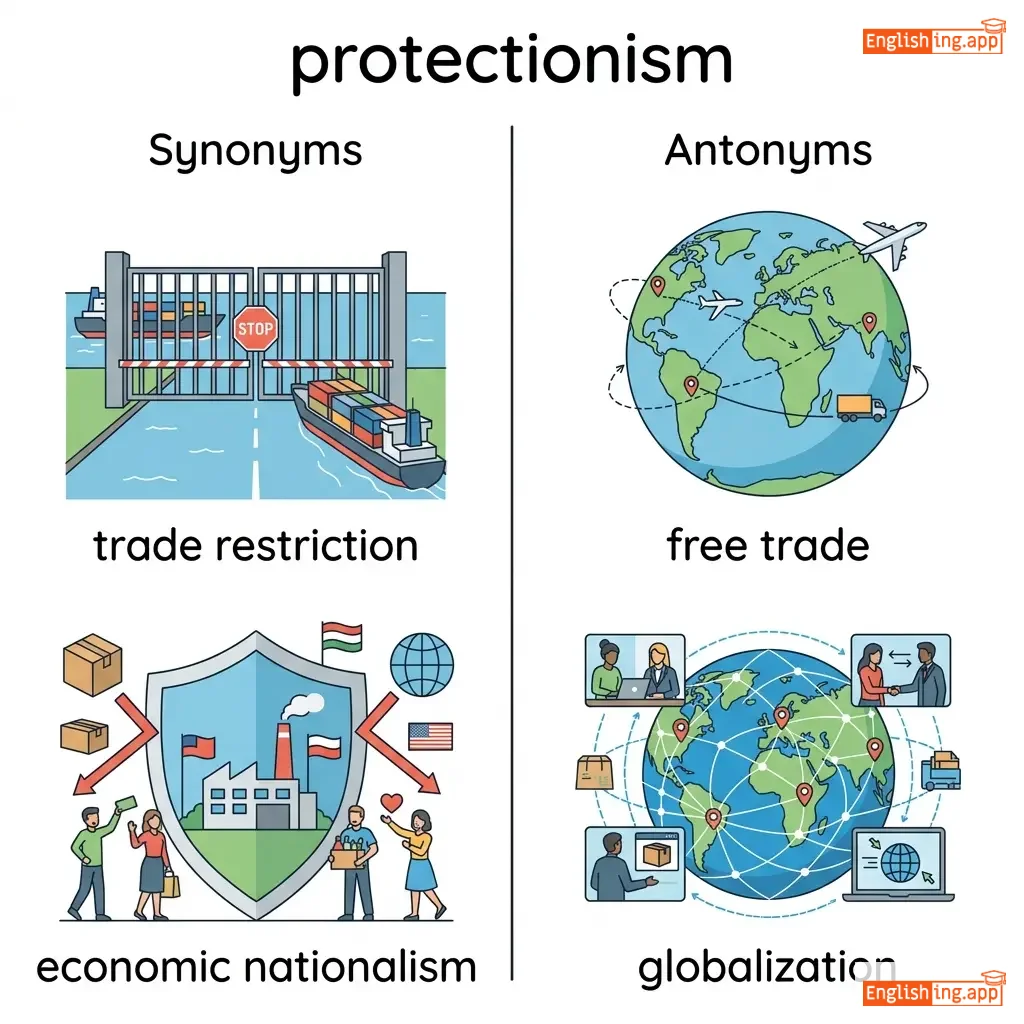
trade restriction, tariff policy, economic isolation
••••••
|
free trade, liberalization, globalization
••••••
|
保护主义就像为本地企业撑起一把伞,抵挡外来的竞争。
••••••
|
|
#1953
📊
|
ˌmæk.roʊ.iː.kəˈnɒm.ɪk
adjective
(宏观经济的)
••••••
|
|
宏观经济的
hongguanjingji de
••••••
|
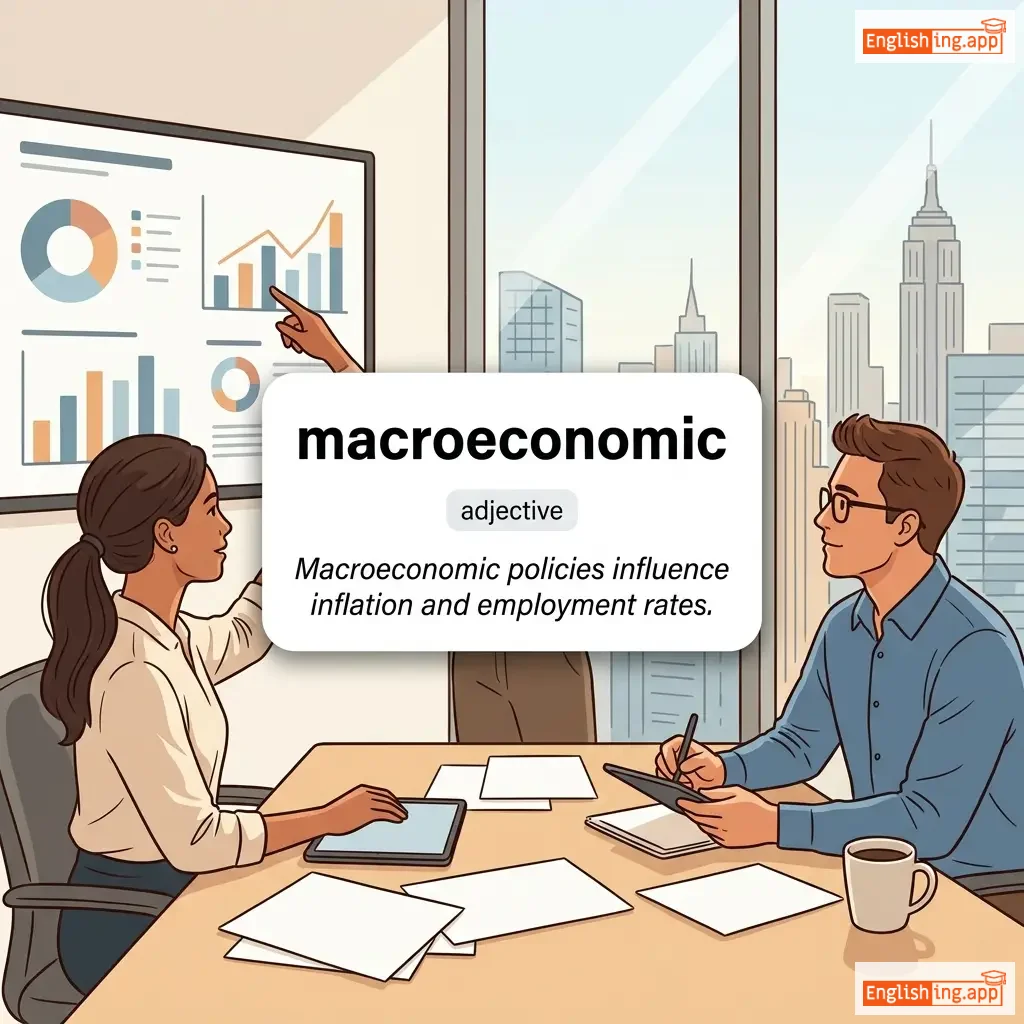
Relating to the large-scale or general economic factors, such as interest rates and national productivity.
••••••
|
Government policies impact macroeconomic stability.
政府政策影响宏观经济稳定性。
••••••
|
政府政策影响宏观经济稳定性。
Zhengfu zhengce yingxiang hongguanjingji wendingxing.
••••••
|
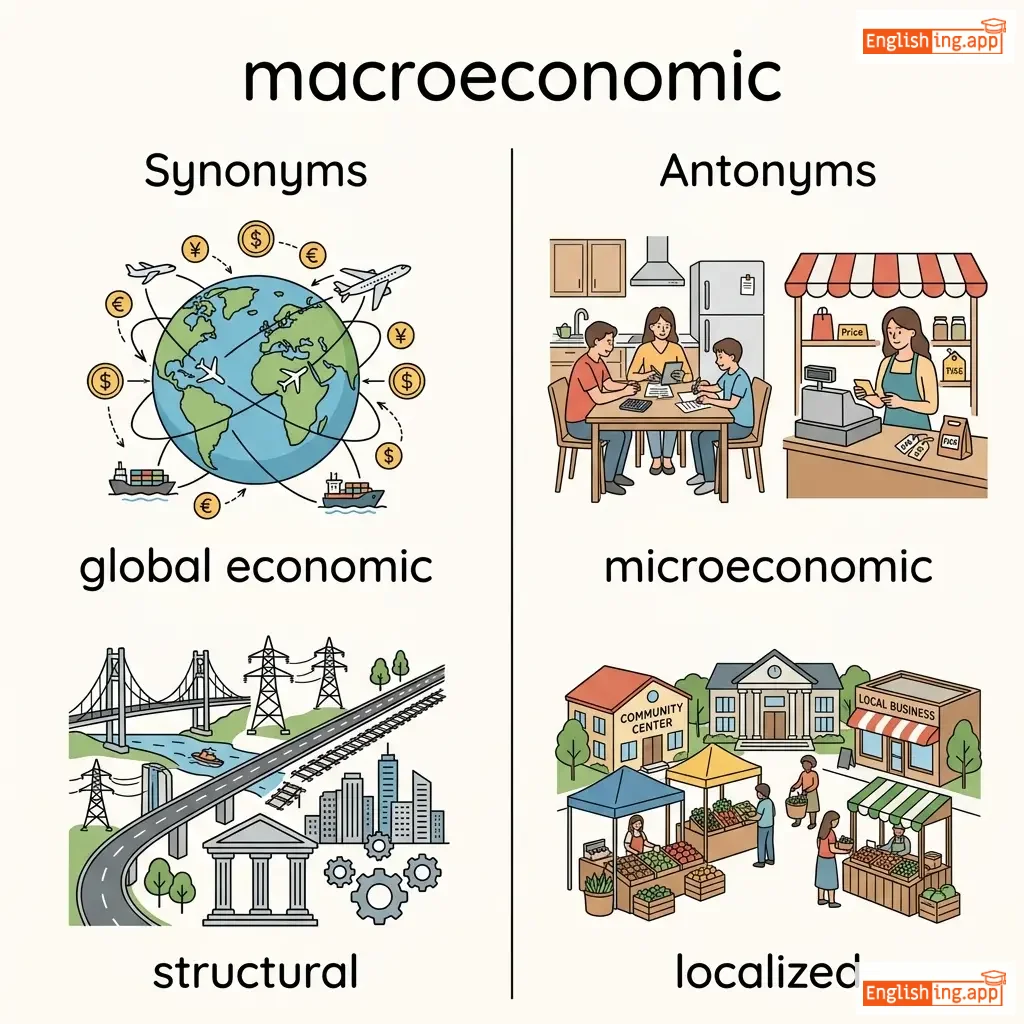
national economy, economic trends, large-scale financial system
••••••
|
microeconomic, individual finance, localized economy
••••••
|
In Chinese, '宏观' reminds you of 'large scale'.
••••••
|
|
#1954
📈
|
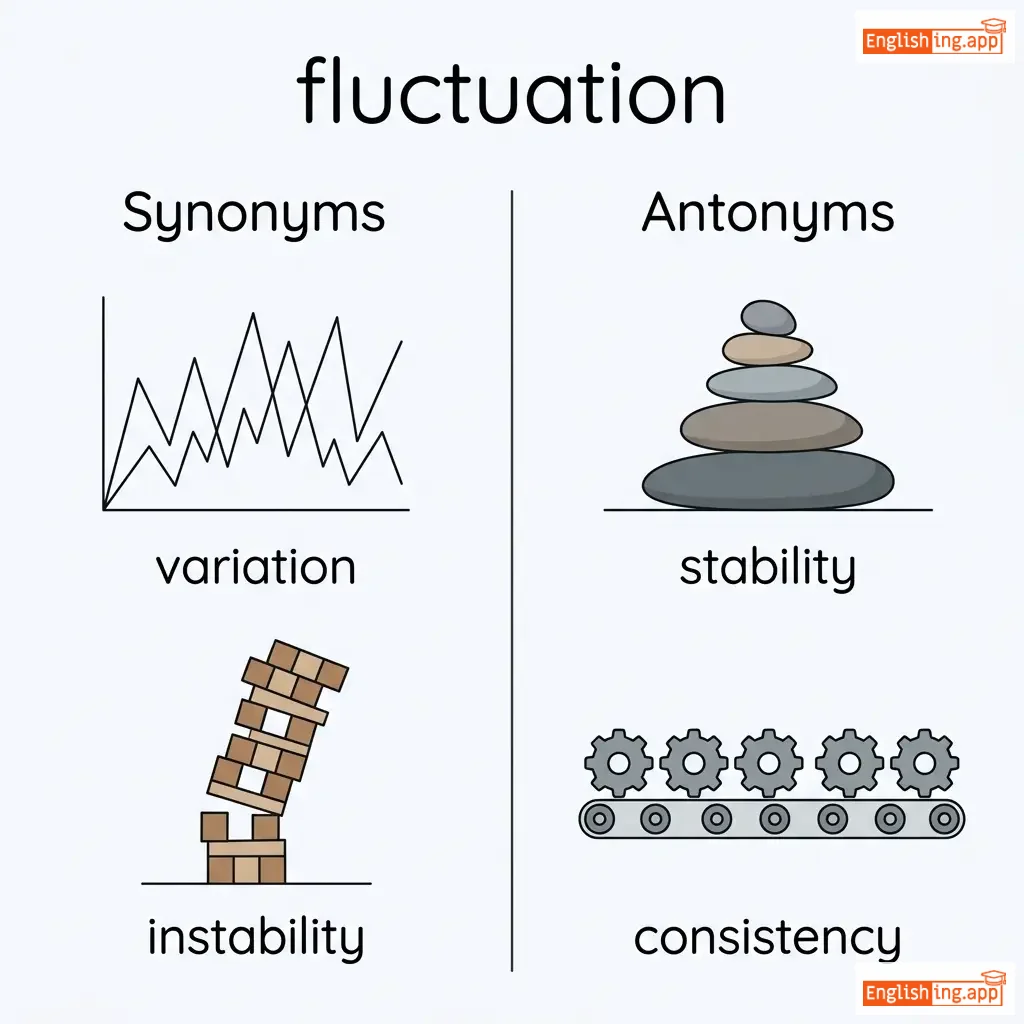
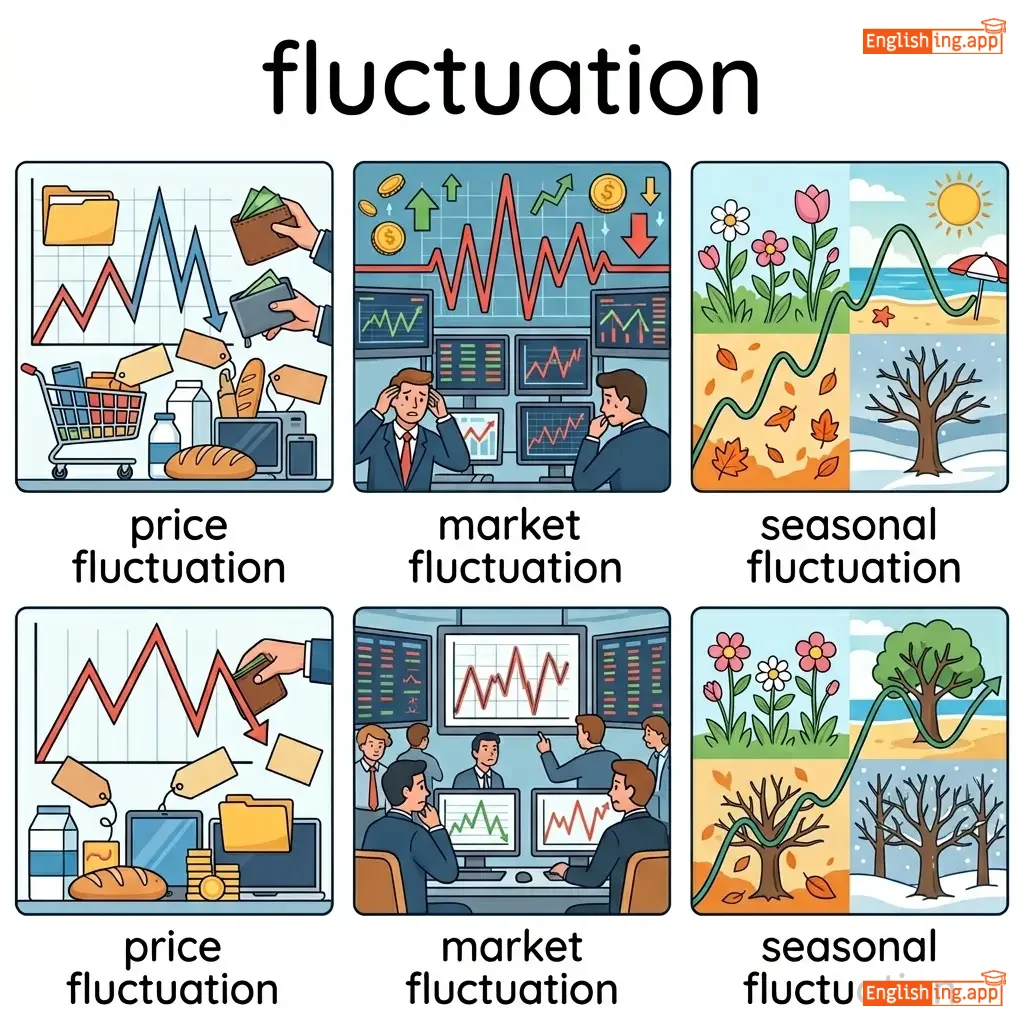
ˌflʌk.tʃuˈeɪ.ʃən
noun
(波动)
••••••
|
|
波动
bodong
••••••
|
An irregular rising and falling in number or amount; a variation.
••••••
|
The stock market experiences frequent fluctuation.
股市经历频繁的波动。
••••••
|
股市经历频繁的波动。
Gǔshì jīnglì pínfán de bōdòng.
••••••
|
variability, instability, volatility
••••••
|
stability, consistency, predictability
••••••
|
股市的波动就像海浪一样,一波接一波。
••••••
|
|
#1955
🏛️
|
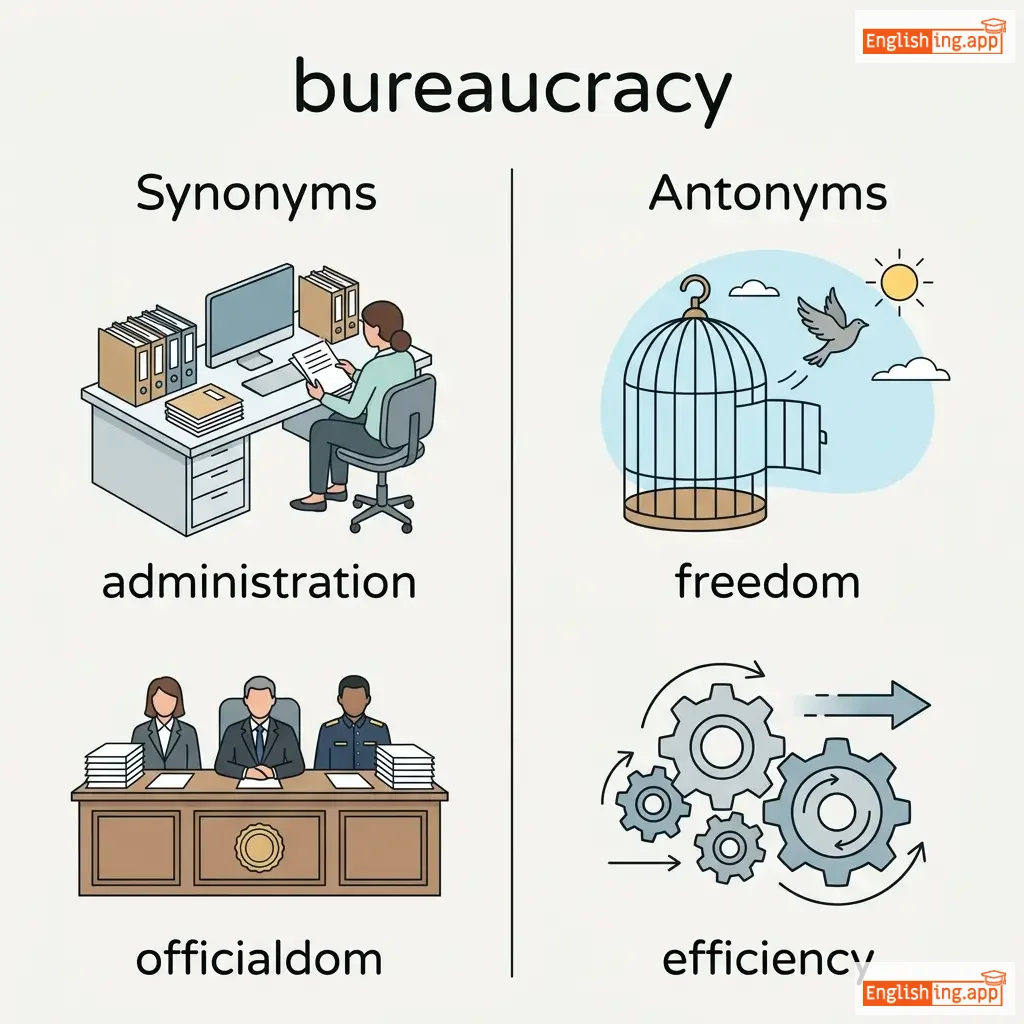
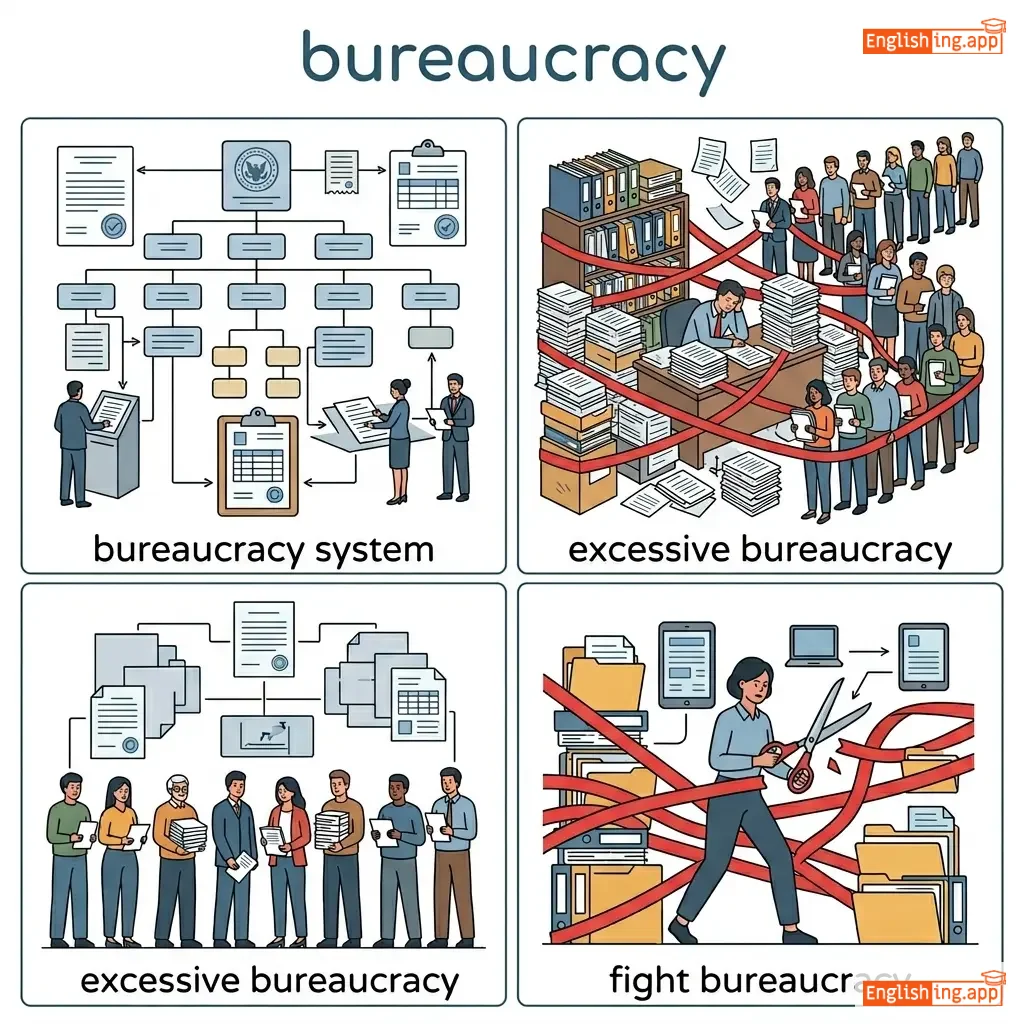
bjʊəˈrɒk.rə.si
noun
(官僚主义)
••••••
|
|
官僚主义
guānliáo zhǔyì
••••••
|
A system of government in which most of the important decisions are made by state officials rather than by elected representatives.
••••••
|
Excessive bureaucracy can slow down decision-making. |
过度的官僚主义可能会减慢决策过程。
Guòdù de guānliáo zhǔyì kěnéng huì jiǎnmàn juécè guòchéng.
••••••
|
administration, red tape, officialdom
••••••
|
flexibility, efficiency, simplicity
••••••
|
官僚主义就像被纸山拖慢的一切。
••••••
|
|
#1956
👑
|
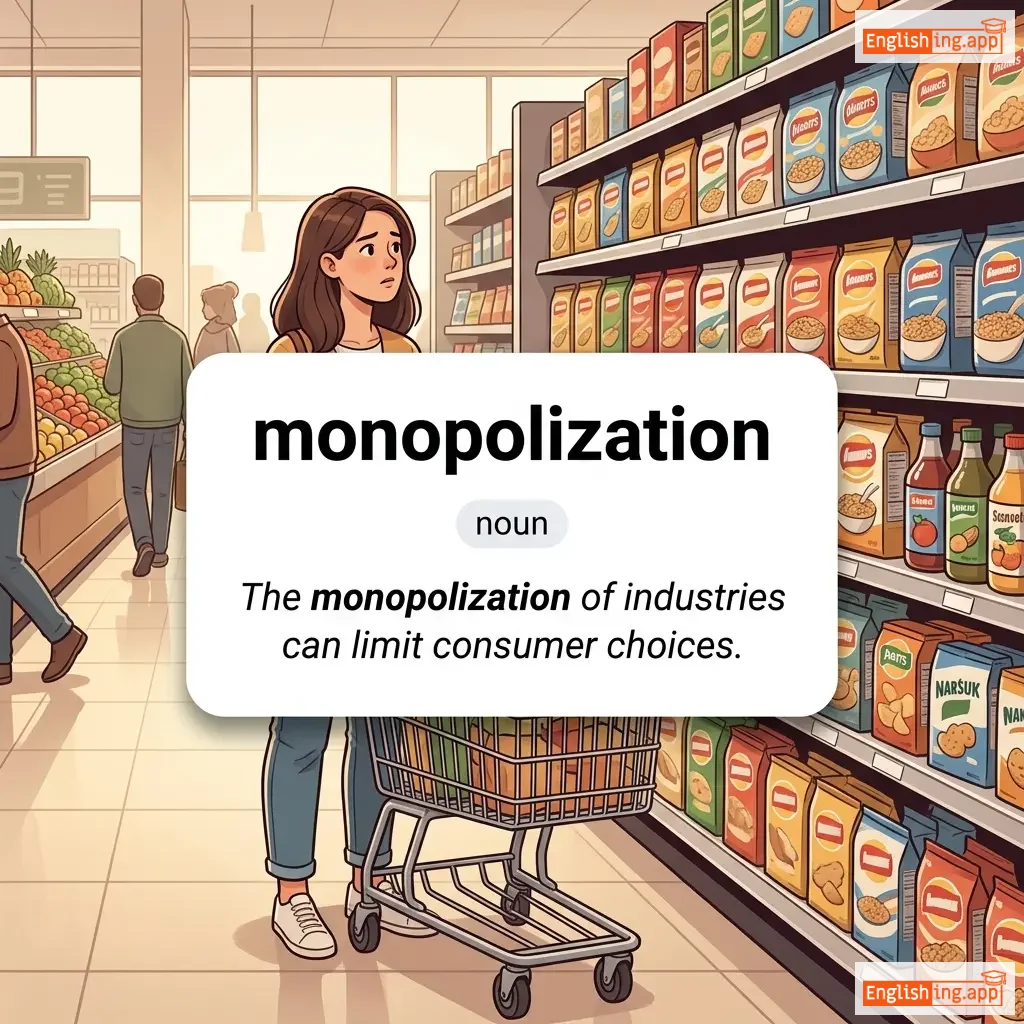
məˌnɒp.ə.laɪˈzeɪ.ʃən
noun
(垄断化)
••••••
|
|
垄断化
lǒngduàn huà
••••••
|
The process of gaining exclusive possession or control of a trade, commodity, or service.
••••••
|
The monopolization of industries can limit consumer choices.
垄断化可能限制消费者的选择。
••••••
|
垄断化可能限制消费者的选择。
Lǒngduàn huà kěnéng xiànzhì xiāofèi zhě de xuǎnzé.
••••••
|
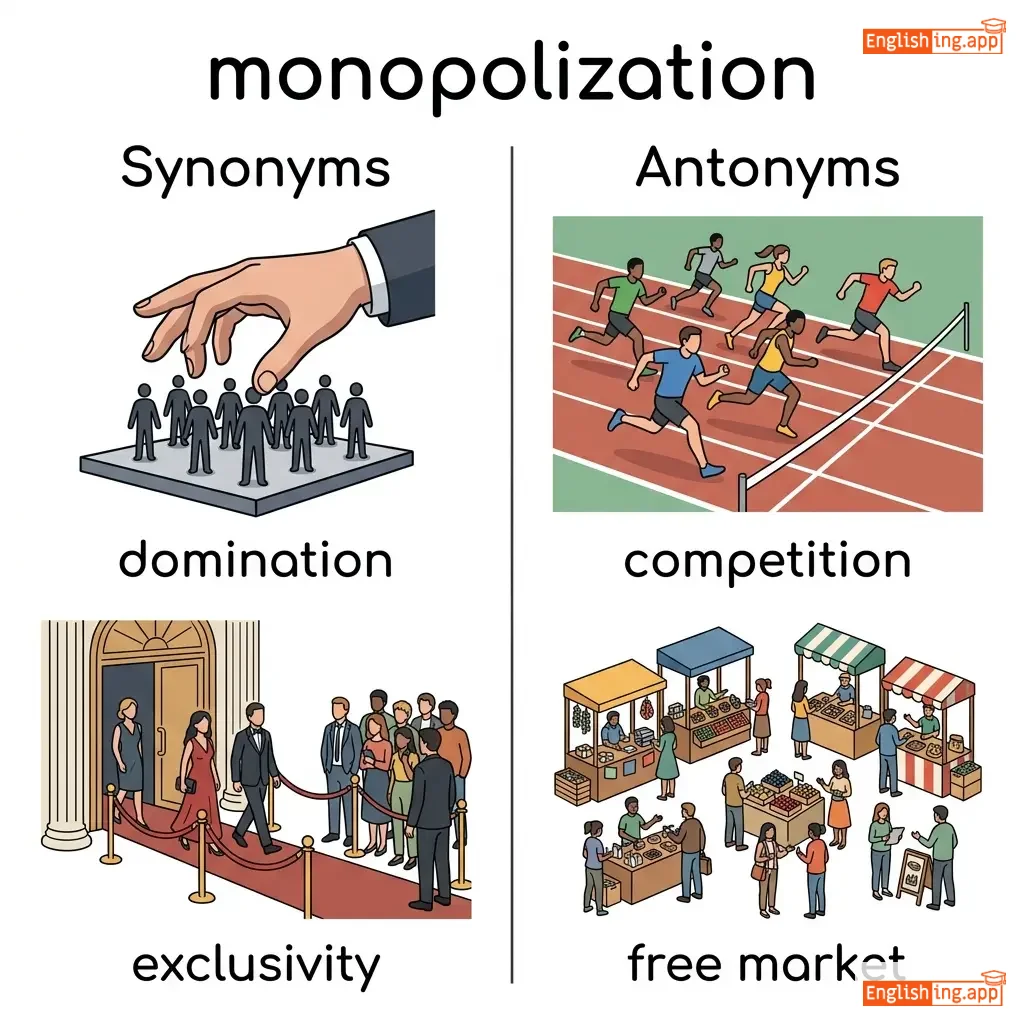
domination, exclusivity, control
••••••
|
competition, free market, decentralization
••••••
|
垄断 = 垄断化, 就像一个公司控制了整个市场。
••••••
|
|
#1957
⛓️
|
ˌsʌb.dʒʊˈɡeɪ.ʃən
noun
(sàb-ju-gé-shùn)
••••••
|
|
征服或支配
zhēngfú huò zhīpèi
••••••
|
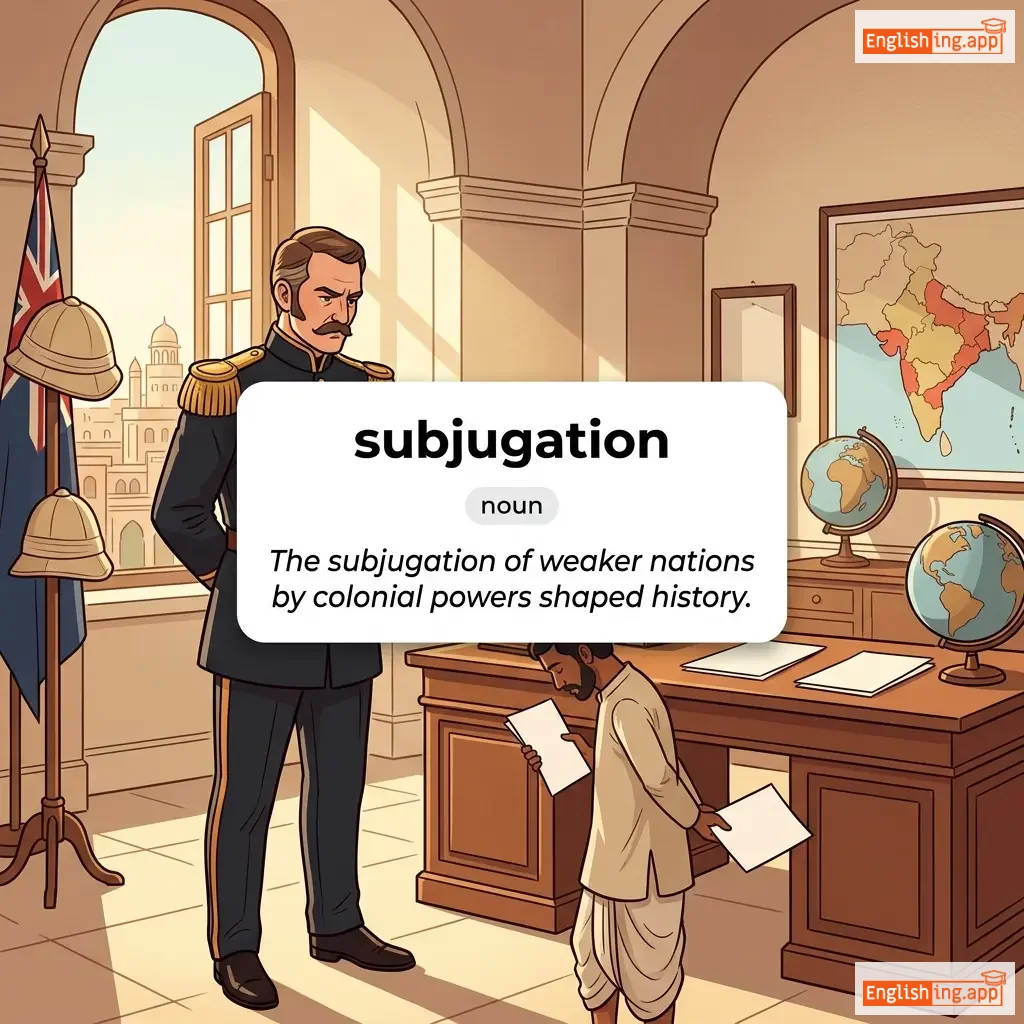
The action of bringing someone or something under domination or control, especially by force.
••••••
|
The subjugation of weaker nations by colonial powers shaped history.
殖民大国对较弱国家的征服塑造了历史。
••••••
|
殖民大国对较弱国家的征服塑造了历史。
Zhímín dàguó duì jiào ruò guójiā de zhēngfú sùzào le lìshǐ.
••••••
|
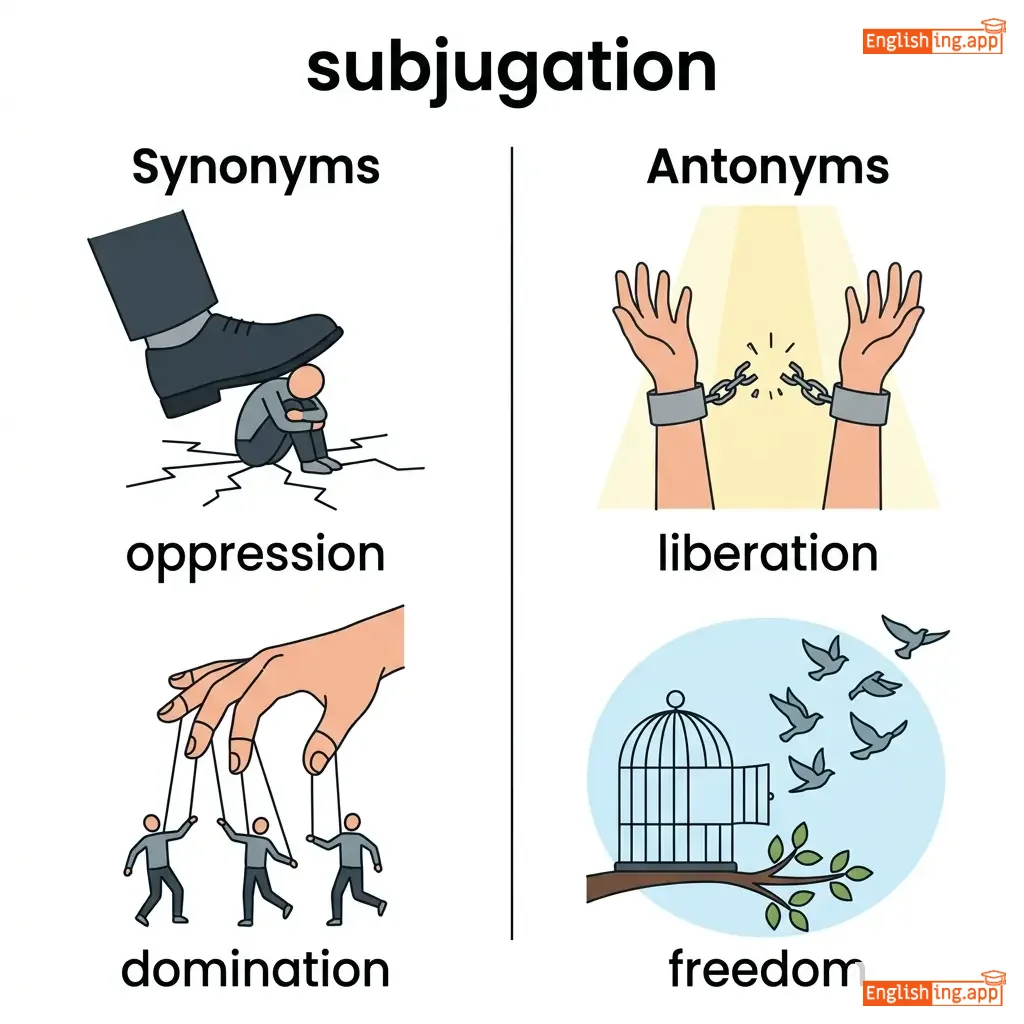
oppression, domination, enslavement
••••••
|
liberation, freedom, empowerment
••••••
|
Subjugation = 用力量征服别人 (Subjugation = Yòng lìliàng zhēngfú biérén)
••••••
|
|
#1958
🌈
|
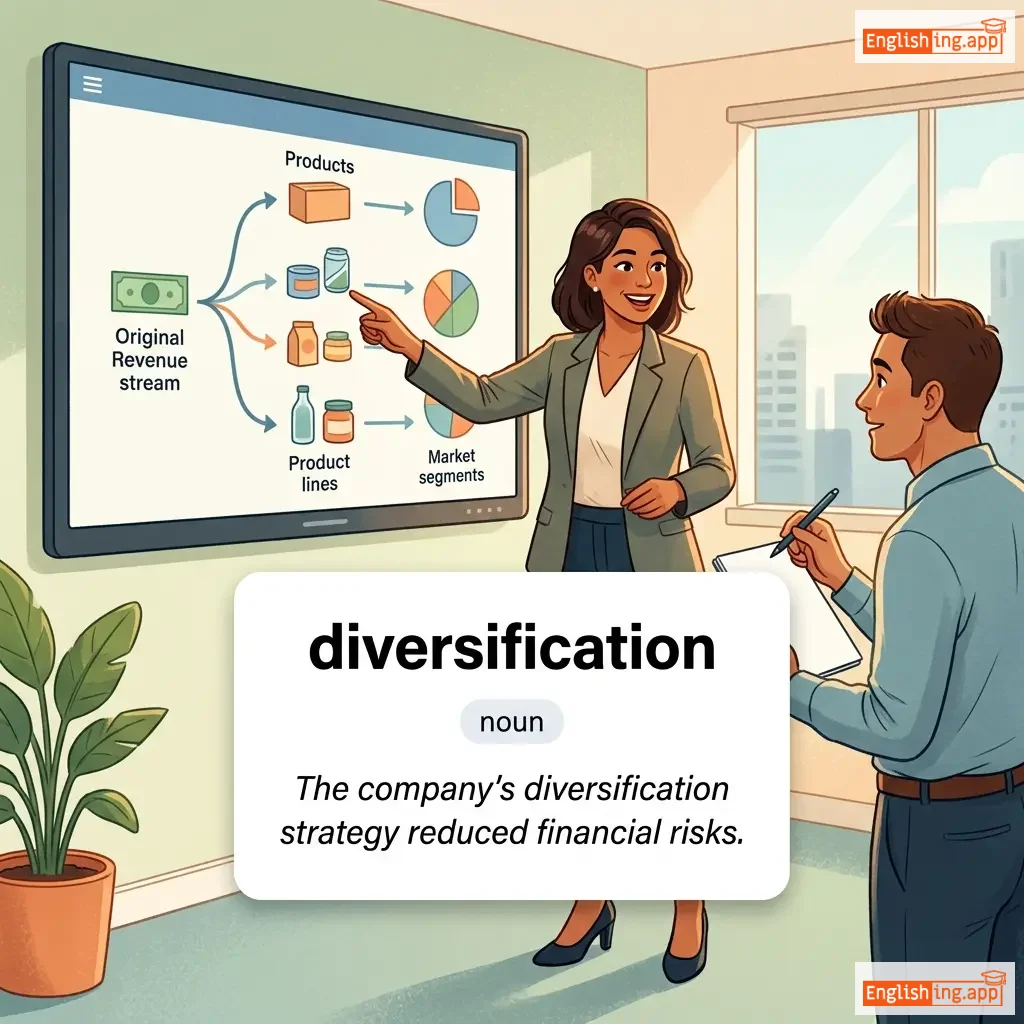
daɪˌvɜː.sɪ.fɪˈkeɪ.ʃən
noun
(daɪˌvɜː.sɪ.fɪˈkeɪ.ʃən)
••••••
|
|
多元化
duōyuán huà
••••••
|
The process of a business enlarging or varying its range of products or field of operation.
••••••
|
Companies adopt diversification strategies to reduce risk. |
公司采用多元化策略来降低风险。
Gōngsī cǎiyòng duōyuán huà cèlüè lái jiàngdī fēngxiǎn.
••••••
|
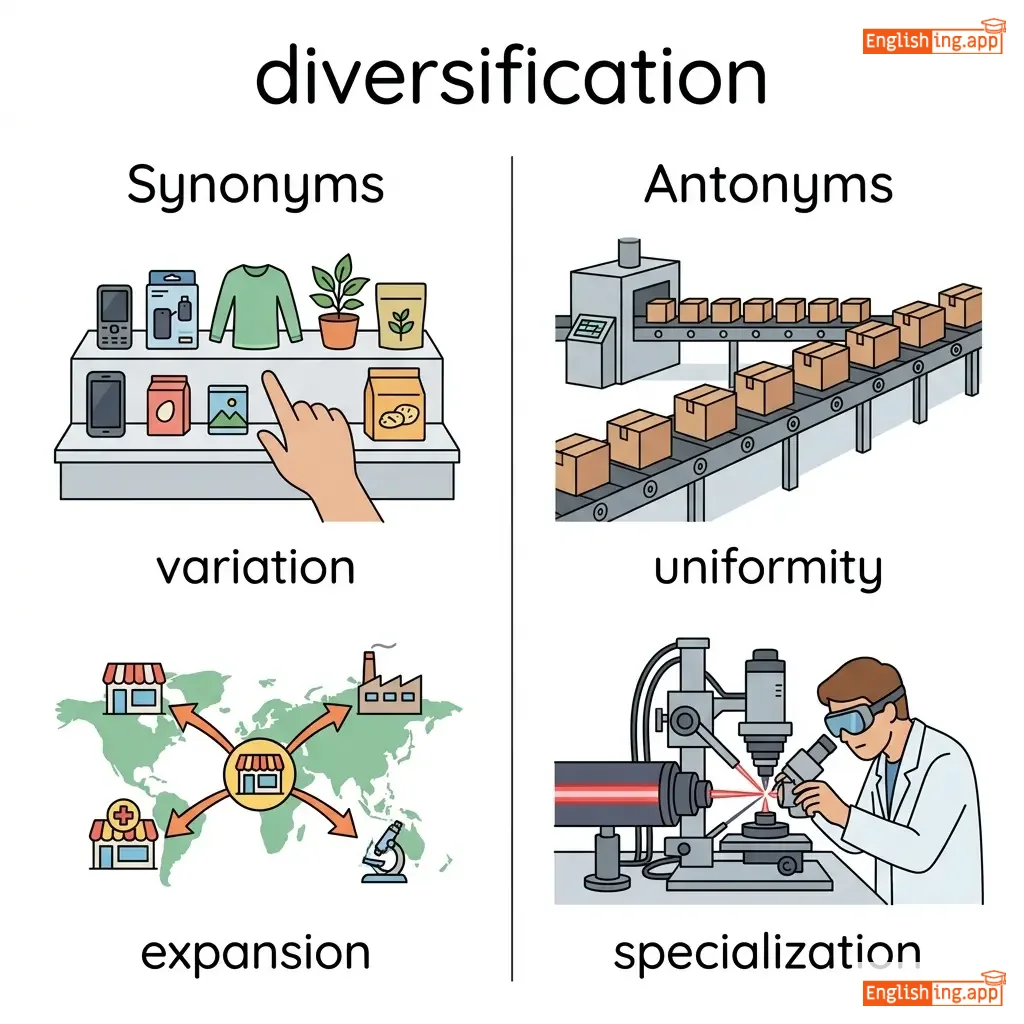
expansion, variation, differentiation
••••••
|
specialization, uniformity, narrow focus
••••••
|
多元化可以增加企业的竞争力,就像多种食材使一道菜更加美味。
••••••
|
|
#1959
🔧
|
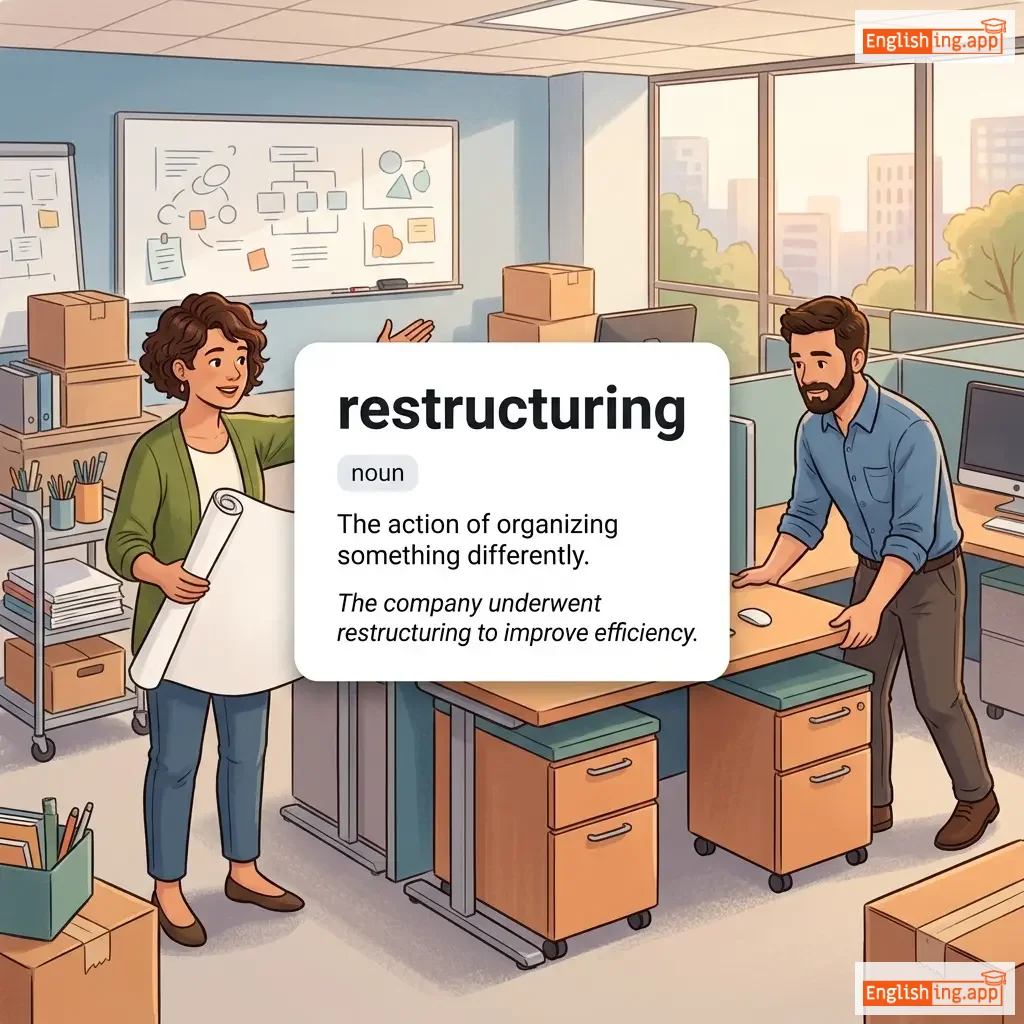
ˌriːˈstrʌk.tʃər.ɪŋ
noun
(重组)
••••••
|
|
重组
chóngzǔ
••••••
|
The action of organizing something differently.
••••••
|
The company underwent restructuring to improve efficiency.
公司进行重组以提高效率。
••••••
|
公司进行重组以提高效率。
Gōngsī jìnxíng chóngzǔ yǐ tígāo xiàolǜ.
••••••
|
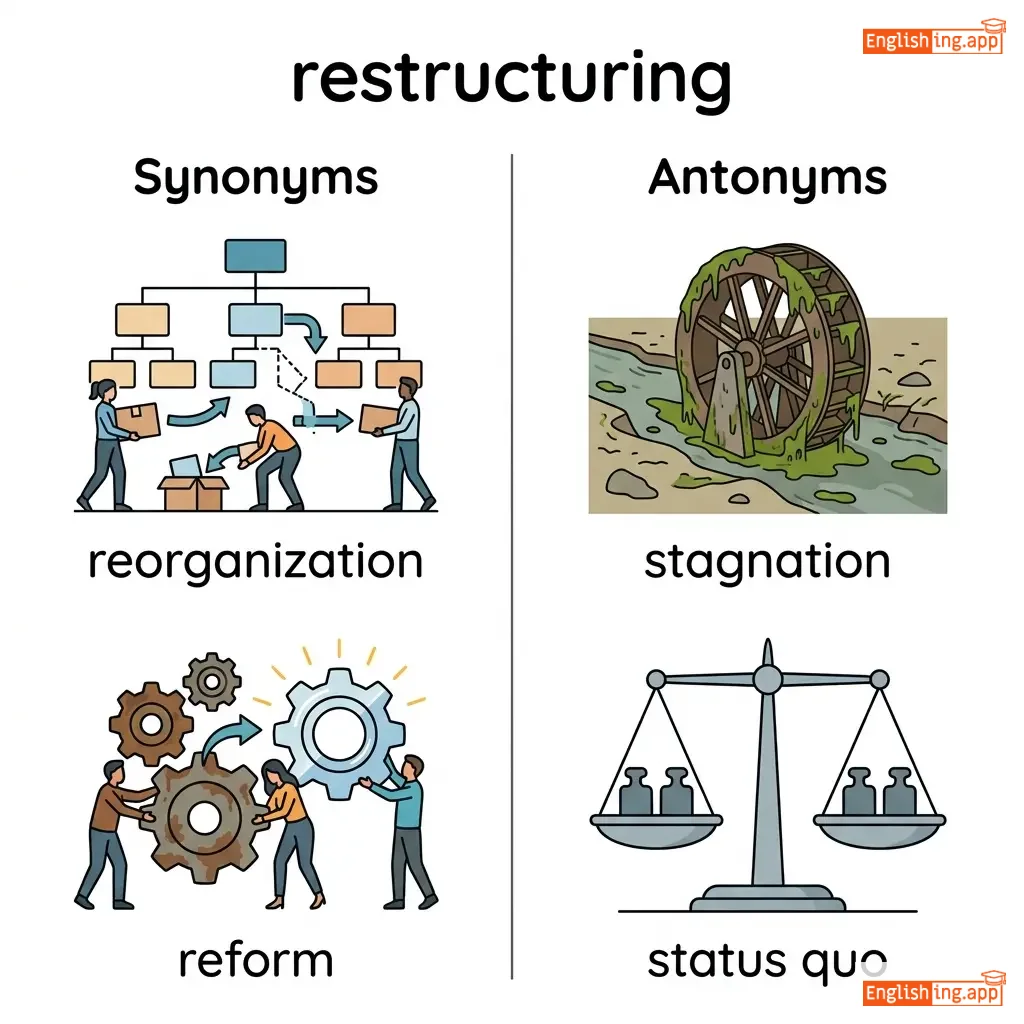
reorganization, reform, overhaul
••••••
|
stagnation, status quo, rigidity
••••••
|
Zh: 重组 (chóngzǔ) - 重建组织,以增加公司效率。
••••••
|
|
#1960
💳
|
ˈtær.ɪf
noun
(关税)
••••••
|
|
关税或进出口税
guānshuì huò jìnchūkǒu shuì
••••••
|
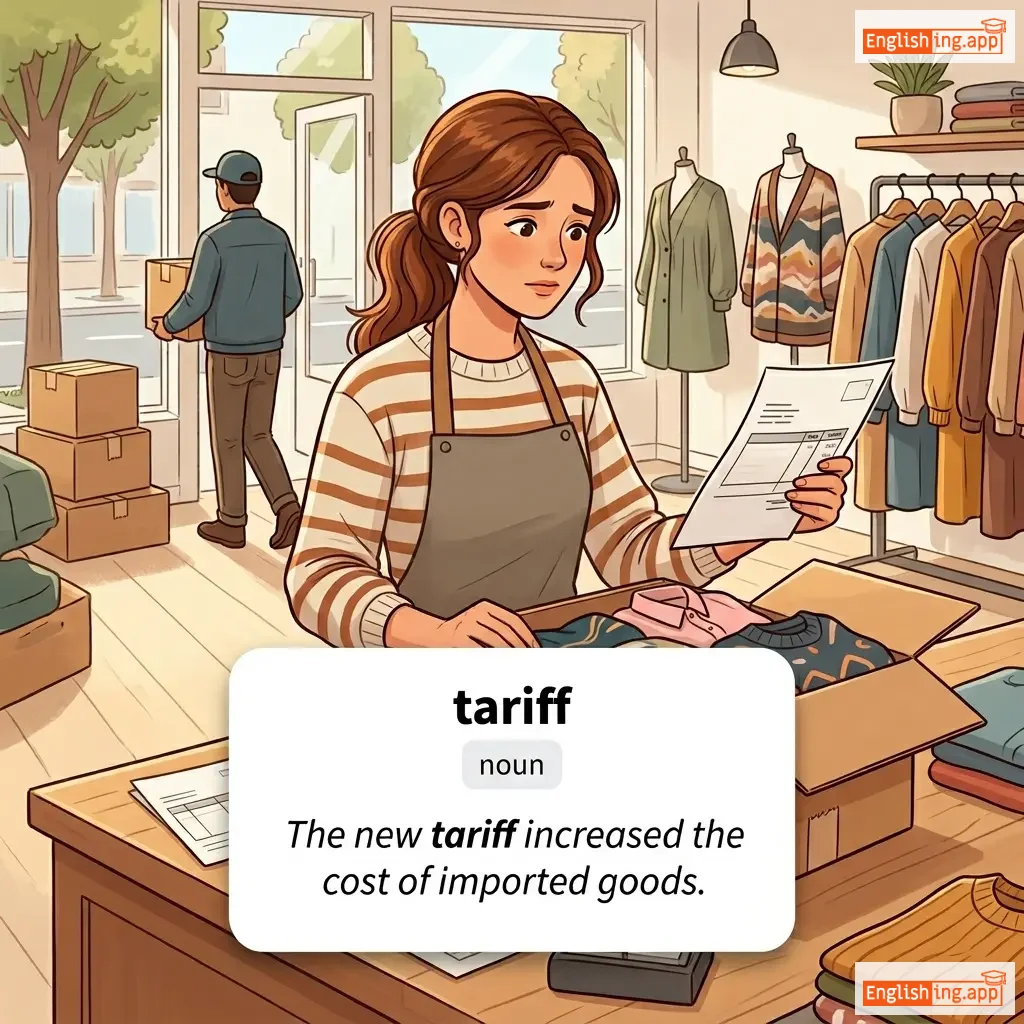
A tax or duty to be paid on a particular class of imports or exports.
••••••
|
The government imposed high tariffs on luxury goods.
政府对奢侈品征收了高额关税。
••••••
|
政府对奢侈品征收了高额关税。
Zhèngfǔ duì shēchǐpǐn zhēngshōu le gāo'é guānshuì.
••••••
|
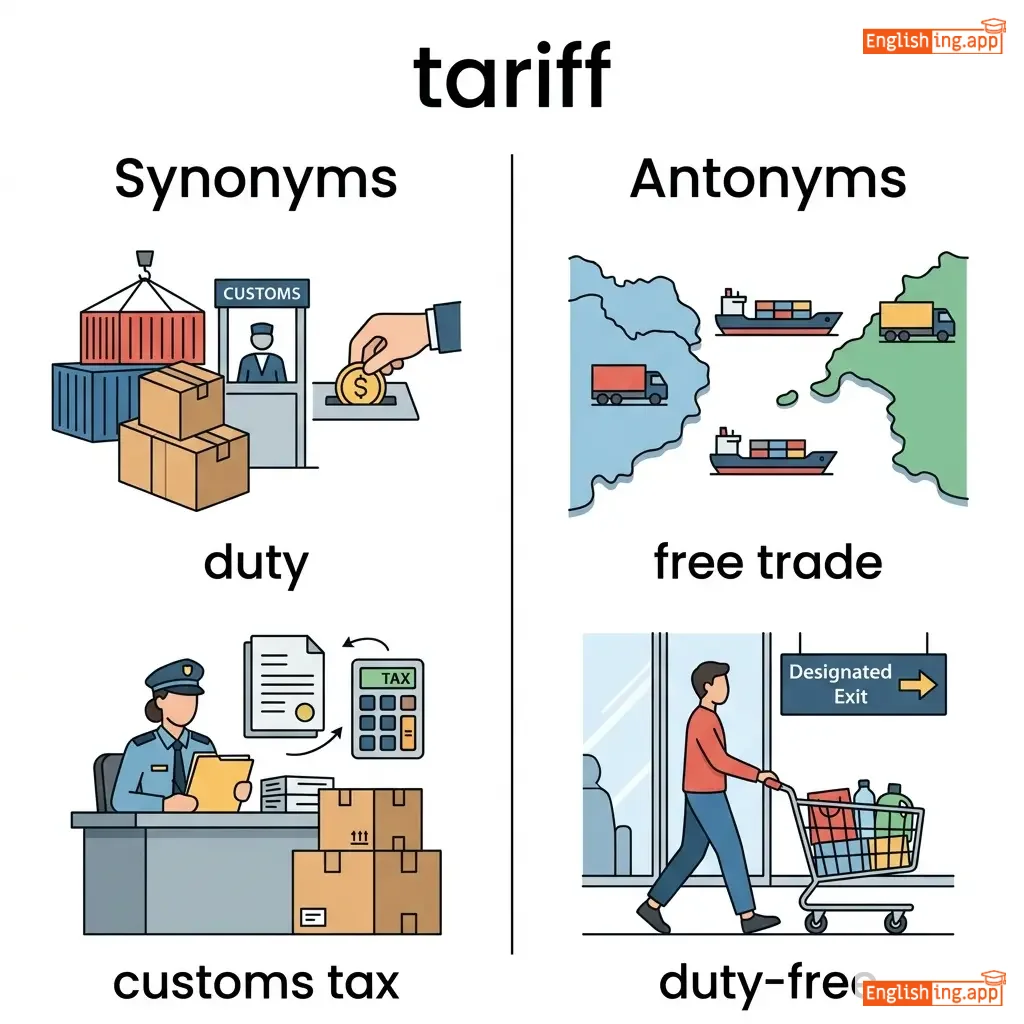
import tax, duty, customs charge
••••••
|
free trade, duty-free, exemption
••••••
|
高额关税对奢侈品征收。
••••••
|
Vocabulary Quiz
Test your vocabulary by matching words with their translations or meanings.
Login to take the quiz
Comments (0)
Share your thoughts and join the discussion.
Join the discussion by logging in
Login to CommentNo comments yet
Be the first to share your thoughts!