

1966年的六点纲领
The 6-Point Demand of 1966
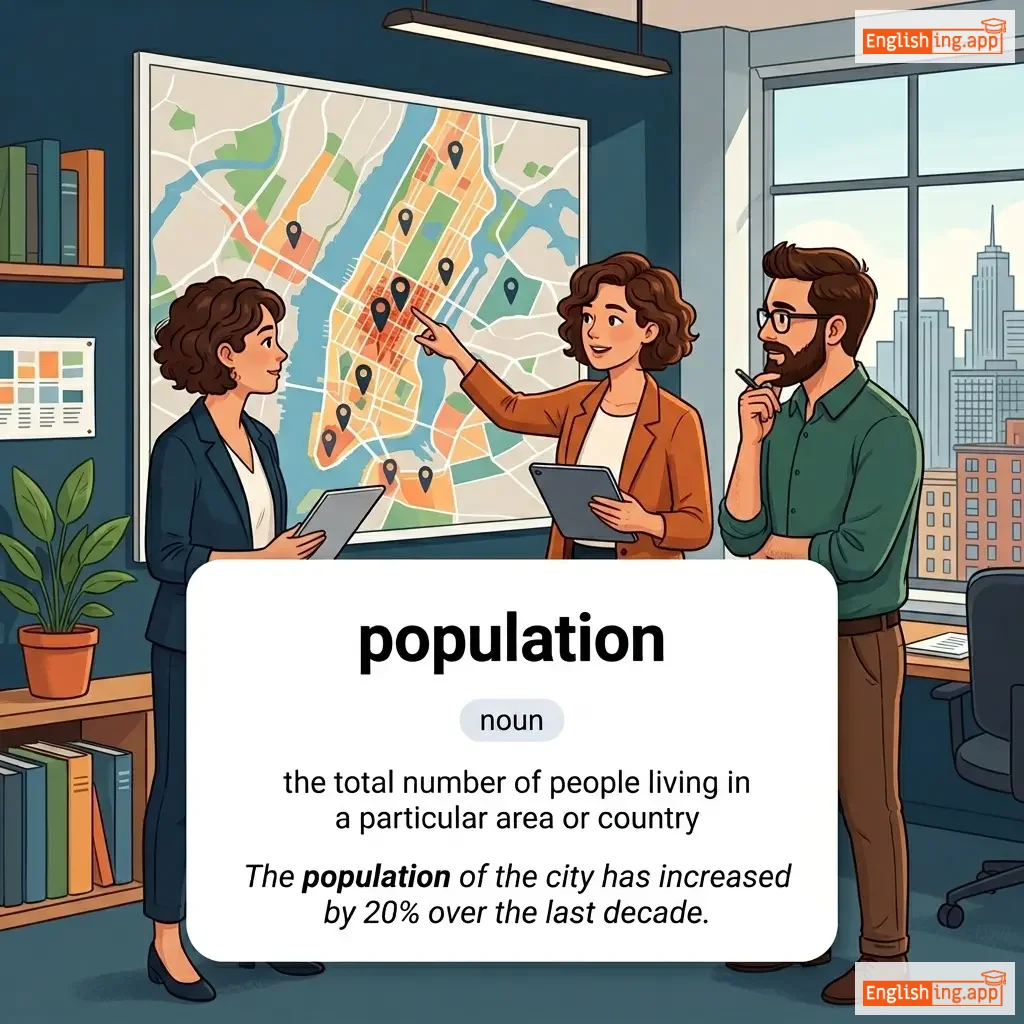
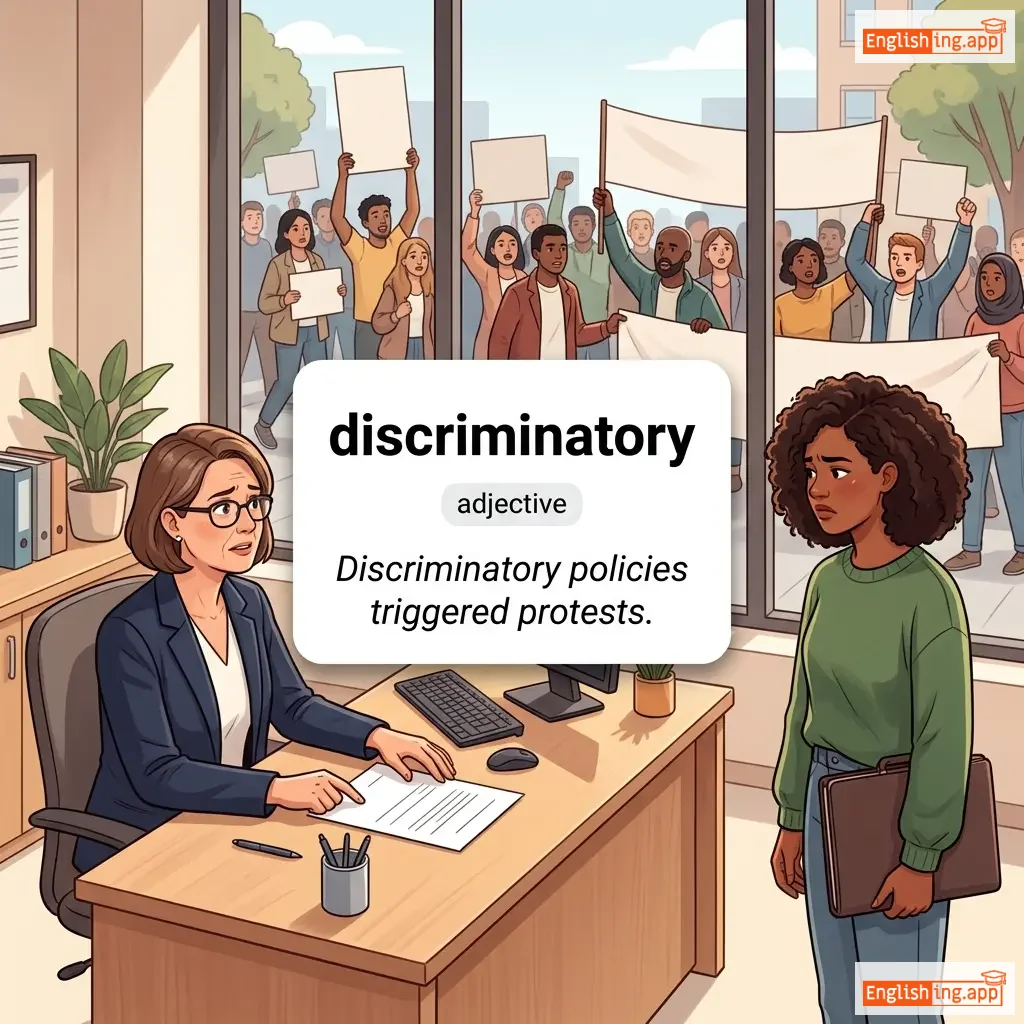
针对巴基斯坦政府对东孟加拉population的极端discriminatory行为和忽视的运动与斗争,通过六点计划的autonomy要求而获得重要意义。谢赫·穆吉布·拉赫曼参加了1966年2月5日至6日在拉合尔举行的反对党会议。在那里,他召开新闻发布会,提出了保护东巴基斯坦人民rights的六项要求。
主要内容如下:
-
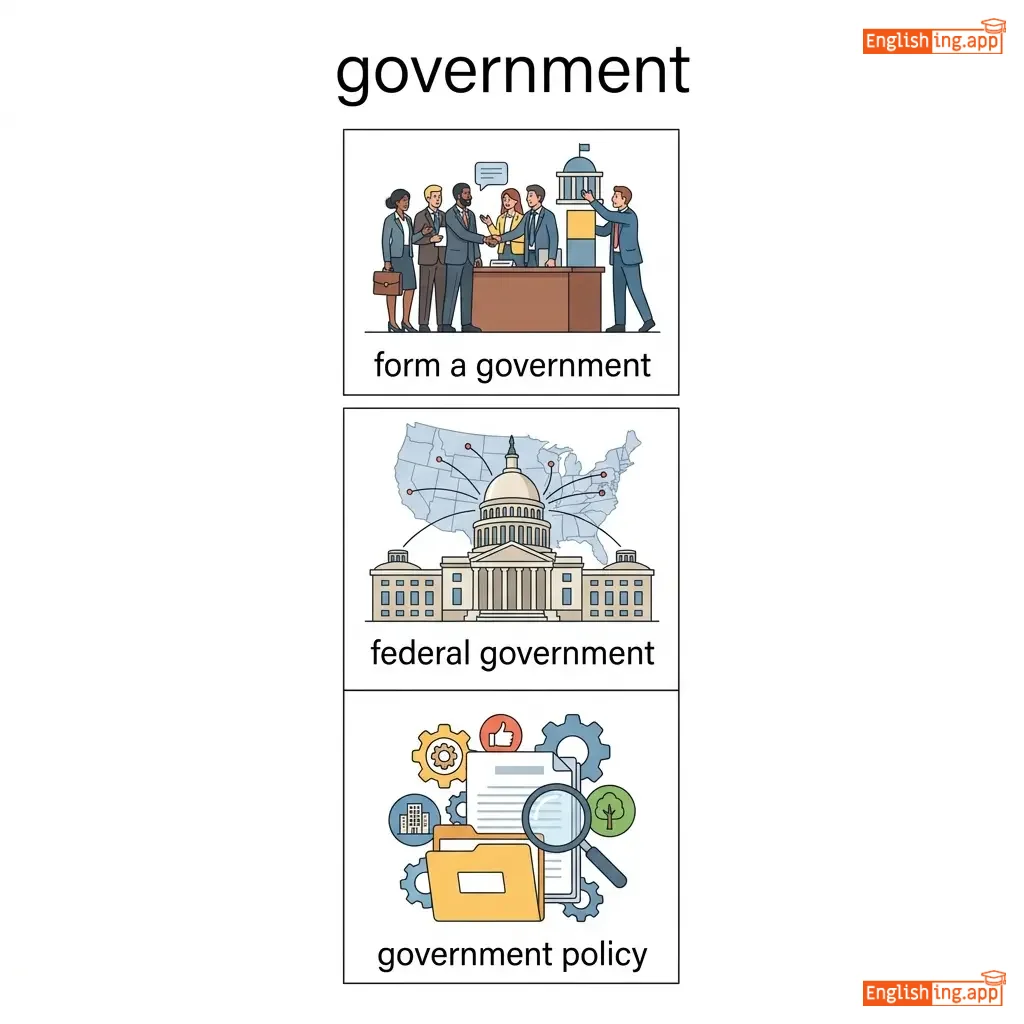
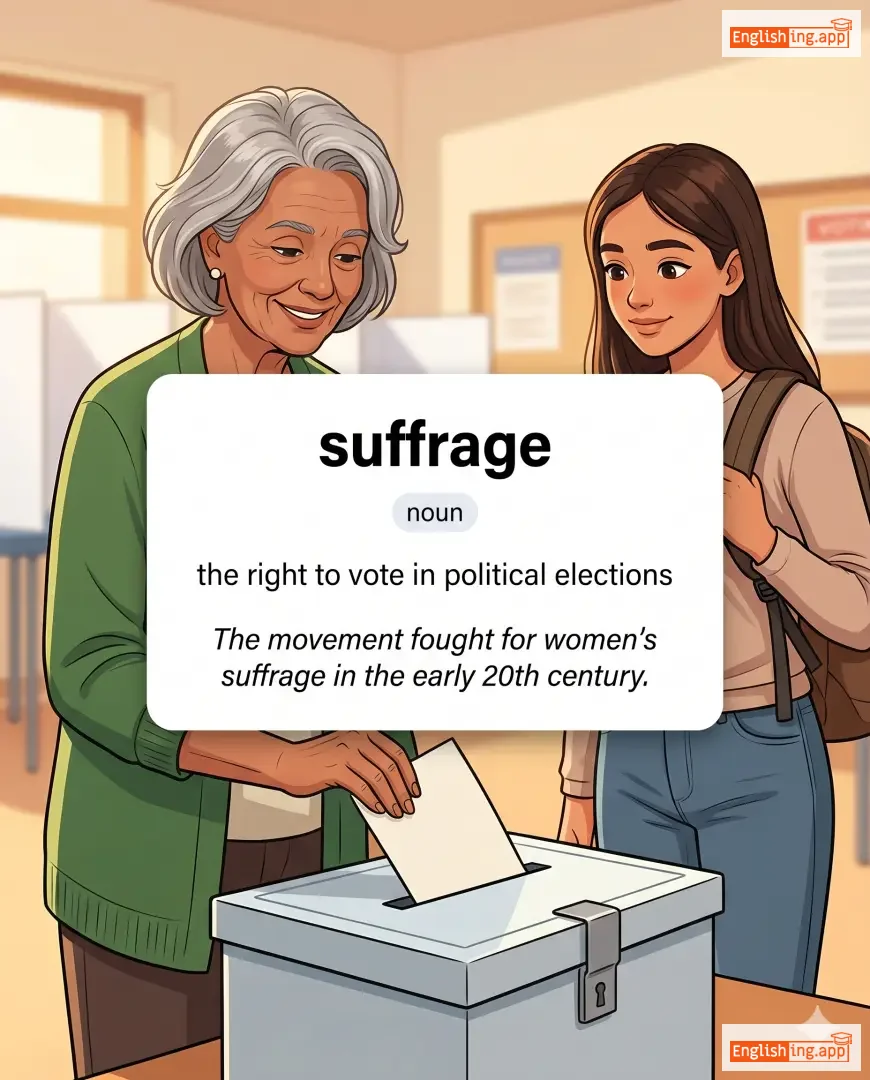
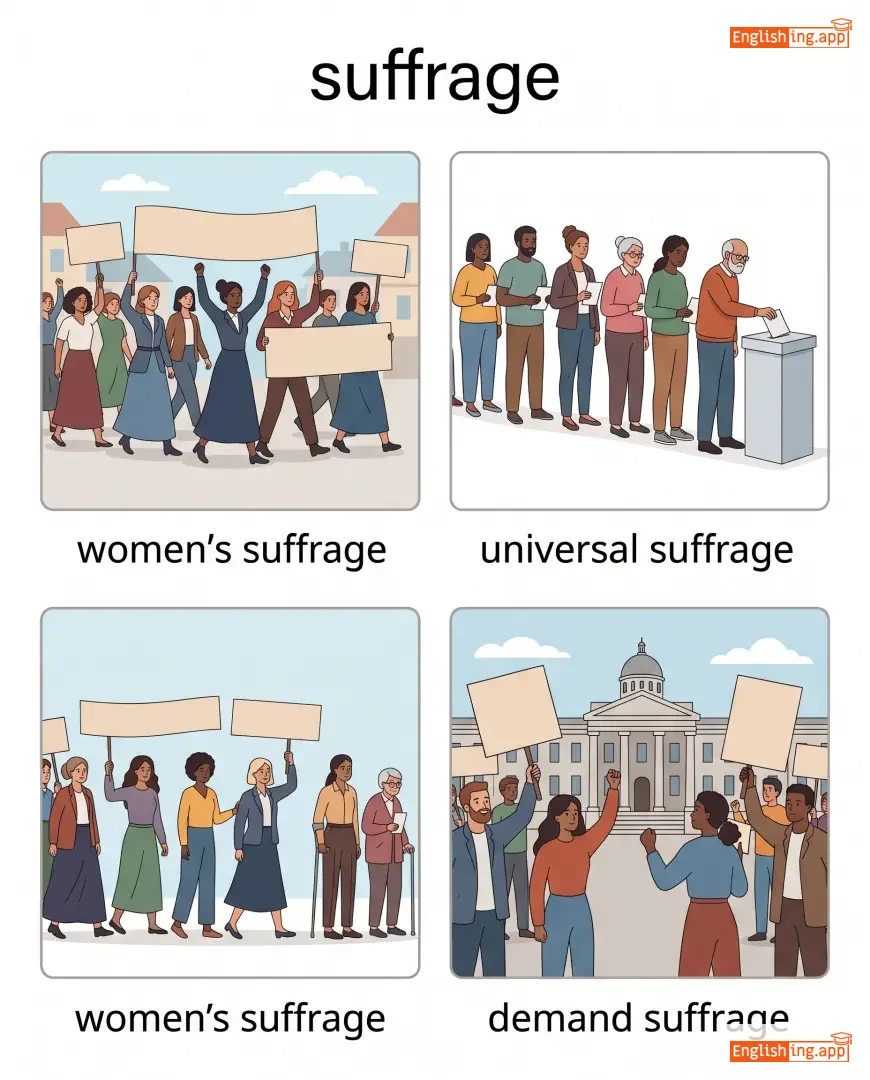
在巴基斯坦建立联邦体制下的议会制government。基于普遍suffrage的成年选举权。
-
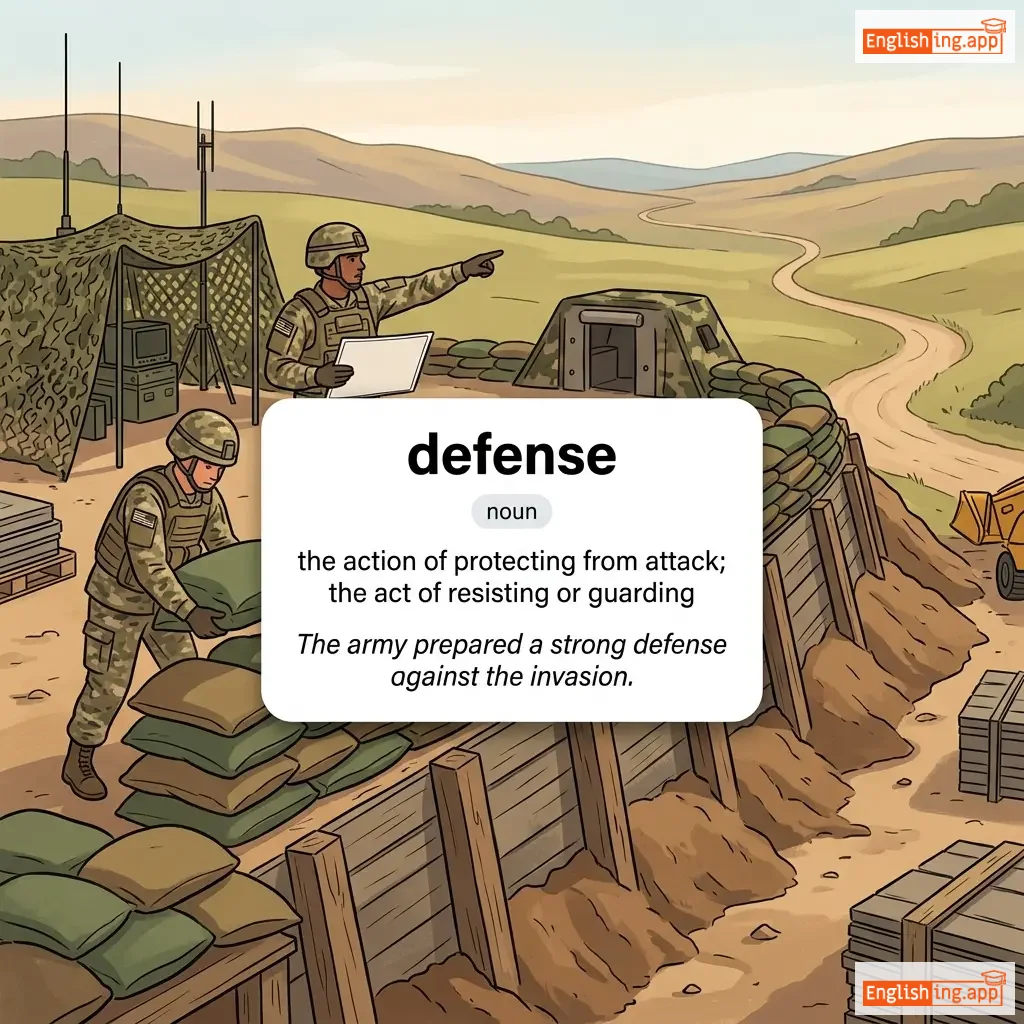
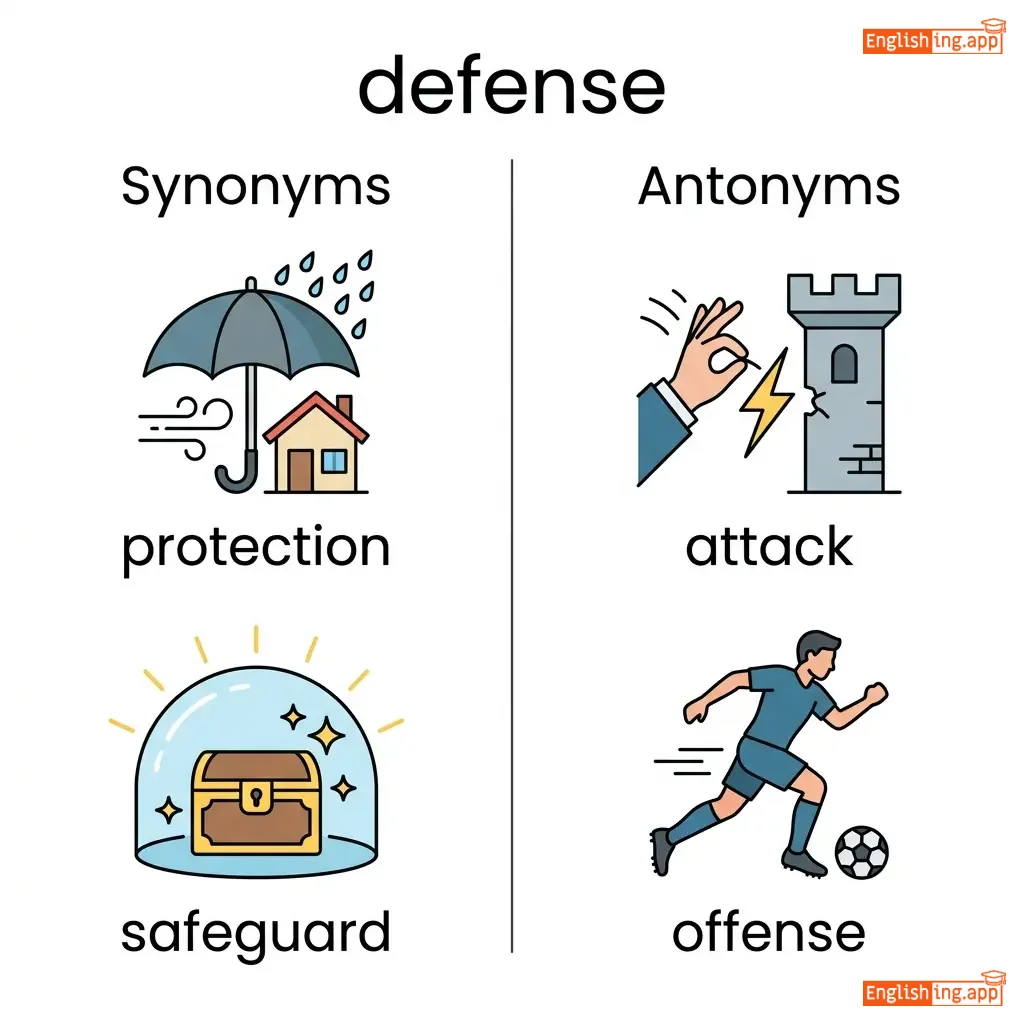
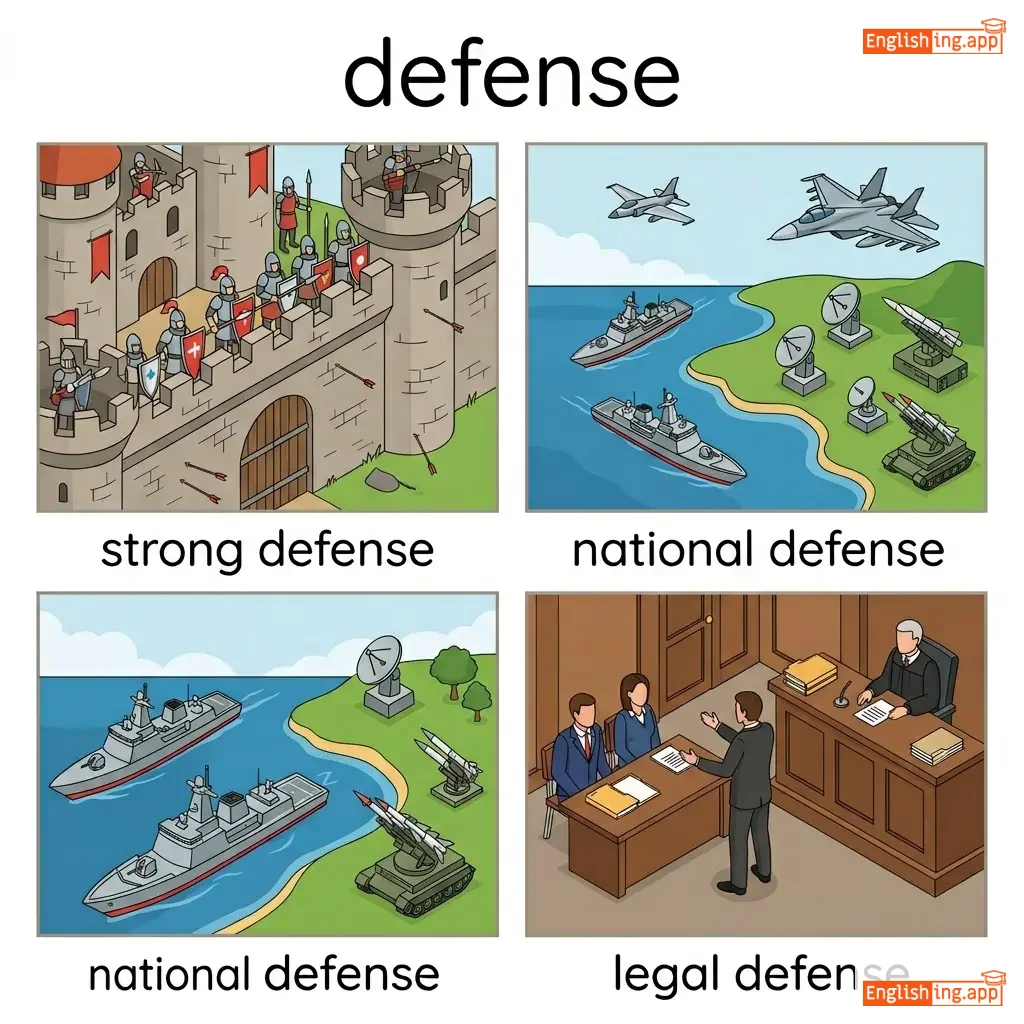
仅保留中央政府的两项职权——defense和外交部。
-
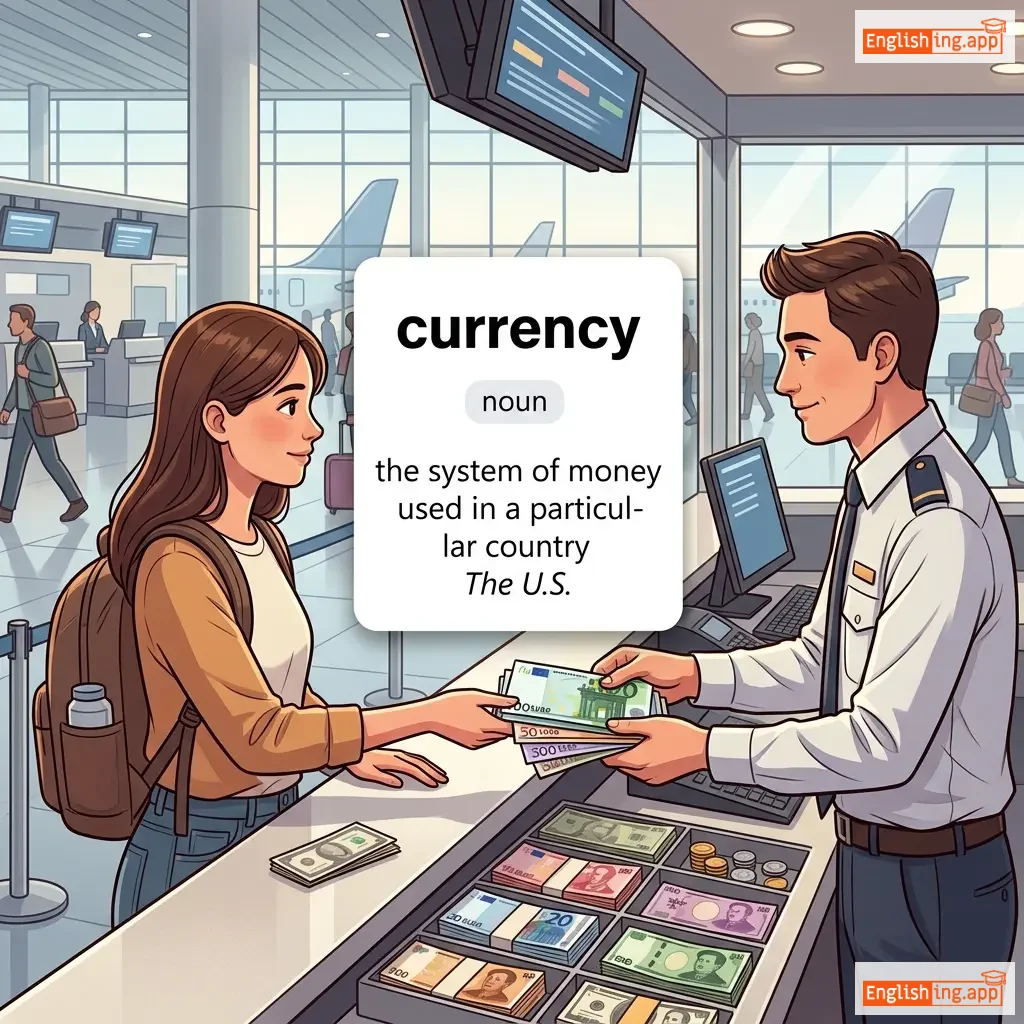
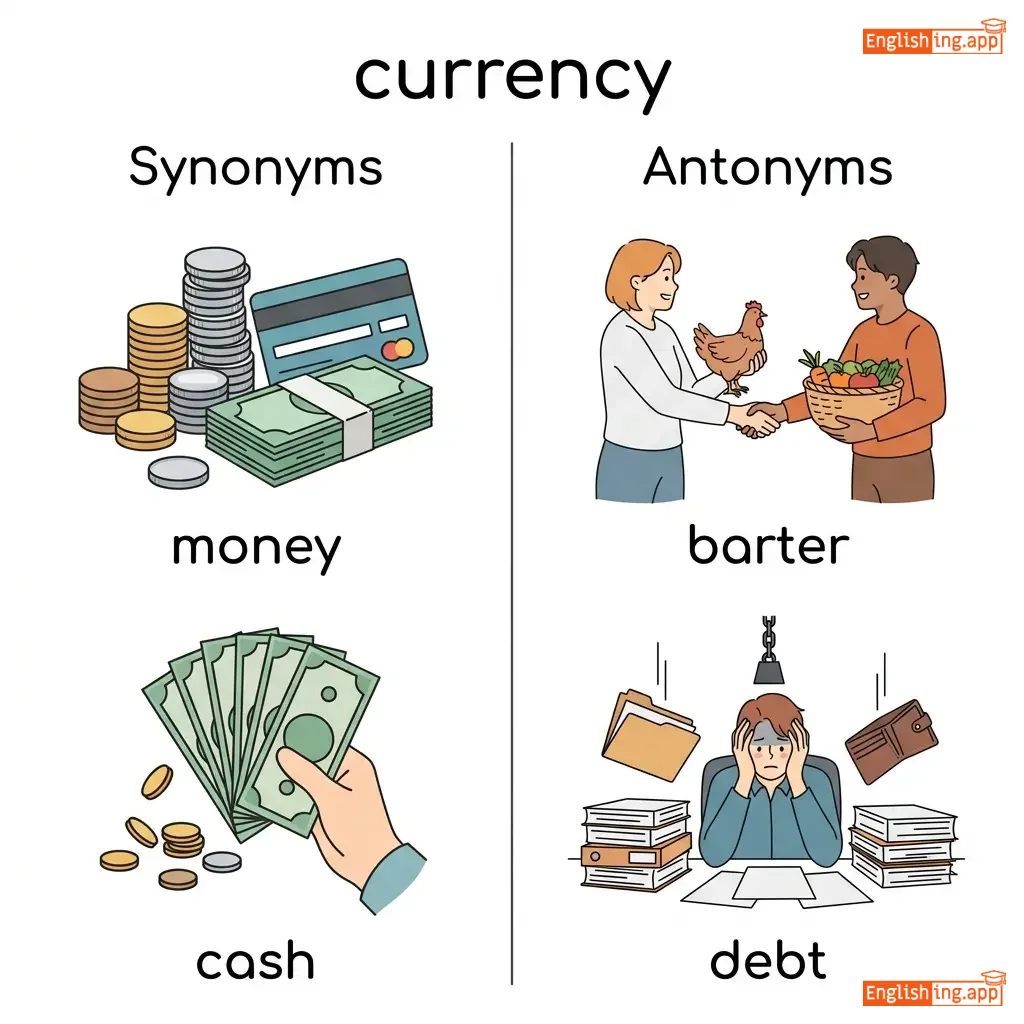
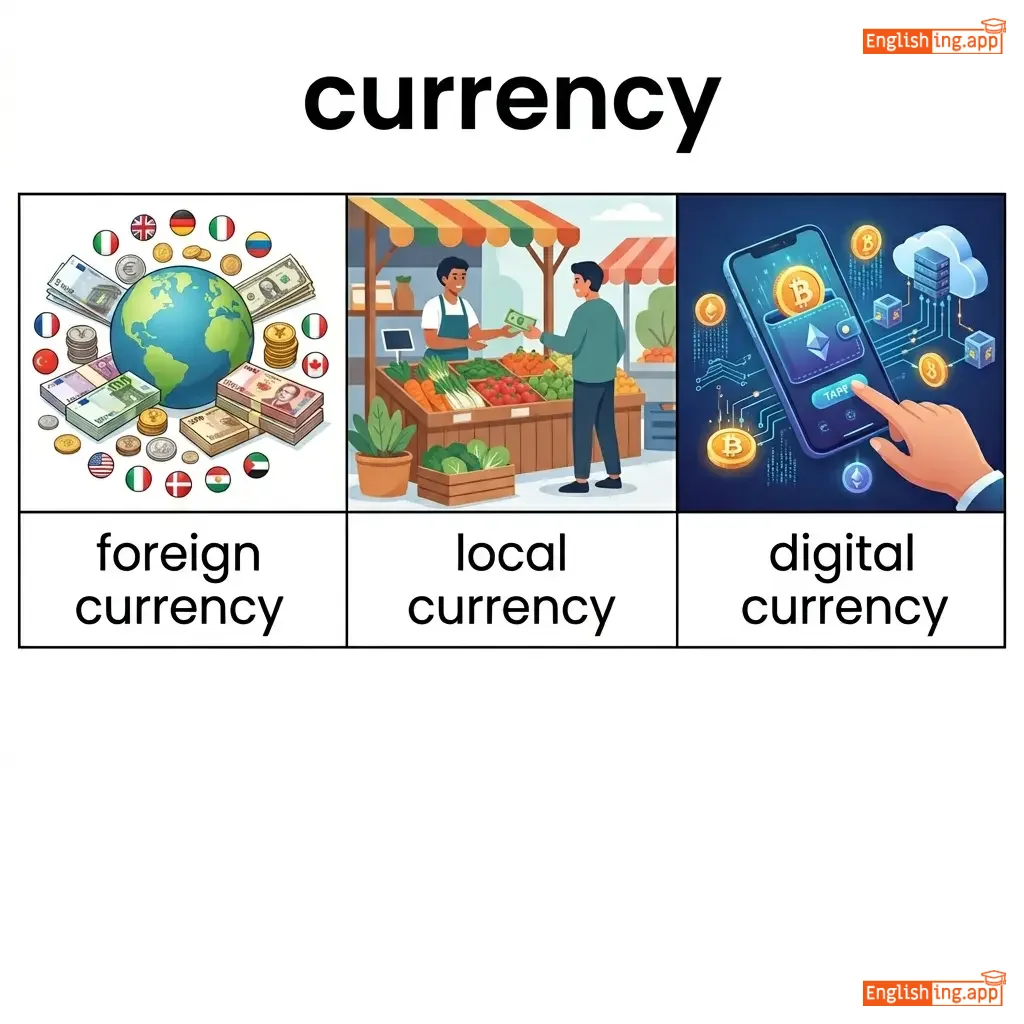
全国实行两种可自由兑换的currencies,或在特定条件下使用相同类型的currency。
-
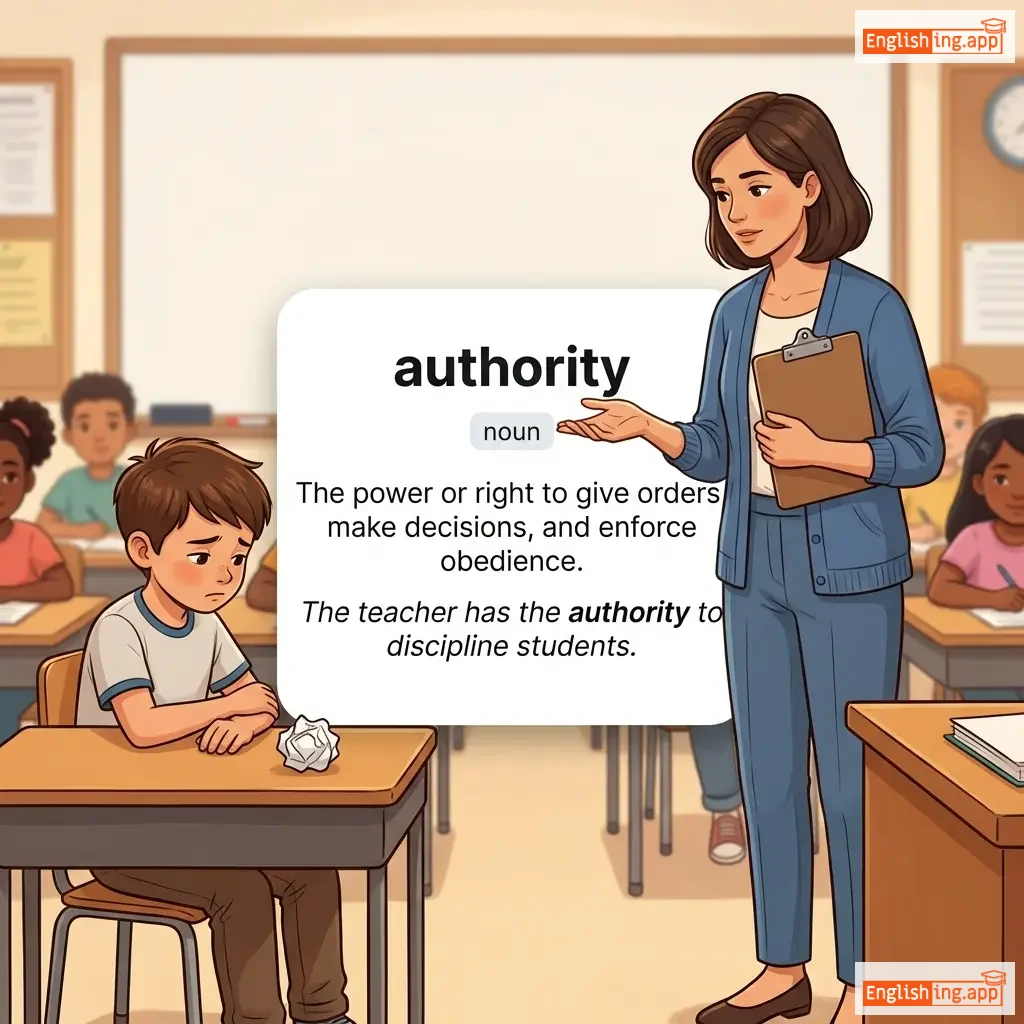
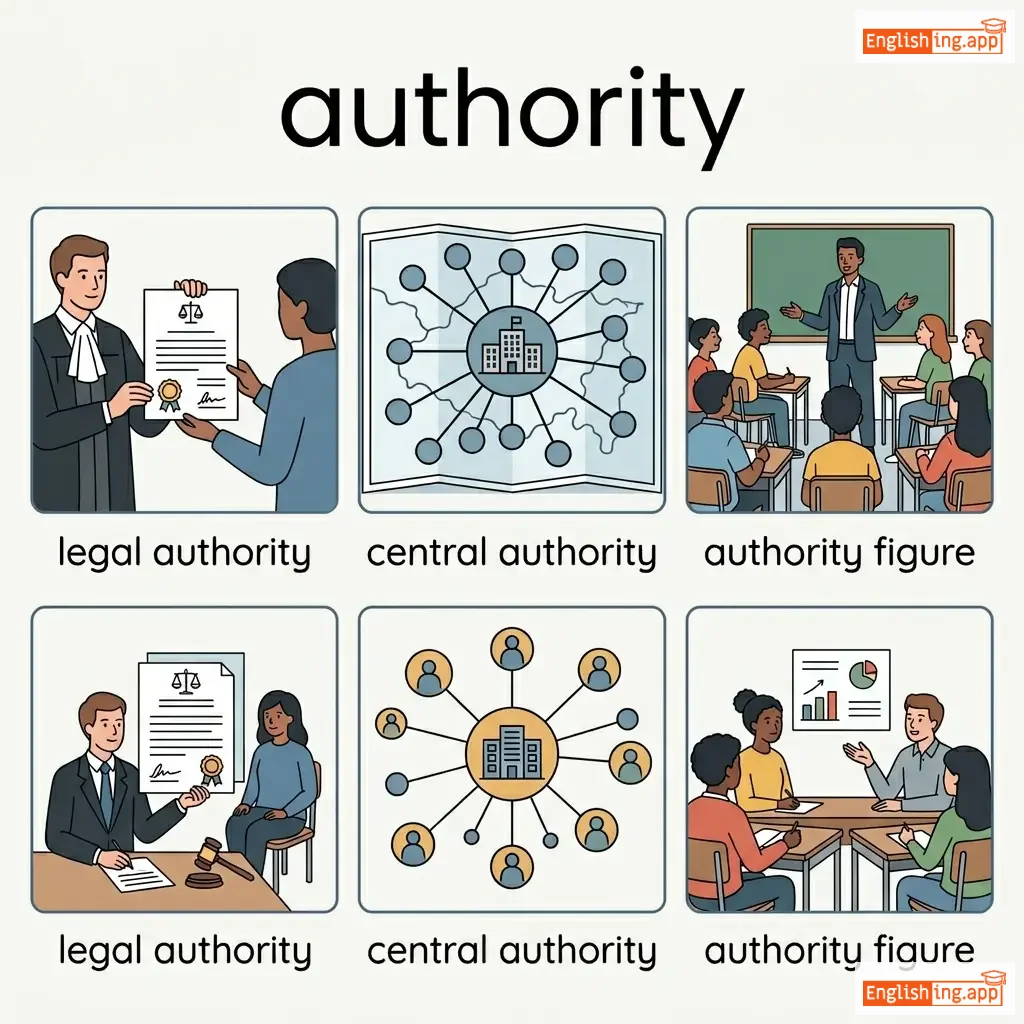
各地区政府保留征税authority。
-
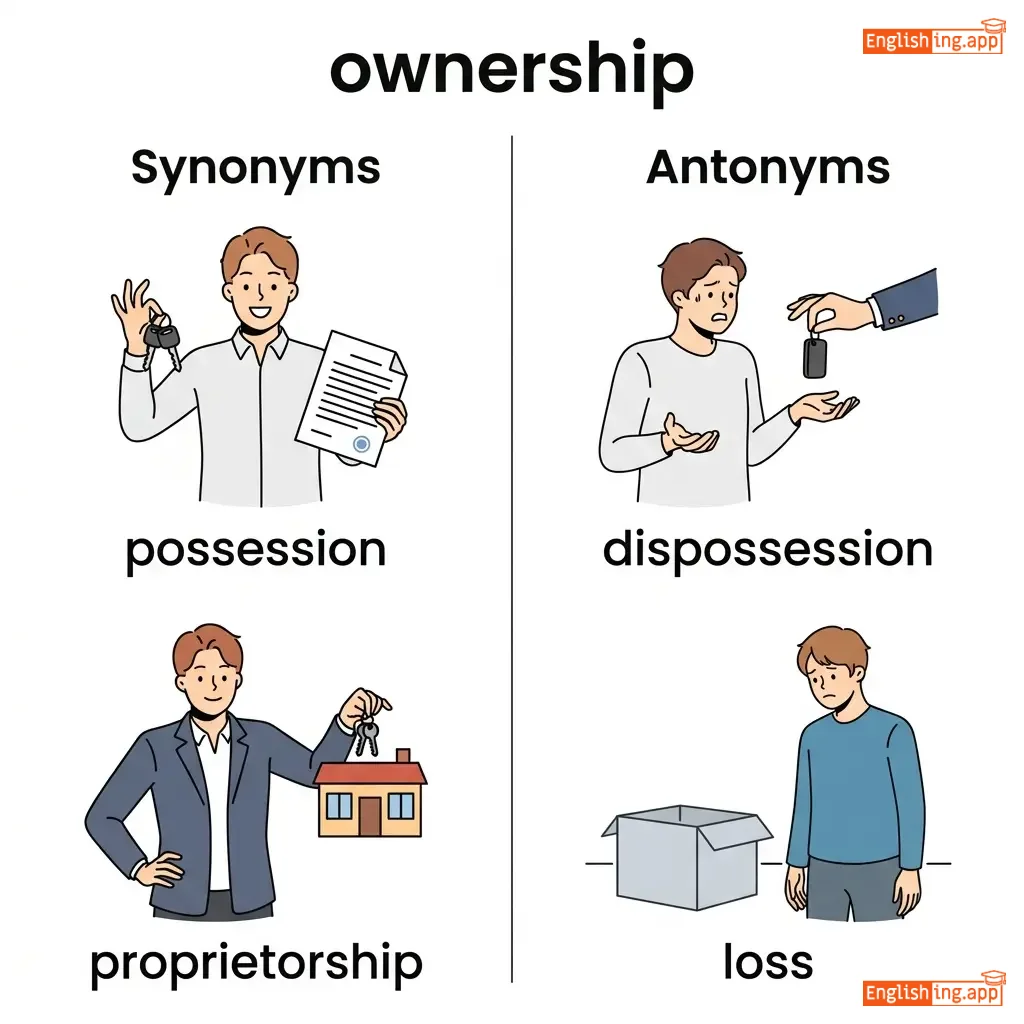
各联邦州保留其赚取的外汇currency的ownership。
-
授予联邦州建立准军事部队以维护地区安全的权力。
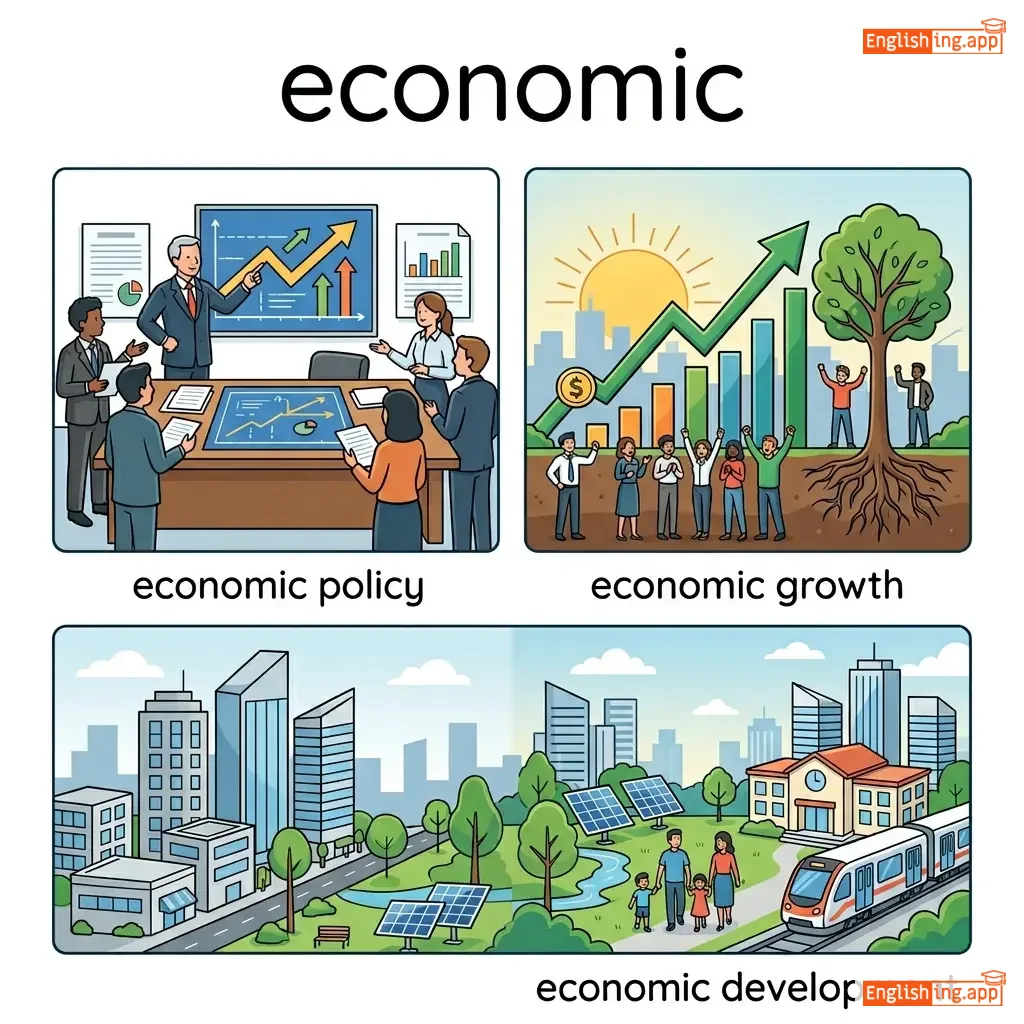
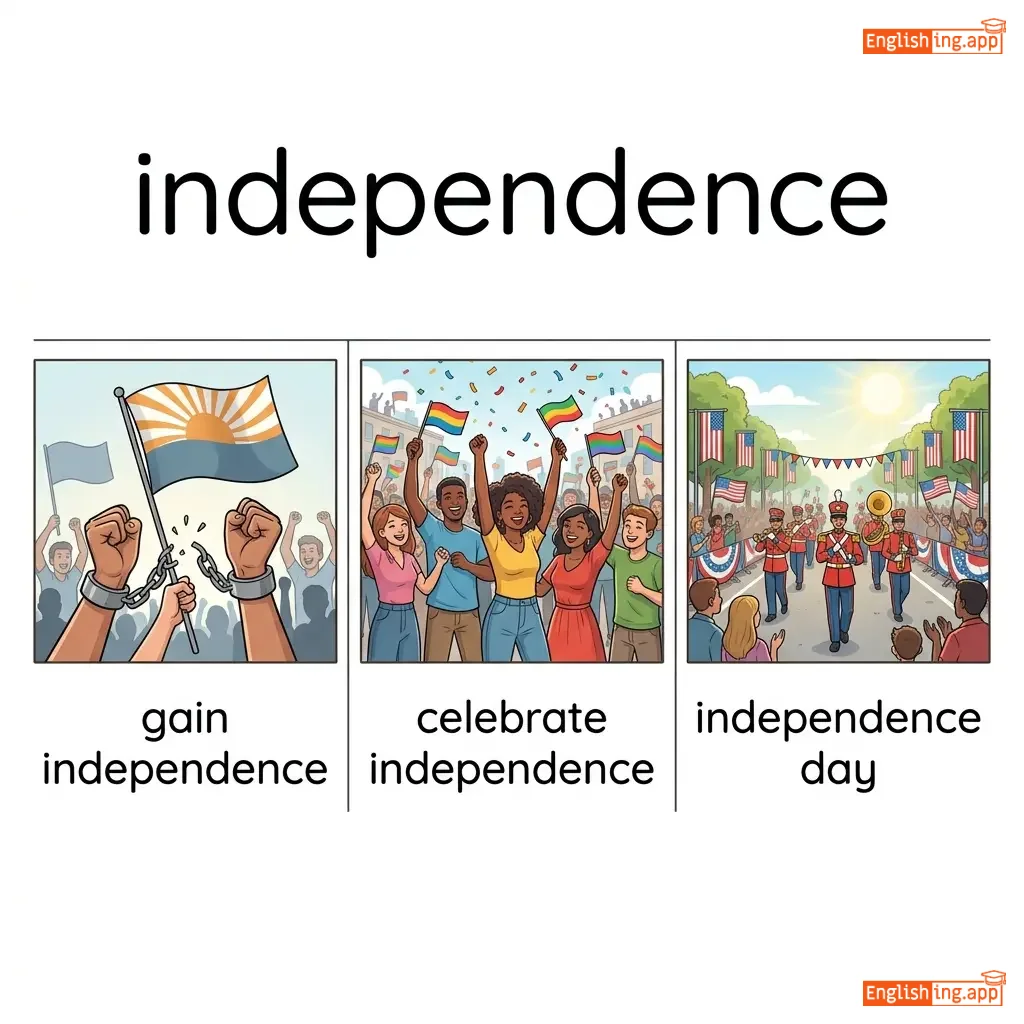
六点纲领强调了东巴基斯坦人民的所有economic、political和军事权利。阿尤布·汗政府称其为“分离主义纲领”。虽然没有直接提到independence,但这一六点计划深深激励了孟加拉人追求independence的精神。这是孟加拉民族的解放宪章。



Swipe left or right, or use the buttons. Tap image to zoom.
例句翻译
单词
The 6-Point Demand of 1966The 6-Point Demand of 1966 - 遮罩切换
|
表情符号
|
单词 | Images | 翻译 | 含义 | 例句 | 例句翻译 | 同义词 | 反义词 | 助记符 |
|---|---|---|---|---|---|---|---|---|---|
|
#399
👥
|
ˌpɒpjuˈleɪʃən
noun
(pópléiʃən)
••••••
|
|
人口
rénkǒu
••••••
|
All the inhabitants of a particular place; the number of people living in a country or region.
••••••
|
The population supported autonomy.
人口支持自治。
••••••
|
人口支持自治。
Renkou zhichi zizhi.
••••••
|
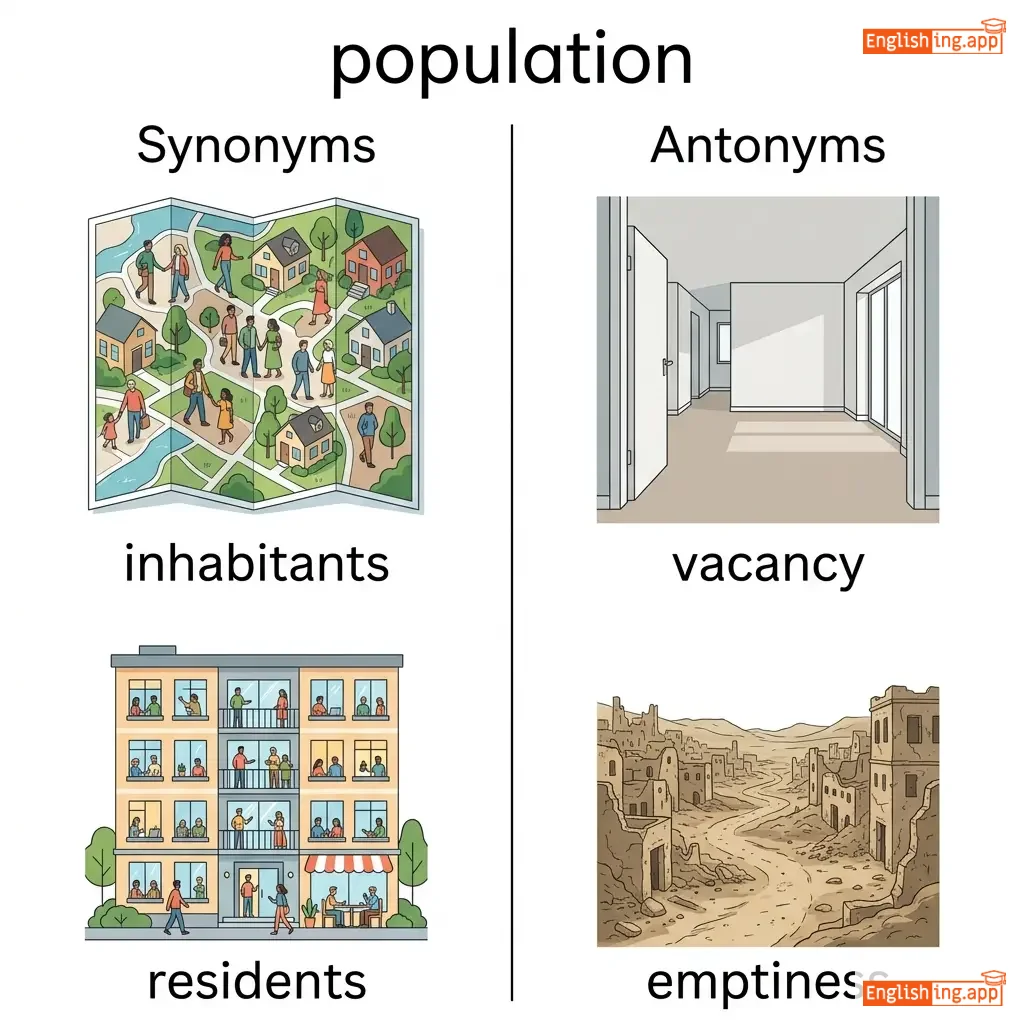
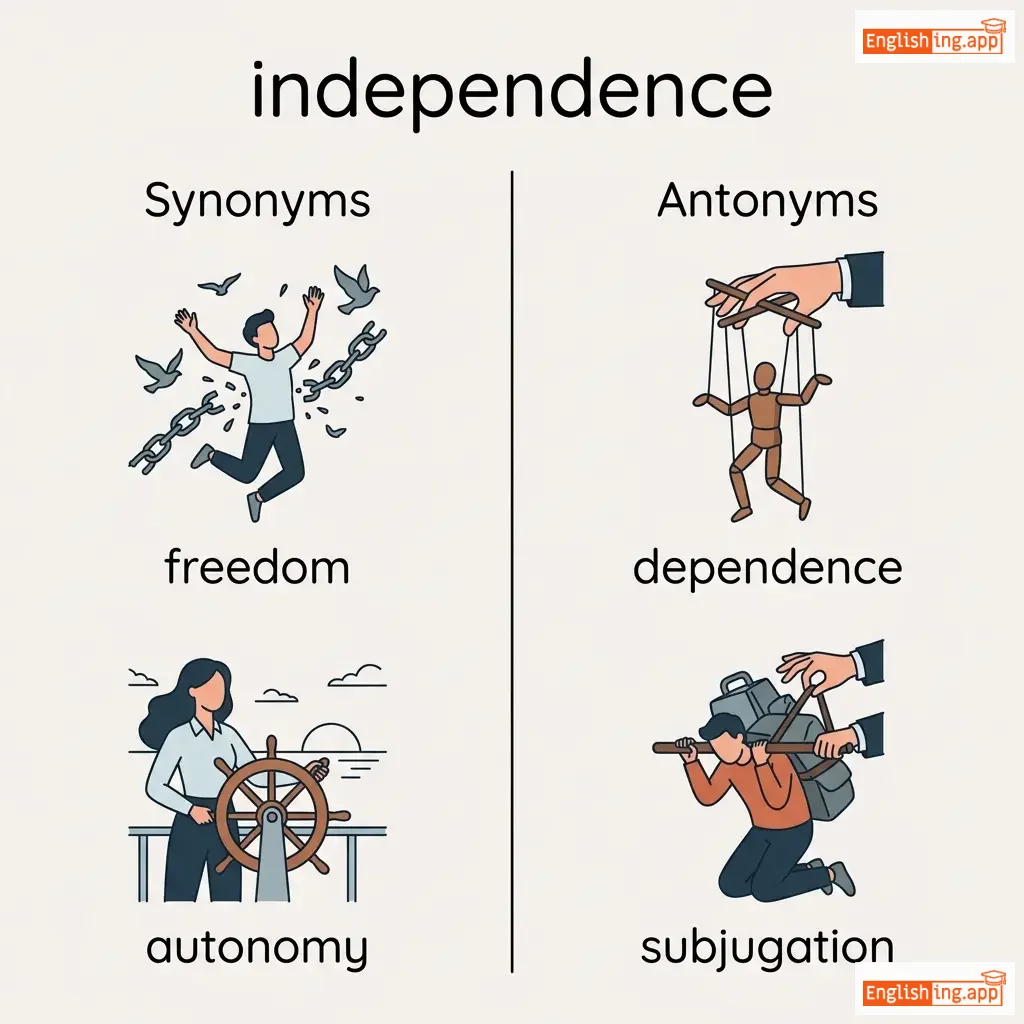
people, residents, inhabitants, citizens, community
••••••
|
emigration, isolation, depopulation, exodus, abandonment
••••••
|
人口 = 'ren' 人 meaning people, and 'kou' meaning population.
••••••
|
|
#400
⚖️
|
dɪˈskrɪmɪnətɔːri
adjective
(歧视性)
••••••
|
|
歧视性
qishi xing
••••••
|
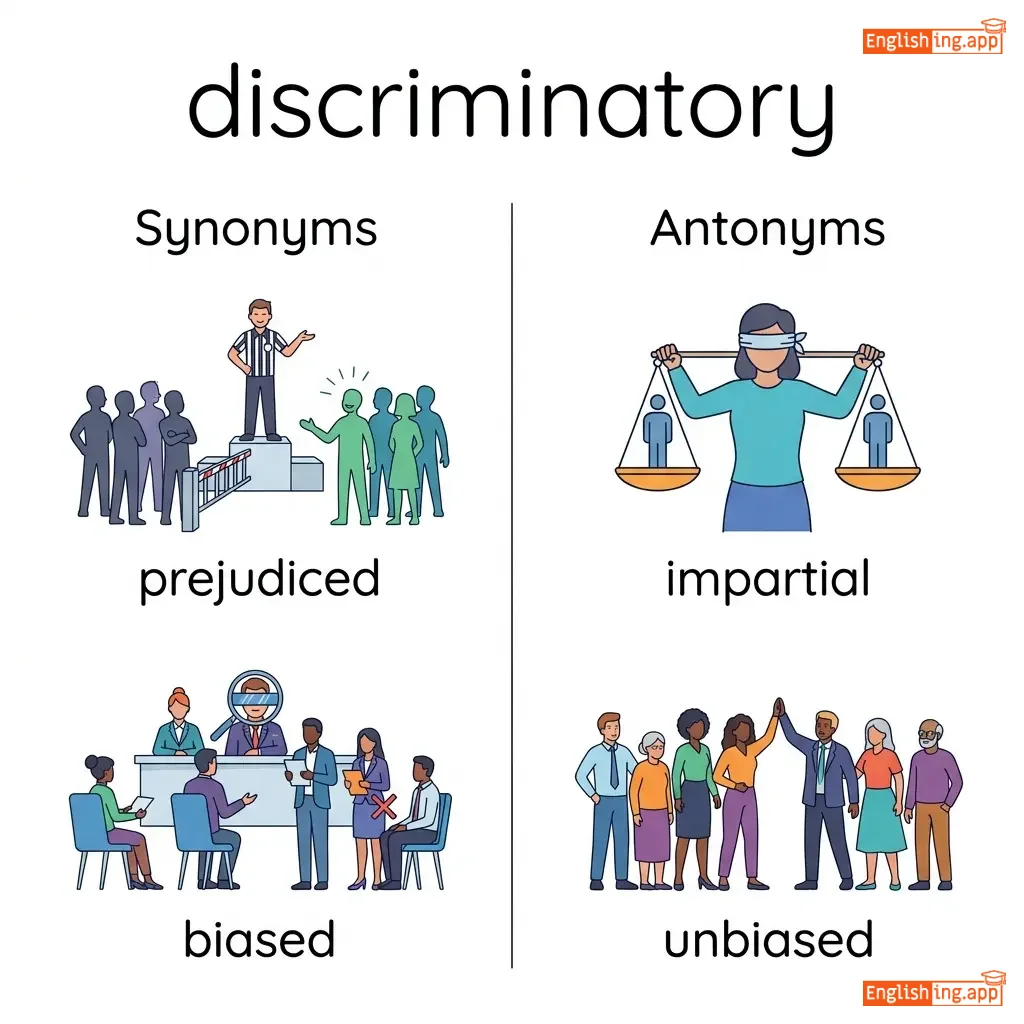
Making or showing an unfair or prejudicial distinction between different categories of people or things.
••••••
|
Discriminatory policies triggered protests. |
歧视性政策引发了抗议。
Qishi xing zhengce yinfa le kangyi.
••••••
|
prejudiced, biased, unfair, partial, bigoted
••••••
|
impartial, unbiased, fair, equal, just
••••••
|
歧视性政策会引发社会的不满。
••••••
|
|
#401
🏛️
|
ɔːˈtɒnəmi
noun
(自治)
••••••
|
|
自治
zizhi
••••••
|
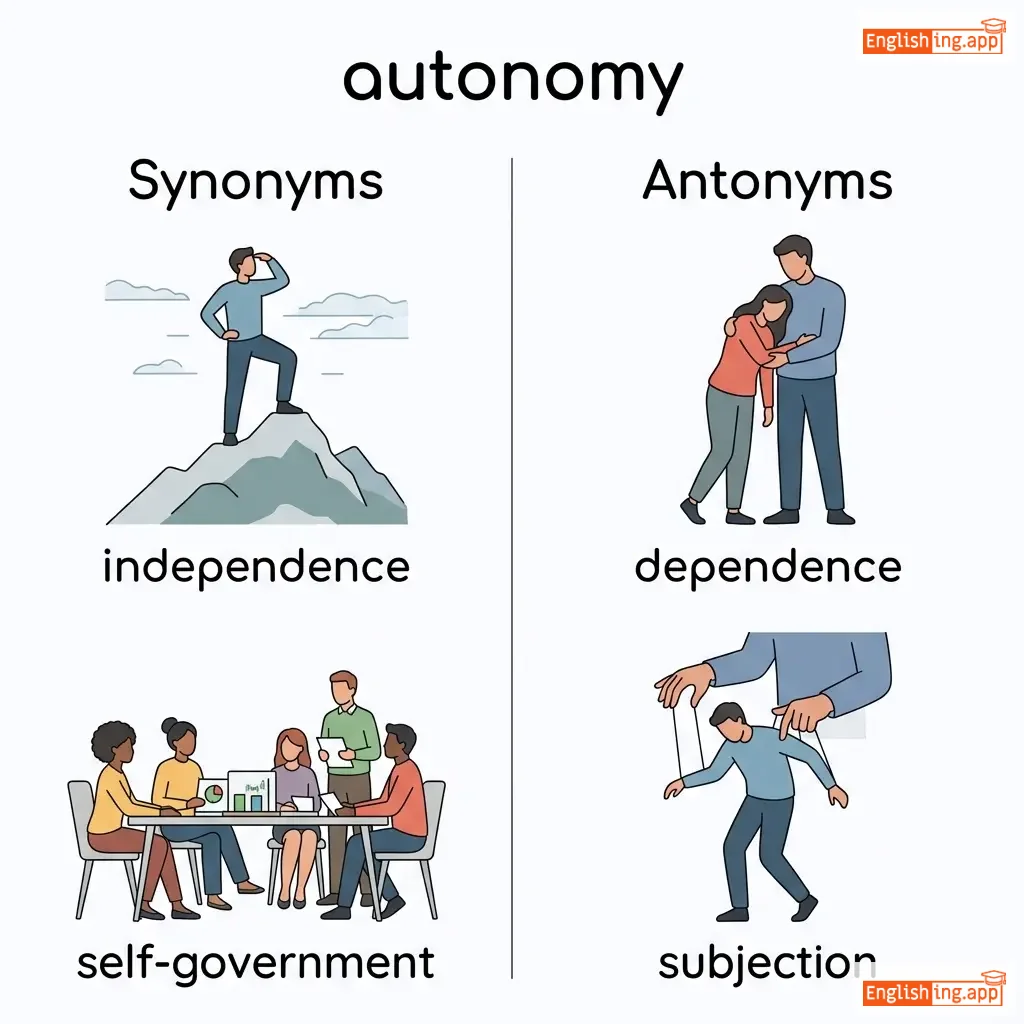
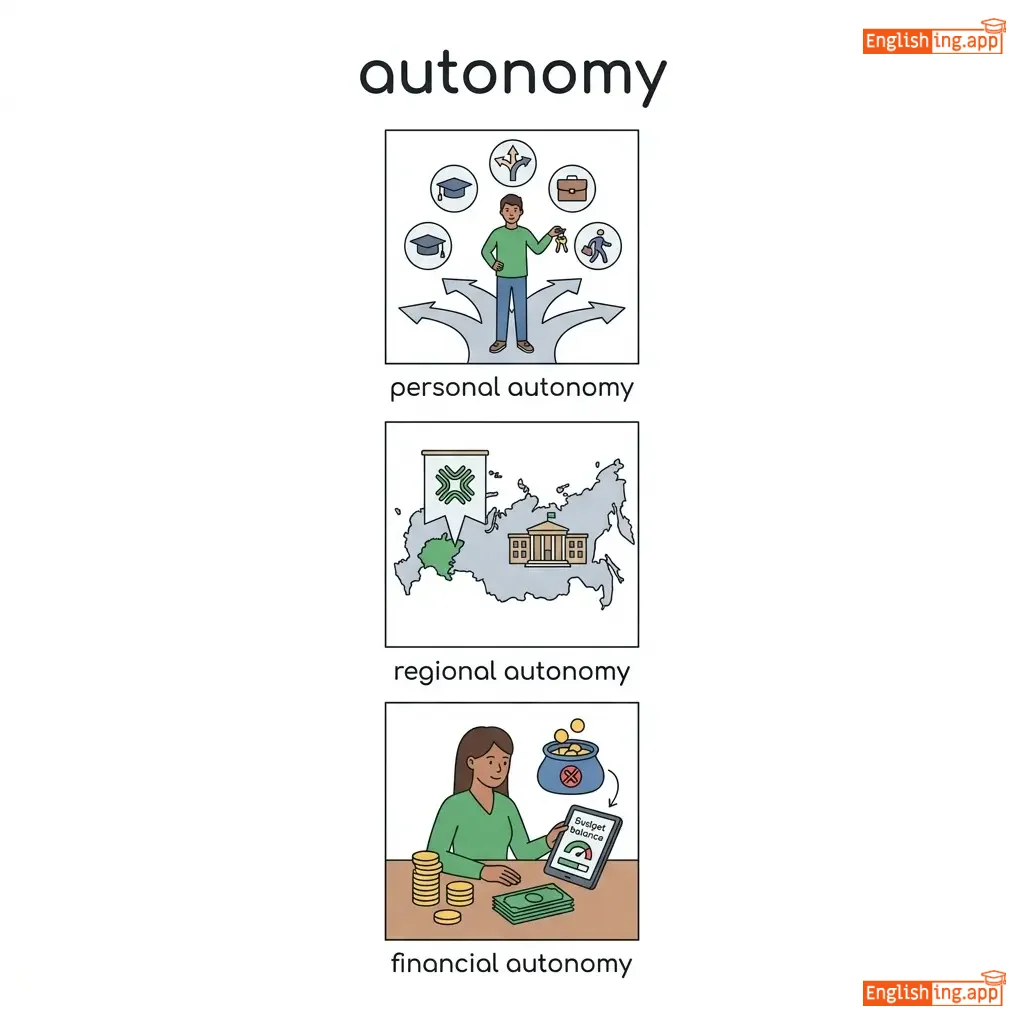
The right or condition of self-government; freedom from external control or influence.
••••••
|
Autonomy was a primary demand. |
自治是一个主要的要求。
Zìzhì shì yīgè zhǔyào de yāoqiú.
••••••
|
independence, sovereignty, self-rule, self-determination, freedom
••••••
|
dependence, subordination, control, subjugation, domination
••••••
|
自治 – 追求无外部控制的自由与自我管理。
••••••
|
|
#402
⚖️
|
raɪts
noun
(raits)
••••••
|
|
权利
quanli
••••••
|
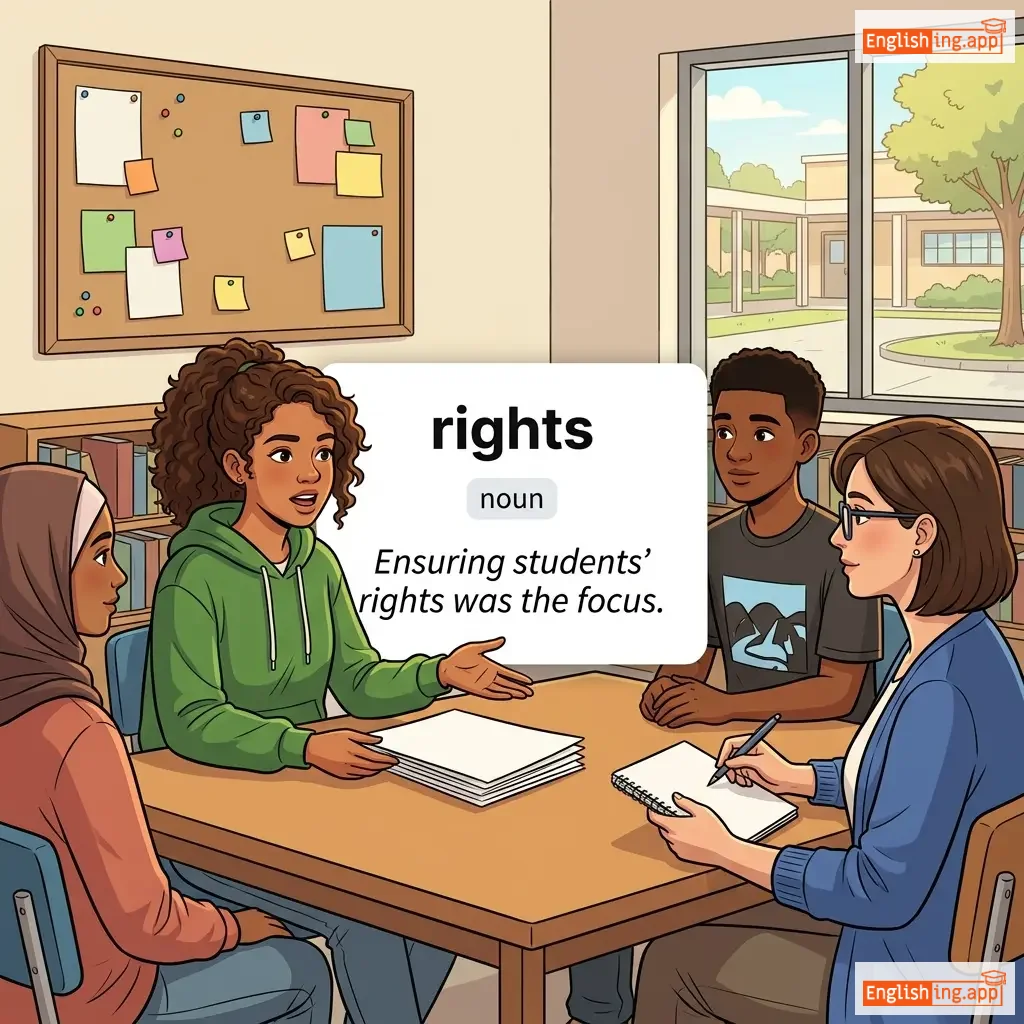
A moral or legal entitlement to have or obtain something or to act in a certain way.
••••••
|
The rights of people were prioritized.
人们的权利被优先考虑。
••••••
|
人们的权利被优先考虑。
Renmen de quanli bei youxian kaolv.
••••••
|
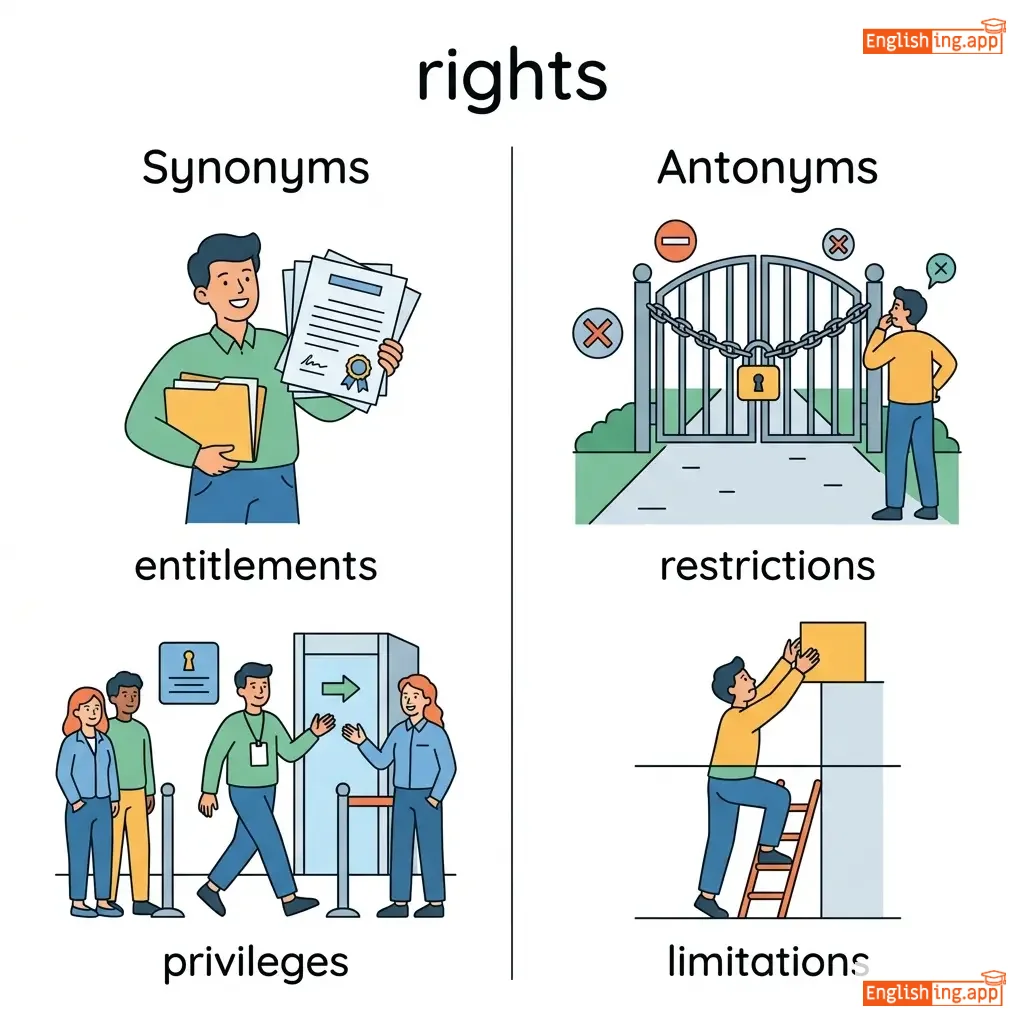
freedoms, privileges, entitlements, liberties, prerogatives
••••••
|
restrictions, limitations, prohibitions, constraints, duties
••••••
|
权利是你拥有自由去做事的钥匙。
••••••
|
|
#403
🏛️
|
ˈɡʌvəmənt
noun
(政府)
••••••
|
|
政府
zhèngfǔ
••••••
|
The governing body of a nation, state, or community; the system by which a state or community is governed.
••••••
|
The government rejected the demands. |
政府拒绝了这些要求。
Zhèngfǔ jùjuéle zhèxiē yāoqiú.
••••••
|
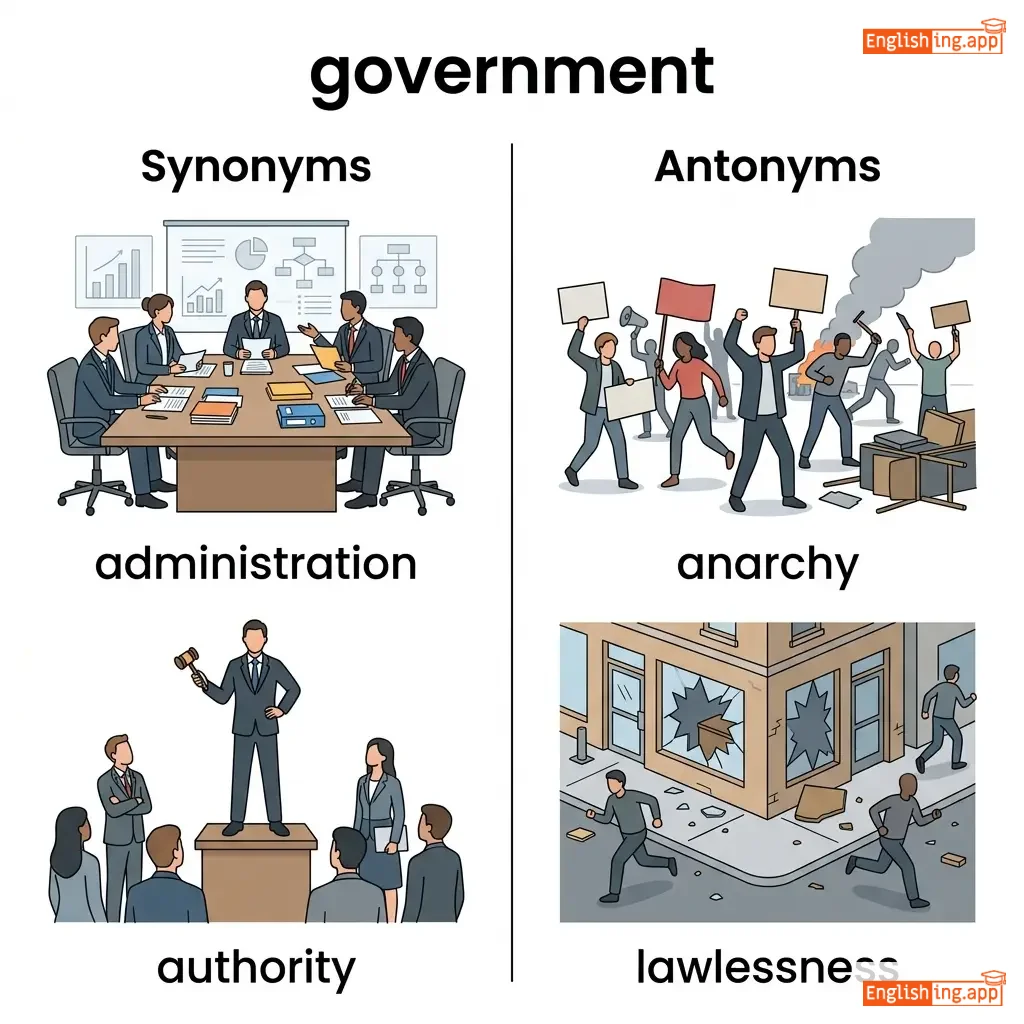
administration, regime, authority, state, ruling body
••••••
|
anarchy, disorder, chaos, lawlessness, revolution
••••••
|
政府和 'government' 控制国家。
••••••
|
|
#404
🗳️
|
ˈsʌfrɪdʒ
noun
(sǔfùrāj)
••••••
|
|
选举权
xuǎnjǔ quán
••••••
|
The right to vote in political elections; the principle of political representation.
••••••
|
Universal suffrage was a key demand.
普选权是一个重要的要求。
••••••
|
普选权是一个重要的要求。
Pǔxuǎn quán shì yīgè zhòngyào de yāoqiú.
••••••
|
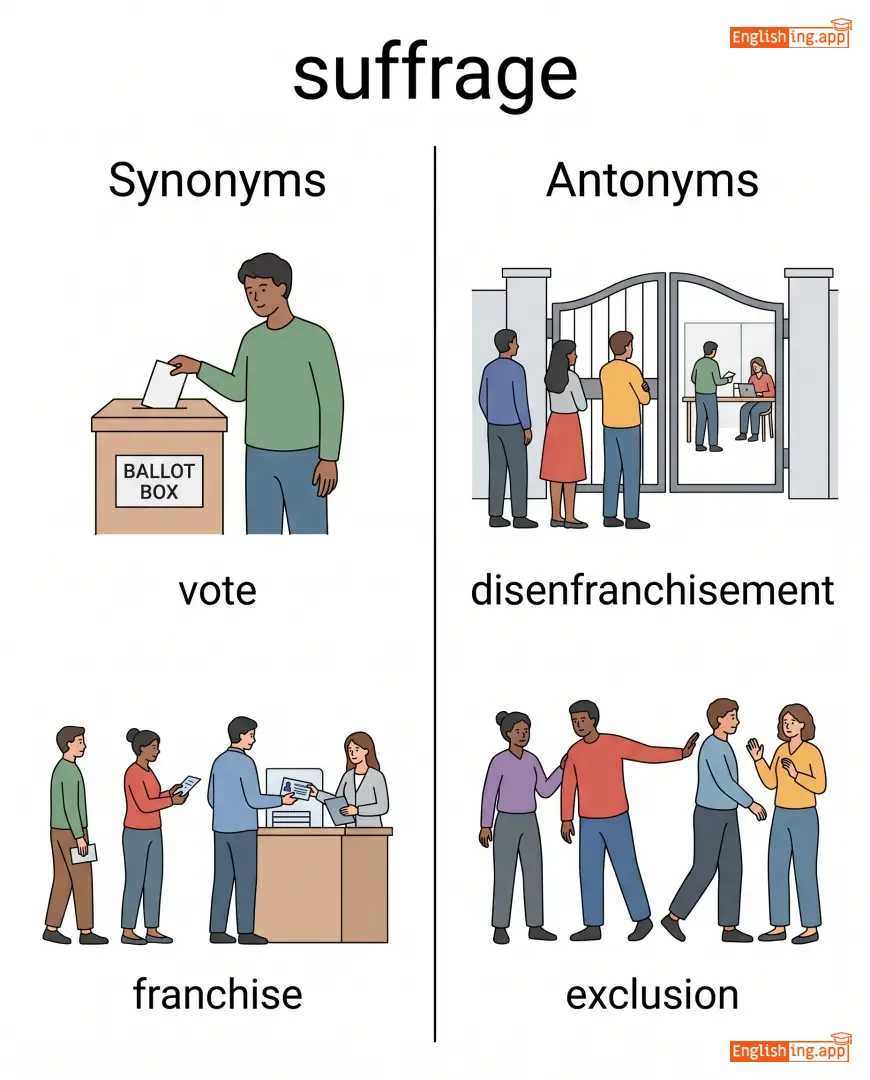
voting rights, franchise, ballot, electoral rights, democratic participation
••••••
|
disenfranchisement, exclusion, denial, prohibition, restriction
••••••
|
选举权帮助公民参与民主决策。
••••••
|
|
#405
🛡️
|
dɪˈfens
noun
(迪芬斯)
••••••
|
|
防御
fangyu
••••••
|
The action of defending from or resisting attack; protection from harm or danger.
••••••
|
Defense was one of the central subjects. |
防御是其中一个核心主题。
Fangyu shi qizhong yige hexin zhuti.
••••••
|
protection, security, safeguarding, shield, fortification
••••••
|
attack, vulnerability, offense, assault, aggression
••••••
|
防御就是保护自己免受攻击。
••••••
|
|
#406
💱
|
ˈkʌrənsi
noun
(kělúnxī)
••••••
|
|
货币
huòbì
••••••
|
A system of money in general use in a particular country; the fact or quality of being generally accepted or in use.
••••••
|
Dual currency systems were proposed.
双货币系统被提议。
••••••
|
提议了双货币系统。
Tíyìle shuāng huòbì xìtǒng.
••••••
|
money, cash, legal tender, coinage, banknotes
••••••
|
barter, commodities, trade, exchange, non-monetary
••••••
|
Huòbì, xiàng nín měitiān shǐyòng de qián.
••••••
|
|
#407
👑
|
ɔːˈθɒrəti
noun
(授权)
••••••
|
|
权威
quánwēi
••••••
|
The power or right to give orders, make decisions, and enforce obedience; a person or organization having power or control.
••••••
|
Regional authority was emphasized.
区域授权得到了强调。
••••••
|
区域授权得到了强调。
Qūyù quánwēi dédào le qiángdiào.
••••••
|
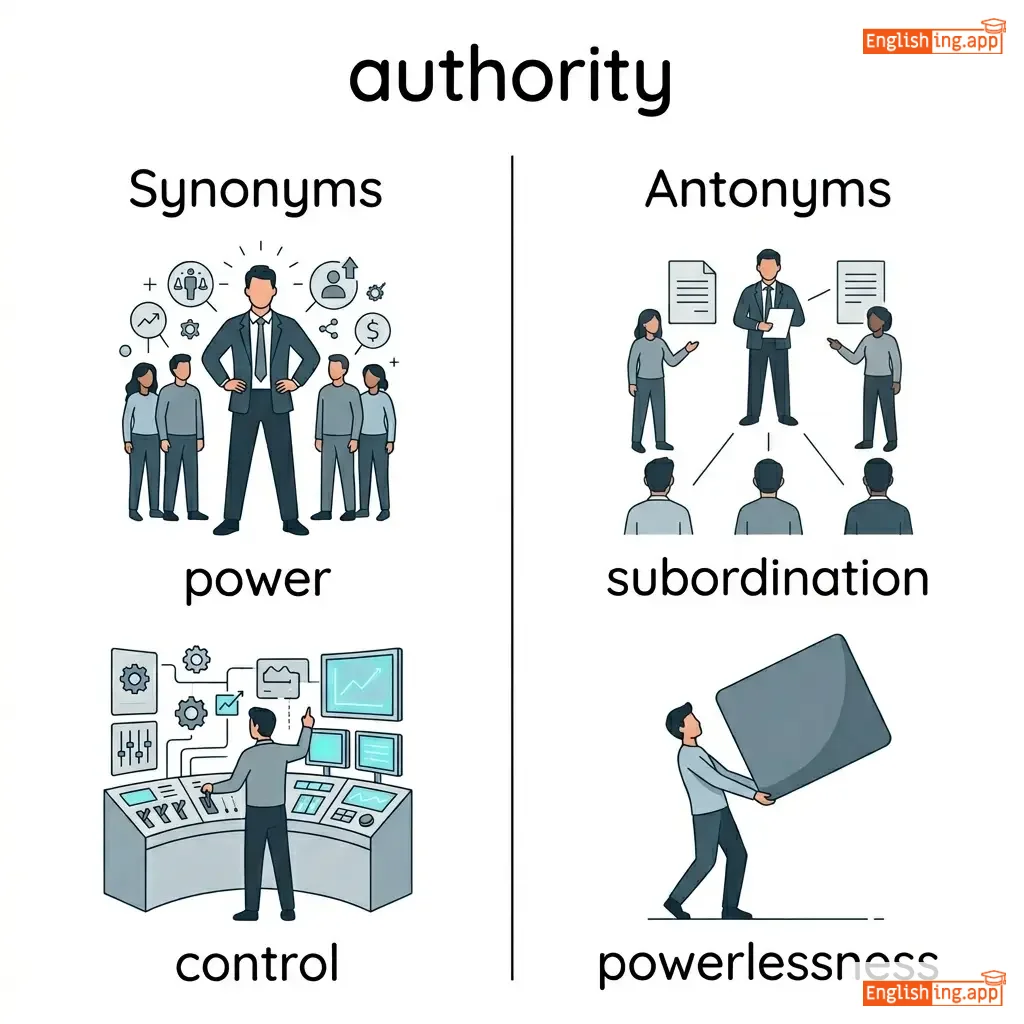
control, power, command, jurisdiction, dominion
••••••
|
weakness, inability, powerlessness, submission, subordination
••••••
|
‘权威’意味着拥有控制力,类似英语中的‘authority’。
••••••
|
|
#408
🏠
|
ˈəʊnəʃɪp
noun
(ownership)
••••••
|
|
所有权
suǒyǒuquán
••••••
|
The act, state, or right of possessing something; legal title to something.
••••••
|
Ownership of resources was crucial.
Ownership of resources was crucial.
••••••
|
资源的所有权至关重要。
Zīyuán de suǒyǒuquán zhìguān zhòngyào.
••••••
|
possession, tenure, proprietorship, title, holding
••••••
|
dispossession, borrowing, renting, leasing, tenancy
••••••
|
Ownership = 所有权. '所有' means 'all,' and 权 means 'rights,' so ownership is all your rights!
••••••
|
|
#409
📈
|
ˌiːkəˈnɒmɪk
adjective
(经济的)
••••••
|
|
经济的
jingji de
••••••
|
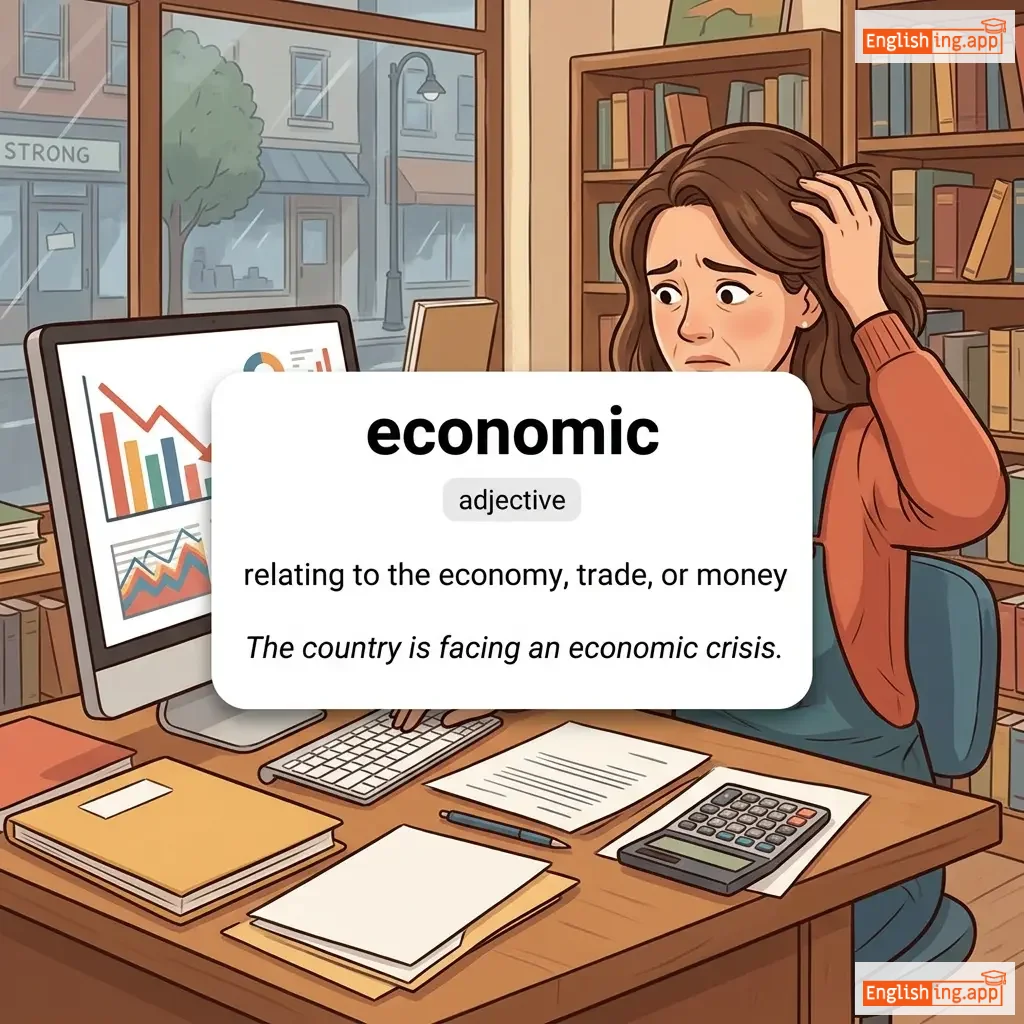
Relating to economics or the economy; justified in terms of profitability.
••••••
|
Economic independence was highlighted.
经济独立性得到了强调。
••••••
|
经济独立性得到了强调。
Jingji dulixing dedaole qiangdiao.
••••••
|
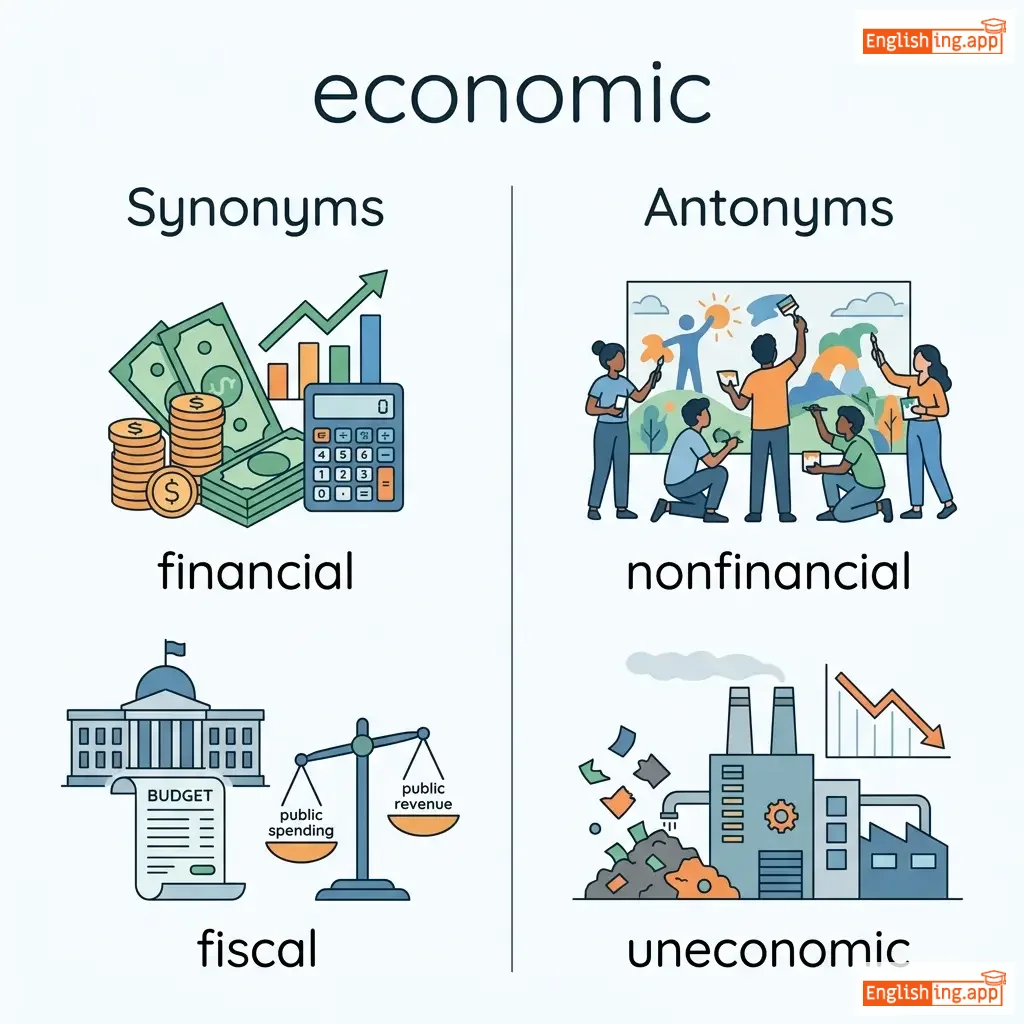
financial, fiscal, monetary, commercial, trade-related
••••••
|
uneconomic, unprofitable, wasteful, inefficient, costly
••••••
|
Economic = 经济的 (think of ‘经’ meaning the economy)
••••••
|
|
#410
🏛️
|
pəˈlɪtɪkəl
adjective
(波利提卡尔)
••••••
|
|
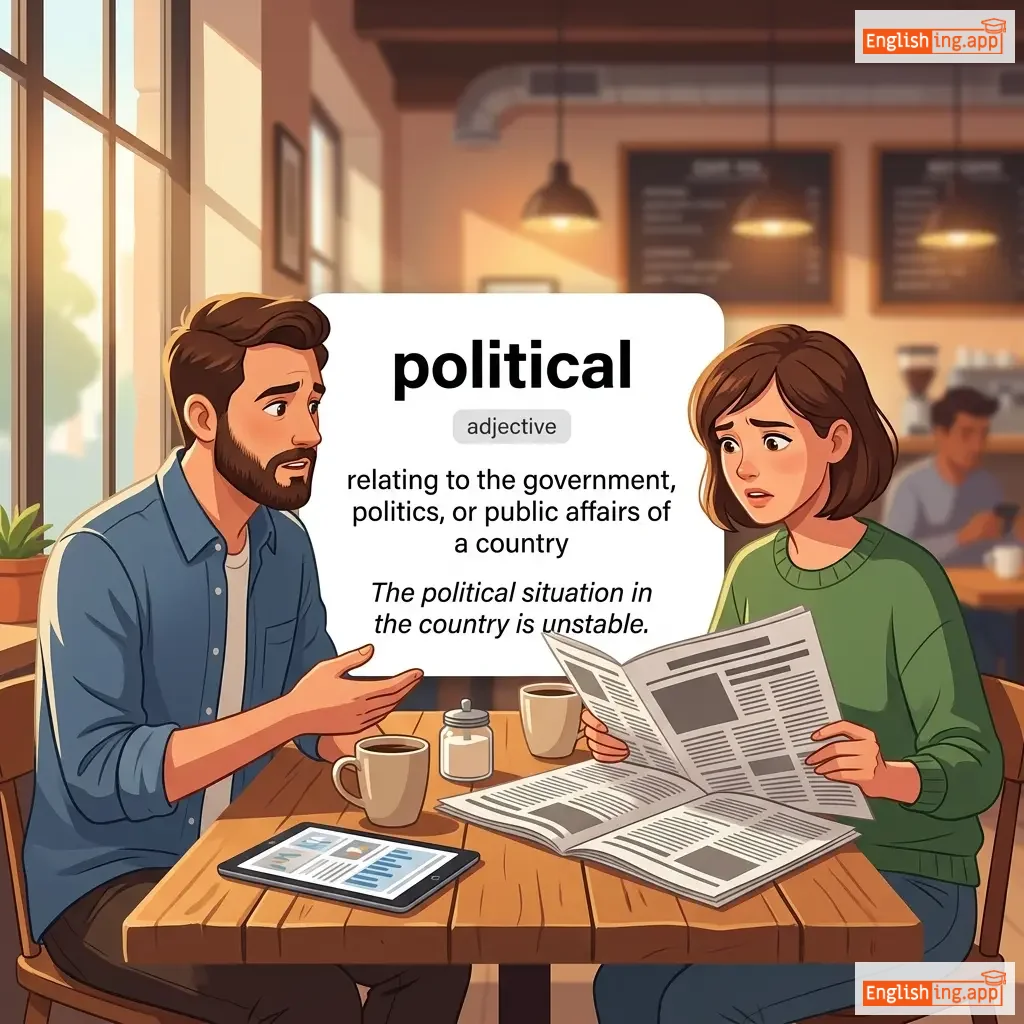
政治的
politikal
••••••
|
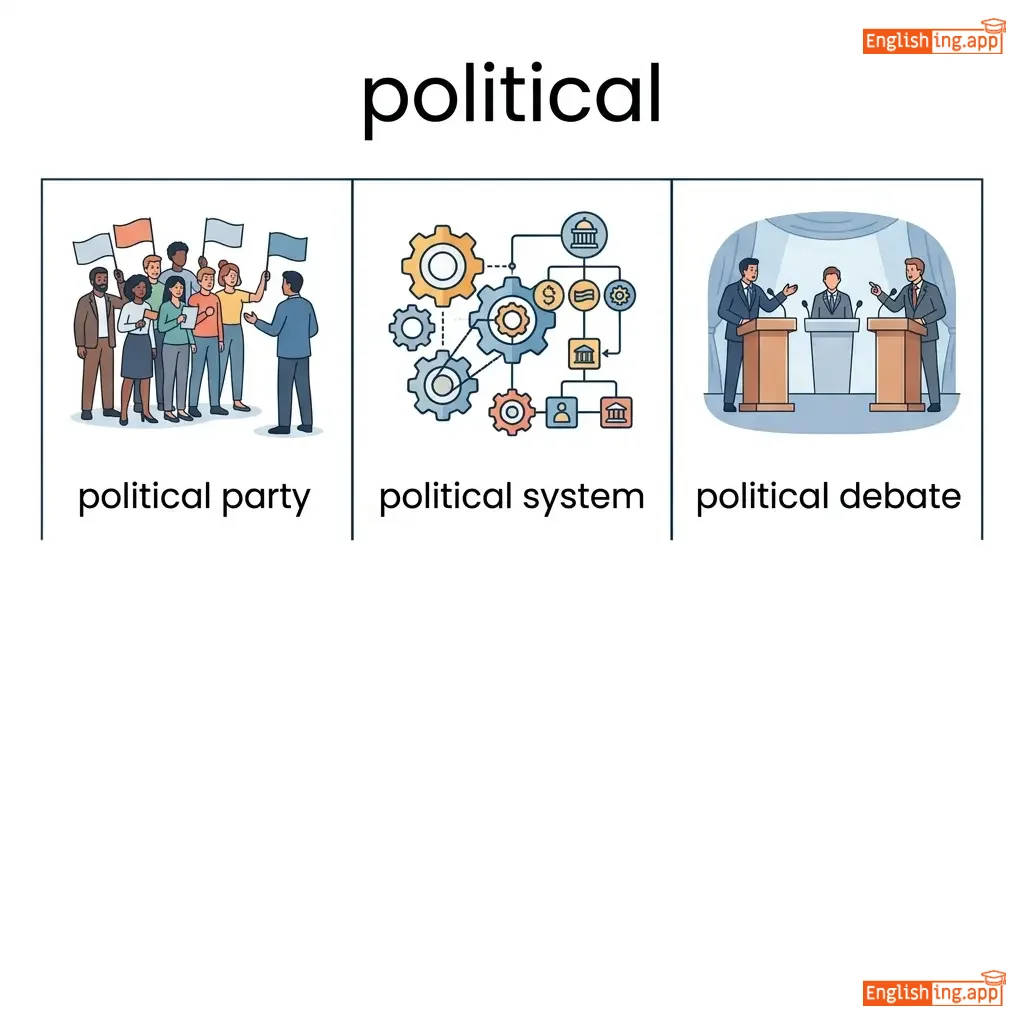
Relating to the government or public affairs of a country; relating to politics or political parties.
••••••
|
The political agenda included autonomy.
政治议程包括自治。
••••••
|
政治议程包括自治。
zhengzhiyichengbaokuozizhi
••••••
|
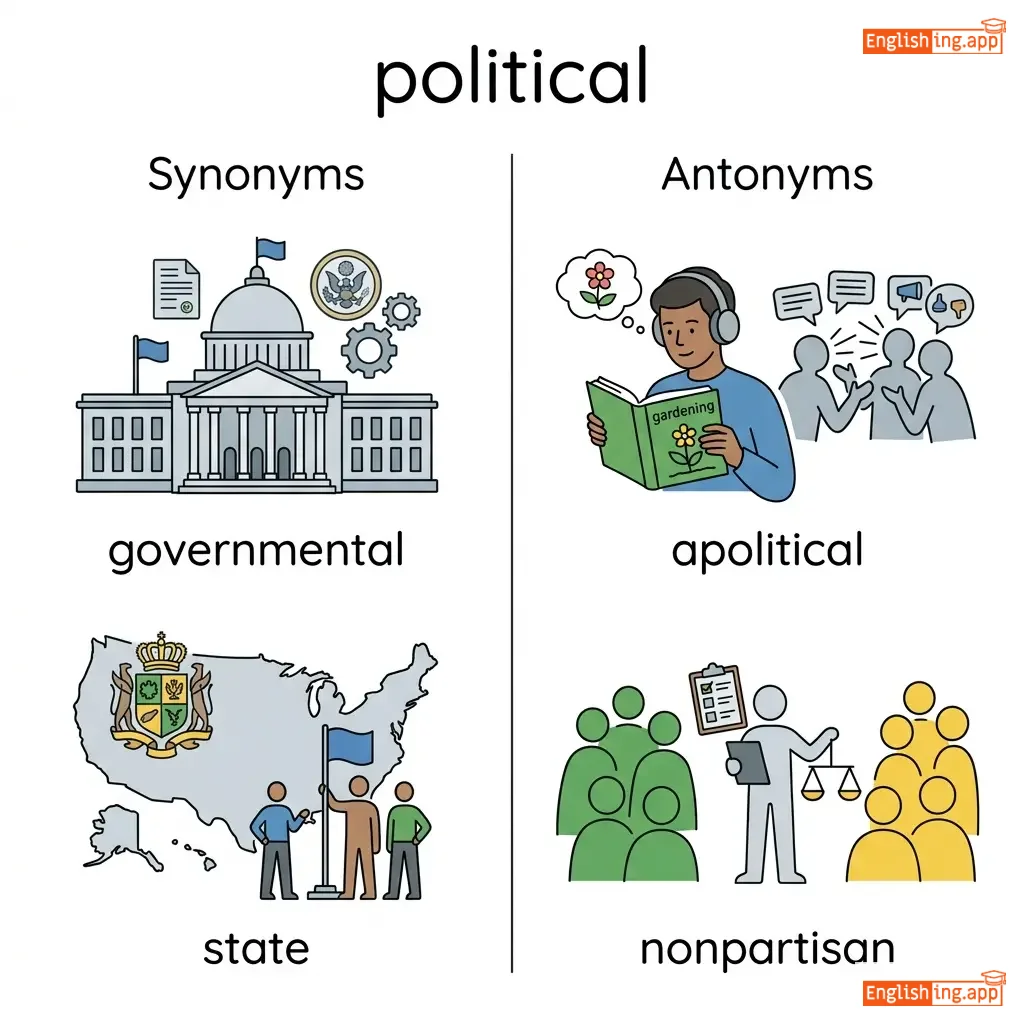
administrative, civic, governmental, public, state-related
••••••
|
apolitical, nonpolitical, private, personal, non-governmental
••••••
|
想象一个 politician 在 meeting 讨论 policy, 这 就是 political 的含义: 与 政治 有关
••••••
|
|
#411
🗽
|
ˌɪndɪˈpendəns
noun
(independens)
••••••
|
|
独立
duli
••••••
|
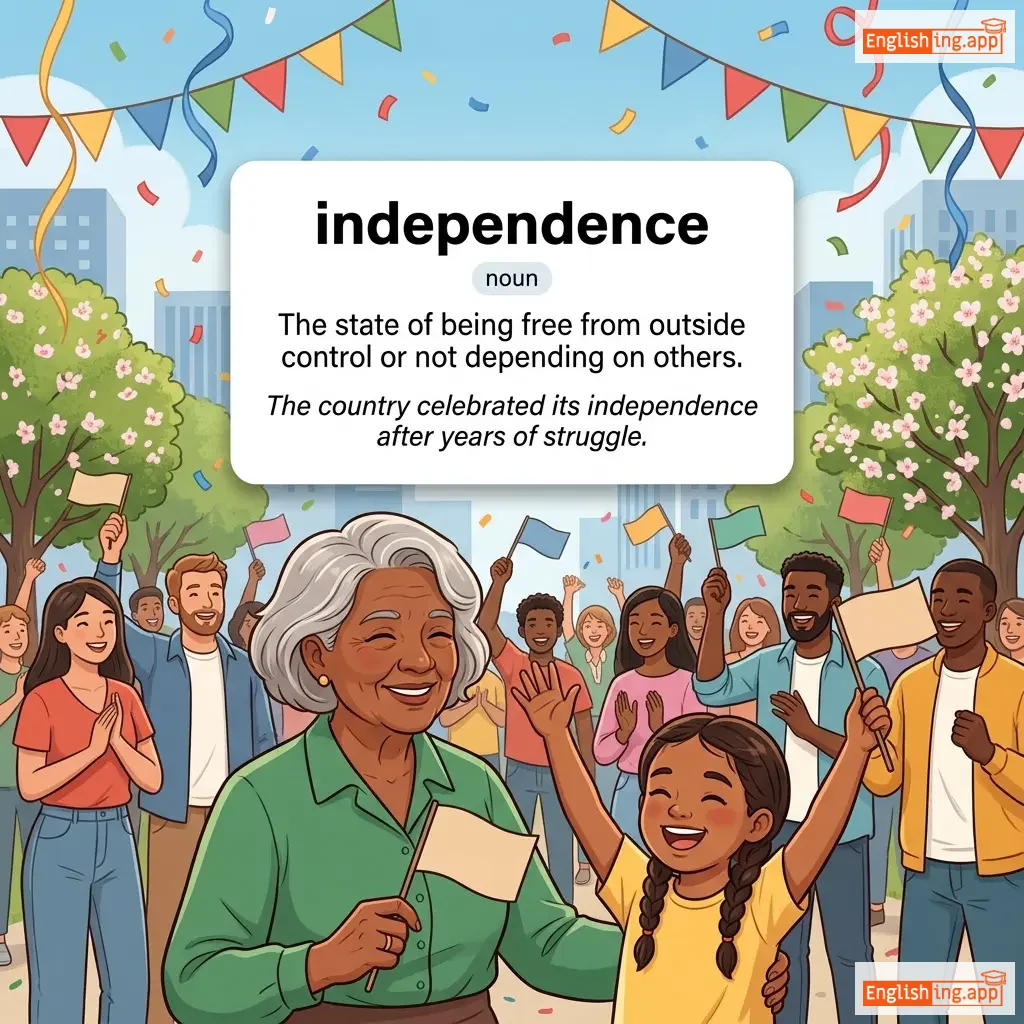
The fact or state of being independent; freedom from outside control; not being subject to another's authority.
••••••
|
Independence inspired the movement.
独立激发了运动。
••••••
|
独立激发了运动。
Duli jifa le yundong.
••••••
|
freedom, liberation, sovereignty, autonomy, self-rule
••••••
|
subjection, dependence, subordination, control, domination
••••••
|
'独立' (duli) means the power of independence and freedom from all control.
••••••
|
Vocabulary Quiz
Test your vocabulary by matching words with their translations or meanings.
Login to take the quiz
Comments (0)
Share your thoughts and join the discussion.
Join the discussion by logging in
Login to CommentNo comments yet
Be the first to share your thoughts!