词汇表

英语词汇词典 | 单词含义、定义和示例

🍴

whet

verb
/wɛt/

To sharpen the blade of a tool or to stimulate interest or appetite.

"The smell of food whetted my appetite."

verb
/ˈwaɪtˌwɑːʃ/

to cover up faults, errors, or unpleasant facts; to paint with white paint or lime

"The report was criticized for trying to whitewash the company's failures."

adverb
/wɛərˈbaɪ/
通过 (tongguo)

by which; because of which

"The company agreed to a contract whereby it would pay the penalty."

"公司同意了一份合同,通过它将支付罚款。" (Gongsi tongyi le yifen hetong, tongguo ta jiang zhifu faqian.)
verb
/ˈwɪzn/
枯萎 (kūwěi)

To become dry, shrunken, and wrinkled.

"The flowers began to wizen after days without water."
"花朵在几天没有水后开始枯萎。" (Huāduǒ zài jǐ tiān méiyǒu shuǐ hòu kāishǐ kūwěi.)
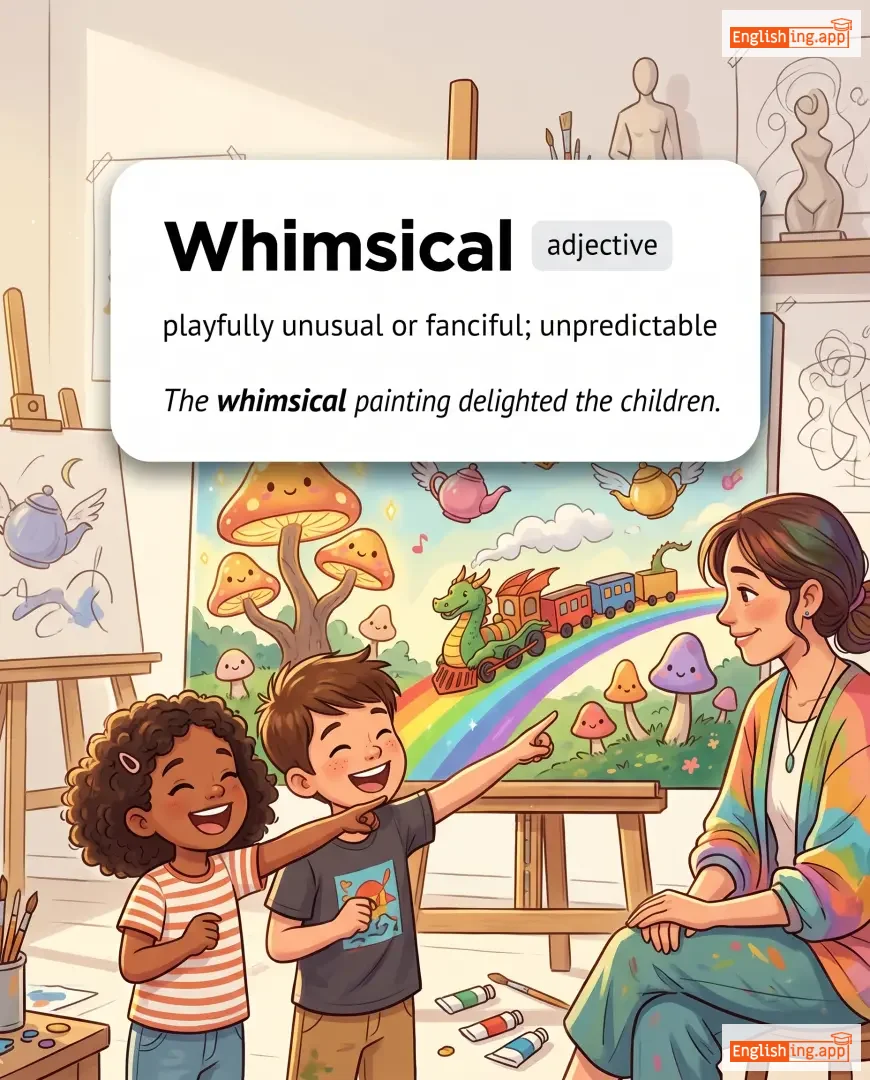
Whimsical definition card — visual illustration of the meaning
adjective
/ˈwɪmzɪkəl/
异想天开 (yìxiǎngtiānkāi)

playfully unusual or fanciful; unpredictable

"The whimsical painting delighted the children."

"这幅异想天开的画让孩子们感到高兴。" (Zhè fú yìxiǎngtiānkāi de huà ràng háizimen gǎndào gāoxìng.)
noun
/waɪld bɔːr/
野猪 (ye zhu)

a wild pig that lives in forests and has long curved teeth

"The wild boar ran through the forest quickly."

"野猪快速地穿过森林。" (ye zhu kuaisu de chuan guo senlin)
noun
/ˈwɔtər ˈpjʊrəˌfaɪər/
水净化器 (shui jinghuaqi)

A device that removes contaminants and impurities from water to make it safe for drinking

"We installed a water purifier in our kitchen to ensure clean drinking water."

"我们在厨房里安装了水净化器,以确保清洁的饮用水。" (Wo men zai chu fang li an zhuang le shui jing hua qi, yi que bao qing jie de yin yong shui.)
noun
/ˈwɛnzdeɪ/
星期三 (xingqisan)

the fourth day of the week, following Tuesday and preceding Thursday

"The meeting has been scheduled for Wednesday afternoon."

"会议安排在星期三下午。" (huiyi anpai zai xingqisan xiawu)
adjective
/ˈhoʊlsəm/
健康的 (jiànkāng de)

promoting health or well-being; morally good and beneficial

"The retreat offered wholesome food and peaceful surroundings."

"度假胜地提供了健康的食物和宁静的环境。" (Dùjià shèngdì tígōngle jiànkāng de shíwù hé níngjìng de huánjìng.)
noun
/ˈwɒtʃ.mən/
看守人 (kànshǒu rén)

a person employed to guard or watch over a building or area, especially at night

"The watchman patrols the factory every hour to ensure security."

"看守人每小时巡逻工厂,确保安全。" (Kànshǒu rén měi xiǎoshí xúnluó gōngchǎng, quèbǎo ānquán.)
verb
/ˈwɒloʊ/
打滚, 沉溺 (dǎgǔn, chénnì)

to roll about or indulge oneself in something excessively

"The buffalo likes to wallow in the mud on hot days."

"水牛喜欢在热天在泥巴里打滚。" (Shuǐniú xǐhuān zài rètiān zài níbā lǐ dǎgǔn.)
noun
/ˈweɪvlət/
小波 (xiao bo)

a small wave or ripple on the surface of water or another medium

"The pond was disturbed only by the tiny wavelets caused by the breeze."

"池塘只有微风引起的小波动才会扰动。" (Chítáng zhǐyǒu wēifēng yǐnqǐ de xiǎo bōdòng cái huì rǎodòng.)
adverb
/wɛnˈɛvər/
随时 (suíshí)

at any time, or whenever it happens

"You can call me whenever you want."

"你可以随时给我打电话。" (Nǐ kěyǐ suíshí gěi wǒ dǎ diànhuà.)
🛣️

Way (wēi)

noun
/weɪ/
道路 / 方法 (dàolù / fāngfǎ)

a path, direction, or method of doing something

"He found a new way to solve the problem."

"他找到了一个解决问题的新方法。" (Tā zhǎodào le yī gè jiějué wèntí de xīn fāngfǎ.)
noun
/ˈwɪmzi/
异想天开 (yì xiǎng tiānkāi)

playful or fanciful behavior or humor

"Her stories were full of whimsy and imagination."

"她的故事充满了异想天开和想象力。" (Tā de gùshì chōngmǎnle yìxiǎng tiānkāi hé xiǎngxiànglì.)
adjective
/ˈwaɪə.ləs/
无线; 无电缆 (wúxiàn; wú diànlǎn)

operating without wires; using radio waves for communication

"My wireless headphones provide excellent sound quality without any cables."

"我的无线耳机提供了出色的音质,完全没有电缆。" (wǒ de wúxiàn ěrjī tígōngle chūsè de yīnzhì, wánquán méiyǒu diànlǎn.)
noun
/ˈwɪmən/
女人 (nǚrén)

an adult human female

"The woman at the counter helped me."

"柜台上的女人帮了我。" (Guìtái shàng de nǚrén bāngle wǒ.)
withdraw definition card — visual illustration of the meaning
verb
/wɪðˈdrɔː/

to remove or take back something; to move away from a place or situation

"She decided to withdraw money from her bank account."

noun
/ˈwɔːdrəʊb/
衣橱 (yīchú)

A large cupboard where clothes are stored; also the collection of clothes someone owns.

"Her wardrobe is full of colorful dresses."

"她的衣橱里充满了五颜六色的裙子。" (Tā de yīchú lǐ chōngmǎn le wǔ yán liù sè de qúnzi.)
noun/verb
/ˈwɒrənt/
逮捕令 (dàibǔ lìng)

As a noun: An official authorization or order. As a verb: To justify or make something necessary.

"The judge issued a warrant for his arrest."

"法官签发了他的逮捕令。" (Fǎguān qiānfāle tā de dàibǔ lìng.)
adverb
/wɛr/
哪里 (nǎ lǐ)

in or at what place or position

"Where do you live?"

"你住在哪里?" (Nǐ zhù zài nǎ lǐ?)
noun
/ˈwɪkɪdnəs/
邪恶,恶行 (xie'e, èxíng)

Evil or morally bad behavior.

"The story highlights the wickedness of the cruel king."

"这个故事突出了残忍国王的恶行。" (Zhège gùshì tūchūle cánrěn guówáng de èxíng.)
🧙‍♀️

Witch (witch)

noun
/wɪtʃ/
女巫 (nǚwū)

a woman thought to have magic powers, especially evil ones; a practitioner of witchcraft

"The old witch cast a spell on the prince."
"老女巫对王子施了个魔法。" (Lǎo nǚwū duì wángzǐ shīle gè mófǎ.)
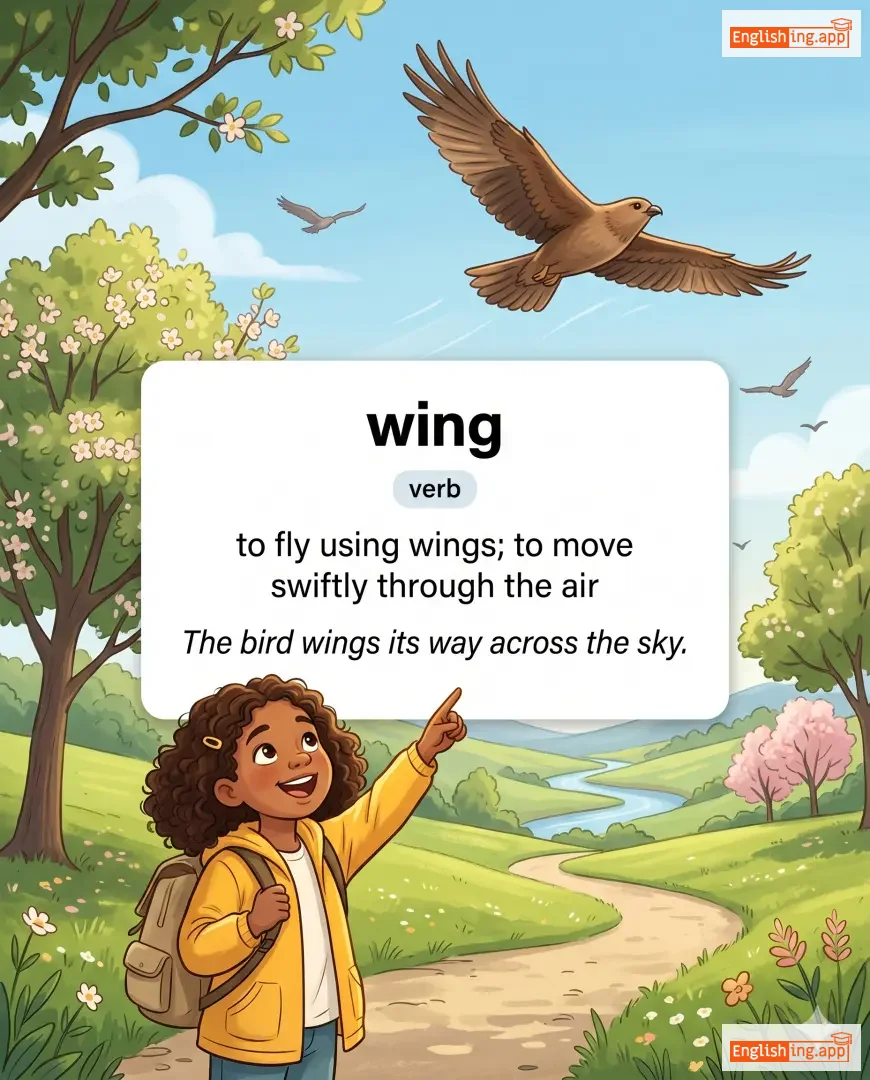
wing definition card — visual illustration of the meaning
noun
/wɪŋ/
翅膀 (chìbǎng)

a part of a bird or aircraft that is used for flying

"The bird flapped its wings and flew away."
"鸟展开翅膀飞走了。" (Niǎo zhǎn kāi chìbǎng fēi zǒu le.)
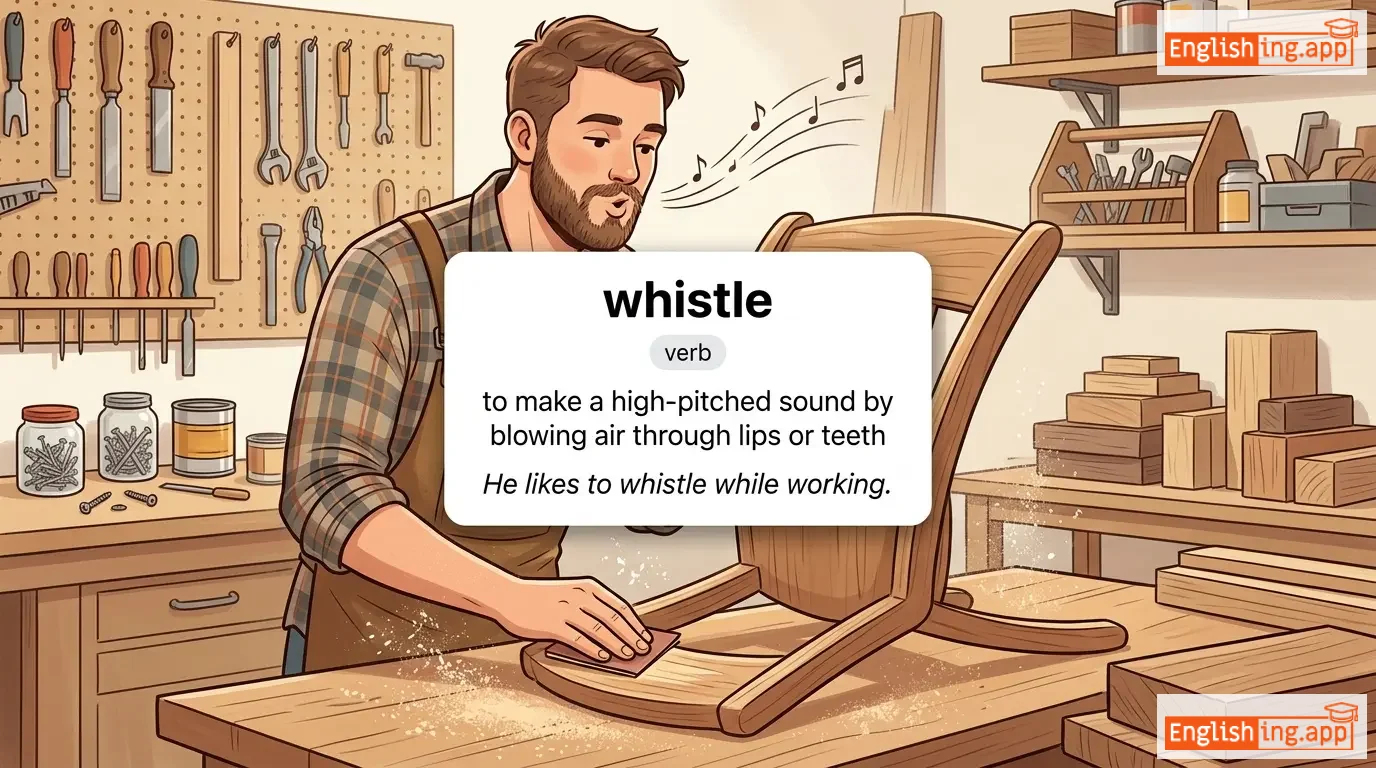
whistle definition card — visual illustration of the meaning
noun
/ˈwɪsəl/
口哨 (kǒushào)

a small wind instrument that produces a high-pitched sound when blown

"The referee blew his whistle to start the game."
"裁判吹响了口哨,开始了比赛。" (cáipàn chuīxiǎngle kǒushào, kāishǐle bǐsài.)
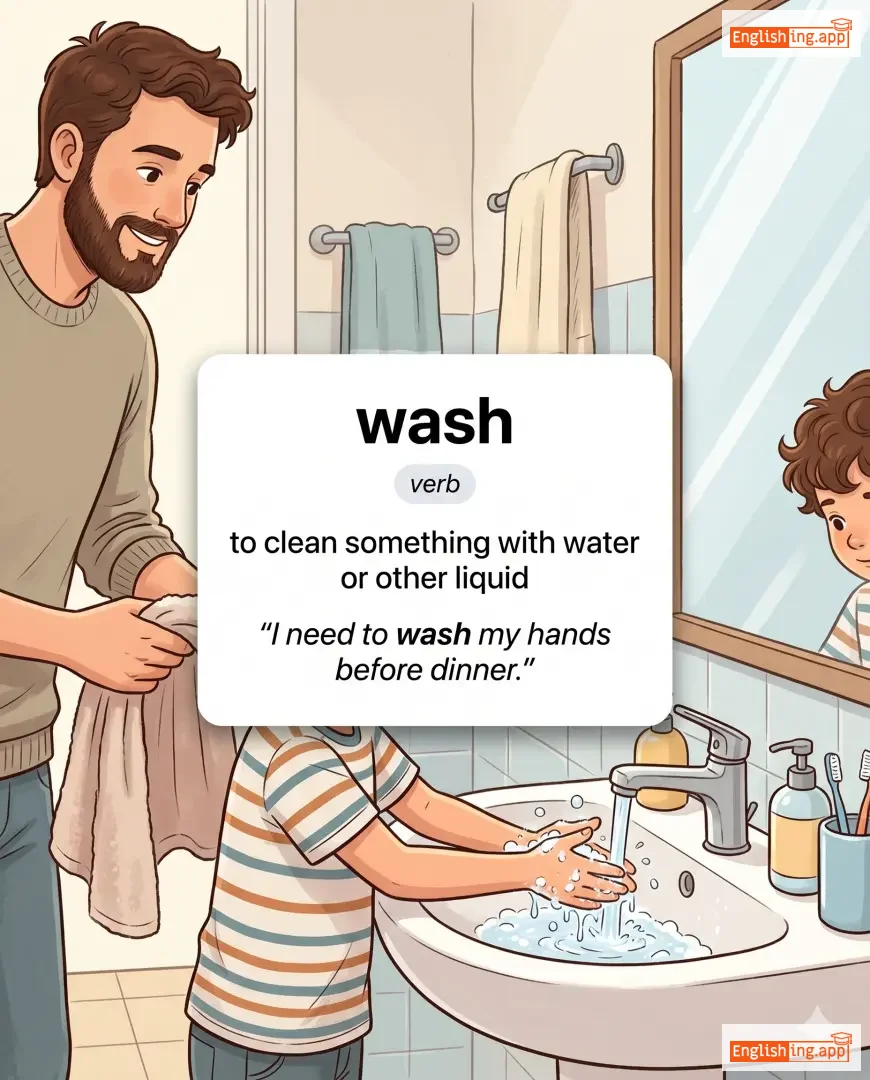
wash definition card — visual illustration of the meaning
verb
/wɒʃ/
(xi)

to clean something with water or other liquid

"I need to wash my hands before dinner."
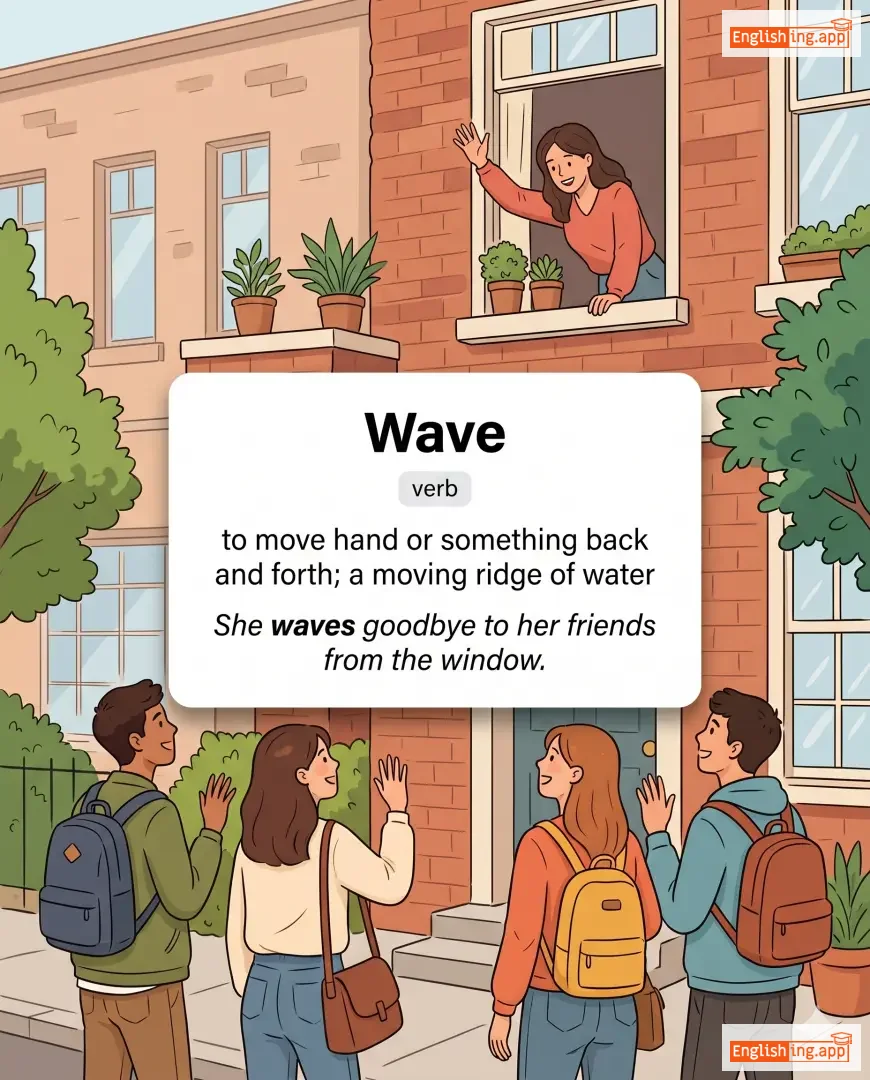
"我需要在晚餐前洗手。" (Wo xuyao zai wancan qian xishou.)
Wave definition card — visual illustration of the meaning
noun
/weɪv/
波浪 (bolang)

a long body of water curling into an arched form and breaking on the shore

"The waves crashed against the rocks during the storm."

"暴风雨中,波浪撞击岩石。" (Baofengyu zhong, bolang zhuangji yanshi.)
verb
/ˈwɒb.l̩/
摇晃 (yaohuang)

to move unsteadily from side to side; to shake or tremble slightly

"The table began to wobble when he leaned on it."

"当他依靠在桌子上时,桌子开始摇晃。" (Dang ta yikao zai zhuozi shang shi, zhuozi kaishi yaohuang.)
noun
/waɪl/
狡猾, 欺骗 (jiaohua, qipian)

A trick or clever scheme meant to deceive or outwit someone.

"He used every wile to win her trust."

"他用了所有的狡猾来赢得她的信任。" (Ta yongle suoyou de jiaohua lai yingde ta de xinren.)
noun
/ˈwiː.vər bɜːd/
织布鸟 (zhibu niao)

a small bird that builds elaborate woven nests from grass and twigs

"The weaver bird skillfully constructs its intricate nest."
"织布鸟巧妙地建造它复杂的巢穴" (Zhibu niao qiǎomiào de jiànzào tā fùzá de cháoxué)
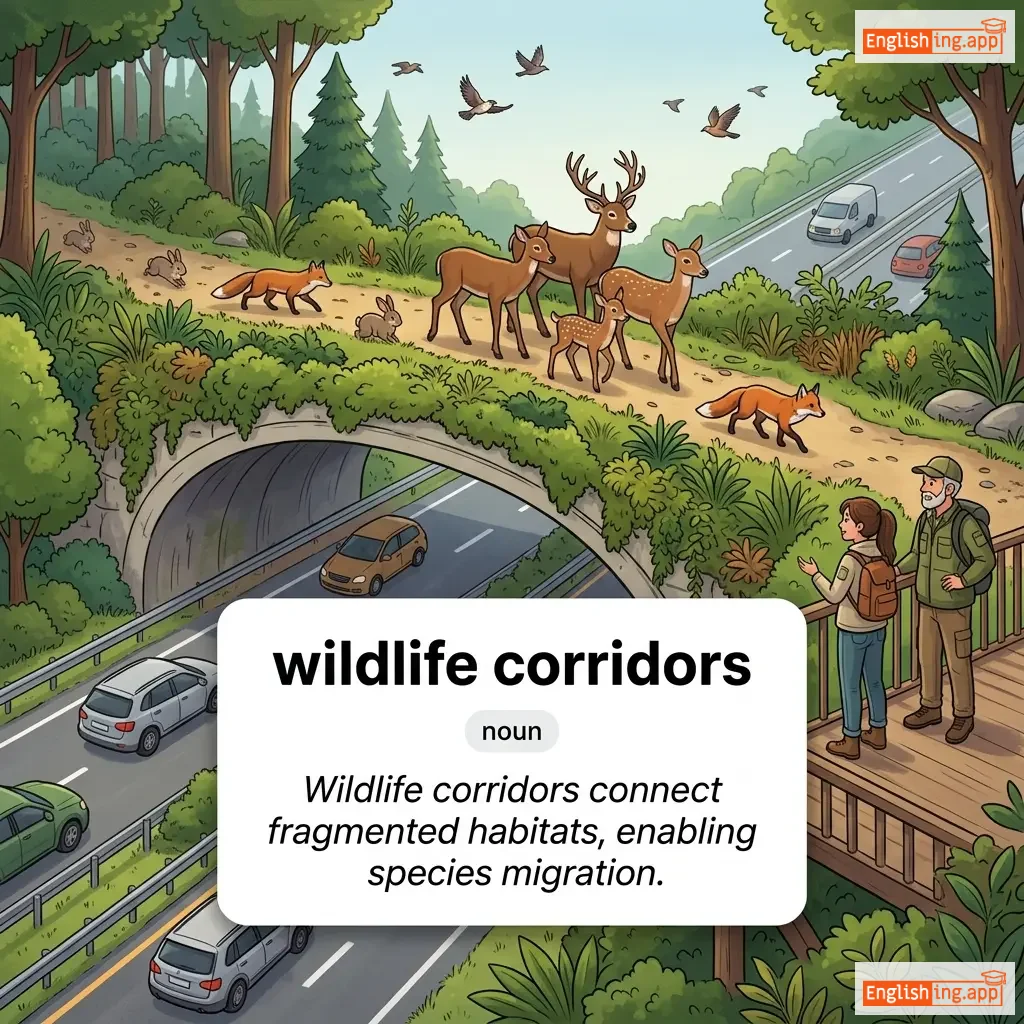
wildlife corridors definition card — visual illustration of the meaning
noun
ˈwaɪldlaɪf ˈkɔːrɪdɔːrz
野生动物走廊 (yěshēng dòngwù zǒuláng)

Areas of habitat connecting wildlife populations separated by human activities or structures.

"Wildlife corridors connect fragmented habitats, enabling species migration."

"野生动物走廊连接破碎的栖息地,促进物种迁徙。" (Yěshēng dòngwù zǒuláng liánjiē pòsuì de qīxī dì, cùjìn wùzhǒng qiānxǐ.)
noun
/waɪt ˈpɛpər/
白胡椒 (bái hújiāo)

a spice made from dried peppercorns with the outer husk removed

"She added white pepper to the cream soup for a mild spicy flavor."

"她把白胡椒加入奶油汤中,给它增添了温和的辛辣味。" (tā bǎ bái hújiāo jiārù nǎiyóu tāng zhōng, gěi tā zēngtiānle wēnhé de xīnlà wèi)
adjective
/waɪz/
聪明 (congming)

having or showing experience, knowledge, and good judgment

"It was wise of him to save money for the future."

"他为未来存钱是明智的。" (Tā wèi wèilái cún qián shì míngzhì de.)
adjective
/ˈwɜːrkɪŋ/
工作 (gongzuo)

engaged in physical or mental effort to achieve a goal or task

"She is working on her project right now."

"她正在进行她的项目工作。" (Ta zhengzai jinxing ta de xiangmu gongzuo.)
adjective
/waɪd/
(kuān)

having a great extent from side to side; broad

"The river is wide enough to fit a boat."

"这条河足够宽,足以容纳一艘船。" (Zhe tiao he zhuo gou kuan, zu yi rong na yi sou chuan.)
verb
/wiːld/
持有,使用 (chí yǒu, shǐ yòng)

To hold and use a weapon, tool, or power effectively.

"The warrior wielded his sword with great skill."

"战士熟练地使用他的剑。" (Zhàn shì shú liàn de shǐ yòng tā de jiàn.)
noun
/woʊz/
困境 (kùnjìng)

great sorrow or distress; troubles

"The company faced financial woes after the market crash."

"公司在市场崩溃后面临财务困境。" (Gōngsī zài shìchǎng bēngkuì hòu miànlín cáiwù kùnjìng.)
noun
/wɪk/
蜡烛芯 (làzhú xīn)

a cord or strand of cotton that burns to provide light in a candle or lamp

"The candle wick needs to be trimmed for better burning."

"蜡烛芯需要修剪,以便更好地燃烧。" (Làzhú xīn xūyào xiūjiǎn, yǐbiàn gèng hǎo de ránshāo.)
adjective
/ˈwɪl.fəl/
固执的; 故意的 (guzhi de; guyi de)

deliberately stubborn; done on purpose; intentional

"His wilful disobedience led to punishment."
"他的故意不服从导致了惩罚。" (Tā de gùyì bù fúcóng dǎozhìle chéngfá.)
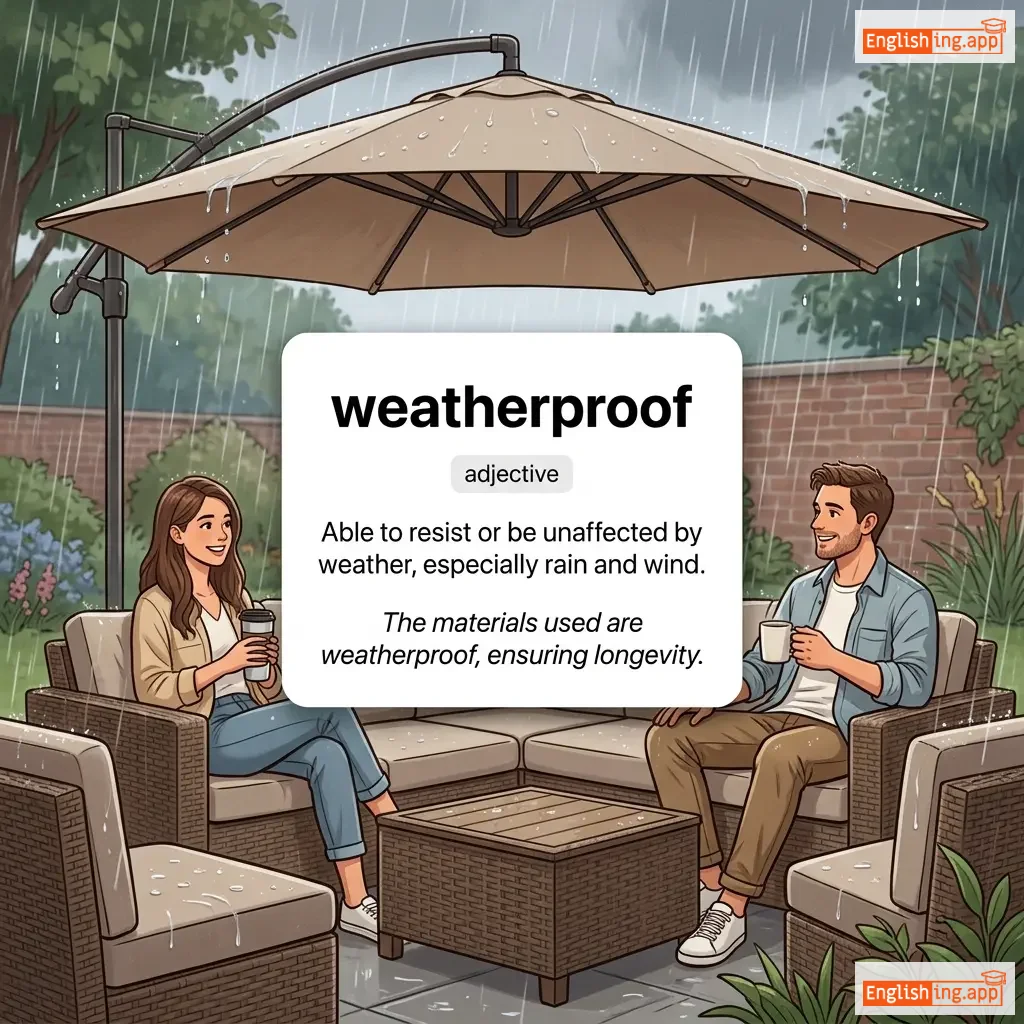
weatherproof definition card — visual illustration of the meaning
adjective
ˈwɛðərpruːf
防水 (fángshuǐ)

Able to resist or be unaffected by weather, especially rain and wind.

"The materials used are weatherproof, ensuring longevity."
"所用材料是防水的,确保长久耐用。" (Suǒ yòng cáiliào shì fángshuǐ de, quèbǎo chángjiǔ nàiyòng.)
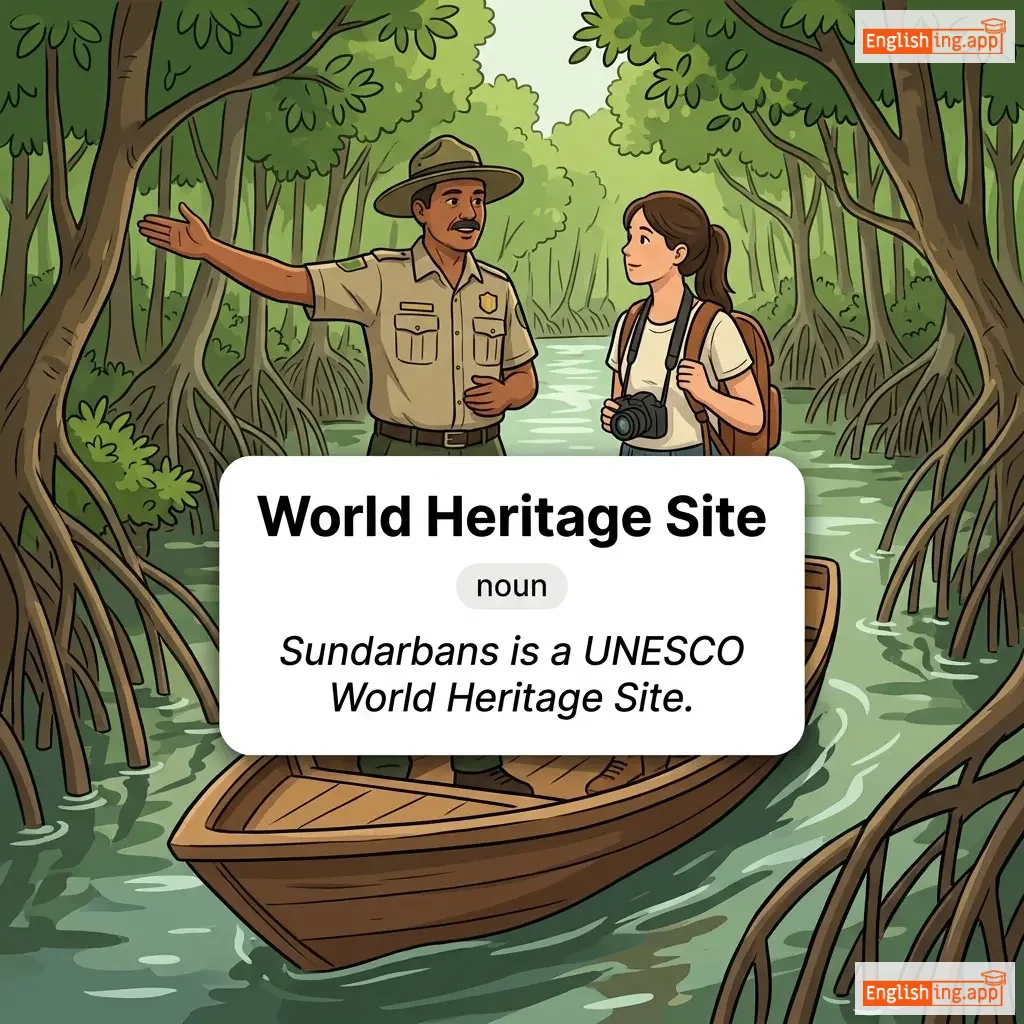
World Heritage Site definition card — visual illustration of the meaning
noun
wɜːrld ˈhɛrɪtɪdʒ saɪt
世界文化遗产地 (Shìjiè wénhuà yíchǎn dì)

A landmark or area selected by UNESCO for having cultural, historical, scientific or other form of significance.

"Sundarbans is a UNESCO World Heritage Site."

"孙达班是联合国教科文组织的世界文化遗产地。" (Sūndàbān shì liánhéguó jiàokēwén zǔzhī de shìjiè wénhuà yíchǎn dì.)
noun
/ˈwɜːrkˌfɔːrs/
劳动力 (laodongli)

the people engaged in or available for work

"The company is looking to expand its workforce by 20%."

"公司计划将其劳动力扩大20%。" (Gongsi jihua jiang qi laodongli kuoda 20%.)
noun
/ˈwɜːrkpleɪs/
工作场所 (gongzuo changsuo)

a place where people work, such as an office, factory, or shop

"Maintaining good communication is vital in the workplace."

"在工作场所保持良好的沟通至关重要。" (Zai gongzuo changsuo baochi lianghao de goutong zhiguang zhongyao.)
adjective
/ˈwɪspi/
细薄而脆弱 (xì bó ér cuì ruò)

Thin, delicate, and weak in appearance or form.

"Her wispy hair blew gently in the breeze."

"她那细薄的头发在微风中轻轻飘动。" (Tā nà xì bó de tóufǎ zài wēifēng zhōng qīngqīng piāodòng.)
adjective
/ˈwɒŋki/
不稳定的; 不可靠的; 不正常工作 (wongki)

unstable; unreliable; not working properly

"The old chair was wonky and wobbled every time someone sat on it."

"那把旧椅子不稳定,每次有人坐下时都会摇晃。" (Nà bǎ jiù yǐzi bù wěn dìng, měi cì yǒu rén zuò xià shí dōu huì yáo huàng)
noun
/wɜːrd fɔːrˈmeɪʃən/
构词法 (gouci fa)

the process by which new words are created or existing words are modified in a language

"Word formation helps learners understand how new vocabulary develops in English."

"构词法有助于理解英语词汇。" (gouci fa youzhu yu lijie yingyu cihui)
adjective
/ˈwɪlfəl/
任性 (rènxìng)

Deliberate, intentional, or stubbornly determined to do as one wants.

"Her willful disregard for the rules got her into trouble."

"她任性地忽视规则让她陷入了麻烦。" (Tā rènxìng de hūshì guīzé ràng tā xiànrùle máfan.)
noun
/wʊd ˈæp.əl/
木苹果 (mu pingguo)

a hard-shelled tropical fruit with aromatic pulp used in beverages and medicine

"The wood apple has a hard shell but sweet pulp inside."

"木苹果有坚硬的外壳,但里面的果肉很甜" (Mu pingguo you jian ying de wai ke, dan limian de guo rou hen tian)
noun
/ˈwaɪnəri/
酿酒厂 (niàngjiǔchǎng)

a place where wine is made

"They visited a famous winery in France."

"他们参观了法国的一家著名酒厂。" (Tāmen cānguānle Fǎguó de yījiā zhùmíng jiǔchǎng.)
verb
/wɪlt/
枯萎 (kūwěi)

To become limp, weak, or drooping, often due to lack of water or energy.

"The flowers wilted in the heat of the sun."

"花朵在太阳的炙热下枯萎。" (Huāduǒ zài tàiyáng de zhìrè xià kūwěi.)