Vocabulaires

Découvrez, apprenez et maîtrisez le vocabulaire anglais

verb
/wɛt/
aiguiser/éveiller (aiguiser/eveiller)

To sharpen the blade of a tool or to stimulate interest or appetite.

"The smell of food whetted my appetite."

"L'odeur de la nourriture a réveillé mon appétit." (L'odeur de la nourriture a reveille mon appetit.)
verb
/ˈwaɪtˌwɑːʃ/
blanchir (blanchir)

to cover up faults, errors, or unpleasant facts; to paint with white paint or lime

"The report was criticized for trying to whitewash the company's failures."

"Le rapport a été critiqué pour avoir tenté de blanchir les échecs de l'entreprise." (Le rapport a été critiqué pour avoir tenté de blanchir les échecs de l'entreprise.)
adverb
/wɛərˈbaɪ/
par lequel (par lequel)

by which; because of which

"The company agreed to a contract whereby it would pay the penalty."

"L'entreprise a accepté un contrat par lequel elle paierait la pénalité." (L'entreprise a accepté un contrat par lequel elle paierait la pénalité.)
verb
/ˈwɪzn/
se faner (se faner)

To become dry, shrunken, and wrinkled.

"The flowers began to wizen after days without water."

"Les fleurs ont commencé à se faner après plusieurs jours sans eau." (Les fleurs ont commencé à se faner après plusieurs jours sans eau.)
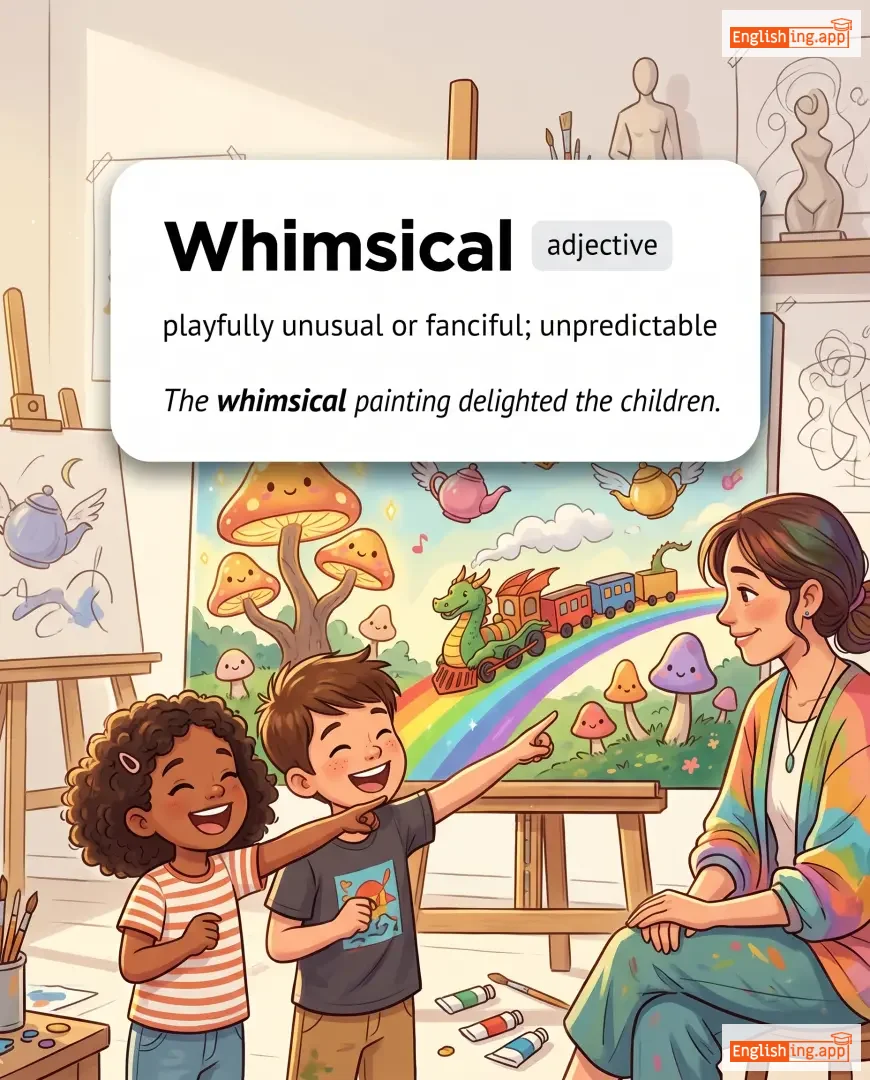
Whimsical definition card — visual illustration of the meaning
adjective
/ˈwɪmzɪkəl/
fantaisiste (fantaisiste)

playfully unusual or fanciful; unpredictable

"The whimsical painting delighted the children."

"La peinture fantaisiste a ravi les enfants." (La peinture fantaisiste a ravi les enfants.)
noun
/waɪld bɔːr/
sanglier sauvage (sanglier sauvage)

a wild pig that lives in forests and has long curved teeth

"The wild boar ran through the forest quickly."

"Le sanglier sauvage a couru rapidement à travers la forêt." (Le sanglier sauvage a couru rapidement à travers la forêt.)
noun
/ˈwɔtər ˈpjʊrəˌfaɪər/
purificateur d'eau (purificateur d'eau)

A device that removes contaminants and impurities from water to make it safe for drinking

"We installed a water purifier in our kitchen to ensure clean drinking water."

"Nous avons installé un purificateur d'eau dans notre cuisine pour garantir une eau potable propre." (Nous avons installé un purificateur d'eau dans notre cuisine pour garantir une eau potable propre.)
noun
/ˈwɛnzdeɪ/
mercredi (mercredi)

the fourth day of the week, following Tuesday and preceding Thursday

"The meeting has been scheduled for Wednesday afternoon."

"La réunion est prévue pour mercredi après-midi." (la reunion est prevue pour mercredi apres-midi)
adjective
/ˈhoʊlsəm/
sain (sain)

promoting health or well-being; morally good and beneficial

"The retreat offered wholesome food and peaceful surroundings."

"Le retraite a offert de la nourriture saine et un environnement paisible." (Le retraite a offert de la nourriture saine et un environnement paisible.)
noun
/ˈwɒtʃ.mən/
gardien (gardien)

a person employed to guard or watch over a building or area, especially at night

"The watchman patrols the factory every hour to ensure security."

"Le gardien patrouille l'usine toutes les heures pour assurer la sécurité." (Le gardien patrouille l'usine toutes les heures pour assurer la sécurité.)
verb
/ˈwɒloʊ/
se vautrer, s'enfoncer (se vautrer, s'enfoncer)

to roll about or indulge oneself in something excessively

"The buffalo likes to wallow in the mud on hot days."

"Le buffle aime se vautrer dans la boue lors des journées chaudes." (Le buffle aime se vautrer dans la boue lors des journées chaudes.)
noun
/ˈweɪvlət/
petite vague (petite vague)

a small wave or ripple on the surface of water or another medium

"The pond was disturbed only by the tiny wavelets caused by the breeze."

"L'étang n'a été perturbé que par les petites vagues causées par la brise." (L'étang n'a été perturbé que par les petites vagues causées par la brise.)
adverb
/wɛnˈɛvər/
quand cela arrive (quand cela arrive)

at any time, or whenever it happens

"You can call me whenever you want."

"Tu peux m'appeler quand tu veux." (Tu peux m'appeler quand tu veux.)
🛣️

Way (oué)

noun
/weɪ/
chemin / façon (chemin / façon)

a path, direction, or method of doing something

"He found a new way to solve the problem."

"Il a trouvé une nouvelle façon de résoudre le problème." (Il a trouve une nouvelle facon de resoudre le probleme.)
noun
/ˈwɪmzi/
fantaisie (fantaisie)

playful or fanciful behavior or humor

"Her stories were full of whimsy and imagination."

"Ses histoires étaient pleines de fantaisie et d'imagination." (Ses histoires etaient pleines de fantaisie et d'imagination.)
adjective
/ˈwaɪə.ləs/
sans fil; radio (san fil; radio)

operating without wires; using radio waves for communication

"My wireless headphones provide excellent sound quality without any cables."

"Mes écouteurs sans fil offrent une excellente qualité sonore sans câbles." (Mes écouteurs sans fil offrent une excellente qualité sonore sans câbles.)
noun
/ˈwɪmən/
femme (femme)

an adult human female

"The woman at the counter helped me."

"La femme au comptoir m'a aidé." (La femme au comptoir m'a aidé.)
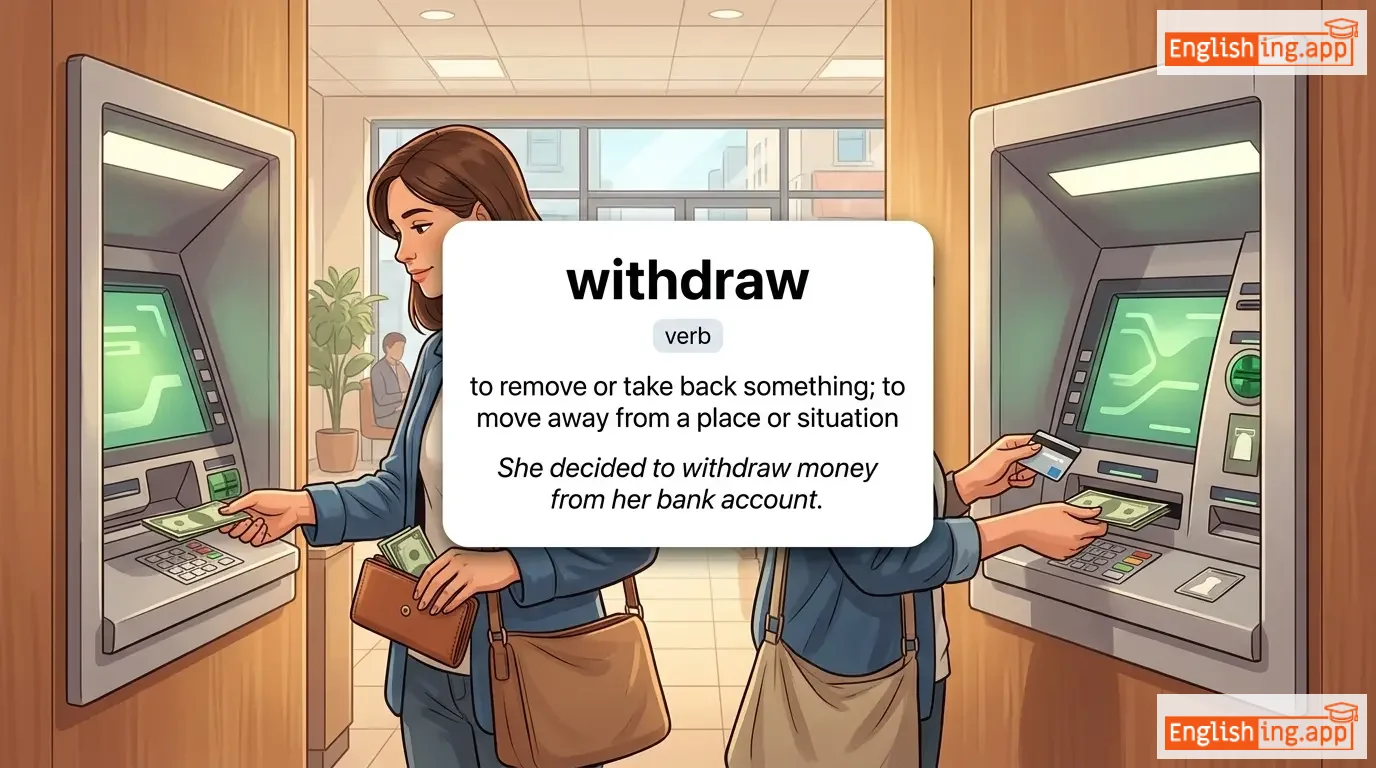
withdraw definition card — visual illustration of the meaning
verb
/wɪðˈdrɔː/
retirer (retirer)

to remove or take back something; to move away from a place or situation

"She decided to withdraw money from her bank account."

"Elle a décidé de retirer de l'argent de son compte bancaire." (Elle a decide de retirer de largent de son compte bancaire.)
noun
/ˈwɔːdrəʊb/
armoire (armoire)

A large cupboard where clothes are stored; also the collection of clothes someone owns.

"Her wardrobe is full of colorful dresses."

"Son armoire est pleine de robes colorées." (Son armoire est pleine de robes colorées.)
noun/verb
/ˈwɒrənt/
mandat (mandat)

As a noun: An official authorization or order. As a verb: To justify or make something necessary.

"The judge issued a warrant for his arrest."

"Le juge a émis un mandat pour son arrestation." (Le juge a émis un mandat pour son arrestation.)
adverb
/wɛr/
(ou)

in or at what place or position

"Where do you live?"

"Où habites-tu?" (Où habites-tu?)
noun
/ˈwɪkɪdnəs/
méchanceté, perversité (méchanceté, perversité)

Evil or morally bad behavior.

"The story highlights the wickedness of the cruel king."

"L'histoire met en lumière la méchanceté du roi cruel." (L'histoire met en lumière la méchanceté du roi cruel.)
🧙‍♀️

Witch (witch)

noun
/wɪtʃ/
sorcière (sorcière)

a woman thought to have magic powers, especially evil ones; a practitioner of witchcraft

"The old witch cast a spell on the prince."

"La vieille sorcière a jeté un sort sur le prince." (La vieille sorcière a jeté un sort sur le prince.)
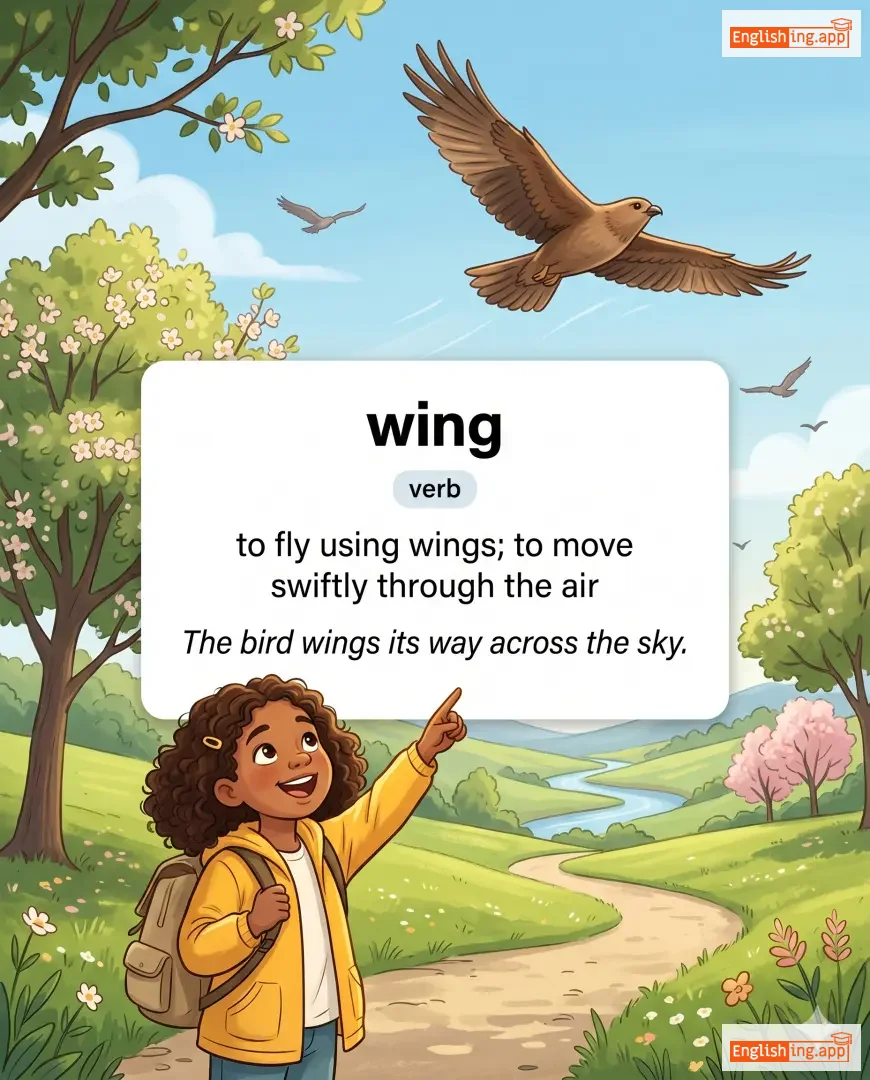
wing definition card — visual illustration of the meaning
noun
/wɪŋ/
aile (aile)

a part of a bird or aircraft that is used for flying

"The bird flapped its wings and flew away."

"L'oiseau battit ses ailes et s'envola." (L'oiseau battit ses ailes et s'envola.)
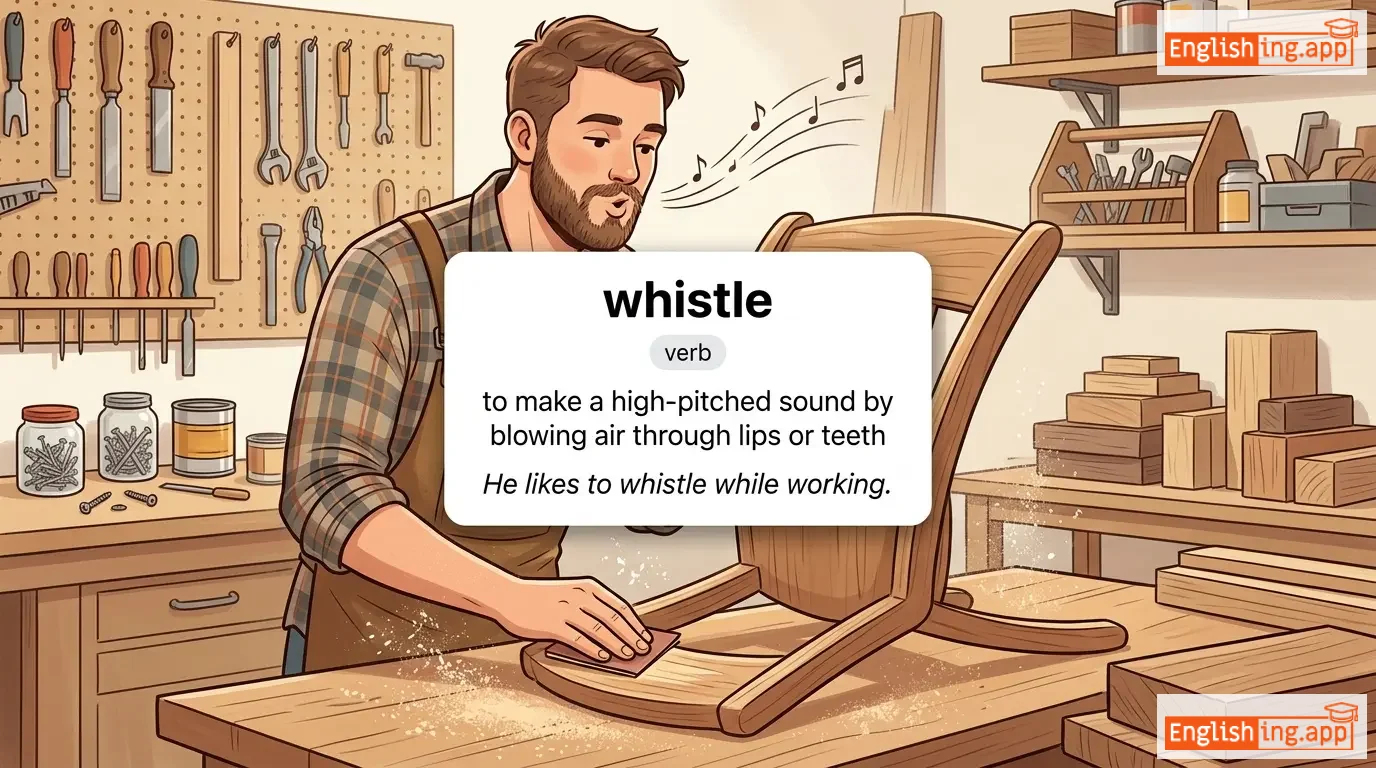
whistle definition card — visual illustration of the meaning
noun
/ˈwɪsəl/
sifflet (sifflet)

a small wind instrument that produces a high-pitched sound when blown

"The referee blew his whistle to start the game."

"L'arbitre a soufflé dans son sifflet pour commencer le jeu." (L'arbitre a souffle dans son sifflet pour commencer le jeu.)
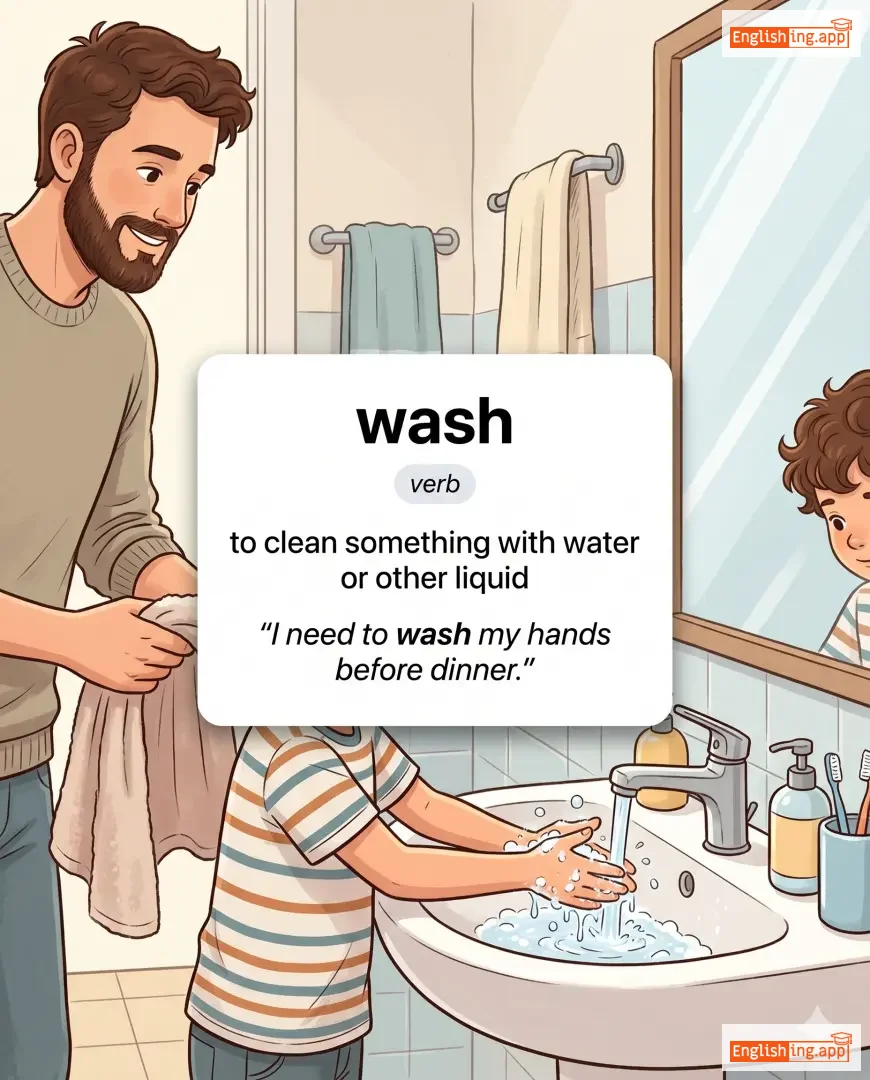
wash definition card — visual illustration of the meaning
verb
/wɒʃ/
laver (laver)

to clean something with water or other liquid

"I need to wash my hands before dinner."

"Je dois laver mes mains avant le dîner." (Je dois laver mes mains avant le dîner.)
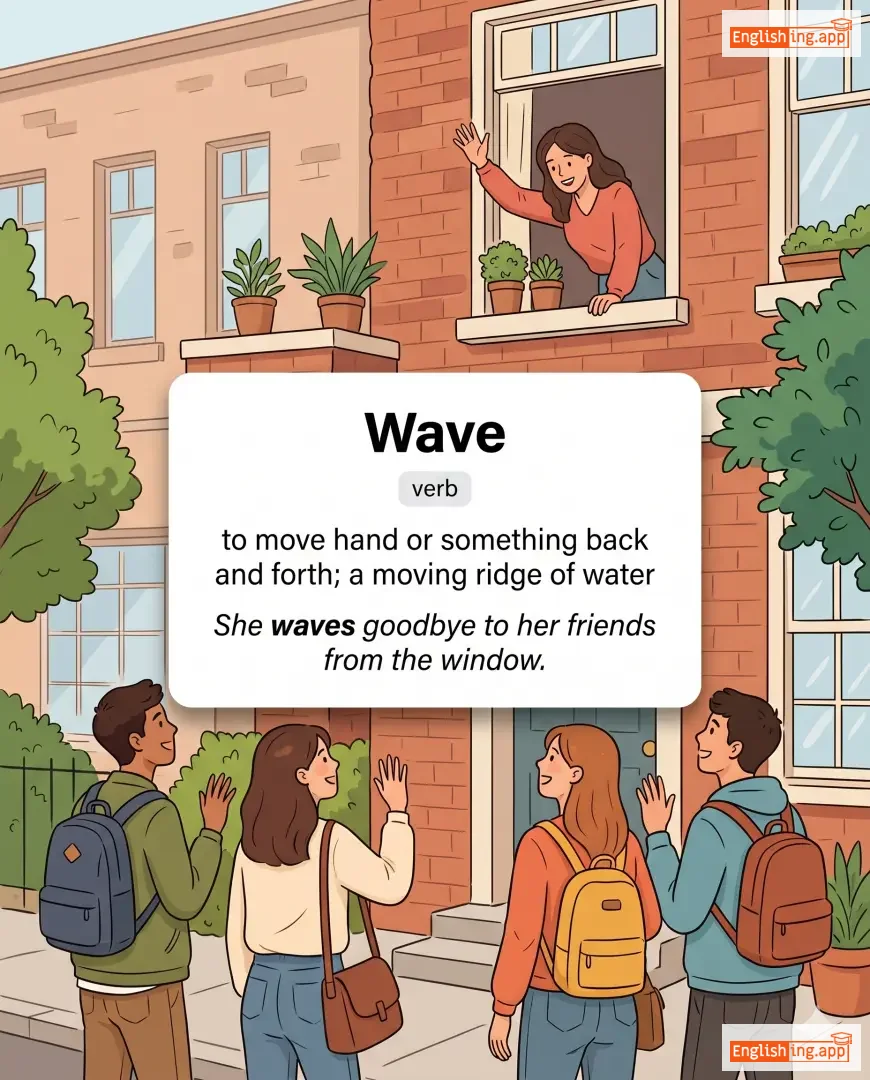
Wave definition card — visual illustration of the meaning
noun
/weɪv/
vague (vague)

a long body of water curling into an arched form and breaking on the shore

"The waves crashed against the rocks during the storm."

"Les vagues se sont écrasées contre les rochers pendant la tempête." (Les vagues se sont écrasées contre les rochers pendant la tempête.)
verb
/ˈwɒb.l̩/
vaciller (vaciller)

to move unsteadily from side to side; to shake or tremble slightly

"The table began to wobble when he leaned on it."

"La table a commencé à vaciller lorsqu'il s'est penché dessus." (La table a commence a vaciller lorsqu'il s'est penche dessus.)
noun
/waɪl/
ruse, tromperie (ruse, tromperie)

A trick or clever scheme meant to deceive or outwit someone.

"He used every wile to win her trust."

"Il a utilisé toutes ses ruses pour gagner sa confiance." (Il a utilisé toutes ses ruses pour gagner sa confiance.)
noun
/ˈwiː.vər bɜːd/
oiseau tisserand (oiseau tisserand)

a small bird that builds elaborate woven nests from grass and twigs

"The weaver bird skillfully constructs its intricate nest."

"L'oiseau tisserand construit habilement son nid complexe" (L'oiseau tisserand construit habilement son nid complexe)
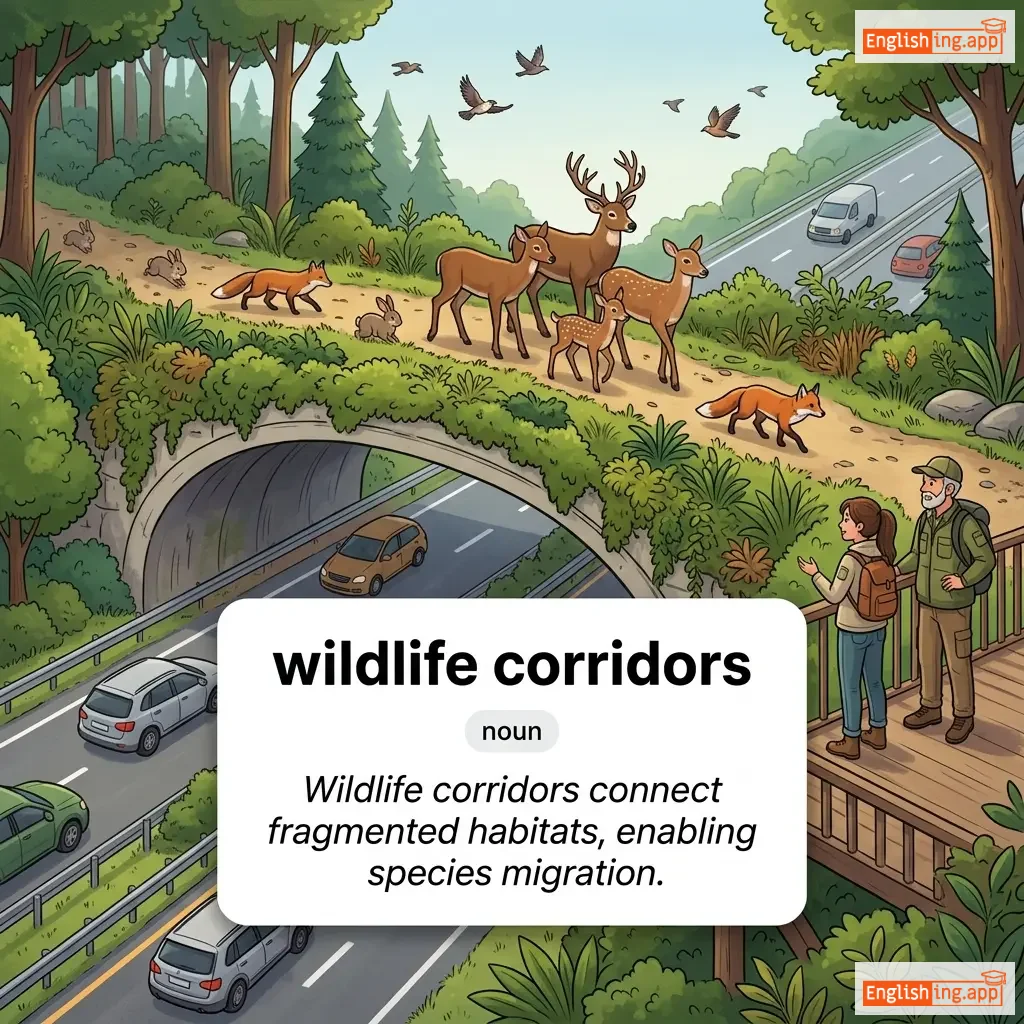
wildlife corridors definition card — visual illustration of the meaning
noun
ˈwaɪldlaɪf ˈkɔːrɪdɔːrz
corridors de faune (corridors de faune)

Areas of habitat connecting wildlife populations separated by human activities or structures.

"Wildlife corridors connect fragmented habitats, enabling species migration."

"Les corridors de faune relient des habitats fragmentés, permettant la migration des espèces." (Les corridors de faune relient des habitats fragmentés, permettant la migration des espèces.)
noun
/waɪt ˈpɛpər/
poivre blanc (poivre blanc)

a spice made from dried peppercorns with the outer husk removed

"She added white pepper to the cream soup for a mild spicy flavor."

"Elle a ajouté du poivre blanc à la soupe crémeuse pour une saveur douce et épicée." (elle a ajoute du poivre blanc a la soupe cremeuse pour une saveur douce et epicee)
adjective
/waɪz/
sage (sage)

having or showing experience, knowledge, and good judgment

"It was wise of him to save money for the future."

"Il a été sage de sa part d'économiser de l'argent pour l'avenir." (Il a été sage de sa part d'économiser de l'argent pour l'avenir.)
adjective
/ˈwɜːrkɪŋ/
travaillant (travaillant)

engaged in physical or mental effort to achieve a goal or task

"She is working on her project right now."

"Elle travaille sur son projet en ce moment." (Elle travaille sur son projet en ce moment.)
adjective
/waɪd/
large (large)

having a great extent from side to side; broad

"The river is wide enough to fit a boat."

"Le fleuve est assez large pour qu'un bateau puisse y entrer." (Le fleuve est assez large pour qu'un bateau puisse y entrer.)
verb
/wiːld/
tenir, utiliser (tenir, utiliser)

To hold and use a weapon, tool, or power effectively.

"The warrior wielded his sword with great skill."

"Le guerrier a manié son épée avec grande habileté." (Le guerrier a manié son épée avec grande habileté.)
noun
/woʊz/
soucis (soucis)

great sorrow or distress; troubles

"The company faced financial woes after the market crash."

"L'entreprise a fait face à des difficultés financières après l'effondrement du marché." (L'entreprise a fait face à des difficultés financières après l'effondrement du marché.)
🕯️

Wick (wik)

noun
/wɪk/
mèche de bougie (meche de bougie)

a cord or strand of cotton that burns to provide light in a candle or lamp

"The candle wick needs to be trimmed for better burning."

"La mèche de la bougie doit être coupée pour une meilleure combustion." (La meche de la bougie doit etre coupee pour une meilleure combustion.)
adjective
/ˈwɪl.fəl/
têtu; fait intentionnellement (tetu; fait intentionnellement)

deliberately stubborn; done on purpose; intentional

"His wilful disobedience led to punishment."

"Sa désobéissance délibérée a conduit à une punition." (Sa desobeissance deliberée a conduit à une punition.)
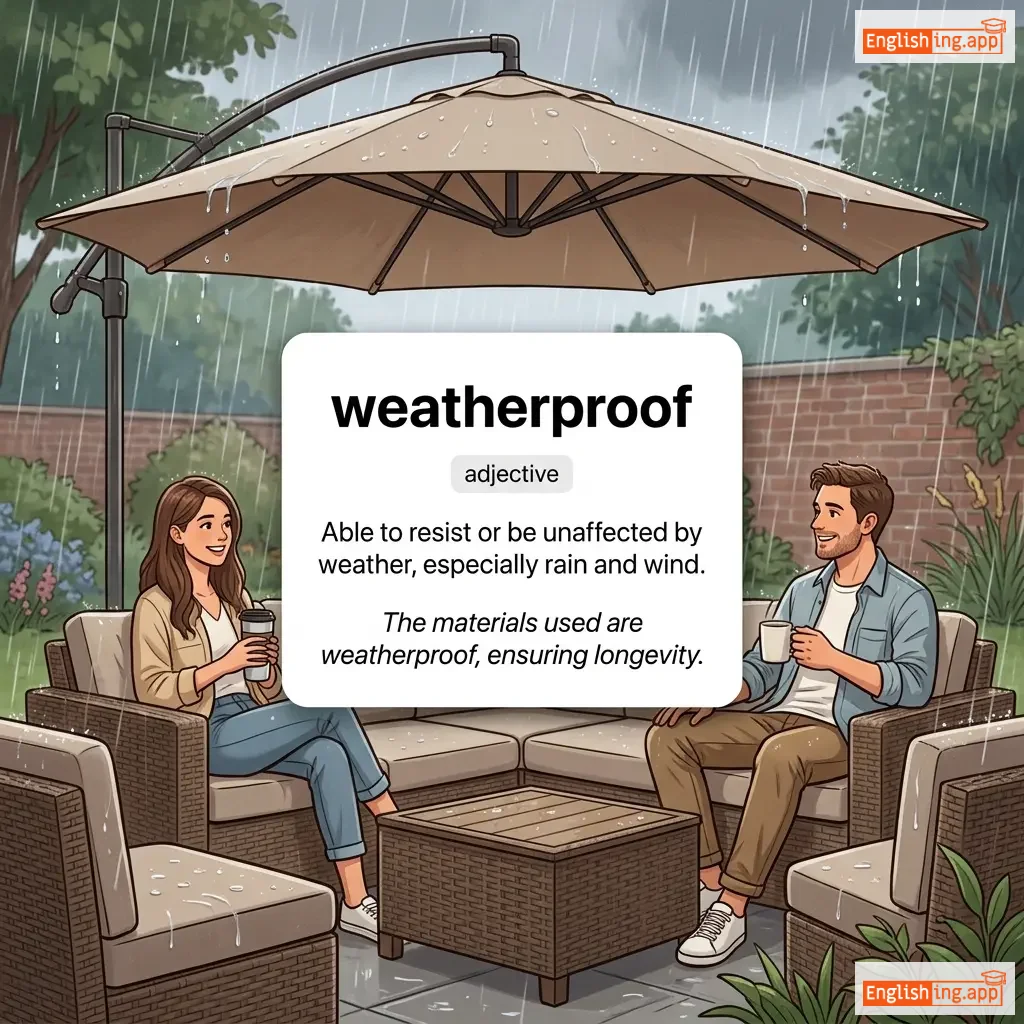
weatherproof definition card — visual illustration of the meaning
adjective
ˈwɛðərpruːf
résistant aux intempéries (résistant aux intempéries)

Able to resist or be unaffected by weather, especially rain and wind.

"The materials used are weatherproof, ensuring longevity."

"Les matériaux utilisés sont résistants aux intempéries, assurant une longévité." (Les matériaux utilisés sont résistants aux intempéries, assurant une longévité.)
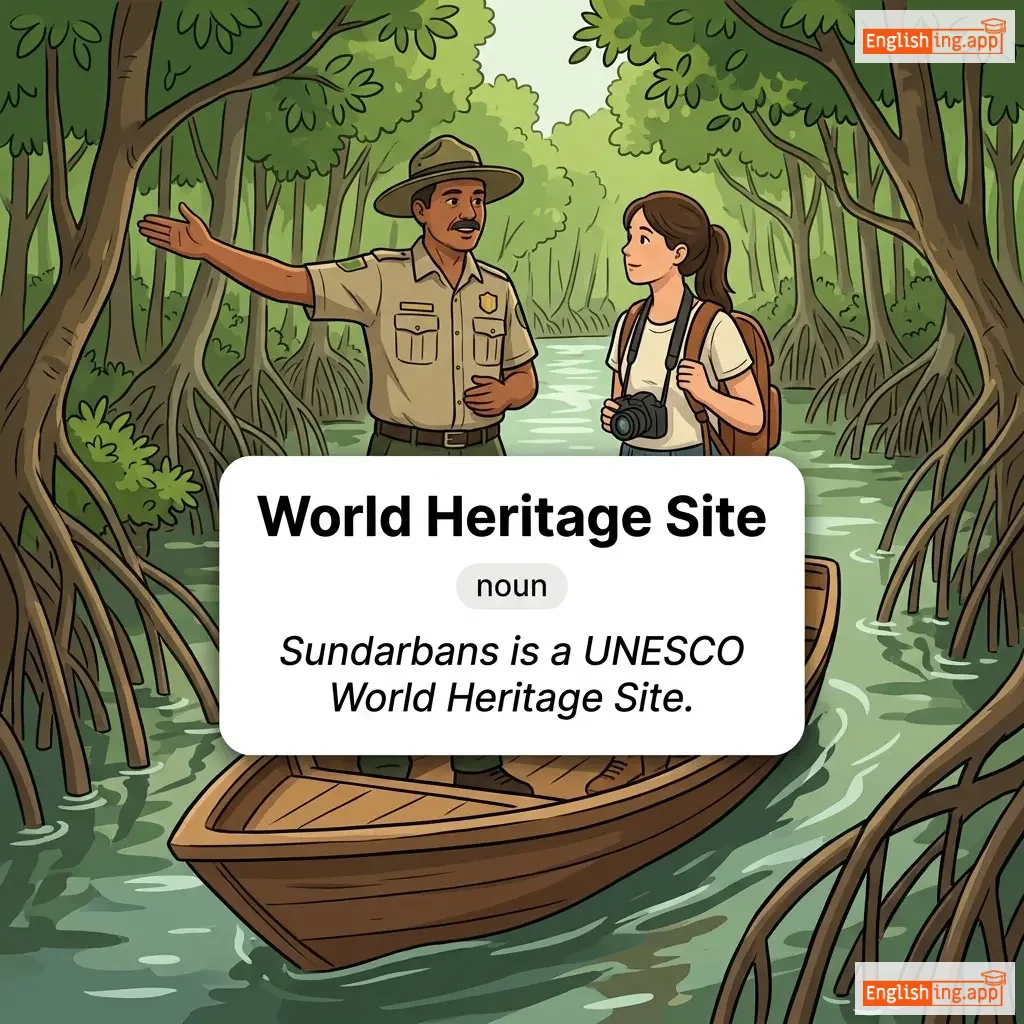
World Heritage Site definition card — visual illustration of the meaning
noun
wɜːrld ˈhɛrɪtɪdʒ saɪt
Site du patrimoine mondial (Site du patrimoine mondial)

A landmark or area selected by UNESCO for having cultural, historical, scientific or other form of significance.

"Sundarbans is a UNESCO World Heritage Site."

"Les Sundarbans sont un site du patrimoine mondial de l'UNESCO." (Les Sundarbans sont un site du patrimoine mondial de l'UNESCO.)
noun
/ˈwɜːrkˌfɔːrs/
main-d'œuvre (main-d'œuvre)

the people engaged in or available for work

"The company is looking to expand its workforce by 20%."

"L'entreprise cherche à augmenter sa main-d'œuvre de 20%." (L'entreprise cherche à augmenter sa main-d'œuvre de 20%.)
noun
/ˈwɜːrkpleɪs/
lieu de travail (lieu de travail)

a place where people work, such as an office, factory, or shop

"Maintaining good communication is vital in the workplace."

"Maintenir une bonne communication est essentiel sur le lieu de travail." (Maintenir une bonne communication est essentiel sur le lieu de travail.)
adjective
/ˈwɪspi/
fins et fragiles (fins et fragiles)

Thin, delicate, and weak in appearance or form.

"Her wispy hair blew gently in the breeze."

"Ses cheveux fins soufflaient doucement dans la brise." (Ses cheveux fins soufflaient doucement dans la brise.)
adjective
/ˈwɒŋki/
instable; peu fiable; qui ne fonctionne pas correctement (wonki)

unstable; unreliable; not working properly

"The old chair was wonky and wobbled every time someone sat on it."

"La vieille chaise était instable et tanguait chaque fois que quelqu'un s'y asseyait." (La vieille chaise était instable et tanguait chaque fois que quelqu'un s'y asseyait)
noun
/wɜːrd fɔːrˈmeɪʃən/
formation des mots (formation des mots)

the process by which new words are created or existing words are modified in a language

"Word formation helps learners understand how new vocabulary develops in English."

"La formation des mots est importante en linguistique." (la formation des mots est importante en linguistique)
adjective
/ˈwɪlfəl/
volontaire (volontaire)

Deliberate, intentional, or stubbornly determined to do as one wants.

"Her willful disregard for the rules got her into trouble."

"Son comportement volontaire en ignorant les règles l'a mise dans une situation difficile." (Son comportement volontaire en ignorant les règles l'a mise dans une situation difficile.)
noun
/wʊd ˈæp.əl/
pomme de bois (pomme de bois)

a hard-shelled tropical fruit with aromatic pulp used in beverages and medicine

"The wood apple has a hard shell but sweet pulp inside."

"La pomme de bois a une coque dure mais une pulpe douce à l'intérieur" (La pomme de bois a une coque dure mais une pulpe douce à l'intérieur)
noun
/ˈwaɪnəri/
cave (cave)

a place where wine is made

"They visited a famous winery in France."

"Ils ont visité un célèbre vignoble en France." (Ils ont visité un célèbre vignoble en France.)
verb
/wɪlt/
se faner (se faner)

To become limp, weak, or drooping, often due to lack of water or energy.

"The flowers wilted in the heat of the sun."

"Les fleurs se sont fanées sous la chaleur du soleil." (Les fleurs se sont fanees sous la chaleur du soleil.)