Vocabulaires

Découvrez, apprenez et maîtrisez le vocabulaire anglais

noun
/ˈvɒl.juːm/
volume (volume)

the amount of space that a substance or object occupies, or that is enclosed within a container

"The volume of water in the tank increased after the rain."

"Le volume d'eau dans le réservoir a augmenté après la pluie." (Le volume d'eau dans le réservoir a augmenté après la pluie.)
adverb
/ˈwɔːm.li/
chaleureusement; affectueusement (chaleureusement; affectueusement)

in a warm manner; with warmth; cordially; affectionately

"She welcomed the guests warmly at the door."

"Elle a accueilli les invités chaleureusement à la porte." (Elle a accueilli les invités chaleureusement à la porte.)
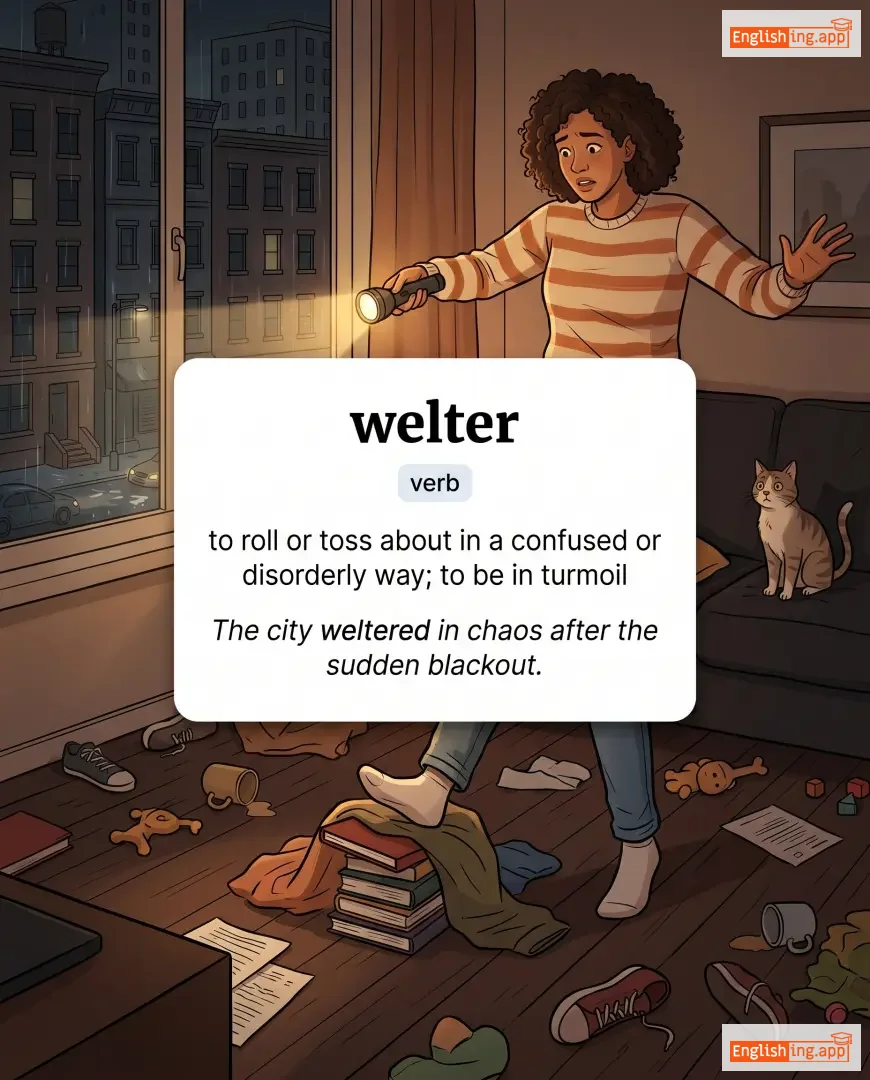
welter definition card — visual illustration of the meaning
verb
/ˈwɛltər/
tourner dans le chaos (tourner dans le chaos)

to roll or toss about in a confused or disorderly way; to be in turmoil

"The city weltered in chaos after the sudden blackout."

"La ville a été plongée dans le chaos après la panne soudaine." (La ville a été plongée dans le chaos après la panne soudaine.)
verb
/wæks/
augmenter progressivement (augmenter progressivement)

to increase gradually in size, number, strength, or intensity

"The moon will wax until it becomes full."

"La lune va augmenter jusqu'à ce qu'elle devienne pleine." (La lune va augmenter jusqu'à ce qu'elle devienne pleine.)
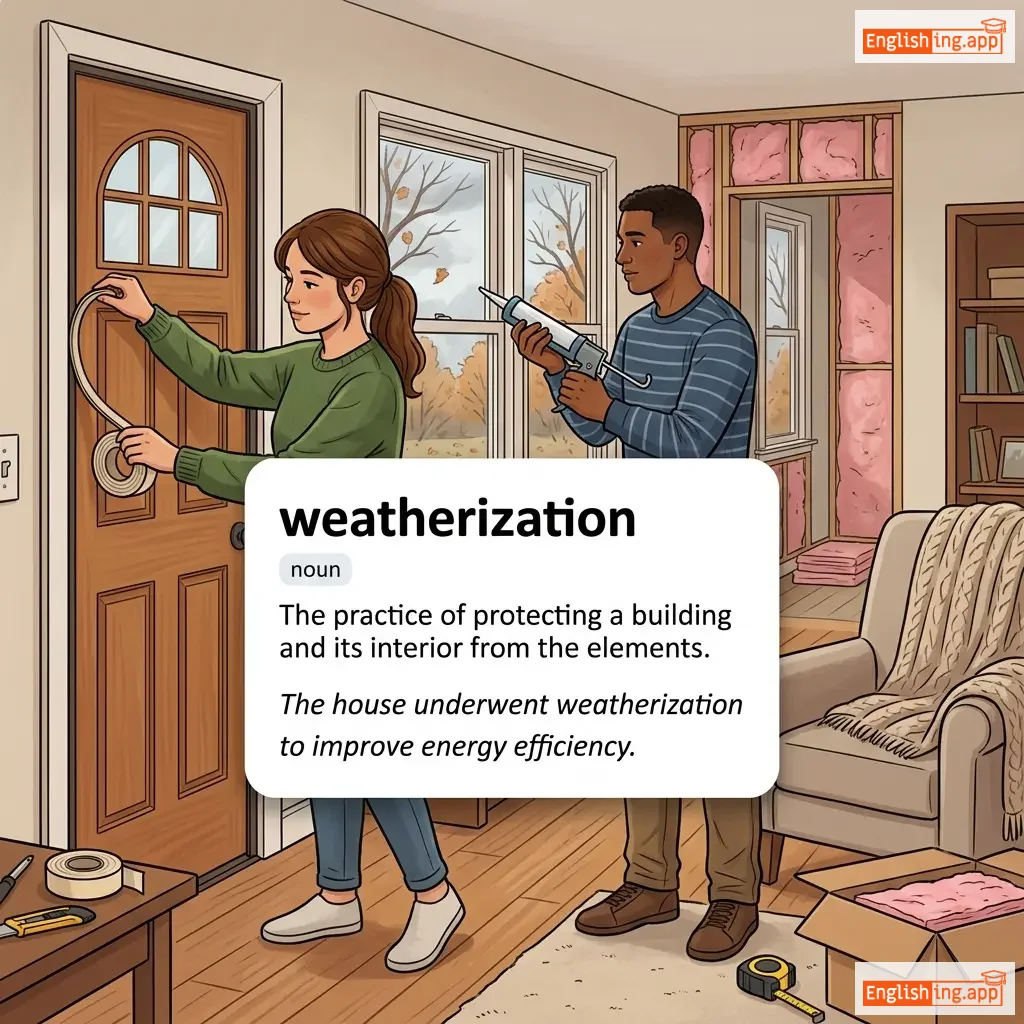
weatherization definition card — visual illustration of the meaning
noun
ˌwɛðəraɪˈzeɪʃən
météo-optimisation (meteo-optimisation)

The practice of protecting a building and its interior from the elements.

"The house underwent weatherization to improve energy efficiency."

"La maison a subi une opération de météo-optimisation pour améliorer l'efficacité énergétique." (La maison a subi une opération de météo-optimisation pour améliorer l'efficacité énergétique.)
adjective
/ˈwɒŋki/
instable; peu fiable; qui ne fonctionne pas correctement (wonki)

unstable; unreliable; not working properly

"The old chair was wonky and wobbled every time someone sat on it."

"La vieille chaise était instable et tanguait chaque fois que quelqu'un s'y asseyait." (La vieille chaise était instable et tanguait chaque fois que quelqu'un s'y asseyait)
adjective
/ˈwɪtləs/
bête (bete)

lacking intelligence or good sense

"It was a witless decision to leave the door unlocked."

"C'était une décision stupide de laisser la porte déverrouillée." (C'etait une decision stupide de laisser la porte deverrouillee.)
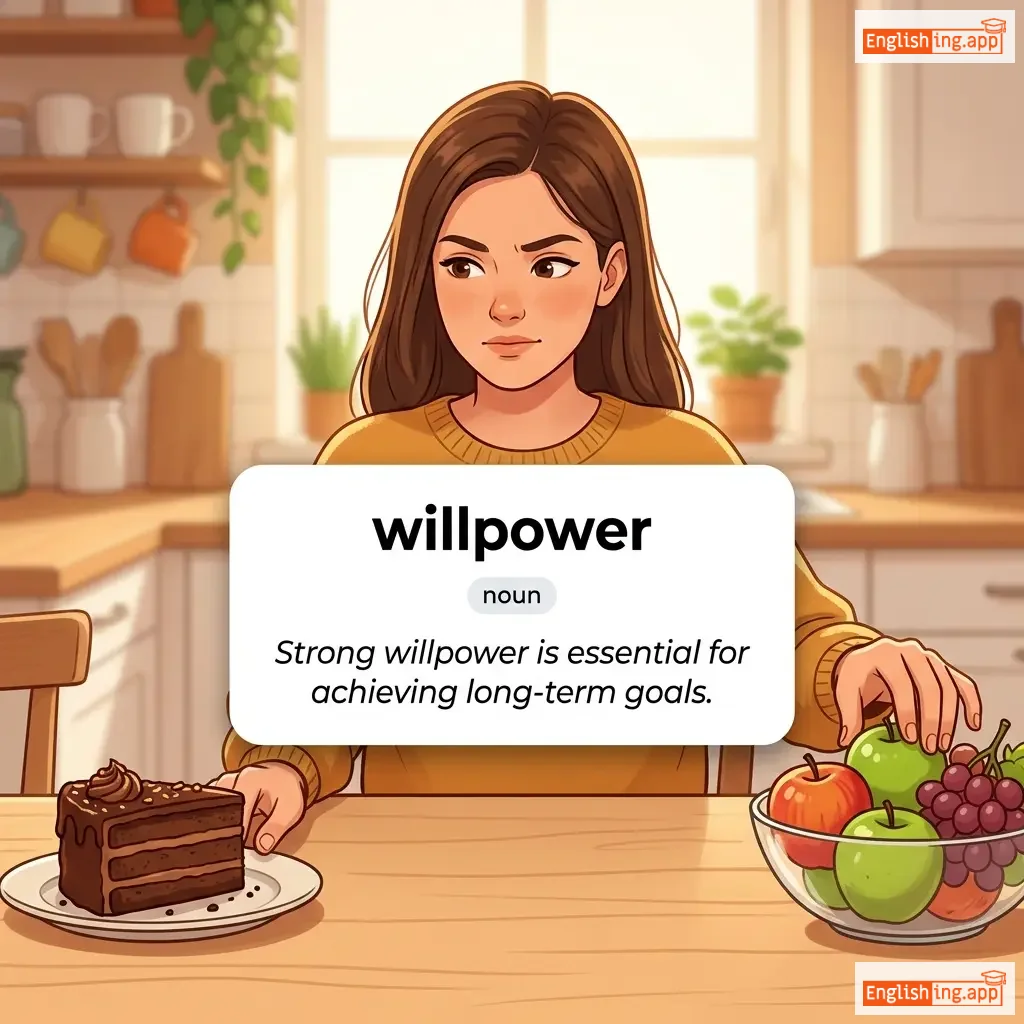
willpower definition card — visual illustration of the meaning
noun
ˈwɪl.paʊər
volonté (volonte)

The ability to control your thoughts and actions in order to achieve what you want to do.

"Strong willpower is essential for achieving long-term goals."

"Une forte volonté est essentielle pour atteindre des objectifs à long terme." (Une forte volonté est essentielle pour atteindre des objectifs à long terme.)
noun
/voʊˈsɪfərəns/
crier fort (crier fort)

the act of shouting or making a loud outcry

"The vociferance of the protesters filled the streets."

"La vocifération des manifestants a rempli les rues." (La vocifération des manifestants a rempli les rues.)
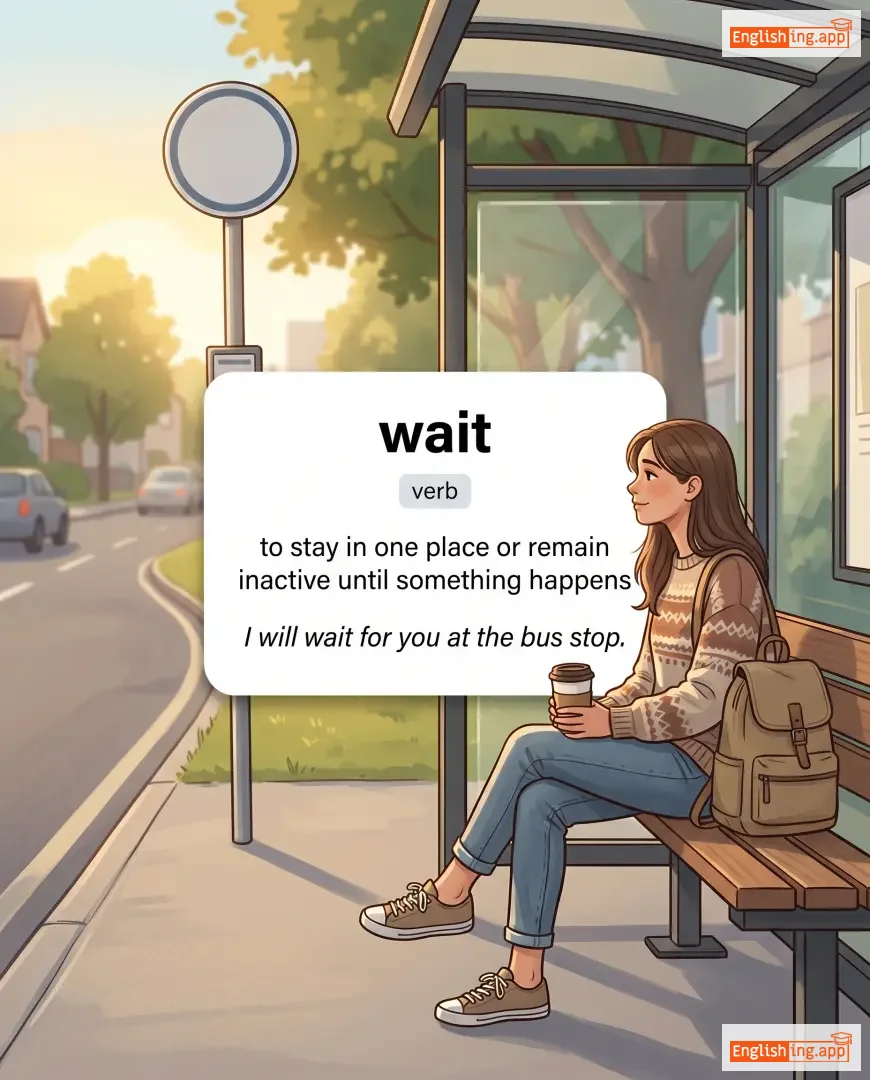
wait definition card — visual illustration of the meaning
verb
/weɪt/
attendre (attendre)

to stay in one place or remain inactive until something happens

"I will wait for you at the bus stop."

"Je vais t'attendre à l'arrêt de bus." (Je vais t'attendre à l'arrêt de bus.)
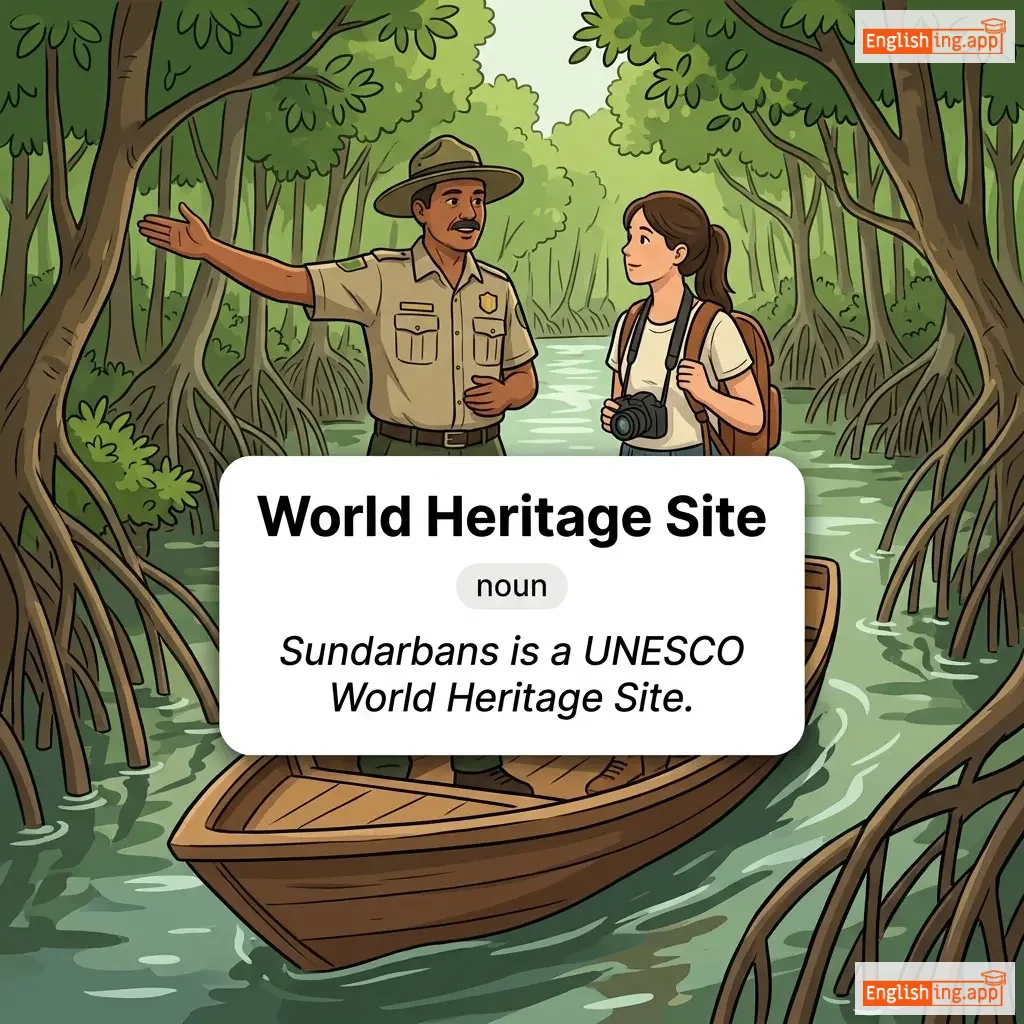
World Heritage Site definition card — visual illustration of the meaning
noun
wɜːrld ˈhɛrɪtɪdʒ saɪt
Site du patrimoine mondial (Site du patrimoine mondial)

A landmark or area selected by UNESCO for having cultural, historical, scientific or other form of significance.

"Sundarbans is a UNESCO World Heritage Site."

"Les Sundarbans sont un site du patrimoine mondial de l'UNESCO." (Les Sundarbans sont un site du patrimoine mondial de l'UNESCO.)
noun
/ˈwɔː.tər hen/
poule d'eau (poule d'eau)

a waterbird with dark plumage that lives near ponds and wetlands

"The water hen swam gracefully across the pond."

"La poule d'eau nagea gracieusement à travers l'étang." (La poule d'eau nagea gracieusement à travers l'étang.)
noun
/wɜːrd/
mot (mo)

a single distinct meaningful element of speech or writing

"He looked up the word in the dictionary."

"Il a cherché le mot dans le dictionnaire." (Il a cherché le mot dans le dictionnaire.)
viva voce definition card — visual illustration of the meaning
noun
ˈvaɪ.və ˈvəʊs
examen oral (examen oral)

An oral examination, typically for an academic qualification.

"Viva Voce tests communication skills."

"Les épreuves de Viva Voce évaluent les compétences en communication." (Les épreuves de Viva Voce évaluent les compétences en communication.)
adjective
/ˈwɜːrkɪŋ/
travaillant (travaillant)

engaged in physical or mental effort to achieve a goal or task

"She is working on her project right now."

"Elle travaille sur son projet en ce moment." (Elle travaille sur son projet en ce moment.)
adjective
/ˈwaɪə.ləs/
sans fil; radio (san fil; radio)

operating without wires; using radio waves for communication

"My wireless headphones provide excellent sound quality without any cables."

"Mes écouteurs sans fil offrent une excellente qualité sonore sans câbles." (Mes écouteurs sans fil offrent une excellente qualité sonore sans câbles.)
noun, verb
/wɪl/
volonté (volonte)

expressing future tense or intention; a legal document

"She will attend the meeting tomorrow."

"Elle assistera à la réunion demain." (Elle assistera a la reunion demain.)
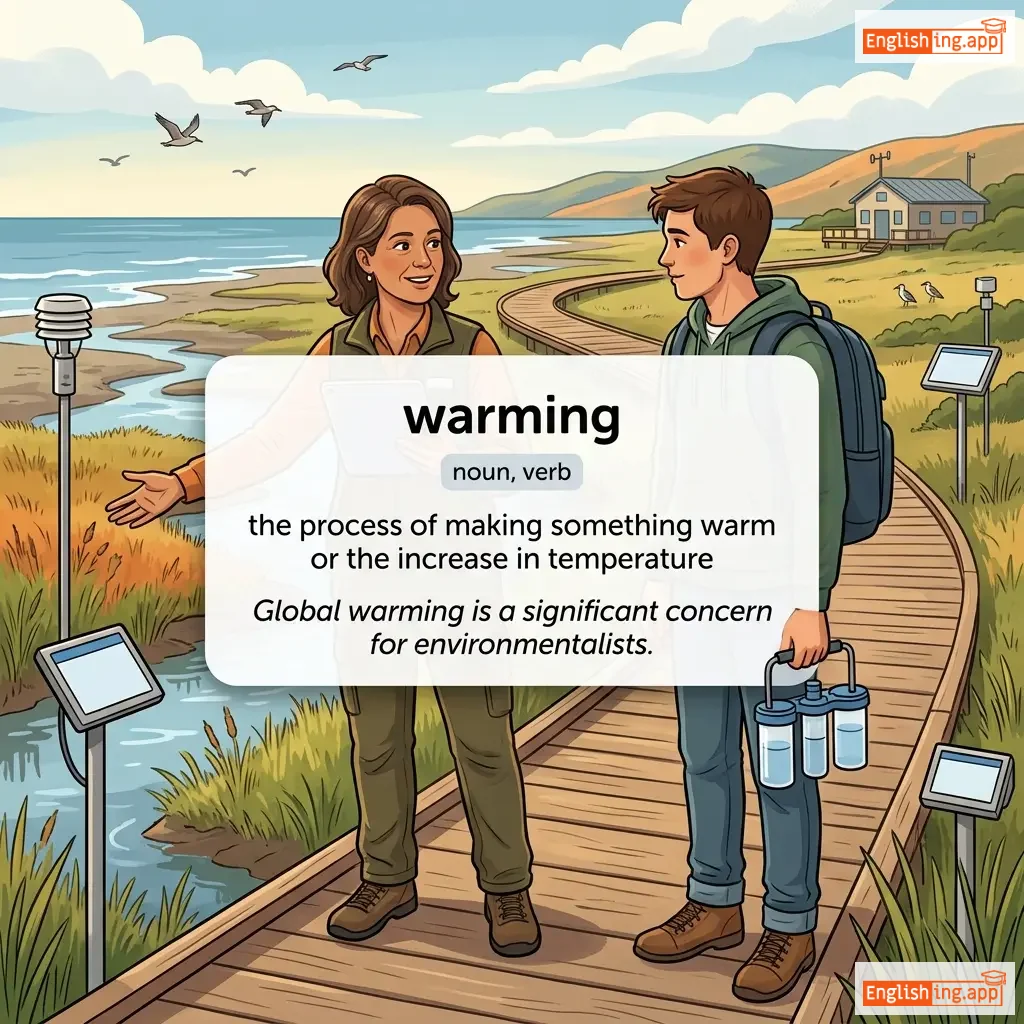
warming definition card — visual illustration of the meaning
noun, verb
/ˈwɔːmɪŋ/
augmentation de la température (augmentation de la temperature)

the process of making something warm or the increase in temperature

"Global warming is a significant concern for environmentalists."

"Le réchauffement climatique est une préoccupation importante pour les écologistes." (Le réchauffement climatique est une préoccupation importante pour les écologistes.)
verb
/ˈvaʊtʃ.seɪf/
octroyer (octroyer)

to grant or give something in a gracious or condescending manner

"He vouchsafed them a rare smile."

"Il leur a octroyé un rare sourire." (Il leur a octroyé un rare sourire.)
noun
/wɪsp/
un petit tas ou morceau (un petit tas ou morceau)

A small thin or twisted bunch, piece, or amount of something.

"A wisp of smoke rose from the chimney."

"Un wisp de fumée s'éleva de la cheminée." (Un wisp de fumée s'éleva de la cheminée.)
noun
/ˈwɒrənti/
garantie (garanti)

A written guarantee given by a manufacturer or seller promising to repair or replace a product if necessary within a specified period.

"The laptop comes with a two-year warranty."

"L'ordinateur portable vient avec une garantie de deux ans." (L'ordinateur portable vient avec une garantie de deux ans.)
adjective; noun; gerund
/ˈwɪnɪŋ/
gagnant (gagnant)

achieving victory or success; attractive or pleasing in a way that brings success

"She has a winning attitude that inspires the whole team."

"Elle a une attitude gagnante qui inspire toute l’équipe." (Elle a une attitude gagnante qui inspire toute l equipe)
adjective
/ˈwɜːkmənˌlaɪk/
professionnel (professionnel)

Showing efficient, competent, and practical skill, but without flair or creativity.

"The carpenter delivered a workmanlike performance on the project."

"Le charpentier a livré une performance de travail sur le projet." (Le charpentier a livré une performance de travail sur le projet.)
🧙‍♂️

Wizard (wizaʁd)

noun
/ˈwɪzərd/
magicien (magicien)

a man who is supposed to have magical powers; a person who is very skilled in a particular area

"The wizard performed amazing magic tricks."

"Le magicien a réalisé des tours de magie impressionnants." (Le magicien a réalisé des tours de magie impressionnants.)
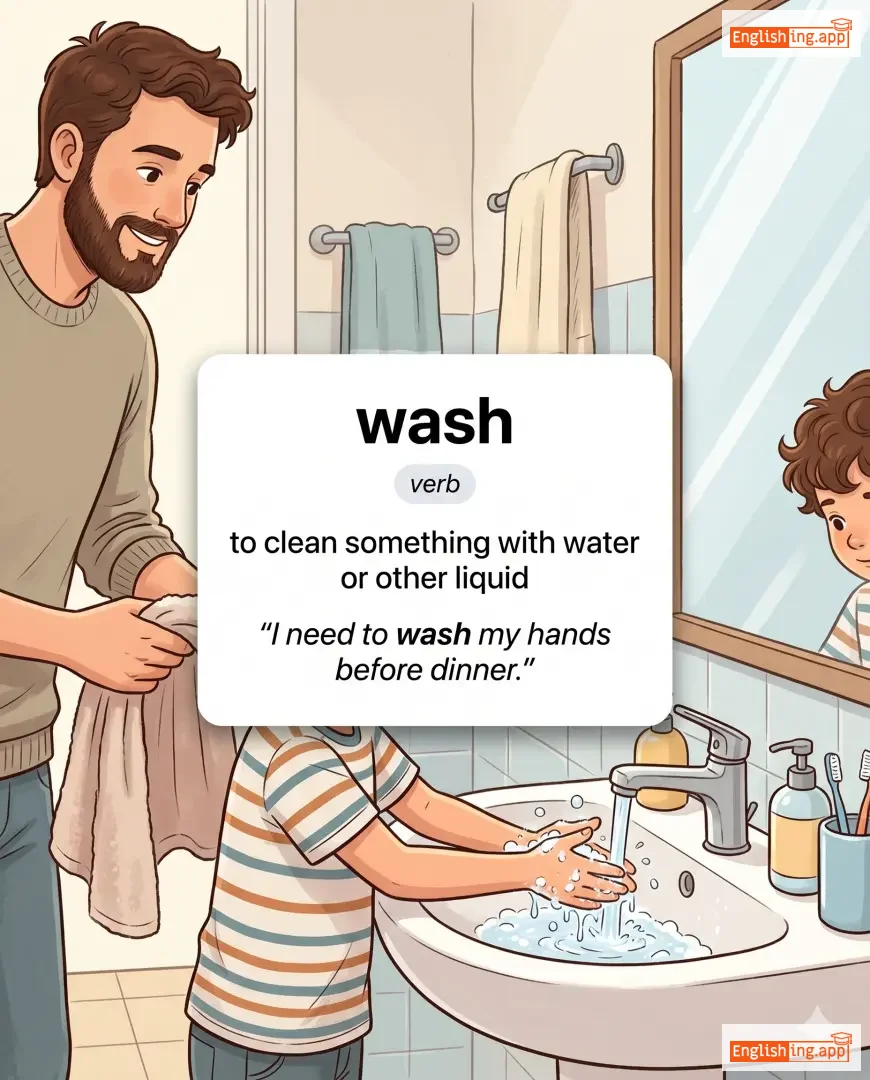
wash definition card — visual illustration of the meaning
verb
/wɒʃ/
laver (laver)

to clean something with water or other liquid

"I need to wash my hands before dinner."

"Je dois laver mes mains avant le dîner." (Je dois laver mes mains avant le dîner.)
noun
/wɜːrd fɔːrˈmeɪʃən/
formation des mots (formation des mots)

the process by which new words are created or existing words are modified in a language

"Word formation helps learners understand how new vocabulary develops in English."

"La formation des mots est importante en linguistique." (la formation des mots est importante en linguistique)
adjective
/ˈwɪnsəm/
charmant (charmant)

pleasant and attractive in a fresh, innocent, or charming way

"Her winsome smile instantly put the nervous guests at ease."

"Son sourire charmant a immédiatement mis les invités nerveux à l'aise." (Son sourire charmant a immediatement mis les invites nerveux a l'aise.)
adjective
/waɪz/
sage (sage)

having or showing experience, knowledge, and good judgment

"It was wise of him to save money for the future."

"Il a été sage de sa part d'économiser de l'argent pour l'avenir." (Il a été sage de sa part d'économiser de l'argent pour l'avenir.)
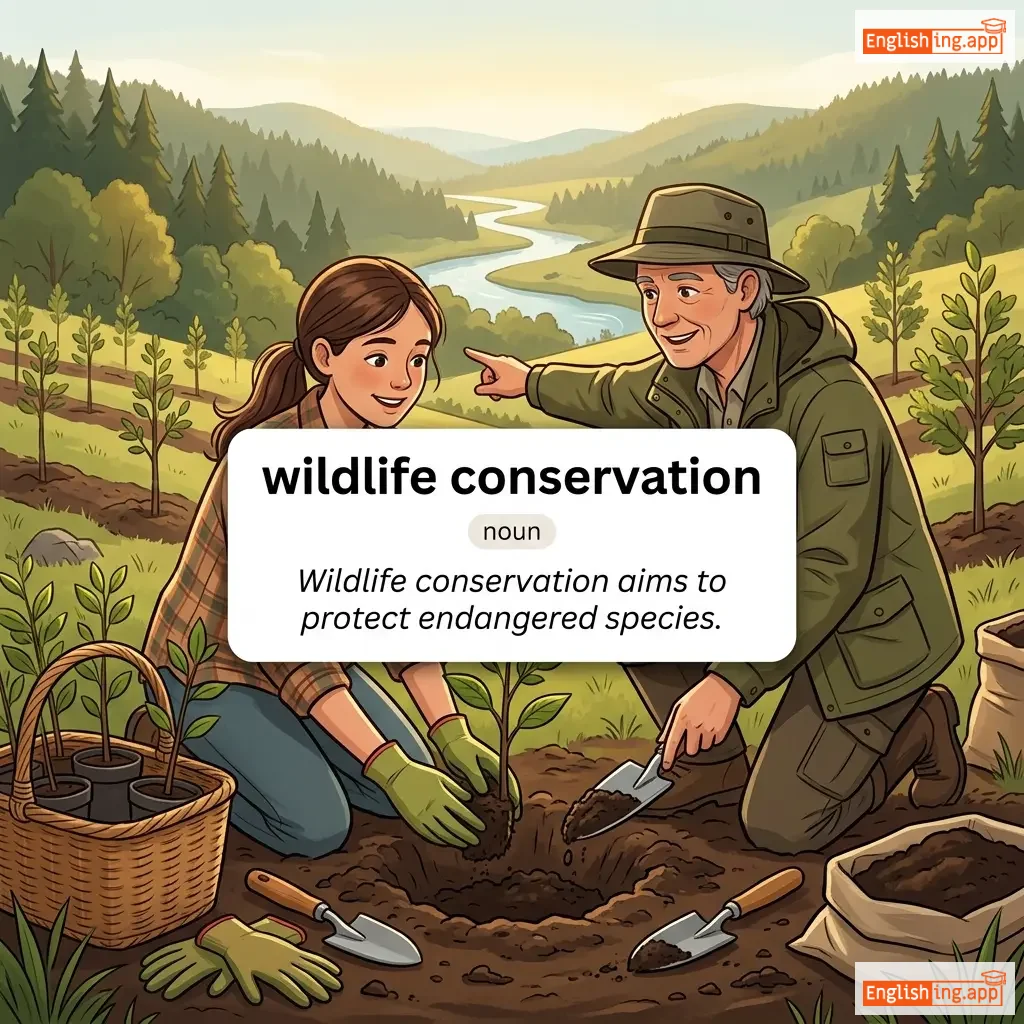
wildlife conservation definition card — visual illustration of the meaning
noun
/ˈwaɪld.laɪf ˌkɒnsərˈveɪʃən/
conservation de la faune sauvage (conservation de la faune sauvage)

The practice of protecting wild animal species and their habitats in order to maintain healthy wildlife species or populations and to restore, protect or enhance natural ecosystems.

"Wildlife conservation aims to protect endangered species."

"La conservation de la faune sauvage vise à protéger les espèces en danger." (La conservation de la faune sauvage vise a proteger les especes en danger.)
adjective
/ˈwaɪəri/
svelte, fort et résistant (svelte, fort et resistant)

Lean, tough, and strong, often with sinewy muscles.

"The wiry athlete moved with remarkable speed and agility."

"L'athlète svelte se déplaçait avec une rapidité et une agilité remarquables." (L'athlète svelte se déplaçait avec une rapidité et une agilité remarquables.)
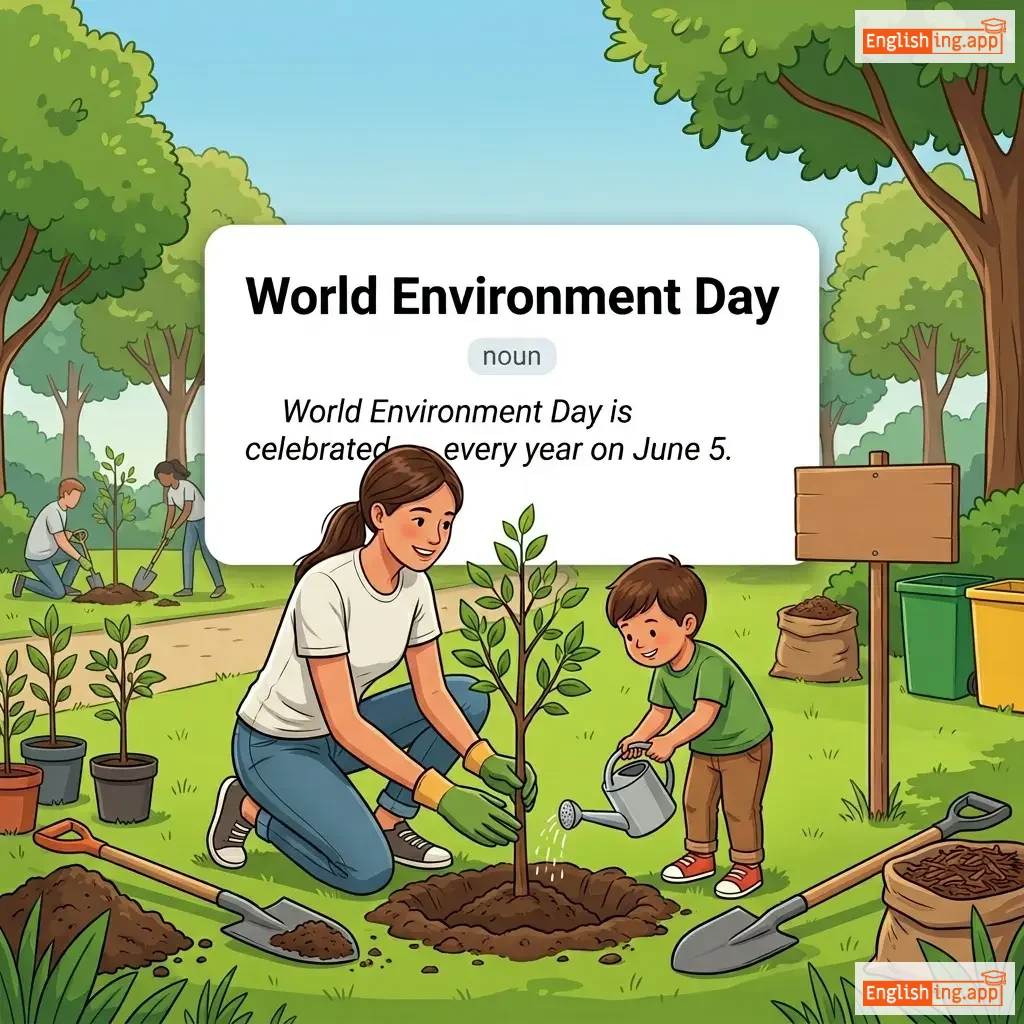
World Environment Day definition card — visual illustration of the meaning
noun
/wɜːrld ɪnˈvaɪrənmənt deɪ/
Journée mondiale de l'environnement (Journee mondiale de l'environnement)

An annual global event celebrated on June 5 to raise awareness about environmental protection and encourage action for environmental conservation.

"World Environment Day is celebrated every year on June 5."

"La Journée mondiale de l'environnement est célébrée chaque année le 5 juin." (La Journee mondiale de l'environnement est celebree chaque annee le 5 juin.)
adjective
/ˈvoʊlənt/
volant (volant)

able to fly or moving swiftly

"The volant bird soared gracefully across the sky."

"L'oiseau volant s'est élevé gracieusement dans le ciel." (L'oiseau volant s'est eleve gracieusement dans le ciel.)
noun
/wʊd ˈæp.əl/
pomme de bois (pomme de bois)

a hard-shelled tropical fruit with aromatic pulp used in beverages and medicine

"The wood apple has a hard shell but sweet pulp inside."

"La pomme de bois a une coque dure mais une pulpe douce à l'intérieur" (La pomme de bois a une coque dure mais une pulpe douce à l'intérieur)
adjective
/ˈvɑːljəbl/
volubile (volubile)

Speaking or spoken incessantly and fluently.

"She became more voluble as the evening progressed."

"Elle est devenue plus volubile à mesure que la soirée avançait." (Elle est devenue plus volubile à mesure que la soirée avançait.)
adjective
/ˈvɒkətɪv/
cas vocatif (cas vocatif)

relating to a case in grammar used for directly addressing someone

"In Latin, the vocative case is used when directly calling someone by name."

"En latin, le cas vocatif est utilisé pour appeler directement quelqu'un par son nom." (En latin, le cas vocatif est utilise pour appeler directement quelqu'un par son nom.)
wish definition card — visual illustration of the meaning
verb
/wɪʃ/
souhaiter (souhaiter)

to desire something or hope for something to happen

"I wish you all the best in your new job."

"Je vous souhaite tout le meilleur dans votre nouveau travail." (Je vous souhaite tout le meilleur dans votre nouveau travail.)
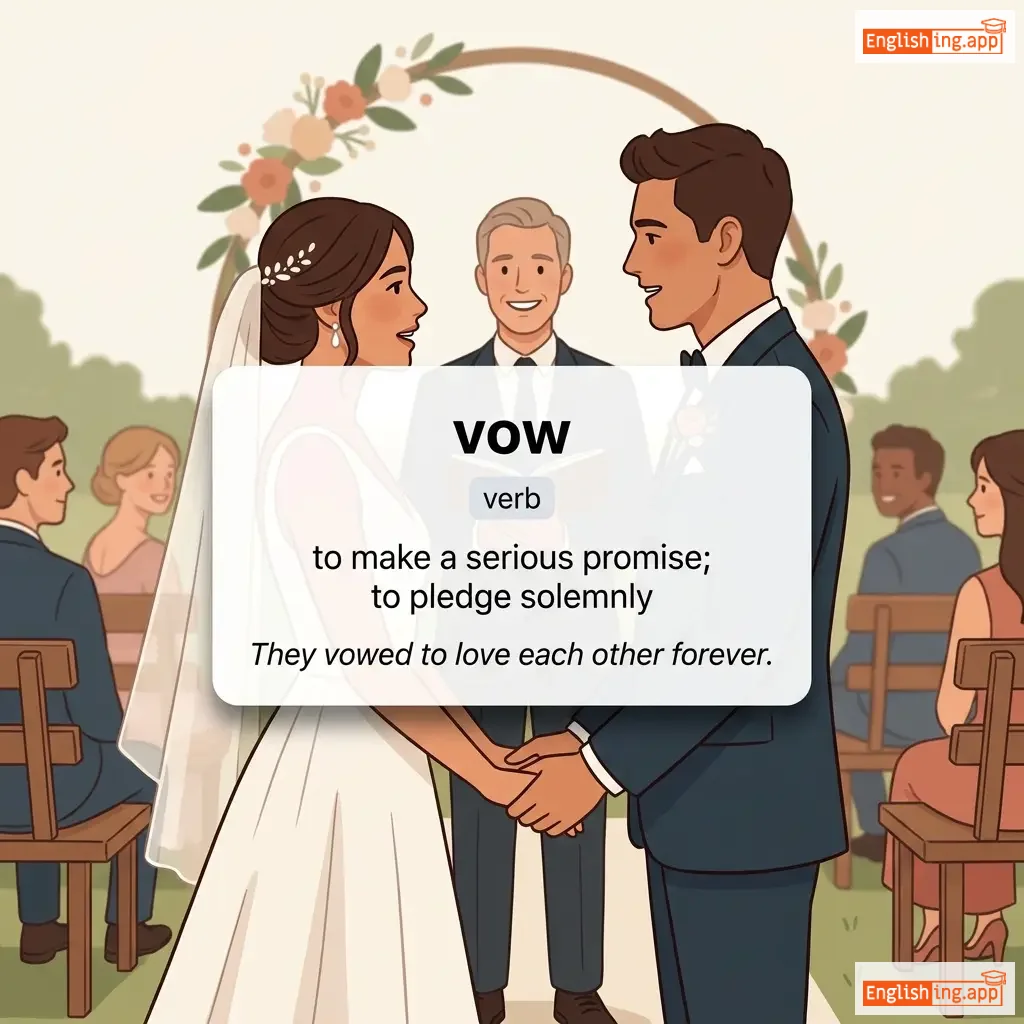
vow definition card — visual illustration of the meaning
noun
/vaʊ/
vœu (veu)

a solemn promise or assertion, typically one made publicly

"They took a vow to always support each other."

"Ils ont pris un vœu de toujours se soutenir." (Ils ont pris un vœu de toujours se soutenir.)
noun
/waɪn/
vin (vin)

an alcoholic drink made from fermented grapes or other fruits

"They served a glass of red wine at the dinner."

"Ils ont servi un verre de vin rouge au dîner." (Ils ont servi un verre de vin rouge au dîner.)
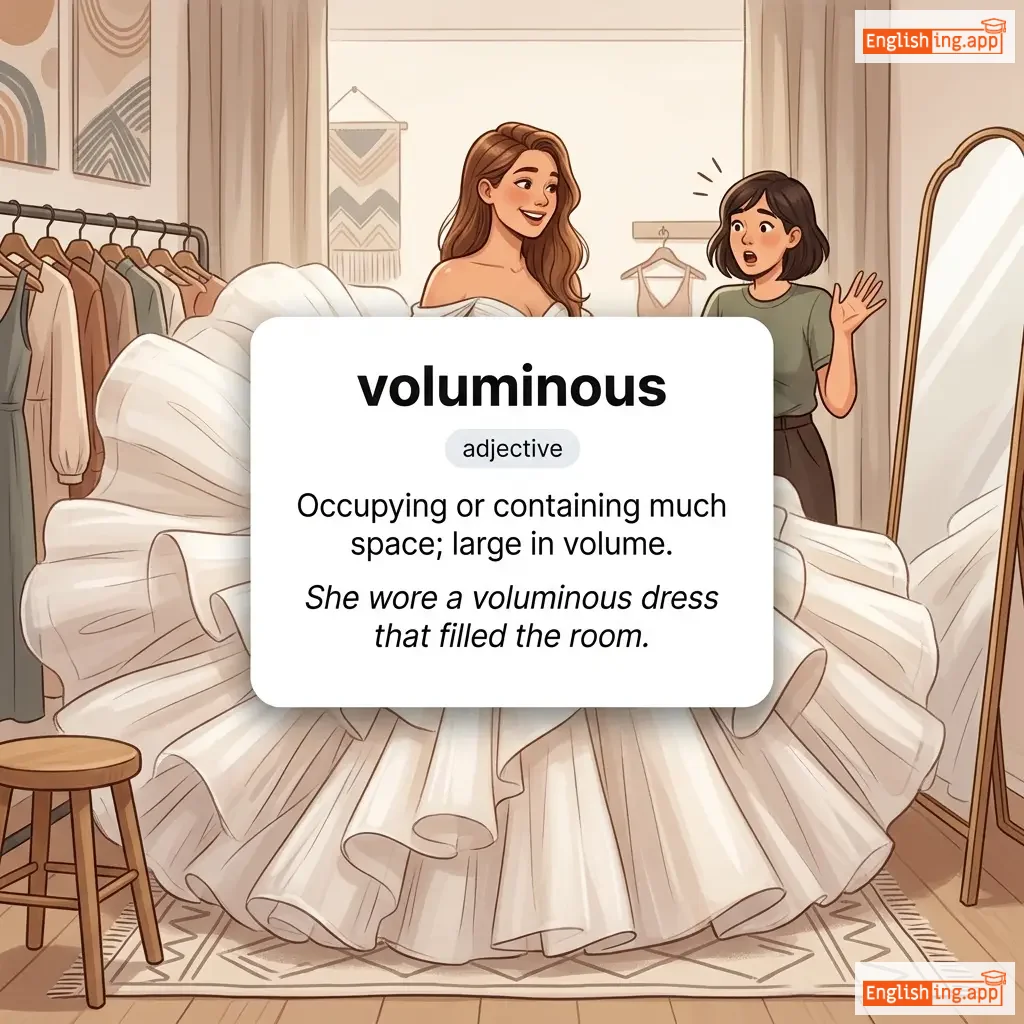
voluminous definition card — visual illustration of the meaning
adjective
/vəˈluːmənəs/
volumineux (volumineux)

Occupying or containing much space; large in volume.

"She wore a voluminous dress that filled the room."

"Elle portait une robe volumineuse qui remplissait la pièce." (Elle portait une robe volumineuse qui remplissait la pièce.)
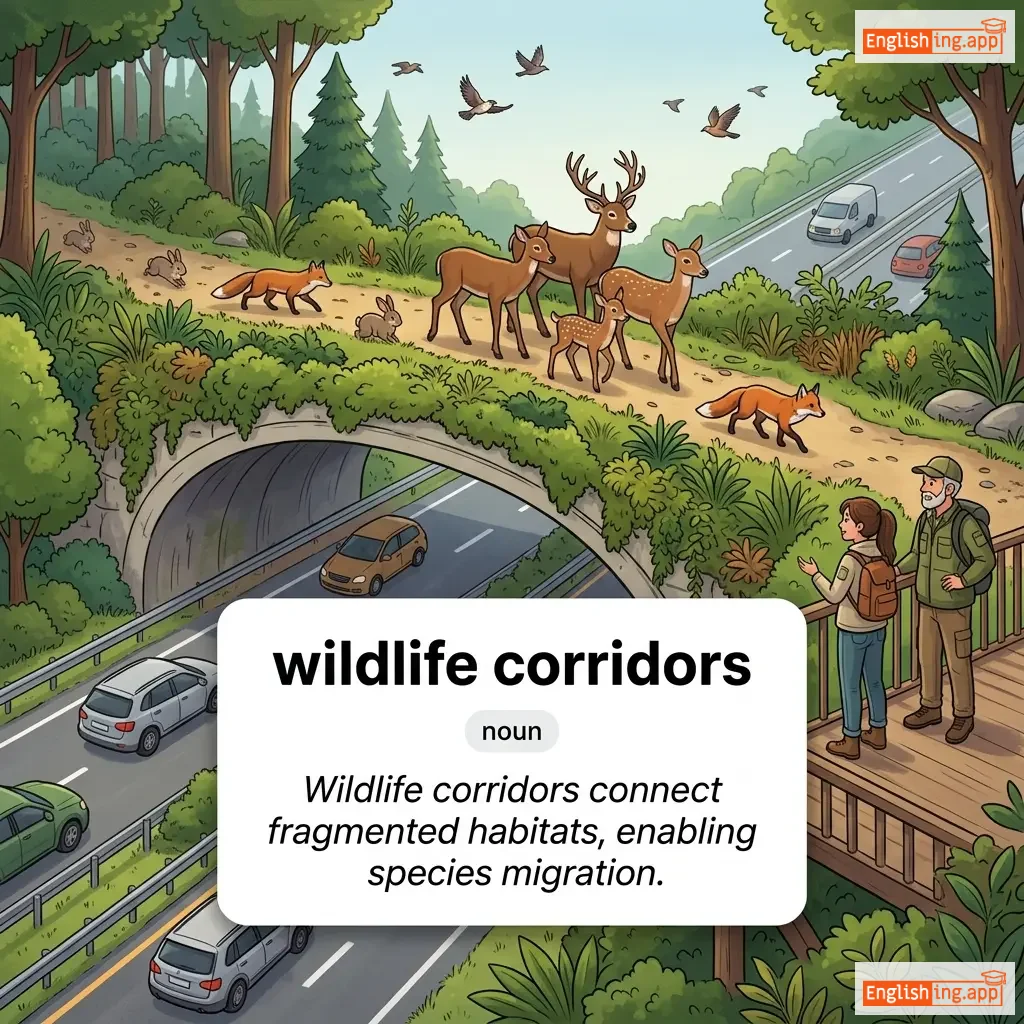
wildlife corridors definition card — visual illustration of the meaning
noun
ˈwaɪldlaɪf ˈkɔːrɪdɔːrz
corridors de faune (corridors de faune)

Areas of habitat connecting wildlife populations separated by human activities or structures.

"Wildlife corridors connect fragmented habitats, enabling species migration."

"Les corridors de faune relient des habitats fragmentés, permettant la migration des espèces." (Les corridors de faune relient des habitats fragmentés, permettant la migration des espèces.)
verb
/vaʊtʃ/
témoigner (temoigner)

to confirm or assert the truth or reliability of something

"I can vouch for his honesty."

"Je peux témoigner de son honnêteté." (Je peux témoigner de son honnêteté.)
adjective
/ˈwʌndərfəl/
merveilleux (merveilleux)

extremely good or impressive

"She had a wonderful time at the party."

"Elle a passé un merveilleux moment à la fête." (Elle a passé un merveilleux moment à la fête.)
noun
/ˈwɪlɪŋnəs/
volonté (volonte)

the quality of being prepared or ready to do something

"Her willingness to help others made her very popular."

"Sa volonté d'aider les autres l'a rendue très populaire." (Sa volonte d'aider les autres l'a rendue tres populaire.)
noun
/ˈwɜːrkər/
travailleur (travailleur)

a person who is employed to perform tasks or duties

"The workers were busy building the bridge."

"Les travailleurs étaient occupés à construire le pont." (Les travailleurs étaient occupés à construire le pont.)
verb
/wɪns/
grincer des dents à cause de la douleur (grincer des dents a cause de la douleur)

To make an involuntary movement of the face or body as a result of pain or distress.

"He winced when the doctor touched his injured arm."

"Il a grimacé lorsque le médecin a touché son bras blessé." (Il a grimacé lorsque le médecin a touché son bras blessé.)
noun
/ˈwiːknəs/
faiblesse (faiblesse)

a state of being weak; a flaw or shortcoming in character or structure

"His main weakness is his lack of patience."

"Sa principale faiblesse est son manque de patience." (Sa principale faiblesse est son manque de patience.)
noun
/ˈwɪntər/
hiver (hiver)

the coldest season of the year, typically from December to February in the Northern Hemisphere

"Winter in the north can be very harsh with heavy snowfall."

"L'hiver dans le nord peut être très rude avec de fortes chutes de neige." (L'hiver dans le nord peut être très rude avec de fortes chutes de neige.)
noun
/ˈwaɪər/
fil de fer (fil de fer)

a thin, flexible thread of metal used to conduct electricity or connect things

"The electrician fixed the wire to restore the power."

"L'électricien a réparé le fil pour restaurer l'alimentation." (L'électricien a réparé le fil pour restaurer l'alimentation.)
verb
/wɛd/
se marier (se marier)

to marry someone; to enter into a marriage

"They decided to wed in a small ceremony by the beach."

"Ils ont décidé de se marier lors d'une petite cérémonie à la plage." (Ils ont décidé de se marier lors d'une petite cérémonie à la plage.)
preposition
/wɪðˈaʊt/
sans (sans)

in the absence of, or not having something

"He left without saying goodbye."

"Il est parti sans dire au revoir." (Il est parti sans dire au revoir.)