Vocabularios

Descubra, aprenda y domine el vocabulario en inglés

noun
/ˈvɒl.juːm/
volumen (volumen)

the amount of space that a substance or object occupies, or that is enclosed within a container

"The volume of water in the tank increased after the rain."

"El volumen de agua en el tanque aumentó después de la lluvia." (El volumen de agua en el tanque aumentó después de la lluvia.)
adverb
/ˈwɔːm.li/
calurosamente; afectuosamente (calurosamente; afectuosamente)

in a warm manner; with warmth; cordially; affectionately

"She welcomed the guests warmly at the door."

"Ella recibió a los invitados calurosamente en la puerta." (Ella recibio a los invitados calurosamente en la puerta.)
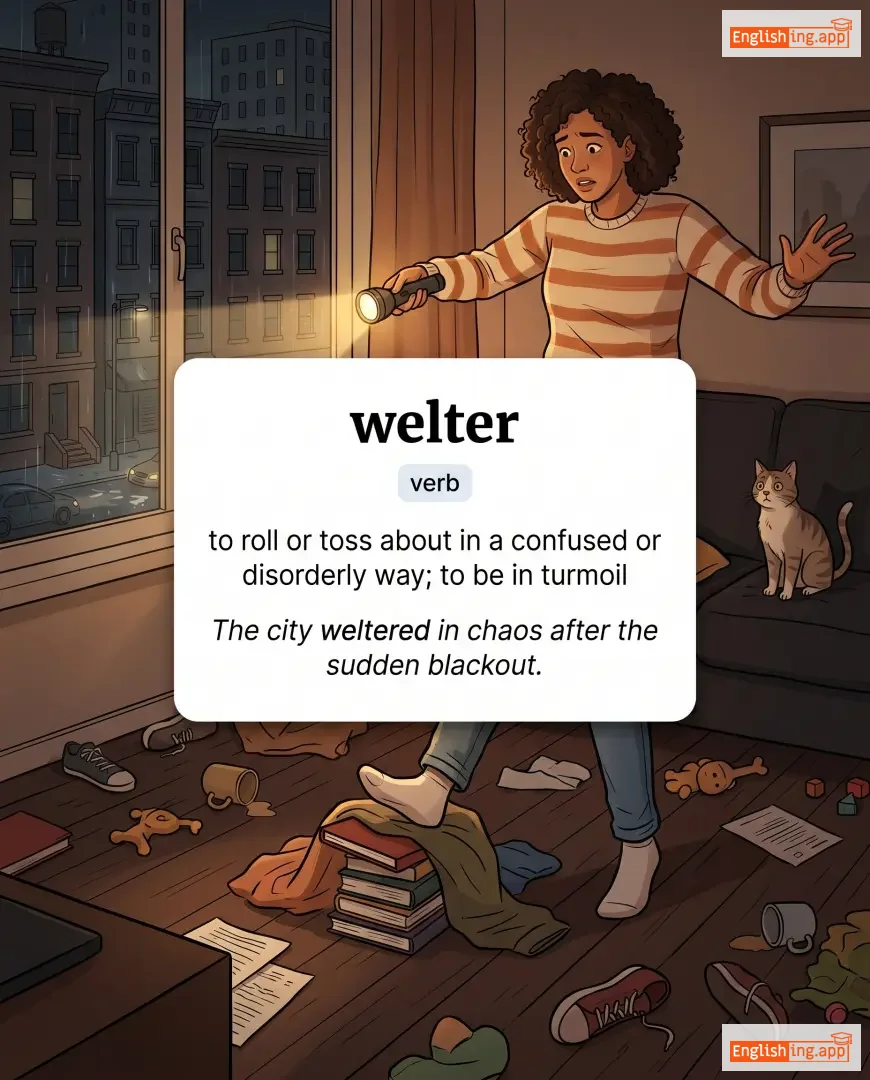
welter definition card — visual illustration of the meaning
verb
/ˈwɛltər/
dar vueltas en caos (dar vueltas en caos)

to roll or toss about in a confused or disorderly way; to be in turmoil

"The city weltered in chaos after the sudden blackout."

"La ciudad se sumió en el caos después del apagón repentino." (La ciudad se sumió en el caos después del apagón repentino.)
verb
/wæks/
aumentar gradualmente (aumentar gradualmente)

to increase gradually in size, number, strength, or intensity

"The moon will wax until it becomes full."

"La luna aumentará hasta que se vuelva llena." (La luna aumentara hasta que se vuelva llena.)
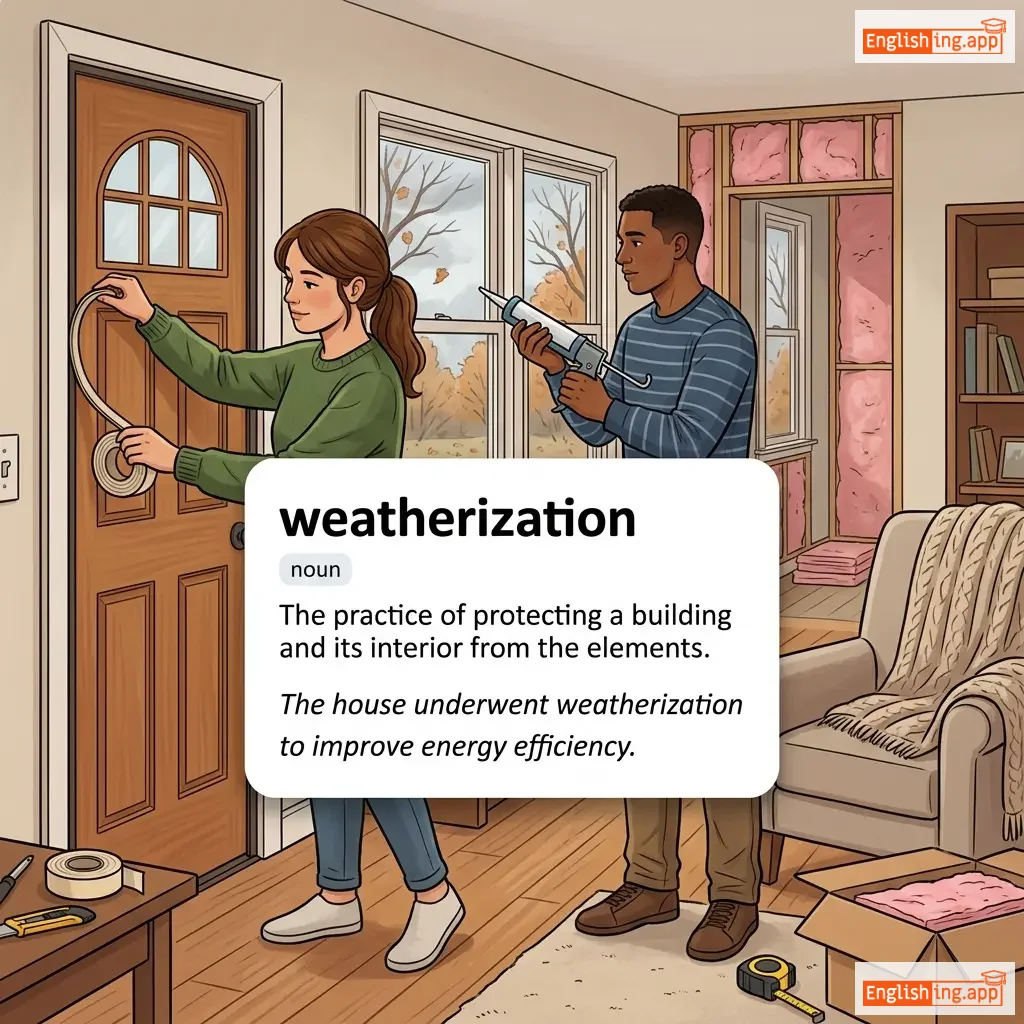
weatherization definition card — visual illustration of the meaning
noun
ˌwɛðəraɪˈzeɪʃən
climatización (climatizacion)

The practice of protecting a building and its interior from the elements.

"The house underwent weatherization to improve energy efficiency."

"La casa pasó por un proceso de climatización para mejorar la eficiencia energética." (La casa pasó por un proceso de climatización para mejorar la eficiencia energética.)
adjective
/ˈwɒŋki/
inestable; poco fiable; que no funciona correctamente (wonki)

unstable; unreliable; not working properly

"The old chair was wonky and wobbled every time someone sat on it."

"La vieja silla estaba inestable y se tambaleaba cada vez que alguien se sentaba en ella." (La vieja silla estaba inestable y se tambaleaba cada vez que alguien se sentaba en ella)
adjective
/ˈwɪtləs/
tonto (tonto)

lacking intelligence or good sense

"It was a witless decision to leave the door unlocked."

"Fue una decisión tonta dejar la puerta desbloqueada." (Fue una decision tonta dejar la puerta desbloqueada.)
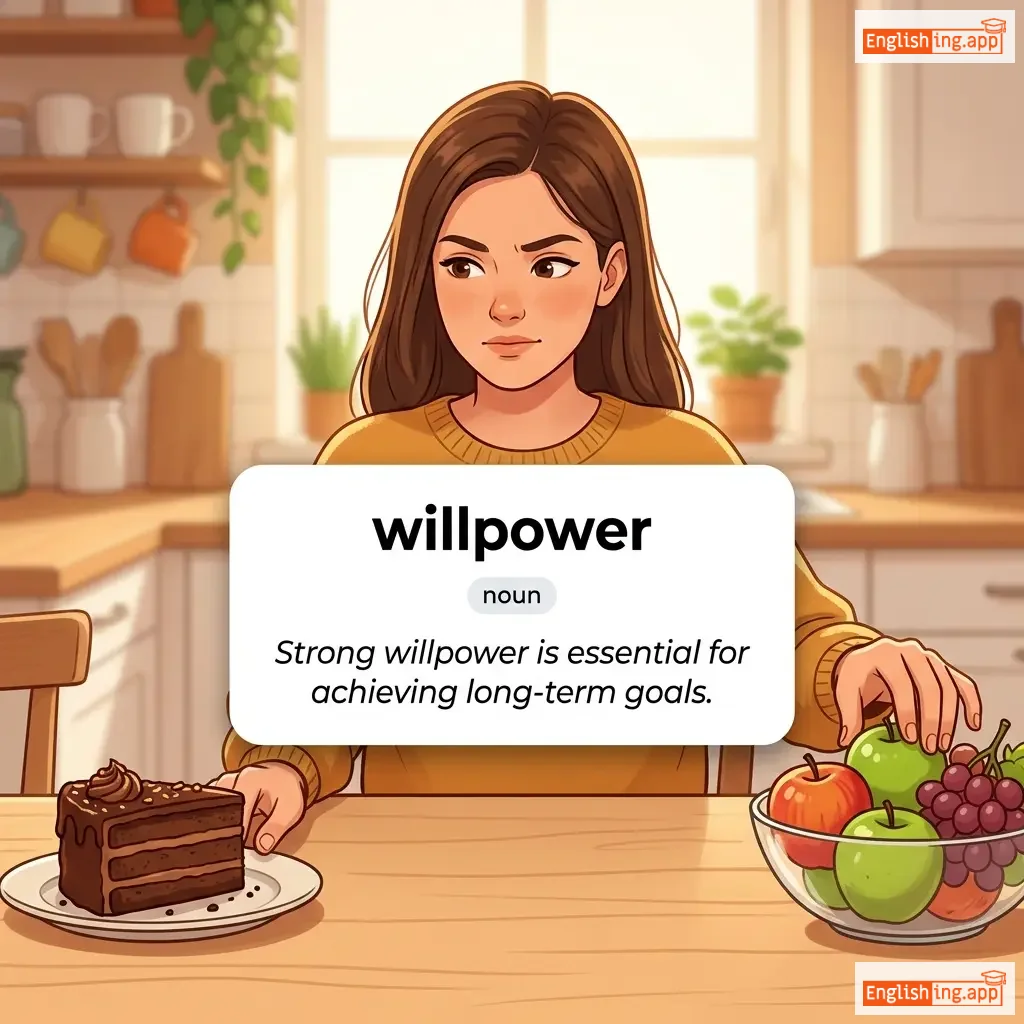
willpower definition card — visual illustration of the meaning
noun
ˈwɪl.paʊər
fuerza de voluntad (fuerza de voluntad)

The ability to control your thoughts and actions in order to achieve what you want to do.

"Strong willpower is essential for achieving long-term goals."

"La fuerza de voluntad es esencial para alcanzar metas a largo plazo." (La fuerza de voluntad es esencial para alcanzar metas a largo plazo.)
noun
/voʊˈsɪfərəns/
gritar fuerte (gritar fuerte)

the act of shouting or making a loud outcry

"The vociferance of the protesters filled the streets."

"La vociferancia de los manifestantes llenó las calles." (La vociferancia de los manifestantes llenó las calles.)
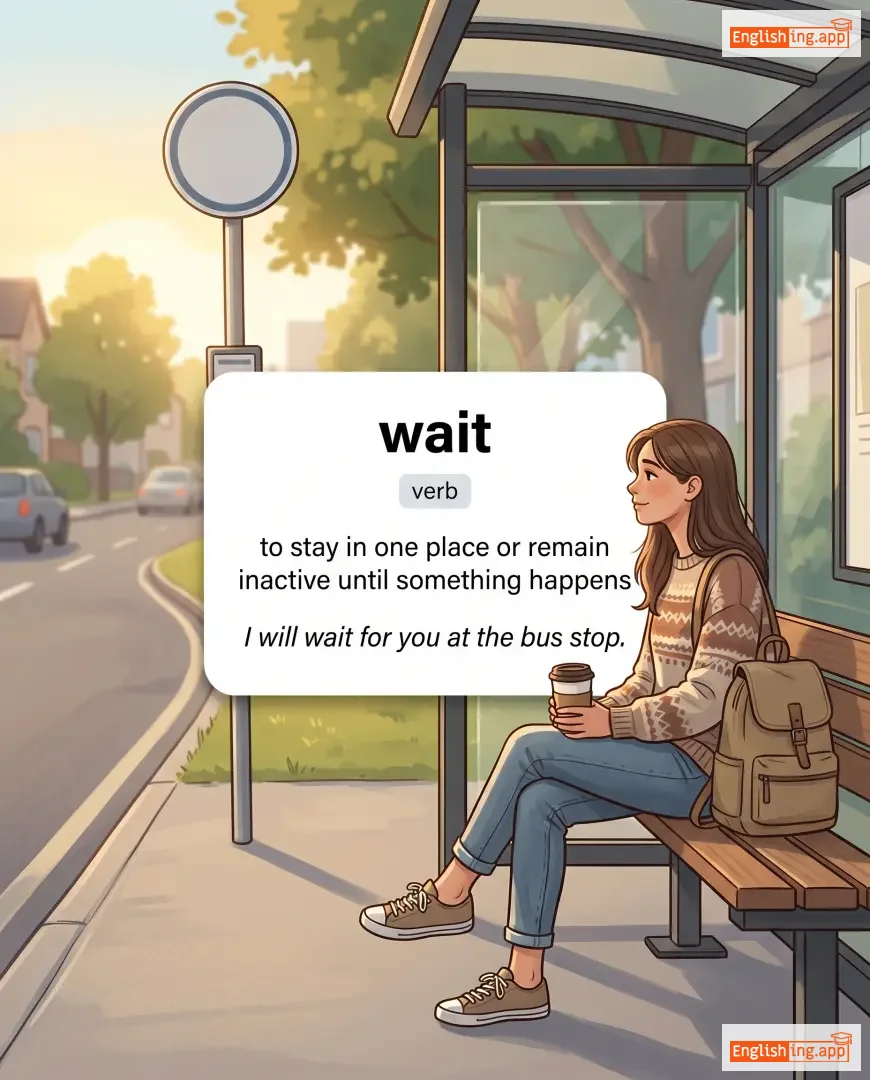
wait definition card — visual illustration of the meaning
verb
/weɪt/
esperar (esperar)

to stay in one place or remain inactive until something happens

"I will wait for you at the bus stop."

"Te esperaré en la parada del autobús." (Te esperaré en la parada del autobús.)
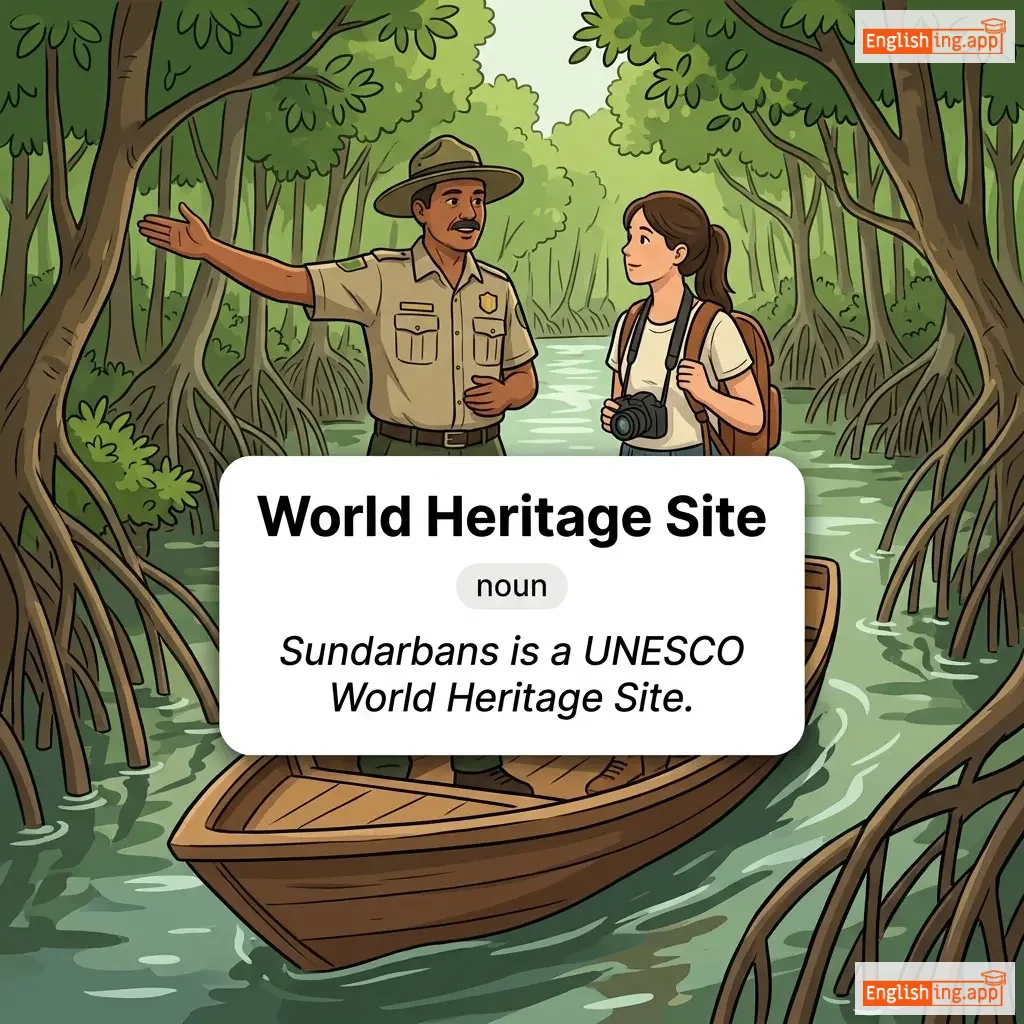
World Heritage Site definition card — visual illustration of the meaning
noun
wɜːrld ˈhɛrɪtɪdʒ saɪt
Sitio de Patrimonio Mundial (Sitio de Patrimonio Mundial)

A landmark or area selected by UNESCO for having cultural, historical, scientific or other form of significance.

"Sundarbans is a UNESCO World Heritage Site."

"Sundarbans es un Sitio de Patrimonio Mundial de la UNESCO." (Sundarbans es un Sitio de Patrimonio Mundial de la UNESCO.)
noun
/ˈwɔː.tər hen/
gallineta (gallineta)

a waterbird with dark plumage that lives near ponds and wetlands

"The water hen swam gracefully across the pond."

"La gallineta nadó elegantemente a través del estanque." (La gallineta nadó elegantemente a través del estanque.)
noun
/wɜːrd/
palabra (palabra)

a single distinct meaningful element of speech or writing

"He looked up the word in the dictionary."

"Él buscó la palabra en el diccionario." (Él buscó la palabra en el diccionario.)
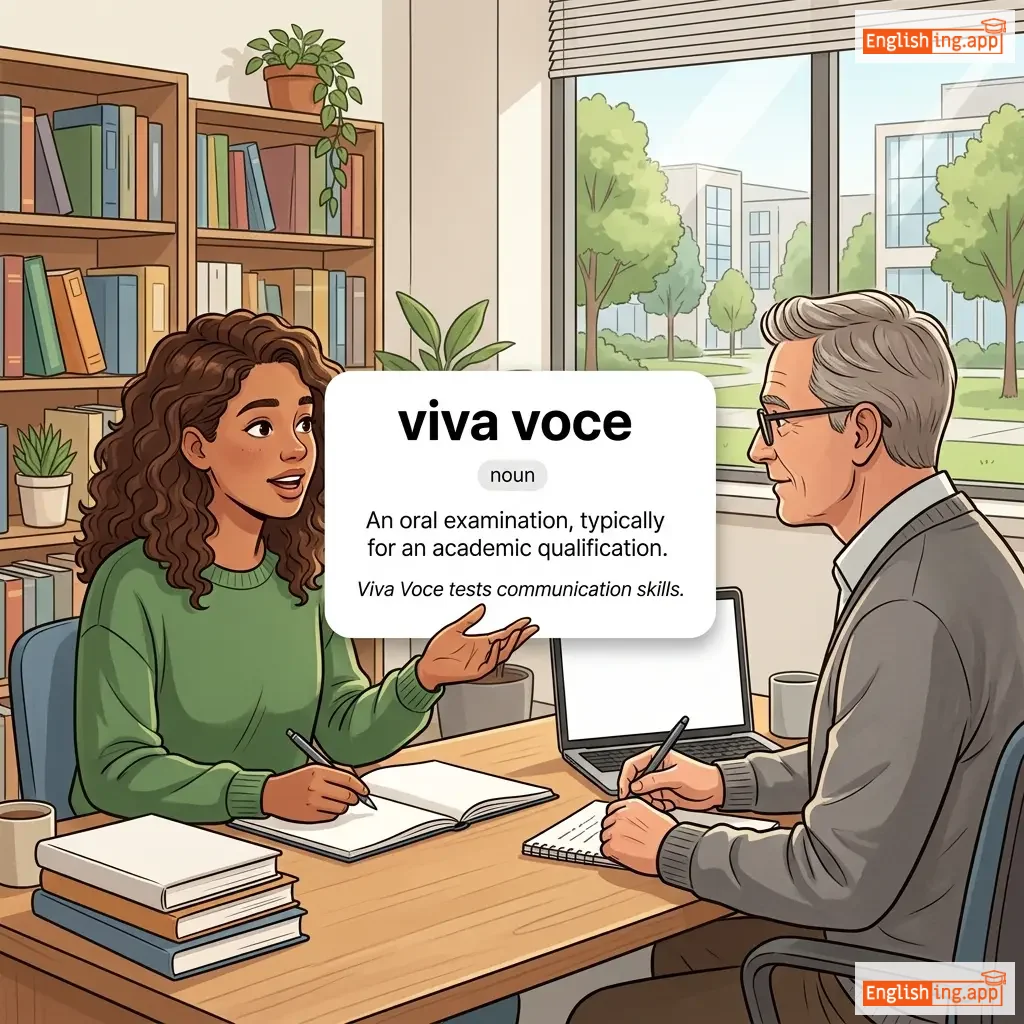
viva voce definition card — visual illustration of the meaning
noun
ˈvaɪ.və ˈvəʊs
examen oral (examen oral)

An oral examination, typically for an academic qualification.

"Viva Voce tests communication skills."

"Las pruebas de Viva Voce evalúan las habilidades de comunicación." (Las pruebas de Viva Voce evalúan las habilidades de comunicación.)
adjective
/ˈwɜːrkɪŋ/
trabajando (trabajando)

engaged in physical or mental effort to achieve a goal or task

"She is working on her project right now."

"Ella está trabajando en su proyecto ahora mismo." (Ella esta trabajando en su proyecto ahora mismo.)
adjective
/ˈwaɪə.ləs/
inalámbrico; sin cables (inalámbrico; sin cables)

operating without wires; using radio waves for communication

"My wireless headphones provide excellent sound quality without any cables."

"Mis audífonos inalámbricos ofrecen excelente calidad de sonido sin cables." (Mis audífonos inalámbricos ofrecen excelente calidad de sonido sin cables.)
noun, verb
/wɪl/
voluntad (voluntad)

expressing future tense or intention; a legal document

"She will attend the meeting tomorrow."

"Ella asistirá a la reunión mañana." (Ella asistira a la reunion manana.)
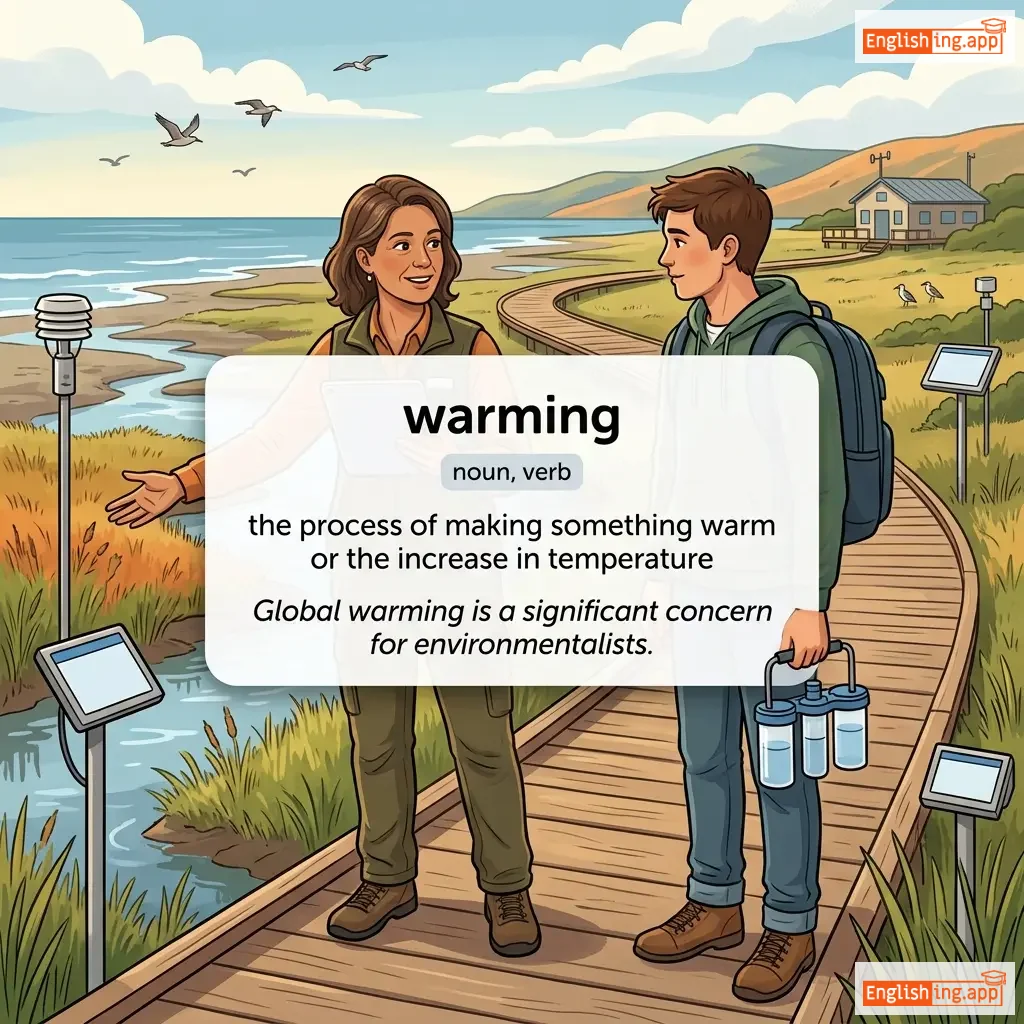
warming definition card — visual illustration of the meaning
noun, verb
/ˈwɔːmɪŋ/
aumento de temperatura (aumento de temperatura)

the process of making something warm or the increase in temperature

"Global warming is a significant concern for environmentalists."

"El calentamiento global es una preocupación significativa para los ambientalistas." (El calentamiento global es una preocupación significativa para los ambientalistas.)
verb
/ˈvaʊtʃ.seɪf/
conceder (conceder)

to grant or give something in a gracious or condescending manner

"He vouchsafed them a rare smile."

"Él les concedió una rara sonrisa." (Él les concedió una rara sonrisa.)
noun
/wɪsp/
un pequeño racimo o trozo (un pequeno racimo o trozo)

A small thin or twisted bunch, piece, or amount of something.

"A wisp of smoke rose from the chimney."

"Una wisp de humo subió por la chimenea." (Una wisp de humo subió por la chimenea.)
noun
/ˈwɒrənti/
garantía (garantia)

A written guarantee given by a manufacturer or seller promising to repair or replace a product if necessary within a specified period.

"The laptop comes with a two-year warranty."

"El portátil viene con una garantía de dos años." (El portatil viene con una garantia de dos anos.)
adjective; noun; gerund
/ˈwɪnɪŋ/
ganador (ganador)

achieving victory or success; attractive or pleasing in a way that brings success

"She has a winning attitude that inspires the whole team."

"Ella tiene una actitud ganadora que inspira a todo el equipo." (Ella tiene una actitud ganadora que inspira a todo el equipo)
adjective
/ˈwɜːkmənˌlaɪk/
trabajoso (trabajoso)

Showing efficient, competent, and practical skill, but without flair or creativity.

"The carpenter delivered a workmanlike performance on the project."

"El carpintero entregó una actuación de trabajo en el proyecto." (El carpintero entregó una actuación de trabajo en el proyecto.)
🧙‍♂️

Wizard (wízard)

noun
/ˈwɪzərd/
mago (mago)

a man who is supposed to have magical powers; a person who is very skilled in a particular area

"The wizard performed amazing magic tricks."

"El mago realizó trucos mágicos impresionantes." (El mago realizó trucos mágicos impresionantes.)
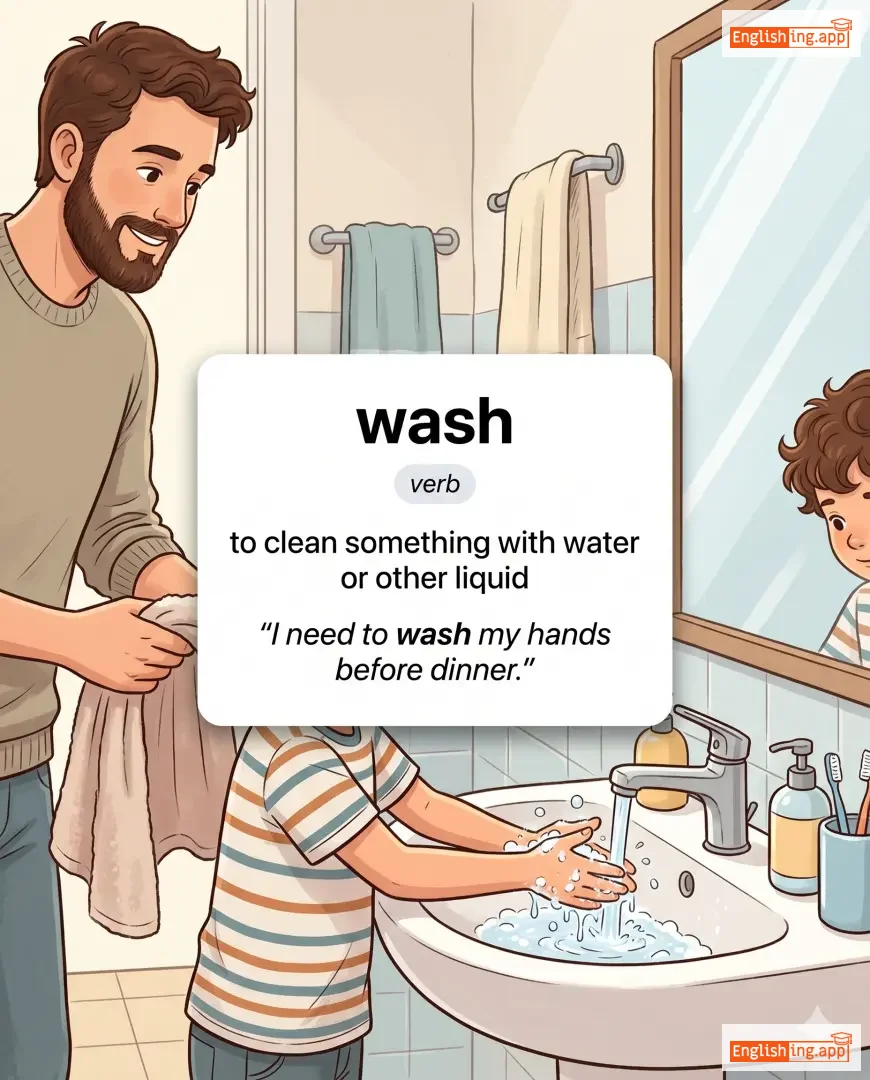
wash definition card — visual illustration of the meaning
verb
/wɒʃ/
lavar (lavar)

to clean something with water or other liquid

"I need to wash my hands before dinner."

"Necesito lavar mis manos antes de la cena." (Necesito lavar mis manos antes de la cena.)
noun
/wɜːrd fɔːrˈmeɪʃən/
formación de palabras (formacion de palabras)

the process by which new words are created or existing words are modified in a language

"Word formation helps learners understand how new vocabulary develops in English."

"La formación de palabras ayuda a entender el vocabulario." (la formacion de palabras ayuda a entender el vocabulario)
adjective
/ˈwɪnsəm/
atractivo (atractivo)

pleasant and attractive in a fresh, innocent, or charming way

"Her winsome smile instantly put the nervous guests at ease."

"Su sonrisa atractiva instantáneamente calmó a los invitados nerviosos." (Su sonrisa atractiva instantáneamente calmó a los invitados nerviosos.)
adjective
/waɪz/
sabio (sabio)

having or showing experience, knowledge, and good judgment

"It was wise of him to save money for the future."

"Fue sabio de su parte ahorrar dinero para el futuro." (Fue sabio de su parte ahorrar dinero para el futuro.)
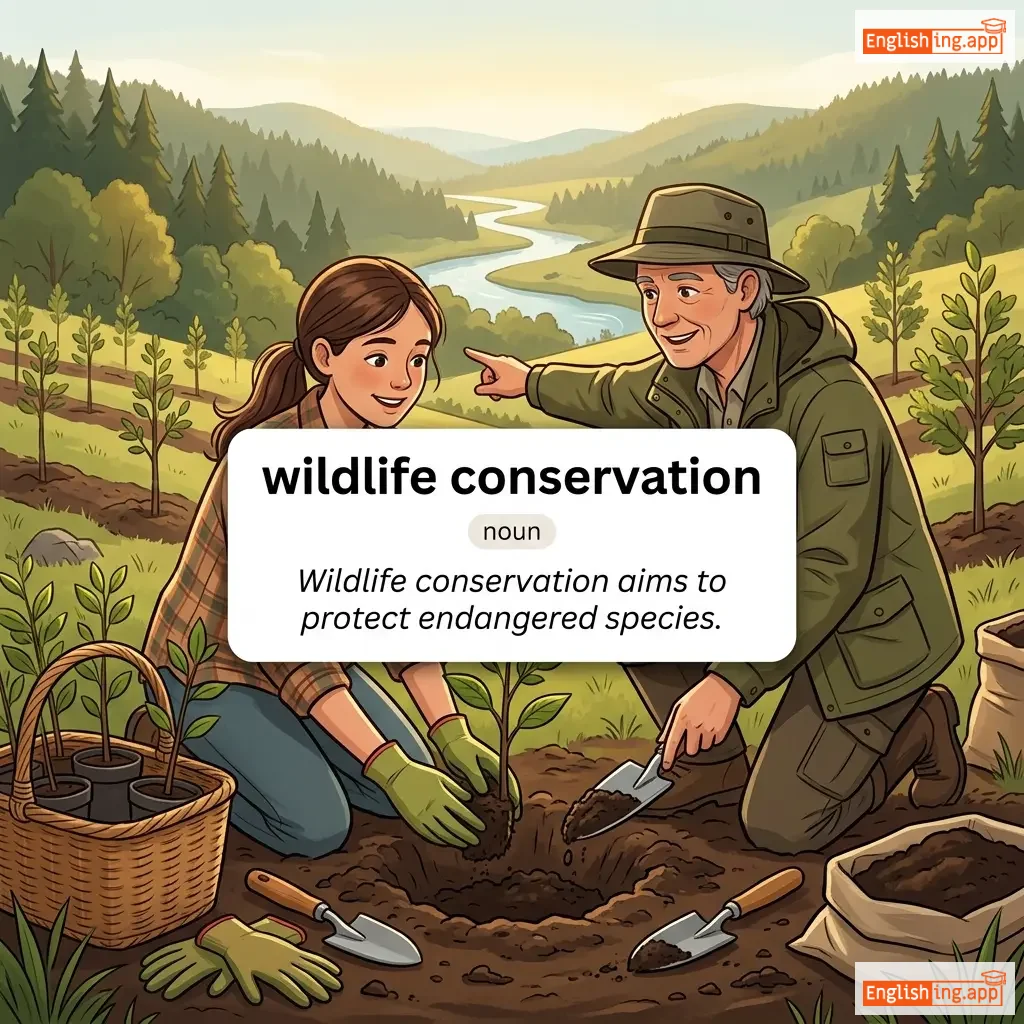
wildlife conservation definition card — visual illustration of the meaning
noun
/ˈwaɪld.laɪf ˌkɒnsərˈveɪʃən/
conservación de la fauna silvestre (konservacion de la fauna silvestre)

The practice of protecting wild animal species and their habitats in order to maintain healthy wildlife species or populations and to restore, protect or enhance natural ecosystems.

"Wildlife conservation aims to protect endangered species."

"La conservación de la fauna silvestre tiene como objetivo proteger las especies en peligro de extinción." (La conservacion de la fauna silvestre tiene como objetivo proteger las especies en peligro de extincion.)
adjective
/ˈwaɪəri/
delgado, fuerte y resistente (delgado, fuerte y resistente)

Lean, tough, and strong, often with sinewy muscles.

"The wiry athlete moved with remarkable speed and agility."

"El atleta delgado se movió con una velocidad y agilidad notables." (El atleta delgado se movió con una velocidad y agilidad notables.)
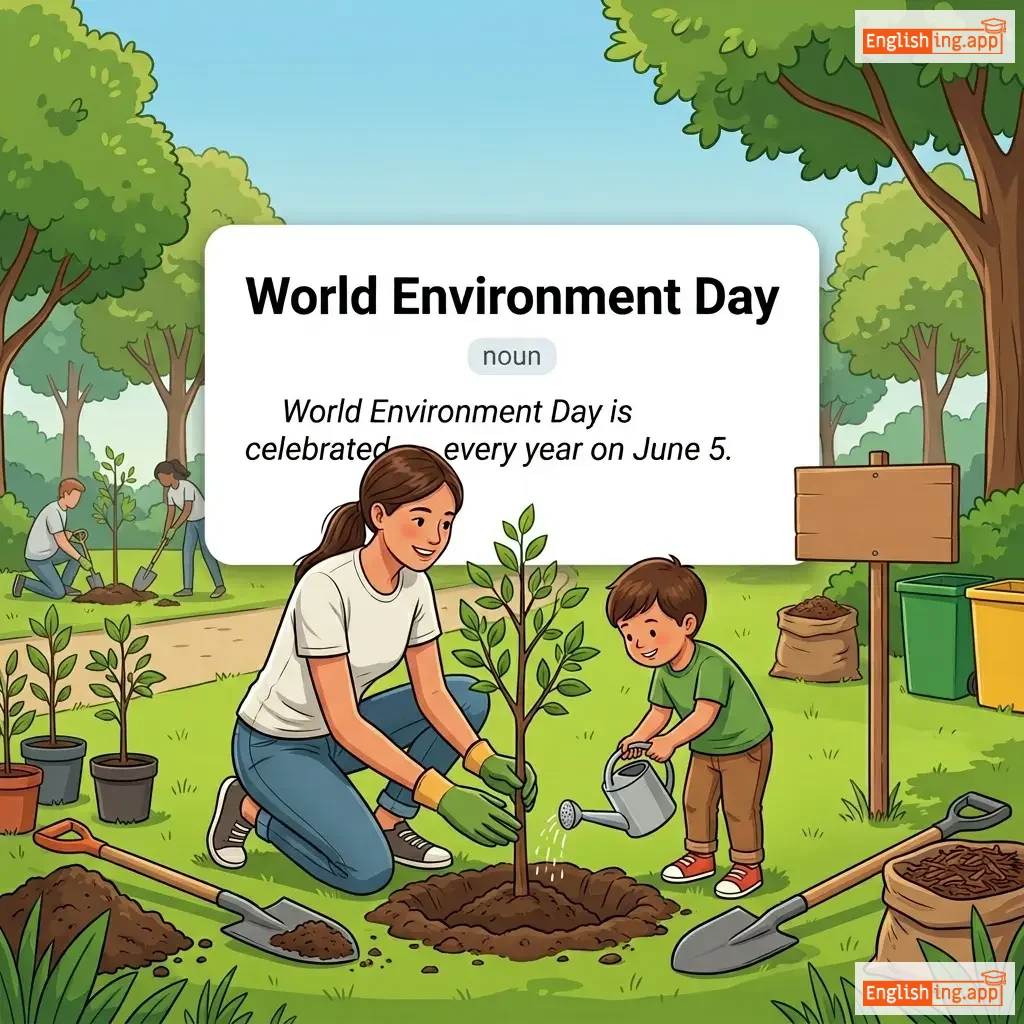
World Environment Day definition card — visual illustration of the meaning
noun
/wɜːrld ɪnˈvaɪrənmənt deɪ/
Día Mundial del Medio Ambiente (Dia Mundial del Medio Ambiente)

An annual global event celebrated on June 5 to raise awareness about environmental protection and encourage action for environmental conservation.

"World Environment Day is celebrated every year on June 5."

"El Día Mundial del Medio Ambiente se celebra todos los años el 5 de junio." (El Dia Mundial del Medio Ambiente se celebra todos los años el 5 de junio.)
adjective
/ˈvoʊlənt/
volador (volador)

able to fly or moving swiftly

"The volant bird soared gracefully across the sky."

"El pájaro volador se elevó con gracia por el cielo." (El pajaro volador se elevo con gracia por el cielo.)
noun
/wʊd ˈæp.əl/
manzana de madera (manzana de madera)

a hard-shelled tropical fruit with aromatic pulp used in beverages and medicine

"The wood apple has a hard shell but sweet pulp inside."

"La manzana de madera tiene una cáscara dura pero pulpa dulce en su interior" (La manzana de madera tiene una cáscara dura pero pulpa dulce en su interior)
adjective
/ˈvɑːljəbl/
hablador (hablador)

Speaking or spoken incessantly and fluently.

"She became more voluble as the evening progressed."

"Se volvió más hablador a medida que avanzaba la noche." (Se volvio mas hablador a medida que avanzaba la noche.)
adjective
/ˈvɒkətɪv/
caso vocativo (caso vocativo)

relating to a case in grammar used for directly addressing someone

"In Latin, the vocative case is used when directly calling someone by name."

"En latín, el caso vocativo se usa para llamar directamente a alguien por su nombre." (En latin, el caso vocativo se usa para llamar directamente a alguien por su nombre.)
wish definition card — visual illustration of the meaning
verb
/wɪʃ/
desear (desear)

to desire something or hope for something to happen

"I wish you all the best in your new job."

"Te deseo lo mejor en tu nuevo trabajo." (Te deseo lo mejor en tu nuevo trabajo.)
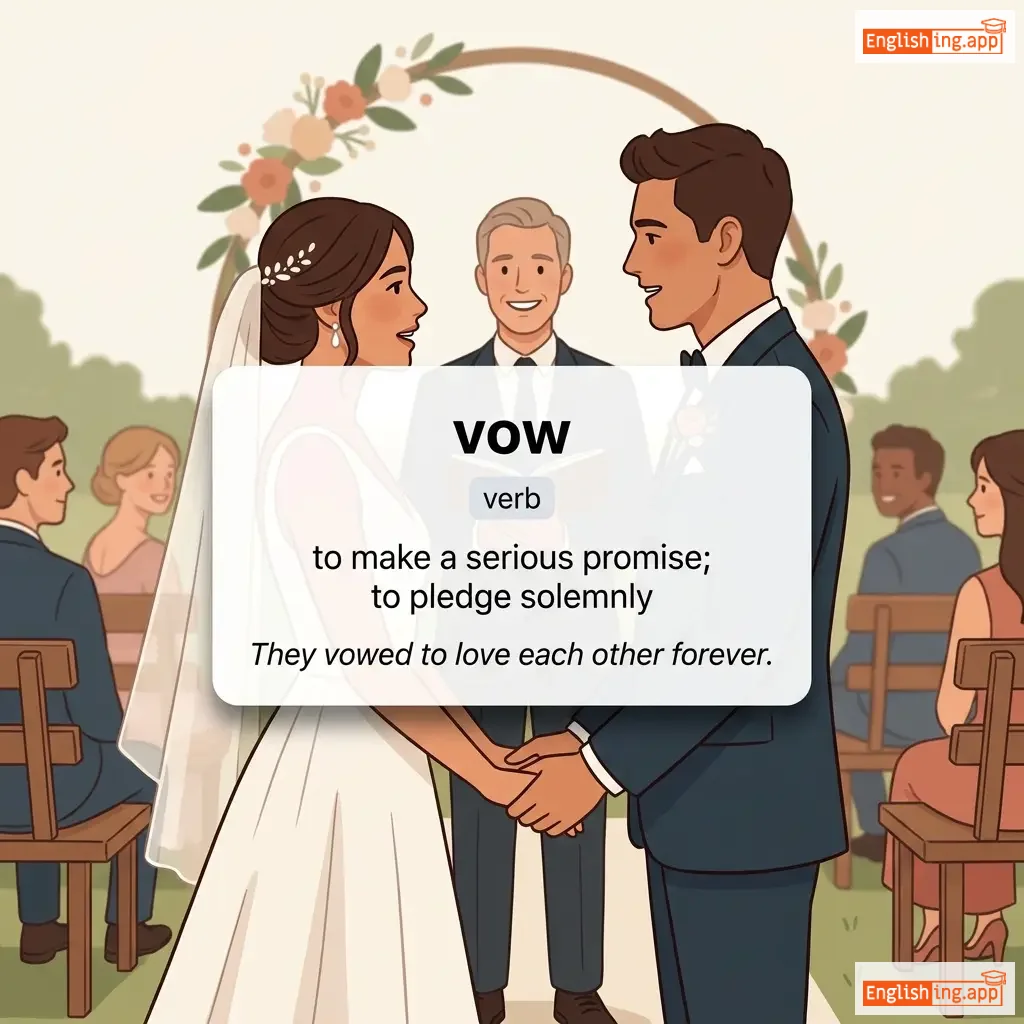
vow definition card — visual illustration of the meaning
noun
/vaʊ/
promesa (promesa)

a solemn promise or assertion, typically one made publicly

"They took a vow to always support each other."

"Ellos hicieron una promesa de siempre apoyarse mutuamente." (Ellos hicieron una promesa de siempre apoyarse mutuamente.)
noun
/waɪn/
vino (vino)

an alcoholic drink made from fermented grapes or other fruits

"They served a glass of red wine at the dinner."

"Ellos sirvieron una copa de vino tinto en la cena." (Ellos sirvieron una copa de vino tinto en la cena.)
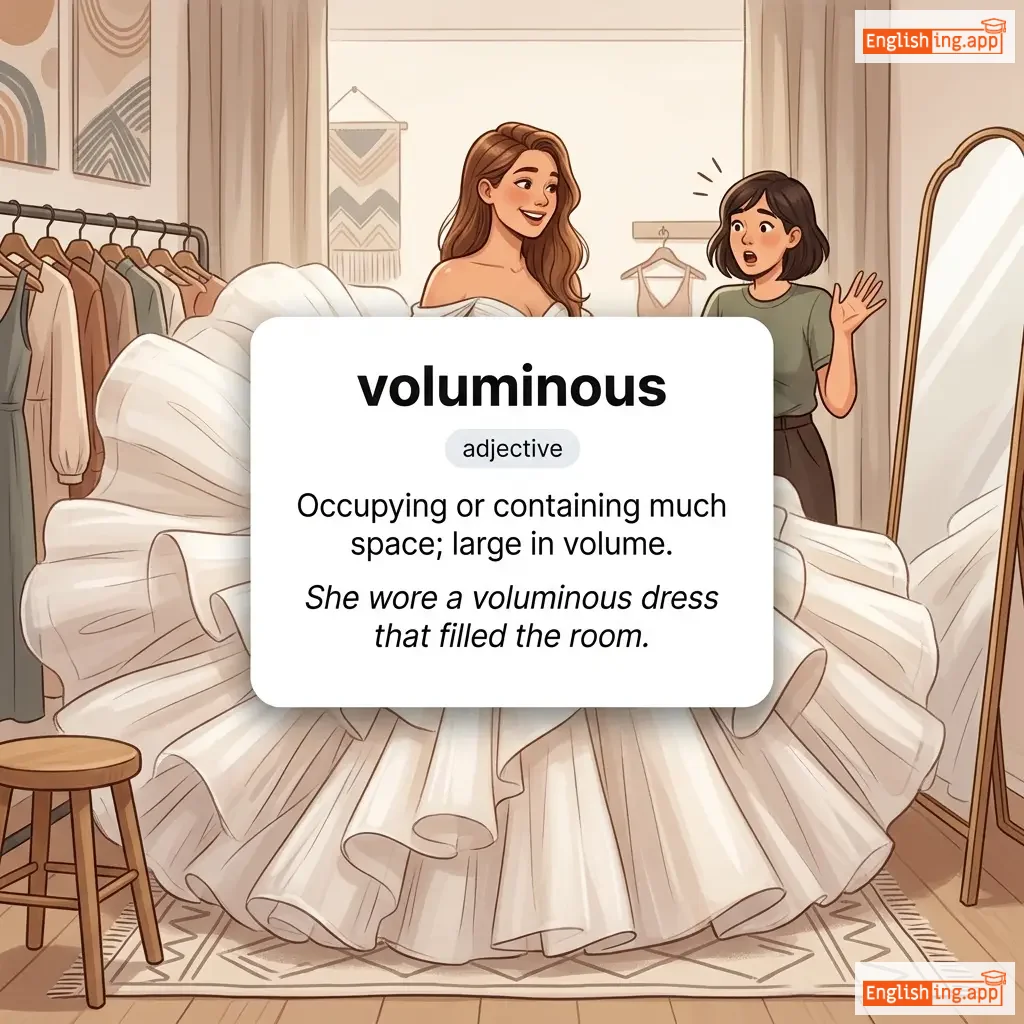
voluminous definition card — visual illustration of the meaning
adjective
/vəˈluːmənəs/
voluminoso (voluminoso)

Occupying or containing much space; large in volume.

"She wore a voluminous dress that filled the room."

"Ella llevaba un vestido voluminoso que llenaba la habitación." (Ella llevaba un vestido voluminoso que llenaba la habitación.)
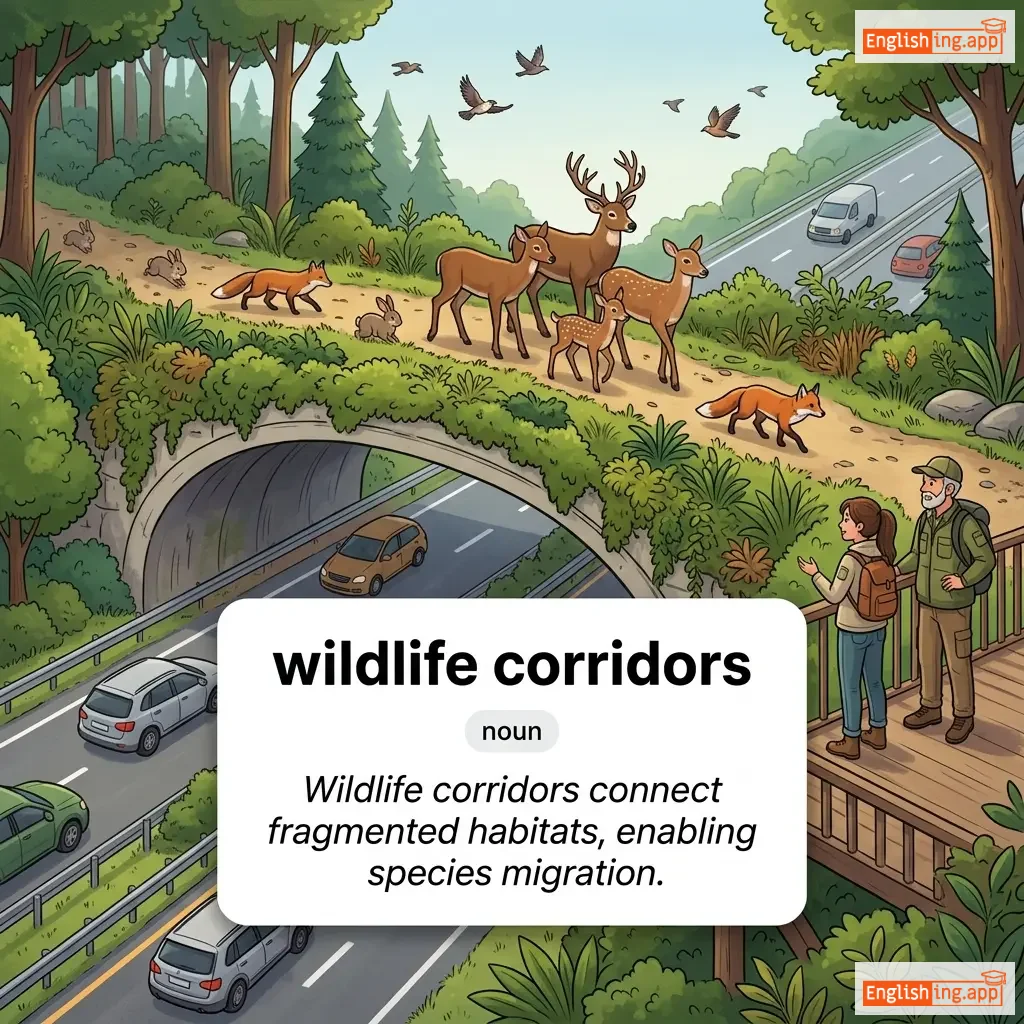
wildlife corridors definition card — visual illustration of the meaning
noun
ˈwaɪldlaɪf ˈkɔːrɪdɔːrz
corredores de vida silvestre (corredores de vida silvestre)

Areas of habitat connecting wildlife populations separated by human activities or structures.

"Wildlife corridors connect fragmented habitats, enabling species migration."

"Los corredores de vida silvestre conectan hábitats fragmentados, permitiendo la migración de especies." (Los corredores de vida silvestre conectan hábitats fragmentados, permitiendo la migración de especies.)
verb
/vaʊtʃ/
garantizar (garantizar)

to confirm or assert the truth or reliability of something

"I can vouch for his honesty."

"Puedo garantizar su honestidad." (Puedo garantizar su honestidad.)
adjective
/ˈwʌndərfəl/
maravilloso (maravilloso)

extremely good or impressive

"She had a wonderful time at the party."

"Ella tuvo un tiempo maravilloso en la fiesta." (Ella tuvo un tiempo maravilloso en la fiesta.)
noun
/ˈwɪlɪŋnəs/
voluntad (voluntad)

the quality of being prepared or ready to do something

"Her willingness to help others made her very popular."

"Su voluntad de ayudar a los demás la hizo muy popular." (Su voluntad de ayudar a los demás la hizo muy popular.)
noun
/ˈwɜːrkər/
trabajador (trabajador)

a person who is employed to perform tasks or duties

"The workers were busy building the bridge."

"Los trabajadores estaban ocupados construyendo el puente." (Los trabajadores estaban ocupados construyendo el puente.)
verb
/wɪns/
hacer una mueca por dolor (hacer una mueca por dolor)

To make an involuntary movement of the face or body as a result of pain or distress.

"He winced when the doctor touched his injured arm."

"Él hizo una mueca cuando el doctor tocó su brazo herido." (El hizo una mueca cuando el doctor toco su brazo herido.)
noun
/ˈwiːknəs/
debilidad (debilidad)

a state of being weak; a flaw or shortcoming in character or structure

"His main weakness is his lack of patience."

"Su principal debilidad es su falta de paciencia." (Su principal debilidad es su falta de paciencia.)
noun
/ˈwɪntər/
invierno (invierno)

the coldest season of the year, typically from December to February in the Northern Hemisphere

"Winter in the north can be very harsh with heavy snowfall."

"El invierno en el norte puede ser muy severo con grandes nevadas." (El invierno en el norte puede ser muy severo con grandes nevadas.)
noun
/ˈwaɪər/
alambre (alambre)

a thin, flexible thread of metal used to conduct electricity or connect things

"The electrician fixed the wire to restore the power."

"El electricista reparó el alambre para restaurar la energía." (El electricista reparó el alambre para restaurar la energía.)
verb
/wɛd/
casarse (casarse)

to marry someone; to enter into a marriage

"They decided to wed in a small ceremony by the beach."

"Ellos decidieron casarse en una pequeña ceremonia en la playa." (Ellos decidieron casarse en una pequena ceremonia en la playa.)
preposition
/wɪðˈaʊt/
sin (sin)

in the absence of, or not having something

"He left without saying goodbye."

"Él se fue sin decir adiós." (El se fue sin decir adiós.)