Vocabularios

Descubra, aprenda y domine el vocabulario en inglés

noun
/ˌzɛnəˈfoʊbiə/
xenofobia (xenofobia)

fear or hatred of foreigners, people from different cultures, or strangers

"Xenophobia can lead to discrimination and social division."

"La xenofobia puede llevar a la discriminación y la división social." (La xenofobia puede llevar a la discriminación y la división social.)
adjective
/ˈwɜːrid/
preocupado (preocupado)

feeling anxious or concerned about something

"She was worried about the upcoming exam."

"Ella estaba preocupada por el examen próximo." (Ella estaba preocupada por el examen próximo.)
noun
/jɔːn/
bostezo (bostezo)

an involuntary opening of the mouth and inhalation of air due to tiredness or boredom

"She couldn't suppress a yawn during the boring lecture."

"Ella no pudo evitar un bostezo durante la aburrida conferencia." (Ella no pudo evitar un bostezo durante la aburrida conferencia.)
noun
/ˈræp.ər/
envoltura (envoltura)

a loose garment worn around the body; covering material

"She put on a warm wrapper before going outside."

"Ella se puso una envoltura caliente antes de salir." (Ella se puso una envoltura caliente antes de salir.)
adjective
/ˈwʊd biː/
aspirante; posible; (aspirante; posible;)

prospective; intending to be; aspiring

"The would-be actor practiced his lines every day."

"El actor aspirante practicaba sus líneas todos los días." (El actor aspirante practicaba sus líneas todos los días.)
adjective
/ˈjɛləʊ/
amarillo (amarillo)

a color like that of ripe lemons or the sun

"The yellow flowers brightened up the whole garden."

"Las flores amarillas iluminaron todo el jardín." (Las flores amarillas iluminaron todo el jardín.)
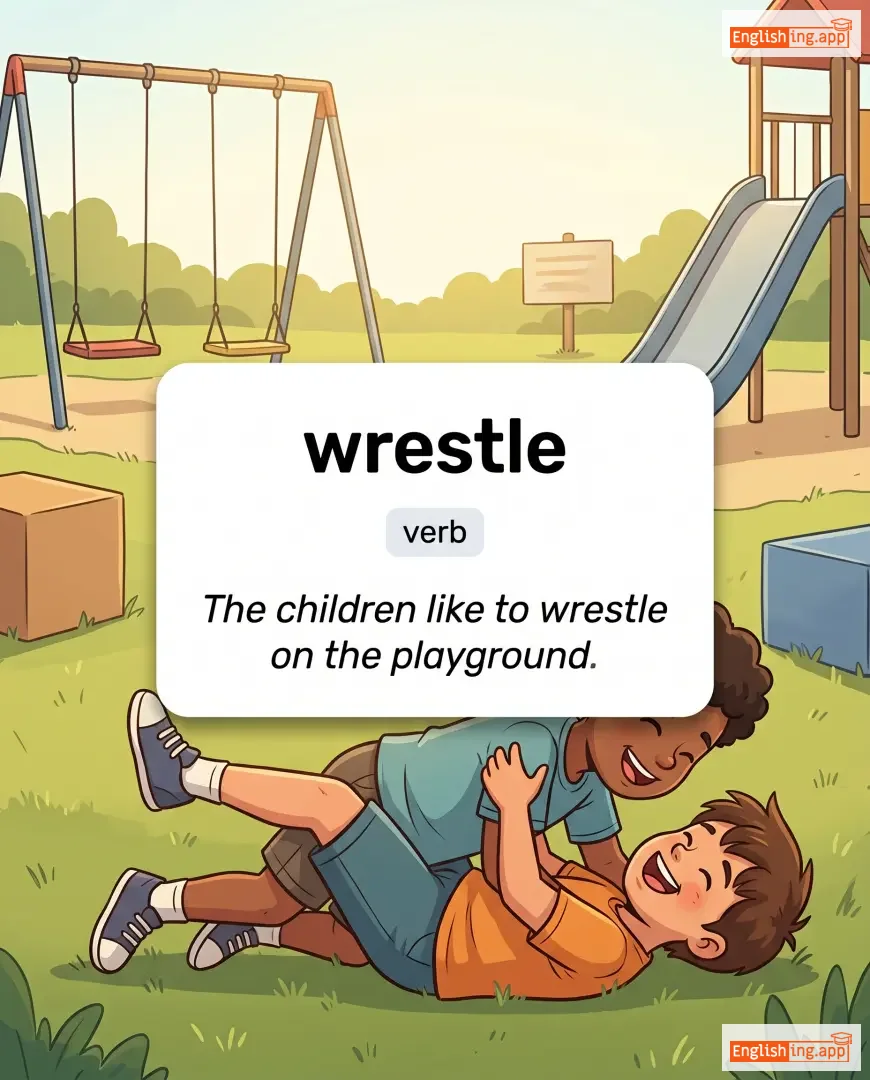
wrestle definition card — visual illustration of the meaning
verb
/ˈresəl/
luchar (luchar)

to fight by grappling and trying to throw down an opponent; to struggle with a problem

"The children like to wrestle on the playground."

"A los niños les gusta luchar en el patio de recreo." (A los niños les gusta luchar en el patio de recreo)
noun
/ˈrɛtʃɪdnəs/
miseria (miseria)

a state of misery, unhappiness, or poor condition

"The novel depicts the wretchedness of war victims."

"La novela muestra la miseria de las víctimas de la guerra." (La novela muestra la miseria de las victimas de la guerra.)
verb
/riːk/
causar daño (causar dano)

to cause or inflict something, especially damage or harm

"The storm wreaked havoc on the coastal villages."

"La tormenta causó grandes daños en los pueblos costeros." (La tormenta causo grandes danos en los pueblos costeros.)
noun
/ˈraɪtər/
escritor (escritor)

a person who writes, especially as a profession

"The writer published a new novel last month."

"El escritor publicó una nueva novela el mes pasado." (El escritor publico una nueva novela el mes pasado.)
verb
/rɛst/
quitar por la fuerza (quitar por la fuerza)

to forcibly pull something from a person's grasp; to seize with effort or struggle

"The police had to wrest the weapon from the suspect's hand."

"La policía tuvo que arrebatar el arma de la mano del sospechoso." (La policía tuvo que arrebatar el arma de la mano del sospechoso.)
noun
/jɪə/
año (ano)

a period of 365 or 366 days, divided into 12 months

"This year, we are planning a trip to the mountains."

"Este año, estamos planeando un viaje a las montañas." (Este ano, estamos planeando un viaje a las montanas.)
verb
/ˈwɜːʃɪp/
adoración (adoracion)

To show reverence and adoration for a deity or sacred being.

"They gathered at the temple to worship together."

"Se reunieron en el templo para adorar juntos." (Se reunieron en el templo para adorar juntos.)
noun
/zɛst/
entusiasmo (entusiasmo)

Great enthusiasm and energy; also the outer colored part of citrus fruit used for flavor.

"She tackled the project with zest."

"Ella abordó el proyecto con entusiasmo." (Ella abordó el proyecto con entusiasmo.)
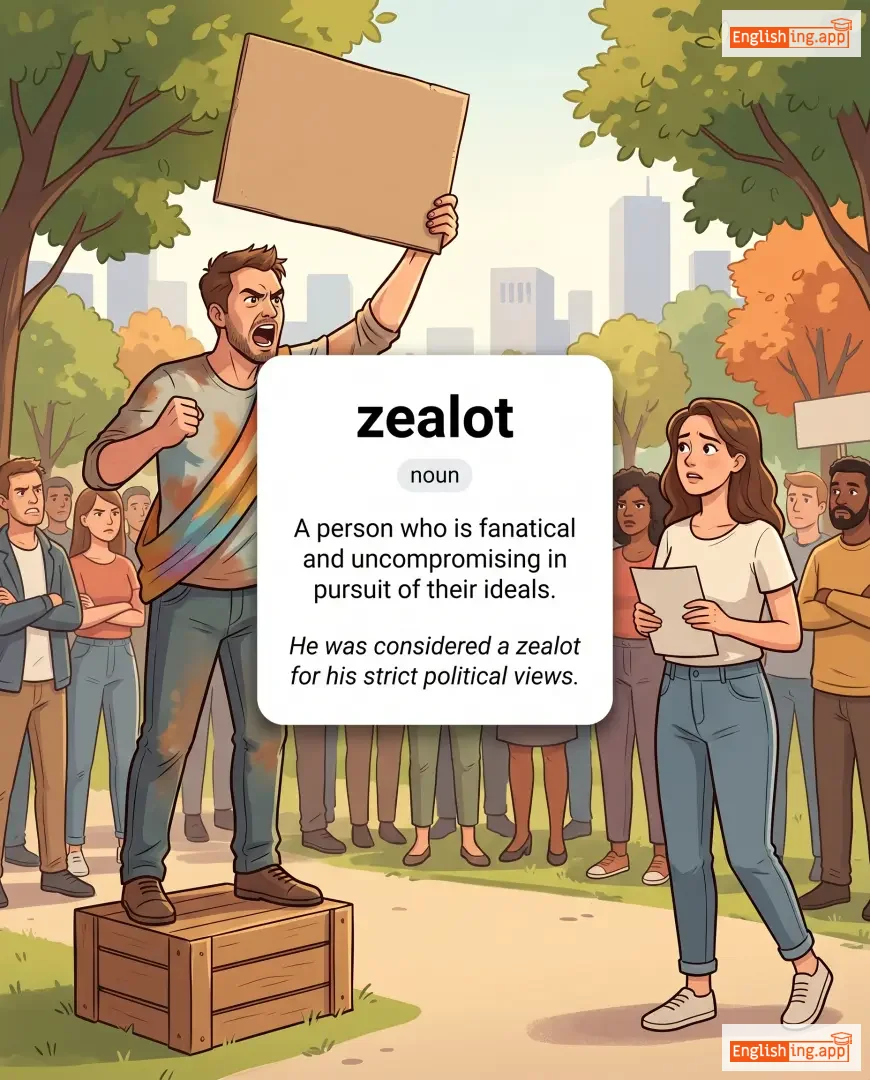
zealot definition card — visual illustration of the meaning
noun
/ˈzel.ət/
fanático (fanatico)

A person who is fanatical and uncompromising in pursuit of their ideals.

"He was considered a zealot for his strict political views."

"Se le consideraba un fanático por sus estrictas opiniones políticas." (Se le consideraba un fanatico por sus estrictas opiniones politicas.)
noun
/ˈzoʊdiæk/
zodiaco (zodiaco)

a belt of the heavens divided into twelve equal divisions or signs, each named after a constellation; used in astronomy and astrology

"She checked her zodiac sign to read her daily horoscope."

"Ella revisó su signo zodiacal para leer su horóscopo diario." (Ella revisó su signo zodiacal para leer su horoscopo diario.)
noun
/juːθ/
juventud (juventud)

the period of life when a person is young, often associated with energy and vitality

"The youth are the future of the country."

"La juventud es el futuro del país." (La juventud es el futuro del pais.)
adjective, verb (past participle of wear)
/wɔːrn/
deteriorado (deteriorado)

damaged, weakened, or deteriorated from use or age

"His shoes were old and worn."

"Sus zapatos estaban viejos y deteriorados." (Sus zapatos estaban viejos y deteriorados.)
noun
/joʊk/
yugo (yugo)

A wooden crosspiece fastened over the necks of animals; symbolically, a burden or oppression.

"The oxen were bound together by a heavy yoke."

"Los bueyes estaban atados por un yugo pesado." (Los bueyes estaban atados por un yugo pesado.)
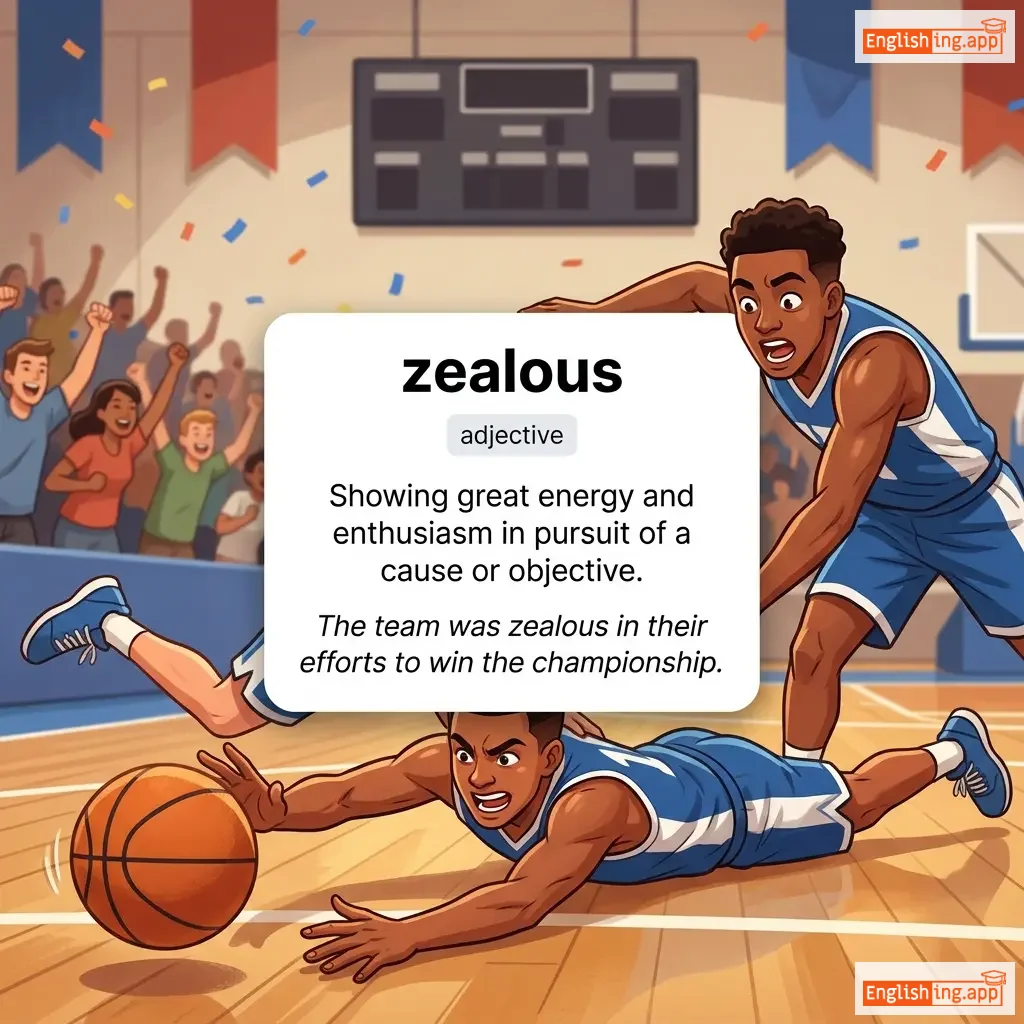
zealous definition card — visual illustration of the meaning
adjective
/ˈzel.əs/
entusiasta (entusiasta)

Showing great energy and enthusiasm in pursuit of a cause or objective.

"The team was zealous in their efforts to win the championship."

"El equipo estaba entusiasta en sus esfuerzos para ganar el campeonato." (El equipo estaba entusiasta en sus esfuerzos para ganar el campeonato.)
verb
/ˈræŋɡl̩/
discutir (discutir)

to argue or dispute noisily or angrily

"The two neighbors wrangled over the property line for hours."

"Los dos vecinos discutieron durante horas sobre la línea de propiedad." (Los dos vecinos discutieron durante horas sobre la línea de propiedad.)
adjective
/ˈzeɪ.ni/
Divertido y peculiar de una manera poco convencional (Divertido y peculiar de una manera poco convencional)

Amusingly unconventional and peculiar.

"The comedian's zany style kept the audience laughing."

"El estilo extravagante del comediante mantuvo a la audiencia riendo." (El estilo extravagante del comediante mantuvo a la audiencia riendo.)
noun/verb
/wuːnd/
felicidad (felicidad)

an injury to the body or to harm someone

"He received a deep wound on his arm."

"Ella no podía ocultar su felicidad cuando recibió el premio." (Ella no podía ocultar su felicidad cuando recibió el premio.)
noun
/jʌŋ fɪʃ/
pez joven (pez joven)

juvenile or small fish; fish that has not reached maturity

"Young fish need protection from predators."

"Los peces jóvenes necesitan protección contra los depredadores." (Los peses jovenes nesesitan proteksion kontra los depredadores)
noun
/ˈzaɪtɡaɪst/
espíritu de la época (espiritu de la epoca)

The defining spirit or mood of a particular period of history as shown by the ideas and beliefs of the time.

"The novel perfectly captures the zeitgeist of the 1960s."

"La novela captura perfectamente el espíritu de la época de los años 60." (La novela captura perfectamente el espiritu de la epoca de los anos 60.)
noun
/joʊk/
yema de huevo (yema de huevo)

the yellow part of an egg

"The chef separated the egg yolk from the white."

"El chef separó la yema del huevo blanco." (El chef separó la yema del huevo blanco.)
verb
/wʊd/
haría (haria)

used to indicate a future possibility or action in the past

"He said he would help me tomorrow."

"Él dijo que él me ayudaría mañana." (El dijo que él me ayudaría mañana.)
noun
/zɪˈnɑːnə/
zenanna (zenanna)

the part of a house reserved for women; women's quarters in Muslim households; harem

"The zenanna was beautifully decorated with intricate patterns."

"El zenanna estaba bellamente decorado con patrones intrincados." (El zenanna estaba bellamente decorado con patrones intrincados.)
noun
/rɪt/
auto judicial (auto judicial)

A formal written order issued by a court.

"The judge issued a writ of habeas corpus."

"El juez emitió un auto de habeas corpus." (El juez emitió un auto de habeas corpus.)
noun
/ˈzɪɡzæɡ/
camino o línea con giros abruptos alternos a la derecha e izquierda; patrón de giros agudos (camino o linea con giros abruptos alternos a la derecha e izquierda; patron de giros agudos)

a line or course having abrupt alternate right and left turns; a pattern of sharp turns

"The road follows a zigzag pattern up the mountain."

"La carretera sigue un patrón zigzagueante hacia la montaña." (La carretera sigue un patron zigzagueante hacia la montania.)
noun
/rɛtʃ/
miserable (miserable)

an unfortunate or miserable person; a despicable or contemptible person

"The poor wretch was left out in the cold with no shelter."

"El pobre miserable fue dejado afuera en el frío sin refugio." (El pobre miserable fue dejado afuera en el frío sin refugio.)
verb
/zæɡ/
hacer un giro brusco (hacer un giro brusco)

to make a sharp change in direction, especially in a zigzag pattern

"The rabbit zagged quickly to escape the fox."

"El conejo hizo un giro rápido para escapar del zorro." (El conejo hizo un giro rapido para escapar del zorro.)
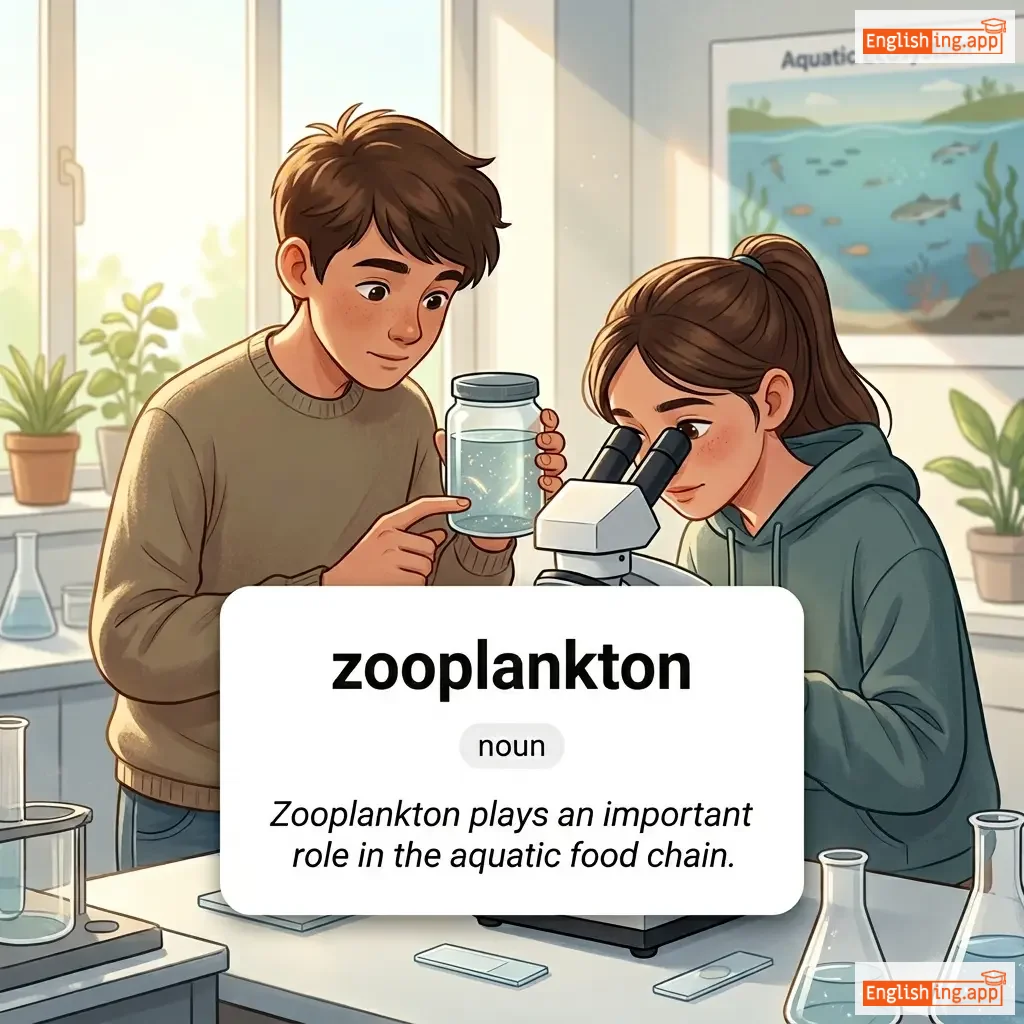
zooplankton definition card — visual illustration of the meaning
noun
/ˈzuːəʊˌplæŋktən/
zooplancton (zooplankton)

Microscopic aquatic animals that drift in water bodies and form an essential part of the aquatic food chain, serving as food for fish and other marine organisms.

"Zooplankton plays an important role in the aquatic food chain."

"El zooplancton juega un papel importante en la cadena alimentaria acuática." (El zooplancton juega un papel importante en la cadena alimentaria acuática.)
noun/verb
/ˈraɪ.tɪŋ/
felicidad (felicidad)

The activity of putting words on paper or composing text; the written form of communication.

"She spends hours every day on her creative writing."

"No pudo ocultar su felicidad cuando recibió el premio." (No pudo ocultar su felicidad cuando recibió el premio.)
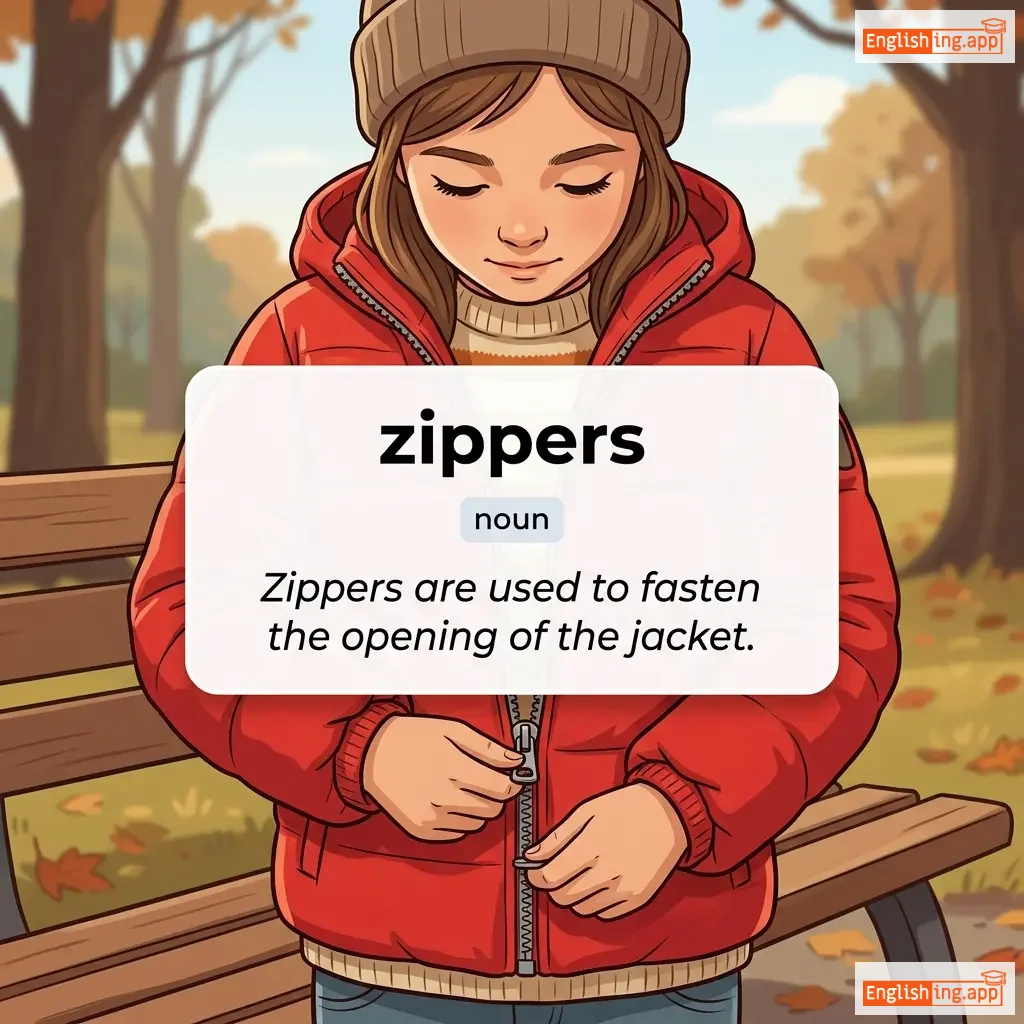
zippers definition card — visual illustration of the meaning
noun
ˈzɪpərz
cremallera (cremallera)

A device consisting of two flexible strips of metal or plastic with interlocking projections closed or opened by pulling a slide along them.

"Zippers are used to fasten the opening of the jacket."

"Las cremalleras se utilizan para cerrar la abertura de la chaqueta." (Las cremalleras se utilizan para cerrar la abertura de la chaqueta.)
adverb
/jɛs/
(si)

used to express affirmation, agreement, or consent

"Yes, I will be there at 5 o'clock."

"Sí, estaré allí a las 5 en punto." (Si, estare alli a las 5 en punto.)
adjective
/ˌrɒŋˈhɛd.ɪd/
de mala cabeza (de mala cabeza)

Having or showing bad judgment or stubbornly holding to wrong ideas.

"The policy was considered wrongheaded and harmful."

"La política fue considerada de mala cabeza y perjudicial." (La po-li-ti-ca fue con-si-de-ra-da de ma-la ca-be-za y per-ju-di-ci-al.)
noun
/jɛn/
deseo (deseo)

A deep, strong desire or craving.

"She felt a strong yen to travel the world."

"Sintió un fuerte deseo de viajar por el mundo." (Sintio un fuerte deseo de viajar por el mundo.)
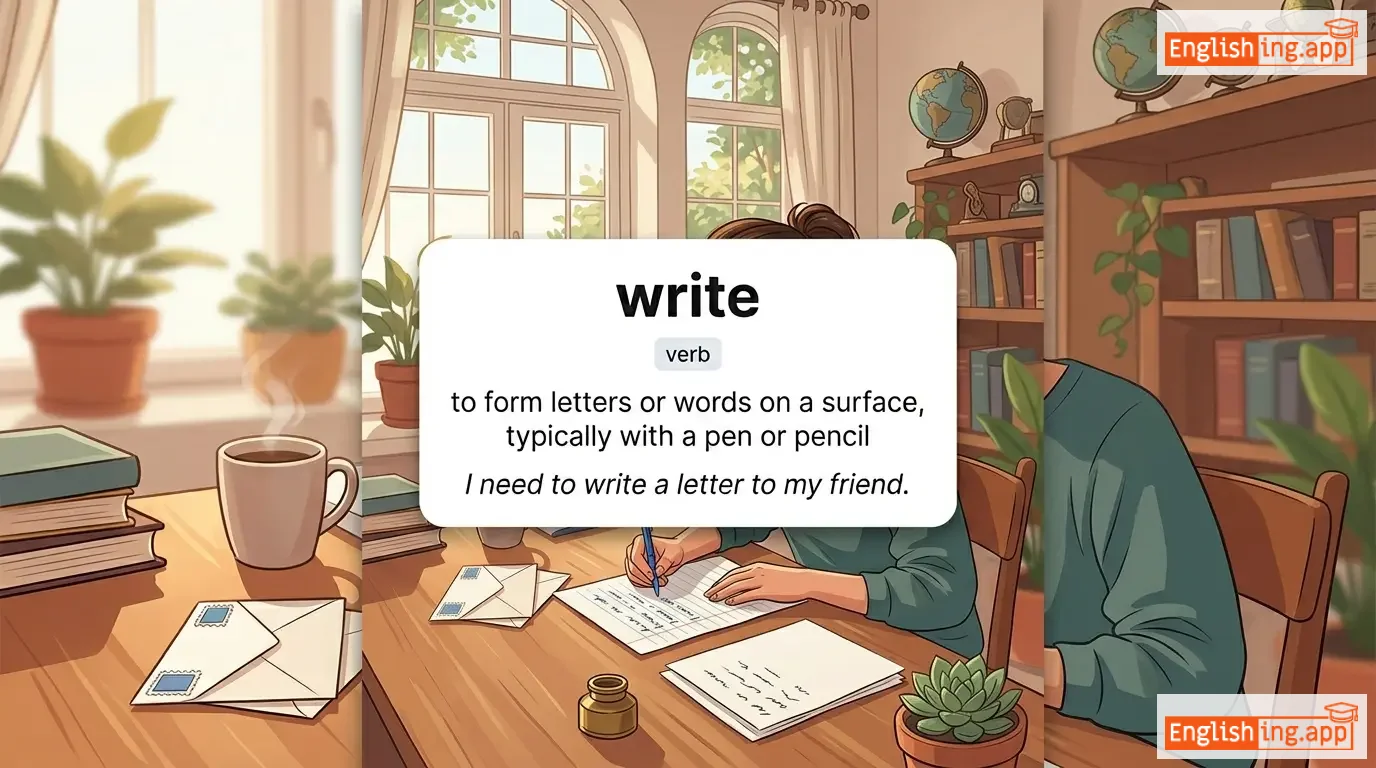
write definition card — visual illustration of the meaning
verb
/raɪt/
felicidad (felicidad)

to form letters or words on a surface, typically with a pen or pencil

"I need to write a letter to my friend."

"Ella no pudo esconder su felicidad cuando recibió el premio." (Ella no pudo esconder su felicidad cuando recibió el premio.)
noun
/jɑːrn/
hilo (hilo)

spun thread used for knitting, weaving, or sewing; a long or rambling story

"She bought colorful yarn for knitting a sweater."

"Ella compró hilo de colores para tejer un suéter." (Ella compro hilo de colores para tejer un suéter.)
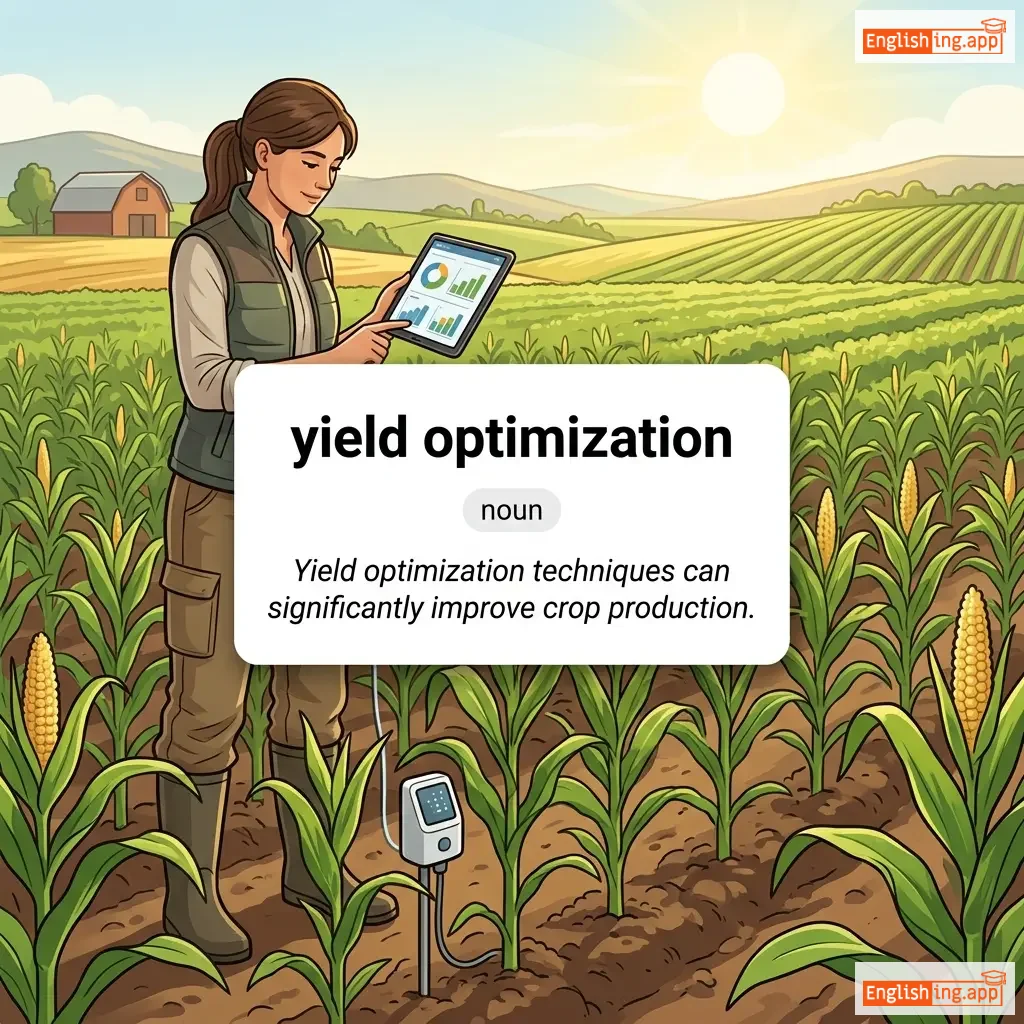
yield optimization definition card — visual illustration of the meaning
noun
/jiːld ˌɒptɪmaɪˈzeɪʃən/
optimización del rendimiento (optimizacion del rendimiento)

The process of maximizing the productivity or efficiency of crop production through various agricultural techniques and practices.

"Yield optimization techniques can significantly improve crop production."

"Las técnicas de optimización del rendimiento pueden mejorar significativamente la producción de cultivos." (Las tecnicas de optimizacion del rendimiento pueden mejorar significativamente la produccion de cultivos.)
noun
/ˈzɛnəˌfoʊb/
xenófobo (xenofobo)

a person who dislikes or fears people from other countries or cultures

"The politician was criticized as a xenophobe due to his anti-immigrant policies."

"El político fue criticado como xenófobo debido a sus políticas anti-inmigrantes." (El politico fue criticado como xenofobo debido a sus politicas anti-inmigrantes.)
noun
/ˈjoʊkəl/
campesino (campesino)

An uneducated and unsophisticated person from the countryside; a bumpkin.

"The city folks laughed at the yokel's simple ways."

"La gente de la ciudad se rió de los sencillos modos del campesino." (La gente de la ciudad se rió de los sencillos modos del campesino.)
pronoun
/jɔːrz/
tuyo (tu-yo)

belonging to or associated with the person or people that the speaker is addressing

"This pen is yours."

"Este bolígrafo es tuyo." (Es-te bo-lí-gra-fo es tu-yo.)
noun
/ˈjʌŋstər/
joven (joven)

a young person or child, especially a teenager or adolescent

"The park was full of youngsters playing football."

"El parque estaba lleno de jóvenes jugando al fútbol." (El parque estaba lleno de jóvenes jugando al fútbol.)
noun
/jɑːrd/
yarda (yarda)

a unit of linear measure equal to three feet or 0.9144 meters

"The garden is 50 yards long."

"El jardín tiene 50 yardas de largo." (El jardín tiene 50 yardas de largo.)
adverb
/ˈrɒŋli/
incorrectamente (incorrectamente)

in an incorrect or mistaken way; unfairly or unjustly

"He was wrongly accused of the crime."

"Fue acusado incorrectamente del crimen." (Fue acusado incorrectamente del crimen)
noun
/rɪst/
muñeca (rist)

the joint connecting the hand with the forearm

"He wore a smartwatch on his left wrist."

"Llevaba un reloj inteligente en su muñeca izquierda." (Llevaba un reloj inteligente en su muneca izquierda.)
adverb
/ˈwɔːm.li/
calurosamente; afectuosamente (calurosamente; afectuosamente)

in a warm manner; with warmth; cordially; affectionately

"She welcomed the guests warmly at the door."

"Ella recibió a los invitados calurosamente en la puerta." (Ella recibio a los invitados calurosamente en la puerta.)
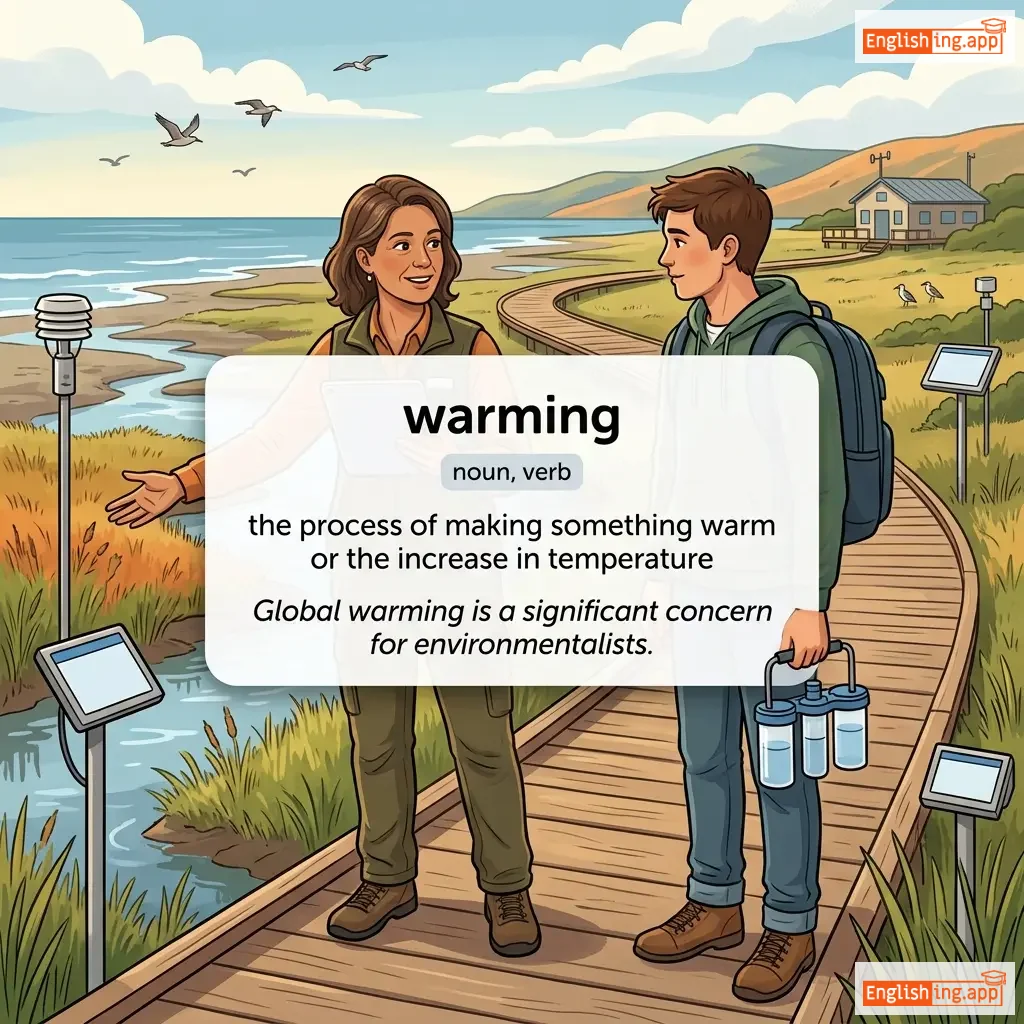
warming definition card — visual illustration of the meaning
noun, verb
/ˈwɔːmɪŋ/
aumento de temperatura (aumento de temperatura)

the process of making something warm or the increase in temperature

"Global warming is a significant concern for environmentalists."

"El calentamiento global es una preocupación significativa para los ambientalistas." (El calentamiento global es una preocupación significativa para los ambientalistas.)