Vocabulaires

Découvrez, apprenez et maîtrisez le vocabulaire anglais

noun
/ˌzɛnəˈfoʊbiə/
xénophobie (xenophobie)

fear or hatred of foreigners, people from different cultures, or strangers

"Xenophobia can lead to discrimination and social division."

"La xénophobie peut mener à la discrimination et à la division sociale." (La xénophobie peut mener à la discrimination et à la division sociale.)
adjective
/ˈwɜːrid/
inquiet (inquiet)

feeling anxious or concerned about something

"She was worried about the upcoming exam."

"Elle était inquiète à propos de l'examen à venir." (Elle était inquiète à propos de l'examen à venir.)
noun
/jɔːn/
bâillement (baillement)

an involuntary opening of the mouth and inhalation of air due to tiredness or boredom

"She couldn't suppress a yawn during the boring lecture."

"Elle n'a pas pu réprimer un bâillement pendant la conférence ennuyeuse." (Elle n'a pas pu réprimer un bâillement pendant la conférence ennuyeuse.)
noun
/ˈræp.ər/
enveloppe (enveloppe)

a loose garment worn around the body; covering material

"She put on a warm wrapper before going outside."

"Elle a mis un manteau chaud avant de sortir." (Elle a mis un manteau chaud avant de sortir.)
adjective
/ˈwʊd biː/
aspirant; potentiel; (aspirant; potentiel;)

prospective; intending to be; aspiring

"The would-be actor practiced his lines every day."

"L'acteur aspirant répétait ses répliques tous les jours." (L'acteur aspirant répétait ses répliques tous les jours.)
adjective
/ˈjɛləʊ/
jaune (jaune)

a color like that of ripe lemons or the sun

"The yellow flowers brightened up the whole garden."

"Les fleurs jaunes ont illuminé tout le jardin." (Les fleurs jaunes ont illuminé tout le jardin.)
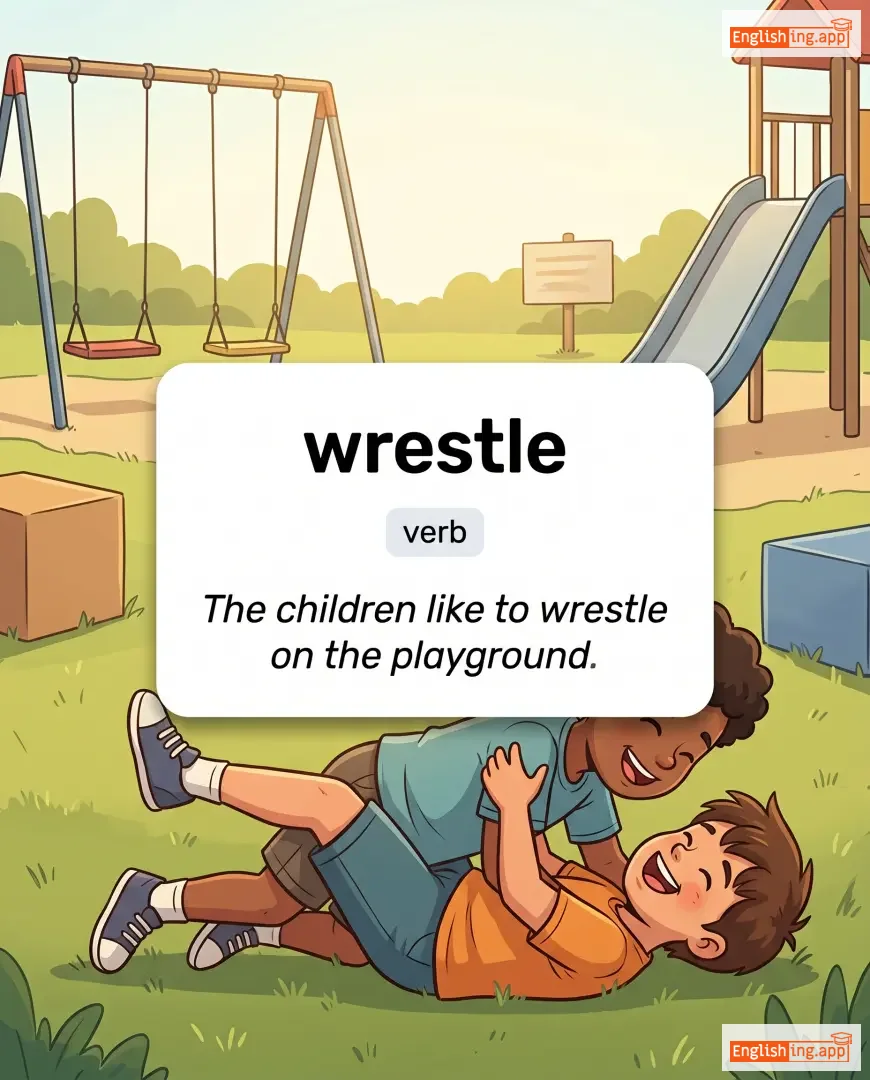
wrestle definition card — visual illustration of the meaning
verb
/ˈresəl/
lutter (lutter)

to fight by grappling and trying to throw down an opponent; to struggle with a problem

"The children like to wrestle on the playground."

"Les enfants aiment lutter dans la cour de récréation." (Les enfants aiment lutter dans la cour de récréation)
noun
/ˈrɛtʃɪdnəs/
misère (misere)

a state of misery, unhappiness, or poor condition

"The novel depicts the wretchedness of war victims."

"Le roman décrit la misère des victimes de la guerre." (Le roman decrit la misere des victimes de la guerre.)
verb
/riːk/
causer des dégâts (causer des degats)

to cause or inflict something, especially damage or harm

"The storm wreaked havoc on the coastal villages."

"La tempête a causé de grands dégâts dans les villages côtiers." (La tempête a cause de grands degats dans les villages cotiers.)
noun
/ˈraɪtər/
écrivain (ecrivan)

a person who writes, especially as a profession

"The writer published a new novel last month."

"L'écrivain a publié un nouveau roman le mois dernier." (L'ecrivan a publi un nouveau roman le mois dernier.)
verb
/rɛst/
arracher de force (arracher de force)

to forcibly pull something from a person's grasp; to seize with effort or struggle

"The police had to wrest the weapon from the suspect's hand."

"La police a dû arracher l'arme des mains du suspect." (La police a dû arracher l'arme des mains du suspect.)
noun
/jɪə/
année (annee)

a period of 365 or 366 days, divided into 12 months

"This year, we are planning a trip to the mountains."

"Cette année, nous planifions un voyage à la montagne." (Cette annee, nous planifions un voyage a la montagne.)
verb
/ˈwɜːʃɪp/
adoration (adoration)

To show reverence and adoration for a deity or sacred being.

"They gathered at the temple to worship together."

"Ils se sont réunis au temple pour adorer ensemble." (Ils se sont reunis au temple pour adorer ensemble.)
noun
/zɛst/
enthousiasme (enthousiasme)

Great enthusiasm and energy; also the outer colored part of citrus fruit used for flavor.

"She tackled the project with zest."

"Elle a abordé le projet avec enthousiasme." (Elle a aborde le projet avec enthousiasme.)
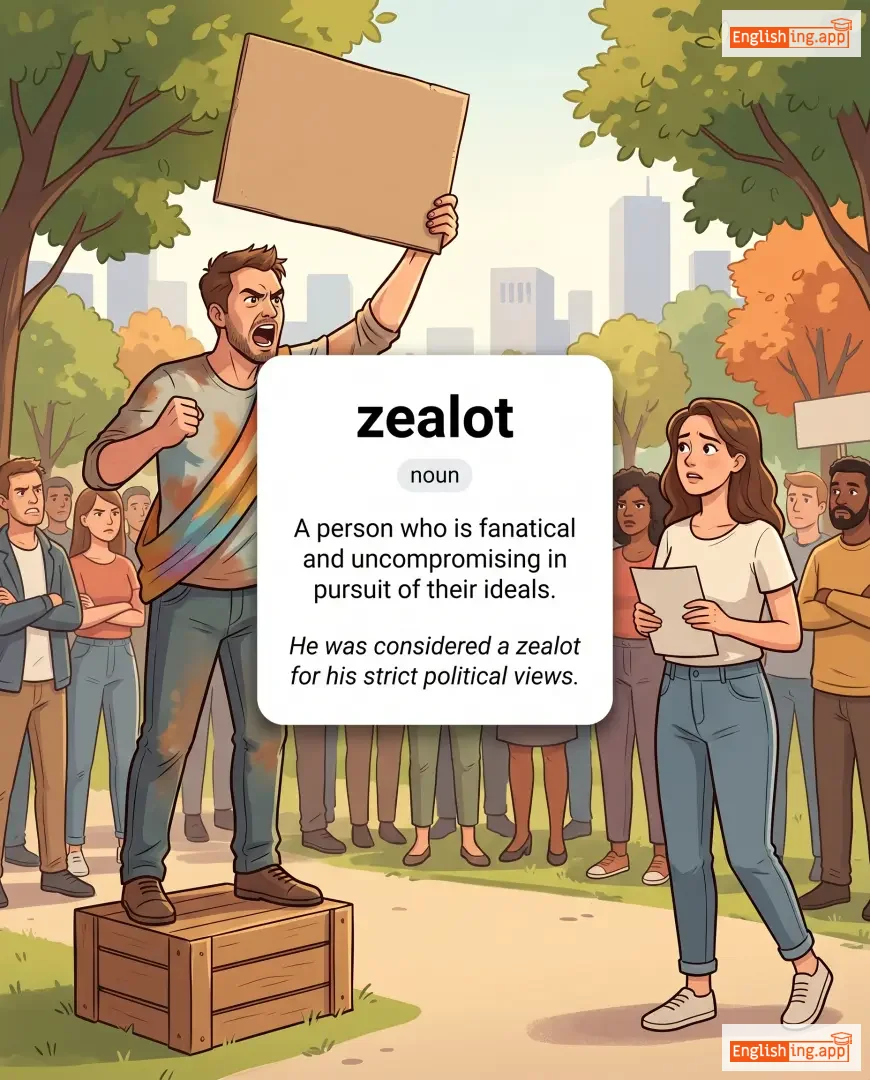
zealot definition card — visual illustration of the meaning
noun
/ˈzel.ət/
fanatique (fanatique)

A person who is fanatical and uncompromising in pursuit of their ideals.

"He was considered a zealot for his strict political views."

"Il était considéré comme un fanatique en raison de ses opinions politiques strictes." (Il etait considere comme un fanatique en raison de ses opinions politiques strictes.)
noun
/ˈzoʊdiæk/
zodiaque (zodiaque)

a belt of the heavens divided into twelve equal divisions or signs, each named after a constellation; used in astronomy and astrology

"She checked her zodiac sign to read her daily horoscope."

"Elle a vérifié son signe du zodiaque pour lire son horoscope quotidien." (Elle a verifie son signe du zodiaque pour lire son horoscope quotidien.)
noun
/juːθ/
jeunesse (jeunesse)

the period of life when a person is young, often associated with energy and vitality

"The youth are the future of the country."

"La jeunesse est l'avenir du pays." (La jeunesse est l'avenir du pays.)
adjective, verb (past participle of wear)
/wɔːrn/
usé (use)

damaged, weakened, or deteriorated from use or age

"His shoes were old and worn."

"Ses chaussures étaient vieilles et usées." (Ses chaussures étaient vieilles et usées.)
noun
/joʊk/
joug (joug)

A wooden crosspiece fastened over the necks of animals; symbolically, a burden or oppression.

"The oxen were bound together by a heavy yoke."

"Les bœufs étaient liés ensemble par un lourd joug." (Les boeufs etaient lies ensemble par un lourd joug.)
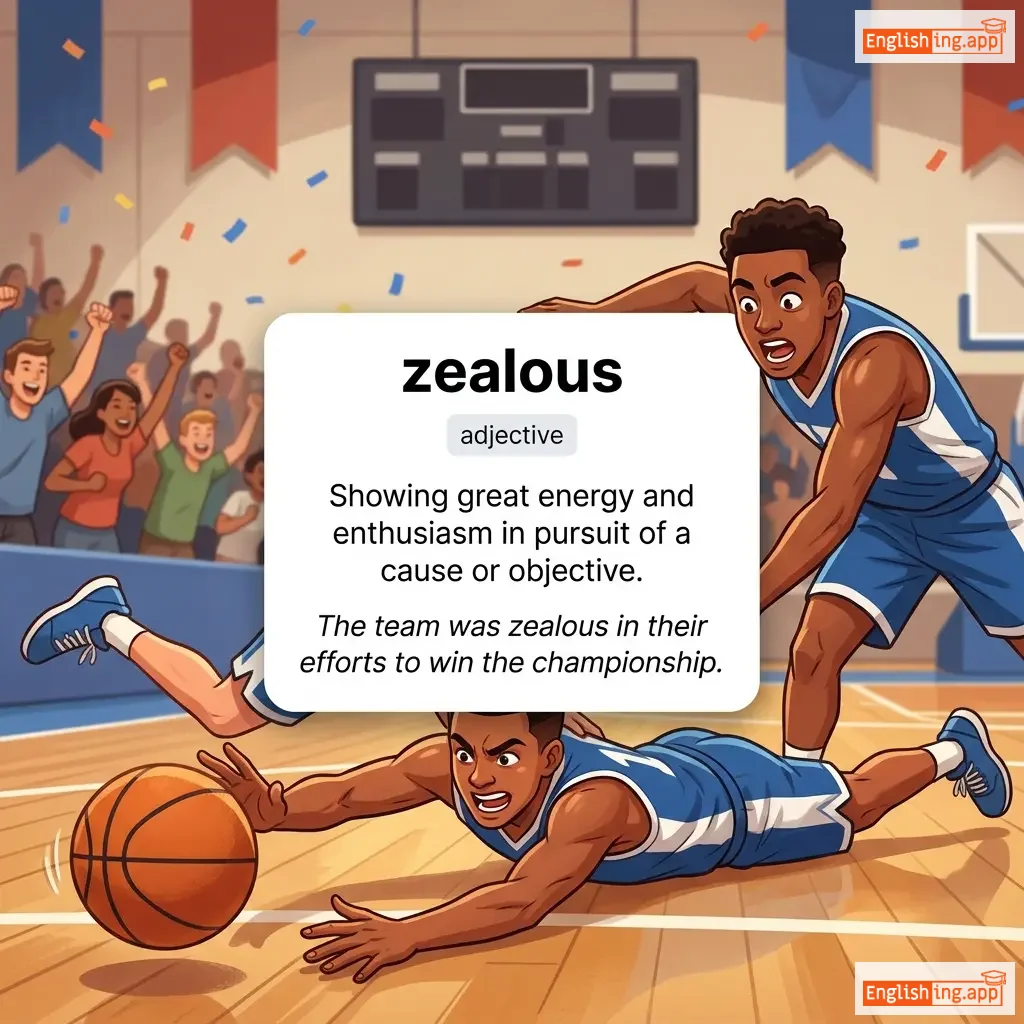
zealous definition card — visual illustration of the meaning
adjective
/ˈzel.əs/
zélé (zele)

Showing great energy and enthusiasm in pursuit of a cause or objective.

"The team was zealous in their efforts to win the championship."

"L'équipe était enthousiaste dans ses efforts pour gagner le championnat." (L'équipe était enthousiaste dans ses efforts pour gagner le championnat.)
verb
/ˈræŋɡl̩/
disputer (disputer)

to argue or dispute noisily or angrily

"The two neighbors wrangled over the property line for hours."

"Les deux voisins se sont disputés pendant des heures au sujet de la ligne de propriété." (Les deux voisins se sont disputés pendant des heures au sujet de la ligne de propriété.)
adjective
/ˈzeɪ.ni/
De manière amusante et étrange (De manière amusante et étrange)

Amusingly unconventional and peculiar.

"The comedian's zany style kept the audience laughing."

"Le style excentrique du comédien a fait rire le public." (Le style excentrique du comédien a fait rire le public.)
noun/verb
/wuːnd/
bonheur (bonheur)

an injury to the body or to harm someone

"He received a deep wound on his arm."

"Elle ne pouvait pas cacher son bonheur quand elle a reçu le prix." (Elle ne pouvait pas cacher son bonheur quand elle a reçu le prix.)
noun
/jʌŋ fɪʃ/
jeune poisson (jeun poisson)

juvenile or small fish; fish that has not reached maturity

"Young fish need protection from predators."

"Les jeunes poissons ont besoin de protection contre les prédateurs." (le jeune poisson on besoen de proteksion kontr le predater)
noun
/ˈzaɪtɡaɪst/
esprit de l'époque (esprit de l'epoque)

The defining spirit or mood of a particular period of history as shown by the ideas and beliefs of the time.

"The novel perfectly captures the zeitgeist of the 1960s."

"Le roman capture parfaitement l'esprit de l'époque des années 60." (Le roman capture parfaitement l'esprit de l'epoque des annees 60.)
noun
/joʊk/
jaune d'œuf (jaune d'oeuf)

the yellow part of an egg

"The chef separated the egg yolk from the white."

"Le chef a séparé le jaune d'œuf du blanc." (Le chef a séparé le jaune d'œuf du blanc.)
verb
/wʊd/
ferait (ferait)

used to indicate a future possibility or action in the past

"He said he would help me tomorrow."

"Il a dit qu'il m'aiderait demain." (Il a dit qu'il m'aiderait demain.)
noun
/zɪˈnɑːnə/
zenanna (zenanna)

the part of a house reserved for women; women's quarters in Muslim households; harem

"The zenanna was beautifully decorated with intricate patterns."

"Le zenanna était magnifiquement décoré avec des motifs complexes." (Le zenanna était magnifiquement décoré avec des motifs complexes.)
noun
/rɪt/
ordre judiciaire (ordre judiciaire)

A formal written order issued by a court.

"The judge issued a writ of habeas corpus."

"Le juge a émis un ordre de habeas corpus." (Le juge a émis un ordre de habeas corpus.)
noun
/ˈzɪɡzæɡ/
un chemin ou une ligne ayant des virages brusques alternés à droite et à gauche; un motif de virages aigus (un chemin ou une ligne ayant des virages brusques alternes a droite et a gauche; un motif de virages aigus)

a line or course having abrupt alternate right and left turns; a pattern of sharp turns

"The road follows a zigzag pattern up the mountain."

"La route suit un motif en zigzag jusqu'à la montagne." (La route suit un motif en zigzag jusqu'à la montagne.)
noun
/rɛtʃ/
misérable (miserable)

an unfortunate or miserable person; a despicable or contemptible person

"The poor wretch was left out in the cold with no shelter."

"Le pauvre misérable a été laissé dehors dans le froid sans abri." (Le pauvre misérable a été laissé dehors dans le froid sans abri.)
verb
/zæɡ/
faire un virage brusque (faire un virage brusque)

to make a sharp change in direction, especially in a zigzag pattern

"The rabbit zagged quickly to escape the fox."

"Le lapin a tourné brusquement pour échapper au renard." (Le lapin a tourne brusquement pour echapper au renard.)
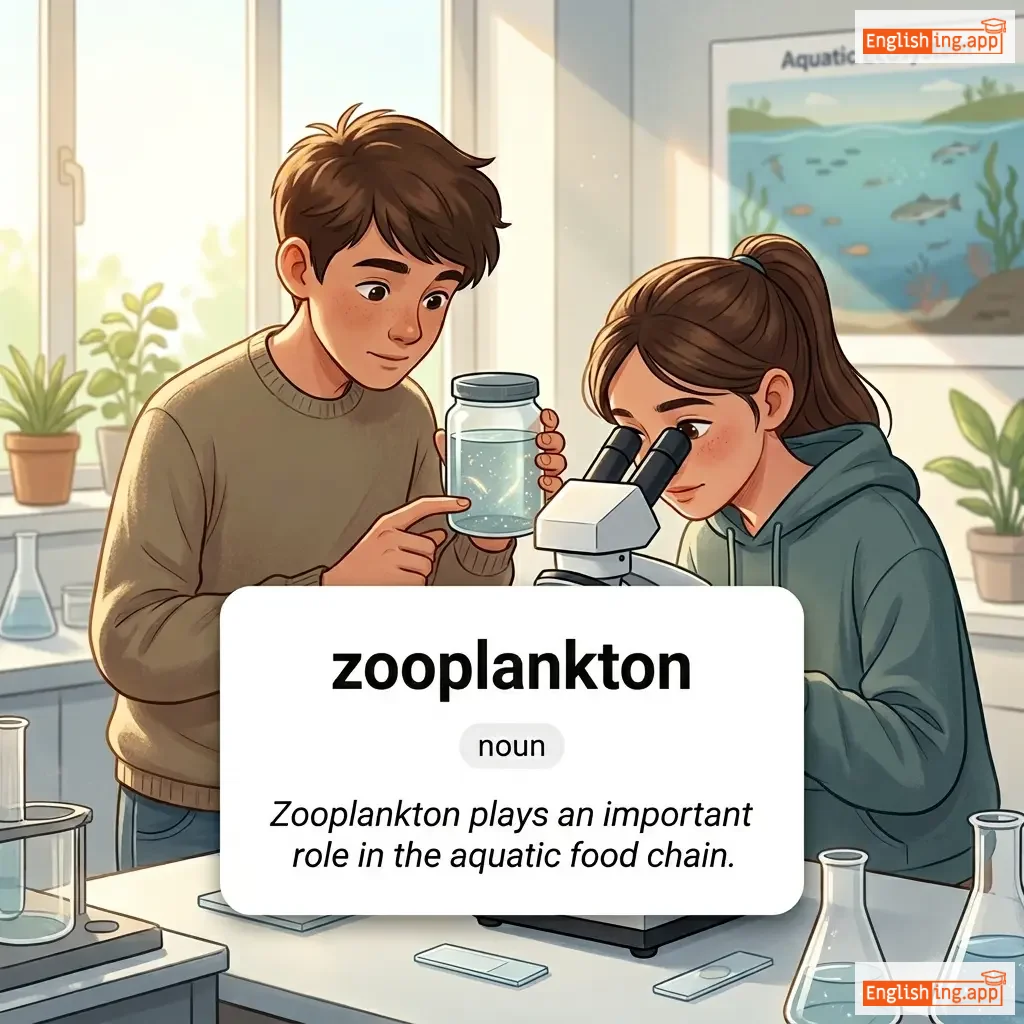
zooplankton definition card — visual illustration of the meaning
noun
/ˈzuːəʊˌplæŋktən/
zooplancton (zooplankton)

Microscopic aquatic animals that drift in water bodies and form an essential part of the aquatic food chain, serving as food for fish and other marine organisms.

"Zooplankton plays an important role in the aquatic food chain."

"Le zooplancton joue un rôle important dans la chaîne alimentaire aquatique." (Le zooplancton joue un rôle important dans la chaîne alimentaire aquatique.)
noun/verb
/ˈraɪ.tɪŋ/
bonheur (bonheur)

The activity of putting words on paper or composing text; the written form of communication.

"She spends hours every day on her creative writing."

"Elle n'a pas pu cacher son bonheur quand elle a reçu le prix." (Elle n'a pas pu cacher son bonheur quand elle a reçu le prix.)
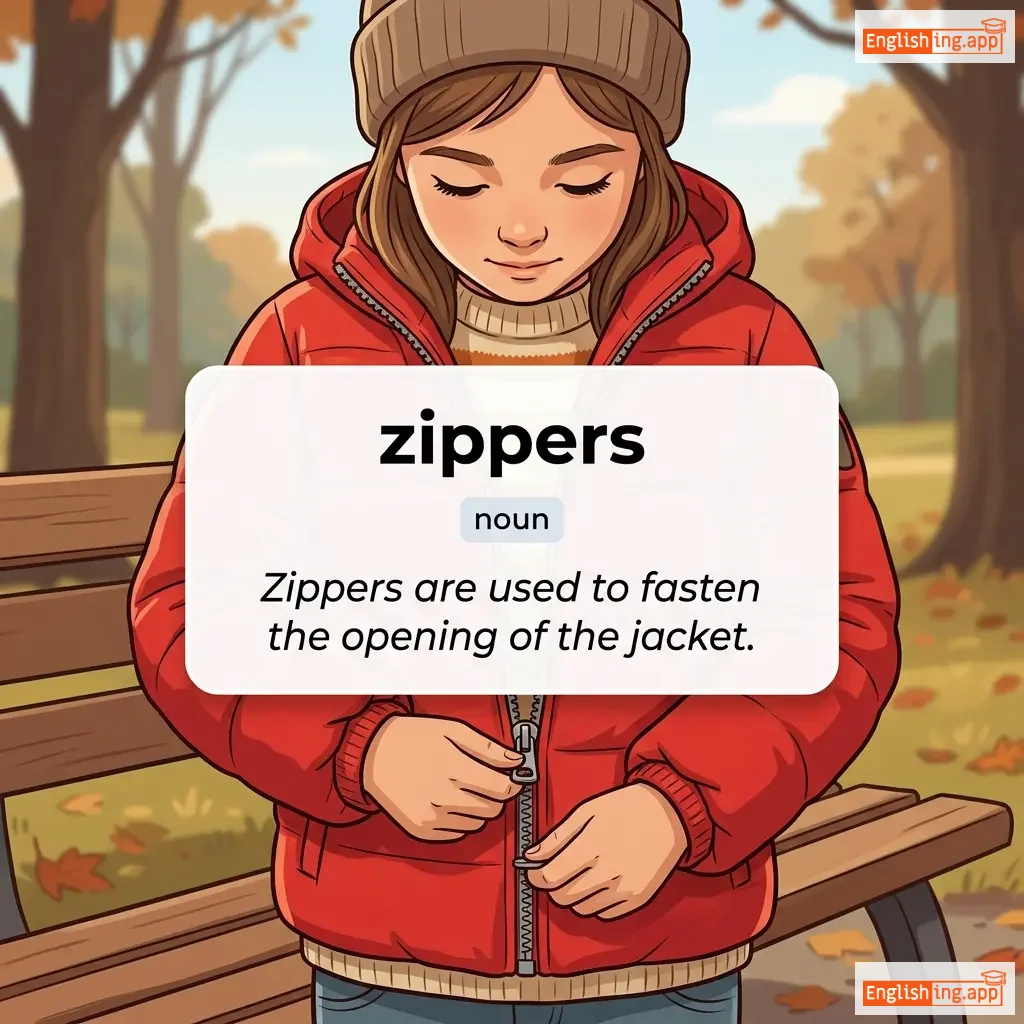
zippers definition card — visual illustration of the meaning
noun
ˈzɪpərz
fermeture éclair (fermeture eclair)

A device consisting of two flexible strips of metal or plastic with interlocking projections closed or opened by pulling a slide along them.

"Zippers are used to fasten the opening of the jacket."

"Les fermetures éclair sont utilisées pour fermer l'ouverture de la veste." (Les fermetures éclair sont utilisées pour fermer l'ouverture de la veste.)
adverb
/jɛs/
oui (oui)

used to express affirmation, agreement, or consent

"Yes, I will be there at 5 o'clock."

"Oui, je serai là à 17 heures." (Oui, je serai la a 17 heures.)
adjective
/ˌrɒŋˈhɛd.ɪd/
à l'esprit tordu (a l'espri tordu)

Having or showing bad judgment or stubbornly holding to wrong ideas.

"The policy was considered wrongheaded and harmful."

"La politique a été considérée comme ayant l'esprit tordu et nuisible." (La po-li-tique a été consi-dé-rée com-me a-yon l'es-pri tor-du et nui-si-ble.)
noun
/jɛn/
désir (desir)

A deep, strong desire or craving.

"She felt a strong yen to travel the world."

"Elle ressentit un fort désir de voyager dans le monde." (El ressentit un fort desir de voyager dan le monde.)
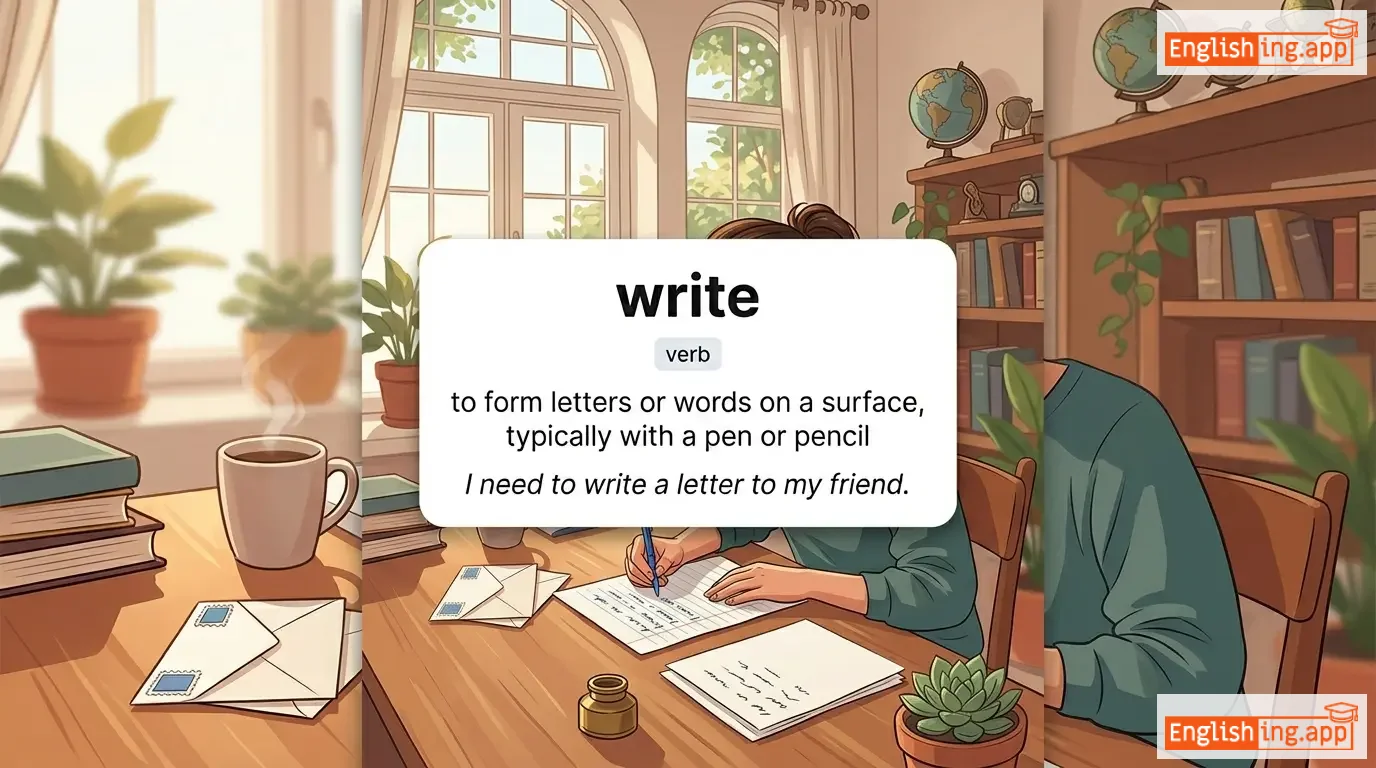
write definition card — visual illustration of the meaning
verb
/raɪt/
bonheur (bonheur)

to form letters or words on a surface, typically with a pen or pencil

"I need to write a letter to my friend."

"Elle n'a pas pu cacher son bonheur quand elle a reçu le prix." (Elle n'a pas pu cacher son bonheur quand elle a reçu le prix.)
noun
/jɑːrn/
fil (fil)

spun thread used for knitting, weaving, or sewing; a long or rambling story

"She bought colorful yarn for knitting a sweater."

"Elle a acheté du fil coloré pour tricoter un pull." (Elle a achete du fil colore pour tricoter un pull.)
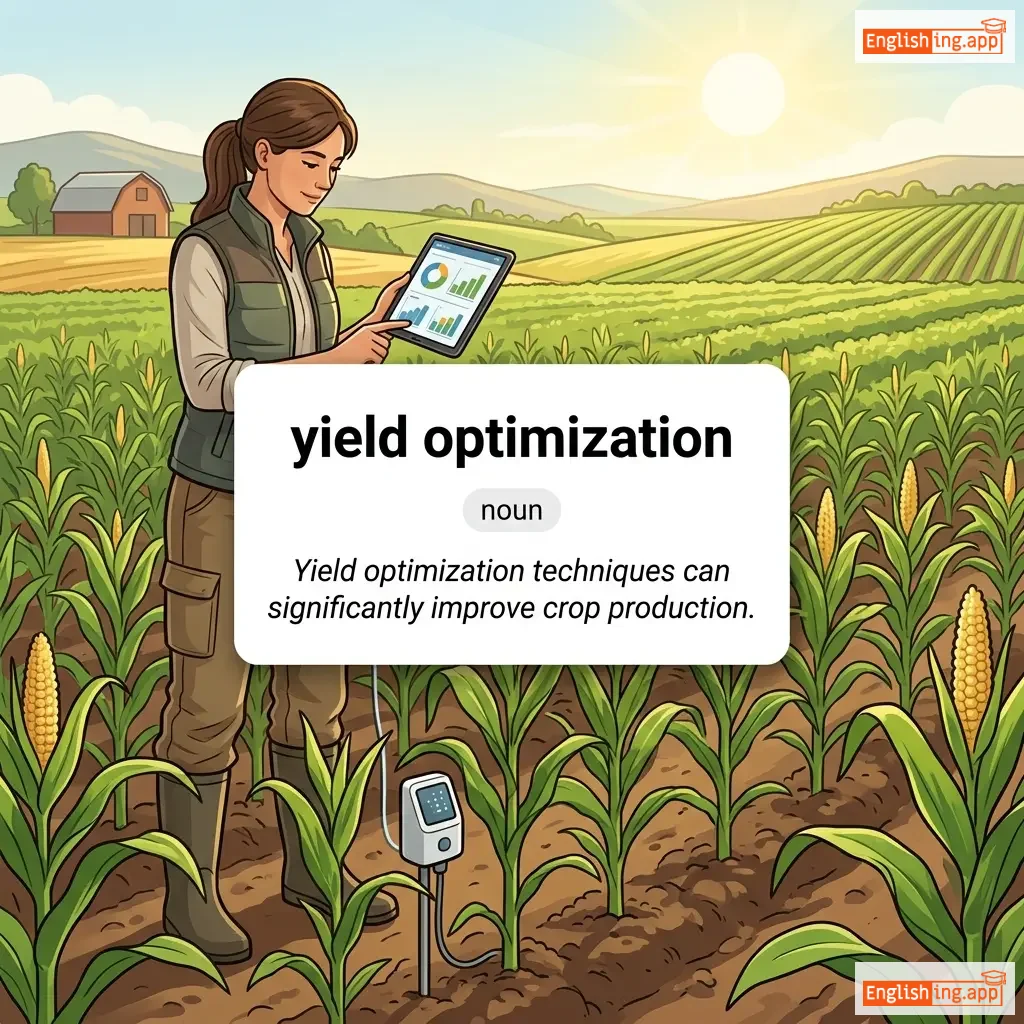
yield optimization definition card — visual illustration of the meaning
noun
/jiːld ˌɒptɪmaɪˈzeɪʃən/
optimisation du rendement (optimisation du rendement)

The process of maximizing the productivity or efficiency of crop production through various agricultural techniques and practices.

"Yield optimization techniques can significantly improve crop production."

"Les techniques d'optimisation du rendement peuvent améliorer considérablement la production de cultures." (Les techniques d'optimisation du rendement peuvent ameliorer considerablement la production de cultures.)
noun
/ˈzɛnəˌfoʊb/
xénophobe (xenophobe)

a person who dislikes or fears people from other countries or cultures

"The politician was criticized as a xenophobe due to his anti-immigrant policies."

"Le politicien a été critiqué comme un xénophobe en raison de ses politiques anti-immigrants." (Le politicien a ete critique comme un xenophobe en raison de ses politiques anti-immigrants.)
noun
/ˈjoʊkəl/
paysan (paysan)

An uneducated and unsophisticated person from the countryside; a bumpkin.

"The city folks laughed at the yokel's simple ways."

"Les citadins se sont moqués des manières simples du paysan." (Les citadins se sont moqués des manières simples du paysan.)
pronoun
/jɔːrz/
le vôtre (le votre)

belonging to or associated with the person or people that the speaker is addressing

"This pen is yours."

"Ce stylo est le vôtre." (Ce sty-lo est le vô-tre.)
noun
/ˈjʌŋstər/
jeune (jeune)

a young person or child, especially a teenager or adolescent

"The park was full of youngsters playing football."

"Le parc était plein de jeunes jouant au football." (Le parc était plein de jeunes jouant au football.)
noun
/jɑːrd/
yard (yard)

a unit of linear measure equal to three feet or 0.9144 meters

"The garden is 50 yards long."

"Le jardin mesure 50 yards de long." (Le jardin mesure 50 yards de long.)
adverb
/ˈrɒŋli/
à tort (a tort)

in an incorrect or mistaken way; unfairly or unjustly

"He was wrongly accused of the crime."

"Il a été accusé à tort du crime." (Il a ete accuse a tort du crime)
noun
/rɪst/
poignet (pwa-nay)

the joint connecting the hand with the forearm

"He wore a smartwatch on his left wrist."

"Il portait une montre connectée à son poignet gauche." (Il portait une montre connectee a son poignet gauche.)
adverb
/ˈwɔːm.li/
chaleureusement; affectueusement (chaleureusement; affectueusement)

in a warm manner; with warmth; cordially; affectionately

"She welcomed the guests warmly at the door."

"Elle a accueilli les invités chaleureusement à la porte." (Elle a accueilli les invités chaleureusement à la porte.)
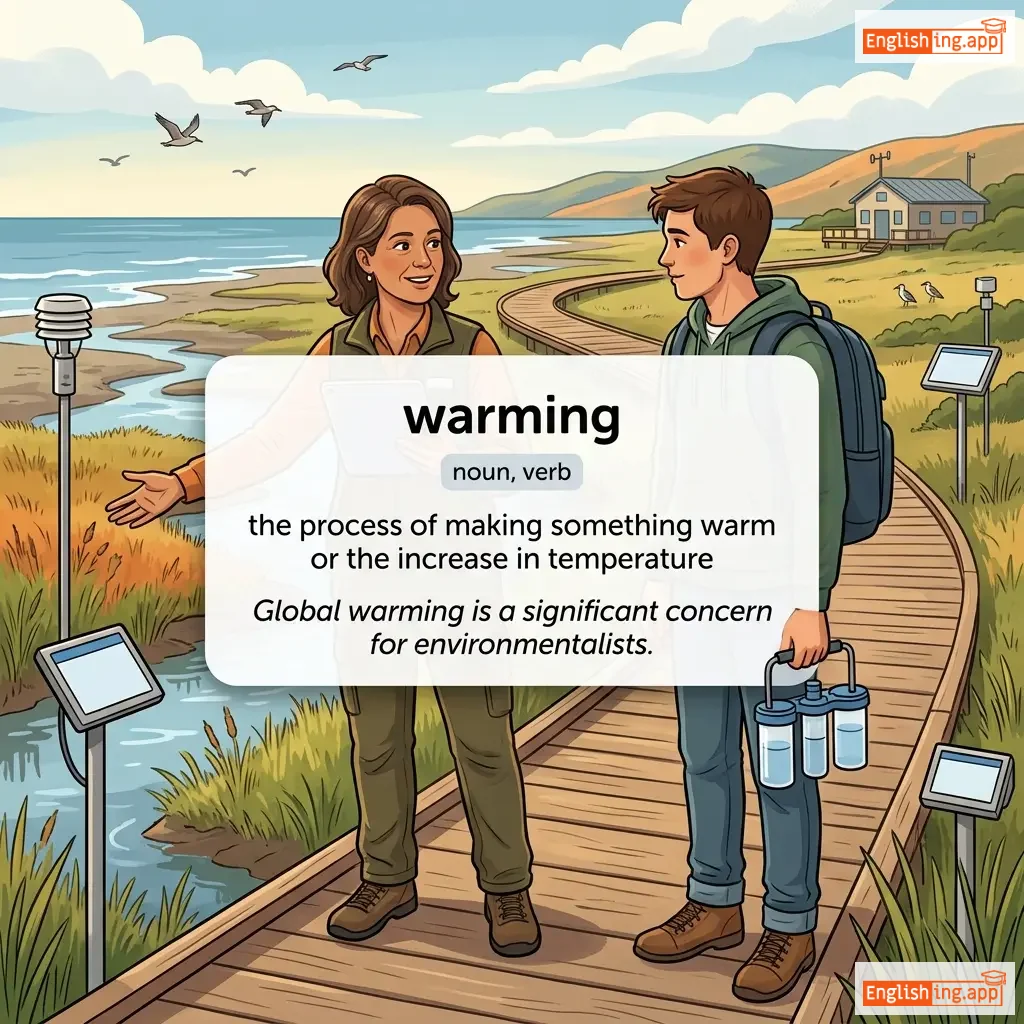
warming definition card — visual illustration of the meaning
noun, verb
/ˈwɔːmɪŋ/
augmentation de la température (augmentation de la temperature)

the process of making something warm or the increase in temperature

"Global warming is a significant concern for environmentalists."

"Le réchauffement climatique est une préoccupation importante pour les écologistes." (Le réchauffement climatique est une préoccupation importante pour les écologistes.)