語彙集

英単語辞書 | 単語の意味、定義、例文

noun
/ˌzɛnəˈfoʊbiə/
外国人恐怖症 (gaikokujin kyōfushō)

fear or hatred of foreigners, people from different cultures, or strangers

"Xenophobia can lead to discrimination and social division."

"ゼノフォビアは差別や社会的分裂を引き起こす可能性があります。" (Zenofobia wa sabetsu ya shakaiteki bunretsu o hikiokosu kanōsei ga arimasu.)
adjective
/ˈwɜːrid/
心配 (shinpai)

feeling anxious or concerned about something

"She was worried about the upcoming exam."

"彼女は迫る試験について心配していた。" (Kanojo wa semaru shiken ni tsuite shinpai shite ita.)
noun
/jɔːn/
あくび (akubi)

an involuntary opening of the mouth and inhalation of air due to tiredness or boredom

"She couldn't suppress a yawn during the boring lecture."

"退屈な講義の最中にあくびを抑えることができなかった。" (Taikutsu na kougi no saichuu ni akubi o osaeru koto ga dekinakatta.)
noun
/ˈræp.ər/
包み (tsutsumi)

a loose garment worn around the body; covering material

"She put on a warm wrapper before going outside."

"彼女は外出前に温かいラッパーを着ました。" (Kanojo wa gaishutsu mae ni atatakai rappā o kimashita.)
adjective
/ˈwʊd biː/
見込みのある; 可能性のある; (mikomi no aru; kanōsei no aru;)

prospective; intending to be; aspiring

"The would-be actor practiced his lines every day."

"その見込みのある俳優は毎日セリフを練習していた。" (Sono mikomi no aru haiyū wa mainichi serifu o renshū shite ita.)
adjective
/ˈjɛləʊ/
黄色 (kiiro)

a color like that of ripe lemons or the sun

"The yellow flowers brightened up the whole garden."
"黄色い花が庭全体を明るくしました。" (Kiiroi hana ga niwa zentai o akaruku shimashita.)
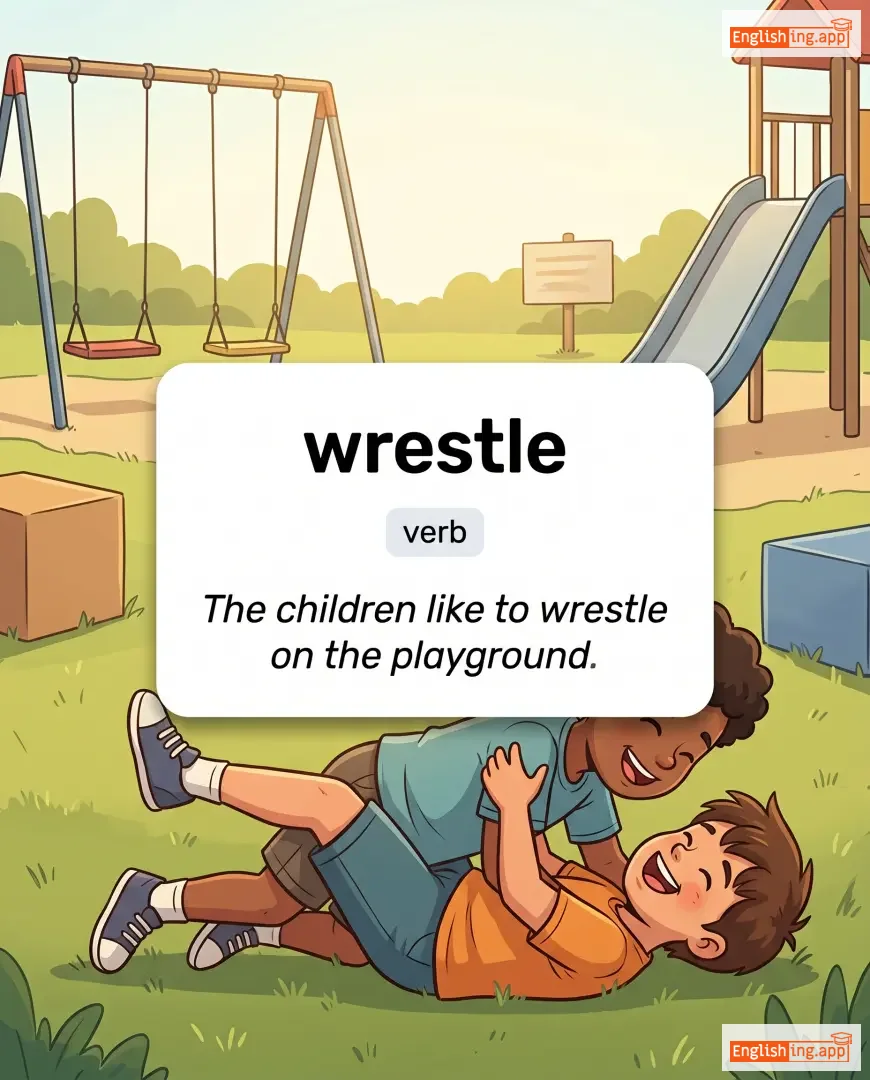
wrestle definition card — visual illustration of the meaning
verb
/ˈresəl/
レスリング (resuringu)

to fight by grappling and trying to throw down an opponent; to struggle with a problem

"The children like to wrestle on the playground."

"子供たちは遊び場でレスリングするのが好きです。" (Kodomotachi wa asobiba de resuringu suru no ga suki desu)
noun
/ˈrɛtʃɪdnəs/
悲惨 (hisan)

a state of misery, unhappiness, or poor condition

"The novel depicts the wretchedness of war victims."

"その小説は戦争の犠牲者の悲惨さを描いています。" (Sono shousetsu wa sensou no giseisha no hisansa o egaki masu.)
verb
/riːk/
被害を与える (higai o ataeru)

to cause or inflict something, especially damage or harm

"The storm wreaked havoc on the coastal villages."

"嵐は沿岸の村に大きな被害をもたらしました。" (Arashi wa engan no mura ni ōkina higai o motarashimashita.)
noun
/ˈraɪtər/
作家 (sakka)

a person who writes, especially as a profession

"The writer published a new novel last month."

"作家は先月新しい小説を発表しました。" (Sakka wa sengetsu atarashī shōsetsu o happyō shimashita.)
verb
/rɛst/
力づくで奪う (rikidukude ubau)

to forcibly pull something from a person's grasp; to seize with effort or struggle

"The police had to wrest the weapon from the suspect's hand."

"警察は容疑者の手から武器を引き離さなければならなかった。" (Keisatsu wa yōgisha no te kara buki o hikihanasanakereba naranakatta.)
noun
/jɪə/
(nen)

a period of 365 or 366 days, divided into 12 months

"This year, we are planning a trip to the mountains."

"今年、私たちは山への旅行を計画しています。" (Kotoshi, watashitachi wa yama e no ryokou wo keikaku shiteimasu.)
verb
/ˈwɜːʃɪp/
礼拝 (reihaï)

To show reverence and adoration for a deity or sacred being.

"They gathered at the temple to worship together."

"彼らは寺院に集まり、一緒に礼拝しました。" (Karera wa jiin ni atsumari, issho ni reihai shimashita.)
noun
/zɛst/
熱意 (netsui)

Great enthusiasm and energy; also the outer colored part of citrus fruit used for flavor.

"She tackled the project with zest."
"彼女は熱意を持ってプロジェクトに取り組んだ。" (Kanojo wa netsui o motte purojekuto ni torikunda.)
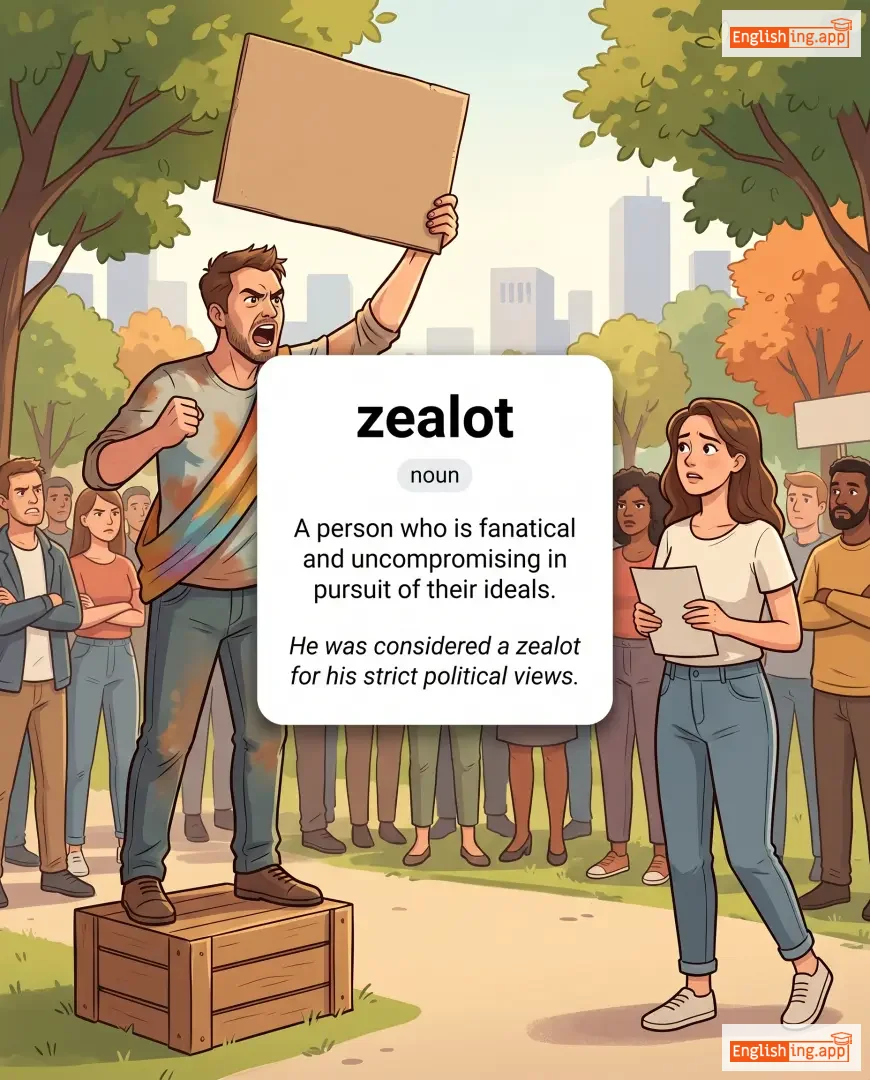
zealot definition card — visual illustration of the meaning
noun
/ˈzel.ət/
狂信者 (kyoushinsha)

A person who is fanatical and uncompromising in pursuit of their ideals.

"He was considered a zealot for his strict political views."

"彼は厳格な政治的見解のため、狂信者と見なされていました。" (Kare wa genkaku na seijiteki kenkai no tame, kyoushinsha to minasa rete imashita.)
noun
/ˈzoʊdiæk/
星座帯 (seiza-tai)

a belt of the heavens divided into twelve equal divisions or signs, each named after a constellation; used in astronomy and astrology

"She checked her zodiac sign to read her daily horoscope."

"彼女は自分の星座をチェックして、毎日の占星術を読みました。" (Kanojo wa jibun no seiza o chekku shite, mainichi no senseijutsu o yomimashita.)
noun
/juːθ/
青春 (seishun)

the period of life when a person is young, often associated with energy and vitality

"The youth are the future of the country."

"青年は国の未来です。" (Seishun wa kuni no mirai desu.)
adjective, verb (past participle of wear)
/wɔːrn/
擦り切れた (suri kireta)

damaged, weakened, or deteriorated from use or age

"His shoes were old and worn."

"彼の靴は古くて擦り切れていた。" (Kare no kutsu wa furukute surikirete ita.)
noun
/joʊk/
(kutsuwa)

A wooden crosspiece fastened over the necks of animals; symbolically, a burden or oppression.

"The oxen were bound together by a heavy yoke."
"牛は重い轡で繋がれていた。" (Ushi wa omoi kutsuwa de tsunagarete ita.)
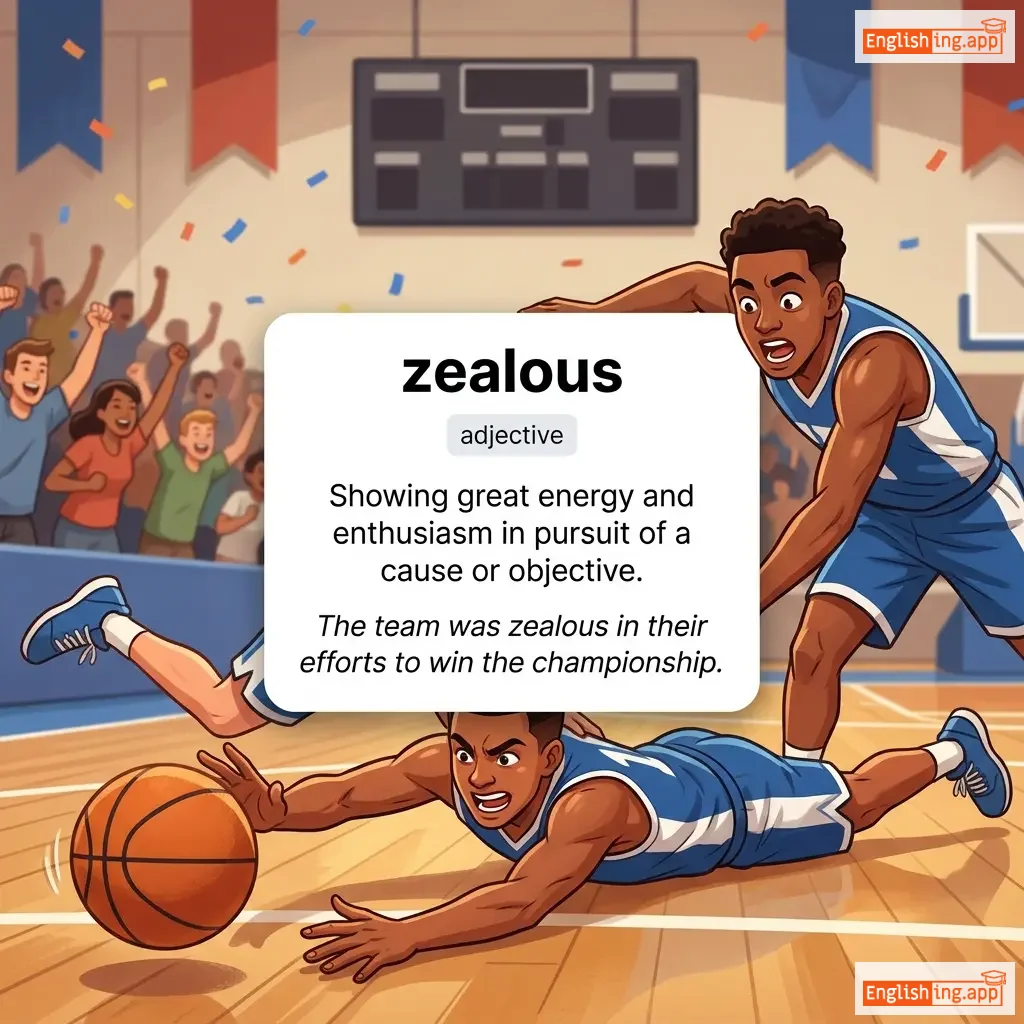
zealous definition card — visual illustration of the meaning
adjective
/ˈzel.əs/
熱心な (nesshin na)

Showing great energy and enthusiasm in pursuit of a cause or objective.

"The team was zealous in their efforts to win the championship."

"チームはチャンピオンシップに勝つために熱心でした。" (Chīmu wa chanpionship ni katsu tame ni nesshin deshita.)
verb
/ˈræŋɡl̩/
議論する (giron suru)

to argue or dispute noisily or angrily

"The two neighbors wrangled over the property line for hours."

"二人の隣人は、敷地の境界について何時間も議論しました。" (Futari no rinjin wa, shikichi no kyōkai ni tsuite nan-jikan mo giron shimashita.)
adjective
/ˈzeɪ.ni/
滑稽で風変わりな (Kokkei de fūkawari na)

Amusingly unconventional and peculiar.

"The comedian's zany style kept the audience laughing."

"コメディアンの奇妙なスタイルは観客を笑わせ続けました。" (Komedian no kimyō na sutairu wa kankyaku o warawase tsuzukemashita.)
noun/verb
/wuːnd/
幸福 (kōfuku)

an injury to the body or to harm someone

"He received a deep wound on his arm."

"彼女は賞を受け取ったとき、幸せを隠すことができませんでした。" (Kanojo wa shō o uketotta toki, kōfuku o kakusu koto ga dekimasen deshita.)
noun
/jʌŋ fɪʃ/
幼魚 (yougyo)

juvenile or small fish; fish that has not reached maturity

"Young fish need protection from predators."

"幼魚は捕食者から守られる必要があります。" (yougyo wa hoshokusha kara mamorareru hitsuyou ga arimasu)
noun
/ˈzaɪtɡaɪst/
時代精神 (jidai seishin)

The defining spirit or mood of a particular period of history as shown by the ideas and beliefs of the time.

"The novel perfectly captures the zeitgeist of the 1960s."

"その小説は1960年代の時代精神を完璧に捉えています。" (Sono shōsetsu wa 1960 nendai no jidai seishin o kanpeki ni toraeteimasu.)
noun
/joʊk/
卵黄 (tamago no ki)

the yellow part of an egg

"The chef separated the egg yolk from the white."

"シェフは卵の黄身を白身から分けました。" (Shefu wa tamago no kimi o shiro-mi kara wakemashita.)
verb
/wʊd/
だろう (darou)

used to indicate a future possibility or action in the past

"He said he would help me tomorrow."

"彼は明日私を手伝うと言った。" (Kare wa ashita watashi o tetsudau to itta.)
noun
/zɪˈnɑːnə/
ゼナンナ (zenanna)

the part of a house reserved for women; women's quarters in Muslim households; harem

"The zenanna was beautifully decorated with intricate patterns."

"ゼナンナは複雑な模様で美しく飾られていました。" (Zenanna wa fukuzatsu na moyō de utsukushiku kazatta remashita.)
noun
/rɪt/
裁判所命令 (saibansho meirei)

A formal written order issued by a court.

"The judge issued a writ of habeas corpus."

"裁判官はハベアス・コーパス命令を発行しました。" (Saibankan wa habeasu kōpasu meirei o hakkō shimashita.)
noun
/ˈzɪɡzæɡ/
右と左に急に曲がる交互の線または経路; シャープな曲がりのパターン (migi to hidari ni kyū ni magaru kōgo no sen matawa keiro; shāpu na magari no patān)

a line or course having abrupt alternate right and left turns; a pattern of sharp turns

"The road follows a zigzag pattern up the mountain."

"その道路は山を登る際にジグザグのパターンに沿っています。" (Sono dōro wa yama o noboru sai ni jiguzagu no patān ni sotteimasu.)
noun
/rɛtʃ/
不幸な人 (fukouna hito)

an unfortunate or miserable person; a despicable or contemptible person

"The poor wretch was left out in the cold with no shelter."
"貧しい不幸な人は避難所なしで寒さの中に放置された。" (Mazushii fukou na hito wa hinanjo nashi de samusa no naka ni houchi sareta.)
verb
/zæɡ/
急激に方向転換する (kyuugeni houkoutenkan suru)

to make a sharp change in direction, especially in a zigzag pattern

"The rabbit zagged quickly to escape the fox."

"ウサギは狐から逃げるために素早く急激に方向転換した。" (Usagi wa kitsune kara nigeru tame ni subayaku kyuugeni houkoutenkan shita.)
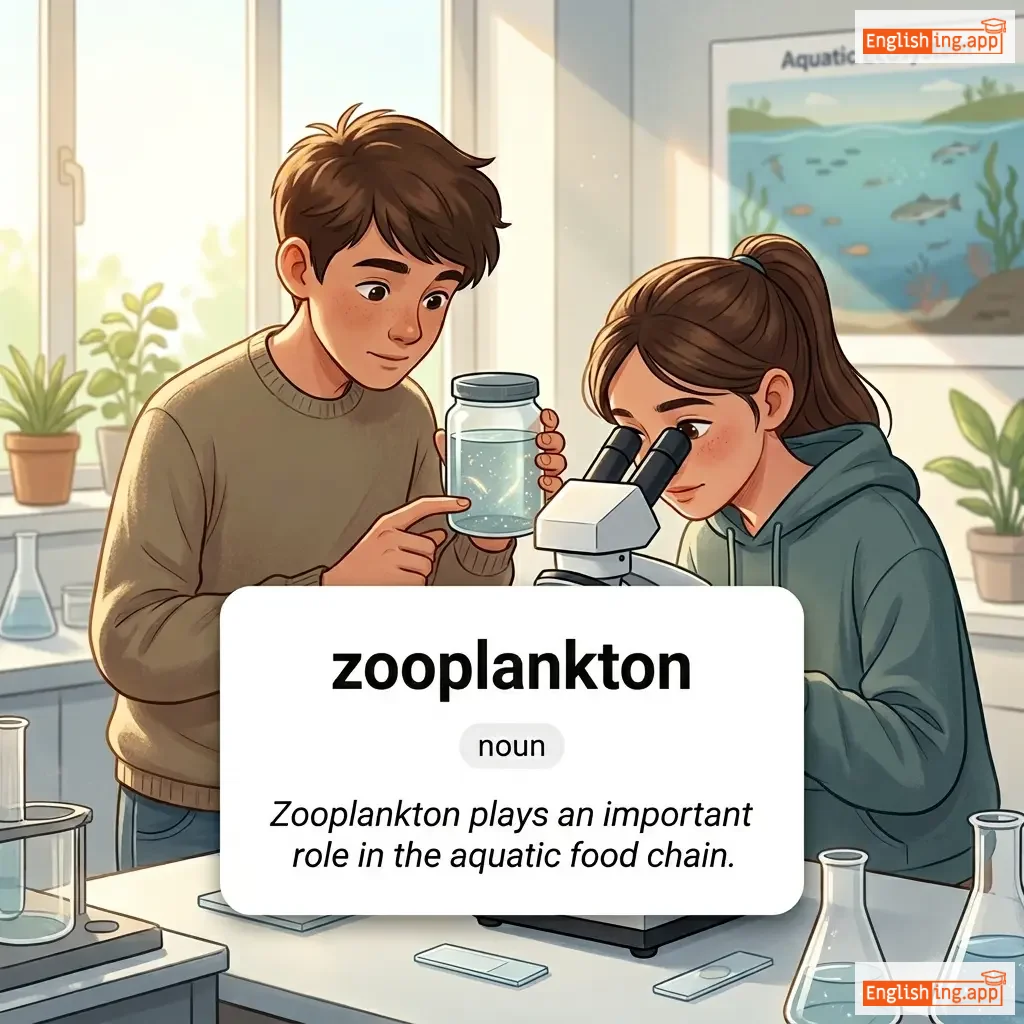
zooplankton definition card — visual illustration of the meaning
noun
/ˈzuːəʊˌplæŋktən/
動物プランクトン (dōbutsu purankuton)

Microscopic aquatic animals that drift in water bodies and form an essential part of the aquatic food chain, serving as food for fish and other marine organisms.

"Zooplankton plays an important role in the aquatic food chain."

"動物プランクトンは水生食物連鎖で重要な役割を果たします。" (Dōbutsu purankuton wa suisei shokumotsu rensa de jūyō na yakuwari o hatashimasu.)
noun/verb
/ˈraɪ.tɪŋ/
幸せ (shiawase)

The activity of putting words on paper or composing text; the written form of communication.

"She spends hours every day on her creative writing."
"彼女は賞を受け取ったとき、幸せを隠すことができませんでした。" (Kanojo wa shō o uketotta toki, shiawase o kakusu koto ga dekimasen deshita.)
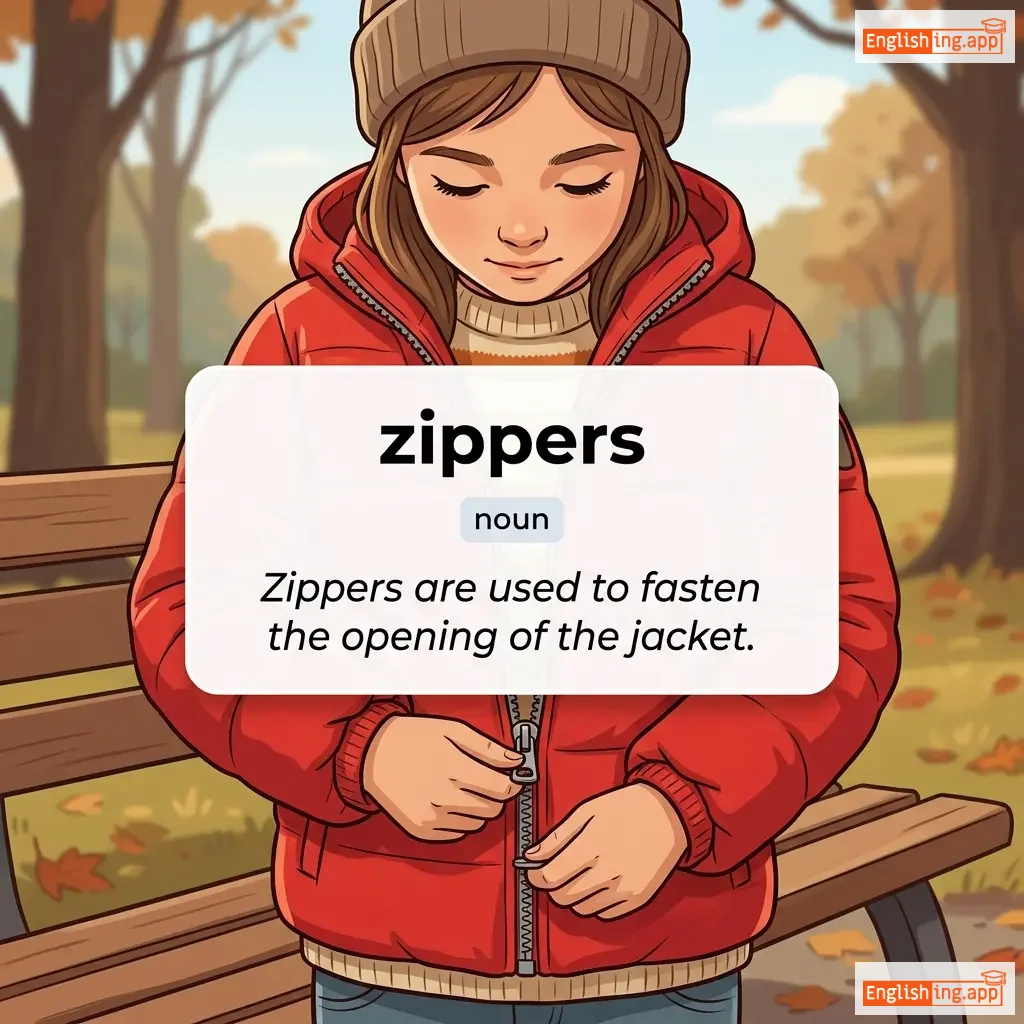
zippers definition card — visual illustration of the meaning
noun
ˈzɪpərz
ジッパー (jippā)

A device consisting of two flexible strips of metal or plastic with interlocking projections closed or opened by pulling a slide along them.

"Zippers are used to fasten the opening of the jacket."

"ジッパーはジャケットの開口部を閉じるために使われます。" (Jippā wa jaketto no kaikōbu o toji ru tame ni tsukawaremasu.)
adverb
/jɛs/
はい (hai)

used to express affirmation, agreement, or consent

"Yes, I will be there at 5 o'clock."

"はい、5時にそこに行きます。" (Hai, go ji ni soko ni ikimasu.)
adjective
/ˌrɒŋˈhɛd.ɪd/
誤った考え方 (ayamatta kangaekata)

Having or showing bad judgment or stubbornly holding to wrong ideas.

"The policy was considered wrongheaded and harmful."
"その政策は誤った考え方で有害だと見なされた。" (Sono seisaku wa ayamatta kangaekata de yuugai da to minasa reta.)
noun
/jɛn/
欲望 (yokubou)

A deep, strong desire or craving.

"She felt a strong yen to travel the world."

"彼女は世界を旅したいという強い欲望を感じた。" (kanojo wa sekai o tabi shitai to iu tsuyoi yokubou o kanjita.)
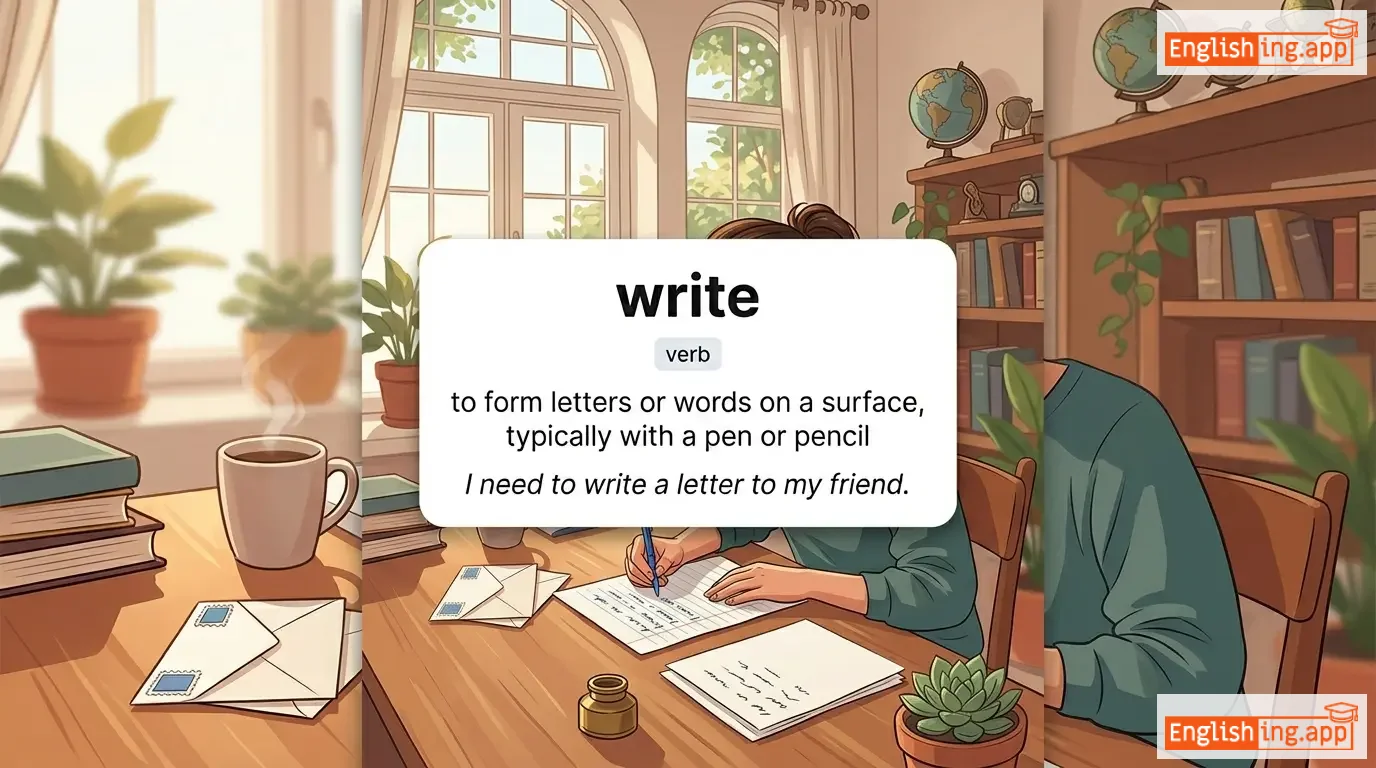
write definition card — visual illustration of the meaning
verb
/raɪt/
幸福 (kōfuku)

to form letters or words on a surface, typically with a pen or pencil

"I need to write a letter to my friend."

"彼女は賞を受け取ったとき、自分の幸せを隠せなかった。" (Kanojo wa shō o uketotta toki, jibun no kōfuku o kakusenakatta.)
noun
/jɑːrn/
(ito)

spun thread used for knitting, weaving, or sewing; a long or rambling story

"She bought colorful yarn for knitting a sweater."
"彼女はセーターを編むためにカラフルな糸を買いました。" (Kanojo wa seetaa wo amu tame ni karafuru na ito wo kaimashita.)
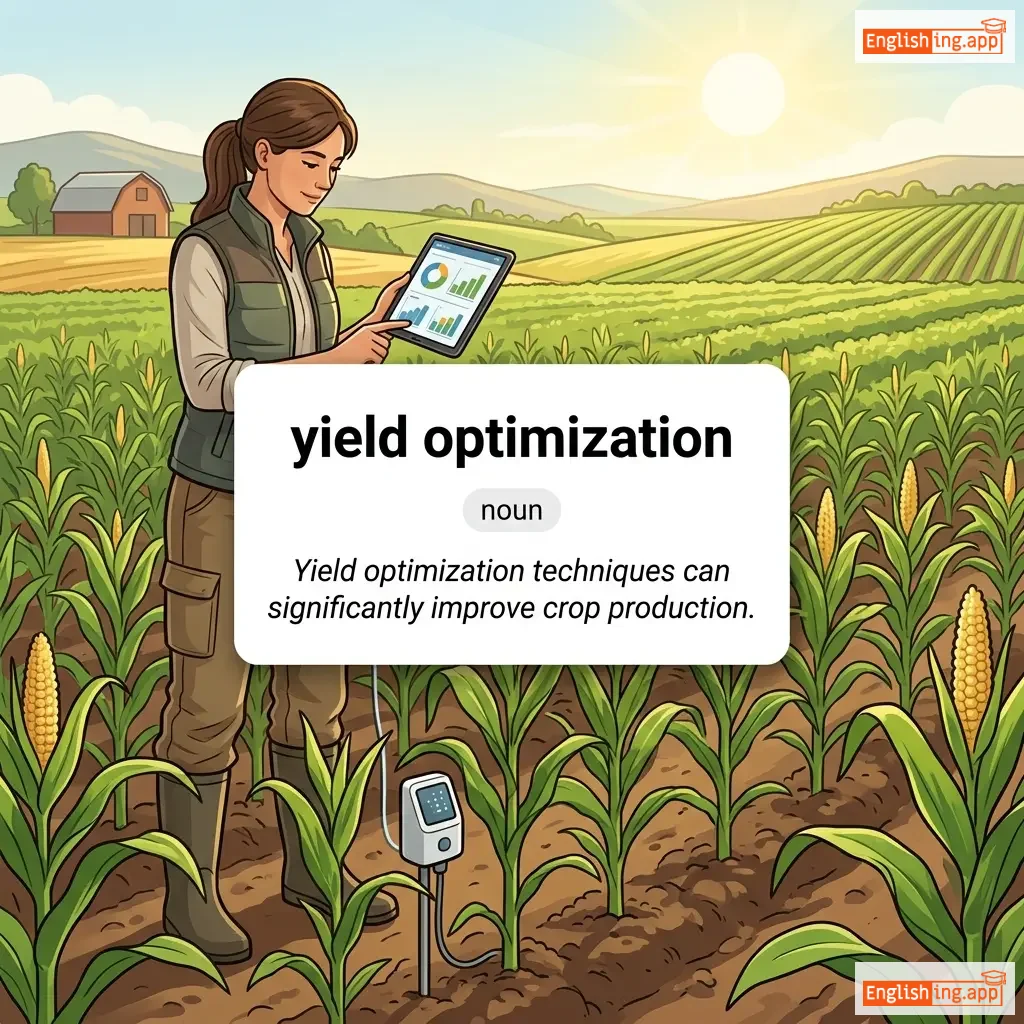
yield optimization definition card — visual illustration of the meaning
noun
/jiːld ˌɒptɪmaɪˈzeɪʃən/
収穫最適化 (shūkaku saiteki-ka)

The process of maximizing the productivity or efficiency of crop production through various agricultural techniques and practices.

"Yield optimization techniques can significantly improve crop production."

"収穫最適化技術は作物生産を大幅に改善できます。" (Shūkaku saiteki-ka gijutsu wa sakumotsu seisan o ōhaba ni kaizen dekimasu.)
noun
/ˈzɛnəˌfoʊb/
外国人恐怖症者 (gaikokujin kyōfu shōsha)

a person who dislikes or fears people from other countries or cultures

"The politician was criticized as a xenophobe due to his anti-immigrant policies."

"その政治家は反移民政策のため、外国人恐怖症者として批判されました。" (Sono seijika wa han imin seisaku no tame, gaikokujin kyōfu shōsha to shite hihan saremashita.)
noun
/ˈjoʊkəl/
田舎者 (inakamono)

An uneducated and unsophisticated person from the countryside; a bumpkin.

"The city folks laughed at the yokel's simple ways."

"都会の人々は田舎者の簡単な方法を笑った。" (Tōkai no hitobito wa inakamono no kantan na hōhō o waratta.)
pronoun
/jɔːrz/
あなたの (anata no)

belonging to or associated with the person or people that the speaker is addressing

"This pen is yours."

"このペンはあなたのです。" (Kono pen wa anata no desu.)
noun
/ˈjʌŋstər/
若者 (wakamono)

a young person or child, especially a teenager or adolescent

"The park was full of youngsters playing football."

"公園はサッカーをしている若者たちでいっぱいでした。" (Kōen wa sakkā o shite iru wakamono-tachi de ippai deshita.)
noun
/jɑːrd/
ヤード (yādo)

a unit of linear measure equal to three feet or 0.9144 meters

"The garden is 50 yards long."

"庭は50ヤードの長さです。" (Niwa wa 50 yādo no nagasa desu.)
adverb
/ˈrɒŋli/
誤って (ayamatte)

in an incorrect or mistaken way; unfairly or unjustly

"He was wrongly accused of the crime."

"彼はその犯罪で誤って非難された。" (kare wa sono hanzai de ayamatte hinan sareta)
noun
/rɪst/

the joint connecting the hand with the forearm

"He wore a smartwatch on his left wrist."

adverb
/ˈwɔːm.li/
温かく; 愛情を込めて (atatakaku; aijou wo komete)

in a warm manner; with warmth; cordially; affectionately

"She welcomed the guests warmly at the door."
"彼女はドアでゲストを温かく迎えました。" (Kanojo wa doa de gesuto wo atataku mukaemashita.)
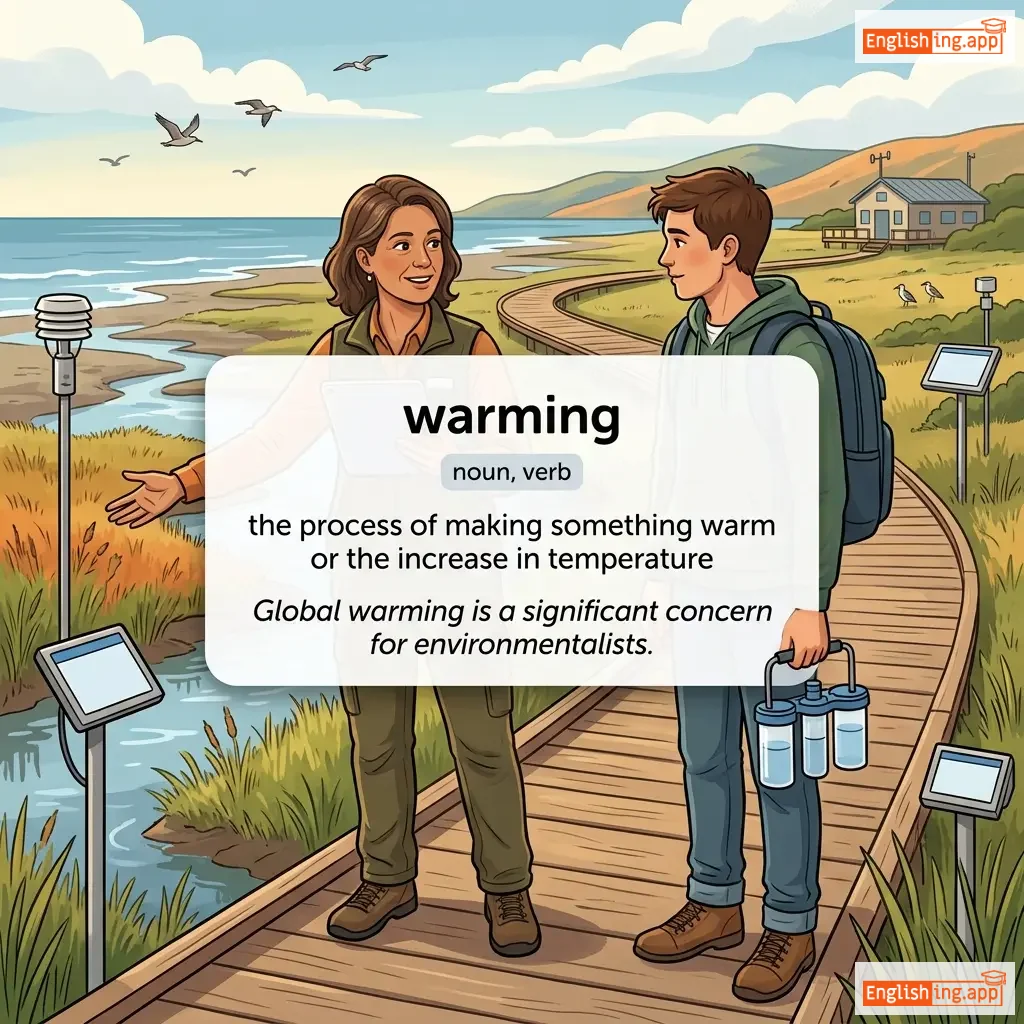
warming definition card — visual illustration of the meaning
noun, verb
/ˈwɔːmɪŋ/
温度上昇 (ondo joushou)

the process of making something warm or the increase in temperature

"Global warming is a significant concern for environmentalists."

"地球温暖化は環境活動家にとって重要な問題です。" (Chikyuu ondanka wa kankyou katsudouka ni totte juuyou na mondai desu.)