語彙集

英単語辞書 | 単語の意味、定義、例文

adjective
/ˈvoʊtɪv/
奉納 (hounou)

Offered or dedicated in fulfillment of a vow.

"She lit a votive candle in the church as a prayer."

"彼女は教会で祈りとして奉納のキャンドルを灯しました。" (Kanojo wa kyoukai de inori toshite hounou no kyandoru o tomoshimashita.)
adjective
/ˈvɪvɪd/
鮮やか (azayaka)

producing strong, clear, and detailed images in the mind; strikingly bright or intense

"She gave a vivid description of her childhood home."
"彼女は自分の子供時代の家について鮮やかな説明をしました。" (Kanojo wa jibun no kodomojidai no ie ni tsuite azayakana setsumei wo shimashita.)
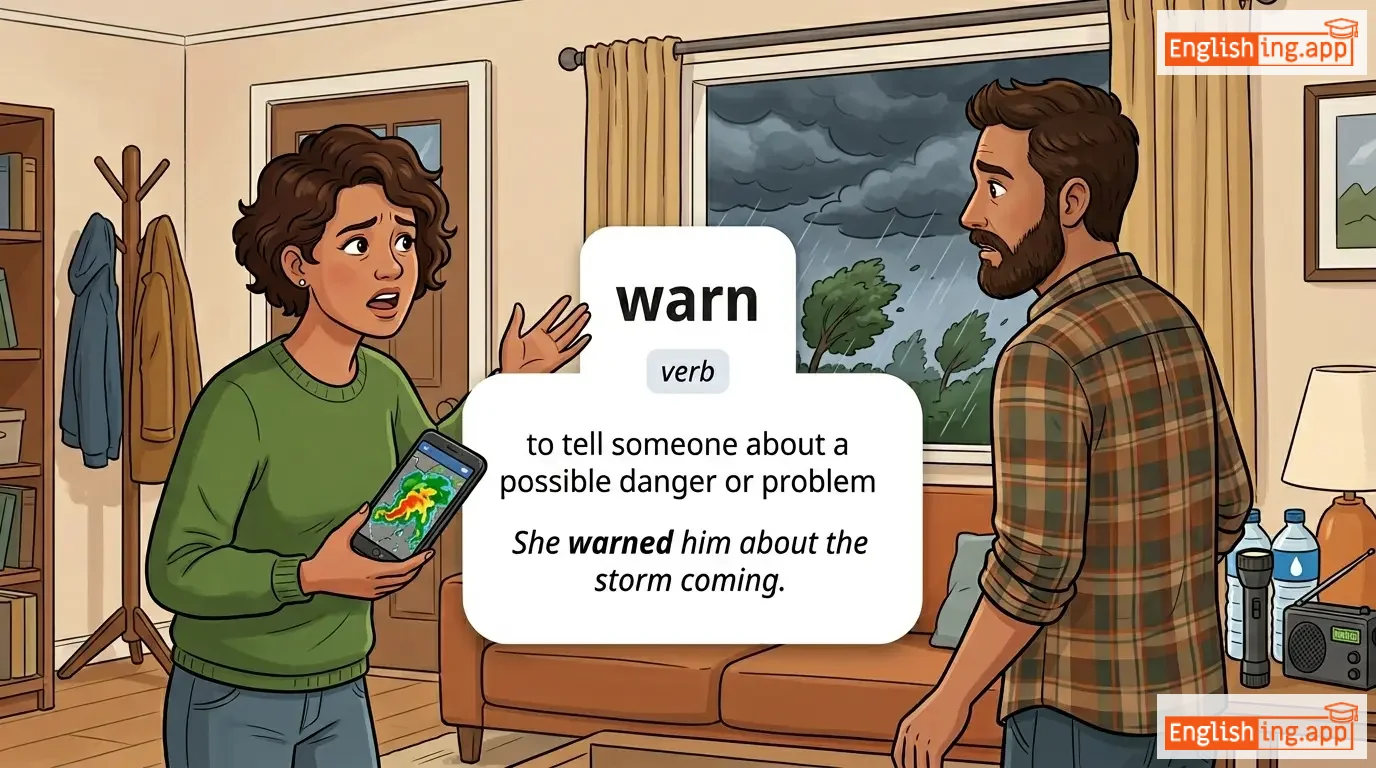
warn definition card — visual illustration of the meaning
verb
/wɔːrn/
警告する (keikoku suru)

to tell someone about a possible danger or problem

"She warned him about the storm coming."

"彼女は迫り来る嵐について彼に警告した。" (Kanojo wa semarikuru arashi ni tsuite kare ni keikoku shita.)
adjective
/ˈwɜːrldwaɪd/
世界的 (sekaiteki)

extending or reaching throughout the whole world

"The company has achieved worldwide recognition for its products."

"その会社は製品のために世界的な認知を得ました。" (Sono kaisha wa seihin no tame ni sekaiteki na ninchi o emashita.)
verb
/wiːv/
織る (oru)

to make cloth by interlacing threads or to combine elements into a whole

"She weaves beautiful patterns on her loom."

"彼女は自分の織機で美しいパターンを織っています。" (Kanojo wa jibun no oriki de utsukushii patān wo otteimasu.)
noun
/ˈvʌl.tʃər/
ハゲワシ (hagewashi)

a large bird of prey that feeds mainly on carrion

"The vulture circled overhead, waiting for its prey."

"ハゲワシは空を旋回しながら、その獲物を待っていました。" (Hagewashi wa sora o senkai shinagara, sono emono o matte imashita.)
noun
/ˈwɜːrkaʊt/
運動 (undou)

a session of physical exercise or training to improve fitness or health

"She does a full-body workout every morning before work."

"彼女は毎朝仕事の前に全身の運動をします。" (Kanojo wa mai asa shigoto no mae ni zenshin no undou o shimasu.)
noun
/wɔːrd/
病棟 (byoutou)

A separate room in a hospital for patients; also a division of a city or a person under guardianship.

"She was admitted to the children's ward."
"彼女は子供病棟に入院しました。" (Kanojo wa kodomo byoutou ni nyu'in shimashita.)
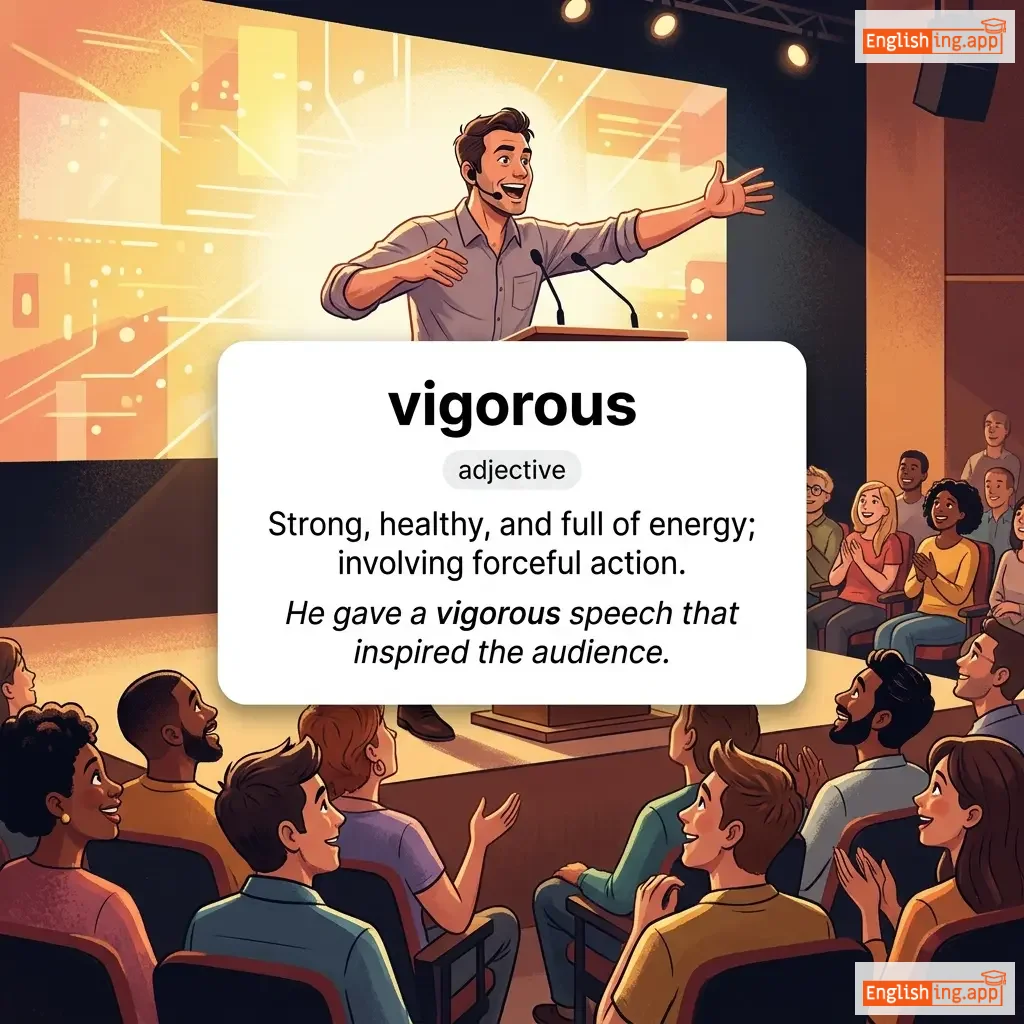
vigorous definition card — visual illustration of the meaning
adjective
/ˈvɪɡərəs/
活発 (kappatsu)

Strong, healthy, and full of energy; involving forceful action.

"He gave a vigorous speech that inspired the audience."

"彼は聴衆を感動させた活発なスピーチを行った。" (Kare wa chōshū o kandō saseta kappatsu na supīchi o okonatta.)
noun
/ˈvjuːpɔɪnt/
視点 (shiten)

a particular attitude or way of considering a matter

"From his viewpoint, the situation was hopeless."

"彼の視点から見ると、その状況は絶望的でした。" (Kare no shiten kara miru to, sono jōkyō wa zetsubō-teki deshita.)
adjective
/ʌnˈlaɪkli/
ありそうにない (arisō ni nai)

not likely to happen or be true

"It is unlikely that he will arrive on time."

"彼が時間通りに到着する可能性は低い。" (Kare ga jikan dōri ni tōchaku suru kanōsei wa hikui.)
verb
/ˈvɪlɪfaɪ/
幸せ (shiawase)

to speak or write about someone in an abusive or disparaging manner

"The politician was vilified in the media for his controversial remarks."

"彼女は賞を受け取ったとき、幸せを隠すことができませんでした。" (Kanojo wa shō o uketotta toki, shiawase o kakusu koto ga dekimasen deshita.)
noun
/vɪˈsɪn.ə.ti/
近隣; 周辺 (vicinity)

the area near or surrounding a particular place; neighborhood

"There are many shops in the vicinity of the school."

"学校の近くにたくさんの店があります。" (gakkou no chikaku ni takusan no mise ga arimasu.)
adjective
/ˈvɪndɪkeɪtɪv/
弁護的 (bengodeki)

showing a tendency to vindicate or justify; inclined to defend

"Her vindicative tone showed that she strongly believed in her innocence."

"彼女の弁護的な口調は、彼女が無罪であると強く信じていることを示していた。" (Kanojo no bengodeki na kuchō wa, kanojo ga muzai de aru to tsuyoku shinjite iru koto o shimeshite ita.)
noun
/vaɪs/
悪習 (akushu)

immoral or wicked behavior; a weakness in someone's character

"Greed is a vice that can destroy lives."

"貪欲は人生を破壊する悪習です。" (Dōyoku wa jinsei o hakai suru akushu desu.)
noun
/ˈvɪdiəʊ/
ビデオ (bideo)

a recording of moving visual images made digitally or on film

"She watched the video of her favorite concert online."

"彼女はオンラインでお気に入りのコンサートのビデオを見ました。" (Kanojo wa onrain de okiniiri no konsato no bideo o mimashita.)
noun
/ˈvaɪsrɔɪ/
副王 (fukuou)

a ruler exercising authority on behalf of a sovereign in a colony or province

"The viceroy governed the colony in the king's name."

"バイセロイは王の名のもとに植民地を統治しました。" (Baiseroi wa ō no na no moto ni shokuminchi o tōchi shimashita.)
verb
/ʌnˈmɑːsk/
正体を暴く (shotai o abaku)

to remove a mask or covering; to reveal the true identity, nature, or intentions of someone or something

"The investigation helped unmask the real culprit behind the crime."

"その捜査は犯罪の背後にいる本当の犯人を暴いた。" (Sono sousa wa hanzai no haigo ni iru hontou no hannin o abaita)
verb
/vaɪ/
争う (arasou)

To compete eagerly with someone in order to do or achieve something.

"Several companies are vying for the contract."

"いくつかの企業が契約を争っています。" (Ikutsuka no kigyō ga keiyaku o arasotteimasu.)
adjective
/vɪkˈtɔː.ri.əs/
勝利した (shōri shita)

having won a victory; successful in a struggle or contest

"The victorious team celebrated their championship win with great joy."

"勝利したチームは、チャンピオンシップの勝利を大きな喜びで祝いました。" (Shōri shita chīmu wa, chanpionshipu no shōri o ōkina yorokobi de iwai mashita.)
noun
/ˈvaɪnəri/
ぶどう園 (budouen)

A place where vines are cultivated, especially a vineyard or greenhouse for vines.

"The old vinery was filled with grapevines."

"古いぶどう園はぶどうのつるでいっぱいでした。" (Furui budouen wa budou no tsuru de ippai deshita.)
verb
/ʌnˈlɒk/
解錠する (kaijo suru)

to open something that is locked; to make something accessible or available

"She used the key to unlock the door."

"彼女は鍵を使ってドアを解錠した。" (kanojo wa kagi o tsukatte doa o kaijo shita)
noun
/ˈvɪktɪm/
被害者 (higaisha)

a person who suffers harm, injury, or death due to an event or action

"The victim of the accident was taken to the hospital immediately."
"事故の被害者はすぐに病院に運ばれました。" (Jiko no higaisha wa sugu ni byōin ni hakobaremashita.)
noun
/vɪm/
活力 (katsuryoku)

energy and enthusiasm

"She performed the dance with great vim and vigor."

"彼女は大きな活力と熱意でダンスを披露しました。" (Kanojo wa ōkina katsuryoku to netsui de dansu o hirō shimashita.)
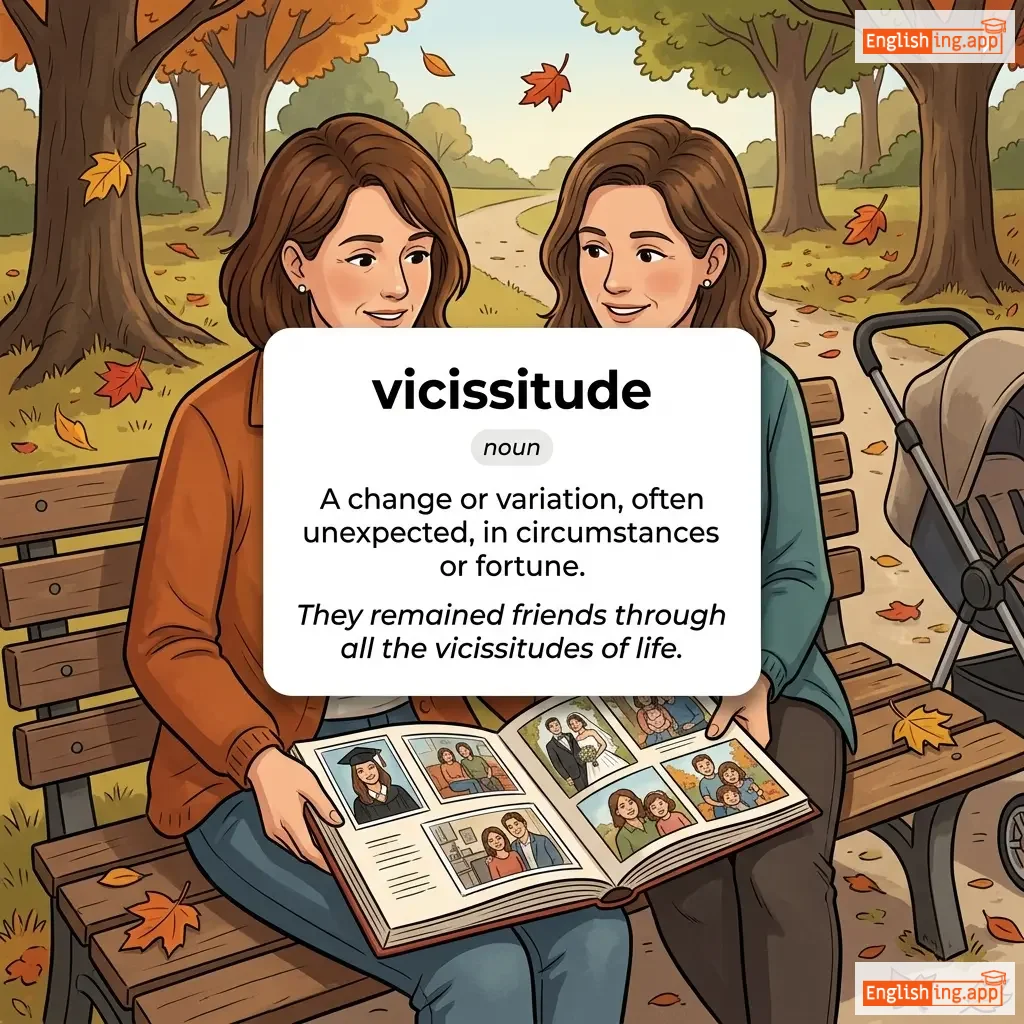
vicissitude definition card — visual illustration of the meaning
noun
/vɪˈsɪsɪtjuːd/
変遷 (hensen)

A change or variation, often unexpected, in circumstances or fortune.

"They remained friends through all the vicissitudes of life."

"彼らは人生のすべての変遷を通して友達であり続けました。" (Karera wa jinsei no subete no hensen wo tooshite tomodachi de aritsuzukemashita.)
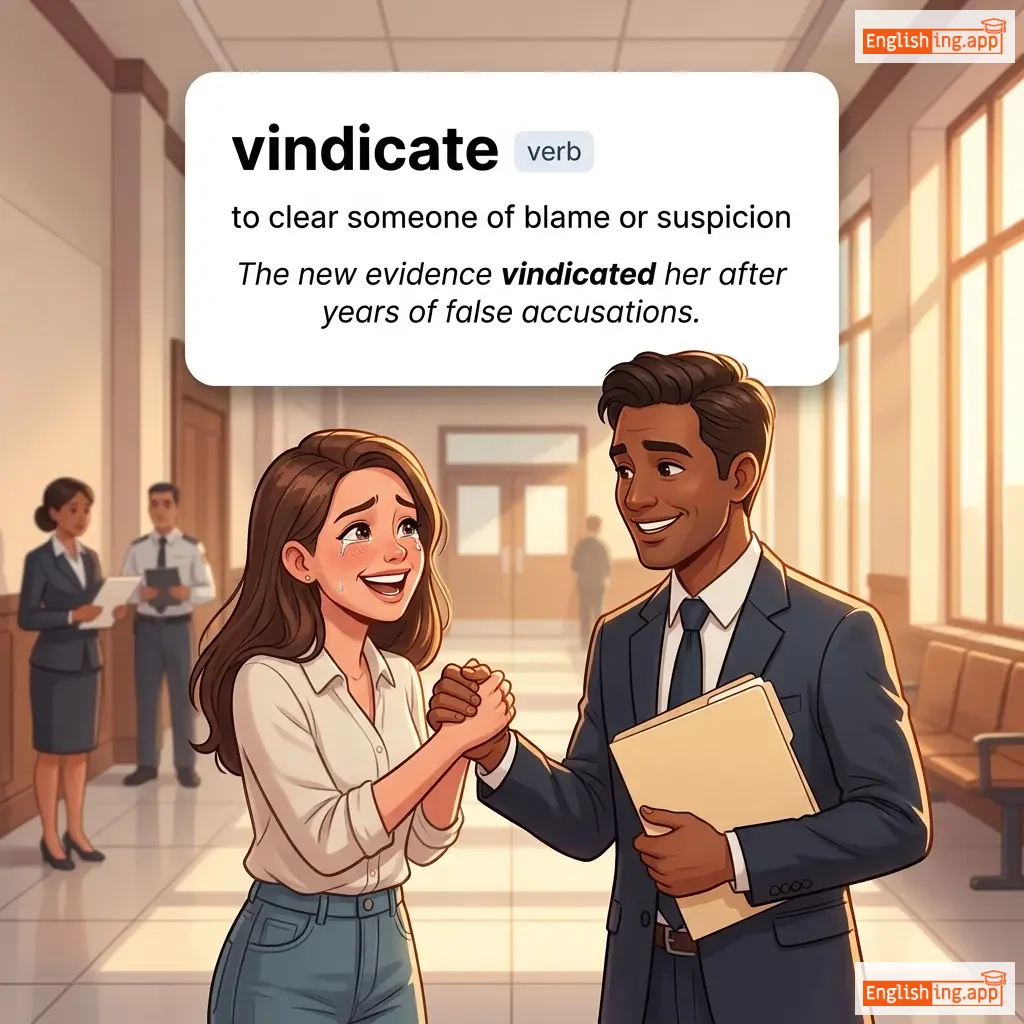
vindicate definition card — visual illustration of the meaning
verb
/ˈvɪndɪkeɪt/

to clear someone of blame or suspicion

"The new evidence vindicated her after years of false accusations."

adjective
/ˈvɪndɪkətɔːri/
弁護的な (bengoteki na)

Serving to justify, clear of blame, or defend.

"His vindicatory remarks restored his reputation."

"彼の弁護的な発言は彼の評判を回復させた。" (Kare no bengoteki na hatsugen wa kare no hyōban o kaifuku saseta.)
adjective
/ʌnˈmænɪdʒəbəl/
管理できない; 手に負えない (kanri dekinai; te ni oenai)

difficult or impossible to control or handle

"The large class became unmanageable without proper supervision."

"適切な監視がなければ、大きなクラスは管理できなくなった。" (tekisetsu na kanshi ga nakereba, ookina kurasu wa kanri dekinakunatta.)
adjective
/vaɪˈkɛəriəs/
幸福 (koufuku)

experienced through the feelings or actions of another person

"She felt vicarious excitement watching her son win the award."

"彼女は賞を受け取ったとき、幸福を隠すことができなかった。" (Kanojo wa shou wo uketotta toki, koufuku wo kakusu koto ga dekinakatta.)
noun
/vaɪˈbreɪ.ʃən/
振動 (shindou)

a rapid back and forth movement; oscillation

"The phone's vibration woke me up."

"電話の振動で目が覚めた。" (Denwa no shindou de me ga sameta.)
adjective
/ˈvɪʃəs/
vicious (vicious)

Deliberately cruel, violent, or immoral.

"The dog gave a vicious growl when the stranger approached."

"犬は見知らぬ人が近づいたとき、ひどくうなった。" (Inu wa mishiranu hito ga chikaduita toki, hidoku unatta.)
noun
/ˈvɪn.ɪ.ɡər/
(su)

a sour liquid made from fermented alcohol, used for cooking and preserving

"I added vinegar to the salad dressing for extra flavor."
"私はサラダドレッシングにビネガーを加えて、味を増しました。" (Watashi wa sarada doresshingu ni binegaa wo kuwaete, aji wo mashimashita.)
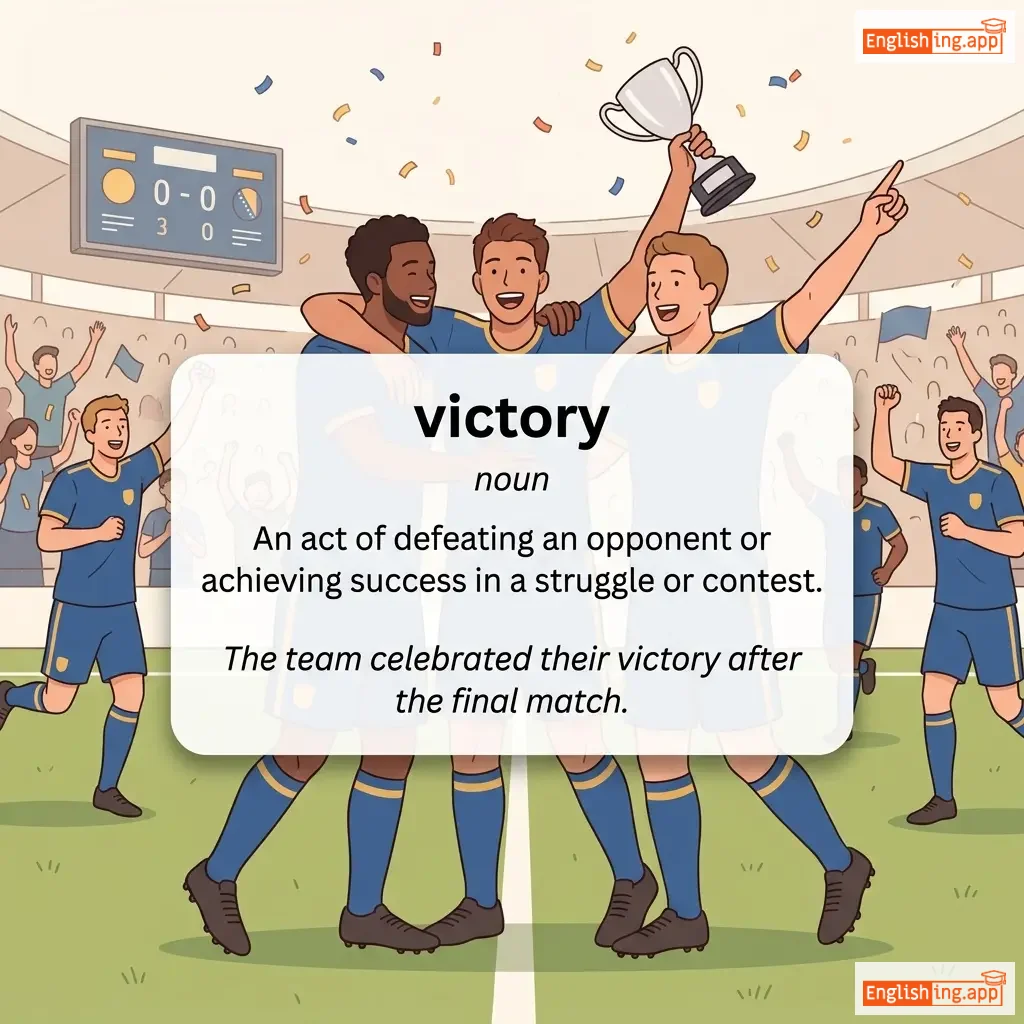
victory definition card — visual illustration of the meaning
noun
/ˈvɪktəri/
勝利 (shōri)

An act of defeating an opponent or achieving success in a struggle or contest.

"The team celebrated their victory after the final match."

"チームは最終試合の後、勝利を祝いました。" (chīmu wa saishū shiai no ato, shōri o iwai mashita.)
verb
/ˈvɪktɪmaɪz/
被害者にする (higaisha ni suru)

To make someone a victim, often by treating them unfairly or cruelly.

"The corrupt officials victimized the poor villagers."

"腐敗した役人たちは貧しい村人を犠牲にした。" (Fuhai shita yakunin-tachi wa mazushii murabito o gisei ni shita.)
noun
/ˈvɪtəlz/
食料 (shokuryou)

Food or provisions, especially for human consumption.

"The travelers packed enough victuals for their long journey."

"旅行者たちは長い旅のために十分な食料を詰め込みました。" (Ryokō-sha-tachi wa nagai tabi no tame ni jūbun'na shokuryō o tsumemashita.)
noun
/ˈvɪərər/
視聴者 (shichōsha)

a person who watches something, especially television or video content

"The viewer is able to switch channels with the remote control."

"視聴者はリモコンでチャンネルを切り替えることができます。" (Shichōsha wa rimokon de channeru o kirikaeru koto ga dekimasu.)
noun
/ˈvɪlɪdʒ/
(mura)

a small community or group of houses in a rural area

"They live in a small village surrounded by mountains."

"彼らは山に囲まれた小さな村に住んでいます。" (Karera wa yama ni kakomareta chiisana mura ni sundeimasu.)
noun
/vɪnˈjɛt/
短編小説 (tanpen shōsetsu)

A short, descriptive piece of writing or a brief scene.

"The author included a poignant vignette in the introduction of the book."

"著者は本の序文に感動的な短編小説を含めた。" (Chosha wa hon no jobun ni kandō-tekina tanpen shōsetsu o fukumeta.)
noun
/vaɪn/
つる植物 (tsuru shokubutsu)

a climbing or trailing plant with long stems; a plant that produces grapes

"The vine climbed up the wall and covered it with green leaves."

"そのつる植物は壁を登り、緑の葉で覆った。" (sono tsuru shokubutsu wa kabe o nobori, midori no ha de ootta)
adjective
/ˈvjuː.ləs/
見えない; 意見なし (mienai; iken nashi)

invisible; having no views or opinions

"The ghost remained viewless to most people in the haunted house."

"幽霊はお化け屋敷のほとんどの人々には見えませんでした。" (Yūrei wa obake yashiki no hotondo no hitobito ni wa miemasen deshita.)
adjective
/ˈvɪnsəbl/
打ち負かされる可能性がある (uchimakasareru kanousei ga aru)

capable of being overcome or defeated

"The enemy seemed vincible after losing their main base."

"敵は主要基地を失った後、打ち負かされる可能性があった。" (Teki wa shuyou kichi o ushinatta ato, uchimakasareru kanousei ga atta.)
noun/adjective
/ˈvɪntɪdʒ/
ヴィンテージ / クラシック (vintage / kurashikku)

Relating to high quality from the past; classic; also the year of a wine harvest.

"She wore a vintage dress from the 1950s."

"彼女は1950年代のヴィンテージドレスを着ていました。" (Kanojo wa 1950 nendai no vintage doresu o kite imashita.)
noun
/ˈvɪɡ.ər/
身体的な力と健康; 努力、エネルギー、熱意 (vigōru)

physical strength and good health; effort, energy, and enthusiasm

"She approached her work with renewed vigour after the vacation."

"休暇後、彼女は新たな活力で仕事に取り組みました。" (kyūka go, kanojo wa aratana katsuryoku de shigoto ni torikumi mashita.)
adjective
/ʌnˈmærid/
未婚 (mikon)

Not married; single.

"He is thirty-five and still unmarried."
"彼は三十五歳で、まだ未婚です。" (Kare wa sanjuugosai de, mada mikon desu.)
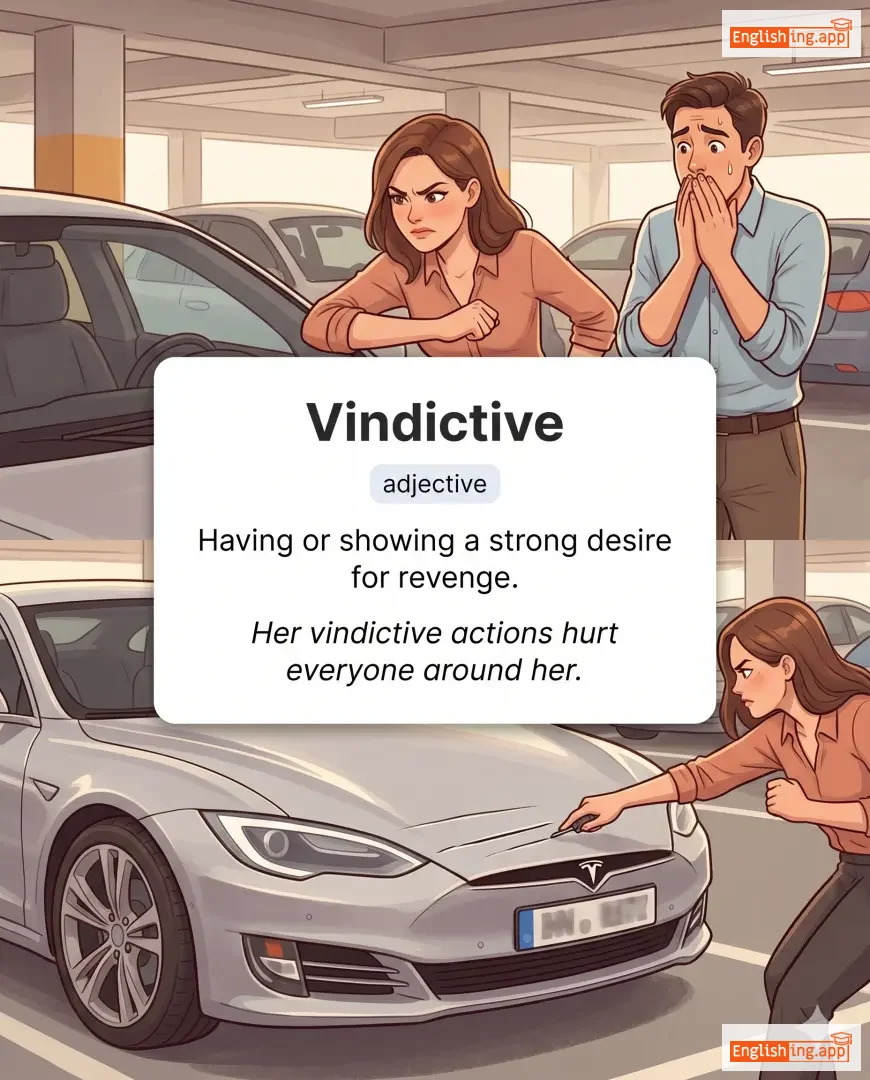
Vindictive definition card — visual illustration of the meaning
adjective
/vɪnˈdɪktɪv/
復讐心の強い (fukushūshin no tsuyoi)

Having or showing a strong desire for revenge.

"Her vindictive actions hurt everyone around her."

"彼女の復讐心の強い行動は、周りのすべての人々を傷つけた。" (Kanojo no fukushūshin no tsuyoi kōdō wa, mawari no subete no hitobito o kizutsuketa.)
noun
/ˈvɪɡər/
活力 (katsuryoku)

Physical strength, energy, or enthusiasm.

"She tackled the project with great vigor and determination."

"彼女は大きな活力と決意を持ってそのプロジェクトに取り組んだ。" (Kanojo wa ōkina katsuryoku to ketsui o motte sono purojekuto ni torikunda.)
adjective
/ʌnˈmaɪndfəl/
無頓着な; 注意しない; (mutonchakuna; chūi shinai)

not paying attention; careless; heedless

"She was unmindful of the danger around her."

"彼女は周りの危険に気づいていませんでした。" (Kanojo wa mawari no kiken ni kidzuiteimasendeshita.)
adjective
/ʌnˈlɪmɪtɪd/
無制限 (museigen)

without any limits or restrictions

"The internet plan offers unlimited data for the whole month."
"インターネットプランは1ヶ月間の無制限データを提供します。" (Intānetto puran wa ikkagetsukan no museigen dēta o teikyō shimasu.)
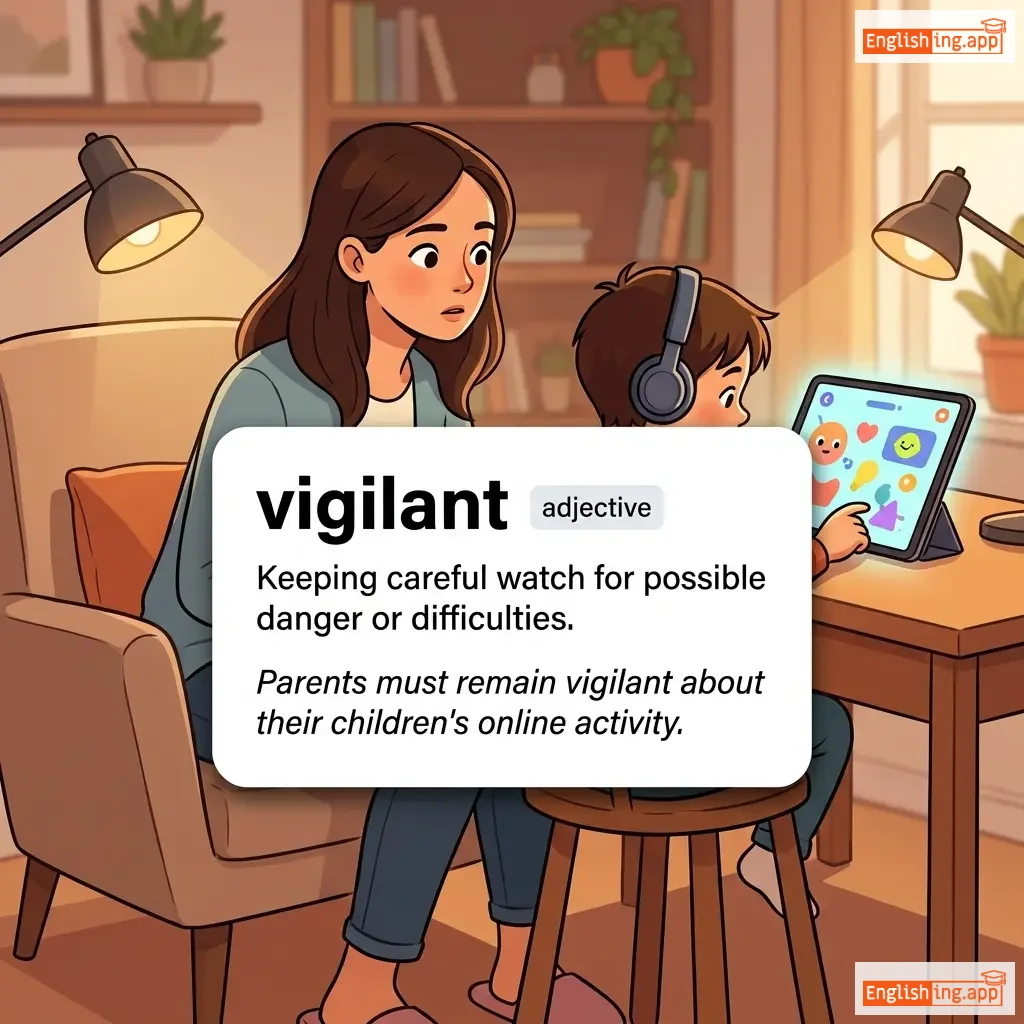
vigilant definition card — visual illustration of the meaning
adjective
/ˈvɪdʒɪlənt/
警戒 (keikai)

Keeping careful watch for possible danger or difficulties.

"Parents must remain vigilant about their children's online activity."

"親は子供たちのオンライン活動について警戒し続けるべきです。" (Oya wa kodomotachi no onrain katsudō ni tsuite keikai shitsuzukeru beki desu.)
adjective
/ʌnˈlʌki/
不運; ラッキーでない (fuun; rakkī denai)

having bad luck; unfortunate

"He was unlucky to miss the winning shot."

"彼は勝つシュートを外して不運だった。" (Kare wa katsu shūto o hazushite fuun datta.)