語彙集

英単語辞書 | 単語の意味、定義、例文

adjective
/wiːk/
弱い (yowai)

lacking physical strength or energy

"She felt weak after the long run."

"長いランニングの後、彼女は弱く感じた。" (Nagai ranningu no ato, kanojo wa yowaku kanjita.)
conjunction
/wɛərˈæz/
〜一方で (ippō de)

used to introduce a contrast or comparison between two facts

"She prefers tea, whereas he likes coffee."

"彼女はお茶が好きですが、彼はコーヒーが好きです。" (Kanojo wa ocha ga suki desu ga, kare wa kōhī ga suki desu.)
adverb
/wɛnˈɛvər/
いつでも (itsudemo)

at any time, or whenever it happens

"You can call me whenever you want."

"あなたはいつでも私に電話できます。" (Anata wa itsudemo watashi ni denwa dekimasu.)
adverb
/ˈwɪmzɪkli/
遊び心いっぱいに (uimuzikarii)

In a playful, fanciful, or capricious manner; with sudden changes of mind

"She decorated her room whimsically with colorful balloons."

"彼女は部屋をカラフルな風船で遊び心いっぱいに飾った。" (Kanojo wa heya o karafuru na fuusen de asobigokoro ippai ni kazatta.)
adverb
/wɛərˈbaɪ/
によって (ni yotte)

by which; because of which

"The company agreed to a contract whereby it would pay the penalty."
"その会社は、罰金を支払う契約に同意しました。" (Sono kaisha wa, bakkin o shiharau keiyaku ni dōi shimashita.)
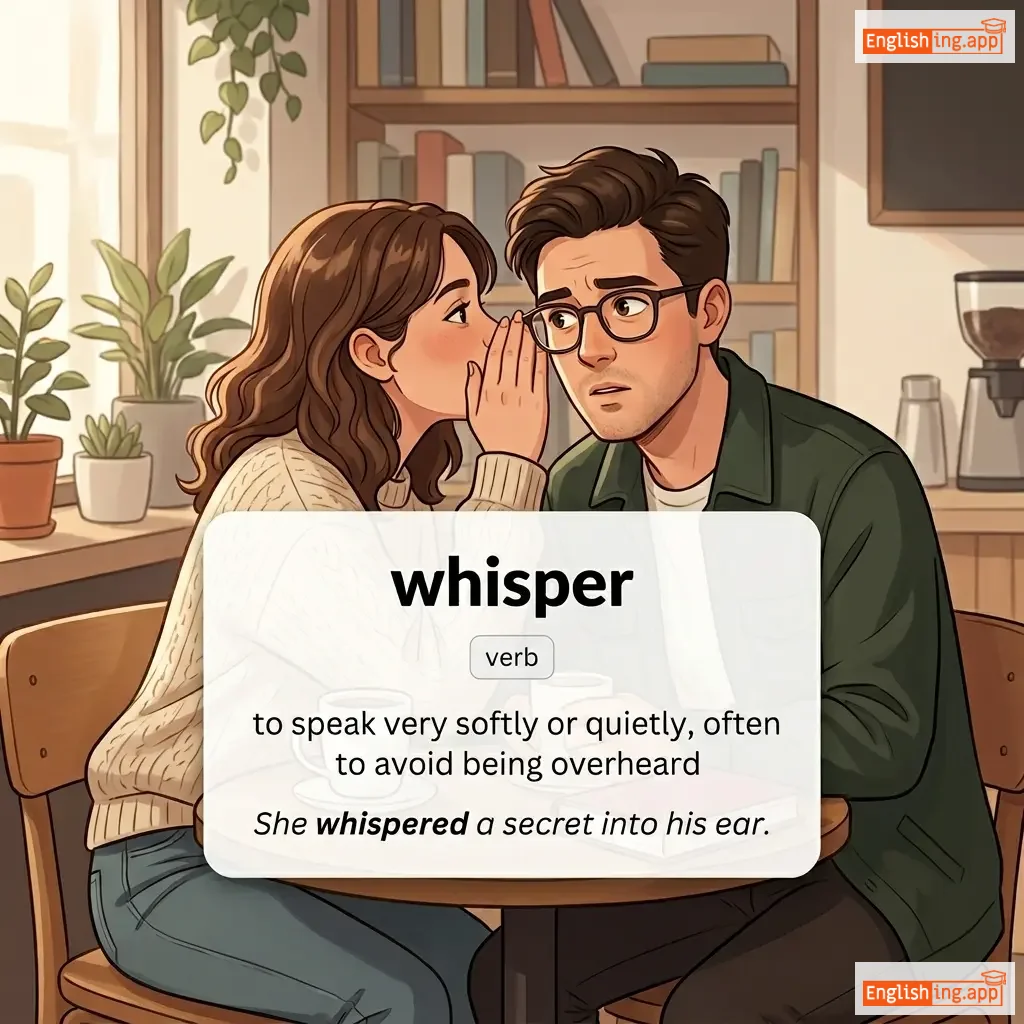
whisper definition card — visual illustration of the meaning
verb
/ˈwɪspər/
ささやく (sasayaku)

to speak very softly or quietly, often to avoid being overheard

"She whispered a secret into his ear."
"彼女は彼の耳に秘密をささやいた。" (Kanojo wa kare no mimi ni himitsu o sasayaita.)
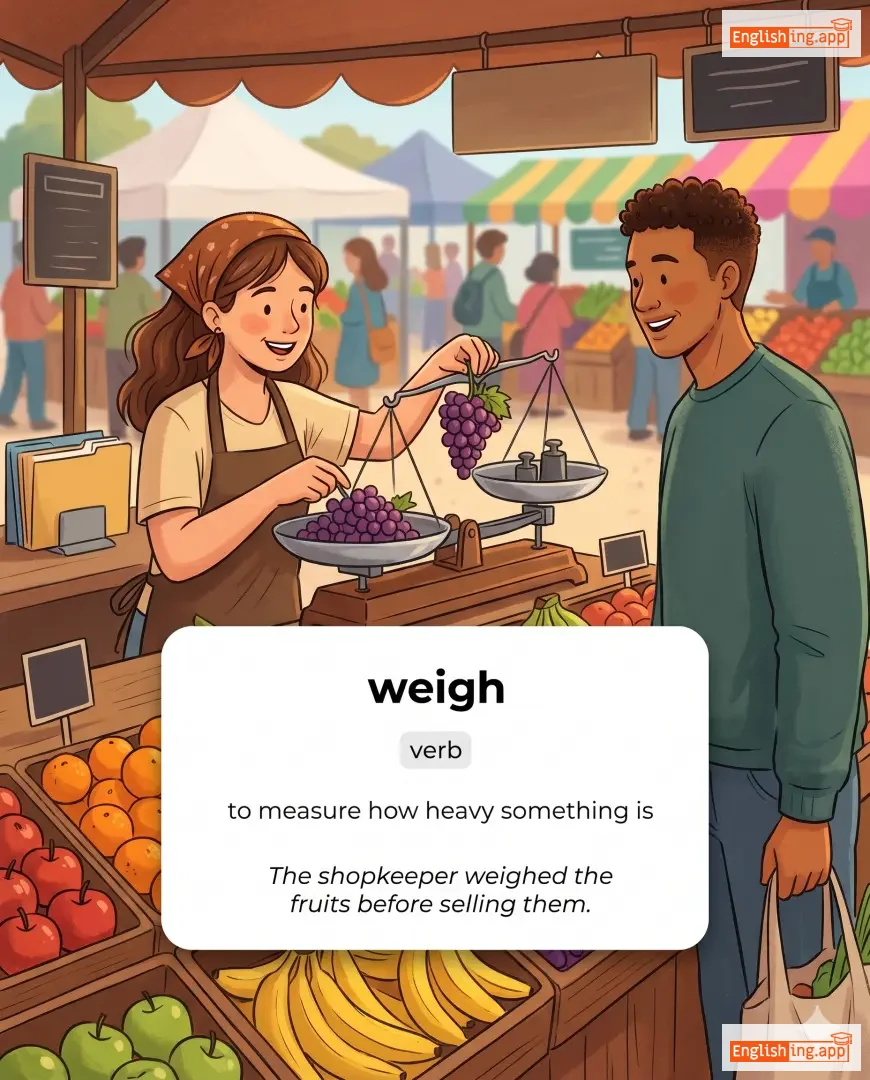
weigh definition card — visual illustration of the meaning
verb
/weɪ/
重さを量る (omosa o hakaru)

to measure how heavy something is

"The shopkeeper weighed the fruits before selling them."

"店主は果物を販売する前に重さを量った。" (Ten-shu wa kudamono o hanbai suru mae ni omosa o hakatta.)
noun
/ˈwɒrən/
ウサギの巣穴のネットワーク (warren)

A network of interconnected rabbit burrows; also used metaphorically for a densely populated building or district.

"The old part of the city is a warren of narrow streets."

"街の古い部分は、狭い通りが入り組んだ迷路のようです。" (Machi no furui bubun wa, semai tōri ga hairikonda meiro no yō desu.)
noun
/weɪt/
重さ (omosa)

a measure of how heavy something is

"The weight of the package was 10 kilograms."

"パッケージの重さは10キログラムでした。" (Pakkēji no omosa wa 10 kiroguramu deshita.)
noun
/wiːk/
(shū)

a period of seven days

"I will finish the project by the end of the week."

"私は今週末までにプロジェクトを終わらせます。" (Watashi wa konshūmatsu made ni purojekuto o owarasemasu.)
adverb
/wɛr/
どこ (doko)

in or at what place or position

"Where do you live?"

"あなたはどこに住んでいますか?" (Anata wa doko ni sundeimasu ka?)
🍴

whet

verb
/wɛt/

To sharpen the blade of a tool or to stimulate interest or appetite.

"The smell of food whetted my appetite."

👃

whiff

noun, verb
/wɪf/

A brief, faint smell or puff of air; to get a quick smell of something.

"I caught a whiff of perfume as she passed by."

noun
/ˈwɒʃ.ɪŋ məˌʃiːn/

a machine for washing clothes and other textiles

"The washing machine broke down and needs repair."

pronoun
/wɪtʃ/
どれ (dore)

used to ask about one or more items from a defined set

"Which one do you prefer, the red or the blue?"

"赤と青、どちらを選びますか?" (Aka to ao, dochira o erabimasu ka?)
noun
/ˈwɑː.ʃər mæn/
洗濯屋 (sentakuya)

a person whose job is to wash clothes and linens for others

"The washer man collected dirty clothes from every household in the village."
"洗濯屋は村のすべての家から汚れた服を集めました。" (Sentakuya wa mura no subete no ie kara yogoreta fuku o atsumemashita)
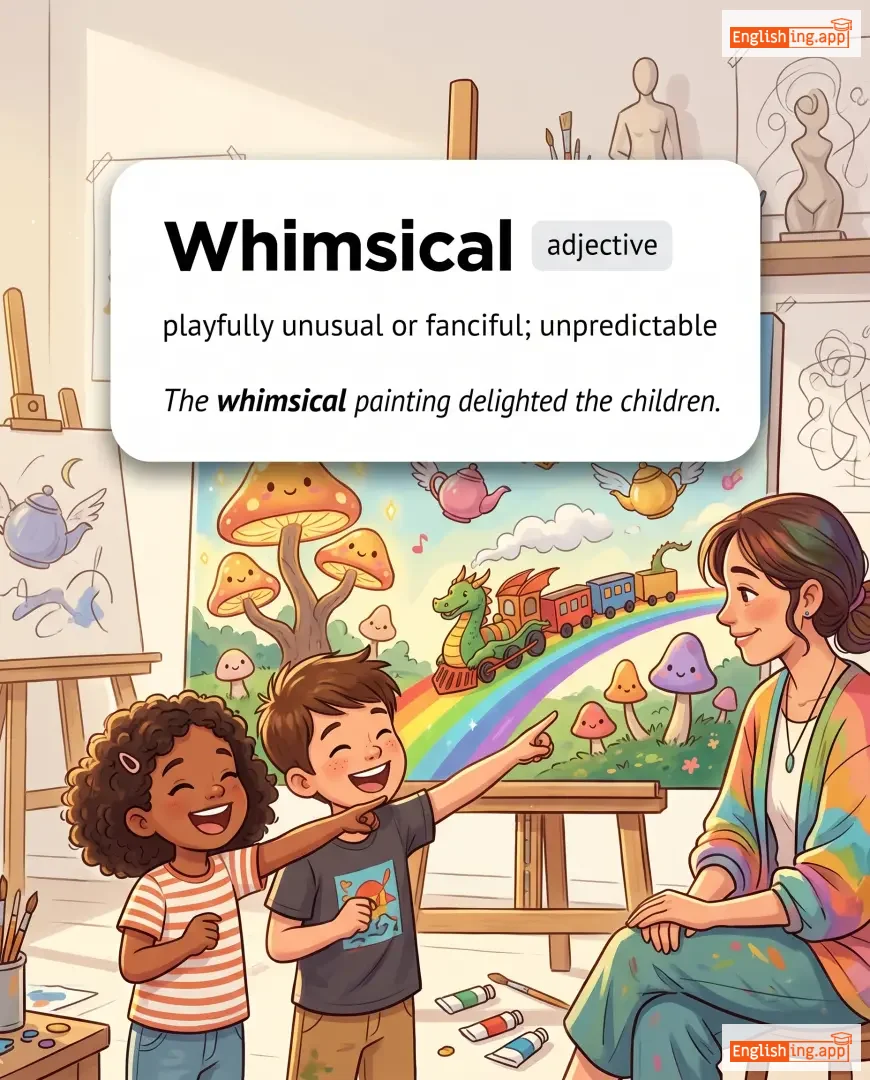
Whimsical definition card — visual illustration of the meaning
adjective
/ˈwɪmzɪkəl/
奇想天外 (kisō tengai)

playfully unusual or fanciful; unpredictable

"The whimsical painting delighted the children."

"その奇想天外な絵画は子供たちを喜ばせました。" (Sono kisō tengai na kaiga wa kodomotachi o yorokobasemashita.)
noun
/ˈwɒtʃ.mən/
守衛 (shuei)

a person employed to guard or watch over a building or area, especially at night

"The watchman patrols the factory every hour to ensure security."

"守衛は毎時間工場を巡回して、セキュリティを確保します。" (Shuei wa maijikan kōjō o junkai shite, sekyuriti o kakuho shimasu.)
noun
/wɔːmθ/
温かさ (atatakasa)

the quality or state of being warm in temperature or feeling

"She felt the warmth of the sun on her face."

"彼女は顔に太陽の温もりを感じた。" (Kanojo wa kao ni taiyō no nukumori o kanjita.)
noun
/ˈweɪvlət/
小さな波 (chiisana nami)

a small wave or ripple on the surface of water or another medium

"The pond was disturbed only by the tiny wavelets caused by the breeze."

"池は風によって引き起こされた小さな波によってのみ乱されました。" (Ike wa kaze ni yotte hikiokosareta chiisana nami ni yotte nomi midasaremashita.)
noun
/weɪ/
道 / 方法 (michi / hōhō)

a path, direction, or method of doing something

"He found a new way to solve the problem."

"彼は問題を解決する新しい方法を見つけました。" (Kare wa mondai o kaiketsu suru atarashī hōhō o mitsukemashita.)
adverb
/wɛrˈɛv.ər/
どこでも (dokodemo)

In or to any place.

"You can find good people wherever you go."

"あなたはどこでも良い人を見つけることができます。" (Anata wa dokodemo yoi hito o mitsukeru koto ga dekimasu.)
adjective
/ˈwɛlθi/
裕福 (yūfuku)

having a great deal of money, resources, or assets

"He became wealthy after investing in real estate."

"彼は不動産に投資した後、裕福になった。" (Kare wa fudōsan ni tōshi shita ato, yūfuku ni natta.)
noun
/ˈwɪntər/
(fuyu)

the coldest season of the year, typically from December to February in the Northern Hemisphere

"Winter in the north can be very harsh with heavy snowfall."

"北の冬は非常に厳しく、大雪が降ることがあります。" (Kita no fuyu wa hijō ni kibishiku, ōyuki ga furu koto ga arimasu.)
noun
/wiːl/
幸福 (kōfuku)

A raised mark on the skin left after a blow; or general well-being and prosperity.

"The charity worked for the common weal of the community."
"彼女は賞を受け取ったとき、喜びを隠すことができませんでした。" (Kanojo wa shō o uketotta toki, yorokobi o kakusu koto ga dekimasen deshita.)
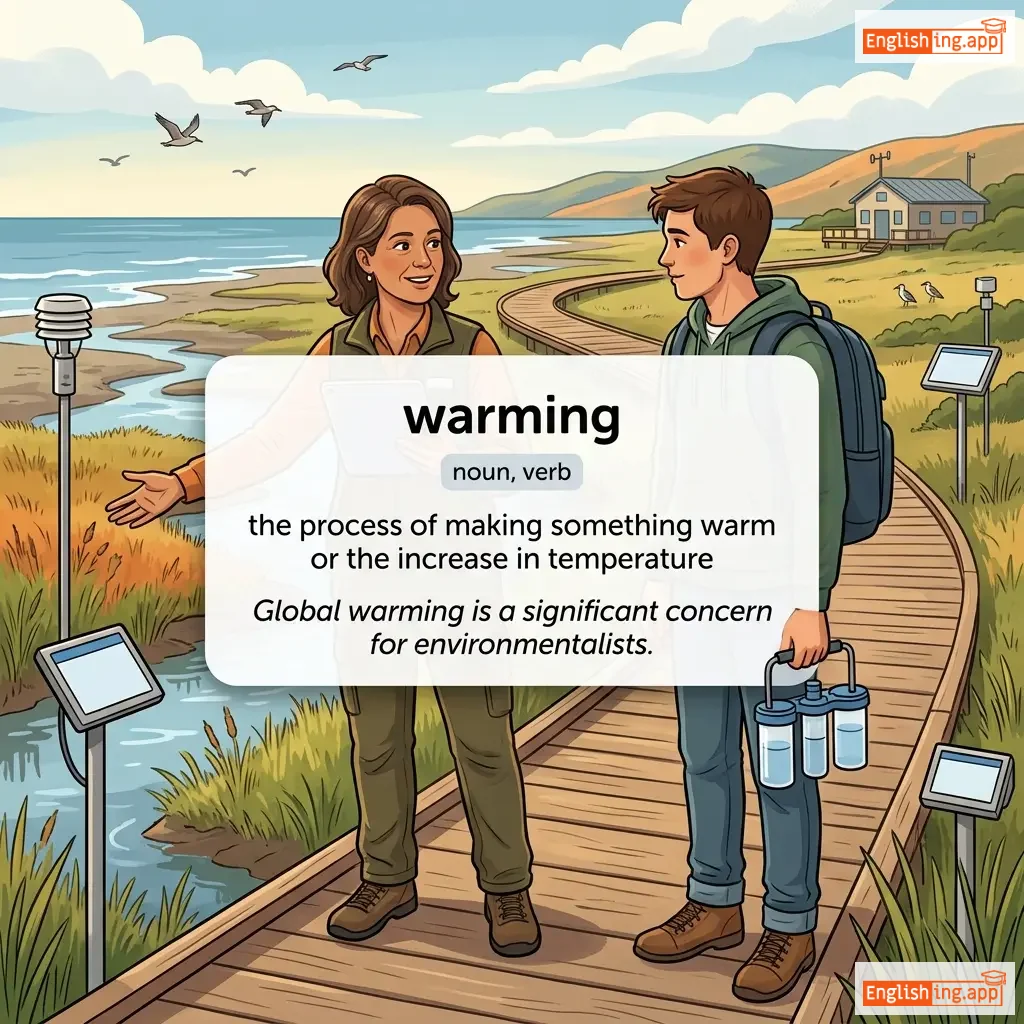
warming definition card — visual illustration of the meaning
noun, verb
/ˈwɔːmɪŋ/
温度上昇 (ondo joushou)

the process of making something warm or the increase in temperature

"Global warming is a significant concern for environmentalists."

"地球温暖化は環境活動家にとって重要な問題です。" (Chikyuu ondanka wa kankyou katsudouka ni totte juuyou na mondai desu.)
conjunction
/waɪl/
その間 (sono aida)

during the time that something is happening

"She was reading while waiting for the bus."

"彼女はバスを待っている間に読書をしていた。" (Kanojo wa basu wo matteiru aida ni dokusho wo shite ita.)
workload definition card — visual illustration of the meaning
noun
ˈwɜːrkˌləʊd
作業負荷 (sagyou fuka)

The amount of work to be done by someone or something.

"His workload has increased dramatically in the past month."

"彼のワークロードは先月劇的に増加しました。" (Kare no wākurōdo wa sengetsu gekiteki ni zōka shimashita.)
adjective
/ˈwɪəri/
疲れた (tsukareta)

feeling or showing extreme tiredness, especially as a result of exertion or lack of sleep

"After the long journey, she felt weary and wanted to rest."

"長い旅の後、彼女は疲れて休みたがっていた。" (Nagai tabi no ato, kanojo wa tsukarete yasumitakagatteita.)
warranted definition card — visual illustration of the meaning
adjective/verb
/ˈwɒrəntɪd/
正当化された (seitouka sareta)

Justified or authorized under the circumstances.

"Her anger was warranted after the unfair treatment."

"不公平な扱いの後、彼女の怒りは正当化されていました。" (Fukouhei na atsukai no ato, kanojo no ikari wa seitouka sarete imashita.)
verb
/wɪp/
ムチで打つ (muchi de utsu)

to strike or beat with a flexible instrument such as a rope or cord

"The trainer whipped the horse to make it run faster."

"トレーナーは馬を速く走らせるために鞭で打った。" (Toreenaa wa uma wo hayaku hashiraseru tame ni muchi de utta.)
🌕

Wax

verb
/wæks/

to increase gradually in size, number, strength, or intensity

"The moon will wax until it becomes full."

preposition
/wɪð/
と一緒に (to issho ni)

indicating the person or thing that is accompanying or involved with someone or something else

"She went to the market with her friend."

"彼女は友達と一緒に市場に行きました。" (Kanojo wa tomodachi to issho ni ichiba ni ikimashita.)
adjective
/ˌwɛl tə ˈduː/
裕福 (yūfuku)

Prosperous, wealthy, or financially comfortable.

"They belong to a well-to-do family in the city."
"彼らは都市の裕福な家族に属しています。" (Karera wa toshi no yūfuku na kazoku ni zoku shiteimasu.)
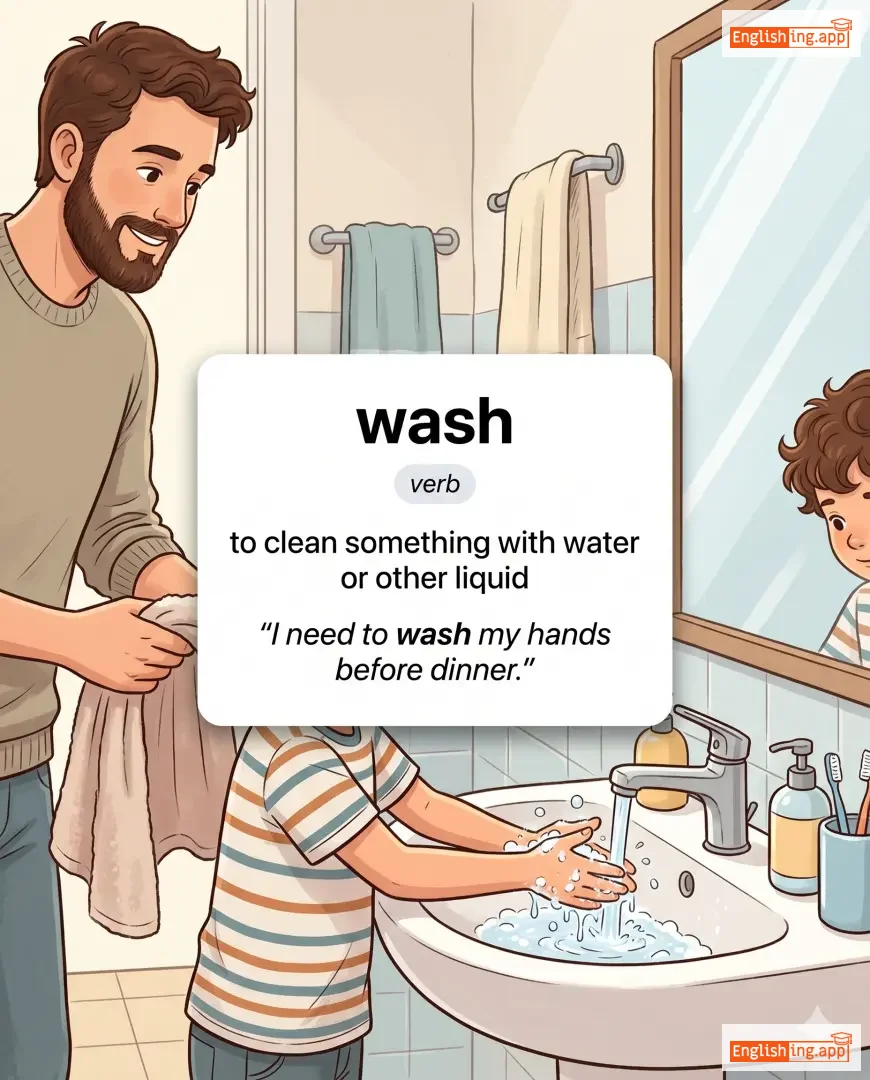
wash definition card — visual illustration of the meaning
verb
/wɒʃ/
洗う (arau)

to clean something with water or other liquid

"I need to wash my hands before dinner."

"夕食前に手を洗う必要があります。" (Yuushoku mae ni te o arau hitsuyou ga arimasu.)
adjective
/ˈwaɪəri/
細くて強く、丈夫な (hosokute tsuyokute, joubu na)

Lean, tough, and strong, often with sinewy muscles.

"The wiry athlete moved with remarkable speed and agility."

"その細いアスリートは驚くべき速度と敏捷性で動いた。" (Sono hosoi asurīto wa odorokubeki sokudo to binshōsei de ugoita.)
noun
/ˈwɪmzi/
奇抜さ (kibatsusa)

playful or fanciful behavior or humor

"Her stories were full of whimsy and imagination."
"彼女の話は奇抜さと想像力にあふれていました。" (Kanojo no hanashi wa kibatsusa to sōzōryoku ni afurete imashita.)
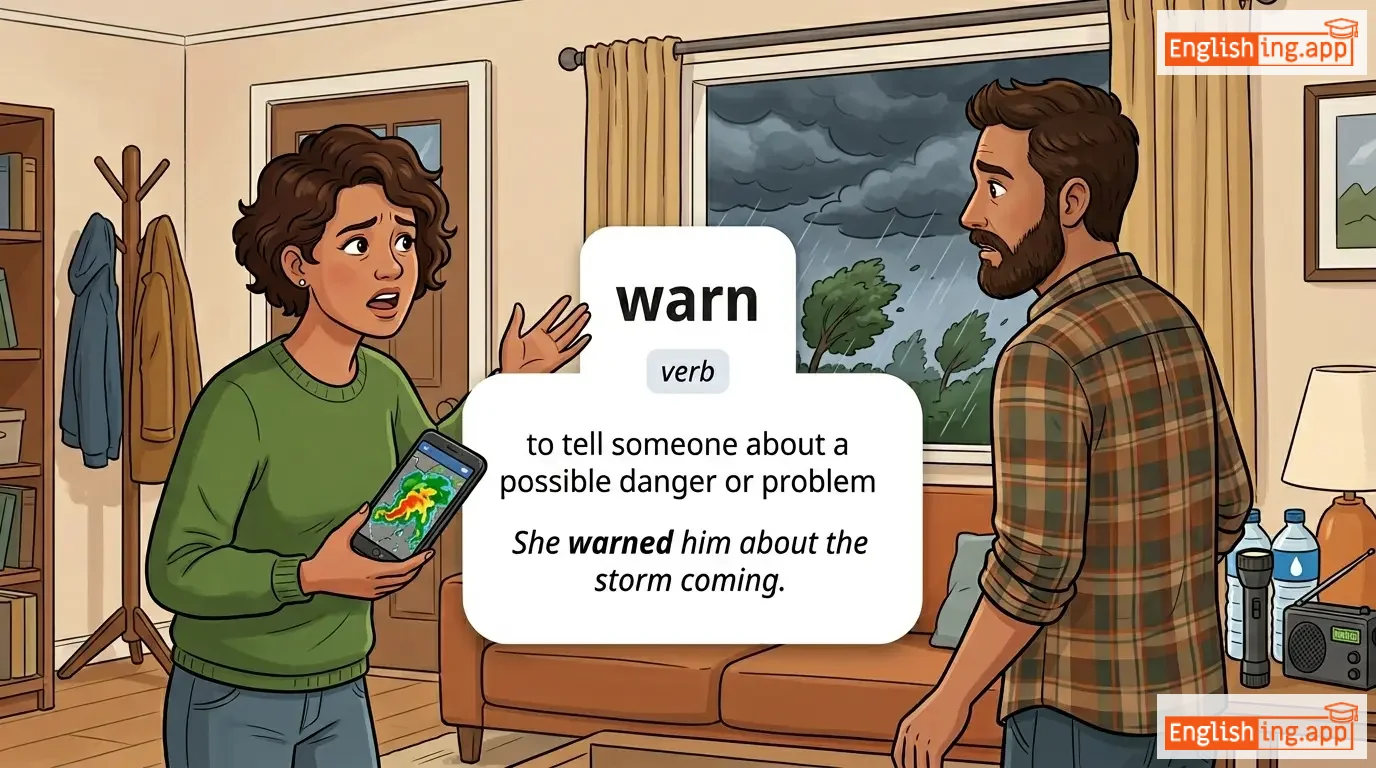
warn definition card — visual illustration of the meaning
verb
/wɔːrn/
警告する (keikoku suru)

to tell someone about a possible danger or problem

"She warned him about the storm coming."

"彼女は迫り来る嵐について彼に警告した。" (Kanojo wa semarikuru arashi ni tsuite kare ni keikoku shita.)
adverb
/wɛl/
うまく (umaku)

in a good or satisfactory way

"She did well in her exams."

"彼女は試験でうまくいった。" (Kanojo wa shiken de umaku itta.)
adjective
/ˌwɛlˈbrɛd/
育ちが良い (sodachi ga yoi)

Having or showing good manners; properly raised.

"She is a well-bred young lady with excellent manners."

"彼女は素晴らしいマナーを持つ育ちの良い若い女性です。" (Kanojo wa subarashī manā o motsu sodachi no yoi wakai josei desu.)
adjective
/ˈwɪt.i/
機知に富んだ; 面白い (kichi ni tonda; omoshiroi)

having or showing quick intelligence; amusing in a clever way

"Her witty response to the critic's question impressed the entire audience."

"彼女の機知に富んだ答えは、批評家の質問に対して観客全体を感動させました。" (Kanojo no kichi ni tonda kotae wa, hihyōka no shitsumon ni taishite kankyaku zentai o kandō sasemashita.)
adjective
/ˌhoʊlˈhɑːrtɪd/
全力で (zenryoku de)

showing complete sincerity and commitment; fully enthusiastic

"She gave her wholehearted support to the project."

"彼女はそのプロジェクトに全力でサポートを与えた。" (Kanojo wa sono purojekuto ni zenryoku de sapōto o ataeta.)
noun
/ˈwɒrənti/
保証 (hoshō)

A written guarantee given by a manufacturer or seller promising to repair or replace a product if necessary within a specified period.

"The laptop comes with a two-year warranty."

"そのノートパソコンには2年間の保証が付いています。" (Sono nōto pasokon ni wa 2-nenkan no hoshō ga tsuiteimasu.)
noun
/ˈwel.wɪʃ.ər/
ウェルウィッシャー (wēru wisshā)

a person who desires happiness or success for another

"Many well-wishers came to congratulate her on her graduation."

"多くのウェルウィッシャーが彼女の卒業を祝うために来ました。" (Ōku no wēru wisshā ga kanojo no sotsugyō o iwau tame ni kimashita.)
preposition
/wɪðˈaʊt/
なし (nashi)

in the absence of, or not having something

"He left without saying goodbye."

"彼はさよならを言わずに出て行った。" (Kare wa sayonara o iwazu ni dete itta.)
adjective
/waɪld/
野生 (yasei)

living or growing in the natural environment; uncontrolled or untamed

"The children ran wild in the park."

"子供たちは公園で野生的に走り回った。" (Kodomotachi wa kouen de yaseiteki ni hashirimawatta.)
noun
/wɒsp/
スズメバチ (suzumebachi)

a flying insect with a yellow and black striped body and a painful sting

"The wasp stung me when I disturbed its nest."

"私は巣を邪魔したとき、スズメバチに刺されました。" (Watashi wa su o jama shita toki, suzumebachi ni sasarimashita.)
noun
/ˈwɛnzdeɪ/
水曜日 (suiyoubi)

the fourth day of the week, following Tuesday and preceding Thursday

"The meeting has been scheduled for Wednesday afternoon."

"会議は水曜日の午後に予定されています。" (kaigi wa suiyoubi no gogo ni yotei sareteimasu)
pronoun
/wɒtˈɛvər/
何でも (nandemo)

used to refer to anything or everything that is of the type mentioned

"You can choose whatever you like."

"あなたは何でも好きなものを選んでください。" (Anata wa nandemo sukina mono o erande kudasai.)
adjective
/ˈhoʊlsəm/
健康的な (kenkō-teki na)

promoting health or well-being; morally good and beneficial

"The retreat offered wholesome food and peaceful surroundings."

"そのリトリートは健康的な食事と平穏な環境を提供しました。" (Sono ritorīto wa kenkō-teki na shokuji to heion na kankyō o teikyō shimashita.)