Словари

Словарь английского языка | Значения слов, определения и примеры

adjective
/wiːk/
слабый (slaby)

lacking physical strength or energy

"She felt weak after the long run."

"Она почувствовала себя слабой после долгого забега." (Ona pochuvstvovala sebya slaboy posle dolgogo zabega.)
conjunction
/wɛərˈæz/
тогда как (togda kak)

used to introduce a contrast or comparison between two facts

"She prefers tea, whereas he likes coffee."

"Она предпочитает чай, тогда как он любит кофе." (Ona predpochitayet chay, togda kak on lyubit kofe.)
adverb
/wɛnˈɛvər/
когда угодно (kogda ugodno)

at any time, or whenever it happens

"You can call me whenever you want."

"Ты можешь позвонить мне, когда угодно." (Ty mozhesh' pozvonit' mne, kogda ugodno.)
adverb
/ˈwɪmzɪkli/
причудливо (Uimzikli)

In a playful, fanciful, or capricious manner; with sudden changes of mind

"She decorated her room whimsically with colorful balloons."

"Она украсила свою комнату причудливо разноцветными воздушными шарами." (Ona ukrasila svoyu komnatu prichudlivo raznotsvetnymi vozdushnymi sharami.)
adverb
/wɛərˈbaɪ/
посредством которого (posredstvom kotorogo)

by which; because of which

"The company agreed to a contract whereby it would pay the penalty."

"Компания согласилась на контракт, посредством которого она выплатит штраф." (Kompaniya soglasilas' na kontrakt, posredstvom kotorogo ona vyplatit shtraf.)
whisper definition card — visual illustration of the meaning
verb
/ˈwɪspər/
шептать (sheptat)

to speak very softly or quietly, often to avoid being overheard

"She whispered a secret into his ear."
"Она шептала ему секрет на ухо." (Ona sheptala emu sekret na ukho.)
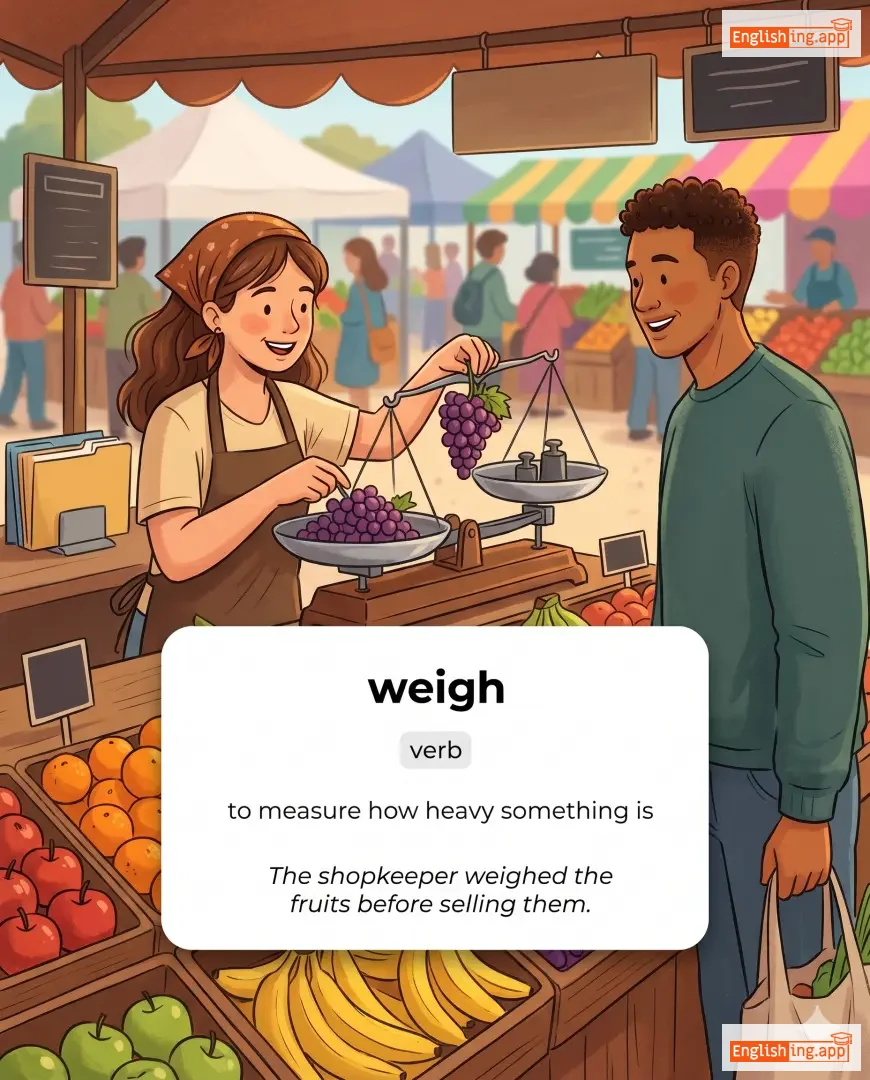
weigh definition card — visual illustration of the meaning
verb
/weɪ/
вешать (veshat)

to measure how heavy something is

"The shopkeeper weighed the fruits before selling them."

"Продавец взвесил фрукты перед тем, как их продать." (Prodavets vzvesil frukty pered tem, kak ikh prodat.)
noun
/ˈwɒrən/
сеть кроличьих нор (warren)

A network of interconnected rabbit burrows; also used metaphorically for a densely populated building or district.

"The old part of the city is a warren of narrow streets."

"Старая часть города - это сеть узких улиц." (Staryaya chast' goroda - eto set' uzkikh ulits.)
noun
/weɪt/
вес (ves)

a measure of how heavy something is

"The weight of the package was 10 kilograms."

"Вес пакета был 10 килограммов." (Ves paketa byl 10 kilogrammov.)
noun
/wiːk/
неделя (nedelya)

a period of seven days

"I will finish the project by the end of the week."

"Я закончу проект к концу недели." (Ya zakonchu proyekt k kontsu nedeli.)
adverb
/wɛr/
где (gde)

in or at what place or position

"Where do you live?"

"Где ты живешь?" (Gde ty zhivesh'?)
🍴

whet

verb
/wɛt/

To sharpen the blade of a tool or to stimulate interest or appetite.

"The smell of food whetted my appetite."

noun, verb
/wɪf/
легкий запах (legkiy zapakh)

A brief, faint smell or puff of air; to get a quick smell of something.

"I caught a whiff of perfume as she passed by."

"Я почувствовал легкий запах духов, когда она прошла мимо." (Ya pochuvstvoval legkiy zapakh dukhov, kogda ona proshla mimo.)
noun
/ˈwɒʃ.ɪŋ məˌʃiːn/

a machine for washing clothes and other textiles

"The washing machine broke down and needs repair."

pronoun
/wɪtʃ/
который (kotoryi)

used to ask about one or more items from a defined set

"Which one do you prefer, the red or the blue?"

"Какой ты предпочитаешь, красный или синий?" (Kakoy ty predpochitayesh', krasnyy ili siniy?)
noun
/ˈwɑː.ʃər mæn/
прачечник (prachechnik)

a person whose job is to wash clothes and linens for others

"The washer man collected dirty clothes from every household in the village."
"Прачечник собирал грязную одежду из каждого дома в деревне." (Prachyechnik sobiral gryaznuyu odezhdu iz kazhdogo doma v derevne)
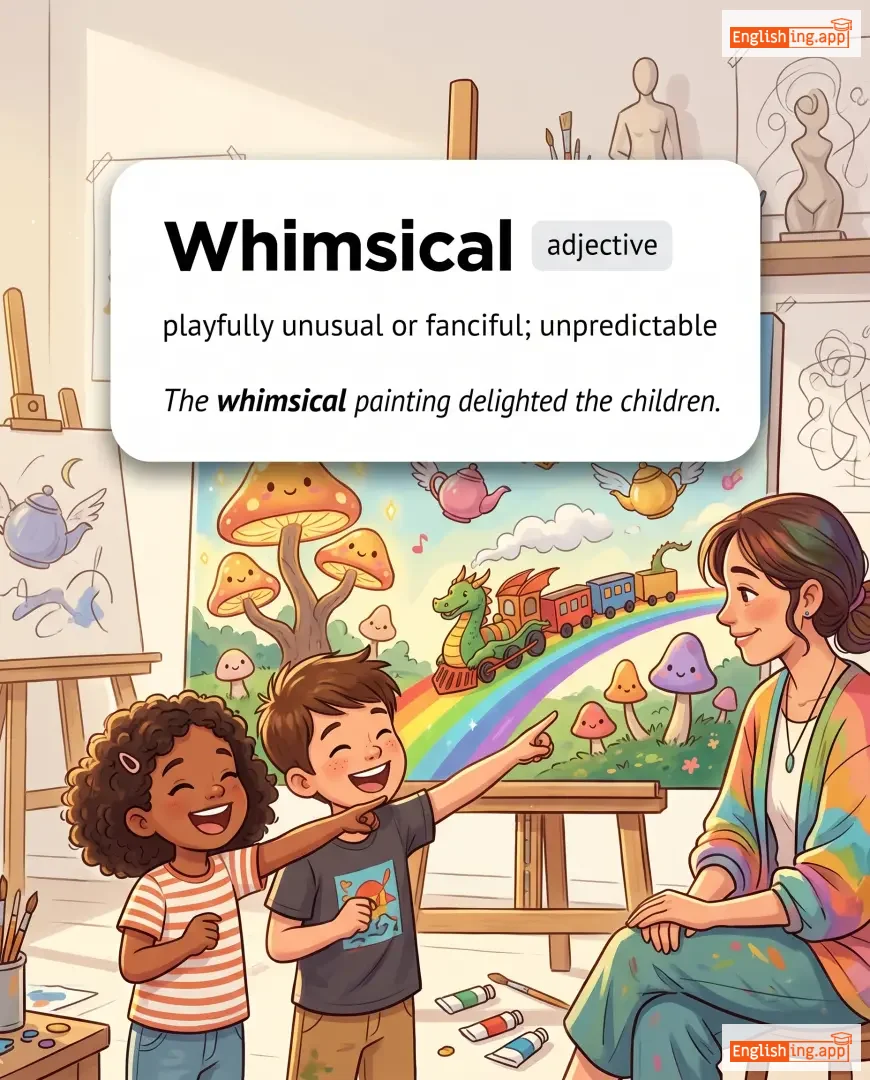
Whimsical definition card — visual illustration of the meaning
adjective
/ˈwɪmzɪkəl/
прихотливый (prikhotlivyy)

playfully unusual or fanciful; unpredictable

"The whimsical painting delighted the children."

"Прихотливая картина порадовала детей." (Prikhotlivaya kartina poradovala detey.)
noun
/ˈwɒtʃ.mən/
сторож (storozh)

a person employed to guard or watch over a building or area, especially at night

"The watchman patrols the factory every hour to ensure security."

"Сторож патрулирует завод каждый час, чтобы обеспечить безопасность." (Storozh patruliruyet zavod kazhdyy chas, chtoby obespechit' bezopasnost'.)
noun
/wɔːmθ/
тепло (teplo)

the quality or state of being warm in temperature or feeling

"She felt the warmth of the sun on her face."

"Она почувствовала тепло солнца на своем лице." (Ona pochuvstvovala teplo solntsa na svoem litse.)
noun
/ˈweɪvlət/
маленькая волна (malenkaya volna)

a small wave or ripple on the surface of water or another medium

"The pond was disturbed only by the tiny wavelets caused by the breeze."

"Пруд был потревожен только маленькими волнами, вызванными бризом." (Prud byl potrevozhenn tolkko malen'kimi volnami, vyzvannymi brizom.)
🛣️

Way (vay)

noun
/weɪ/
путь / метод (put' / metod)

a path, direction, or method of doing something

"He found a new way to solve the problem."

"Он нашел новый способ решения проблемы." (On nashel novyi sposob resheniya problemy.)
adverb
/wɛrˈɛv.ər/
где угодно (gde ugodno)

In or to any place.

"You can find good people wherever you go."

"Ты можешь найти хороших людей где угодно." (Ty mozhesh' nayti khoroshikh lyudey gde ugodno.)
adjective
/ˈwɛlθi/
богатый (bogatyy)

having a great deal of money, resources, or assets

"He became wealthy after investing in real estate."

"Он стал богатым, инвестируя в недвижимость." (On stal bogatym, investiruya v nedvizhimost'.)
noun
/ˈwɪntər/
зима (zima)

the coldest season of the year, typically from December to February in the Northern Hemisphere

"Winter in the north can be very harsh with heavy snowfall."

"Зима на севере может быть очень суровой, с сильными снегопадами." (Zima na severe mozhet byt' ochen' surovoy, s sil'nymi snego-padami.)
noun
/wiːl/
счастье (schast'ye)

A raised mark on the skin left after a blow; or general well-being and prosperity.

"The charity worked for the common weal of the community."
"Она не могла скрыть своего счастья, когда получила награду." (Ona ne mogla skryt' svoego schast'ya, kogda poluchila nagradu.)
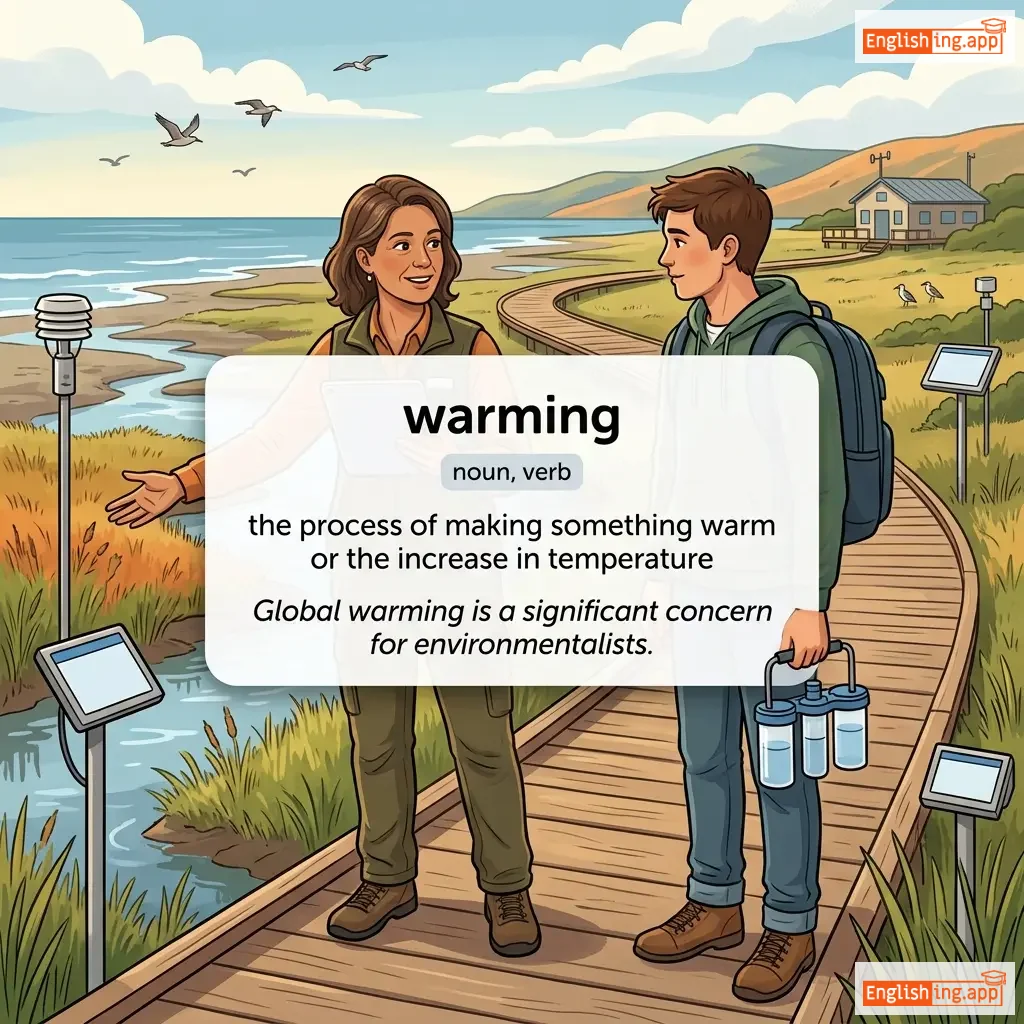
warming definition card — visual illustration of the meaning
noun, verb
/ˈwɔːmɪŋ/
повышение температуры (povyshenie temperatury)

the process of making something warm or the increase in temperature

"Global warming is a significant concern for environmentalists."

"Глобальное потепление — это серьезная проблема для экологов." (Globalnoe poteplenie — eto ser'yezhnaya problema dlya ekologov.)
conjunction
/waɪl/
пока (poka)

during the time that something is happening

"She was reading while waiting for the bus."

"Она читала, пока ждала автобус." (Ona chitala, poka zhdala avtobus.)
workload definition card — visual illustration of the meaning
noun
ˈwɜːrkˌləʊd
рабочая нагрузка (rabochaya nagruzka)

The amount of work to be done by someone or something.

"His workload has increased dramatically in the past month."

"Его рабочая нагрузка значительно увеличилась в прошлом месяце." (Ego rabochaya nagruzka znachitel'no uvelichilas' v proshlom mesyatse.)
adjective
/ˈwɪəri/
усталый (ustaly)

feeling or showing extreme tiredness, especially as a result of exertion or lack of sleep

"After the long journey, she felt weary and wanted to rest."

"После долгого путешествия она почувствовала усталость и захотела отдохнуть." (Posle dolgogo puteshestviya ona pochuvstvovala ustalost' i zakhotela otdokhnut'.)
warranted definition card — visual illustration of the meaning
adjective/verb
/ˈwɒrəntɪd/
оправдано (opravdano)

Justified or authorized under the circumstances.

"Her anger was warranted after the unfair treatment."

"Ее злость была оправдана после несправедливого обращения." (Eyo zlost' byla opravdana posle nespravedlivogo obshcheniya.)
verb
/wɪp/
хлестать (khlyestat)

to strike or beat with a flexible instrument such as a rope or cord

"The trainer whipped the horse to make it run faster."

"Тренер хлестал лошадь, чтобы заставить ее бегать быстрее." (Trener khlestal loshad', chtoby zastavit' yey begat' bystree.)
🌕

Wax

verb
/wæks/

to increase gradually in size, number, strength, or intensity

"The moon will wax until it becomes full."

preposition
/wɪð/
с (s)

indicating the person or thing that is accompanying or involved with someone or something else

"She went to the market with her friend."

"Она пошла на рынок с подругой." (Ona poshla na rynok s podrugoy.)
adjective
/ˌwɛl tə ˈduː/
обеспеченный (obespechennyi)

Prosperous, wealthy, or financially comfortable.

"They belong to a well-to-do family in the city."
"Они принадлежат к обеспеченной семье в городе." (Oni prinadlezhat k obespechennoy sem'ye v gorode.)
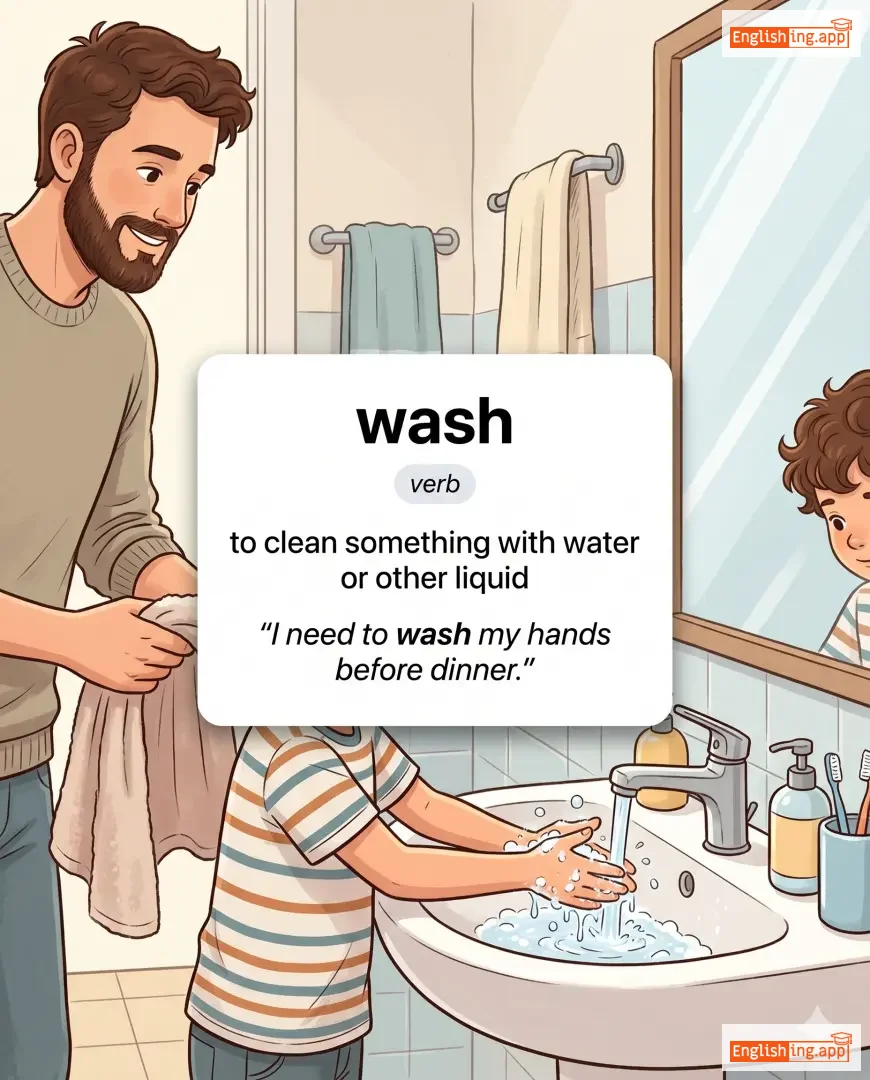
wash definition card — visual illustration of the meaning
verb
/wɒʃ/
мыть (myt)

to clean something with water or other liquid

"I need to wash my hands before dinner."

"Мне нужно помыть руки перед ужином." (Mne nuzhno pomyt' ruki pered uzhinom.)
adjective
/ˈwaɪəri/
худой, крепкий и выносливый (khudoy, krepkij i vynoslivyj)

Lean, tough, and strong, often with sinewy muscles.

"The wiry athlete moved with remarkable speed and agility."

"Этот худой атлет двигался с невероятной скоростью и ловкостью." (Etot khudoy atlet dvigalsya s neveroyatnoj skorost'yu i lovkost'yu.)
noun
/ˈwɪmzi/
каприз (kapriz)

playful or fanciful behavior or humor

"Her stories were full of whimsy and imagination."
"Её истории были полны каприза и воображения." (Yeyo istorii byli polny kapriza i voobrazheniya.)
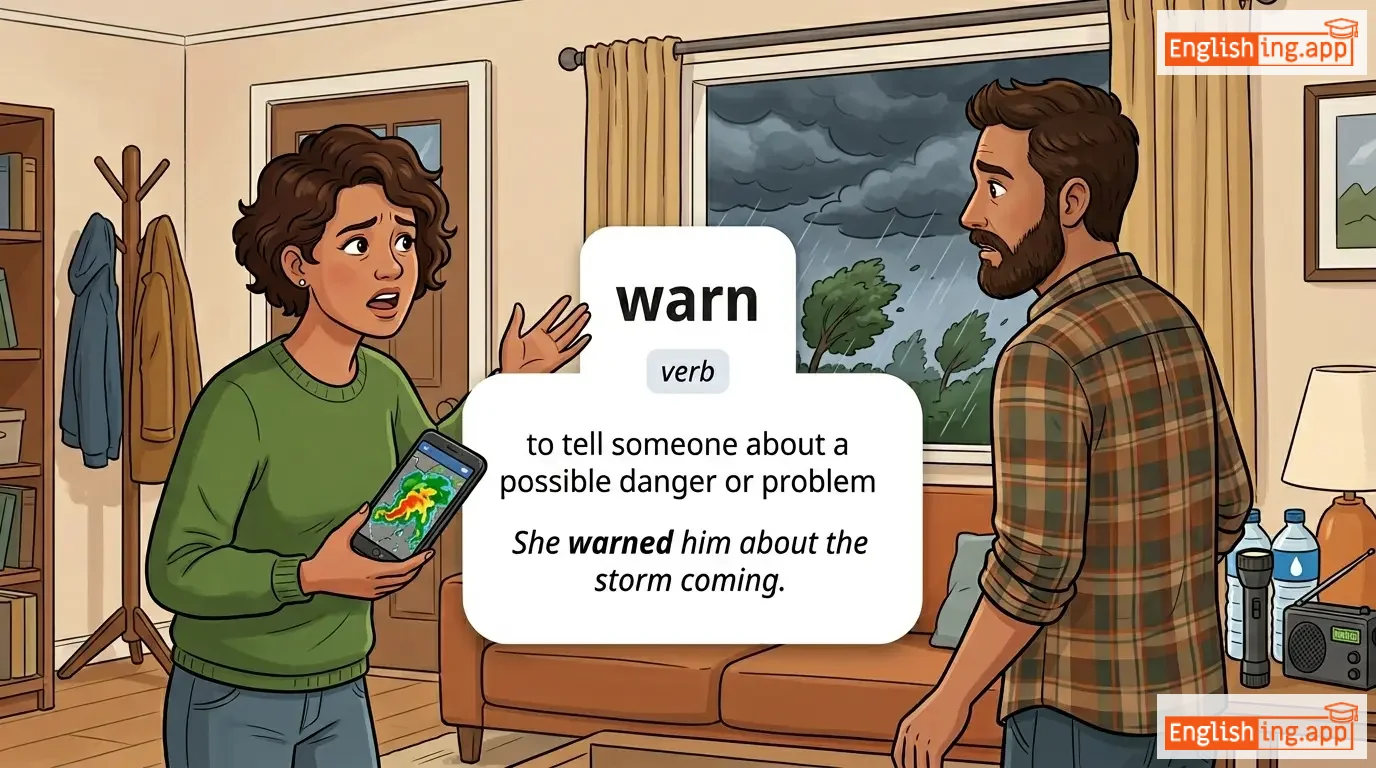
warn definition card — visual illustration of the meaning
verb
/wɔːrn/
предупредить (predupredit)

to tell someone about a possible danger or problem

"She warned him about the storm coming."

"Она предупредила его о приближающемся шторме." (Ona predupredila ego o priblizhayushchimsya shtorme.)
adverb
/wɛl/
хорошо (khorosho)

in a good or satisfactory way

"She did well in her exams."

"Она хорошо сдала экзамены." (Ona khorosho sdala ekzameny.)
adjective
/ˌwɛlˈbrɛd/
хорошо воспитанный (khorosho vospitannyy)

Having or showing good manners; properly raised.

"She is a well-bred young lady with excellent manners."

"Она хорошо воспитанная молодая леди с отличными манерами." (Ona khorosho vospitannaya molodaya ledi s otlichnymi manerami.)
adjective
/ˈwɪt.i/
остроумный; забавный (ostroumnyj; zabavnyj)

having or showing quick intelligence; amusing in a clever way

"Her witty response to the critic's question impressed the entire audience."

"Её остроумный ответ на вопрос критика произвел впечатление на всю аудиторию." (Eyo ostroumnyj otvet na vopros kritika proizvel vpechatlenie na vsyu auditoriyu.)
adjective
/ˌhoʊlˈhɑːrtɪd/
от всего сердца (ot vsego serdtsa)

showing complete sincerity and commitment; fully enthusiastic

"She gave her wholehearted support to the project."

"Она оказала свою поддержку проекту от всего сердца." (Ona okazala svoyu podderzhku proyektu ot vsego serdtsa.)
noun
/ˈwɒrənti/
гарантия (garantiya)

A written guarantee given by a manufacturer or seller promising to repair or replace a product if necessary within a specified period.

"The laptop comes with a two-year warranty."

"Ноутбук поставляется с двухлетней гарантией." (Noutbuk postavlyaetsya s dvukhletney garantiyei.)
noun
/ˈwel.wɪʃ.ər/
добродетель (dobrodetel)

a person who desires happiness or success for another

"Many well-wishers came to congratulate her on her graduation."

"Многие добродетели пришли поздравить её с окончанием учёбы." (Mnogie dobrodeteli prishli pozdravit' yeё s okonchaniem uchyoby.)
preposition
/wɪðˈaʊt/
без (bez)

in the absence of, or not having something

"He left without saying goodbye."

"Он ушел, не попрощавшись." (On ushel, ne poproshchavshis'.)
adjective
/waɪld/
дикой (dikoy)

living or growing in the natural environment; uncontrolled or untamed

"The children ran wild in the park."

"Дети бегали дико в парке." (Deti begali diko v parke.)
noun
/wɒsp/
оса (osa)

a flying insect with a yellow and black striped body and a painful sting

"The wasp stung me when I disturbed its nest."

"Оса ужалила меня, когда я потревожил её гнездо." (Osa uzhavila menya, kogda ya potrevozhil yeyo gnezdo.)
noun
/ˈwɛnzdeɪ/
среда (sreda)

the fourth day of the week, following Tuesday and preceding Thursday

"The meeting has been scheduled for Wednesday afternoon."

"Встреча назначена на среду днём." (vstrecha naznachena na sredu dnyom)
pronoun
/wɒtˈɛvər/
что угодно (chto ugodno)

used to refer to anything or everything that is of the type mentioned

"You can choose whatever you like."

"Ты можешь выбрать что угодно." (Ty mozhesh' vybrat' chto ugodno.)
adjective
/ˈhoʊlsəm/
здоровый (zdorovy)

promoting health or well-being; morally good and beneficial

"The retreat offered wholesome food and peaceful surroundings."

"Убежище предложило здоровую пищу и спокойную атмосферу." (Ubezhishche predlozhilo zdorovuyu pishchu i spokoynuyu atmosferu.)