Словари

Словарь английского языка | Значения слов, определения и примеры

noun
/ˈwɛlˌduːər/
добродетель (dobrodetel)

A person who does good deeds; a benefactor.

"The community praised the well-doer for his charity."

"Сообщество похвалило добродетеля за его благотворительность." (Soobshchestvo pokhvalilo dobrodetelya za yego blagotvoritel'nost'.)
adjective
/ˌwɛl tə ˈduː/
обеспеченный (obespechennyi)

Prosperous, wealthy, or financially comfortable.

"They belong to a well-to-do family in the city."

"Они принадлежат к обеспеченной семье в городе." (Oni prinadlezhat k obespechennoy sem'ye v gorode.)
pronoun
/wɒt/
что (chto)

used to ask for information about something

"What is your name?"
"Как тебя зовут?" (Kak tebya zovut?)
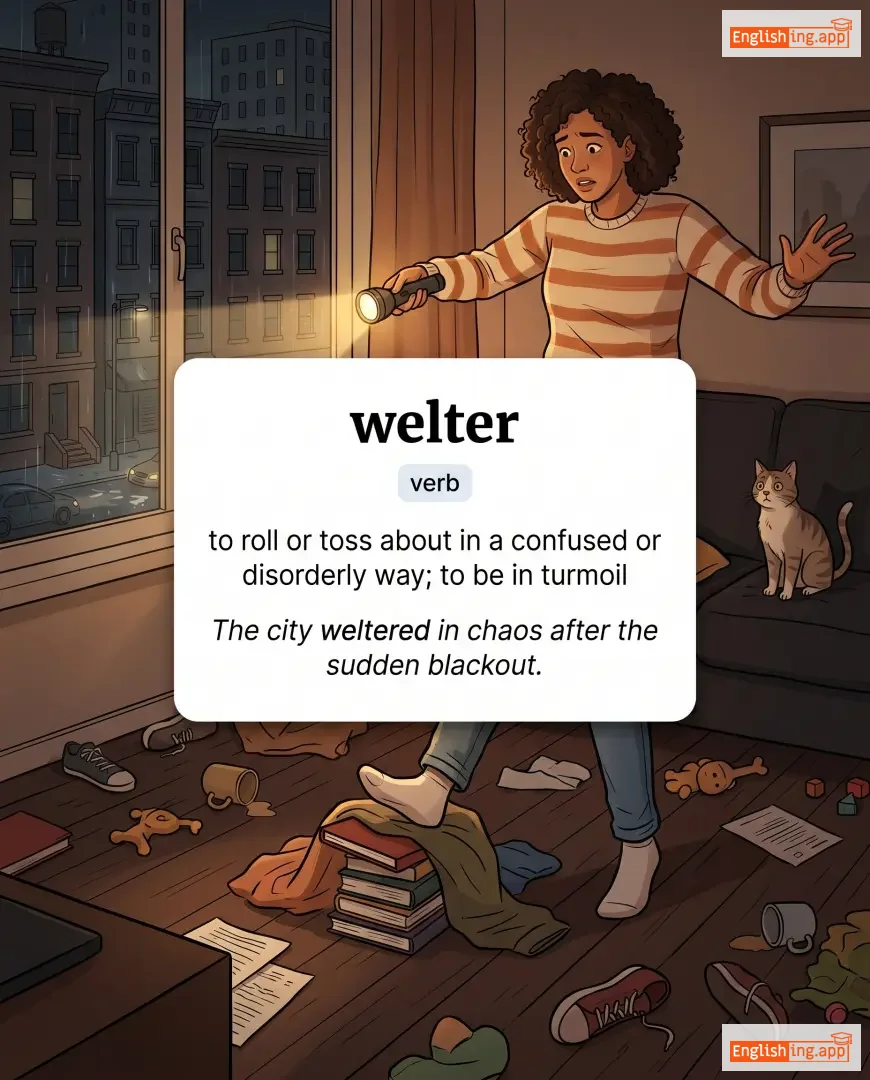
welter definition card — visual illustration of the meaning
verb
/ˈwɛltər/
крутиться в хаосе (krutit'sya v khaose)

to roll or toss about in a confused or disorderly way; to be in turmoil

"The city weltered in chaos after the sudden blackout."

"Город погрузился в хаос после внезапного отключения электроэнергии." (Gorod pogruzilsya v khaos posle vnezapnogo otklyucheniya elektrichestva.)
noun
/wɛst/
запад (zapad)

the direction to the left of the north and to the right of the south, typically associated with the sunset

"The sun sets in the west."

"Солнце заходит на западе." (Solntse zakhodit na zapade.)
adjective
/ˌwel bɪˈheɪvd/
хорошо воспитанный (khorosho vospitannyy)

conducting oneself in a proper and polite manner; showing good manners

"The children were well-behaved during the ceremony."

"Дети вели себя хорошо во время церемонии." (Deti vели sebya khorosho vo vremya tseremonii.)
adjective
/wɛt/
мокрый (mokryy)

covered with, or saturated with liquid (usually water)

"The ground is wet after the rain."

"Земля мокрая после дождя." (Zemlya mokraya posle dozhdya.)
verb
/ˈwiːdəl/
уговорить лестью (ugovorit' lestyu)

to persuade or coax someone by using flattery or smooth talk

"She managed to wheedle extra pocket money from her father."

"Она смогла уговорить своего отца дать ей дополнительные карманные деньги." (Ona smogla ugovorit' svoego ottsa dat' yey dopolnitel'nye karmannye dengi.)
adverb
/ˌwɛr.əˈpɒn/
немедленно после этого (nemedlenno posle etogo)

Immediately after which; as a result of which.

"He confessed his mistake, whereupon she forgave him."

"Он признал свою ошибку, немедленно после этого она его простила." (On priznal svoyu oshibku, nemedlenno posle etogo ona ego prostila.)
noun
/ˈwɛrəˌbaʊts/
местоположение (mesto-polojeniye)

the place where someone or something is

"The police are trying to find out the suspect's whereabouts."

"Полиция пытается найти местоположение подозреваемого." (Politsiya pytayetsya nayti mestopolozheniye podozrevaemogo.)
adjective
/ˈweɪwərd/
непослушный (neposlushny)

Difficult to control or predict because of unusual or perverse behavior.

"The teacher struggled to manage the wayward students."

"Учитель испытывал трудности с управлением непослушными учениками." (Uchitel' ispytyval trudnosti s upravleniem neposlushnymi uchenikami.)
adverb
/ˈwɪmzɪkli/
причудливо (Uimzikli)

In a playful, fanciful, or capricious manner; with sudden changes of mind

"She decorated her room whimsically with colorful balloons."

"Она украсила свою комнату причудливо разноцветными воздушными шарами." (Ona ukrasila svoyu komnatu prichudlivo raznotsvetnymi vozdushnymi sharami.)
conjunction
/ˈwɛðər/
ли (li)

used to express a doubt or choice between alternatives

"I don’t know whether I should go."

"Я не знаю, должен ли я идти." (Ya ne znayu, dolzhen li ya idti.)
noun
/wæks ɡɔːrd/
восковая тыква (voskovaya tykva)

a large white or green gourd with waxy skin, commonly used in Asian cooking

"The wax gourd soup is very nutritious and helps with digestion."
"Суп из воскового горшка очень питателен и помогает с пищеварением." (Sup iz voskovogo gorshka ochen' pitatelen i pomogayet s pishchevareniem.)
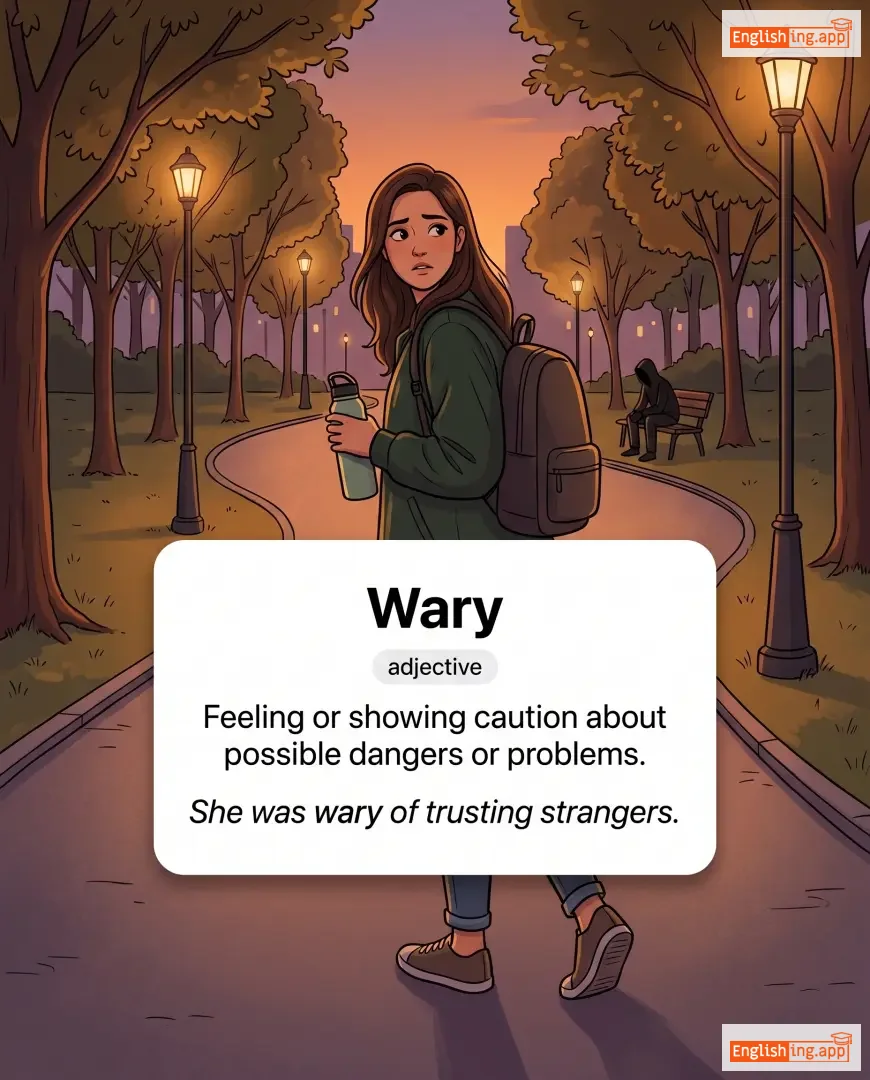
Wary definition card — visual illustration of the meaning
adjective
/ˈweəri/
осторожный (wary)

Feeling or showing caution about possible dangers or problems.

"She was wary of trusting strangers."

"Она была осторожна в отношении доверия незнакомцам." (Ona byla ostorozhna v otnoshenii doveriya neznakomtsam.)
noun
/wiːl/
счастье (schast'ye)

A raised mark on the skin left after a blow; or general well-being and prosperity.

"The charity worked for the common weal of the community."

"Она не могла скрыть своего счастья, когда получила награду." (Ona ne mogla skryt' svoego schast'ya, kogda poluchila nagradu.)
verb
/ˌweɪˈleɪ/
неожиданно остановить / атаковать (neozhidanno ostanovit / atakovat)

to stop or interrupt someone unexpectedly, often to attack or detain them

"He was waylaid by reporters as he left the courthouse."

"Его остановили репортеры, когда он покидал суд." (Ego ostanovili reportery, kogda on pokidal sud.)
adjective
/ˈwɪərɪsəm/
утомительный (utomitel'nyy)

Causing one to feel tired or bored.

"The long and wearisome lecture put the students to sleep."

"Долгая и утомительная лекция заставила студентов уснуть." (Dolgaya i utomitel'naya lektsiya zastavila studentov usnut'.)
noun
/ˈwɒriər/
воин (voin)

a person engaged or experienced in warfare; a brave or experienced fighter

"The ancient warrior fought fearlessly to protect his land."

"Древний воин сражался бесстрашно, чтобы защитить свою землю." (Drevniy voin srazhalsya besstrashno, chtoby zashchitit' svoyu zemlyu.)
noun
/ˈwɛpən/
оружие (oruzhiye)

a thing designed or used for inflicting harm or damage

"He carried a weapon for self-defense."

"Он носил оружие для самообороны." (On nosil oruzhiye dlya samoooborony.)
noun
/ˈwiː.vər bɜːd/
ткач птица (tkach ptitsa)

a small bird that builds elaborate woven nests from grass and twigs

"The weaver bird skillfully constructs its intricate nest."
"Ткач птица умело строит свое сложное гнездо" (Tkach ptitsa umelo stroit svoe slozhnoe gnezdo)
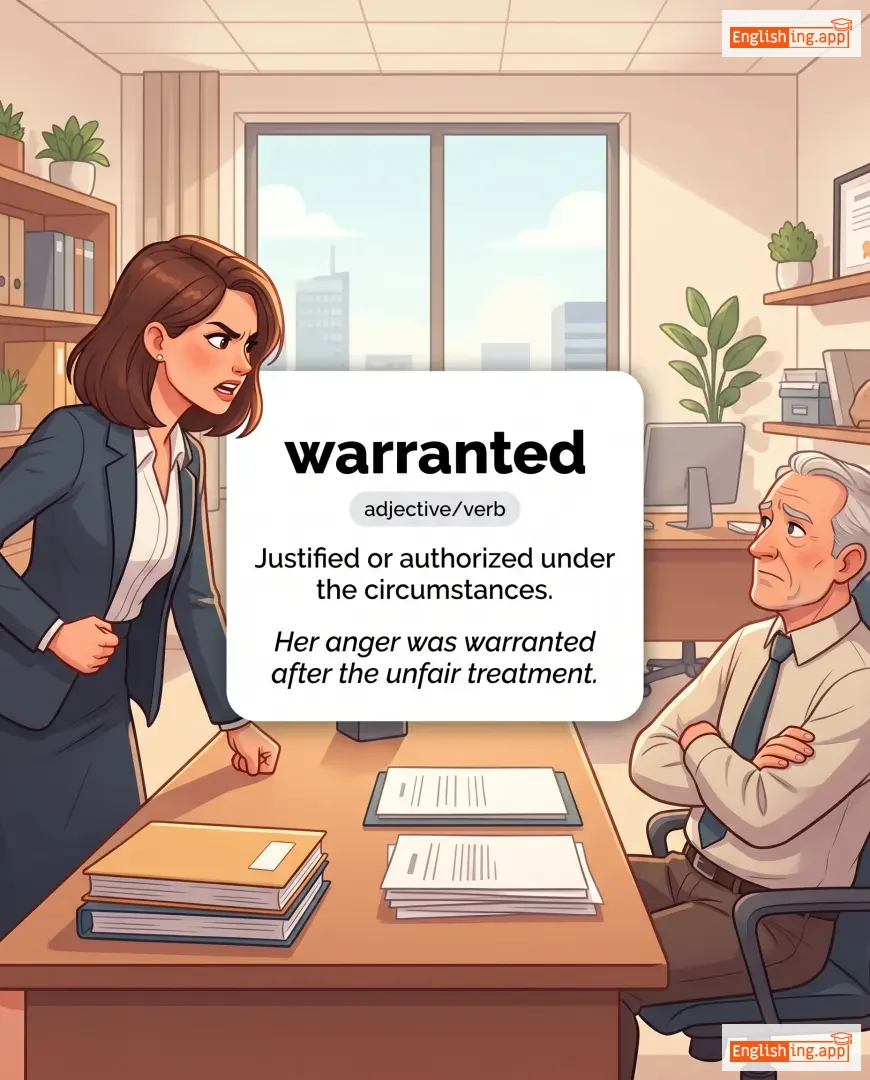
warranted definition card — visual illustration of the meaning
adjective/verb
/ˈwɒrəntɪd/
оправдано (opravdano)

Justified or authorized under the circumstances.

"Her anger was warranted after the unfair treatment."

"Ее злость была оправдана после несправедливого обращения." (Eyo zlost' byla opravdana posle nespravedlivogo obshcheniya.)
noun
/wɜːrl/
спираль (spiral)

A pattern of spirals or concentric circles, often found in fingerprints, shells, or flowers.

"The fingerprint displayed a clear whorl pattern."
"Отпечаток пальца показывал четкий узор спирали." (Otpechatok pal'tsa pokazyval chetkiy uzor spirali.)
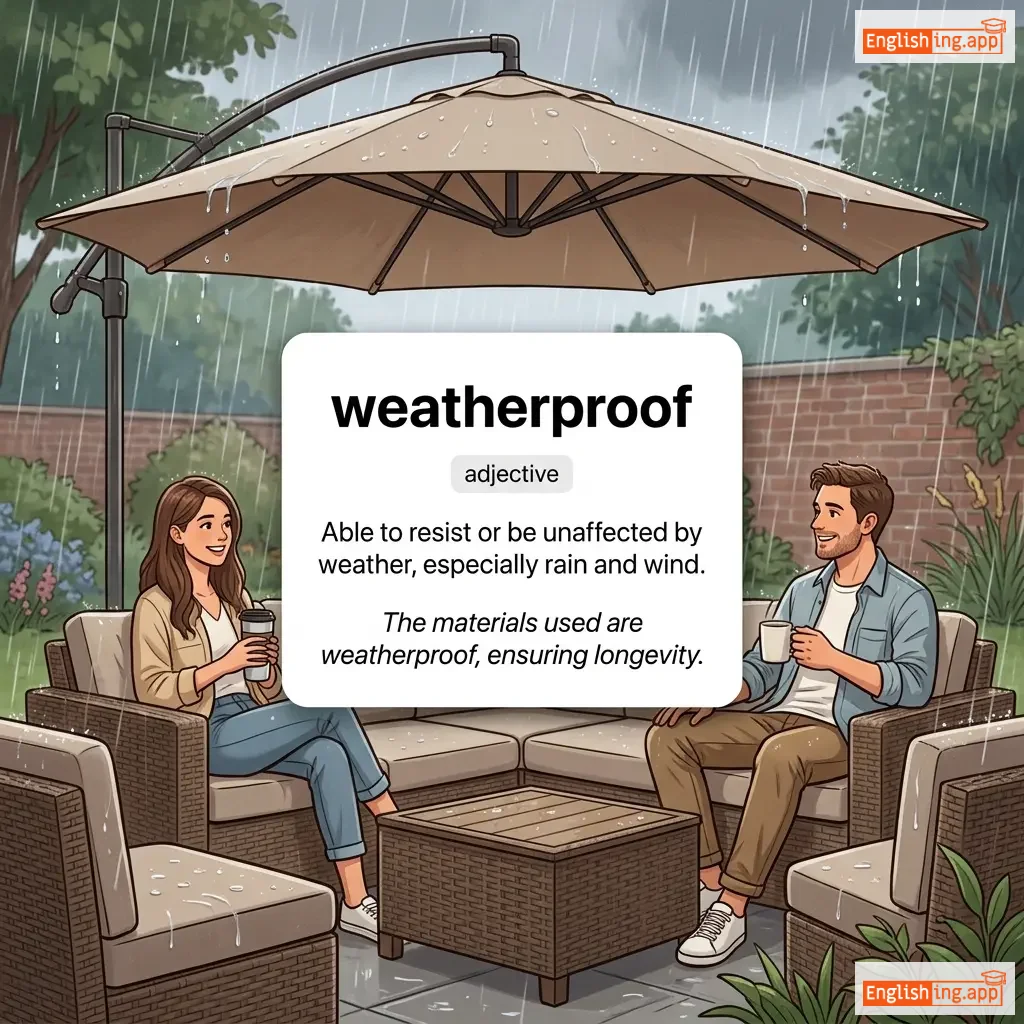
weatherproof definition card — visual illustration of the meaning
adjective
ˈwɛðərpruːf
непроницаемый для погодных условий (nepronitsayemyy dlya pogodnykh usloviy)

Able to resist or be unaffected by weather, especially rain and wind.

"The materials used are weatherproof, ensuring longevity."

"Используемые материалы непромокаемы, обеспечивая долговечность." (Ispol'zuyemye materialy nepromokaemy, obespechivaya dolgovечnost'.)
🍴

whet

verb
/wɛt/

To sharpen the blade of a tool or to stimulate interest or appetite.

"The smell of food whetted my appetite."

pronoun
/wɪtʃ/
который (kotoryi)

used to ask about one or more items from a defined set

"Which one do you prefer, the red or the blue?"

"Какой ты предпочитаешь, красный или синий?" (Kakoy ty predpochitayesh', krasnyy ili siniy?)
pronoun
/wi/
мы (my)

used by a speaker to refer to himself or herself and one or more other people

"We are going to the park this afternoon."

"Мы идем в парк этим днем." (My idyom v park etim dnyom.)
verb
/ˈwɪni/
ржание (rzhaniye)

to make the high-pitched sound a horse makes

"The horse whinnied when it saw its rider."
"Лошадь ржала, когда увидела своего всадника." (Loshad' rzhala, kogda uvidela svoego vsadnika.)
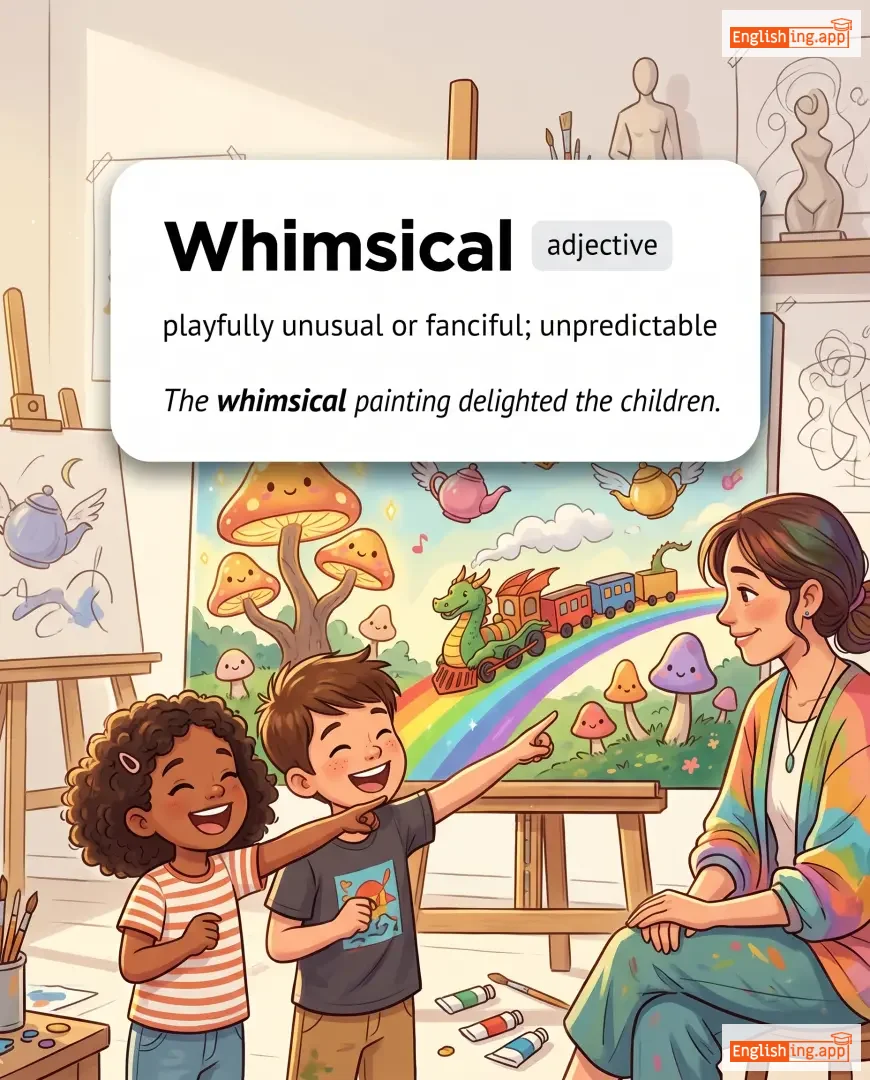
Whimsical definition card — visual illustration of the meaning
adjective
/ˈwɪmzɪkəl/
прихотливый (prikhotlivyy)

playfully unusual or fanciful; unpredictable

"The whimsical painting delighted the children."

"Прихотливая картина порадовала детей." (Prikhotlivaya kartina poradovala detey.)
🕸️

web

noun
/wɛb/

a network of fine threads spun by a spider or a complex interconnected system

"The spider spun a large web in the corner of the room."

noun
/ˈwɒʃ.ɪŋ məˌʃiːn/

a machine for washing clothes and other textiles

"The washing machine broke down and needs repair."

noun
/ˈwɪdəʊ/
вдова (vdova)

a woman whose husband has died and who has not married again

"She became a widow at a very young age."

"Она стала вдовой в очень молодом возрасте." (Ona stala vdovoy v ochen' molodom vozraste.)
noun
/wɪk/
фитиль свечи (fitil svechi)

a cord or strand of cotton that burns to provide light in a candle or lamp

"The candle wick needs to be trimmed for better burning."

"Фитиль свечи нужно обрезать для лучшего горения." (Fitil svechi nuzhno obrezat' dlya luchshego gorenija.)
adjective
/ˈwɪkɪd/
злой (zloy)

morally bad or evil; also informally very good or impressive

"The villain in the story was truly wicked."

"Злодей в истории был действительно злой." (Zlodей v istorii byl deystvitel'no zloy.)
noun
/ˈweɪstrəl/
тратящий впустую, бездельник (wastrel)

A person who wastes time, money, or resources; an idler or spendthrift.

"The young man was dismissed as a wastrel by his family."

"Молодого человека его семья посчитала бесполезным, так как он был расточителем." (Molodogo cheloveka ego sem'ya poschitala bespoleznym, tak kak on byl rastochitelem.)
noun
/waɪt ænt/
белая муравей (belaya muravey)

a small social insect that lives in colonies and feeds on wood and plant matter

"White ants damaged the wooden furniture in our house."

"Белые муравьи повредили деревянную мебель в нашем доме." (Belyye muravi povredili derevyannuyu mebel' v nashem dome.)
noun
/ˈwɪd.oʊ.ər/
вдовец (vdovec)

a man whose wife has died and who has not married again

"The elderly widower lived alone but had regular visits from his children."

"Пожилой вдовец жил один, но регулярно получал визиты от своих детей." (Pozhiloy vdovets zhil odin, no regulyarno poluchal vizity ot svoikh detey.)
noun
/ˈwɒrənti/
гарантия (garantiya)

A written guarantee given by a manufacturer or seller promising to repair or replace a product if necessary within a specified period.

"The laptop comes with a two-year warranty."

"Ноутбук поставляется с двухлетней гарантией." (Noutbuk postavlyaetsya s dvukhletney garantiyei.)
verb
/ˈwɪtl/

to carve or shape something by cutting off small pieces; to gradually reduce

"He spent the afternoon whittling a piece of wood into a toy."

noun
/ˈwɔː.tər pɒt/
кувшин для воды (kuvshin dlya vody)

a container used for storing or carrying water

"The water pot in the kitchen was filled with fresh drinking water."
"Кувшин для воды на кухне был полон свежей питьевой воды." (Kuvshin dlya vody na kukhne byl polon svezhey pit'yevoy vody.)
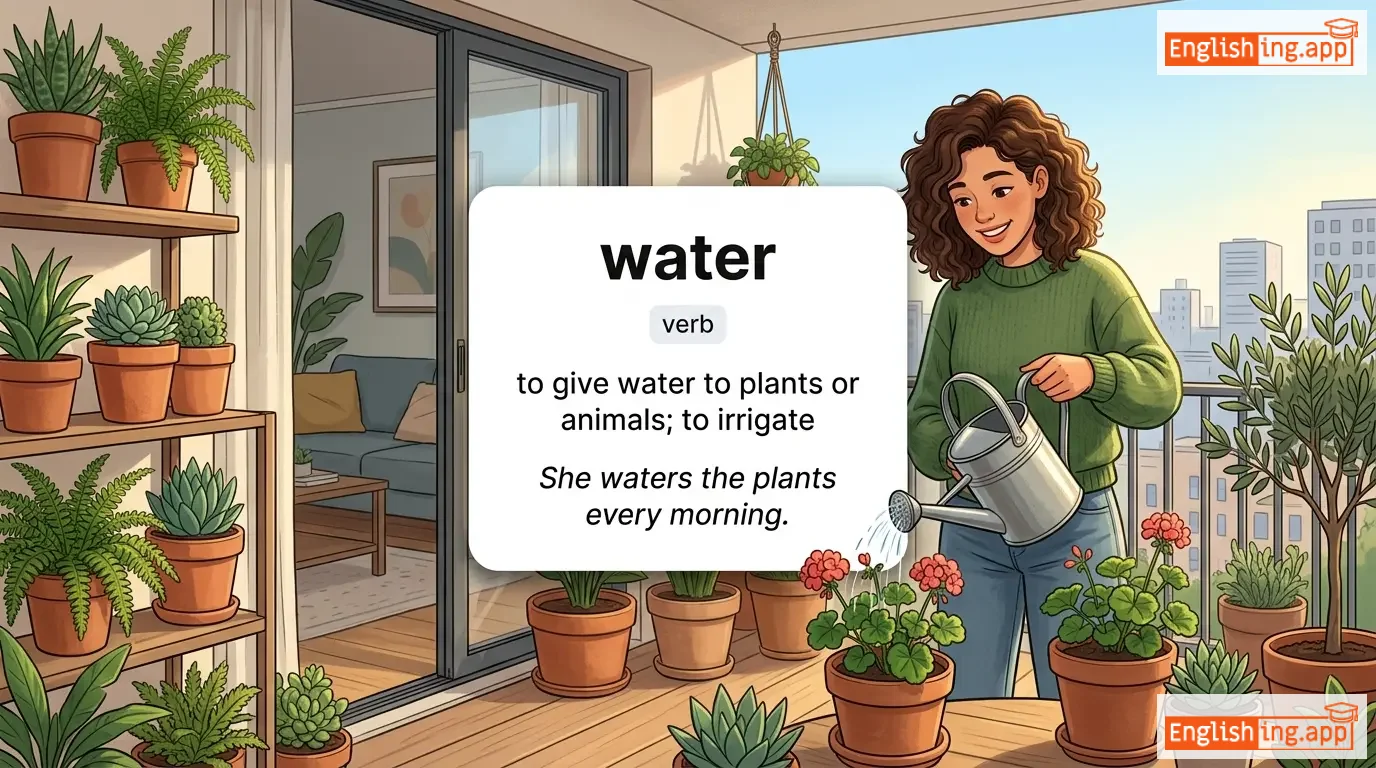
water definition card — visual illustration of the meaning
noun
/ˈwɔːtər/
вода (voda)

a clear, colorless, odorless, and tasteless liquid that is essential for life

"We need to drink water to stay hydrated."

"Нам нужно пить воду, чтобы оставаться гидратированными." (Nam nuzhno pit' vodu, chtoby ostavatsya gidratirovannymi.)
noun
/ˈwɔː.tər ˌlɪl.i/
кувшинка (kuvshinka)

a floating flower that grows on the surface of ponds and lakes

"The white water-lily floated gracefully on the pond."
"Белая кувшинка грациозно плавала на пруду." (belaya kuvshinka gratsiozno plavala na prudu)
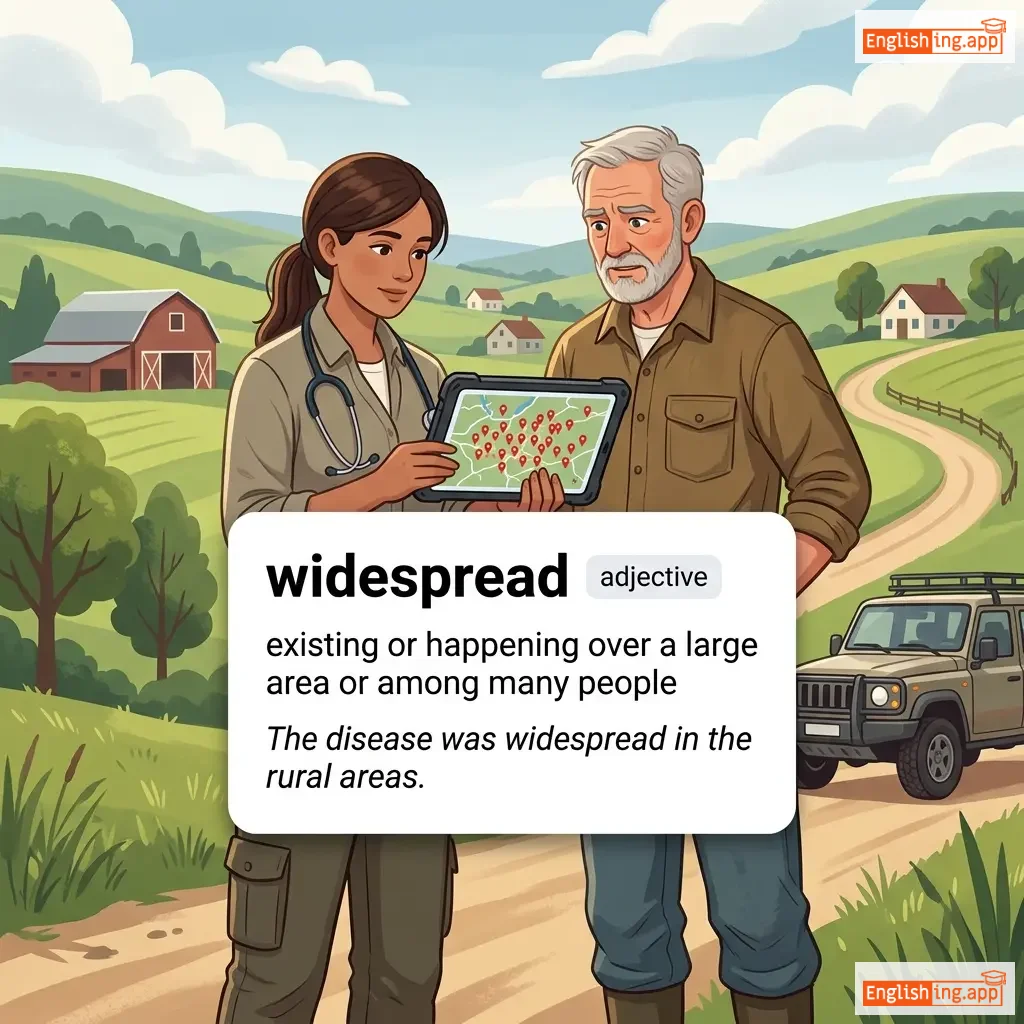
widespread definition card — visual illustration of the meaning
adjective
/ˈwaɪdˌsprɛd/
широко распространенный (shiroko rasprostranenny)

existing or happening over a large area or among many people

"The disease was widespread in the rural areas."

"Заболевание было широко распространено в сельских районах." (Zabolevaniye bylo shiroko rasprostraneno v selskih rayonah.)
adjective
/waɪd/
широкий (shirokiy)

having a great extent from side to side; broad

"The river is wide enough to fit a boat."

"Река достаточно широкая, чтобы в нее поместилась лодка." (Reka dostatochno shirokaya, chtoby v nee pomestilas' lodka.)
noun
/ˈwiːltʃeər/
инвалидная коляска (invalidnaya kolyaska)

a chair with wheels, used by people who cannot walk easily or at all

"The hospital provided a wheelchair for the injured patient."

"Больница предоставила инвалидную коляску для раненого пациента." (Bol'nitsa predostavila invalidnuyu kolyasku dlya rannego patsiyenta.)
noun
/wɪm/
прихоть (prikhot)

a sudden or unpredictable idea, desire, or decision

"She bought the dress on a whim."

"Она купила платье по прихоти." (Ona kupila plat'ye po prikhoti.)
adverb, noun
/ˈwɛə.wɪð/
средства (sredstva)

With which; the means or resources needed for something.

"He lacked the money wherewith to buy a new house."

"У него не было денег, с которыми он мог бы купить новый дом." (U nego ne bylo deneg, s kotorymi on mog by kupit' novyj dom.)
adverb
/wɒtˈsəʊɛvər/
совсем не (sovsem ne)

used for emphasis after a negative statement to mean 'at all'

"She has no interest in the matter whatsoever."

"У нее нет никакого интереса к этому вопросу вообще." (U neyo net nikakogo interesa k etomu voprosu voobsche.)
noun
/wiːl/
колесо (koleso)

a circular object that revolves on an axle and is used to move or carry things

"The wheel of the car broke down on the way."

"Колесо машины сломалось по дороге." (Koleso mashiny slomalos' po doroge.)
noun
/wiːt/
пшеница (pshenitsa)

a cereal plant whose grain is used to make flour for bread and other foods

"Farmers harvested the wheat in early summer."

"Фермеры убрали пшеницу в начале лета." (Fermery ubrali pshenitsu v nachale leta.)