词汇表

英语词汇词典 | 单词含义、定义和示例

noun
/ˈwɛlˌduːər/
行善者 (xíngshàn zhě)

A person who does good deeds; a benefactor.

"The community praised the well-doer for his charity."

"社区表扬了他的行善行为。" (Shèqū biǎoyáng le tā de xíngshàn xíngwéi.)
adjective
/ˌwɛl tə ˈduː/
富裕 (fùyù)

Prosperous, wealthy, or financially comfortable.

"They belong to a well-to-do family in the city."

"他们来自城市中的富裕家庭。" (Tāmen láizì chéngshì zhōng de fùyù jiātíng.)
pronoun
/wɒt/
什么 (shenme)

used to ask for information about something

"What is your name?"
"你叫什么名字?" (Nǐ jiào shénme míngzì?)
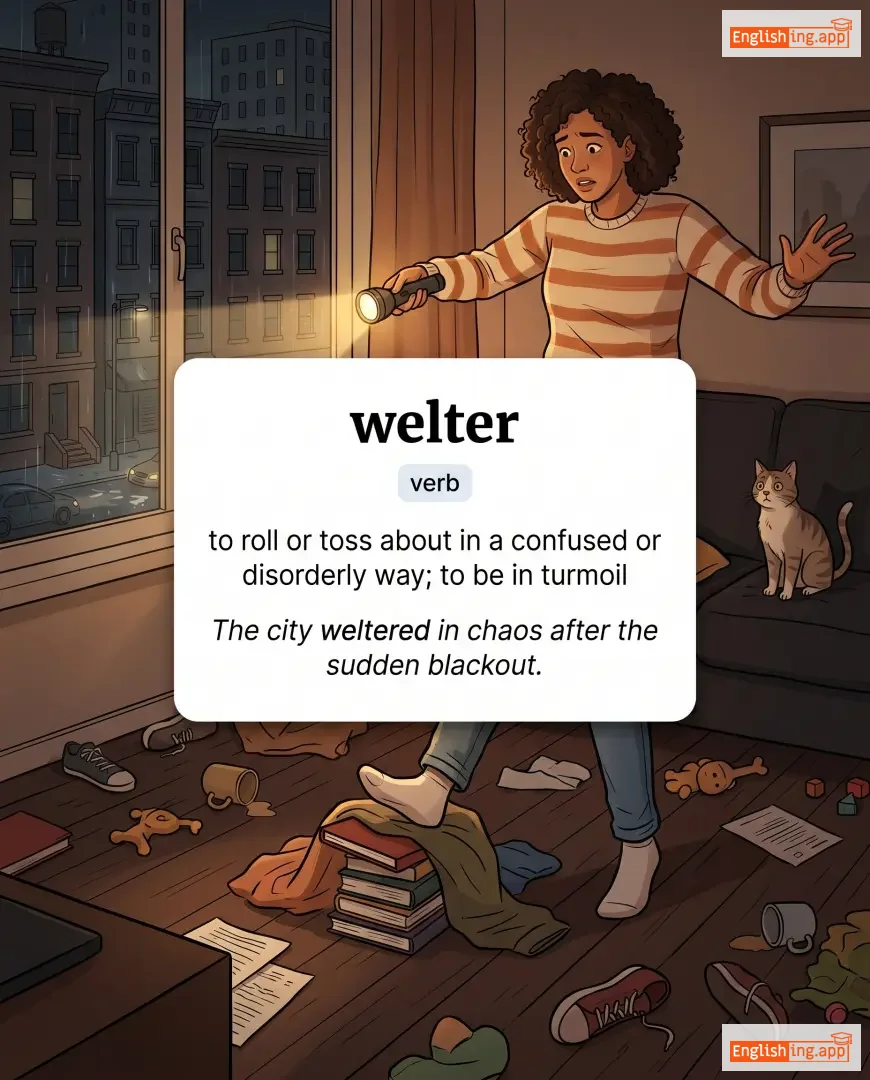
welter definition card — visual illustration of the meaning
verb
/ˈwɛltər/
在混乱中翻滚 (zai hunluan zhong fengun)

to roll or toss about in a confused or disorderly way; to be in turmoil

"The city weltered in chaos after the sudden blackout."

"城市在突然的停电后陷入混乱。" (Chéngshì zài túrán de tíngdiàn hòu xiànrù hùnluàn.)
noun
/wɛst/
西 (xi)

the direction to the left of the north and to the right of the south, typically associated with the sunset

"The sun sets in the west."

"太阳在西方落下。" (Taiyang zai xifang luo xia.)
adjective
/ˌwel bɪˈheɪvd/
行为良好 (xíngwéi liánghǎo)

conducting oneself in a proper and polite manner; showing good manners

"The children were well-behaved during the ceremony."

"孩子们在仪式期间表现得很乖。" (Háizimen zài yíshì qījiān biǎoxiàn dé hěn guāi.)
adjective
/wɛt/
湿的 (shide)

covered with, or saturated with liquid (usually water)

"The ground is wet after the rain."

"下雨后地面是湿的。" (Xia yu hou dimian shi shide.)
verb
/ˈwiːdəl/
用奉承说服 (yòng fèngchéng shuōfú)

to persuade or coax someone by using flattery or smooth talk

"She managed to wheedle extra pocket money from her father."

"她成功地从父亲那里获得了额外的零花钱。" (Tā chénggōng de cóng fùqīn nàlǐ huòqǔle éwài de línghuā qián.)
adverb
/ˌwɛr.əˈpɒn/
紧接着 (jinjie zhe)

Immediately after which; as a result of which.

"He confessed his mistake, whereupon she forgave him."

"他承认了错误,紧接着她原谅了他。" (Ta chengrenle cuowu, jinjie zhe ta yuanliangle ta.)
noun
/ˈwɛrəˌbaʊts/
所在地点 (suǒzài dìdiǎn)

the place where someone or something is

"The police are trying to find out the suspect's whereabouts."

"警方正在试图找出嫌疑人的所在地点。" (Jǐngfāng zhèngzài shìtú zhǎochū xiányí rén de suǒzài dìdiǎn.)
adjective
/ˈweɪwərd/
叛逆的 (pànnì de)

Difficult to control or predict because of unusual or perverse behavior.

"The teacher struggled to manage the wayward students."

"老师很难管理那些叛逆的学生。" (Lǎoshī hěn nán guǎnlǐ nàxiē pànnì de xuéshēng.)
adverb
/ˈwɪmzɪkli/
任性地,异想天开地 (whimsikeli)

In a playful, fanciful, or capricious manner; with sudden changes of mind

"She decorated her room whimsically with colorful balloons."

"她用五彩缤纷的气球任性地装饰了她的房间。" (ta yong wu cai bin fen de qi qiu ren xing de zhuang shi le ta de fang jian)
conjunction
/ˈwɛðər/
是否 (shìfǒu)

used to express a doubt or choice between alternatives

"I don’t know whether I should go."

"我不知道我是否应该去。" (Wǒ bù zhīdào wǒ shìfǒu yīnggāi qù.)
noun
/wæks ɡɔːrd/
蜡质葫芦 (làzhì húlu)

a large white or green gourd with waxy skin, commonly used in Asian cooking

"The wax gourd soup is very nutritious and helps with digestion."
"蜡质葫芦汤非常有营养,有助于消化。" (làzhì húlu tāng fēicháng yǒu yíngyǎng, yǒu zhù yú xiāohuà.)
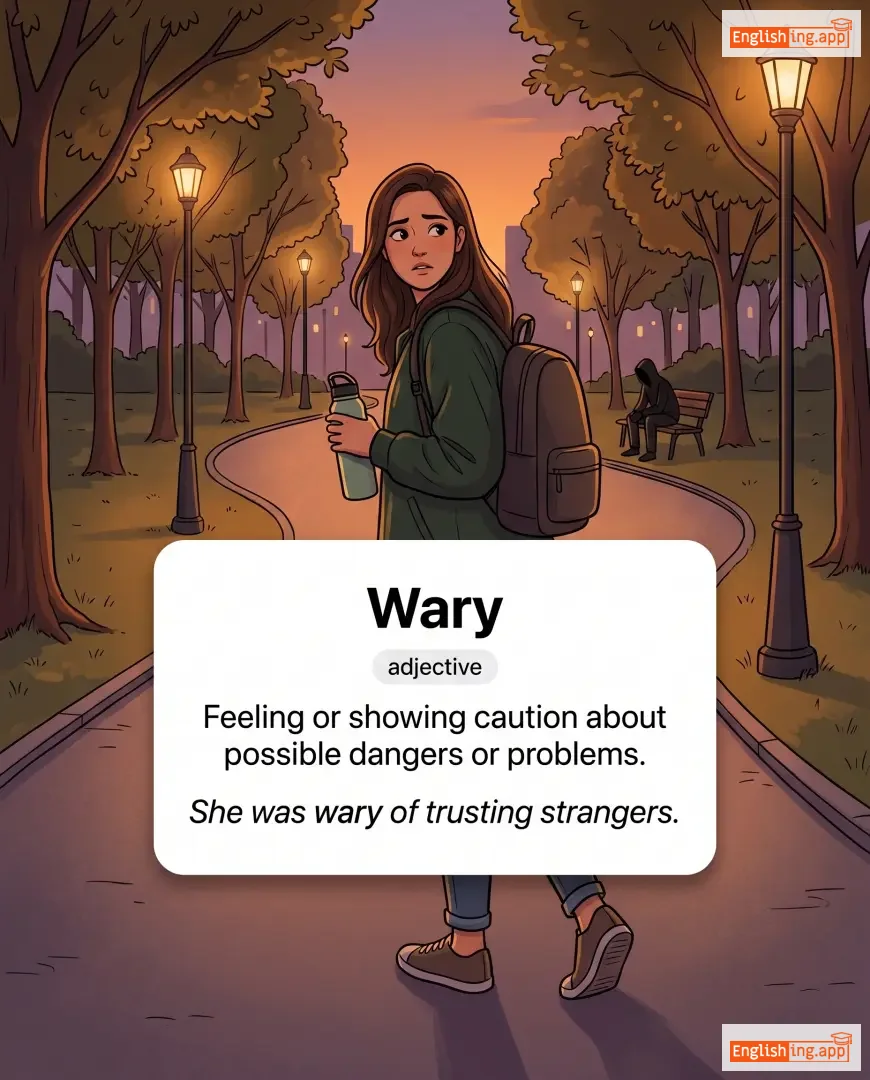
Wary definition card — visual illustration of the meaning
adjective
/ˈweəri/
小心的 (wary)

Feeling or showing caution about possible dangers or problems.

"She was wary of trusting strangers."

"她对相信陌生人保持警惕。" (Tā duì xiāngxìn mòshēngrén bǎochí jǐngtì.)
noun
/wiːl/
幸福 (xìngfú)

A raised mark on the skin left after a blow; or general well-being and prosperity.

"The charity worked for the common weal of the community."

"当她获得奖项时,她无法掩饰自己的幸福。" (Dāng tā huò dé jiǎngxiàng shí, tā wúfǎ yǎnshì zìjǐ de xìngfú.)
verb
/ˌweɪˈleɪ/
突然拦住 / 攻击 (tudian lan zhu / gongji)

to stop or interrupt someone unexpectedly, often to attack or detain them

"He was waylaid by reporters as he left the courthouse."

"当他离开法院时,被记者拦住了。" (Dang ta likai fayuan shi, bei jizhe lan zhu le.)
adjective
/ˈwɪərɪsəm/
令人疲倦的 (lìng rén píjuàn de)

Causing one to feel tired or bored.

"The long and wearisome lecture put the students to sleep."

"漫长且令人疲倦的讲座让学生们睡着了。" (Màncháng qiě lìng rén píjuàn de jiǎngzuò ràng xuéshēngmen shuìzhe le.)
noun
/ˈwɒriər/
战士 (zhànshì)

a person engaged or experienced in warfare; a brave or experienced fighter

"The ancient warrior fought fearlessly to protect his land."

"古老的战士英勇地战斗以保护他的土地。" (gǔlǎo de zhànshì yīngyǒng de zhàndòu yǐ bǎohù tā de tǔdì.)
noun
/ˈwɛpən/
武器 (wǔqì)

a thing designed or used for inflicting harm or damage

"He carried a weapon for self-defense."

"他携带武器用于自卫。" (Tā xiédài wǔqì yòng yú zìwèi.)
noun
/ˈwiː.vər bɜːd/
织布鸟 (zhibu niao)

a small bird that builds elaborate woven nests from grass and twigs

"The weaver bird skillfully constructs its intricate nest."

"织布鸟巧妙地建造它复杂的巢穴" (Zhibu niao qiǎomiào de jiànzào tā fùzá de cháoxué)
warranted definition card — visual illustration of the meaning
adjective/verb
/ˈwɒrəntɪd/
有理由的 (you liyi de)

Justified or authorized under the circumstances.

"Her anger was warranted after the unfair treatment."

"她的愤怒在不公平的待遇之后是有理由的。" (Ta de fen nu zai bu gongping de daiyu zhi hou shi you liyi de.)
noun
/wɜːrl/
螺旋 (luóxuán)

A pattern of spirals or concentric circles, often found in fingerprints, shells, or flowers.

"The fingerprint displayed a clear whorl pattern."
"指纹显示出清晰的螺旋图案。" (Zhǐwén xiǎnshì chū qīngxī de luóxuán tú'àn.)
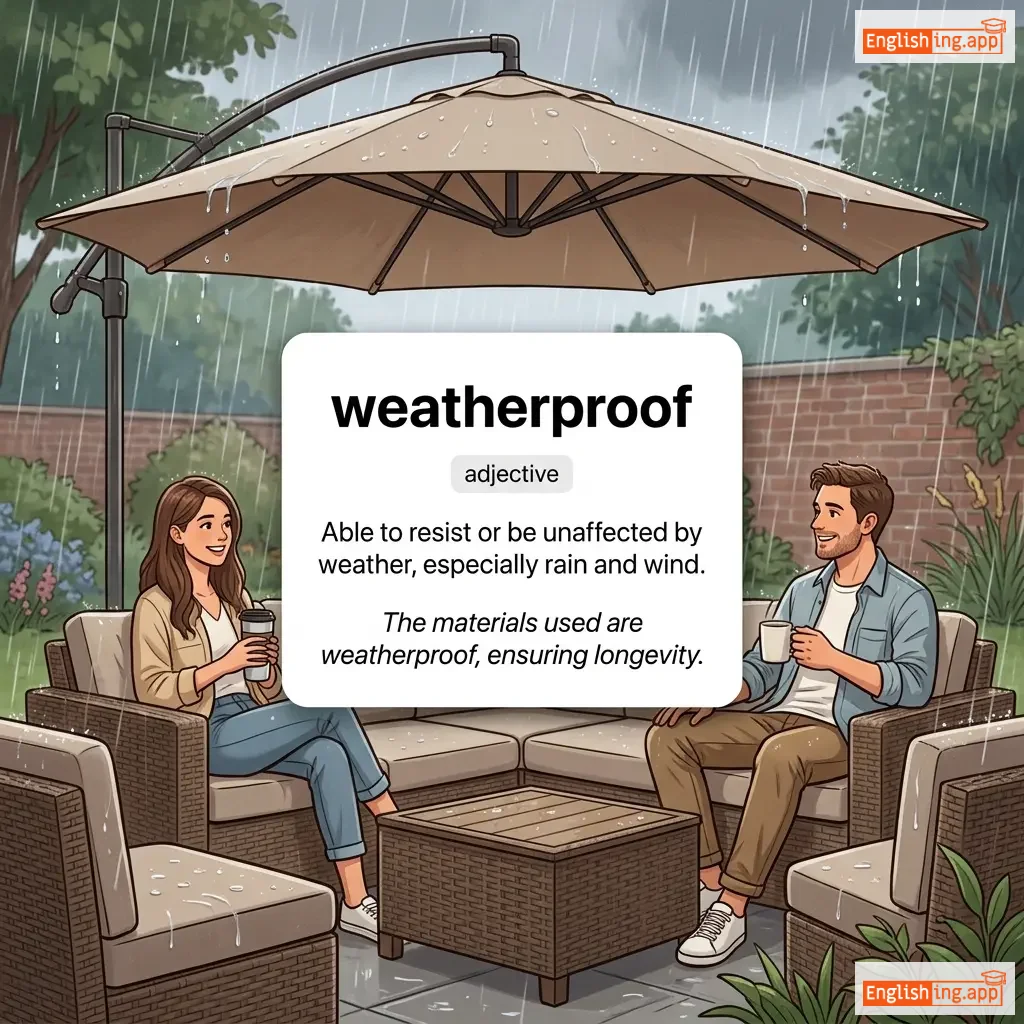
weatherproof definition card — visual illustration of the meaning
adjective
ˈwɛðərpruːf
防水 (fángshuǐ)

Able to resist or be unaffected by weather, especially rain and wind.

"The materials used are weatherproof, ensuring longevity."

"所用材料是防水的,确保长久耐用。" (Suǒ yòng cáiliào shì fángshuǐ de, quèbǎo chángjiǔ nàiyòng.)
🍴

whet

verb
/wɛt/

To sharpen the blade of a tool or to stimulate interest or appetite.

"The smell of food whetted my appetite."

pronoun
/wɪtʃ/
哪个 (nǎ ge)

used to ask about one or more items from a defined set

"Which one do you prefer, the red or the blue?"

"你更喜欢哪个,红色还是蓝色?" (Nǐ gèng xǐ huān nǎ ge, hóng sè hái shì lán sè?)
pronoun
/wi/
我们 (women)

used by a speaker to refer to himself or herself and one or more other people

"We are going to the park this afternoon."

"我们今天下午要去公园。" (Wǒmen jīntiān xiàwǔ yào qù gōngyuán.)
verb
/ˈwɪni/
嘶鸣 (sīmíng)

to make the high-pitched sound a horse makes

"The horse whinnied when it saw its rider."
"马看到骑手时,嘶鸣了一声。" (Mǎ kàn dào qí shǒu shí, sīmíng le yī shēng.)
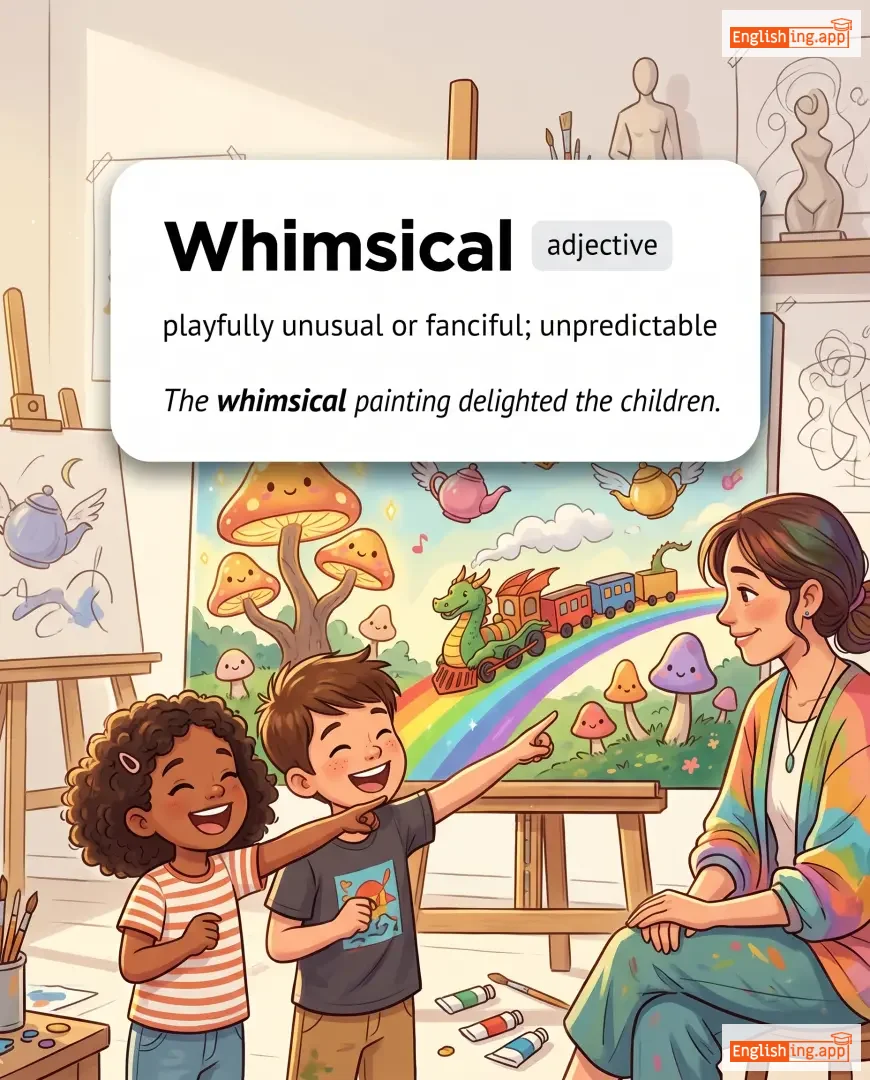
Whimsical definition card — visual illustration of the meaning
adjective
/ˈwɪmzɪkəl/
异想天开 (yìxiǎngtiānkāi)

playfully unusual or fanciful; unpredictable

"The whimsical painting delighted the children."

"这幅异想天开的画让孩子们感到高兴。" (Zhè fú yìxiǎngtiānkāi de huà ràng háizimen gǎndào gāoxìng.)
🕸️

web

noun
/wɛb/

a network of fine threads spun by a spider or a complex interconnected system

"The spider spun a large web in the corner of the room."

noun
/ˈwɒʃ.ɪŋ məˌʃiːn/
洗衣机 (wa shing ma sheen)

a machine for washing clothes and other textiles

"The washing machine broke down and needs repair."

"洗衣机坏了,需要修理。" (The washing machine broke down and needs repair.)
noun
/ˈwɪdəʊ/
寡妇 (guafu)

a woman whose husband has died and who has not married again

"She became a widow at a very young age."

"她在很年轻时成为了寡妇。" (Ta zai hen nianqing shi chengwei le guafu.)
noun
/wɪk/
蜡烛芯 (làzhú xīn)

a cord or strand of cotton that burns to provide light in a candle or lamp

"The candle wick needs to be trimmed for better burning."

"蜡烛芯需要修剪,以便更好地燃烧。" (Làzhú xīn xūyào xiūjiǎn, yǐbiàn gèng hǎo de ránshāo.)
adjective
/ˈwɪkɪd/
邪恶的 (xie'e de)

morally bad or evil; also informally very good or impressive

"The villain in the story was truly wicked."

"故事中的反派角色真的是邪恶的。" (Gushi zhong de fanpai juese zhende shi xie'e de.)
noun
/ˈweɪstrəl/
挥霍者, 无所事事的人 (wastrel)

A person who wastes time, money, or resources; an idler or spendthrift.

"The young man was dismissed as a wastrel by his family."

"这个年轻人被他的家人当作挥霍者解雇了。" (Zhège niánqīngrén bèi tā de jiārén dàngzuò huīhuò zhě jiěgùle.)
noun
/waɪt ænt/
白蚂蚁 (bái mǎ yǐ)

a small social insect that lives in colonies and feeds on wood and plant matter

"White ants damaged the wooden furniture in our house."

"白蚂蚁破坏了我们家里的木家具。" (Bái mǎ yǐ pòhuài le wǒmen jiālǐ de mù jiājù.)
noun
/ˈwɪd.oʊ.ər/
鳏夫 (guānfū)

a man whose wife has died and who has not married again

"The elderly widower lived alone but had regular visits from his children."

"那位年长的鳏夫独自生活,但定期接受孩子们的拜访。" (Nà wèi niáncháng de guānfū dúzì shēnghuó, dàn dìngqī jiēshòu háizimen de bàifǎng.)
noun
/ˈwɒrənti/
保修期 (baoxiūqī)

A written guarantee given by a manufacturer or seller promising to repair or replace a product if necessary within a specified period.

"The laptop comes with a two-year warranty."

"这台笔记本电脑附带两年的保修期。" (Zhè tái bǐjìběn diànnǎo fùdài liǎng nián de bǎoxiūqī.)
verb
/ˈwɪtl/

to carve or shape something by cutting off small pieces; to gradually reduce

"He spent the afternoon whittling a piece of wood into a toy."

noun
/ˈwɔː.tər pɒt/
水壶 (shuǐhú)

a container used for storing or carrying water

"The water pot in the kitchen was filled with fresh drinking water."
"厨房里的水壶装满了新鲜的饮用水。" (chúfáng lǐ de shuǐhú zhuāngmǎnle xīnxiān de yǐnòng shuǐ.)
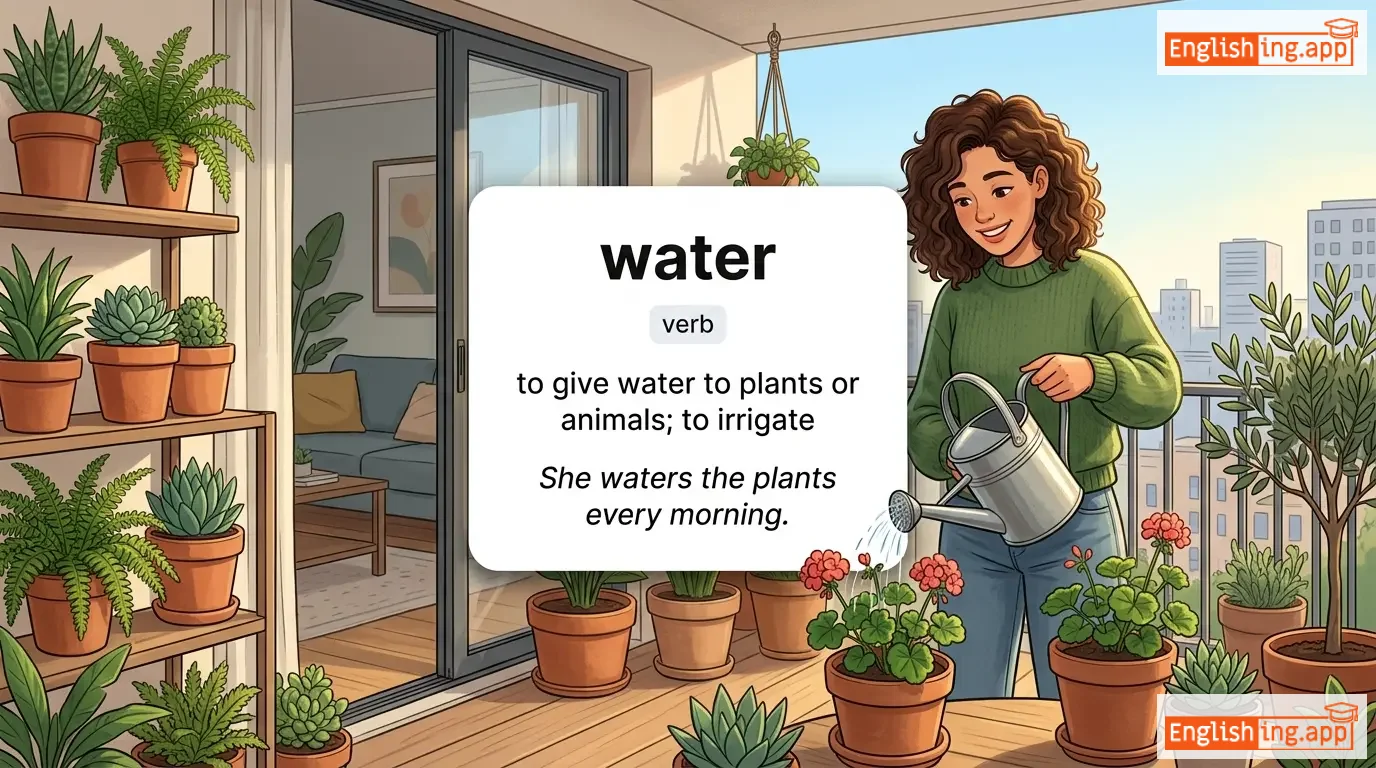
water definition card — visual illustration of the meaning
noun
/ˈwɔːtər/
(shui)

a clear, colorless, odorless, and tasteless liquid that is essential for life

"We need to drink water to stay hydrated."

"我们需要喝水以保持水分。" (Wǒmen xūyào hē shuǐ yǐ bǎochí shuǐfèn.)
noun
/ˈwɔː.tər ˌlɪl.i/
睡莲 (shuilian)

a floating flower that grows on the surface of ponds and lakes

"The white water-lily floated gracefully on the pond."
"白色的睡莲优雅地漂浮在池塘上。" (baisede shuilian youya de piaofu zai chitang shang)
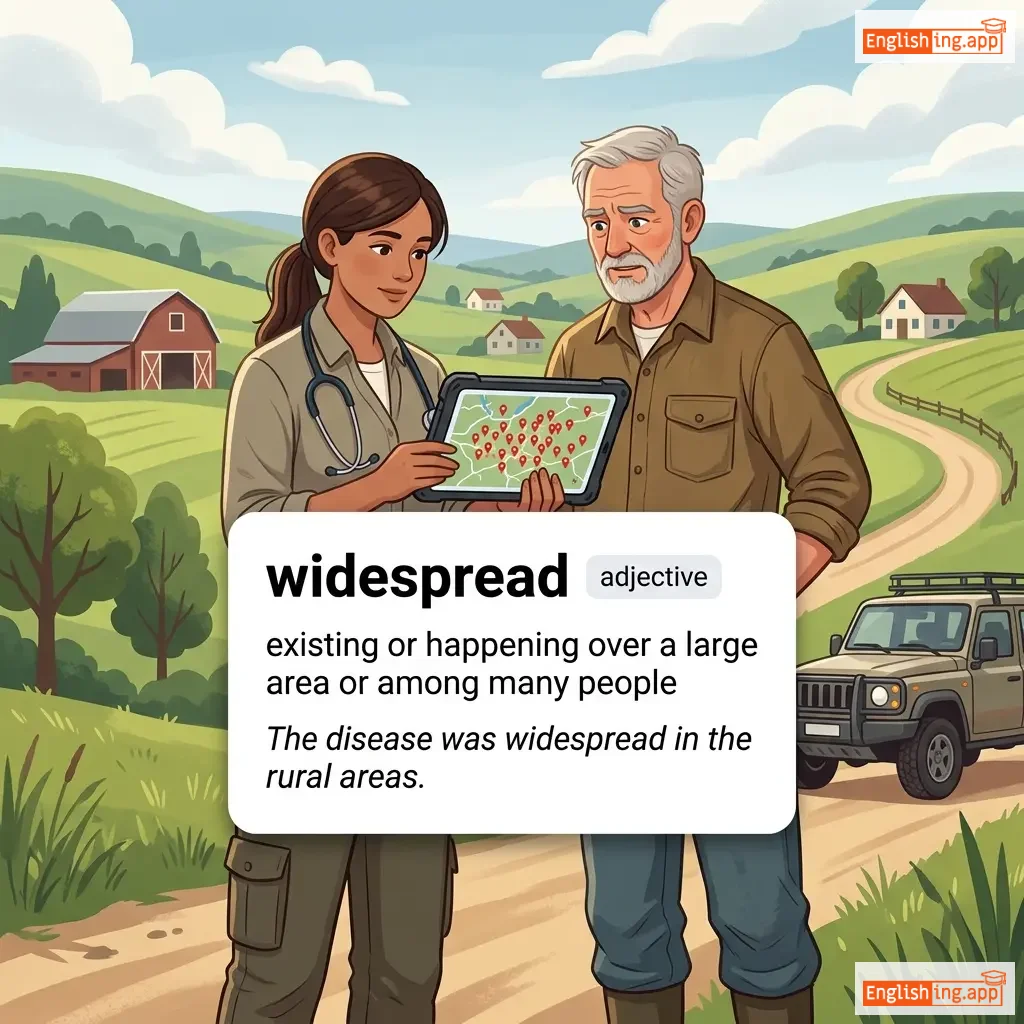
widespread definition card — visual illustration of the meaning
adjective
/ˈwaɪdˌsprɛd/
广泛传播的 (guǎngfàn chuánbō de)

existing or happening over a large area or among many people

"The disease was widespread in the rural areas."

"这种疾病在农村地区广泛传播。" (Zhè zhǒng jíbìng zài nóngcūn dìqū guǎngfàn chuánbō.)
adjective
/waɪd/
(kuān)

having a great extent from side to side; broad

"The river is wide enough to fit a boat."

"这条河足够宽,足以容纳一艘船。" (Zhe tiao he zhuo gou kuan, zu yi rong na yi sou chuan.)
noun
/ˈwiːltʃeər/
轮椅 (lún yǐ)

a chair with wheels, used by people who cannot walk easily or at all

"The hospital provided a wheelchair for the injured patient."

"医院为受伤的病人提供了轮椅。" (yīyuàn wèi shòushāng de bìngrén tígōngle lún yǐ.)
noun
/wɪm/
一时兴起 (yī shí xīng qǐ)

a sudden or unpredictable idea, desire, or decision

"She bought the dress on a whim."

"她一时兴起买了那条裙子。" (Tā yī shí xīng qǐ mǎi le nà tiáo qún zi.)
adverb, noun
/ˈwɛə.wɪð/
手段 (shǒuduàn)

With which; the means or resources needed for something.

"He lacked the money wherewith to buy a new house."

"他没有足够的钱来买新房。" (Tā méiyǒu zúgòu de qián lái mǎi xīn fáng.)
adverb
/wɒtˈsəʊɛvər/
根本不 (gēnběn bù)

used for emphasis after a negative statement to mean 'at all'

"She has no interest in the matter whatsoever."

"她对这个问题一点兴趣都没有。" (Tā duì zhège wèntí yīdiǎn xìngqù dōu méiyǒu.)
noun
/wiːl/
轮子 (lúnzi)

a circular object that revolves on an axle and is used to move or carry things

"The wheel of the car broke down on the way."

"汽车的轮子在路上坏了。" (Qìchē de lúnzi zài lù shàng huàile.)
noun
/wiːt/
小麦 (xiaomai)

a cereal plant whose grain is used to make flour for bread and other foods

"Farmers harvested the wheat in early summer."

"农民在夏季初收割了小麦。" (nongmin zai xiaji chu shouge le xiaomai.)