词汇表

英语词汇词典 | 单词含义、定义和示例

noun
/ˌzɛnəˈfoʊbiə/
排外恐惧症 (pái wài kǒng jù zhèng)

fear or hatred of foreigners, people from different cultures, or strangers

"Xenophobia can lead to discrimination and social division."

"排外恐惧症可能导致歧视和社会分裂。" (Pái wài kǒng jù zhèng kěnéng dǎozhì qíshì hé shèhuì fēnliè.)
adjective
/ˈwɜːrid/
担忧 (dānyōu)

feeling anxious or concerned about something

"She was worried about the upcoming exam."

"她对即将到来的考试感到担忧。" (Tā duì jíjiāng dàolái de kǎoshì gǎndào dānyōu.)
noun
/jɔːn/
哈欠 (haqian)

an involuntary opening of the mouth and inhalation of air due to tiredness or boredom

"She couldn't suppress a yawn during the boring lecture."

"她在无聊的讲座中无法抑制哈欠。" (Ta zai wuliao de jiangzuo zhong wufa yizhi haqian.)
noun
/ˈræp.ər/
包裹 (baoguo)

a loose garment worn around the body; covering material

"She put on a warm wrapper before going outside."

"她在外出前穿上一件温暖的外套。" (Tā zài wàichū qián chuān shàng yī jiàn wēnnuǎn de wàitào.)
adjective
/ˈwʊd biː/
有前途的; 可能的; (yǒu qiántú de; kěnéng de;)

prospective; intending to be; aspiring

"The would-be actor practiced his lines every day."

"这个有前途的演员每天都在练习台词。" (Zhège yǒu qiántú de yǎnyuán měitiān dōu zài liànxí táicí.)
adjective
/ˈjɛləʊ/
黄色 (huángsè)

a color like that of ripe lemons or the sun

"The yellow flowers brightened up the whole garden."
"黄色的花朵照亮了整个花园。" (huángsè de huāduǒ zhàoliàngle zhěnggè huāyuán.)
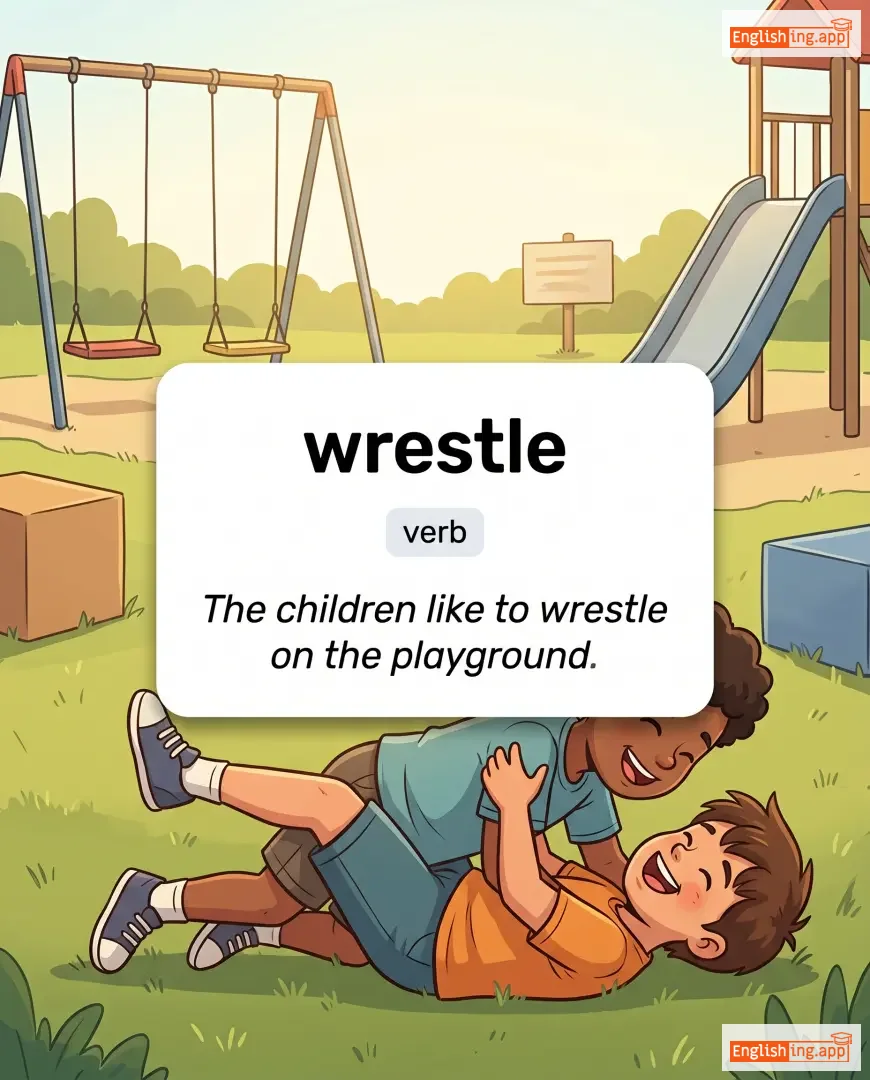
wrestle definition card — visual illustration of the meaning
verb
/ˈresəl/
摔跤 (shuāi jiāo)

to fight by grappling and trying to throw down an opponent; to struggle with a problem

"The children like to wrestle on the playground."

"孩子们喜欢在操场上摔跤。" (Háizimen xǐhuān zài cāo chǎng shàng shuāi jiāo)
noun
/ˈrɛtʃɪdnəs/
悲惨 (bēicǎn)

a state of misery, unhappiness, or poor condition

"The novel depicts the wretchedness of war victims."

"这本小说描绘了战争受害者的悲惨。" (Zhè běn xiǎoshuō miáohuìle zhànzhēng shòhài zhě de bēicǎn.)
verb
/riːk/
造成损害 (zàochéng sǔnhài)

to cause or inflict something, especially damage or harm

"The storm wreaked havoc on the coastal villages."

"暴风雨在沿海村庄造成了严重损害。" (Bàofēngyǔ zài yánhǎi cūnzhuāng zàochéngle yánzhòng sǔnhài.)
noun
/ˈraɪtər/
作家 (zuòjiā)

a person who writes, especially as a profession

"The writer published a new novel last month."

"作家上个月出版了一本新小说。" (Zuòjiā shàng gè yuè chūbǎnle yī běn xīn xiǎoshuō.)
verb
/rɛst/
用力夺取 (yongli duóqǔ)

to forcibly pull something from a person's grasp; to seize with effort or struggle

"The police had to wrest the weapon from the suspect's hand."

"警察不得不从嫌疑人的手中夺走武器。" (Jǐngchá bùdé bù cóng xiányí rén de shǒuzhōng duózǒu wǔqì.)
noun
/jɪə/
(nian)

a period of 365 or 366 days, divided into 12 months

"This year, we are planning a trip to the mountains."

"今年,我们计划去山里旅游。" (Jin nian, wo men ji hua qu shan li lv you.)
verb
/ˈwɜːʃɪp/
崇拜 (chóngbài)

To show reverence and adoration for a deity or sacred being.

"They gathered at the temple to worship together."

"他们聚集在寺庙里一起崇拜。" (Tāmen jùjí zài sìmiào lǐ yīqǐ chóngbài.)
noun
/zɛst/
热情 (reqing)

Great enthusiasm and energy; also the outer colored part of citrus fruit used for flavor.

"She tackled the project with zest."
"她带着热情完成了这个项目。" (Ta daizhe reqing wancheng le zhege xiangmu.)
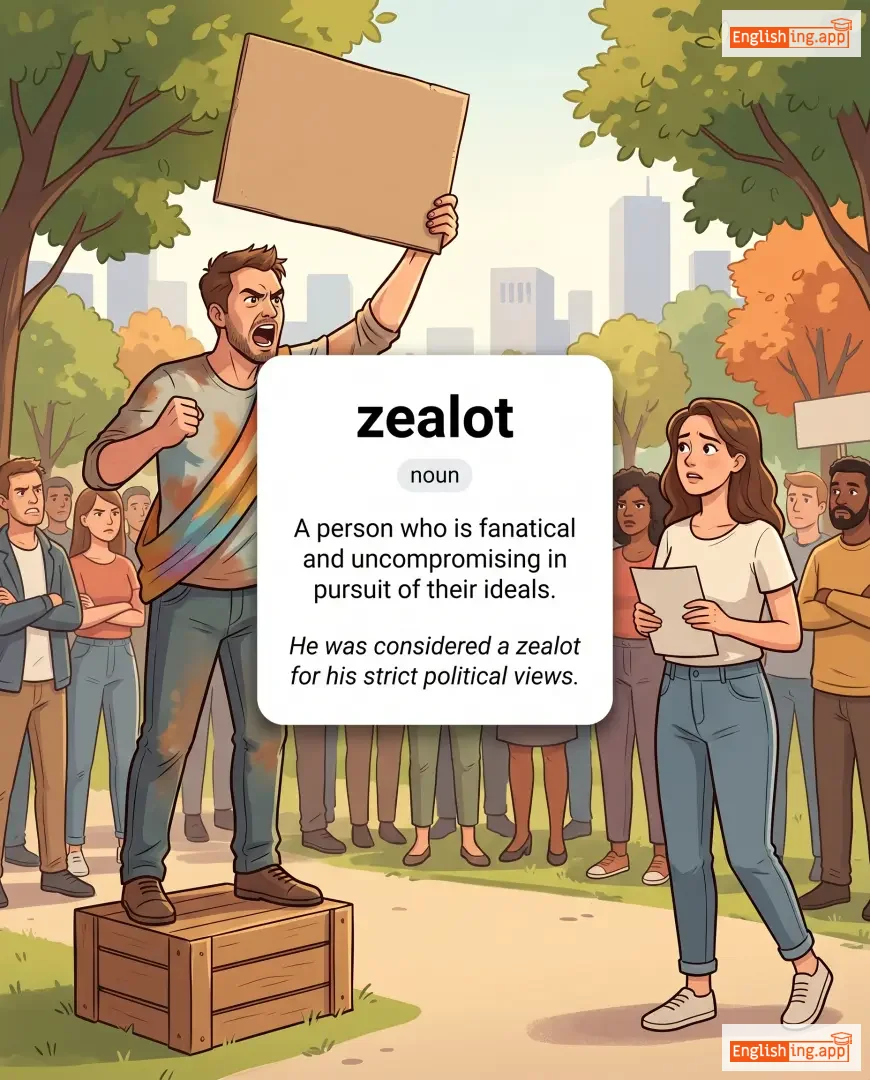
zealot definition card — visual illustration of the meaning
noun
/ˈzel.ət/
狂热分子 (kuángrè fènzǐ)

A person who is fanatical and uncompromising in pursuit of their ideals.

"He was considered a zealot for his strict political views."

"由于他严格的政治观点,他被视为狂热分子。" (Yóuyú tā yángé de zhèngzhì guāndiǎn, tā bèi shì wéi kuángrè fènzǐ.)
noun
/ˈzoʊdiæk/
黄道带 (huangdao dai)

a belt of the heavens divided into twelve equal divisions or signs, each named after a constellation; used in astronomy and astrology

"She checked her zodiac sign to read her daily horoscope."

"她查看了自己的星座,以阅读每日的星座运势。" (Tā chákànle zìjǐ de xīngzuò, yǐ yuèdú měirì de xīngzuò yùnshì.)
noun
/juːθ/
青年 (qīngnián)

the period of life when a person is young, often associated with energy and vitality

"The youth are the future of the country."

"青年是国家的未来。" (Qīngnián shì guójiā de wèilái.)
adjective, verb (past participle of wear)
/wɔːrn/
磨损的 (mosuande)

damaged, weakened, or deteriorated from use or age

"His shoes were old and worn."

"他的鞋子很旧,磨损严重。" (Tade xiezi hen jiu, mosuan yan zhong.)
noun
/joʊk/
(è)

A wooden crosspiece fastened over the necks of animals; symbolically, a burden or oppression.

"The oxen were bound together by a heavy yoke."
"牛被一根沉重的轭绑在一起。" (Niú bèi yī gēn chénzhòng de è bǎng zài yīqǐ.)
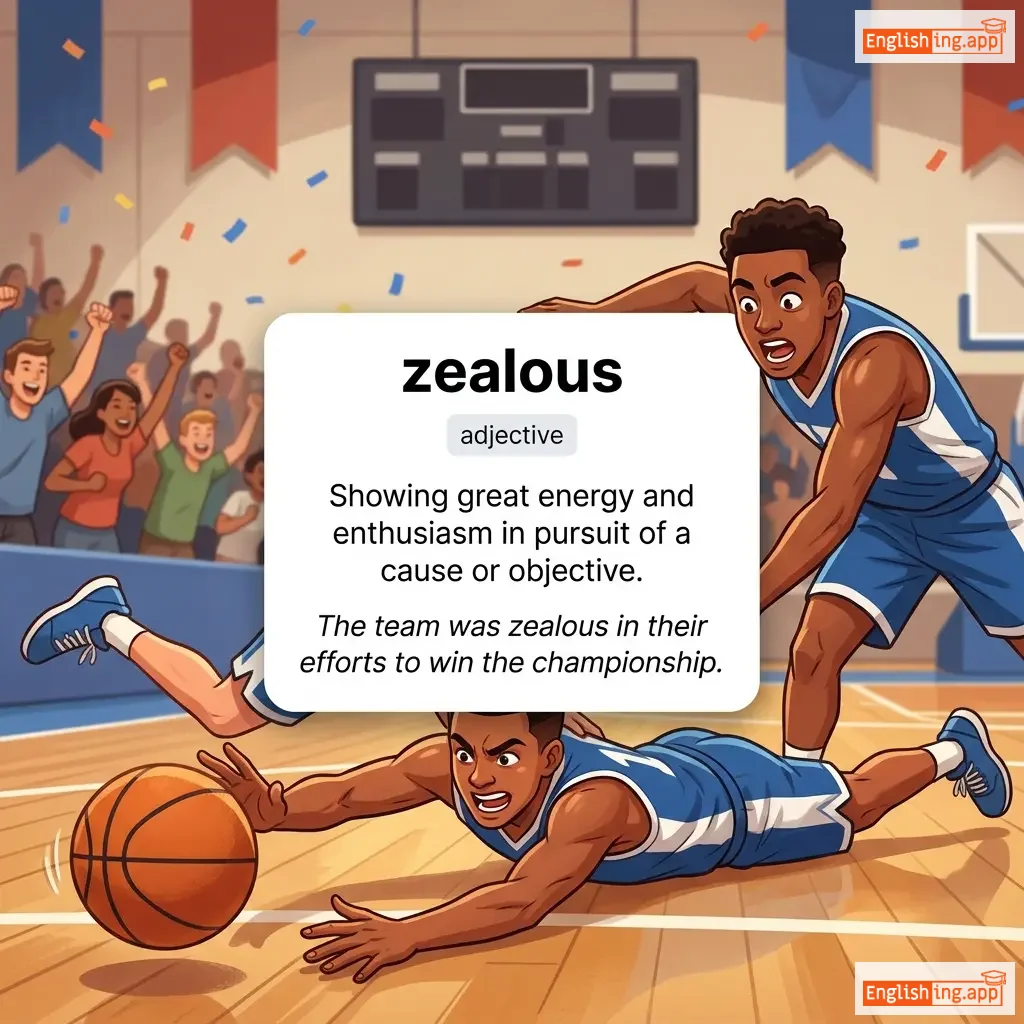
zealous definition card — visual illustration of the meaning
adjective
/ˈzel.əs/
热心的 (rèxīn de)

Showing great energy and enthusiasm in pursuit of a cause or objective.

"The team was zealous in their efforts to win the championship."

"该团队在努力赢得冠军时充满热情。" (Gāi tuánduì zài nǔlì yíngdé guànjūn shí chōngmǎn rèqíng.)
verb
/ˈræŋɡl̩/
争论 (zhēnglùn)

to argue or dispute noisily or angrily

"The two neighbors wrangled over the property line for hours."

"两个邻居为土地边界争论了好几个小时。" (Liǎng gè línjū wèi tǔdì biānjiè zhēnglùnle hǎo jǐ gè xiǎoshí.)
adjective
/ˈzeɪ.ni/
滑稽而不寻常 (huájī ér bù xúncháng)

Amusingly unconventional and peculiar.

"The comedian's zany style kept the audience laughing."

"喜剧演员古怪的风格让观众捧腹大笑。" (xǐjù yǎnyuán gǔguài de fēnggé ràng guānzhòng pěngfù dà xiào)
noun/verb
/wuːnd/
幸福 (xìng fú)

an injury to the body or to harm someone

"He received a deep wound on his arm."

"她无法掩饰她得到奖项时的幸福。" (Tā wúfǎ yǎnshì tā dédào jiǎngxiàng shí de xìngfú.)
noun
/jʌŋ fɪʃ/
幼鱼 (you yu)

juvenile or small fish; fish that has not reached maturity

"Young fish need protection from predators."

"幼鱼需要防止被掠食者攻击。" (you yu xu yao fang zhi bei lue shi zhe gong ji)
noun
/ˈzaɪtɡaɪst/
时代精神 (shídài jīngshén)

The defining spirit or mood of a particular period of history as shown by the ideas and beliefs of the time.

"The novel perfectly captures the zeitgeist of the 1960s."

"这本小说完美地捕捉了1960年代的时代精神。" (Zhè běn xiǎoshuō wánměi de bǔzhuō le 1960 niándài de shídài jīngshén.)
noun
/joʊk/
蛋黄 (dàn huáng)

the yellow part of an egg

"The chef separated the egg yolk from the white."

"厨师将蛋黄从蛋白中分开。" (chú shī jiāng dàn huáng cóng dàn bái zhōng fēn kāi.)
verb
/wʊd/
(hui)

used to indicate a future possibility or action in the past

"He said he would help me tomorrow."

"他说他明天会帮助我。" (Tā shuō tā míngtiān huì bāngzhù wǒ.)
noun
/zɪˈnɑːnə/
泽娜娜 (zenanna)

the part of a house reserved for women; women's quarters in Muslim households; harem

"The zenanna was beautifully decorated with intricate patterns."

"泽娜娜用复杂的图案美丽地装饰。" (Zenanna yòng fùzá de tú'àn měilì de zhuāngshì.)
noun
/rɪt/
法院命令 (fayuan mingling)

A formal written order issued by a court.

"The judge issued a writ of habeas corpus."

"法官发布了人身保护令。" (Fǎguān fābùle rénshēn bǎohù lìng.)
noun
/ˈzɪɡzæɡ/
具有突然的交替向左和向右转的路径或线条;急转弯的图案 (jùyǒu túrán de jiāotì xiàng zuǒ hé xiàng yòu zhuǎn de lùjìng huò xiàntiáo; jí zhuǎnwān de tú'àn)

a line or course having abrupt alternate right and left turns; a pattern of sharp turns

"The road follows a zigzag pattern up the mountain."

"这条路在山上呈锯齿形曲线。" (Zhè tiáo lù zài shān shàng chéng jùchǐxíng qūxiàn.)
noun
/rɛtʃ/
不幸的人 (buxing de ren)

an unfortunate or miserable person; a despicable or contemptible person

"The poor wretch was left out in the cold with no shelter."
"那个不幸的人被遗弃在寒冷中,没有避难所。" (Na ge buxing de ren bei yiqi zai hanleng zhong, meiyou binan suo.)
verb
/zæɡ/
急转弯 (ji zhuan wan)

to make a sharp change in direction, especially in a zigzag pattern

"The rabbit zagged quickly to escape the fox."

"兔子迅速转弯以躲避狐狸。" (Tuzi xun su zhuan wan yi duobi huli.)
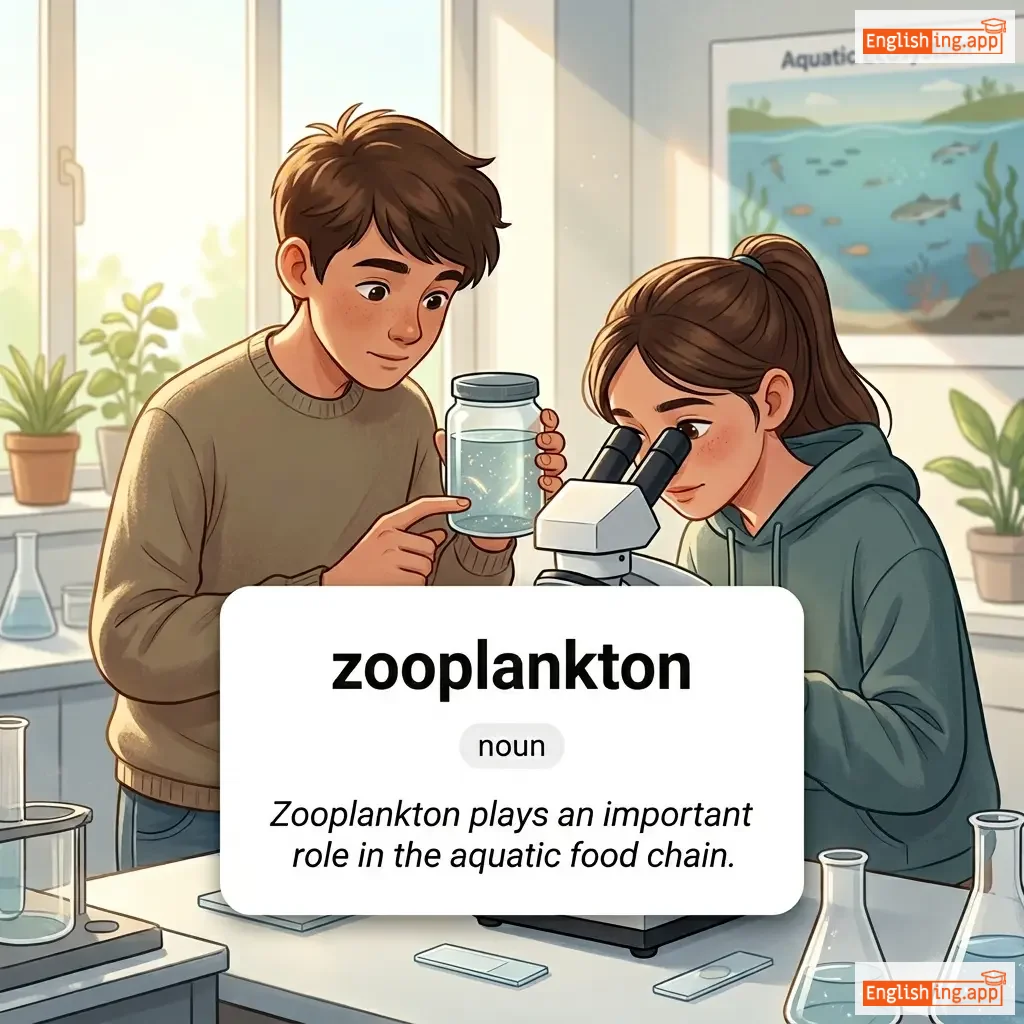
zooplankton definition card — visual illustration of the meaning
noun
/ˈzuːəʊˌplæŋktən/
浮游动物 (fúyóu dòngwù)

Microscopic aquatic animals that drift in water bodies and form an essential part of the aquatic food chain, serving as food for fish and other marine organisms.

"Zooplankton plays an important role in the aquatic food chain."

"浮游动物在水生食物链中起着重要作用。" (Fúyóu dòngwù zài shuǐshēng shíwù liàn zhōng qǐzhe zhòngyào zuòyòng.)
noun/verb
/ˈraɪ.tɪŋ/
幸福 (xìngfú)

The activity of putting words on paper or composing text; the written form of communication.

"She spends hours every day on her creative writing."
"当她收到奖项时,她无法掩饰自己的幸福感。" (Dāng tā shōudào jiǎngxiàng shí, tā wúfǎ yǎnshì zìjǐ de xìngfú gǎn.)
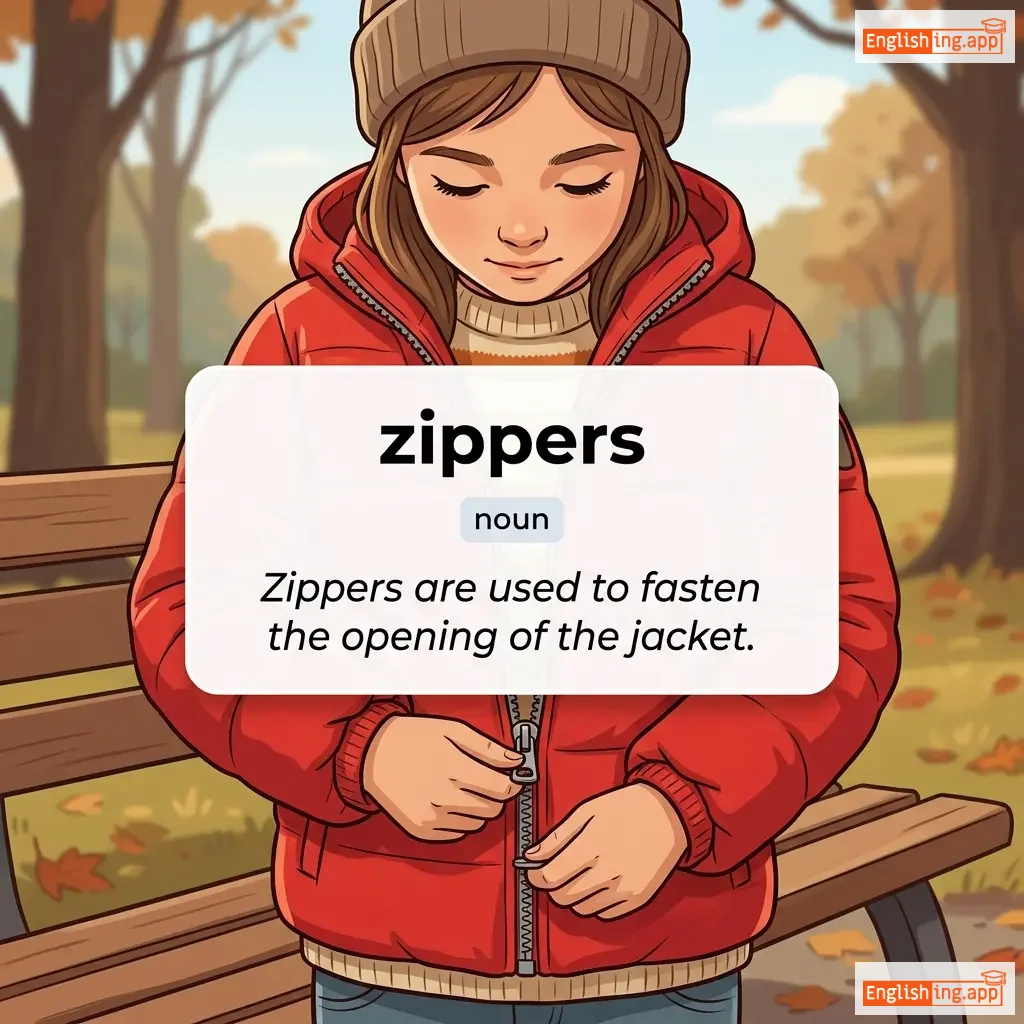
zippers definition card — visual illustration of the meaning
noun
ˈzɪpərz
拉链 (lā liàn)

A device consisting of two flexible strips of metal or plastic with interlocking projections closed or opened by pulling a slide along them.

"Zippers are used to fasten the opening of the jacket."

"拉链用于关闭夹克的开口。" (Lāliàn yòngyú guānbì jiákè de kāikǒu.)
adverb
/jɛs/
(shi)

used to express affirmation, agreement, or consent

"Yes, I will be there at 5 o'clock."

"是的,我会在五点到那里。" (Shi de, wo hui zai wu dian dao nali.)
adjective
/ˌrɒŋˈhɛd.ɪd/
错误的思想 (cuò wù de sī xiǎng)

Having or showing bad judgment or stubbornly holding to wrong ideas.

"The policy was considered wrongheaded and harmful."

"这项政策被认为是错误的思想并且有害。" (zhè xiàng zhèng cè bèi rèn wéi shì cuò wù de sī xiǎng bìng qiě yǒu hài.)
noun
/jɛn/
渴望 (kewang)

A deep, strong desire or craving.

"She felt a strong yen to travel the world."

"她感到强烈的渴望去环游世界。" (ta gandao qianglie de kewang qu huanyou shijie.)
write definition card — visual illustration of the meaning
verb
/raɪt/
幸福 (xingfu)

to form letters or words on a surface, typically with a pen or pencil

"I need to write a letter to my friend."

"她收到奖项时,无法掩饰她的快乐。" (Tā shōudào jiǎngxiàng shí, wúfǎ yǎnshì tā de kuàilè.)
noun
/jɑːrn/
纱线 (shaxian)

spun thread used for knitting, weaving, or sewing; a long or rambling story

"She bought colorful yarn for knitting a sweater."
"她买了彩色的纱线来编织一件毛衣。" (Ta mǎi le cǎisè de shāxiàn lái biānzhī yī jiàn máoyī.)
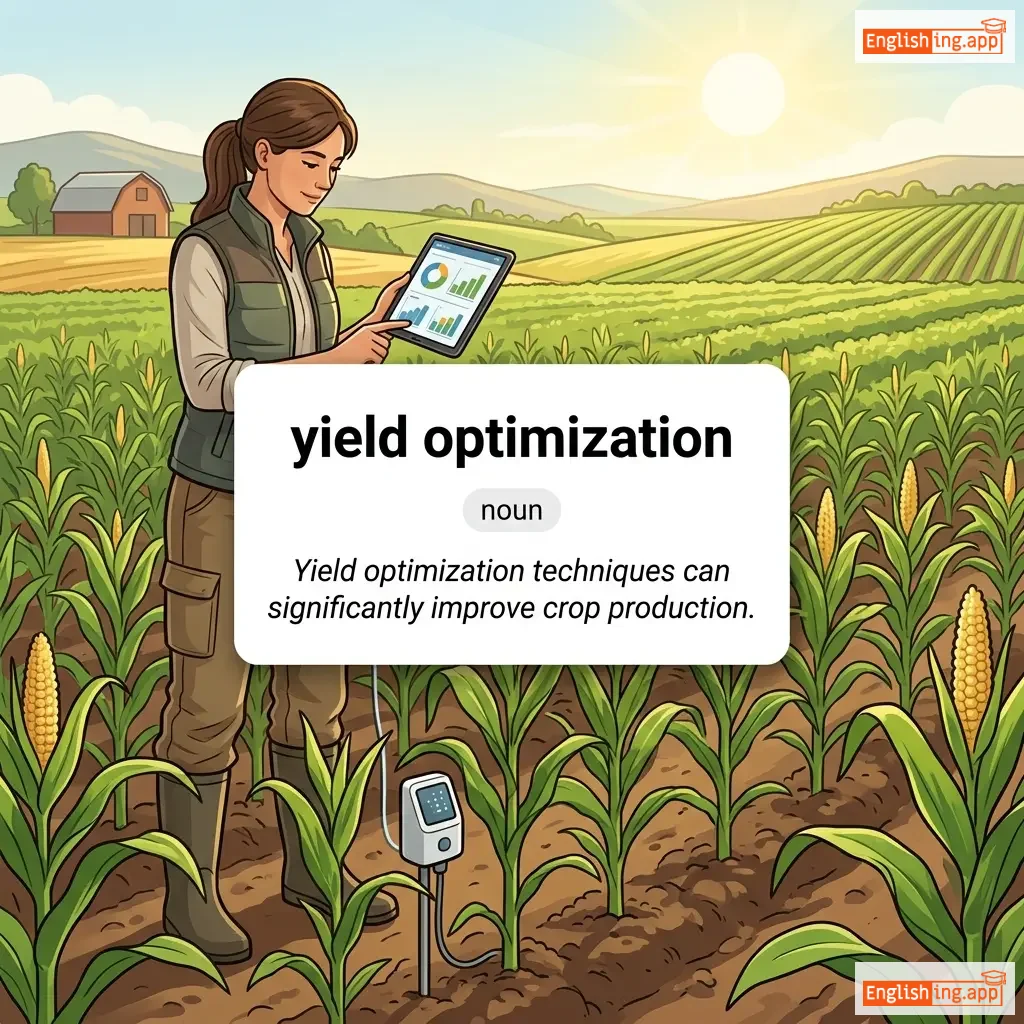
yield optimization definition card — visual illustration of the meaning
noun
/jiːld ˌɒptɪmaɪˈzeɪʃən/
产量优化 (chǎnliàng yōuhuà)

The process of maximizing the productivity or efficiency of crop production through various agricultural techniques and practices.

"Yield optimization techniques can significantly improve crop production."

"产量优化技术可以显著提高作物生产。" (Chǎnliàng yōuhuà jìshù kěyǐ xiǎnzhù tígāo zuòwù shēngchǎn.)
noun
/ˈzɛnəˌfoʊb/
仇外者 (chouwaizhe)

a person who dislikes or fears people from other countries or cultures

"The politician was criticized as a xenophobe due to his anti-immigrant policies."

"由于他反移民的政策,这位政治家被批评为仇外者。" (youyu ta fan yiming de zhengce, zhe wei zhengzhi jia bei piping wei chouwaizhe.)
noun
/ˈjoʊkəl/
乡巴佬 (xiangbaolao)

An uneducated and unsophisticated person from the countryside; a bumpkin.

"The city folks laughed at the yokel's simple ways."

"城市人嘲笑乡巴佬的简单方式。" (Chéngshì rén cháoxiào xiāng bā lǎo de jiǎndān fāngshì.)
pronoun
/jɔːrz/
你的 (nǐ de)

belonging to or associated with the person or people that the speaker is addressing

"This pen is yours."

"这支钢笔是你的。" (Zhè zhī gāng bǐ shì nǐ de.)
noun
/ˈjʌŋstər/
年轻人 (niánqīngrén)

a young person or child, especially a teenager or adolescent

"The park was full of youngsters playing football."

"公园里充满了踢足球的年轻人。" (Gōngyuán lǐ chōngmǎnle tī zúqiú de niánqīngrén.)
noun
/jɑːrd/
(mǎ)

a unit of linear measure equal to three feet or 0.9144 meters

"The garden is 50 yards long."

"花园长50码。" (Huāyuán cháng 50 mǎ.)
adverb
/ˈrɒŋli/
错误地 (cuowu di)

in an incorrect or mistaken way; unfairly or unjustly

"He was wrongly accused of the crime."

"他被错误地指控犯了罪。" (ta bei cuowu di zhikong fan le zui)
noun
/rɪst/

the joint connecting the hand with the forearm

"He wore a smartwatch on his left wrist."

adverb
/ˈwɔːm.li/
热情地; 亲切地 (rèqíng de; qīnqiè de)

in a warm manner; with warmth; cordially; affectionately

"She welcomed the guests warmly at the door."
"她在门口热情地欢迎客人。" (Tā zài ménkǒu rèqíng de huānyíng kèrén.)
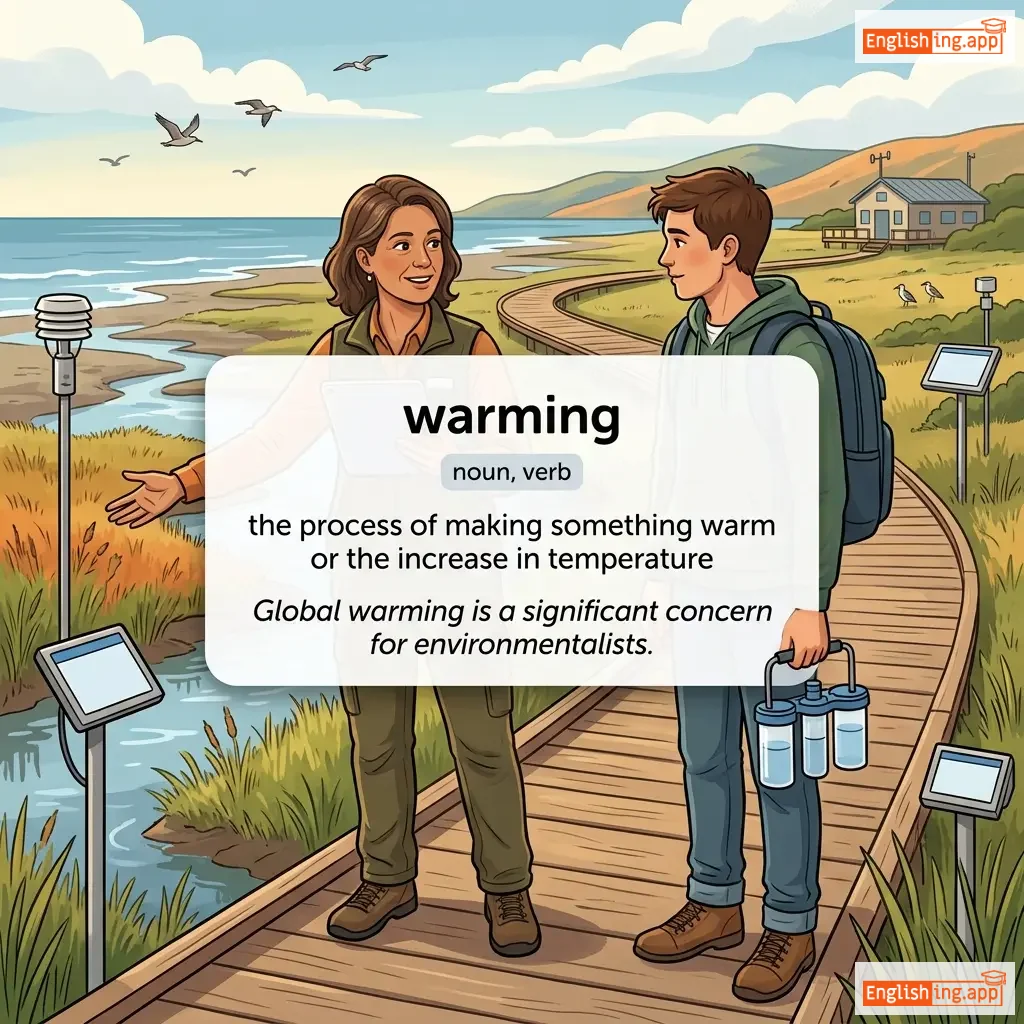
warming definition card — visual illustration of the meaning
noun, verb
/ˈwɔːmɪŋ/
温度升高 (wendu shenggao)

the process of making something warm or the increase in temperature

"Global warming is a significant concern for environmentalists."

"全球变暖是环境学者关心的重要问题。" (Quanqiu bian nuan shi huanjing xue zhe guanxin de zhongyao wenti.)