वोकैबुलरीज

इंग्लिश वोकैबुलरी डिस्कवर, लर्न और मास्टर करें

noun
/ˌzɛnəˈfoʊbiə/
विदेशी phobia (videshi phobia)

fear or hatred of foreigners, people from different cultures, or strangers

"Xenophobia can lead to discrimination and social division."

"ज़ेनोफ़ोबिया भेदभाव और सामाजिक विभाजन का कारण बन सकता है।" (Zeno-phobia bhedbhav aur samajik vibhaajan ka kaaran ban sakta hai.)
adjective
/ˈwɜːrid/
चिंतित (chintit)

feeling anxious or concerned about something

"She was worried about the upcoming exam."

"वह आगामी परीक्षा के बारे में चिंतित थी।" (Vah aagami pariksha ke baare mein chintit thi.)
noun
/jɔːn/
बोरियत (boreeyat)

an involuntary opening of the mouth and inhalation of air due to tiredness or boredom

"She couldn't suppress a yawn during the boring lecture."

"उबाऊ लेक्चर के दौरान वह एक यॉंन को रोक नहीं पाई।" (ubaau lecture ke dauran vah ek yawn ko rok nahin pai.)
noun
/ˈræp.ər/
लपेटनेवाला (lapetnewala)

a loose garment worn around the body; covering material

"She put on a warm wrapper before going outside."

"वह बाहर जाने से पहले एक गर्म लपेटनेवाला पहनती है।" (vah baahar jaane se pehle ek garm lapetnewala pehanti hai。)
adjective
/ˈwʊd biː/
इच्छाशक्ति वाला; संभावित; (ichchhashakti wala; sambhavit;)

prospective; intending to be; aspiring

"The would-be actor practiced his lines every day."

"संभावित अभिनेता ने हर दिन अपनी लाइनों का अभ्यास किया।" (sambhavit abhineta ne har din apni lainon ka abhyas kiya.)
adjective
/ˈjɛləʊ/
पीला (peela)

a color like that of ripe lemons or the sun

"The yellow flowers brightened up the whole garden."

"पीले फूलों ने पूरे बगीचे को रोशन कर दिया।" (Peele phoolon ne poore bageeche ko roshan kar diya.)
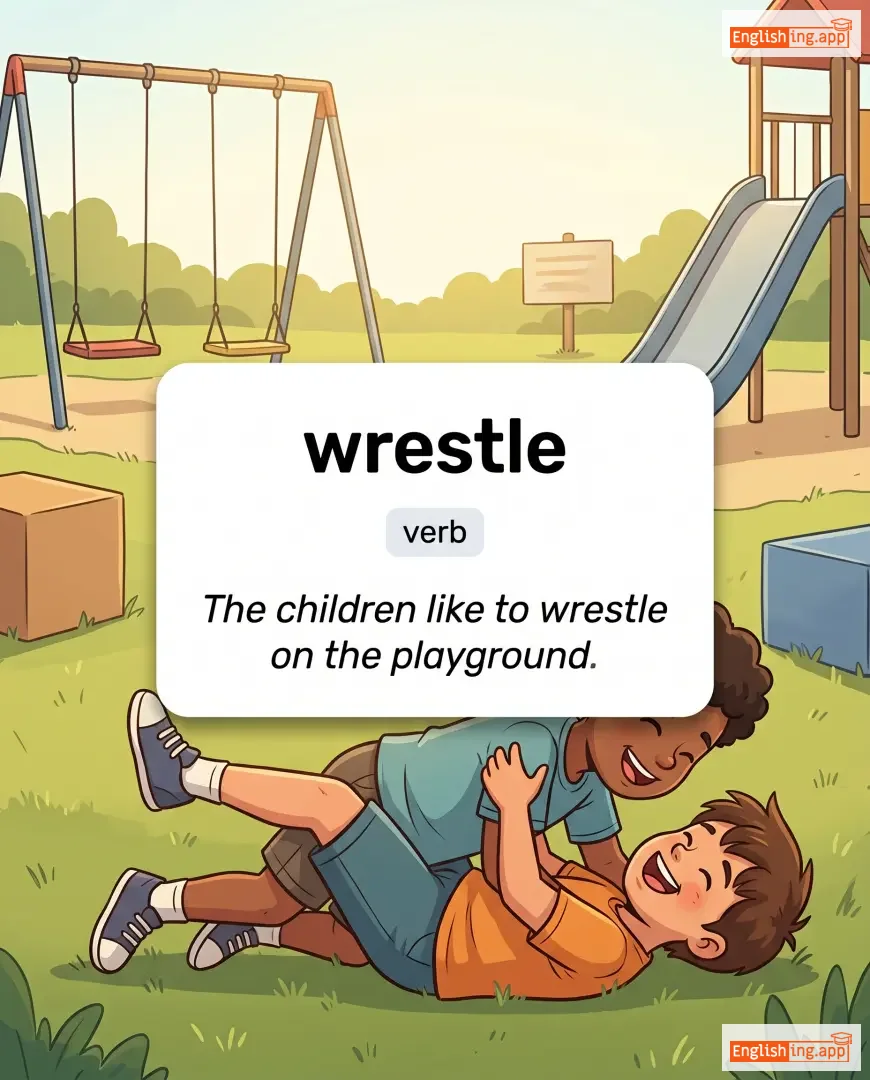
wrestle definition card — visual illustration of the meaning
verb
/ˈresəl/
कुश्ती करना (kushti karna)

to fight by grappling and trying to throw down an opponent; to struggle with a problem

"The children like to wrestle on the playground."

"बच्चे खेल के मैदान पर कुश्ती करना पसंद करते हैं।" (Bacche khel ke maidan par kushti karna pasand karte hain)
noun
/ˈrɛtʃɪdnəs/
दीन-हीनता (deen-heenta)

a state of misery, unhappiness, or poor condition

"The novel depicts the wretchedness of war victims."

"उपन्यास युद्ध पीड़ितों की दीन-हीनता को दर्शाता है।" (Upanyaas yudh peediton ki deen-heenta ko darshata hai.)
verb
/riːk/
नुकसान पहुंचाना (nuksan pahuchana)

to cause or inflict something, especially damage or harm

"The storm wreaked havoc on the coastal villages."

"तूफान ने तटीय गांवों में भारी नुकसान पहुंचाया।" (Toofan ne tatiya gaonon mein bhari nuksan pahuchaya.)
noun
/ˈraɪtər/
लेखक (lekhak)

a person who writes, especially as a profession

"The writer published a new novel last month."

"लेखक ने पिछले महीने एक नई उपन्यास प्रकाशित की।" (lekhak ne pichle mahine ek nai upanyas prakaashit ki.)
verb
/rɛst/
जबर्दस्ती कुछ छीनना (jabardasti kuch cheenna)

to forcibly pull something from a person's grasp; to seize with effort or struggle

"The police had to wrest the weapon from the suspect's hand."

"पुलिस को संदिग्ध से हथियार जबरदस्ती छीनना पड़ा।" (Police ko sandigdh se hathiyar jabardasti cheenna pada.)
noun
/jɪə/
साल (saal)

a period of 365 or 366 days, divided into 12 months

"This year, we are planning a trip to the mountains."

"इस साल, हम पहाड़ों की यात्रा की योजना बना रहे हैं।" (Is saal, hum pahadon ki yatra ki yojana bana rahe hain.)
verb
/ˈwɜːʃɪp/
पूजा (pooja)

To show reverence and adoration for a deity or sacred being.

"They gathered at the temple to worship together."

"वे मंदिर में एक साथ पूजा करने के लिए इकट्ठा हुए।" (ve mandir mein ek saath pooja karne ke liye ikattha hue.)
noun
/zɛst/
उत्साह (utsah)

Great enthusiasm and energy; also the outer colored part of citrus fruit used for flavor.

"She tackled the project with zest."

"उसने परियोजना को उत्साह के साथ निपटाया।" (Usne pariyojna ko utsah ke saath nipataya.)
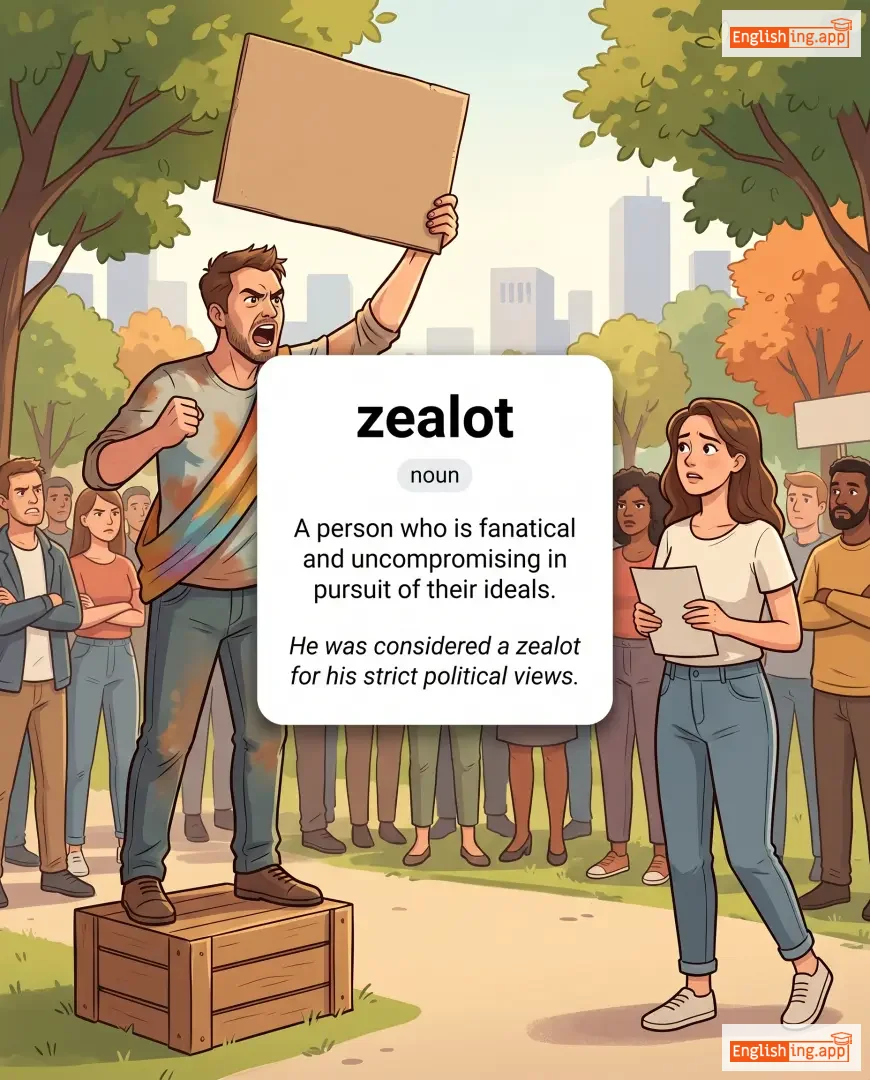
zealot definition card — visual illustration of the meaning
noun
/ˈzel.ət/
अत्युत्साही व्यक्ति (atyutsahi vyakti)

A person who is fanatical and uncompromising in pursuit of their ideals.

"He was considered a zealot for his strict political views."

"उसे उसके कड़े राजनीतिक दृष्टिकोण के कारण एक अत्युत्साही व्यक्ति माना गया था।" (Use uske kade rajnaitik drishtikon ke karan ek atyutsahi vyakti mana gaya tha.)
noun
/ˈzoʊdiæk/
राशिचक्र (rashichakra)

a belt of the heavens divided into twelve equal divisions or signs, each named after a constellation; used in astronomy and astrology

"She checked her zodiac sign to read her daily horoscope."

"उसने अपना राशिचक्र चिन्ह देखा ताकि वह अपनी दैनिक राशिफल पढ़ सके।" (Usne apna rashichakra chihn dekha taaki woh apni dainik rashifal padh sake.)
noun
/juːθ/
युवावस्था (yuvavastha)

the period of life when a person is young, often associated with energy and vitality

"The youth are the future of the country."

"युवक देश का भविष्य हैं।" (Yuvak desh ka bhavishya hain.)
adjective, verb (past participle of wear)
/wɔːrn/
क्षतिग्रस्त (kshatigrist)

damaged, weakened, or deteriorated from use or age

"His shoes were old and worn."

"उसके जूते पुराने और क्षतिग्रस्त थे।" (Uske joote purane aur kshatigrist the.)
noun
/joʊk/
जुआ (jua)

A wooden crosspiece fastened over the necks of animals; symbolically, a burden or oppression.

"The oxen were bound together by a heavy yoke."

"बैल एक भारी जुए से बंधे हुए थे।" (bail ek bhaari jue se bandhe hue the.)
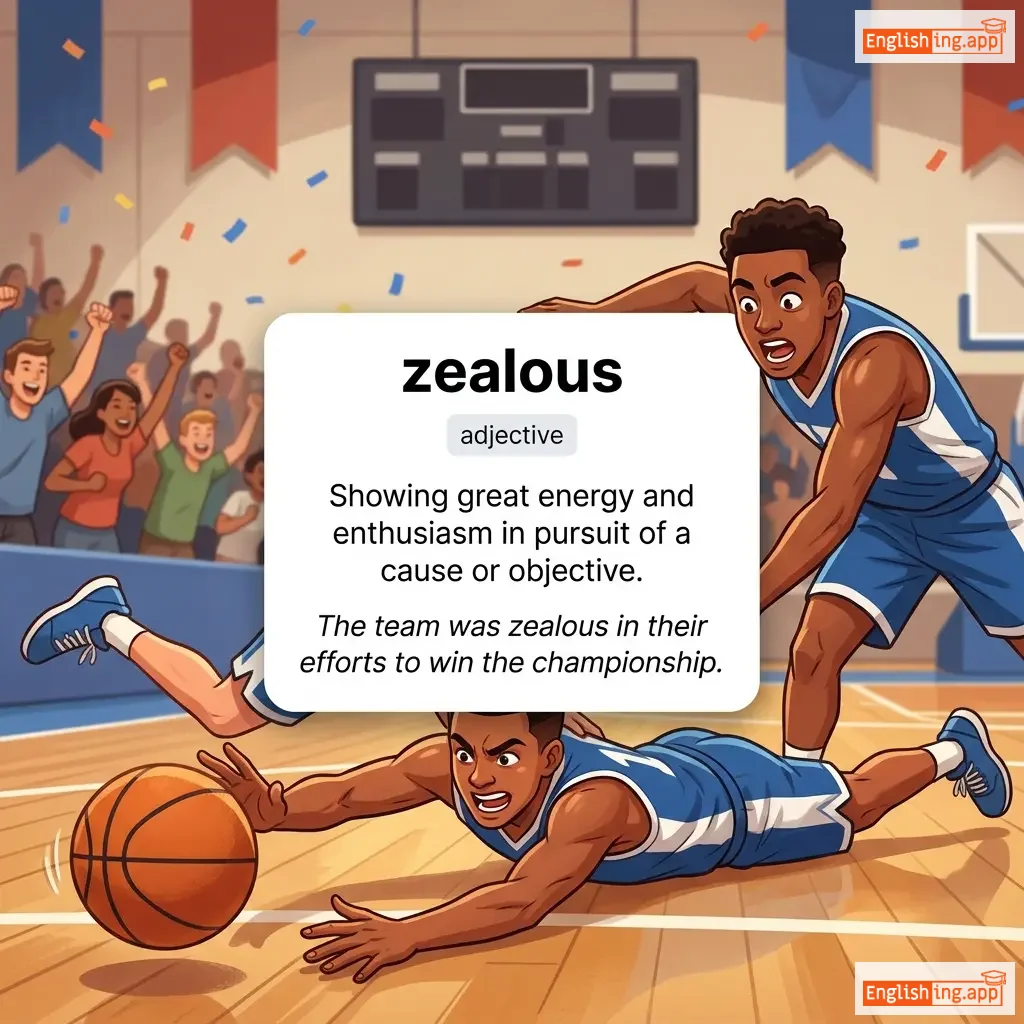
zealous definition card — visual illustration of the meaning
adjective
/ˈzel.əs/
उत्साही (utsahi)

Showing great energy and enthusiasm in pursuit of a cause or objective.

"The team was zealous in their efforts to win the championship."

"टीम चैंपियनशिप जीतने के लिए उत्साही थी।" (Team championship jeetne ke liye utsahi thi.)
verb
/ˈræŋɡl̩/
झगड़ा करना (jhagda karna)

to argue or dispute noisily or angrily

"The two neighbors wrangled over the property line for hours."

"दोनों पड़ोसी घंटों तक संपत्ति की सीमा पर झगड़ा करते रहे।" (Donon padosi ghanton tak sampatti ki seema par jhagda karte rahe.)
adjective
/ˈzeɪ.ni/
अजीब तरीके से मनोरंजक और विचित्र (ajeeb tareeke se manoranjak aur vichitra)

Amusingly unconventional and peculiar.

"The comedian's zany style kept the audience laughing."

"कॉमेडियन की अजीब शैली ने दर्शकों को हंसी में डाल दिया।" (comedian ki ajeeb shaili ne darshako ko hasii mein daal diya.)
noun/verb
/wuːnd/
खुशी (khushi)

an injury to the body or to harm someone

"He received a deep wound on his arm."

"वह जब पुरस्कार प्राप्त किया तो वह अपनी खुशी को छिपा नहीं सकी।" (Wah jab puraskaar prapt kiya to wah apni khushi ko chhupa nahin saki.)
noun
/jʌŋ fɪʃ/
नवीन मछली (naveen machhli)

juvenile or small fish; fish that has not reached maturity

"Young fish need protection from predators."

"नवीन मछलियों को शिकारी से सुरक्षा की आवश्यकता होती है।" (naveen machhliyon ko shikari se suraksha ki aavashyakta hoti hai)
noun
/ˈzaɪtɡaɪst/
समय की भावना (samay ki bhavna)

The defining spirit or mood of a particular period of history as shown by the ideas and beliefs of the time.

"The novel perfectly captures the zeitgeist of the 1960s."

"उपन्यास ने 1960 के दशक की भावना को पूरी तरह से पकड़ लिया।" (Upanyas ne 1960 ke dashak ki bhavna ko puri tarah se pakad liya.)
noun
/joʊk/
अंडे की जर्दी (ande ki zardi)

the yellow part of an egg

"The chef separated the egg yolk from the white."

"द शेफ ने अंडे की जर्दी सफेद हिस्से से अलग की।" (da shef ne ande ki zardi safed hisse se alag ki.)
verb
/wʊd/
चाहेगा (chahega)

used to indicate a future possibility or action in the past

"He said he would help me tomorrow."

"उसने कहा कि वह मुझे कल मदद करेगा।" (Usne kaha ki vah mujhe kal madad karega.)
noun
/zɪˈnɑːnə/
ज़ेना (zena)

the part of a house reserved for women; women's quarters in Muslim households; harem

"The zenanna was beautifully decorated with intricate patterns."

"ज़ेना को जटिल पैटर्न से खूबसूरती से सजाया गया था।" (zena ko jatil pattern se khubsurti se sajaya gaya tha)
noun
/rɪt/
रिट (rit)

A formal written order issued by a court.

"The judge issued a writ of habeas corpus."

"न्यायाधीश ने हैबियस कॉर्पस रिट जारी किया।" (Nyayadhish ne habeas corpus rit jari kiya.)
noun
/ˈzɪɡzæɡ/
झूलते हुए मोड़ या दिशा; एक पैटर्न जिसमें अचानक दाएं और बाएं मुड़ते हैं (jhoolte huye mod ya disha; ek pattern jismein achanak daayein aur baayein mudte hain)

a line or course having abrupt alternate right and left turns; a pattern of sharp turns

"The road follows a zigzag pattern up the mountain."

"सड़क पहाड़ की चोटी तक ज़िगज़ैग पैटर्न में चलती है।" (sadak pahar ki choti tak zigzag pattern mein chalti hai)
noun
/rɛtʃ/
दीन-हीन व्यक्ति (deen-heen vyakti)

an unfortunate or miserable person; a despicable or contemptible person

"The poor wretch was left out in the cold with no shelter."

"ग़रीब दीन-हीन व्यक्ति को ठंड में बिना आश्रय के बाहर छोड़ दिया गया था।" (Gareeb deen-heen vyakti ko thand mein bina aashray ke baahar chhod diya gaya tha.)
verb
/zæɡ/
तेज़ मोड़ लेना (tez mod lena)

to make a sharp change in direction, especially in a zigzag pattern

"The rabbit zagged quickly to escape the fox."

"खरगोश ने लोमड़ी से बचने के लिए तेज़ी से मोड़ लिया।" (Khargosh ne lomdi se bachne ke liye tezi se mod liya.)
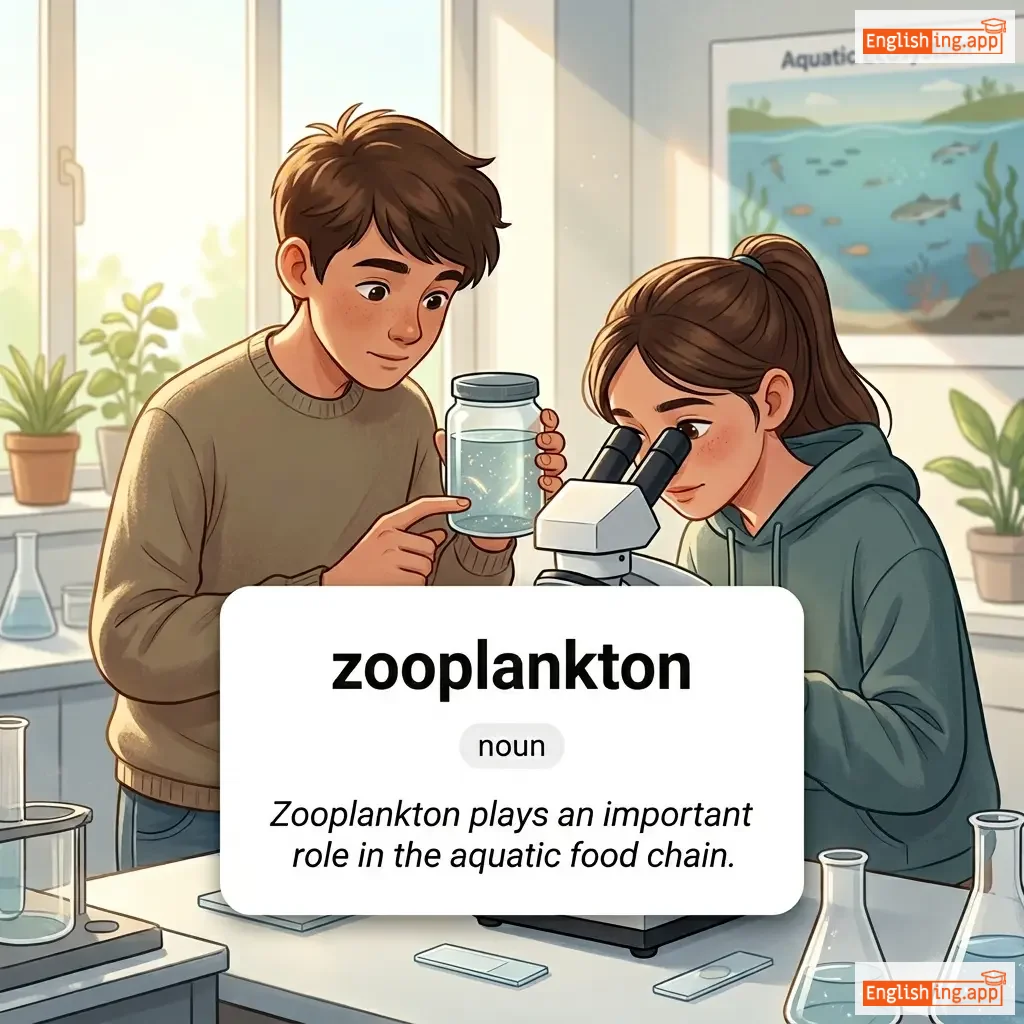
zooplankton definition card — visual illustration of the meaning
noun
/ˈzuːəʊˌplæŋktən/
ज़ूओप्लांकटन (zooplankton)

Microscopic aquatic animals that drift in water bodies and form an essential part of the aquatic food chain, serving as food for fish and other marine organisms.

"Zooplankton plays an important role in the aquatic food chain."

"ज़ूओप्लांकटन जलजीवों के खाद्य श्रृंखला में महत्वपूर्ण भूमिका निभाता है।" (Zooplankton jaljeevon ke khadya shrinkhla mein mahatvapurn bhoomika nibhaata hai.)
noun/verb
/ˈraɪ.tɪŋ/
खुशी (khushi)

The activity of putting words on paper or composing text; the written form of communication.

"She spends hours every day on her creative writing."

"जब उसे पुरस्कार मिला तो वह अपनी खुशी छुपा नहीं पाई।" (Jab use puraskar mila to wah apni khushi chhupa nahi paayi.)
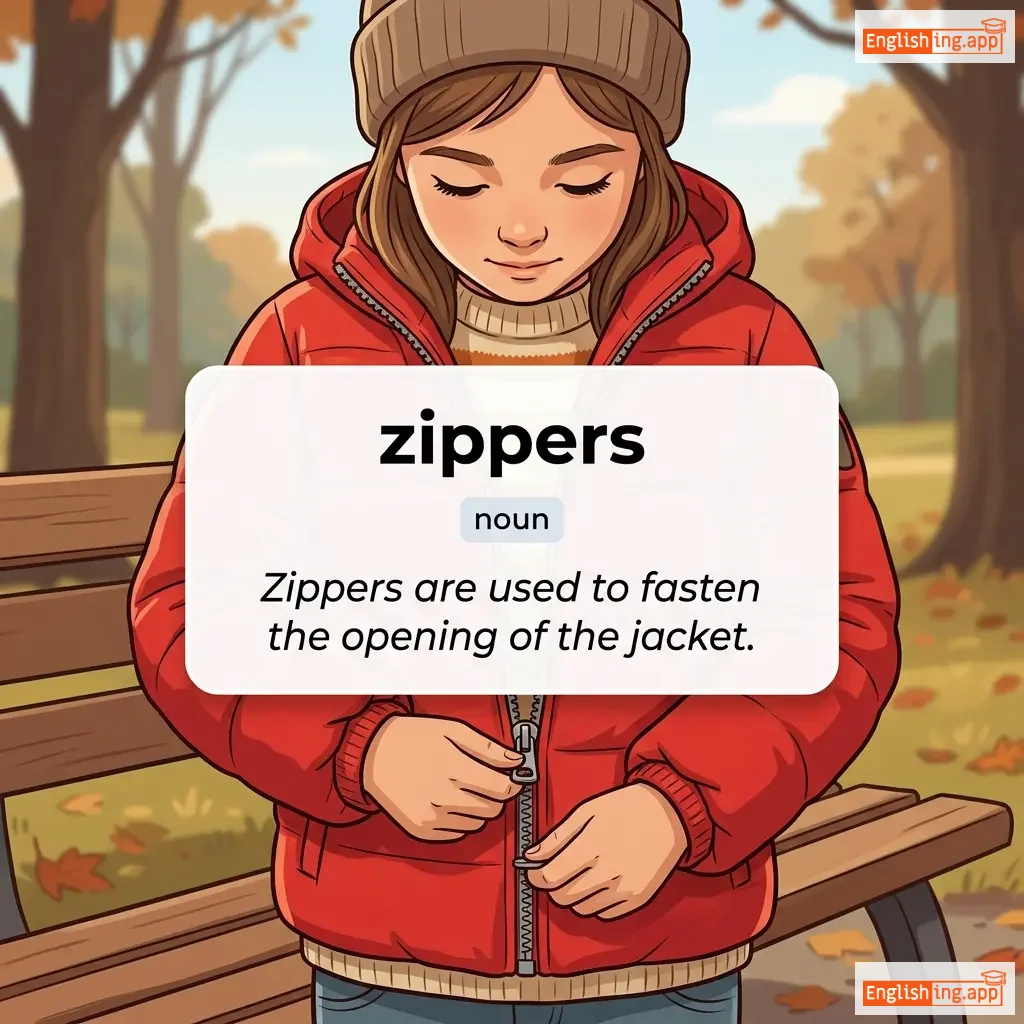
zippers definition card — visual illustration of the meaning
noun
ˈzɪpərz
ज़िपर (zipar)

A device consisting of two flexible strips of metal or plastic with interlocking projections closed or opened by pulling a slide along them.

"Zippers are used to fasten the opening of the jacket."

"ज़िपर जैकेट के खोल को बांधने के लिए उपयोग किया जाता है।" (Zipar jacket ke khol ko baandhne ke liye upyog kiya jaata hai.)
adverb
/jɛs/
हां (haan)

used to express affirmation, agreement, or consent

"Yes, I will be there at 5 o'clock."

"हां, मैं पांच बजे वहां पहुंचूंगा।" (Haan, main paanch baje wahan pahuchunga.)
adjective
/ˌrɒŋˈhɛd.ɪd/
गलत सोच वाला (galat soch wala)

Having or showing bad judgment or stubbornly holding to wrong ideas.

"The policy was considered wrongheaded and harmful."

"नीति को गलत सोच वाला और हानिकारक माना गया था।" (Neeti ko galat soch wala aur haanikarak maana gaya tha.)
noun
/jɛn/
लालसा (lalasa)

A deep, strong desire or craving.

"She felt a strong yen to travel the world."

"उसे दुनिया घूमने की गहरी लालसा हुई।" (use duniya ghoomne ki gahri lalasa hui.)
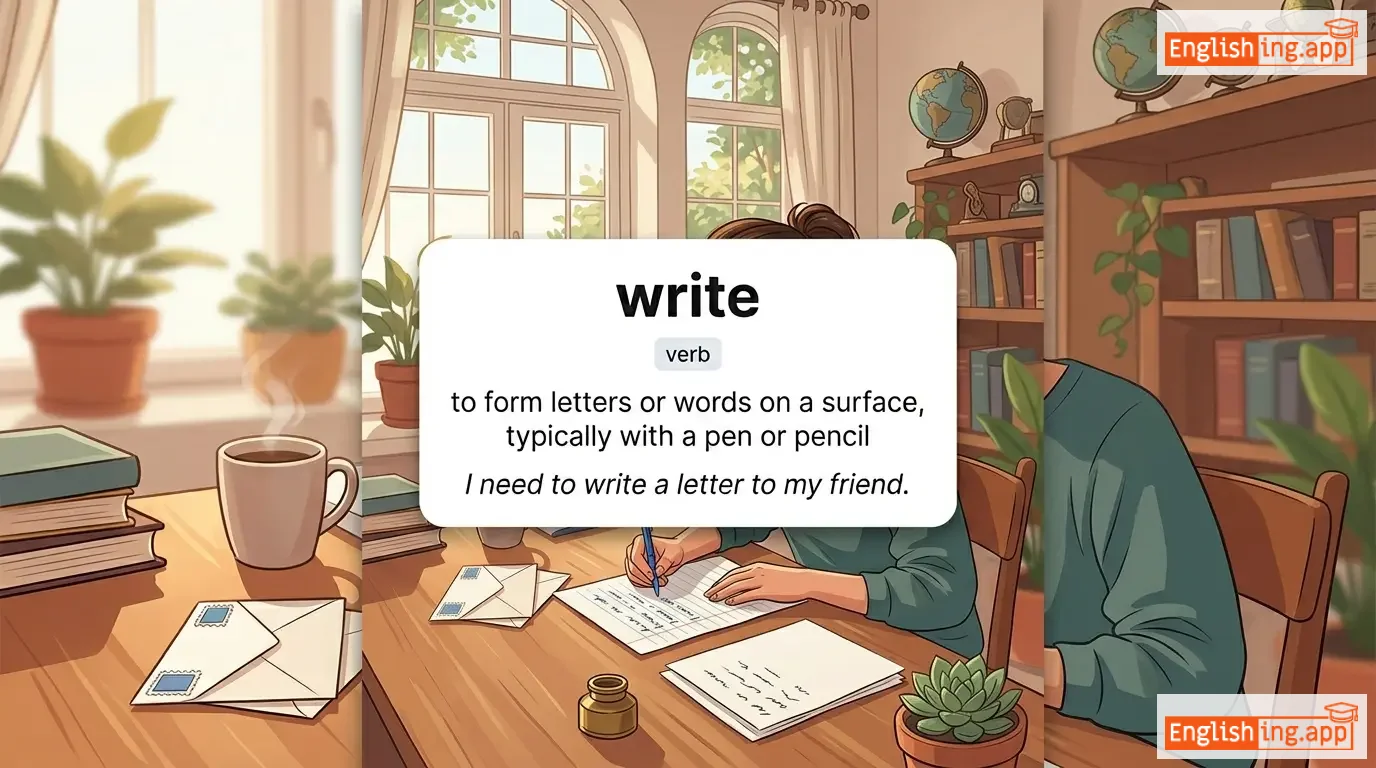
write definition card — visual illustration of the meaning
verb
/raɪt/
खुशी (khushi)

to form letters or words on a surface, typically with a pen or pencil

"I need to write a letter to my friend."

"उसे पुरस्कार मिलने पर अपनी खुशी नहीं छिपा सकी।" (Use puraskaar milne par apni khushi nahi chhupa sakee.)
noun
/jɑːrn/
धागा (dhaga)

spun thread used for knitting, weaving, or sewing; a long or rambling story

"She bought colorful yarn for knitting a sweater."

"उसने स्वेटर बुनने के लिए रंगीन धागा खरीदी।" (usne sweter bunne ke liye rangeen dhaga khareedi)
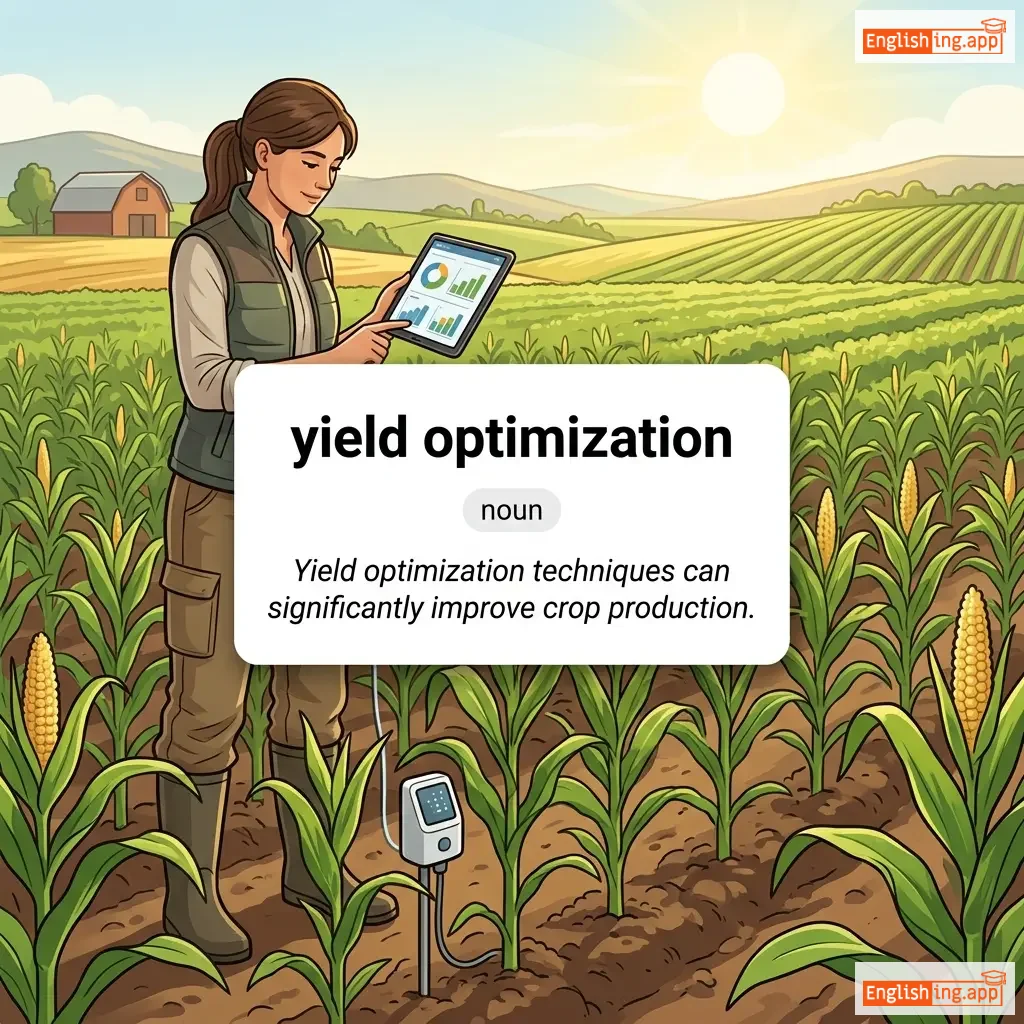
yield optimization definition card — visual illustration of the meaning
noun
/jiːld ˌɒptɪmaɪˈzeɪʃən/
उत्पादन अनुकूलन (utpadan anukoolan)

The process of maximizing the productivity or efficiency of crop production through various agricultural techniques and practices.

"Yield optimization techniques can significantly improve crop production."

"उत्पादन अनुकूलन तकनीकों से फसल उत्पादन में महत्वपूर्ण सुधार हो सकता है।" (Utpadan anukoolan takneekon se fusal utpadan mein mahatvapurn sudhaar ho sakta hai.)
noun
/ˈzɛnəˌfoʊb/
विदेशी डरने वाला व्यक्ति (videshi darne wala vyakti)

a person who dislikes or fears people from other countries or cultures

"The politician was criticized as a xenophobe due to his anti-immigrant policies."

"राजनीतिज्ञ को अपनी प्रवासी-विरोधी नीतियों के कारण जेनोफोब के रूप में आलोचना की गई।" (Rajneetijñ ko apni pravasi-virodhi neetiyon ke kaaran jenofoob ke roop mein alochna ki gayi.)
noun
/ˈjoʊkəl/
गँवई आदमी (ganvī ādmī)

An uneducated and unsophisticated person from the countryside; a bumpkin.

"The city folks laughed at the yokel's simple ways."

"शहरी लोग योकेल के सरल तरीकों पर हँसे।" (śaharī log yokel ke saral tarīkoṃ par hanse.)
pronoun
/jɔːrz/
आपका (aapka)

belonging to or associated with the person or people that the speaker is addressing

"This pen is yours."

"यह कलम आपकी है।" (Yah kalam aapki hai.)
noun
/ˈjʌŋstər/
युवक (yuvak)

a young person or child, especially a teenager or adolescent

"The park was full of youngsters playing football."

"उद्यान फुटबॉल खेलते हुए युवकों से भरा हुआ था।" (Udyaan football khelte hue yuvakon se bhara hua tha.)
noun
/jɑːrd/
यार्ड (yard)

a unit of linear measure equal to three feet or 0.9144 meters

"The garden is 50 yards long."

"बग़ीचा ५० यार्ड लंबा है।" (Bagicha 50 yard lamba hai.)
adverb
/ˈrɒŋli/
गलत तरीके से (galat tarike se)

in an incorrect or mistaken way; unfairly or unjustly

"He was wrongly accused of the crime."

"उसे अपराध के लिए गलत तरीके से दोषी ठहराया गया।" (use aparadh ke liye galat tarike se doshi thahraya gaya)
noun
/rɪst/

the joint connecting the hand with the forearm

"He wore a smartwatch on his left wrist."

adverb
/ˈwɔːm.li/
गर्म तरीके से; स्नेहपूर्वक; दिल से; (garm tareeke se; snehpoorvak; dil se;)

in a warm manner; with warmth; cordially; affectionately

"She welcomed the guests warmly at the door."

"उसने दरवाजे पर मेहमानों का गर्मजोशी से स्वागत किया।" (Usne darwaje par mehmanon ka garmjoshi se swagat kiya.)
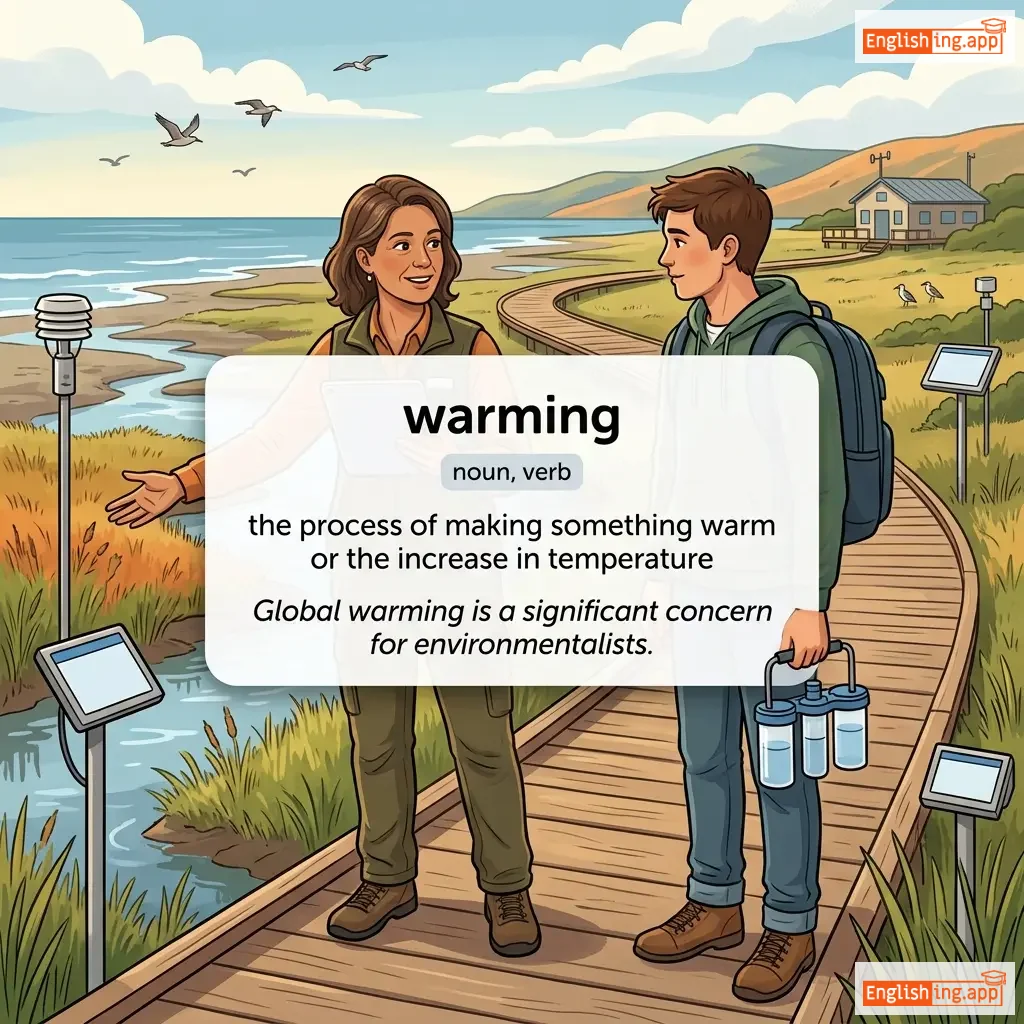
warming definition card — visual illustration of the meaning
noun, verb
/ˈwɔːmɪŋ/
तापमान वृद्धि (taapmaan vruddhi)

the process of making something warm or the increase in temperature

"Global warming is a significant concern for environmentalists."

"ग्लोबल वॉर्मिंग पर्यावरणविदों के लिए एक महत्वपूर्ण चिंता है।" (Global warming paryavaranvidon ke liye ek mahatvapurn chinta hai.)