वोकैबुलरीज

इंग्लिश वोकैबुलरी डिस्कवर, लर्न और मास्टर करें

verb
/wɛt/
तेज़ करना/उत्तेजित करना (tez karna/uttejit karna)

To sharpen the blade of a tool or to stimulate interest or appetite.

"The smell of food whetted my appetite."

"खाने की खुशबू ने मेरी भूख बढ़ा दी।" (Khaane ki khushboo ne meri bhookh badha di.)
verb
/ˈwaɪtˌwɑːʃ/
सच्चाई को छिपाना (sachchai ko chhupana)

to cover up faults, errors, or unpleasant facts; to paint with white paint or lime

"The report was criticized for trying to whitewash the company's failures."

"रिपोर्ट को कंपनी की विफलताओं को छिपाने की कोशिश करने के लिए आलोचना की गई थी।" (Report ko company ki viphaltaon ko chhupane ki koshish karne ke liye alochna ki gayi thi.)
adverb
/wɛərˈbaɪ/
जिससे (jisse)

by which; because of which

"The company agreed to a contract whereby it would pay the penalty."

"कंपनी ने एक समझौते पर हस्ताक्षर किए जिसमें वह जुर्माना अदा करेगी।" (Kampani ne ek samjhaute par hastakshar kiye jismein vah jurmana ada karegi.)
verb
/ˈwɪzn/
सूखा हुआ (sookha hua)

To become dry, shrunken, and wrinkled.

"The flowers began to wizen after days without water."

"फूल पानी के बिना कुछ दिनों बाद सूखने लगे।" (Phool pani ke bina kuch dinon baad sookhne lage.)
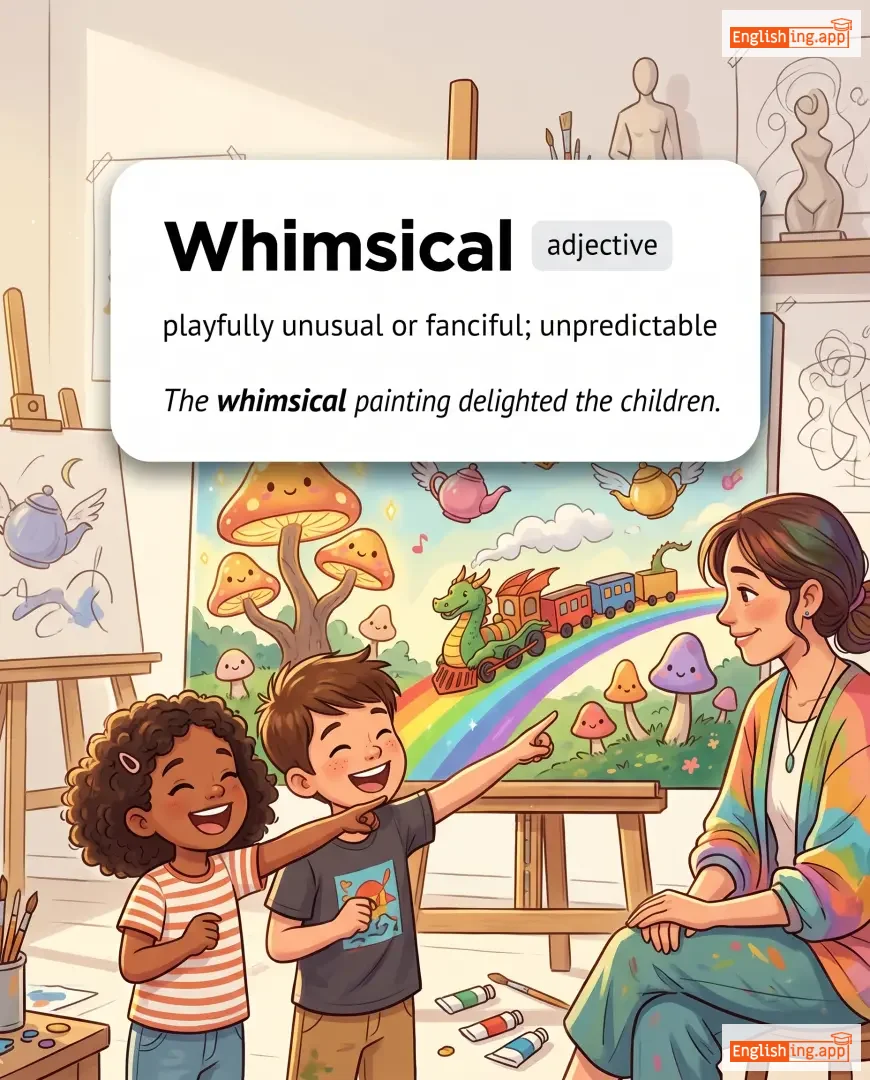
Whimsical definition card — visual illustration of the meaning
adjective
/ˈwɪmzɪkəl/
कल्पनाशील (kalpanasheel)

playfully unusual or fanciful; unpredictable

"The whimsical painting delighted the children."

"कल्पनाशील चित्र ने बच्चों को प्रसन्न कर दिया।" (Kalpanasheel chitra ne bachon ko prasann kar diya.)
noun
/waɪld bɔːr/
जंगली सुअर (jangli suar)

a wild pig that lives in forests and has long curved teeth

"The wild boar ran through the forest quickly."

"जंगली सुअर जंगल में जल्दी दौड़ गया।" (jangli suar jangal mein jaldi daud gaya)
noun
/ˈwɔtər ˈpjʊrəˌfaɪər/
पानी शोधक (pani shodhak)

A device that removes contaminants and impurities from water to make it safe for drinking

"We installed a water purifier in our kitchen to ensure clean drinking water."

"हमने अपने रसोईघर में पीने योग्य पानी सुनिश्चित करने के लिए एक वाटर प्यूरिफायर स्थापित किया।" (hamne apne rasoighar mein peene yogya pani nishchit karne ke liye ek water purifier sthapit kiya.)
noun
/ˈwɛnzdeɪ/
बुधवार (budhvar)

the fourth day of the week, following Tuesday and preceding Thursday

"The meeting has been scheduled for Wednesday afternoon."

"बैठक बुधवार दोपहर के लिए तय की गई है।" (baithak budhvar dopahar ke liye tay ki gai hai)
adjective
/ˈhoʊlsəm/
स्वस्थ (swasth)

promoting health or well-being; morally good and beneficial

"The retreat offered wholesome food and peaceful surroundings."

"रिट्रीट ने स्वस्थ भोजन और शांतिपूर्ण वातावरण प्रदान किया।" (Retreat ne swasth bhojan aur shaantipoorn vatavaran pradan kiya.)
noun
/ˈwɒtʃ.mən/
गेटकीपर (getkeeper)

a person employed to guard or watch over a building or area, especially at night

"The watchman patrols the factory every hour to ensure security."

"गेटकीपर फैक्ट्री की सुरक्षा सुनिश्चित करने के लिए हर घंटे गश्त करता है।" (gatekeeper factory ki suraksha nishchit karne ke liye har ghante gasht karta hai.)
verb
/ˈwɒloʊ/
घूमना, सॉरी महसूस करना (ghoomna, sorry mehsoos karna)

to roll about or indulge oneself in something excessively

"The buffalo likes to wallow in the mud on hot days."

"भैंस को गर्मी में कीचड़ में घूमना पसंद है।" (Bhains ko garmi mein keechar mein ghoomna pasand hai.)
noun
/ˈweɪvlət/
छोटी लहर (chhoti lehr)

a small wave or ripple on the surface of water or another medium

"The pond was disturbed only by the tiny wavelets caused by the breeze."

"तालाब केवल हवा से उत्पन्न छोटे लहरों के कारण हिल गया था।" (Talab keval hawa se utpann chhote lehron ke karan hil gaya tha.)
adverb
/wɛnˈɛvər/
जब भी (jab bhi)

at any time, or whenever it happens

"You can call me whenever you want."

"तुम मुझे जब भी चाहो कॉल कर सकते हो।" (Tum mujhe jab bhi chaho kol kar sakte ho.)
noun
/weɪ/
रास्ता / तरीका (rasta / tarika)

a path, direction, or method of doing something

"He found a new way to solve the problem."

"उसने समस्या को हल करने का एक नया तरीका ढूंढा।" (Usne samasya ko hal karne ka ek naya tarika dhoonda.)
noun
/ˈwɪmzi/
विचित्रता (vichitrita)

playful or fanciful behavior or humor

"Her stories were full of whimsy and imagination."

"उसकी कहानियाँ विचित्रता और कल्पना से भरी हुई थीं।" (Uski kahaniyan vichitrita aur kalpna se bhari hui thi.)
adjective
/ˈwaɪə.ləs/
वायरलेस; बेतार (wāyarlēs; betār)

operating without wires; using radio waves for communication

"My wireless headphones provide excellent sound quality without any cables."

"मेरे वायरलेस हेडफ़ोन बिना किसी केबल के बेहतरीन ध्वनि गुणवत्ता प्रदान करते हैं।" (mere wāyarlēs heḍfon binā kisī kēbal ke behatarīn dhvani guṇwattā pradan karte hain)
noun
/ˈwɪmən/
महिला (mahila)

an adult human female

"The woman at the counter helped me."

"काउंटर पर खड़ी महिला ने मेरी मदद की।" (Counter par khadi mahila ne meri madad ki.)
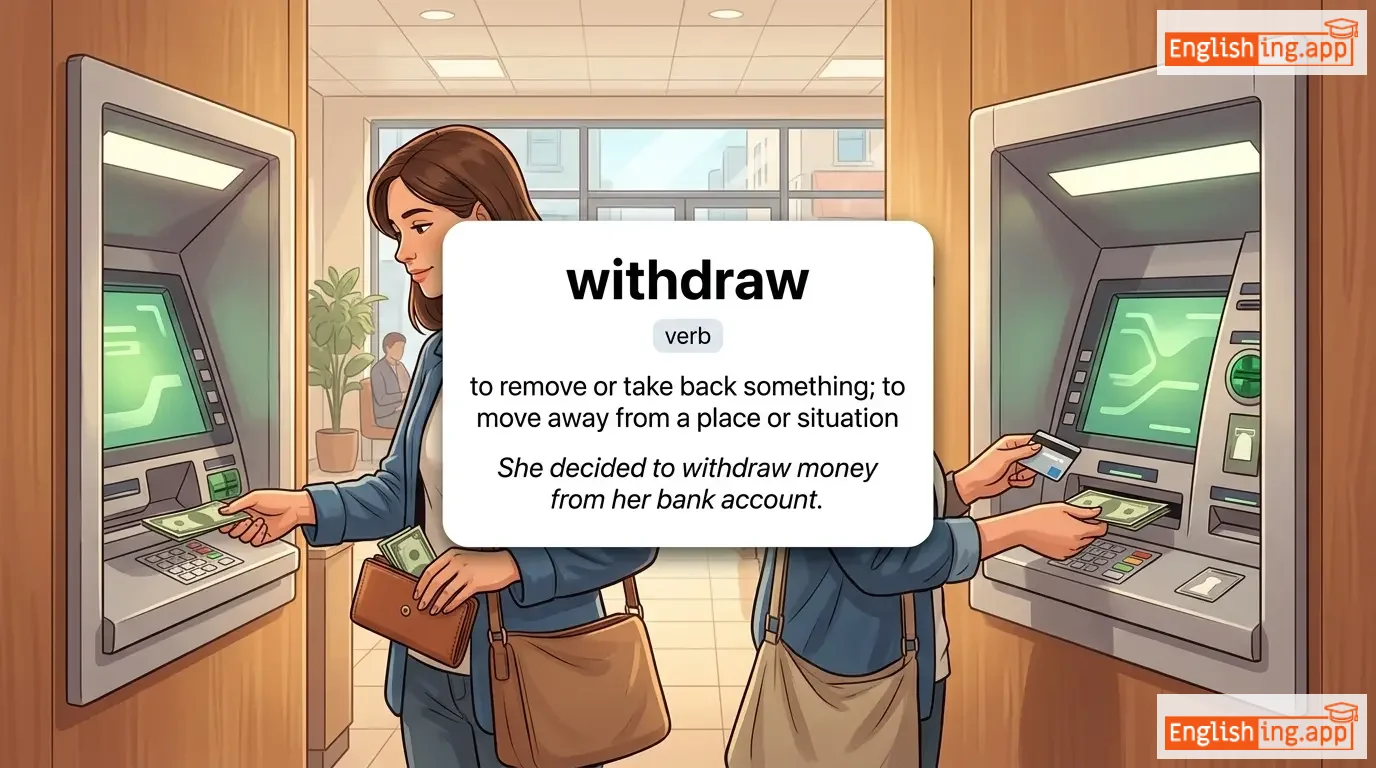
withdraw definition card — visual illustration of the meaning
verb
/wɪðˈdrɔː/
निकालना (nikalna)

to remove or take back something; to move away from a place or situation

"She decided to withdraw money from her bank account."

"उसने अपने बैंक खाते से पैसे निकालने का फैसला किया।" (Usne apne bank khate se paise nikalne ka faisla kiya.)
noun
/ˈwɔːdrəʊb/
आलमारी (almari)

A large cupboard where clothes are stored; also the collection of clothes someone owns.

"Her wardrobe is full of colorful dresses."

"उसका आलमारी रंग-बिरंगे कपड़ों से भरा हुआ है।" (Uska almari rang-birange kapdon se bhara hua hai.)
noun/verb
/ˈwɒrənt/
वॉरंट (warrant)

As a noun: An official authorization or order. As a verb: To justify or make something necessary.

"The judge issued a warrant for his arrest."

"जज ने उसके गिरफ्तार करने के लिए एक वारंट जारी किया।" (Judge ne uske giraftaar karne ke liye ek warrant jaari kiya.)
adverb
/wɛr/
कहाँ (kahan)

in or at what place or position

"Where do you live?"

"तुम कहाँ रहते हो?" (Tum kahan rehte ho?)
noun
/ˈwɪkɪdnəs/
दुष्टता, बुराई (dushtata, burai)

Evil or morally bad behavior.

"The story highlights the wickedness of the cruel king."

"कहानी निर्दयी राजा की बुराई को उजागर करती है।" (Kahani nirdai raja ki burai ko ujagar karti hai.)
🧙‍♀️

Witch (विच)

noun
/wɪtʃ/
जादूगरनी (jadugarani)

a woman thought to have magic powers, especially evil ones; a practitioner of witchcraft

"The old witch cast a spell on the prince."

"वृद्ध जादूगरनी ने राजकुमार पर जादू किया।" (vruddh jadugarani ne rajkumar par jadoo kiya.)
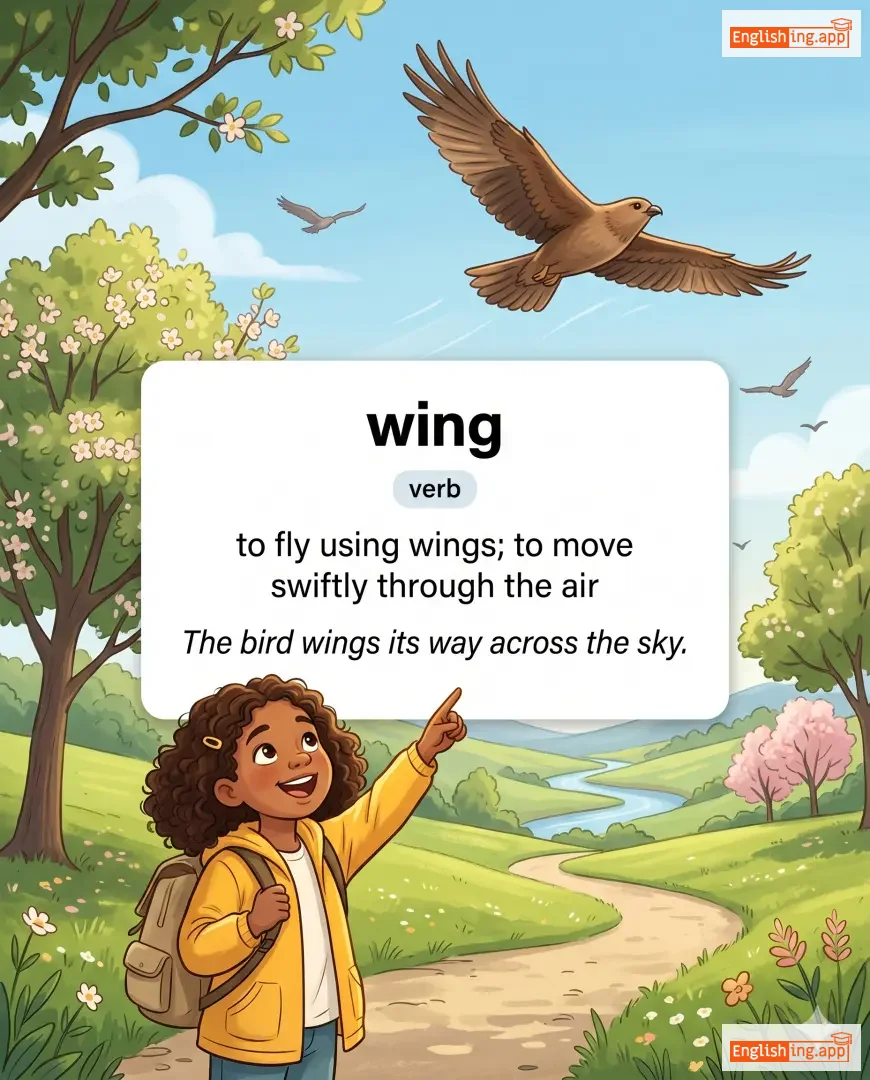
wing definition card — visual illustration of the meaning
noun
/wɪŋ/
पंख (pankh)

a part of a bird or aircraft that is used for flying

"The bird flapped its wings and flew away."

"पक्षी ने अपने पंख फड़फड़ाए और उड़ गया।" (Pakṣī ne apne pankh phaṛphaṛāe aur uṛ gayā.)
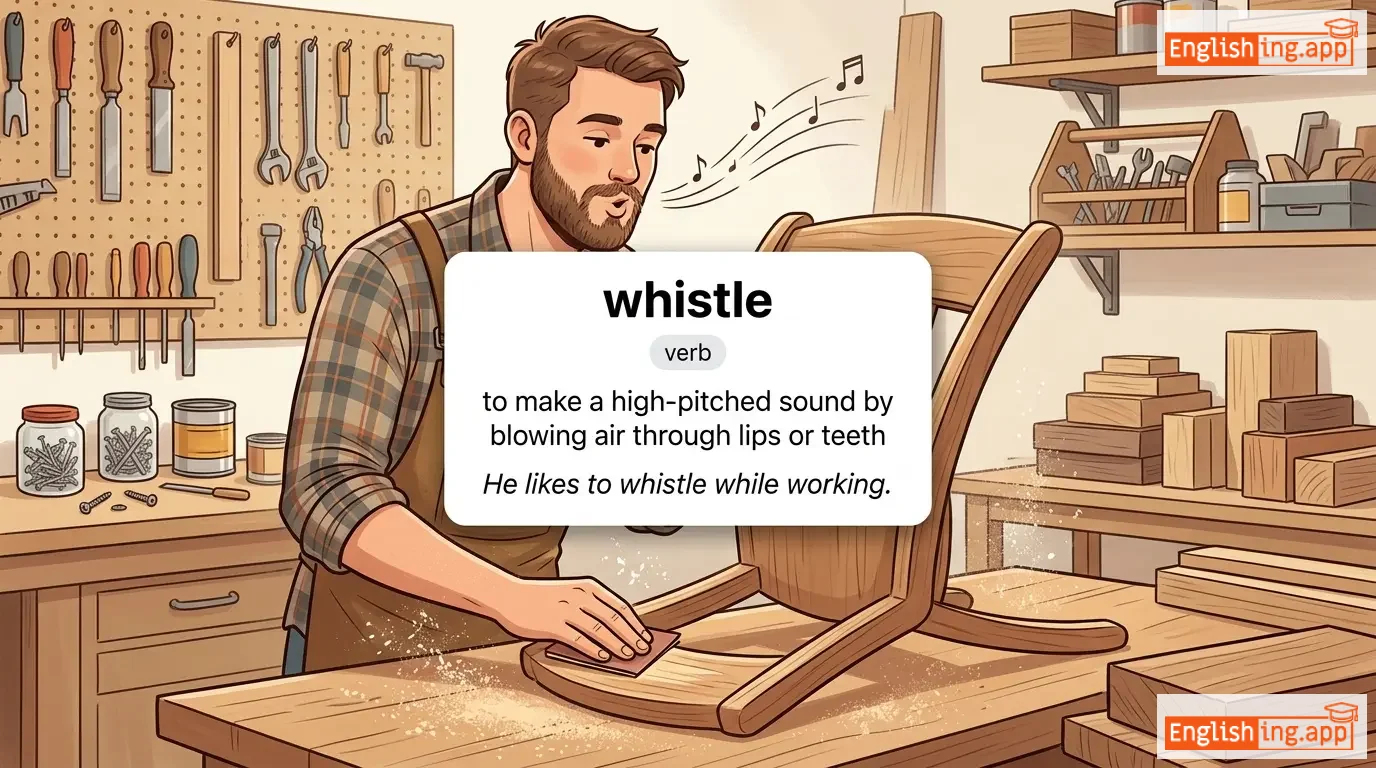
whistle definition card — visual illustration of the meaning
noun
/ˈwɪsəl/
सीटी (seeti)

a small wind instrument that produces a high-pitched sound when blown

"The referee blew his whistle to start the game."

"रेफरी ने खेल शुरू करने के लिए अपनी सीटी बजाई।" (refari ne khel shuru karne ke liye apni seeti bajayi.)
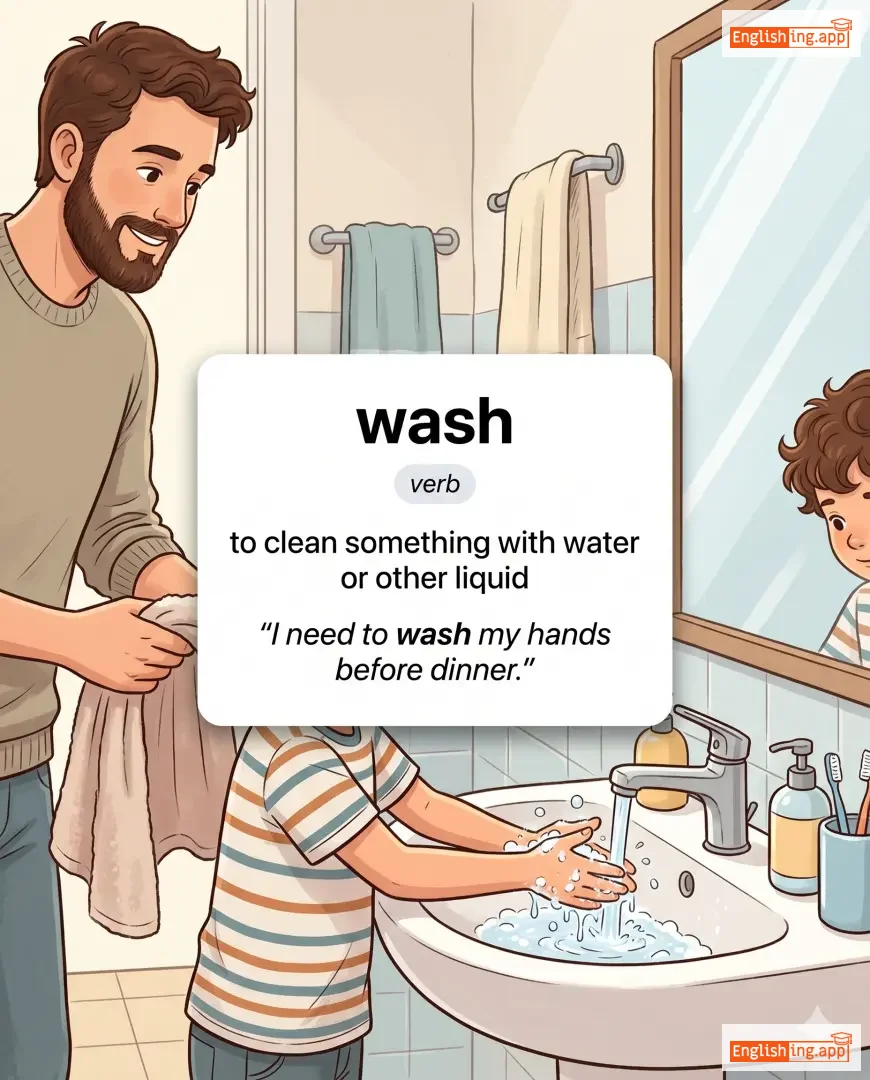
wash definition card — visual illustration of the meaning
verb
/wɒʃ/
धोना (dhona)

to clean something with water or other liquid

"I need to wash my hands before dinner."

"मुझे डिनर से पहले अपने हाथ धोने की आवश्यकता है।" (Mujhe dinner se pehle apne haath dhone ki avashyakta hai.)
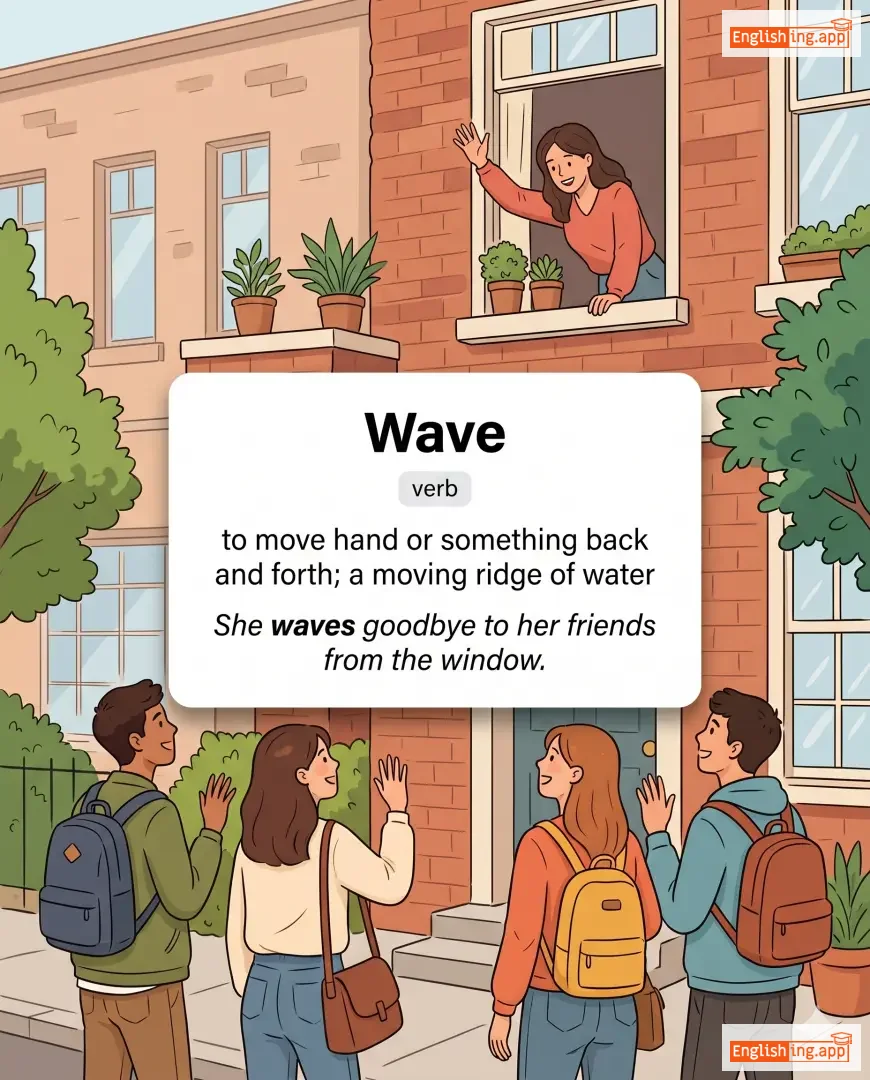
Wave definition card — visual illustration of the meaning
noun
/weɪv/
लहर (lahar)

a long body of water curling into an arched form and breaking on the shore

"The waves crashed against the rocks during the storm."

"तूफान के दौरान लहरें चट्टानों से टकराई।" (Toofan ke dauran lahrain chattanon se takraayi.)
verb
/ˈwɒb.l̩/
डगमग करना (dogmag karna)

to move unsteadily from side to side; to shake or tremble slightly

"The table began to wobble when he leaned on it."

"जब उसने टेबल पर झुककर रखा, तो टेबल डगमग करने लगी।" (Jab usne table par jhukar rakha, to table dogmag karne lagi.)
noun
/waɪl/
चालाकी, धोखा (chaalaki, dhokha)

A trick or clever scheme meant to deceive or outwit someone.

"He used every wile to win her trust."

"उसने उसका विश्वास जीतने के लिए हर वाइल का उपयोग किया।" (Usne uska vishwas jeetne ke liye har wile ka upyog kiya.)
noun
/ˈwiː.vər bɜːd/
बुनकर पक्षी (bunkar pakshi)

a small bird that builds elaborate woven nests from grass and twigs

"The weaver bird skillfully constructs its intricate nest."

"वीवर बर्ड कुशलता से अपना जटिल घोंसला बनाता है" (weaver bird kushalta se apna jatil ghosla banata hai)
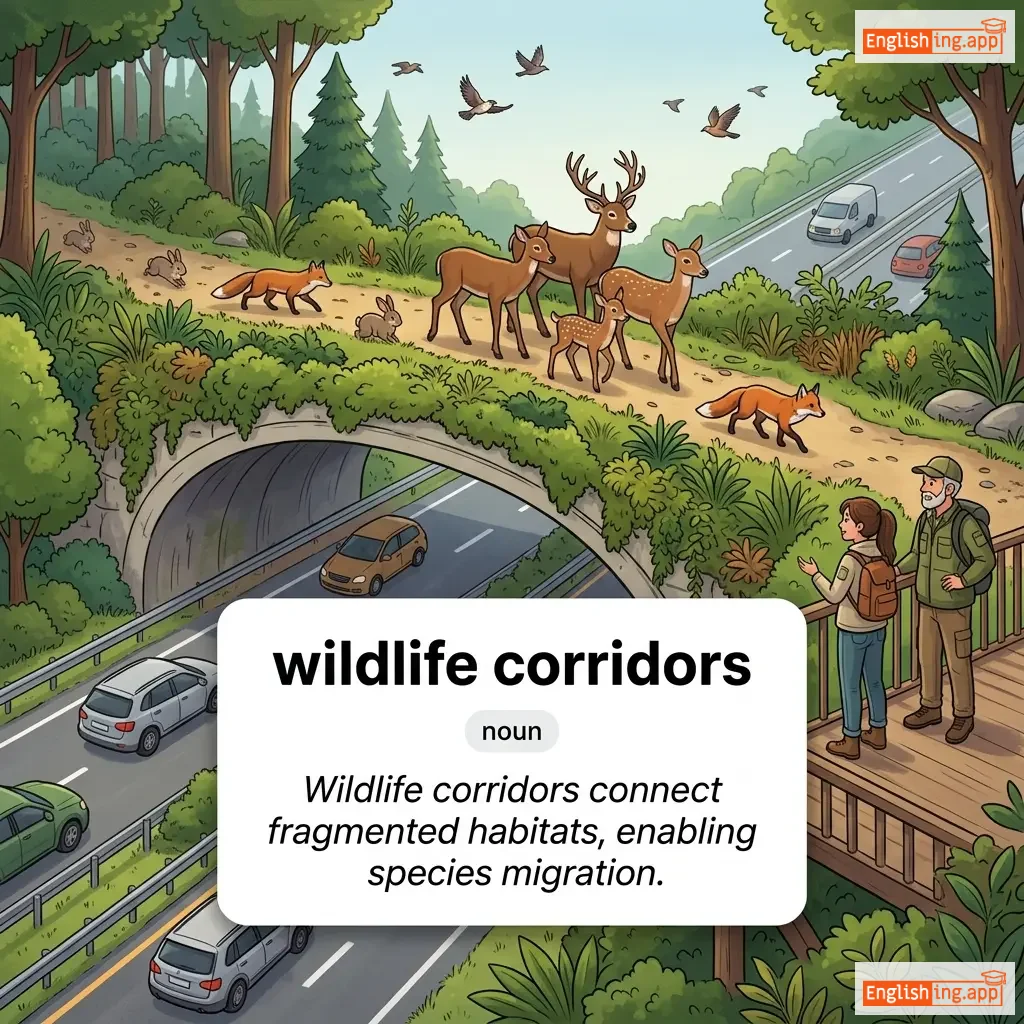
wildlife corridors definition card — visual illustration of the meaning
noun
ˈwaɪldlaɪf ˈkɔːrɪdɔːrz
वन्यजीव गलियारे (vanyajeev galiyaare)

Areas of habitat connecting wildlife populations separated by human activities or structures.

"Wildlife corridors connect fragmented habitats, enabling species migration."

"वन्यजीव गलियारे खंडित आवासों को जोड़ते हैं, जिससे प्रजातियों का प्रवासन संभव होता है।" (Vanyajeev galiyaare khandit aawaason ko jodte hain, jisse prajaatiyon ka pravaasan sambhav hota hai.)
noun
/waɪt ˈpɛpər/
सफ़ेद मिर्च (safed mirch)

a spice made from dried peppercorns with the outer husk removed

"She added white pepper to the cream soup for a mild spicy flavor."

"उसने क्रीमी सूप में हल्का तीखा स्वाद लाने के लिए सफेद मिर्च डाली।" (usne kreemi soop mein halka teekha swaad laane ke liye safed mirch daali.)
adjective
/waɪz/
बुद्धिमान (buddhiman)

having or showing experience, knowledge, and good judgment

"It was wise of him to save money for the future."

"भविष्य के लिए पैसे बचाना उसका बुद्धिमानी था।" (Bhavishya ke liye paise bachana uska buddhimani tha.)
adjective
/ˈwɜːrkɪŋ/
काम करना (kaam karna)

engaged in physical or mental effort to achieve a goal or task

"She is working on her project right now."

"वह अभी अपने प्रोजेक्ट पर काम कर रही है।" (Wah abhi apne project par kaam kar rahi hai.)
adjective
/waɪd/
चौड़ा (chauda)

having a great extent from side to side; broad

"The river is wide enough to fit a boat."

"नदी इतनी चौड़ी है कि उसमें एक नाव समा सकती है।" (Nadi itni chowdi hai ki usmein ek naav sama sakti hai.)
verb
/wiːld/
धारण करना, उपयोग करना (dharan karna, upyog karna)

To hold and use a weapon, tool, or power effectively.

"The warrior wielded his sword with great skill."

"योधा ने अपनी तलवार को कुशलता से इस्तेमाल किया।" (Yodha ne apni talwar ko kushalta se istemal kiya.)
noun
/woʊz/
विपत्ति (vipatti)

great sorrow or distress; troubles

"The company faced financial woes after the market crash."

"बाजार के पतन के बाद कंपनी को वित्तीय विपत्तियों का सामना करना पड़ा।" (Bazar ke patan ke baad company ko vittiya vipattiyon ka samna karna pada.)
noun
/wɪk/
मोमबत्ती का तंतु (mombatti ka tantu)

a cord or strand of cotton that burns to provide light in a candle or lamp

"The candle wick needs to be trimmed for better burning."

"मोमबत्ती के तंतु को बेहतर जलने के लिए काटने की आवश्यकता है।" (Mombatti ke tantu ko behtar jalne ke liye kaatne ki avashyakta hai।)
adjective
/ˈwɪl.fəl/
जिद्दी; जानबूझकर किया गया (ziddi; janbujhkar kiya gaya)

deliberately stubborn; done on purpose; intentional

"His wilful disobedience led to punishment."

"उसकी जानबूझकर असमर्थता की वजह से उसे सजा मिली।" (uski janbujhkar asamarthata ki wajah se use saza mili.)
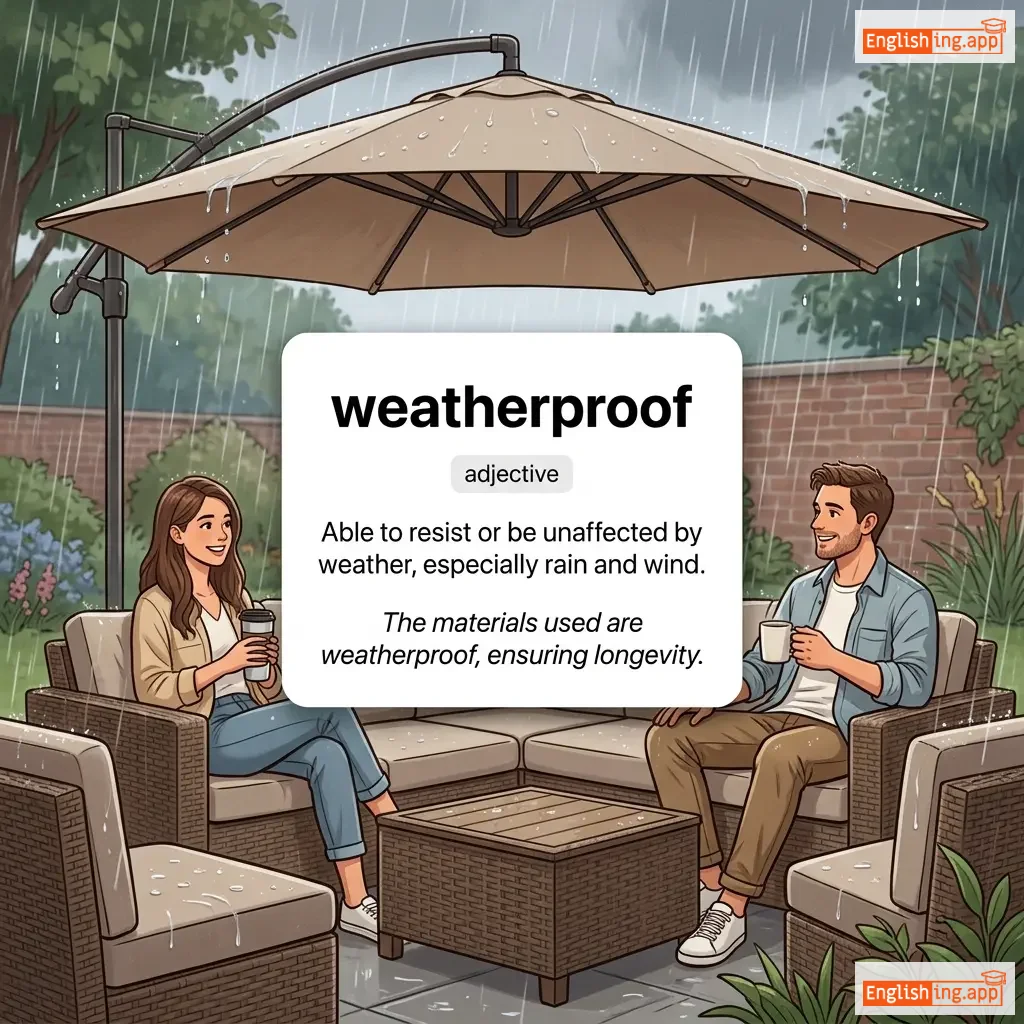
weatherproof definition card — visual illustration of the meaning
adjective
ˈwɛðərpruːf
मौसम प्रतिरोधी (mausam pratirodhī)

Able to resist or be unaffected by weather, especially rain and wind.

"The materials used are weatherproof, ensuring longevity."

"उपयोग किए गए सामग्री मौसम प्रतिरोधी हैं, जो दीर्घायु सुनिश्चित करते हैं।" (Upyog kiye gaye samagri mausam pratirodhī hain, jo dīrghāyū sunishchit karte hain.)
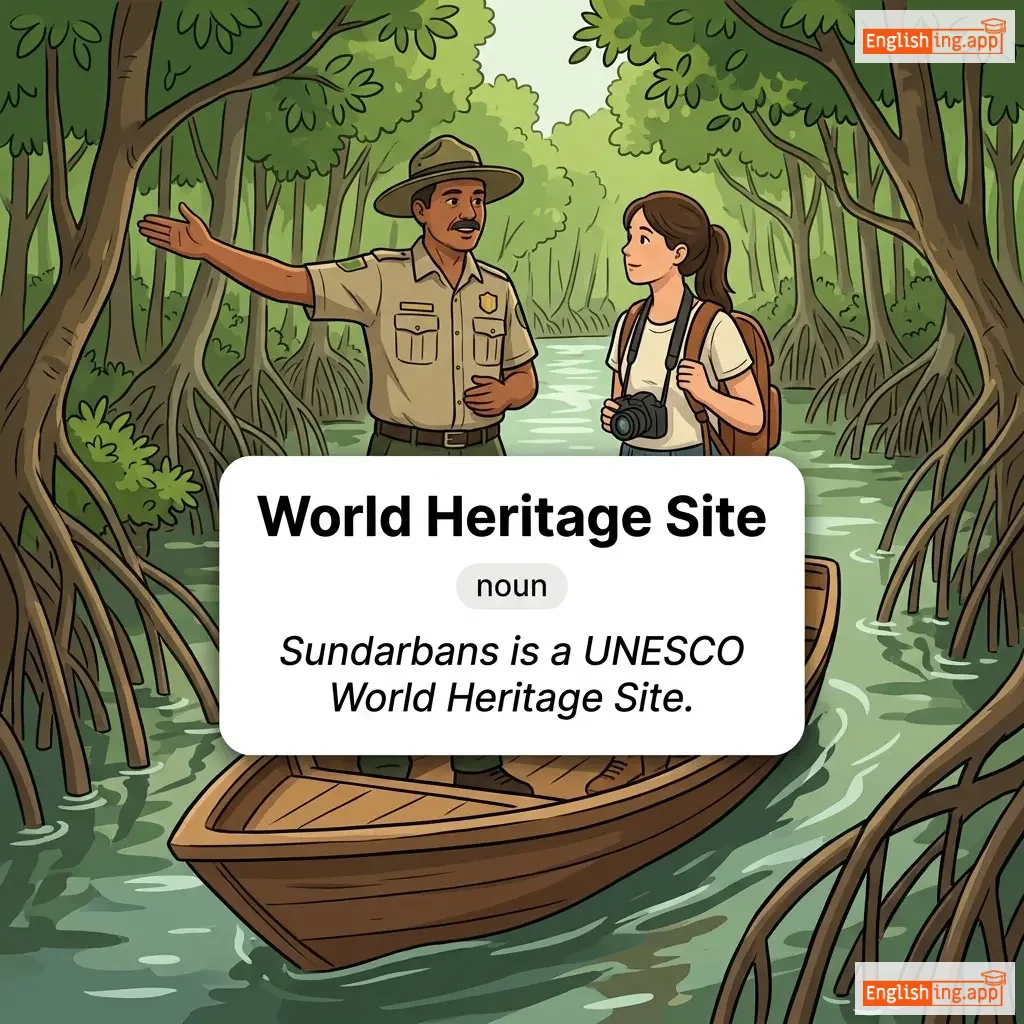
World Heritage Site definition card — visual illustration of the meaning
noun
wɜːrld ˈhɛrɪtɪdʒ saɪt
विश्व धरोहर स्थल (vishw dharohar sthal)

A landmark or area selected by UNESCO for having cultural, historical, scientific or other form of significance.

"Sundarbans is a UNESCO World Heritage Site."

"सुंदरबन एक यूनेस्को विश्व धरोहर स्थल है।" (Sundarban ek UNESCO vishw dharohar sthal hai.)
noun
/ˈwɜːrkˌfɔːrs/
कार्यबल (karyabal)

the people engaged in or available for work

"The company is looking to expand its workforce by 20%."

"कंपनी अपने कार्यबल को 20% बढ़ाने की योजना बना रही है।" (Kampani apne karyabal ko 20% badhane ki yojna bana rahi hai.)
noun
/ˈwɜːrkpleɪs/
कार्यस्थल (karyasthal)

a place where people work, such as an office, factory, or shop

"Maintaining good communication is vital in the workplace."

"कार्यस्थल में अच्छा संवाद बनाए रखना अत्यंत महत्वपूर्ण है।" (Karyasthal mein achha samvad banaye rakhna atyant mahatvapurn hai.)
adjective
/ˈwɪspi/
पतला और नाजुक (patla aur naajuk)

Thin, delicate, and weak in appearance or form.

"Her wispy hair blew gently in the breeze."

"उसके पतले बाल हवा में हल्के से उड़ रहे थे।" (uske patle baal hawa mein halke se ud rahe the.)
adjective
/ˈwɒŋki/
अस्थिर; अविश्वसनीय; ठीक से काम नहीं कर रहा (wonki)

unstable; unreliable; not working properly

"The old chair was wonky and wobbled every time someone sat on it."

"पुराना कुर्सी वोंकी था और हर बार जब कोई उस पर बैठता तो हिलता था।" (purana kursi wonki tha aur har baar jab koi us par baithta to hilta tha)
noun
/wɜːrd fɔːrˈmeɪʃən/
शब्द निर्माण (shabd nirman)

the process by which new words are created or existing words are modified in a language

"Word formation helps learners understand how new vocabulary develops in English."

"शब्द निर्माण अंग्रेज़ी में नए शब्दों को समझने में मदद करता है।" (shabd nirman angrezi mein naye shabdon ko samajhne mein madad karta hai)
adjective
/ˈwɪlfəl/
इच्छाशक्ति (icchashakti)

Deliberate, intentional, or stubbornly determined to do as one wants.

"Her willful disregard for the rules got her into trouble."

"उसकी इच्छाशक्ति से नियमों की अवहेलना उसे परेशानी में डाल दी।" (Uski icchashakti se niyamon ki avhelna use pareshani mein daal di.)
noun
/wʊd ˈæp.əl/
लकड़ी का सेब (lakdi ka seb)

a hard-shelled tropical fruit with aromatic pulp used in beverages and medicine

"The wood apple has a hard shell but sweet pulp inside."

"लकड़ी का सेब में कठोर खोल होता है लेकिन अंदर मीठा गूदा होता है" (lakdi ka seb mein kathor khol hota hai lekin andar meetha guda hota hai)
noun
/ˈwaɪnəri/
वाइन बनाने का स्थान (wine banane ka sthan)

a place where wine is made

"They visited a famous winery in France."

"वे फ्रांस में एक प्रसिद्ध वाइनरी का दौरा करने गए थे।" (Ve France mein ek prasiddh winery ka daura karne gaye the.)
verb
/wɪlt/
सूखना (sukhna)

To become limp, weak, or drooping, often due to lack of water or energy.

"The flowers wilted in the heat of the sun."

"फूल सूरज की गर्मी में सूख गए।" (Phool sooraj ki garmi mein sukh gaye.)