語彙集

英単語辞書 | 単語の意味、定義、例文

🍴

whet

verb
/wɛt/

To sharpen the blade of a tool or to stimulate interest or appetite.

"The smell of food whetted my appetite."

verb
/ˈwaɪtˌwɑːʃ/

to cover up faults, errors, or unpleasant facts; to paint with white paint or lime

"The report was criticized for trying to whitewash the company's failures."

adverb
/wɛərˈbaɪ/
によって (ni yotte)

by which; because of which

"The company agreed to a contract whereby it would pay the penalty."

"その会社は、罰金を支払う契約に同意しました。" (Sono kaisha wa, bakkin o shiharau keiyaku ni dōi shimashita.)
verb
/ˈwɪzn/
しおれる (shioreru)

To become dry, shrunken, and wrinkled.

"The flowers began to wizen after days without water."
"花は数日間水なしでしおれ始めました。" (Hana wa suūjitsukann mizu nashi de shiore hajimemashita.)
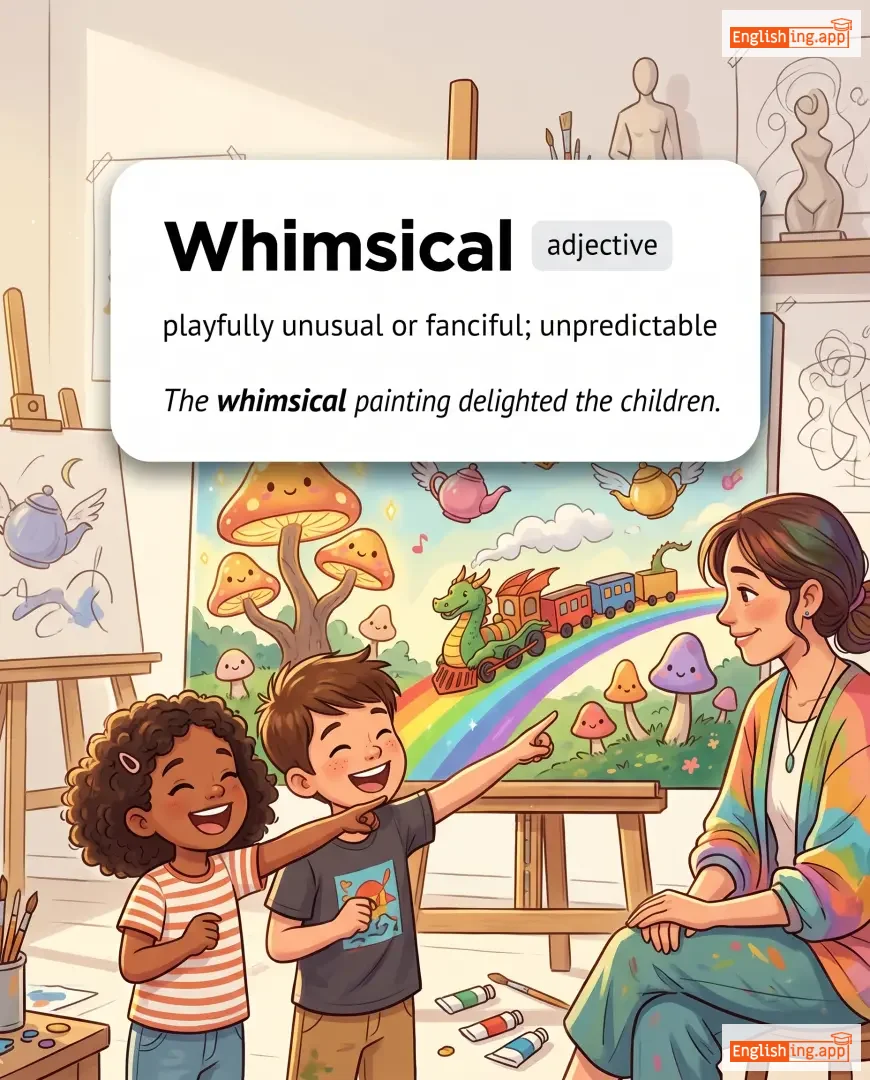
Whimsical definition card — visual illustration of the meaning
adjective
/ˈwɪmzɪkəl/
奇想天外 (kisō tengai)

playfully unusual or fanciful; unpredictable

"The whimsical painting delighted the children."

"その奇想天外な絵画は子供たちを喜ばせました。" (Sono kisō tengai na kaiga wa kodomotachi o yorokobasemashita.)
noun
/waɪld bɔːr/
野生のイノシシ (yasei no inosishi)

a wild pig that lives in forests and has long curved teeth

"The wild boar ran through the forest quickly."

"ワイルドボアは森を速く駆け抜けた。" (wairudo boa wa mori wo hayaku kakenuketa)
noun
/ˈwɔtər ˈpjʊrəˌfaɪər/
水の浄化装置 (mizu no jōka sōchi)

A device that removes contaminants and impurities from water to make it safe for drinking

"We installed a water purifier in our kitchen to ensure clean drinking water."

"私たちは清潔な飲料水を確保するために、キッチンに水の浄化装置を設置しました。" (Watashitachi wa seiketsu na inryō mizu o kakuho suru tame ni, kitchin ni mizu no jōka sōchi o setchi shimashita.)
noun
/ˈwɛnzdeɪ/
水曜日 (suiyoubi)

the fourth day of the week, following Tuesday and preceding Thursday

"The meeting has been scheduled for Wednesday afternoon."

"会議は水曜日の午後に予定されています。" (kaigi wa suiyoubi no gogo ni yotei sareteimasu)
adjective
/ˈhoʊlsəm/
健康的な (kenkō-teki na)

promoting health or well-being; morally good and beneficial

"The retreat offered wholesome food and peaceful surroundings."

"そのリトリートは健康的な食事と平穏な環境を提供しました。" (Sono ritorīto wa kenkō-teki na shokuji to heion na kankyō o teikyō shimashita.)
noun
/ˈwɒtʃ.mən/
守衛 (shuei)

a person employed to guard or watch over a building or area, especially at night

"The watchman patrols the factory every hour to ensure security."

"守衛は毎時間工場を巡回して、セキュリティを確保します。" (Shuei wa maijikan kōjō o junkai shite, sekyuriti o kakuho shimasu.)
verb
/ˈwɒloʊ/
ゴロゴロする, ふける (gorogoro suru, fukeru)

to roll about or indulge oneself in something excessively

"The buffalo likes to wallow in the mud on hot days."

"バッファローは暑い日には泥の中でゴロゴロするのが好きです。" (Baffarō wa atsui hi ni wa doro no naka de gorogoro suru no ga suki desu.)
noun
/ˈweɪvlət/
小さな波 (chiisana nami)

a small wave or ripple on the surface of water or another medium

"The pond was disturbed only by the tiny wavelets caused by the breeze."

"池は風によって引き起こされた小さな波によってのみ乱されました。" (Ike wa kaze ni yotte hikiokosareta chiisana nami ni yotte nomi midasaremashita.)
adverb
/wɛnˈɛvər/
いつでも (itsudemo)

at any time, or whenever it happens

"You can call me whenever you want."

"あなたはいつでも私に電話できます。" (Anata wa itsudemo watashi ni denwa dekimasu.)
noun
/weɪ/
道 / 方法 (michi / hōhō)

a path, direction, or method of doing something

"He found a new way to solve the problem."

"彼は問題を解決する新しい方法を見つけました。" (Kare wa mondai o kaiketsu suru atarashī hōhō o mitsukemashita.)
noun
/ˈwɪmzi/
奇抜さ (kibatsusa)

playful or fanciful behavior or humor

"Her stories were full of whimsy and imagination."

"彼女の話は奇抜さと想像力にあふれていました。" (Kanojo no hanashi wa kibatsusa to sōzōryoku ni afurete imashita.)
adjective
/ˈwaɪə.ləs/
ワイヤレス; ケーブルなし (waiyaresu; kēburu nashi)

operating without wires; using radio waves for communication

"My wireless headphones provide excellent sound quality without any cables."

"私のワイヤレスヘッドフォンはケーブルなしで素晴らしい音質を提供します。" (watashi no waiyaresu heddofon wa kēburu nashi de subarashī onshitsu o teikyō shimasu)
noun
/ˈwɪmən/
女性 (josei)

an adult human female

"The woman at the counter helped me."

"カウンターにいる女性が私を助けてくれました。" (Kauntaa ni iru josei ga watashi o tasukete kuremashita.)
withdraw definition card — visual illustration of the meaning
verb
/wɪðˈdrɔː/

to remove or take back something; to move away from a place or situation

"She decided to withdraw money from her bank account."

noun
/ˈwɔːdrəʊb/
クローゼット (kurōzetto)

A large cupboard where clothes are stored; also the collection of clothes someone owns.

"Her wardrobe is full of colorful dresses."

"彼女のクローゼットはカラフルなドレスでいっぱいです。" (Kanojo no kurōzetto wa karafuru na doresu de ippai desu.)
noun/verb
/ˈwɒrənt/
令状 (reijō)

As a noun: An official authorization or order. As a verb: To justify or make something necessary.

"The judge issued a warrant for his arrest."

"裁判官は彼の逮捕状を発行しました。" (Saibankan wa kare no taihojō o hakkō shimashita.)
adverb
/wɛr/
どこ (doko)

in or at what place or position

"Where do you live?"

"あなたはどこに住んでいますか?" (Anata wa doko ni sundeimasu ka?)
noun
/ˈwɪkɪdnəs/
邪悪、悪行 (jaaku, akugyou)

Evil or morally bad behavior.

"The story highlights the wickedness of the cruel king."

"その物語は、残虐な王の悪行を強調しています。" (Sono monogatari wa, zangyaku na ou no akugyou o kyoucho shiteimasu.)
noun
/wɪtʃ/
魔女 (majo)

a woman thought to have magic powers, especially evil ones; a practitioner of witchcraft

"The old witch cast a spell on the prince."
"老女魔法使いは王子に呪文をかけた。" (Rōjo mahōtsukai wa ōji ni jumon o kaketa.)
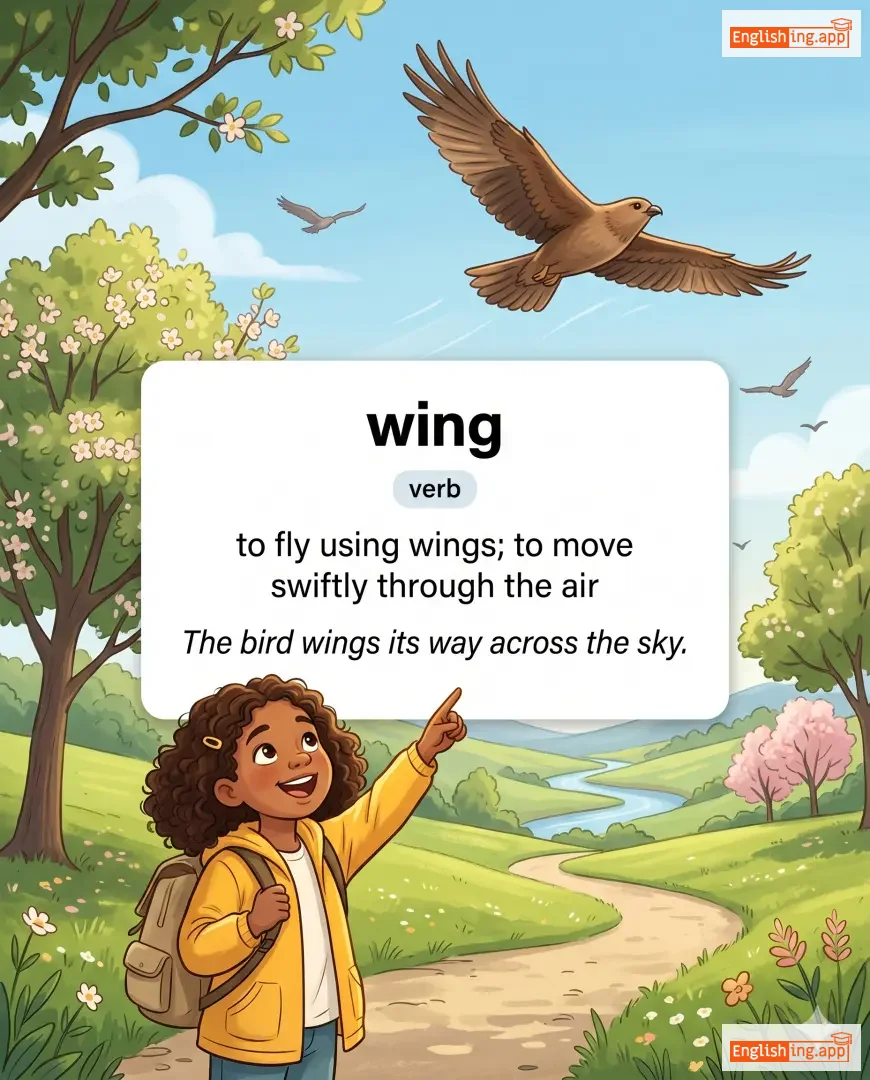
wing definition card — visual illustration of the meaning
noun
/wɪŋ/
(tsubasa)

a part of a bird or aircraft that is used for flying

"The bird flapped its wings and flew away."
"鳥は翼を広げて飛び立ちました。" (Tori wa tsubasa o hirogete tobitachimashita.)
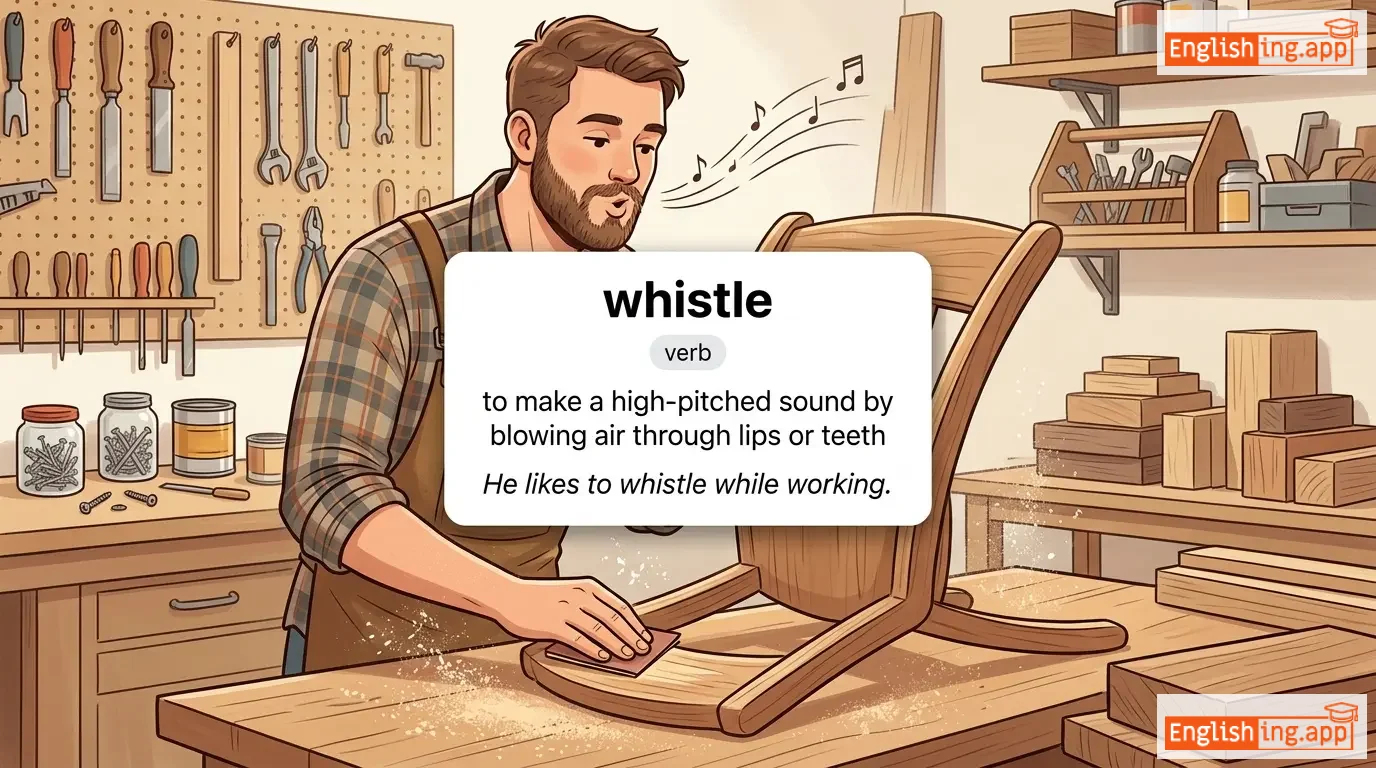
whistle definition card — visual illustration of the meaning
noun
/ˈwɪsəl/
ホイッスル (hoissuru)

a small wind instrument that produces a high-pitched sound when blown

"The referee blew his whistle to start the game."
"審判はゲームを開始するためにホイッスルを吹いた。" (Shinpan wa gēmu o kaishi suru tame ni hoissuru o fuita.)
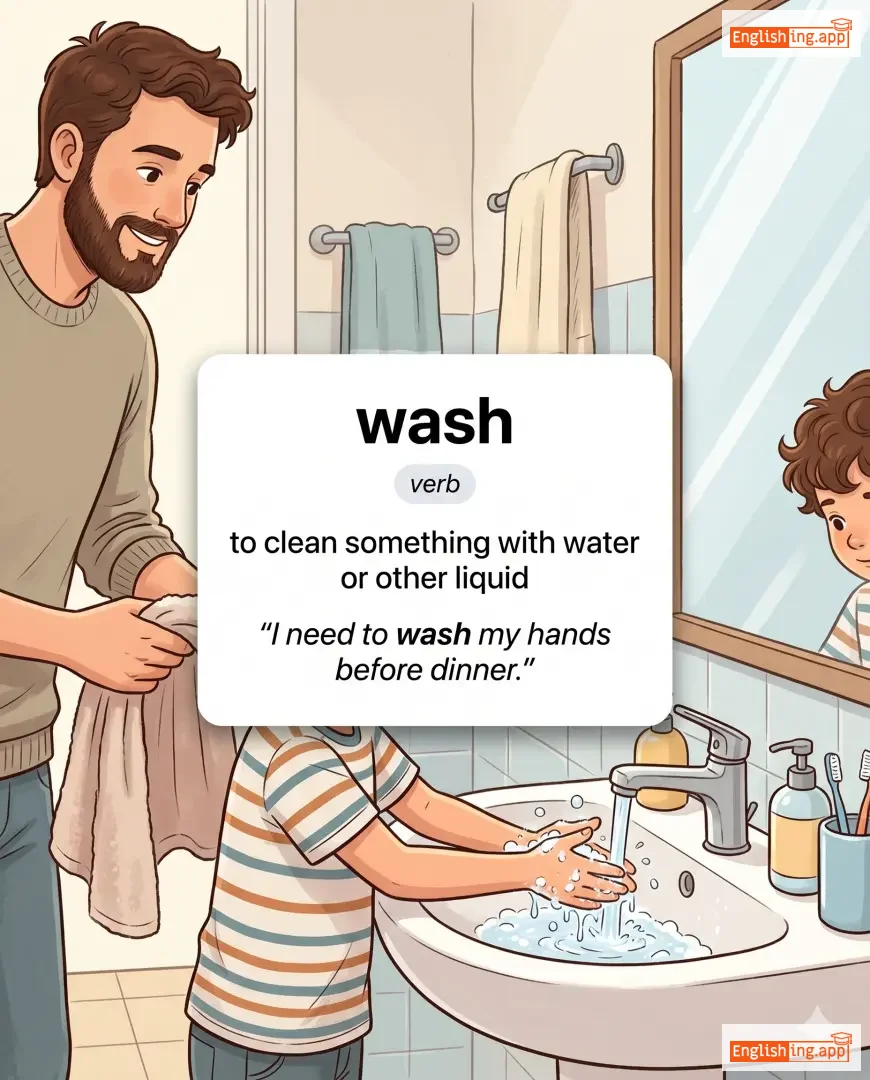
wash definition card — visual illustration of the meaning
verb
/wɒʃ/
洗う (arau)

to clean something with water or other liquid

"I need to wash my hands before dinner."
"夕食前に手を洗う必要があります。" (Yuushoku mae ni te o arau hitsuyou ga arimasu.)
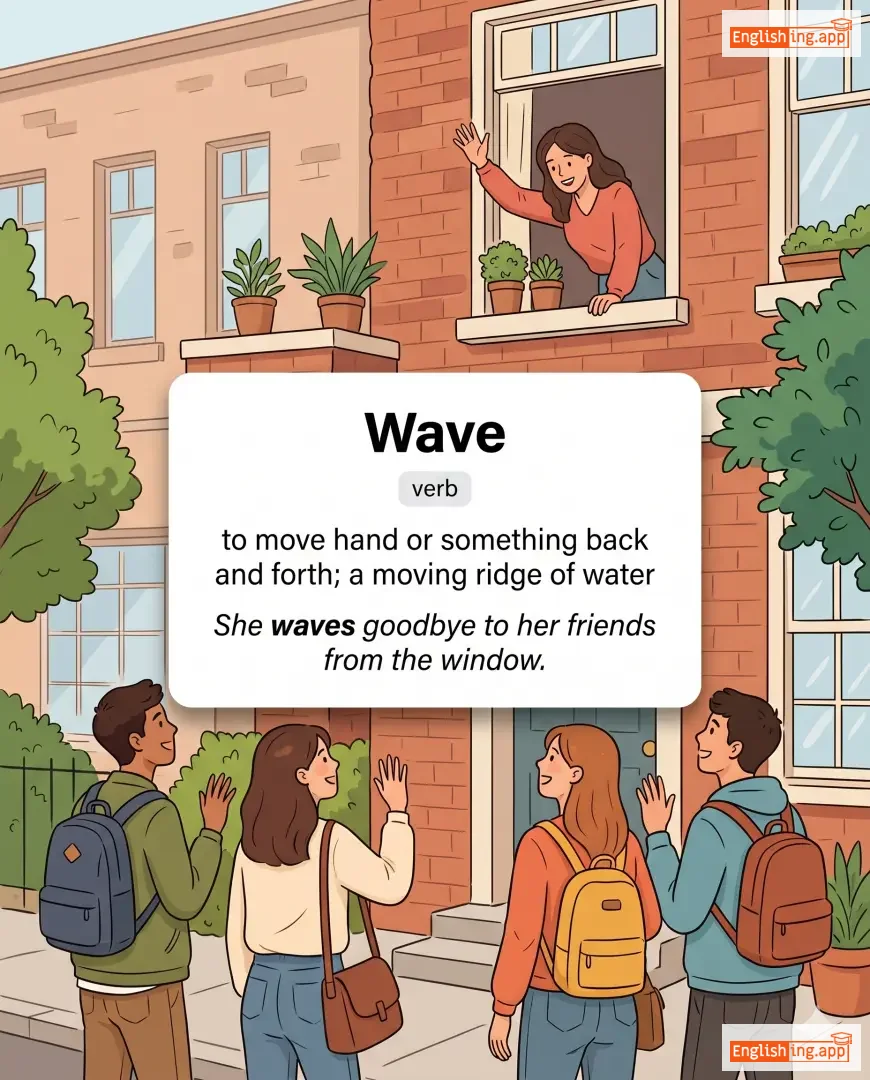
Wave definition card — visual illustration of the meaning
noun
/weɪv/
(nami)

a long body of water curling into an arched form and breaking on the shore

"The waves crashed against the rocks during the storm."

"嵐の間に波が岩にぶつかった。" (Arashi no aida ni nami ga iwa ni butsukatta.)
verb
/ˈwɒb.l̩/
揺れる (yureru)

to move unsteadily from side to side; to shake or tremble slightly

"The table began to wobble when he leaned on it."

"彼がそれに寄りかかったとき、テーブルは揺れ始めました。" (Kare ga sore ni yorikakatta toki, teeburu wa yurehajimemashita.)
noun
/waɪl/
策略, 欺瞞 (satoraku, kiman)

A trick or clever scheme meant to deceive or outwit someone.

"He used every wile to win her trust."

"彼は彼女の信頼を勝ち取るためにあらゆる策略を使った。" (Kare wa kanojo no shinrai o kachitoru tame ni arayuru satoraku o tsukatta.)
noun
/ˈwiː.vər bɜːd/
織り鳥 (oritori)

a small bird that builds elaborate woven nests from grass and twigs

"The weaver bird skillfully constructs its intricate nest."
"織り鳥は巧みに複雑な巣を作る" (oritori wa takumi ni fukuzatsu na su wo tsukuru)
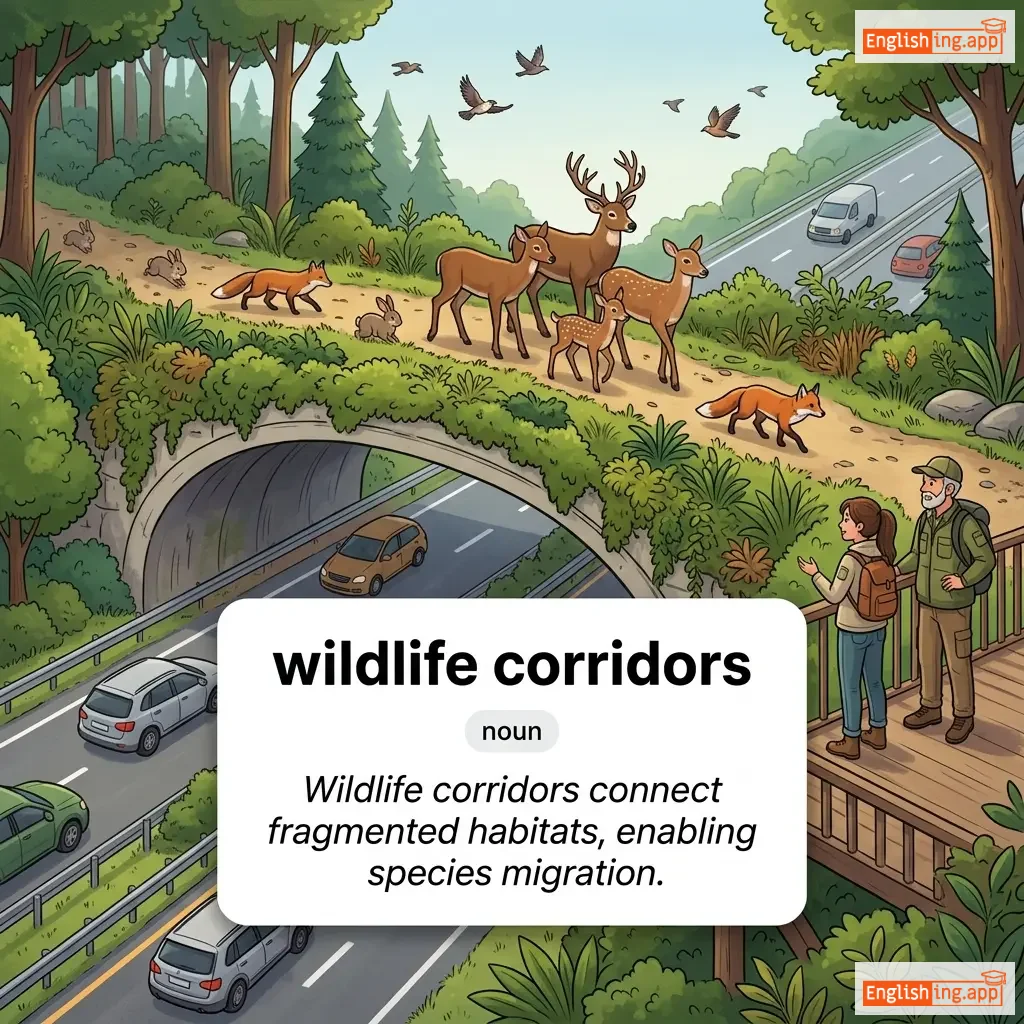
wildlife corridors definition card — visual illustration of the meaning
noun
ˈwaɪldlaɪf ˈkɔːrɪdɔːrz
野生動物の回廊 (yasei dōbutsu no kairō)

Areas of habitat connecting wildlife populations separated by human activities or structures.

"Wildlife corridors connect fragmented habitats, enabling species migration."

"野生動物の回廊は断片化した生息地を繋ぎ、種の移動を可能にします。" (Yasei dōbutsu no kairō wa danpenka shita seisokuchi o tsunagi, shū no idō o kanō ni shimasu.)
noun
/waɪt ˈpɛpər/
ホワイトペッパー (howaito peppā)

a spice made from dried peppercorns with the outer husk removed

"She added white pepper to the cream soup for a mild spicy flavor."

"彼女はクリームスープにホワイトペッパーを加え、まろやかな辛味を加えました。" (kanojo wa kurīmu sūpu ni howaito peppā o kuwae, maroyakana karami o kuwaemashita)
adjective
/waɪz/
賢い (kashikoi)

having or showing experience, knowledge, and good judgment

"It was wise of him to save money for the future."

"未来のためにお金を節約するのは賢明だった。" (Mirai no tame ni okane o setsuyaku suru no wa kenmei datta.)
adjective
/ˈwɜːrkɪŋ/
働いている (hatarai teiru)

engaged in physical or mental effort to achieve a goal or task

"She is working on her project right now."

"彼女は今、プロジェクトに取り組んでいます。" (Kanojo wa ima, purojekuto ni torikundeimasu.)
adjective
/waɪd/
広い (hiroi)

having a great extent from side to side; broad

"The river is wide enough to fit a boat."

"その川は十分に広く、ボートが入ることができます。" (Sono kawa wa juubun ni hiroku, bōto ga hairu koto ga dekimasu.)
verb
/wiːld/
持つ、使う (motsu, tsukau)

To hold and use a weapon, tool, or power effectively.

"The warrior wielded his sword with great skill."

"戦士はその剣を大きな技術で使いました。" (Senshi wa sono ken o ōkina gijutsu de tsukaimashita.)
noun
/woʊz/
悩み (nayami)

great sorrow or distress; troubles

"The company faced financial woes after the market crash."

"市場の崩壊後、会社は財政的な問題に直面しました。" (Shijō no hōkai go, kaisha wa zaisei-teki na mondai ni chokumen shimashita.)
noun
/wɪk/
キャンドルの芯 (kyandoru no shin)

a cord or strand of cotton that burns to provide light in a candle or lamp

"The candle wick needs to be trimmed for better burning."

"キャンドルの芯は、より良く燃えるために切る必要があります。" (Kyandoru no shin wa, yori yoku moeru tame ni kiru hitsuyō ga arimasu.)
adjective
/ˈwɪl.fəl/
頑固な; 意図的な (ganko na; itotekina)

deliberately stubborn; done on purpose; intentional

"His wilful disobedience led to punishment."
"彼の意図的な不服従は罰に繋がった。" (Kare no itoteki na fufukujuu wa batsu ni tsunagatta.)
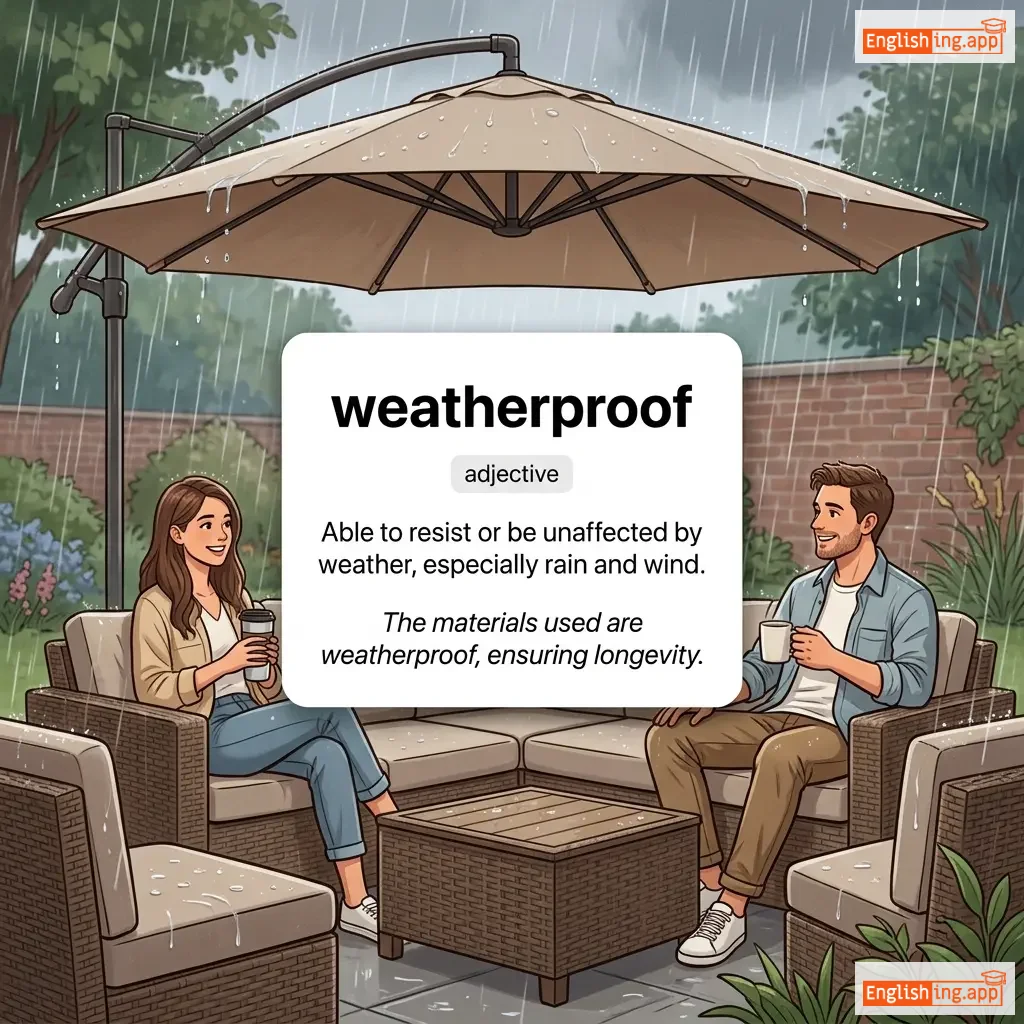
weatherproof definition card — visual illustration of the meaning
adjective
ˈwɛðərpruːf
防水 (bousui)

Able to resist or be unaffected by weather, especially rain and wind.

"The materials used are weatherproof, ensuring longevity."
"使用される材料は防水で、耐久性を保証します。" (Shiyō sareru zairyō wa bousui de, taikyū-sei o hoshō shimasu.)
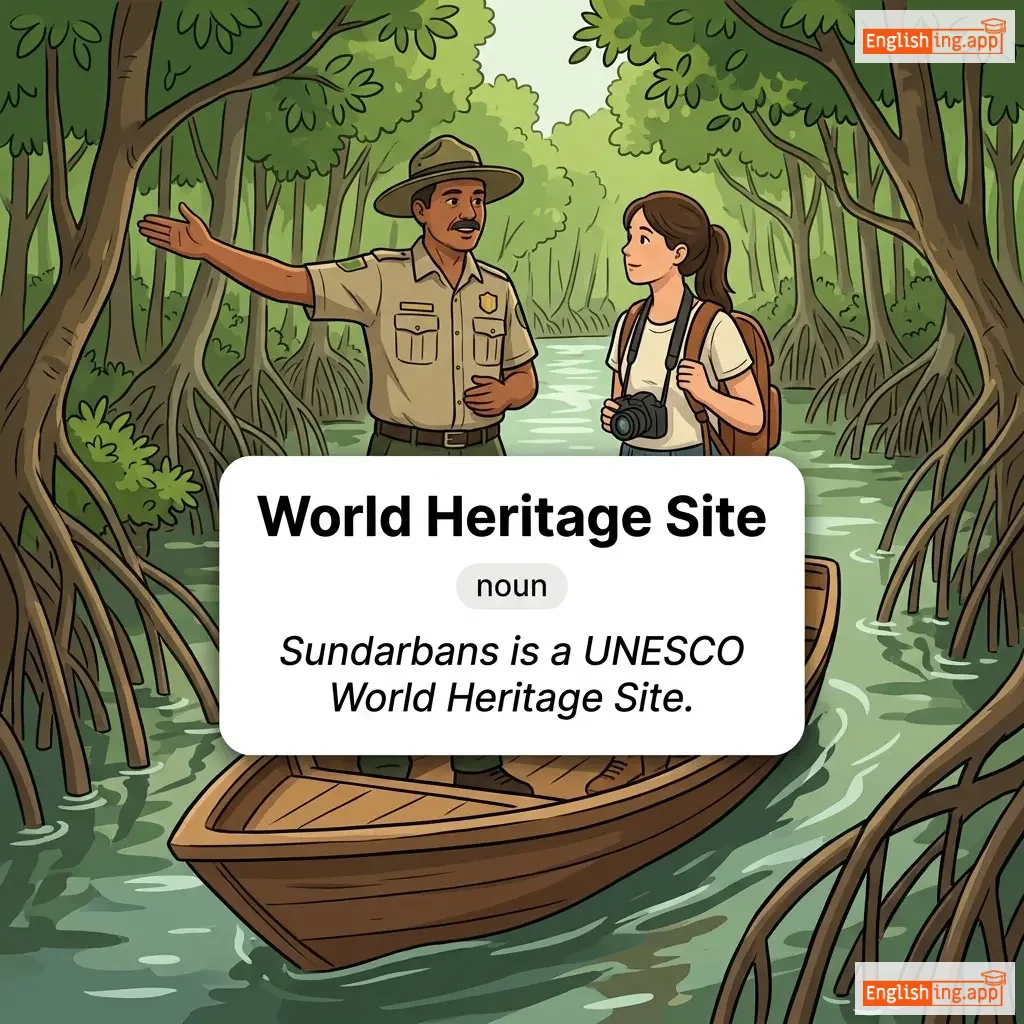
World Heritage Site definition card — visual illustration of the meaning
noun
wɜːrld ˈhɛrɪtɪdʒ saɪt
世界遺産 (Sekai isan)

A landmark or area selected by UNESCO for having cultural, historical, scientific or other form of significance.

"Sundarbans is a UNESCO World Heritage Site."

"スンダルバンズはユネスコの世界遺産です。" (Sundarbans wa Yunesuko no sekai isan desu.)
noun
/ˈwɜːrkˌfɔːrs/
労働力 (rōdōryoku)

the people engaged in or available for work

"The company is looking to expand its workforce by 20%."

"その会社は労働力を20%拡大する計画を立てています。" (Sono kaisha wa rōdōryoku o 20% kakudai suru keikaku o tateteimasu.)
noun
/ˈwɜːrkpleɪs/
職場 (shokuba)

a place where people work, such as an office, factory, or shop

"Maintaining good communication is vital in the workplace."

"職場で良好なコミュニケーションを保つことは非常に重要です。" (Shokuba de ryokou na komyunikeeshon o tamotsu koto wa hijou ni juuyou desu.)
adjective
/ˈwɪspi/
細くて儚い (hosokute hakanai)

Thin, delicate, and weak in appearance or form.

"Her wispy hair blew gently in the breeze."

"彼女の細い髪は風にそっと舞っていた。" (Kanojo no hosoi kami wa kaze ni sotto matte ita.)
adjective
/ˈwɒŋki/
不安定な; 信頼できない; 正常に動作しない (wonki)

unstable; unreliable; not working properly

"The old chair was wonky and wobbled every time someone sat on it."

"古い椅子は不安定で、誰かが座るたびに揺れていました。" (Furui isu wa fuantei de, dareka ga suwaru tabi ni yurete imashita)
noun
/wɜːrd fɔːrˈmeɪʃən/
語形成 (go keisei)

the process by which new words are created or existing words are modified in a language

"Word formation helps learners understand how new vocabulary develops in English."

"語形成は言語学の重要な分野です。" (go keisei wa gengogaku no juuyou na bunya desu)
adjective
/ˈwɪlfəl/
意図的 (itoteki)

Deliberate, intentional, or stubbornly determined to do as one wants.

"Her willful disregard for the rules got her into trouble."

"彼女の意図的なルール無視は、彼女をトラブルに巻き込んだ。" (Kanojo no itotekina rūru mushi wa, kanojo o toraburu ni makikonda.)
noun
/wʊd ˈæp.əl/
ウッドアップル (uddo appuru)

a hard-shelled tropical fruit with aromatic pulp used in beverages and medicine

"The wood apple has a hard shell but sweet pulp inside."

"ウッドアップルは硬い殻を持っていますが、内部には甘い果肉があります" (Uddo appuru wa katai kara wo motteimasu ga, naibu ni wa amai kaniku ga arimasu)
noun
/ˈwaɪnəri/
ワイナリー (wainarī)

a place where wine is made

"They visited a famous winery in France."

"彼らはフランスの有名なワイナリーを訪れました。" (Karera wa Furansu no yūmei na wainarī o otozuremashita.)
verb
/wɪlt/
しおれる (shioreru)

To become limp, weak, or drooping, often due to lack of water or energy.

"The flowers wilted in the heat of the sun."

"花は太陽の熱でしおれた。" (Hana wa taiyō no netsu de shioreta.)