語彙集

英単語辞書 | 単語の意味、定義、例文

verb
/ˈwɪtl/

to carve or shape something by cutting off small pieces; to gradually reduce

"He spent the afternoon whittling a piece of wood into a toy."

noun
/ˈwɒrənti/
保証 (hoshō)

A written guarantee given by a manufacturer or seller promising to repair or replace a product if necessary within a specified period.

"The laptop comes with a two-year warranty."

"そのノートパソコンには2年間の保証が付いています。" (Sono nōto pasokon ni wa 2-nenkan no hoshō ga tsuiteimasu.)
adjective
/hoʊl/
全体 (zentai)

all of something; complete or entire

"He ate the whole cake by himself."

"彼はケーキを全部一人で食べました。" (Kare wa kēki o zenbu hitori de tabemashita.)
adjective
/ˌhoʊlˈhɑːrtɪd/
全力で (zenryoku de)

showing complete sincerity and commitment; fully enthusiastic

"She gave her wholehearted support to the project."

"彼女はそのプロジェクトに全力でサポートを与えた。" (Kanojo wa sono purojekuto ni zenryoku de sapōto o ataeta.)
🌀

warp

verb
/wɔːrp/

To twist or bend out of shape, often due to heat or moisture.

"The wooden door warped in the summer heat."

adjective
/waɪz/
賢い (kashikoi)

having or showing experience, knowledge, and good judgment

"It was wise of him to save money for the future."

"未来のためにお金を節約するのは賢明だった。" (Mirai no tame ni okane o setsuyaku suru no wa kenmei datta.)
noun
/ˈwɒrən/
ウサギの巣穴のネットワーク (warren)

A network of interconnected rabbit burrows; also used metaphorically for a densely populated building or district.

"The old part of the city is a warren of narrow streets."
"街の古い部分は、狭い通りが入り組んだ迷路のようです。" (Machi no furui bubun wa, semai tōri ga hairikonda meiro no yō desu.)
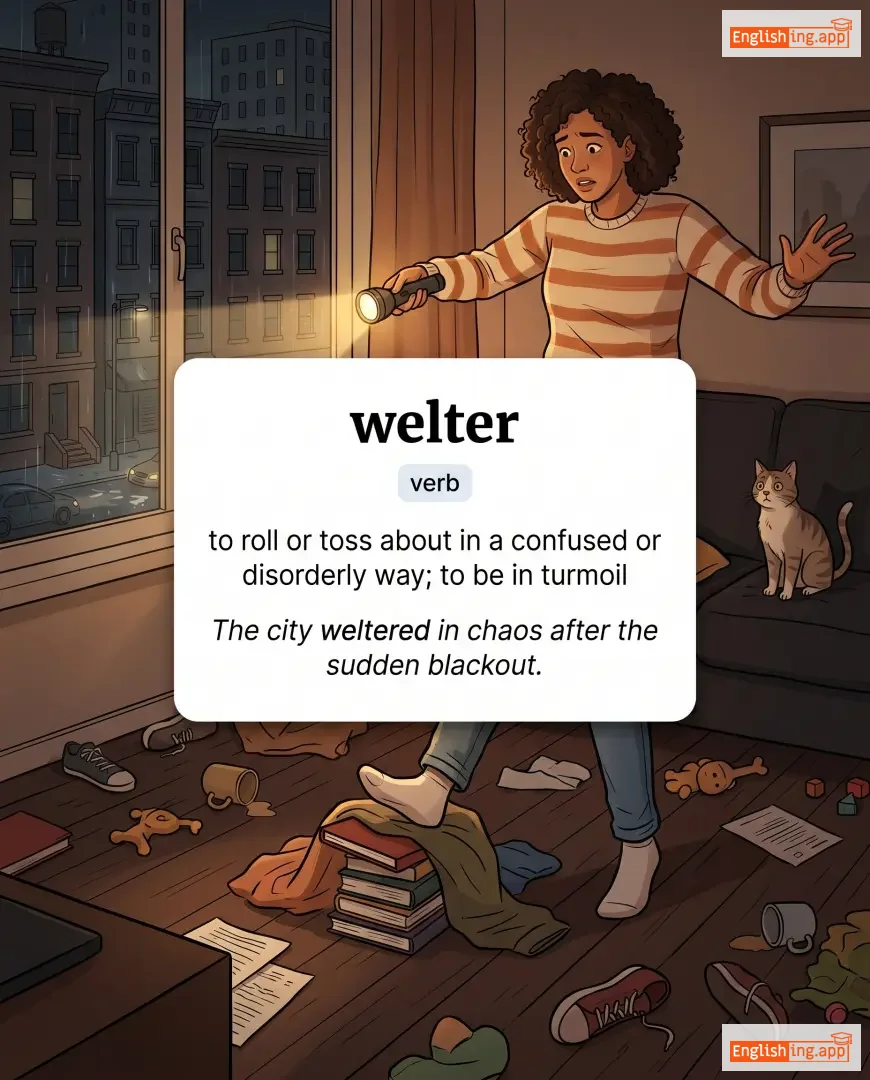
welter definition card — visual illustration of the meaning
verb
/ˈwɛltər/
混乱の中で転がる (konran no naka de korogaru)

to roll or toss about in a confused or disorderly way; to be in turmoil

"The city weltered in chaos after the sudden blackout."

"突然の停電後、都市は混乱の中に沈んだ。" (Totsuzen no teiden go, toshi wa konran no naka ni shizunda.)
noun
/ˈwiːltʃeər/
車椅子 (kurumaisu)

a chair with wheels, used by people who cannot walk easily or at all

"The hospital provided a wheelchair for the injured patient."

"病院は怪我をした患者のために車椅子を提供した。" (byōin wa kega o shita kanja no tame ni kurumaisu o teikyō shita.)
noun
/ˈwɪtʃ.krɑːft/
魔女術 (majutsu)

the practice of magical skills, spells, and abilities

"In old times, many people believed in witchcraft."

"古代には、多くの人々が魔女術を信じていました。" (Kodai ni wa, ōku no hitobito ga majutsu o shinjite imashita.)
adjective
/ˌwel bɪˈheɪvd/
行儀が良い (gyōgi ga yoi)

conducting oneself in a proper and polite manner; showing good manners

"The children were well-behaved during the ceremony."

"儀式の間、子供たちは行儀が良かった。" (Gishiki no aida, kodomotachi wa gyōgi ga yokatta.)
adverb
/wɛərˈbaɪ/
によって (ni yotte)

by which; because of which

"The company agreed to a contract whereby it would pay the penalty."

"その会社は、罰金を支払う契約に同意しました。" (Sono kaisha wa, bakkin o shiharau keiyaku ni dōi shimashita.)
noun
/ˈwɪntər/
(fuyu)

the coldest season of the year, typically from December to February in the Northern Hemisphere

"Winter in the north can be very harsh with heavy snowfall."

"北の冬は非常に厳しく、大雪が降ることがあります。" (Kita no fuyu wa hijō ni kibishiku, ōyuki ga furu koto ga arimasu.)
noun
/ˈwɛlˌduːər/
善行者 (zenkōsha)

A person who does good deeds; a benefactor.

"The community praised the well-doer for his charity."

"コミュニティはその善行者を称賛しました。" (Komyuniti wa sono zenkōsha o shōsan shimashita.)
adverb, noun
/ˈwɛə.wɪð/
手段 (shudan)

With which; the means or resources needed for something.

"He lacked the money wherewith to buy a new house."

"彼は新しい家を買うためのお金がなかった。" (Kare wa atarashī ie o kau tame no okane ga nakatta.)
adjective
/ˌwelˈnoʊn/
有名 (yūmei)

known by many people; famous or recognized

"He is a well-known actor in his country."

"彼は自国で有名な俳優です。" (Kare wa jikoku de yūmei na haiyū desu.)
noun
/wɪm/
気まぐれ (kimagure)

a sudden or unpredictable idea, desire, or decision

"She bought the dress on a whim."

"彼女は気まぐれでそのドレスを買いました。" (Kanojo wa kimagure de sono doresu o kaimashita.)
adverb
/waɪ/
なぜ (naze)

used to ask or talk about the reason for something

"Why did you leave so early?"

"なぜこんなに早く帰ったのですか?" (Naze konna ni hayaku kaetta no desu ka?)
noun
/weɪl/
クジラ (kujira)

a very large marine mammal that lives in the ocean

"We saw a huge whale swimming near the boat."

"私たちはボートの近くで巨大なクジラが泳いでいるのを見ました。" (Watashitachi wa bōto no chikaku de kyodaina kujira ga oyoide iru no o mimashita.)
conjunction
/wɛərˈæz/
〜一方で (ippō de)

used to introduce a contrast or comparison between two facts

"She prefers tea, whereas he likes coffee."
"彼女はお茶が好きですが、彼はコーヒーが好きです。" (Kanojo wa ocha ga suki desu ga, kare wa kōhī ga suki desu.)
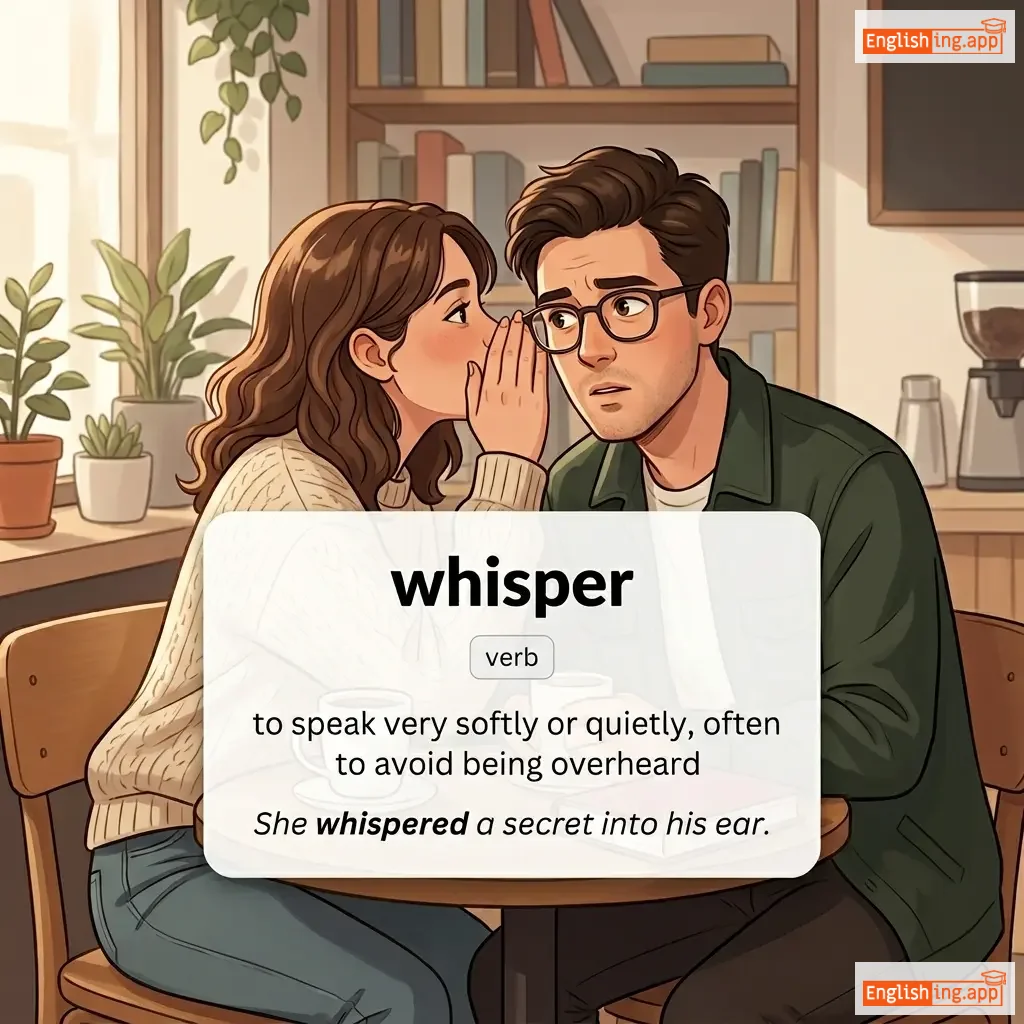
whisper definition card — visual illustration of the meaning
verb
/ˈwɪspər/
ささやく (sasayaku)

to speak very softly or quietly, often to avoid being overheard

"She whispered a secret into his ear."

"彼女は彼の耳に秘密をささやいた。" (Kanojo wa kare no mimi ni himitsu o sasayaita.)
🍴

whet

verb
/wɛt/

To sharpen the blade of a tool or to stimulate interest or appetite.

"The smell of food whetted my appetite."

adverb
/ˈhoʊlli/
完全に (kanzen ni)

completely; entirely

"She is wholly devoted to her family."

"彼女は家族に完全に捧げています。" (Kanojo wa kazoku ni kanzen ni sasage teimasu.)
pronoun
/wɪtʃ/
どれ (dore)

used to ask about one or more items from a defined set

"Which one do you prefer, the red or the blue?"
"赤と青、どちらを選びますか?" (Aka to ao, dochira o erabimasu ka?)
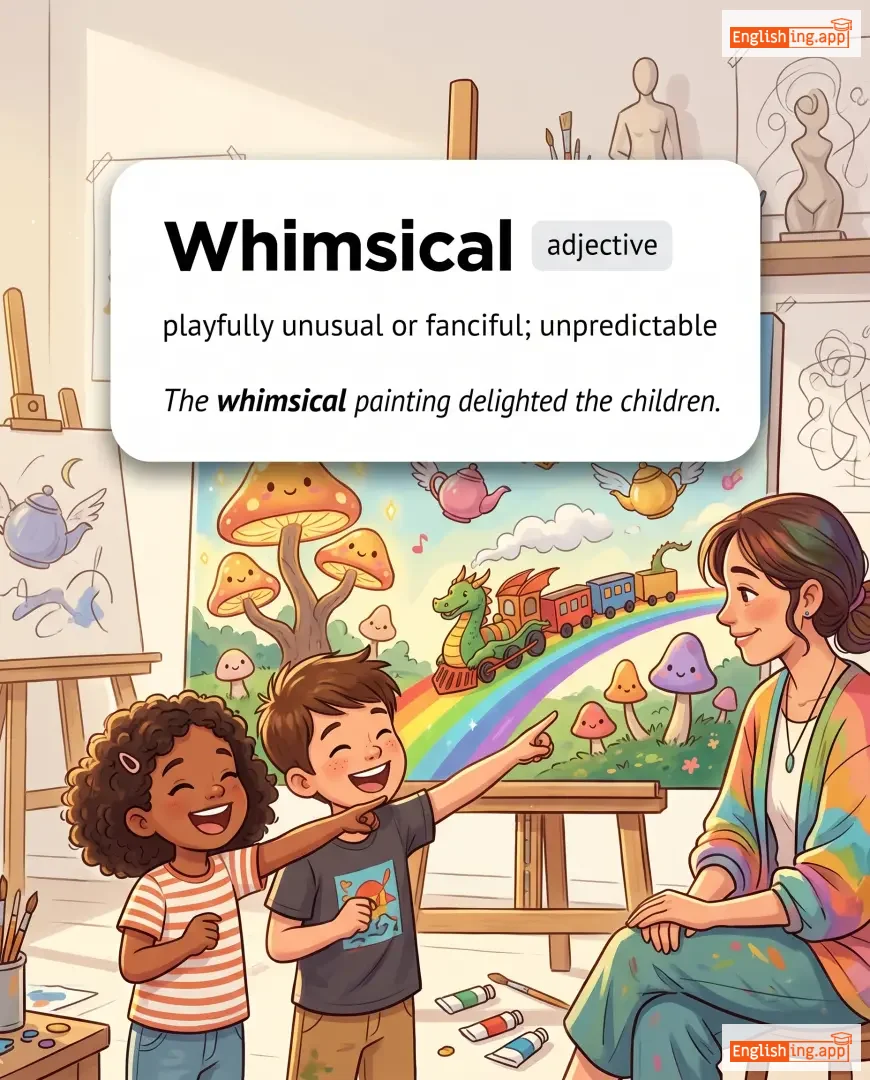
Whimsical definition card — visual illustration of the meaning
adjective
/ˈwɪmzɪkəl/
奇想天外 (kisō tengai)

playfully unusual or fanciful; unpredictable

"The whimsical painting delighted the children."

"その奇想天外な絵画は子供たちを喜ばせました。" (Sono kisō tengai na kaiga wa kodomotachi o yorokobasemashita.)
adverb
/ˌwɛr.əˈpɒn/
その後すぐに (sono ato sugu ni)

Immediately after which; as a result of which.

"He confessed his mistake, whereupon she forgave him."

"彼は自分の間違いを認め、すぐに彼女は彼を許しました。" (Kare wa jibun no machigai o mitome, sugu ni kanojo wa kare o yurushimashita.)
noun
/ˈwɒʃ.ɪŋ məˌʃiːn/

a machine for washing clothes and other textiles

"The washing machine broke down and needs repair."

adjective
/ˈwɔːrˌlaɪk/
戦闘的 (sentōteki)

Having an aggressive or militant nature; inclined to fight or engage in war.

"The tribe was known for its warlike traditions."

"その部族は戦闘的な伝統で知られていました。" (Sono buzoku wa sentōteki na dentō de shirarete imashita.)
noun
/ˈwɔː.tər pɒt/
水差し (mizudashi)

a container used for storing or carrying water

"The water pot in the kitchen was filled with fresh drinking water."
"キッチンの水差しは新鮮な飲料水でいっぱいでした。" (kicchin no mizudashi wa shinsen na inryō mizu de ippai deshita.)
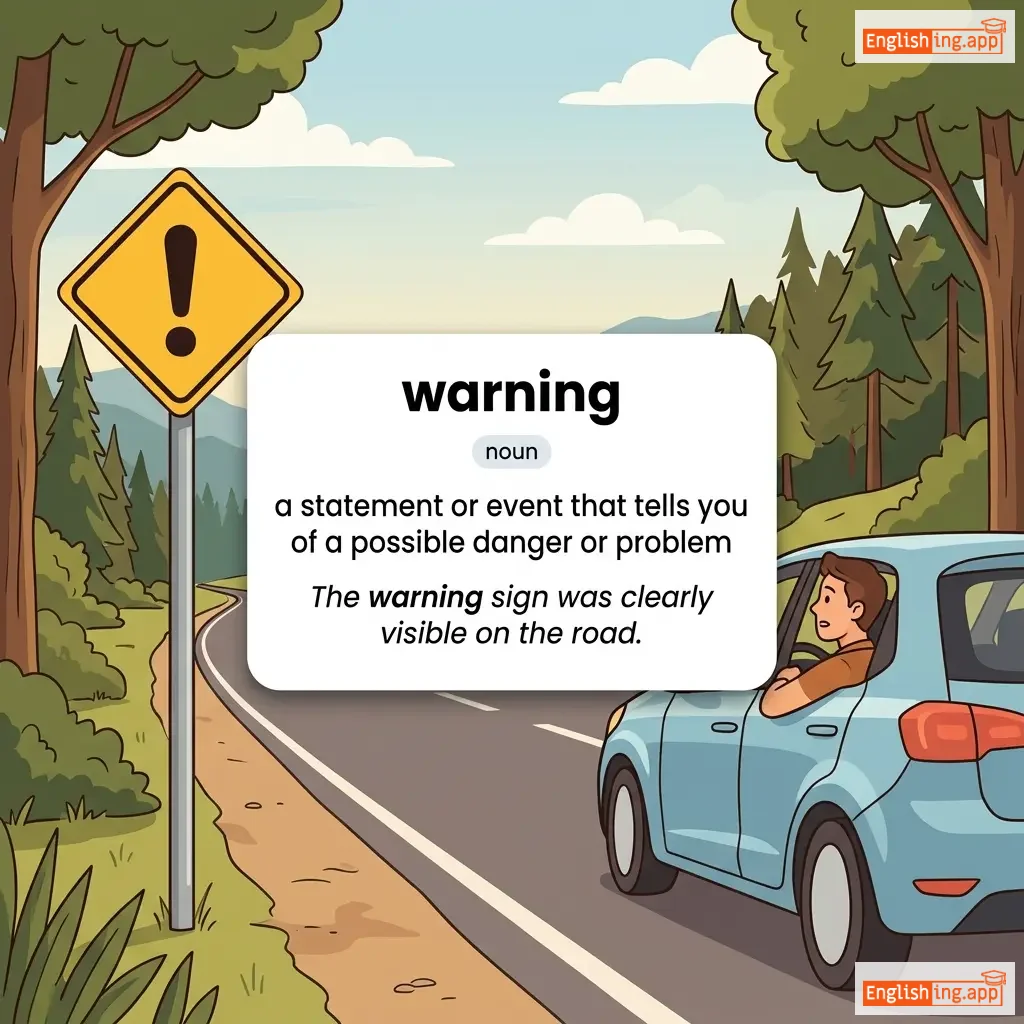
warning definition card — visual illustration of the meaning
noun
/ˈwɔːrnɪŋ/
警告 (keikoku)

a statement or event that tells you of a possible danger or problem

"The warning sign was clearly visible on the road."

"道路上の警告サインははっきりと見えました。" (Dourojou no keikoku sain wa hakkiri to miemashita.)
noun
/ˈwɔːtərfɔːl/
(wootaafooru)

a cascade of water falling from a height, formed when a river or stream flows over a precipice or steep incline

"The magnificent waterfall attracts thousands of tourists every year."

"壮大な滝は毎年何千人もの観光客を引きつけます。" (soudaina taki wa mainen nanzen nin no mono kankoukyaku o hikitsukemasu.)
noun
/wæks ˈkændəl/
ろうそく (rōsoku)

a cylinder of wax with a wick through it that burns to give light

"We lit a wax candle during the power outage."

"停電中にろうそくを灯しました" (teidenchū ni rōsoku o tomoshimashita)
noun
/wɛlt/
膨らみ (fukurami)

A raised mark on the skin, usually from a blow or allergic reaction.

"He had a red welt on his arm after the bee sting."

"蜂に刺された後、彼の腕に赤い膨らみができていた。" (Hachi ni sāsareta ato, kare no ude ni akai fukurami ga dekite ita.)
adjective
/ˈwɛstərn/
西洋の (seiyō no)

relating to or characteristic of the West, especially Europe and the Americas

"She loves western music and culture."

"彼女は西洋の音楽と文化が大好きです。" (Kanojo wa seiyō no ongaku to bunka ga daisuki desu.)
adjective
/ˈwiːk niːd/
臆病 (okubyo)

Lacking determination or courage; easily frightened or yielding.

"The leader was criticized for being weak-kneed in the face of opposition."
"リーダーは反対に直面したとき、臆病だと批判されました。" (Rīdā wa hantai ni chokumen shita toki, okubyo da to hihan saremashita.)
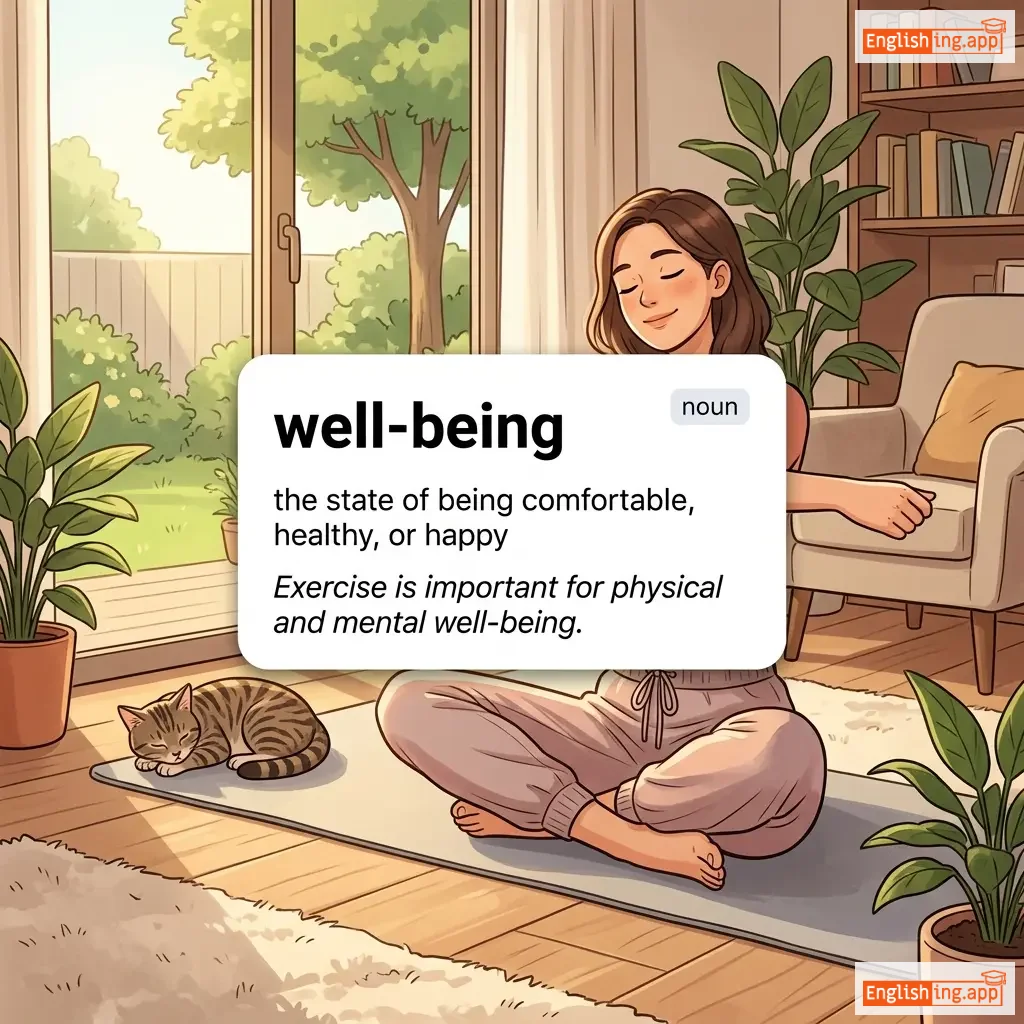
well-being definition card — visual illustration of the meaning
noun
/ˌwelˈbiːɪŋ/
ウェルビーイング (werubīingu)

the state of being comfortable, healthy, or happy

"Exercise is important for physical and mental well-being."

"運動は身体的および精神的なウェルビイングに重要です。" (Undō wa shintai-teki oyobi seishin-teki na werubīingu ni jūyō desu.)
adjective
/ˈwɪndi/
風の強い (kaze no tsuyoi)

characterized by strong wind; also, using too many words and saying little

"It was so windy that the umbrellas flipped inside out."
"風がとても強くて、傘がひっくり返った。" (kaze ga totemo tsuyokute kasa ga hikkurikaetta)
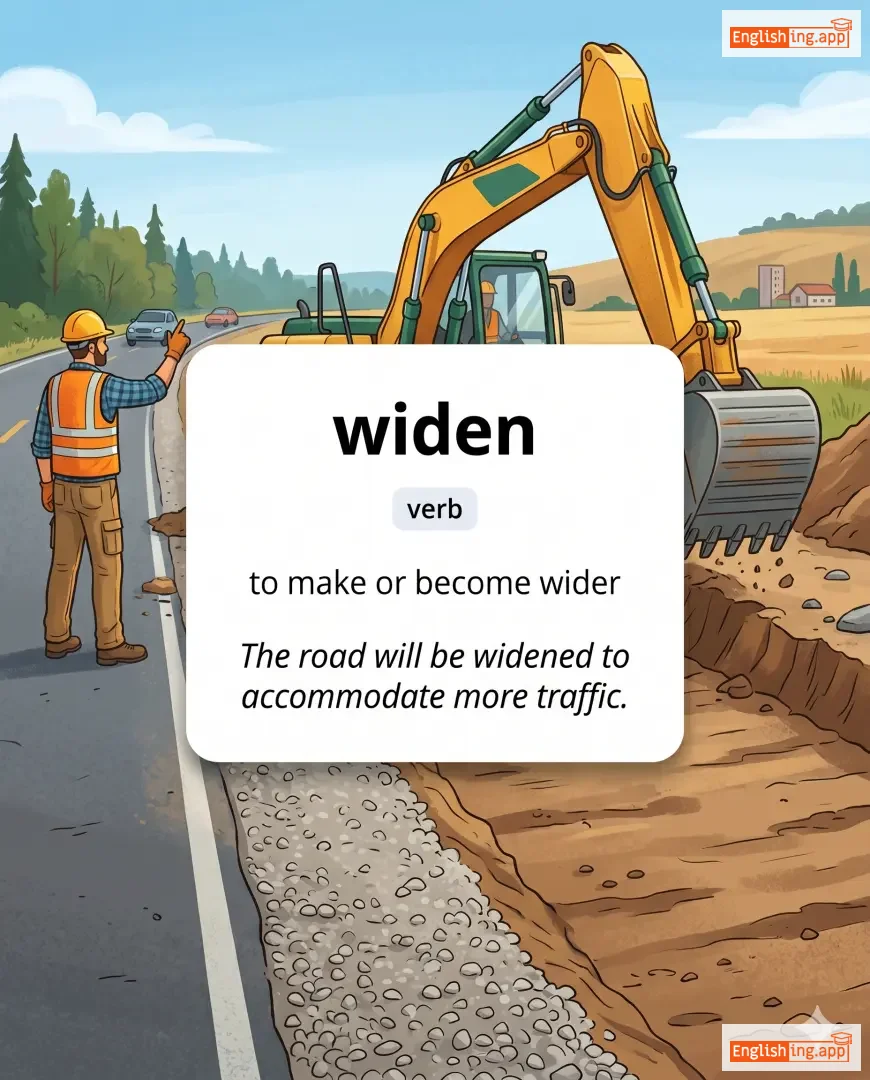
widen definition card — visual illustration of the meaning
verb
/ˈwaɪdən/
広げる (hirogeru)

to make or become wider

"The road will be widened to accommodate more traffic."

"道路はより多くの交通を収容できるように広げられます。" (Dōro wa yori ōku no kōtsū o shūyō dekiru yō ni hirogeraremasu.)
conjunction
/waɪl/
その間 (sono aida)

during the time that something is happening

"She was reading while waiting for the bus."

"彼女はバスを待っている間に読書をしていた。" (Kanojo wa basu wo matteiru aida ni dokusho wo shite ita.)
pronoun
/huːˈɛvər/
誰でも (dare demo)

any person who; no matter who

"Whoever wants to join the trip must register today."

"誰でもこの旅行に参加したい場合は、今日中に登録する必要があります。" (Dare demo kono ryokō ni sanka shitai baai wa, kyōjū ni tōroku suru hitsuyō ga arimasu.)
adjective
/ˈwɪlɪŋ/
意欲的 (iyokuteki)

ready, inclined, or eager to do something

"She was willing to help with the project."
"彼女はプロジェクトを手伝う意欲があった。" (Kanojo wa purojekuto o tetsudau iyoku ga atta.)
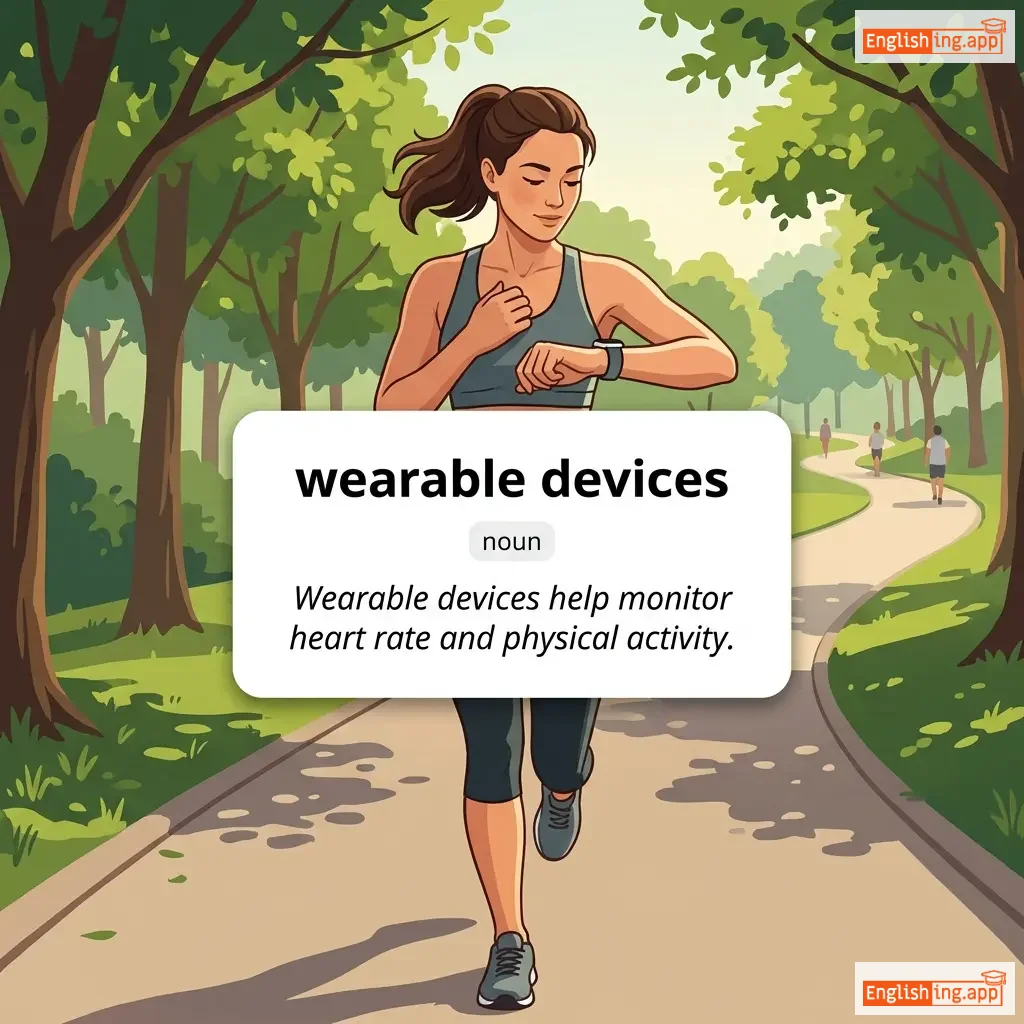
wearable devices definition card — visual illustration of the meaning
noun
ˈweə.rə.bəl dɪˈvaɪ.sɪz
ウェアラブルデバイス (weāraburu debaisu)

Electronic devices that can be worn on the body, typically incorporating smart technology for monitoring health or providing information.

"Wearable devices help monitor heart rate and physical activity."
"ウェアラブルデバイスは心拍数と身体活動をモニタリングするのに役立ちます。" (Weāraburu debaisu wa shinpakusū to shintai katsudō o monitaringu suru no ni yakudachimasu.)
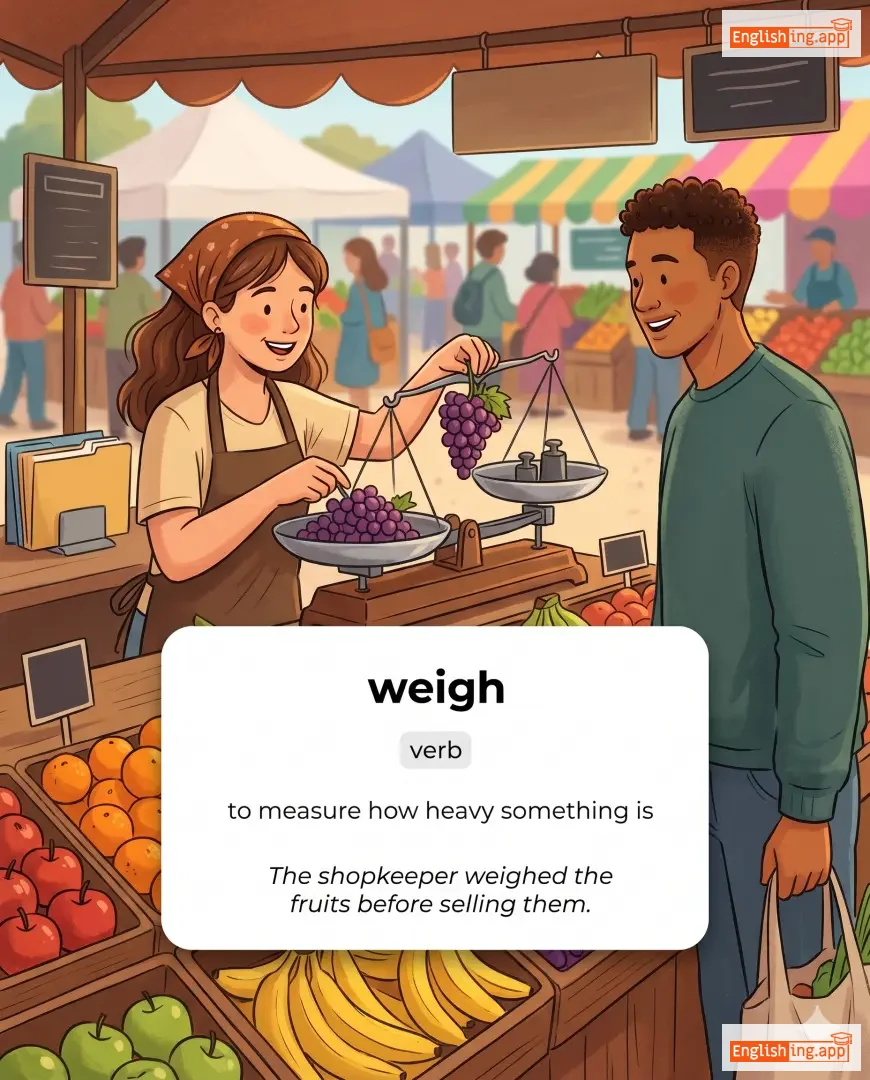
weigh definition card — visual illustration of the meaning
verb
/weɪ/
重さを量る (omosa o hakaru)

to measure how heavy something is

"The shopkeeper weighed the fruits before selling them."

"店主は果物を販売する前に重さを量った。" (Ten-shu wa kudamono o hanbai suru mae ni omosa o hakatta.)
verb
/wɪp/
ムチで打つ (muchi de utsu)

to strike or beat with a flexible instrument such as a rope or cord

"The trainer whipped the horse to make it run faster."

"トレーナーは馬を速く走らせるために鞭で打った。" (Toreenaa wa uma wo hayaku hashiraseru tame ni muchi de utta.)
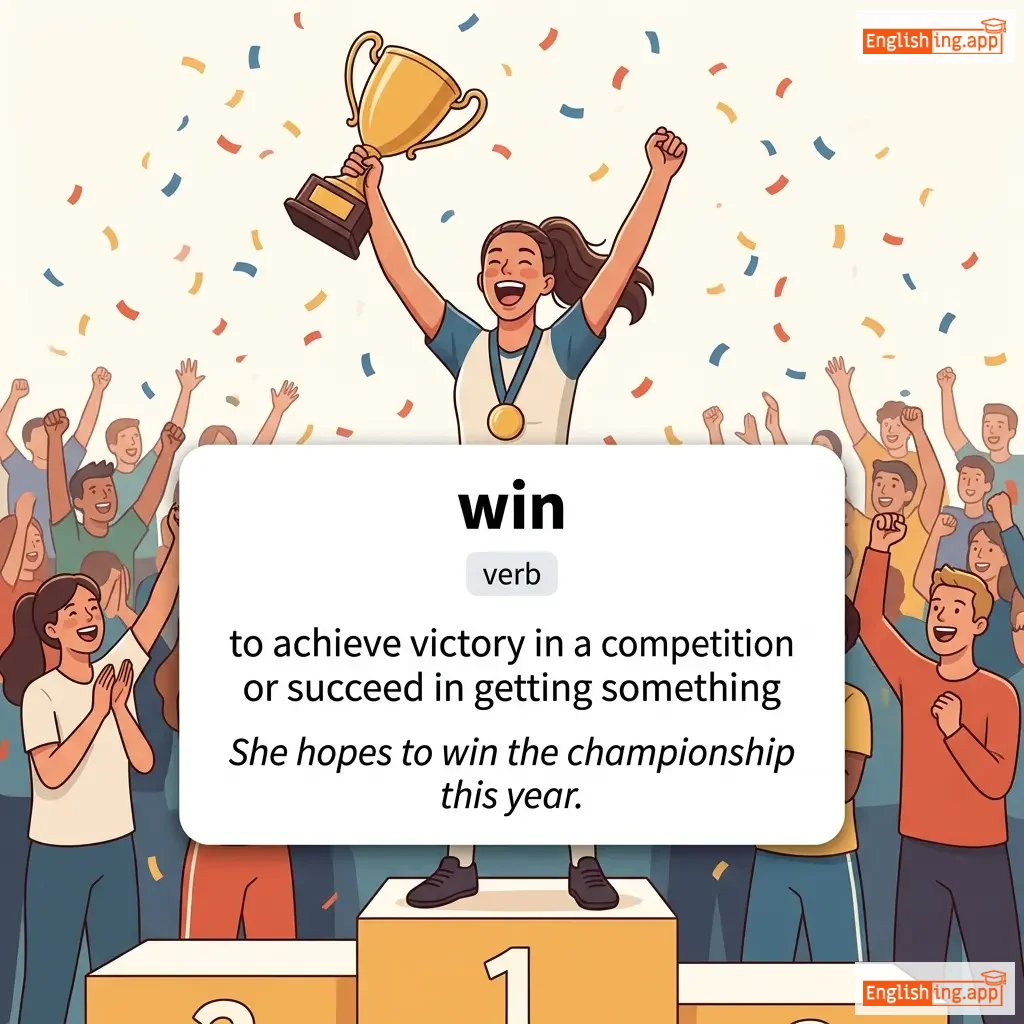
win definition card — visual illustration of the meaning
🏆

win

verb
/wɪn/

to achieve victory in a competition or succeed in getting something

"She hopes to win the championship this year."

noun/verb
/ˈwɒrənt/
令状 (reijō)

As a noun: An official authorization or order. As a verb: To justify or make something necessary.

"The judge issued a warrant for his arrest."

"裁判官は彼の逮捕状を発行しました。" (Saibankan wa kare no taihojō o hakkō shimashita.)
noun
/ˈwɔː.tər ˈtʃes.nʌt/
水栗 (mizukuri)

aquatic plant with edible white crisp tubers

"Water chestnuts add a nice crunch to stir-fry dishes."

"水栗は炒め物に素晴らしいカリカリ感を加えます。" (Mizukuri wa itamemono ni subarashī karikarikan o kuwaemasu)
whitelisting definition card — visual illustration of the meaning
noun
/ˈwaɪt.lɪst.ɪŋ/
特定のユーザー、ソフトウェア、またはIPアドレスを安全で信頼できるものとして識別する (Tokutei no yūzā, sofutowea, matawa IP adoresu o anzen de shinrai dekiru mono toshite shikibetsu suru)

Identifying specific users, software, or IP addresses as safe and trusted

"Only verified applications are allowed through whitelisting."

"認証済みのアプリケーションのみがホワイトリストを通過できます。" (Ninshouzumino apurikeeshon nomi ga howaitorisuto o tsuuka dekimasu.)
noun
/ˈwɪndbæɡ/
おしゃべりな人 (oshaberi na hito)

a person who talks too much, especially in a boring or boastful way

"Everyone avoided the windbag at the party because he never let anyone else speak."

"パーティーでみんなはそのおしゃべりな人を避けた、なぜなら彼は他の誰にも話す機会を与えなかったから。" (Pātī de minna wa sono oshaberi na hito o saketa, nazenara kare wa hoka no dare ni mo hanasu kikai o ataenakatta kara.)
verb
/ˈwɪɡəl/
揺れる, 動かす (yureru, ugokasu)

To move or cause to move with small rapid movements from side to side.

"The baby wiggled happily in her mother's arms."

"赤ちゃんは母親の腕の中で幸せそうに揺れていました。" (Akachan wa hahaoya no ude no naka de shiawase sō ni yurete imashita.)