Vocabularios

Descubra, aprenda y domine el vocabulario en inglés

verb
/ˈwɪtl/
tallar (tallar)

to carve or shape something by cutting off small pieces; to gradually reduce

"He spent the afternoon whittling a piece of wood into a toy."

"Él pasó la tarde tallando un trozo de madera en un juguete." (El paso la tarde tallando un trozo de madera en un juguete.)
noun
/ˈwɒrənti/
garantía (garantia)

A written guarantee given by a manufacturer or seller promising to repair or replace a product if necessary within a specified period.

"The laptop comes with a two-year warranty."

"El portátil viene con una garantía de dos años." (El portatil viene con una garantia de dos anos.)
adjective
/hoʊl/
entero (entero)

all of something; complete or entire

"He ate the whole cake by himself."

"Él se comió el pastel entero él solo." (El se comió el pastel entero él solo.)
adjective
/ˌhoʊlˈhɑːrtɪd/
de todo corazón (de todo corazon)

showing complete sincerity and commitment; fully enthusiastic

"She gave her wholehearted support to the project."

"Ella dio su apoyo de todo corazón al proyecto." (Ella dio su apoyo de todo corazon al proyecto.)
verb
/wɔːrp/
deformar (deformar)

To twist or bend out of shape, often due to heat or moisture.

"The wooden door warped in the summer heat."

"La puerta de madera se deformó con el calor del verano." (La puerta de madera se deformó con el calor del verano.)
adjective
/waɪz/
sabio (sabio)

having or showing experience, knowledge, and good judgment

"It was wise of him to save money for the future."

"Fue sabio de su parte ahorrar dinero para el futuro." (Fue sabio de su parte ahorrar dinero para el futuro.)
noun
/ˈwɒrən/
red de madrigueras (warren)

A network of interconnected rabbit burrows; also used metaphorically for a densely populated building or district.

"The old part of the city is a warren of narrow streets."

"La parte antigua de la ciudad es una red de calles estrechas." (La parte antigua de la ciudad es una red de calles estrechas.)
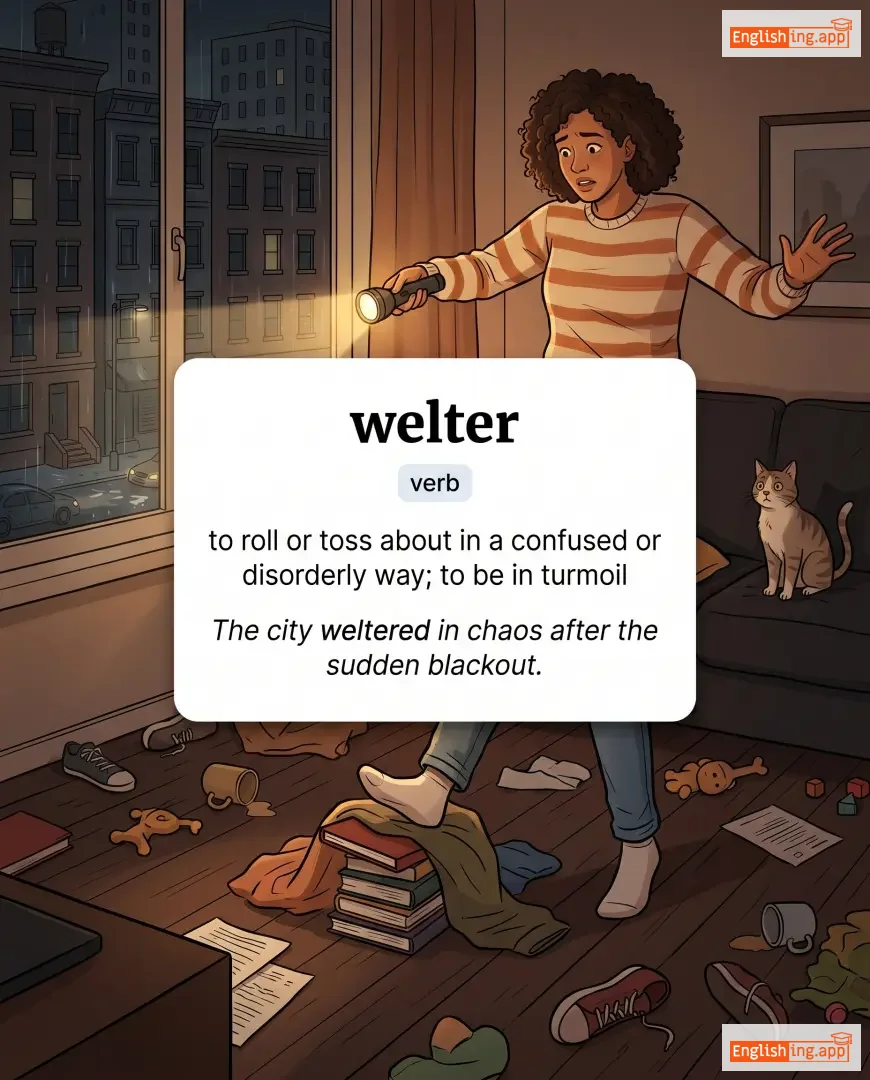
welter definition card — visual illustration of the meaning
verb
/ˈwɛltər/
dar vueltas en caos (dar vueltas en caos)

to roll or toss about in a confused or disorderly way; to be in turmoil

"The city weltered in chaos after the sudden blackout."

"La ciudad se sumió en el caos después del apagón repentino." (La ciudad se sumió en el caos después del apagón repentino.)
noun
/ˈwiːltʃeər/
silla de ruedas (silla de ruedas)

a chair with wheels, used by people who cannot walk easily or at all

"The hospital provided a wheelchair for the injured patient."

"El hospital proporcionó una silla de ruedas para el paciente herido." (El hospital proporcionó una silla de ruedas para el paciente herido.)
noun
/ˈwɪtʃ.krɑːft/
brujería (brujeria)

the practice of magical skills, spells, and abilities

"In old times, many people believed in witchcraft."

"En tiempos antiguos, muchas personas creían en la brujería." (En tiempos antiguos, muchas personas creian en la brujeria.)
adjective
/ˌwel bɪˈheɪvd/
bien educado (bien educado)

conducting oneself in a proper and polite manner; showing good manners

"The children were well-behaved during the ceremony."

"Los niños se comportaron bien durante la ceremonia." (Los niños se comportaron bien durante la ceremonia.)
adverb
/wɛərˈbaɪ/
mediante (mediante)

by which; because of which

"The company agreed to a contract whereby it would pay the penalty."

"La empresa acordó un contrato mediante el cual pagaría la multa." (La empresa acordó un contrato mediante el cual pagaría la multa.)
noun
/ˈwɪntər/
invierno (invierno)

the coldest season of the year, typically from December to February in the Northern Hemisphere

"Winter in the north can be very harsh with heavy snowfall."

"El invierno en el norte puede ser muy severo con grandes nevadas." (El invierno en el norte puede ser muy severo con grandes nevadas.)
noun
/ˈwɛlˌduːər/
bienhechor (bienhechor)

A person who does good deeds; a benefactor.

"The community praised the well-doer for his charity."

"La comunidad elogió al bienhechor por su caridad." (La comunidad elogió al bienhechor por su caridad.)
adverb, noun
/ˈwɛə.wɪð/
medios (medios)

With which; the means or resources needed for something.

"He lacked the money wherewith to buy a new house."

"No tenía el dinero con el cual comprar una casa nueva." (No tenía el dinero con el cual comprar una casa nueva.)
adjective
/ˌwelˈnoʊn/
famoso (famoso)

known by many people; famous or recognized

"He is a well-known actor in his country."

"Él es un actor famoso en su país." (Él es un actor famoso en su país.)
noun
/wɪm/
capricho (capricho)

a sudden or unpredictable idea, desire, or decision

"She bought the dress on a whim."

"Ella compró el vestido por capricho." (Ella compró el vestido por capricho.)
adverb
/waɪ/
por qué (por que)

used to ask or talk about the reason for something

"Why did you leave so early?"

"¿Por qué te fuiste tan temprano?" (¿Por qué te fuiste tan temprano?)
noun
/weɪl/
ballena (bah-yeh-nah)

a very large marine mammal that lives in the ocean

"We saw a huge whale swimming near the boat."

"Vimos una enorme ballena nadando cerca del bote." (Vimos una enorme ballena nadando cerca del bote.)
conjunction
/wɛərˈæz/
mientras que (mientras que)

used to introduce a contrast or comparison between two facts

"She prefers tea, whereas he likes coffee."

"A ella le gusta el té, mientras que a él le gusta el café." (A ella le gusta el té, mientras que a él le gusta el café.)
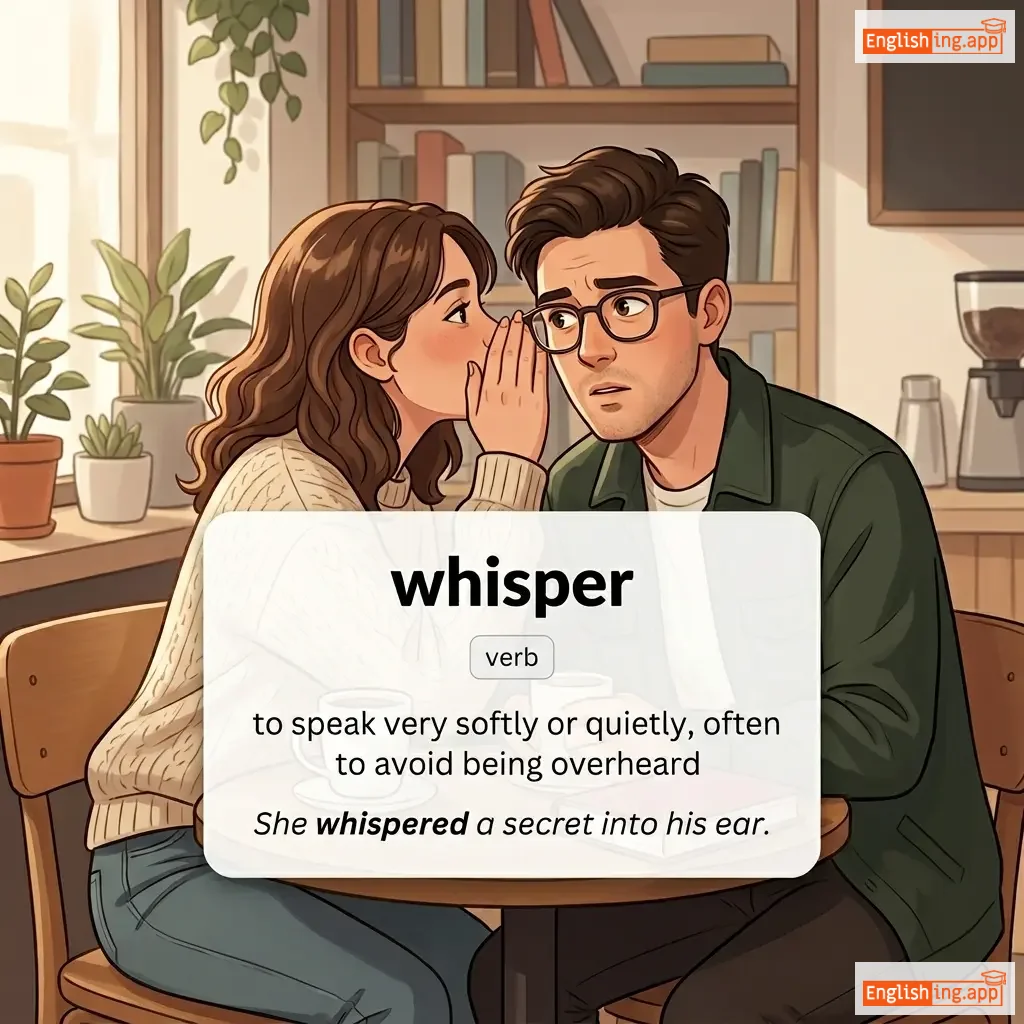
whisper definition card — visual illustration of the meaning
verb
/ˈwɪspər/
susurrar (susurrar)

to speak very softly or quietly, often to avoid being overheard

"She whispered a secret into his ear."

"Ella susurró un secreto en su oído." (Ella susurró un secreto en su oído.)
verb
/wɛt/
afilar/estimular (afilar/estimular)

To sharpen the blade of a tool or to stimulate interest or appetite.

"The smell of food whetted my appetite."

"El olor de la comida aumentó mi apetito." (El olor de la comida aumento mi apetito.)
adverb
/ˈhoʊlli/
totalmente (totalmente)

completely; entirely

"She is wholly devoted to her family."

"Ella está totalmente dedicada a su familia." (Ella esta totalmente dedicada a su familia.)
pronoun
/wɪtʃ/
cuál (cual)

used to ask about one or more items from a defined set

"Which one do you prefer, the red or the blue?"

"¿Cuál prefieres, el rojo o el azul?" (¿Cuál prefieres, el rojo o el azul?)
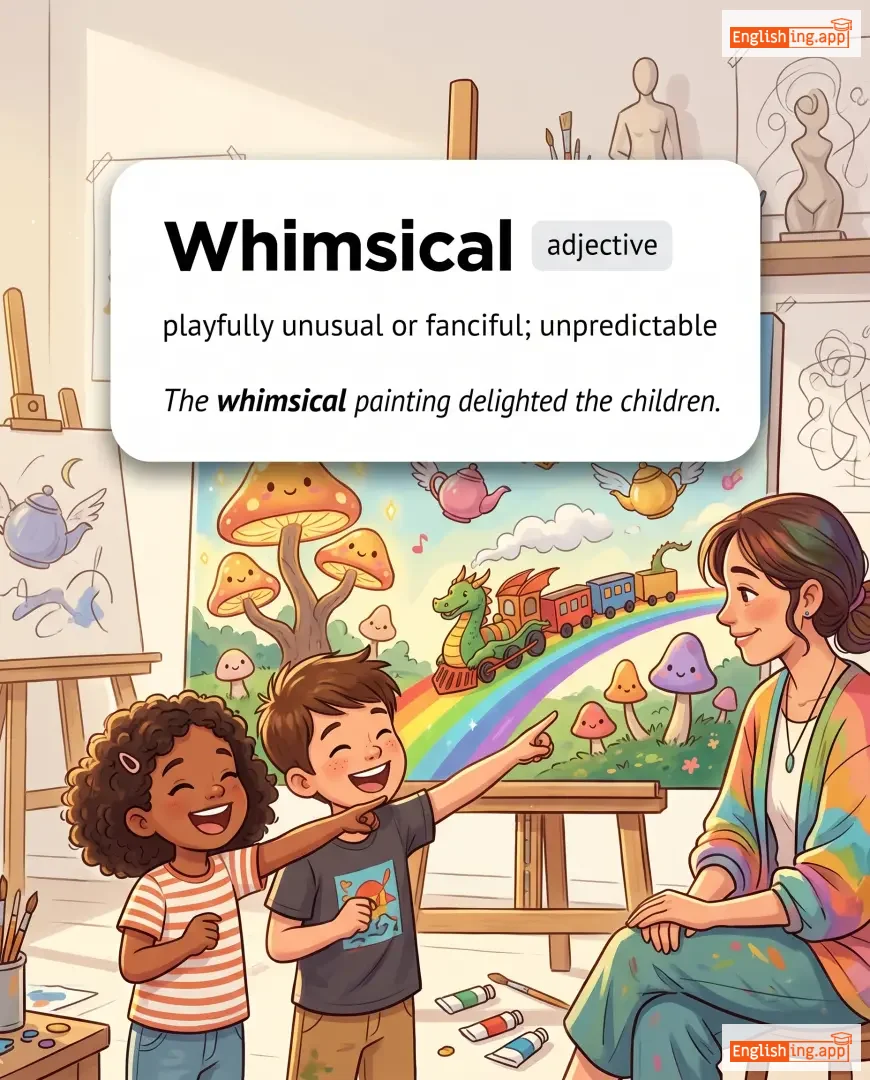
Whimsical definition card — visual illustration of the meaning
adjective
/ˈwɪmzɪkəl/
caprichoso (kaprichoso)

playfully unusual or fanciful; unpredictable

"The whimsical painting delighted the children."

"La pintura caprichosa deleitó a los niños." (La pintura caprichosa deleito a los ninos.)
adverb
/ˌwɛr.əˈpɒn/
inmediatamente después (inmediatamente despues)

Immediately after which; as a result of which.

"He confessed his mistake, whereupon she forgave him."

"Él confesó su error, inmediatamente después ella lo perdonó." (El confeso su error, inmediatamente despues ella lo perdono.)
noun
/ˈwɒʃ.ɪŋ məˌʃiːn/
lavadora (uashing masheen)

a machine for washing clothes and other textiles

"The washing machine broke down and needs repair."

"La lavadora se averió y necesita reparación." (la lavadora se averio y necesita reparacion)
adjective
/ˈwɔːrˌlaɪk/
bélico (beliko)

Having an aggressive or militant nature; inclined to fight or engage in war.

"The tribe was known for its warlike traditions."

"La tribu era conocida por sus tradiciones bélicas." (La tribu era conocida por sus tradiciones belikas.)
noun
/ˈwɔː.tər pɒt/
tarro de agua (tarro de agua)

a container used for storing or carrying water

"The water pot in the kitchen was filled with fresh drinking water."

"El tarro de agua en la cocina estaba lleno de agua potable fresca." (El tarro de agua en la cocina estaba lleno de agua potable fresca.)
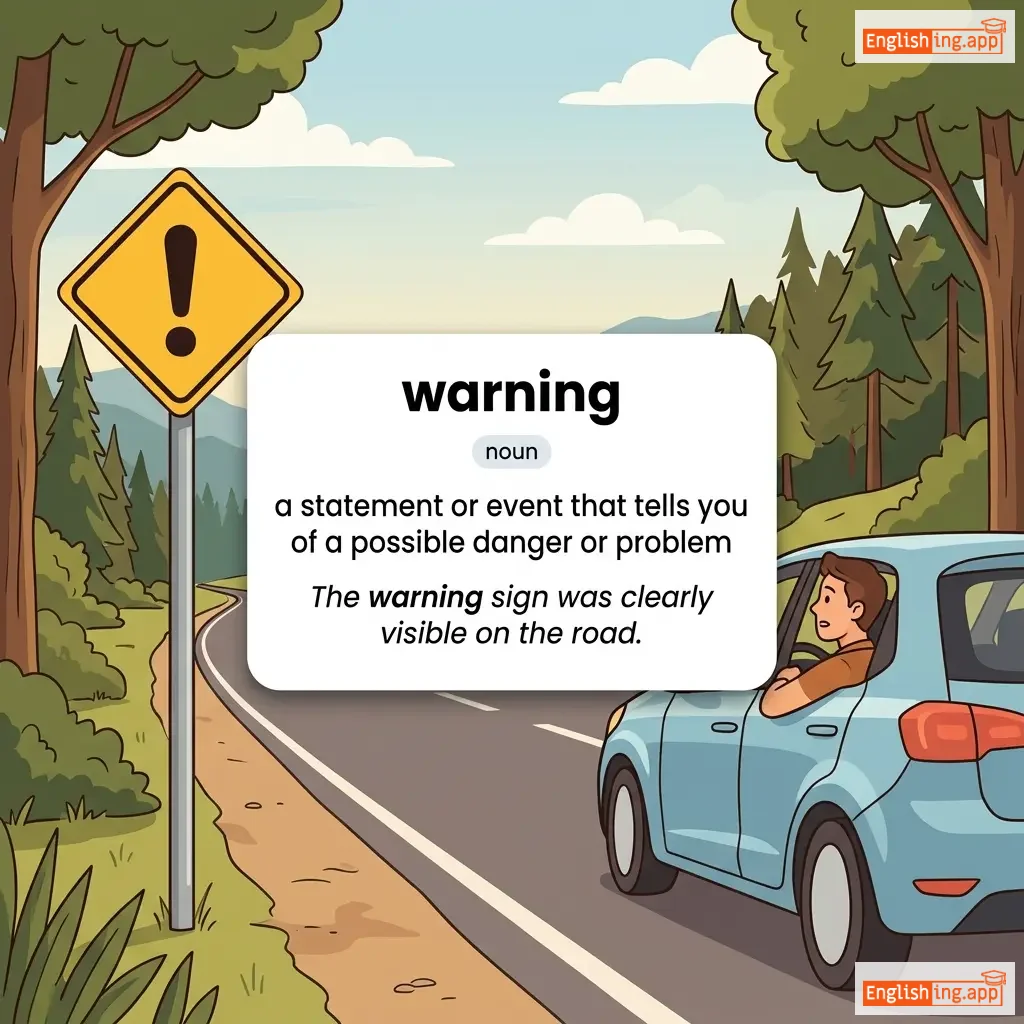
warning definition card — visual illustration of the meaning
noun
/ˈwɔːrnɪŋ/
advertencia (advertencia)

a statement or event that tells you of a possible danger or problem

"The warning sign was clearly visible on the road."

"La señal de advertencia era claramente visible en el camino." (La senal de advertencia era claramente visible en el camino.)
noun
/ˈwɔːtərfɔːl/
cascada (kas-ka-da)

a cascade of water falling from a height, formed when a river or stream flows over a precipice or steep incline

"The magnificent waterfall attracts thousands of tourists every year."

"La magnífica cascada atrae a miles de turistas cada año." (La magnifica cascada atrae a miles de turistas cada ano.)
noun
/wæks ˈkændəl/
vela (vela)

a cylinder of wax with a wick through it that burns to give light

"We lit a wax candle during the power outage."

"Encendimos una vela durante el corte de energía" (Encendimos una vela durante el corte de energía)
noun
/wɛlt/
marca (marca)

A raised mark on the skin, usually from a blow or allergic reaction.

"He had a red welt on his arm after the bee sting."

"Tenía una marca roja en su brazo después de la picadura de la abeja." (Tenia una marka roja en su brazo despues de la picadura de la abeja.)
adjective
/ˈwɛstərn/
occidental (occidental)

relating to or characteristic of the West, especially Europe and the Americas

"She loves western music and culture."

"A ella le encanta la música y la cultura occidental." (A ella le encanta la música y la cultura occidental.)
adjective
/ˈwiːk niːd/
débil (debil)

Lacking determination or courage; easily frightened or yielding.

"The leader was criticized for being weak-kneed in the face of opposition."

"El líder fue criticado por ser débil ante la oposición." (El lider fue criticado por ser debil ante la oposicion.)
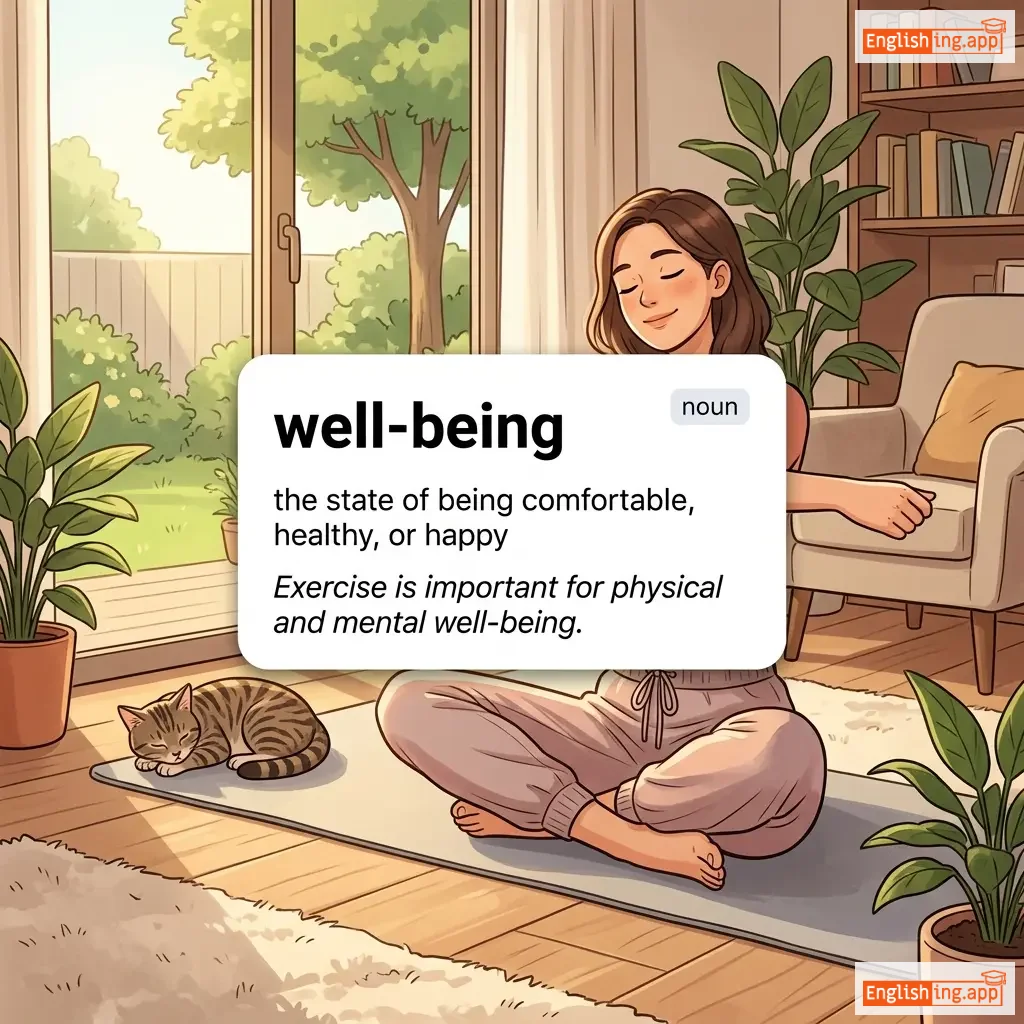
well-being definition card — visual illustration of the meaning
noun
/ˌwelˈbiːɪŋ/
bienestar (bienestar)

the state of being comfortable, healthy, or happy

"Exercise is important for physical and mental well-being."

"El ejercicio es importante para el bienestar físico y mental." (El ejercicio es importante para el bienestar fisico y mental.)
adjective
/ˈwɪndi/
ventoso (ventoso)

characterized by strong wind; also, using too many words and saying little

"It was so windy that the umbrellas flipped inside out."

"Hacía tanto viento que los paraguas se dieron la vuelta." (Hacia tanto viento ke los paraguas se dieron la vuelta.)
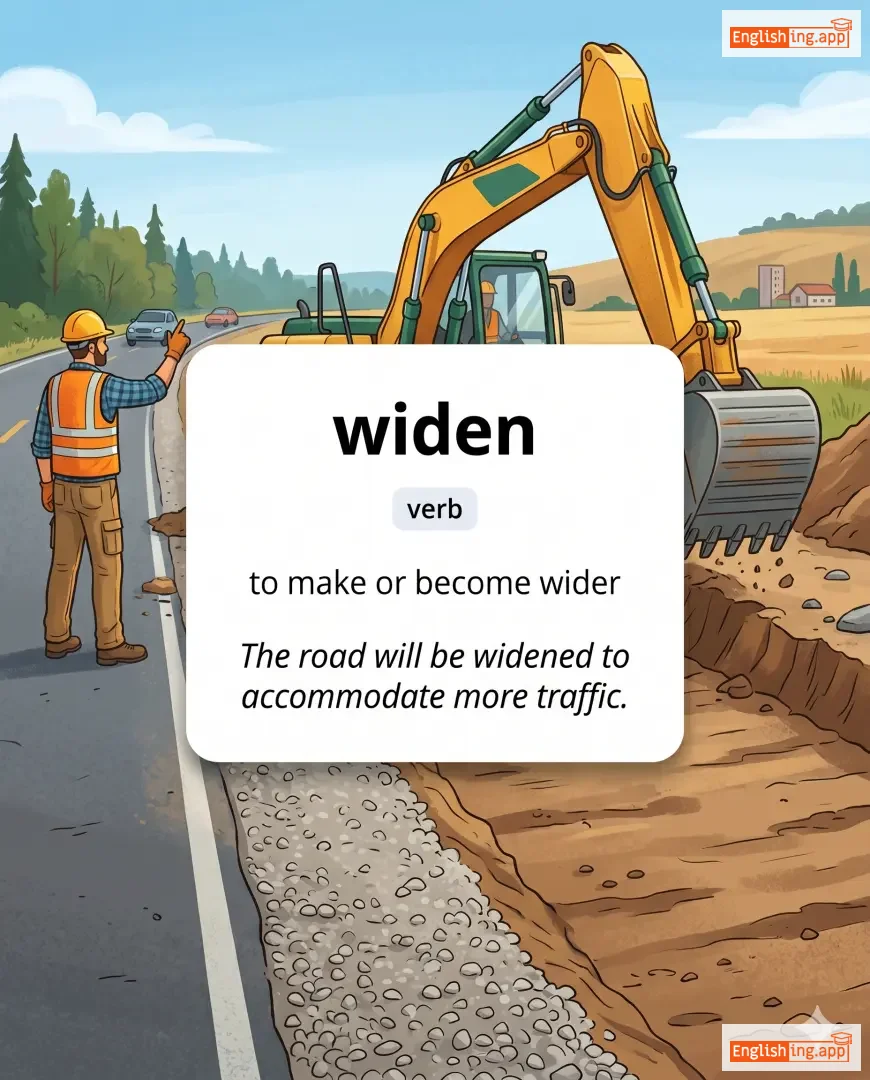
widen definition card — visual illustration of the meaning
verb
/ˈwaɪdən/
ensanchar (ensanchar)

to make or become wider

"The road will be widened to accommodate more traffic."

"La carretera será ensanchada para acomodar más tráfico." (La carretera sera ensanchada para acomodar mas trafico.)
conjunction
/waɪl/
mientras (mientras)

during the time that something is happening

"She was reading while waiting for the bus."

"Ella estaba leyendo mientras esperaba el autobús." (Ella estaba leyendo mientras esperaba el autobús.)
pronoun
/huːˈɛvər/
quien sea (kien sea)

any person who; no matter who

"Whoever wants to join the trip must register today."

"Quienquiera que quiera unirse al viaje debe registrarse hoy." (Kienkiera ke kiera unirse al viaje debe registrarse hoy.)
adjective
/ˈwɪlɪŋ/
dispuesto (dispuesto)

ready, inclined, or eager to do something

"She was willing to help with the project."

"Ella estaba dispuesta a ayudar con el proyecto." (Ella estaba dispuesta a ayudar con el proyecto.)
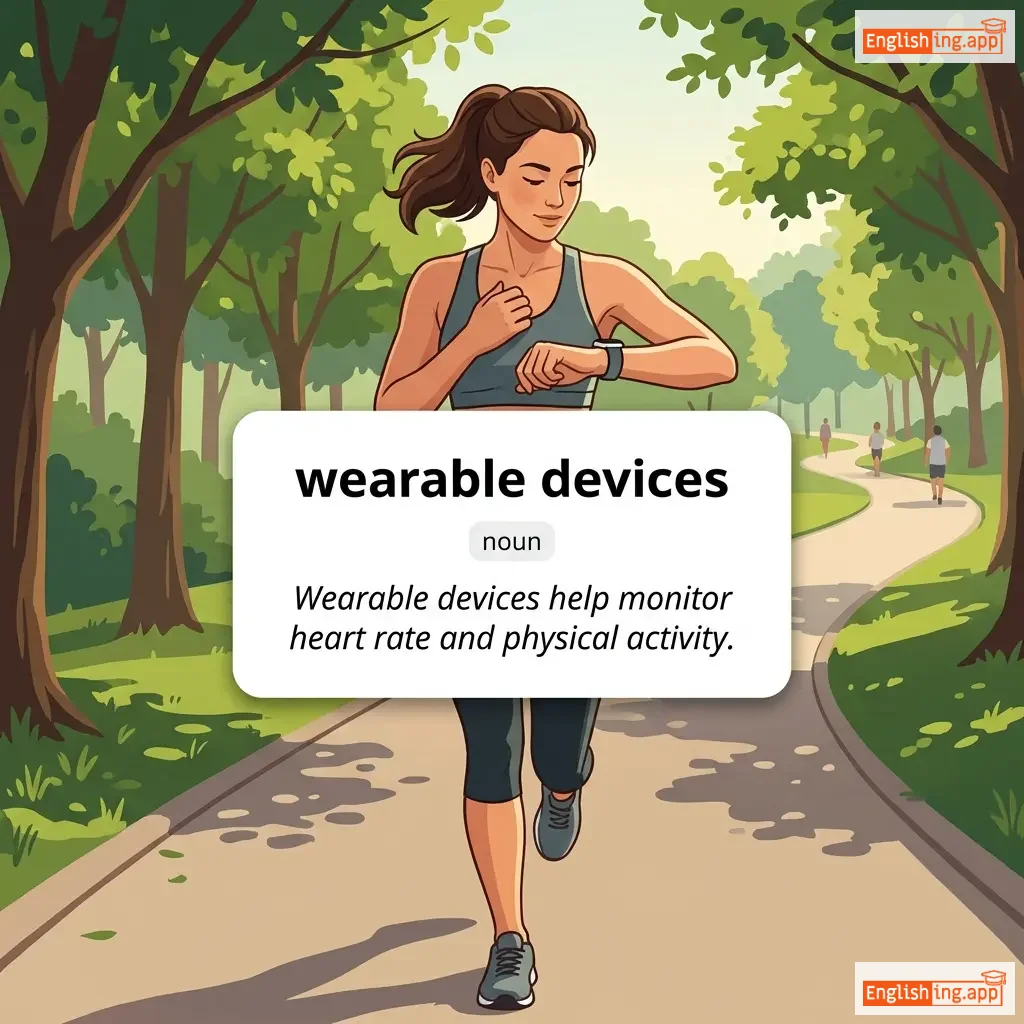
wearable devices definition card — visual illustration of the meaning
noun
ˈweə.rə.bəl dɪˈvaɪ.sɪz
dispositivos ponibles (dispositivos ponibles)

Electronic devices that can be worn on the body, typically incorporating smart technology for monitoring health or providing information.

"Wearable devices help monitor heart rate and physical activity."

"Los dispositivos ponibles ayudan a monitorear el ritmo cardíaco y la actividad física." (Los dispositivos ponibles ayudan a monitorear el ritmo cardiaco y la actividad fisica.)
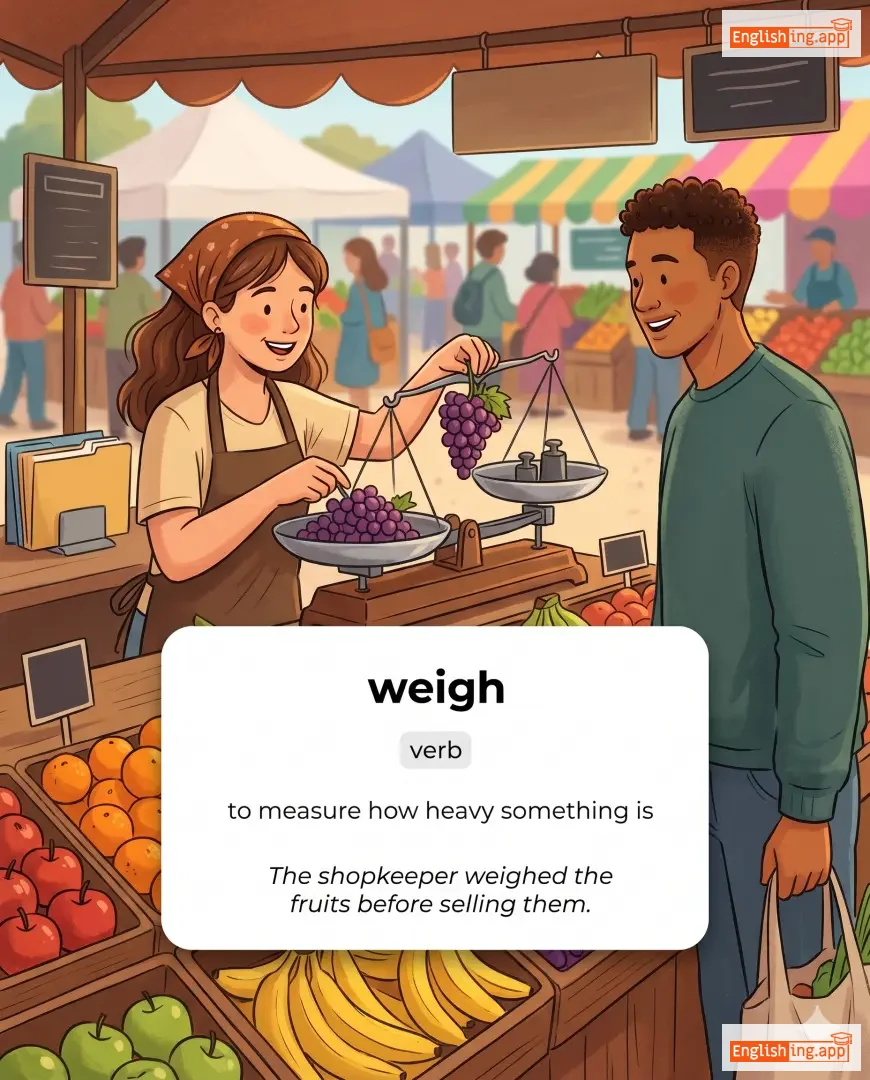
weigh definition card — visual illustration of the meaning
verb
/weɪ/
pesar (pesar)

to measure how heavy something is

"The shopkeeper weighed the fruits before selling them."

"El tendero pesó las frutas antes de venderlas." (El tendero pesó las frutas antes de venderlas.)
verb
/wɪp/
azotar (azotar)

to strike or beat with a flexible instrument such as a rope or cord

"The trainer whipped the horse to make it run faster."

"El entrenador azotó al caballo para hacerlo correr más rápido." (El entrenador azotó al caballo para hacerlo correr más rápido.)
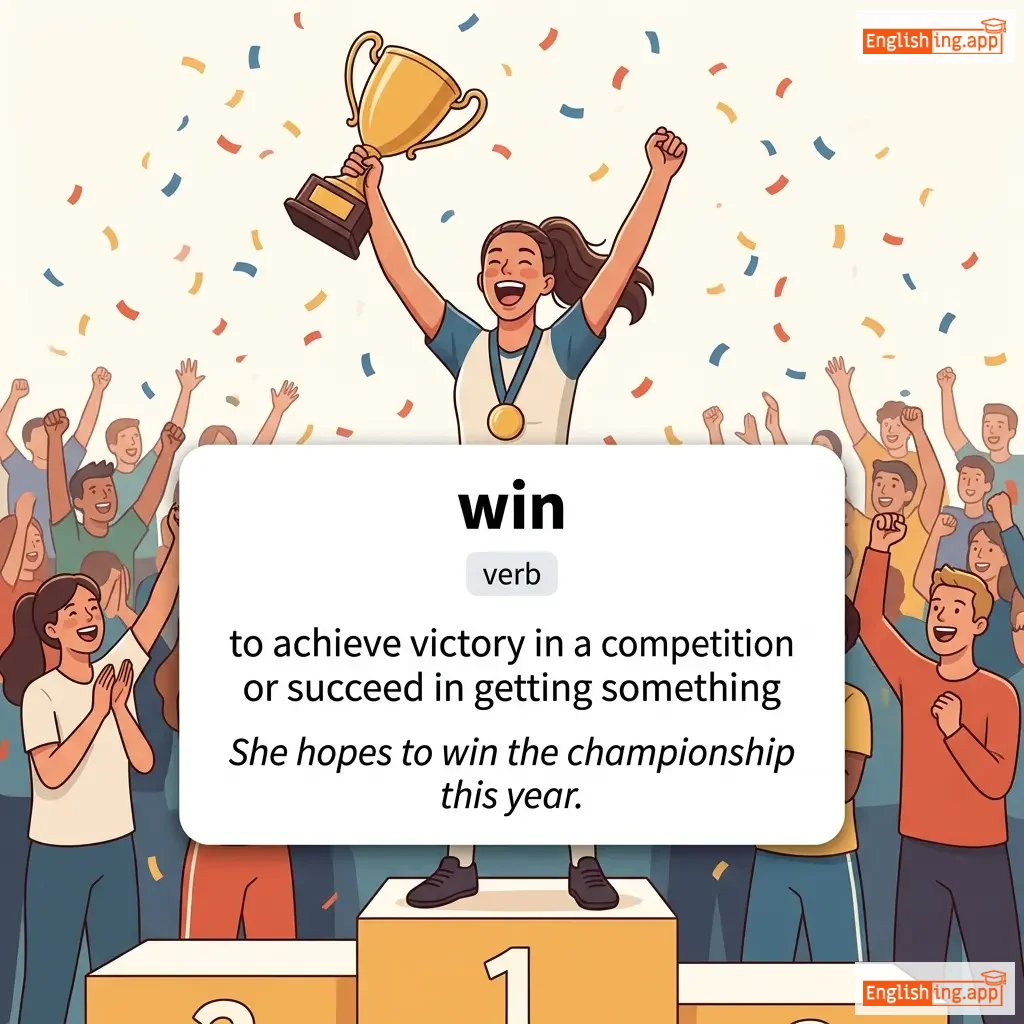
win definition card — visual illustration of the meaning
verb
/wɪn/
ganar (ganar)

to achieve victory in a competition or succeed in getting something

"She hopes to win the championship this year."

"ella espera ganar el campeonato este año." (Ella espera ganar el campeonato este año.)
noun/verb
/ˈwɒrənt/
orden de arresto (orden de arresto)

As a noun: An official authorization or order. As a verb: To justify or make something necessary.

"The judge issued a warrant for his arrest."

"El juez emitió una orden de arresto para él." (El juez emitió una orden de arresto para él.)
noun
/ˈwɔː.tər ˈtʃes.nʌt/
castaña de agua (castana de agua)

aquatic plant with edible white crisp tubers

"Water chestnuts add a nice crunch to stir-fry dishes."

"Las castañas de agua añaden un buen crujido a los platos salteados." (Las castanas de agua anaden un buen crujido a los platos salteados)
whitelisting definition card — visual illustration of the meaning
noun
/ˈwaɪt.lɪst.ɪŋ/
Identificación de usuarios, software o direcciones IP como seguros y confiables (Identificacion de usuarios, software o direcciones IP como seguros y confiables)

Identifying specific users, software, or IP addresses as safe and trusted

"Only verified applications are allowed through whitelisting."

"Solo las aplicaciones verificadas se permiten a través del sistema de lista blanca." (Solo las aplicaciones verificadas se permiten a través del sistema de lista blanca.)
noun
/ˈwɪndbæɡ/
persona habladora (persona habladora)

a person who talks too much, especially in a boring or boastful way

"Everyone avoided the windbag at the party because he never let anyone else speak."

"Todos evitaron al hablador en la fiesta porque nunca dejaba hablar a nadie más." (Todos evitaron al hablador en la fiesta porque nunca dejaba hablar a nadie más.)
verb
/ˈwɪɡəl/
moverse, agitarse (moverse, agitarse)

To move or cause to move with small rapid movements from side to side.

"The baby wiggled happily in her mother's arms."

"El bebé se movía felizmente en los brazos de su madre." (El bebé se movía felizmente en los brazos de su madre.)