Vocabulaires

Découvrez, apprenez et maîtrisez le vocabulaire anglais

verb
/ˈwɪtl/
tailler (tailler)

to carve or shape something by cutting off small pieces; to gradually reduce

"He spent the afternoon whittling a piece of wood into a toy."

"Il a passé l'après-midi à tailler un morceau de bois en jouet." (Il a passé l'après-midi à tailler un morceau de bois en jouet.)
noun
/ˈwɒrənti/
garantie (garanti)

A written guarantee given by a manufacturer or seller promising to repair or replace a product if necessary within a specified period.

"The laptop comes with a two-year warranty."

"L'ordinateur portable vient avec une garantie de deux ans." (L'ordinateur portable vient avec une garantie de deux ans.)
adjective
/hoʊl/
entier (entier)

all of something; complete or entire

"He ate the whole cake by himself."

"Il a mangé le gâteau entier tout seul." (Il a mangé le gâteau entier tout seul.)
adjective
/ˌhoʊlˈhɑːrtɪd/
de tout cœur (de tout coeur)

showing complete sincerity and commitment; fully enthusiastic

"She gave her wholehearted support to the project."

"Elle a donné son soutien de tout cœur au projet." (Elle a donne son soutien de tout coeur au projet.)
verb
/wɔːrp/
déformer (déformer)

To twist or bend out of shape, often due to heat or moisture.

"The wooden door warped in the summer heat."

"La porte en bois s'est déformée sous la chaleur de l'été." (La porte en bois s'est déformée sous la chaleur de l'été.)
adjective
/waɪz/
sage (sage)

having or showing experience, knowledge, and good judgment

"It was wise of him to save money for the future."

"Il a été sage de sa part d'économiser de l'argent pour l'avenir." (Il a été sage de sa part d'économiser de l'argent pour l'avenir.)
noun
/ˈwɒrən/
un réseau de terriers (warren)

A network of interconnected rabbit burrows; also used metaphorically for a densely populated building or district.

"The old part of the city is a warren of narrow streets."

"La vieille partie de la ville est un réseau de rues étroites." (La vieille partie de la ville est un réseau de rues étroites.)
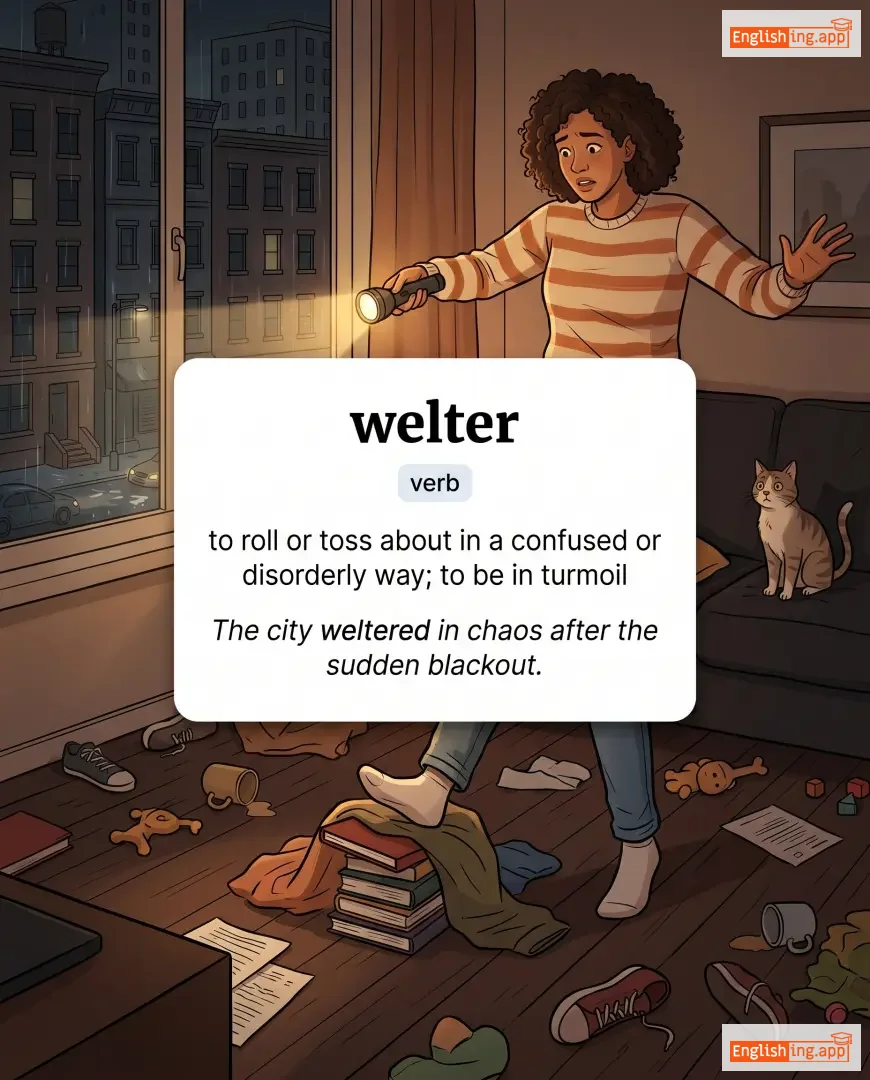
welter definition card — visual illustration of the meaning
verb
/ˈwɛltər/
tourner dans le chaos (tourner dans le chaos)

to roll or toss about in a confused or disorderly way; to be in turmoil

"The city weltered in chaos after the sudden blackout."

"La ville a été plongée dans le chaos après la panne soudaine." (La ville a été plongée dans le chaos après la panne soudaine.)
noun
/ˈwiːltʃeər/
fauteuil roulant (fauteuil roulant)

a chair with wheels, used by people who cannot walk easily or at all

"The hospital provided a wheelchair for the injured patient."

"L'hôpital a fourni un fauteuil roulant pour le patient blessé." (L'hôpital a fourni un fauteuil roulant pour le patient blessé.)
noun
/ˈwɪtʃ.krɑːft/
sorcellerie (sorcellerie)

the practice of magical skills, spells, and abilities

"In old times, many people believed in witchcraft."

"Dans les temps anciens, de nombreuses personnes croyaient à la sorcellerie." (Dans les temps anciens, de nombreuses personnes croyaient a la sorcellerie.)
adjective
/ˌwel bɪˈheɪvd/
bien élevé (bien eleve)

conducting oneself in a proper and polite manner; showing good manners

"The children were well-behaved during the ceremony."

"Les enfants se comportaient bien pendant la cérémonie." (Les enfants se comportaient bien pendant la ceremony.)
adverb
/wɛərˈbaɪ/
par lequel (par lequel)

by which; because of which

"The company agreed to a contract whereby it would pay the penalty."

"L'entreprise a accepté un contrat par lequel elle paierait la pénalité." (L'entreprise a accepté un contrat par lequel elle paierait la pénalité.)
noun
/ˈwɪntər/
hiver (hiver)

the coldest season of the year, typically from December to February in the Northern Hemisphere

"Winter in the north can be very harsh with heavy snowfall."

"L'hiver dans le nord peut être très rude avec de fortes chutes de neige." (L'hiver dans le nord peut être très rude avec de fortes chutes de neige.)
noun
/ˈwɛlˌduːər/
bienfaiteur (bienfaiteur)

A person who does good deeds; a benefactor.

"The community praised the well-doer for his charity."

"La communauté a félicité le bienfaiteur pour sa charité." (La communauté a félicité le bienfaiteur pour sa charité.)
adverb, noun
/ˈwɛə.wɪð/
moyens (moyens)

With which; the means or resources needed for something.

"He lacked the money wherewith to buy a new house."

"Il n'avait pas l'argent avec lequel acheter une nouvelle maison." (Il n'avait pas l'argent avec lequel acheter une nouvelle maison.)
adjective
/ˌwelˈnoʊn/
célèbre (celebres)

known by many people; famous or recognized

"He is a well-known actor in his country."

"Il est un acteur célèbre dans son pays." (Il est un acteur célèbre dans son pays.)
noun
/wɪm/
caprice (caprice)

a sudden or unpredictable idea, desire, or decision

"She bought the dress on a whim."

"Elle a acheté la robe sur un caprice." (Elle a acheté la robe sur un caprice.)
adverb
/waɪ/
pourquoi (pourquoi)

used to ask or talk about the reason for something

"Why did you leave so early?"

"Pourquoi es-tu parti si tôt?" (Pourquoi es-tu parti si tôt?)
noun
/weɪl/
baleine (ba-len)

a very large marine mammal that lives in the ocean

"We saw a huge whale swimming near the boat."

"Nous avons vu une énorme baleine nager près du bateau." (Nous avons vu une énorme baleine nager près du bateau.)
conjunction
/wɛərˈæz/
alors que (alors que)

used to introduce a contrast or comparison between two facts

"She prefers tea, whereas he likes coffee."

"Elle préfère le thé, alors que lui préfère le café." (Elle préfère le thé, alors que lui préfère le café.)
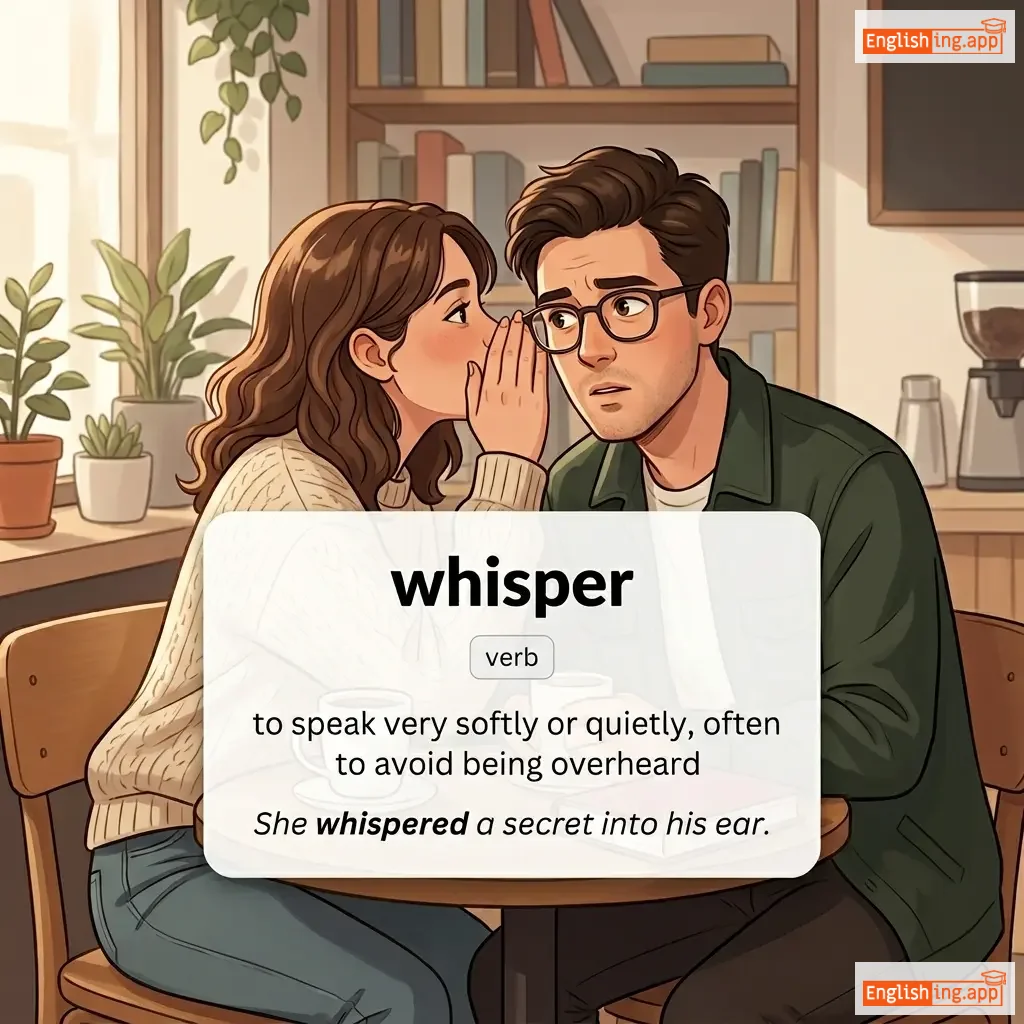
whisper definition card — visual illustration of the meaning
verb
/ˈwɪspər/
chuchoter (chuchoter)

to speak very softly or quietly, often to avoid being overheard

"She whispered a secret into his ear."

"Elle a chuchoté un secret à son oreille." (Elle a chuchoté un secret à son oreille.)
verb
/wɛt/
aiguiser/éveiller (aiguiser/eveiller)

To sharpen the blade of a tool or to stimulate interest or appetite.

"The smell of food whetted my appetite."

"L'odeur de la nourriture a réveillé mon appétit." (L'odeur de la nourriture a reveille mon appetit.)
adverb
/ˈhoʊlli/
entièrement (entierement)

completely; entirely

"She is wholly devoted to her family."

"Elle est entièrement dévouée à sa famille." (Elle est entierement devouee a sa famille.)
pronoun
/wɪtʃ/
lequel (lequel)

used to ask about one or more items from a defined set

"Which one do you prefer, the red or the blue?"

"Lequel préfères-tu, le rouge ou le bleu ?" (Lequel préfères-tu, le rouge ou le bleu ?)
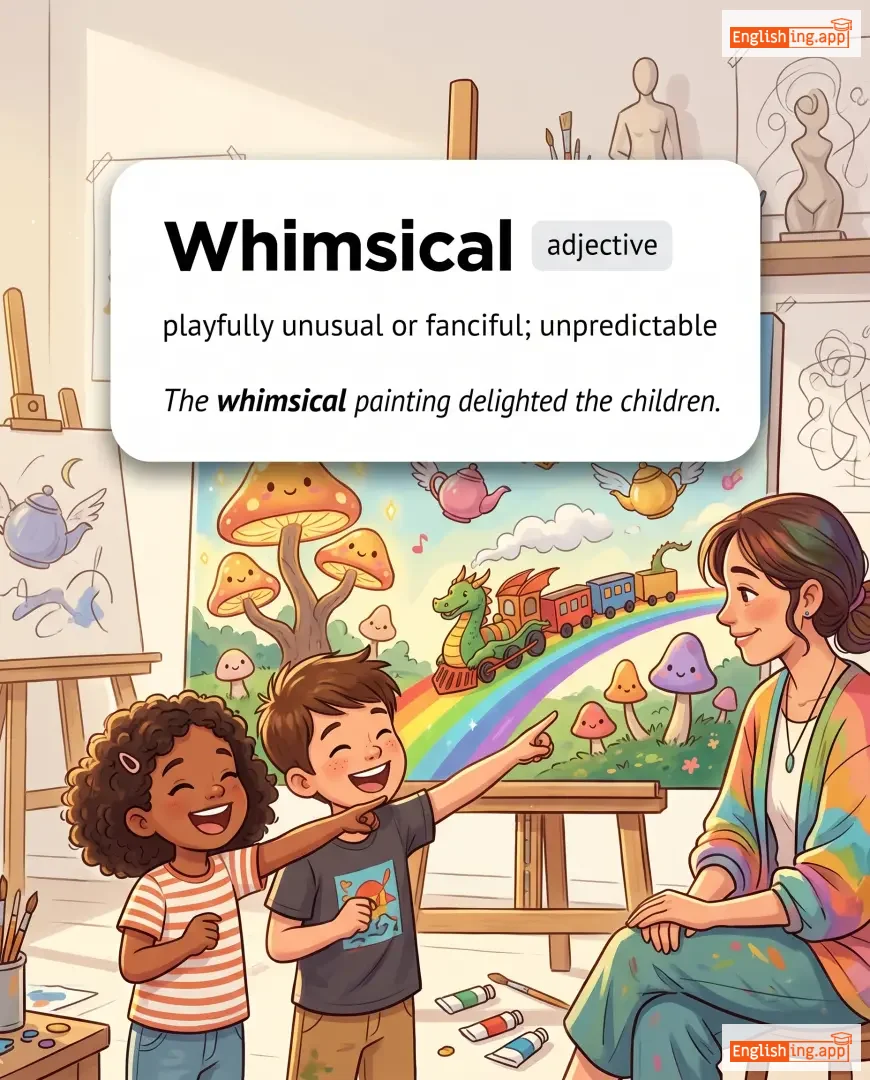
Whimsical definition card — visual illustration of the meaning
adjective
/ˈwɪmzɪkəl/
fantaisiste (fantaisiste)

playfully unusual or fanciful; unpredictable

"The whimsical painting delighted the children."

"La peinture fantaisiste a ravi les enfants." (La peinture fantaisiste a ravi les enfants.)
adverb
/ˌwɛr.əˈpɒn/
immédiatement après (immediatement apres)

Immediately after which; as a result of which.

"He confessed his mistake, whereupon she forgave him."

"Il a avoué son erreur, immédiatement après elle lui a pardonné." (Il a avoue son erreur, immediatement apres elle lui a pardonne.)
noun
/ˈwɒʃ.ɪŋ məˌʃiːn/
lave-linge (lavlanj)

a machine for washing clothes and other textiles

"The washing machine broke down and needs repair."

"Le lave-linge est tombé en panne et a besoin de réparation." (Le lave linge est tombe en panne et a besoin de reparation)
adjective
/ˈwɔːrˌlaɪk/
martial (martial)

Having an aggressive or militant nature; inclined to fight or engage in war.

"The tribe was known for its warlike traditions."

"La tribu était connue pour ses traditions martiales." (La tribu était connue pour ses traditions martiales.)
noun
/ˈwɔː.tər pɒt/
pot d'eau (pot d'eau)

a container used for storing or carrying water

"The water pot in the kitchen was filled with fresh drinking water."

"Le pot d'eau dans la cuisine était rempli d'eau potable fraîche." (Le pot d'eau dans la cuisine était rempli d'eau potable fraîche.)
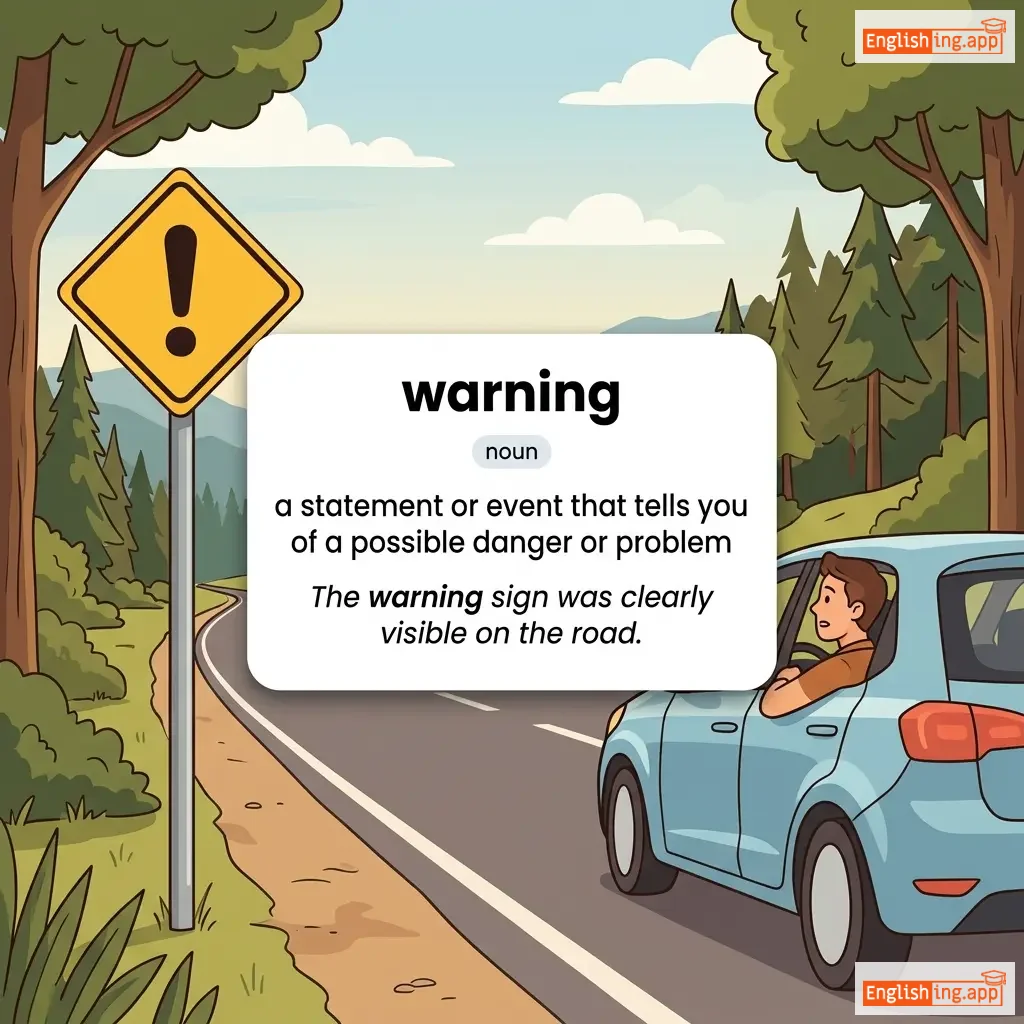
warning definition card — visual illustration of the meaning
noun
/ˈwɔːrnɪŋ/
avertissement (avertissement)

a statement or event that tells you of a possible danger or problem

"The warning sign was clearly visible on the road."

"Le panneau d'avertissement était clairement visible sur la route." (Le panneau d'avertissement etait clairement visible sur la route.)
noun
/ˈwɔːtərfɔːl/
cascade (kaskad)

a cascade of water falling from a height, formed when a river or stream flows over a precipice or steep incline

"The magnificent waterfall attracts thousands of tourists every year."

"La magnifique cascade attire des milliers de touristes chaque année." (La magnifique cascade attire des milliers de touristes chaque annee)
noun
/wæks ˈkændəl/
bougie (bougie)

a cylinder of wax with a wick through it that burns to give light

"We lit a wax candle during the power outage."

"Nous avons allumé une bougie pendant la panne de courant" (Nous avons allumé une bougie pendant la panne de courant)
noun
/wɛlt/
marque (marque)

A raised mark on the skin, usually from a blow or allergic reaction.

"He had a red welt on his arm after the bee sting."

"Il avait une marque rouge sur son bras après la piqûre d'abeille." (Il avait une marque rouge sur son bras apres la piqure d'abeille.)
adjective
/ˈwɛstərn/
occidental (occidental)

relating to or characteristic of the West, especially Europe and the Americas

"She loves western music and culture."

"Elle adore la musique et la culture occidentales." (Elle adore la musique et la culture occidentales.)
adjective
/ˈwiːk niːd/
faible (faible)

Lacking determination or courage; easily frightened or yielding.

"The leader was criticized for being weak-kneed in the face of opposition."

"Le leader a été critiqué pour être faible face à l'opposition." (Le leader a ete critique pour etre faible face a l'opposition.)
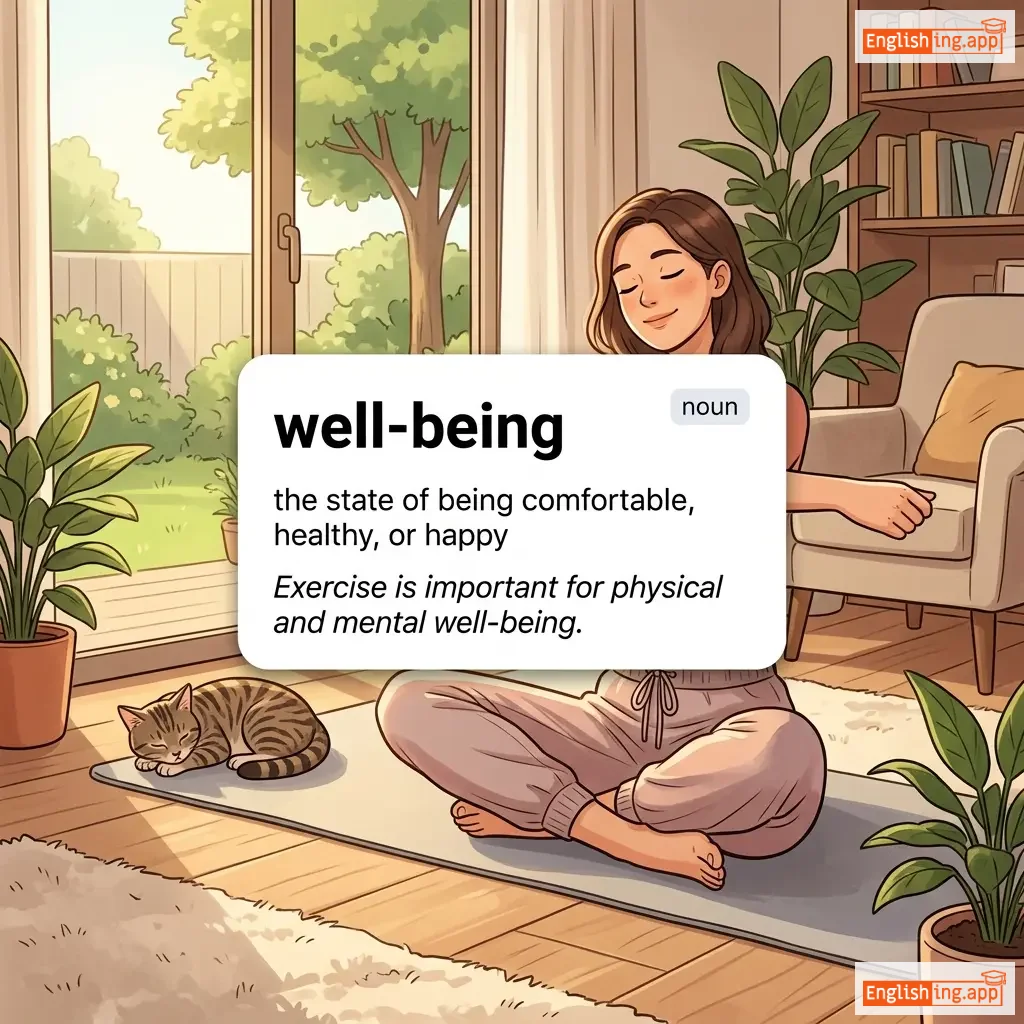
well-being definition card — visual illustration of the meaning
noun
/ˌwelˈbiːɪŋ/
bien-être (bien-etre)

the state of being comfortable, healthy, or happy

"Exercise is important for physical and mental well-being."

"L'exercice est important pour le bien-être physique et mental." (L'exercice est important pour le bien-etre physique et mental.)
adjective
/ˈwɪndi/
venteux (venteu)

characterized by strong wind; also, using too many words and saying little

"It was so windy that the umbrellas flipped inside out."

"Il faisait tellement de vent que les parapluies se sont retournés." (Il feze tellement de van ke le paraplui se son retourné.)
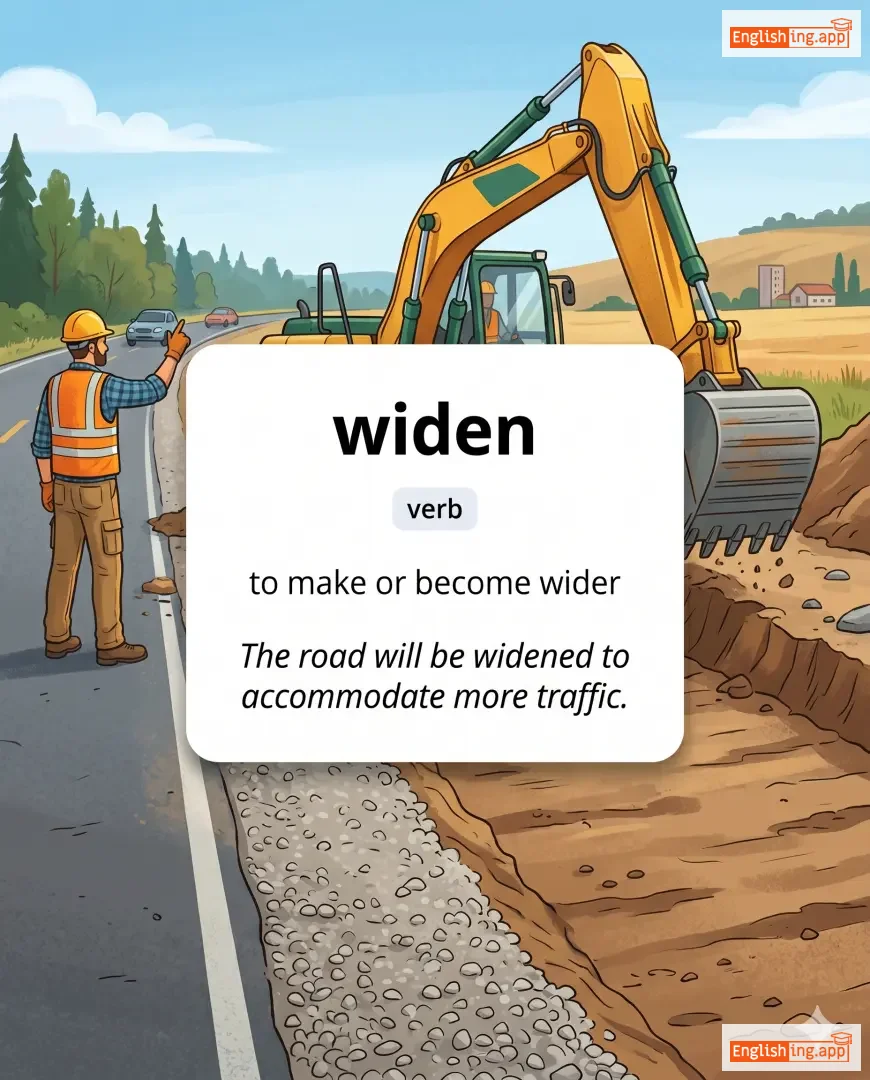
widen definition card — visual illustration of the meaning
verb
/ˈwaɪdən/
élargir (elargir)

to make or become wider

"The road will be widened to accommodate more traffic."

"La route sera élargie pour accueillir plus de trafic." (La route sera élargie pour accueillir plus de trafic.)
conjunction
/waɪl/
pendant que (pendant que)

during the time that something is happening

"She was reading while waiting for the bus."

"Elle lisait pendant qu'elle attendait le bus." (Elle lisait pendant qu'elle attendait le bus.)
pronoun
/huːˈɛvər/
qui que ce soit (ki ke soah)

any person who; no matter who

"Whoever wants to join the trip must register today."

"Quiconque souhaite rejoindre le voyage doit s'inscrire aujourd'hui." (Kikoank souait rejoindre le voyage doit sincrire ojourdhui.)
adjective
/ˈwɪlɪŋ/
disposé (dispose)

ready, inclined, or eager to do something

"She was willing to help with the project."

"Elle était disposée à aider avec le projet." (Elle était disposée à aider avec le projet.)
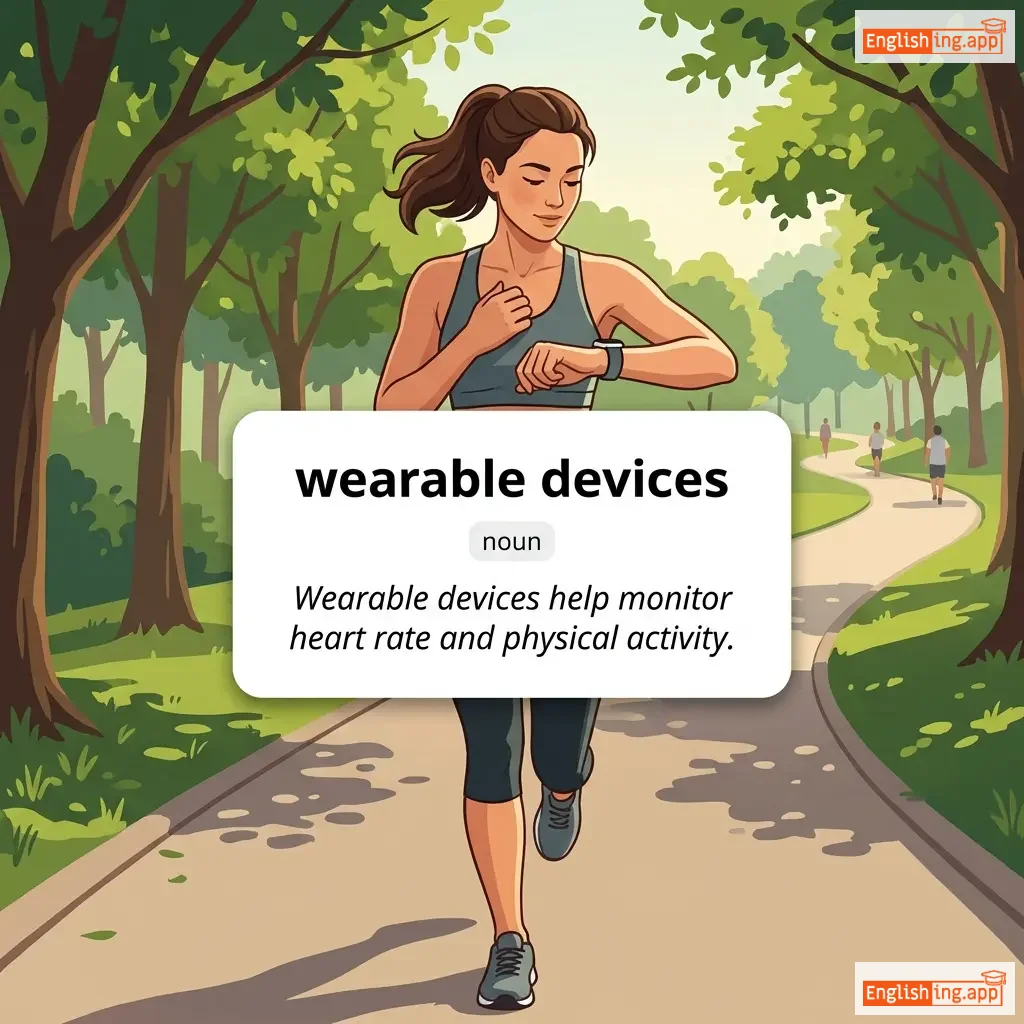
wearable devices definition card — visual illustration of the meaning
noun
ˈweə.rə.bəl dɪˈvaɪ.sɪz
dispositifs portables (dispositifs portables)

Electronic devices that can be worn on the body, typically incorporating smart technology for monitoring health or providing information.

"Wearable devices help monitor heart rate and physical activity."

"Les dispositifs portables aident à surveiller le rythme cardiaque et l'activité physique." (Les dispositifs portables aident a surveiller le rythme cardiaque et l'activite physique.)
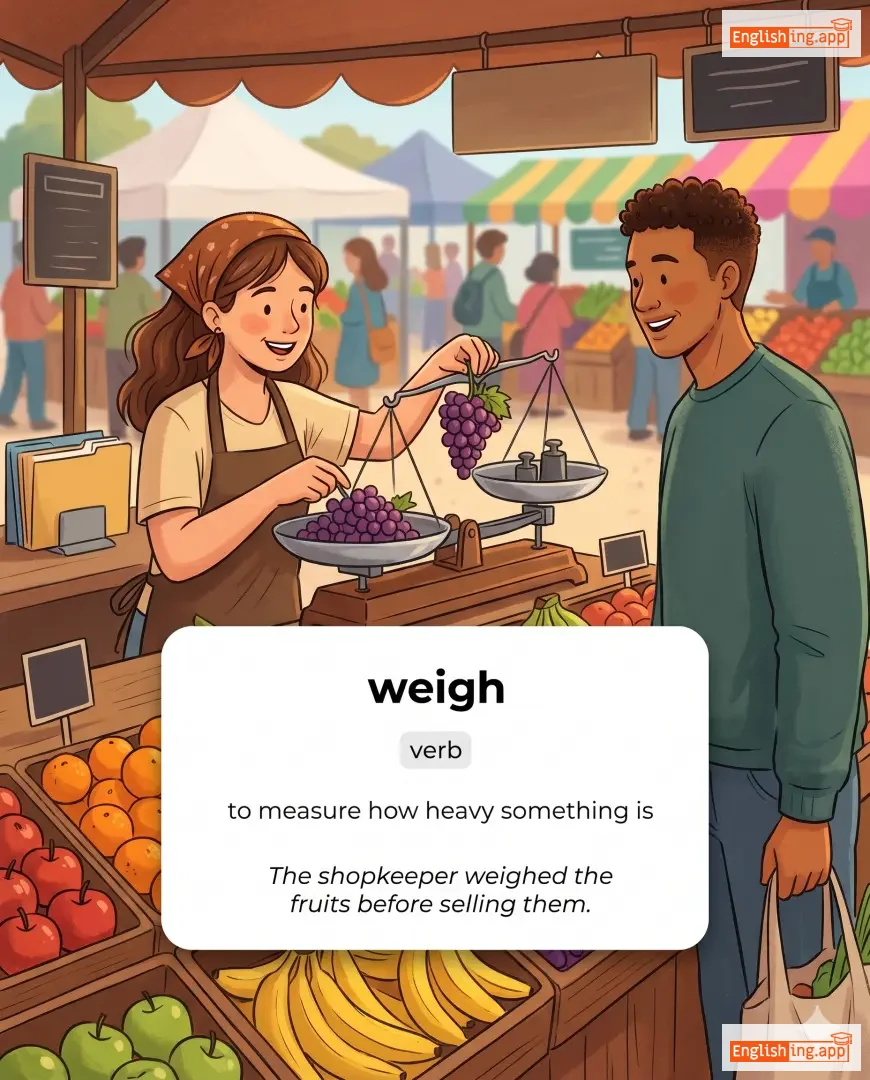
weigh definition card — visual illustration of the meaning
verb
/weɪ/
peser (peser)

to measure how heavy something is

"The shopkeeper weighed the fruits before selling them."

"Le commerçant a pesé les fruits avant de les vendre." (Le commerçant a pesé les fruits avant de les vendre.)
verb
/wɪp/
fouetter (fouetter)

to strike or beat with a flexible instrument such as a rope or cord

"The trainer whipped the horse to make it run faster."

"L'entraîneur a fouetté le cheval pour le faire courir plus vite." (L'entraîneur a fouetté le cheval pour le faire courir plus vite.)
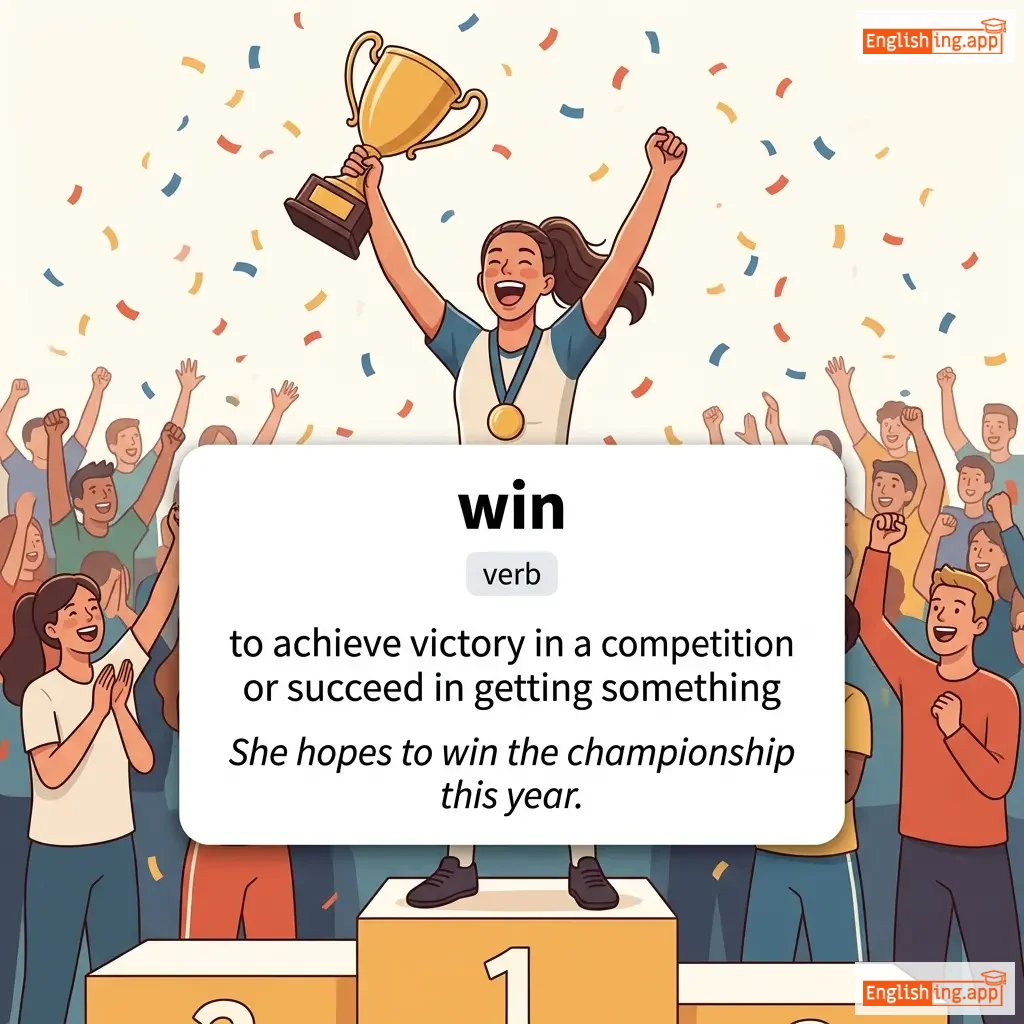
win definition card — visual illustration of the meaning
verb
/wɪn/
gagner (gagner)

to achieve victory in a competition or succeed in getting something

"She hopes to win the championship this year."

"elle espère gagner le championnat cette année." (Elle espère gagner le championnat cette année.)
noun/verb
/ˈwɒrənt/
mandat (mandat)

As a noun: An official authorization or order. As a verb: To justify or make something necessary.

"The judge issued a warrant for his arrest."

"Le juge a émis un mandat pour son arrestation." (Le juge a émis un mandat pour son arrestation.)
noun
/ˈwɔː.tər ˈtʃes.nʌt/
châtaigne d'eau (chataigne d'eau)

aquatic plant with edible white crisp tubers

"Water chestnuts add a nice crunch to stir-fry dishes."

"Les châtaignes d'eau ajoutent un croquant agréable aux plats sautés." (Les chataignes d'eau ajoutent un croquant agréable aux plats sautés)
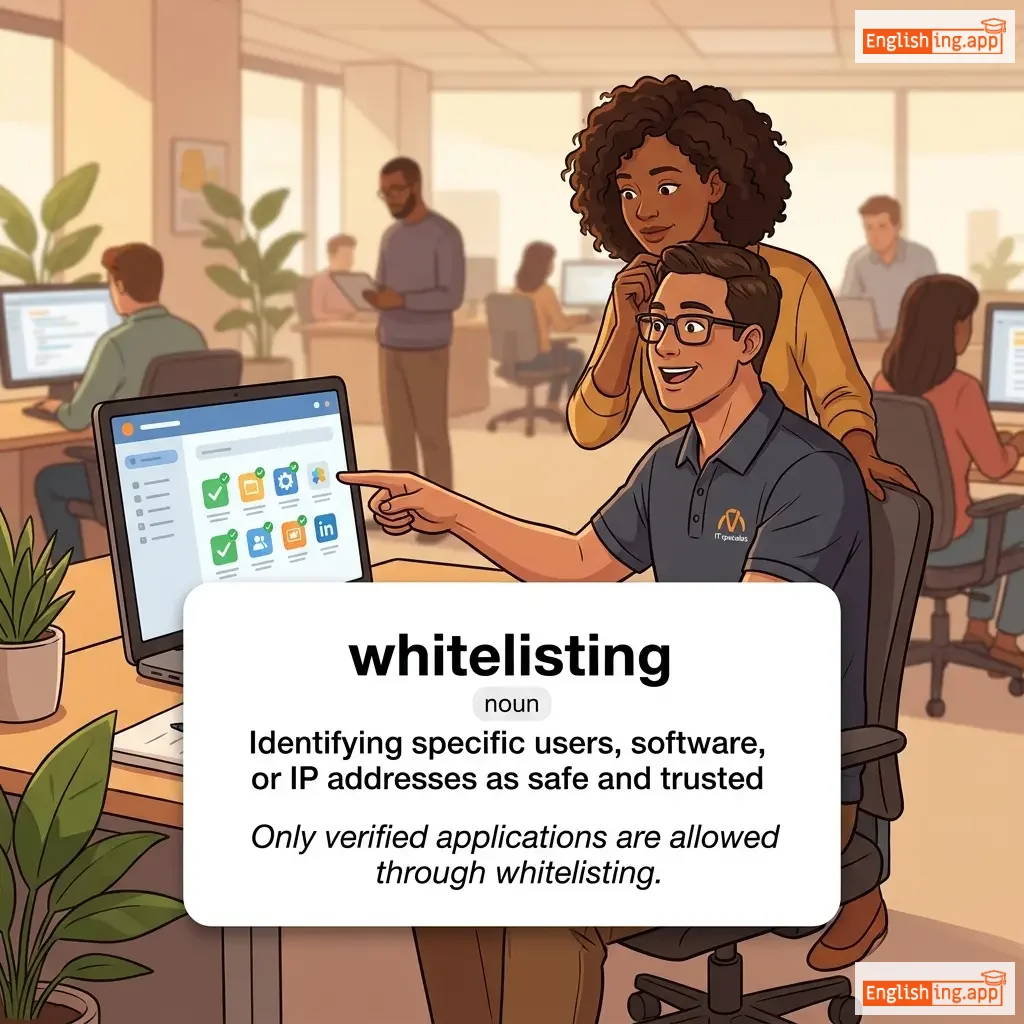
whitelisting definition card — visual illustration of the meaning
noun
/ˈwaɪt.lɪst.ɪŋ/
Identification des utilisateurs, logiciels ou adresses IP comme sûrs et fiables (Identification des utilisateurs, logiciels ou adresses IP comme sures et fiables)

Identifying specific users, software, or IP addresses as safe and trusted

"Only verified applications are allowed through whitelisting."

"Seules les applications vérifiées sont autorisées via la liste blanche." (Seules les applications vérifiées sont autorisées via la liste blanche.)
noun
/ˈwɪndbæɡ/
bavard (bavard)

a person who talks too much, especially in a boring or boastful way

"Everyone avoided the windbag at the party because he never let anyone else speak."

"Tout le monde a évité le bavard à la fête parce qu'il ne laissait jamais les autres parler." (Tout le monde a évité le bavard à la fête parce qu'il ne laissait jamais les autres parler.)
verb
/ˈwɪɡəl/
gigoter, bouger (gigoter, bouger)

To move or cause to move with small rapid movements from side to side.

"The baby wiggled happily in her mother's arms."

"Le bébé bougeait joyeusement dans les bras de sa mère." (Le bébé bougeait joyeusement dans les bras de sa mère.)