Vocabulaires

Découvrez, apprenez et maîtrisez le vocabulaire anglais

adjective
/wiːk/
faible (faible)

lacking physical strength or energy

"She felt weak after the long run."

"Elle se sentait faible après la longue course." (Elle se sentait faible apres la longue course.)
conjunction
/wɛərˈæz/
alors que (alors que)

used to introduce a contrast or comparison between two facts

"She prefers tea, whereas he likes coffee."

"Elle préfère le thé, alors que lui préfère le café." (Elle préfère le thé, alors que lui préfère le café.)
adverb
/wɛnˈɛvər/
quand cela arrive (quand cela arrive)

at any time, or whenever it happens

"You can call me whenever you want."

"Tu peux m'appeler quand tu veux." (Tu peux m'appeler quand tu veux.)
adverb
/ˈwɪmzɪkli/
de manière capricieuse (wimzikli)

In a playful, fanciful, or capricious manner; with sudden changes of mind

"She decorated her room whimsically with colorful balloons."

"Elle a décoré sa chambre de manière fantaisiste avec des ballons colorés." (Elle a decore sa chambre de maniere fantaisiste avec des ballons colores.)
adverb
/wɛərˈbaɪ/
par lequel (par lequel)

by which; because of which

"The company agreed to a contract whereby it would pay the penalty."

"L'entreprise a accepté un contrat par lequel elle paierait la pénalité." (L'entreprise a accepté un contrat par lequel elle paierait la pénalité.)
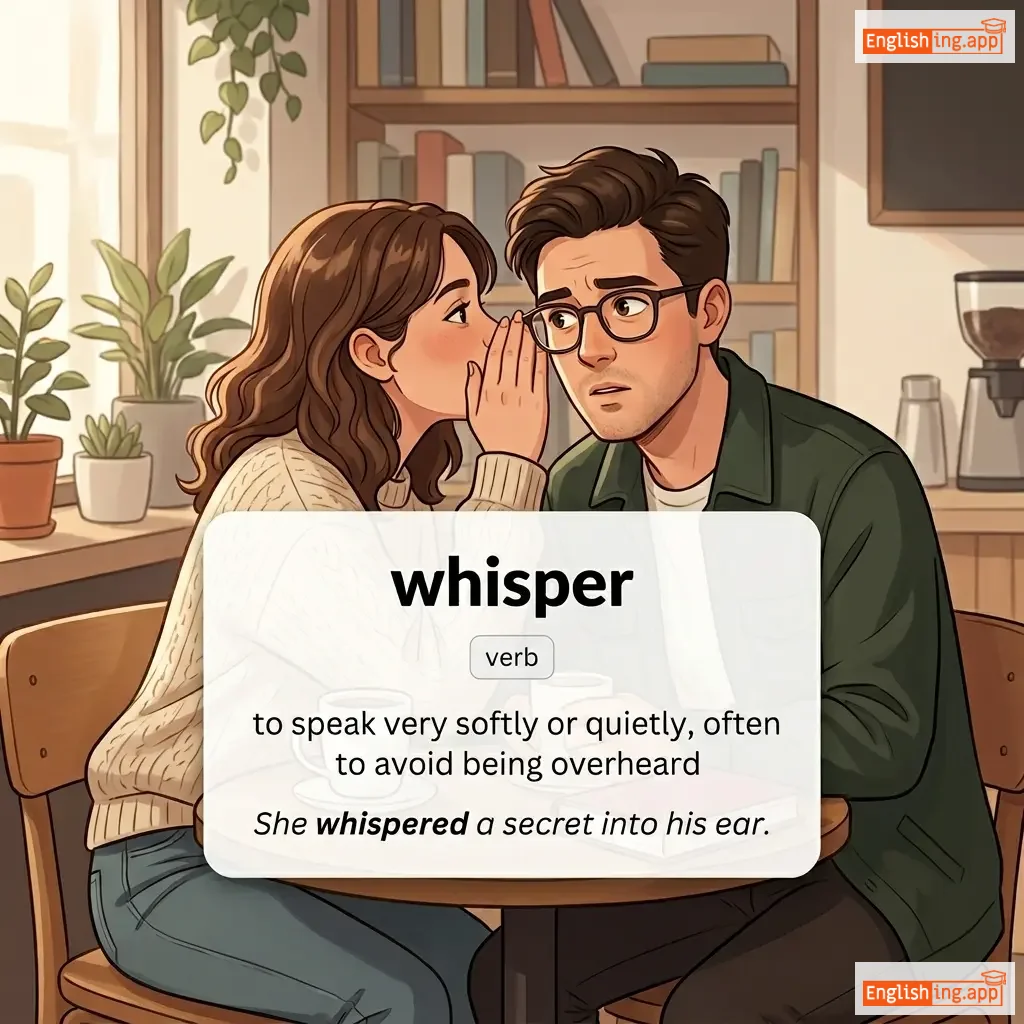
whisper definition card — visual illustration of the meaning
verb
/ˈwɪspər/
chuchoter (chuchoter)

to speak very softly or quietly, often to avoid being overheard

"She whispered a secret into his ear."

"Elle a chuchoté un secret à son oreille." (Elle a chuchoté un secret à son oreille.)
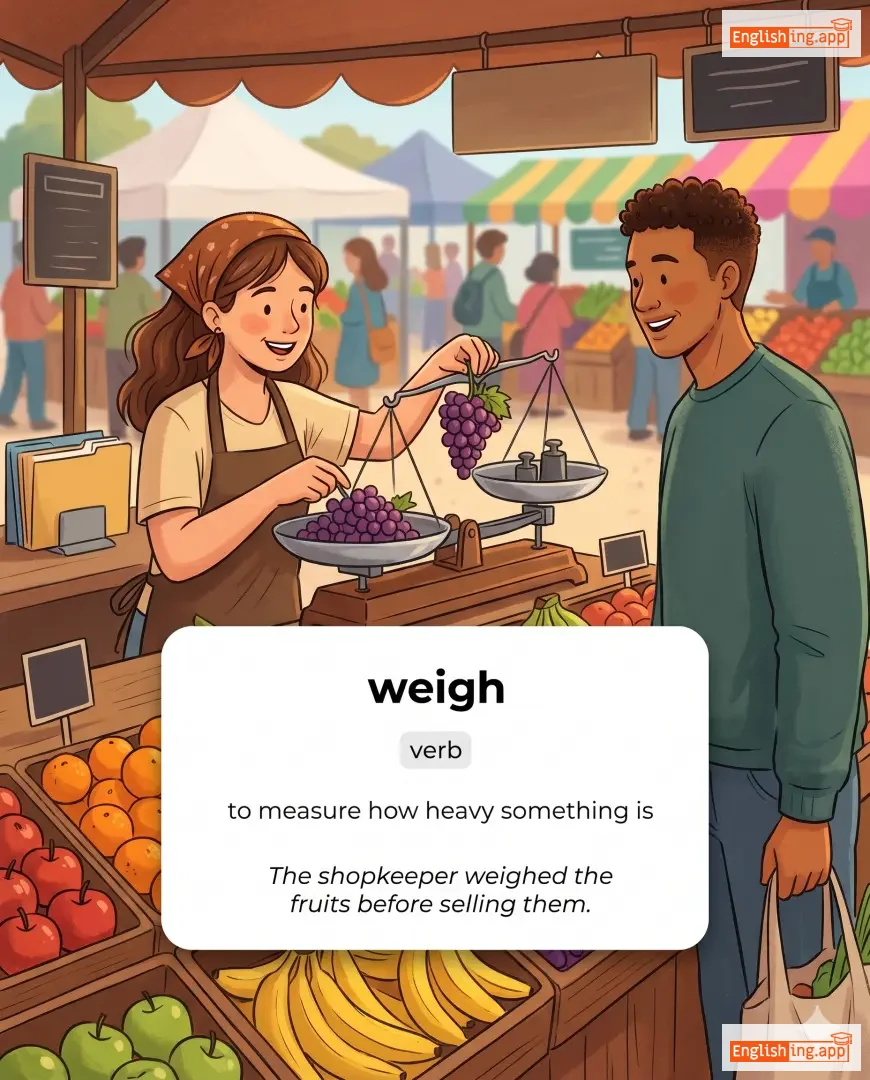
weigh definition card — visual illustration of the meaning
verb
/weɪ/
peser (peser)

to measure how heavy something is

"The shopkeeper weighed the fruits before selling them."

"Le commerçant a pesé les fruits avant de les vendre." (Le commerçant a pesé les fruits avant de les vendre.)
noun
/ˈwɒrən/
un réseau de terriers (warren)

A network of interconnected rabbit burrows; also used metaphorically for a densely populated building or district.

"The old part of the city is a warren of narrow streets."

"La vieille partie de la ville est un réseau de rues étroites." (La vieille partie de la ville est un réseau de rues étroites.)
noun
/weɪt/
poids (poid)

a measure of how heavy something is

"The weight of the package was 10 kilograms."

"Le poids du paquet était de 10 kilogrammes." (Le poids du paquet était de 10 kilogrammes.)
noun
/wiːk/
semaine (semaine)

a period of seven days

"I will finish the project by the end of the week."

"Je finirai le projet d'ici la fin de la semaine." (Je finirai le projet d'ici la fin de la semaine.)
adverb
/wɛr/
(ou)

in or at what place or position

"Where do you live?"

"Où habites-tu?" (Où habites-tu?)
verb
/wɛt/
aiguiser/éveiller (aiguiser/eveiller)

To sharpen the blade of a tool or to stimulate interest or appetite.

"The smell of food whetted my appetite."

"L'odeur de la nourriture a réveillé mon appétit." (L'odeur de la nourriture a reveille mon appetit.)
noun, verb
/wɪf/
légère odeur (legere odeur)

A brief, faint smell or puff of air; to get a quick smell of something.

"I caught a whiff of perfume as she passed by."

"J'ai senti une légère odeur de parfum lorsqu'elle est passée." (J'ai senti une legere odeur de parfum lorsqu'elle est passée.)
noun
/ˈwɒʃ.ɪŋ məˌʃiːn/
lave-linge (lavlanj)

a machine for washing clothes and other textiles

"The washing machine broke down and needs repair."

"Le lave-linge est tombé en panne et a besoin de réparation." (Le lave linge est tombe en panne et a besoin de reparation)
pronoun
/wɪtʃ/
lequel (lequel)

used to ask about one or more items from a defined set

"Which one do you prefer, the red or the blue?"

"Lequel préfères-tu, le rouge ou le bleu ?" (Lequel préfères-tu, le rouge ou le bleu ?)
noun
/ˈwɑː.ʃər mæn/
blanchisseur (blanchisseur)

a person whose job is to wash clothes and linens for others

"The washer man collected dirty clothes from every household in the village."

"Le blanchisseur a collecté les vêtements sales de chaque maison du village." (Le blanchisseur a collecté les vetements sales de chaque maison du village)
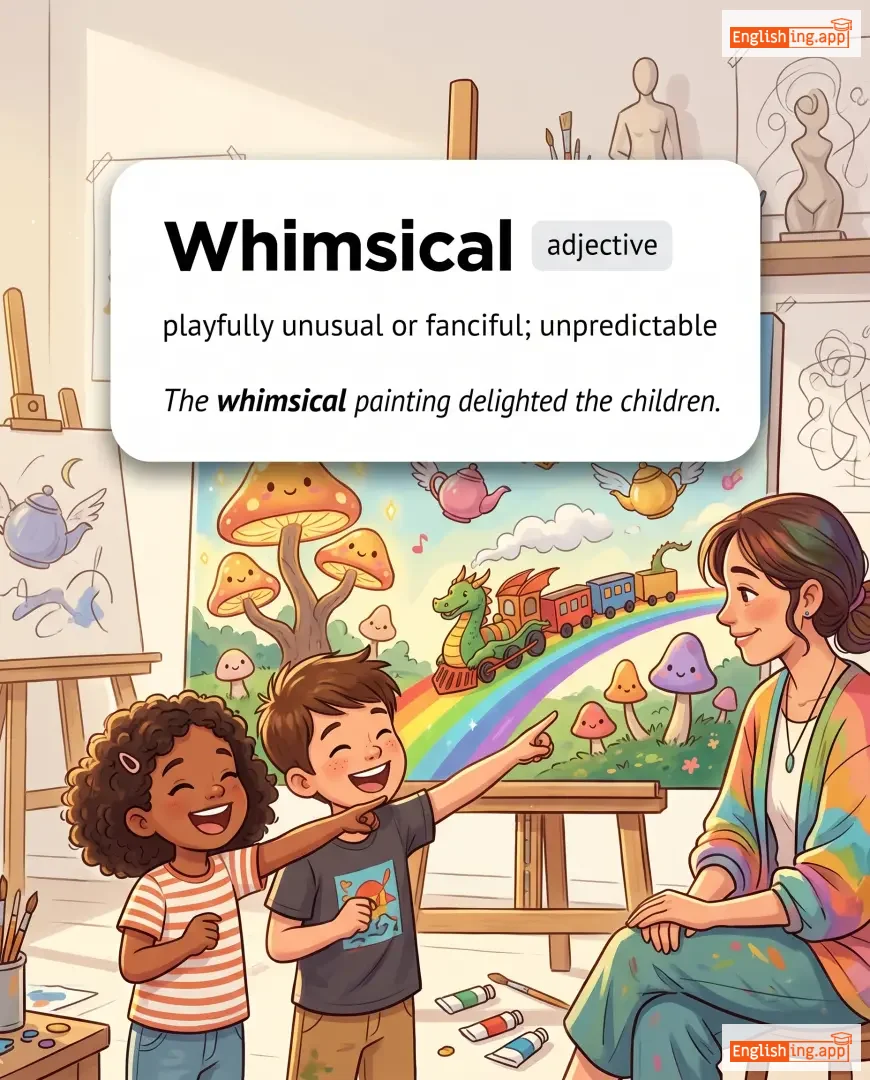
Whimsical definition card — visual illustration of the meaning
adjective
/ˈwɪmzɪkəl/
fantaisiste (fantaisiste)

playfully unusual or fanciful; unpredictable

"The whimsical painting delighted the children."

"La peinture fantaisiste a ravi les enfants." (La peinture fantaisiste a ravi les enfants.)
noun
/ˈwɒtʃ.mən/
gardien (gardien)

a person employed to guard or watch over a building or area, especially at night

"The watchman patrols the factory every hour to ensure security."

"Le gardien patrouille l'usine toutes les heures pour assurer la sécurité." (Le gardien patrouille l'usine toutes les heures pour assurer la sécurité.)
noun
/wɔːmθ/
chaleur (chaleur)

the quality or state of being warm in temperature or feeling

"She felt the warmth of the sun on her face."

"Elle ressentait la chaleur du soleil sur son visage." (Elle ressentait la chaleur du soleil sur son visage.)
noun
/ˈweɪvlət/
petite vague (petite vague)

a small wave or ripple on the surface of water or another medium

"The pond was disturbed only by the tiny wavelets caused by the breeze."

"L'étang n'a été perturbé que par les petites vagues causées par la brise." (L'étang n'a été perturbé que par les petites vagues causées par la brise.)
🛣️

Way (oué)

noun
/weɪ/
chemin / façon (chemin / façon)

a path, direction, or method of doing something

"He found a new way to solve the problem."

"Il a trouvé une nouvelle façon de résoudre le problème." (Il a trouve une nouvelle facon de resoudre le probleme.)
adverb
/wɛrˈɛv.ər/
n'importe où (n'importe ou)

In or to any place.

"You can find good people wherever you go."

"Vous pouvez trouver des gens bien où que vous alliez." (Vous pouvez trouver des gens bien où que vous alliez.)
adjective
/ˈwɛlθi/
riche (riche)

having a great deal of money, resources, or assets

"He became wealthy after investing in real estate."

"Il est devenu riche après avoir investi dans l'immobilier." (Il est devenu riche après avoir investi dans l'immobilier.)
noun
/ˈwɪntər/
hiver (hiver)

the coldest season of the year, typically from December to February in the Northern Hemisphere

"Winter in the north can be very harsh with heavy snowfall."

"L'hiver dans le nord peut être très rude avec de fortes chutes de neige." (L'hiver dans le nord peut être très rude avec de fortes chutes de neige.)
noun
/wiːl/
bonheur (bonheur)

A raised mark on the skin left after a blow; or general well-being and prosperity.

"The charity worked for the common weal of the community."

"Elle n'a pas pu cacher son bonheur lorsqu'elle a reçu le prix." (Elle n'a pas pu cacher son bonheur lorsqu'elle a recu le prix.)
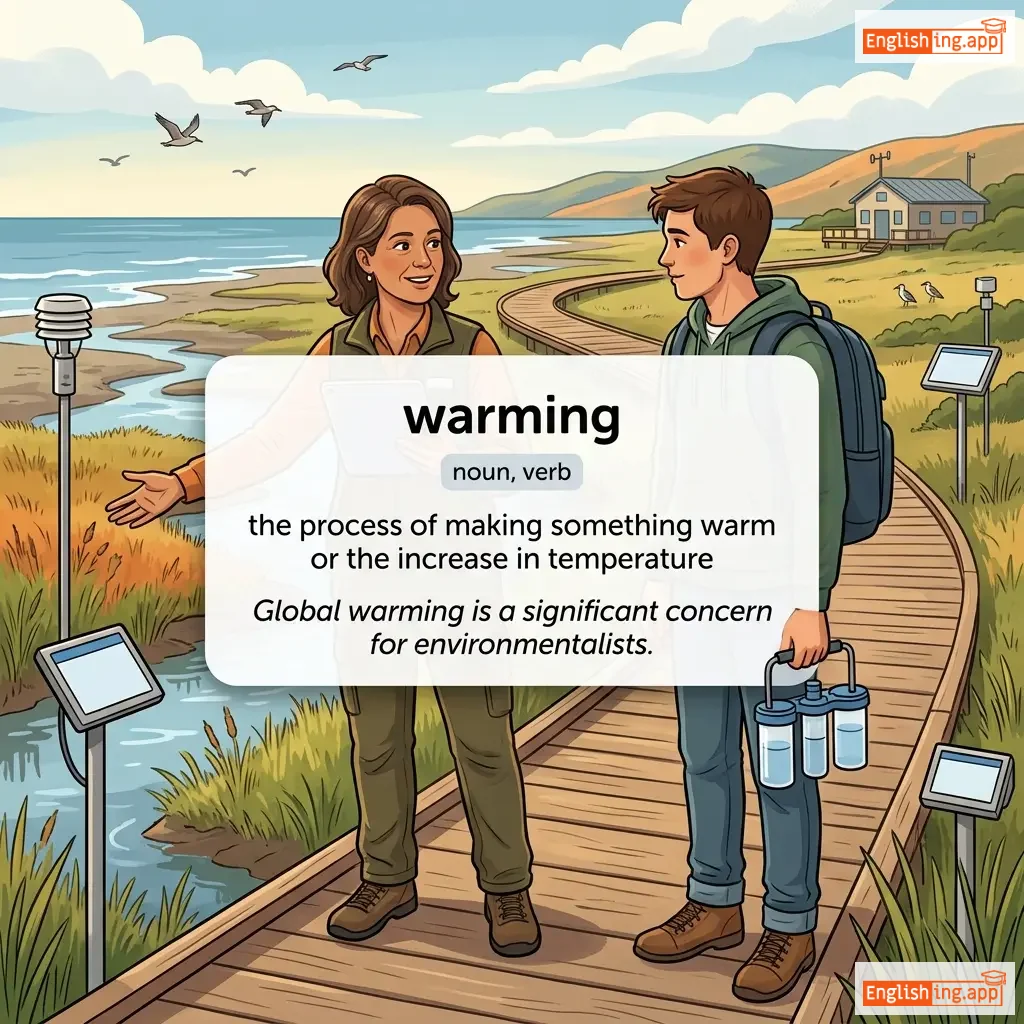
warming definition card — visual illustration of the meaning
noun, verb
/ˈwɔːmɪŋ/
augmentation de la température (augmentation de la temperature)

the process of making something warm or the increase in temperature

"Global warming is a significant concern for environmentalists."

"Le réchauffement climatique est une préoccupation importante pour les écologistes." (Le réchauffement climatique est une préoccupation importante pour les écologistes.)
conjunction
/waɪl/
pendant que (pendant que)

during the time that something is happening

"She was reading while waiting for the bus."

"Elle lisait pendant qu'elle attendait le bus." (Elle lisait pendant qu'elle attendait le bus.)
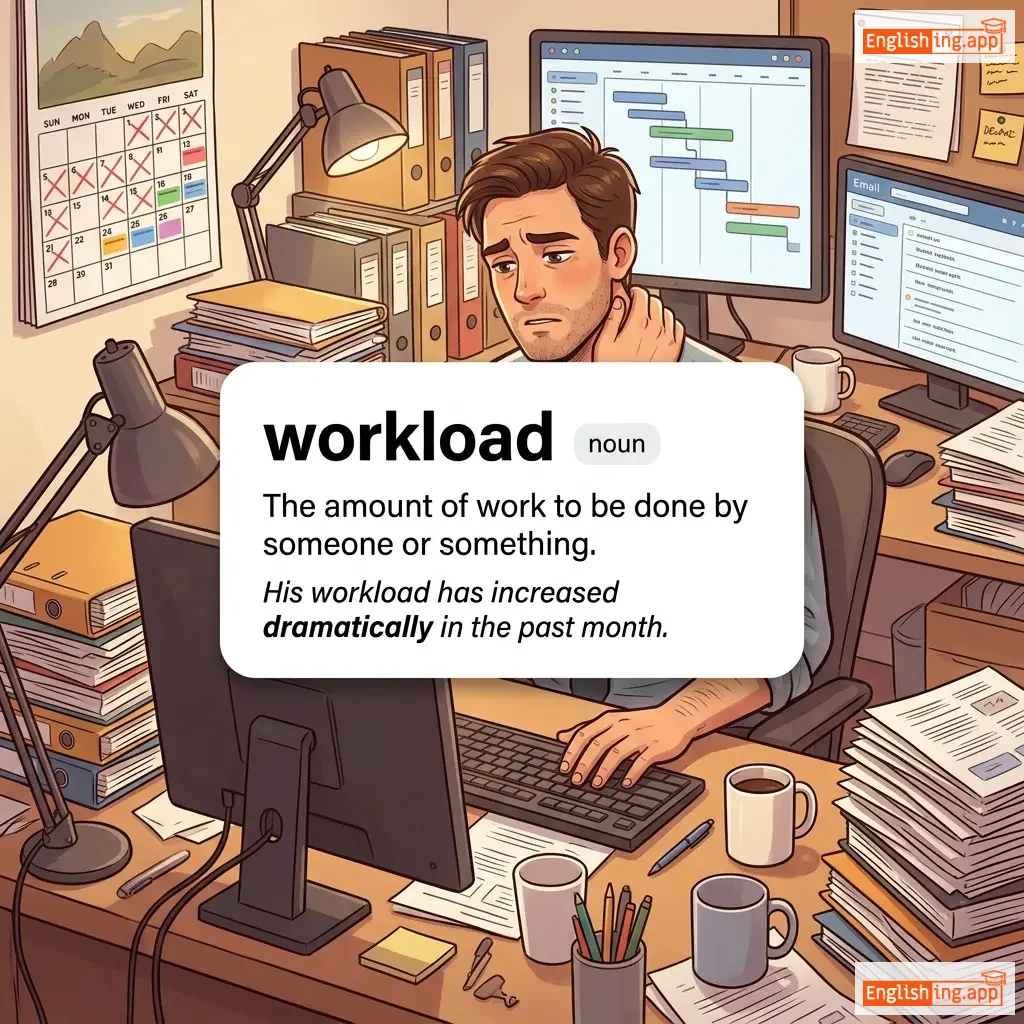
workload definition card — visual illustration of the meaning
noun
ˈwɜːrkˌləʊd
charge de travail (charge de travail)

The amount of work to be done by someone or something.

"His workload has increased dramatically in the past month."

"Sa charge de travail a considérablement augmenté au cours du dernier mois." (Sa charge de travail a considérablement augmenté au cours du dernier mois.)
adjective
/ˈwɪəri/
fatigué (fatigue)

feeling or showing extreme tiredness, especially as a result of exertion or lack of sleep

"After the long journey, she felt weary and wanted to rest."

"Après le long voyage, elle se sentait fatiguée et voulait se reposer." (Apres le long voyage, elle se sentait fatiguee et voulait se reposer.)
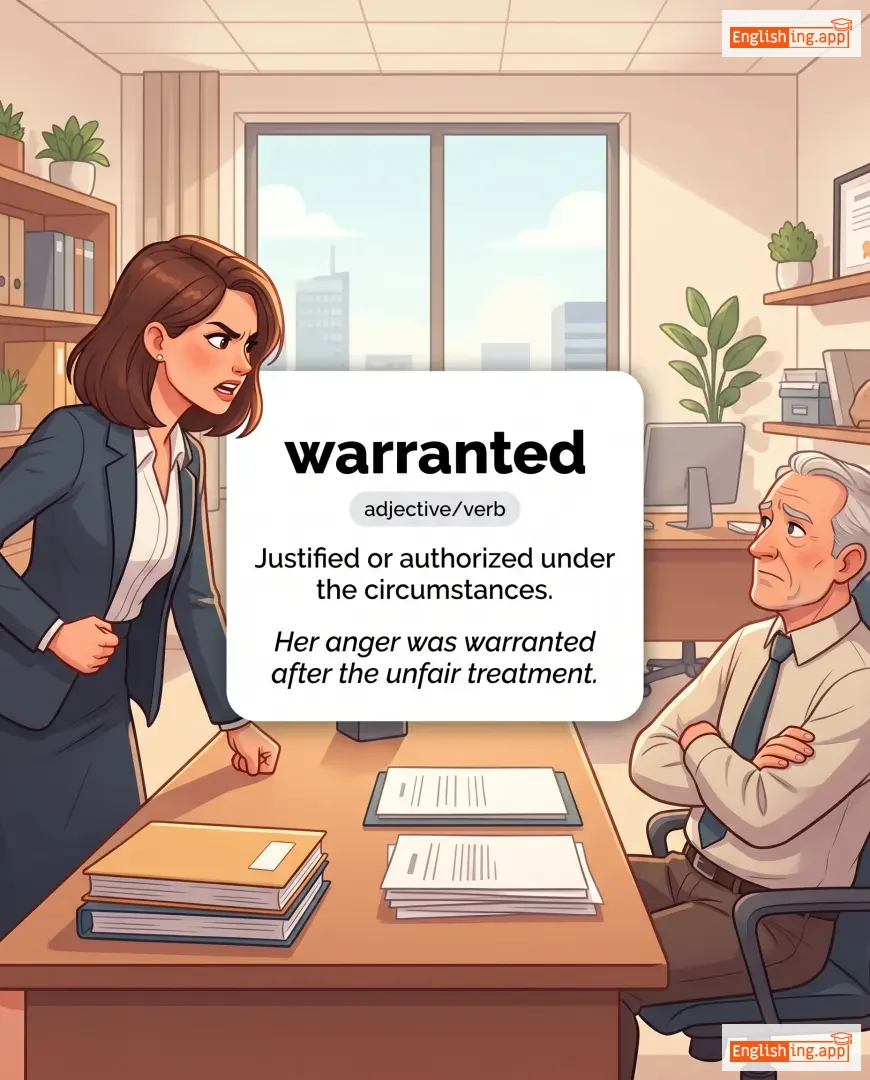
warranted definition card — visual illustration of the meaning
adjective/verb
/ˈwɒrəntɪd/
justifié (justifie)

Justified or authorized under the circumstances.

"Her anger was warranted after the unfair treatment."

"Sa colère était justifiée après le traitement injuste." (Sa colère était justifiée après le traitement injuste.)
verb
/wɪp/
fouetter (fouetter)

to strike or beat with a flexible instrument such as a rope or cord

"The trainer whipped the horse to make it run faster."

"L'entraîneur a fouetté le cheval pour le faire courir plus vite." (L'entraîneur a fouetté le cheval pour le faire courir plus vite.)
verb
/wæks/
augmenter progressivement (augmenter progressivement)

to increase gradually in size, number, strength, or intensity

"The moon will wax until it becomes full."

"La lune va augmenter jusqu'à ce qu'elle devienne pleine." (La lune va augmenter jusqu'à ce qu'elle devienne pleine.)
preposition
/wɪð/
avec (avec)

indicating the person or thing that is accompanying or involved with someone or something else

"She went to the market with her friend."

"Elle est allée au marché avec son amie." (Elle est allee au marche avec son amie.)
adjective
/ˌwɛl tə ˈduː/
richissime (richissime)

Prosperous, wealthy, or financially comfortable.

"They belong to a well-to-do family in the city."

"Ils font partie d'une famille riche dans la ville." (Ils font partie d'une famille riche dans la ville.)
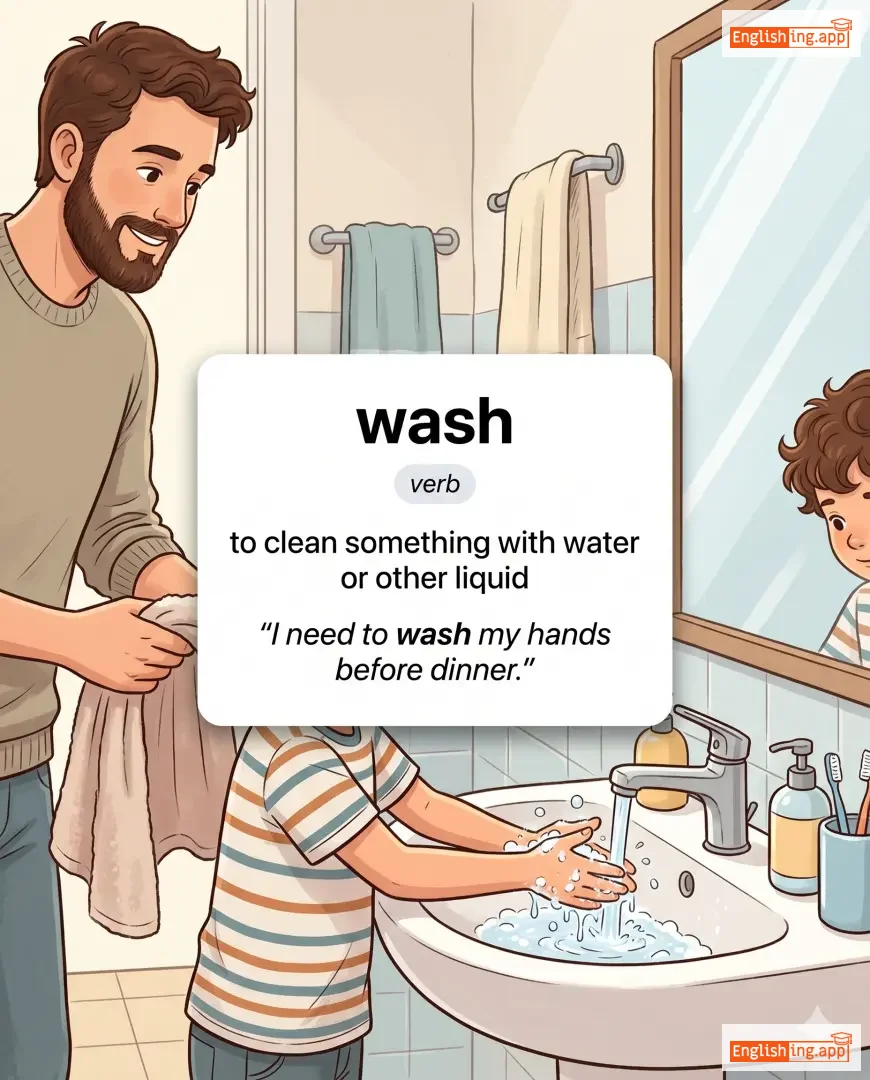
wash definition card — visual illustration of the meaning
verb
/wɒʃ/
laver (laver)

to clean something with water or other liquid

"I need to wash my hands before dinner."

"Je dois laver mes mains avant le dîner." (Je dois laver mes mains avant le dîner.)
adjective
/ˈwaɪəri/
svelte, fort et résistant (svelte, fort et resistant)

Lean, tough, and strong, often with sinewy muscles.

"The wiry athlete moved with remarkable speed and agility."

"L'athlète svelte se déplaçait avec une rapidité et une agilité remarquables." (L'athlète svelte se déplaçait avec une rapidité et une agilité remarquables.)
noun
/ˈwɪmzi/
fantaisie (fantaisie)

playful or fanciful behavior or humor

"Her stories were full of whimsy and imagination."

"Ses histoires étaient pleines de fantaisie et d'imagination." (Ses histoires etaient pleines de fantaisie et d'imagination.)
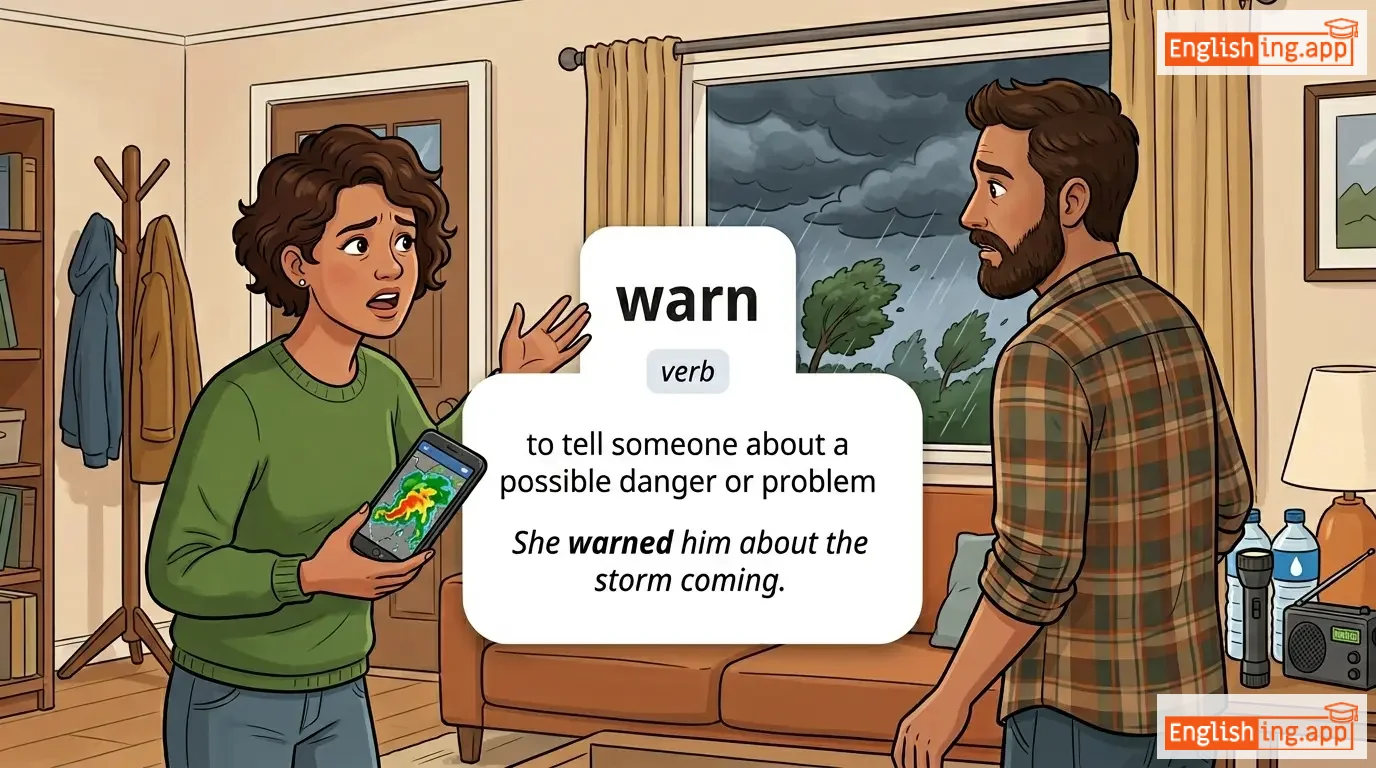
warn definition card — visual illustration of the meaning
verb
/wɔːrn/
avertir (avertir)

to tell someone about a possible danger or problem

"She warned him about the storm coming."

"Elle lui a averti de la tempête qui arrivait." (Elle lui a averti de la tempête qui arrivait.)
adverb
/wɛl/
bien (bien)

in a good or satisfactory way

"She did well in her exams."

"Elle a bien réussi ses examens." (Elle a bien réussi ses examens.)
adjective
/ˌwɛlˈbrɛd/
bien élevé (bien eleve)

Having or showing good manners; properly raised.

"She is a well-bred young lady with excellent manners."

"C'est une jeune femme bien élevée avec d'excellentes manières." (C'est une jeune femme bien élevée avec d'excellentes manières.)
adjective
/ˈwɪt.i/
spirituel; amusant (spirituel; amusant)

having or showing quick intelligence; amusing in a clever way

"Her witty response to the critic's question impressed the entire audience."

"Sa réponse spirituelle à la question du critique a impressionné toute l'audience." (Sa réponse spirituelle à la question du critique a impressionné toute l'audience.)
adjective
/ˌhoʊlˈhɑːrtɪd/
de tout cœur (de tout coeur)

showing complete sincerity and commitment; fully enthusiastic

"She gave her wholehearted support to the project."

"Elle a donné son soutien de tout cœur au projet." (Elle a donne son soutien de tout coeur au projet.)
noun
/ˈwɒrənti/
garantie (garanti)

A written guarantee given by a manufacturer or seller promising to repair or replace a product if necessary within a specified period.

"The laptop comes with a two-year warranty."

"L'ordinateur portable vient avec une garantie de deux ans." (L'ordinateur portable vient avec une garantie de deux ans.)
noun
/ˈwel.wɪʃ.ər/
bienfaiteur (bienfaiteur)

a person who desires happiness or success for another

"Many well-wishers came to congratulate her on her graduation."

"De nombreux bienfaiteurs sont venus la féliciter pour sa remise de diplôme." (De nombreux bienfaiteurs sont venus la féliciter pour sa remise de diplôme.)
preposition
/wɪðˈaʊt/
sans (sans)

in the absence of, or not having something

"He left without saying goodbye."

"Il est parti sans dire au revoir." (Il est parti sans dire au revoir.)
adjective
/waɪld/
sauvage (sauvage)

living or growing in the natural environment; uncontrolled or untamed

"The children ran wild in the park."

"Les enfants couraient sauvagement dans le parc." (Les enfants couraient sauvagement dans le parc.)
noun
/wɒsp/
guêpe (guepe)

a flying insect with a yellow and black striped body and a painful sting

"The wasp stung me when I disturbed its nest."

"La guêpe m'a piqué quand j'ai dérangé son nid." (La guepe m'a pique quand j'ai derange son nid.)
noun
/ˈwɛnzdeɪ/
mercredi (mercredi)

the fourth day of the week, following Tuesday and preceding Thursday

"The meeting has been scheduled for Wednesday afternoon."

"La réunion est prévue pour mercredi après-midi." (la reunion est prevue pour mercredi apres-midi)
🤷‍♂️

whatever (watever)

pronoun
/wɒtˈɛvər/
quoi que ce soit (kwa ke sə swa)

used to refer to anything or everything that is of the type mentioned

"You can choose whatever you like."

"Tu peux choisir ce que tu veux." (Tu peux choisir ce que tu veux.)
adjective
/ˈhoʊlsəm/
sain (sain)

promoting health or well-being; morally good and beneficial

"The retreat offered wholesome food and peaceful surroundings."

"Le retraite a offert de la nourriture saine et un environnement paisible." (Le retraite a offert de la nourriture saine et un environnement paisible.)