Vocabularios

Descubra, aprenda y domine el vocabulario en inglés

adjective
/wiːk/
débil (debil)

lacking physical strength or energy

"She felt weak after the long run."

"Ella se sintió débil después de la larga carrera." (Ella se sintio debil despues de la larga carrera.)
conjunction
/wɛərˈæz/
mientras que (mientras que)

used to introduce a contrast or comparison between two facts

"She prefers tea, whereas he likes coffee."

"A ella le gusta el té, mientras que a él le gusta el café." (A ella le gusta el té, mientras que a él le gusta el café.)
adverb
/wɛnˈɛvər/
cuando sea (cuando sea)

at any time, or whenever it happens

"You can call me whenever you want."

"Puedes llamarme cuando sea." (Puedes llamarme cuando sea.)
adverb
/ˈwɪmzɪkli/
caprichosamente (wimzikli)

In a playful, fanciful, or capricious manner; with sudden changes of mind

"She decorated her room whimsically with colorful balloons."

"Ella decoró su habitación de forma caprichosa con globos coloridos." (Ella decoro su habitacion de forma caprichosa con globos coloridos.)
adverb
/wɛərˈbaɪ/
mediante (mediante)

by which; because of which

"The company agreed to a contract whereby it would pay the penalty."

"La empresa acordó un contrato mediante el cual pagaría la multa." (La empresa acordó un contrato mediante el cual pagaría la multa.)
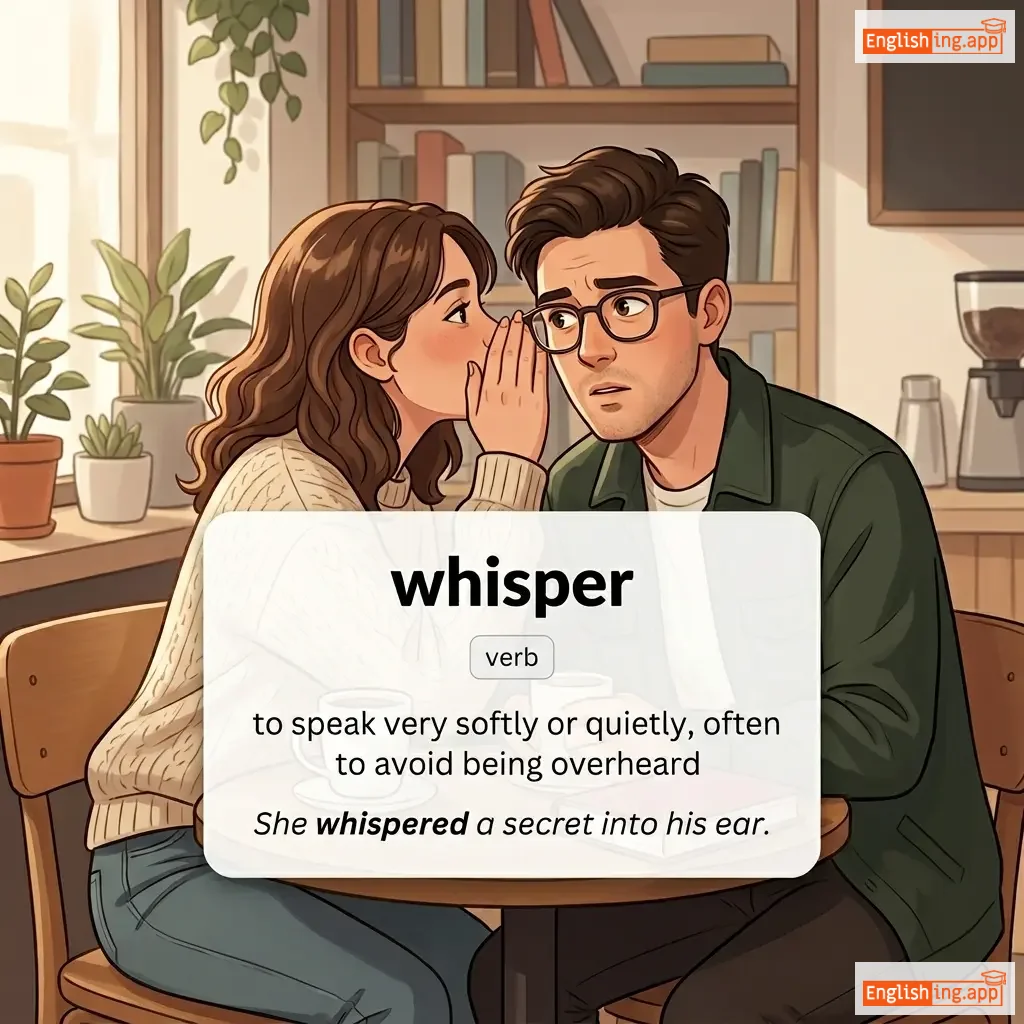
whisper definition card — visual illustration of the meaning
verb
/ˈwɪspər/
susurrar (susurrar)

to speak very softly or quietly, often to avoid being overheard

"She whispered a secret into his ear."

"Ella susurró un secreto en su oído." (Ella susurró un secreto en su oído.)
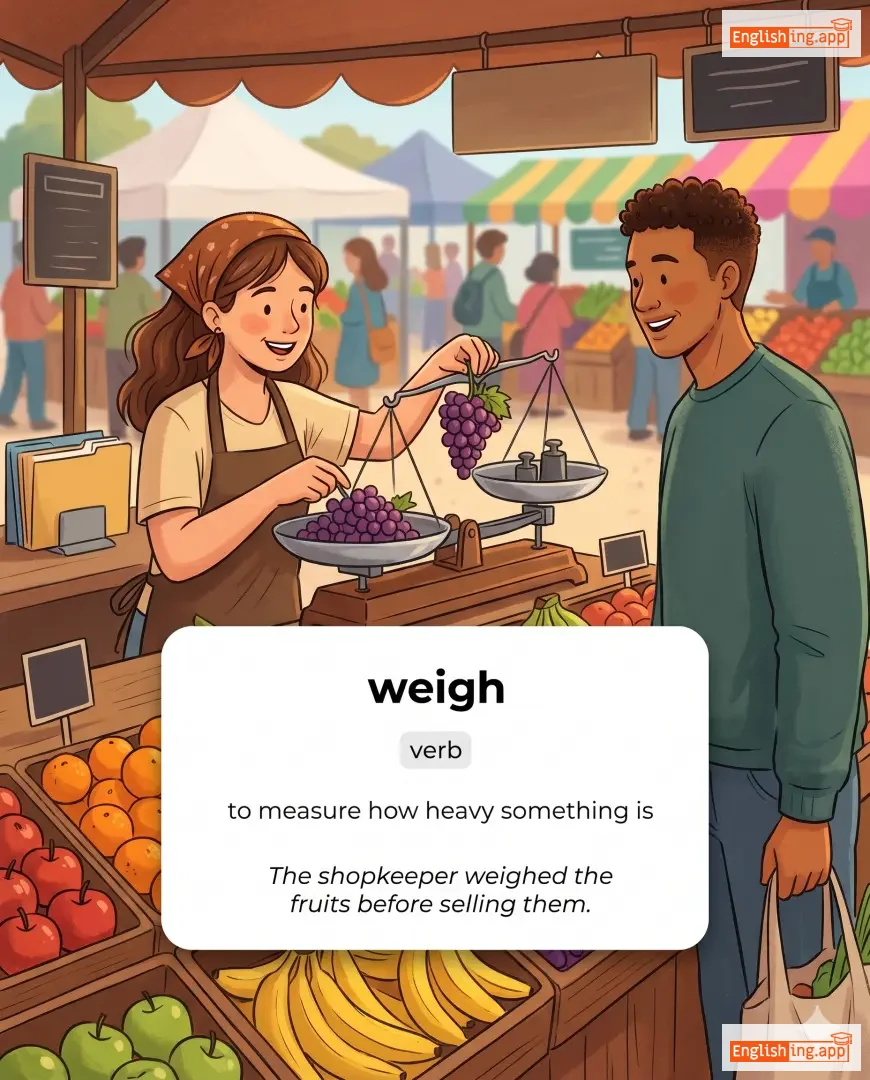
weigh definition card — visual illustration of the meaning
verb
/weɪ/
pesar (pesar)

to measure how heavy something is

"The shopkeeper weighed the fruits before selling them."

"El tendero pesó las frutas antes de venderlas." (El tendero pesó las frutas antes de venderlas.)
noun
/ˈwɒrən/
red de madrigueras (warren)

A network of interconnected rabbit burrows; also used metaphorically for a densely populated building or district.

"The old part of the city is a warren of narrow streets."

"La parte antigua de la ciudad es una red de calles estrechas." (La parte antigua de la ciudad es una red de calles estrechas.)
noun
/weɪt/
peso (peso)

a measure of how heavy something is

"The weight of the package was 10 kilograms."

"El peso del paquete era de 10 kilogramos." (El peso del paquete era de 10 kilogramos.)
noun
/wiːk/
semana (semana)

a period of seven days

"I will finish the project by the end of the week."

"Terminaré el proyecto para el final de la semana." (Terminaré el proyecto para el final de la semana.)
adverb
/wɛr/
dónde (donde)

in or at what place or position

"Where do you live?"

"¿Dónde vives?" (¿Dónde vives?)
verb
/wɛt/
afilar/estimular (afilar/estimular)

To sharpen the blade of a tool or to stimulate interest or appetite.

"The smell of food whetted my appetite."

"El olor de la comida aumentó mi apetito." (El olor de la comida aumento mi apetito.)
noun, verb
/wɪf/
leve olor (leve olor)

A brief, faint smell or puff of air; to get a quick smell of something.

"I caught a whiff of perfume as she passed by."

"Sentí un leve olor a perfume mientras ella pasaba." (Sentí un leve olor a perfume mientras ella pasaba.)
noun
/ˈwɒʃ.ɪŋ məˌʃiːn/
lavadora (uashing masheen)

a machine for washing clothes and other textiles

"The washing machine broke down and needs repair."

"La lavadora se averió y necesita reparación." (la lavadora se averio y necesita reparacion)
pronoun
/wɪtʃ/
cuál (cual)

used to ask about one or more items from a defined set

"Which one do you prefer, the red or the blue?"

"¿Cuál prefieres, el rojo o el azul?" (¿Cuál prefieres, el rojo o el azul?)
noun
/ˈwɑː.ʃər mæn/
lavandero (lavandero)

a person whose job is to wash clothes and linens for others

"The washer man collected dirty clothes from every household in the village."

"El lavandero recogió ropa sucia de cada hogar en el pueblo." (El lavandero recogió ropa sucia de cada hogar en el pueblo)
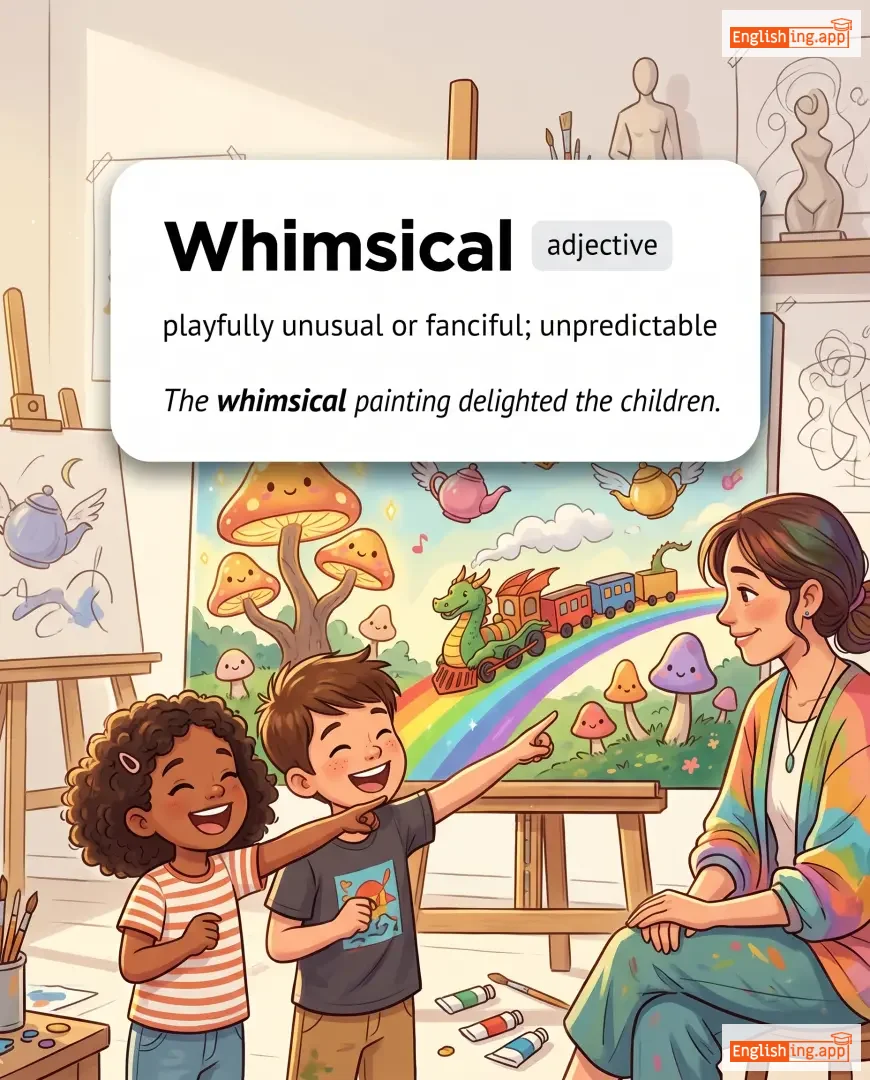
Whimsical definition card — visual illustration of the meaning
adjective
/ˈwɪmzɪkəl/
caprichoso (kaprichoso)

playfully unusual or fanciful; unpredictable

"The whimsical painting delighted the children."

"La pintura caprichosa deleitó a los niños." (La pintura caprichosa deleito a los ninos.)
noun
/ˈwɒtʃ.mən/
vigilante (vigilante)

a person employed to guard or watch over a building or area, especially at night

"The watchman patrols the factory every hour to ensure security."

"El vigilante patrulla la fábrica cada hora para asegurar la seguridad." (El vigilante patrulla la fábrica cada hora para asegurar la seguridad.)
noun
/wɔːmθ/
calor (calor)

the quality or state of being warm in temperature or feeling

"She felt the warmth of the sun on her face."

"Ella sintió el calor del sol en su rostro." (Ella sintió el calor del sol en su rostro.)
noun
/ˈweɪvlət/
pequeña onda (pequena onda)

a small wave or ripple on the surface of water or another medium

"The pond was disturbed only by the tiny wavelets caused by the breeze."

"El estanque solo fue perturbado por las pequeñas ondas causadas por la brisa." (El estanque solo fue perturbado por las pequeñas ondas causadas por la brisa.)
🛣️

Way (uei)

noun
/weɪ/
camino / manera (camino / manera)

a path, direction, or method of doing something

"He found a new way to solve the problem."

"Encontró una nueva manera de resolver el problema." (Encontro una nueva manera de resolver el problema.)
adverb
/wɛrˈɛv.ər/
donde sea (donde sea)

In or to any place.

"You can find good people wherever you go."

"Puedes encontrar buenas personas donde sea que vayas." (Puedes encontrar buenas personas donde sea que vayas.)
adjective
/ˈwɛlθi/
rico (rico)

having a great deal of money, resources, or assets

"He became wealthy after investing in real estate."

"Se volvió rico después de invertir en bienes raíces." (Se volvió rico después de invertir en bienes raíces.)
noun
/ˈwɪntər/
invierno (invierno)

the coldest season of the year, typically from December to February in the Northern Hemisphere

"Winter in the north can be very harsh with heavy snowfall."

"El invierno en el norte puede ser muy severo con grandes nevadas." (El invierno en el norte puede ser muy severo con grandes nevadas.)
noun
/wiːl/
felicidad (felicidad)

A raised mark on the skin left after a blow; or general well-being and prosperity.

"The charity worked for the common weal of the community."

"Ella no pudo ocultar su felicidad cuando recibió el premio." (Ella no pudo ocultar su felicidad cuando recibio el premio.)
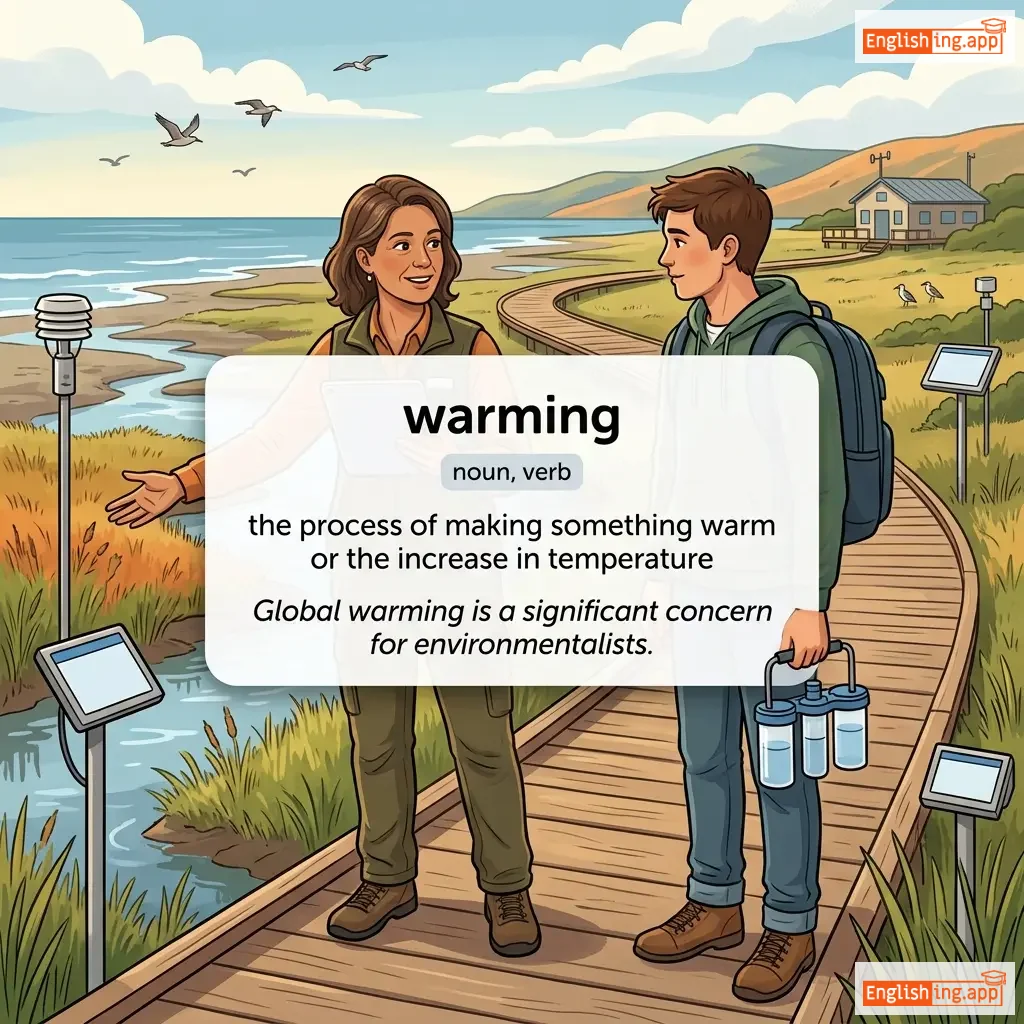
warming definition card — visual illustration of the meaning
noun, verb
/ˈwɔːmɪŋ/
aumento de temperatura (aumento de temperatura)

the process of making something warm or the increase in temperature

"Global warming is a significant concern for environmentalists."

"El calentamiento global es una preocupación significativa para los ambientalistas." (El calentamiento global es una preocupación significativa para los ambientalistas.)
conjunction
/waɪl/
mientras (mientras)

during the time that something is happening

"She was reading while waiting for the bus."

"Ella estaba leyendo mientras esperaba el autobús." (Ella estaba leyendo mientras esperaba el autobús.)
workload definition card — visual illustration of the meaning
noun
ˈwɜːrkˌləʊd
carga de trabajo (carga de trabajo)

The amount of work to be done by someone or something.

"His workload has increased dramatically in the past month."

"Su carga de trabajo ha aumentado drásticamente en el último mes." (Su carga de trabajo ha aumentado drásticamente en el último mes.)
adjective
/ˈwɪəri/
cansado (cansado)

feeling or showing extreme tiredness, especially as a result of exertion or lack of sleep

"After the long journey, she felt weary and wanted to rest."

"Después del largo viaje, ella se sintió cansada y quería descansar." (Despues del largo viaje, ella se sintio cansada y queria descansar.)
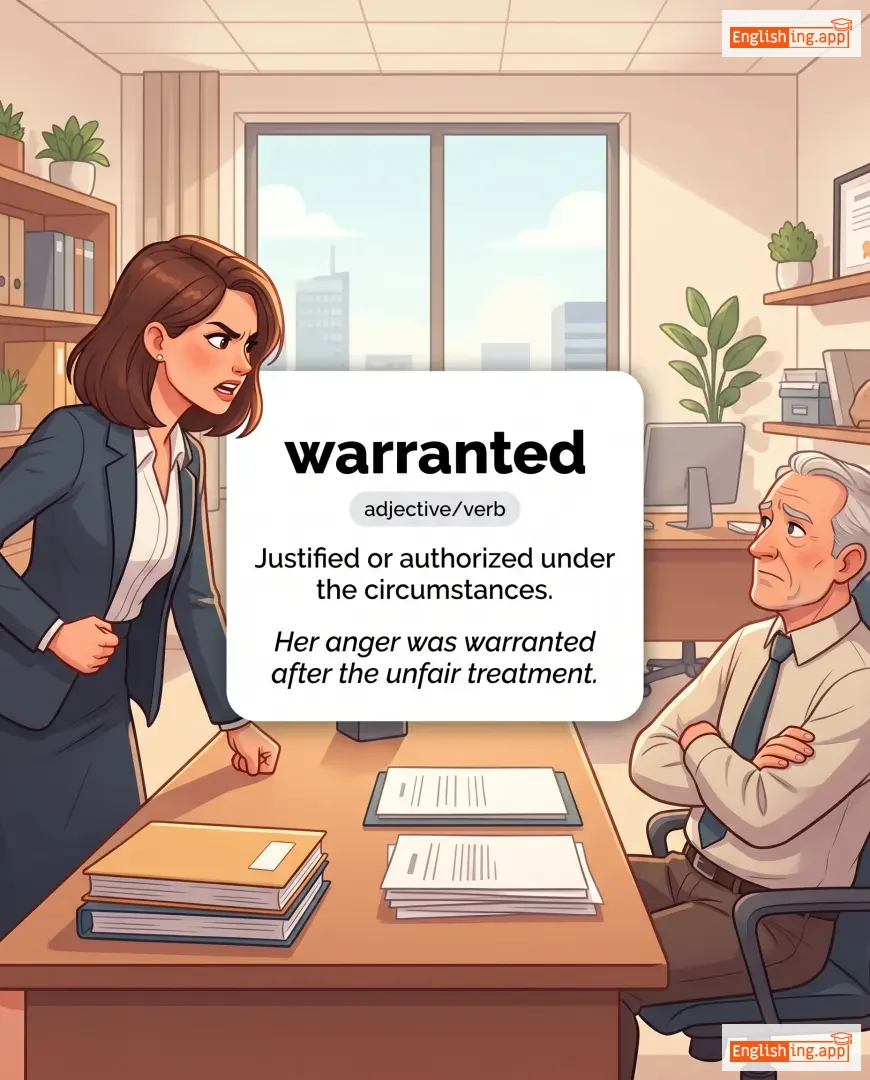
warranted definition card — visual illustration of the meaning
adjective/verb
/ˈwɒrəntɪd/
justificado (justificado)

Justified or authorized under the circumstances.

"Her anger was warranted after the unfair treatment."

"Su enojo fue justificado después del trato injusto." (Su enojo fue justificado después del trato injusto.)
verb
/wɪp/
azotar (azotar)

to strike or beat with a flexible instrument such as a rope or cord

"The trainer whipped the horse to make it run faster."

"El entrenador azotó al caballo para hacerlo correr más rápido." (El entrenador azotó al caballo para hacerlo correr más rápido.)
verb
/wæks/
aumentar gradualmente (aumentar gradualmente)

to increase gradually in size, number, strength, or intensity

"The moon will wax until it becomes full."

"La luna aumentará hasta que se vuelva llena." (La luna aumentara hasta que se vuelva llena.)
preposition
/wɪð/
con (kon)

indicating the person or thing that is accompanying or involved with someone or something else

"She went to the market with her friend."

"Ella fue al mercado con su amiga." (Ella fue al mercado kon su amiga.)
adjective
/ˌwɛl tə ˈduː/
adinerado (adinerado)

Prosperous, wealthy, or financially comfortable.

"They belong to a well-to-do family in the city."

"Pertenecen a una familia adinerada de la ciudad." (Pertenecen a una familia adinerada de la ciudad.)
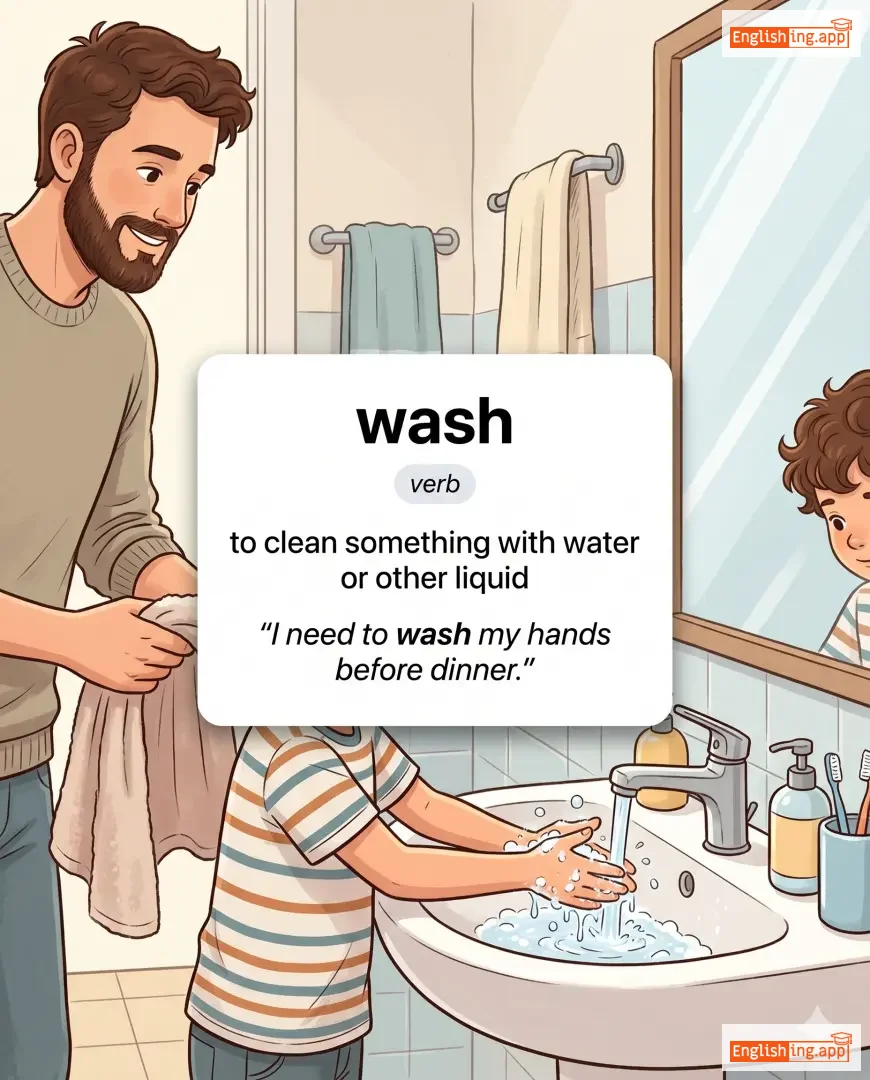
wash definition card — visual illustration of the meaning
verb
/wɒʃ/
lavar (lavar)

to clean something with water or other liquid

"I need to wash my hands before dinner."

"Necesito lavar mis manos antes de la cena." (Necesito lavar mis manos antes de la cena.)
adjective
/ˈwaɪəri/
delgado, fuerte y resistente (delgado, fuerte y resistente)

Lean, tough, and strong, often with sinewy muscles.

"The wiry athlete moved with remarkable speed and agility."

"El atleta delgado se movió con una velocidad y agilidad notables." (El atleta delgado se movió con una velocidad y agilidad notables.)
noun
/ˈwɪmzi/
capricho (capricho)

playful or fanciful behavior or humor

"Her stories were full of whimsy and imagination."

"Sus historias estaban llenas de capricho e imaginación." (Sus historias estaban llenas de capricho e imaginacion.)
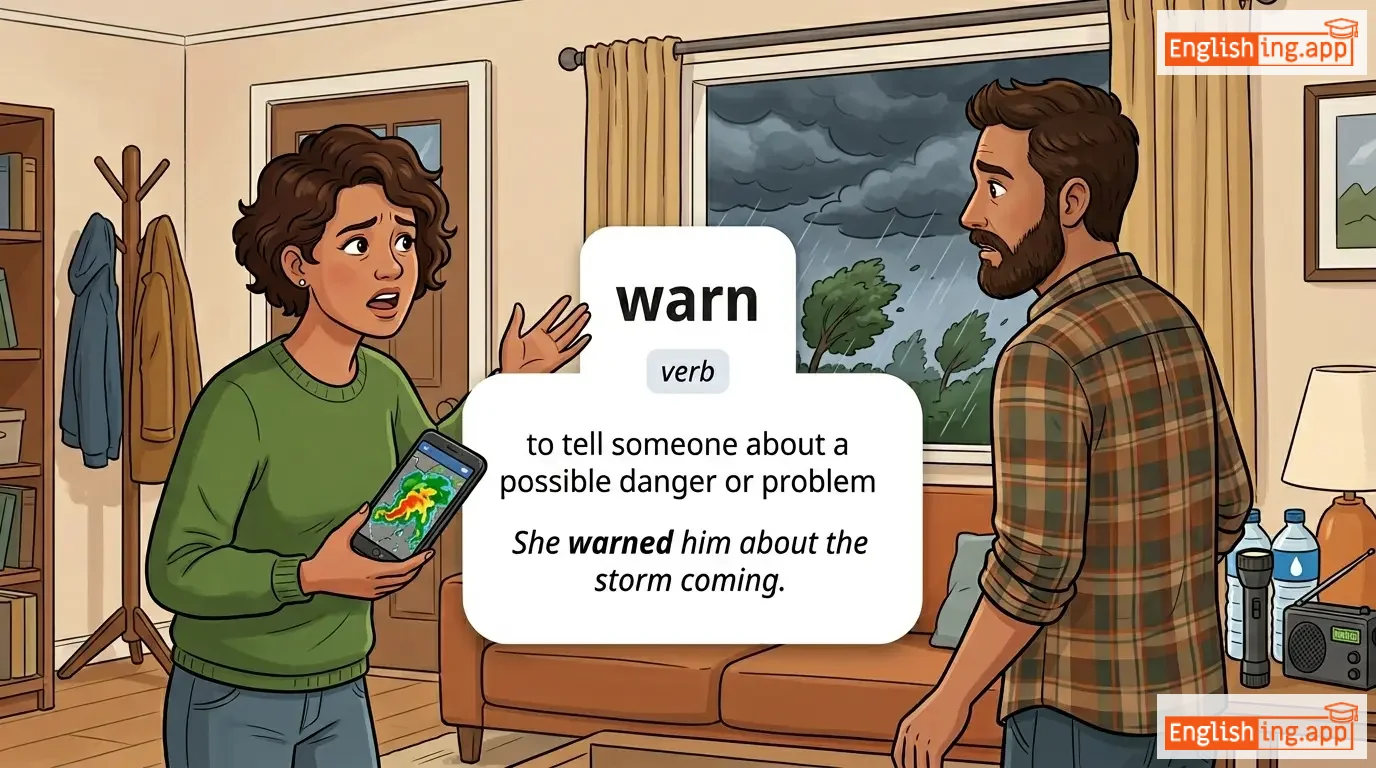
warn definition card — visual illustration of the meaning
verb
/wɔːrn/
advertir (advertir)

to tell someone about a possible danger or problem

"She warned him about the storm coming."

"Ella le advirtió sobre la tormenta que venía." (Ella le advirtió sobre la tormenta que venía.)
adverb
/wɛl/
bien (bien)

in a good or satisfactory way

"She did well in her exams."

"Ella lo hizo bien en sus exámenes." (Ella lo hizo bien en sus exámenes.)
adjective
/ˌwɛlˈbrɛd/
bien educado (bien educado)

Having or showing good manners; properly raised.

"She is a well-bred young lady with excellent manners."

"Ella es una joven bien educada con excelentes modales." (Ella es una joven bien educada con excelentes modales.)
adjective
/ˈwɪt.i/
ingenioso; divertido (ingenioso; divertido)

having or showing quick intelligence; amusing in a clever way

"Her witty response to the critic's question impressed the entire audience."

"Su ingeniosa respuesta a la pregunta del crítico impresionó a toda la audiencia." (Su ingeniosa respuesta a la pregunta del crítico impresionó a toda la audiencia.)
adjective
/ˌhoʊlˈhɑːrtɪd/
de todo corazón (de todo corazon)

showing complete sincerity and commitment; fully enthusiastic

"She gave her wholehearted support to the project."

"Ella dio su apoyo de todo corazón al proyecto." (Ella dio su apoyo de todo corazon al proyecto.)
noun
/ˈwɒrənti/
garantía (garantia)

A written guarantee given by a manufacturer or seller promising to repair or replace a product if necessary within a specified period.

"The laptop comes with a two-year warranty."

"El portátil viene con una garantía de dos años." (El portatil viene con una garantia de dos anos.)
noun
/ˈwel.wɪʃ.ər/
bienhechor (bienhechor)

a person who desires happiness or success for another

"Many well-wishers came to congratulate her on her graduation."

"Muchos bienhechores vinieron a felicitarla por su graduación." (Muchos bienhechores vinieron a felicitarla por su graduación.)
preposition
/wɪðˈaʊt/
sin (sin)

in the absence of, or not having something

"He left without saying goodbye."

"Él se fue sin decir adiós." (El se fue sin decir adiós.)
adjective
/waɪld/
salvaje (salvaje)

living or growing in the natural environment; uncontrolled or untamed

"The children ran wild in the park."

"Los niños corrieron salvajemente en el parque." (Los niños corrieron salvajemente en el parque.)
noun
/wɒsp/
avispón (avispón)

a flying insect with a yellow and black striped body and a painful sting

"The wasp stung me when I disturbed its nest."

"El avispa me picó cuando molesté su nido." (El avispa me picó cuando molesté su nido.)
noun
/ˈwɛnzdeɪ/
miércoles (miercoles)

the fourth day of the week, following Tuesday and preceding Thursday

"The meeting has been scheduled for Wednesday afternoon."

"La reunión se ha programado para el miércoles por la tarde." (la reunion se ha programado para el miercoles por la tarde)
🤷‍♂️

whatever (watever)

pronoun
/wɒtˈɛvər/
lo que sea (lo ke sea)

used to refer to anything or everything that is of the type mentioned

"You can choose whatever you like."

"Puedes elegir lo que quieras." (Puedes elegir lo que quieras.)
adjective
/ˈhoʊlsəm/
saludable (saludable)

promoting health or well-being; morally good and beneficial

"The retreat offered wholesome food and peaceful surroundings."

"El retiro ofreció comida saludable y un entorno tranquilo." (El retiro ofreció comida saludable y un entorno tranquilo.)