Vocabularios

Descubra, aprenda y domine el vocabulario en inglés

verb
/ˈæd.l̩/
confundir (confundir)

To confuse or muddle someone’s mind.

"The complicated instructions only served to addle him."

"Las instrucciones complicadas solo sirvieron para confundirme." (Las instrucciones complicadas solo sirvieron para confundirme.)
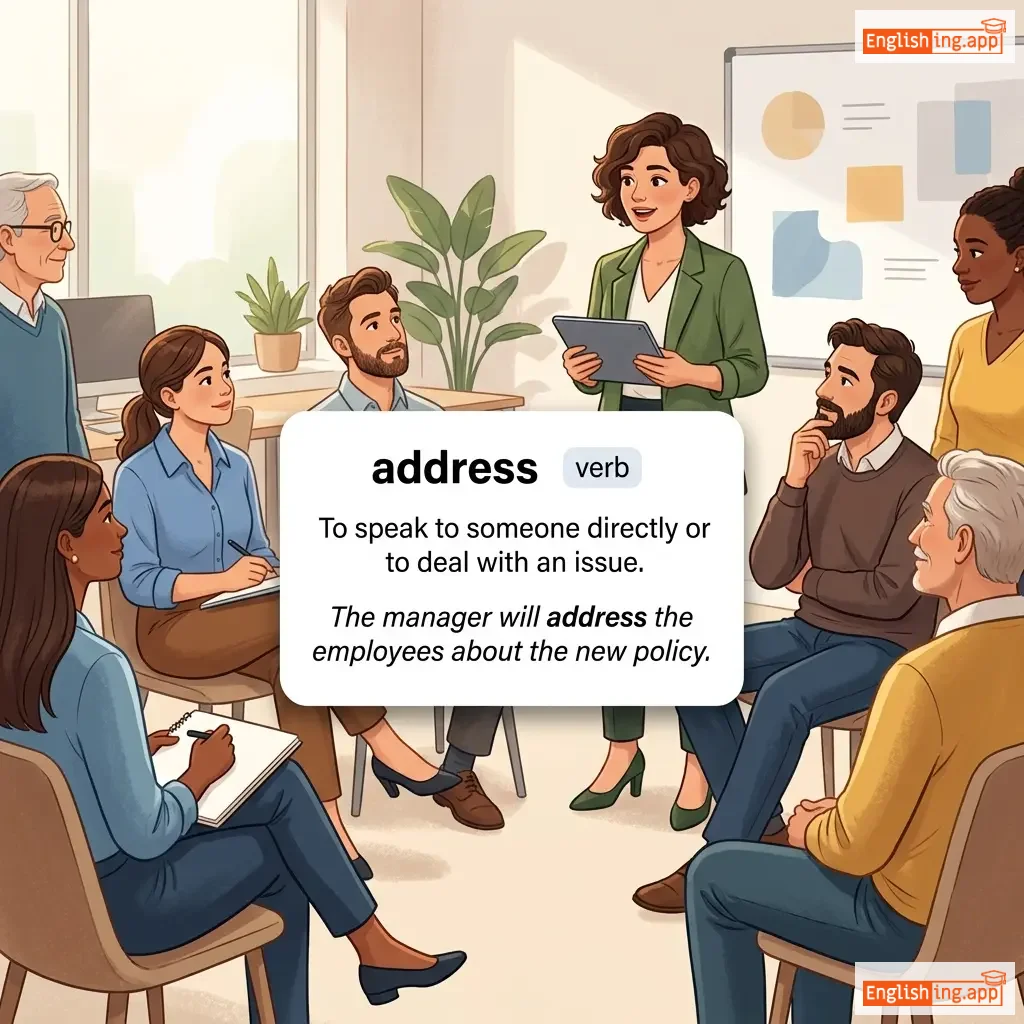
address definition card — visual illustration of the meaning
verb
/əˈdrɛs/
dirigir, abordar (dirigir, abordar)

To speak to someone directly or to deal with an issue.

"The manager will address the employees about the new policy."

"El gerente dirigirá a los empleados sobre la nueva política." (El gerente dirigirá a los empleados sobre la nueva política.)
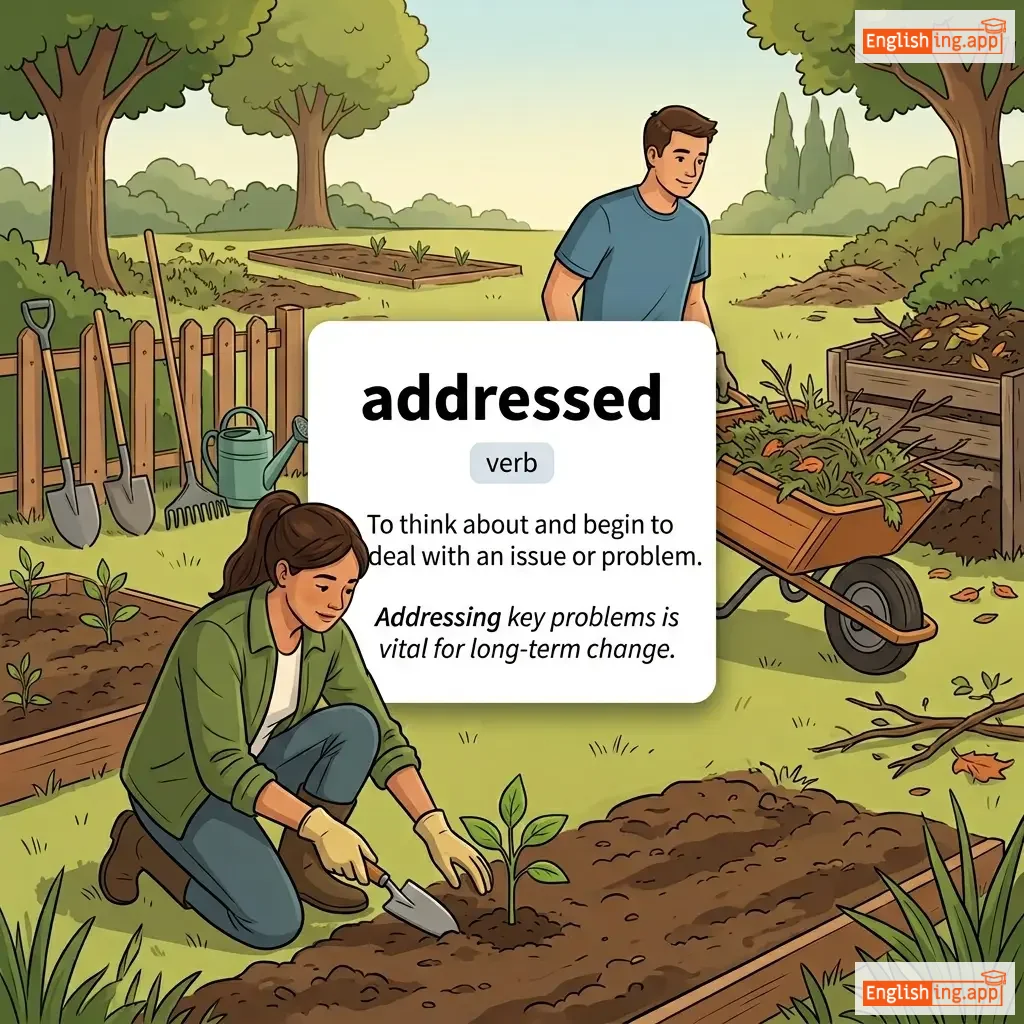
addressed definition card — visual illustration of the meaning
verb
əˈdrɛst
dirigido (dirigido)

To think about and begin to deal with an issue or problem.

"Addressing key problems is vital for long-term change."

"Abordar los problemas clave es vital para el cambio a largo plazo." (Abordar los problemas clave es vital para el cambio a largo plazo.)
verb
/əˈdjuːs/
presentar evidencia o razones (presentar evidencia o razones)

To provide evidence or reasons to support an argument or idea.

"The lawyer adduced several examples to support his case."

"El abogado adujo varios ejemplos para respaldar su caso." (El abogado adujo varios ejemplos para respaldar su caso.)
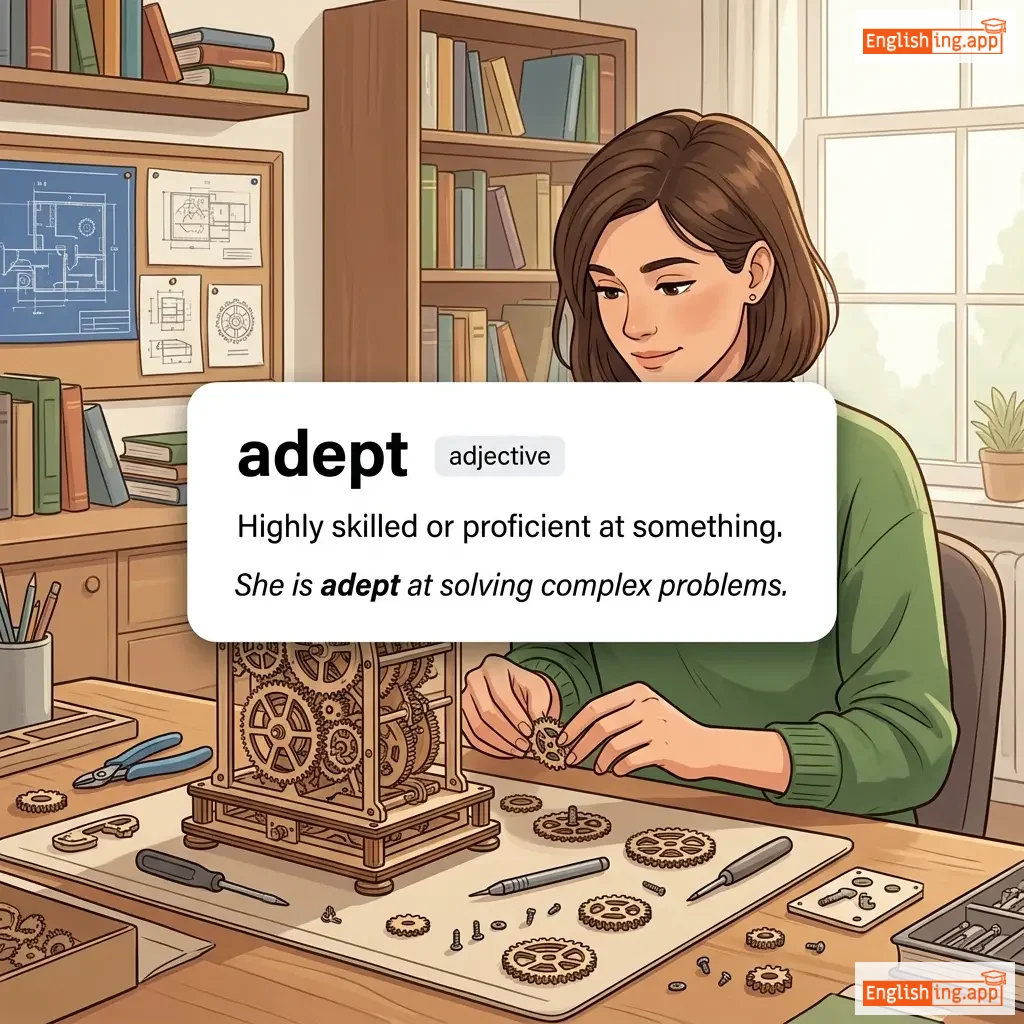
adept definition card — visual illustration of the meaning
adjective
/əˈdɛpt/
hábil (adept)

Highly skilled or proficient at something.

"She is adept at solving complex problems."

"Ella es hábil para resolver problemas complejos." (Ella es habil para resolver problemas complejos.)
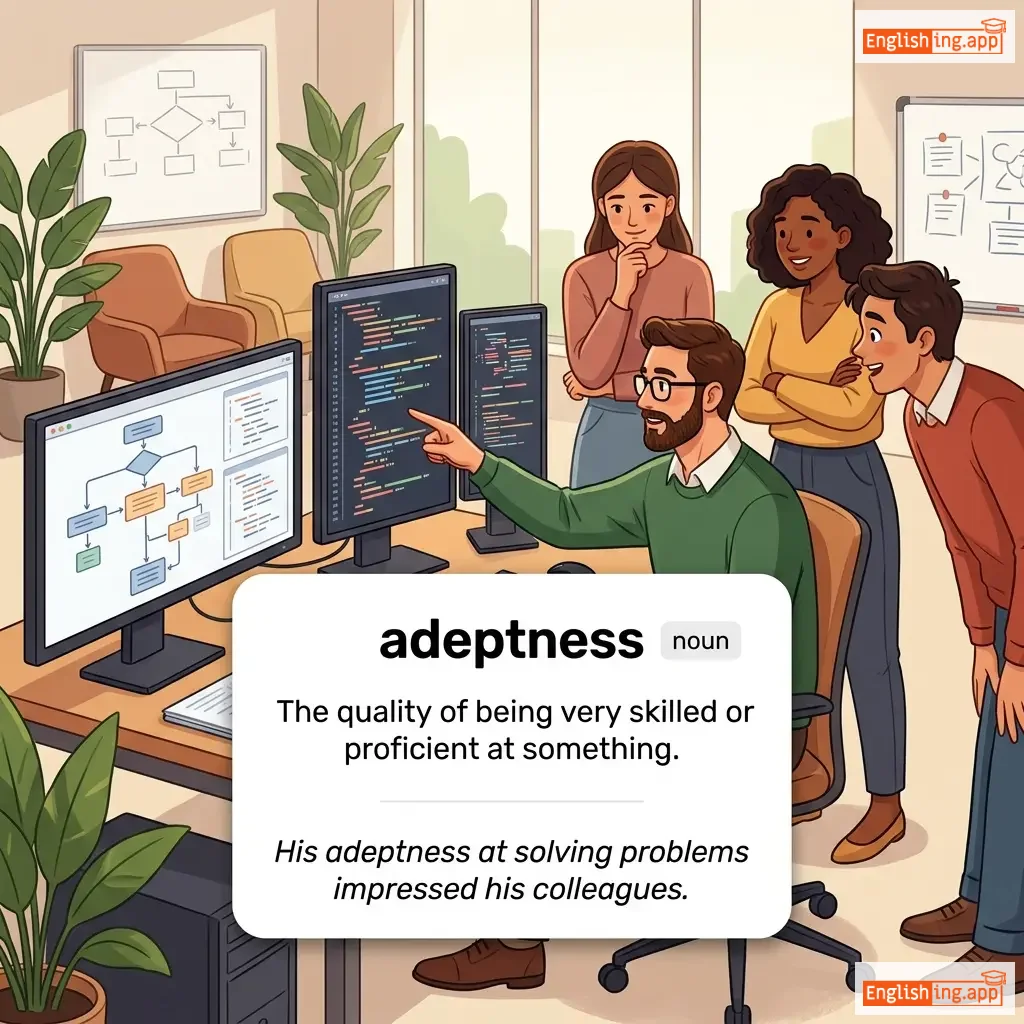
adeptness definition card — visual illustration of the meaning
noun
əˈdept.nəs
habilidad (habilidad)

The quality of being very skilled or proficient at something.

"His adeptness at solving problems impressed his colleagues."

"Su habilidad para resolver problemas impresionó a sus colegas." (Su habilidad para resolver problemas impresionó a sus colegas.)
adjective
/ˈædɪkwət/
adecuado (adecuado)

sufficient or acceptable in quality or quantity

"The food was adequate for the small group."

"La comida fue adecuada para el pequeño grupo." (La comida fue adecuada para el pequeno grupo.)
adverb
/ˈædɪkwətli/
de manera adecuada (de manera adecuada)

in a satisfactory manner

"He completed the task adequately, but could improve next time."

"Completó la tarea de manera adecuada, pero podría mejorar la próxima vez." (Completo la tarea de manera adecuada, pero podria mejorar la proxima vez.)
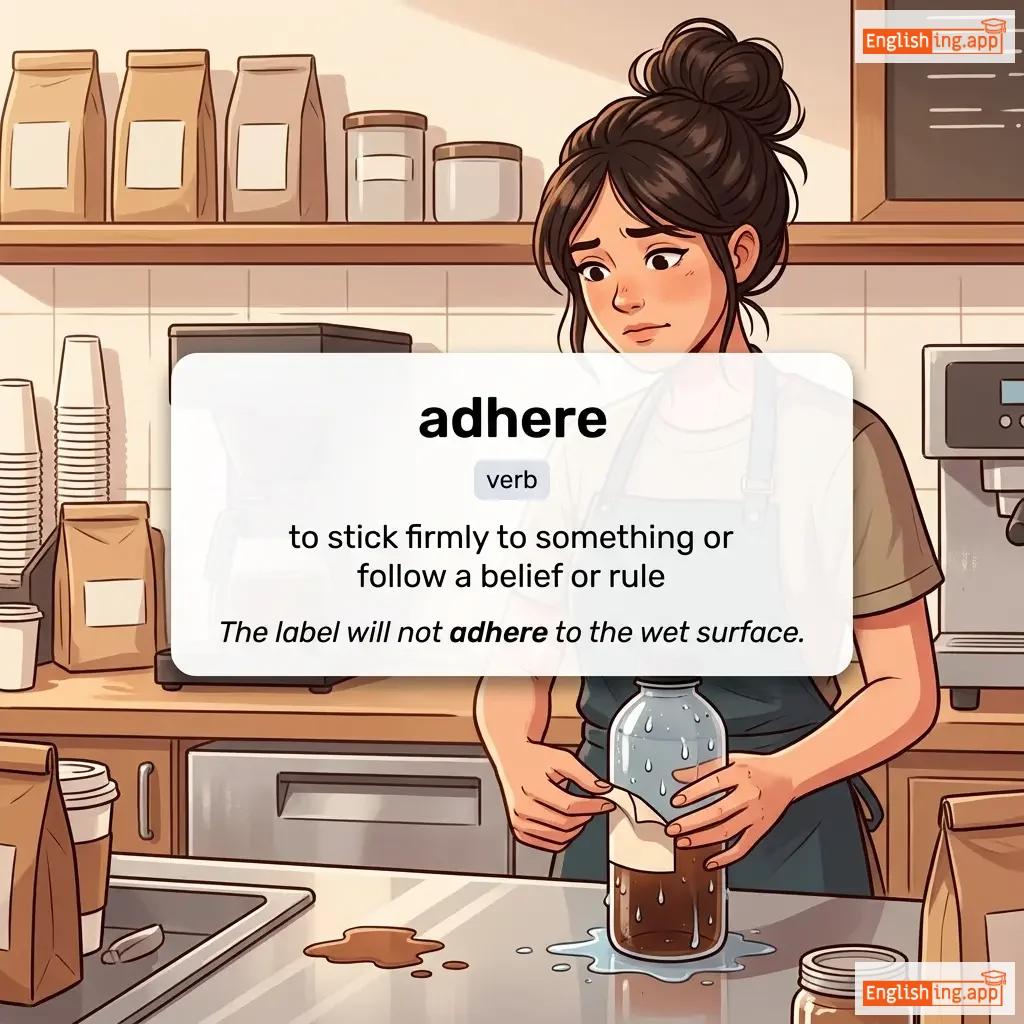
adhere definition card — visual illustration of the meaning
verb
/ədˈhɪər/
adherir, seguir (adherir, seguir)

to stick firmly to something or follow a belief or rule

"The label will not adhere to the wet surface."

"La etiqueta no se adherirá a la superficie mojada." (La etiqueta no se adherirá a la superficie mojada.)
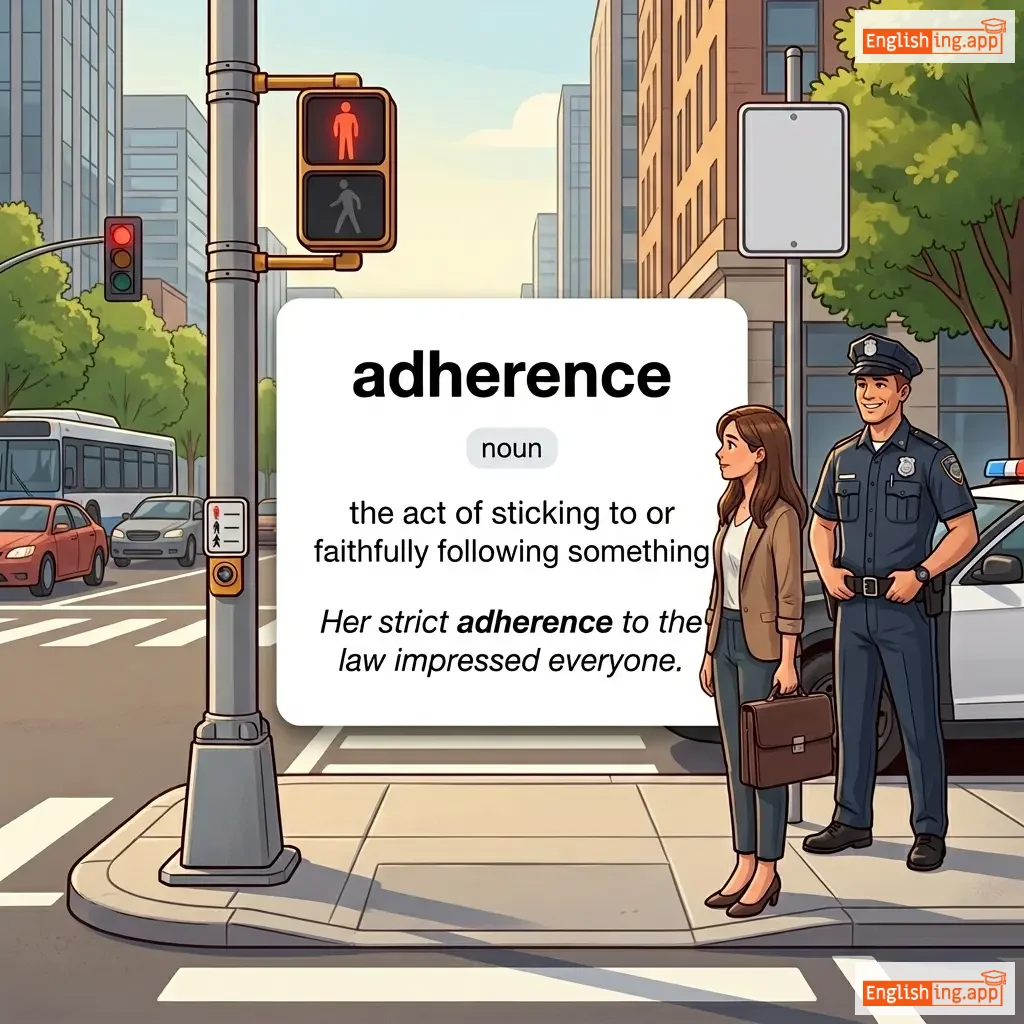
adherence definition card — visual illustration of the meaning
noun
/ədˈhɪərəns/
adhesión (adhesion)

the act of sticking to or faithfully following something

"Her strict adherence to the law impressed everyone."

"Su estricta adhesión a la ley impresionó a todos." (Su estricta adhesion a la ley impresiono a todos.)
noun
/ədˈhɪərənt/
seguidor (seguidor)

a person who supports or follows a particular belief, cause, or leader

"He is a strong adherent of democratic values."

"Él es un fuerte seguidor de los valores democráticos." (El es un fuerte seguidor de los valores democráticos.)
noun
/ədˈhiːʒən/
adhesión (adhesion)

the process or state of sticking to something

"Strong adhesion is needed for the tiles to stay in place."

"Se necesita una fuerte adhesión para que las baldosas se mantengan en su lugar." (Se necesita una fuerte adhesion para que las baldosas se mantengan en su lugar.)
adjective
/ədˈhiːsɪv/
pegajoso (pegajoso)

আঠালো; চটচটে;

"The adhesive tape stuck firmly to the wall."

"La cinta adhesiva se pegó firmemente a la pared." (La cinta adhesiva se pegó firmemente a la pared.)
noun
/əˈdjuː/
adiós (adieu)

A farewell or goodbye, often used in a formal or poetic sense.

"She bid her friends adieu before leaving for France."

"Ella se despidió de sus amigos antes de partir hacia Francia." (Ella se despidio de sus amigos antes de partir hacia Francia.)
adjective
/ˈædɪˌpoʊs/
adiposo (adiposo)

Relating to or consisting of animal fat; fatty.

"The doctor explained that the tissue was mainly adipose in nature."

"El doctor explicó que el tejido era principalmente adiposo en la naturaleza." (El doctor explicó que el tejido era principalmente adiposo en la naturaleza.)
noun
/əˈdʒeɪsənsi/
adyacencia (adyasensia)

The state of being next to or adjoining something else.

"The adjacency of the two buildings made it easy to connect them."

"La adyacencia de los dos edificios hizo fácil conectarlos." (La adyacencia de los dos edificios hizo fácil conectarlos.)
adjective
/əˈdʒeɪsənt/
adyacente (adyasente)

Next to or adjoining something else.

"The hotel is adjacent to the beach."

"El hotel está junto a la playa." (El hotel está junto a la playa.)
noun
/ˈædʒɪktɪv/
adjetivo (adjetivo)

a word that describes or modifies a noun by giving more information about its quality, quantity, or state

"The adjective in the sentence adds more detail to the noun."

"El adjetivo añade información al sustantivo." (El adjetivo anade informacion al sustantivo)
verb
/əˈdʒɔɪn/
unirse (unirse)

To be next to and joined with something.

"Their house adjoins the park."

"Su casa está unida al parque." (Su casa está unida al parque.)
verb
/əˈdʒɜrn/
suspender (suspender)

to suspend a meeting or session to another time or place

"The judge decided to adjourn the hearing until next week."

"El juez decidió suspender la audiencia hasta la próxima semana." (El juez decidio suspender la audiencia hasta la proxima semana.)
verb
/əˈdʒʌdʒ/
adjudicar (adjudicar)

to consider or declare officially in a legal or formal manner

"He was adjudged guilty by the court."

"Fue declarado culpable por el tribunal." (Fue declarado culpable por el tribunal.)
verb
/əˈdʒuːdɪˌkeɪt/
adjudicar (adjudicar)

to make a formal judgment or decision about a problem or dispute

"The committee was formed to adjudicate disputes between the parties."

"Se formó un comité para adjudicar disputas entre las partes." (Se formó un comité para adjudicar disputas entre las partes.)
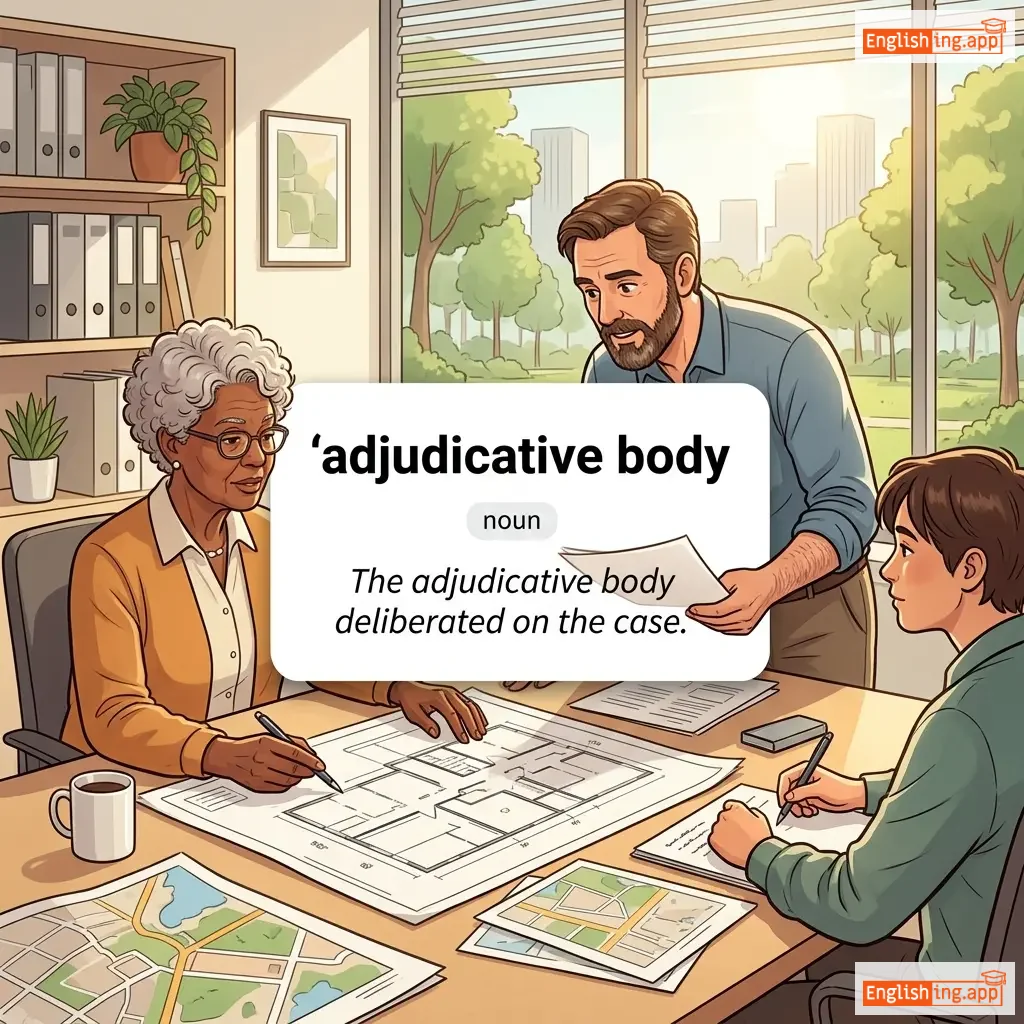
adjudicative body definition card — visual illustration of the meaning
noun
əˈdʒuː.dɪ.kə.tɪv ˈbɒd.i
organismo adjudicativo (organismo adjudicativo)

An official organization that has the authority to judge disputes and make decisions.

"The adjudicative body deliberated on the case."

"El organismo adjudicativo deliberó sobre el caso." (El organismo adjudicativo deliberó sobre el caso.)
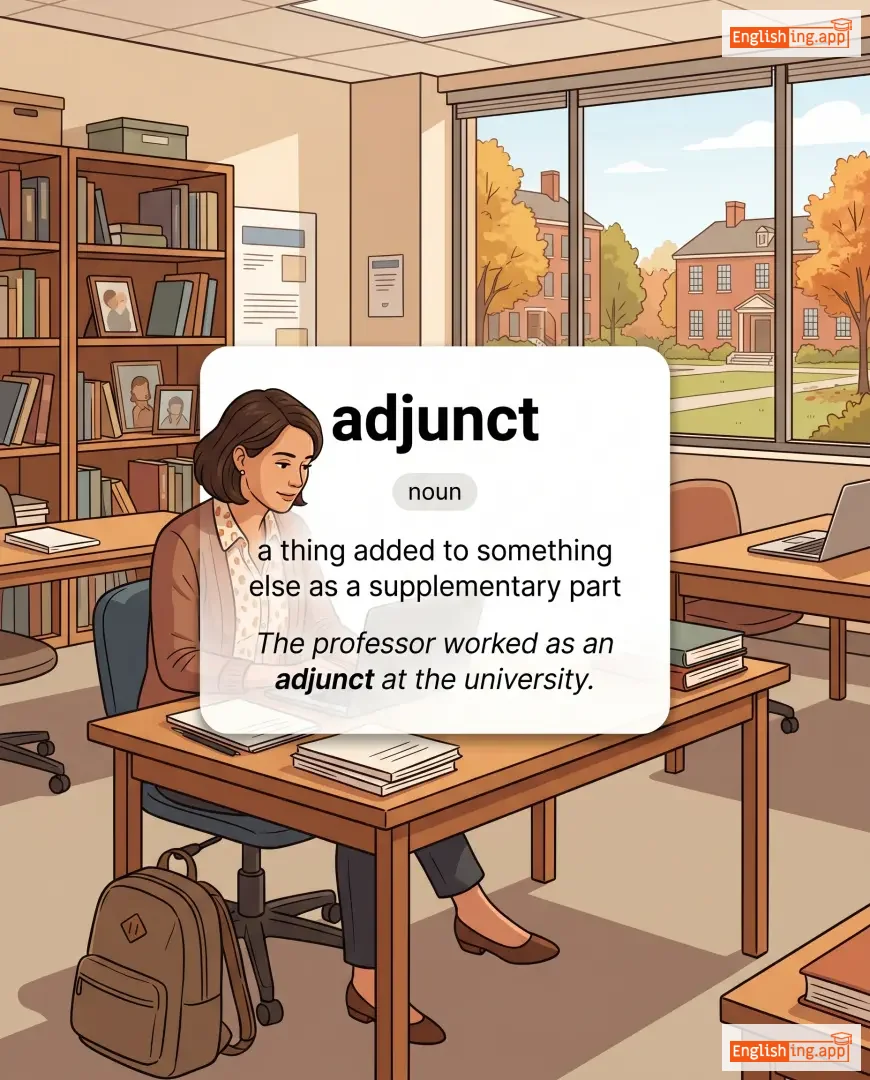
adjunct definition card — visual illustration of the meaning
noun
/ˈædʒʌŋkt/
auxiliar (auxiliar)

a thing added to something else as a supplementary part

"The professor worked as an adjunct at the university."

"El profesor trabajaba como auxiliar en la universidad." (El profesor trabajaba como auxiliar en la universidad.)
noun
/ˌædʒʊˈreɪʃən/
súplica solemne (suplica solemne)

a solemn urging or appeal

"The priest made an adjuration for peace and unity."

"El sacerdote hizo una súplica solemne por la paz y la unidad." (El sacerdote hizo una suplica solemne por la paz y la unidad.)
verb
/əˈdʒʊər/
adjuramentar (adjuramentar)

to urge or command someone solemnly, often under oath or a strong sense of duty

"The witness was adjured to tell the truth in court."

"El testigo fue adjurado a decir la verdad en el tribunal." (El testigo fue adjurado a decir la verdad en el tribunal.)
verb
/əˈdʒʌst/
ajustar (ajustar)

to change something slightly to make it more suitable or effective

"She adjusted the mirror to see the road clearly."

"Ella ajustó el espejo para ver la carretera claramente." (Ella ajustó el espejo para ver la carretera claramente.)
adjective
/əˈdʒʌstəbəl/
ajustable; modificable; regulable; (ajustable; modificable; regulable;)

নিয়মযোগ্য; পরিবর্তন-সাধ্য; সমন্বয়যোগ্য;

"This chair has an adjustable height feature."

"Esta silla tiene una altura ajustable." (Esta silla tiene una altura ajustable.)
noun
/əˈdʒʌstmənt/
ajuste (ajuste)

a small change made to improve something or make it work better

"The doctor made an adjustment to the patient’s medication."

"El doctor hizo un ajuste en la medicación del paciente." (El doctor hizo un ajuste en la medicación del paciente.)
noun
/ˈædʒʊtənt/
oficial militar que actúa como asistente administrativo de un oficial superior (oficial militar que actúa como asistente administrativo de un oficial superior)

a military officer who acts as an administrative assistant to a senior officer

"The colonel relied on his adjutant to manage daily orders."

"El coronel dependía de su adjunto para gestionar los pedidos diarios." (El coronel dependía de su adjunto para gestionar los pedidos diarios.)
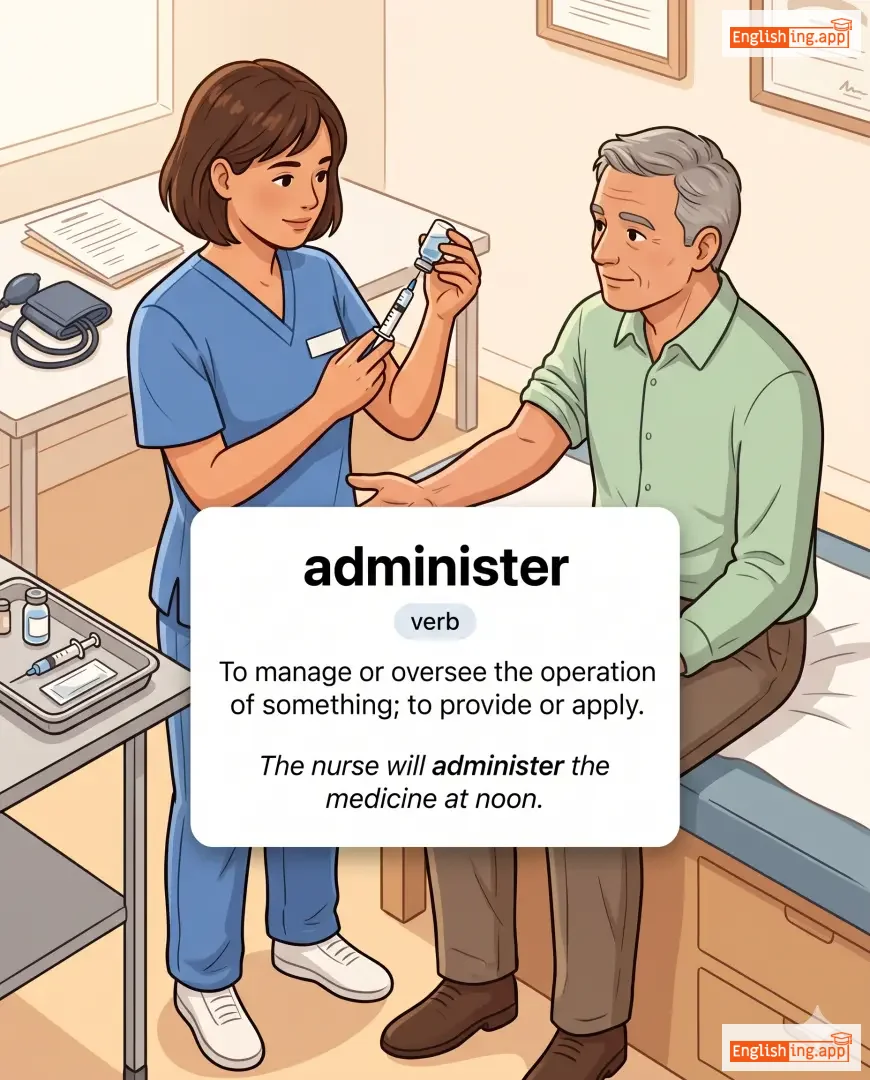
administer definition card — visual illustration of the meaning
verb
/ədˈmɪnɪstər/
administrar / aplicar (administrar / aplicar)

To manage or oversee the operation of something; to provide or apply.

"The nurse will administer the medicine at noon."

"La enfermera administrará la medicina al mediodía." (La enfermera administrará la medicina al mediodía.)
verb
/ədˈmɪnɪstreɪt/
administrar (administrar)

to manage or supervise the execution of duties, laws, or resources; to formally give or apply something such as a test or medicine

"The committee will administrate the new policy across all departments."

"El comité administrará la nueva política en todos los departamentos." (el comite administrara la nueva politica en todos los departamentos)
noun
/ədˌmɪnɪˈstreɪʃən/
administración (administracion)

The management or organization of a business, institution, or government.

"The new administration introduced several reforms."

"La nueva administración introdujo varias reformas." (La nueva administracion introdujo varias reformas.)
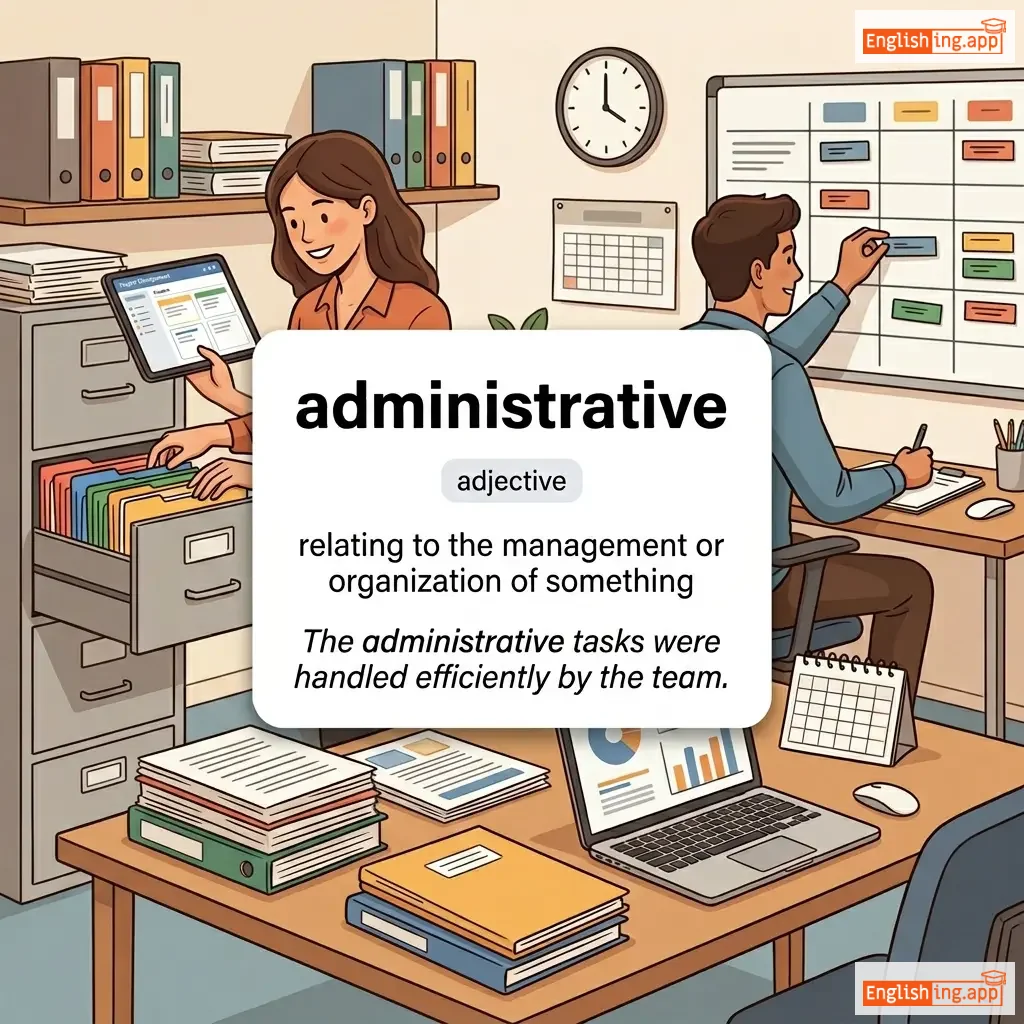
administrative definition card — visual illustration of the meaning
adjective
/ədˈmɪnɪstrətɪv/
administrativo (administrativo)

relating to the management or organization of something

"The administrative tasks were handled efficiently by the team."

"Las tareas administrativas fueron manejadas eficientemente por el equipo." (Las tareas administrativas fueron manejadas eficientemente por el equipo.)
🧑‍💼

administrator

noun
/ədˈmɪnɪstreɪtər/

a person responsible for running or managing an organization or system

"The school administrator implemented new policies for students."

adjective
/ˈædmərəbəl/
admirable (admirable)

প্রশংসনীয়; চমৎকার;

"Her dedication to helping others is truly admirable."

"Su dedicación a ayudar a los demás es verdaderamente admirable." (Su dedicación a ayudar a los demás es verdaderamente admirable.)
noun
/ˌædməˈreɪʃən/
admiración (admiracion)

a feeling of respect, pleasure, or approval for someone or something

"She felt great admiration for her teacher’s dedication."

"Ella sentía gran admiración por su maestro." (ella sentia gran admiracion por su maestro)
verb
/ədˈmaɪər/
admirar (admirar)

To respect, appreciate, or look up to someone or something.

"I really admire her dedication to education."

"Realmente admiro su dedicación a la educación." (Realmente admiro su dedicación a la educación.)
adjective
/ədˈmɪsəbl/
admisible (admisible)

acceptable or valid, especially as evidence in a court of law

"The judge ruled that the document was admissible as evidence."

"El juez dictaminó que el documento era admisible como prueba." (El juez dictamino que el documento era admisible como prueba.)
noun
/ədˈmɪʃən/
admisión (admision)

The process or fact of being allowed to enter a place or join an organization.

"The admission fee to the museum is five dollars."

"La tarifa de admisión al museo es de cinco dólares." (La tarifa de admision al museo es de cinco dolares.)
admit definition card — visual illustration of the meaning
verb
/ədˈmɪt/
admitir (admitir)

To confess or acknowledge something as true; to allow entry.

"He admitted that he had made a mistake."

"Él admitió que había cometido un error." (Él admitió que había cometido un error.)
noun
/ədˈmɪtəns/
admisión (admisión)

the process or fact of entering or being allowed to enter a place

"No admittance without a valid ticket."

"No hay admisión sin un boleto válido." (No hay admisión sin un boleto válido.)
admonish definition card — visual illustration of the meaning
verb
/ədˈmɒnɪʃ/
amonestar (amonestar)

to warn or reprimand someone firmly; to advise or urge earnestly

"The teacher admonished the students for being late."

"El profesor amonestó a los estudiantes por llegar tarde." (El profesor amonestó a los estudiantes por llegar tarde.)
noun
/ˌædməˈnɪʃən/
amonestación (amonestacion)

a firm warning or reprimand; gentle or earnest advice

"He received an admonition for his careless work."

"Él recibió una amonestación por su trabajo descuidado." (El recibio una amonestacion por su trabajo descuidado.)
adjective
/ədˈmɒnɪtəri/
amonestador (amonestador)

giving or conveying a warning or reprimand

"She gave him an admonitory glance."

"Ella le dio una mirada amonestadora." (Ella le dio una mirada amonestadora.)
noun
/əˈduː/
alboroto / actividad innecesaria (alboroto / actividad innecesaria)

a fuss or unnecessary activity; trouble or difficulty

"Without further ado, let’s begin the ceremony."

"Sin más alboroto, empecemos la ceremonia." (Sin más alboroto, empecemos la ceremonia.)
noun/adjective
/ˌædəˈlɛsənt/
adolescente (adolescente)

A young person in the process of developing from a child into an adult.

"Adolescents often experience rapid physical and emotional changes."

"Los adolescentes a menudo experimentan cambios físicos y emocionales rápidos." (Los adolescentes a menudo experimentan cambios físicos y emocionales rápidos.)
👨‍👩‍👧

adopt (adoptar)

verb
/əˈdɒpt/
adoptar (adoptar)

To take something as your own, such as a child, idea, or method.

"They decided to adopt a child from the orphanage."

"Decidieron adoptar un niño del orfanato." (Decidieron adoptar un niño del orfanato.)
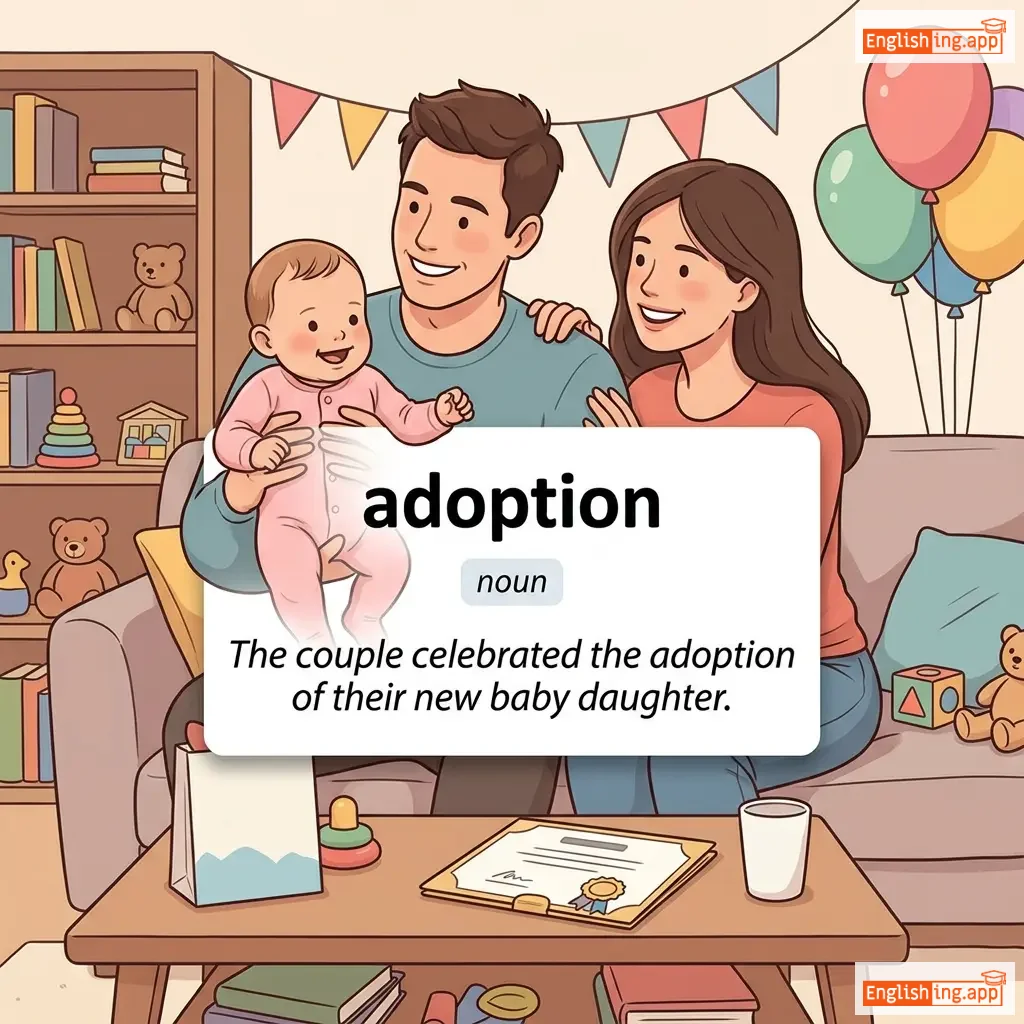
adoption definition card — visual illustration of the meaning
noun
/əˈdɒpʃən/
adopción (adopcion)

the action or fact of adopting something

"The adoption of new technology has improved our efficiency."

"La adopción de nueva tecnología ha mejorado nuestra eficiencia." (La adopcion de nueva tecnologia ha mejorado nuestra eficiencia.)
👨‍👩‍👧

adoptive (adóptiv)

adjective
/əˈdɒptɪv/
adoptivo (adoptivo)

relating to the adoption of a child or the act of taking something as one’s own

"She grew up in a loving adoptive family."

"Ella creció en una familia adoptiva cariñosa." (ella crecio en una familia adoptiva carinosa)