Vocabularios

Descubra, aprenda y domine el vocabulario en inglés

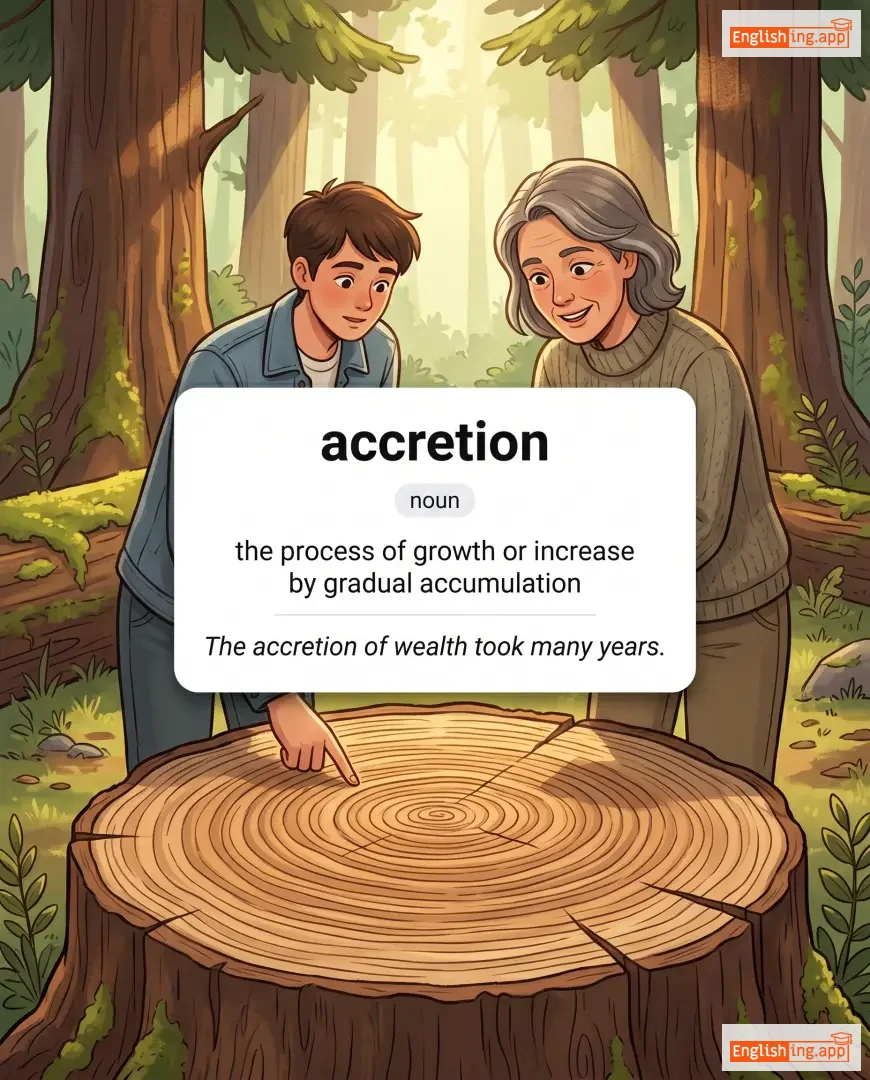
accretion definition card — visual illustration of the meaning
noun
/əˈkriːʃən/
acumulación gradual (acumulacion gradual)

the process of growth or increase by gradual accumulation

"The accretion of wealth took many years."

"La acumulación de riqueza tomó muchos años." (La acumulacion de riqueza tomo muchos anos.)
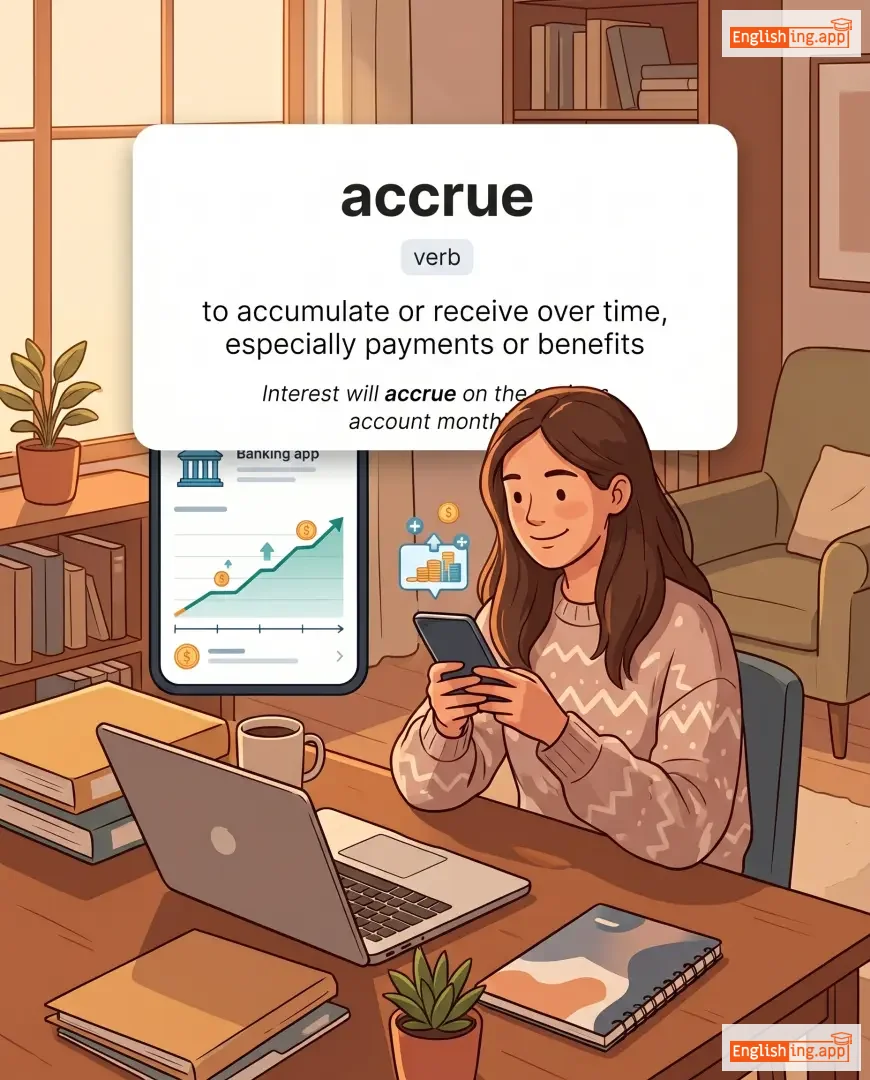
accrue definition card — visual illustration of the meaning
verb
/əˈkruː/
acumularse (acumularse)

to accumulate or receive over time, especially payments or benefits

"Interest will accrue on the savings account monthly."

"Los intereses se acumularán mensualmente en la cuenta de ahorros." (Los intereses se acumularán mensualmente en la cuenta de ahorros.)
verb
/əˈkjuːmjəleɪt/
acumular (acumular)

to gather or collect things gradually over time

"She managed to accumulate a small fortune through wise investments."

"Ella logró acumular una pequeña fortuna a través de inversiones inteligentes." (Ella logro acumular una pequeña fortuna a través de inversiones inteligentes.)
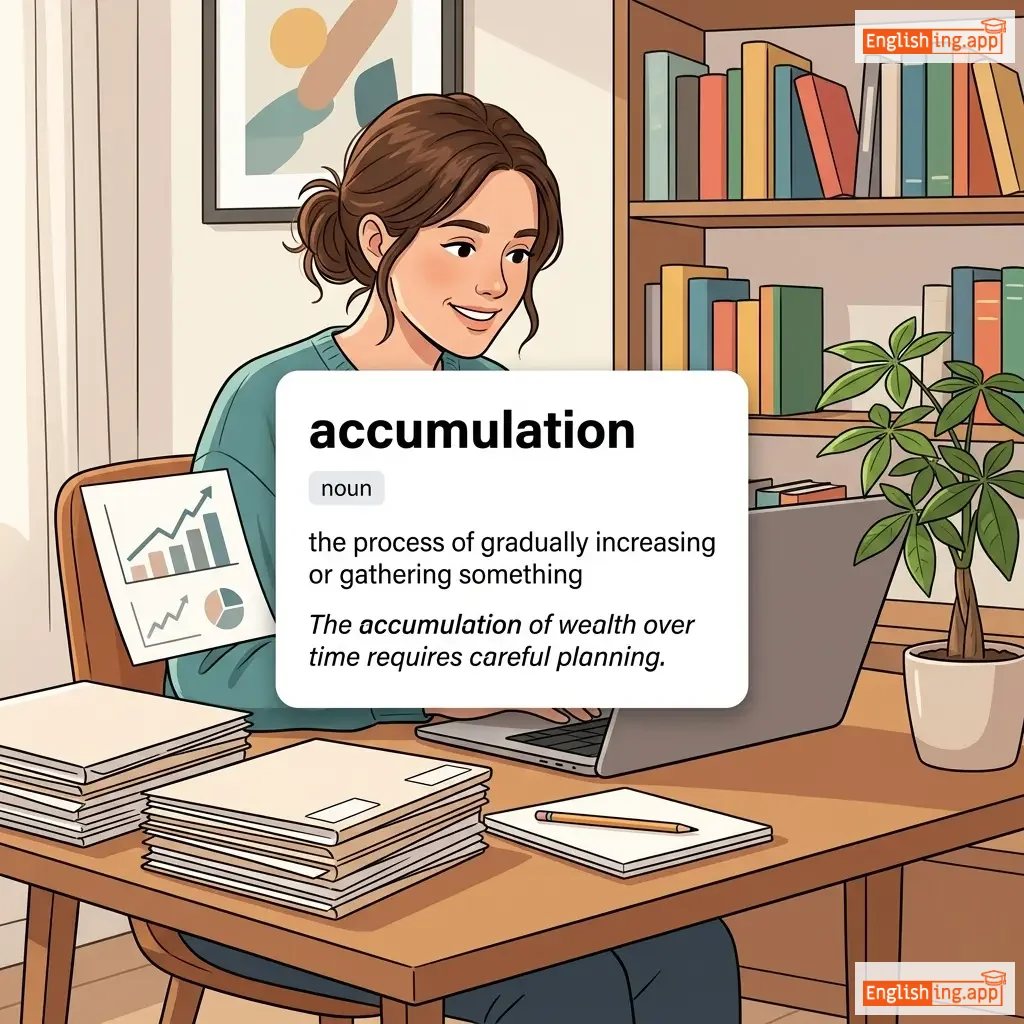
accumulation definition card — visual illustration of the meaning
noun
/əˌkjuːmjʊˈleɪʃən/
acumulación (acumulacion)

the process of gradually increasing or gathering something

"The accumulation of wealth over time requires careful planning."

"La acumulación de riqueza con el tiempo requiere una planificación cuidadosa." (La acumulacion de riqueza con el tiempo requiere una planificacion cuidadosa.)
noun
/ˈækjərəsi/
exactitud (exactitud)

the quality or state of being correct or precise

"The accuracy of the report was confirmed by experts."

"La exactitud del informe fue confirmada por los expertos." (La exactitud del informe fue confirmada por los expertos.)
adjective
/ˈæk.jʊ.rət/
preciso (preciso)

Free from errors; correct and precise.

"The information provided in the report was accurate."

"La información proporcionada en el informe fue precisa." (La informacion proporcionada en el informe fue precisa.)
adverb
/ˈækjʊrətli/
precisamente (precisamente)

in a way that is correct, precise, and free from errors

"The data was collected accurately and analyzed thoroughly."

"Los datos fueron recopilados con precisión y analizados a fondo." (Los datos fueron recopilados con precisión y analizados a fondo.)
adjective
/əˈkɜːrsɪd/
maldito (maldito)

Doomed, detestable, or under a curse.

"The villagers avoided the accursed house on the hill."

"Los aldeanos evitaban la casa maldita en la colina." (Los aldeanos evitaban la casa maldita en la colina.)
noun
/ˌæk.jʊˈzeɪ.ʃən/
acusación (acusacion)

A statement that someone has done something wrong or illegal.

"She made an accusation of theft against her colleague."

"Ella hizo una acusación de robo contra su colega." (Ella hizo una acusacion de robo contra su colega.)
adjective
/əˈkjuː.zəˌtɔːr.i/
acusatorio (acusatorio)

Suggesting blame or indicating someone has done wrong.

"He gave her an accusatory glance."

"Él le dio una mirada acusatoria." (El le dio una mirada acusatoria.)
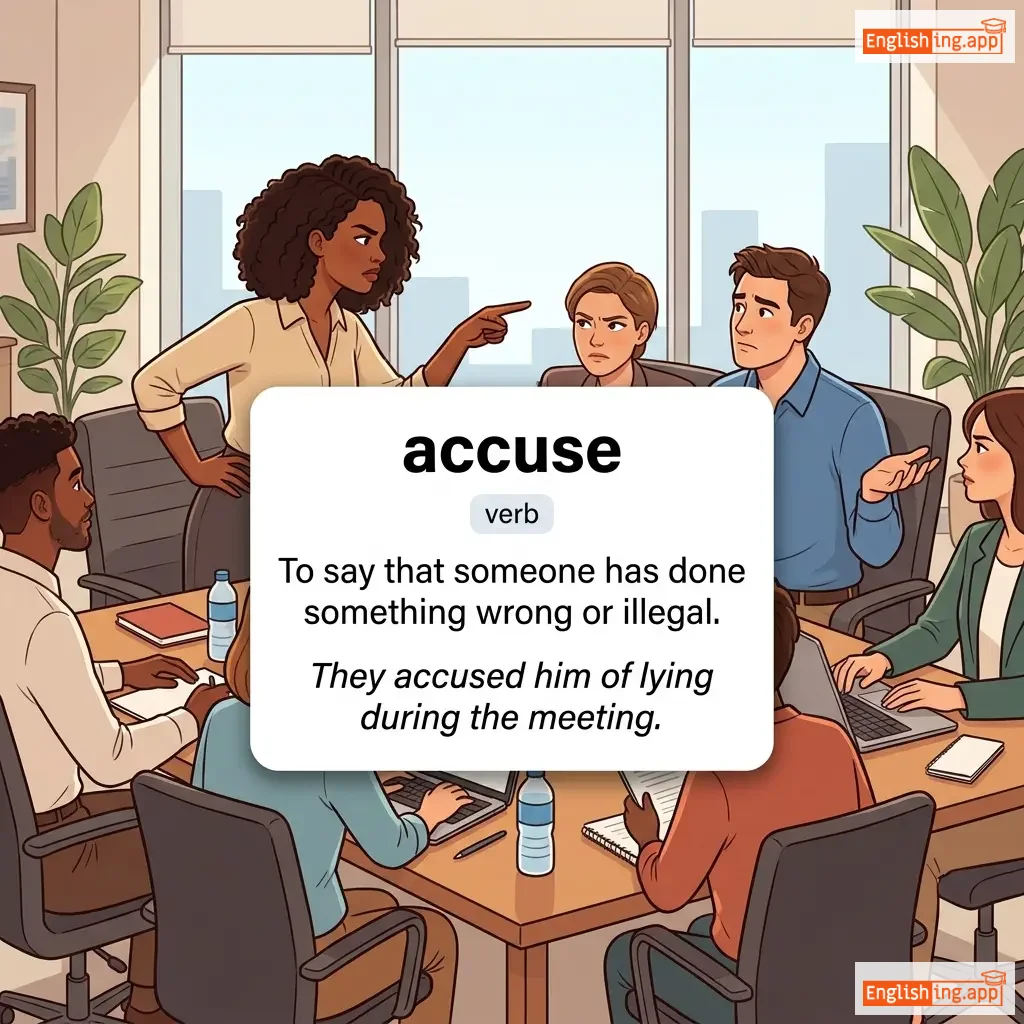
accuse definition card — visual illustration of the meaning
verb
/əˈkjuːz/
acusar (akusar)

To say that someone has done something wrong or illegal.

"They accused him of lying during the meeting."

"Ellos lo acusaron de mentir durante la reunión." (Ellos lo acusaron de mentir durante la reunión.)
noun
/əˈkjuːzd/
acusado (acusado)

a person who has been charged with a crime

"The accused pleaded not guilty in court."

"El acusado se declaró no culpable en la corte." (El acusado se declaró no culpable en la corte.)
verb
/əˈkʌstəm/
acostumbrar (acostumbrar)

to make someone familiar with something through regular experience or use

"It took him a while to accustom himself to the new environment."

"Le tomó un tiempo acostumbrarse al nuevo entorno." (Le tomó un tiempo acostumbrarse al nuevo entorno.)
adjective
/eɪˈsɛfələs/
acéfalo (acefalo)

having no leader or head; headless

"The acephalous group soon fell into disorganization."

"El grupo acéfalo pronto cayó en desorganización." (El grupo acefalo pronto cayo en desorganizacion.)
adjective
/əˈsɜːrbɪk/
ácido (acido)

sharp, harsh, or bitter in tone or taste

"His acerbic comments offended many people in the meeting."

"Sus comentarios ácidos ofendieron a muchas personas en la reunión." (Sus comentarios acidos ofendieron a muchas personas en la reunion.)
noun
/əˈsɜːrbəti/
acerbidad (acerbidad)

bitterness or sharpness of tone, manner, or taste

"The acerbity of his remarks left everyone silent."

"La acerbidad de sus comentarios dejó a todos en silencio." (La acerbidad de sus comentarios dejó a todos en silencio.)
noun
/ˈæsɪˌteɪt/
acetato (acetato)

a salt or ester of acetic acid; a synthetic material used in textiles and film

"The company produces acetate fibers for clothing."

"La empresa produce fibras de acetato para ropa." (La empresa produce fibras de acetato para ropa.)
adjective
/əˈsiːtɪk/
ácetico (acetico)

relating to or containing acetic acid; sour or vinegary in taste or smell

"The acetic smell of vinegar filled the kitchen."

"El olor acético del vinagre llenó la cocina." (El olor acético del vinagre llenó la cocina.)
verb
/eɪk/
dolor (dolor)

to suffer a continuous dull pain

"Her back ached after sitting for so long."

"Le dolía la espalda después de estar sentada tanto tiempo." (Le dolía la espalda después de estar sentada tanto tiempo.)
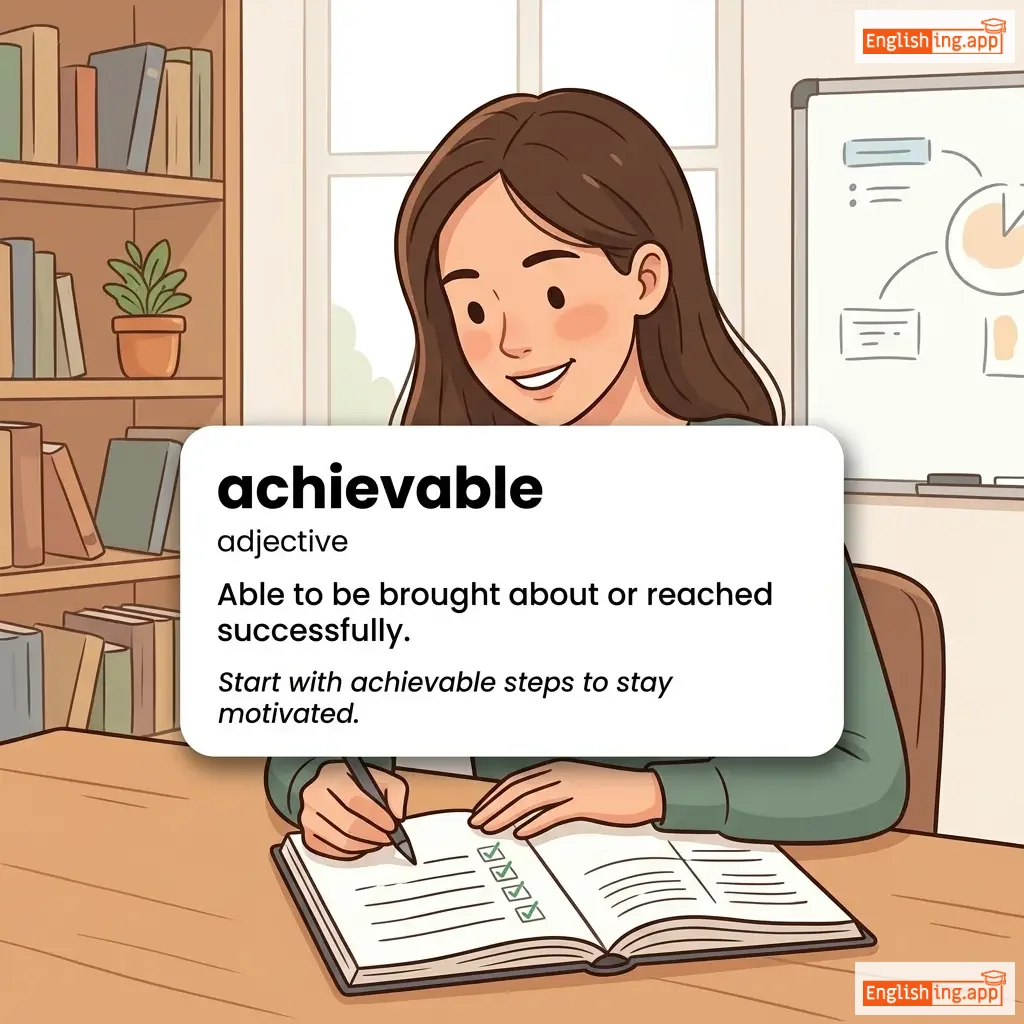
achievable definition card — visual illustration of the meaning
adjective
/əˈtʃiːvəbl/
alcanzable (alcanzable)

Able to be brought about or reached successfully.

"Start with achievable steps to stay motivated."

"Comienza con pasos alcanzables para mantenerte motivado." (Comienza con pasos alcanzables para mantenerte motivado.)
verb
/əˈtʃiːv/
lograr (lograr)

to successfully bring about or reach a desired goal or result

"She worked hard to achieve her dream of becoming a doctor."

"Ella trabajó duro para lograr su sueño de convertirse en doctora." (Ella trabajo duro para lograr su sueno de convertirse en doctora.)
noun
/əˈtʃiːvmənt/
logro (logro)

Something that has been successfully completed or accomplished through effort or skill.

"Graduating from university was her greatest achievement."

"Graduarse de la universidad fue su mayor logro." (Graduarse de la universidad fue su mayor logro.)
adjective
/əˈkɪliən/
achilliano (achilian)

like or characteristic of Achilles; strong but vulnerable

"His achillean pride made him blind to danger."

"Su orgullo achilliano lo hizo ciego al peligro." (Su orgullo achilliano lo hizo ciego al peligro.)
adjective
/ˌækrəˈmætɪk/
acromático (acromatico)

without color; free from color

"The designer chose an achromatic palette of black, white, and gray."

"El diseñador eligió una paleta acromática de negro, blanco y gris." (El disenador eligio una paleta acromatica de negro, blanco y gris.)
noun
/ˈæsɪd/
ácido (acido)

a chemical substance that reacts with bases and has a sour taste

"Lemons contain citric acid."

"Los limones contienen ácido cítrico." (Los limones contienen ácido cítrico.)
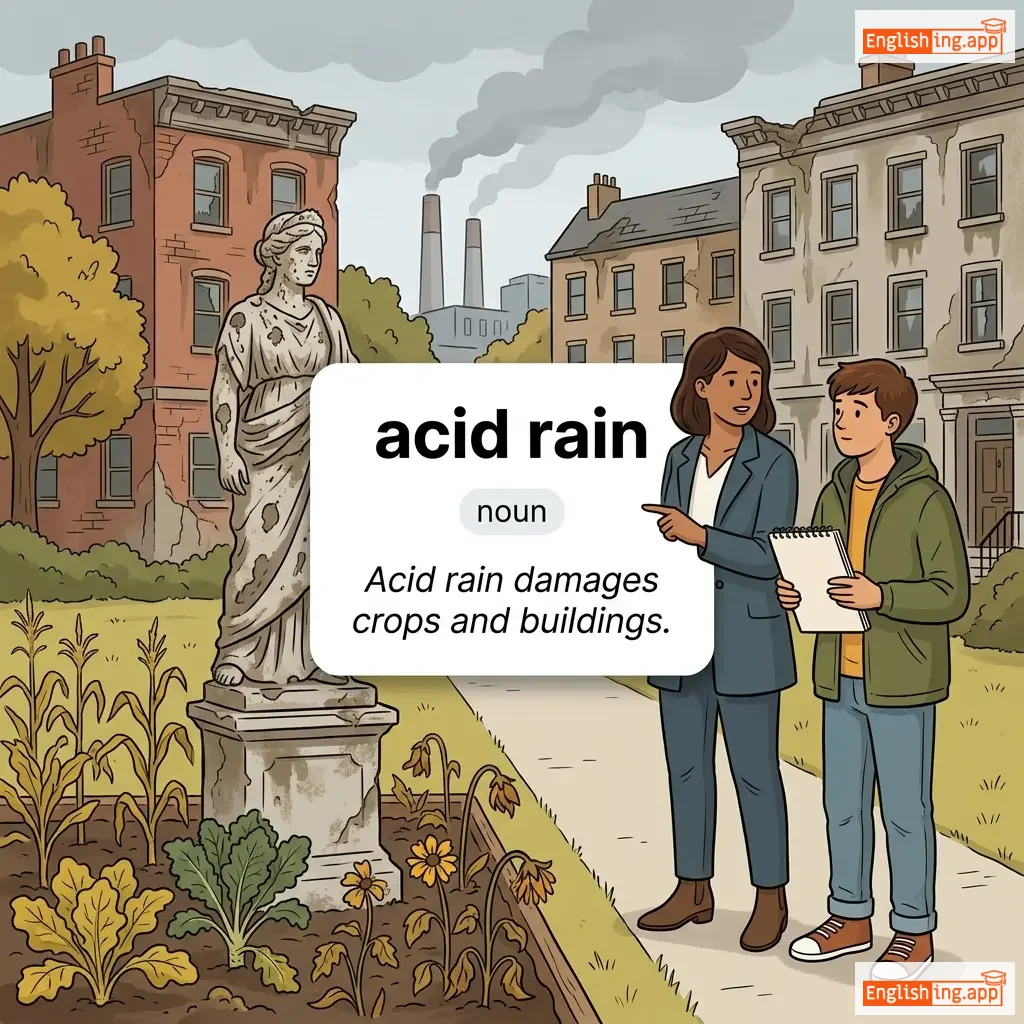
acid rain definition card — visual illustration of the meaning
noun
ˈæsɪd reɪn
lluvia ácida (lluvia acida)

Rainfall made acidic by atmospheric pollution, especially from industrial emissions.

"Acid rain damages crops and buildings."

"La lluvia ácida daña los cultivos y los edificios." (La lluvia acida dana los cultivos y los edificios.)
adjective
/əˈsɪdɪk/
ácido (acido)

containing acid; having a sour taste; sharp or biting in tone

"The lemon has an acidic taste that makes your mouth pucker."

"El limón tiene un sabor ácido." (el limon tiene un sabor acido)
verb
/əˈsɪdɪfaɪ/
acidificar (acidificar)

to make something acidic or more acidic

"Farmers worry that pollution will acidify the soil."

"Los agricultores temen que la contaminación acidifique el suelo." (Los agricultores temen que la contaminacion acidifique el suelo.)
noun
/əˈsɪdɪti/
acidez (acidez)

the quality or degree of being acidic; the amount of acid present in a substance

"The acidity of the soil affects how well crops grow."

"La acidez del suelo afecta el crecimiento de los cultivos." (La acidez del suelo afecta el crecimiento de los cultivos)
adjective
/əˈsɪdjʊləs/
ligeramente ácido o amargo (ligeramente acido o amargo)

slightly sour or sharp in taste or manner

"The critic wrote an acidulous review of the movie."

"El crítico escribió una reseña ácida de la película." (El critico escribio una resena acida de la pelicula.)
verb
/əkˈnɒlɪdʒ/
reconocer (reconocer)

to accept, admit, or recognize the truth or existence of something

"She refused to acknowledge her mistake."

"Ella se negó a reconocer su error." (Ella se negó a reconocer su error.)
noun
/əkˈnɒlɪdʒmənt/
reconocimiento (reconocimiento)

the act of recognizing or accepting something as true or valid; an expression of gratitude or recognition

"She received an acknowledgement for her contribution to the project."

"Recibió un reconocimiento por su contribución al proyecto." (recibio un reconocimiento por su contribucion al proyecto)
noun
/əkˈnɒlɪdʒmənt/
reconocimiento (reconocimiento)

the act of accepting, admitting, or recognizing something

"He received an acknowledgment of his application."

"Él recibió un reconocimiento por su solicitud." (El recibio un reconocimiento por su solicitud.)
noun
/ˈækmi/
cima (seema)

the highest point of achievement or excellence

"Winning the award was the acme of his career."

"Ganar el premio fue la cima de su carrera." (Ganar el premio fue la cima de su carrera.)
noun
/ˈækni/
acné (acne)

a skin condition in which pores become inflamed and clogged, causing pimples and spots

"Regular cleansing and a balanced diet can help reduce acne."

"La limpieza regular y una dieta equilibrada pueden ayudar a reducir el acné." (La limpieza regular y una dieta equilibrada pueden ayudar a reducir el acné.)
noun
/ˈækəlaɪt/
acólito (acolito)

a follower or assistant, especially in a religious service or as a devoted supporter of a leader

"The senator arrived with a small group of acolytes who handled the press."

"El senador llegó con un pequeño grupo de acólitos que se encargaban de la prensa." (El senador llego con un pequeno grupo de acolitos que se encargaban de la prensa.)
adjective
/əˈkuːstɪk/
acústico (akustiko)

relating to sound or the sense of hearing; not amplified by electrical means

"We recorded an acoustic version of the song in a quiet room."

"Grabamos una versión acústica de la canción en una habitación tranquila." (Grabamos una version acustica de la cancion en una habitacion tranquila.)
noun
/əˈkuːstɪks/
acústica (acustica)

the science of sound, or the properties of a space that affect how sound is heard

"The hall’s excellent acoustics made the orchestra sound rich and clear."

"La excelente acústica del salón hizo que la orquesta sonara rica y clara." (La excelente acústica del salón hizo que la orquesta sonara rica y clara.)
verb
/əˈkweɪnt/
familiarizar (familiarizar)

to make someone familiar with something; to inform or introduce

"Please acquaint yourself with the safety guidelines before operating the machine."

"Por favor, familiarícese con las pautas de seguridad antes de operar la máquina." (Por favor, familiarícese con las pautas de seguridad antes de operar la máquina.)
verb
/ˌækwiˈɛs/
aceptar sin protestar (aceptar sin protestar)

to accept something reluctantly but without protest

"She decided to acquiesce to her parents’ wishes."

"Ella decidió aceptar sin protestar los deseos de sus padres." (Ella decidió aceptar sin protestar los deseos de sus padres.)
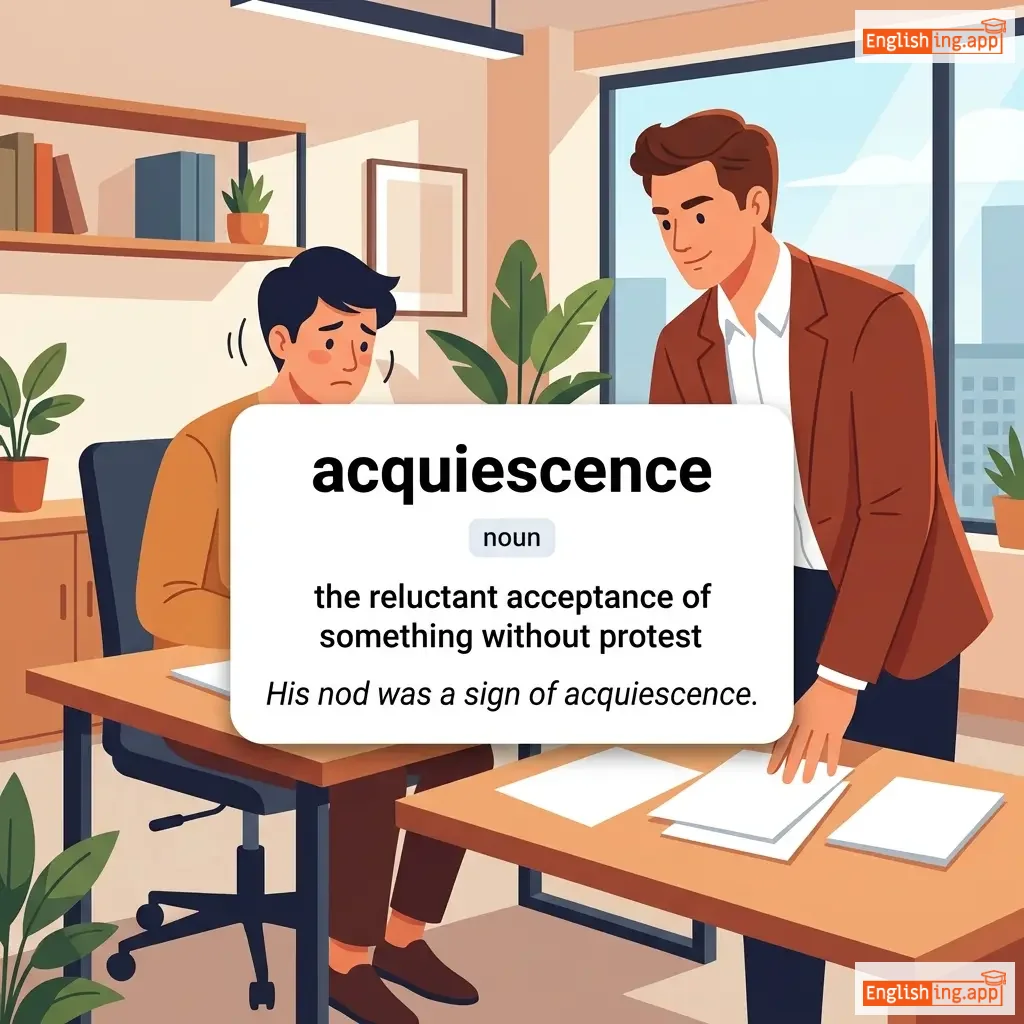
acquiescence definition card — visual illustration of the meaning
noun
/ˌækwiˈɛsəns/
aceptación tácita (aceptacion tacita)

the reluctant acceptance of something without protest

"His nod was a sign of acquiescence."

"Su asentimiento fue una señal de aceptación tácita." (Su asentimiento fue una senal de aceptacion tacita.)
adjective
/ˌækwiˈɛsənt/
sumiso (sumiso)

ready to accept something without protest, or to do what someone else wants

"He gave an acquiescent smile and agreed to the plan."

"Él dio una sonrisa sumisa y aceptó el plan." (Él dio una sonrisa sumisa y aceptó el plan.)
acquire definition card — visual illustration of the meaning
verb
/əˈkwaɪər/
adquirir (adquirir)

to obtain or gain possession of something

"She managed to acquire a rare painting at the auction."

"Ella logró adquirir una pintura rara en la subasta." (Ella logro adquirir una pintura rara en la subasta.)
noun
/əˈkwaɪərmənt/
adquisición; logro (adquisicion; logro)

the act of acquiring something; something that has been acquired, especially a skill or possession

"Language proficiency is an important acquirement for global careers."

"El dominio del idioma es una adquisición importante para carreras globales." (El dominio del idioma es una adquisicion importante para carreras globales)
Acquisition definition card — visual illustration of the meaning
noun
/ˌækwɪˈzɪʃən/
adquisición (adquisicion)

the act of obtaining or gaining something, often knowledge, skills, or property

"The company announced the acquisition of a smaller competitor."

"La empresa anunció la adquisición de un competidor más pequeño." (La empresa anuncio la adquisicion de un competidor mas pequeno.)
adjective
/əˈkwɪzətɪv/
adquisitivo (adquisitivo)

excessively interested in acquiring money or material things

"The acquisitive businessman bought every piece of land he could find."

"El empresario codicioso compró cada parcela de terreno que pudo encontrar." (El empresario codicioso compro cada parcela de terreno que pudo encontrar)
verb
/əˈkwɪt/
absolver (absolver)

to free someone from a criminal charge by a verdict of not guilty

"The court decided to acquit the defendant of all charges."

"El tribunal decidió absolver al acusado de todos los cargos." (El tribunal decidió absolver al acusado de todos los cargos.)
noun
/əˈkwɪtl/
absolucion (absolusion)

a judgment that a person is not guilty of the crime with which they have been charged

"The acquittal of the accused shocked the public."

"La absolucion del acusado sorprendio al publico." (La absolucion del acusado sorprendio al publico.)
noun
/əˈkwɪtəns/
recibo de pago (recibo de pago)

a written receipt acknowledging payment or discharge of a debt

"He demanded an acquittance after paying the loan."

"Él exigió un recibo de pago después de pagar el préstamo." (El exigió un recibo de pago después de pagar el préstamo.)
noun
/ˈeɪkər/
acre (ahkehr)

a unit of land area equal to 4,840 square yards (about 4,047 square meters)

"The farmer owns five acres of fertile land."

"El granjero posee cinco acres de tierra fértil." (el granjero posee cinco acres de tierra fertil)