Vocabularios

Descubra, aprenda y domine el vocabulario en inglés

verb
/əˈbɑː.mə.neɪt/
abominar (abominar)

to feel hatred or loathing for something

"She abominates cruelty to animals."

"Ella abomina la crueldad hacia los animales." (Ella abomina la crueldad hacia los animales.)
noun
/əˌbɑː.məˈneɪ.ʃən/
abominación (abominacion)

a thing that causes disgust or hatred

"Slavery was considered an abomination."

"La esclavitud fue considerada una abominación." (La esclavitud fue considerada una abominacion.)
adjective
/ˌæbəˈrɪdʒənəl/
aborigen (aborijen)

Relating to the original inhabitants of a region.

"The museum has a large collection of aboriginal art."

"El museo tiene una gran colección de arte aborigen." (El museo tiene una gran colección de arte aborigen.)
noun
/ˌæbəˈrɪdʒəniːz/
aborígenes (aborígenes)

The original inhabitants of a land, especially in Australia.

"The aborigines have preserved their traditions for thousands of years."

"Los aborígenes han preservado sus tradiciones durante miles de años." (Los aborígenes han preservado sus tradiciones durante miles de años.)
verb
/əˈbɔːrt/
abortar; cancelar (abortar; cancelar)

to stop a process or action before it is completed; to end a pregnancy deliberately

"The pilot decided to abort the mission due to bad weather."

"El piloto decidió abortar la misión por el mal tiempo." (El piloto decidio abortar la mision por el mal tiempo)
noun
/əˈbɔːrʃən/
aborto (aborto)

The deliberate termination of a human pregnancy, usually performed during the first 28 weeks.

"The debate about abortion continues to divide public opinion."

"El debate sobre el aborto sigue dividiendo la opinión pública." (El debate sobre el aborto sigue dividiendo la opinion publica.)
adjective
/əˈbɔːrtɪv/
fallido (fallido)

Failing to produce the intended result; unsuccessful.

"Their abortive attempt to climb the mountain ended in retreat."

"Su intento abortivo de escalar la montaña terminó en retirada." (Su intento abortivo de escalar la montaña terminó en retirada.)
verb
/əˈbaʊnd/
abundar (abundar)

To exist in large numbers or amounts.

"Opportunities abound in the field of technology."

"Las oportunidades abundan en el campo de la tecnología." (Las oportunidades abundan en el campo de la tecnología.)
preposition, adverb
/əˈbaʊt/
sobre (sobre)

concerning; on the subject of; approximately

"We talked about the new project yesterday."

"Hablamos sobre el nuevo proyecto ayer." (Hablamos sobre el nuevo proyecto ayer.)
preposition, adverb
/əˈbʌv/
arriba (arriba)

at a higher place or position than something

"The picture hangs above the fireplace."

"El cuadro cuelga por encima de la chimenea." (El cuadro cuelga por encima de la chimenea.)
adjective, adverb
/əˈbʌvˌbɔːrd/
Honesto y abierto (Honesto y abierto)

Open and honest; without deception or trickery.

"The business deal was completely aboveboard."

"El acuerdo de negocios fue completamente honesto y abierto." (El acuerdo de negocios fue completamente honesto y abierto.)
verb
/əˈbreɪd/
desgastar por fricción (desgastar por friccion)

to scrape or wear away the surface by friction or erosion

"The rough cloth can easily abrade the skin."

"La tela rugosa puede fácilmente desgastar la piel." (La tela rugosa puede facilmente desgastar la piel.)
noun
/əˈbreɪʒən/
raspadura o desgaste de la piel o superficie debido a la fricción (raspadura o desgaste de la piel o superficie debido a la friccion)

a scrape or wearing away of the skin or surface due to friction

"He suffered a minor abrasion on his knee after falling."

"Él sufrió una pequeña raspadura en su rodilla después de caerse." (El sufrio una pequena raspadura en su rodilla despues de caerse.)
adjective
/əˈbreɪsɪv/
áspero, rugoso o capaz de desgastar por frotamiento (aspero, rugoso o capaz de desgastar por frotamiento)

harsh, rough, or capable of wearing down by rubbing

"His abrasive tone made everyone uncomfortable."

"Su tono áspero hizo que todos se sintieran incómodos." (Su tono aspero hizo que todos se sintieran incomodos.)
🚶‍♂️🚶‍♂️

abreast (abrest)

adverb
/əˈbrɛst/
lado a lado (lado a lado)

side by side and facing the same direction; informed about something

"The soldiers marched two abreast down the street."

"Los soldados marcharon dos lado a lado por la calle." (Los soldados marcharon dos lado a lado por la calle.)
verb
/əˈbrɪdʒ/
abreviar (abreviar)

to shorten a text without losing its meaning

"The editor decided to abridge the long novel for young readers."

"El editor decidió abreviar la larga novela para los jóvenes lectores." (El editor decidió abreviar la larga novela para los jóvenes lectores.)
noun
/əˈbrɪdʒmənt/
abreviatura (abreviatura)

A shortened version of a larger work, such as a book or speech.

"The publisher released an abridgment of the lengthy novel for students."

"El editor lanzó una abreviatura de la larga novela para los estudiantes." (El editor lanzo una abreviatura de la larga novela para los estudiantes.)
adverb
/əˈbrɔːd/
en el extranjero (en el extranjero)

In or to a foreign country or countries.

"She studied abroad for two years in Germany."

"Ella estudió en el extranjero durante dos años en Alemania." (Ella estudio en el extranjero durante dos anos en Alemania.)
verb
/ˈæbrəɡeɪt/
abrogar (abrogar)

To formally repeal, cancel, or abolish a law, agreement, or custom.

"The government decided to abrogate the outdated treaty."

"El gobierno decidió abrogar el tratado obsoleto." (El gobierno decidió abrogar el tratado obsoleto.)
adjective
/əˈbrʌpt/
abrupto (abrupto)

Sudden or unexpected, often without warning.

"The car came to an abrupt stop in the middle of the road."

"El coche hizo una parada abrupta en medio de la carretera." (El coche hizo una parada abrupta en medio de la carretera.)
adverb
/əˈbrʌptli/
de repente e inesperadamente; sin advertencia (de repente e inesperadamente; sin advertencia)

suddenly and unexpectedly; without warning

"The meeting ended abruptly when the power went out."

"La reunión terminó abruptamente cuando se fue la luz." (La reunion termino abruptamente cuando se fue la luz)
noun
/ˈæbsɛs/
absceso (absceso)

A swollen area within body tissue containing pus, usually caused by infection.

"The dentist treated the abscess in his tooth."

"El dentista trató el absceso en su diente." (El dentista trato el absceso en su diente.)
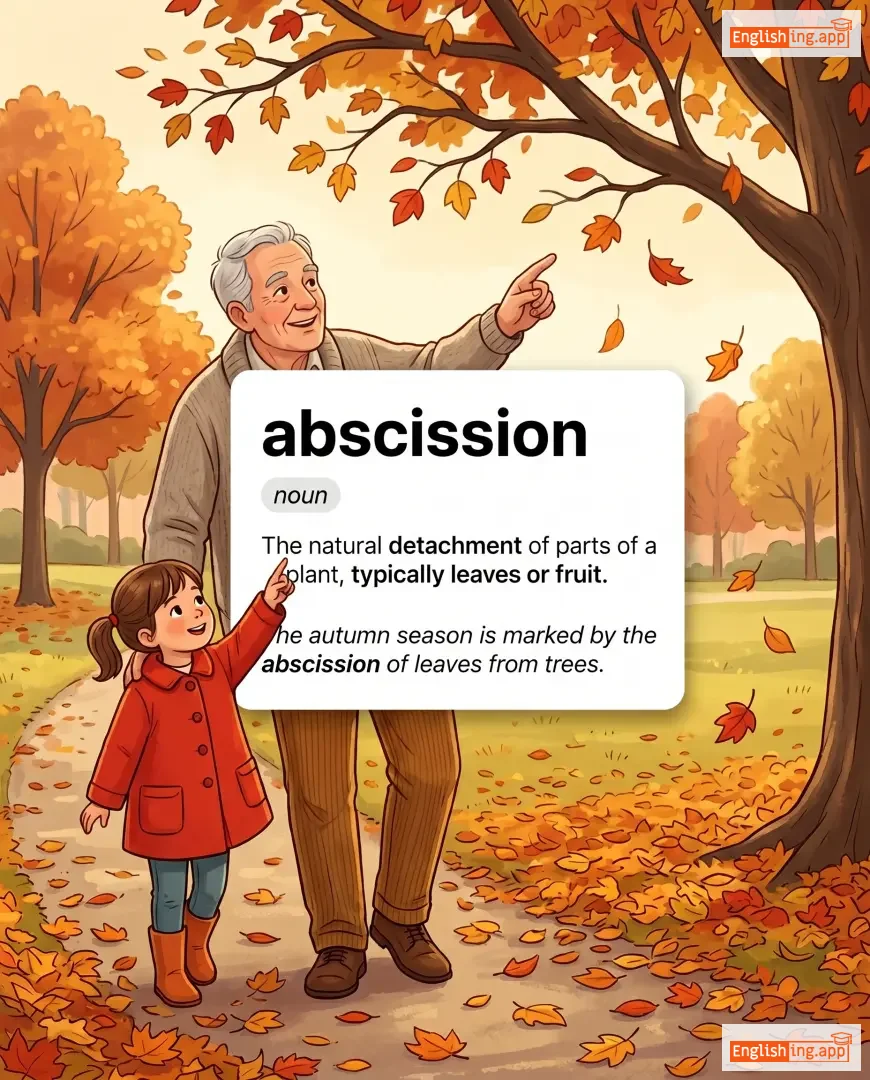
abscission definition card — visual illustration of the meaning
noun
/æbˈsɪʒən/
caída de hojas (caida de hojas)

The natural detachment of parts of a plant, typically leaves or fruit.

"The autumn season is marked by the abscission of leaves from trees."

"La temporada de otoño se caracteriza por la caída de hojas de los árboles." (La temporada de otono se caracteriza por la caida de hojas de los arboles.)
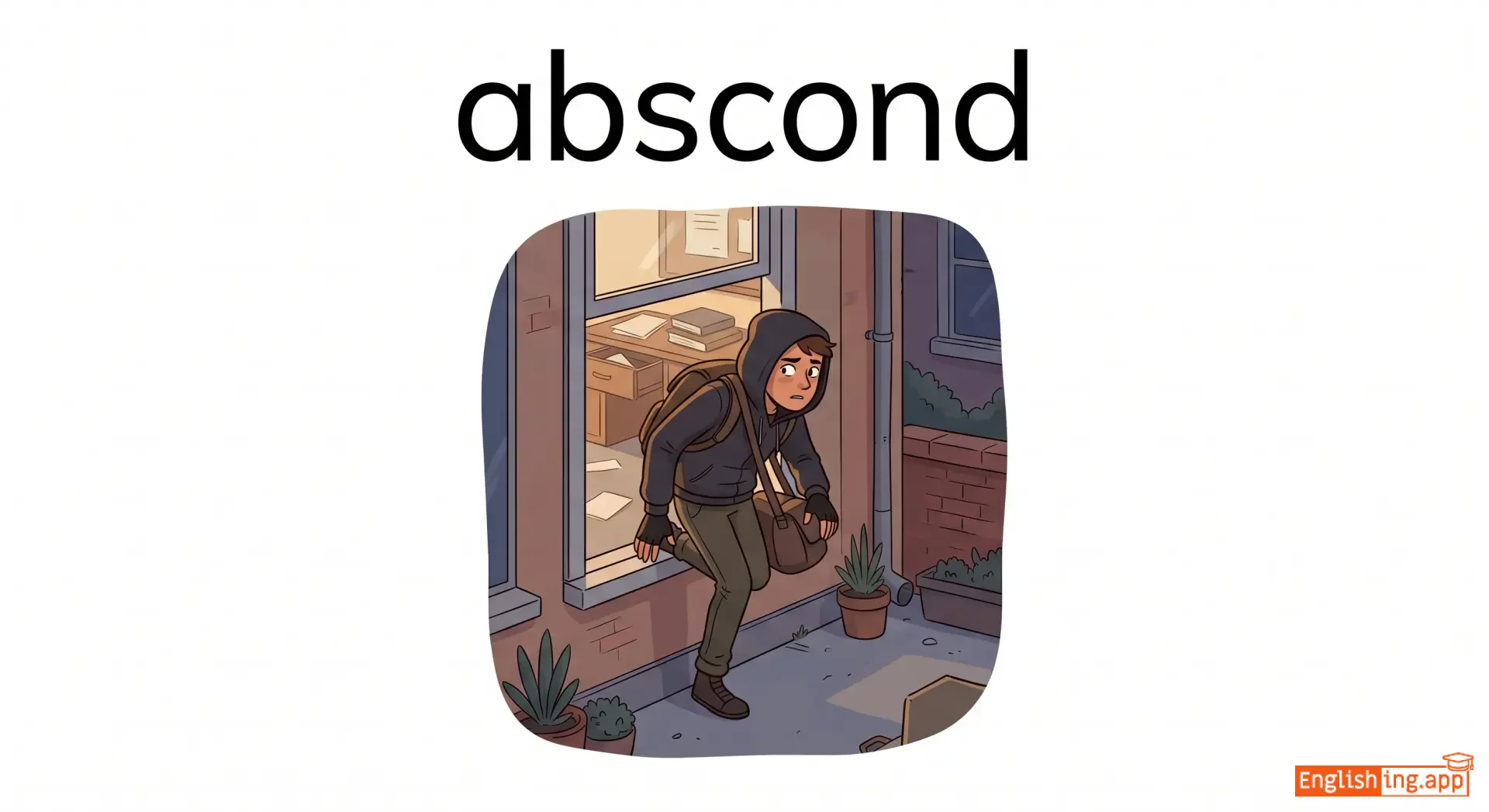
abscond definition card — visual illustration of the meaning
🏃‍♂️

abscond (abscond)

verb
/əbˈskɒnd/
fugarse (fugarse)

to leave secretly and quickly, often to avoid arrest or punishment

"The thief tried to abscond with the stolen jewelry."

"El ladrón intentó fugarse con las joyas robadas." (El ladron intento fugarsen con las joyas robadas.)
noun
/ˈæbsəns/
ausencia (ausencia)

the state of being away from a place or person

"His absence from the meeting was noticed by everyone."

"Su ausencia en la reunión fue notada por todos." (Su ausencia en la reunión fue notada por todos.)
adjective
/ˈæbsənt/
ausente (ausente)

not present at a place or event

"She was absent from the meeting yesterday."

"Ella estuvo ausente de la reunión ayer." (Ella estuvo ausente de la reunión ayer.)
adjective
/ˌæbsənt ˈmaɪndɪd/
distraído (distraido)

often forgetting things or not paying attention

"He is so absent-minded that he often forgets his keys."

"Él está tan distraído que a menudo olvida sus llaves." (El esta tan distraido que a menudo olvida sus llaves.)
adjective
/ˈæbsəluːt/
absoluto (absoluto)

total, complete, or without restriction

"The dictator had absolute power over the nation."

"El dictador tenía poder absoluto sobre la nación." (El dictador tenía poder absoluto sobre la nación.)
adverb
/ˈæbsəluːtli/
absolutamente (absolutamente)

Completely; without qualification or restriction.

"I absolutely agree with your decision."

"Estoy absolutamente de acuerdo con tu decisión." (Estoy absolutamente de acuerdo con tu decisión.)
noun
/ˌæbsəˈluːʃən/
absolución (absolucion)

formal release from guilt, obligation, or punishment

"The priest granted him absolution for his sins."

"El sacerdote le concedió la absolución por sus pecados." (El sacerdote le concedio la absolucion por sus pecados.)
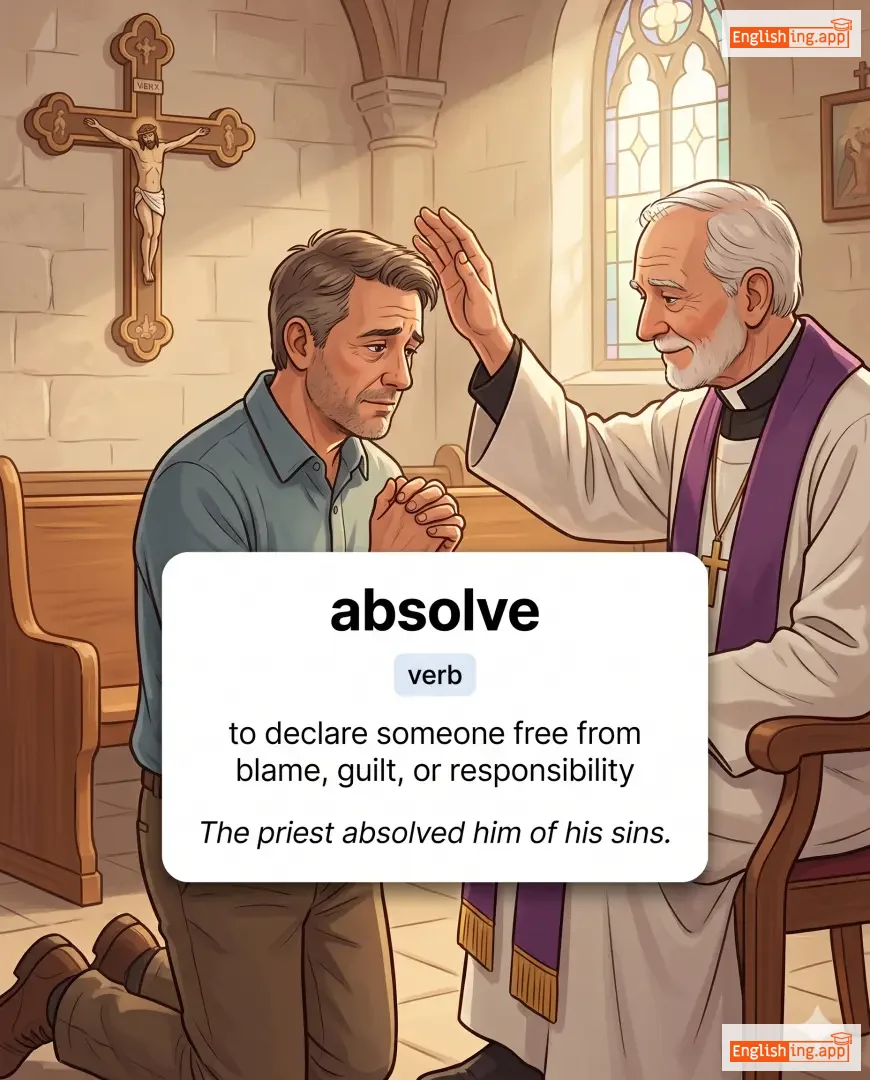
absolve definition card — visual illustration of the meaning
verb
/əbˈzɒlv/
absolver (absolver)

to declare someone free from blame, guilt, or responsibility

"The priest absolved him of his sins."

"El sacerdote lo absolvió de sus pecados." (El sacerdote lo absolvió de sus pecados.)
verb
/əbˈzɔːrb/
absorber (absorber)

to take in or soak up a liquid, energy, or information

"The sponge absorbed all the water."

"La esponja absorbió toda el agua." (La esponja absorbió toda el agua.)
adjective, noun
/əbˈzɔːrbənt/
absorbente (absorbente)

able to soak up liquid, moisture, or energy easily; a material or substance that absorbs

"This towel is highly absorbent and dries quickly."

"Esta toalla es muy absorbente y se seca rápido." (esta toalla es muy absorbente y se seca rapido)
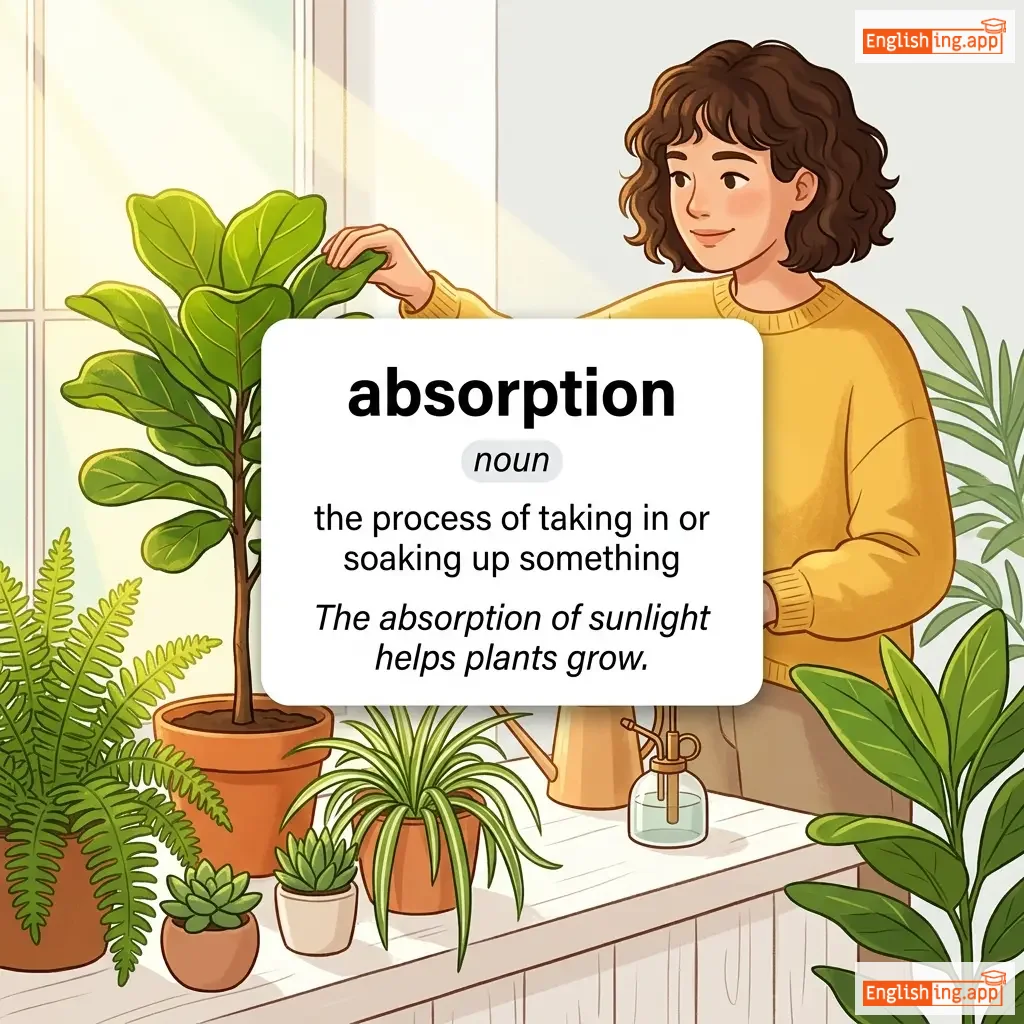
absorption definition card — visual illustration of the meaning
noun
/əbˈzɔːrpʃən/
absorción (absorcion)

the process of taking in or soaking up something

"The absorption of sunlight helps plants grow."

"La absorción de la luz solar ayuda a las plantas a crecer." (La absorcion de la luz solar ayuda a las plantas a crecer.)
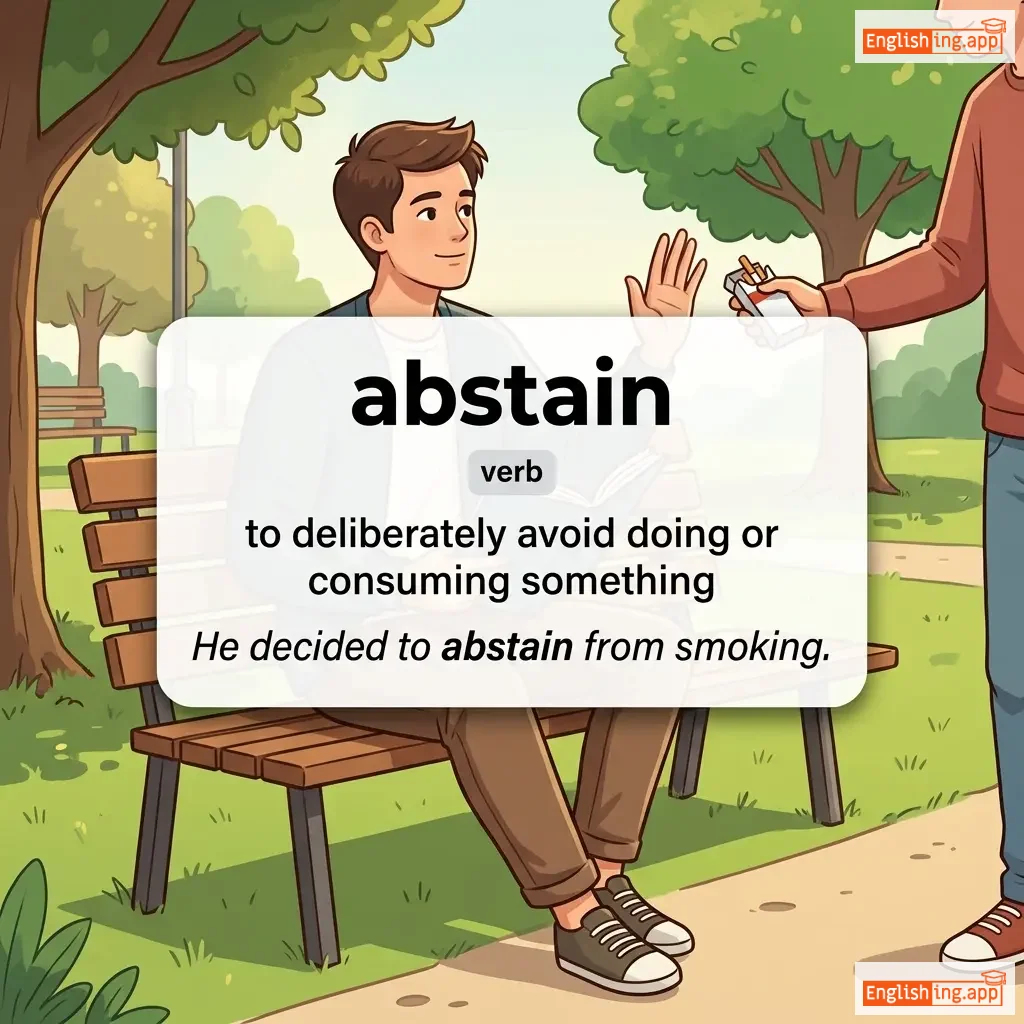
abstain definition card — visual illustration of the meaning
verb
/əbˈsteɪn/
abstenerse (abstenerse)

to deliberately avoid doing or consuming something

"He decided to abstain from smoking."

"Él decidió abstenerse de fumar." (Él decidió abstenerse de fumar.)
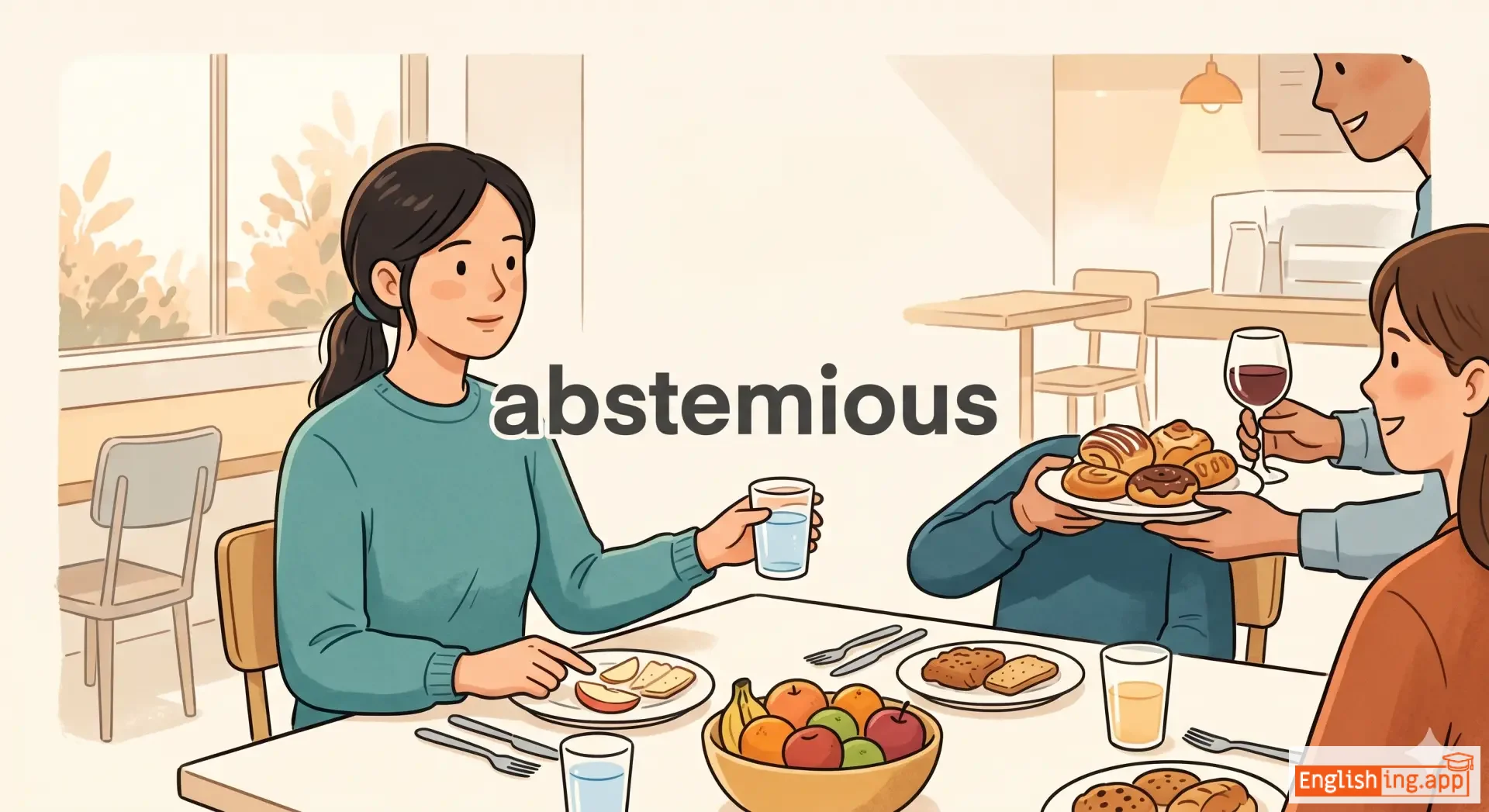
abstemious definition card — visual illustration of the meaning
adjective
/æbˈstiːmiəs/
abstemio (abstemio)

not allowing oneself much food or drink; marked by moderation

"She lived an abstemious life, avoiding all luxuries."

"Ella vivió una vida abstemio, evitando todos los lujos." (Ella vivió una vida abstemio, evitando todos los lujos.)
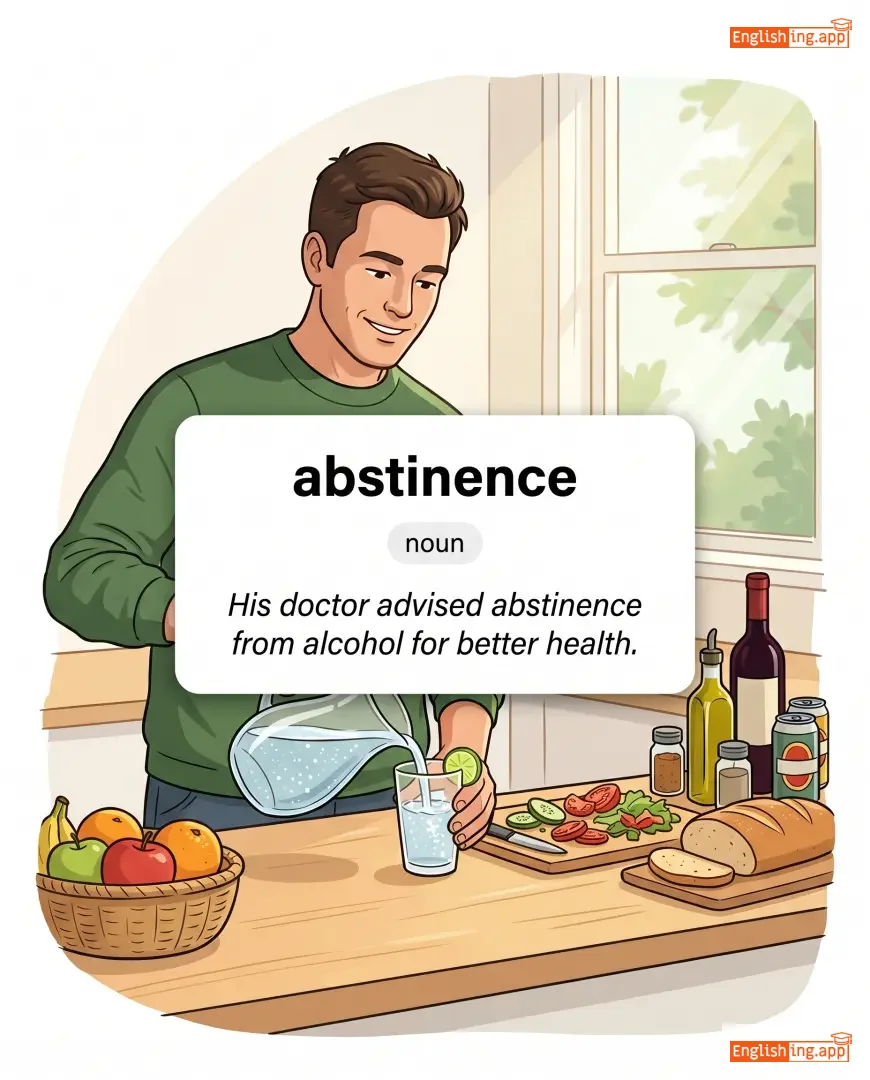
abstinence definition card — visual illustration of the meaning
noun
/ˈæb.stɪ.nəns/
abstinencia, restricción (abstinencia, restriccion)

the practice of restraining oneself from indulging in something, typically alcohol or sex

"His doctor advised abstinence from alcohol for better health."

"Su médico le aconsejó abstinencia de alcohol para una mejor salud." (Su medico le aconsejo abstinencia de alcohol para una mejor salud.)
adjective, noun, verb
/ˈæb.strækt/
abstracto, resumen (abstracto, resumen)

existing in thought or as an idea but not having physical or concrete existence; a summary of a text

"The artist is known for her abstract paintings."

"La artista es conocida por sus pinturas abstractas." (La artista es conocida por sus pinturas abstractas.)
noun
/æbˈstrækʃən/
abstracción (abstraccion)

the process of forming general ideas by removing specific details; an abstract concept or idea

"Abstraction allows complex ideas to be represented in a simplified form."

"La abstracción permite representar ideas complejas de forma simplificada." (la abstraccion permite representar ideas complejas de forma simplificada)
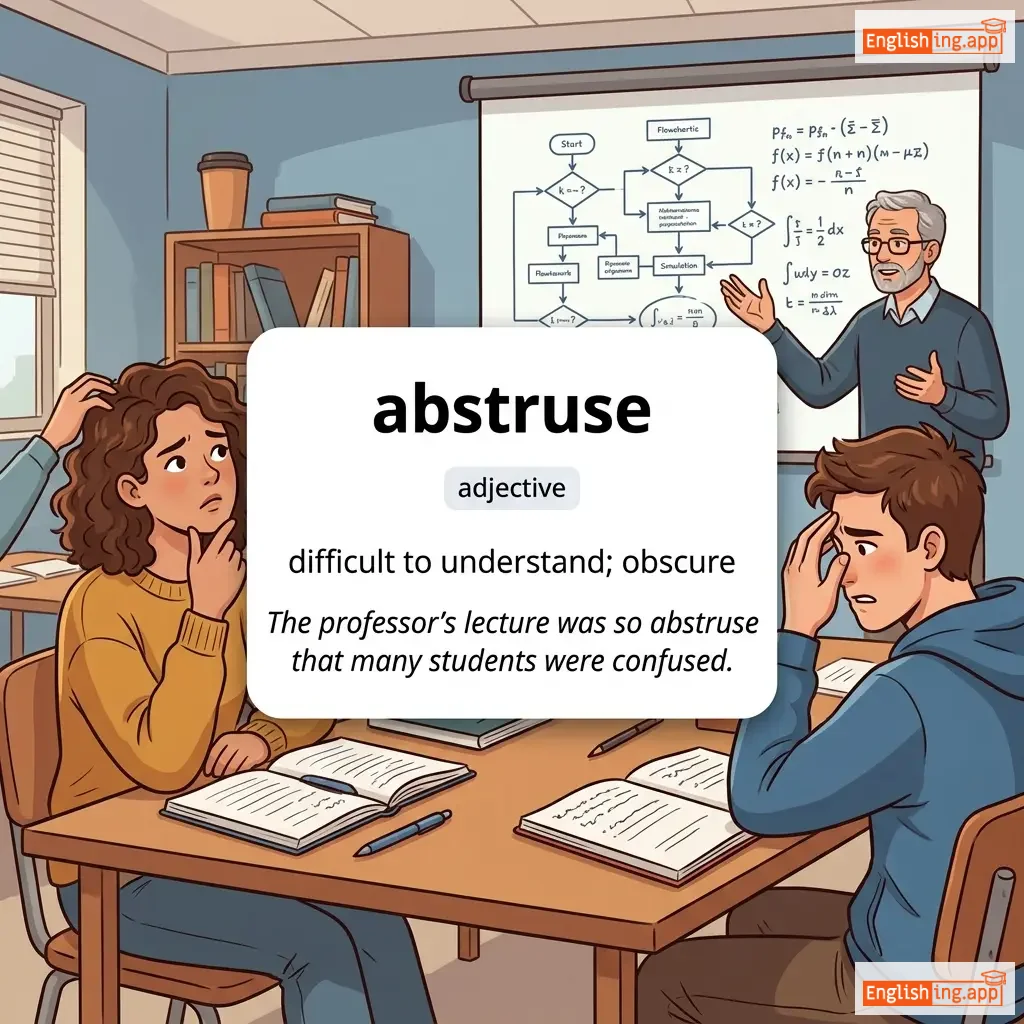
abstruse definition card — visual illustration of the meaning
adjective
/æbˈstruːs/
difícil de entender (dificil de entender)

difficult to understand; obscure

"The professor’s lecture was so abstruse that many students were confused."

"La conferencia del profesor fue tan abstrusa que muchos estudiantes quedaron confundidos." (La conferencia del profesor fue tan abstrusa que muchos estudiantes quedaron confundidos.)
adjective
/əbˈsɜːrd/
absurdo, irracional (absurdo, irracional)

wildly unreasonable, illogical, or inappropriate

"It is absurd to think that the earth is flat."

"Es absurdo pensar que la Tierra es plana." (Es absurdo pensar que la Tierra es plana.)
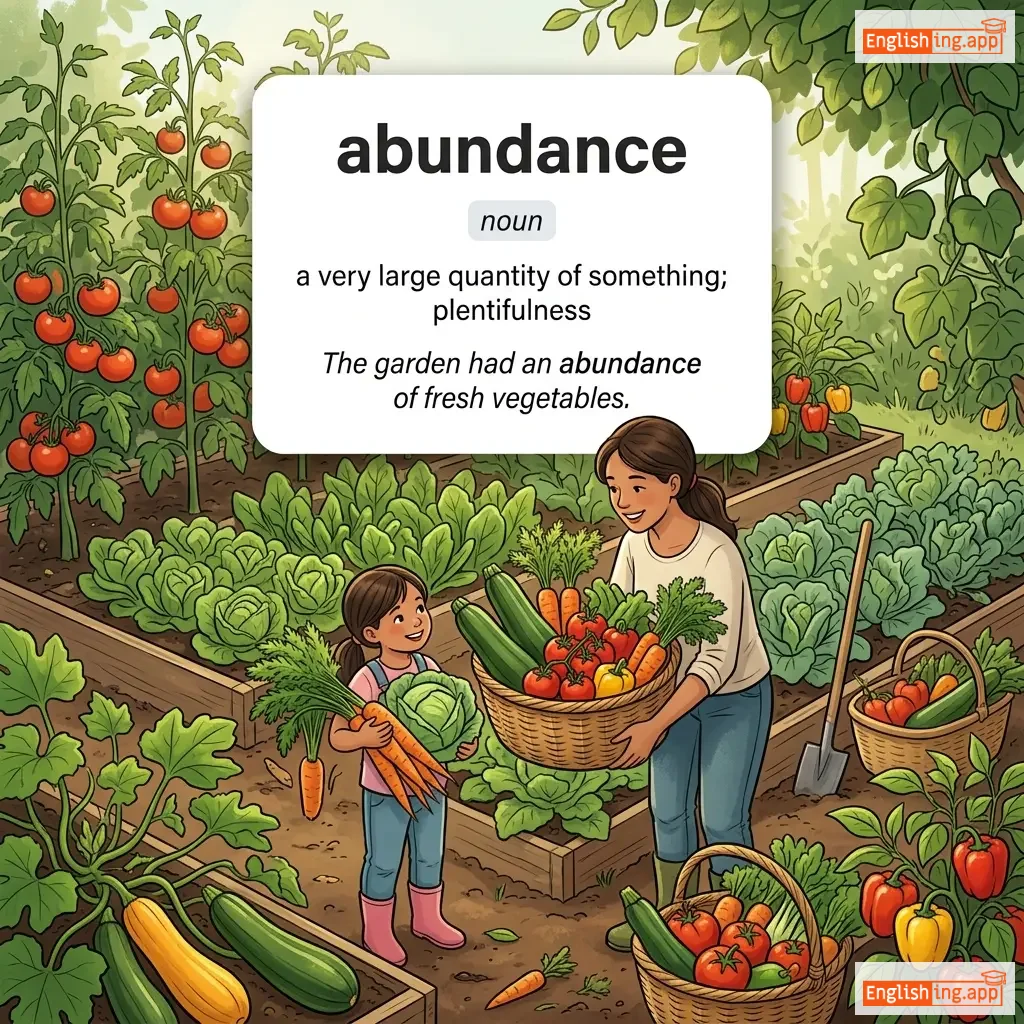
abundance definition card — visual illustration of the meaning
noun
/əˈbʌndəns/
abundancia; gran cantidad (abundancia; gran cantidad)

a very large quantity of something; plentifulness

"The garden had an abundance of fresh vegetables."

"El jardín tenía una abundancia de verduras frescas." (El jardín tenía una abundancia de verduras frescas.)
adjective
/əˈbʌndənt/
abundante (abundante)

existing or available in large quantities; plentiful

"The garden was abundant with colorful flowers."

"El jardín estaba lleno de flores coloridas." (El jardín estaba lleno de flores coloridas.)
🚫

Abuse

verb, noun
/əˈbjuːs/ (verb), /əˈbjuːs/ (noun)
abuso (abuso)

to use something in a harmful way; to treat someone badly or cruelly

"He was accused of abusing his power."

"Fue acusado de abusar de su poder." (Fue acusado de abusar de su poder.)
adjective
/əˈbjuːsɪv/
abusivo / dañino verbal o físico (abusivo / danino verbal o fisico)

extremely offensive or insulting; involving physical or verbal harm

"She left her job because of her abusive boss."

"Ella dejó su trabajo debido a su jefe abusivo." (Ella dejo su trabajo debido a su jefe abusivo.)
verb
/əˈbʌt/
colindar (colindar)

to be next to or share a border with

"The park abuts the river on the north side."

"El parque colinda con el río en el lado norte." (El parque colinda con el río en el lado norte.)
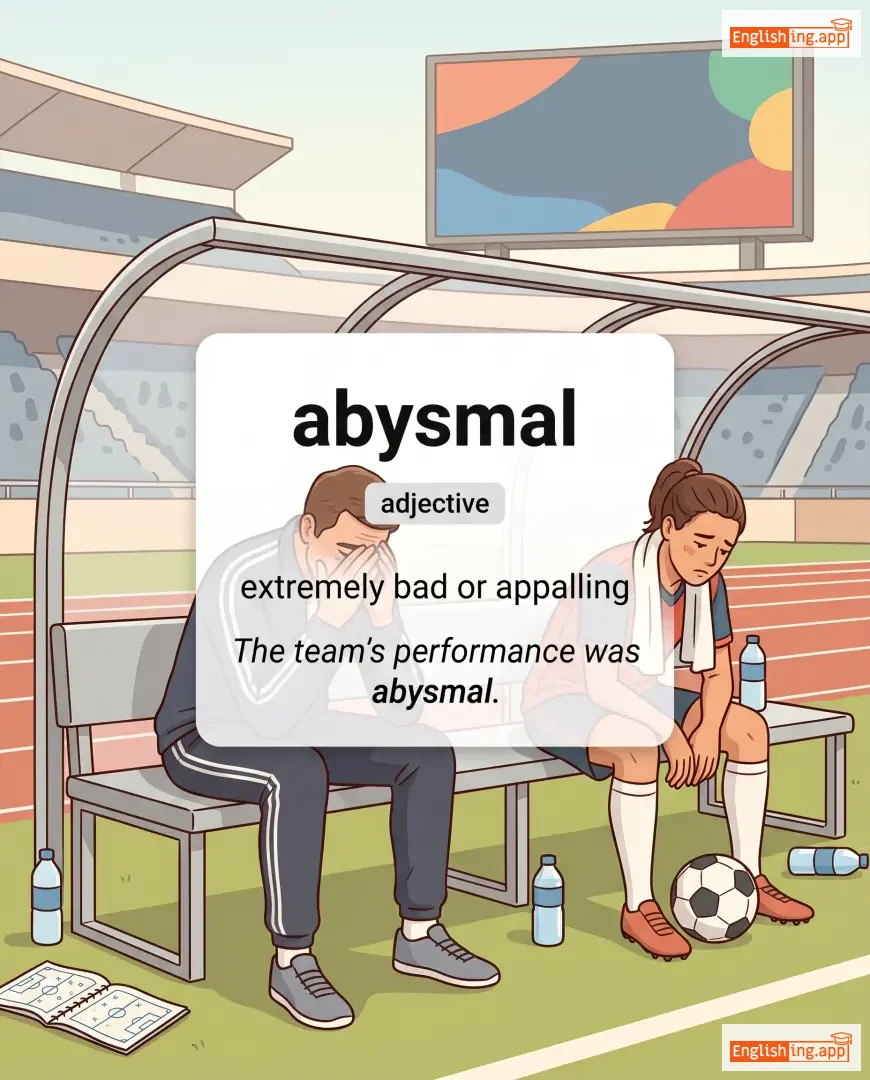
abysmal definition card — visual illustration of the meaning
adjective
/əˈbɪzməl/
atroz / espantoso (atroz / espantoso)

extremely bad or appalling

"The team's performance was abysmal."

"El rendimiento del equipo fue atroz." (El rendimiento del equipo fue atroz.)
noun
/əˈbɪs/
abismo (abismo)

a deep, immeasurable space, chasm, or void; something seemingly without end

"The climbers looked down into the dark abyss below."

"Los escaladores miraron hacia abajo en el oscuro abismo." (Los escaladores miraron hacia abajo en el oscuro abismo.)
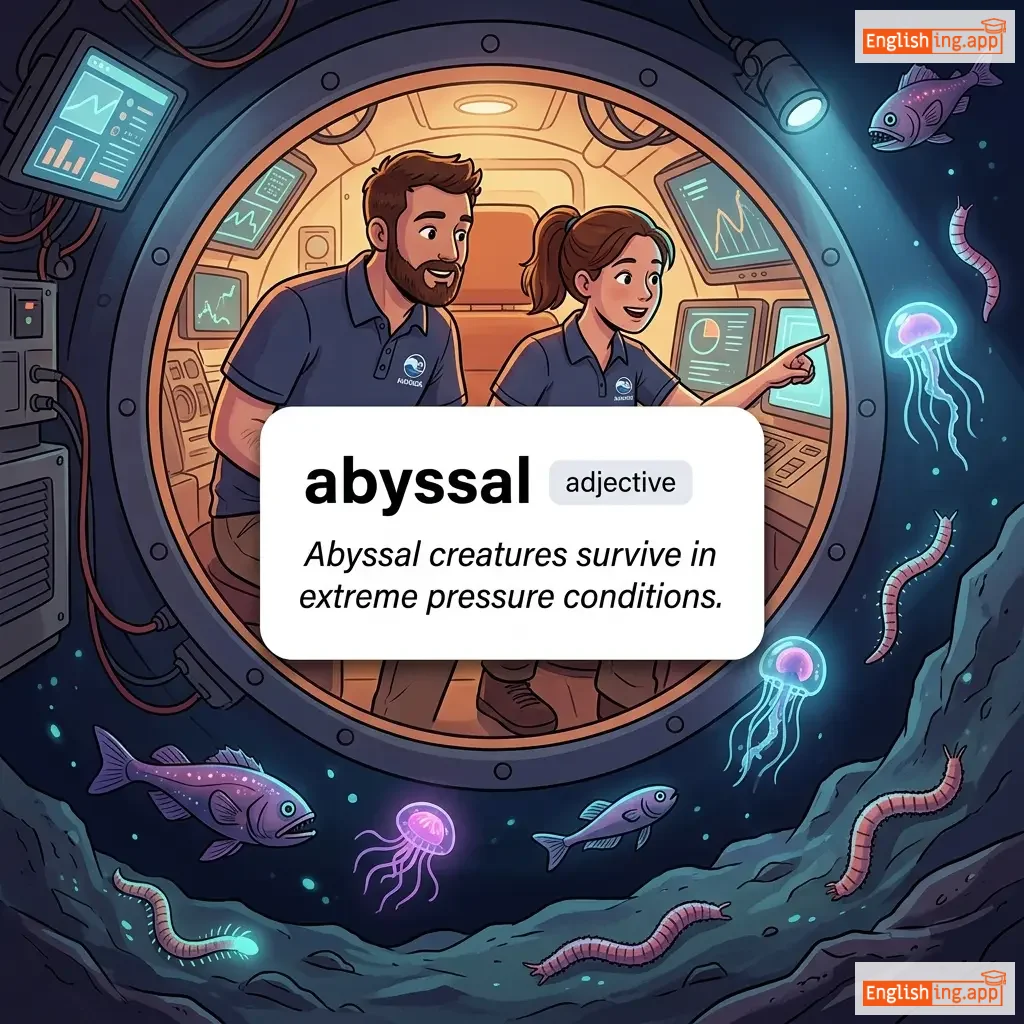
abyssal definition card — visual illustration of the meaning
adjective
/əˈbɪs.əl/
relacionado con el océano profundo (relacionado con el oceano profundo)

Related to or characteristic of the deep ocean, especially the zone below 4000 meters.

"Abyssal creatures survive in extreme pressure conditions."

"Las criaturas abisales sobreviven en condiciones de presión extrema." (Las criaturas abisales sobreviven en condiciones de presion extrema.)
adjective
/ˌækəˈdɛmɪk/
académico (academico)

related to education, learning, or scholarly activities

"She has an outstanding academic record."

"Ella tiene un registro académico sobresaliente." (Ella tiene un registro académico sobresaliente.)