語彙集

英単語辞書 | 単語の意味、定義、例文

verb
/əˈbɑː.mə.neɪt/
嫌悪する (ken'o suru)

to feel hatred or loathing for something

"She abominates cruelty to animals."

"彼女は動物への残虐行為を憎んでいます。" (Kanojo wa dōbutsu e no zangyaku kōi o nikundeimasu.)
noun
/əˌbɑː.məˈneɪ.ʃən/
忌まわしい物 (imawashii mono)

a thing that causes disgust or hatred

"Slavery was considered an abomination."

"奴隷制度は忌まわしい物と見なされていました。" (Doreiseido wa imawashii mono to minasarete imashita.)
adjective
/ˌæbəˈrɪdʒənəl/
先住民 (senjuumin)

Relating to the original inhabitants of a region.

"The museum has a large collection of aboriginal art."

"博物館には先住民のアートの大きなコレクションがあります。" (Hakubutsukan ni wa senjuumin no āto no ōkina korekushon ga arimasu.)
noun
/ˌæbəˈrɪdʒəniːz/
アボリジニ (aborijini)

The original inhabitants of a land, especially in Australia.

"The aborigines have preserved their traditions for thousands of years."

"アボリジニーズは何千年もの間、彼らの伝統を守り続けてきました。" (Aborijiniizu wa nan-sen nen mo no aida, karera no dentō o mamoritsuzukete kimashita.)
verb
/əˈbɔːrt/
中止する;中絶する (chuushi suru; chuuzetsu suru)

to stop a process or action before it is completed; to end a pregnancy deliberately

"The pilot decided to abort the mission due to bad weather."

"悪天候のため、パイロットは任務を中止した。" (Akutenkou no tame pairotto wa ninmu o chuushi shita)
⚖️

abortion

noun
/əˈbɔːrʃən/

The deliberate termination of a human pregnancy, usually performed during the first 28 weeks.

"The debate about abortion continues to divide public opinion."

adjective
/əˈbɔːrtɪv/
失敗した (shippai shita)

Failing to produce the intended result; unsuccessful.

"Their abortive attempt to climb the mountain ended in retreat."

"彼らの山登りの試みは、撤退で終わった。" (Karera no yamanobori no kokoromi wa, tettai de owatta.)
verb
/əˈbaʊnd/
豊富にある (houfuni aru)

To exist in large numbers or amounts.

"Opportunities abound in the field of technology."

"テクノロジーの分野では機会が豊富にあります。" (Tekunorojii no bunya de wa kikai ga houfuni arimasu.)
preposition, adverb
/əˈbaʊt/
について (ni tsuite)

concerning; on the subject of; approximately

"We talked about the new project yesterday."

"昨日、私たちは新しいプロジェクトについて話しました。" (Kinou, watashitachi wa atarashī purojekuto ni tsuite hanashimashita.)
preposition, adverb
/əˈbʌv/
(ue)

at a higher place or position than something

"The picture hangs above the fireplace."

"絵は暖炉の上に掛かっている。" (E wa danro no ue ni kakatte iru.)
adjective, adverb
/əˈbʌvˌbɔːrd/
正直でオープン (Shoujiki de oopun)

Open and honest; without deception or trickery.

"The business deal was completely aboveboard."

"ビジネス取引は完全に正直でオープンでした。" (Bijinesu torihiki wa kanzen ni shoujiki de oopun deshita.)
verb
/əˈbreɪd/
摩擦で擦り減らす (masatsu de suriherasu)

to scrape or wear away the surface by friction or erosion

"The rough cloth can easily abrade the skin."

"ザ・ラフクロスは皮膚を簡単に擦ります。" (Za rafu kurosu wa hifu o kantan ni surimasu.)
noun
/əˈbreɪʒən/
摩擦による皮膚または表面の擦り傷または摩耗 (masatsu ni yoru hifu matawa hyōmen no surikizu matawa mamō)

a scrape or wearing away of the skin or surface due to friction

"He suffered a minor abrasion on his knee after falling."

"彼は転倒後、膝に軽い擦り傷を負いました。" (Kare wa tentō go, hiza ni karui surikizu o oimashita.)
adjective
/əˈbreɪsɪv/

harsh, rough, or capable of wearing down by rubbing

"His abrasive tone made everyone uncomfortable."

🚶‍♂️🚶‍♂️

abreast (アブレスト)

adverb
/əˈbrɛst/
並んで (narande)

side by side and facing the same direction; informed about something

"The soldiers marched two abreast down the street."

"兵士たちは通りを二人並んで行進した。" (Heishitachi wa toori wo futari narande koushin shita.)
verb
/əˈbrɪdʒ/
短縮する (tanshuku suru)

to shorten a text without losing its meaning

"The editor decided to abridge the long novel for young readers."

"編集者は若い読者のために長編小説を短縮することに決めました。" (Henshū-sha wa wakai dokusha no tame ni chōhen shōsetsu o tanshuku suru koto ni kimemashita.)
noun
/əˈbrɪdʒmənt/
要約版 (yōyaku-ban)

A shortened version of a larger work, such as a book or speech.

"The publisher released an abridgment of the lengthy novel for students."

"出版社は学生のために長編小説の要約版を公開しました。" (Shuppansha wa gakusei no tame ni chōhen shōsetsu no yōyaku-ban o kōkai shimashita.)
adverb
/əˈbrɔːd/
海外 (kaigai)

In or to a foreign country or countries.

"She studied abroad for two years in Germany."

"彼女はドイツで2年間海外で勉強した。" (Kanojo wa Doitsu de 2 nenkan kaigai de benkyou shita.)
verb
/ˈæbrəɡeɪt/
廃止する (haishi suru)

To formally repeal, cancel, or abolish a law, agreement, or custom.

"The government decided to abrogate the outdated treaty."

"政府は古い条約を廃止することを決定しました。" (Seifu wa furui jōyaku o haishi suru koto o kettei shimashita.)
adjective
/əˈbrʌpt/
突然 (totsuzen)

Sudden or unexpected, often without warning.

"The car came to an abrupt stop in the middle of the road."

"車は道路の中央で急停車しました。" (Kuruma wa dōro no chūō de kyū teisha shimashita.)
adverb
/əˈbrʌptli/
突然かつ予期せず; 予告なしに (totsuzen katsu yokisenu; yogokunashi ni)

suddenly and unexpectedly; without warning

"The meeting ended abruptly when the power went out."

"会議は電力が切れたときに突然終了しました。" (Kaigi wa denryoku ga kireta toki ni totsuzen shūryō shimashita)
noun
/ˈæbsɛs/
膿瘍 (nōyō)

A swollen area within body tissue containing pus, usually caused by infection.

"The dentist treated the abscess in his tooth."
"歯医者は彼の歯の膿瘍を治療しました。" (Haisha wa kare no ha no nōyō o chiryō shimashita.)
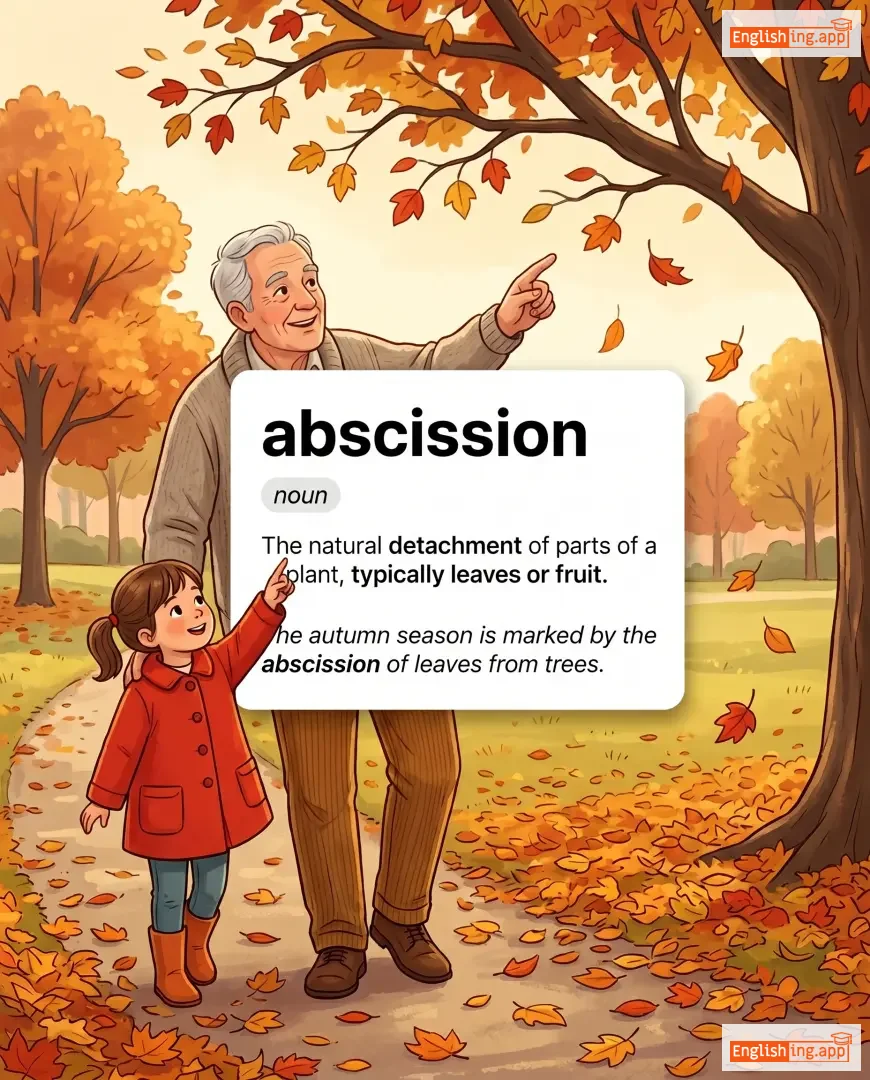
abscission definition card — visual illustration of the meaning
noun
/æbˈsɪʒən/
葉の落下 (ha no rakkā)

The natural detachment of parts of a plant, typically leaves or fruit.

"The autumn season is marked by the abscission of leaves from trees."
"秋は木々から葉が落ちることで特徴づけられます。" (Aki wa kigi kara ha ga ochiru koto de tokuchou dzukeraremasu.)
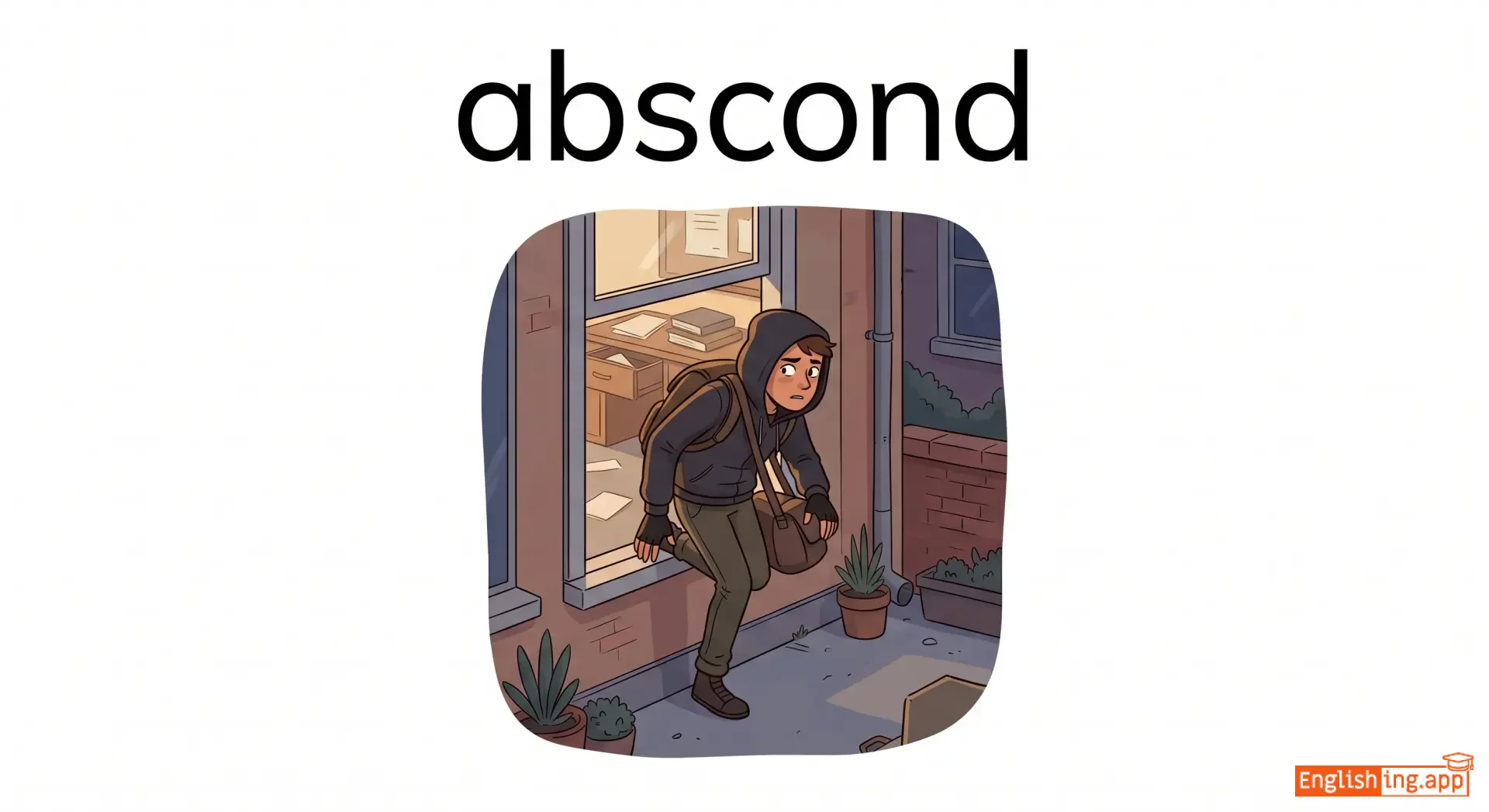
abscond definition card — visual illustration of the meaning
verb
/əbˈskɒnd/
密かに逃げる (hisokani nigeru)

to leave secretly and quickly, often to avoid arrest or punishment

"The thief tried to abscond with the stolen jewelry."

"泥棒は盗まれた宝石を持って逃げようとした。" (Dorobo wa nusumareta houseki wo motte nigeyou to shita.)
noun
/ˈæbsəns/
不在 (fuzai)

the state of being away from a place or person

"His absence from the meeting was noticed by everyone."

"会議における彼の不在は誰にも気づかれました。" (Kaigi ni okeru kare no fuzai wa dare ni mo kizukaremashita.)
adjective
/ˈæbsənt/
欠席 (kesseki)

not present at a place or event

"She was absent from the meeting yesterday."

"彼女は昨日会議を欠席していた。" (Kanojo wa kinou kaigi o kesseki shite ita.)
adjective
/ˌæbsənt ˈmaɪndɪd/
うっかり者 (ukkari-mono)

often forgetting things or not paying attention

"He is so absent-minded that he often forgets his keys."

"彼はとてもうっかりしていて、よく鍵を忘れます。" (Kare wa totemo ukkari shite ite, yoku kagi o wasuremasu.)
adjective
/ˈæbsəluːt/
絶対 (zettai)

total, complete, or without restriction

"The dictator had absolute power over the nation."

"独裁者は国に対して絶対的な権力を持っていた。" (Dokusai-sha wa kuni ni taishite zettaiteki na kenryoku o motte ita.)
adverb
/ˈæbsəluːtli/
完全に (kanzen ni)

Completely; without qualification or restriction.

"I absolutely agree with your decision."

"私はあなたの決定に完全に同意します。" (Watashi wa anata no kettei ni kanzen ni dōi shimasu.)
noun
/ˌæbsəˈluːʃən/
免罪 (menzai)

formal release from guilt, obligation, or punishment

"The priest granted him absolution for his sins."

"神父は彼の罪を許しを与えました。" (Shinpu wa kare no tsumi wo yurushi wo ataemashita.)
absolve definition card — visual illustration of the meaning
verb
/əbˈzɒlv/
免除する (menjo suru)

to declare someone free from blame, guilt, or responsibility

"The priest absolved him of his sins."

"司祭は彼の罪を免除しました。" (Shisai wa kare no tsumi wo menjo shimashita.)
verb
/əbˈzɔːrb/
吸収する (きゅうしゅうする)

to take in or soak up a liquid, energy, or information

"The sponge absorbed all the water."

"スポンジは水をすべて吸収しました。" (Suponji wa mizu o subete kyūshū shimashita.)
adjective, noun
/əbˈzɔːrbənt/
吸収性のある (kyuushuusei no aru)

able to soak up liquid, moisture, or energy easily; a material or substance that absorbs

"This towel is highly absorbent and dries quickly."
"このタオルはとても吸収性が高く、すぐ乾きます。" (kono taoru wa totemo kyuushuusei ga takaku sugu kawakimasu)
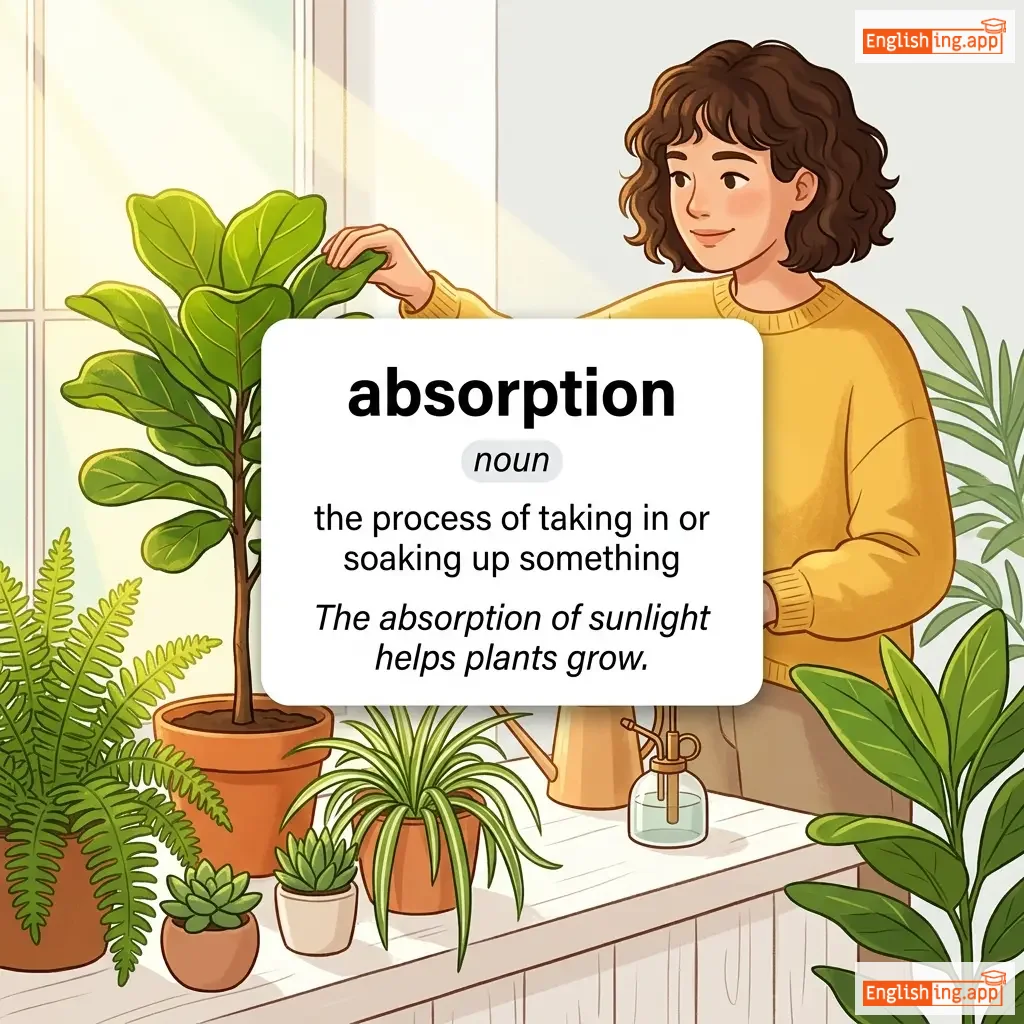
absorption definition card — visual illustration of the meaning
noun
/əbˈzɔːrpʃən/
吸収 (kyuushuu)

the process of taking in or soaking up something

"The absorption of sunlight helps plants grow."
"太陽光の吸収は植物の成長を助けます。" (Taiyoukou no kyuushuu wa shokubutsu no seichou wo tasukemasu.)
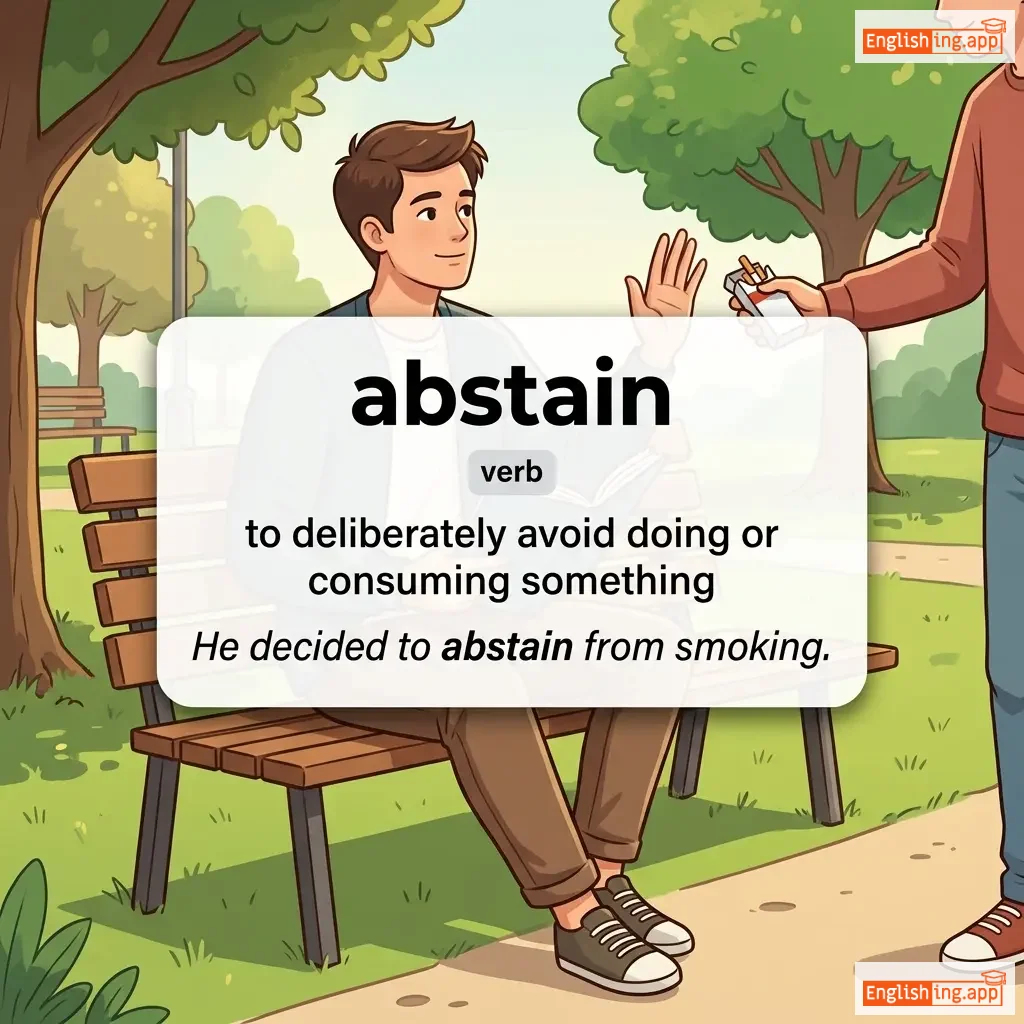
abstain definition card — visual illustration of the meaning
verb
/əbˈsteɪn/
控える (hikaeru)

to deliberately avoid doing or consuming something

"He decided to abstain from smoking."
"彼は喫煙を控えることに決めました。" (Kare wa kitsuen o hikaeru koto ni kimemashita.)
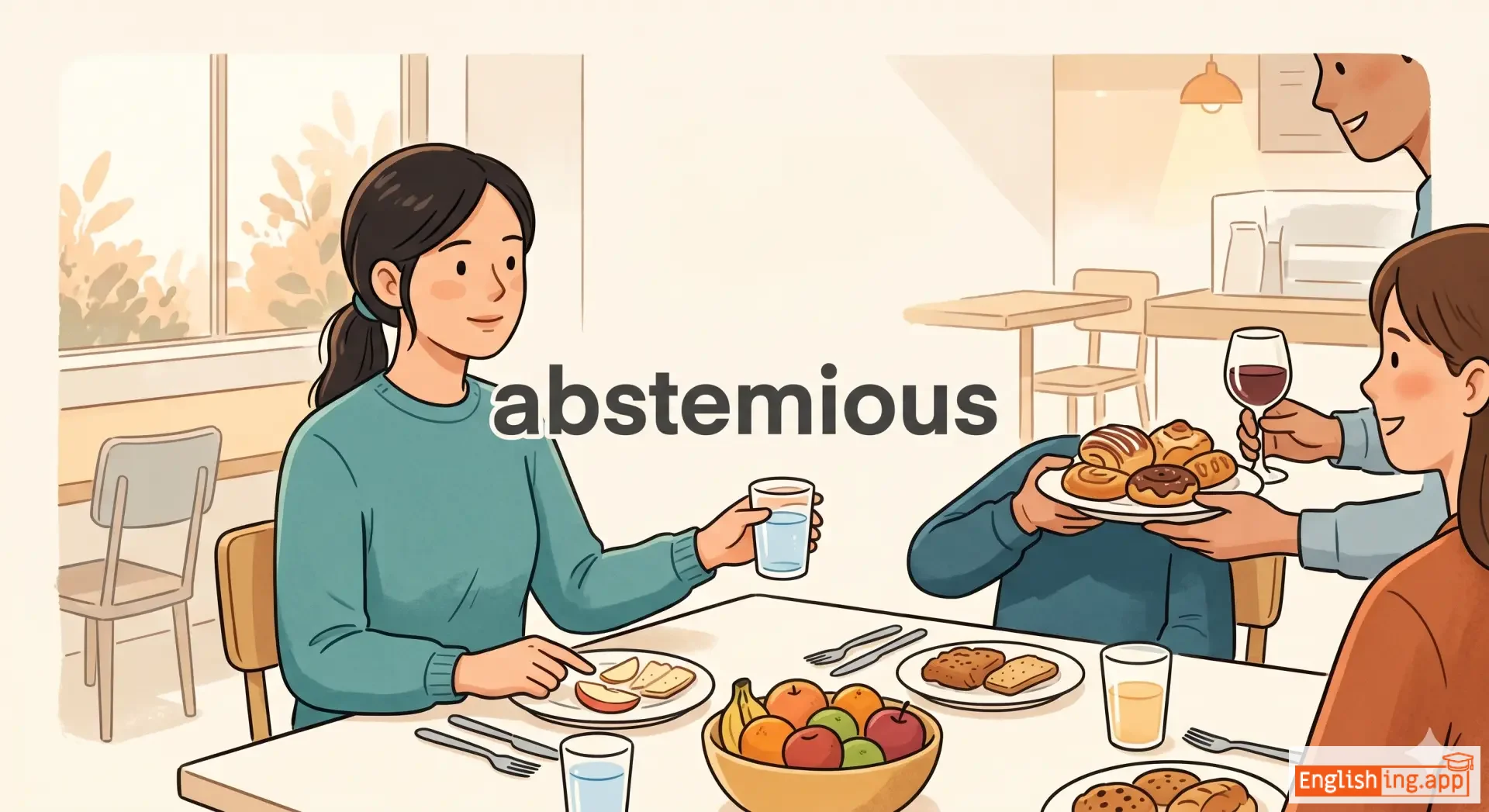
abstemious definition card — visual illustration of the meaning
adjective
/æbˈstiːmiəs/
節制 (setsusei)

not allowing oneself much food or drink; marked by moderation

"She lived an abstemious life, avoiding all luxuries."
"彼女は節制した生活を送り、すべての贅沢を避けた。" (Kanojo wa setsusei shita seikatsu o okuri, subete no zeitaku o saketa.)
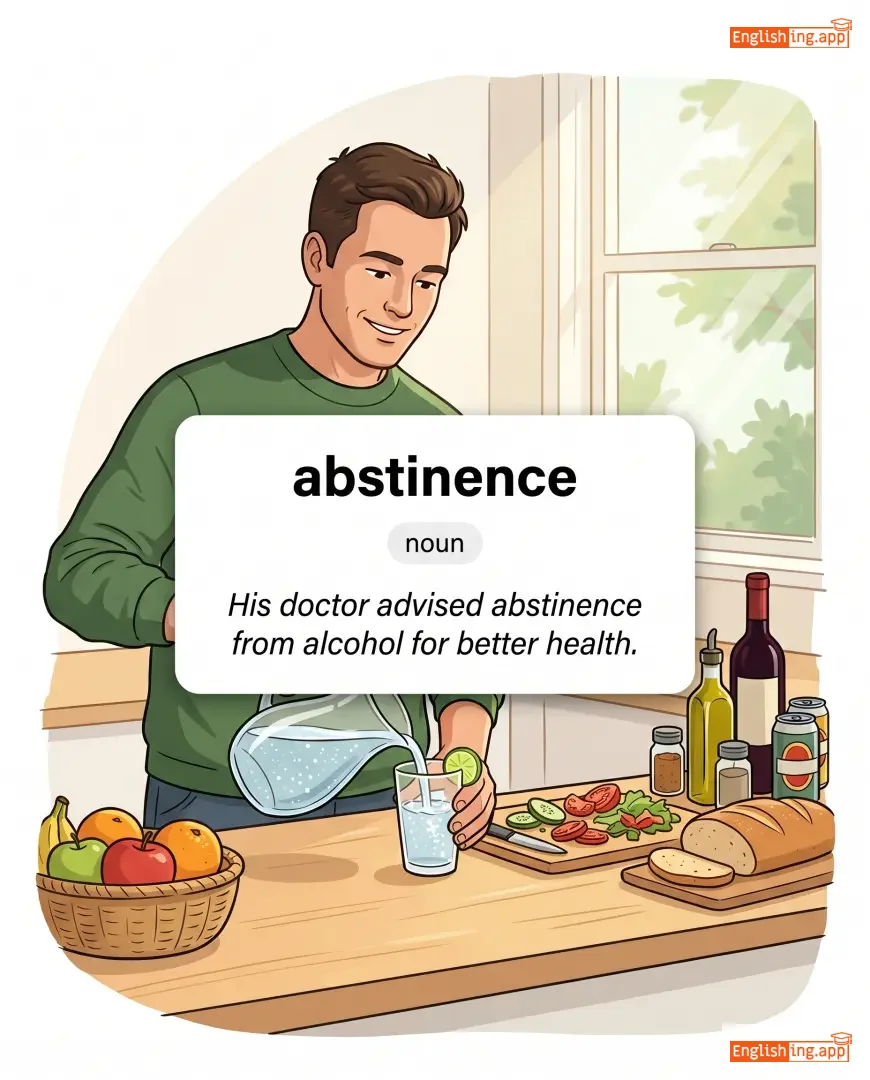
abstinence definition card — visual illustration of the meaning
noun
/ˈæb.stɪ.nəns/
禁欲、節制 (kinyoku, sessē)

the practice of restraining oneself from indulging in something, typically alcohol or sex

"His doctor advised abstinence from alcohol for better health."

"彼の医者は健康のためにアルコールを控えるように助言しました。" (Kare no isha wa kenkō no tame ni arukōru o hikaeru yō ni jogen shimashita.)
adjective, noun, verb
/ˈæb.strækt/
抽象的, 要約 (chūshōteki, yōyaku)

existing in thought or as an idea but not having physical or concrete existence; a summary of a text

"The artist is known for her abstract paintings."

"そのアーティストはアブストラクトな絵画で知られています。" (Sono ātisuto wa abusutokuruto na kaiga de shirareteimasu.)
noun
/æbˈstrækʃən/
抽象 (chuusho)

the process of forming general ideas by removing specific details; an abstract concept or idea

"Abstraction allows complex ideas to be represented in a simplified form."
"抽象は複雑な考えを簡単な形で表現することを可能にします。" (chuusho wa fukuzatsuna kangae o kantanna katachi de hyougen suru koto o kanou ni shimasu)
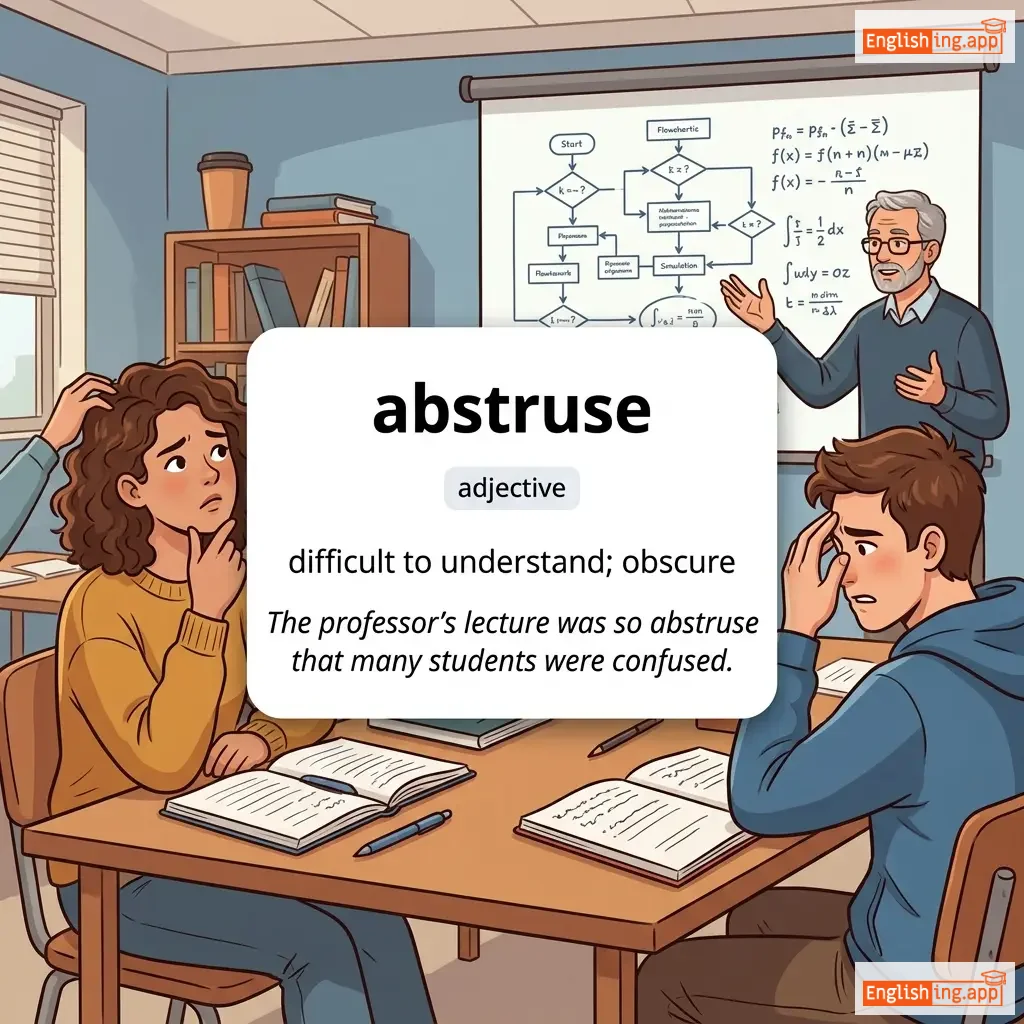
abstruse definition card — visual illustration of the meaning
adjective
/æbˈstruːs/
難解な (nankaina)

difficult to understand; obscure

"The professor’s lecture was so abstruse that many students were confused."

"教授の講義は非常に難解で、多くの学生が混乱していました。" (Kyojū no kōgi wa hijō ni nankai de, ōku no gakusei ga konran shite imashita.)
adjective
/əbˈsɜːrd/
不合理な, ばかげた (fugouri na, bakageta)

wildly unreasonable, illogical, or inappropriate

"It is absurd to think that the earth is flat."
"地球が平らだと思うのは不合理です。" (Chikyuu ga tairada to omou no wa fugouri desu.)
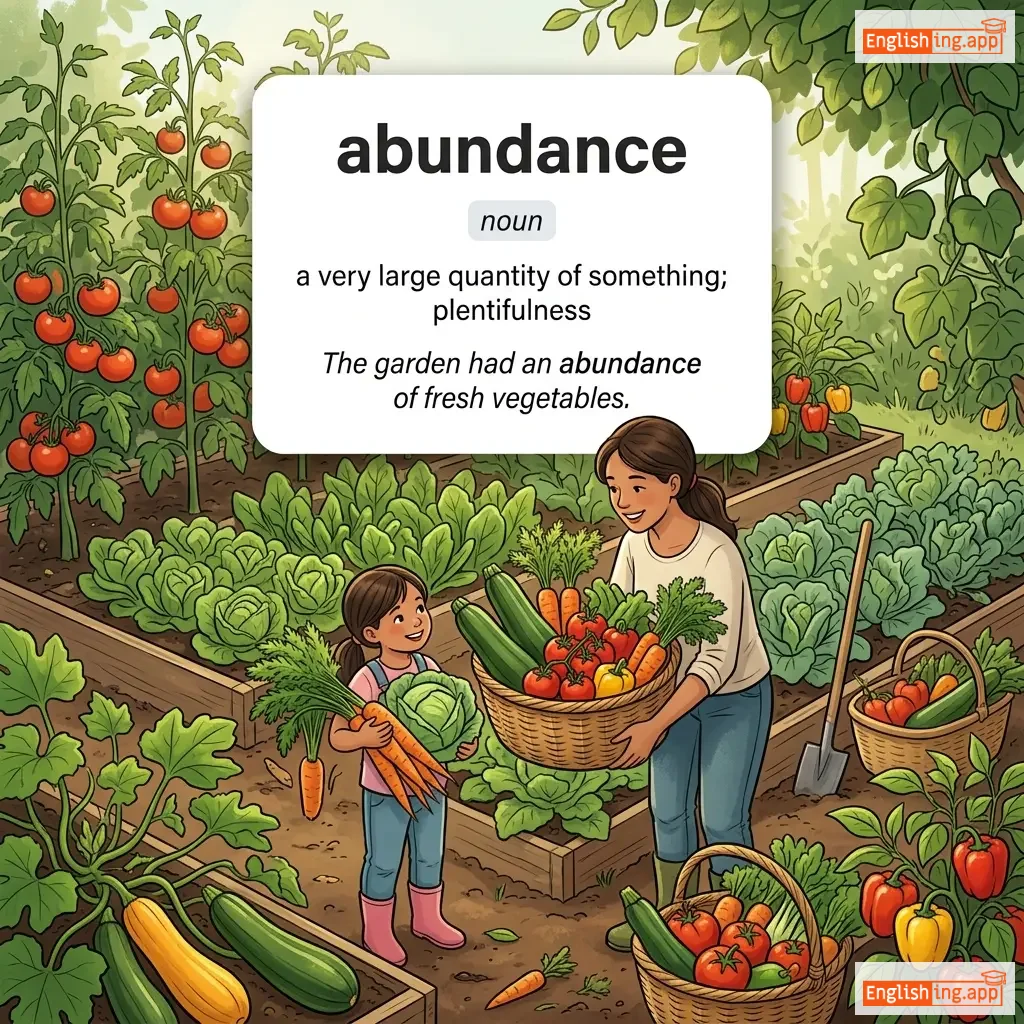
abundance definition card — visual illustration of the meaning
noun
/əˈbʌndəns/
豊富; 大量 (houfu; tairyou)

a very large quantity of something; plentifulness

"The garden had an abundance of fresh vegetables."

"庭には新鮮な野菜が豊富にありました。" (Niwa ni wa shinsen na yasai ga houfu ni arimashita.)
adjective
/əˈbʌndənt/
豊富 (hōfu)

existing or available in large quantities; plentiful

"The garden was abundant with colorful flowers."

"庭は色とりどりの花であふれていました。" (Niwa wa iro toridori no hana de afurete imashita.)
🚫

Abuse

verb, noun
/əˈbjuːs/ (verb), /əˈbjuːs/ (noun)
虐待 (gyakudai)

to use something in a harmful way; to treat someone badly or cruelly

"He was accused of abusing his power."

"彼は自分の権力を虐待したとして告発されました。" (Kare wa jibun no kenryoku o gyakudai shita to shite kokuhatsu saremashita.)
adjective
/əˈbjuːsɪv/
虐待的 / 身体的または言葉での害を伴う (gyakutai-teki / shintai-teki matawa kotoba de no gai wo tomonau)

extremely offensive or insulting; involving physical or verbal harm

"She left her job because of her abusive boss."

"彼女は虐待的な上司のせいで仕事を辞めました。" (Kanojo wa gyakutai-teki na jōshi no sei de shigoto wo yamemashita.)
verb
/əˈbʌt/
隣接する (rensetsu suru)

to be next to or share a border with

"The park abuts the river on the north side."
"公園は北側で川と隣接しています。" (Kōen wa kita-gawa de kawa to rinsetsu shiteimasu.)
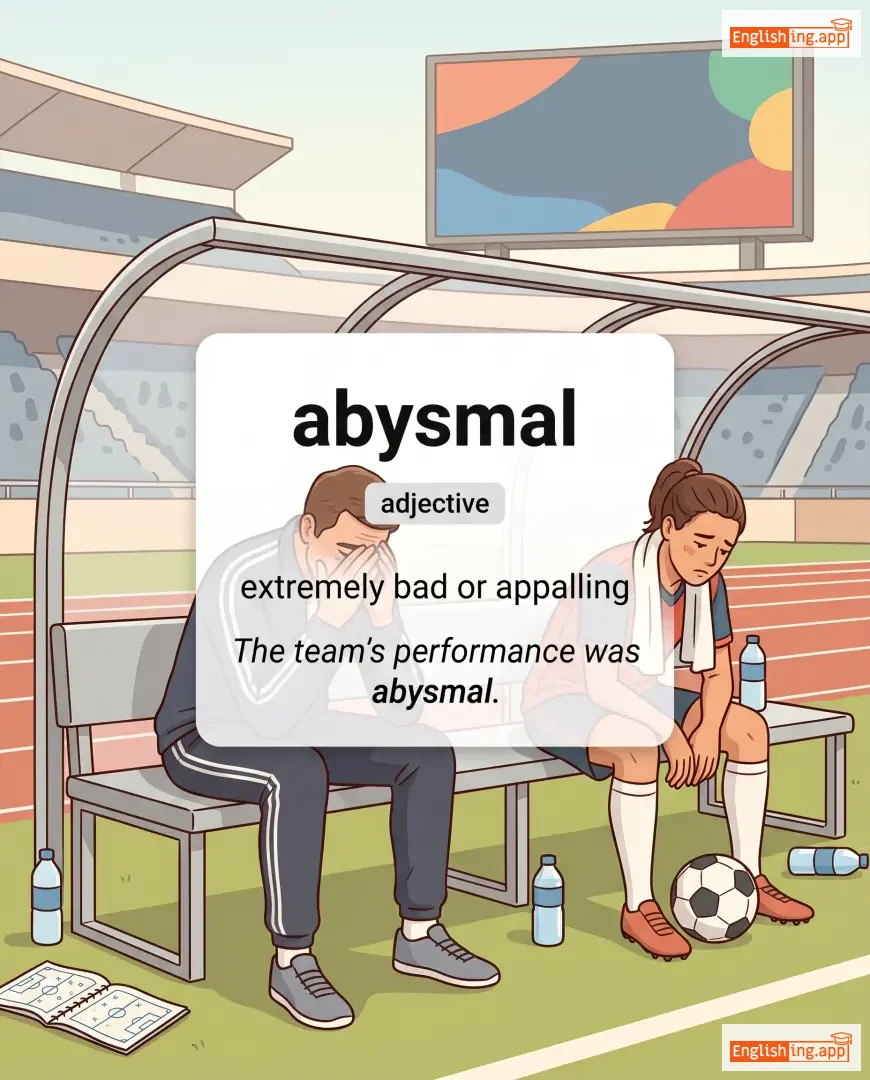
abysmal definition card — visual illustration of the meaning
adjective
/əˈbɪzməl/
ひどい / 恐ろしい (hidoi / osoroshii)

extremely bad or appalling

"The team's performance was abysmal."

"チームのパフォーマンスはひどかった。" (Chīmu no pafōmansu wa hido katta.)
noun
/əˈbɪs/
深淵 (shinen)

a deep, immeasurable space, chasm, or void; something seemingly without end

"The climbers looked down into the dark abyss below."
"登山者たちは下の暗い深淵を見下ろしました。" (Tozan-sha-tachi wa shita no kurai shinen o mioroshimashita.)
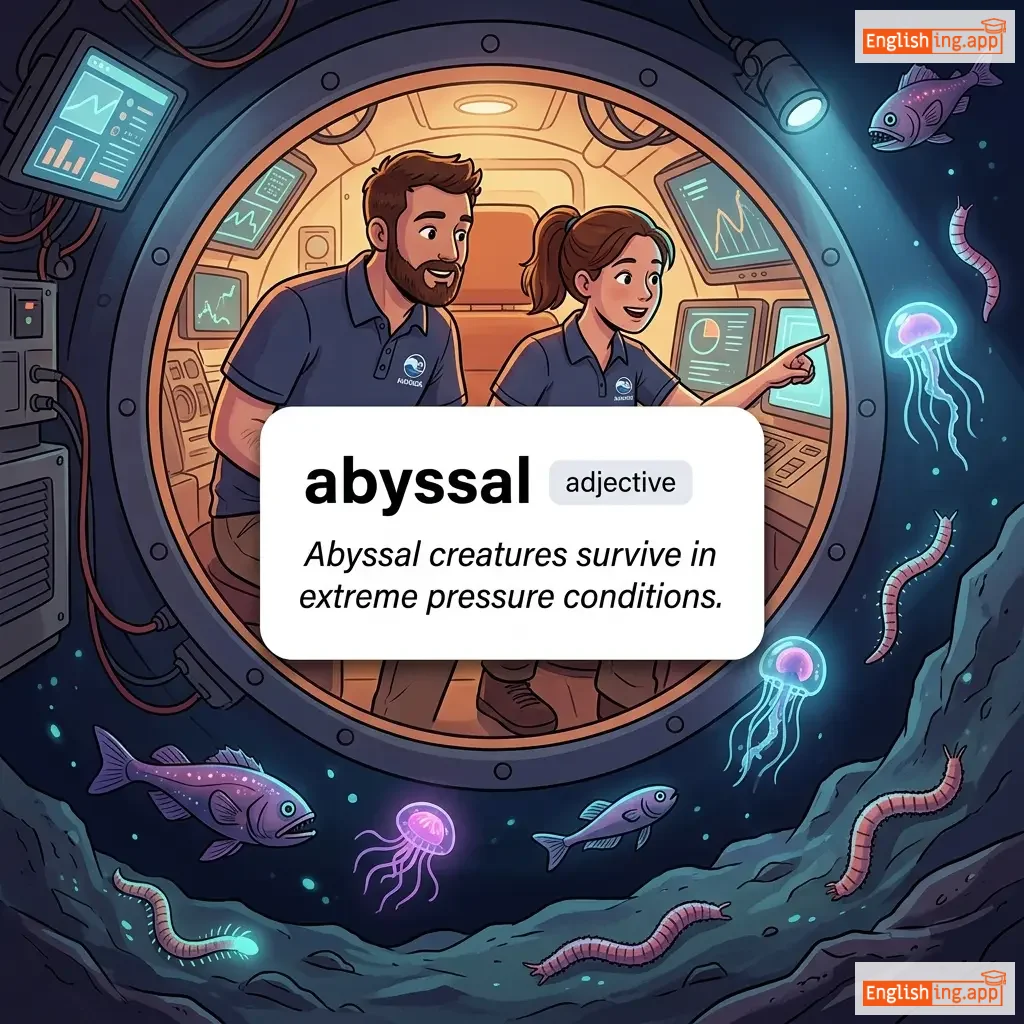
abyssal definition card — visual illustration of the meaning
adjective
/əˈbɪs.əl/
深海の (shinkai no)

Related to or characteristic of the deep ocean, especially the zone below 4000 meters.

"Abyssal creatures survive in extreme pressure conditions."

"アビサルクリーチャーは極端な圧力条件で生き残ります。" (Abisaru kurīchā wa kyokutan na atsuryoku jōken de ikinokorimasu.)
adjective
/ˌækəˈdɛmɪk/
学問的 (gakumon-teki)

related to education, learning, or scholarly activities

"She has an outstanding academic record."

"彼女は優れた学問的記録を持っています。" (Kanojo wa sugureta gakumon-teki kiroku o motteimasu.)