語彙集

英単語辞書 | 単語の意味、定義、例文

noun
/ˈeɪlmənt/
病気 (byouki)

An illness, typically a minor one.

"He went to the doctor for a minor stomach ailment."

"彼は軽い胃の病気のために医者に行った。" (Kare wa karui i no byouki no tame ni isha ni itta.)
verb
/eɪm/
狙う (nerau)

to direct a weapon, object, or effort at a target; to intend or plan

"He aimed the ball at the goal."

"彼はゴールに向かってボールを狙った。" (Kare wa gōru ni mukatte bōru o neratta.)
adjective
/ˈeɪmləs/
無目的; 目標なし (aimles)

without purpose or direction; lacking a goal

"He wandered around the city in an aimless manner."

"彼は無目的に街を歩いていた。" (Kare wa mumokuteki ni machi o aruite ita.)
noun
/ɛər/
空気 (kuki)

The invisible mixture of gases that surrounds the earth and is breathed in by people and animals.

"The air is fresh after the rain."

"雨の後、空気は新鮮です。" (Ame no ato, kūki wa shinsen desu.)
noun
/ˈeər kənˈdɪʃ.ən.ər/
エアコン (eakon)

a system that controls the temperature, humidity, and air quality in a building or room

"We turned on the air conditioner because it was too hot outside."

"外が暑すぎたので、エアコンをつけました。" (Soto ga atsusugita node, eakon o tsukemashita)
noun
/ˈeər fɔːrs/
空軍 (kuugun)

the military organization of a country that uses aircraft for fighting

"The air force conducted a training exercise over the mountains."
"空軍は山脈の上で訓練演習を行った。" (Kuugun wa sanmyaku no ue de kunren enshuu o okonatta.)
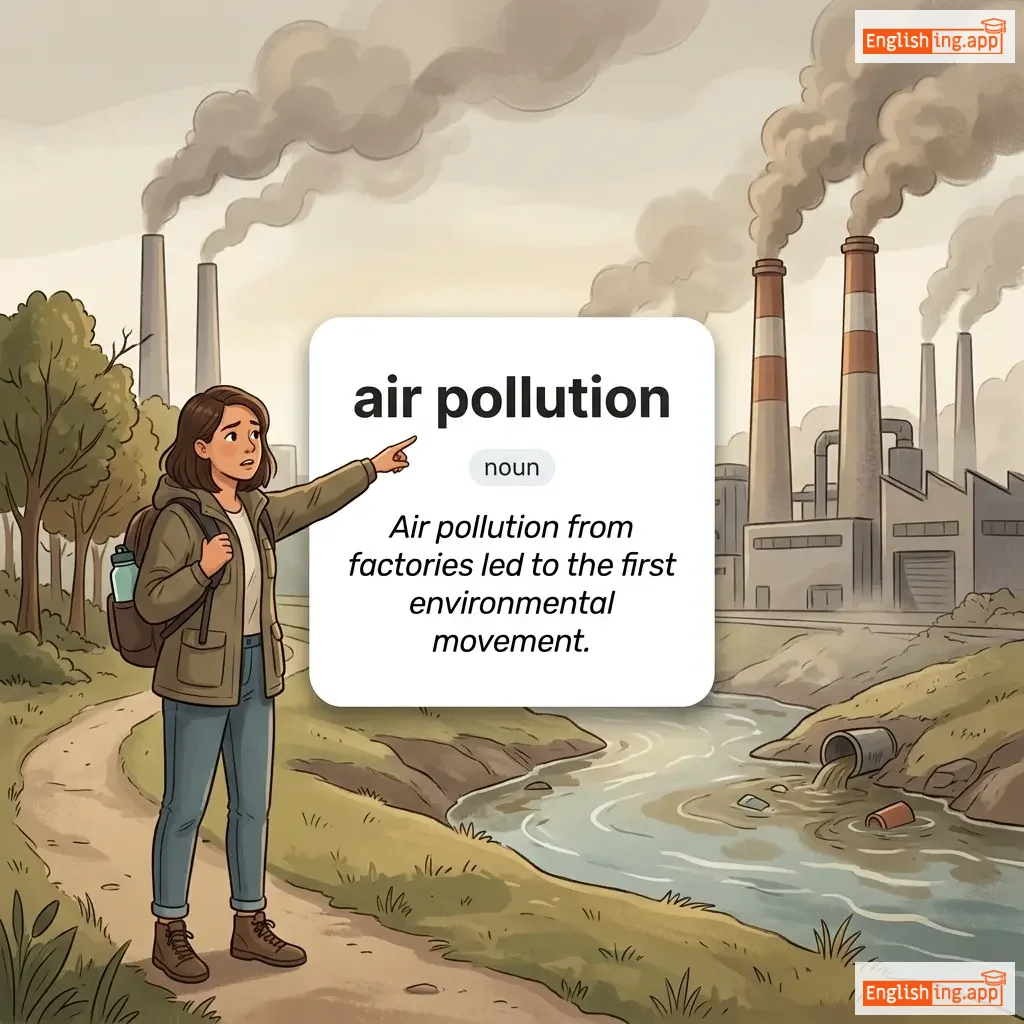
air pollution definition card — visual illustration of the meaning
noun
/ɛr pəˈluːʃən/
大気汚染 (taiki osen)

The presence of harmful or poisonous substances in the air, typically caused by industrial processes, vehicle emissions, or other human activities.

"Air pollution from factories led to the first environmental movement."

"工場からの大気汚染が最初の環境運動を引き起こしました。" (Koujou kara no taiki osen ga saisho no kankyou undou wo hikiokoshimashita.)
noun
/ˈɛər.kræft/
航空機 (koukuki)

A vehicle, such as an airplane or helicopter, that can fly in the air.

"The military aircraft flew over the city."

"軍用機が街の上を飛びました。" (Gunyouki ga machi no ue wo tobimashita.)
noun
/ˈɛər.laɪn/
航空会社 (kōkū gaisha)

A company that provides regular flights for passengers and goods.

"The airline announced a discount on international tickets."

"その航空会社は国際線チケットの割引を発表しました。" (Sono kōkū gaisha wa kokusaiken chiketto no waribiki o happyō shimashita.)
noun
/ˈɛərpleɪn/
飛行機 (hikōki)

a powered flying vehicle with fixed wings and engines

"The airplane took off smoothly from the runway."

"飛行機は滑走路からスムーズに離陸しました。" (Hikōki wa kassōro kara sumūzu ni ririku shimashita.)
noun
/ˈɛər.pɔːrt/
空港 (kūkō)

A place where airplanes take off and land, with buildings for passengers and cargo.

"We arrived at the airport two hours before the flight."

"私たちはフライトの2時間前に空港に到着しました。" (Watashitachi wa furaito no 2 jikan mae ni kūkō ni tōchaku shimashita.)
adjective
/ˈɛərˌtaɪt/
気密の (kimitsu no)

Completely sealed so that no air can get in or out.

"Store the cookies in an airtight container to keep them fresh."

"クッキーは新鮮さを保つために気密容器に保管してください。" (Kukkī wa shinsen-sa o tamotsu tame ni kimitsu yōki ni hokan shite kudasai.)
adjective
/ˈɛəri/
風通しの良い (kaze toshi no yoi)

Spacious and well-ventilated; light and breezy.

"The new apartment is bright and airy."

"新しいアパートは明るくて風通しが良いです。" (Atarashī apāto wa akarukute kazetoshi ga yoi desu.)
noun
/aɪl/
通路 (tsūro)

a passage between rows of seats or shelves

"She walked down the aisle to find her seat."

"彼女は席を見つけるために通路を歩いた。" (Kanojo wa seki o mitsukeru tame ni tsūro o aruita.)
adjective
/əˈkɪn/
類似した (ruiji shita)

Of similar character or related by blood.

"His reaction was akin to shock."

"彼の反応はショックに似ていた。" (Kare no han'nou wa shokku ni niteita.)
noun/adjective
/ˈæl.əˌbæs.tər/
アラバスター(白い鉱物) (arabasutā)

A fine-grained, usually white variety of gypsum, often used for carving; also describes something smooth and pale like alabaster.

"The statue was carved from pure alabaster."

"その像は純粋なアラバスターで彫られました。" (Sono zō wa junsui na arabasutā de horaremashita.)
alacrity definition card — visual illustration of the meaning
noun
/əˈlæk.rə.ti/
機敏 (alacrity)

Cheerful willingness, eagerness, or readiness to do something.

"She accepted the invitation with alacrity."
"彼女は喜んで招待を受け入れました。" (Kanojo wa yorokonde shōtai o ukeiremashita.)
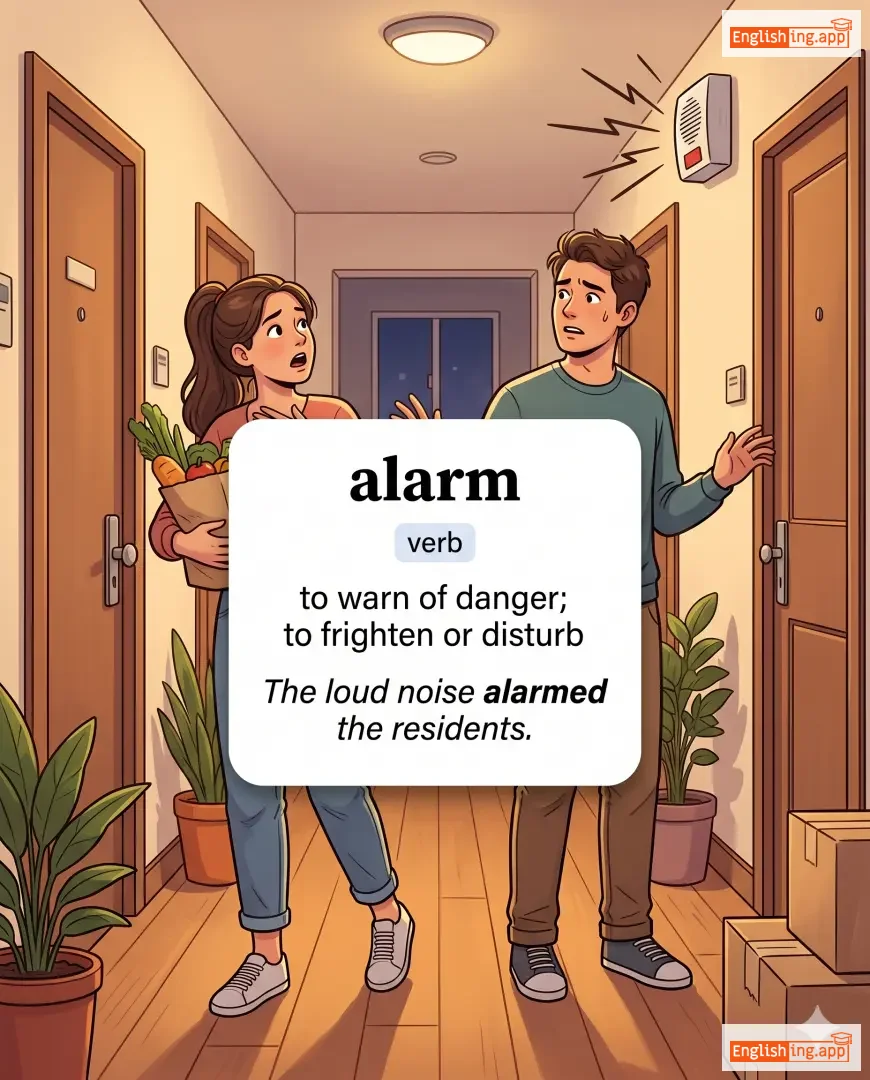
alarm definition card — visual illustration of the meaning
noun
/əˈlɑːrm/
警報 (keihou)

a signal or sound that warns people of danger or alerts them to take action

"The fire alarm went off in the middle of the night."
"夜中に火災警報が鳴った。" (Yonaka ni kasai keihou ga natta.)
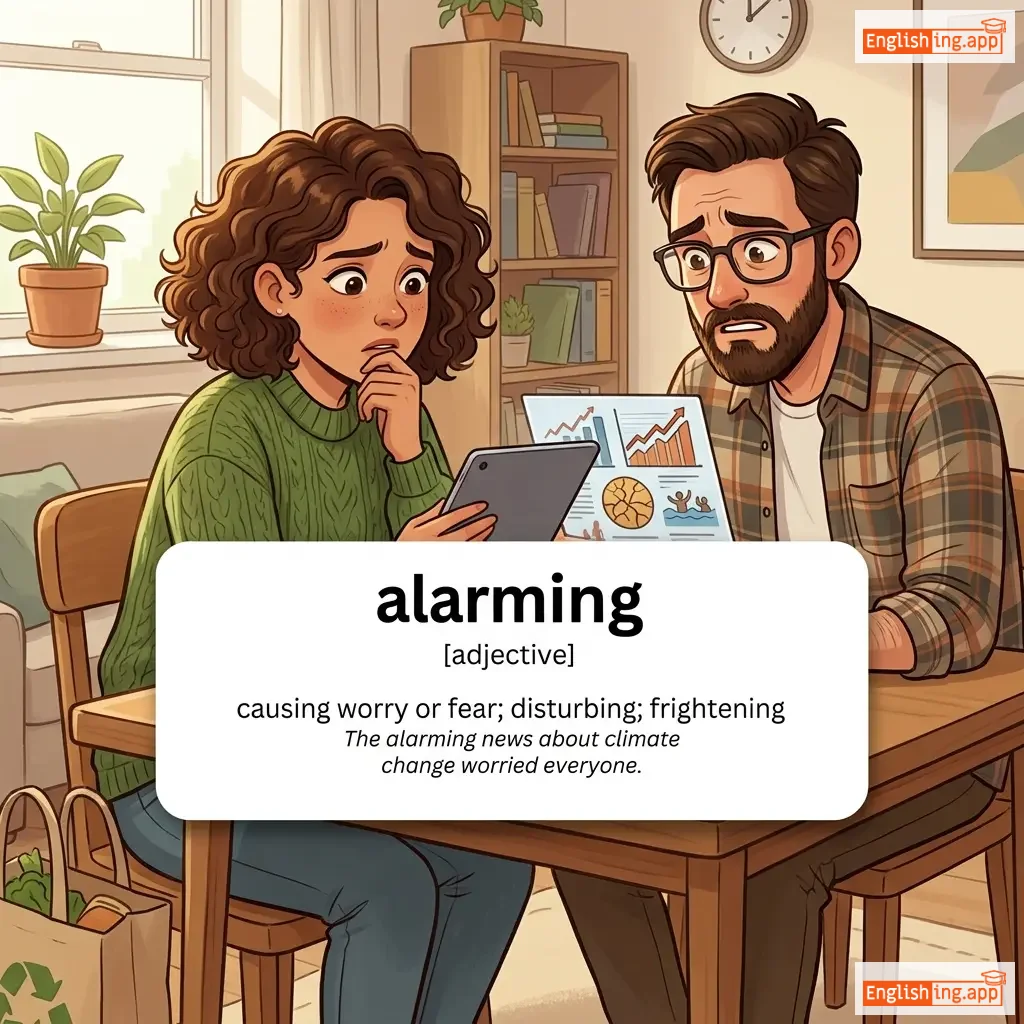
alarming definition card — visual illustration of the meaning
adjective
/əˈlɑrmɪŋ/
衝撃的な; 恐ろしい; 心配させる (shōgeki-teki na; osoroshī; shinpai saseru)

causing worry or fear; disturbing; frightening

"The alarming news about climate change worried everyone."

"気候変動に関する衝撃的なニュースは皆を心配させました。" (Kikō hendō ni kansuru shōgeki-teki na nyūsu wa mina o shinpai sasemashita.)
conjunction
/ˌɔːlˈbiː.ɪt/
それでも (soredemo)

Although; even though.

"He finally agreed, albeit reluctantly."

"彼は最終的に同意したが、それでも嫌々だった。" (Kare wa saishū-teki ni dōi shita ga, soredemo iya iya datta.)
noun/adjective
/ælˈbaɪ.noʊ/
アルビノ (色素が欠けている人/動物) (albino)

A person, animal, or plant lacking normal pigmentation, resulting in pale skin, hair, and eyes.

"The albino rabbit had white fur and pink eyes."

"アルビノウサギは白い毛とピンクの目を持っていました。" (Arubino usagi wa shiroi ke to pinku no me wo motteimashita.)
noun
/ˈæl.baɪt/

A white or colorless mineral of the feldspar group, often found in igneous rocks.

"Geologists discovered albite crystals in the rock sample."

noun
/ˈælbəm/
アルバム (arubamu)

A collection of songs or photographs compiled into a single book, record, or digital file.

"She showed me her travel album full of beautiful pictures."

"彼女は美しい写真がいっぱいの旅行アルバムを見せてくれました。" (Kanojo wa utsukushii shashin ga ippai no ryokō arubamu o misete kuremashita.)
alchemy definition card — visual illustration of the meaning
noun
/ˈælkəmi/
錬金術 (renkinjutsu)

A medieval practice combining elements of chemistry and philosophy, aimed at transforming matter, especially turning base metals into gold.

"Medieval scientists devoted their lives to alchemy."

"中世の科学者たちは命を錬金術に捧げました。" (Chūsei no kagakusha-tachi wa inochi o renkinjutsu ni sasagemashita.)
noun
/ˈælkəhɒl/

A colorless volatile liquid that is the intoxicating constituent of wine, beer, spirits, and other drinks.

"Too much alcohol can damage your liver."

noun
/ˈælkəhɒlɪzəm/
アルコール依存症 (arukōru izonshō)

A chronic disease characterized by uncontrolled drinking and preoccupation with alcohol.

"His alcoholism affected both his health and his family life."

"彼のアルコール依存症は、彼の健康と家庭生活に影響を与えた。" (Kare no arukōru izonshō wa, kare no kenkō to katei seikatsu ni eikyō o ataeta.)
noun
/ˈælkoʊv/
アルコーブ (arukōbu)

A small recessed section of a room or a nook.

"She placed a reading chair in the alcove near the window."

"彼女は窓の近くのアルコーブに読書用の椅子を置きました。" (Kanojo wa mado no chikaku no arukōbu ni dokusho-yō no isu o okimashita.)
noun
/ˈɔːldər/
アルダーの木 (Arudā no ki)

A type of tree from the birch family that typically grows in wet ground and has simple, serrated leaves.

"The alder trees grew thick along the riverbank."

"アルダーの木は川のほとりに密に成長していました。" (Arudā no ki wa kawa no hotori ni mitsu ni seichō shiteimashita.)
noun
/ˈɔːldərmən/
市議会議員 (shigikai giin)

An elected member of a municipal council in certain cities and towns.

"The alderman proposed a new plan for community parks."

"オールダーマンはコミュニティパークの新しい計画を提案しました。" (Ōrudāman wa komyuniti pāku no atarashī keikaku o teian shimashita.)
noun
/ˈɔːldərmənʃɪp/
アルダーマンの職位 (Arudāman no shokui)

The office, position, or dignity of an alderman.

"He was honored with aldermanship after years of service."

"彼は多年の奉仕後、アルダーマンの職位を授与されました。" (Kare wa tangen no hōshi go, arudāman no shokui o juyo saremashita.)
adjective
/əˈlɜːrt/
警戒 (keikai)

quick to notice and respond to potential danger or issues; aware and attentive

"The alert dog barked at the stranger approaching the house."

"警戒している犬は家に近づいてくる見知らぬ人に吠えました。" (Keikai shite iru inu wa ie ni chikadzuite kuru mishiranu hito ni hoemashita.)
adverb
/əˈlɜːrtli/
注意深く (chuibukaku)

in a watchful, attentive, and quick-to-notice manner

"She listened alertly to every sound in the dark forest."

"彼女は暗い森であらゆる音を注意深く聞いていた。" (kanojo wa kurai mori de arayuru oto o chuibukaku kiite ita)
noun
/əˈlɜːrtnəs/
警戒心 (keikaishin)

the state of being mentally aware and quick to notice or respond; vigilance

"The driver maintained a high level of alertness during the long journey."
"運転手は長い旅の間、高い警戒心を保った。" (untenshu wa nagai tabi no aida takai keikaishin o tamotta)
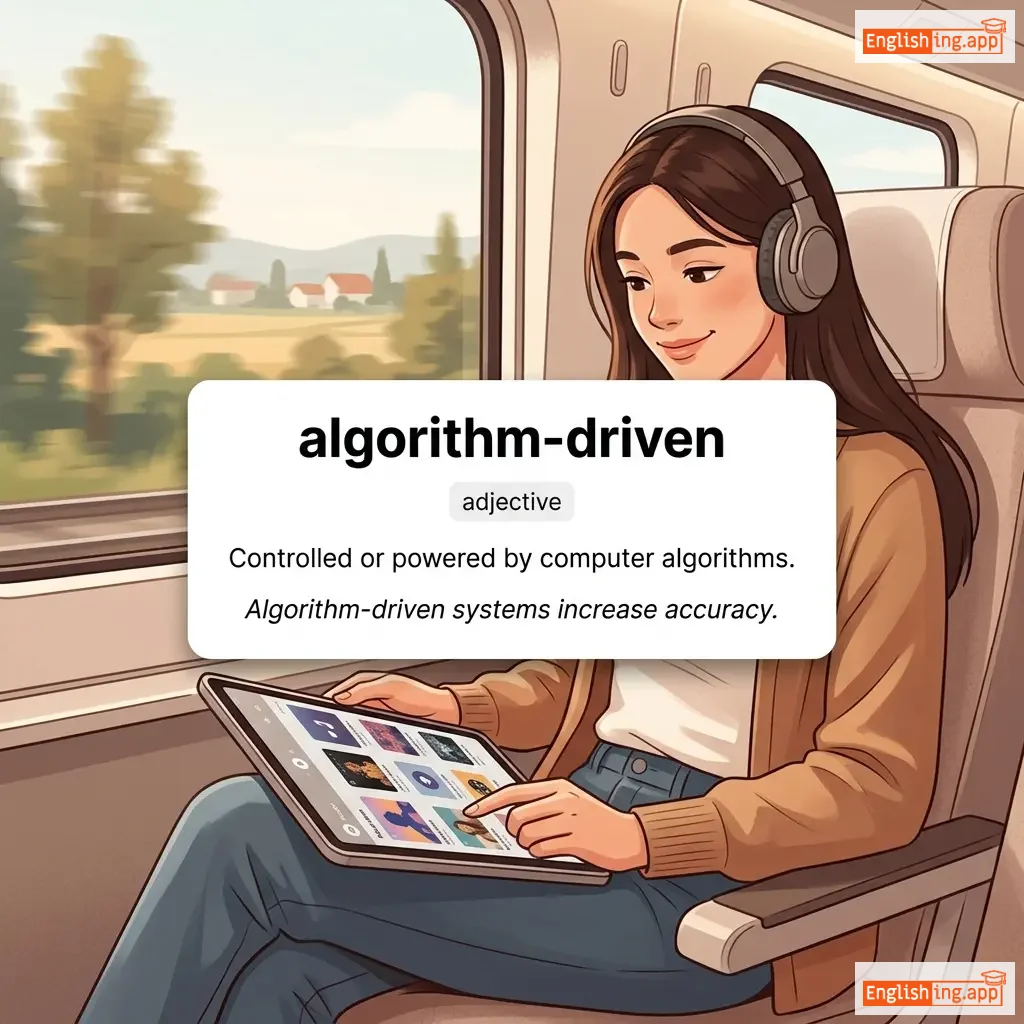
algorithm-driven definition card — visual illustration of the meaning
adjective
ˈæl.ɡə.rɪ.ðəm drɪv.ən
アルゴリズムによって駆動される。 (arugorizumu ni yotte kudou sareru.)

Controlled or powered by computer algorithms.

"Algorithm-driven systems increase accuracy."
"アルゴリズム駆動システムは精度を向上させる。" (Arugorizumu kudou shisutemu wa seido wo koujou saseru.)
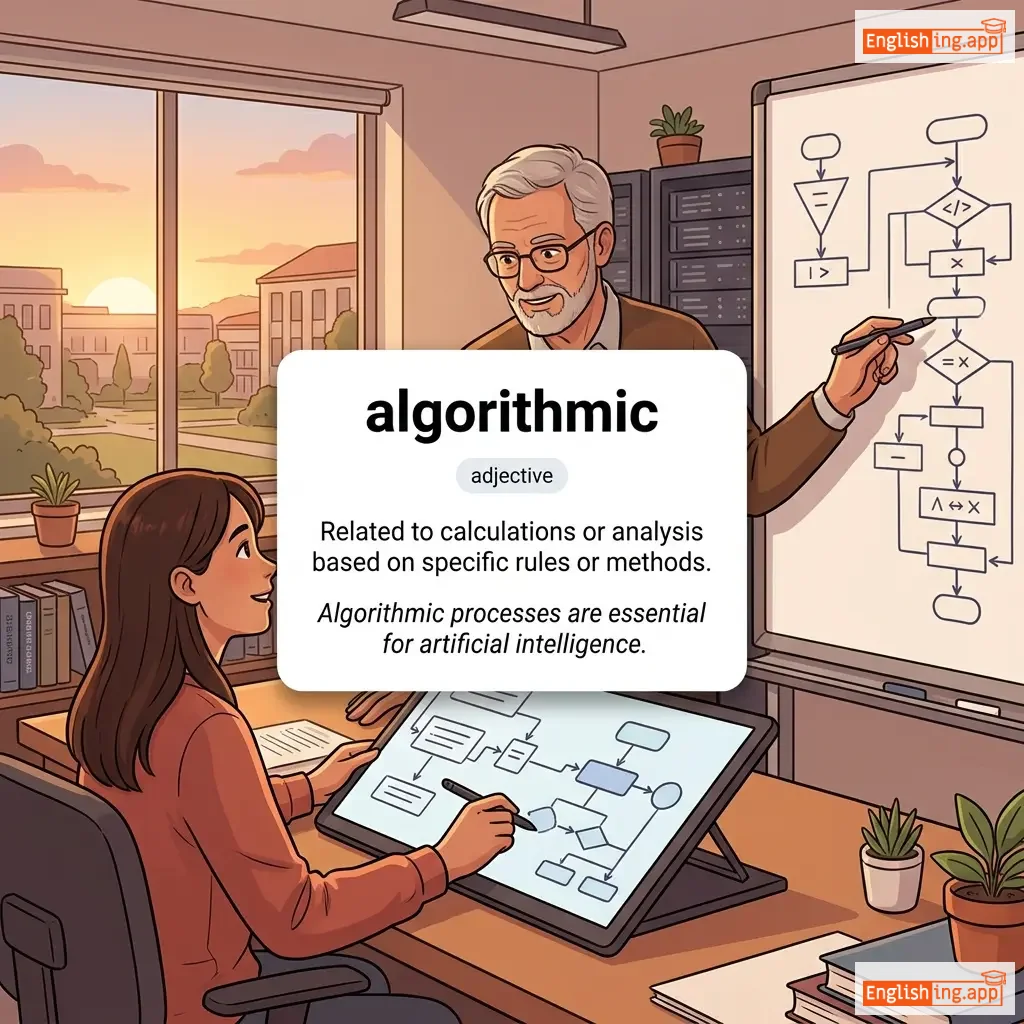
algorithmic definition card — visual illustration of the meaning
adjective
ˌæl.ɡəˈrɪð.mɪk
アルゴリズミック (arugorizumikku)

Related to calculations or analysis based on specific rules or methods.

"Algorithmic processes are essential for artificial intelligence."

"アルゴリズミックなプロセスは人工知能に不可欠です。" (Arugorizumikku na purosesu wa jinkōchinō ni fukaketsu desu.)
noun, adverb
/ˈeɪliəs/
別名 (betsumei)

A false or assumed identity; also used to mean 'otherwise called'.

"The criminal was known by the alias 'Shadow'."

"その犯罪者は『シャドウ』という別名で知られていた。" (Sono hanzai-sha wa 'Shadow' to iu betsumei de shirarete ita.)
noun
/ˈælɪbaɪ/
アリバイ (aribai)

A claim or piece of evidence that one was elsewhere when an act, typically a crime, was committed.

"She had a strong alibi that proved she was at the cinema during the theft."
"彼女は盗難の際に映画館にいたことを証明する強力なアリバイを持っていました。" (Kanojo wa tōnan no sai ni eigakan ni ita koto o shōmei suru kyōryoku na aribai o motte imashita.)
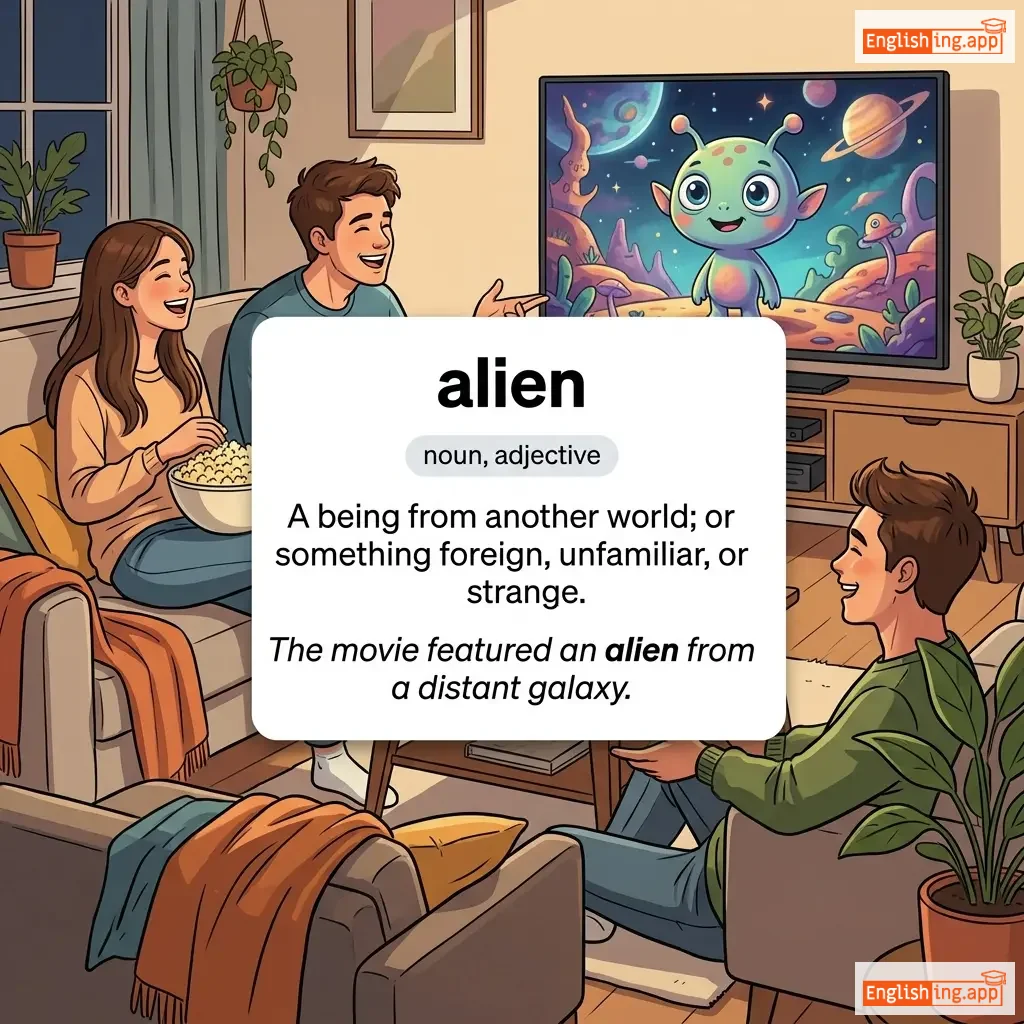
alien definition card — visual illustration of the meaning
noun, adjective
/ˈeɪ.li.ən/
エイリアン (eirian)

A being from another world; or something foreign, unfamiliar, or strange.

"The movie featured an alien from a distant galaxy."

"その映画には遠い銀河から来たエイリアンが登場しました。" (Sono eiga ni wa tooi ginga kara kita eirian ga toujou shimashita.)
adjective
/ˈeɪ.li.ə.nə.bəl/
譲渡可能 (joutokano)

Able to be transferred or surrendered, usually referring to rights or property.

"Property rights are alienable and can be sold or transferred."

"財産権は譲渡可能で、売却または転送できます。" (Zaisanken wa jouto kanou de, baikyaku mata wa tensou dekimasu.)
verb
/ˈeɪ.li.ə.neɪt/
疎外する (sogai suru)

To make someone feel isolated or estranged; to cause someone to become unfriendly.

"His rude behavior alienated many of his friends."
"彼の失礼な行動は多くの友人を遠ざけた。" (Kare no shitsurei na kōdō wa ōku no yūjin o tōzake ta.)
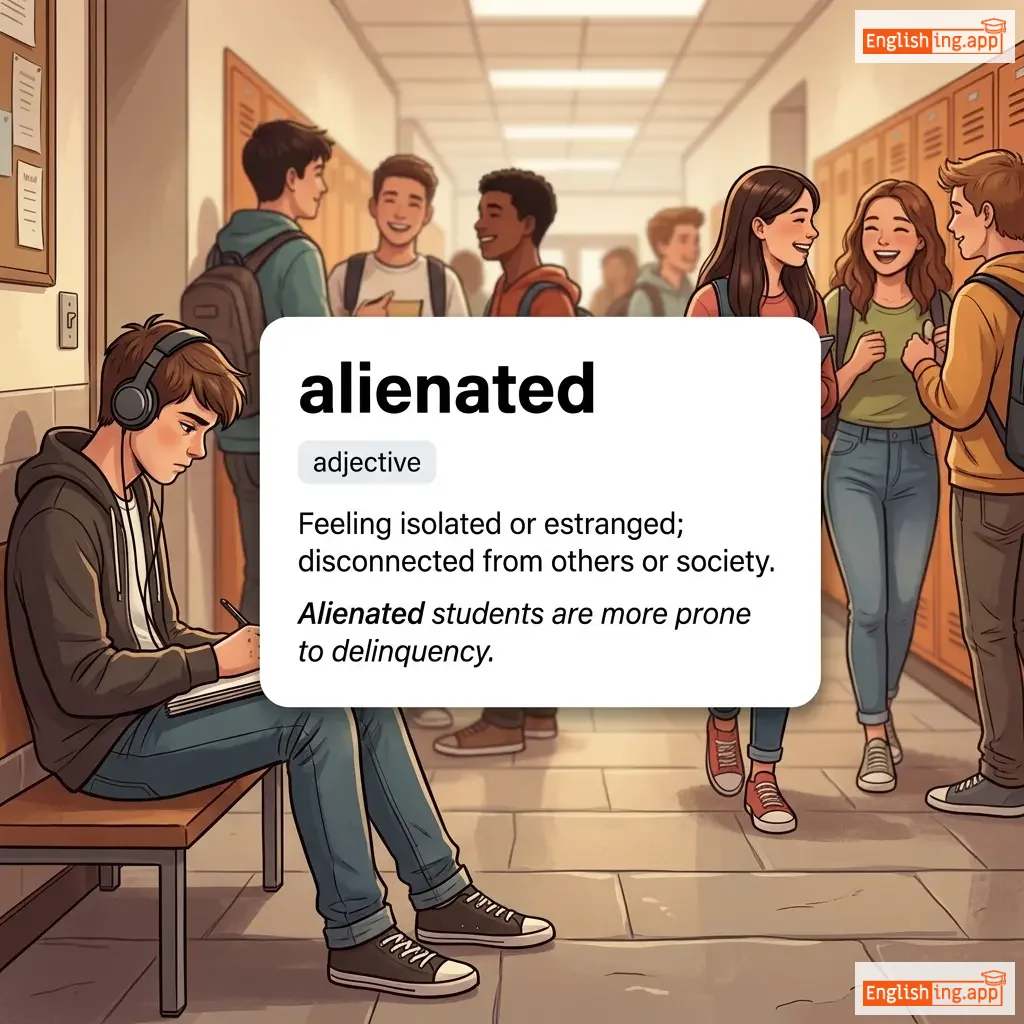
alienated definition card — visual illustration of the meaning
adjective
ˈeɪlɪəneɪtɪd
疎外された (sogai sareta)

Feeling isolated or estranged; disconnected from others or society.

"Alienated students are more prone to delinquency."

"疎外された学生は、犯罪に走りがちです。" (Sogai sareta gakusei wa, hanzai ni hashirigachi desu.)
noun
/ˌeɪ.li.əˈneɪ.ʃən/
疎外 (sogai)

The state of being isolated or estranged from a group or activity.

"The new policies created a sense of alienation among employees."

"新しい政策は従業員の間に疎外感を生み出しました。" (Atarashī seisaku wa jūgyōin no aida ni sogai kan o umidashimashita.)
verb
/əˈlaɪn/
整列する / 直線にする (seiretsu suru / chokusen ni suru)

To arrange things in a straight line; to adjust or bring into proper relation or agreement.

"The manager asked the team to align their goals with the company's mission."

"マネージャーはチームに目標を会社のミッションに合わせるように言いました。" (Manējā wa chīmu ni mokuhyō o kaisha no misshon ni awaseru yō ni iimashita.)
aligning definition card — visual illustration of the meaning
verb
əˈlaɪn.ɪŋ
整列する (seiretsu suru)

Placing or arranging things in a straight line or in correct relative positions.

"Aligning education with global standards is vital."

"教育を世界標準に整列させることは重要です。" (Kyōiku o sekai hyōjun ni seiretsu saseru koto wa jūyō desu.)
noun
/əˈlaɪnmənt/
整列 (seiretsu)

arrangement in a straight line or in proper position

"The alignment of the planets was perfect for the celestial event."

"惑星の整列は天体イベントのために完璧でした。" (Wakusei no seiretsu wa tentaibento no tame ni kanpeki deshita.)
adjective
/əˈlaɪk/
似ている (niteiru)

similar in appearance, nature, or character

"The two sisters look very alike."

"二人の姉妹はとても似ている。" (Futari no shimai wa totemo niteiru.)
noun
/ˈæl.ɪ.mənt/
食物 (shokumotsu)

food or nourishment that sustains life

"Fruits and vegetables are important aliments for a healthy body."

"果物と野菜は健康な体のための重要な食物です。" (Kudamono to yasai wa kenkōna karada no tame no jūyōna shokumotsu desu.)
adjective
/ˌæl.ɪˈmen.tər.i/
消化に関連する (shōka ni kanren suru)

relating to nourishment or the organs of digestion

"The doctor explained the role of the alimentary canal in digestion."

"医者は消化管の役割について説明しました。" (Isha wa shōkakan no yakuwari ni tsuite setsumei shimashita.)
noun
/ˈæl.ɪ.moʊ.ni/
扶養費 (fuyouhi)

financial support that a person is ordered by a court to give to their spouse after separation or divorce

"He was ordered by the court to pay monthly alimony to his ex-wife."

"裁判所は彼に元妻に毎月の扶養費を支払うよう命じた。" (Saibansho wa kare ni moto tsuma ni maitsuki no fuyouhi wo shiharau you meijita.)
adjective
/əˈlaɪv/
生きている (ikiteiru)

Living, not dead.

"The rescue team found the missing child alive."

"レスキュー隊は行方不明の子供を生きて発見しました。" (Resukyū-tai wa yukuefumei no kodomo o ikite hakken shimashita.)