語彙集

英単語辞書 | 単語の意味、定義、例文

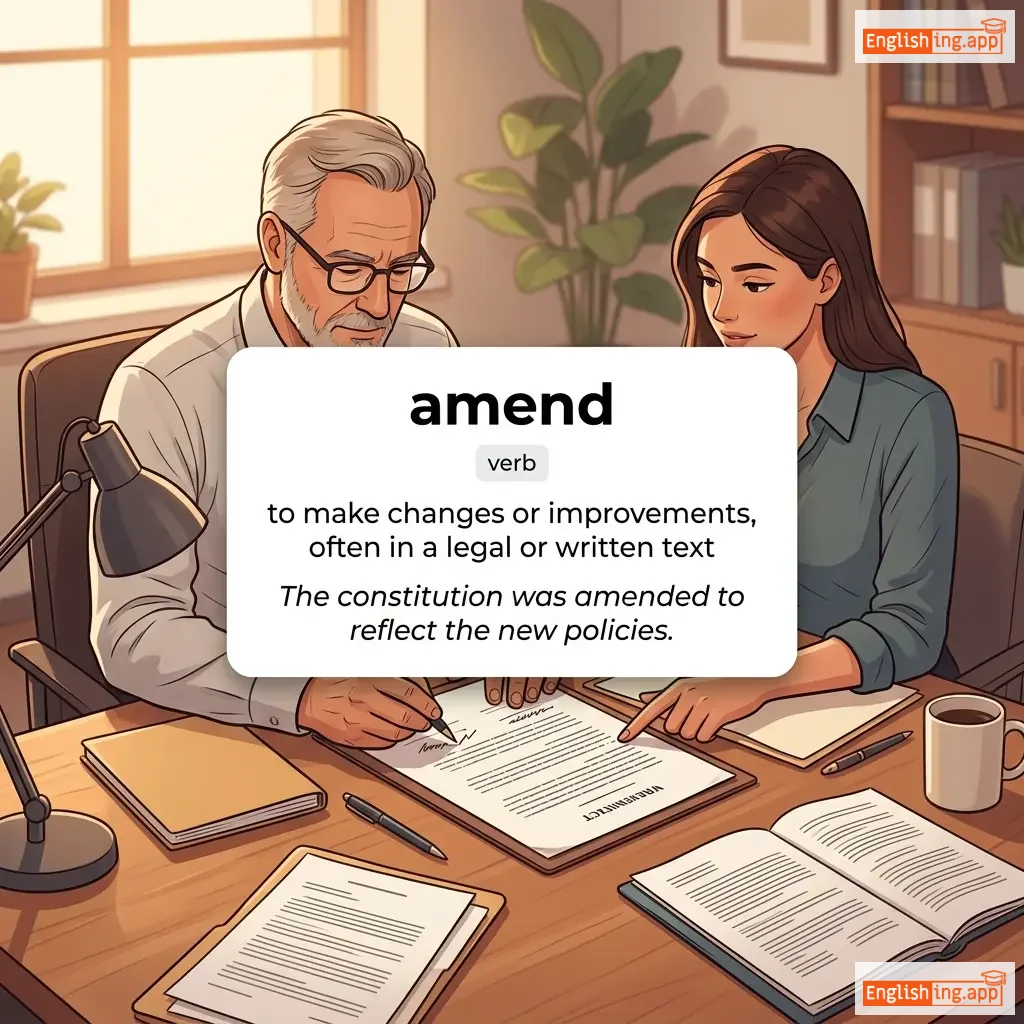
amend definition card — visual illustration of the meaning
✍️

amend

verb
/əˈmɛnd/

to make changes or improvements, often in a legal or written text

"The constitution was amended to reflect the new policies."

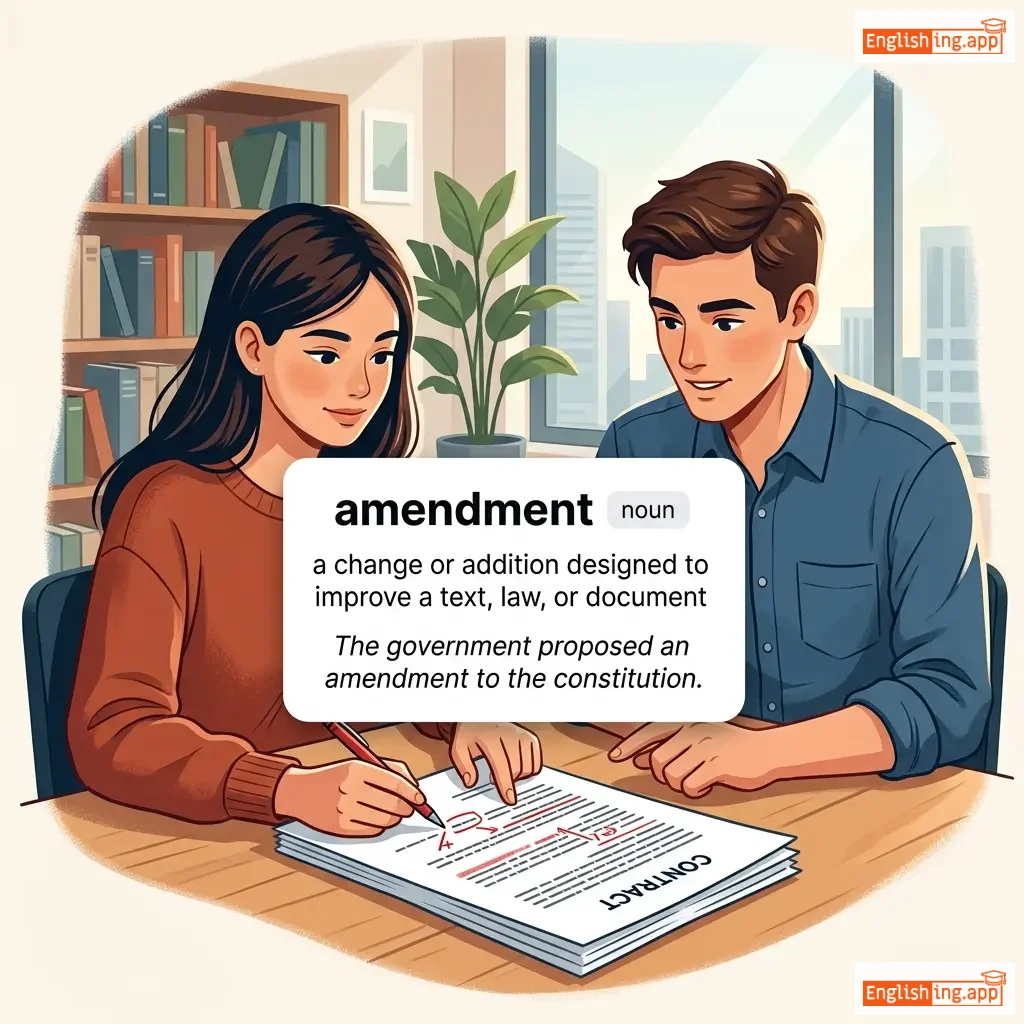
amendment definition card — visual illustration of the meaning
noun
/əˈmɛndmənt/
幸せ (shiawase)

a change or addition designed to improve a text, law, or document

"The government proposed an amendment to the constitution."
"彼女は賞を受け取ったとき、自分の幸せを隠せませんでした。" (Kanojo wa shou wo uketotta toki, jibun no shiawase wo kakusemasendeshita.)
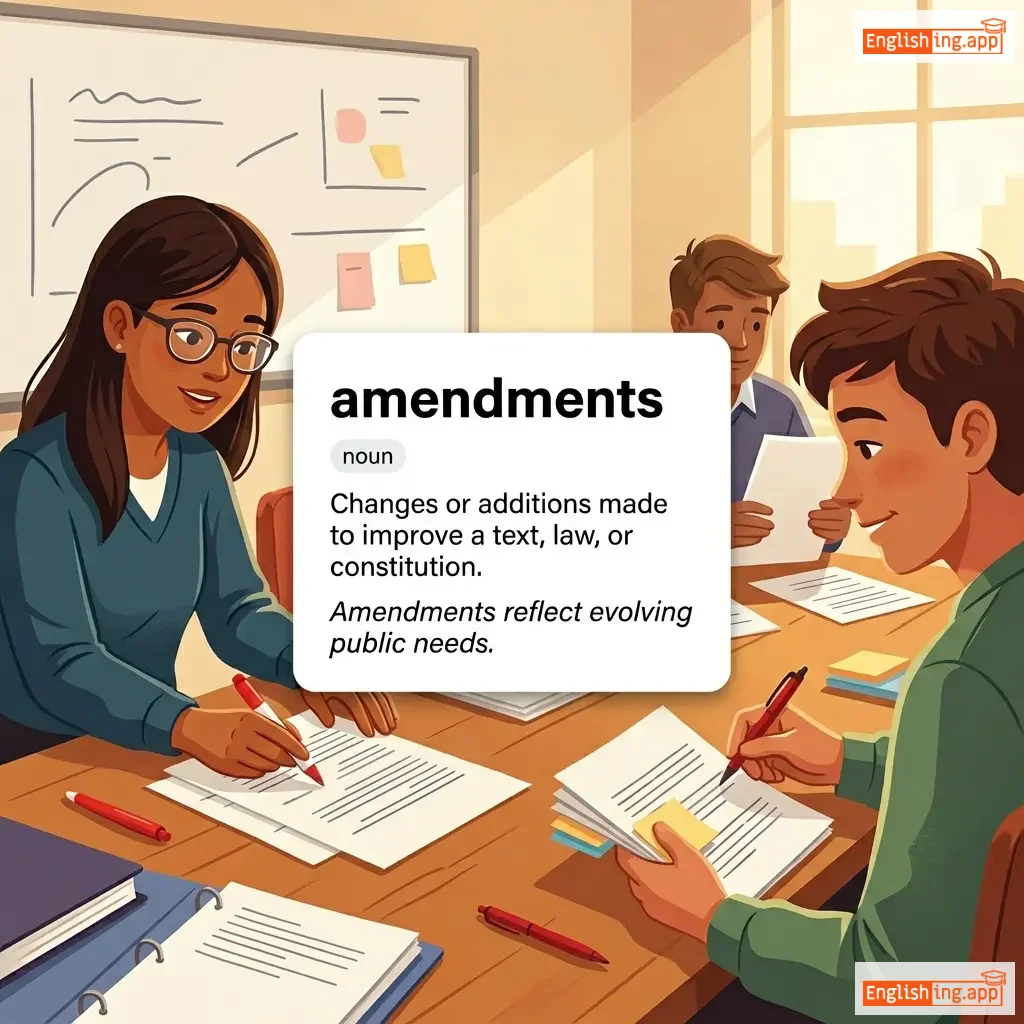
amendments definition card — visual illustration of the meaning
noun
əˈmend.mənts
修正案 (shūseian)

Changes or additions made to improve a text, law, or constitution.

"Amendments reflect evolving public needs."

"修正案は進化する公共のニーズを反映しています。" (Shūseian wa shinka suru kōkyō no nīzu o han'ei shiteimasu.)
noun
/əˈmɛnətiz/
アメニティ (ameniti)

useful or pleasant facilities and services provided for comfort or convenience

"The hotel offers modern amenities such as free Wi-Fi and a swimming pool."
"ホテルは無料Wi-Fiやプールなどの現代的なアメニティを提供しています。" (Hoteru wa muryō Wi-Fi ya pūru nado no gendai-teki na ameniti o teikyō shiteimasu.)
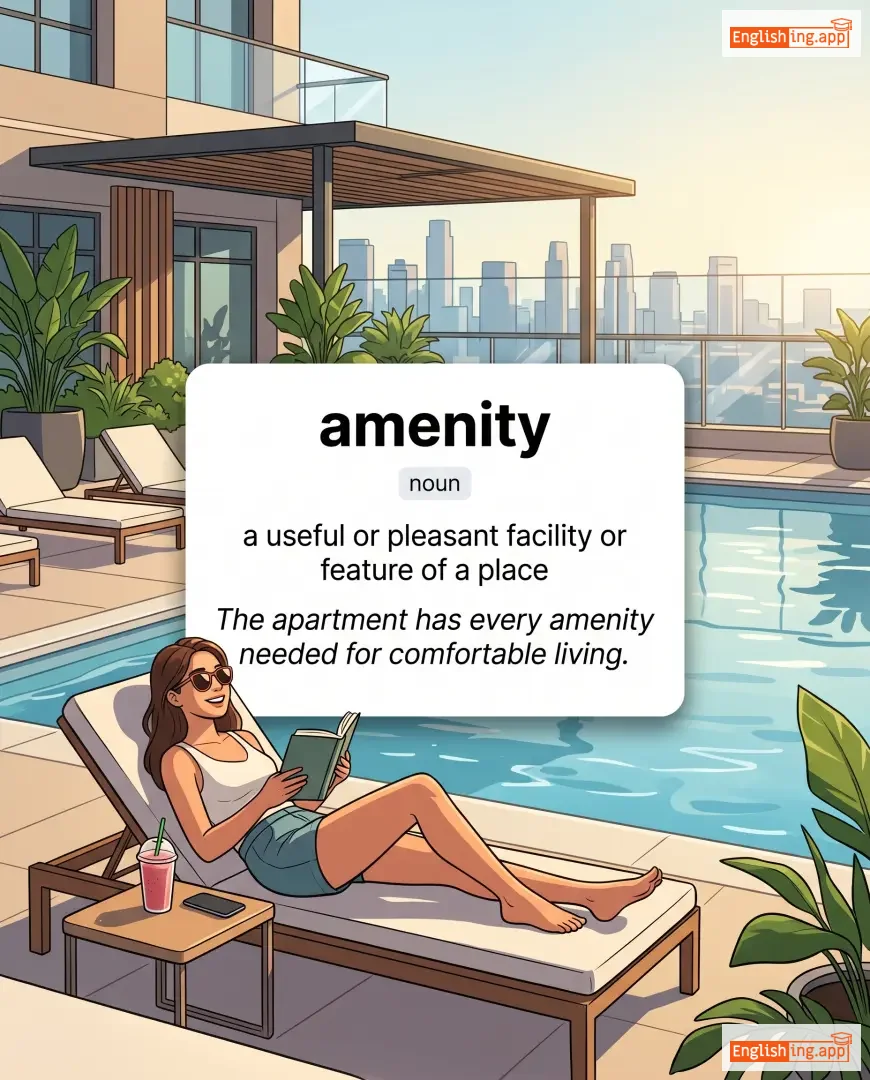
amenity definition card — visual illustration of the meaning
noun
/əˈmɛnəti/
アメニティ (ameniti)

a useful or pleasant facility or feature of a place

"The apartment has every amenity needed for comfortable living."

"アパートには快適な生活のために必要なすべてのアメニティがあります。" (Apato ni wa kaiteki na seikatsu no tame ni hitsuyou na subete no ameniti ga arimasu.)
noun/adjective
/əˈmerɪkən/
アメリカン (amerikan)

relating to the United States or its people

"She is an American citizen."

"彼女はアメリカ市民です。" (Kanojo wa amerika shimin desu.)
🇺🇸

americanism

noun
/əˈmɛrɪkəˌnɪzəm/

A word, phrase, or practice characteristic of American English or culture.

"The term 'sidewalk' is an Americanism, while 'pavement' is used in British English."

adjective
/ˈeɪmiəbəl/
愛想の良い (aisō no yoi)

Having a friendly and pleasant manner.

"She has an amiable personality that makes her well-liked by everyone."

"彼女は、誰からも好かれるような愛想の良い性格を持っています。" (Kanojo wa, dare kara mo sukareru yōna aisō no yoi seikaku o motteimasu.)
adverb
/ˈeɪ.mi.ə.bli/
友好的に, 親切に (yūkō-teki ni, shinsetsu ni)

in a friendly and pleasant manner

"They discussed the issue amiably without any arguments."

"彼らは議論を交わすことなく、友好的にその問題を話し合った。" (Karera wa giron o kawasu koto naku, yūkō-teki ni sono mondai o hanashiatta.)
adverb
/əˈbæk/
驚いた (odoroita)

by surprise; unexpectedly

"I was taken aback by his sudden announcement."
"私は彼の突然の発表に驚きました。" (Watashi wa kare no totsuzen no happyou ni odoroimashita.)
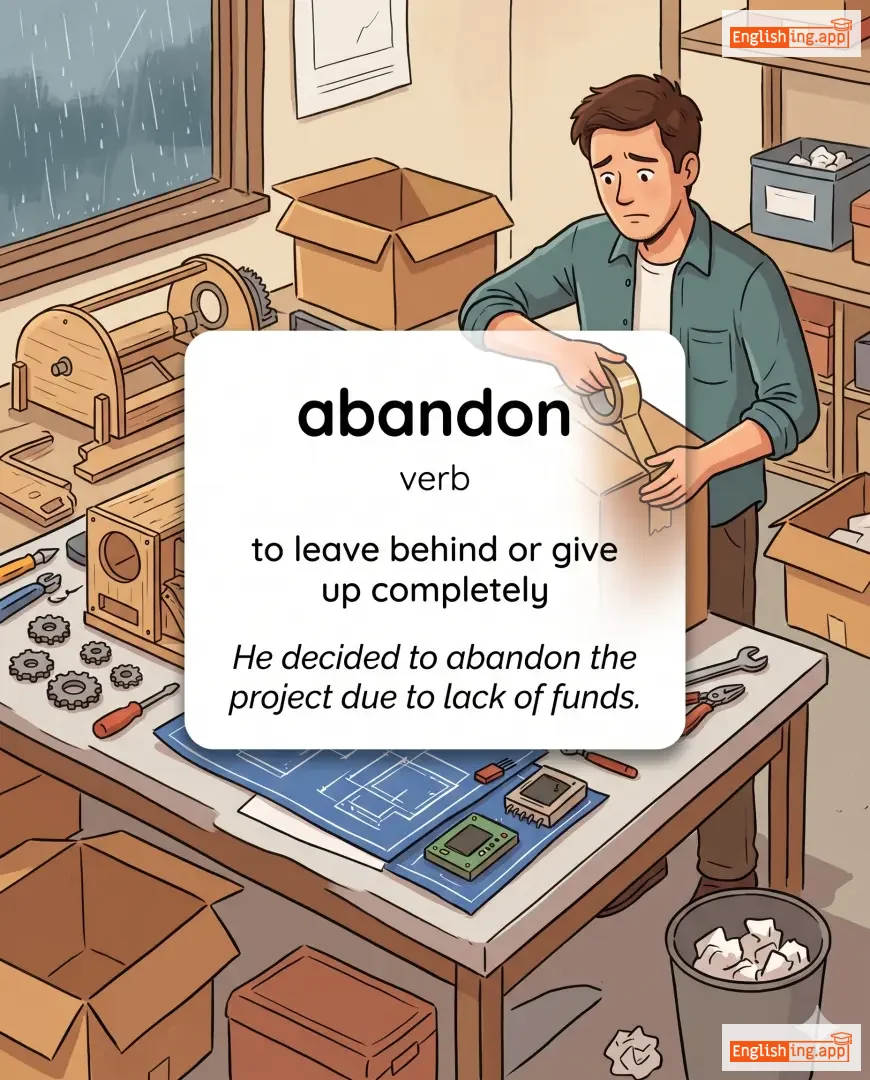
abandon definition card — visual illustration of the meaning
verb
/əˈbændən/
放棄する (hōki suru)

to leave behind or give up completely

"He decided to abandon the project due to lack of funds."

"彼は資金不足のため、プロジェクトを放棄することに決めました。" (Kare wa shikin fusoku no tame, purojekuto o hōki suru koto ni kimemashita.)
noun
/əˈbændənmənt/
見捨て (misute)

the act of leaving someone or something behind completely; the state of being deserted

"The child suffered deep emotional pain because of abandonment."

"その子供は見捨てられたことで深い感情的な痛みを受けた。" (sono kodomo wa misuterareta koto de fukai kanjoteki na itami o uketa)
verb
/əˈbeɪs/
卑下する (higesuru)

to belittle or degrade someone

"He refused to abase himself before the king."

"彼は王の前で自分を卑下するのを拒否した。" (Kare wa ō no mae de jibun o hige suru no o kyohi shita.)
verb
/əˈbæʃ/
困らせる (komaraseru)

to make someone feel embarrassed or ashamed

"Her sudden question seemed to abash him."
"彼女の突然の質問は彼を困らせたようだ。" (Kanojo no totsuzen no shitsumon wa kare o komaraseta yō da.)
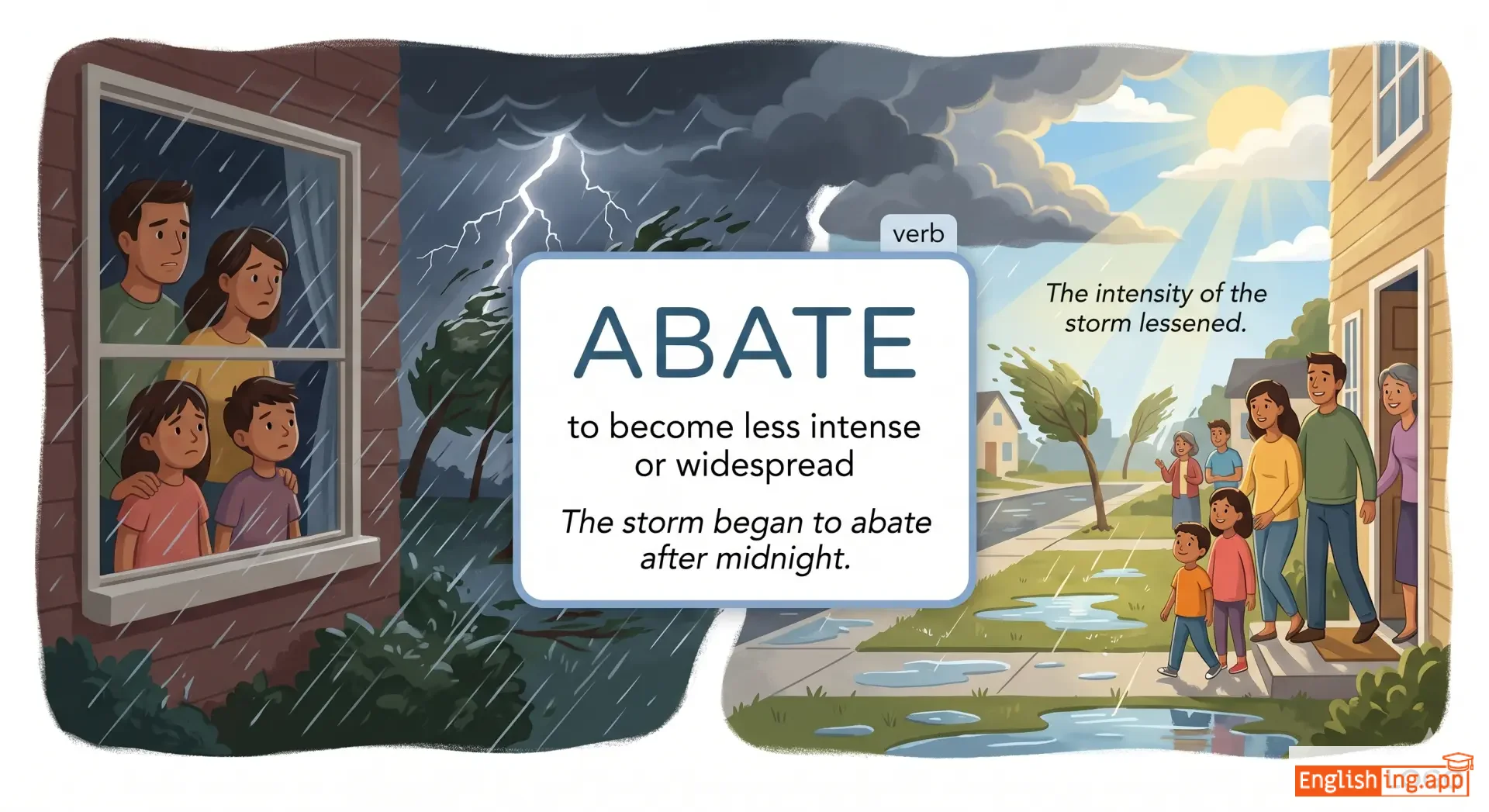
abate definition card — visual illustration of the meaning
verb
/əˈbeɪt/
減少する (genshō suru)

to become less intense or widespread

"The storm began to abate after midnight."

"嵐は真夜中に弱まり始めました。" (Arashi wa mayonaka ni yowamari hajimemashita.)
noun
/ˈæbɪs/
アッベッサ (修道院の女性院長) (Abessa (shūdōin no josei incho))

the woman in charge of a convent of nuns

"The abbess welcomed the visitors to the convent."

"アッベッサは修道院に訪問者を迎えました。" (Abessa wa shūdōin ni hōmon-sha o mukaemashita.)
noun
/ˈæbi/
修道院 (shūdōin)

A large church building or monastery where monks or nuns live, work, and worship.

"The old abbey on the hill attracts many tourists each year."

"丘の上の古い修道院は毎年多くの観光客を引き寄せます。" (Oka no ue no furui shūdōin wa mainen ōku no kankōkyaku o hikiyose masu.)
noun
/ˈæbət/
修道院長 (shūdōin-chō)

The head of a monastery for monks.

"The abbot welcomed the visitors to the monastery."

"アボットは修道院に訪れた訪問者を歓迎しました。" (Abotto wa shūdōin ni otozureta hōmonsha o kangei shimashita.)
verb
/əˈbriːvieɪt/
省略する (shōryaku suru)

To shorten a word, phrase, or text by leaving out letters or parts.

"We often abbreviate 'Doctor' to 'Dr'."

"私たちはよく 'Doctor' を 'Dr.' に省略します。" (Watashitachi wa yoku 'Doctor' o 'Dr.' ni shōryaku shimasu.)
noun
/əˌbriːviˈeɪʃən/
略語 (ryakugo)

a shortened form of a word or phrase

"NASA is an abbreviation for National Aeronautics and Space Administration."

"NASA は National Aeronautics and Space Administration の略語です。" (NASA wa National Aeronautics and Space Administration no ryakugo desu.)
abdicate definition card — visual illustration of the meaning
verb
/ˈæbdɪkeɪt/
放棄する (hōki suru)

To give up a position of power or responsibility, especially a throne.

"The king decided to abdicate the throne."

"王は王位を放棄することに決めました。" (Ō wa ōi o hōki suru koto ni kimemashita.)
noun
/ˈæbdəmən/
腹部 (fukubu)

The part of the body below the chest and above the hips that contains the stomach and other organs.

"He complained of pain in his abdomen."

"彼は腹部の痛みを訴えました。" (Kare wa fukubu no itami o uttaemashita.)
adjective
/æbˈdɑː.mə.nəl/
腹部の (fukubu no)

relating to the abdomen (the part of the body between the chest and pelvis)

"He complained of severe abdominal pain."

"彼はひどい腹痛を訴えていました。" (Kare wa hidoi fukutsū o uttae te imashita.)
verb
/əbˈdʌkt/
誘拐する (yuukai suru)

to take someone away illegally by force or deception

"The criminal tried to abduct the child in broad daylight."

"犯人は白昼にその子供を誘拐しようとした。" (Hannin wa hakuchuu ni sono kodomo o yuukai shiyou to shita)
noun
/æbˈdʌk.ʃən/
誘拐 (yūkai)

the act of taking someone away illegally by force; kidnapping

"The police are investigating the abduction of the child."

"警察は子供の誘拐事件を調査している。" (Keisatsu wa kodomo no yūkai jiken o chōsa shiteiru.)
noun
/əbˈdʌktər/
誘拐犯 (yuukaihann)

a person who kidnaps or forcibly takes someone away

"The police arrested the abductor after a nationwide search."

"警察は長い捜索の後で誘拐犯を逮捕した。" (Keisatsu wa nagai sousaku no ato de yuukaihann o taiho shita)
adverb
/əˈbɛd/
ベッドで (beddo de)

in bed

"She stayed abed all day due to illness."
"病気のため、彼女は一日中ベッドで寝ていました。" (Byouki no tame, kanojo wa ichinichijuu beddo de nete imashita.)
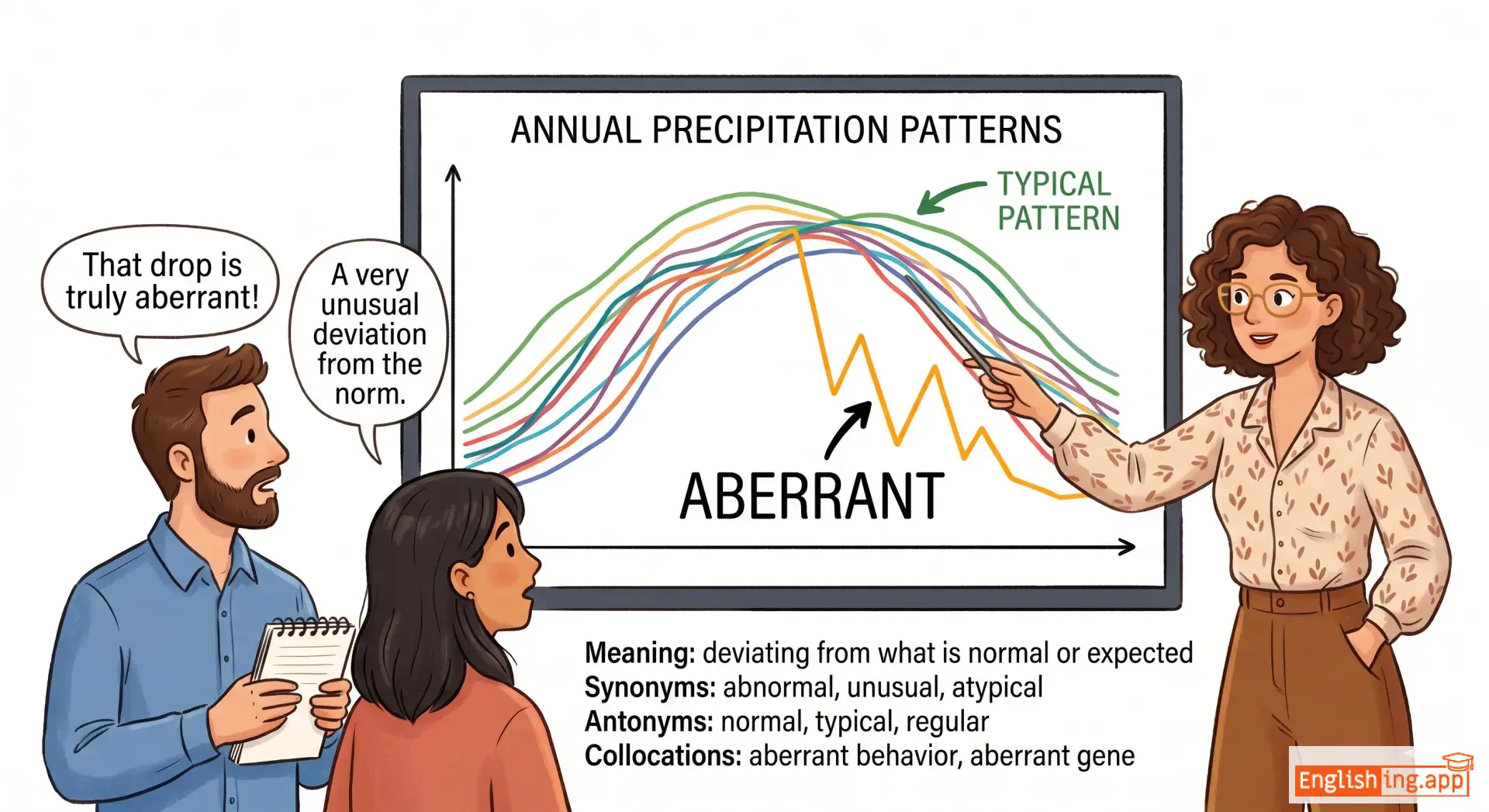
aberrant definition card — visual illustration of the meaning
adjective
/ˈæb.ə.rənt/
異常 (ijou)

deviating from what is normal or expected; abnormal

"His aberrant behavior shocked everyone at the meeting."

"彼の異常な行動は会議で誰もが驚かせた。" (Kare no ijou na koudou wa kaigi de dare mo ga odorokaseta.)
aberration definition card — visual illustration of the meaning
noun
/ˌæb.əˈreɪ.ʃən/
逸脱 (itsudatsu)

a departure from what is normal, usual, or expected; an anomaly

"The sudden drop in temperature was an aberration for this season."
"この季節の急激な気温の低下は逸脱でした。" (Kono kisetsu no kyūgeki na ki-on no teika wa itsudatsu deshita.)
🕵️

abet

verb
/əˈbɛt/

to encourage or assist someone to commit a crime or wrongdoing

"He was accused of abetting the criminals in their escape."

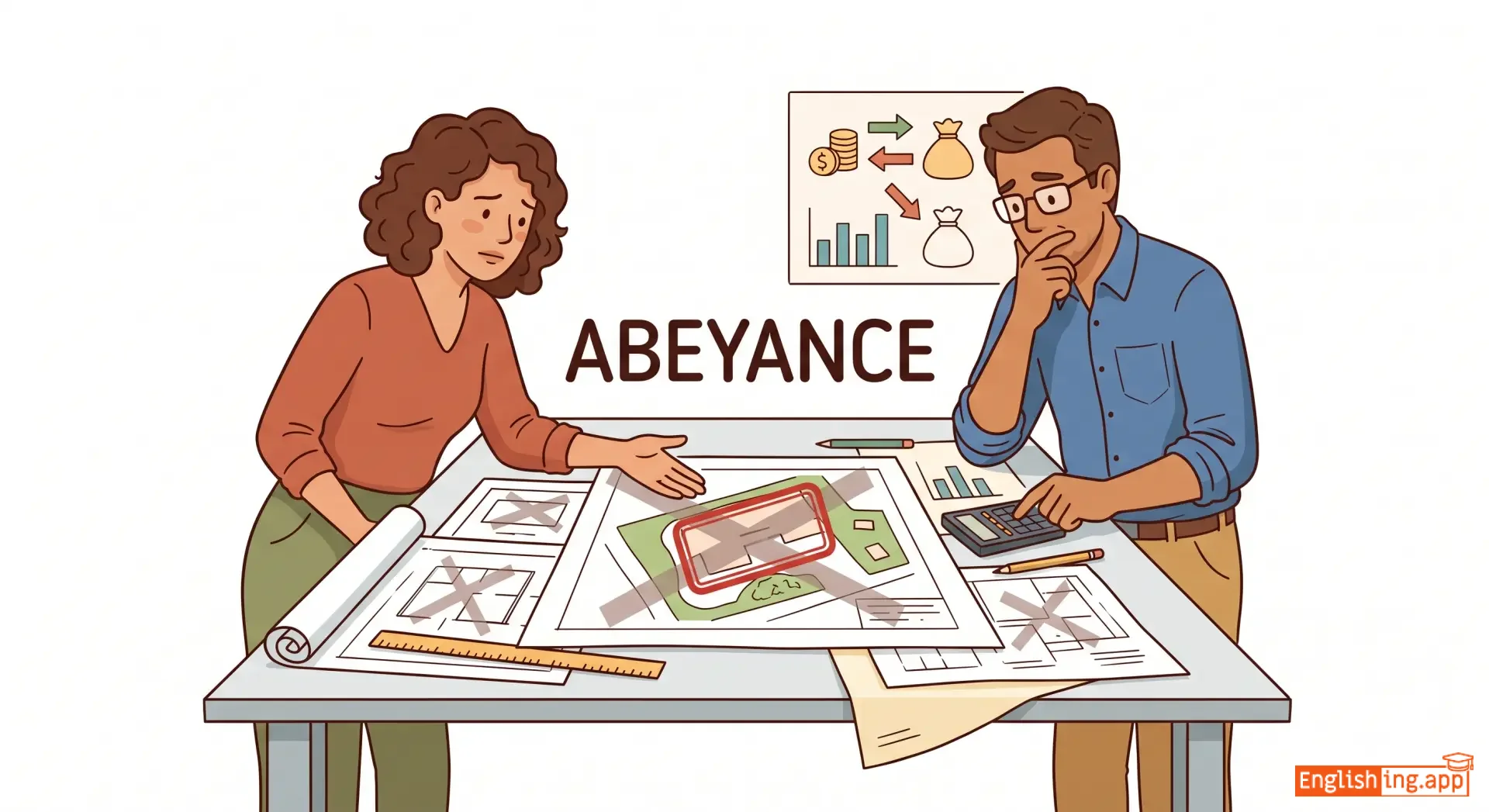
abeyance definition card — visual illustration of the meaning
noun
/əˈbeɪəns/
一時的な保留 (ichiji-teki na horyu)

a state of temporary suspension or inactivity

"The project was held in abeyance until funds became available."

"そのプロジェクトは資金が利用可能になるまで保留されていました。" (Sono purojekuto wa shikin ga riyou kanou ni naru made horyu sarete imashita.)
verb
/əbˈhɔːr/
嫌悪する (ken'o suru)

to regard with disgust and hatred

"She abhors cruelty to animals."

"彼女は動物への残酷さを嫌悪しています。" (Kanojo wa dōbutsu e no zankokusa o ken'o shiteimasu.)
noun
/əbˈhɒrəns/
嫌悪 (ken'o)

a feeling of strong disgust or hatred

"He expressed his abhorrence of racial discrimination."

"彼は人種差別に対する嫌悪を表明した。" (Kare wa jinshu sabetsu ni taisuru ken'o o hyometsu shita.)
adjective
/əbˈhɒrənt/
嫌悪すべき (ken'o subeki)

causing or deserving strong dislike or hatred

"Such cruelty is abhorrent to civilized society."

"そのような残虐行為は文明社会には嫌悪すべきです。" (Sono yō na zangyaku kōi wa bunmei shakai ni wa ken'o subeki desu.)
noun
/əˈbaɪdəns/
遵守 (junshu)

the act of following, accepting, or complying with something

"Her abidance by the rules impressed the committee."

"規則を守ることが委員会に印象を与えました。" (kisoku o mamoru koto ga iinkai ni inshou o ataemashita.)
verb
/əˈbaɪd/
守る (mamoru)

to accept, tolerate, or remain faithful to something

"Citizens must abide by the laws of their country."

"市民は自国の法律を守らなければならない。" (Shimin wa jikoku no hōritsu o mamoranakereba naranai.)
adjective
/əˈbaɪdɪŋ/
持続的な (jizokuteki na)

lasting for a long time; enduring

"She had an abiding love for her hometown."

"彼女は故郷への持続的な愛を持っていました。" (Kanojo wa kokyō e no jizokuteki na ai o motte imashita.)
noun
/əˈbɪləti/
能力 (nouryoku)

the power, skill, or capacity to do something

"Her ability to solve problems quickly impressed everyone."
"問題を迅速に解決する能力は、みんなを感心させました。" (Mondai wo jinsoku ni kaiketsu suru nouryoku wa, minna wo kanshin sasemashita.)
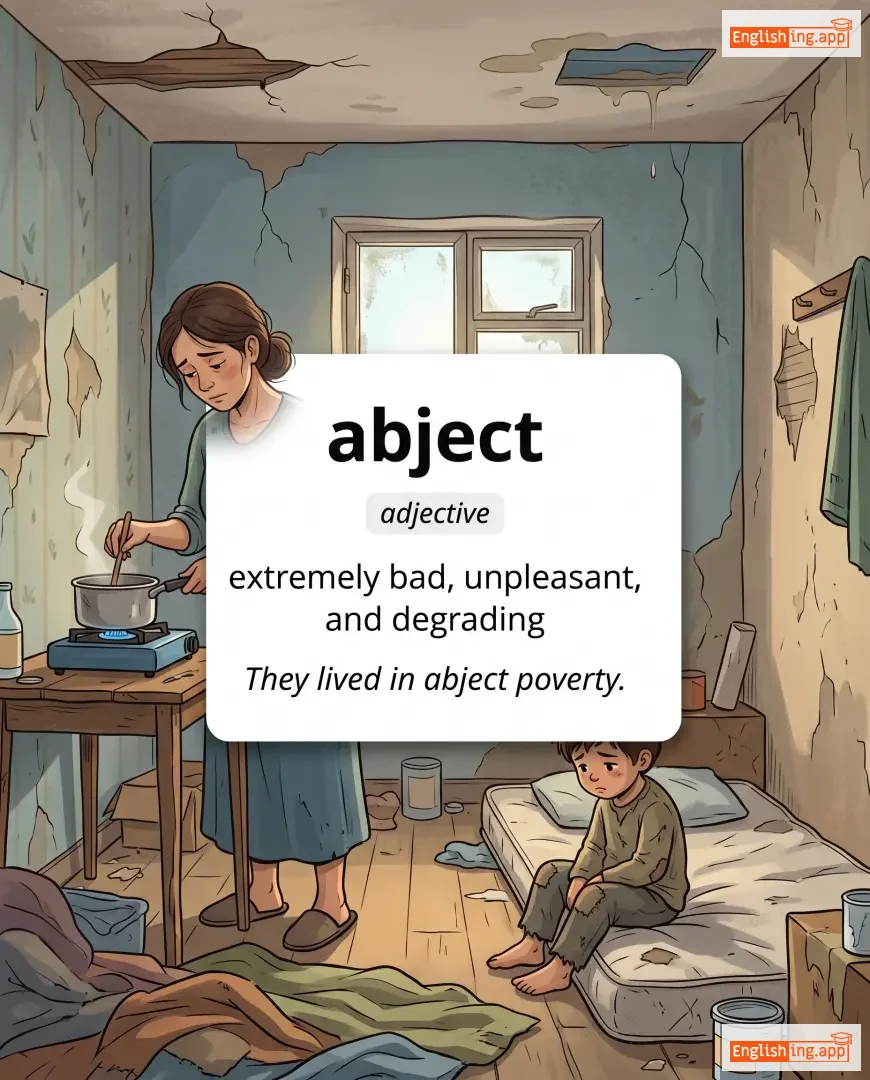
abject definition card — visual illustration of the meaning
adjective
/ˈæbdʒɛkt/
卑劣 (hiretsu)

extremely bad, unpleasant, and degrading

"They lived in abject poverty."
"彼らは卑劣な貧困の中で生きていました。" (Karera wa hiretsu na hinkon no naka de ikite imashita.)
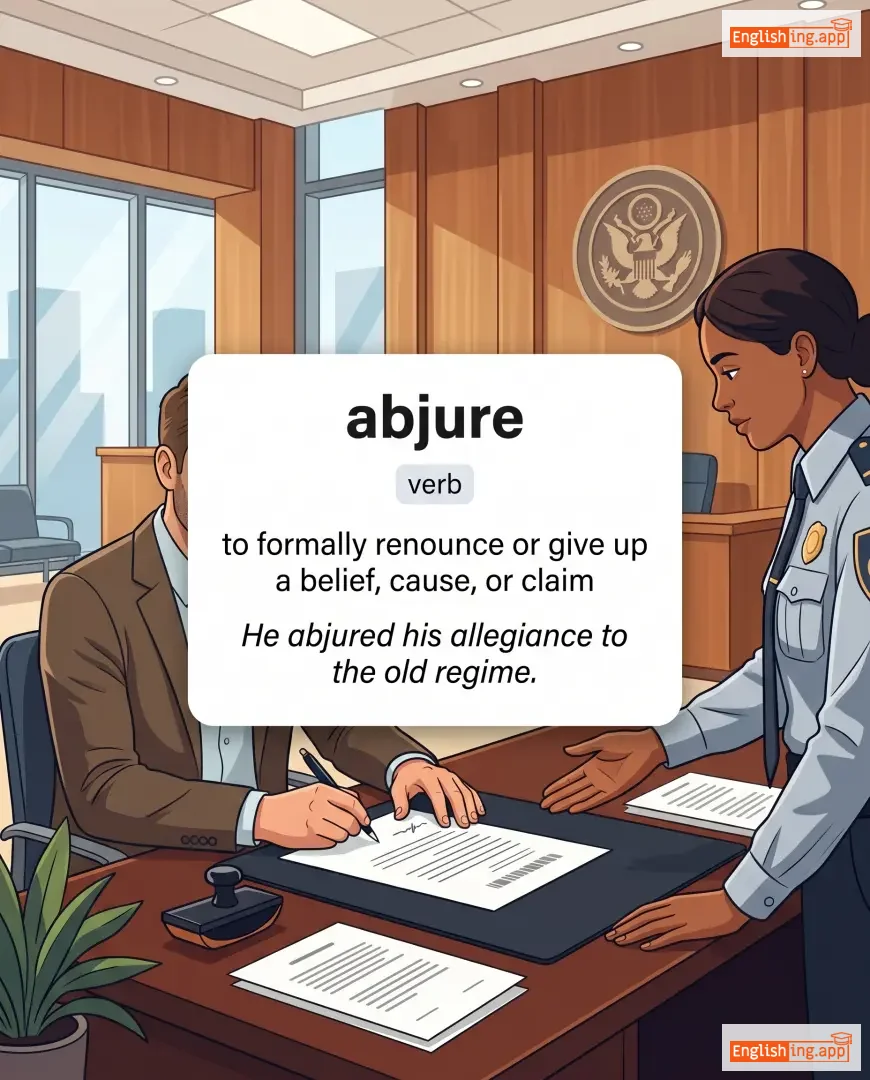
abjure definition card — visual illustration of the meaning
verb
/æbˈdʒʊər/
放棄する (hōki suru)

to formally renounce or give up a belief, cause, or claim

"He abjured his allegiance to the old regime."

"彼は古い政権への忠誠を放棄した。" (Kare wa furui seiken e no chūsei o hōki shita.)
adjective
/ˈeɪbl/
できる (dekiru)

having the power, skill, or means to do something

"She is able to speak three languages fluently."

"彼女は三言語を流暢に話すことができます。" (Kanojo wa san gengo o ryūchō ni hanasu koto ga dekimasu.)
adjective
/ˌeɪ.bəlˈbɒd.id/
健康な体 (kenkō na karada)

physically strong and healthy, not disabled

"The company is looking for able-bodied workers for the construction site."

"その会社は建設現場のために健康な体を持つ労働者を探しています。" (Sono kaisha wa kensetsu genba no tame ni kenkō na karada o motsu rōdōsha o sagashiteimasu.)
noun
/əˈbluːʃən/
アブリューション (aburyūshon)

the act of washing oneself, often for religious purposes

"He performed his morning ablution before the prayer."

"彼は祈りの前に朝のアブリューションを行った。" (Kare wa inori no mae ni asa no aburyūshon o okonatta.)
verb
/ˈæbnɪˌɡeɪt/
放棄する (hōki suru)

to deny or renounce something, especially a right or desire

"She chose to abnegate her personal interests for the sake of the team."

"彼女はチームのために自分の個人的な利益を放棄することを選びました。" (Kanojo wa chīmu no tame ni jibun no kojinteki na rieki o hōki suru koto o erabimashita.)
noun
/ˌæbnɪˈɡeɪʃən/
自己否定 (jikohitei)

the act of renouncing or rejecting something, especially self-denial

"The monk’s life was one of complete abnegation of worldly pleasures."

"僧侶の生活は世俗的な快楽の完全な自己否定でした。" (Sōryo no seikatsu wa sezokuteki na kairaku no kanzen na jikohitei deshita.)
adjective
/æbˈnɔːr.məl/
異常な (ichō na)

deviating from what is normal or usual, typically in a way that is undesirable

"The doctor noticed an abnormal growth in the patient’s lung."

"医者は患者の肺に異常な成長を見つけました。" (Isha wa kanja no hai ni ichō na seichō o mitsukemashita.)
noun
/əˈboʊd/
住居 (jūkyo)

a place of residence; a home

"They invited us to their humble abode."

"彼らは私たちを彼らの質素な住居に招待しました。" (Karera wa watashitachi o karera no shisso na jūkyo ni shōtai shimashita.)
verb
/əˈbɑː.lɪʃ/
廃止する (haishi suru)

to formally put an end to a system, practice, or institution

"The government decided to abolish the old tax system."

"政府は古い税制を廃止することを決定しました。" (Seifu wa furui zeisei o haishi suru koto o kettei shimashita.)
noun
/ˌæbəˈlɪʃən/
廃止 (haishi)

the act of formally ending or eliminating a system, practice, or institution

"The abolition of slavery was a major milestone in human rights history."

"奴隷制度の廃止は人権の歴史における重要な節目でした。" (doreiseido no haishi wa jinken no rekishi ni okeru juuyou na fushime deshita)
adjective
/əˈbɑː.mə.nə.bəl/
忌まわしい (imawashii)

causing moral revulsion; extremely unpleasant

"The prisoners were kept in abominable conditions."

"囚人たちは忌まわしい状況で拘束されていた。" (Shūjin-tachi wa imawashii jōkyō de kōsoku sarete ita.)