Словари

Словарь английского языка | Значения слов, определения и примеры
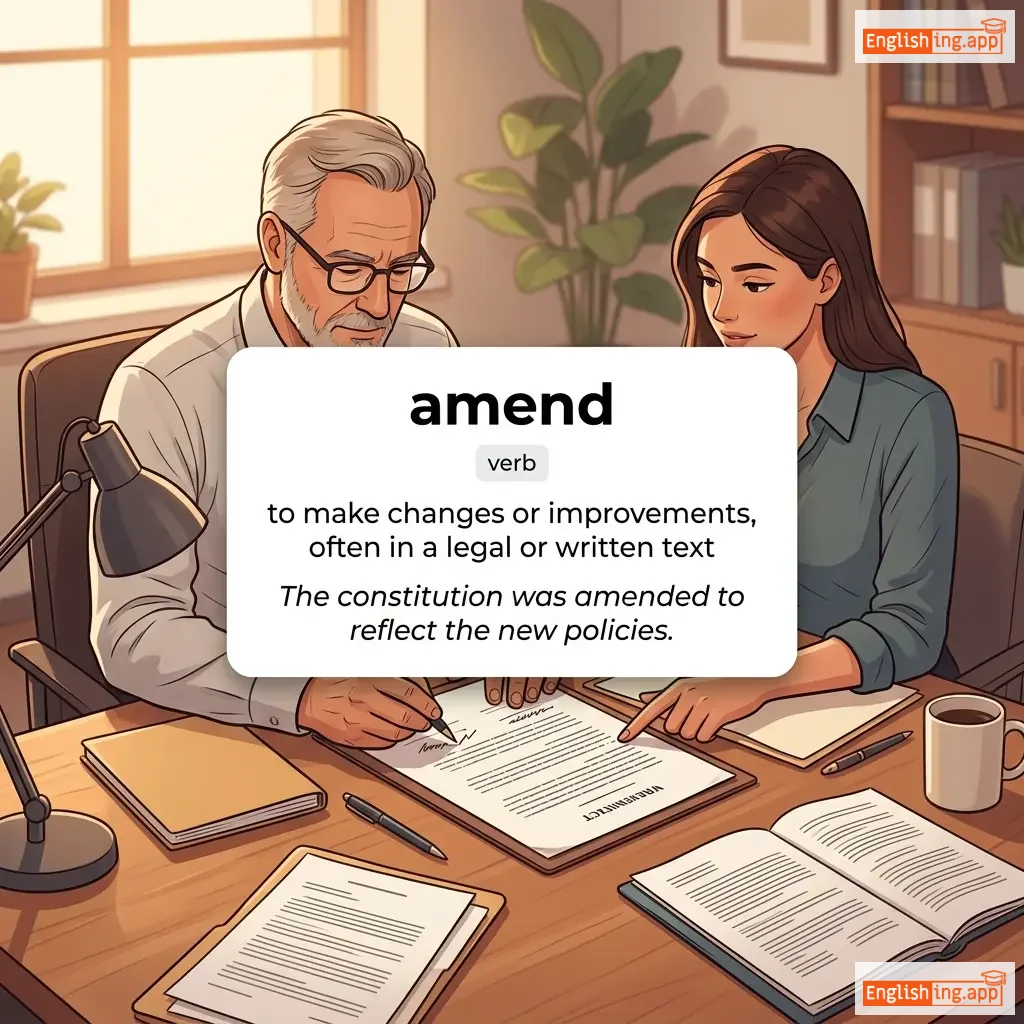
amend definition card — visual illustration of the meaning
✍️

amend

verb
/əˈmɛnd/

to make changes or improvements, often in a legal or written text

"The constitution was amended to reflect the new policies."
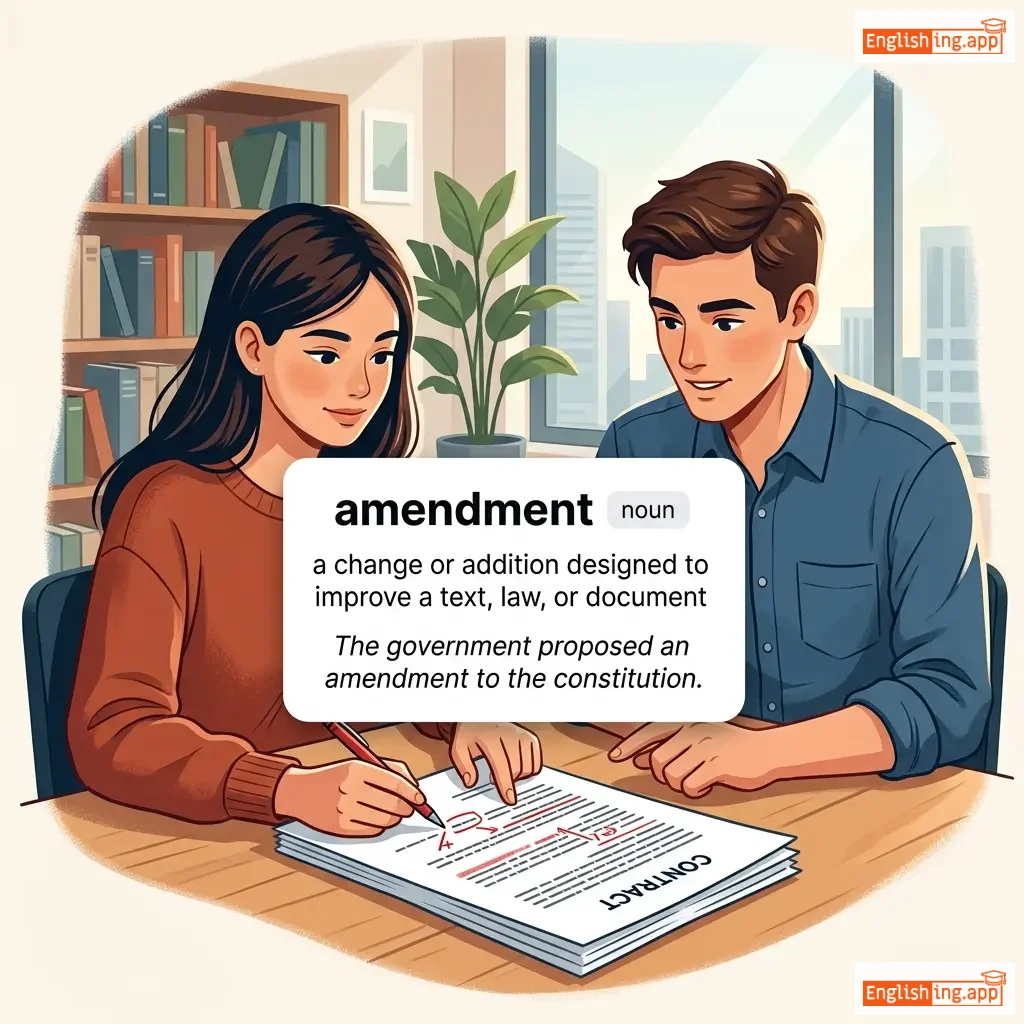
amendment definition card — visual illustration of the meaning
noun
/əˈmɛndmənt/
счастье (schastye)

a change or addition designed to improve a text, law, or document

"The government proposed an amendment to the constitution."
"Она не могла скрыть свое счастье, когда получила награду." (Ona ne mogla skryt' svoe schast'ye, kogda poluchila nagradu.)
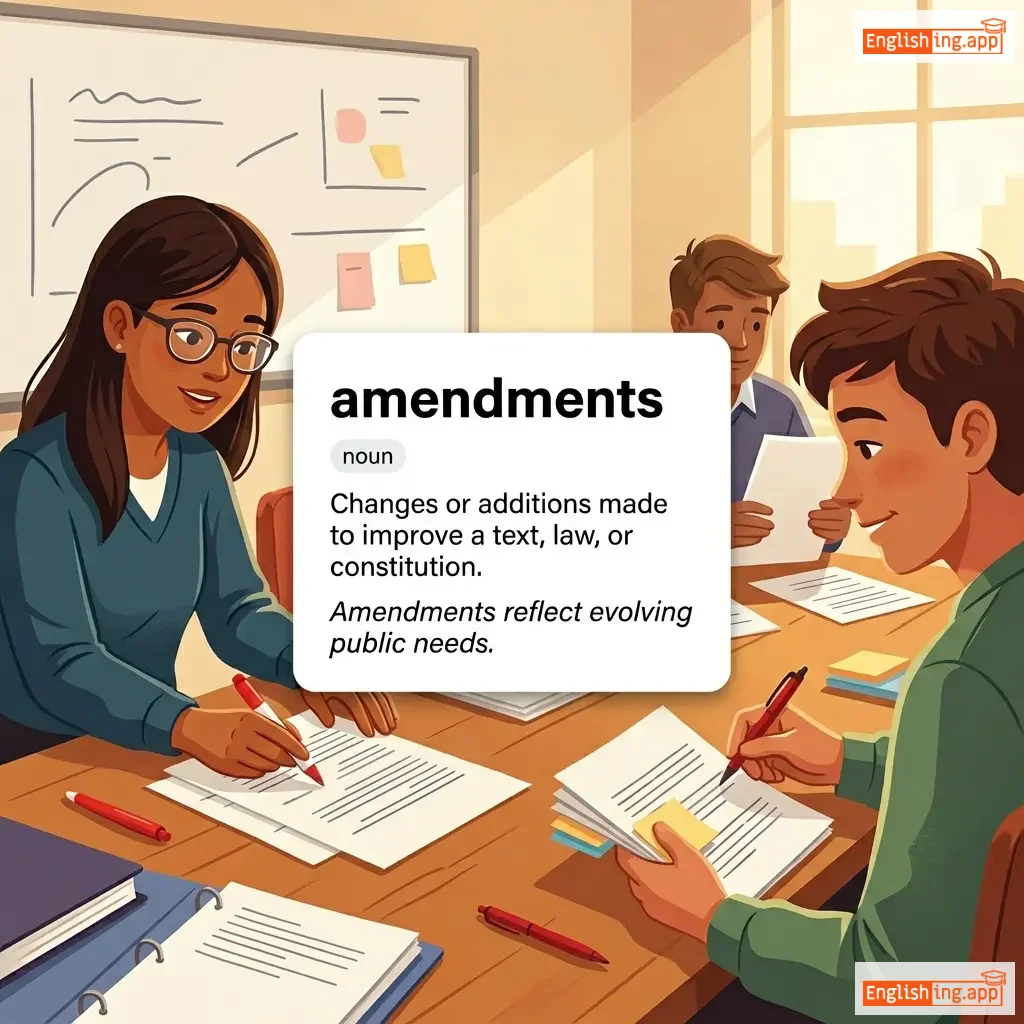
amendments definition card — visual illustration of the meaning
noun
əˈmend.mənts
изменения (izmeneniya)

Changes or additions made to improve a text, law, or constitution.

"Amendments reflect evolving public needs."

"Изменения отражают развивающиеся общественные потребности." (Izmeneniya otrazhayut razvivayushchiesya obshchestvennye potrebnosti.)
noun
/əˈmɛnətiz/
удобства (udobstva)

useful or pleasant facilities and services provided for comfort or convenience

"The hotel offers modern amenities such as free Wi-Fi and a swimming pool."

"Отель предлагает современные удобства, такие как бесплатный Wi-Fi и бассейн." (Otel predlagayet sovremennye udobstva, takie kak besplatny Wi-Fi i basseyn.)
amenity definition card — visual illustration of the meaning
noun
/əˈmɛnəti/
удобство (udobstvo)

a useful or pleasant facility or feature of a place

"The apartment has every amenity needed for comfortable living."

"В квартире есть все удобства, необходимые для комфортной жизни." (V kvartire est' vse udobstva, neobkhodimye dlya komfortnoy zhizni.)
noun/adjective
/əˈmerɪkən/
американский (amerikanskiy)

relating to the United States or its people

"She is an American citizen."

"Она американская гражданка." (Ona amerikanskaya grazhdanka.)
🇺🇸

americanism

noun
/əˈmɛrɪkəˌnɪzəm/

A word, phrase, or practice characteristic of American English or culture.

"The term 'sidewalk' is an Americanism, while 'pavement' is used in British English."

adjective
/ˈeɪmiəbəl/
любезный (lyubezny)

Having a friendly and pleasant manner.

"She has an amiable personality that makes her well-liked by everyone."

"У нее любезный характер, который делает ее любимой для всех." (U nee lyubeznyy kharakter, kotoryy delayet yeye lyubimoy dlya vsekh.)
adverb
/ˈeɪ.mi.ə.bli/
дружелюбно, приветливо (druzhelyubno, priveetlevo)

in a friendly and pleasant manner

"They discussed the issue amiably without any arguments."

"Они обсуждали этот вопрос дружелюбно, без каких-либо споров." (Oni obsuzhdali etot vopros druzhelyubno, bez kakikh-libo sporov.)
adverb
/əˈbæk/
ошеломлённый (oshelomlyonnyy)

by surprise; unexpectedly

"I was taken aback by his sudden announcement."
"Я был ошеломлён его внезапным объявлением." (Ya byl oshelomlyonnyy ego vnezapnym ob'yavleniyem.)
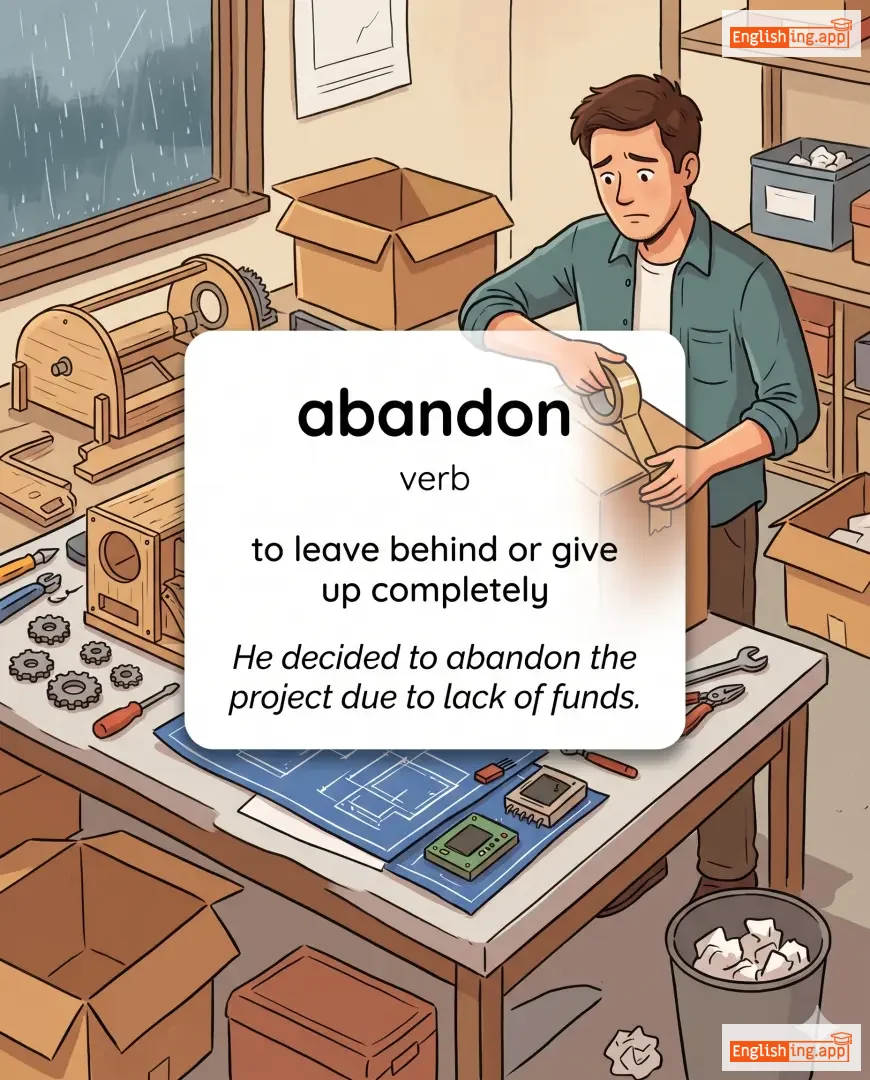
abandon definition card — visual illustration of the meaning
verb
/əˈbændən/
бросать (brosat')

to leave behind or give up completely

"He decided to abandon the project due to lack of funds."

"Он решил бросить проект из-за нехватки средств." (On reshil brosit' proekt iz-za nekhvatki sredstv.)
noun
/əˈbændənmənt/
покинутость (pokinutost)

the act of leaving someone or something behind completely; the state of being deserted

"The child suffered deep emotional pain because of abandonment."

"Ребёнок испытывал глубокую эмоциональную боль из-за покинутости." (Rebyonok ispytyval glubokuyu emotsionalnuyu bol iz-za pokinutosti)
verb
/əˈbeɪs/
унижать (unizhat)

to belittle or degrade someone

"He refused to abase himself before the king."

"Он отказался унижать себя перед королем." (On otkazalsya unizhat sebya pered korolem.)
verb
/əˈbæʃ/
смущать (smushchat)

to make someone feel embarrassed or ashamed

"Her sudden question seemed to abash him."
"Ее внезапный вопрос, похоже, смутил его." (Eyo vnezapnyy vopros, pokhozhe, smutil ego.)
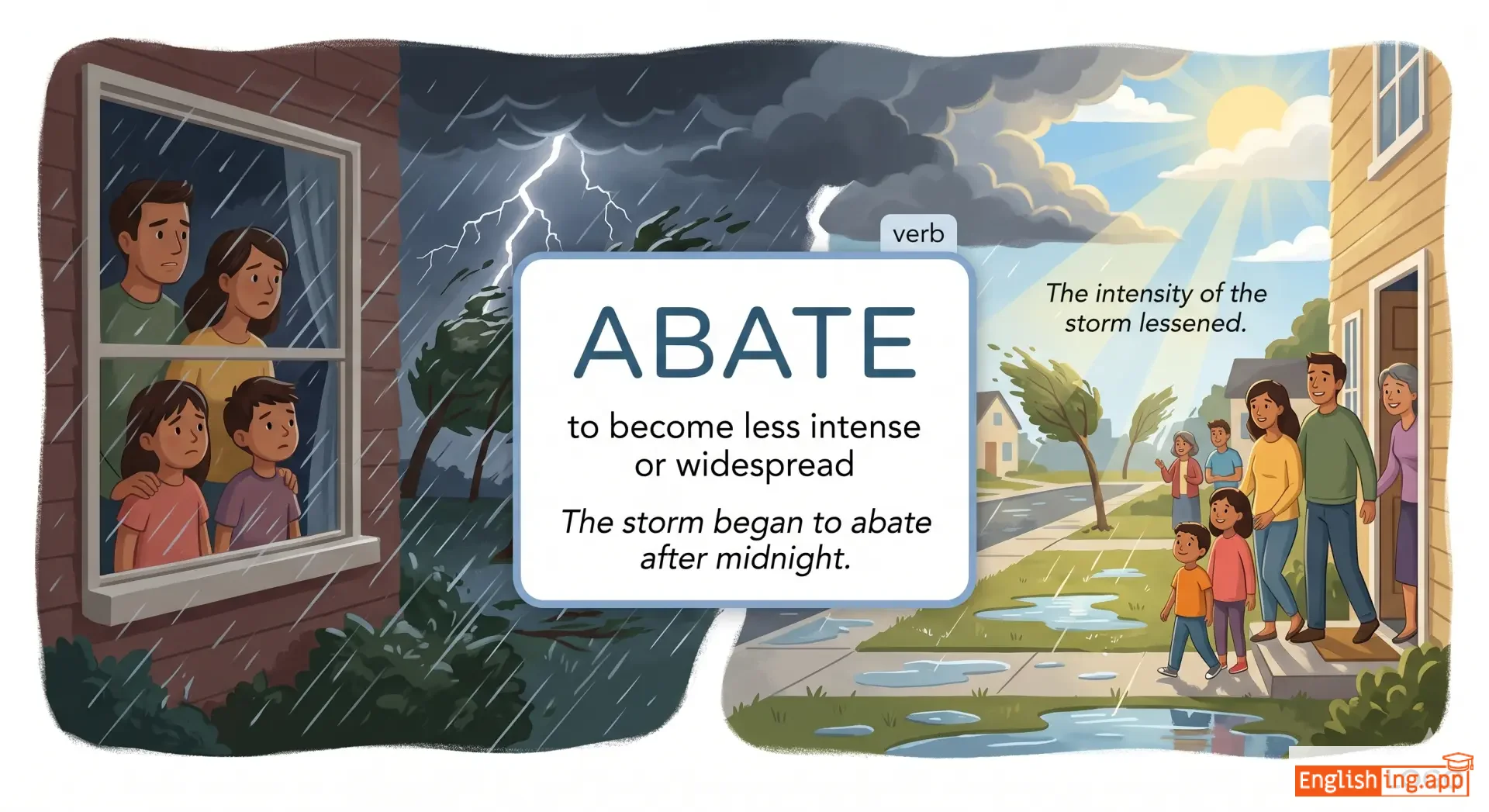
abate definition card — visual illustration of the meaning
verb
/əˈbeɪt/
уменьшаться (umenshatsya)

to become less intense or widespread

"The storm began to abate after midnight."

"Шторм начал стихать после полуночи." (Shtorm nachal stikhayt posle polnoch.)
noun
/ˈæbɪs/
аббесса (женщина, возглавляющая монастырь) (abbessa (zhenshchina, vozglavlyayushchaya monastyr'))

the woman in charge of a convent of nuns

"The abbess welcomed the visitors to the convent."

"Аббесса приветствовала посетителей в монастыре." (Abbessa privetstvovala posetiteley v monastyre.)
noun
/ˈæbi/
аббатство (abbatstvo)

A large church building or monastery where monks or nuns live, work, and worship.

"The old abbey on the hill attracts many tourists each year."

"Старая аббатство на холме привлекает множество туристов каждый год." (Staraya abbatstvo na kholme privlekaet mnozhestvo turitov kazhdyy god.)
noun
/ˈæbət/
аббат (abbat)

The head of a monastery for monks.

"The abbot welcomed the visitors to the monastery."

"Аббат поприветствовал посетителей в монастыре." (Abbat poprivetsvoval posetiteley v monastyre.)
verb
/əˈbriːvieɪt/
сокращать (sokrashchat')

To shorten a word, phrase, or text by leaving out letters or parts.

"We often abbreviate 'Doctor' to 'Dr'."

"Мы часто сокращаем 'Доктор' до 'Др'." (My chasto sokrashchaem 'Doktor' do 'Dr'.)
noun
/əˌbriːviˈeɪʃən/
аббревиатура (abbreviatura)

a shortened form of a word or phrase

"NASA is an abbreviation for National Aeronautics and Space Administration."
"NASA — это аббревиатура от National Aeronautics and Space Administration." (NASA — eto abbreviatura ot National Aeronautics and Space Administration.)
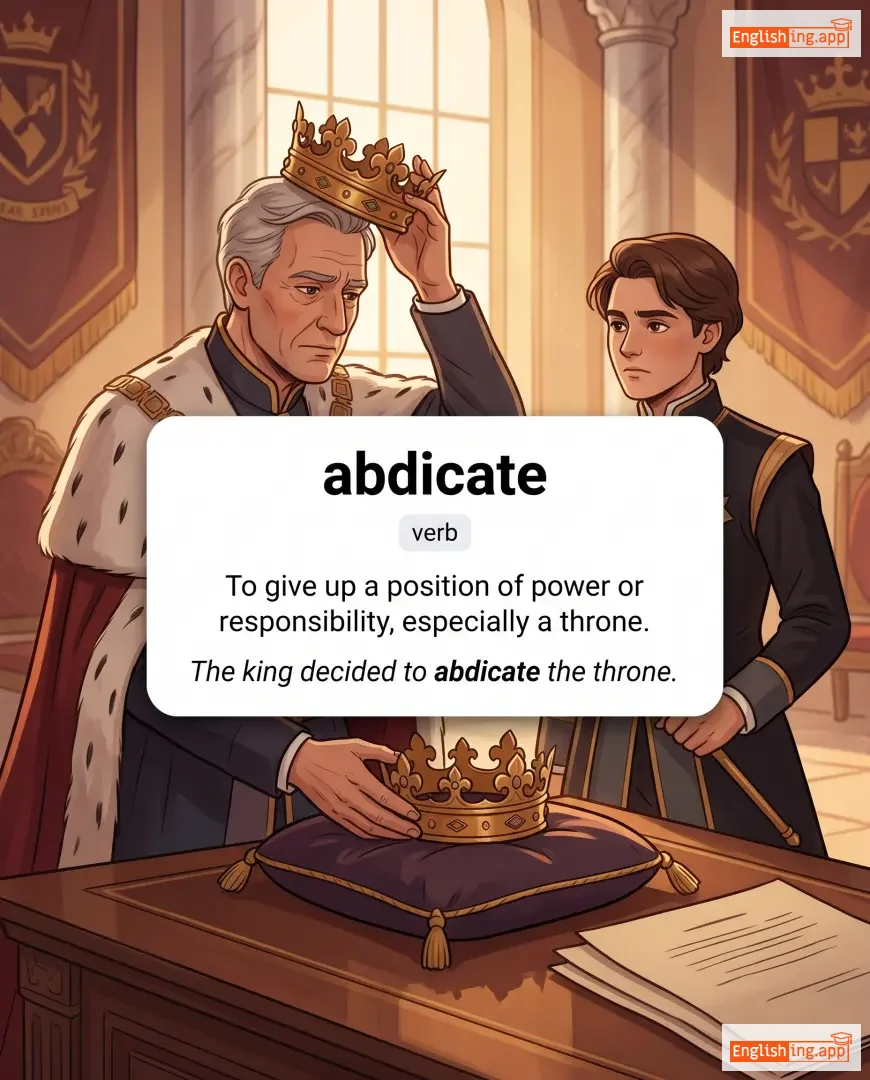
abdicate definition card — visual illustration of the meaning
verb
/ˈæbdɪkeɪt/
отрекаться (otrekatsya)

To give up a position of power or responsibility, especially a throne.

"The king decided to abdicate the throne."

"Царь решил абдицировать трон." (Tsar reshil abdiczirovat' tron.)
noun
/ˈæbdəmən/
живот (zhivot)

The part of the body below the chest and above the hips that contains the stomach and other organs.

"He complained of pain in his abdomen."

"Он пожаловался на боль в животе." (On pozhalovalsya na bol' v zhivote.)
adjective
/æbˈdɑː.mə.nəl/
абдоминальный (abdominal'nyy)

relating to the abdomen (the part of the body between the chest and pelvis)

"He complained of severe abdominal pain."

"Он жаловался на сильную боль в животе." (On zhalovalsya na sil'nuyu bol' v zhivote.)
verb
/əbˈdʌkt/
похищать (pokhishchat)

to take someone away illegally by force or deception

"The criminal tried to abduct the child in broad daylight."

"Преступник пытался похитить ребёнка средь бела дня." (Prestuplik pytalsya pokhitit rebenka sred bela dnya)
noun
/æbˈdʌk.ʃən/
похищение (pokhishchenie)

the act of taking someone away illegally by force; kidnapping

"The police are investigating the abduction of the child."

"Полиция расследует похищение ребенка." (Politsiya rassleduyet pokhishcheniye rebenka.)
noun
/əbˈdʌktər/
похититель (pokhititel)

a person who kidnaps or forcibly takes someone away

"The police arrested the abductor after a nationwide search."

"Полиция арестовала похитителя после долгих поисков." (Politsiya arestovala pokhititelya posle dolgikh poiskov)
adverb
/əˈbɛd/
в кровати (v krovaty)

in bed

"She stayed abed all day due to illness."
"Она осталась в кровати весь день из-за болезни." (Ona ostalas' v krovaty ves' den' iz-za bolezni.)
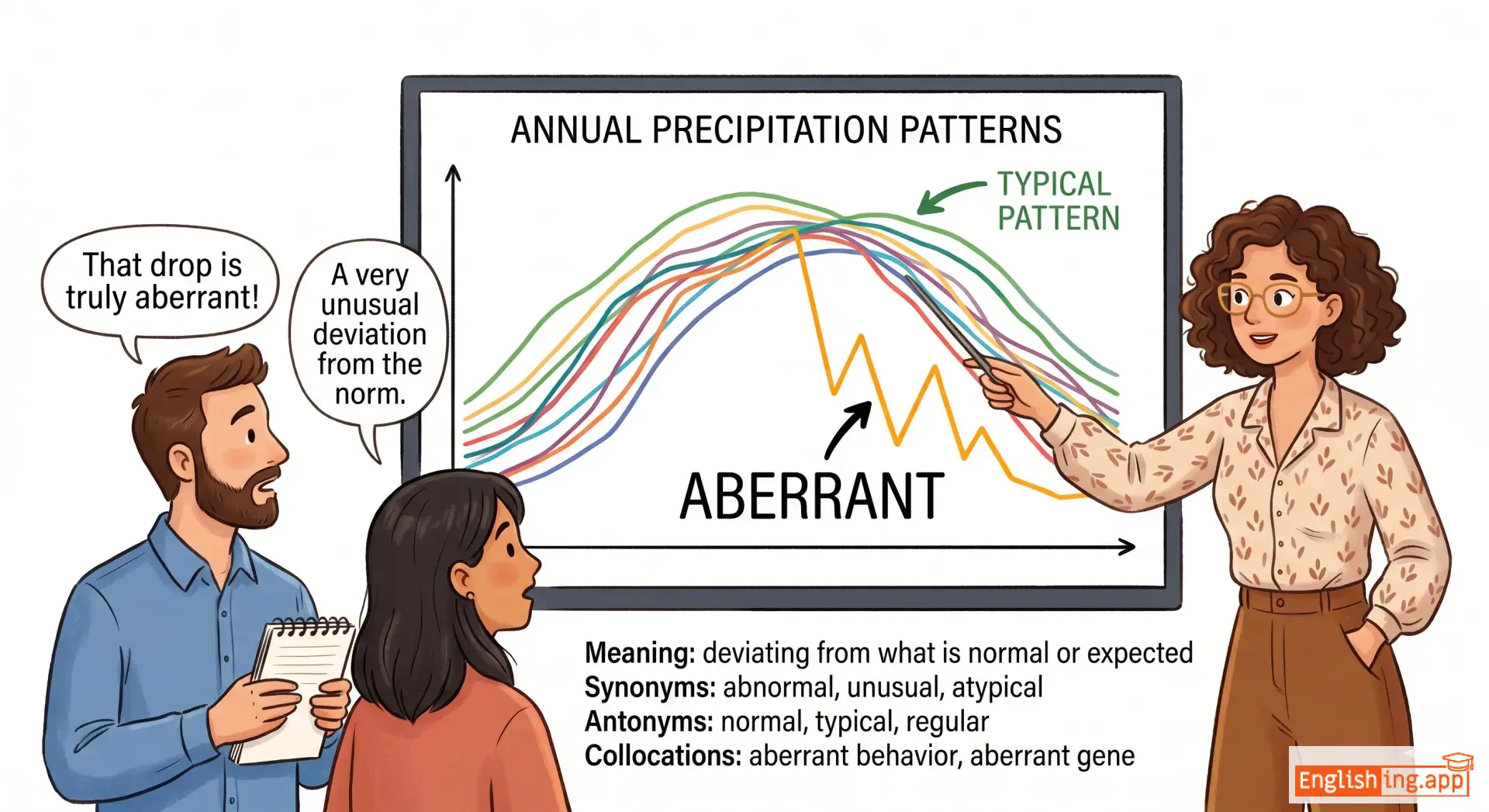
aberrant definition card — visual illustration of the meaning
adjective
/ˈæb.ə.rənt/
аберрантный (aberrantny)

deviating from what is normal or expected; abnormal

"His aberrant behavior shocked everyone at the meeting."

"Его аберрантное поведение шокировало всех на встрече." (Ego aberrantnoe povedenie shokirovalo vsekh na vstreche.)
aberration definition card — visual illustration of the meaning
noun
/ˌæb.əˈreɪ.ʃən/
аберрация (aberraciya)

a departure from what is normal, usual, or expected; an anomaly

"The sudden drop in temperature was an aberration for this season."

"Резкое падение температуры было аномалией для этого сезона." (Rezkoye padeniye temperatury bylo anomaliyei dlya etogo sezona.)
🕵️

abet

verb
/əˈbɛt/

to encourage or assist someone to commit a crime or wrongdoing

"He was accused of abetting the criminals in their escape."
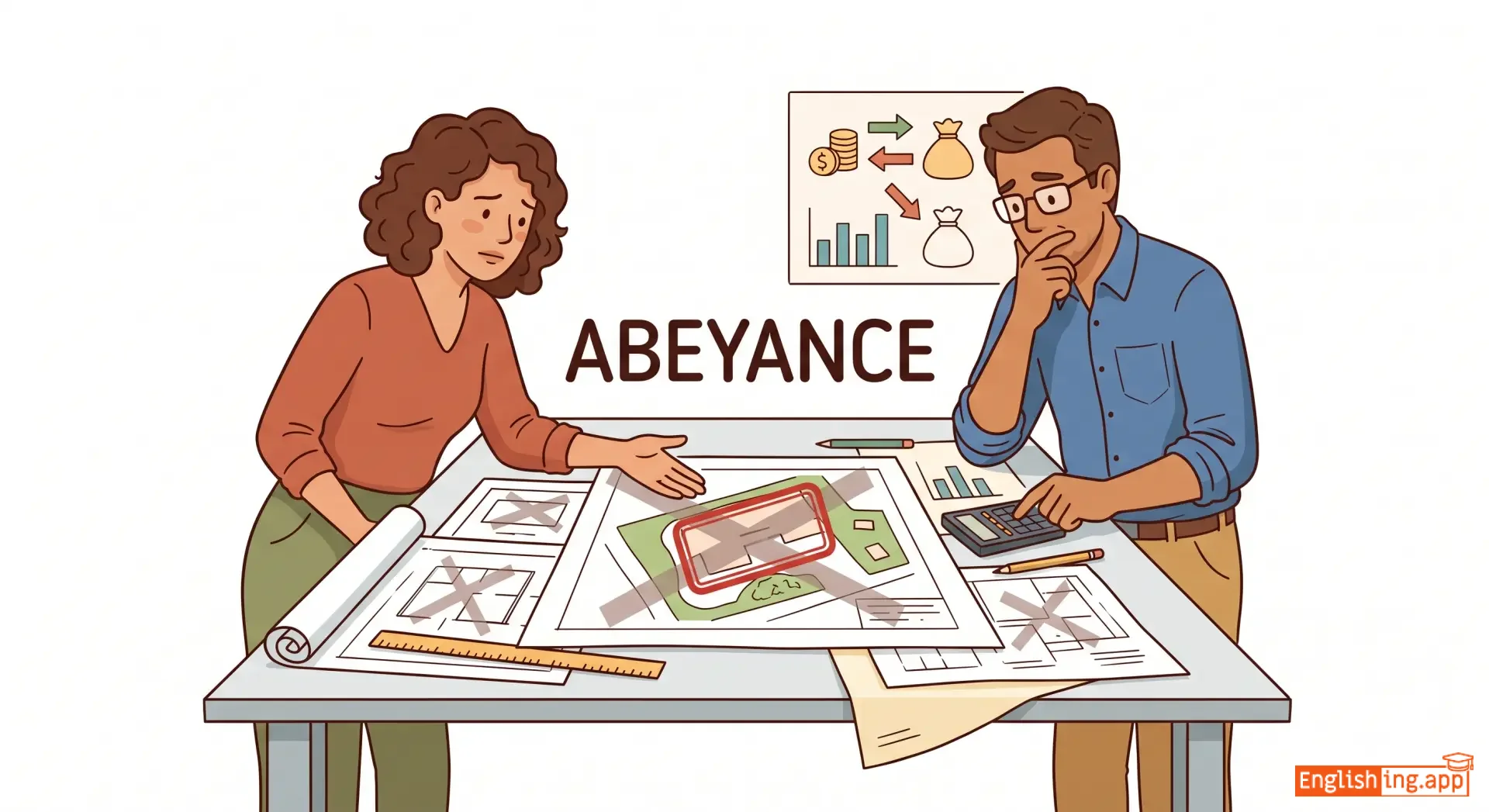
abeyance definition card — visual illustration of the meaning
noun
/əˈbeɪəns/
временная приостановка (vremennaya priostanovka)

a state of temporary suspension or inactivity

"The project was held in abeyance until funds became available."

"Проект был приостановлен до тех пор, пока средства не стали доступны." (Proyekt byl priostanovlen do tekh por, poka sredstva ne stali dostupny.)
verb
/əbˈhɔːr/
ненавидеть (nenavidet')

to regard with disgust and hatred

"She abhors cruelty to animals."

"Она ненавидит жестокость по отношению к животным." (Ona nenavidit zhestokost' po otnosheniyu k zhivotnym.)
noun
/əbˈhɒrəns/
отвращение (otvrashchenie)

a feeling of strong disgust or hatred

"He expressed his abhorrence of racial discrimination."

"Он выразил своё отвращение к расовой дискриминации." (On vyrazil svoe otvrashchenie k rasovoj diskriminatsii.)
adjective
/əbˈhɒrənt/
отвратительный (otvratitel'nyj)

causing or deserving strong dislike or hatred

"Such cruelty is abhorrent to civilized society."

"Такая жестокость отвратительна для цивилизованного общества." (Takaya zhestokost' otvratitel'na dlya tsivilizovannogo obshchestva.)
noun
/əˈbaɪdəns/
послушание (poslushanie)

the act of following, accepting, or complying with something

"Her abidance by the rules impressed the committee."

"Ее послушание правилам впечатлило комитет." (Eyo poslu shanie pravilam vpechatlilo komitet.)
verb
/əˈbaɪd/
соблюдать (soblyudat)

to accept, tolerate, or remain faithful to something

"Citizens must abide by the laws of their country."

"Граждане должны соблюдать законы своей страны." (Grazhdane dolzhny soblyudat' zakony svoey strany.)
adjective
/əˈbaɪdɪŋ/
постоянный (postoyanniy)

lasting for a long time; enduring

"She had an abiding love for her hometown."

"У неё была постоянная любовь к её родному городу." (U neyo byla postoyannaya lyubov' k yeye rodnomu gorodu.)
noun
/əˈbɪləti/
способность (sposobnost)

the power, skill, or capacity to do something

"Her ability to solve problems quickly impressed everyone."
"Её способность быстро решать проблемы впечатлила всех." (Eyo sposobnost' bystro reshat' problemy vpechatlila vsekh.)
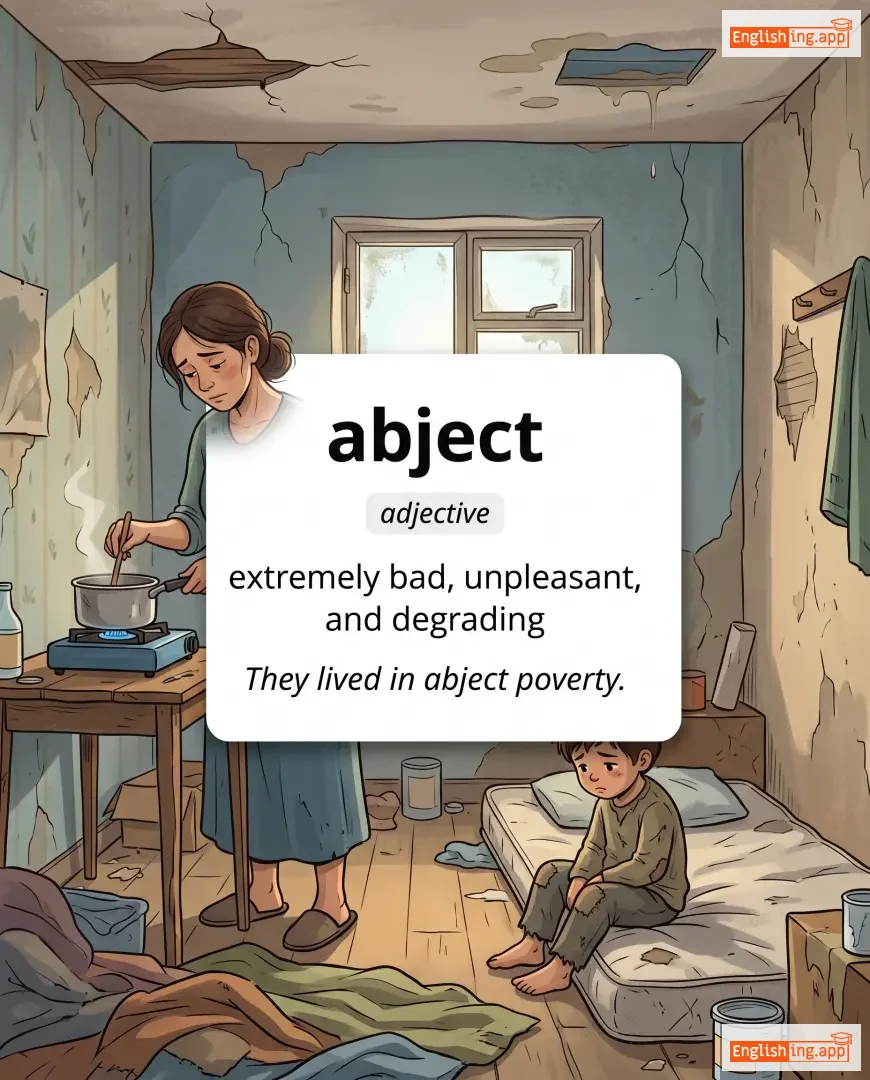
abject definition card — visual illustration of the meaning
adjective
/ˈæbdʒɛkt/
отвратительный (otvratitel'nyy)

extremely bad, unpleasant, and degrading

"They lived in abject poverty."
"Они жили в отвратительной бедности." (Oni zhili v otvratitel'noy bednosti.)
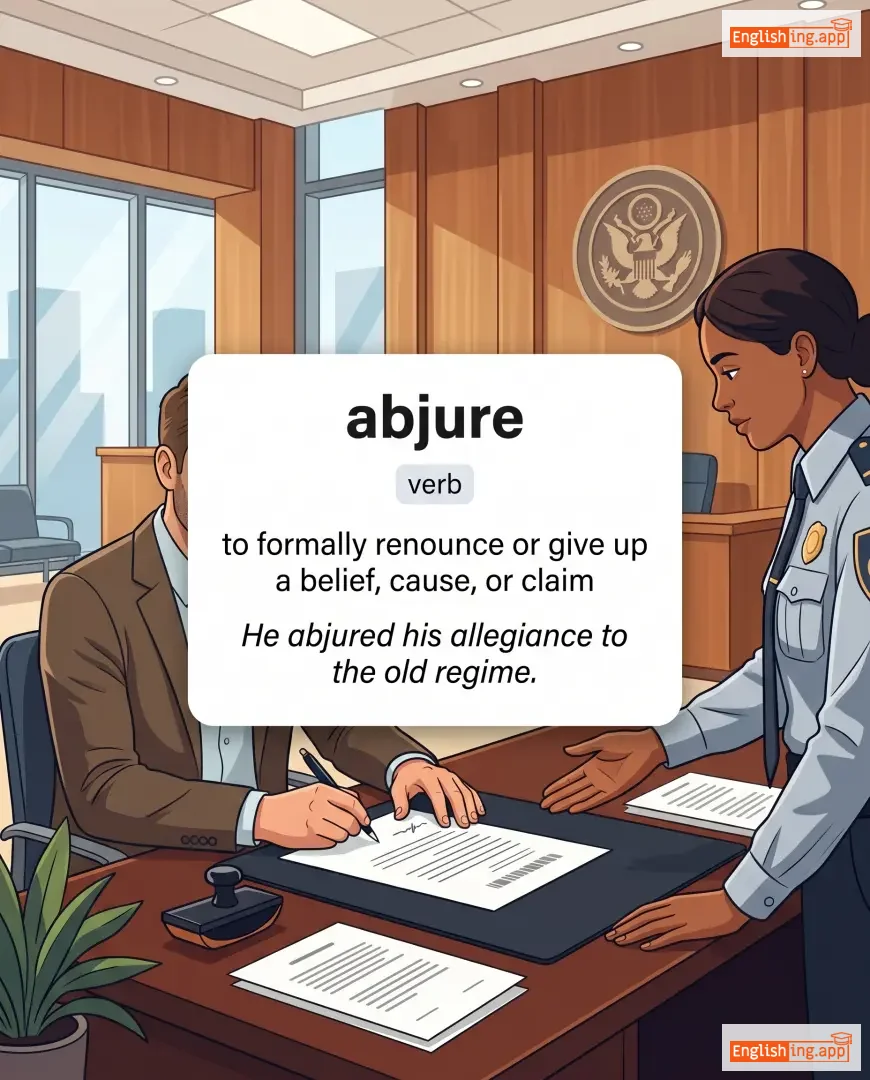
abjure definition card — visual illustration of the meaning
verb
/æbˈdʒʊər/
отказаться (otkazat'sya)

to formally renounce or give up a belief, cause, or claim

"He abjured his allegiance to the old regime."

"Он отказался от своей верности старому режиму." (On otkazalsya ot svoey vernosti staromu rezimu.)
adjective
/ˈeɪbl/
способный (sposobnyy)

having the power, skill, or means to do something

"She is able to speak three languages fluently."

"Она способна говорить на трех языках бегло." (Ona sposobna govorit' na trekh yazykakh beglo.)
adjective
/ˌeɪ.bəlˈbɒd.id/
физически способный (fizicheski sposobny)

physically strong and healthy, not disabled

"The company is looking for able-bodied workers for the construction site."

"Компания ищет физически способных рабочих для строительного участка." (Kompaniya ishchet fizicheski sposobnykh rabochikh dlya stroitel'nogo uchastka.)
noun
/əˈbluːʃən/
омовение (omovenie)

the act of washing oneself, often for religious purposes

"He performed his morning ablution before the prayer."

"Он совершил утреннюю омовение перед молитвой." (On sovershil utrevnyuyu omovenie pered molitvoy.)
verb
/ˈæbnɪˌɡeɪt/
отказаться (otkazat'sya)

to deny or renounce something, especially a right or desire

"She chose to abnegate her personal interests for the sake of the team."

"Она выбрала отказаться от личных интересов ради блага команды." (Ona vybrala otkazat'sya ot lichnykh interesov radi blaga komandy.)
noun
/ˌæbnɪˈɡeɪʃən/
самоотречение (samootrechenie)

the act of renouncing or rejecting something, especially self-denial

"The monk’s life was one of complete abnegation of worldly pleasures."

"Жизнь монаха была полным самоотречением от мирских удовольствий." (Zhizn monakha byla polnym samootrecheniem ot mirskikh udovolstviy.)
adjective
/æbˈnɔːr.məl/
аномальный (anomal'nyy)

deviating from what is normal or usual, typically in a way that is undesirable

"The doctor noticed an abnormal growth in the patient’s lung."

"Врач заметил аномальный рост в легких пациента." (Vrach zame'til anomaliy rosta v lyokhkiakh patsiyenta.)
noun
/əˈboʊd/
жилище (zhilishche)

a place of residence; a home

"They invited us to their humble abode."

"Они пригласили нас в их скромное жилище." (Oni priglasili nas v ikh skromnoe zhilishche.)
verb
/əˈbɑː.lɪʃ/
отменить (otmenit)

to formally put an end to a system, practice, or institution

"The government decided to abolish the old tax system."

"Правительство решило отменить старую налоговую систему." (Pravitel'stvo reshilo otmenit' staruyu nalogovuyu sistemy.)
noun
/ˌæbəˈlɪʃən/
отмена (otmena)

the act of formally ending or eliminating a system, practice, or institution

"The abolition of slavery was a major milestone in human rights history."

"Отмена рабства стала важной вехой в истории прав человека." (otmena rabstva stala vazhnoi vekhoi v istorii prav cheloveka)
adjective
/əˈbɑː.mə.nə.bəl/
отвратительный (otvratitelnyy)

causing moral revulsion; extremely unpleasant

"The prisoners were kept in abominable conditions."

"Заключенных держали в отвратительных условиях." (Zaklyuchyonnykh derzhali v otvratitel'nykh usloviyakh.)